Category: General

Retail News Asia is committed to providing both local and global retailers with the latest General Retail news throughout the Asian market. This on a daily base.

  • Vietjet introduces first A321neo “new-engine option” aircraft to Southeast Asia

    Vietjet introduces first A321neo “new-engine option” aircraft to Southeast Asia

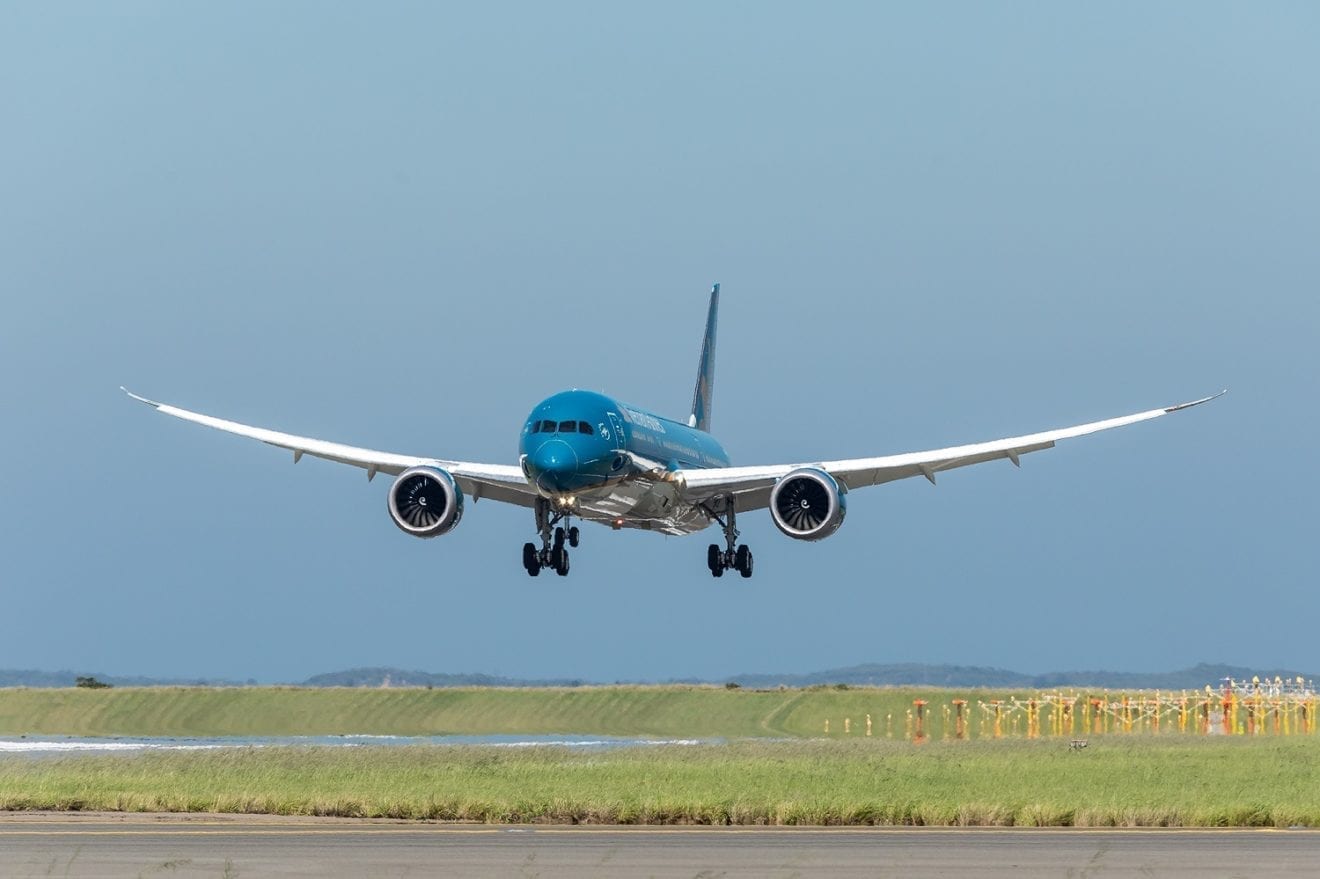
    New-age carrier Vietjet has become the first airline in Southeast Asia to take delivery of an A321neo (new engine option) after the Airbus aircraft landed at Tan Son Nhat International Airport from Hamburg, Germany. The A321neo, registered as VN-646, is powered by Pratt & Whitney’s latest-generation GTF engines.

    Fitted out with 230 comfy leather-covered seats and high-quality carpeting, the first five rows of Vietjet’s spacious new A321neo have been especially designed to accommodate passengers flying Skyboss, the airline’s premium service. The aircraft’s interior also features a unique color-changing LED light system and striking décor to create a comfortable and refreshing ambience through the whole cabin.

    The brand new A321neo incorporates the latest in engine design, advanced aerodynamics and cabin innovations. According to the aircraft manufacturer, its GTF engines offer a significant reduction in fuel consumption — at least 16 percent from day one and 20 percent by 2020 — as well 75% reduction in noise and 50% in emissions. The engines were first introduced by Pratt & Whitney in 2016. Vietjet is one of the very first airlines in the world to incorporate the engines to its aircraft. The A321neo is also the 17th aircraft delivered to Vietjet from Airbus in 2017.

    The new aircraft will begin operating on domestic and international routes to and from Vietnam in January 2018. On receiving the aircraft, Vietjet also announced its decision to upgrade an existing order for 42 A320neo aircraft to the superior, and larger, A321neo models. Accordingly, the airline now has a total of 73 A321neo and 11 A321ceo on order for future delivery.

    “We are proud when a dynamic airline like Vietjet endorses our products,” said Fabrice Brégier, Airbus Chief Operating Officer and President Commercial Aircraft. “The A321neo combines higher capacity with the lowest operating costs in its class, offering unbeatable efficiency. This aircraft will be a real asset in Vietjet’s expansion plans in such a competitive market. We look forward to seeing the A321neo flying in Vietjet colours.”

    “The A320 family aircraft has greatly contributed to Vietjet’s impressive operation performances with the airline’s technical reliability rate standing at 99.6% in 2017. The aircraft have also helped us maintain some of the lowest operating costs in the airline world,” said Nguyen Thi Phuong Thao, Vietjet President and CEO. “The upgraded A321neo deal once again emphazises Vietjet’s ceaseless efforts to modernize our fleet. We believe that the technical reliability rate and other operation and safety indexes will continue to go up in order to bring maximum comfort, joy and safety to our valued passengers.”

    The A320 Family is the world’s best-selling single-aisle product line and comprises four models (A318, A319, A320, A321) seating from 100 to 240 seats. With more than 5,300 orders received from 95 customers since its launch in 2010, the A320neo family has captured some 60 percent share of the market.

  • Sears is closing 103 stores

    Sears is closing 103 stores

    Struggling US department store chain Sears will close another 103 stores, as the retailer looks to “right size” the business.

    Part of its strategic assessment of productivity throughout its store portfolio, Sears said 64 Kmart stores and 39 Sears stores will close between early March and early April 2018.

    “As previously announced we will continue to close some unprofitable stores as we transform our business model so that our physical store footprint and our digital capabilities match the needs and preferences of our members,” the company said in a statement.

    The announcement comes after the department store chain’s last financial results, where it posted another loss, although narrower, for the quarter, making it the seventh straight year posting declines.

    The parent company of Sears and Kmart has not reported a profit since 2010, although it has been pushing to return to profitability by closing its stores.

    On its seventh straight money-losing year, Sears posted a net loss of $558 million, or $5.19 a share, during the fiscal third quarter, compared with a loss of $748 million, or $6.99, during the same period last year. The department store chain’s total same-store sales tumbled 15.3 per cent during the latest period.

  • Economists predict bright outlook for Vietnam in 2018

    Economists predict bright outlook for Vietnam in 2018

    Vietnam’s economy has the potential to thrive this year with more foreign direct investment (FDI) and export revenue, but low productivity remains a concern, economists said.

    Last month, the Asian Development Bank (ADB) lifted its economic growth forecast for Vietnam to 6.7 percent in 2018 from its previous projections of 6.3 to 6.5 percent. The World Bank gave a more conservative forecast of 6.5 percent.

    After a 10-year high GDP growth of 6.81 percent in 2017, the government expects the economy to expand 6.5-6.7 percent this year.

    Being an export oriented economy, Vietnam’s somewhat surprisingly fast growth last year owed a lot to the recovering global economy, which expanded 3 percent in 2017, the highest rate since 2011.

    This trend will continue, said economist Vo Tri Thanh.

    Vietnam’s export revenue expanded by 21 percent last year against 2016 to $213.7 billion, the highest in the past five years. Following what Prime Minister Nguyen Xuan Phuc called a “year of records”, the country is targeting export growth of 7-8 percent this year.

    Favorable investment climate

    Investors are positive too, and the sentiment is forecast to continue in 2018 stemmed from confidence in Vietnam’s economic prospects, economist Nguyen Tri Hieu told VnExpress International.

    The favorable investment climate will be aided by projected stable foreign currency, inflation and interest rates in 2018, Hieu said.

    Following 10-year highs in the third quarter of 2017, the VN-Index, a capitalization-weighted index of all the companies listed on the Ho Chi Minh City Stock Exchange, surpassed 1,000 points on January 3 for the first time since the global financial crisis in 2007.

    RongViet Securities Corporation in Saigon said in a report that the VN-Index will increase at least 17 percent this year or even 67 percent in its best scenario, meaning it could end the year somewhere between 1,170 and 1,640.

    The market will be boosted by interests from the foreign sector, said Nguyen The Minh, a senior analyst at Saigon Securities Incorporation. Foreign investors made more than $1 billion of net purchases last year, the highest amount in five years, and they will continue to stick around for more privatization of public giants.

    Foreign direct investment inflow in 2017 also fared well by reaching $35.88 billion, up 44 percent against 2016, according to the Ministry of Planning and Investment – another 10 year high.

    “The FDI scene in the economy continues to thrive,” Forbes quoted Dustin Daugherty, senior associate in business intelligence with consultancy firm Dezan Shira & Associates in Ho Chi Minh City, as saying. “While a lot of attention is paid to big name deals, the number of small to medium-sized enterprises and smaller multinational company investors continues to tick up, and enthusiasm is very high.”

    Foreign investors in the likes of electronics and polyester yarn factories still love Vietnam for its low costs, abundance of labor and matter-of-fact permitting process, analysts on the ground said.

    “I think next year will be as good or better than this,” Daugherty said. “We are not yet at peak for the growth rate.”

    A recent report by auditing firm PricewaterhouseCoopers (PwC) echoed the enthusiasm, saying: “Vietnam is at a tipping point in its economic development led by free trade agreements (FTAs) such as the EU-Viet Nam FTA and an increasingly deregulated business environment.”

    Vietnam’s Greenfield FDI Performance Index has also topped emerging economies, surpassing Malaysia and Thailand on attracting foreign capital, the report found.

    Structural challenges

    However, Vietnam still faces many challenges in boosting economic growth, as the economy still depends on low-cost labor force, outdated technology, and exhausting natural resources, said Hoang Quang Phong, vice chairman of the Vietnam Chamber of Commerce and Industry.

    Most local enterprises remain small and uncompetitive, he added. Vietnam now houses some 700,000 operational firms, but 60 percent of them are not profitable.

    There may also be a slow-down in structural reforms as the government is trying to cut down on spending and investment for a leaner budget deficit and to contain public debt, the World Bank has warned.

    Public investment fell to 16 percent of total spending in the first nine months of 2017, compared with an average of 25 percent in recent years.

    “Structural reform remains a central priority in view of tepid productivity growth” said Sebastian Eckardt, the World Bank Lead Economist for Vietnam, “Building on progress already made, Vietnam can further lift productivity growth through investments in needed infrastructure and skills as well as deeper reforms of the business environment, SOE [state owned enterprise] and banking sector.”

  • AirAsia ups Maldives flights to meet growing demand

    AirAsia ups Maldives flights to meet growing demand

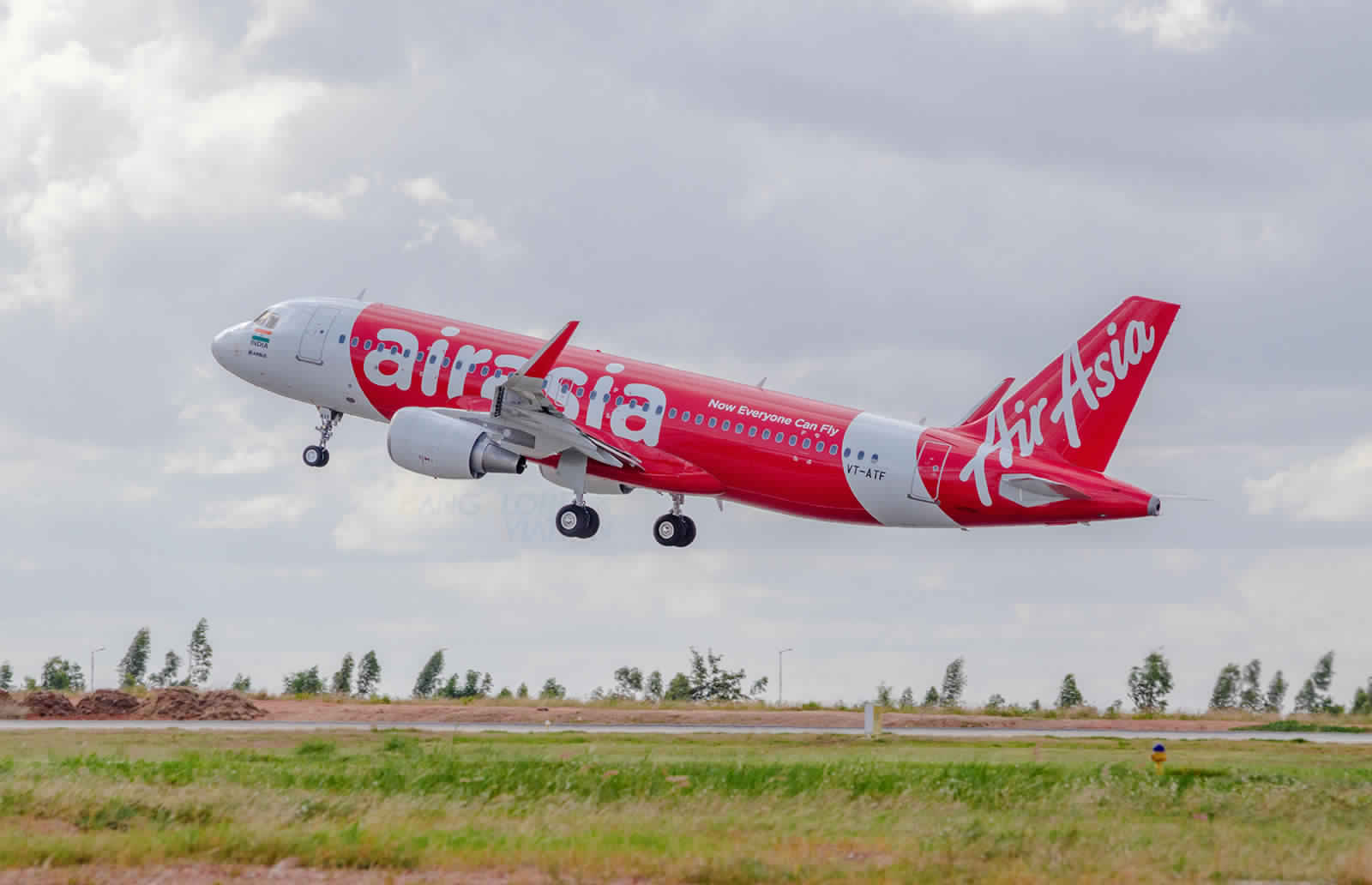
    AirAsia is increasing its Maldives operations with the commencement of additional services via its long-haul affiliate, AirAsia X, in addition to the daily flights it currently operates.

    In a statement today, the low-cost airline said AirAsia X would operate the Kuala Lumur-Male service at four times weekly, beginning Feb 6, 2018, under the D7 airline code utilising Airbus A330-300 aircraft, equivalent to an increase of 156,000 seats per year.

    In conjunction with the additional frequency, AirAsia is offering introductory promotional fares from as low as RM199 all-in fare for one-way travel, inclusive of taxes for all Maldives flights from now until Jan 14, 2018 for immediate travel until May 6, 2018.

    AirAsia X Head of Commercial, Barry Klipp, said since commencing the Kuala Lumpur-Maldives service, AirAsia had seen tremendous growth in demand on this route, adding over 130 per cent seat capacity early last year when it increased flight frequency from three to seven weekly flights.

    “Despite this increased capacity, we continue to see robust demand from our wide network and we hope that with this additional service offering with a larger capacity on our A330 aircraft, we will be able to capture this demand and further build our market dominance in the Maldives,” he said.

  • South Korean economy to uphold decent growth

    South Korean economy to uphold decent growth

    According to a state-run think tank Sunday, the economy of South Korea is preserving a decent growth rate while private spending is picking up, reaching a compensation for a hold up in corporate investment.

    In its monthly assessment of economic conditions, the Korea Development Institute (KDI) declared “facility investment growth slowed down, and construction investment continued its pace of deceleration, while consumer sentiment ran high, with retail sales posting sharp growth.”

    KDI found that even though December’s outbound shipment growth slowed down, exports are proving a modest expansion day by day.


  • Opening of Jeju Shinhwa World Casino Delayed Yet Again

    Opening of Jeju Shinhwa World Casino Delayed Yet Again

    The casino at the Jeju Shinhwa World resort on South Korea’s Jeju Island has pushed back its opening date yet again, with officials this time citing a delay in the transfer of a casino license from another gaming facility.

    Jeju casino delay

    Jeju Shinhwa World has opened many resort attractions, but a planned casino has been delayed several times.

    The casino, which was to be operated by Hong Kong’s Landing International Development, was originally announced to be opening on December 8.

    Two rounds of delays pushed the grand opening to January 18 of this year before Wednesday’s announcement. The opening has now been postponed to a yet unannounced later date.

    Landing Looks to Move Casino from Hotel to Resort

    According to a spokesperson, the issue is now that Landing International wants to take their current casino operations, which are hosted in a local Hyatt hotel, and move them to the resort.

    “We have submitted our application to relocate our casino in Hyatt Jeju to Jeju Shinhwa World,” the spokesperson said. “The Jeju government is currently processing our application and we expect the casino transfer to be approved by the Jeju government after the next sitting of the Jeju [Provincial Council] in February 2018.”

    The proposed resort casino would be significantly larger than Landing International’s hotel operation on the island. While their venue in the Hyatt only features 16 electronic machines and 28 tables, the proposed resort casino would feature 160 table games along with 240 slots.

    Resort Opens Other Attractions While Waiting on Casino

    The Jeju Shinhwa World resort began its first phase of operations just last year, with retail space, hotels, a convention center, and a theme park, which opened last September. Still, the resort won’t be considered truly complete until the casino is opened.

    “It is recognized that [a] casino is one of the most essential facilities within an integrated resort to complement better offerings to its visitors with a complete hospitality experience,” the company said last August.

    According to Landing International, the company plans to continue offering training to casino workers while they wait for the gambling license to be transferred. In total, the resort has about 2,000 employees, including those that are intended to work at the planned casino.

    As with almost all casinos in Korea, only foreigners would be permitted to gamble at the new facility. The only exception to this rule in the country is Kangwon Land, located about 100 miles south of Seoul, which does allow local players.

    The Korean government recently ordered the resort to cut its gaming operations down to 18 hours a day from the previous 20-hour schedule, which could reduce revenues at that facility.

    Jeju Island is the largest of the islands situated off the coast of Korea. The island makes up the entirety of the Jeju Special Administrative Province, an area that enjoys some degree of autonomy from the central South Korean government.

    The island is also a popular tourism destination for Chinese visitors, who can enter Jeju without a visa. However, Chinese tourism to the island has diminished significantly following a temporary travel ban instituted by Chinese President Xi Jinping during a diplomatic standoff last fall.

    According to the Bank of Korea, the decline in Chinese tourism may have cost South Korea more than $4.5 billion in revenue

  • Malaysia Gears Up for Election as Najib Targets `Fake News’

    Malaysia Gears Up for Election as Najib Targets `Fake News’

    Malaysia’s political parties are gearing up for an election within months, with the ruling party launching a portal aimed at combating “fake news” and the opposition alliance holding a national convention this weekend.

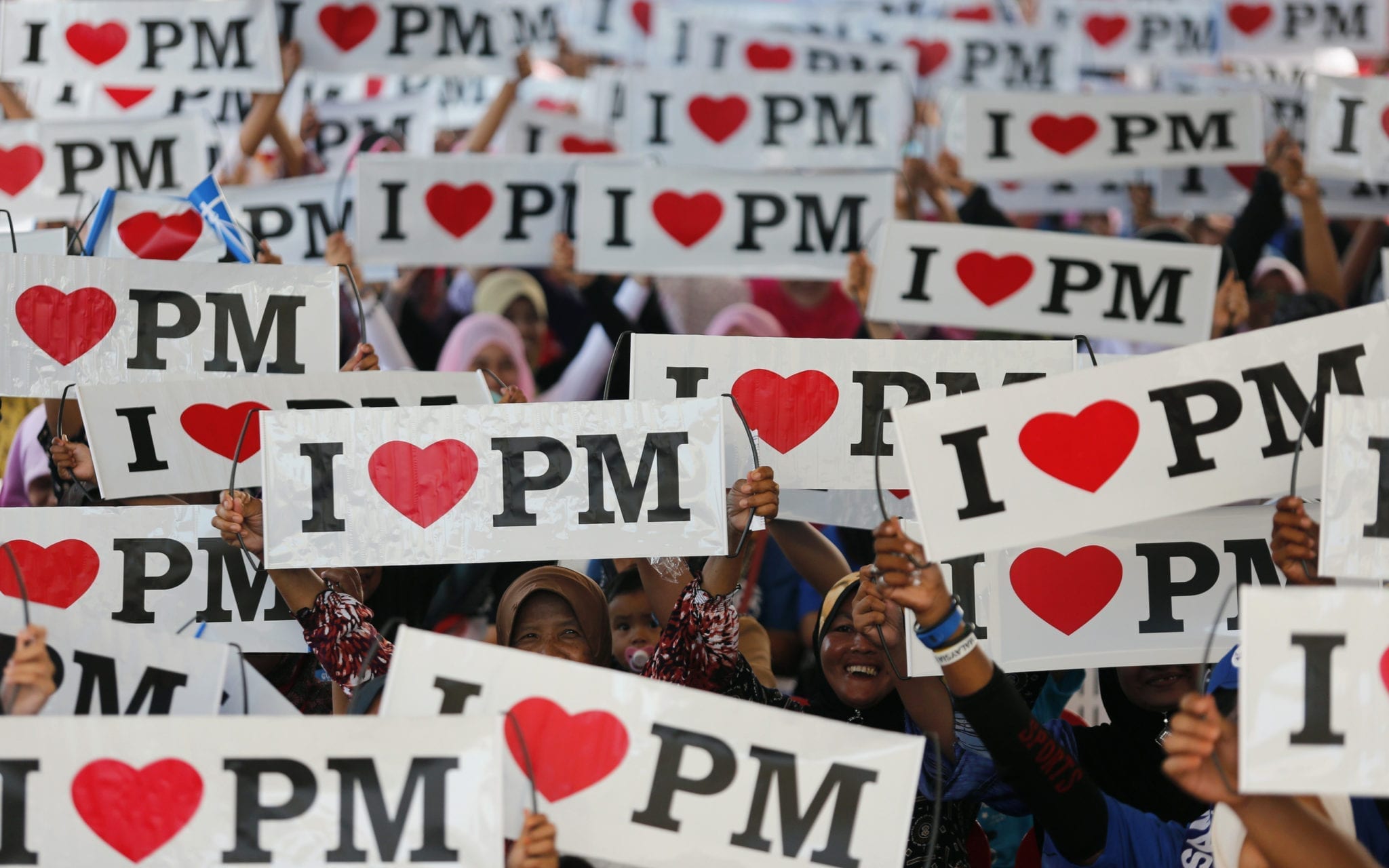
    Prime Minister Najib Razak, 64, said the portal, called TheRakyat — or “The People” — was a “significant step” for the Barisan Nasional coalition ahead of elections which must be held by August.
    “We know that in the 13th general election, we were victims of fake news,” he said at the portal’s launch on Wednesday in Kuala Lumpur. He cited rumors of power outages at voting booths in the 2013 ballot and the suggestion that some votes were therefore not counted. “We believe this will happen again in the 14th general election. That’s why we need a platform to connect to the people.”
    At stake for the ruling coalition is its unbroken rule of the Southeast Asian nation for more than 60 years. Under Najib it suffered its worst showing yet at the 2013 poll, losing the popular vote for the first time and failing to recapture a two-thirds majority in parliament.
    A stronger economy and ringgit could boost Najib’s chances this time, even as his rivals criticize him over rising living costs and corruption allegations. Najib has denied the claims of graft and been cleared by local authorities.

    A disparate opposition — as well as the four-party coalition known as Pakatan Harapan, there are a number of other major groups including the biggest Islamic opposition outfit — may also help Najib. There’s still the possibility of opposition candidates standing against each other in some districts.

    Pakatan Harapan will meet on Sunday and is expected to name its pick for prime minister, with speculation centered around former premier Mahathir Mohamad, who split from Barisan Nasional and has become one of Najib’s fiercest critics. Mahathir, who at 92 years of age is now chairman of Pakatan Harapan, said the group would announce “our future plans” at the end of its convention.

    The opposition’s de facto leader, Anwar Ibrahim, is in jail on a sodomy conviction, a charge he has denied. Pakatan Harapan would need to install an interim prime minister if it wins the election, then secure a royal pardon in order for Anwar to become premier.

  • New retail fuel prices announced

    New retail fuel prices announced

    The Independent Consumer and Competition Commission (ICCC) has announced the new retail fuel prices for this month, which will take effect on January 8, 2018.

    According to the ICCC’s calculations, retail fuel prices for petrol, diesel and kerosene will increase throughout PNG as of 8th January, 2018.

    “These price increases are attributed to the increases in the Import Parity Prices (IPP) for this month. Furthermore, the increases in the IPP are attributed to the increases in the Mean of Platts Singapore (MOPS) prices for petrol, diesel and kerosene during the month of December, 2017,” ICCC said in a statement.

    “Increases in the MOPS prices are attributed to the increases in crude oil prices during the month of December, 2017. The retail price increase particularly for diesel is attributed in the increase in its excise duty in 2018 from 10 toea to 23 toea per litre.”

    The domestic retail fuel prices are inclusive of the IPP, domestic sea and road freight rates for the first quarter of 2018, 2018 wholesale and retail margins for petrol, diesel and kerosene; including excise duty for petrol and diesel, and the Goods and Services Tax (GST).

    As a result of adding all the various cost components, the table below shows the maximum retail prices for fuel that are to be sold in Port Moresby.

    Port Moresby Retail Prices (toea per litre)

    Petrol (tpl)

    Diesel (tpl)

    Kerosene (tpl)

    Retail Prices as of 8th January, 2018

    346.92

    308.76

    280.47

    Retail Prices as of 8th December, 2017

    343.29

    286.12

    273.94

    Price Variance (+/-) toea per litre

    +3.63

         +22.64        +6.53

    As stated above, for this month the retail fuel prices in the National Capital District will change as follows:

    • Petrol prices will increase by 3.63 toea per litre;
    • Diesel prices will increase by 22.64 toea per litre; and
    • Kerosene prices will increase by 6.53 toea per litre.

    Retail prices in all other designated centres will change according to their approved in-country shipping and road freight rates (for the first quarter of 2018) that are charged by the fuel distributors.

    As part of the ICCC’s enforcement and compliance of fuel prices, its investigation officers will conduct inspections at all service stations on Monday, January 8, to ensure prices of petroleum products do not exceed the allowable maximum prices.

    The prices set by the ICCC are the indicative maximum retail prices, for which retailers may choose to sell below the maximum price.

    “Again, the ICCC would like to remind retailers who sell fuel using pumps to set fuel prices to one decimal place while the ICCC will continue to set the maximum price to 2 decimal places,” said Avi Hubert, acting chief executive officer.

    “No fuel pump operator should charge above the Indicative Retail Price for this month’s price regardless of the number of decimals. This is to ensure compliance with the Prices Regulation Act under which the maximum prices of refined petroleum products are set.

    “Retailers who are displaying prices to 1 decimal place are urged by the ICCC to round the prices down to ensure prices are within the allowable indicative retail prices. The ICCC inspectors will continue to conduct spot checks after 8th January to ensure ongoing compliance by fuel operators.”

    Consumers are advised to report any instances of overcharging by retailers through the ICCC’s Consumer Protection Division on 325 2144 or on toll free number 180 3333.

  • Spotify hit with $1.6 billion copyright lawsuit

    Spotify hit with $1.6 billion copyright lawsuit

    Music streaming company Spotify was sued by Wixen Music Publishing Inc last week for allegedly using thousands of songs, including those of Tom Petty, Neil Young and the Doors, without a license and compensation to the music publisher.

    Wixen, an exclusive licensee of songs such as “Free Fallin” by Tom Petty, “Light My Fire” by the Doors, (Girl We Got a) Good Thing by Weezer and works of singers such as Stevie Nicks, is seeking damages worth at least $1.6 billion along with injunctive relief.

    Spotify failed to get a direct or a compulsory license from Wixen that would allow it to reproduce and distribute the songs, Wixen said in the lawsuit, filed in a California federal court.

    Wixen also alleged that Spotify outsourced its work to a third party, licensing and royalty services provider the Harry Fox Agency, which was “ill-equipped to obtain all the necessary mechanical licenses”.

    Spotify declined to comment.

    In May, the Stockholm, Sweden-based company agreed to pay more than $43 million to settle a proposed class action alleging it failed to pay royalties for some of the songs it makes available to users.

    Spotify, which is planning a stock market listing this year, has grown around 20 percent in value to at least $19 billion in the past few months.

  • Japan’s proposed departure tax draws mixed views

    Japan’s proposed departure tax draws mixed views

    Japan’s planned introduction of a “departure tax” on international travelers has received a mixed response, with many questions yet to be answered about how the revenues will be spent.

    Hopes are high that the recent tourism boom will continue beyond the 2020 Tokyo Olympics and Paralympics, when the government aims to attract 40 million visitors to the country that year.

    But the surge in visitors is also making it imperative for debt-ridden Japan to secure enough funding to improve infrastructure and services for foreign tourists in a country that prides itself on its “omotenashi” hospitality.

    Some visiting tourists appear supportive of the move to require each passenger to pay 1,000 yen (S$11.85) every time they depart Japan by air or sea. But other travelers, including Japanese going abroad, are unconvinced how they are going to benefit from it.

    “Paying a tax does not sound good,” said Ms Wang Pei Hsien, a 47-year-old tourist concluding a six-day visit from Taiwan.

    “But if I can get better services here, I think it is OK,” she said before flying out of Tokyo’s Haneda airport.

    The ruling coalition of the Liberal Democratic Party and Komeito party included the introduction of the new tax for international travelers in their reform package approved earlier this week.

    To spur spending by foreign tourists like Ms Wang, who bought clothes, children’s toys and medicine in Japan, the ruling bloc decided to simplify the existing tax-free system.

    Currently, at least 5,000 yen needs to be spent on general goods such as home appliances or on disposable items such as cosmetics and medicine to qualify for the tax exemption.

    But the plan is to enable foreign shoppers to combine them to reach the 5,000 yen threshold.

    Japan has seen a surge in foreign visitors in recent years, with the number already hitting a new record in 2017, exceeding the previous high of over 24 million last year.

    In 2016, the number of departures from Japan stood at around 40 million, meaning that had the departure tax already been in place it would have generated revenues of some 40 billion yen.

    “It all comes down to how the money collected is going to be spent,” said Ms Yumi Hori, a 27-year-old Japanese who was at Haneda waiting for her flight to Canada. “I wish wi-fi connections were better here.”

    Her view was echoed not only by other travelers but also officials and tourism industry professionals.

    The government is seen as hurrying to seize the opportunity to step up preparations for hosting the Olympics and Paralympics, even though experts say it should also look beyond the event to boost tourism.

    Since the idea of the departure tax emerged earlier this year, a panel of experts drew up a report on how to secure funding to make Japan a “tourism-oriented” country.

    In the report to the Japan Tourism Agency, the panel said a tax of 1,000 yen or lower should be “viable,” after studying examples from other countries and weighing the potential impact on foreign travel demand.

    Australia, for instance, charges AUS$60, or about 5,200 yen, when a person leaves the country, while South Korea requires each air passenger to pay 10,000 won, or about 1,000 yen, and 1,000 won when departing by sea.

    As recent brisk travel demand from Asian countries has been supported by low-cost carriers, economists say the introduction of the departure tax may have some impact, a concern raised by the travel industry.

    Mr Takayuki Miyajima, senior economist at the Mizuho Research Institute, said it could test Japan’s seriousness about boosting inbound tourism, a must for its longer-term economic growth.

    “The tax revenue should be used to build infrastructure and enhance connectivity to regional areas for foreign tourists, which will help revitalize these areas,” Mr Miyajima said.

    “But Japan also needs to tackle its increasingly severe labor shortage, especially in the services sector, and spending money to do something about it could be an option.”

  • Vietnam confirms plan to fly non-stop to California in 2018

    Vietnam confirms plan to fly non-stop to California in 2018

    Vietnam’s government has approved plans to expand its air network to major markets including Australia, China, Europe and the United States starting from this year.

    According to the plan, Vietnam Airlines will go through with its proposal to open non-stop services to the U.S., starting with direct flights to the west coast in 2018. The national carrier is considering between San Francisco and Los Angeles.

    The U.S. proposal was revealed a couple of years ago and received much excitement, given busy travel between the countries. The U.S. is the fourth largest source of foreign visitors to Vietnam, with more than 614,000 people coming in 2017, up 11 percent from the previous year, according to the General Statistics Office.

    Aircraft manufacturer Airbus said in September 2016 that it had signed an MoU with Vietnam Airlines to deliver 10 A350-900 aircraft, which will be used for non-stop flights to the U.S.

    But the giant economy across the Pacific is just part Vietnam’s sky plan.

    For its neighbor China, Vietnam is set to open dozens of new flights by 2020.

    The new routes will connect Can Tho, Da Lat, Da Nang, Hai Phong, Hue, Nha Trang and Phu Quoc Island of Vietnam with at least 17 Chinese destinations: Changchun, Chongqing, Dalian, Fuzhou, Guilin, Guiyang, Haikou, Hainan, Harbin, Lanzhou, Ningbo, Shenyang, Wuhan, Xi’an, Xiamen, Xishuangbanna and Zhengzhou.

    Current flights to Beijing, Chengdu, Guangzhou and Shanghai will increase passenger load by adding to their frequency and using bigger aircraft, according to the development plan which has been approved by Prime Minister Nguyen Xuan Phuc.

    Chinese passengers to Vietnam surged nearly 50 percent to more than 4 million in 2017, accounting for nearly a third of foreign arrivals to the country.

    Vietnam’s aviation development plan also involves new flights to Australia, France, India, Japan, Malaysia, Russia, South Korea, Thailand, and the U.K., all of which now benefit from Vietnam’s e-visa and visa waiver programs.

    The country welcomed nearly 13 million foreign visitors and raked in nearly VND515 trillion ($22.7 billion) from tourism in 2017. It hopes the new air routes will bring the number of visitors up to 17-20 million in the next two years, when tourism money will contribute 10-12 percent to the economy, compared to the current 7 percent.

  • 50,000 malaysians expected to be laid off in 2018, says report

    50,000 malaysians expected to be laid off in 2018, says report

    MORE than 50,000 employees are expected to be laid off this year as reported.

    The English daily quoted Malaysian Employers Federation executive director Shamsuddin Bardan as saying manufacturing would be the main sector affected, followed by the services (insurance, banking and retail) and construction sectors.

    He said among the challenges facing the job market were the levy imposed on employers for the hiring of foreign workers and the Employee Insurance Scheme.

    “The increase in maternity leave days, from 60 days to 90 days, as well as the possibility of paternity leave, will also be factors.”

    The report said automation would continue to be another factor for job losses as more companies turned to robotics and information technology.

    “Multinational corporations involved in labour-intensive industries are also leaving due to higher wage costs in Malaysia,” said Shamsuddin.

    “They are moving to more attractive and lower-labour-cost nations, where there are no high social costs.”

    He said Cambodia and Laos were among the countries where wages were below US$100 (RM402.59) per month, whereas in Malaysia, they were about US$250.

    Malaysian Trades Union Congress president Abdul Halim Mansor was quoted as saying that based on information from the Labour Department, between 30,000 and 50,000 people could be retrenched this year, involving those from the finance, construction and manufacturing sectors.

  • Irispay launches vending-machine store

    Irispay launches vending-machine store

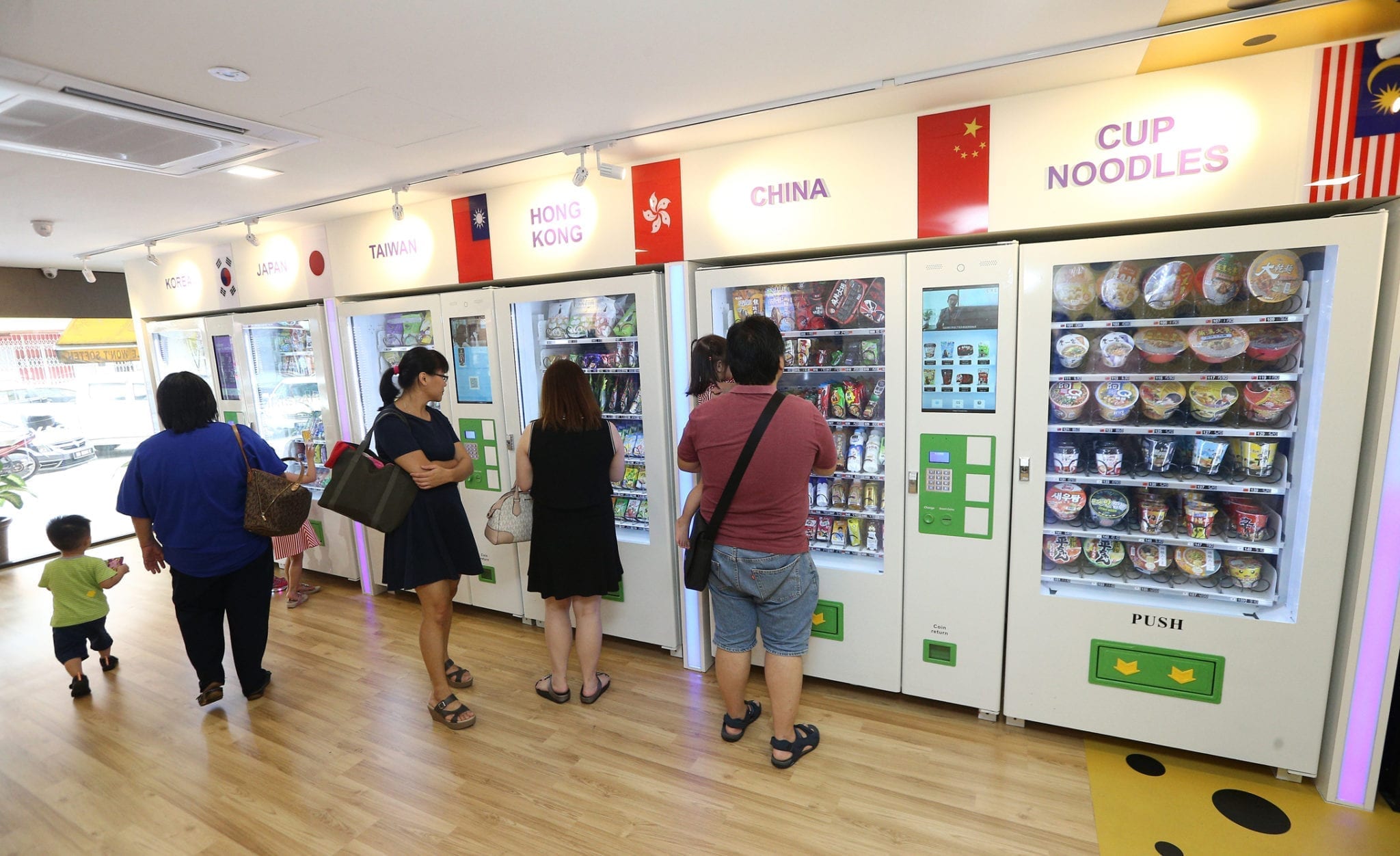
    Malaysian mobile wallet provider Irispay has rolled out its first e-Concept Store  in Kuala Lumpur.

    In Subang Jaya, the 24-hour store runs without the need for staff as reported.

    Customers buy from a line of vending machines, each one dedicated to the country of product origin, such as China, Hong Kong, Japan, Korea and Malaysia. Products include instant ramen, fruit-flavoured drinks and even condoms.

    There are three steps for customers, who use the Irispay mobile wallet app for access: choose a product, scan a QR code, authorise payment.

    An Irispay spokesman says Subang was chosen for the first store because of its large number of students, the company’s target market.

    Irispay says it hopes to expand to as many as 250 stores nationwide this year.

  • Hong Kong retail sales highest jump in 2017

    Hong Kong retail sales highest jump in 2017

    Hong Kong retail sales in November lept 7.5 per cent, the biggest monthly rise in at least three years.

    Census and Statistics Department (C&SD) data also showed a revised estimate of 3.9 per cent growth in October, fuelling a year-to-date increase of 1.8 per cent against 2016.

    The total volume of retail sales in November, after adjustment for inflation, showed an increase of 6.9 per cent year-on-year.

    A government spokesman described November’s figures as “appreciable year-on-year growth” reflecting rising numbers of visitors and “sanguine consumer sentiment” during the month.

    “The near-term outlook for retail sales remains positive, as consumer sentiment is buttressed by the favourable employment and income situation, and as inbound tourism continues to recover.”

    While jewellery and watch sales led the overall increase, rising 7.9 per cent, not a single retail category showed a decline in November. Cosmetics and medicine sales rose by 12.5 per cent, department store sales by 5.7 per cent, apparel by 3.5 per cent and footwear and accessories by 5.6 per cent. Sales of electrical goods and cameras were up 9.8 per cent.

  • Vietnam’s economic growth to accelerate in 2018

    Vietnam’s economic growth to accelerate in 2018

    The forecasts are in and Vietnam can gloat again after a scare in early 2017.

    Economic growth next year will reach as high as 6.7% in 2018, better than in 2017, the prime minister predicted in October 2017.

    The Asian Development Bank forecasts 6.5%, but higher than 2017 and stronger than developing Asia overall. Even the more cautious World Bank estimates more growth next year than this year.

    As of early 2017, drought had afflicted farming while mining faced high production costs and declining sales prices abroad. U.S. President Donald Trumps decision in January to withdraw his country from the Trans Pacific Partnership trade pact further stood to whack Vietnam as a signatory and major exporter. Policymakers fretted that the country would miss growth targets.

    But those setbacks registered as blips at best for Vietnam’s overall $202 billion GDP. The nominally communist Southeast Asian country that opened to foreign investment in 1986 is still seeing a buildup of that capital from offshore.

    Foreign investors in the likes of electronics and polyester yarn factories still love Vietnam for its low costs, abundance of labor and matter-of-fact permitting process, analysts on the ground say. Growth has also helped make people wealthier, leaving just 13.5% in poverty, a boon to investors who sell locally.

    “We can reasonably infer that high registered foreign direct investment (FDI) in 2017 will result in high disbursed FDI in 2018, yet another year to post double-digit growth in FDI disbursement,” financial services firm SSI Research says in a note this month.

    Registered foreign direct investment increased 44% year-on-year through Dec. 20 to $29.68 billion, according to the Ministry of Planning and Investment.

    Foreign-operated factories make goods mainly for export and exports had risen 23% to $155.24 billion over the bulk of 2017, SSI Research says. Most offshore investment comes from South Korea, Singapore, Japan and Taiwan, all places where manufacturing costs more than in Vietnam.

    Investors come for a labor force that’s famously young, trainable and willing to work for a minimum wage of $172 per month. About 60% of the 93 million Vietnamese are of working age. Starting a business is getting more efficient permit-wise and most industries allow foreign investment of 100%, according to this guide by PwC (Vietnam) Ltd.

    It’s little wonder that Samsung Display made an “additional investment” of $2.5 billion this year, per SSI Research data. The display unit of of South Korean multinational Samsung Electronics will have parked $6.5 billion in Vietnam with the new outlay. In another major foreign investment move, Taiwanese-owned Polytex Far Eastern registered a $490 million factory for polyester yarn production.

    Thai Beverage’s proposed investment of 25% to 51% in the major Vietnamese brewery Sabeco, though not a direct factory sort of deal, points to further keenness on Vietnam itself.

    “The FDI scene in the economy continues to thrive,” says Dustin Daugherty, senior associate in business intelligence with the consultancy Dezan Shira & Associates in Ho Chi Minh City. “While a lot of attention is paid to big name deals, the number of small to medium-sized enterprises and smaller multinational company investors continues to tick up, and enthusiasm is very high.”

    “I think next year will be as good or better than this,” Daugherty says. “We are not yet at peak for the growth rate.”