Category: General

Retail News Asia is committed to providing both local and global retailers with the latest General Retail news throughout the Asian market. This on a daily base.

  • 10,000 Google staff set to police YouTube content

    10,000 Google staff set to police YouTube content

    Google is to deploy a staff of 10,000 to hunt down extremist content on its YouTube platform following recent criticism, the video-sharing site’s chief executive told Tuesday.

    Susan Wojcicki, YouTube’s CEO admitted in the broadsheet that “bad actors” had used the website to “mislead, manipulate, harass or even harm.”

    British Prime Minister Theresa May has put pressure on internet giants to root out online radical material following a spate of terror attacks, while YouTube last week pulled 150,000 videos of children after lewd comments about them were posted by viewers.

    Wojcicki claimed that her company had developed “computer-learning” technology to identify extremist videos, and that it could also be used to identify content that risked children’s safety.

    “We will continue the growth of our teams, with the goal of bringing the total number of people across Google working to address content that might violate our policies to over 10,000 in 2018.”

    Last week’s move to take down suspect content came after a British newspaper reported that ads for big-name brands were displayed alongside videos of children or teens which, while innocent on their own, drew viewer comments that seemed paedophilic in nature.

    Media reports indicate the situation made advertisers skittish, with some halting YouTube advertising.

  • Carrefour Taiwan adds four stores in one week

    Carrefour Taiwan adds four stores in one week

    Carrefour Taiwan has opened four more stores, three in Taipei and one in Tainan.

    The French hypermarket chain introduced the stores all in a space of a week, and all will be open 24/7.
    First up was Tainan Yu Nong at 650sqm, followed by Luzhou Guanghua (515sqm), Taipei Jinan (670sq) and Shi Lin Zhong Cheng.

    These stores follow the Carrefour formula of offering fresh and grocery items as well as basic bazaar, textile and small-appliance items. Shoppers are offered free Wi-Fi access, dining, coffee and ice cream.
    Carrefour has 64 hypermarket and 45 supermarket in Taiwan.

  • Hong Kong to be one of world’s earliest adopters of 5G technology

    Hong Kong to be one of world’s earliest adopters of 5G technology

    Hong Kong will be one of the world’s earliest adopters of next generation 5G mobile broadband services, which will run 10 times faster than existing high-speed mobile internet when the technology is ready for commercial use in 2020, local officials revealed on 1 December 2017.

    The Office of the Communications Authority said the city would “grasp” 5G’s benefits after service allocation details are finalised in 2019.

    The International Telecommunication Union (ITU), a UN body, will convene the World Radiocommunication Conference in 2019 to decide global allocation of the 5G spectrum. Commercial 5G services are expected to roll out the following year.

    The current mobile broadband standard, 4G-LTE, is only capable of download speeds of 1 gigabit per second. The 5G standard is expected to have a maximum download rate of 10 gigabits per second and will have significantly less latency, giving people faster load times for content, such as for full, high-definition videos.

    Information technology sector legislator Charles Mok said once the 5G spectrum is finalised, it would be relatively simple to install on existing 4G-LTE networks, without needing to replacing entire cellular towers.

    Mok expected the 2019 conference to go smoothly because many vendors and developers were already preparing products for 5G as they had an idea which spectrums would most likely be allocated.

    “The ITU announcement will be just a formality because where the industry is going is pretty certain,” he added.

    Meanwhile, the communications authority has set up a licensing scheme for companies that wish to use wireless bands for Internet of Things (IoT) devices.

    IoT products are constantly connected to the internet, collecting data for use on other devices or for companies’ later analysis to develop upgrades or new products.

    The licence would give the government regulatory oversight of products that use wireless communications to generate, exchange and consume data. This would include smart meters, smart waste management systems and autonomous vehicles.

    Two international companies have applied for the licence, according to authority deputy director general Chaucer Leung Chung-yin, but he declined to name them.

  • Hansa Heavy Lift Develops Tailored Solutions For Floating Unit Customers Globally

    Hansa Heavy Lift Develops Tailored Solutions For Floating Unit Customers Globally

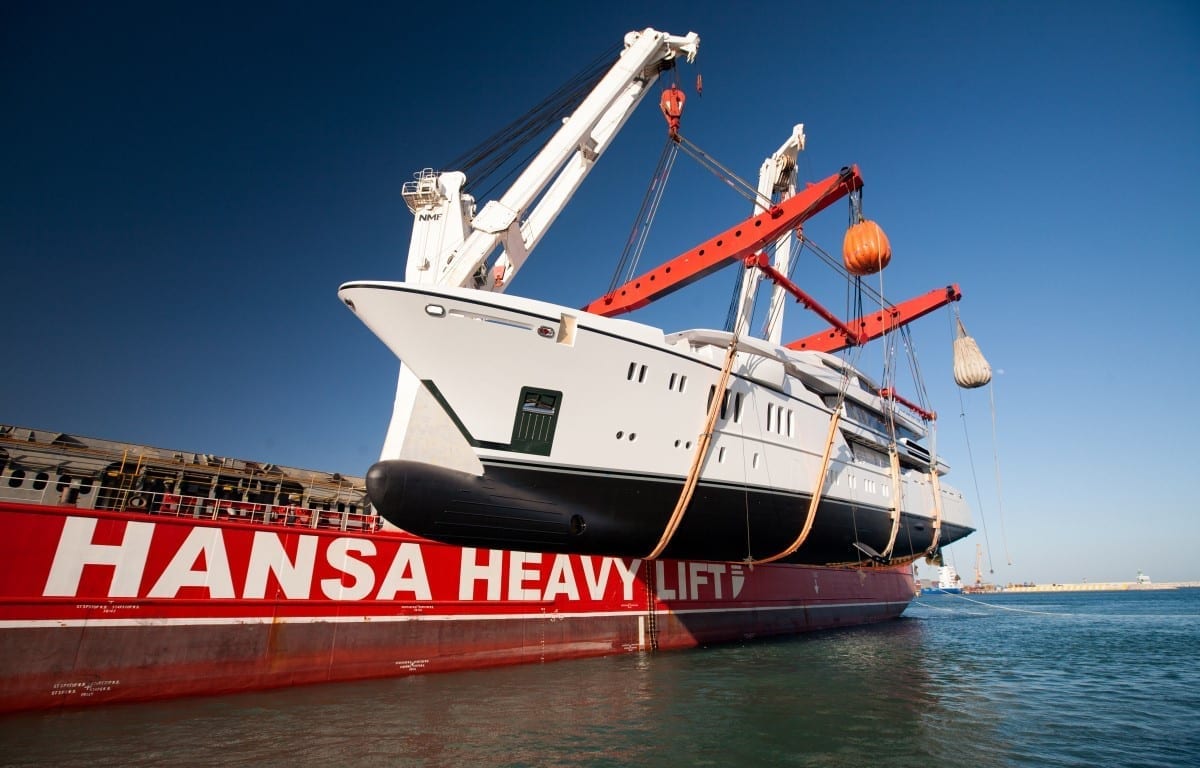
    HANSA HEAVY LIFT has strengthened its position in the floating unit market after successfully completing a series of projects in the Americas, Europe, Asia, and Africa.


    The moves included the transportation of 45 yachts in one consignment, as well as the safe delivery of two oversized barges and three tugs.


    “We see much potential in the floating unit market. Our very adaptable heavy lift ships and engineering know-how ensures we are able to meet our customers’ bespoke requirements globally, no matter the challenges,” said Emek Ersin Takmaz, Head of Projects, Engineering Department, HANSA HEAVY LIFT.


    The consignment of 45 yachts was recorded as the largest number of yachts shipped on a single vessel for Peters & May, and took place aboard HHL New York, with the journeys originating in the USA and the Caribbean and concluding in the UK and Germany, coordinated by bespoke logistics provider Peters & May.


    HANSA HEAVY LIFT crews worked with Peters & May’s expert loadmasters to load the yachts with their masts up at Port Everglades in Florida, USA, St Thomas, and Antigua, and delivered them to the ports of Southampton, UK, and Bremerhaven, Germany.


    “Working with a trusted partner, such as HANSA HEAVY LIFT on key projects such as this, means all stages of the operation – from planning to execution – are flawlessly executed. Both teams’ high attention to detail allowed us to provide the optimum service our clients expect. We look forward to working with HANSA HEAVY LIFT on exciting projects in the future,” said Simon Judson, Global Operations Director, Peters & May Group.


    HANSA HEAVY LIFT also transported a bunker barge from Sydney, Nova Scotia, Canada, to Mazatlán, Mexico, and a petroleum barge from Antwerp, Belgium to Banana, Democratic Republic of Congo.


    HHL Tokyo delivered the bunker barge, which measured 53.37m long by 12.49m wide by 14m high, and weighed 516 metric tonnes, whilst HHL Venice transported the petroleum barge, measuring 71.65m long by 12.30m wide by 6.90m high, and weighed 410 metric tonnes.


    The heavy lift specialist also transported three tugs from Singapore to Russia on board HHL New York. The heaviest tug measured 33.7m long by 10.6m wide by 22.3m high and weighed 467 metric tonnes.


    “This project was a race against time, which required us to find an efficient and cost-effective solution to be able to lift the tugs and transport them safely on our vessel,” said Takmaz.


    “Tailor-made steel structures were designed and suitable lifting solutions developed for each tug by our in-house engineers.”

  • Optimized communication processes in Holiday Season

    Optimized communication processes in Holiday Season

    Every year retailers are faced with the challenge of ensuring a positive customer experience when stretched to full capacity. A task made all the more difficult by the fact that a lot of shoppers have already had their nerves worn thin by the stressful search for gifts in a crowded city center. Retarus has revealed the following communication processes to help retailers maintain the highest levels of customer experience:

    1. More targeted controlling of customer flows

    In the lead-up to Christmas, the stream of customers entering shops increases dramatically. The load is especially high in the evenings, on Saturdays and directly before Christmas. Increasingly, online buyers just pop in to shops to pick up their purchases ordered via “Click & Collect”, rather than having to wait for overloaded delivery services. In Southeast Asia, 93 percent of consumers in the region have made online purchases – many of them at regular frequencies. The same study highlighted that 40 percent of consumers are willing to pay extra to collect orders at a convenient 3rd party location, indicating that Southeast Asian consumers prioritise speed of delivery. In light of this retailers in the region have been turning to Click & Collect services to provide customers with the option to collect their puchases without the need of waiting. Cloud Messaging Services enables better management of visitor frequency and an improved service experience for customers. For instance, SMS or email could be used to communicate a clear time window for collecting orders, during which the shop is not so busy or staff numbers have been optimised to meet demand. Special service offers or discounts can also provide customers with an additional incentive to fetch their orders within a given time period. This prevents shops from becoming overcrowded and long queues developing, leading to a much improved customer experience.

    1. Coordinating staff flexibly

    To keep checkout queues as short as possible, while still offering satisfactory levels of expert advice and other services such as a gift wrapping, retailers generally hire temporary, seasonal staff. At the same time, short-term staffing shortages due to illness have to be covered without delay. Cloud-based communication platforms provide valuable support for the coordination of human resources. Using Retarus’ Enterprise SMS Services, retailers only need a couple of clicks to send out an SMS that includes a reply option when they need additional staff. The staffing coordinator then only has to contact those members of staff who gave a positive response to clarify the details of the assignment.

    1. Addressing customers individually

    Once a shopper has entered a store, there is a good chance that they may buy additional goods that were not on their original shopping list. Thanks to cloud messaging services this can be used to good advantage by retailers – especially with Click-&-Collect customers. In combination with the order confirmation or pick-up notification the customer receives, personalised offers by means of SMS or email enables customers to order recommended products or services seamlessly through the reply function. Reminders about an extended period for returns or a personalised holiday greeting can also be achieved without much effort and sustainably strengthen customer loyalty.

  • Whitesky kicks off Jakarta-Bandung helicopter service

    Whitesky kicks off Jakarta-Bandung helicopter service

    PT Whitesky Aviation commenced on Monday the operation of its helicopter service from Jakarta to West Java’s capital of Bandung.

    Whitesky Aviation CEO Denon Prawiraatmaadja said on Sunday that the service, named Helicity, had received a license from the Transportation Ministry to operate as a public transportation mode.

    “Helicity is also to support the tourist sector,” said Denon, adding that the fare was Rp 36 million (US$2,664) per trip for six passengers

    Denon said his company operated 30 helicopters for its service across Indonesia.

    He said the operation of Helicity was initiated in response to the government’s aim to improve air connectivity to boost tourism.

    He expressed his optimism about the Helicity market, particularly because of the increasing number of foreign tourist arrivals in Indonesia – 12 million in 2016 and a targeted figure of 15 million in 2017, with each tourist spending an average of US$1,200 per visit.

  • Garuda Indonesia Cancels Flight Due to Lack of Pilots

    Garuda Indonesia Cancels Flight Due to Lack of Pilots

    National flag carrier Garuda Indonesia canceled a flight from Singapore Changi Airport to Soekarno-Hatta International Airport on Sunday due to a lack of available pilots. The plane was scheduled to depart at 10 p.m. Singapore time.

    Garuda spokesman Ikhsan Rosan said the pilots who were meant to fly that evening had flown for nine hours on Sunday – the maximum number of hours a pilot is permitted to fly in one day.

    “The pilots should fly for a maximum of nine hours a day after having flown five times but, due to delays, the pilots had reached the flying limit,” Ikhsan told on Sunday night, adding that the pilots were not immediately replaced as all available ones were in Jakarta.

    As a result, hundreds of passengers were forced to reschedule their flights on Monday as all Sunday flights were fully booked.

    One of the passengers, Rudy Bani, 39, said he was frustrated with the airlines because he had a meeting on Monday afternoon.

    “I am a frequent flyer of Garuda and this kind of thing had never happened before. This is the worst,” Rudy said.

    Passengers trying to book morning and afternoon flights on Monday reportedly had a difficult time finding available seats.

  • Singapore Airlines And SilkAir To Codeshare On Scoot Flights

    Singapore Airlines And SilkAir To Codeshare On Scoot Flights

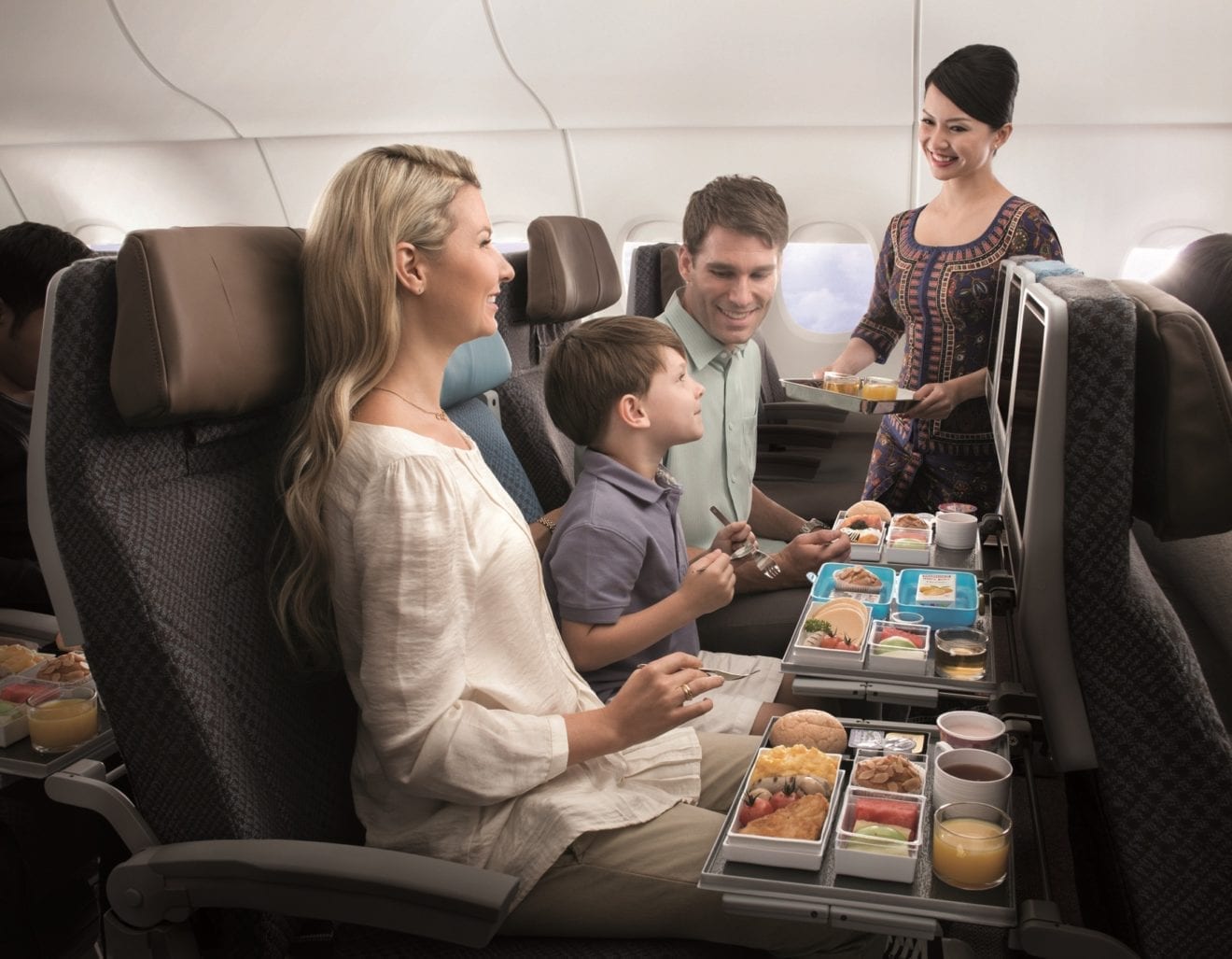
    Singapore Airlines (SIA) and SilkAir customers can now enjoy more choice and convenience when travelling to more than 130 destinations across the SIA Group network as a result of new codeshare agreement with the Group’s low-cost subsidiary Scoot.

    Under the agreement, SIA will progressively add its ‘SQ’ designator code while SilkAir will add its ‘MI’ code to Scoot-operated flights between Singapore and more than 30 destinations1 served only by Scoot within the SIA Group. The codeshare arrangements will begin with Scoot flights serving Athens, Clark, Gold Coast, Hat Yai, Ipoh, Krabi, Kuching and Palembang. The new agreement will enable SIA and SilkAir customers to travel on single-ticket itineraries to these codeshare destinations, which means that their boarding passes and baggage tags will be issued up to their final destination at the first point of check-in, according to Singapore Airlines.

    In addition to through check-in service, SIA and SilkAir customers will be offered Scoot’s FlyBagEat privileges – which include checked baggage allowance, complimentary meal and beverage as well as blanket for flights above four hours. SIA and SilkAir customers will also be offered the flexibility to select seats on Scoot flights online through the SIA and SilkAir websites when booking their tickets, for a fee, in accordance with Scoot’s terms and conditions.

    The codeshare flights are subject to regulatory approvals. Tickets will be progressively made available through the various booking channels.

  • Singapore Airlines warns of scams touting free First Class tickets

    Singapore Airlines warns of scams touting free First Class tickets

    Singapore Airlines has warned of contests, emails and calls claiming to be from the company, informing recipients of free air tickets before proceeding to request for their personal data.

    “To appear more authentic, such callers are also able to modify their caller ID to imitate our official telephone numbers,” it added on an advisory posted on the Singapore Airlines website.

    Over the weekend, one such scam has been circulating on messaging app WhatsApp.

    The message read: “Hello, Singapore Airline is giving away 2 Free FirstClass Tickets to celebrate it’s 45th anniversary, Now you can get your tickets too !” followed by a link that closely resembled the airline’s official website.

    Upon clicking on the link, people were directed to a website asking them to share the promotion with 20 friends or groups via WhatsApp and enter their address details to claim their tickets.

    As of Monday, the website appeared to have been taken down.

    The scam comes days after Singapore Airlines unveiled its new first class suites, among other cabin offerings on its revamped Airbus 380s.

    To verify websites, emails and calls claiming to be from Singapore Airlines, customers can send the airline details via its website, the carrier said in the Facebook post.

    “Singapore Airlines also wishes to advise customers to be cautious of social media posts and phishing websites that appear similar to our official website singaporeair.com,” it added.

  • AirAsia resumes Singapore expansion following move to Terminal 4

    AirAsia resumes Singapore expansion following move to Terminal 4

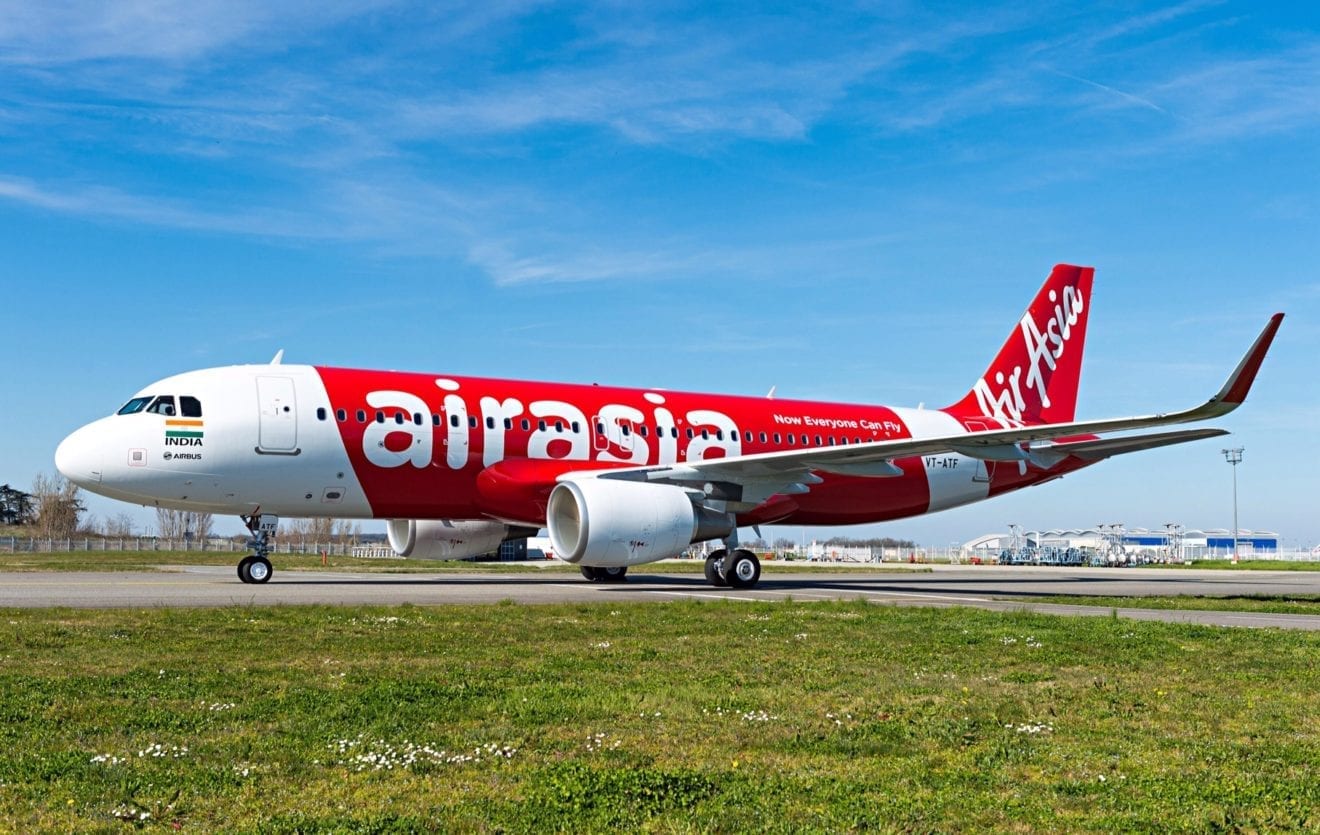
    The AirAsia Group is resuming expansion in Singapore over the next few months, with the launch of three routes and capacity increases on two of its 15 existing routes. AirAsia’s virtual hub in Singapore will increase from 261 to 289 weekly departures, resulting in the highest level of capacity since 2015.

    However, AirAsia’s Singapore capacity will still be lower than in 2013 and 2014, when it peaked at more than 300 weekly departures. At one point AirAsia had as much capacity in Singapore as the rival LCC groups Jetstar and Tigerair – despite not having a local affiliate.

    AirAsia is keen to regain market share in Singapore and drive a new phase of LCC growth at Changi, which has experienced faster FSC growth over the last three years. AirAsia’s recent move to Terminal 4, which has self-service technologies embraced by AirAsia in its digitalisation push, provides a potential platform for faster growth.

    However, T4 alone is not a panacea, and AirAsia needs a further reduction in its Singapore cost base in order to really accelerate its rate of growth at Changi Airport.

  • Vietnam’s central bank to provide small change to all toll gate

    Vietnam’s central bank to provide small change to all toll gate

    The smallest denomination banknotes in Vietnam, VND100 and VND200 ($0.01), are both available at the central bank to any individuals or organizations that have a demand for them, a senior official from the bank said.

    Nguyen Thi Dam, director of the State Bank of Vietnam’s branch in Tien Giang Province, said the two notes are still in circulation and the central bank always makes sure they are available to customers.

    Those in need can ask for small notes at any commercial bank or come to the central bank, she said on Friday.

    Her statement follows a renewed dispute at a reopened toll station in Tien Giang where drivers have been protesting by demanding VND100 in change after paying VND25,100 for the VND25,000 toll.

    The situation led to a massive tailback on Thursday running up to the Cai Lay station, forcing staff to give in and allow drivers through free of charge.

    The station had only reopened that morning after disgruntled drivers forced it to close three months ago, but they were quick to pick up from where they left off.

    Their previous tactic was to pay the toll with stacks of VND200 and VND500 notes, forcing staff to spend extra time counting them. This eventually resulted in heavy traffic jams which forced the station’s staff to let cars pass.

    “We’re protesting because this station is in the wrong location, not because of the toll fees,” driver Vo Thanh Hao said. “We drivers will continue to fight against the investor behind the station.”

    The branch in Tien Giang has asked the central bank to provide more VND100 notes, given the high demand for the small denomination at the moment.

    In reality it’s a real challenge to find a VND100 note on the market these days, and they’re often kept as souvenirs now.

    The VND100 note was issued in 1991, and the biggest denomination in Vietnam now is VND500,000 ($22). A cup of iced tea costs around VND2,000 at streetside stands.

    The Cai Lay toll station was opened along National Highway 1 on August 1 for investors to recover the money spent on a project to resurface the highway and build a new bypass around a local town. However, drivers soon started using small change to pay the tolls in protest against the station, claiming it should have been placed along the new bypass instead of on the main road.

    The protests resulted in heavy traffic for days, forcing the station’s operator to temporarily close it on August 15.

    The Transport Ministry disagreed with the drivers’ claim that the station should have been placed along the new bypass, but agreed to cut the toll fees and let locals living near the station pass through for free.

    Luu Van Hao, deputy chairman of the company investing in the BOT (Build-Operate-Transfer) project, also stressed that the toll station is operating in accordance with regulations.

    “Cutting the toll fees is the last resort. We cannot relocate the station like the drivers have asked,” he said.

    There are toll stations every 62 kilometers (39 miles) along the highway, according to a report released by the legislative National Assembly last year. The standard distance set by the government is 70 kilometers.


  • Japan inflation ticks up but far from target

    Japan inflation ticks up but far from target

    Japan’s consumer prices rose for the 10th straight month in October, government data showed Friday, but inflation was still far from the target seen as crucial to revive the world’s third-largest economy.

    The core inflation rate was 0.8 percent year-on-year in October, according to data published by the internal affairs ministry, far below the two-percent target set by the Bank of Japan (BoJ).

    When the volatile prices for fresh food and energy were stripped out, prices rose by even less — 0.2 percent, the ministry said.

    Japan’s economy has battled deflation for many years and the BoJ’s ultra-loose monetary policy appears to be having limited impact.

    Other data showed that October household spending — seen as key for exiting deflation — remained flat compared to the same month a year earlier.

    However, this was better than the 0.3-percent drop market analysts were expecting.

    Household spending had fallen by 0.3 percent in September after rising by 0.6 percent in August.

    The unemployment rate remained unchanged at 2.8 percent for the fifth consecutive month, also in line with market expectations, the ministry said.

    Japan has notched up seven straight quarters of economic growth — the longest positive run for 16 years — with the upcoming 2020 Olympic Games giving the economy a shot in the arm.

    However, consumer spending has remained weak and deflation continues to stalk the economy.

    Japan’s weak inflation stands in sharp contrast to other major economies whose central bankers are looking to wind up their easing policies.

    The U.S. Federal Reserve is widely expected to hike rates for the third time this year in December and U.S. policymakers have forecast another three rate hikes in 2018.

    Meanwhile, the European Central Bank has announced it would halve its massive bond purchases from January as the eurozone recovery gathers pace, allowing the Frankfurt institution to begin winding down its crisis-era stimulus measures.

  • More discount from Don Don Donki for Singaporean

    More discount from Don Don Donki for Singaporean

    Japanese discount store Don Don Donki opens its first Southeast Asian outlet at Orchard Central today, to be followed by a second outlet at the 100 AM mall in Tanjong Pagar in June.

    The aim is to have at least 10 stores in Singapore within the next four or five years.

    Over two storeys, the Orchard Central megastore will be open 24/7 and also feature a “night market” concept featuring eight dining outlets in partnership with food manufacturer Hokkaido Marche. This section will launch next month and be open only during dinner hours.

    Don Don Donki’s product range of about 30,000 items was curated for Singapore and spans fresh and processed foods, vegetables, meat, sushi, groceries, beverages, costumes, clothing, cosmetics, novelty goods and household items. A third of the product selection is from Hokkaido.

    Covering 1400sqm, Don Don Donki will also offer products from its in-house brand Jonetsu Kakaku as well as a Hokkaido-themed retail space.

    The brand is known for its wide range of made-and-designed-in-Japan products – from toilet paper to second-hand Rolex watches.

    Better known as Donki, the store was founded by Japanese businessman Takao Yasuda in 1978 and is owned by the Don Quijote Group. Its stores in Singapore will be run by Pan Pacific International Holdings, its holding company for overseas business.

    Name change

    While the stores in Japan are called Don Quijote, its Singapore branch name has been changed to avoid confusion with a local Spanish restaurant of the same name. The term “Don Don Donki” was taken from the store’s theme song.

    “The idea to have Don Don Donki in Singapore was suggested by Hokkaido Marche,” said Yasuda, 68, who “semi-retired” a couple of years ago and moved to Singapore. “When I came here, I realised products in Singapore are very expensive, and in Japan I’m known as the king of discounts.

    “What costs one dollar in Japan is sometimes two or three dollars here.”

    So when he was approached by Hokkaido Marche to partner and open its concepts in Singapore, he agreed immediately.

    Pan Pacific International Holdings director Hideki Okada says the Singapore store is a pioneer for the rest of Southeast Asia. It will be followed by a branch in Thailand next November.

    With 368 stores in Japan, Hawaii and the US, the brand earned nearly ¥828.8 billion (US$7.3 billion) in annual sales for the fiscal year to June 30.

  • Stagnate sales result for Sears

    Stagnate sales result for Sears

    Dire, dismal, terrible, horrendous, grim, appalling – over the past few years we’ve used up our stock of adjectives to describe Sears results. As the descriptors run dry, so the bad numbers keep on coming.

    This quarter is no exception.

    It is particularly worrying that the strength of declines across all parts of the business is intensifying. In this period, total sales were down by just over 27 per cent. To be fair, more than half of this is attributable to ongoing store closures. However, that program does not explain the slump in comparable sales which were down by 17 per cent and 13 per cent at Sears and Kmart, respectively.

    In essence, the whole group remains in a tailspin, and it is clear that there is no chance of even a levelling-off in sales anytime soon. The dramatic loss of customers at existing stores continues apace, and there is a danger this trend could accelerate into the new year.

    Much has been made of the improvement to the bottom line. But, these warm words – a bromide which has been trotted out at every results announcement for years – do not stack up against reality. It is true that losses have narrowed, but Sears was still in the red by well over US$500 million during the quarter. By no means is this a cause for celebration.

    One small bright spot comes from the agreement with the Pension Benefit Guaranty Corporation. Under this plan, Sears will make an upfront payment into the pension scheme, secured by real estate assets. This will eliminate contributions which were required in both 2018 and 2019. This will certainly take some pressure off the bottom line in those years, although we caution that it does very little to fix the fundamental issues with the business.

    The extent of Sears’ woes is best seen through the growing gap between its assets and its liabilities. Last year this deficit was around $3.4 billion; this year it has grown to just over $4 billion. Given that the group has been selling off assets to fund current operations, this is not particularly surprising. However, the continued growth of the deficit, at a time when the group is deeply unprofitable, simply isn’t sustainable.

    For all the criticism we throw at Sears, it is only fair to praise the initiatives the group is taking to try and bring itself back. While we lack faith that these things will be enough to revive the company’s fortunes, they are not entirely without merit.

    The first of these is the relatively recent decision to sell some Kenmore branded appliances on Amazon. This is a sensible move which should strengthen sales volumes which, in turn, should support the inherent brand value of Kenmore. Arguably, without seeking out alternative distribution channels, Sears’ brands are ultimately in danger of fading into obscurity. However, this move is also a tacit admission that its stores are simply not working effectively as a distribution channel for its own brands.

    The second interesting move was the whole store sale that the group initiated before Black Friday.

    While this was probably borne out of desperation, it did help to drive footfall and interest across many stores. Unfortunately, such a strategy is not sustainable on a permanent basis – but it can be used to give sales and cash-flow a short-term boost.

    Ultimately, Sears is a dying business. Whichever way you cut them, the fundamental economics of the business do not add up. Nothing in this latest set of Sears results changes that view.

  • Tourism kicks up Hong Kong retail sales

    Tourism kicks up Hong Kong retail sales

    Continuing revival of inbound tourism and optimistic consumer sentiment drove a 3.9 per cent increase in Hong Kong retail sales in October.

    And two consecutive months of solid increases has lifted the year-to-date increase to 1.2 per cent.

    Official Census and Statistics Department figures estimate the total value of retail sales in October at $37.5 billion. The month’s rise followed a revised 5.7 per cent figure for September.

    C&SD said that after netting out the effect of price changes over the same period, the volume of retail sales in October increased by 3.6 per cent year-on-year and by 5.7 per cent in September.

    As expected, sales of jewellery, watches and luxury gifts drove the revival, rising 8.4 per cent year-on-year. Sales of medicines and cosmetics rose 9.9 per cent, of food, alcoholic drinks and tobacco by 8.5 per cent, apparel sales by 7 per cent and department store sales by 6.2 per cent.

    Sales of electrical goods and photographic equipment fell 2.2 per cent and of books, newspapers, stationery and gifts by 2.4 per cent.

    A government spokesman indicated that the favourable income and employment situation, together with the ongoing recovery of inbound tourism, should continue to render support to retail business in the near term.