Category: General

Retail News Asia is committed to providing both local and global retailers with the latest General Retail news throughout the Asian market. This on a daily base.

  • Dairy Farm sales stagnate

    Dairy Farm sales stagnate

    Dairy Farm sales were described as “flat” in the third quarter to September 30.

    The Hong Kong-headquartered company said improved performances in health and beauty, Ikea, restaurants and Yonghui were offset by lower sales in the food and grocery division.

    “The lower food division sales, together with new store pre-opening costs in home furnishings, (Ikea) led to underlying profits being marginally below the same period in the prior year,” the company said in a statement issued in London, where it has a secondary listing. “Similar trading conditions are expected to continue for the remainder of the year.”

    Dairy Farm said the weakness seen in food and grocery sales was principally driven by difficult trading for the hypermarket and supermarket operations in Southeast Asia, where it operates Giant hypermarkets and Cold Storage supermarkets. It says reviews of “a number of the businesses” are being undertaken.

    The results from greater China (including its Hong Kong Wellcome supermarkets) showed improvement over the same period last year. Convenience store operations (including 7-Eleven stores in Hong Kong and Singapore) produced improved sales and profitability.

    Yonghui reported a strong 20 per cent  growth in revenue and 131 per cent increase in profit in the quarter.

    Improved sales in the health and beauty division (Manning’s, Guardian and Rose Pharmacy) were driven principally by a strong performance in Hong Kong and Macau. Home Furnishings (Dairy Farm has the Ikea franchises in Hong Kong and Taiwan) traded well, although profitability was reduced due to pre-opening expenses for the new store in Hong Kong.

    Maxim’s (which also includes Starbucks operations in Hong Kong, Vietnam and Cambodia) had a seasonally strong quarter in both sales and profit, benefiting from record mooncake sales during the Mid-Autumn Festival period. In September, Maxim’s acquired the existing business and exclusive rights to operate and develop Starbucks franchise stores in Singapore.

    In August, the group completed the acquisition of the remaining 34 per cent interest in Rustan’s in the Philippines from its joint venture partner.

  • Hundreds of new shops for China’s Auchan Minute

    Hundreds of new shops for China’s Auchan Minute

    “Several hundred” Auchan Minute shops without checkout counters are planned for China by year’s end.

    Customers enter by scanning a code via the WeChat app. After products are scanned, they are added to a virtual cart. The customer then pays via AliPay or WeChat Pay.

    Every Auchan Minute will offer 500 products 24 hours a day.

    Founded in 1961, Auchan is France’s second-largest retail group after Carrefour.

  • Indonesia Posts Trade Surplus in October, Third Month in a Row

    Indonesia Posts Trade Surplus in October, Third Month in a Row

    Indonesia posted a trade surplus for a third straight month in October, the Central Statistics Agency said on Wednesday (15/11), as improved demand for commodities underpinned exports from Southeast Asia’s biggest economy.

    The trade surplus in October was $0.9 billion, the agency said. The surplus was supported by larger commodities shipments such as coal and metal, as well as manufactured goods.

    Demand from China continued to support Indonesian exports, the agency said.

    The surplus, however, shrunk from September’s surplus of $1.76 billion. Analysts polled by Reuters had expected a $1.63 billion surplus for the month.

    Exports rose 18.39 percent in October on an annual basis, compared with a 16.59 percent increase forecast in the poll.

    October exports were worth $15.09 billion.

    Meanwhile, imports jumped by 23.33 percent to $14.19 billion, picking up pace from a 13.13 percent rise in the previous month and compared to a forecast of 16 percent growth.

    The rise in imports was due to purchases of raw materials for industrial use.

  • Cebu Pacific looks to grow further in Australia in 2018 with Melbourne

    Cebu Pacific looks to grow further in Australia in 2018 with Melbourne

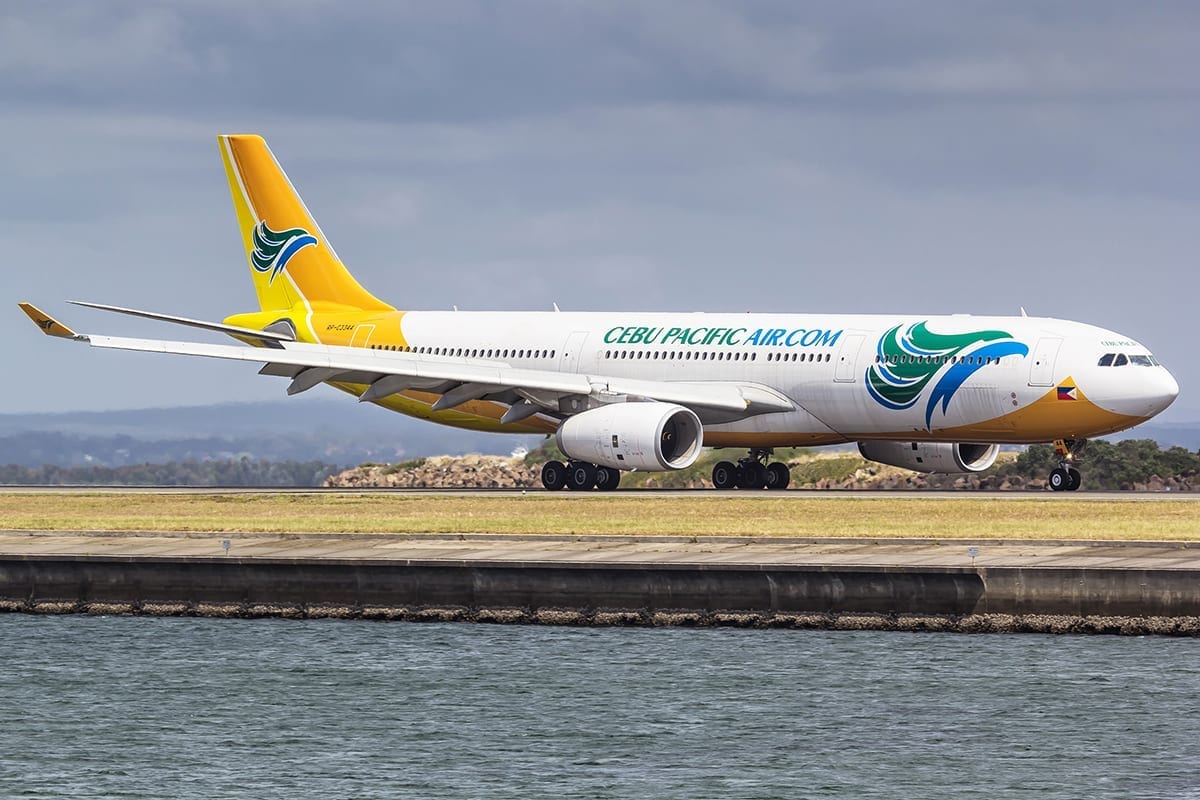
    Cebu Pacific is looking at launching services to Melbourne in 2018, further strengthening the Philippine low cost carrier’s position in Australia following the upcoming upgrade of Sydney to daily.

    Cebu Pacific has served Sydney for three years and has talked about the possibility of adding service to Melbourne since launching Sydney in late 2014. Talk about Melbourne has escalated over the last year as the performance on Manila-Sydney has improved, prompting the decision to upgrade Sydney to daily for the peak summer season. Sydney has until now been served with four to five weekly frequencies depending on the time of year.

    Cebu Pacific will operate seven weekly frequencies to Sydney in Dec-2017 and Jan-2018, compared to five weekly frequencies for the same period last year. Cebu Pacific for now has loaded a schedule of five weekly frequencies on Manila-Sydney from early Feb-2018. Cebu Pacific CEO Advisor Mike Szucs told CAPA on the sidelines of the 8-Nov-2017 CAPA Asia Aviation Summit that the airline plans to initially operate five or six frequencies during the non-peak and shoulder months but aims to eventually serve Sydney with a daily year-round schedule.

    “Australia is working well because it is selling well on both ends,” Cebu Pacific CEO Advisor Mike Szucs said. “Australia is a very good market for us.”

    Mr Szucs also said Cebu Pacific is now looking at launching services to Melbourne in 2018. “Australia is doing really well for us. We’ve grown the Manila-Sydney market phenomenally. We are the number one player in terms of passenger traffic on Manila-Sydney. We are increasing Sydney to daily frequencies from this December,” he said. “Melbourne is on the agenda for some time next year. We are not there yet – we need to go and finalise the numbers but Melbourne is looking interesting.”

    Philippine Airlines (PAL) is currently the only airline operating the Manila-Melbourne route, while Manila-Sydney has three nonstop competitors including PAL, Qantas and Cebu Pacific. PAL serves Sydney daily and Melbourne with three weekly flights, while Qantas has five to six frequencies on Sydney-Manila (depending on the time of year).

    Cebu Pacific has a fleet of eight A330-300s but has been using its widebody fleet mainly on short haul routes since suspending three Middle East services in mid-2017. Sydney and Dubai, which is served daily most of the year, are the only remaining long haul routes in Cebu Pacific’s network and use the equivalent of two aircraft.

    Mr Szucs said Cebu Pacific will have the opportunity to resume long haul growth in 2018 as A321s enter the fleet. Cebu Pacific mainly plans to use the new A321 fleet to up-gauge short haul routes from A320s but has the flexibility to use some of the A321s to replace A330s on short haul routes, freeing up A330s for new long haul routes. “As the A321s come in next year we will be able to start redeploying A330s again into some targeted long haul markets,” Mr Szucs explained.

    Under this scenario, Melbourne is on the top of the list as Cebu Pacific is not interested for now in resuming expansion in the Middle East, due to what it considers irrational competition in the Philippines-Middle East market. Cebu Pacific is also not interested, for now, in launching Manila-Honolulu, which originally was in its long haul network plan, as this market is highly competitive and unbalanced, consisting mainly of ethnic or VFR traffic.

    Manila-Melbourne is a less competitive route and the Australia-Philippines is a more balanced market. In the Sydney market, Cebu Pacific has been able to generate a relatively even mix of outbound and inbound traffic, covering the leisure, ethnic or VFR and business segments. For the latter, Cebu Pacific mainly targets SMEs as it does not have a premium product.

    “Australia is working well because it is selling well on both ends,” Mr Szucs said. “Australia is a very good market for us.”

  • Clark development eyed by AirAsia Philippines

    Clark development eyed by AirAsia Philippines

    Airasia Group CEO Tony Fernandes is hoping for the full development of infrastructure at the Clark international airport to boost Asean travel. “The answer is Clark for the Philippines but while waiting for that to happen we will begin a line of smaller infrastructure with the tertiary airports we have in the country,” said Fernandes.

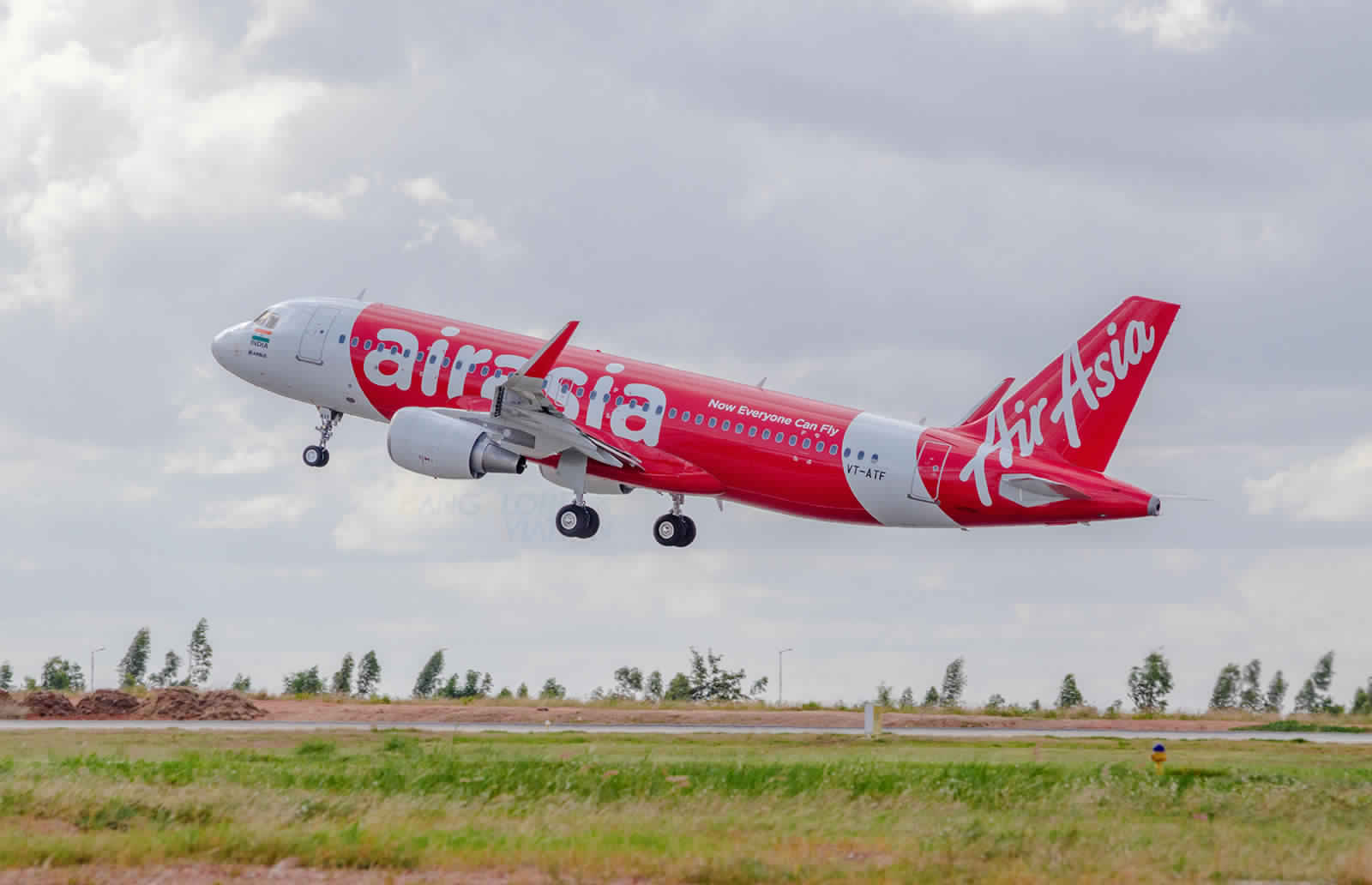
    Fernandes said the Philippines is the best kept secret of the ASEAN and described the year as a turning point for the airline in the country. On Tuesday, Fernandes graced the celebration of the 50th anniversary of the founding of AirAsia with the launch of the “I Love Asean” aircraft at the Villamor Airbase with Asean ministers led by His Excellency Dr. AKP Mochtan, and AirAsia Philippines CEO Captain Dexter Comendador.

    “We are an Asean airline, this is a tribute to the Asean. We congratulate Asean for 50 years of peace and now look forward to 50 years of economic growth,” Fernandes said the success of AirAsia. AirAsia aircrafts showcase designs inspired by textiles of the 10 Asean nations: the Batik Cetak from Malaysia, Poom Khao Bin from Thailand, Ulos Batak from Indonesia, Tapis from the Philippines, Tong Dong from Vietnam, Kbach Chan from Cambodia, Lao Phouthai from Laos, Chate from Myanmar, the Jongsarat of Brunei and Vanda Miss Joaquim from Singapore. The Malaysian airline also launched the AirAsia loves Asean, a series of initiatives focused on education, talent development and the economy to celebrate 50 years of the Asean.

    Initiatives comprise the AirAsia Asean university partnership, Asean entrepreneurs day, Asean journalists camp and all stars exchange program. AirAsia launched commercial flights from Clark in March 2012 before transferring its hub to Metro Manila following a strategic partnership with a local carrier in 2013. AirAsia has since been operating on a much larger scale with additional fleet of aircraft from Metro Manila and has expanded its domestic and international network with flights from hubs in Manila, Cebu, and Kalibo. Clark International Airport is batting to become the gateway to the north in the next five years with massive infrastucture plan to catapult the area into the next major hub for travel.

    The Master Development Plan includes the building of a new passenger terminal with an eight million-passenger capacity being implemented by the Department of Transportation.

  • Sainsbury’s management ‘playing the long game’

    Sainsbury’s management ‘playing the long game’

    Sainsbury’s management appeared unphased after emerging as the underperforming grocer of the UK top four this quarter. Should investors be worried? In the short term, Sainsbury’s may struggle, but they have solid long term prospects.

    Margins have dropped to 1.9 per cent and like-for-like sales increased by only 1.6 per cent which is poor when it is reportedly passing on inflation of 1.7 per cent. All the other major supermarkets performed above expectations, even the floundering ASDA moved into positive like-for-likes after 12 consecutive quarters of negative growth.

    The theme within the food retail sector has been one of anticipating inflation, moving to offset the impact on margins with cost savings programmes and range manipulation, along with efficiency targets. This has resulted in relatively stable margins for the majority of the grocers, alongside impressive cost reduction, and the best sales growth for five years. Sainsbury’s is therefore the anomaly here.

    This can mean one of two things: Sainsbury’s is struggling more than the other grocers to weather the storm; or Sainsbury’s is less short-term focused than the other grocers and thus playing the long game.

    Muted sales growth and a lack of evidence for the momentum from the first quarter continuing into the second (Q1 like-for-likes were 2.3 per cent and Q2 0.6 per cent) is problematic for Sainsbury’s, and with its positioning as a more premium grocer, consumers trading down in store and to cheaper competitors is more pertinent. However, they are still growing and the poor weather has a strong effect this quarter due to its high proportion of fresh food.

    If we look at the factors eating into Sainsbury’s profit, we can see that it comes from (in order of size) price investment, input cost inflation, and Argos losses (Argos posted a loss in the first-half year, making most of its profit over the festive period). Ignoring Argos losses, the contributors to margin decline are therefore factors which all other supermarkets are experiencing.

    The other grocers implemented strict cost saving programmes and margin targets in the run-up to Brexit. Tesco, for example, expects 3.5-4 per cent operating margin by 2019/20 and is seeking to achieve £1.5 billion of cost savings in its turnaround period. Morrisons is in full transformation mode with a number of efficiency savings still to take advantage of, and Asda is potentially recovering from a dismal three years. However, as much as many of these changes were needed, there is the risk that the other grocers are damaging their prospects in the long term by maintaining momentum in the short term. Lower investment and more short cuts, refurbishment, aggressive consolidation, a lack of development, and focus on cash flow might hamper the chances of long term growth. Short term gains may cause long term pain.

    Sainsbury’s did not suffer to the same extent as the other grocers from the onslaught of the discounters, and thus has less to turnaround from. Therefore, as it survived through one difficult period, we think that its lack of action is actually a tactic. Sainsbury’s is highly focused on adapting to consumer consumption trends – its product innovation and range consolidation is unrivalled, same day delivery is being extended, and space repurposing has been successful with Argos. In addition, in the first half of 2017/18 it chose to absorb much of the cost inflation without offsetting it against efficiency savings, thus dragging on margins, and allegedly this level of investment is unlikely to happen again.

    Fundamentally, Sainsbury’s needs to improve its growth in the third quarter to avoid losing market share, but one bad quarter hasn’t prompted them to “chase unprofitable volume” as Mike Coupe put it. We have confidence that Sainsbury’s is adapting to the consumer the best out of all of the supermarkets, but the problem is that its niche is slightly more upmarket than the others of the big four, and thus in a time of critical uncertainty, without offsetting, margins are going to take a temporary hit.

    Sainsbury’s management know the company is well placed to chase the consumer and develop with demand, and thus we think that this strategy of allowing margin decline (within reason) is actually more of a tactical long term play, than disguising short term panic.

  • Singapore retail sales stagnate

    Singapore retail sales stagnate

    Singapore retail sales fell by a mere 0.2 per cent in September, compared to both the same month last year and August this year.

    SG retail sales September

    Including motor vehicles, sales fell 0.5 per cent year on year.

    SG FB retail sales September


    Sales of food & beverage services (seasonally adjusted) decreased 0.3 per cent year on year, with restaurant turnover down 3.7 per cent and fast food outlets, catering services and eating places up between 0.1 per cent and 8.3 per cent.

    Compared to September 2016, retail sales of computer and telecommunications equipment, furniture and household items, food, optical goods and books and by mini-marts and convenience stores declined by between 1.3 per cent and 7.4 per cent.

    However, retail sales by supermarkets and petrol service stations, of clothing and footwear, by department stores, of medical goods and toiletries, recreational goods and watches and jewellery increased between 4.4 per cent and 9.8 per cent year on year.

  • E-mart opens 2nd store in Mongolia

    E-mart opens 2nd store in Mongolia

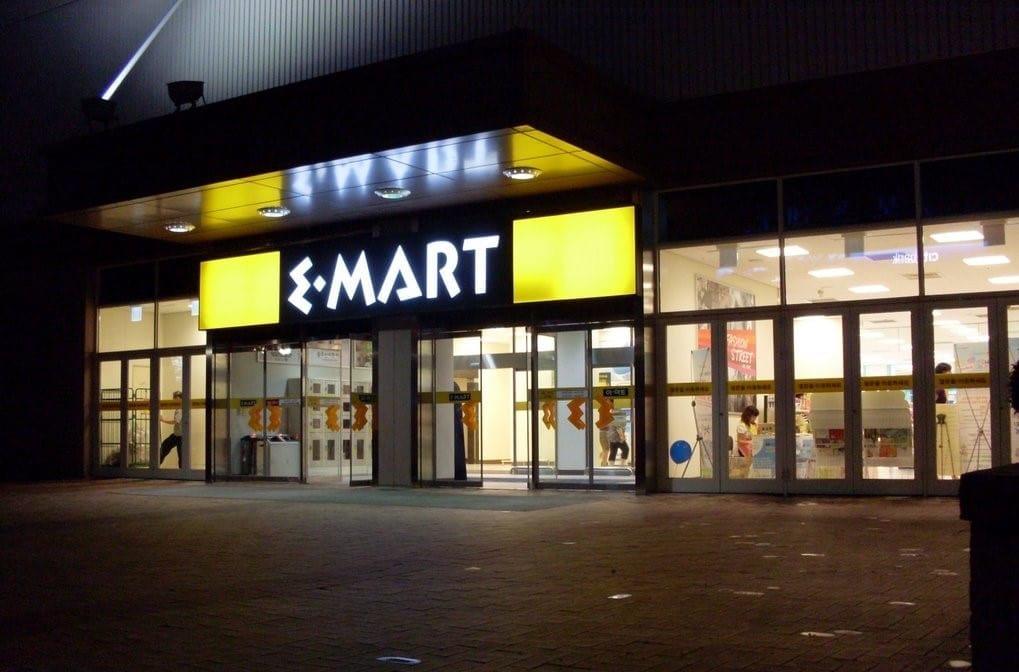
    Mongolia recently got its second E-mart, the discount chain of Korean retail giant Shinsegae.

    Unlike the first store, which has its own building, the second store is renting 5,000 square meters on the first and second floors of the Solo Mall in western Ulaanbaatar.

    The new store sells 12,000 types of goods, with Korean products accounting for 30 to 40 percent. Four out of 10 Korean products at the store are supplied by small and medium enterprises, according to E-mart.

    After signing a contract in July 2016 with Sky Trading, the local distribution unit of Mongolian retail giant Altai Group, E-mart entered the Mongolian market as a franchise receiving royalties for teaching the know how of running the stores.

    The first store posted 42 billion won (US$37 million) in sales IN 2016, 140 percent higher than expected. It chalked up 8.4 billion won from sales of Korean products.

    E-mart attributed the results to the good quality and fresh ingredients of Korean products, because most Mongolian consumers had been unable to buy such products before.

    “Among 20 supermarkets in Ulaanbaatar, E-mart is the only one that offers almost all kinds of products,” a company official said. “The store has attracted middle-class customers.”

    E-mart said it has sent Korean workers to the second store. They are attracting Mongolian customers with rice rolls, pork belly and chicken based on Korean recipes. The store also sells pizza, which has begun winning popularity among Mongolian consumers.

    The company said it also plans to sell sashimi for Mongolian customers who have not been able to taste fresh fish because of the country’s landlocked location.

  • Vietnam’s corruption-prone public sector to receive 7 pct pay rise next year

    Vietnam’s corruption-prone public sector to receive 7 pct pay rise next year

    Vietnamese lawmakers have approved a 7 percent pay rise for workers in the public sector, an area critics say is prone to corruption due to low official salaries.

    The basic wage in the sector will be raised to VND1.39 million ($61.20) a month from July next year from the current VND1.3 million.

    In Vietnam, the minimum monthly pay for civil servants and public employees is calculated by multiplying the basic wage with a coefficient determined by qualifications and experience. The coefficient for a new subdistrict-level civil servant with a bachelor’s degree, for example, is 2.34.

    Vietnam’s government has 2.8 million people on its payroll, according to local media.

    Many in the public sector have been complaining for years that their earnings are too low. In May last year, Vietnam raised the minimum wage in the sector by 5 percent, the first hike in three years. It received another 7.4 percent bump last July.

    Economists have blamed low wages in the sector for increasing levels of corruption.

    At a conference last year, experts also said the current wages for many officials only cover 60 percent of basic living costs at best, but most still manage to afford nice houses and cars.

  • Matahari Wins Bronze in 2017 Retail Asia Pacific Top 500 Award

    Matahari Wins Bronze in 2017 Retail Asia Pacific Top 500 Award

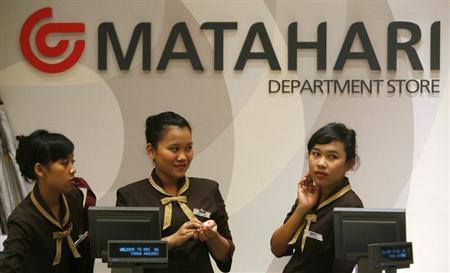
    Matahari Department Store, Indonesia’s largest department store retailer of fashion, beauty and home products, received bronze medals in the 2017 Retail Asia Pacific Top 500 Award in the categories of top department store retailers and top three retailers in Indonesia, in an event held at Westin Hotel Kuala Lumpur on Tuesday (24/10).

    According to an official statement we received on Friday, the awards were presented to outstanding retailers from major countries across the Asia Pacific, including Australia, Hong Kong, Indonesia, Malaysia, the Philippines, South Korea, Thailand, China, India, Japan, New Zealand, Singapore, Taiwan and Vietnam.

    Retail Asia, auditing firm KPMG and Euromonitor International ranked retailers across 14 countries according to performance and categorized by outlet types. Matahari is included in the department store category.

    Matahari won the award for its ability to adapt to changing habits of customer who rely more on online shopping in the digital era.

    The retailer recently announced a partnership with Walt Disney Company  to increase the number of visitors coming to its chain of stores.

    Matahari currently operates 155 outlets across the country, and plans to open three new stores by the end of the year.

  • Breaking Down The Technical Indicators For Parkson Retail Asia Limited

    Breaking Down The Technical Indicators For Parkson Retail Asia Limited

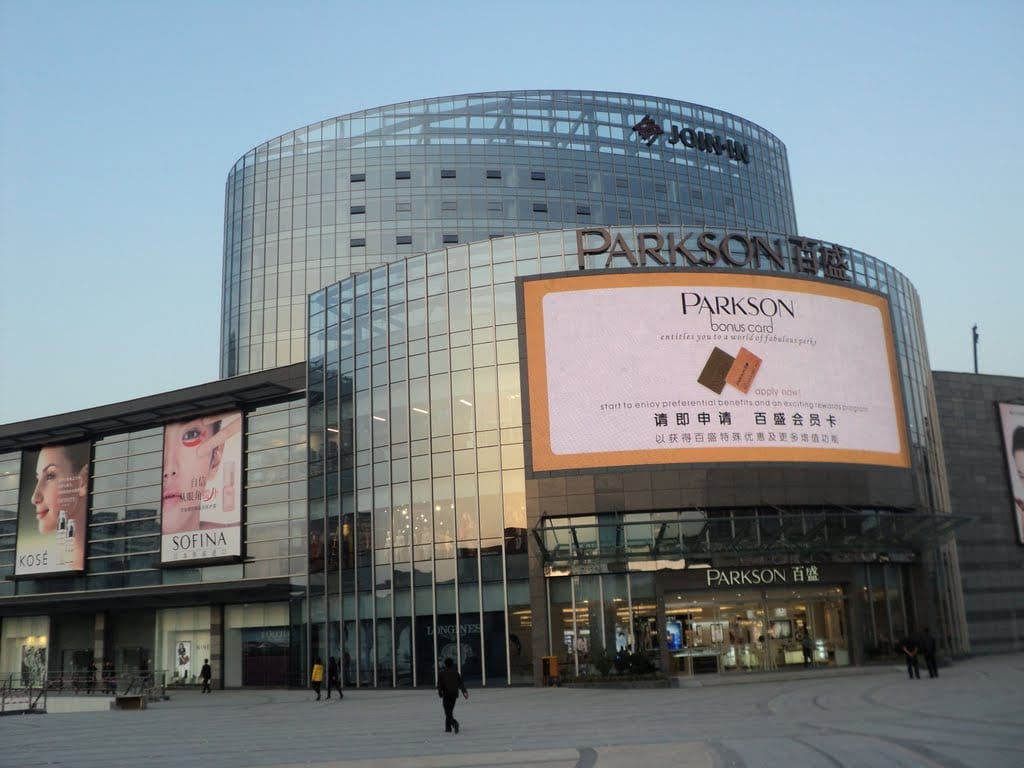
    Parkson Retail Asia Limited (O9E.SI)’s moving averages reveal that the Tenkan line of the shares are below the Kijun-Sen line, indicating potential downward momentum building in the bearish chart.  Parkson Retail Asia Limited moved -0.001 in the most recent session and touched 0.078 on a recent tick.

    The Tenkan-Sen is generally used in combination with the Kijun-Sen to create predications of future momentum. A buy signal is created when the Tenkan-sen line moves above the Kijun-Sen, while a sell signal is created when the Tenkan-Sen line moves below the Kijun-Sen line.

    Many technical traders use the Tenkan-Sen as a tool for predicting levels where the price of the asset will find short-term support.

    When reading Ichimoku Kinko Hyo charts, investors should note that the Tenkan-Sen line leads the Kijun-Sen, and tracks price with more sensitivity because it covers a shorter period of time. When the Tenkan-Sen line crosses and moves above the Kijun-Sen line, this is generally considered a bullish signal. Alternatively, when the Tenkan-Sen line crosses below the Kijun-Sen line, it is considered a bearish signal.

    The tenkan sen/kijun sen cross is one of the most traditional trading strategies within the Ichimoku Kinko Hyo system. The signal for this strategy is given when the tenkan sen crosses over the kijun sen. If the tenkan sen crosses above the kijun sen, then it is a bullish signal. Likewise, if the tenkan sen crosses below the kijun sen, then that is a bearish signal. Like all strategies within the Ichimoku system, the tenkan sen/kijun sen cross needs to be viewed in terms of the bigger Ichimoku picture before making any trading decisions, as this will give the strategy the best chances of success. In general, the tenkan sen/kijun sen strategy can be classified into three (3) major classifications: strong, neutral and weak.

    Conducting further technical review, shares of Parkson Retail Asia Limited have a 200-day moving average of 0.10. The 50-day is 0.08, and the 7-day is sitting at 0.08. Using a wider time frame to assess the moving average such as the 200-day, may help block out the noise and chaos that is often caused by daily price fluctuations. In some cases, MA’s may be used as strong reference points for spotting support and resistance levels. Employing the use of the moving average for technical equity analysis is still highly popular among traders and investors. The moving average can be used as a reference point to assist with the discovery of buying and selling opportunities.

    Investors have the ability to approach the stock market from various angles. This may include using technical analysis, fundamental analysis, or a combination or the two. Investors watching the technical levels may be trying to chart patterns and discover trends in stock price movement. Investors tracking the fundamentals may be looking closely at many different factors. They may be focused on industry performance, earnings estimates, dividend payouts, and other factors. They might also be studying how the company is run, and trying to figure out the true value of the firm. Keeping track of all the data may seem overwhelming, but it may help give a needed boost to the portfolio.

    Parkson Retail Asia Limited’s Williams Percent Range or 14 day Williams %R currently sits at -100.00. The Williams %R oscillates in a range from 0 to -100. A reading between 0 and -20 would point to an overbought situation. A reading from -80 to -100 would signal an oversold situation. The Williams %R was developed by Larry Williams. This is a momentum indicator that is the inverse of the Fast Stochastic Oscillator.

    Parkson Retail Asia Limited currently has a 14-day Commodity Channel Index (CCI) of -67.38. Active investors may choose to use this technical indicator as a stock evaluation tool. Used as a coincident indicator, the CCI reading above +100 would reflect strong price action which may signal an uptrend. On the flip side, a reading below -100 may signal a downtrend reflecting weak price action. Using the CCI as a leading indicator, technical analysts may use a +100 reading as an overbought signal and a -100 reading as an oversold indicator, suggesting a trend reversal.

    Currently, the 14-day ADX for Parkson Retail Asia Limited is sitting at 26.66. Generally speaking, an ADX value from 0-25 would indicate an absent or weak trend. A value of 25-50 would support a strong trend. A value of 50-75 would identify a very strong trend, and a value of 75-100 would lead to an extremely strong trend. ADX is used to gauge trend strength but not trend direction. Traders often add the Plus Directional Indicator (+DI) and Minus Directional Indicator (-DI) to identify the direction of a trend.

    The RSI, or Relative Strength Index, is a widely used technical momentum indicator that compares price movement over time. The RSI was created by J. Welles Wilder who was striving to measure whether or not a stock was overbought or oversold. The RSI may be useful for spotting abnormal price activity and volatility. The RSI oscillates on a scale from 0 to 100. The normal reading of a stock will fall in the range of 30 to 70. A reading over 70 would indicate that the stock is overbought, and possibly overvalued. A reading under 30 may indicate that the stock is oversold, and possibly undervalued. After a recent check, the 14-day RSI is currently at 42.31, the 7-day stands at 37.98, and the 3-day is sitting at 26.04.


  • ASEAN signs free trade, investment pacts with Hong Kong

    ASEAN signs free trade, investment pacts with Hong Kong

    Hong Kong on Sunday signed free trade and investment pacts with the ten-nation Association of Southeast Asian Nations, in what one of the Chinese territory’s senior officials called a “loud and clear” vote against rising regional trade protectionism.

    The pacts conclude nearly three years of talks, are expected to take effect on January 1 at the earliest, and aim to bring “deeper and bolder” integration of market access with the bloc, said Edward Yau, Hong Kong’s commerce and development secretary.

    “In the face of protectionist sentiments in other parts of the world, these two agreements are in fact a loud and clear vote from all of us here for freer and more open trade,” Yau said.

    “Hong Kong, being a free trade promoter and advocate of a strong, rule-based multilateral trading system, will continue to take this pathway, continue to do our utmost.”

    Total merchandise trade between Hong Kong and ASEAN was HK$833 billion ($107 billion) last year, official figures show. Total services trade was HK$121 billion ($16 billion) in 2015.

    The ASEAN Hong Kong China Free Trade Agreement (AHKCFTA) was signed on the sidelines of a summit of the regional grouping in the Philippine capital of Manila.

    It came after leaders attending an Asia-Pacific Economic Cooperation (APEC) summit in Vietnam agreed to tackle “unfair trade practices” and “market distorting subsidies” in a statement on Saturday that bore the imprint of U.S. President Donald Trump’s efforts to reshape the global trade landscape.

    That summit offered a contrast between the vision of U.S. President Donald Trump’s “America First” policy and a traditional consensus favouring multinational deals that China now seeks to champion.

    While Hong Kong already has one of the world’s freest and most open economies, the pacts will see many ASEAN countries gradually eliminate or slash customs duties on goods from the former British colony that returned to Chinese rule in 1997.

    Professional services are also expected to benefit, with increased investment flows, Yau added.

    The ASEAN grouping includes Brunei, Cambodia, Indonesia, Laos, Malaysia, Myanmar, the Philippines, Singapore, Thailand and Vietnam.

  • Vietnam’s richest man leapfrogs Donald Trump on Forbes’ billionaires list

    Vietnam’s richest man leapfrogs Donald Trump on Forbes’ billionaires list

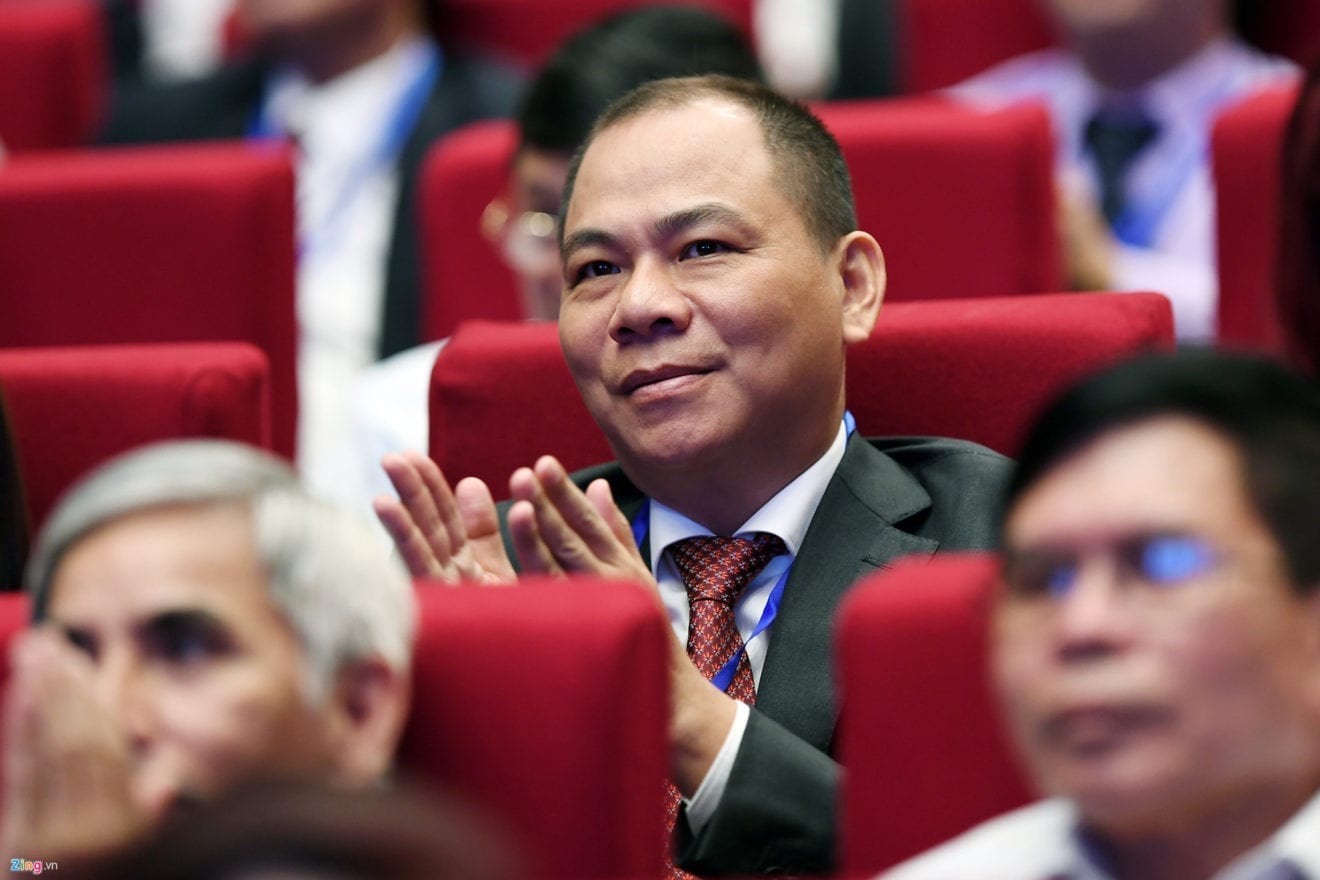
    Vietnam’s richest man and first billionaire has climbed past U.S. President Donald Trump on Forbes magazine’s real time list of the world’s billionaires.

    Pham Nhat Vuong, founder and chairman of Vingroup JSC., was the world’s 640th richest person with a net worth of $3.5 billion as of 5 p.m. GMT on November 8.

    Since the release of Forbes‘ 2017 billionaires list in March, when Vuong was ranked 867th, his net worth has increased by over $1 billion. This gain is largely attributed to Vingroup’s shares gaining nearly 50 percent in the last six months and the IPO of Vingroup subsidiary Vincom Retail earlier this week.

    Meanwhile, the U.S. president and real estate mogul dropped from 544th to 734th with a net worth of $3.1 billion. His fortune has been declining over the past year due to a tough New York real estate market, a costly lawsuit and an expensive presidential campaign, according to Forbes.

    Meanwhile Nguyen Thi Phuong Thao, founder of budget airline Vietjet Air and Vietnam’s second billionaire, was ranked 1246th with a net worth of $1.9 billion.

    At the top of the billionaires list was Amazon’s founder Jeff Bezos with a net worth of $94.9 billion, followed by Microsoft co-founder Bill Gates at number two with $89.5 billion.

    Vingroup is one of Vietnam’s largest real estate conglomerates, and has also been expanding rapidly into retail, logistics, agriculture, education and healthcare. As of the end of September, its subsidiary Vincom Retail was managing, operating and renting 41 shopping malls with a total area of over 1.1 million square meters (272 acres). It also has 22 projects under construction and another 50 in early development.

  • China signs $37 billion deal to buy 300 Boeing planes

    China signs $37 billion deal to buy 300 Boeing planes

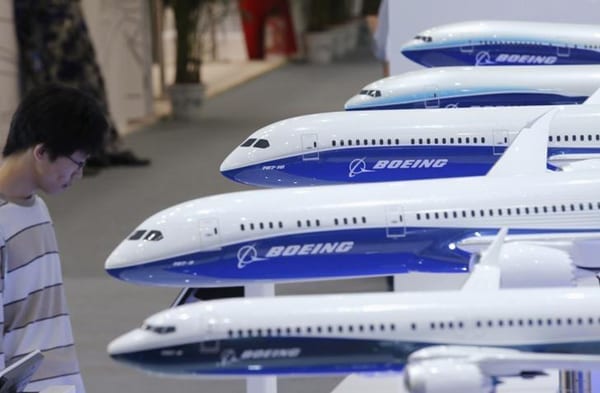
    China signed an agreement Thursday to buy 300 airplanes from U.S. aerospace giant Boeing valued over $37 billion, as part of a multi-billion dollar raft of deals announced during President Donald Trump’s visit to Beijing.

    The agreement for China Aviation Suppliers Holding Co (CASC) to buy the single-aisle and twin-aisle aircraft was among the more than $250 billion in agreements announced at a ceremony attended by Trump and Chinese leader Xi Jinping.

    A Boeing statement said the agreement includes “orders and commitments” to buy the aircraft, but it did not give a further breakdown.

    In September 2015, Boeing had already received an order from CASC for 300 aircraft valued at a record $38 billion at list prices.

    Boeing and European rival Airbus are competing heavily in China, the world’s second aircraft market, with the U.S. company forecasting that the Asian giant needs over 7,200 commercial aircraft in the next 20 years.

    China, meanwhile, has developed its own medium-haul C919 in a bid to challenge the Airbus-Boeing duopoly.

  • Vietnam’s richest woman wants a Walmart connection on her airline

    Vietnam’s richest woman wants a Walmart connection on her airline

    The founder and CEO of Vietnamese budget carrier VietJet has said she wants to sell products from the world’s biggest retailer Walmart on her airline.

    Nguyen Thi Phuong Thao, the first and only female billionaire in Vietnam according to Forbes magazine, presented the idea to Scott Price, executive vice president of Global Leverage for Walmart International, at the ongoing Asia Pacific Economic Cooperation (APEC) Summit in Vietnam’s central city of Da Nang.

    “We call ourselves a consumers’ airline,” Thao said on Thursday at the APEC CEO Summit.

    “The idea to work with Walmart is an example of VietJet’s customer-oriented approach, emphasizing our philosophy of providing more convenient services for Vietnamese clients in the near future,” she said.

    She also spoke about the role of technology in trade and business, suggesting a tech connection with Walmart for VietJet’s passengers.

    Price said the company is willing to work with VietJet as it has yet to open any stores in Vietnam, providing there is demand for its products.

    “We plan to expand further,” Thao said. “Vietnamese airlines play an important role in connecting Southeast Asia. In the near future we’ll collaborate with more airlines, such as Korea’s ASIANA.”

    Vietjet already has deals with Quatar Airway and Japan Airlines, and is in talks with an airline in the U.S. and another in Europe.

    “Thanks to the connections that VietJet is building, passengers can fly anywhere they want to around the world,” Thao said.

    The CEO Summit has gathered more than 2,000 local and foreign businesses and is one of the most important events at the APEC Summit. It is hosting leaders from the 21 Pacific Rim nations and thousands of businesspeople, including Facebook COO Sheryl Sandberg, UPS CEO David Abney, and chairman and CEO of J.P. Morgan Asia Pacific Nicolas Aguzin.

    Last week, Thao secured 55th spot on the World’s 100 Most Powerful Women 2017 ranking, jumping seven places from the previous year, and was the only Vietnamese national named on the list compiled by Forbes.

    According to the magazine, Thao has an estimated net worth of $1.93 billion, eclipsing the figure of $1.2 billion it calculated in March.

    Thao launched VietJet in 2011. Her “bikini” airline, nicknamed after its unique yet controversial promotion scheme of putting female crew in bikinis on some flights, now offers 300 flights a day, or more than 40 percent of the country’s flights, with a fleet of 45 jets.

    In May, It is reported that the Hanoi-based VietJet Aviation Joint Stock Co. was in talks to become the first Vietnamese company to list on an overseas stock exchange.

    “We’ve been approached by some foreign stock exchanges including London, Hong Kong and Singapore, which expressed their interest in our stock,” Thao was quoted as saying in the report.

    According to Bloomberg, VietJet reportedly received shareholder approval in April to boost its foreign ownership limit to 49 percent from 30 percent.

    She told Bloomberg in an interview a year ago that she has plans to make VietJet a global airline. “We want to make VietJet the Emirates of Asia.”