Category: General

Retail News Asia is committed to providing both local and global retailers with the latest General Retail news throughout the Asian market. This on a daily base.

  • US Tariffs Set to Launch on August 1: What Retailers Need to Know

    US Tariffs Set to Launch on August 1: What Retailers Need to Know

    The United States is on the verge of finalizing a series of trade agreements, with higher tariff rates set to be communicated to various countries by July 9, as announced by President Donald Trump on Sunday. These new tariffs are scheduled to come into effect on August 1.

    Trump Signals Tariff Changes Amid Trade Deals

    Trump’s announcement follows his earlier unveiling of a base tariff rate of 10% applicable to most nations, with additional duties that could soar to 50%. Initially scheduled for July 9, this new timeline offers countries a fleeting three-week pause to prepare.

    As reporters gathered before Trump returned from a weekend golf outing in New Jersey, he reiterated the August 1 deadline for higher tariffs, although it remains uncertain whether all tariff rates will rise simultaneously on that date.

    Commerce Secretary Confirms Rates in Flux

    To clarify, Commerce Secretary Howard Lutnick acknowledged that the elevated tariffs would indeed take effect on August 1, adding that Trump is actively negotiating the specific rates and agreements. Trump later posted on his Truth Social account, revealing that tariff notifications would start rolling out at noon ET on Monday.

    In a seemingly casual yet crucial update, U.S. Treasury Secretary Scott Bessent told CNN that several significant trade agreements would soon be announced, noting positive developments in discussions with the European Union.

    In a move reminiscent of a game of poker, Trump plans to send letters to about 100 smaller trading partners, primarily nations with limited trade ties to the U.S., informing them of the impending tariff hikes.

    Bessent warned, “President Trump’s going to be sending letters to some of our trading partners saying that if you don’t move things along, then on August 1 you will boomerang back to your April 2 tariff level.”

    Deadline Urgency and Future Negotiations

    The air is charged with anticipation as Kevin Hassett, director of the White House National Economic Council, expressed optimism about the potential for negotiations to extend beyond the deadline. “There are deadlines, and there are things that are close, and so maybe things will push back past the deadline,” he commented, leaving the ultimate decision in Trump’s hands.

    As the clock ticks closer to August, the outcome of these trade negotiations could reshape the landscape of global commerce, with far-reaching implications not just for the United States but also for its trading partners across Asia and beyond.

    Questions & Answers

    What is the significance of the August 1 tariff deadline?
    The August 1 deadline represents a critical turning point as the U.S. prepares to implement higher tariffs in the face of ongoing trade negotiations, impacting various trading partners.

    How are smaller countries reacting to the tariff notifications?
    Many smaller countries, which typically have limited trade with the U.S., are likely reassessing their strategies to avoid the escalating tariff rates and may seek to negotiate favorable terms quickly.

    What role do negotiations with the European Union play in this context?
    Negotiations with the European Union are pivotal, as the U.S. aims to finalize key trade agreements, potentially easing tensions and influencing broader trade relations.

  • South Korea’s Retail Sales Surge 7% in May, Signaling Strong Consumer Confidence

    South Korea’s Retail Sales Surge 7% in May, Signaling Strong Consumer Confidence

    South Korea’s retail sector demonstrated remarkable resilience in May 2025, achieving a 7% year-on-year growth, spurred primarily by an ongoing boom in online sales. Data from the Ministry of Trade, Industry and Energy (MOTIE) revealed that this robust performance marks a continued recovery for both digital and traditional retail.

    Online Sales Take the Lead

    The online retail landscape saw a significant surge, with sales climbing by an impressive 13% compared to the same month last year. Meanwhile, the offline segment showed modest growth, with sales up a slight 0.9%, marking a positive turnaround for hypermarkets and department stores following the Seollal holiday season in January.

    Positive Trends in Hypermarkets and Department Stores

    Hypermarkets enjoyed a 0.2% bump in sales, whereas department stores reported a 2.3% increase, driven by high demand for luxury items and an uptick in customer spending during visits. Super supermarkets (SSMs) also continued their winning streak for the third consecutive month, with a 1% growth attributed to a steady flow of shoppers. However, not all segments experienced growth; convenience store sales dipped slightly by 0.2%.

    A Mixed Bag for Offline Goods

    Within the offline categories, food products increased by 1%, while luxury goods, particularly jewelry and watches, saw a remarkable 8.1% rise. But the picture wasn’t entirely rosy—home appliances and cultural items faced a sharp decline of 7.8%, with kids and sports goods decreasing 2.5% and fashion and miscellaneous items falling by 3.7%. If retail were a game of musical chairs, some segments might want to consider making a quick exit.

    Online Retail Remains a Powerhouse

    Online retail retains its status as the primary growth engine, with exceptional gains in services (up 37.3%) and food products (up 18.2%). The rising popularity of food delivery, e-coupons, travel packages, and cultural content significantly bolstered these statistics. Yet, it wouldn’t be the retail world without some hiccups; fashion and clothing sales saw a 4.6% decline, while sports-related items plummeted by a staggering 12.7%, extending a worrying downward trend.

    MOTIE’s analysis is derived from a comprehensive survey of 23 major retailers, encompassing 13 offline businesses—including department stores, hypermarkets, convenience stores, and super supermarkets—alongside 10 online platforms. As South Korea’s retail landscape evolves, it paints a vivid picture of changing consumer preferences and the dynamic interaction between online and offline shopping environments.

    Questions & Answers

    What drove the growth in South Korea’s retail sector in May 2025?
    The 7% year-on-year growth was primarily driven by a significant increase in online sales, which surged by 13% compared to the previous year.

    How did physical stores perform during this period?
    Offline sales saw a modest rise of 0.9%, with department stores and hypermarkets showing positive trends after the Seollal holiday season.

    Which retail categories witnessed the strongest and weakest performances?
    Luxury goods like jewelry and watches experienced an 8.1% increase, while fashion and sports-related items struggled, with declines of 4.6% and 12.7%, respectively.

  • Lawson Launches Exciting Car Camping Initiative in Store Parking Lots Across Japan

    Lawson Launches Exciting Car Camping Initiative in Store Parking Lots Across Japan

    In a bold move to enhance its service offerings, Lawson, a leading player in Japan’s convenience store sector, is set to launch a car camping business that will leverage its extensive network of parking lots across the nation. This innovative venture, aims to cater to guests attending events in rural and suburban locales, particularly as skyrocketing accommodation prices pose challenges for tourists flocking to Japan.

    The initiative is not only a nod to the growing popularity of outdoor activities but also a keen response to Japan’s booming tourism market, where more travelers are seeking economical yet unique lodging options. With this move, Lawson is positioning itself as more than just a convenience store; it’s becoming a gateway to adventure for those eager to explore Japan’s picturesque countryside.

    Imagine parking your car at a Lawson lot, popping open a tent just steps away from the latest limited-edition sushi rolls and a piping hot coffee. Who knew camping could come with convenience store snacks? It’s a refreshing take on what traditional camping entails, blending the allure of the great outdoors with the comforts of modern retail.

    As the details of the rollout are finalized, the car camping service is sure to attract various demographics, from families looking for affordable getaways to outdoor enthusiasts eager to mix convenience with nature. Lawson’s ability to tap into this burgeoning trend not only reflects its adaptability but also emphasizes the pivotal role of retail in shaping leisure activities in an increasingly experience-driven society.

    Questions & Answers

    What is Lawson’s new business venture?
    Lawson is launching a car camping business that utilizes its nationwide network of parking lots, aimed at providing accommodation options for guests attending events in rural and suburban areas.

    What challenges does this service address for tourists in Japan?
    The service addresses the high accommodation fees in rural areas as more tourists visit Japan, offering an economical and unique lodging option that blends outdoor adventure with retail convenience.

    How does this initiative reflect Lawson’s approach to retail?
    This initiative showcases Lawson’s adaptability to market trends, demonstrating its role as not just a convenience store but also a facilitator of new experiences for customers seeking leisure and exploration.

  • China Implements Ban on Excessive Discounting Practices by Online Retailers to Promote Fair Competition

    China Implements Ban on Excessive Discounting Practices by Online Retailers to Promote Fair Competition

    In a decisive move signaling a shift in China’s retail landscape, authorities are gearing up to impose stricter regulations on online retail platforms that have been compelling third-party merchants into a relentless price-cutting frenzy. This comes as part of an updated unfair competition law, set to take effect on October 15.

    Under the revised legislation, online retailers will face prohibitions against pressuring vendors to sell products and services at prices below their cost. Moreover, any actions that “disrupt market order” will also come under scrutiny. This change aims to protect smaller merchants from the aggressive tactics employed by larger platforms that have historically prioritized profit margins over fair competition.

    This announcement reflects growing concerns about the sustainability of the retail environment in an era where price wars can lead to significant losses for vendors and a decrease in the overall quality of products available to consumers. As the race to the bottom intensifies, many are left wondering: who really wins? Perhaps it’s time for a check-up on the retail pulse, as the law attempts to balance the scales in favor of fair trading practices.

    With the clock ticking down to the law’s implementation, the retail sector is buzzing with anticipation. Will this reform change the game for how business is conducted online? Only time will tell, but one thing is clear: the days of reckless discounting might just be numbered.

    Questions & Answers

    What does the amended unfair competition law entail?
    The law prohibits online retailers from forcing third-party merchants to price their products below cost and engaging in practices that disrupt market order, effective October 15.

    What is the aim of these new regulations?
    These regulations aim to create a fairer retail environment, protecting smaller merchants from aggressive pricing strategies employed by larger platforms.

    How might this law impact consumers?
    While consumers may see some initial price increases as vendors adjust, the law could ultimately lead to a more stable market with improved product quality and service levels.

  • Vietnam Achieves Impressive $7.6B Trade Surplus in First Half of the Year

    Vietnam Achieves Impressive $7.6B Trade Surplus in First Half of the Year

    Vietnam’s export landscape has painted a promising picture, showcasing a remarkable 14.4% rise in export earnings, while imports surged by 17.9%, culminating in a notable trade surplus of $7.63 billion, according to the National Statistics Office (NSO) under the Ministry of Finance.

    June Brings Strong Export Growth

    In June alone, the export turnover surged by 16.3% compared to the same month last year, a solid indication of vibrant market activity. While the domestic economic sector faced a slight 5.7% dip, the foreign-invested sector, including crude oil, rebounded with a striking 24.4% increase, demonstrating robust foreign confidence.

    Mid-Year Export Performance

    From January to June, Vietnam’s total export value climbed to $219.83 billion, reflecting a 14.4% increase year-on-year. The domestic sector contributed $58.28 billion—an uptick of 9.4%—accounting for 26.5% of total exports. In contrast, the foreign-invested sector, which includes crude oil, saw a remarkable contribution of $161.55 billion, up 16.4%, thus representing 73.5% of all exports.

    Export Giants Take Center Stage

    A total of 28 export items broke the $1 billion barrier, collectively comprising a staggering 91.7% of the total export value. Impressively, nine items exceeded $5 billion in value, contributing 72.3% to the overall sums. Processed industrial goods firmly held their ground as the export champions, generating $194.28 billion and accounting for 88.4% of the total. Agricultural and forestry products added $19.12 billion (8.7%), while seafood reached $5.11 billion (2.3%), and fuel and mineral products totaled $1.34 billion (0.6%).

    Import Landscape and Trade Dynamics

    On the import front, Vietnam’s spending tallied up to $212.2 billion over the first half of the year, marking an increase of 17.9% year-on-year. A striking 33 imported items exceeded $1 billion in value, representing an impressive 89.0% of total imports, with six surpassing the $5 billion mark, accounting for 56.8% of the overall figures.

    The United States stood as the largest importer of Vietnamese goods during the first half, with turnover reaching $70.91 billion, while China remained the biggest source of imports into Vietnam, valued at $84.7 billion. Notably, Vietnam’s trade surplus with the U.S. reached $62 billion, a significant 29.1% increase from the previous year. The surplus with the EU also saw a healthy expansion of 11.6%, amounting to $19 billion. Adding some sparkle to the numbers, Vietnam’s trade surplus with Japan soared to $1.2 billion, up a staggering 69.1% compared to the same period last year.

    Deficits with Key Partners

    Despite these triumphs, challenges remain, as Vietnam continues to face trade deficits with several major partners. Notable among these are China, with a deficit of $55.6 billion (up 42.2%), the Republic of Korea at $14.6 billion (up 0.1%), and ASEAN nations collectively at $7.5 billion (an increase of 67.4%).

    Questions & Answers

    What drove the significant increase in Vietnam’s exports during the first half of 2023?
    The surge in exports can be attributed mainly to the performance of the foreign-invested sector, which saw an impressive growth of 24.4%, particularly in processed industrial goods.

    How did Vietnam’s trade surplus with the U.S. compare to previous years?
    Vietnam’s trade surplus with the U.S. rose to $62 billion, marking a substantial 29.1% increase from the previous year, underlining the strength of this trading relationship.

    Which countries are key players in Vietnam’s import and export dynamics?
    The U.S. remains Vietnam’s largest market for exports, while China is the predominant source of imports, showcasing the complex interdependence within the regional trade landscape.

  • Eco Shop Expands Across Malaysia, Streamlining New Store Launches with LEAFIO Shelf Efficiency

    Eco Shop Expands Across Malaysia, Streamlining New Store Launches with LEAFIO Shelf Efficiency

    Eco Shop, a prominent household goods retail chain in Malaysia, operates more than 250 stores nationwide. Renowned for offering an extensive selection of home goods at affordable prices, Eco Shop is committed to making life easier for its customers by delivering the best prices right in their neighborhoods.

    As part of its continuous effort to innovate and improve customer experience, Eco Shop recently implemented LEAFIO Shelf Efficiency, an advanced software solution for planogram management and optimization. This initiative marked a significant upgrade from their previous system and has transformed their merchandising process.

    Challenges before implementation

    Before adopting LEAFIO Shelf Efficiency, Eco Shop’s merchandising and planogram management faced several challenges:

    • Manual processes: The team relied on Excel sheets to manage the product library, making the planogram creation process cumbersome and time-consuming.
    • Lack of integration: There was no direct product status update from the merchandising team to the planogram team, leading to inefficiencies and communication gaps.
    • Inability to compare store ranges: The team struggled to compare product ranges across different stores, limiting their ability to optimize merchandising strategies effectively.

    These challenges drove Eco Shop to seek a robust planogram system that could digitize their merchandising process and deliver specific outcomes:

    1. Establish a new product merchandising structure.
    2. Enhance the efficiency of the merchandising process in stores.
    3. Improve the creation of category-specific planograms with varied space allocations.
    4. Reduce the time required for planogram execution in stores.
    5. Support efficient planogram management for both existing stores and new store openings.

    Why LEAFIO Shelf Efficiency?

    Eco Shop chose LEAFIO Shelf Efficiency for several compelling reasons:

    • Data-driven innovation: LEAFIO AI’s data-driven solution is new to the Malaysian market, offering cutting-edge technology that could provide significant competitive advantages.
    • Superior user experience: Based on Eco Shop’s prior experience with software solutions, LEAFIO AI stood out in terms of its mobile application, which is designed to deliver high-quality outputs to store end users.
    • Cost efficiency: The software’s pricing structure was deemed cost-effective, providing excellent value for its features and benefits.

    Benefits of implementation

    Eco Shop 100% projected and launched the new store using the LEAFIO Shelf Efficiency system. The integration has also yielded multiple tangible benefits for the retailer:

    #1 Data-driven planograms

    Leveraging data-driven merchandise planning, Eco Shop can now optimize or generate planograms based on sales analytics, ensuring a balance between visual appeal and effectiveness.

    #2 Streamlined processes

    The software has significantly decreased employees’ time creating, implementing, and optimizing planograms, making the overall merchandise planning process more efficient.

    #3 Multi-store management

    With LEAFIO Shelf Efficiency, Eco Shop can seamlessly manage hundreds of planograms across its retail chain, easily accommodating various store layouts.

    #4 Resource optimization

    LEAFIO AI’s solution helps Eco Shop overcome resource limitations, whether spatial or human, by enabling efficient management of their merchandising needs.

    #5 Improved planogram compliance

    The software ensures that planogram compliance is consistently met, increasing sales and maintaining the retailer’s reputation with flawless display execution.

    Implementation results

    Selected Categories: Candy, Laundry, and Bath & Shower

    1. Sales Impact Analysis of the selected planograms

    Category: Candy

    Sales Effect on Dynamics: +18.5%

    Sales in Units Effect on Dynamics: +18.4%

    Key Insights:

    Significant improvement in sales within the Candy category.

    Sales per month increased, reflecting a positive shift of 32.4%.

    Category: Laundry

    Sales Effect on Dynamics: +24.3%

    Sales in Units Effect on Dynamics: +31.6%

    Key Insights:

    Strong performance in the Laundry category, with notable improvements in sales.

    Sales per month increased, showing a growth of 24%.

    Category: Bath & Shower

    Sales Effect on Dynamics: +23.9%

    Sales in Units Effect on Dynamics: +13.5%

    Key Insights:

    Positive dynamics in the Bath & Shower category, though the growth rate is slightly lower compared to other categories.

    Sales per month increased, showing an improvement of 3.1%.

    2. Additional metrics analysis for categories (including products not on the planogram)

    Sales per Meter

    Candy: +32.4%

    Laundry: +24%

    Bath & Bodyshower: +3.1%

    Client testimonial

    “We would like to express our sincere appreciation for the exceptional software solutions and service LEAFIO AI’s team has provided us at Eco Shop Marketing Sdn Bhd. We are delighted with the first store’s 100% planogram build result and look forward to continuing our partnership. The floor planning, shelf planning, and mobile apps have been particularly impressive,” remarked the Eco Shop SRD team.

    Key advantages noted by Eco Shop’s users

    Eco Shop has recognized several unique advantages and results following the implementation of LEAFIO Shelf Efficiency:

    • User-friendly Interface: The software is simple to use, making it easy for users to create, edit, and visualize planograms. The intuitive interface allows for efficient navigation and task performance.
    • Flexibility in design: LEAFIO offers flexibility in designing planograms to suit different store layouts, product categories, and display preferences, ensuring each store can be tailored to its unique needs.
    • Analytics and reporting: The software provides valuable insights into sales performance, space utilization, and planogram compliance, allowing Eco Shop to optimize its store space effectively.
    • Cost-effectiveness: LEAFIO Shelf Efficiency offers a pricing structure that provides excellent value for money and aligns well with Eco Shop’s organizational needs.
    • Mobile integration: The mobile app is seamlessly integrated with in-store handheld scanners, allowing store teams to access floor plans and category planograms created and published by the SRD team.

    “Furthermore, we commend LEAFIO AI’s team for their expertise and proactive approach to addressing our needs. Their responsiveness and dedication to understanding our requirements have made working with LEAFIO AI a truly collaborative and enjoyable experience. Their commitment to excellence and innovation has significantly contributed to our success in setting up, providing user training, trialing, implementing, and launching LEAFIO AI in our organization,” concluded the Eco Shop SRD team.

    ***

    With LEAFIO Shelf Efficiency, Eco Shop is poised to continue its expansion across Malaysia, opening new stores with a streamlined and optimized merchandising process that enhances customer experience and operational efficiency.


  • Pattern, System, Organism: A New Way To Think About Health

    Pattern, System, Organism: A New Way To Think About Health

    For a long time, people saw health as the opposite of illness. You were either sick or healthy. But today, science sees things differently. Health is no longer a fixed state. It’s a balance that changes all the time. The body adjusts constantly, based on patterns, signals, and responses.

    In this new view, the body is not a battlefield. It’s more like a system, made up of many parts that work together. These parts react and adapt, much like a machine or a network. The logic behind this is closer to engineering than to old medical ideas.

    Systems Biology And The Fragmentation Of Certainty

    At the center of this shift is systems biology—a discipline that refuses to isolate organs, symptoms, or causes. Instead, it maps the interplay of cellular signals, gene expressions, microbiome fluctuations, and even behavioral patterns. Health becomes measurable, but only in motion. Stability is not stillness; it’s dynamic calibration.

    This framework challenges the legacy of clinical reductionism. Where earlier medicine asked “What is wrong?” new science asks “What is changing, and why?” Disease becomes not an invasion but a deviation from expected rhythm. Recovery becomes less about eradication and more about reintegration—returning the system to its proper flow.

    Algorithmic Medicine And The Role Of Precision Feedback

    Data, once auxiliary, is now central. Wearables, bio-trackers, and continuous monitoring tools have turned the body into a real-time source of biometric information. These numbers are no longer diagnostic snapshots; they are behaviorally responsive fields.

    Blood sugar is not just a value—it is a curve. Heart rate is not just a pulse—it is a signature. As algorithms grow more refined, their role shifts: from identifying anomalies to predicting them. From reactive medicine to predictive scaffolding.

    Yet this shift comes with a philosophical cost. Agency becomes blurred. If an algorithm predicts your fall before you trip, whose intuition is at play? And if your diet, sleep, or movement is shaped by metrics, do you remain the subject of your body—or its observer?

    Simulation, Uncertainty, And The Logic Of Play

    Strangely, as medicine becomes more accurate, it also feels more like a simulation. Doctors now use “digital twins”—virtual models of your body. These models help test treatments, change drug doses, and predict side effects. In this system, healing doesn’t rely on guesses or personal stories. Instead, it’s based on tests run on a version of you that exists only in data.

    This logic aligns, curiously, with domains far removed from health. For instance, certain aspects of pragmatic play demo environments mirror these simulations in tone, not content. They allow for risk-free experimentation, fast feedback, and an understanding that performance improves through iteration. It’s not that gaming and health converge in topic—but in the architecture of trial, error, and correction.

    Science, too, has entered this loop of rehearsal. Treatment is no longer a one-shot decision. It’s a sequence of modeled guesses, refined by how well your body reflects or resists the prediction.

    Ethics Under Constraint: Precision Without Clarity

    The promise of this new health paradigm is immense: early detection, personalized care, continuous monitoring. But its clarity is architectural, not moral. Just because a system can be adjusted does not mean it should. The more granular the data, the more complex the ethical choices become.

    Who owns the prediction? Who is liable when forecasts fail? And who gets to choose between what is statistically better and what is subjectively desired?

    In this sense, the new science of health is both empowering and destabilizing. It frees patients from uncertainty, while placing them inside systems they may not fully understand. It creates precision, but often without explanation.

    Conclusion: The Body As A Responsive Codebase

    Health in this era is no longer a fixed state to be defended—it is an ongoing computation. The body, monitored and mirrored by technology, becomes a shifting field of numbers, thresholds, and decisions.

    Science may continue to refine its models. Machines may learn faster than cells forget. But the central question persists: not how to win against illness, but how to remain inside a system that changes faster than we can feel it.

  • Cristiano Ronaldo will visit Hong Kong for the opening of his CR7 Life Museum

    Cristiano Ronaldo will visit Hong Kong for the opening of his CR7 Life Museum

    Hong Kong’s football fans were all in a tizzy when the news broke earlier this year that a Cristiano Ronaldo museum is opening in Hong Kong. It has now been confirmed that the CR7 Life Museum will officially open on July 7.

    Housed within the sixth floor of K11 Musea, this museum will span over 12,000 sq ft, featuring immersive exhibits, authentic memorabilia, and interactive storytelling that highlight Ronaldo’s discipline, resilience, and excellence over the course of his three-decade career. If you’ve been following him since Alex Ferguson signed a young Ronaldo to Manchester United back in 2003 – making him the first Portuguese player ever to be signed to the club – then CR7 will allow you to take a fond walk down memory lane, and even see some of Ronaldo’s jerseys and trophy collection up close.

    What makes things even more exciting is that Ronaldo will be visiting Hong Kong in person to celebrate the museum’s opening, which will be the first of its kind in Asia. Exact details about his arrival and the events that will inevitably take place are yet to be disclosed, so watch this space for updates!

    Apart from the museum, the brand is also opening the first-ever CR7 Life Museum Official Flagship Store in Times Square, which we expect to be packed with exclusive Cristiano Ronaldo signed merchandise and memorabilia.

  • Chinese Discount Retailer Surges as Consumers Seek Affordable Goods in Growing Demand

    Chinese Discount Retailer Surges as Consumers Seek Affordable Goods in Growing Demand

    In a vibrant response to shifting consumer behavior amid an economic slowdown, Chinese discount store sensation HotMaxx is quickly becoming the go-to destination for price-savvy shoppers. The retailer’s strategy of offering branded goods at jaw-droppingly low prices has turned heads and wallets alike, particularly as consumers tighten their belts.

    Managed by Shanghai’s Xinguo Technology, HotMaxx’s “super warehouse” outlet in a Nanjing shopping mall has garnered immense popularity since its debut in December. This retail gem proudly displays an eclectic range of discounted products, from Nike apparel to Doritos chips, and even the occasional Hermes bag—because who doesn’t want to snag a luxury item at a fraction of the cost?

    The festive atmosphere in the store is palpable as shoppers sift through aisles stuffed with savings. Many are drawn to the thrill of finding items typically reserved for high-end retailers, but at prices that could make even the savviest shoppers do a double-take. The allure of spending less and finding great deals is certainly hard to resist!

    HotMaxx’s success illustrates a profound shift in retail dynamics in China, where value-driven shopping is gaining traction. The fusion of convenience, accessibility, and quality has positioned HotMaxx as not only a retail player but a trendsetter in the increasingly competitive landscape of discount retail.

    As the retailer continues to expand its footprint, it’s clear that HotMaxx is not just selling products; it’s tapping into the psyche of a consumer base eager for both savings and satisfaction. If there’s one lesson from this booming warehouse wonder, it’s that in retail, the stakes—and savings—have never been higher.

    Questions & Answers

    What strategy is HotMaxx using to attract customers in a challenging economic environment?
    HotMaxx has embraced a pricing strategy that focuses on offering branded goods at significant discounts, appealing to consumers who are more cautious with their spending amid an economic slowdown.

    What unique products can shoppers expect to find at HotMaxx’s super warehouse outlet?
    Customers can explore a diverse array of discounted items, including popular brands like Nike, snack favorites like Doritos, and even luxury items such as Hermes bags, all at reduced prices.

    How does the atmosphere at HotMaxx contribute to its appeal?
    The vibrant shopping experience at HotMaxx, characterized by enthusiastic bargain hunters and a treasure-hunt vibe, adds an exciting dimension to the retail experience, making it more than just a store but a destination for savvy shoppers.

  • Singapore Sees Surge in Fraud Losses Amid Rising APP Scam Threats

    Singapore Sees Surge in Fraud Losses Amid Rising APP Scam Threats

    Cybercriminal strategies increasingly shift in Singapore, revealing vulnerabilities amidst a surge in human-led attacks.

    In a striking revelation, the LexisNexis Risk Solutions Cybercrime Report APAC 2025 underscores a significant shift in the cyber threat landscape in Singapore. While the overall volume of automated bot attacks witnessed a 27% decline, human-initiated cyberattacks skyrocketed by 30% year-on-year, reflecting a meticulous targeting by cybercriminals.

    Singapore’s financial services sector found itself at the epicenter of this alarming trend, grappling with a 13% rise in attack rates—three times the nation’s average growth. The report highlights, “Singapore’s financial services sector was hit especially hard, showing a 13% increase in attack rate—three times the country’s overall attack rate growth.”

    Last year also saw fraud losses reaching unprecedented levels, with tactics shifting from third-party account takeovers to authorized push payment (APP) fraud, suggesting a sophisticated evolution in criminal strategies.

    Across the broader Asia Pacific region, human-initiated cyberattacks surged by 61% year-on-year, notably reversing last year’s downturn and outpacing global trends. This spike comes even as online transaction volume increased by 16%, leading to a 37% rise in attack rates fueled by more complex fraud techniques and the swift expansion of cross-border criminal operations.

    In an intriguing twist, while automated bot activity dropped by 15%, the communications, mobile, and media sector experienced the steepest increase in fraud, with attack rates soaring by 87% and bot volumes climbing by 59%. The financial services sector also remains a prime target, noting a 54% rise in attack rates alongside a 40% increase in bot activity.

    Mobile transactions continue to dominate the APAC market, accounting for 86% of all consumer interactions and 50% of fraudulent activities. While volumes of mobile attacks declined by 7%, the platform remains a hotbed for cybercriminals due to its widespread use and accessibility.

    In contrast, desktop-based fraud persists as a significant challenge, with attack rates surpassing the global average at 5.5%. LexisNexis attributes these figures to persistent vulnerabilities in traditional web interfaces and user behaviors that present easier targets on desktop platforms.

    The predominant form of fraud in the region remains third-party account takeover, constituting 66.3% of all detected fraud. This is closely followed by first-party fraud at 6.3% and buyer fraud at 4.9%. As cybercriminals fine-tune their approaches, a vigilant defense becomes crucial.

    Questions & Answers

    What factors are contributing to the rise of human-initiated cyberattacks in Singapore?
    Cybercriminals are adapting their tactics with increasing precision, targeting the lucrative financial services sector, which reported a significant increase in attacks, alongside broader trends across the Asia Pacific region.

    How does mobile fraud compare to desktop-based fraud in the Asia Pacific?
    Mobile fraud remains a major focus for cybercriminals, accounting for 50% of all fraudulent activities, although desktop-based fraud has attack rates more than double the global average.

    What are the most common forms of fraud identified in the report?
    The report highlights that third-party account takeover is the most prevalent form of fraud, making up 66.3% of all detected incidents, followed by first-party fraud and buyer fraud.

  • The Age Flip: How Thailand’s Gambling Scene Got a Gen Z Makeover

    The Age Flip: How Thailand’s Gambling Scene Got a Gen Z Makeover

    For decades, gambling in Thailand existed in a murky middle ground—widely practiced, yet technically illegal outside of state-sanctioned lotteries and horse racing. Its image was mostly tied to older generations: uncles passing around underground betting slips during football season or retirees making hushed trips to border casinos. But something dramatic has shifted.

    In the past five years, Thailand’s gambling culture has undergone a quiet but undeniable generational handover. The old cash-based rituals are being replaced with seamless apps, live-streamed baccarat tables, and Telegram betting tips. Today, it’s Gen Z and younger Millennials steering the market, and they’re doing it with a smartphone in hand—not a wad of bills under the table.

    Much of this shift has been driven by platforms like ufabet, which offer quick access to everything from sports betting to card games, all wrapped in sleek UX and smart integrations. These platforms have figured out something traditional bookies never could: to win the new generation, you don’t just offer odds—you offer an experience.

    Photo by Drew Rae from Pexels

    From Secrecy to Screens: Breaking Down the Cultural Taboo

    For years, gambling was a guilty secret in Thai households. It was often associated with addiction, criminality, and family tension. But the stigma, once enforced by whispers and parental scolding, is fading fast—and not just because the laws haven’t caught up.

    Younger Thais were raised online. They’ve grown up buying concert tickets through Instagram links, banking with QR codes, and investing in crypto. To them, placing a bet through an app doesn’t feel deviant—it feels digital. The moral panic surrounding gambling has, for this demographic, been neutralized by UX design and social proof.

    What was once frowned upon as a vice is now folded into lifestyle. Betting pools are shared like playlists. Odds are compared like sneaker prices. And memes about bad beats or lucky streaks flood Thai Twitter after big football matches. It’s not that the rules changed—it’s that the context did.

    Why Gen Z Trusts Online Platforms More Than Physical Ones

    Oddly enough, trust is a big part of this shift. Traditional gambling settings—like informal underground dens or trips across the Cambodian border—never inspired much confidence. There was no transparency, no customer service, and certainly no guarantees.

    Digital platforms, by contrast, are structured, slick, and reviewable. They show odds in real time. They offer histories of past bets. There are FAQ sections and mobile support teams. Some even offer provably fair algorithms. For Gen Z, that level of structure feels safer—not just financially, but socially.

    The anonymity of online gambling also removes a major psychological barrier. There’s no shame in tapping your screen while on the BTS Skytrain. There’s no awkwardness, no judgment. You’re not entering a shady venue—you’re just opening another app, like you would for food delivery or online shopping.

    How Influencers and Livestreams Made Betting Trendy

    A big part of the digital gambling glow-up came from social media. Thai influencers began sharing stories of football parlay wins or cheeky baccarat bets. At first, it was subtle—a screenshot here, a Telegram channel link there. But over time, the conversation went mainstream.

    Now, you’ve got young streamers live-dealing baccarat hands from their bedrooms and Discord groups buzzing with real-time picks. It’s no longer taboo—it’s clout. Betting wins are part of highlight reels, and followers flock to influencers who “read the odds like a script.”

    Even the platforms themselves play into this. Many offer bonuses tied to referrals or giveaways on Twitter and TikTok. They understand the algorithm better than any casino executive ever did. This has allowed online gambling to seep into Thai youth culture not through rebellion, but through relatability.

    The Mobile-First Design That Captured Attention

    Let’s not underestimate the importance of design. Older betting formats required multiple steps: calling a bookie, wiring money, or walking into a backroom. Online platforms flipped that script with clean, intuitive interfaces that feel native to anyone who grew up playing mobile games.

    Gen Z users are digital natives. They expect one-click registration, instant fund transfers, and push notifications. Anything less feels like lag. Betting apps that mimic game interfaces—complete with sounds, colors, and levels—have a leg up because they turn gambling into something familiar.

    Add to that 24/7 access, live odds, and sports streaming, and you’ve got an entertainment package, not just a betting tool. This is how younger audiences engage: not in high-stakes binge sessions, but in micro-moments between daily tasks.

    Gamification Over Grit: How the Psychology Has Shifted

    Another key difference? It’s not just about the money anymore. For older generations, gambling was a financial endeavor. For today’s youth, it’s also about status, streaks, and strategy. Gamification—the use of points, streaks, levels, and badges—has made betting feel more like competition than compulsion.

    This has completely reframed the emotional pull. It’s less about chasing losses and more about building momentum. You’ll find betting communities on Reddit and Telegram where users share betting tactics like they’re video game walkthroughs. Winning is cool, sure—but so is learning “the meta.”

    This mental shift has also led to healthier patterns in some users. Because they treat it like play, many younger bettors set smaller stakes, walk away easier, and often cash out just for the flex. It’s betting as bragging rights, not escape.

    What Legacy Operators Got Wrong—and Still Don’t Get

    Thailand’s traditional gambling infrastructure, from illicit dens to offshore casinos, never stood a chance with younger players. These setups were analog, inconvenient, and outdated. They didn’t cater to mobile users, offered no social features, and certainly didn’t care about UX.

    Many legacy operators—those who used to thrive on underground football betting—are scrambling to build online presences. But they’re years behind. They focus on odds and volume, when younger users care more about interface, trust, and vibe.

    Even physical casinos that operate near the border can’t compete. Sure, they offer poker and roulette, but they don’t offer TikTok-worthy moments or Discord clout. For younger Thais, gambling isn’t a destination. It’s a scrollable, shareable, optimized-on-mobile experience.

    The Legal Gray Zone: What Happens Next?

    Here’s the twist—this entire generational flip is happening in a legal fog. Thailand still bans most forms of gambling, yet online betting platforms continue to flourish thanks to offshore operations and decentralized payment systems.

    That puts regulators in an awkward spot. The old enforcement model—raiding backrooms and seizing paper ledgers—doesn’t apply to digital platforms hosted overseas. And Gen Z users aren’t carrying stacks of cash; they’re wiring credits through wallets and e-payment gateways that often bypass scrutiny.

    There’s growing pressure to update the laws, both for consumer protection and potential taxation. But regulation moves slowly, especially when lawmakers themselves are still catching up on what online gambling even looks like in 2025.

    What This Means for Retail, Tech, and Culture

    The generational gambling shift isn’t just a quirky trend—it’s a sign of broader consumer change. Younger Thais are spending differently. They value speed, customization, and user-first design across all digital experiences. This affects how they bank, shop, and even invest.

    Retail platforms, app developers, and entertainment companies should take note. The success of online gambling platforms shows just how deeply Gen Z craves responsive, social, mobile-first services. And they’re willing to spend if those services respect their digital fluency.

    For the gambling industry, the path forward is clear. Ignore Gen Z and you lose the future. Adapt to their expectations—and their habits—and you tap into a thriving, loyal user base that’s redefining what entertainment looks like.

    Photo by Anna Shvets from Pexels

    Final Thoughts

    Thailand’s online gambling market didn’t just grow—it evolved. What used to be a hushed habit among older men is now a casual, even trendy pastime for younger players. Powered by mobile tech, social media, and smart design, this generational pivot has changed not just how people bet—but who bets at all.

    For regulators, the question is whether to clamp down or catch up. For legacy operators, the clock is ticking. And for digital-first platforms that understand youth culture, the message is simple: deal the cards, but make it quick, clickable, and worth sharing.


     

  •  6 Ways Pallet Jacks Help Retailers Increase Their Stocking Efficiency

     6 Ways Pallet Jacks Help Retailers Increase Their Stocking Efficiency

    Retailers today are under more pressure than ever to operate with speed, accuracy, and efficiency, especially when it comes to stocking. With growing customer expectations and the rapid rise of e-commerce, businesses must move goods quickly and keep shelves replenished to remain competitive.

    In Singapore, for instance, the e-commerce and logistics sector made up 44% of occupied warehouse space in 2019—an indication of how significantly demand has increased for faster, more efficient inventory movement and fulfilment.

    One simple yet powerful tool that can make a big difference in this area is the pallet jack. This practical piece of equipment helps staff move heavy goods quickly, safely, and with minimal effort. Easy to use and low-maintenance, a pallet jack can greatly improve how stock is handled and organised. Let’s take a closer look at how pallet jacks can boost the stocking efficiency of retailers, helping them keep their restocking efforts efficient and consistent:

    1) Fast Movement of Bulk Items

    Pallet jacks allow staff to move large quantities of stock at once, significantly reducing the time needed to restock shelves or reorganise storage areas. Instead of handling items individually or relying on smaller trolleys, staff can transport entire pallets or heavy containers in a single trip. This is especially useful for fast-moving consumer goods or promotional stock that requires frequent replenishment.

    This added speed directly contributes to stocking efficiency by minimising downtime between deliveries and shelf availability. During peak hours or tight overnight restocking windows, the ability to move products in bulk helps ensure that shelves stay stocked and customer demand is met without delay. It also frees up staff for other operational tasks, boosting overall productivity.

    2) Minimised Physical Strain on Staff

    Heavy lifting and repetitive manual handling can take a toll on retail workers, leading to fatigue, a slower work pace, and even injuries. Pallet jacks help reduce this strain by enabling staff to move heavy loads with minimal physical effort.

    Because the pallet jacks better protect staff from overexertion, retailers are also able to lower the risk of sick days and injury-related downtime. This contributes to a more consistent workforce and ensures that restocking tasks can be carried out smoothly, without unnecessary interruptions. A healthier, more energised team is also better equipped to maintain a steady pace, particularly during demanding overnight shifts or busy sales periods.

    3) Easy Manoeuvrability in Tight Retail Spaces

    Retail environments often feature narrow aisles, crowded stockrooms, and high foot traffic areas, all of which can make moving stock a challenge. Pallet jacks, however, are compact and agile, allowing staff to navigate these tight spaces with ease and minimal disruption. Thanks to the equipment’s precise steering, employees can move goods efficiently, even when working in confined backroom areas.

    This manoeuvrability enables staff to carry out restocking tasks without blocking pathways or needing to shift other items out of the way. With fewer obstacles and smoother movement, team members can maintain a consistent pace throughout their shift.

    4) Efficient Unloading from Delivery Bays

    When new inventory arrives, time is of the essence. It’s a good thing pallet jacks enable staff to quickly unload trucks and move products directly to storage or display areas. This streamlined process helps prevent congestion at receiving bays and minimises delays—especially crucial in high-turnover retail settings where freshness and timing matter.

    Faster unloading also means restocking can begin sooner, ensuring that new products reach the shelves without unnecessary delay. For retailers, this leads to shorter lead times, better stock rotation, and improved customer satisfaction, all contributing to a more responsive and efficient in-store supply chain.

    5) Improved Organisation of Stock Areas

    Well-organised stockrooms are essential for efficient retail operations, and pallet jacks make it easier to arrange goods in ways that allow faster retrieval and more effective use of space. Staff can quickly reposition pallets, rotate stock in line with first in, first out (FIFO) practices, or create clear pathways for easier access without having to manually lift or carry heavy items.

    Improved organisation makes restocking a smoother, more systematic process. Team members can locate items more quickly, reduce unnecessary handling, and maintain better visibility of inventory levels. This not only speeds up restocking but also supports better inventory control and fewer stock discrepancies, which help retailers maintain accuracy and efficiency.

    6) Seamless Integration into Daily Store Routines

    Pallet jacks are simple to operate and don’t take long to learn, which makes them easy to incorporate into everyday retail routines. Both new hires and experienced staff can use them confidently with minimal training, which should help reduce onboarding time while still allowing teams to remain flexible and responsive to changing priorities.

    Thanks to their ease of use, pallet jacks can be quickly deployed whenever restocking is needed. This adaptability helps retailers maintain momentum throughout the day and ensures that shelves remain well-stocked and presentable, even during peak periods and extended hours.

    All in all, pallet jacks provide a straightforward yet highly effective solution for retailers looking to enhance stocking efficiency. They’ll enable faster, safer movement of goods and allow teams to stay productive and responsive to customer demand. As a result, pallet jacks are certainly a smart investment for retailers who want to keep their shelves stocked, support their staff, and oversee seamless daily operations.

  • DEAL Mining Cloud Mining Platform: Earn Passive Crypto Income Up to $8,900 Daily

    DEAL Mining Cloud Mining Platform: Earn Passive Crypto Income Up to $8,900 Daily

    Start secure, zero-hardware crypto mining with DEAL Mining — the global platform redefining digital asset generation for everyone.

    Why Cloud Mining Is the Future of Crypto Wealth Building

    According to the Cambridge Centre for Alternative Finance, global Bitcoin mining electricity consumption will exceed 100 TWh in 2024 — and continues to rise. This shift highlights the growing demand for energy-efficient, accessible mining solutions. DEAL Mining answers that call by offering a fully cloud-based platform that eliminates the traditional barriers to entry.

    With over 1.68 million users worldwide, DEAL Mining is not only democratizing mining but also making it profitable and secure — even for beginners.

    What Is DEAL Mining?

    Founded in 2016, DEAL Mining is a leading cloud mining service provider offering secure, high-performance computing power for mining Bitcoin (BTC), Ethereum (ETH), Dogecoin (DOGE), Solana (SOL), XRP, and more.

    Rather than purchasing physical hardware, users can rent hash power directly from the platform and start earning daily passive income in minutes.

    Cloud Mining vs. Traditional Mining: A Smarter Alternative

    Feature Traditional Mining DEAL Mining Cloud Mining
    Hardware Required Yes (expensive ASICs, maintenance) No equipment needed
    Technical Knowledge Required (networking, setup, cooling) Beginner-friendly, one-click operation
    Initial Costs High ($3,000–$10,000) Low-cost plans starting from $100
    Risk Level High (electricity, market fluctuation) Fixed contracts with controlled risk
    Returns Timeline Long (months to ROI) Daily payouts from day one

    How to Start Cloud Mining with DEAL Mining

    1. Register a Free Account: Visit dealmining.com and sign up.
      2. Select a Contract: Choose from flexible plans suited to your budget and crypto preference.
      3. Start Mining Instantly: Activate your contract and watch your balance grow daily.

    Exclusive Platform Benefits

    – $15 Free Mining Bonus for all new users (including $0.60 daily check-in reward)
    – Referral Rebate Program: Earn up to 4.5% commission for every invite
    – Supports 10+ Major Cryptocurrencies: BTC, ETH, DOGE, LTC, USDT, SOL, XRP, BNB, USDC, BCH
    – AI-Optimized Mining Algorithm for maximum yield
    – 24/7 Customer Support and 100% uptime guarantee
    – Double Security with McAfee® and Cloudflare®

    Mining plan and estimated return example

    Mining Plan Investment ($) Profit ($) Contract Days Daily Profit ($)
    M30s++ (BTC) 100 8 2 4.0
    A1326-109T (DOGE) 500 30 5 6.0
    M60 (BTC) 1000 126 10 12.6
    S21 Pro (DOGE) 3500 924 20 46.2
    M63S+ (BTC) 6000 2184 26 84.0
    S19 XP+ Hyd 10000 4805 31 155.0
    S21 XP+ Hyd 15000 8910 36 247.5

    For more contract details, please visit the official website https://DEALMining.com/

    Why Now? The Crypto Mining Opportunity Is Growing

    With the SEC’s recent approval of multi-asset crypto ETFs and global institutional adoption surging, crypto infrastructure is entering a golden era. Cloud mining is the most accessible and least risky way to capitalize on this trend.

    Whether you’re a crypto beginner or a seasoned investor, DEAL Mining offers a turnkey solution to grow your portfolio passively.

    Contact & Access

    Official Website: https://dealmining.com
    Email: [email protected]
    App Download

  • Korean Retail Giant E-mart Invests $150m For Philippine Expansion: Aims To Enhance Local Shopping Experience

    Korean Retail Giant E-mart Invests $150m For Philippine Expansion: Aims To Enhance Local Shopping Experience

    In a bold move to capture a growing market, Korean discount department store chain E-Mart has announced its ambitious expansion into the Philippines. With a combined investment of approximately $150 million, E-Mart is set to open five new stores across the archipelago over the next few years, targeting the burgeoning middle class and their increasing appetite for affordable yet quality retail experiences.

    Targeting the Filipino Market with Strategic Stores

    Initially, E-Mart plans to establish its presence in major urban centers such as Metro Manila and Cebu, locations brimming with potential customers eager for diverse shopping options. Local market analysis suggests that Filipino consumers are increasingly drawn to retail environments that offer both value and variety — a niche that E-Mart aims to fill with its unique blend of products, from groceries to electronics.

    The decision to invest in the Philippines is not just a stroke of luck; it’s rooted in the company’s successful South Korean model. This version of a “hypermarket” approach has won hearts back home, where E-Mart has over 150 locations. The Philippine economy has shown resilience, making it ripe for the chain’s budget-friendly offerings and expansive range of home goods.

    Creating a Dazzling Retail Experience

    But expanding into a vibrant market like the Philippines involves more than just placing stores. E-Mart has committed to tailoring its shopping experience for Filipino customers, incorporating local products alongside its beloved Korean offerings. This strategy not only caters to local tastes but also fosters a sense of community, turning shopping into a delightful cultural exchange rather than a mere transaction. Imagine snatching up your favorite local snack right next to an imported Korean delicacy—talk about a shopping thrill!

    To bolster its brand awareness, E-Mart is launching an engaging marketing campaign that traverses traditional advertising to digital platforms, ensuring maximum reach among potential customers. Employing social media strategies and local influencers will further elevate its profile, especially among younger, tech-savvy shoppers who dominate the market.

    Facing Challenges with Optimism

    While the Philippines offers a promising landscape for retail growth, E-Mart’s entry will not be without challenges. Navigating bureaucratic hurdles and building a reliable supply chain in a new environment will require deft planning and local insights. However, the chain’s leadership remains undeterred, viewing these obstacles as mere stepping stones toward establishing a lasting legacy in the Filipino retail space. “We are excited to connect with Filipino consumers and be part of their daily lives,” the company stated in a recent press release.

    Looking Ahead: What’s Next for E-Mart?

    The anticipated openings are expected to create a buzz in the local markets, potentially leading to not just retail growth but also new job opportunities for the local workforce. As E-Mart lays the groundwork for its future, the attention will be on how well it integrates into the Filipino retail landscape and meets the expectations of its new customer base. For now, all eyes will be on the first store launch, which promises to deliver both value and innovation, as well as a much-needed upgrade to the local shopping scene.

    Questions & Answers

    What is E-Mart’s investment plan in the Philippines?
    E-Mart plans to invest approximately $150 million to establish five new stores in the Philippines over the next few years.

    Which locations are targeted for E-Mart’s new stores?
    The first E-Mart stores are set to open in major urban centers, particularly in Metro Manila and Cebu, to attract a large customer base.

    How does E-Mart plan to engage with the local market?
    E-Mart aims to tailor its offerings by incorporating local products alongside Korean goods and is launching a comprehensive marketing campaign that includes social media outreach.

  • Electric or Manual Pallet Jack? How to Make the Right Choice for Your Facility

    Electric or Manual Pallet Jack? How to Make the Right Choice for Your Facility

    Whether you’re managing a small storeroom or a big and busy warehouse, a pallet jack is one of those tools you just can’t do without. It helps you move stock around quickly and safely, keeping your daily operations running smoothly. But when it’s time to choose between a manual pallet jack and an electric one, things can get a little tricky.

    After all, your decision doesn’t depend solely on the price or what looks good in a brochure. You also need to consider your team’s physical abilities, how fast-paced your work is, and how your space is set up. Let’s break down the main differences between manual and electric pallet jacks and figure out which one makes the most sense for your facility.

    Start with the Basics

    Manual and electric pallet jacks do the same basic job of lifting and moving pallets, but they do it in very different ways. For one, manual pallet jacks are powered by the operator. You pump a handle to lift the load, then push or pull it to where it needs to go. They’re simple, robust, and don’t require batteries or motors.

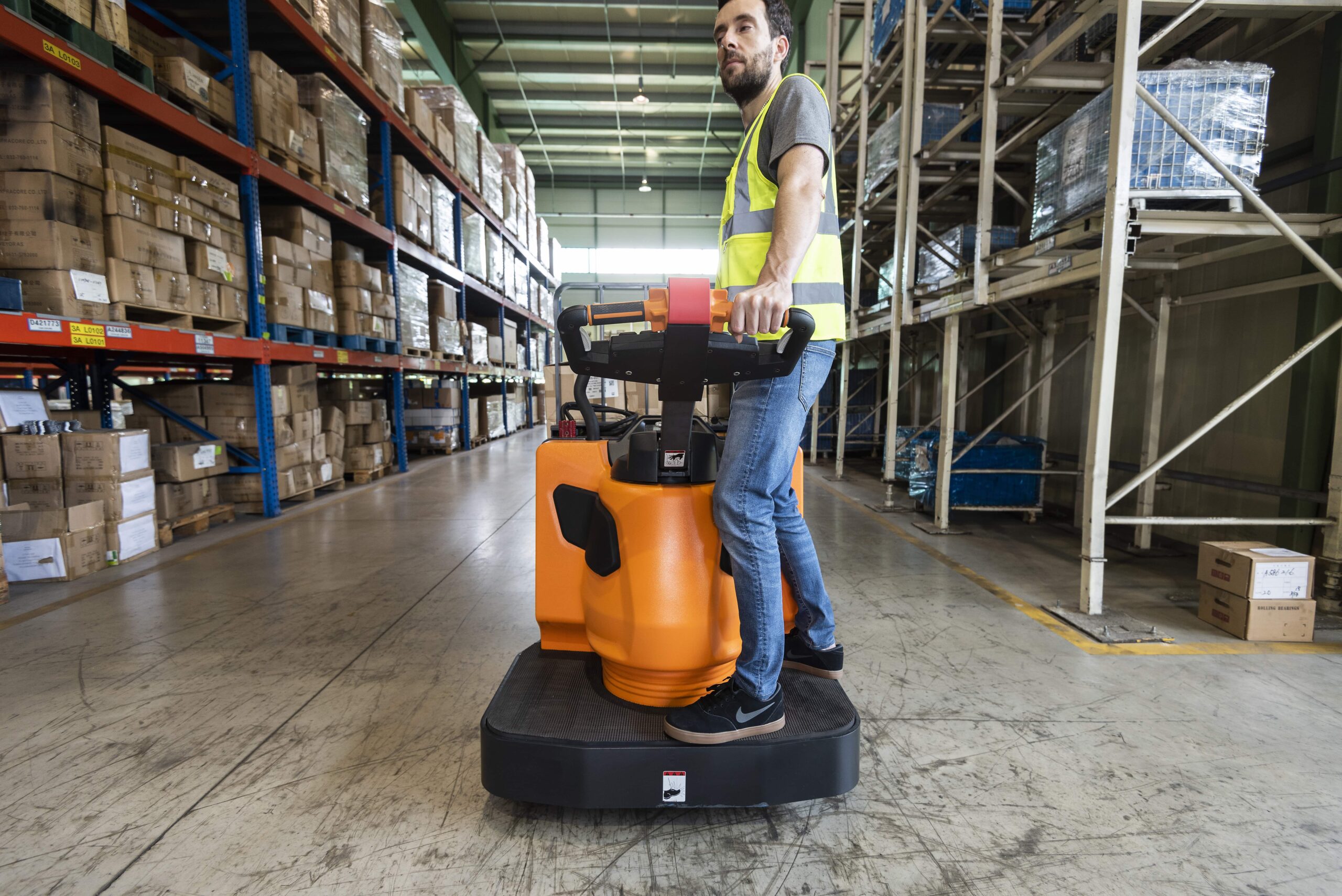
    Electric pallet jacks, on the other hand, run on batteries. They have a motor that does the heavy lifting and the moving. Some even come with ride-on platforms, which are ideal for covering longer distances. These powered trucks reduce physical strain and help speed up the workflow, especially in busy environments.

    Consider Load Size and Frequency

    One of the biggest differences between manual and electric jacks is how much they can handle. Manual pallet jacks usually carry loads between 2,000 and 5,500 pounds (around 900 to 2,500 kilograms). That’s more than adequate for smaller businesses or shops where you’re only moving a few pallets an hour.

    However, if your team is moving heavy loads frequently, manual jacks can become an issue. After all, repeatedly pushing heavy pallets can lead to fatigue or even injury. In such cases, electric pallet jacks are a smarter choice. They manage the heavy lifting from 3,300 pounds (1500 kilograms) to upwards of 9,000 pounds (4,000 kilograms) with ease, making everything more efficient.

    Also, consider the types of goods you’re handling. Manual jacks typically come in more or less the same sizes, while ones often offer more diversity and flexibility with fork dimensions or lift heights, making them more suitable for bulkier or heavier items.

    Match the Tool to Your Team

    Your team’s physical abilities and experience are also important. Manual jacks are easy to learn how to operate and don’t require very specific training, but they do require a certain level of physical strength and stamina to operate effectively. That’s ideal if you employ part-time or seasonal staff who need to get up to speed quickly. Electric jacks, in contrast, require proper training and certification, especially in Singapore, where workplace safety regulations are strict. While that means more time and cost upfront, the long-term benefits are worth it. Once trained, your team can work more comfortably and safely, especially older staff or those performing repetitive tasks.

    Look at Your Facility’s Layout

    The size and layout of your facility should significantly influence your decision. Manual jacks are extremely manoeuvrable and perfect for confined areas such as narrow aisles, crowded storerooms, or back-of-house retail spaces. They turn easily and take up minimal space.

    Electric jacks, meanwhile, excel in larger spaces, like expansive warehouses or loading bays. They move faster and help reduce fatigue over longer distances. Some newer models are more compact and can even handle tighter corners, so they’re also suitable for mixed-use environments.

    Factor in Maintenance

    One major advantage of manual pallet jacks is their low maintenance requirements. With no motors or electronics, they’re easy to repair, and parts are inexpensive and readily available. In contrast, electric jacks require more upkeep. You’ll need to monitor the battery, service the motor, and possibly run software diagnostics, depending on the model. It’s also important to designate someone to oversee battery health and proper charging practices. After all, regular maintenance helps prevent costly breakdowns in the future.

    Budget for the Long Term

    Manual pallet jacks are certainly cheaper upfront. They’re a solid option if you’re working with a limited budget or only need them occasionally. However, if you’re thinking long-term, electric jacks may offer better value. They cost more initially but increase efficiency, reduce physical strain, and help prevent injury-related downtime. In a busy warehouse, those benefits can quickly outweigh the initial investment.

    So, What’s the Right Choice?

    It all depends on what your business needs most.

    • Go with manual pallet jacks if your space is compact, your loads are light, or you have a rotating workforce that needs quick training.
    • Choose electric pallet jacks if you handle heavier loads, cover longer distances, or require your team to operate at a consistently high pace.

    And remember, you don’t always have to pick just one. A hybrid setup could offer the best of both worlds. Use manual jacks for quick, light tasks and electric ones for heavier or longer hauls. So, before making a final decision, walk through your facility. Observe how your team moves goods, identify any pain points, and consult with your staff. After all, the right pallet jack setup won’t just boost productivity. It will also make your facility safer and easier to manage.