Category: General

Retail News Asia is committed to providing both local and global retailers with the latest General Retail news throughout the Asian market. This on a daily base.

  • Retailer Courts Asia more than triples its earnings despite challenging retail environment

    Retailer Courts Asia more than triples its earnings despite challenging retail environment

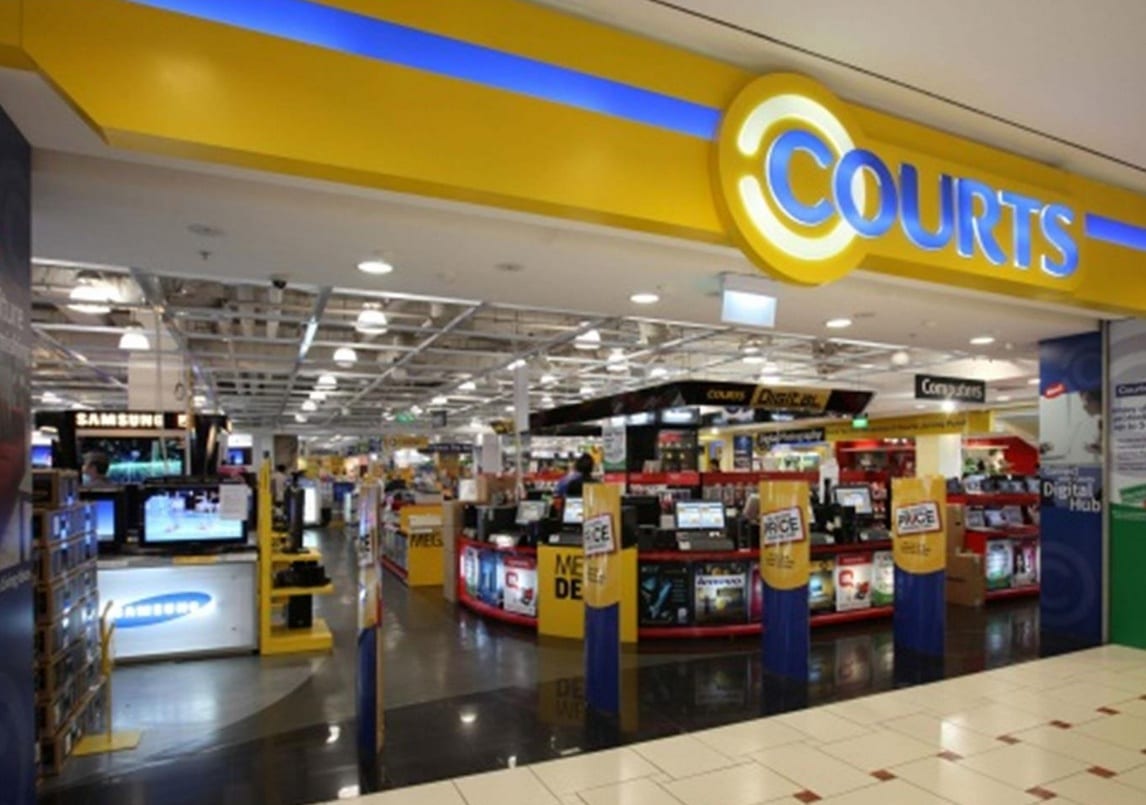
    Despite the challenging retail landscape, Courts Asia more than tripled its profit for the full year ended March 31. Mainboard-listed Courts Asia took in earnings of S$23.7 million, up from S$6.8 million in the previous year.

    The company delivered a strong performance in spite of a slip in revenue, which fell 1.5 per cent to S$740.5 million.

    The firm attributed the profit improvement to better cost and margin management. It said that Singapore contributed 66.3 per cent of the group’s revenue. Sales here fell by 2.7 per cent from last year, mainly due to lower sales of goods, which was offset by higher service charge income.

    While revenue in Malaysia fell by 3.1 per cent due to currency conversions, revenue in Indonesia rose 59.2 per cent due to contributions from new stores.

    Courts Asia has more than 90 stores in three markets, including 69 in Malaysia and eight in Indonesia.

    The company also said it had applied the new Singapore financial reporting standard 115 revenue from contracts with customers (FRS 115) to its financial statements for the year before, even though the effective date for the implementation of the standard is for accounting periods beginning on or after Jan 1, 2018.

    The change has an impact on the revenue recognition for credit sales and services, resulting in a restatement of reporting earnings for prior years, including the 2016 financial year.

    Earnings per share for the full year came to 4.59 cents, while net asset value per share was 42.5 cents as at March 31.

    It declared a final dividend of 1.29 cents per share, which was unchanged from the last two financial years.

    In a press release, the company said it will invest in new store openings across Malaysia and Indonesia, and refresh existing stores across its three markets with the “next generation” concept. It is targeting a minimum of five new stores each in Malaysia and Indonesia by March 2018.

    It added that the company is exploring the option of “pop-up” stores with short term leases that could potentially be converted into permanent stores. This would serve as an interim measure to add market share, it noted.

    The group has also started to trial door-to-door credit sales in Indonesia, which it said would add a new stream of recurring customers.

    Dr Terence Donald O’Connor, Courts Asia’s executive director and group chief executive officer, said that the company delivered a strong set of results despite the challenging retail environment.

    “In the year ahead, we will leverage the growth levers to expand solutions-selling in all categories, transform offline stores into experience centres and drive omni-channel execution with urgency.”


  • China economy growing but harder times beckon

    China economy growing but harder times beckon

    China’s economy continued to improve in the second quarter, with corporate profits rising and hiring up, a private survey showed, but it suggested the Asian giant may have to brace itself for tougher times ahead even though firms have been able to weather a tighter financing environment.

    The quarterly survey of thousands of Chinese firms by China Beige Book International (CBB) showed yesterday that while the property sector slowed, manufacturing improved further and the retail and service industries bounced back after a difficult first quarter.

    That reinforced a flurry of recent data and policymakers’ comments that indicated the authorities were working to curb financial risks and keep the economy on an even keel heading into a key political meeting this year. The survey showed surprisingly strong performance in the commodities sector despite some price weakness in the second quarter, with the aluminium sector particularly strong.

    Yet signs of stress in the corporate sector pointed to a bumpy ride for businesses. CBB said cash flow was negative for many companies and inventory levels in the second quarter was at the highest in the history of the survey.

    That is in line with official data showing growth in industrial inventories picked up to over 10 per cent in April, sparking worries of weak demand. CBB said there are signs that tougher times could be ahead for Chinese companies during a period of deleveraging and rising interest rates.

    “It remains true that either rates have to come plunging back down, as the (state planner) recently called for, or the present level of corporate activity is headed for a cliff,” CBB said in its report.

    As the government stepped up its campaign to curb debt risks and stabilise the financial sector, growth of China’s broad money supply came in at the slowest in at least two decades in May, though bank lending remained solid.

    The survey showed the corporate sector started to feel the effect of tighter credit conditions in the second quarter. Borrowing was not impacted much, CBB said, likely due to positive business outlook for the next six months.

  • Vietjet announces three new aircraft and more international routes

    Vietjet announces three new aircraft and more international routes

    Vietjet reported continuous growth in its business performance in May with the addition of three new aircraft to its new generation fleet, the launch of new international routes and increased frequencies of international flights to meet the increasing travel demand of domestic passengers in the high season.

    In May, Vietjet launched the Da Nang – Seoul route; opened sales for Hanoi – Yangon route, which is expected to operate as of August 31, 2017. Besides, Vietjet increased the frequencies of Hanoi – Taipei route to 11 return flights/ week from July 21, 2017 and Hanoi – Seoul route to 14 return flights/ week from August 2, 2017.

    Along with the series of new route launches, Vietjet maintained its high load factor, with a rate of over 88%. In the first 5 months of 2017, Vietjet operated nearly 39,100 safe flights, transported more than 6.5 million passengers, an increase of 29% as compared to the same period of 2016. In May, it carried over 1.5 million passengers

    Up to the end of May, Vietjet had its own channel for online ticket distribution and consumer services with 21,378 offline sales points, an increase by 2,803 points compared to that by December 31,2016.

    With this result, the revenue from airline operation of Vietjet in May approximately stood at VND8,352 billion (around USD3.6 billion), an increase of 44% compared to the same period of the preceding year and exceeding the budget forecast by 9%.

    On the international scene, on the visit of the Vietnamese Prime Minister Nguyen Xuan Phuc to the US in late May, Vietjet signed agreements with CFM International, GECAS and Honeywell Aviation, worth a total of USD 4.7 billion.

    Later, in Tokyo, Vietjet and Mitsubishi UFJ Lease & Finance (MUL), a member of Japan’s leading finance group Mitsubishi UFJ Financial Group (MUFG), signed a strategic agreement, which would pave the way for MUL to finance Vietjet’s acquisition of three brand new A321 aircraft, worth US$348 million.

  • New Cebu Pacific flights from Davao to boost tourism

    New Cebu Pacific flights from Davao to boost tourism

    New Cebu Pacific direct domestic flights from Davao are seen as another door of opportunities for the local tourism industry especially for the upcoming Kadayawan Festival, said City Tourism Operations Office (CTOO) official. By July 26, Cebu Pacific will have scheduled flights three times a week, Monday, Wednesday, and Friday between Davao and Dumaguete. They will also fly four times a week from Davao to Tacloban and vice versa starting July 27. Schedules will be every Tuesday, Thursday, Saturday, and Sunday.

    The flights will be carried by the Cebgo fleet of ATR aircraft. “We’re very happy with these updates as it means opportunities for us. We’re deep into planning for Kadayawan so we’ll include these new routes in our plans. We’re going all out now with preparations and events. We’re setting up a Kadayawan Village at Magsaysay Park and hoping that Dabawenyos will also help promote and join the activities,” said CTOO Head Generose Tecson. It was earlier reported that the tourism sector in Davao City had been “slightly affected” by the declaration of Martial Law in Mindanao especially with the hotel bookings, accommodations, and events being cancelled for security purposes.

    Aside from the direct Davao flights to be launched by the last week of July, Cebu Pacific will also launch flights between Cebu and Masbate, Zamboanga and Cotabato, and Cagayan de Oro and Zamboanga.

  • SPAR and DHL launch first of 300 convenience stores in Thailand

    SPAR and DHL launch first of 300 convenience stores in Thailand

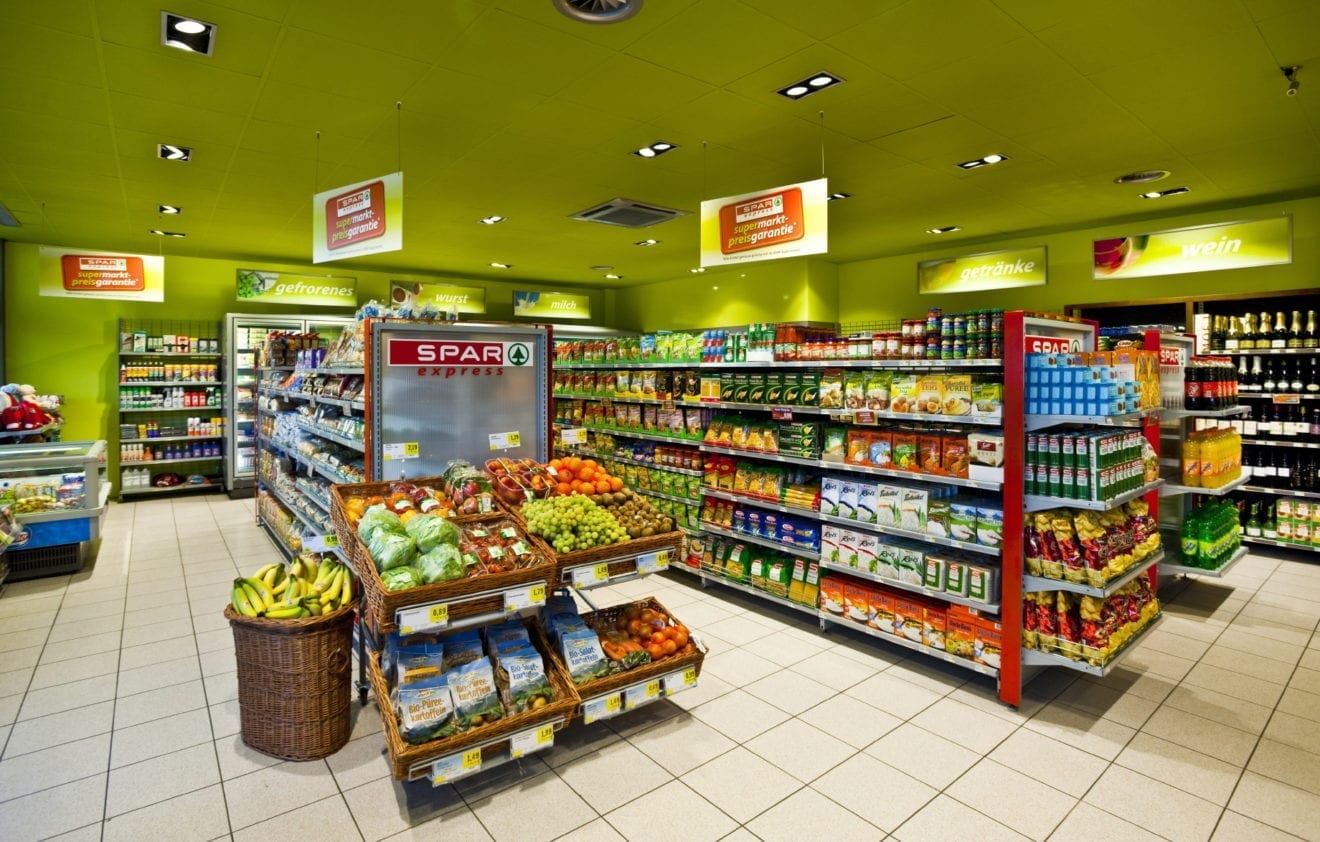
    SPAR International, the world’s largest food retail voluntary chain, will partner with DHL Supply Chain and the Bangchak Retail Company (BCR) to establish up to 300 new convenience stores in Thailand by the end of 2020.

    The deal will see DHL Supply Chain support SPAR’s expansion plans with end-to-end transport, distribution and warehousing services across Thailand, with BCR providing the front-end store infrastructure for the Dutch retailer. SPAR’s supply chain will currently use the DHL Bangna Logistics Campus for ambient warehousing and distribution; and its Klong Prapa warehouse for handling frozen goods.

    “To support SPAR Thailand in delivering SPAR’s global reputation for freshness, choice, quality, and service, we knew we needed a logistics partner with proven experience in maintaining world-class food retail supply chains,” said Tom Rose, Head of Operations at SPAR International. “DHL’s track record in sustaining fast-growing food retailers, both in Thailand and other markets worldwide, gave us the confidence to use their infrastructure as the foundation of our local supply chain.”

    “Since working with DHL, they have impressed SPAR with the smoothness and visibility of its third-party logistics services, leaving us in no doubt that this partnership will help SPAR reach its sizable ambitions for growth in the Kingdom.”

    The infrastructure at DHL Supply Chain will support SPAR’s quality standards with a range of features including CCTV systems, automatic fire protection, and temperature controlled warehousing. Both warehouses will also be managed by WMOS, a warehouse management platform, to maintain levels of inventory accuracy and productivity in line with SPAR’s global best practices.

    “Retail operations require highly specialized experience to achieve the levels of inventory quality, shipment accuracy, and timeliness needed to meet swift changes in consumer demand,” said Kevin Burrell, CEO, Thailand Cluster, DHL Supply Chain. “With Thailand’s retail sector expected to continue growing steadily alongside disposable income levels, we’re keen to take our award-winning services to the next level as we help SPAR bring its world-class quality direct to Thai consumers.”

  • Takashimaya profits soar in Q1

    Takashimaya profits soar in Q1

    Takashimaya announced on June 26th that net profit for the first quarter of the fiscal year surged 44.7%, as the company saw revenues increase slightly and “endeavoured to cater to the increasingly diverse array of customer needs and create sales spaces that deliver new value.”

    The Japanese department store operator reported a net profit of 5.45 billion yen (US$48.7 million) for the three months ended May 31, compared to the same period last year, while operating profit lifted 5.1% to 8.09 billion yen.

    The retailer said first-quarter sales grew 2.8%, hitting 225.48 billion yen (US$2.02 billion).

    Takashimaya credited its rejigged operating strategy with a focus on omni-channel, and an improved consumer sentiment in Japan for the financial result.

    “We made efforts to harmonize the product lineup between stores and the online store, develop distinctive merchandise, provide a streaming service aimed at enhancing convenience for customers and in-store tablets to introduce customers to the online store,” the retailer said in a statement. “These and various other measures contributed to strong sales.”

    During the quarter, the department store’s Shinjuku location opened a specific level for ‘wellbeing’, boasting shops and a café with healthy items, as well as studios and a gym.

    Takashimaya said it expects net profit to life 3% to 21.5 billion yen (US$191.1 million). The firm forecast 12-month operating profits to increase 2.9% to 35 billion yen (US$311.2 million) and a yearly sales growth of 2.% to 943 billion yen (US$8.38 billion).

  • India, Portugal launch international startup hub

    India, Portugal launch international startup hub

    India and Portugal have entered a collaboration to strengthen the connection between the startup ecosystems of the two countries.

    The recently-launched India-Portugal International Startup Hub is an initiative towards that end. “Startup sphere is an interesting space for cooperation. It is a great means to generate value and wealth for society,” India’s Prime Minister Narendra Modi has commented.

    The India-Portugal International Startup Hub (IPISH) is a platform for all stakeholders of the startup ecosystem in India, including startups, investors, mentors, incubators, accelerators, aspiring entrepreneurs, service providers and government bodies.

    The hub provides an opportunity to connect with other members of the ecosystem and also offers access to important resources such as its learning and development program, information about relevant government schemes, a forum to brainstorm and discuss, news and blogs among others.

    The platform has been initiated by StartUp India and supported by the Indian Commerce and Industry Ministry and StartUp Portugal to create a mutually supportive entrepreneurial partnership.

    IPISH hosts a range of tools and will provide information on the startup hotspots of Bangalore, Delhi and Lisbon; and on associated subjects, such as policy, taxation, and visa options. It will develop a Go-To-Market Guide to support startups.

    IPISH is expected to help in mutual capacity building, and enable connections between start-ups, investors, and incubators from relevant sectors. It is also expected to establish a network of honorary ambassadors based in India and Portugal to guide start-ups from both countries.

    There are strong synergies between India and Portugal in the start-up sector. Portugal has one of the highest rates of business creation in Europe and has emerged as one of the most vibrant European ecosystems for entrepreneurship.

  • Facebook hits two billion user mark

    Facebook hits two billion user mark

    Facebook said Tuesday it now counts two billion active monthly users, as the social giant’s founder Mark Zuckerberg highlighted his new mission — not just connecting people, but helping them find common ground.

    “As of this morning, the Facebook community is now officially 2 billion people!” Zuckerberg wrote in a post marking the milestone.

    “We’re making progress connecting the world, and now let’s bring the world closer together,” he wrote. “It’s an honor to be on this journey with you.”

    Facebook’s announcement came as it works to redefine its purpose, led by Zuckerberg who traveled the US this year to better understand what people want out of the social network.

    “We realize that we need to do more too,” the 33-year-old said in a recent interview.

    “It’s important to give people a voice, to get a diversity of opinions out there, but on top of that, you also need to do this work of building common ground so that way we can all move forward together.”

    The firm’s new mission statement says it seeks “to give people the power to build community.”

    Zuckerberg’s message was echoed by Naomi Gleit, a vice president at the internet giant, who credited the millions of small communities emerging within Facebook for helping drive growth.

    More than a billion people take part each month in Facebook “groups” — built around everything from sporting interests to humanitarian projects, she said in an online post on Tuesday.

    For Gartner analyst Brian Blau, Facebook appears to be striving to become “more of a community company than a technology company.”

    He noted that Facebook’s role in last year’s contentious US election — during which social networks were awash in misinformation — may have been a motivating factor.

    TV shows

    Founded in 2004, the social media behemoth hit the billion-user mark five years ago.

    “These billion levels are significant milestones; and certainly it is a lot of people around the planet,” said Blau. “It goes to show the power of community, and how people are naturally drawn to each other.”

    As it has grown, Facebook has updated features to fend off challengers such as Snapchat and adapt to trends such as the migration of news and streaming video online.

    In the latest move to deepen its reach, it revealed Monday it is starting production on high-quality television series and gaming shows to be broadcast on its platform.

    Working with a small group of partners, Facebook hopes to start putting out episodes of its forthcoming series by the end of the summer, Nick Grudin, the vice president for media partnerships.

    Facebook’s initiative follows similar moves by Netflix, Amazon and the online television platform Hulu — a joint venture by Disney, Comcast, 21st Century and Time Warner — who have thrown themselves into content production, as have YouTube and Apple, although on a more modest scale.

    Battling hate

    Chief among the challenges it faces, Facebook is under pressure — along with other social media giants — to tackle the proliferation of hate speech and extremist content, trolls and misinformation, while safeguarding freedom of speech.

    Facebook, Microsoft, Twitter and YouTube announced Monday the launch of an anti-terror partnership aimed at thwarting the spread of extremist content online.

    Each of the technology giants has been working individually to prevent its platforms or services from being used to spread extremist views.

    The “Global Internet Forum to Counter Terrorism” intends to share engineering, research and knowledge to “continue to make our hosted consumer services hostile to terrorists and violent extremists,” the companies said.

    Facebook this month launched a series of counterterrorism measures in the wake of attacks in Manchester and London.

  • Melbourne Airport to get luxury retail hub

    Melbourne Airport to get luxury retail hub

    Melbourne Airport will spread its retail wings later this year with the addition of several international luxury brands, confirmed to open inside the Australian airport’s Terminal 2.

    Located next to the airport’s current duty free store, jeweller Tiffany & Co, and fashion brands Burberry, Salvatore Ferragamo, Max Mara and Emporio Armani are all slated to open stores later this year, as part of the airport’s new high-end fashion precinct.

    According to the airport’s chief of retail, Andrew Gardiner, the upgrade hopes to enhance the traveller experience, creating an airport that Melbourne can be proud of.

    “The luxury precinct is really taking Melbourne Airport to the next level, with 11 of the world’s most prestigious brands set to enhance our international passenger experience,” says Andrew Gardiner, chief of retail at Melbourne Airport.

    “We’re absolutely thrilled to bring these brands to Melbourne Airport. Our domestic and international passengers have informed us of the stores they want to see, and we’re delivering on that with high end brands that we know our travelers love.”

    Other big name retailers including Australian official watch specialty store Watches of Switzerland are scheduled to open, joining Bally, Michael Kors, Hugo Boss Furla and Tumi.

    All stores are set to open at varying times between the end of July and end of November 2017.

  • AirAsia orders another 14 A320ceo aircraft for regional network

    AirAsia orders another 14 A320ceo aircraft for regional network

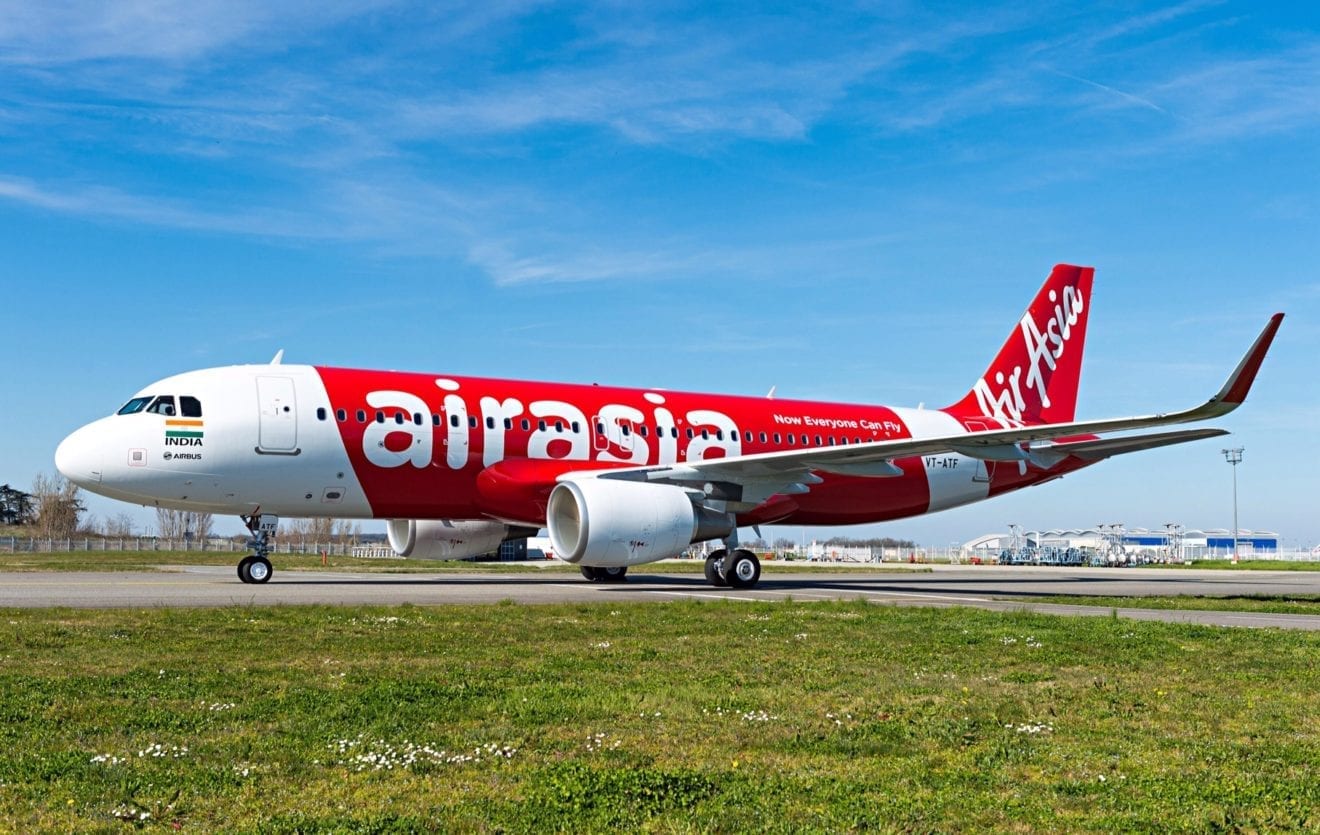
    AirAsia has signed an agreement with Airbus to order an additional 14 A320ceo aircraft to meet higher than expected near-term growth on the carrier’s regional network.

    The contract, which is subject to AirAsia board approval, was announced at the “Paris Air Show” on Tuesday.

    The announcement will see the total number of A320 Family aircraft ordered by the Malaysia-based airline rise to 592, reaffirming its position as the largest airline customer for the Airbus single-aisle product line.

    To date, 171 A320ceo and eight A320neo aircraft have been delivered to the airline and are flying with its units in Malaysia, India, Indonesia, Thailand and the Philippines.

    Tony Fernandes, AirAsia Group chief executive officer, said: “Demand is very strong in AirAsia’s traditional countries, but now we have Indonesia, the Philippines and India doing extremely well. The robust demand has led us to expand our fleet, and Airbus has been a great partner in finding us slots.

    “We still need to find more aircraft to expand our regional reach and are actively sourcing from the leasing market. The competitive environment is at its best, coupled with a stable oil price. With the lowest cost in the world, AirAsia is back on aggressive growth.”

    The A320 Family is the world’s best-selling single-aisle product line. It has won over 13,000 orders and more than 7,600 aircraft have been delivered to some 400 customers and operators worldwide.

    With one aircraft in four sizes (A318, A319, A320 and A321), the A320 Family seats from 100 to 240 passengers, and features the widest cabin in the single-aisle market with 18”-wide seats in Economy as standard.

  • Google set to face record EU antitrust fine as soon as Tuesday

    Google set to face record EU antitrust fine as soon as Tuesday

    EU antitrust regulators are likely to impose a record fine on Alphabet unit Google over its shopping service as soon as Tuesday, two people familiar with the matter said on Monday, concluding one of three cases against the company.

    The European Commission’s case was triggered by scores of complaints from both U.S. and European rivals, leading to a seven-year-long investigation into the world’s most popular internet search engine.

    The EU competition authority charged Google in April 2015 with distorting internet search results to favor its shopping service, harming both rivals and consumers.

    The Commission declined to comment.

    Google said: “We continue to engage constructively with the European Commission and we believe strongly that our innovations in online shopping have been good for shoppers, retailers and competition.”

    The company has said regulators ignored competition from online retailers Amazon and eBay Inc.

    Reuters exclusively reported on June 1 that the EU competition enforcer aimed to sanction the company before the summer break in August.

    Companies found guilty of infringing EU antitrust rules can be fined as much as 10 percent of their global turnover, which in Google’s case could be about $9 billion of its 2016 turnover but it is not expected to reach this level.

    A 1.06 billion euro fine handed down to U.S. chipmaker Intel in 2009 is the highest to date.

    Apart from the fine, the Commission will tell Google to stop its alleged anti-competitive practices but it is not clear what measures it will order the company to adopt to ensure that rivals get equal treatment in internet shopping results.

    The Commission’s tough line is in sharp contrast with the U.S. Federal Trade Commission which settled its own web search case with the company in 2013 by requiring Google to stop “scraping” reviews and other data from rival websites for its own products.

  • Changi Airport Group seeks partners for latest food & beverage concessions

    Changi Airport Group seeks partners for latest food & beverage concessions

    Changi Airport Group (CAG) is seeking partners for four brand name restaurant concessions at Singapore Changi Airport Terminal 3 through a Direct Marketing Exercise. The units are located in the Departures Check-In Hall, Level 3 and are each around 190sq m in size.

    CAG said: “We are looking for brands with a proven track record over the years or innovative concepts that will enhance, add value and differentiate the dining experience for passengers in Terminal 3.”

    For each brand name proposed, interested companies may submit a proposal with separate rental bids for Concessions A to D respectively. If bidders intend to propose and operate more than one brand name, separate proposals must be submitted.

    The concession terms are three years each, with the option of a three-year extension at CAG’s discretion. Contracts for the four concessions begin in March, April, July and September 2018.

    Changi Airport Group won the prestigious FAB Award for Airport F&B Offer of the Year last week in Toronto; the award was accepted by General Manager, Advertising, Marketing and Promotions, Airside Concession Division Edwin Lim As reported, Changi Airport captured the award for Airport Food & Beverage Offer of the Year at last week’s FAB Awards, organised by The Moodie Davitt Report in Toronto. A special edition of The Foodie Report e-Zine will feature full details on the winners.

  • The Shilla Duty Free and AmorePacific launch pop-up ‘Beauty Truck’

    The Shilla Duty Free and AmorePacific launch pop-up ‘Beauty Truck’

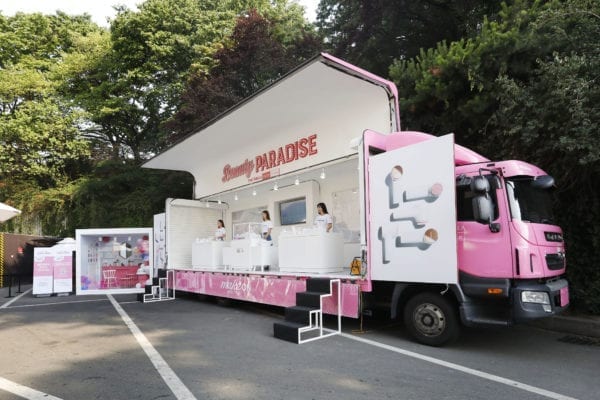
    The Shilla Duty Free and AmorePacific have introduced a pop-up ‘Beauty Truck’ store to promote the Korean skincare house’s MakeOn brand. The pop-up, which launched on 22 June and will stay open till 19 July, is located outside the travel retailer’s flagship store in downtown Seoul.

    The five-tonne Beauty Truck, painted vivid pink, is intended to capture visitor interest as soon as they arrive at the main store.

    MakeOn is described as a “self-aesthetic device that allows facial cleansing, make-up and massage” at any time and any place.

    MakeOn beauty devices offer skincare treatments through energy – combining light, heat, ion and motion. MakeOn’s four top items can be experienced at the pop-up store: Cleansing Enhancer, Skin Light Therapy, Makeup Enhancer and Magnetite Roller.

    Pop-up store staff provide product support and product explanations in Korean, English and Chinese. All items are available for sale inside the main store.

    Pop-up store visitors receive discount coupons and free gifts from MakeOn and AmorePacific, including a -10% discount coupon for MakeOn products a and pink fan featuring the brand’s logo.

    Free samples of highly popular AmorePacific cosmetics brand Laneige are given to visitors taking and sharing pictures in the MakeOn photo zone. Additional Laneige samples are given to visitors boarding the truck and experiencing MakeOn treatment.

    Shoppers who visit the MakeOn shop in The Shilla Duty Free Seoul store receive a MakeOn gold pouch. An additional beach bag is given to those who purchase at the shop.

    The Shilla Duty Free is airing live social media broadcasts at the pop-up store for Chinese, Southeast Asian and South Korean followers in Chinese, English and Korean. KOLs (Key Opinion Leaders) for each language are visiting the pop-up, and describing their experiences in an effort to generate on-line buzz and word of mouth via social media.

    While The Shilla Duty Free has long focused on social media events for Chinese followers, this is the first time that the retailer has aired live broadcasts in other languages. Shilla says it plans to increase social media events and live feeds for Southeast Asian and South Korean consumers following the Beauty Truck initiative.

    The company commented: “This brand new concept pop-up store is The Shilla Duty Free’s latest endeavour to provide an unique and differentiated customer experience especially focused on the beauty category. The Shilla Duty Free, the first operator to run the cosmetics & perfume category in all three major hub airports in East Asia [ncheon, Changi and, soon, Hong Kong International -Ed, is eager to offer an unparalleled beauty experience to customers.”

  • Courts names new CEO in Indonesia

    Courts names new CEO in Indonesia

    Singapore-based tech retailer Courts has appointed a new boss for its operation in Indonesia. Joseph Greenway has been named as the new country CEO. Greenway rejoins Courts after two years as COO of Fantastic Furniture in Australia. Prior to that, Greenway spent 15 years at Courts in a variety of executive roles in Singapore and Malaysia. The appointment comes after Roy Santoso resigned from his role as Indonesia country CEO at Courts to pursue other career opportunities.

    Courts board stated: “Given his knowledge and experience of Courts business, Mr Greenway was shortlisted as one of the preferred candidates. He was put through various levels of interviews with senior management before the final selection. The board opined that he has the requisite experience to take the country CEO role.”

    Listed on the Mainboard of the Singapore Exchange in October 2012, Courts Asia is a leading electrical, IT and furniture retailer in South East Asia. The retailer’s expansion into Indonesia was led by the opening of a megastore in Kota Harapan Indah, Bekasi in October 2014. The second Courts megastore in Indonesia opened in BSD City, Tangerang in January 2016.

  • Air Asia unit expects record revenue

    Air Asia unit expects record revenue

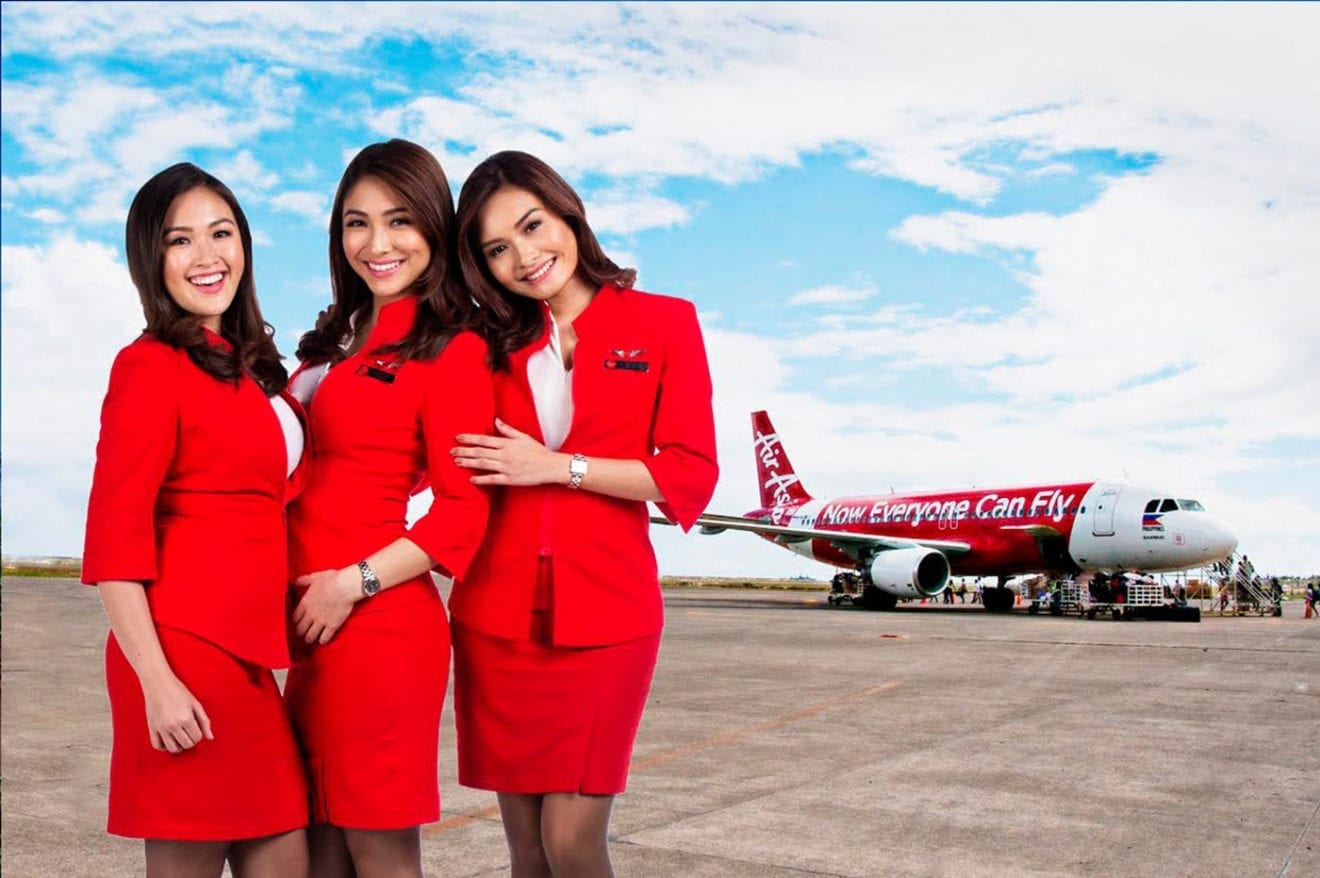
    Budget airline Philippines Air Asia hopes to breach a new revenue record this year on expectations that people will fly more and avail themselves of add-on services such as onboard meals and extra luggage space.

    Philippines Air Asia is targeting revenue to hit P13 billion in 2017, up by about 20 percent from the P10.8 billion it booked in 2016, airline CEO Dexter Comendador said. Revenue growth last year was 21 percent.

    Comendador, a veteran Air Force and commercial pilot who who has held the CEO post for almost a year, said the airline’s growth was being driven by passenger and ancillary revenues.

    “This will be the best year in our existence,” Comendador said. Philippines Air Asia started in 2012 and it has grown organically and via acquisitions.

    It completed in 2015 an investment in and merger with Zest Airways, a move that gave it access to valuable slots in Manila’s Ninoy Aquino International Airport, the Philippines’ busiest air gateway.

    Comendador said profitability would also improve in 2017, as the carrier controls costs here and abroad via the group’s “One AirAsia” strategy, which involves the consolidation of its Malaysian, Philippines, Indonesian and Thai units under a single holding company that will also be publicly traded.

    Comendador said Philippines Air Asia would still push for its initial public offering, earlier estimated at about $200 million, this year, with its potential listing by the fourth quarter of 2017.

    “Tony’s instruction is to push for it,” Comendador said, referring to Air Asia Group CEO Tony Fernandes.

    The Air Asia Group closed 2016 with 174 Airbus A320s, its annual report showed. Comendador said Philippines Air Asia would end 2017 with 19 A320s, up from 16 planes, to support its growth. Philippines Air Asia carried 1.04 million passengers last year, up 19 percent.

    Comendador said the domestic fleet would grow to 70 planes in 15 years, or by 2032.

    He said the plan was also to increase its presence in Clark International Airport in Pampanga, which was where the carrier first started operations.

    After temporarily suspending its Clark service in 2013 to focus on Manila, Philippines Air Asia resumed flights to Kalibo on March 27, 2017.

    The Duterte administration had signaled its intention to pursue the development of Clark, an alternative air gateway to Naia, which is suffering from growing air congestion. Part of the government’s commitment was to build a new train system linking Clark to Manila before Mr. Duterte’s term ends in 2022.