Category: General

Retail News Asia is committed to providing both local and global retailers with the latest General Retail news throughout the Asian market. This on a daily base.

  • Change of guard as new CEO takes Malaysia Airports’ reins

    Change of guard as new CEO takes Malaysia Airports’ reins

    The new Director and Chairman of Malaysia Airports is YAM Tan Sri Dato’ Seri Syed Zainol Anwar Ibni Syed Putra Jamalullail, who took over from Tan Sri Dr Wan Abdul Aziz, who has served in the position for the last five years.

    Commenting on the contribution made by its former chairman, Malaysia Airports said: “Tan Sri Dr Wan Abdul Aziz has held the position for five years and during his stewardship has seen to the company’s significant achievements such as the successful opening of klia2 and full acquisition of Istanbul Sabiha Gokcen International Airport in Turkey – as well as the opening of Mitsui Outlet Park KLIA as a catalyst to KLIA Aeropolis.

    “His guidance and commitment at the Board has also steered the company towards charting its next phase of growth in Malaysia Airports’ five-year business plan Runway to Success 2020 (RtS2020) and launching of the KLIA Aeropolis Master Plan.”

    Adding his remarks at the end of his tenure at the airports company, Tan Sri Dr Wan Abdul Aziz said: “I believe Malaysia Airports has the capability to continue to create value for the ever-evolving aviation landscape – way into the future.

    “I am also confident that it will continue to reap the success of its innovative plans and hard work. This is the right time for me to make way for another leader at the helm to pursue the company’s vision and steer it towards achieving even greater heights.”

    The new incoming Chairman YAM Tan Sri Syed Zainol Anwar was formerly the Chairman of Nestlé (Malaysia).

  • Industry 4.0 paving the way for Vietnam’s startups

    Industry 4.0 paving the way for Vietnam’s startups

    FPT Corporation Chairman Truong Gia Binh and Asanzo Vietnam CEO Pham Van Tam share their outlook on the Industry 4.0 trend. Industry 4.0, short for emerging technologies like cloud, artificial intelligence and machine learning, is considered the fourth industrial revolution, and is rapidly changing the world.

    Vietnam had missed three industrial revolutions before so it’s high time for the country to catch up with this global trend, said Truong Gia Binh, Chairman of technology giant FPT Corporation. “Don’t grow old before you get rich.”

    Industry 4.0 will pave the way for businesses in Vietnam, including the startup community, given the country’s young demographic and high internet penetration rate, Binh commented. The revolution will also create more jobs.

    Unlike the last three industrial revolutions, Industry 4.0 focuses on automation and data exchange in manufacturing technologies. Small startups with limited capital can still be very competitive, he added.

    “Opportunities and risks go hand in hand, but with government support for the startup community, they should begin to change their minds and the way they run their businesses, depending on their needs and financial capabilities,” Tam said.However, launching a new enterprise also means taking a risk, Pham Van Tam, CEO of Asanzo Vietnam, warned.

  • ‘Chasing the Chinese Dream’ Shows Aspirations and Dilemmas at the Heart of China’s Consumer Economy

    ‘Chasing the Chinese Dream’ Shows Aspirations and Dilemmas at the Heart of China’s Consumer Economy

    China’s mass affluent population (individuals with RMB 650,000 to 6 million investment assets) makes up only around 2.5 percent of the country’s population, yet their personal consumption is expected to experience double digit growth to account for more than 75 percent of China’s total consumption by 2020, according to a report released by Oliver Wyman, a global consulting firm.

    The report, titled ‘Chasing the Chinese Dream’, reveals that China’s mass affluent population is expected to more than double from 15 million in 2015 to 33 million in 2020, rapidly accumulating wealth with investable assets projected to increase from RMB 21 trillion in 2015 to RMB 45 trillion in 2020.

    “The new mass affluent class, who are younger, more tech-savvy and free-spending, now allocate more money to investments and consumption than savings,” said Bernhard Kotanko, Oliver Wyman partner and co-author of the report. “Having suffered greatly from stock market volatility in recent years, investors are now looking to diversify risks and rebalance portfolios.”

    As financial needs evolve, half of respondents have already increased allocation of income towards financial products and/or Chinese stocks, the top two categories, followed by top-up insurance plans. Chinese equities and bank wealth management products are still the most common assets held by the mass affluent class, yet they are open to experimenting with financial innovations and have taken part in new fintech vehicles such as online money market funds and peer-to-peer products.

    On the consumption front, 60 percent of surveyed respondents have increased spending on entertainment (sports, cinema, etc.) and domestic vacations, on par with food and personal items. Furthermore, 30 percent of additional income is allocated to entertainment and holidays, exceeding the incremental spending on personal and household goods.

    “Our research suggests around two-thirds of incremental income will be funneled into consumption. However, Chinese consumers aren’t just buying more. They are now seeking meaningful experiences to elevate lifestyles, spending more on experiences that result in higher levels of self-fulfillment,” said Jacques Penhirin, Oliver Wyman partner and co-author of the report.

    The research shows that this new consumer class is forging new patterns of saving, investing and consuming, to support a more sophisticated and urbanized way of life.

    The paper also reveals that, even as Chinese consumers reach for meaningful lifestyles and experiences, the underlying foundation of economic and social security is shaky. Discontent over cost of living is widespread and profound. Quality providers of wealth management and basic welfare are still largely lagging – a paradox where they pursue higher values beyond material goods, but still grapple with basic needs.

      Aspirations Dilemmas
    Savings It’s not just about savings


    >> Savings is falling and more money is being allocated to investments and consumption


    Rising incomes but perceived wealth is not necessarily increasing

    >> Insecurities about the future means savings are still a safe haven and unlikely to fall to western levels

    Investments Investor appetites are diversifying


    >> Investors are more rational and demand more balanced, diversified asset allocation

    Desire to broaden investing but mistrusting of professional money management

    >> Without professional wealth management, wealth is mostly illiquid and consumption power is in deadlock

    Consumption Rise of the experiential consumer


    >> Consumers are seeking meaningful experiences to elevate lifestyles

    Striving to ‘live well’ but still uneasy about basic welfare, with healthcare the top concern

    >> There is growing demand for upgraded options in social goods to improve well-being

    “While increasing their spending on affluent lifestyles, Chinese consumers demand better welfare benefits and set money aside for future healthcare treatment and education,” said Jacques Penhirin.

    The skepticism towards local healthcare quality is fueling a rising medical tourism market, which is growing at a faster rate than the tourism industry. More affluent Chinese look overseas for wellness services, medical care and treatment for critical illnesses. The top five destinations, in order, are Japan, Korea, United States, Taiwan and Germany.

    The perception that Chinese consumers will indiscriminately buy more goods is a myth. As they search for ‘experience goods’ to elevate lifestyles, they are at the same time seeking upgraded options to social goods to improve well-being.

  • High quality is the leading purchase driver for urban Thais

    High quality is the leading purchase driver for urban Thais

    Although cheaper prices attract consumers in Thailand, it seems a product’s quality is the highest priority when making a purchase decision. According to new research from global market intelligence agency Mintel, as many as three in five (58%) metro Thai consumers* rate high quality as a key purchase factor, making this the leading driver of buying decisions. Also ranking in the list of the top five purchase influences among metro Thais are convenience (42%), special offers (40%), durability (35%), and finally, their favourite brands (26%).

    Thai consumers have seemingly become more cautious with their finances as Mintel research reveals three in five (59%) metro Thais said their personal goal in 2016 was to get their household finances in order. For the best bargains in town, 45% of metro Thais who are smartphone users say they use their devices to compare prices at other stores while out shopping, and 43% say they use their smartphone to research the best price of an item in their area before deciding where to make purchase.

    Avanthi Ravindran, Senior Trend & Innovation Consultant, Southeast Asia and India at Mintel, said:

    “Thailand’s consumers have become more prudent with their spending in recent years. In light of this, more and more consumers are turning to online channels that give them access to competitive offers and cheaper pricing. However, our research shows that high quality remains a key driver of purchases, and consumers are still willing to pay a premium for products that are safe and natural.”

    Furthermore, Mintel research shows that consumers are increasingly becoming more mindful of the environment and what they are consuming. Indeed, 37% of urban Thais prefer products that maintain fair trade regulations, while just over three in 10 (31%) prefer products that carry an environmental certification from a credible government or non-profit organisation.

    Consumers are now also willing to pay a premium for ‘safe to use’ claims on products, as indicated by two in five (40%) metro Thai consumers. This is the second biggest factor behind consumers’ willingness to pay a premium among urban Thais, following ‘better product performance’ (43%) which is the leading motivator. The third most important consideration for Thais to purchase products with a premium price tag is for them to be natural and formulated using pure ingredients; over one in four (27%) metro Thais said that they are willing to pay a premium for everyday products that are ‘natural’.

    “With ingredient safety concerns on an upward trend globally, consumers are on the lookout for products that highlight naturalness as well as clean, pure formulations. The words ‘safe’ and ‘natural’ enhance a product’s appeal to consumers, and these perceptions are only likely to grow with the increasing concerns around food safety and chemical contamination,” Avanthi adds.

    Finally, convenience is the second most important purchase driver among urban consumers in Thailand, after high quality (42% and 58% respectively). While the Digital Age has made shopping easier for convenience-seeking consumers, especially as information is now just a click away, Thai consumers’ busy lifestyles have also called for convenient and easy-to-use formats. Mintel research reveals that three in 10 (30%) metro Thai consumers prefer to eat out as they don’t have time to cook their meals at home, while as many as one in four (24%) prefer to eat lunch at their desk at work as it helps them save time.

    According to Mintel estimates, Thailand’s ready meals retail market saw an increase of 2.1% in volume, and reached 50,170 tonnes in 2015. The market is expected to grow at a volume CAGR (compound annual growth rate) of 3% in the five years from 2016, to reach a volume of 58,700 tonnes in 2020.

    “With metro consumers increasingly looking for convenient meal options, the opportunity for on-the-go formats has expanded, especially as Thailand’s ready meals market is forecast to grow over the next couple of years. The relationship between quality and speed should be recognised; consumers are looking for high quality, fresh products that are delivered conveniently and quickly. Offering the right price and discounting as appropriate are also crucial; companies will need to branch out with their marketing efforts, tap into online channels, and go beyond traditional retail stores,” Avanthi concludes.

  • Vietjet and Safran sign SFCO2 agreement

    Vietjet and Safran sign SFCO2 agreement

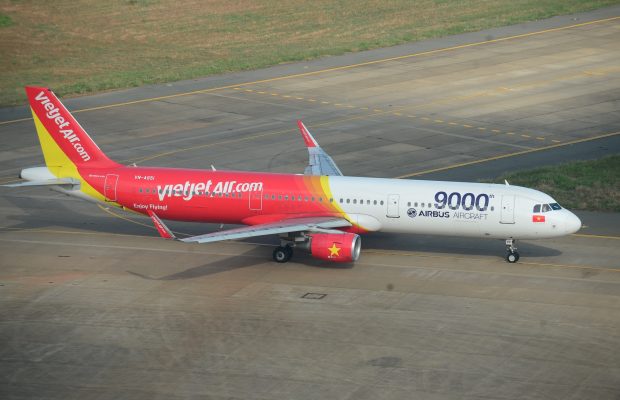
    Yesterday, at the Paris Airshow 2017 held in Paris – France, Vietjet signed with Safran the SFCO2 agreement for fuel efficiency solution. The SFCO2 service contract spans five years, starting in 2017, and covers the entire fleet of the Ho Chi Minh City-based airline. It will help Vietjet improve its operational efficiency by reducing fuel consumption and CO2 emissions. The agreement provides for operational recommendations, along with a special SFCO2 web application that enables the airline to track its progress and potential savings.

    The SFCO2 solution combines the expertise of Safran Aircraft Engines, one of the world’s leading aero-engine manufacturers, with the long-standing experience of Safran Electronics and Defense in flight data analysis.

    “As an important element of Vietjet fuel efficiency program, Safran’s SFCO2 service will enable us to meet our fuel consumption efficiency objectives, so that we can better our economic and environmental friendly performance,” said Dinh Viet Phuong, Vietjet Vice President.

    “We are proud of winning this contract to support Vietjet’s day-to-day performance and dynamic growth over the next five years. Our selection by Vietjet confirms the effectiveness of our SFCO2® service and provides further recognition of our global expertise in fuel efficiency solutions,” said François Planaud, Safran Vice President of Services & MRO.

    Applying advanced technology and environment friendly solution in daily operation is one of the top priorities of Vietjet. By analyzing both operational and maintenance aspects, Safran’s SFCO2® service develops procedures and recommendations to address airlines’ need for greater fuel efficiency which can reduce Vietjet fuel consumption up to 5%. Accordingly, the fuel expense saved yearly is expected to reach tens of millions of US dollars.

  • Facebook retailers in Hanoi told to pay tax

    Facebook retailers in Hanoi told to pay tax

    Tax collectors have reached out to more than 13,400 businesses, following a similar move by their peers in Ho Chi Minh City.

    The Hanoi Department of Taxation has sent text messages to 13,422 Facebook accounts that use the social media network as a retail platform.

    The retailers have been urged to go to the department’s website to register their businesses and declare tax, Vien Viet Hung, the department’s deputy director, said.

    So far nearly 2,000 of them have registered and been granted a tax code.

    The move came soon after the tax authority in Ho Chi Minh City took similar action.

    Le Thi Thu Huong, a municipal tax official, said Ho Chi Minh City has a record of 13,500 retailers on Facebook and that the law only requires those with an annual revenue of VND100 million or $4,400 to declare tax.

    Tax officials will also need to figure out how to determine their taxable income, Huong said, noting that cash transactions are difficult to track.

    But both officials and experts have admitted that it would be extremely difficult to collect tax from Facebook retailers.

    Nguyen Thi Cuc, who chairs the Vietnam Tax Consultants’ Association, told VnExpress that Vietnam’s tax policy for online businesses is incomplete and that it’s a challenge when most transactions are still in cash.

    Vietnam is also struggling to monitor the business activities of transnational corporations like Facebook and Google, she added.

  • Korean Duty-free shops’ sales to foreign customers rise in May

    Korean Duty-free shops’ sales to foreign customers rise in May

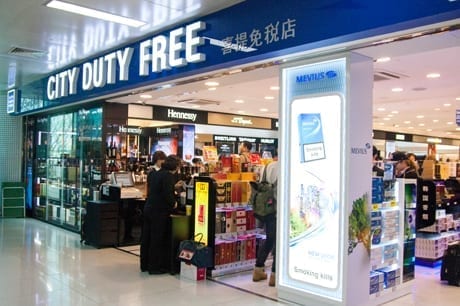
    South Korean duty-free shops saw sales to foreign customers increase for the first time in three months in May, industry data showed, a sign that Beijing’s trip restrictions may be wearing off.

    The sales to foreigners at local duty-free shops reached US$655.9 million last month, up a solid 11.1 percent from the previous month, where they stood at US$590 million, according to the data from the Korea Duty Free Shops Association.

    The on-month increase marks the first rebound following a big drop in the number as the Chinese government exerted pressure on the country’s travel agencies to stop selling package tours to South Korea in an apparent retaliation over the deployment of a U.S. missile system on the Korean Peninsula.

    Beijing’s ban dealt a blow to the local duty-free industry, which has heavily relied on Chinese demand. Chinese tourists accounted for 46.8 percent of all tourists coming to South Korea last year.

    It is attributed to the increasing sales of airport duty free shops by increasing number of outbound for golden holiday last month.

    The latest tally showed that while South Korean nationals bought less at duty-free shops in May, a rise in demand by foreigners pushed up total sales 4.8 percent on-month to US$937 million. This is also the first overall increase in three months.

    The association added the number of foreign customers who visited shops in the country increased 2.6 percent on-month to 1.02 million from 998,000 in April. The rise is the first upward trend in four months.

    Unlike the expectation that the Thaad retaliation will be eased after the inauguration of new government, the ban on the Chinese visit has not yet been resolved. Even if the China stops the Thaad retaliation within this month, it takes at least one month or two months that group tourists visit Korea, which means Chinese tourist will visit Korea in September.

    A downtown duty-free shop official said, “There are not any Chinese tourists who visit our duty-free shops yet.” There is no factor to improve the relationship between the two countries.

    Although sales temporarily recovered, it is too early to predict that Chinese will return soon.

  • Number of Indonesian air passengers spike before Idul Fitri

    Number of Indonesian air passengers spike before Idul Fitri

    Indonesian flyers embarking on the homeward-bound Idul Fitri exodus have surged in the six days before the holiday, Transportation Ministry data has shown.

    “According to the data collected until June 20 at midnight, domestic flights have seen a 10 percent surge in passengers,” an official with the Transportation Ministry in charge of the Idul Fitri holiday daily integrated transportation post, Adi Karsyaf Rahayu, said in a statement.

    On the accumulated data from 10 days before until six days before the festivity collected from 35 airports, the number of domestic flyers has surged to 1.3 million from 1.18 million passengers in the same period last year.

    A higher jump was observed in international flights in seven airports in Indonesia six days  before Idul Fitri, with a 12.69 percent hike to 222,976 passengers from the 197,871 in the same period last year.

    The Transportation Ministry, which spearheads the coordination for this year’s annual exodus, predicted that the country would see a 4.8 percent surge in the number of people traveling by public transportation to 19.04 million.

  • Opening of Incheon Airport’s 2nd terminal likely to be delayed

    Opening of Incheon Airport’s 2nd terminal likely to be delayed

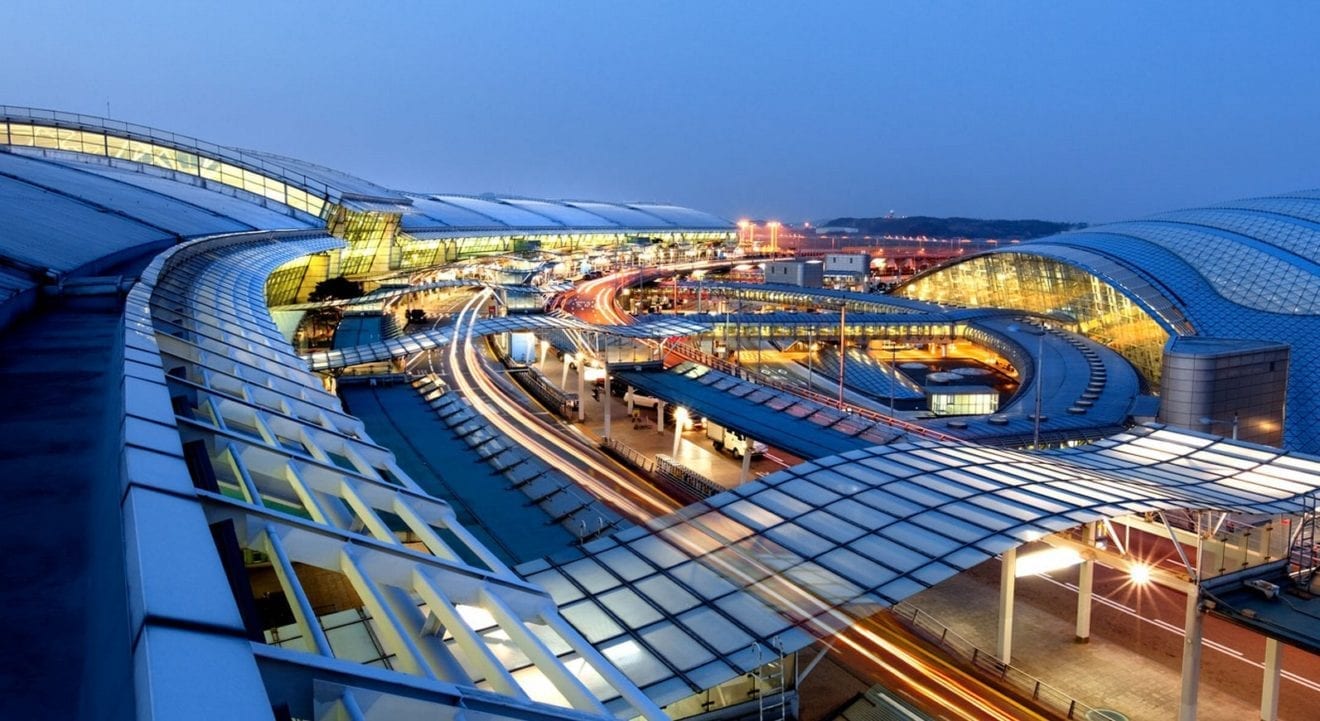
    Incheon Airport’s second terminal, which was originally slated to open this year, may push back its opening to after the PyeongChang Winter Olympics next February.

    According to a spokesperson at the airport corporation, the airport is weighing the pros and cons of opening the terminal within the year or after the PyeongChang Games.

    “It is technically possible to operate the second terminal this year, because all of the necessary facilities will complete construction in September,” he said.

    However, this would require the terminal to open while the luxury and fashion duty-free shopping area, considered a “landmark” of the airport, is still under construction.

    “It would not only create inconvenience for airport visitors, such as dust from the construction, but also impact the airport’s image,” the spokesperson said.

    Incheon Airport has gone through six rounds of tenders to find an operator for the area, but has been unsuccessful. Shinsegae DF was the only company to bid in the fifth and sixth rounds, meaning that now Incheon Airport is legally able to directly negotiate a contract with an operator without another open bidding process.

    Even if Incheon Airport is able to negotiate acceptable terms with Shinsegae DF or another operator, it would take time for the Korea Customs Service to grant the final license. Another nine months to finish construction would mean that the shopping area would be able to open around next April.

    Another consideration is that visitors to the airport might still be unfamiliar with the second terminal when the PyeongChang Games are being held. The new terminal will house Korean Air, Delta, KLM and Air France.

    “Unless we are able to open by December, there will still be confusion at the airport regarding the terminals by the time the Games begin,” the spokesperson said, noting that the airport will have no problems handling the influx of travelers during the Olympics with just its first terminal.

    The Transport Ministry said in a statement that the second terminal “will be opened according to plan, with no postponement plans currently under consideration.”

  • Hong Kong International to add stores as part of Terminal 1 upgrade

    Hong Kong International to add stores as part of Terminal 1 upgrade

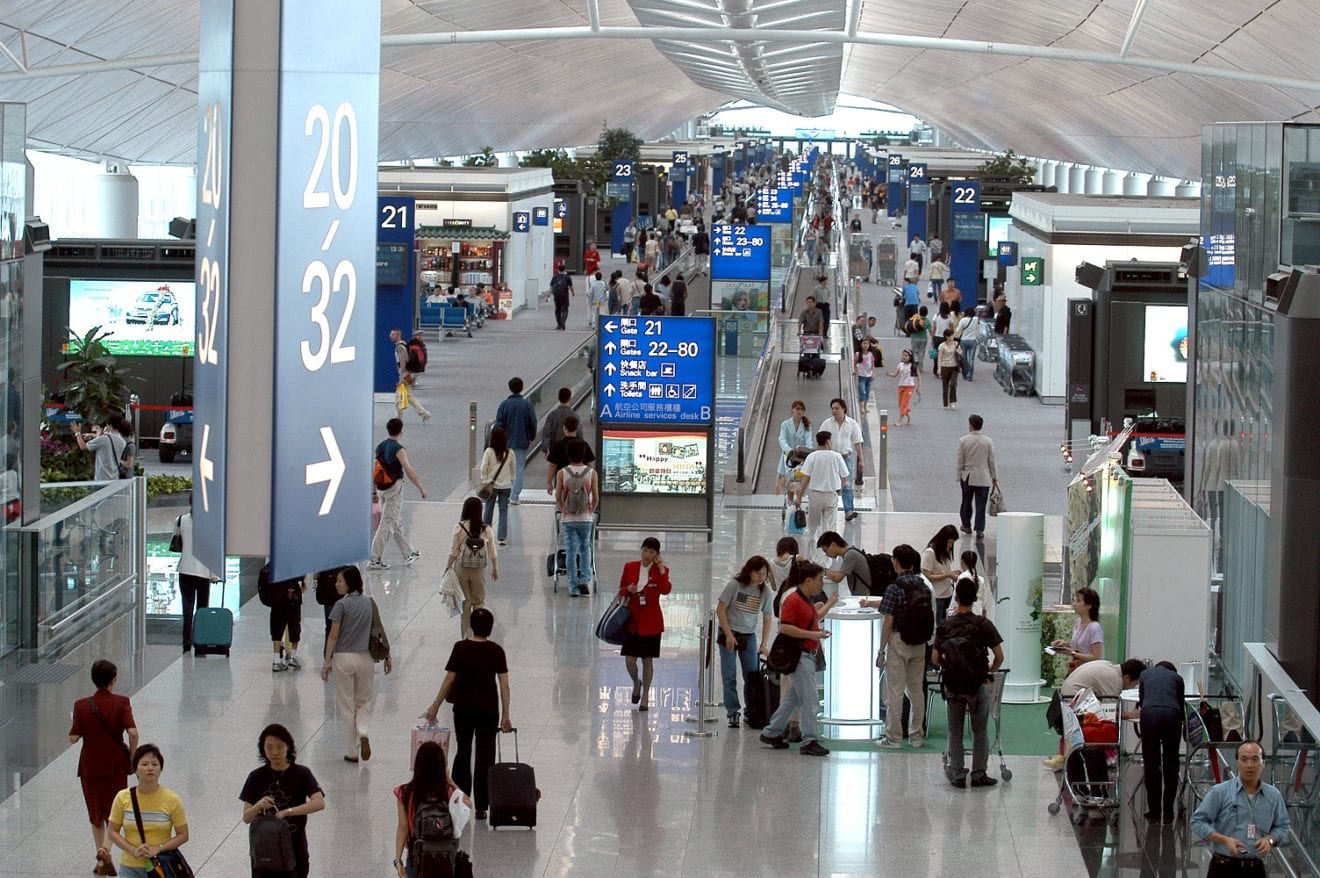
    Airport Authority Hong Kong has unveiled details of a major upgrade programme in Terminal 1. A number of “anchor” retail stores and F&B outlets will be added as part of the improvement work, which aims to offer a “vibrant new experience for passengers”. New duty free shops for liquor, cosmetics and accessories will be open for business “soon”, Airport Authority Hong Kong said, offering experiential concepts such as interactive zones and a whisky bar.

    The food hall in the East Hall area will be revamped with a new design (as illustrated immediately below).

    Over 40 new check-in counters with self-bag drop facilities and two new additional baggage reclaim carousels will be installed. The project also includes an extension building adjacent to the existing Car Park 4 to provide approximately 1,400 additional parking spaces, as well as premises for the Hong Kong International Aviation Academy and HKIA Preschool. The new building will also house other staff-related facilities including a community centre, a multi-purpose sports hall and fitness centre, and staff canteens for the airport community.

    The authority is also planning to build a weather-proof footbridge connecting Terminal 1 and the North Satellite Concourse. Known as ‘Sky Bridge’, it will reduce passengers’ travelling time and the need for using shuttle buses. The 200 metre long footbridge with travellators will feature an observation deck and catering outlets in the towers at both sides.

    New features in the expanded East Hall of Terminal 1 will include a roof garden and a children play area that spans two levels in the restricted area. There will also be a dedicated recreational zone featuring new technologies for travellers, the authority said. Themed areas may be introduced in the boarding gate areas at Terminal 1.

    “The enhancement projects for Terminal 1, together with the three-runway system in 2024, will increase the airport’s handling capacity, as well as bringing a fresh look and feel,” said Airport Authority Hong Kong Chief Executive Officer Fred Lam. “Passengers from around the world will enjoy an experience tantamount to travelling through a new airport.”

  • AirAsia named world’s best low-cost airline for 9th consecutive time

    AirAsia named world’s best low-cost airline for 9th consecutive time

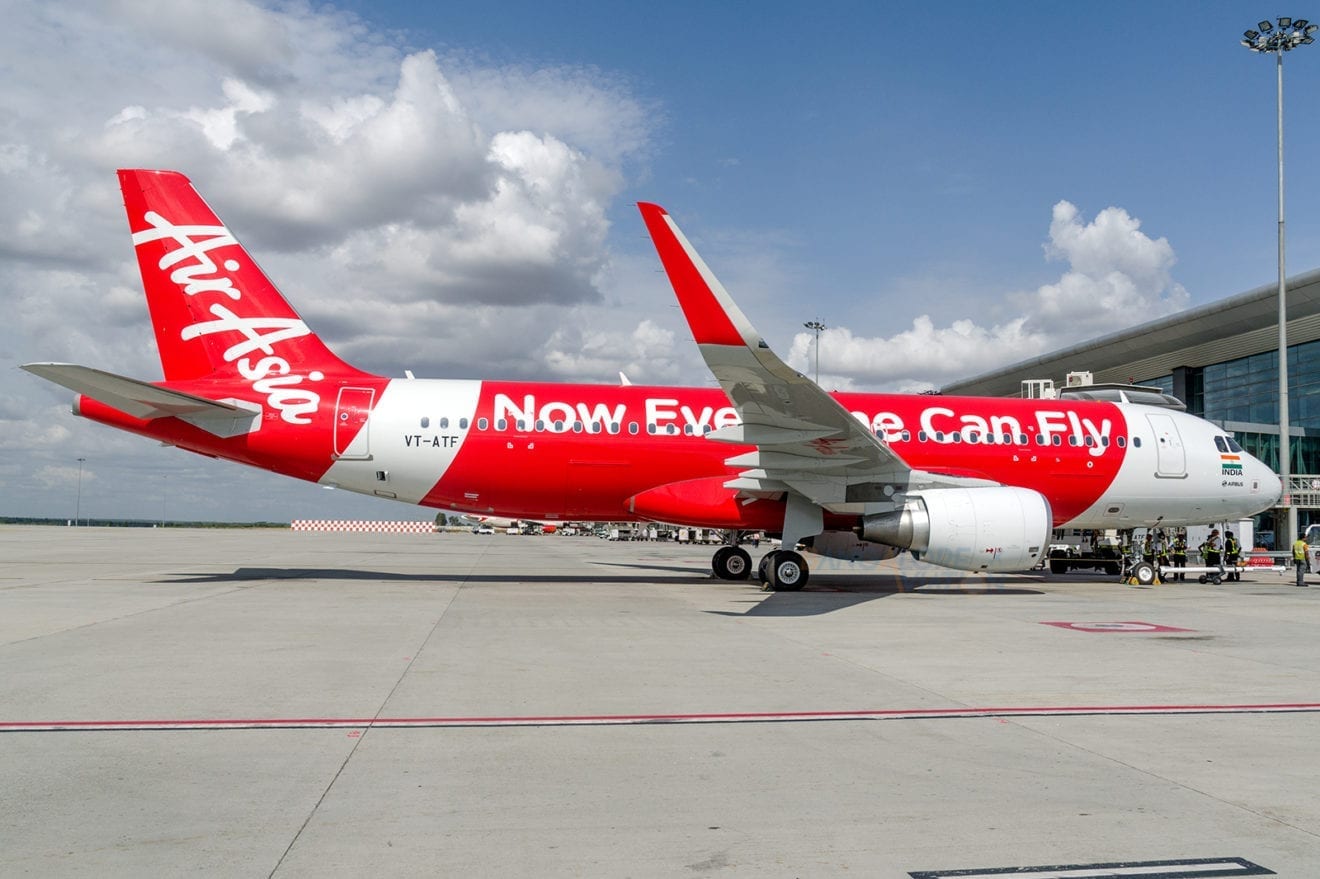
    AirAsia has been named the World’s Best Low-Cost Airline for the ninth time in a row at the 2017 Skytrax World Airline Awards.

    The awards, known as the “Oscars of the aviation industry”, was presented to Asia’s largest low-cost carrier at a ceremony held at Musée de l’Air et de l’Espace, Le Bourget Airport in Paris on Tuesday.

    AirAsia Group cabin crew head Suhaila Hassan, who has been with the company for 20 years, accepted the award, flanked by AirAsia ambassador David Foster and Brazilian football player Roberto Carlos at the ceremony that saw 71 awards being given away.

    The airline was also named Asia’s Best Low-Cost Airline in Asia.

    “We are now nine times world champion. To put it into perspective, Brazil won the FIFA World Cup five times, Michael Jordan was NBA champion six times and Michael Phelps holds the record for most first place finishes at a single Olympics with eight gold medals,” said AirAsia Group chief executive officer Tan Sri Tony Fernandes.

    “We take the world champion title seriously and we will strive to continue to improve for both our guests and shareholders,” he added.

    He said over the last 15 years, the group has created a great brand and wants to move towards One AirAsia, a truly Asean community airline.

    “We also want to recreate ourselves as a digital airline and use technology to drive more value,” said Fernandes.

    Meanwhile, AirAsia X, AirAsia’s long-haul sister airline, bagged the World’s Best Low-Cost Airline Premium Cabin and World’s Best Low-Cost Airline Premium Seat awards for the fifth straight year.

    The Skytrax Awards are the global benchmark of airline excellence with over 19.9 million customer surveys completed worldwide by more than 105 nationalities, measuring standards across 49 key performance indicators of an airline’s frontline products and services.

    AirAsia and AirAsia X have won a combined 25 Skytrax World Airline Awards since the awards were introduced in 2001.

    AirAsia is Asia’s largest low-cost carrier by the number of passengers carried, with an extensive network covering more than 120 destinations in 26 countries across Asia, Australia and New Zealand, the Middle East and the United States.

  • Sébastien Béal on helping out retailers with Locarise in Japan

    Sébastien Béal on helping out retailers with Locarise in Japan

    We interviewed exclusively Sébastien Béal, French founder & CEO of Locarise, company based in Tokyo, Japan that offers solutions for retailers.

    1. Could you briefly introduce your business?

    Locarise’s mission is to make physical spaces intelligent to raise the satisfaction level of those whom visit them and increase their values for those who operate them.

    By connecting different sources of existing and new data into one AI based platform we present unique insights to the space managers that traditionally took a lot of effort to survey, collect and analyze. One type of space where we have a huge impact is retail store where we quantify the user journey from before it enters the store to the POS. One other is shopping malls where we bring new data based approach to tenant mix, rent optimization and customer engagement.

    2. How and why did you start your business?

    I started Locarise 4 years ago after working 4 years in a Robotics Research Laboratory in Japan. Some of our research there have been the technical building blocks to the business problem we wanted to solve: how to make retail stores have the same data available to them than the e-commerce websites?

    3. How is it to be an entrepreneur in Japan?

    In one way, it is very similar, I imagine, than everywhere else: there are a lot of obstacles to overcome at the beginning to find a good team, product-market fit, first customers etc…

    Compared to the country where I am from, France, there are certainly less government support and investor money available to entrepreneurs. However, we believe in the Japanese market, the infrastructure for doing business, appart for Banking, is really good and a less dynamic startup environment means more opportunities for risk takers.

    4. Who is your typical client? How do you attract new clients?

    Our typical client in the retail sector is a multi-stores brand or mall operator who is looking into making better decisions in a difficult and competitive environment.

    5. How did you finance your business? How much capital was needed at the start?

    As “newcomers” in the Japan startup ecosystem, we decided to join a local incubator called Open Network Lab to support us at the beginning. After our first successes, we raised additional capital to accelerate our growth from angels and later Venture Capitalists.

    6. Do you plan to develop your business outside of Tokyo/Japan (other Asian countries)?

    We currently have operations in France for 1 year and customers are using our solution all across Asia.

    7. What are the challenges you have faced or are still facing in your business?

    With the help of our investors we decided to enter Europe very early, one challenge that we faced at the beginning was to grow both geographies together.

    8. Did you require special set of skills as an entrepreneur in this industry?

    Having a mix of knowledge between retail and technology is a good thing to have in our industry where the digital transformation is happening very fast.

    9. What would be your best piece of advice for aspiring entrepreneurs that want to set up a business in Japan?

    First, if you really want to do it, just go now and be ready to change your idea or model on the way! Don’t wait for the ideal timing because it doesn’t exist. Then once you started, give yourself the time to succeed: things can take longer to happen but if you always spend time with your customers and understand them, you will succeed.en but if you always spend time with your customers and understand them, you will succeed.

  • Shinsegae Department Store to strengthen online presence in China

    Shinsegae Department Store to strengthen online presence in China

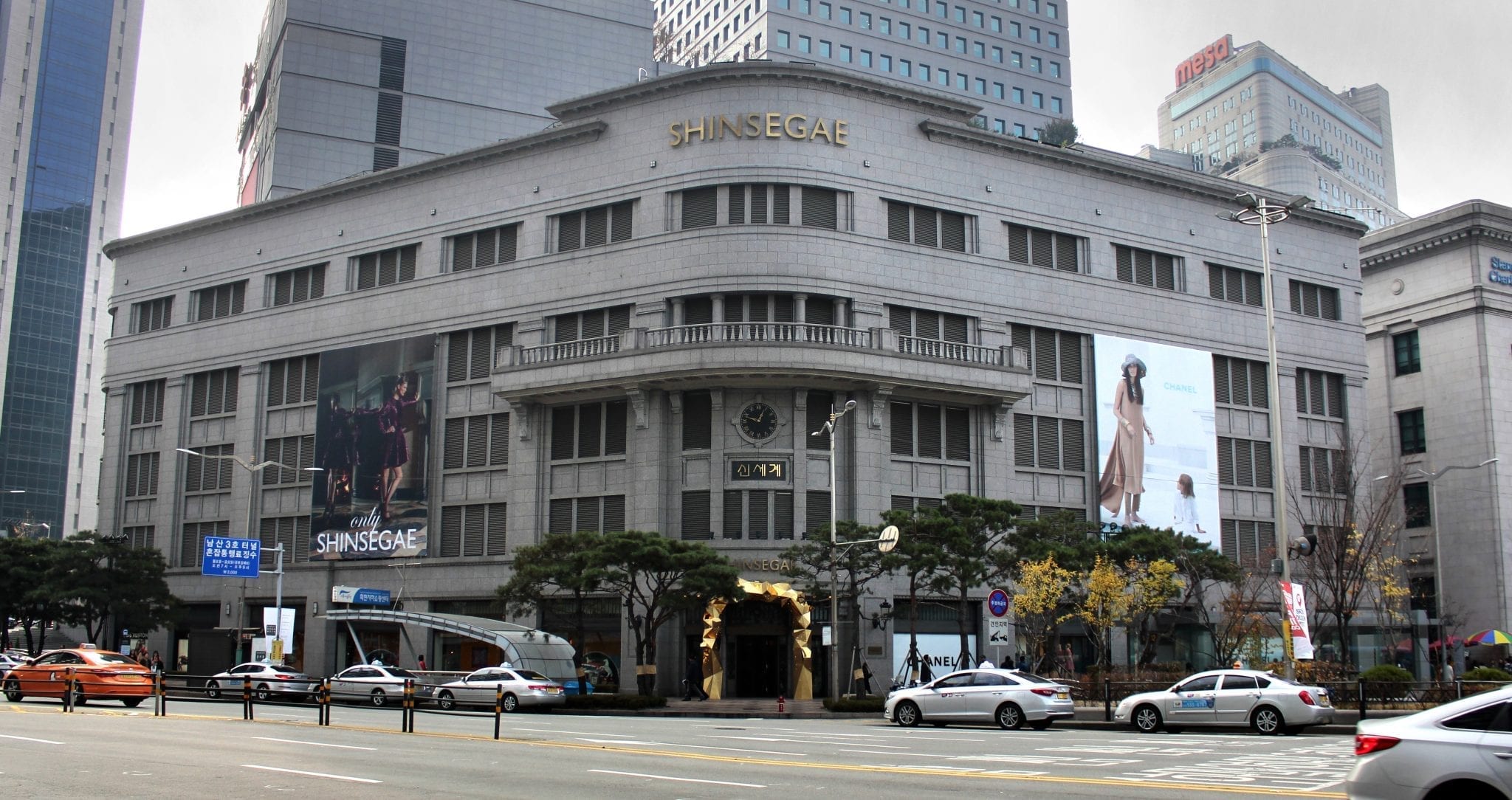
    South Korean retail conglomerate Shinsegae Group that announced a complete pullout of its discount Emart stores from China instead has beefed up online activities in the world’s most populated and biggest e-commerce market.

    Shinsegae Department Store said that it will open beauty and fashion shops at Tmall Global, China’s biggest online shopping platform operated by Alibaba Group Holding. It plans to gradually add other product lines like children’s goods and home appliances starting the latter half of this year. Through Alibaba that commands 80 percent of Chinese e-commerce market, Tmall has attracted nearly 800 million visitors last year alone. Shinsegae Department Store said it is the first Korean department store to open shops at Tmall.

    To make it easier for Chinese consumers to purchase a range of merchandise offered by Shinsegae, the Korean retailer will allow them to pay with Alibaba’s mobile payment service Alipay and ship goods via the Chinese e-commerce giant’s logistics arm Cainiao. The company expects its partnership with Cainiao will help cut customs clearance time by two days.

    Shinsegae Group has worked hard to attract consumers abroad via online retail platform. Following the opening of online marketplace SSG.com in Chinese, Japanese, and English language on top of Korean service, its online sales to Chinese customers nearly doubled in the first half this year compared to a year ago period.

    Outlook for online sales in China looks bright, too. According to Korean statistics bureau’s data, Chinese consumers’ purchases of Korean products through online shopping malls grew 6 percent during the first three months of this year, while the number of Chinese visitors to Korea dropped sharply during the same period. Cosmetics and fashion products especially sold well and their sales grew nearly 7 percent on quarter to take 90.2 percent of the country’s total online sales to Chinese consumers.

    The company’s decision to attract Chinese consumers via online comes after other Korean retail giants have decided to close down their brick-and-mortar stores in China amid intensifying competition and dwindling sales. E-Mart Inc., a discount store unit of Shinsegae Group, recently decided to entirely pull out of China by the end of this year, 24 years after it first opened its store in the country.

    But Shinsegae Group’s department store arm pins high hopes on its Chinese business that will be carried out via online. The partnership with China’s biggest online shopping mall has provided a chance for the company to grow its presence in global e-commerce market. The company also plans to add additional online shopping platforms in other countries such as Japan and the United States to provide online shopping services tailored for each market.

  • SIA’s digitalisation efforts take off amid operating challenges

    SIA’s digitalisation efforts take off amid operating challenges

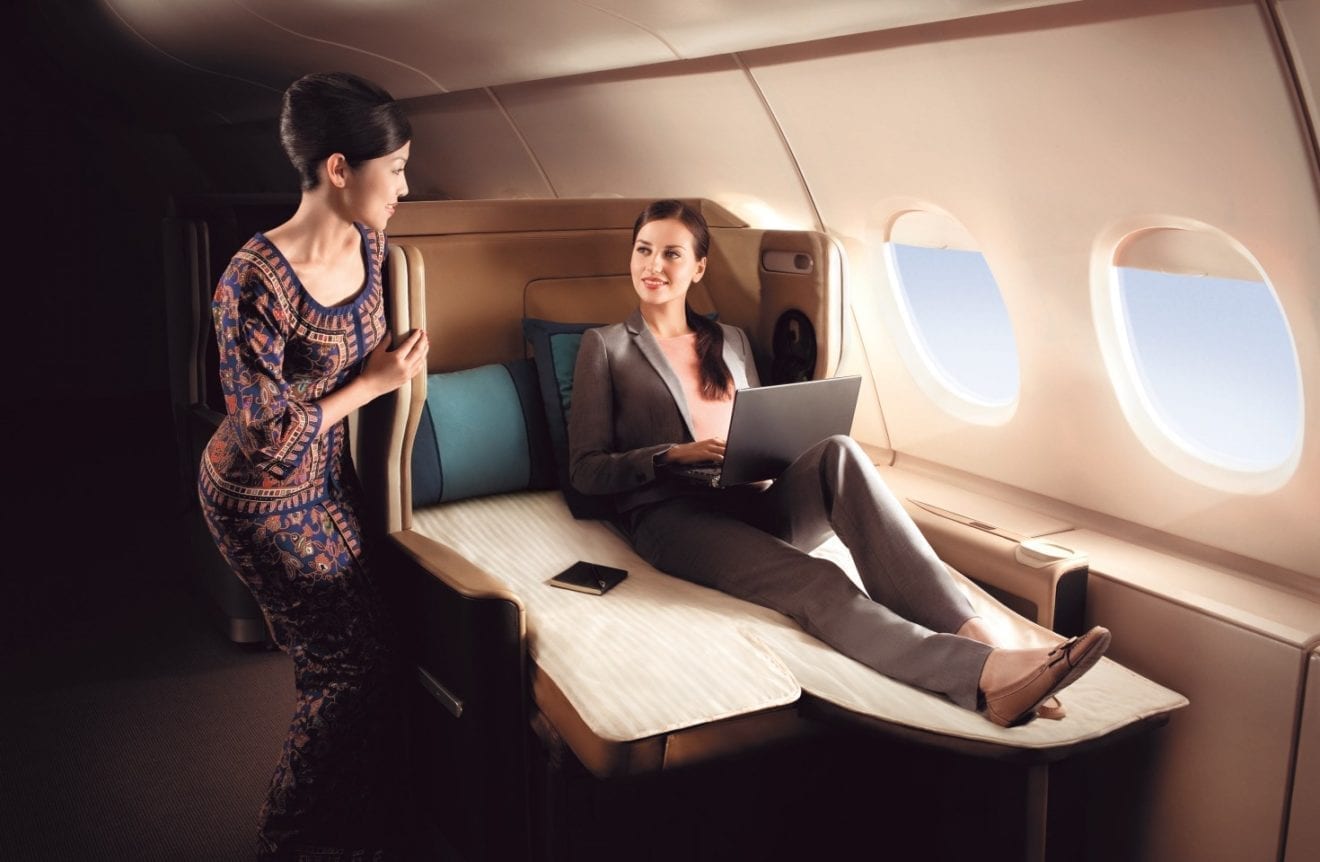
    Singapore Airlines (SIA) is investing significantly in its digital initiatives as it seeks to boost revenue as well as enhance operations and customer service amid increasingly crowded skies.

    The airline group is channelling “several hundreds of millions” of dollars over a five-year span as part of wide-scale efforts to digitalise its operations.

    “It’s increasingly difficult for companies to stand out from others,” SIA’s senior vice-president (sales & marketing) Campbell Wilson said in an interview with The Business Times. “SIA has been able to stand out from others for a long time by virtue of history, service reputation (and) the Singapore Girl. We can’t rest on these laurels.”

    One key part of its ongoing digital revamp is building a holistic database on its passengers, from which it will leverage data analytics and algorithms to derive insights on each passenger. Such insights will enable the airline group to offer tailored products and services to individual consumers via channels such as its website or electronic direct mailers (EDMs).

    “What technology allows us to do is to present the right combination of products, services and price that .best suits (a) person’s profile,” added Mr Wilson, stressing that this enables the airline group to differentiate itself from low-cost carriers and other full-service carriers that may not be able to put together similar packages.

    The aim is to convert existing website traffic to a transaction and ultimately, revenue. While increasing conversion is the “lowest hanging” fruit, it would also be the “biggest mover of the needle”, he noted. “A lot of people get to our website and don’t actually complete through the transaction.”

    One example of a personalised offer for the silver generation could include promising a meet-and-assist service on arrival and a seat near the front of the cabin – services that may not cost extra, but could provide value to a passenger. Personalising the sales experience is increasingly important as more and more consumers let their fingers do the shopping by going online, Mr Wilson went on to highlight.

    Some of these efforts are starting to pay off. Thanks to data analytics, SIA has been able to drive a 20 per cent greater uptake in sales of preferred seats – which come at a fee – to selected passengers. This can be expanded to other areas of ancillary revenue such as duty free products, insurance and cabin upgrades.

    This comes as legacy carriers such as SIA and Cathay Pacific grapple with an increasingly competitive industry, with the Gulf and Chinese carriers expanding aggressively on routes, often at cutthroat fares. For FY16/17, SIA posted a 55 per cent slump in full-year earnings to S$360.4 million, weighed down in part by declining yields.

    The airline is working on improving operations by rolling out apps for its pilots and ground staff, while its engineering division is leveraging predictive maintenance for the upkeep of aircraft. To this end, it is working with tech giants such as IBM as well as startup firms. Its cabin crew already have an app to help them better serve passengers onboard, as well as to enhance operational processes.

    From mid-June, its pilots will have access to apps on company-issued iPads giving them flight-related updates, which will allow them to go straight-to-the-gate without having to stop at the control centre. The app covers pre-flight through post-flight operations – such as the flight plan and pilot rosters – and also cuts down on paperwork.

    “That saves a lot of time and improves productivity for pilots,” pointed out George Wang, SIA’s senior vice-president of information technology. In the interest of security, data in the app is protected with encryptions and access controls; pilots will also only be able to access information relating to their own flights.

    Similarly, an app will be made available for ground services staff by year end so they can work more efficiently, while giving them access to more data which will help with decision-making and serving customers, Mr Wang added.

    Meanwhile, other features are due to be introduced for SIA’s website and app, namely tie-ups with Samsung Pay, Apple Pay and ride hailing service Grab. A one-touch payment option is also on the agenda for added convenience.

    On the back-end, the group is “re-wiring” its underlying technical framework so that improvements and new features can be rolled out more swiftly on its website and app. The first phase is slated for completion by the beginning of next year.

    Other airlines are also turning to various forms of digitalisation to keep costs low, increase revenue and improve customer satisfaction. It was reported that low cost carrier AirAsia, for example, plans to analyse passenger data to find ways to enhance passenger experience.

    Digitisation aside, SIA chief Goh Choon Phong has set up a transformation office as part of a broad review so that the airline can position itself better for long-term growth. This will include taking a hard look at ways to generate additional revenue, reduce costs, exploit synergies and improve businesses processes.

    “SIA has done more to respond and adapt than most of its peers,” noted Centre for Aviation (CAPA) analyst Brendan Sobie, commenting on the transformation efforts in a recent report. “However, the industry is changing at an even faster speed and competition has never been so intense,” he went on to say, adding that SIA may still need to push the envelope even further.

  • The Ramadan Productivity Drop And How To Overcome It

    The Ramadan Productivity Drop And How To Overcome It

    The holy fasting month of Ramadan is a special time in Indonesia, with nightly celebrations and long days of devout reflection for Muslims and discrete respect from non-Muslim expats and locals. Although for bosses and managers, the month can be a time of frustration with productivity seemingly grinding to a halt.

    “The productivity of workers declines in the holy month by 35 to 50 percent as a result of shorter working hours and the change in behaviour during this month,” Samer Sunnuqrot, an economist based in the Jordanian capital Amman told.

    Unlike Muslims practicing in Muslim-minority countries, like the United Kingdom or Australia, the specific needs of fasting can be taken into account by business and government in Muslim-majority countries like Indonesia or Jordan.

    “Decisions and meetings will be postponed until the period of Ramadan is over, especially in governmental institutions. This causes lower productivity and performance and might incur losses for business people because of the postponing of decisions and processing of government transactions,” Sunnuqrot said.

    While productivity dips during the fasting month, Sunnuqrot notes consumption tends to rise.

    “The positive side of Ramadan for business people is a higher demand for goods and services and higher consumption.

    “That often means higher prices, which translates into higher profit margins for merchants, retail stores, restaurants and cafes – especially those which arrange amusement programmes for after iftar (the breaking of the fast),” he said.

    Rumy Hasan, a lecturer at the University of Sussex, investigated the economic impact of lost productivity during Ramadan. His research found Ramadan creates a loss of 42 working hours per fasting participant each year, representing an overall 2.5 percent reduction in output annually.

    “Productivity declines not only from the physical strain of fasting but from the disruption to the flow and organization of work. It is reasonable to assume that a decline in productivity would further reduce economic output by at least 3 percent each year, which represents a significant annual recessionary impact of Ramadan,” he said.

    This decline is due largely to the physical effects of fasting.

    “Occupational health researchers have highlighted various adverse health consequences from severe dehydration, including headaches, dizziness and nausea,” Hasan found.

    For Muslim-minority countries this loss can be absorbed by the non-fasting majority of the labour force, but in Indonesia, where almost 88 percent of the population identifies as Muslim, this represents a massive issue.

    But all hope is not lost for managers and bosses hoping to boost productivity in the office until the Idul Fitri long weekend. While fasting, early mornings and late nights leave workers lethargic and struggling to focus so making the workplace flexible can help overcome some productivity issues.

    Beginning work earlier for an earlier finish will ensure workers maximize their energy from the pre-dawn morning meal, or suhoor, while also helping employees make it home in time to break the fast, or iftar, while dodging crippling traffic.

    Business consultant Mohammed Faris suggest non-Muslim managers and bosses take part in their own three-day fasting challenge in an effort to demonstrate both solidarity and to better understand the experiences of fasting colleagues.

    “If you want to engage with your staff on the challenges of fasting in Ramadan and work productivity, the best way is to actually talk about it and empathize with them. Start a conversation by asking your fasting employees how they consider work would be affected in Ramadan and what could be done about it,” he told.

    United Kingdom news portal Metro recommends tailoring traditional productivity tips for the month, such as goal setting and creating daily lists of tasks. This ensures Ramadan is treated as the special time that it is, while also maintaining good work habits.

    Additionally, while it may be tempting to gorge on the traditional treats and meals of the season, keeping healthy during the working week at least will go a long way to maintaining functionality. Lots of fresh fruit and proteins during the morning meals will help keep any participant in great health for a long, productive day ahead. Likewise, avoiding overly sugary and fried snacks in the evening and staying hydrated will keep the body healthy.