Category: General

Retail News Asia is committed to providing both local and global retailers with the latest General Retail news throughout the Asian market. This on a daily base.

  • Only 57% of consumers feel rewarded with their loyalty programmes

    Only 57% of consumers feel rewarded with their loyalty programmes

    And here are three ways on how financial firms can improve their loyalty services. A research from Collinson Group research revealed three things ways on how financial services loyalty programmes could be improved.

    Three in five, or 60% of respondents in Singapore said they want a simpler user experience, whilst 52% noted that they would want the ability to combine points with cash. Forty-nine percent indicated that they want a larger selection of rewards.

    “This indicates that usability and accessibility of rewards are top of mind for financial services loyalty programme members,” Collinson Group said.

    The study said the two of the strongest categories of reward that are most popular with global financial services customers are travel and leisure.

    It added, “In Singapore, customers consistently place a high value on benefits such as airport lounge access, concierge services and unique social and cultural leisure experiences. Collinson Group research reinforces that customers value products and experiences offered outside of company core inventory as part of a financial services loyalty programme.

    Meanwhile, the research also revealed that only 57% of bank and financial service loyalty programme members in Singapore feel rewarded for their custom. Customers are looking for more opportunities to earn loyalty currency and more choice when redeeming their points.

    Here’s more from Collinson Group:

    Reward and recognition are becoming increasingly important for customer retention and revenue growth. As regulators encourage greater competition in the financial services market, new competitors emerge and consumers are given more opportunities to compare and switch services. Brands must consider how best to remain attractive to this sophisticated set of consumers who have a greater access to information and are always after the best value for money.

    The Collinson Group research with 2,250 consumers across the United States, United Kingdom, Singapore and the UAE revealed that more than three quarters of respondents (77 percent) look for loyalty programmes with a greater choice of rewards. Furthermore, four in five respondents (82 percent), said that the value of a programme decreases when there is only a limited range of rewards available.

    An enhanced redemption experience is delivered through a programme that offers the customer the ability to redeem in retail outlets and leisure stores, as well as an e-commerce platform. Survey respondents were clear that the value of a loyalty programme decreases if points cannot be redeemed in physical retail outlets, with 49 percent in Singapore agreeing.

    Chris Rogers, Director at Collinson Group said: “Traditional financial services models continue to evolve, with a focus on improved digital services and experiences, but a key area brands need to consider is how they recognise and reward existing customers. Other sectors such as travel and retail are demonstrating new ways of offering more personalised, timely and relevant rewards.

    “A key element in enabling this is providing customers with more ways to earn and redeem loyalty currency. Offering the opportunity to ‘spend’ points against non-financial products such as travel, leisure or more altruistic rewards is increasingly attractive to programme members. The chance to redeem points in physical stores such as retailers and to part-pay with loyalty points and cash all make programmes more relevant and therefore more valuable to consumers.”

  • Heightened danger in Singapore as cyber attacks increase

    Heightened danger in Singapore as cyber attacks increase

    Ransomware has rapidly moved from a “nuisance” to a public threat which could now endanger lives, a director of Singapore’s Cyber Security Agency told the CommunicAsia2017 conference on Tuesday.

    Ho Ka Wei, a director at the National Cyber Threat Analysis Center at the Cyber Security Agency of Singapore, said an increase in attacks in recent weeks-including the global WannaCry attack-has put agencies on “high alert” and led to “sleepless nights and non-stop action.”

    Ransomware attacks on the health system and facilities such as hospitals have the potential to threaten people’s lives, he said.

    “The number of attacks is increasing,” said Ho. “No one is spared.”

    “Critical infrastructure and government institutions continue to be attractive targets, and we see new sophisticated forms of ransomware and malware,” he said. “And now they are coming in malicious combos like WannaCry-which is both ransomware and a worm.”

    Attacks were also increasing in strength and power, with some measured at over one terabyte per second, where previously “20 gigabytes a second was considered quite high.”

    Ho outlined recent Advanced Persistent Threat (APT) attacks at two Singapore Universities in April, which were “carefully planned” with perpetrators seeking to steal government information and research.

    The APTs were designed to gain unauthorized access to networks and lurk there for long periods to access information.

    These attacks, at NTU and NTS, were identified and computers were isolated and then replaced.

    The threat environment, said Ho, escalates on a monthly basis, and will reach new levels with the unstructured rise of the IoT if rigorous action is not taken and standards enforced.

    “If IoT devices are unsecured by default, then they can be controlled and used,” said Ho. “The level of escalation is serious.”

    Singapore created the Cyber Security Agency two years ago under the auspices of the Prime Minister’s Office, and the country announced its first Cyber Strategy in October last year.

    Ho outlined four pillars to the strategy: to build a resilient infrastructure, create safer cyberspace, develop a vibrant cybersecurity ecosystem, and strengthen international partnerships.

    Digital technology, he said, was critical to Singapore’s “smart nation efforts” and the increased number of attacks from “new vectors” was a key national risk to overcome.

  • AirAsia X’s profit hit by higher fuel expenses

    AirAsia X’s profit hit by higher fuel expenses

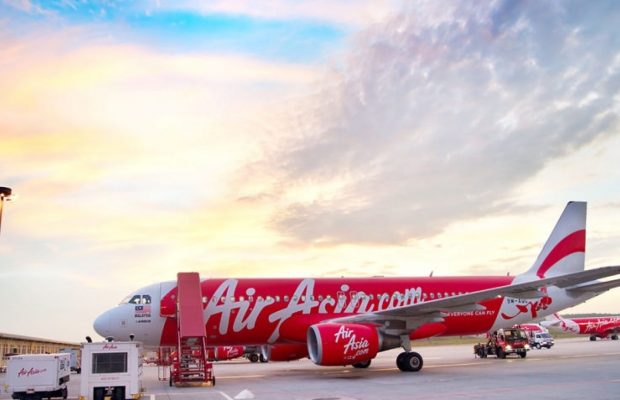
    AirAsia X Bhd’s (AAX) profit for the first quarter (Q1) ended March 31, 2017, was dragged down by higher expenses such as aircraft fuel cost, which ballooned by 55% from a year earlier.

    AAX, whose expenses are mostly denominated in the US dollar, said it posted a 43% year-on-year drop in operating profit to RM60.3mil mainly due to an overall 6% depreciation of the ringgit against the greenback.

    The long-haul, low-cost airline told Bursa Malaysia on Tuesday that net profit fell to RM10.34mil from RM179.49mil previously.

    Aircraft fuel expenses, the single largest operating cost, swelled to RM377.69mil from RM243.06mil a year earlier. Aircraft operating lease costs rose to RM70.82mil from RM45.64mil previously.

    Its profit took a hit despite a healthy growth in passengers carried – up 33% to 1.4 million in Q1 on the back of a higher available seat capacity – that led to a 22% jump in revenue year-on-year to RM1.18bil.

    Load factors were 2 basis points higher at 84% compared with the same quarter in 2016.

    Ancillary revenue per passenger remained constant at RM150 while freight and cargo revenue grew by 5.9% to RM32.8mil in the quarter under review.

    Revenue per available seat kilometer (RASK) was down 6% year-on-year from 15.11 sen to 14.20 sen during the quarter under review.

    AAX said the marginal drop was due to the expected increase in capacity on core existing routes as per its strategy to grow market share and therefore pressuring yields.

    In a press statement, it said Malaysia AirAsia X (MAAX) registered a healthy load factor of 84%, up 2 percentage points (ppts).

    Thailand AirAsia X outperformed despite regulatory constraints by posting US$5.5mil net profit in Q1. It recorded a strong 94% load factor, an increase of 5 ppts from 89% in the same period last year.

    As for Indonesia AirAsia X, the A330s service was still temporarily suspended in Q1 as part of a network restructuring aimed at improving operational efficiencies. However, it has resumed the A330 operations with the introduction of two new routes this month.

    On its prospects, the AirAsia group affiliate said that based on the current forward booking trend, forward loads and average fares were trending better than the previous year.

    However, it added, the relative weakness of the Malaysian ringgit remained a key concern as a large portion of the company’s borrowings and operating costs – including fuel expenses and aircraft operating lease exprnses – are denominated in US dollars.

    “Barring any unforeseen circumstances, including but not limited to terrorist attacks, natural disasters, epidemics, economic downturn, fuel price hike and fluctuation in foreign currencies against the Malaysian ringgit, the company expects its prospects to remain positive,” it said.

    In the press statement, MAAX chief executive officer Benyamin Ismail said: “Moving forward for the rest 2017, AirAsia X will focus on strengthening our market leadership through a number of strategies.

    “We hope to stretch our aircraft utilisation rate further with more incremental frequencies on high yield point-to-point routes and new routes in the second half of 2017. We have also set targets in ensuring the company remains lean through various cost initiatives and maximise the operational synergies between AirAsia and AirAsia X.”

  • Cebu Pacific Air begins new service to Busuanga

    Cebu Pacific Air begins new service to Busuanga

    Cebu Pacific Air added another domestic route on 15 May. On that day it began three times weekly (Mondays, Wednesdays and Fridays) service between Cebu (CEB) and Busuanga (USU).

    The 467-kilometre sector will be operated by CebGo using its ATR 72s. Competition is provided by Philippine Airlines which already serves the route daily with a Q400. Cebu Pacific now serves over 30 destinations from Cebu of which just five are outside of the Philippines. It and CebGo account for 42% of scheduled seat capacity at the airport.

    This makes it the biggest carrier at the airport ahead of Philippine Airlines (28%) and Philippines AirAsia (12%).

  • China’s Growth Engines Are Slowly Converging

    China’s Growth Engines Are Slowly Converging

    Growth in China’s economy has long centered on the coast, where Shanghai and the Pearl River Delta form some of the world’s most productive regions on their own.

    But now that tide of internal migration that drew hundreds of millions of workers from the farm to factory is shifting, and lifting the economic prospects of the country’s interior.

    As big-city living costs rise and job openings become less abundant, more migrants are now leaving China’s urban centers than new ones arriving, according to Oxford Economics Ltd.

    “Labor costs on the East Coast are now too high for industries further down the value chain to remain competitive internationally,” London-based economist Alessandro Theiss wrote in a report, citing an 8 million decline in the migrant population from 2014 to 2016.

    The shift should benefit inland provinces, especially in southwest regions like Sichuan, as companies move production to take advantage of lower costs while remaining connected to coastal export hubs and industrial clusters, he said.

    Southern and northwestern provinces are are likely to keep expanding relatively fast as they benefit from catch-up growth, fiscal support and geographic location, while the northeast is likely to remain the slowest-growing region as population declines and coal mining consolidates more in inland provinces, according to Theiss.

    While the east coast was hit by slower global trade in recent years, conditions are now improving. Specialized manufacturing clusters and export hubs are innovating and moving up the value chain, and research activity is boosting the region.

    That’s good news for some of China’s biggest drivers: Coastal Guangdong, Jiangsu and Shandong provinces each account for around 10 percent of national output and all had output last year that exceeded Mexico’s, Theiss said. The future looks favorable for east coast provinces with more mature economies, as well as those in central China.

    “They continue to innovate and to move-up the value chain, specializing in advanced manufacturing such as robotics and genomics, and expanding and developing specialized manufacturing clusters,” Theiss said. “First-class infrastructure, significant R&D spending, large FDI inflows, a rapidly growing domestic market as well as a highly educated workforce should allow them to continue to grow at a solid pace.”

  • How brands use short videos for marketing in China

    How brands use short videos for marketing in China

    As the luxury industry discusses Snapchat’s marketing possibilities and, more recently, Instagram’s latest filter feature, brands looking toward the China market are facing a completely different short video industry. It’s one that has witnessed rapid development thanks to the popularity of smartphones and upgraded communication networks in China.

    In March this year, Kuaishou, a popular short video app, was on the receiving end of a US$350 million investment from Tencent, and Alibaba put RMB 2 billion toward the transformation of Tudou from a large, formerly popular online video platform to a short video community. Also, Yixia Technology, owner of Miaopai and Xiaokaxiu, both popular short video apps in China, has already spent RMB 2 billion to encourage short video content creators and producers by building several video creation bases and providing professional studios.

    Short videos are perfect for young, tech savvy consumers who take their phone with them everywhere and use it to access social media or to fill in short breaks in the day between other activities.

    But which short video apps are the most popular in China? Who are the viewers of these short videos? How can brands market to them? What should brands take into consideration when launching short video campaigns?

    China’s short video apps

    Similar to short video platforms like Viddy and Instagram, there are numerous short video platforms and apps in China where users can record real-time short videos and share them with friends. As for users, there were 153 million regularly watching China’s short videos in 2016. This is estimated to reach 242 million by 2017, an increase of 58.2 percent.

    CIWEEK, an internet content magazine, released a list of their top 10 short video apps in China in the first half year in 2016 and Kuaishou, Miaopai, and Meipai were the most popular.

    Of these, there are actually two types of short video platform in China:

    1. Comprehensive platforms: professional short video platforms

    These platforms, such as Meipai, Miaopai, and Xiaokaxiu, provide a one-stop user experience. Users can use various shooting tools, effect settings, and formats while filming or editing a video. They also offer a community for users to share their videos with friends. Short videos uploaded on those platforms can also be shared with WeChat friends, WeChat Moments, and Weibo.

    2. Content recommendation: news apps

    These platforms, such as Toutiao, NetEase, Tencent News, and Yidian Zixun, focus on suggesting popular or professional short videos. These platforms were originally news-based and mass communication oriented. They have millions of viewers and short videos recommended on these platforms can get huge amounts of traffic.

    Who are the viewers?
    The main users of China’s short video apps are young. Most of them belong to the post-90s generation. According to a report published in March 2017 by JIGUANG, a big data provider, users ages 16 to 25 make up 39.7 percent of the total, while users aged 26-35 are at 33.3 percent. Meanwhile, over half of the users are female, making them 69.4 percent of the total number of users.

    In terms of regions, 66.9 percent of the total come from third-tier and below third-tier cities in China. The top 3 provinces for viewer numbers are Guangdong, Henan, and Shandong.

    How are brands using short video?
    Short video is becoming a new favorite marketing tool for brands for several reasons. Short videos can be used for various types of promotional materials, such as product reviews, product seeding, promoting brand culture and more. With interesting and meaningful content, short videos can deliver specific brand messages to a target audience while avoiding the annoyance that longer videos may cause. The production cycle of short videos is quick with great flexibility, which works well with brands’ marketing plans and budgets. Through audience interactions with short videos, brands can better understand their preferences, rapidly improve their user experience, and come up with effective marketing plans quickly. Integrated campaigns launched on short video platforms can be creative and diverse.

  • Unilever to Test New Packaging-recycling Tech in Indonesia

    Unilever to Test New Packaging-recycling Tech in Indonesia

    Consumer goods giant Unilever on Wednesday said it has opened a new facility in Indonesia as part of a pilot project for introducing a new technology for recycling sachets used to hold shampoos and other products.

    Single-use sachets are widely sold in developing and emerging markets such as Indonesia. The Anglo-Dutch company said billions of such packages — including its own — are sold every year, but that recycling them has long been a problem due to technological hurdles.

    To address this, Unilever said it has developed a technology it calls the CreaSolv Process together with the Germany-based Fraunhofer Institute for Process Engineering and Packaging IVV.

    “With this innovative pilot plant we can, for the first time ever, recycle high-value polymers from dirty, post-consumer, multilayer sachets,” said Andreas Maurer, head of the plastic recycling department at Fraunhofer.

    The facility, in Sidoarjo, East Java, will “test the long-term commercial viability of the technology.” If successful, it will be applied in other developing markets, especially in Southeast Asia, said Sancoyo Antarikso, director for governance and corporate affairs at Unilever Indonesia.

    The company plans to work with local waste collectors, waste banks and retailers to help collect used sachets. “Using this approach, we’ll be able to reduce our environmental footprint, while creating economic value and potential additional incomes for the communities, the recycling industry and other stakeholders,” Antarikso told reporters.

    Unilever Indonesia hopes the Indonesian government will promote the concept of separating household waste to make collecting sachets easier. Currently, most Indonesian households do not separate their recyclable and nonrecyclable waste, as the country’s outdated waste management system is not yet capable of accommodating the practice.

    Indonesia produces an estimated 0.5 million to 1.3 million metric tons of plastic marine debris every year, making it the second-largest producer of plastic waste polluting the world’s oceans after China, according to a study published at the Science journal in 2015.

    The new recycling facility will initially be able to process 3 tons of plastic sachets every day. Antarikso said once the operations prove viable from the business side, Unilever will let a “business partner” take over to handle commercial-scale production. He added that Unilever will use the end products as materials for packaging, which is expected to reduce costs.

    David Blanchard, chief R&D officer at the parent company, said: “We intend to make this tech open-source and would hope to scale the technology with industry partners, so others — including our competitors — can use it.” Unilever said it wants all of its plastic packaging to be “fully reusable, recyclable or compostable” by 2025.

  • Vietnam’s retail market is promising, but there are pitfalls

    Vietnam’s retail market is promising, but there are pitfalls

    Family Mart has had losses in Vietnam, Thailand and Indonesia. Reuters quoted Koji Takayanag, president of FamilyMart UNY, which now owns the second largest convenience store chain in Japan, as saying that the chain has decided to stop injecting more money into Family Marts in Vietnam.

    According to Tri Thuc Tre, Parkson reported another loss of VND20 billion in Vietnam in the first quarter of the year, which means a total loss of VND50 billion in the last nine months of the fiscal year.

    Parkson Retail Asia has two subsidiaries in Vietnam – Parkson Hai Phong Co Ltd and Parkson Vietnam Company Ltd. The latter has two subsidiaries – Parson Vietnam Service Management Company Ltd and Parkson Hanoi Company Ltd.

    Parkson Hanoi which manages two buildings Parkson Keangnam and Parkson Viet Tower. Both shopping malls have shut down (the former in January 2015 and Viet Tower in mid-December 2016). Also in 2016, Parkson Paragon in HCMC also stopped operation.

    Though FamilyMart has taken a big loss, it will stay in Vietnam. While some retailers have left, others have arrived. Aeon Mall has announced the construction of a second mall in Hanoi.The Malaysian retailer’s fiscal year will end in three months, but analysts don’t think the business performance of the year will be satisfactory. Parkson’s managers have admitted that it is more and more difficult to do business in Vietnam as the market is getting more crowded.

    Other retailers have left, including Metro Cash & Carry, Best Carings, Wonderbuy, HomeOne and Sapomart.

    Meanwhile, market analysis firms, in their latest reports, say that Vietnam is a lucrative market.

    Phap Luat quoted Pham Thanh Cong from Nielsen Vietnam as saying that it is among the top three markets of investors.

    David Tan, CEO of Abeo Vietnam, said the Vietnamese retail market in 2016 was valued at $118 billion with the 10 percent growth rate. Of this, revenue from food service reached acrecord high of $41 billion.

    In fact, though the Vietnamese market is attractive, it has become ‘cramped’ with the presence of many retailers, both foreign and Vietnamese.

    According to Cong, there are 20 supermarket brands in Vietnam, while other countries have only five.

    A report of the Ministry of Industry and Trade shows that Vietnam has more than 700 supermarkets, 132 shopping malls and hundreds of convenience stores. By 2020, Vietnam is expected to have 1,200-1,500 supermarkets and 180 shopping malls, while traditional markets still exist.

  • Bisnis Travel Indonesia teams up with Zurich Indonesia

    Bisnis Travel Indonesia teams up with Zurich Indonesia

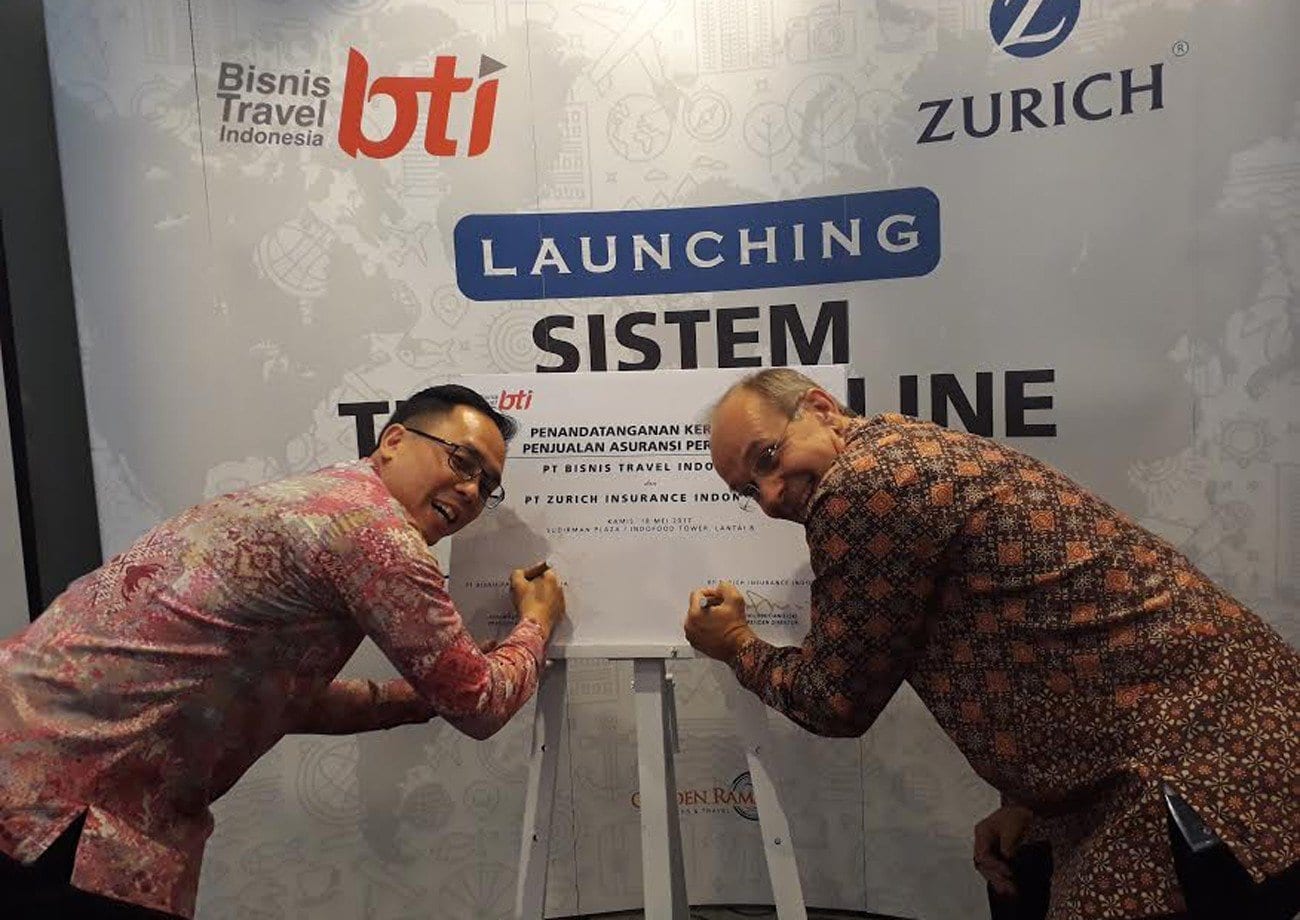
    Online travel portal Bisnis Travel Indonesia (BTI) is teaming up with Zurich Indonesia, the local unit of a Switzerland-based insurance company, by including Zurich Indonesia’s travel insurance on BTI’s list of products.

    Previously, BTI’s offered its members included airline tickets, hotel reservations and tour packages.

    “Through the partnership with Zurich, we want to expand options for our members,” BTI’s president director Johan Kurniawan told reporters during the partnership signing ceremony in Jakarta on Thursday.

    With the agreement, BTI’s portal will provide its members with three travel insurance products from Zurich Indonesia: Zurich Domestic Travel, Zurich Umrah/ Haj Travel and Zurich Passport.

    BTI aims to sell up to 600 travel insurance policies through its portal this year, Johan added.

    BTI is an online travel portal powered by Golden Rama Tours & Travel, a travel company established in Indonesia in 1971.

    About 90 percent of the portal’s members are individual travel agents, while the rest are office-based travel agents.

  • Global spending on consumer video services to hit $314b in 2017

    Global spending on consumer video services to hit $314b in 2017

    Global spending on consumer video media services will total $314 billion in 2017, a 4.2% increase from 2016, according to Gartner.

    Pay-TV services is the largest spending segment and is on pace to represent 90% of the total market, totaling $282 billion in 2017.

    In 2017, emerging Asia/Pacific (20.8%) and Middle East and North Africa (17.4%) are forecast to record the highest growth in end-user spending on consumer video media services.

    Earlier this year, China Mobile began offering its pay-TV service free of charge to its premium subscribers for the first two years of a new contract. “This will lead to an influx of new subscribers in the pay-TV marketplace. However, it will also bolster price competitiveness and put negative pressures on the ARPU of the overall pay-TV market,” said Fernando Elizalde, principal research analyst at Gartner.

    Moreover, internet-delivered linear TV services have already launched in India and the Middle East, and Gartner expects these services will commence across all emerging regions by 2018. “We estimate that, incentivized by lower prices, one million households in emerging regions will enter the pay-TV market through an internet TV service by 2020,” said Elizalde.

    “The dramatic difference in the price of these packages compared with traditional pay-TV packages will also put downward pressure on ARPUs overall.”

    Transactional video on demand (T-VOD) offers consumers the ability to access a wide variety of content, from either managed pay-TV providers or over-the-top (OTT) companies such as Amazon, Google or Apple. “OTT-VOD sources are changing the landscape,” said Derek O’Donnell, senior research analyst at Gartner.

    “OTT-VOD services are the fastest-growing segment in the VOD landscape and eroding pay-TV providers’ share of revenue. OTT-VOD sources began outperforming traditional pay-TV sources in 2016.”

    O’Donnell added that the availability of premium-priced 4K content will increase end-user spending on T-VOD content in mature regions, from $160 million in 2017 to $400 million by 2020. In emerging regions, increased competition in the T-VOD marketplace from unmanaged providers and increased threats of piracy will put negative pressure on T-VOD prices. End-user spending on T-VOD services in emerging markets will decrease gradually each year, starting in 2017, by about $60 million to almost $445 million by 2020.

    Global consumer spending on subscription-based video on demand (S-VOD) services will total $18.7 billion in 2017, an increase of 28% from 2016.

    The average consumer adoption of S-VOD services is 10 percent in 2017, with an average ARPU of $7.41. The highest ARPUs are in Japan ($12.10), Mature Asia Pacific ($10.84) and North America ($9.60).

    “Consumers will not subscribe to more than three services,” said O’Donnell. “This is because of price and content discovery fatigue. Consumers are having to go through each application separately to find content, which can create fatigue.”

    Universal search is the key to driving further penetration, which will allow consumers to search for content across all their S-VOD services. “However, this is a ‘holy grail’ in the industry as providers, such as Netflix and HBO don’t want to cooperate,” added O’Donnell. “Therefore, true universal search is still some years away.”

    “Currently, there is a market for niche subscription video services and established streaming providers. However, as the market matures, we forecast more consolidation around the fewer companies that can innovate and set themselves apart from the juggernauts within the industry,” said O’Donnell.

  • CMC launches anti-malware software

    CMC launches anti-malware software

    Vietnam-based technology corporation CMC on May 19 released its anti-data encryption software CMC CryptoShield, which offers protection from ransomware.

    Ransomware is software that blocks access to a computer system until the hackers behind the attack are paid.

    CMC CryptoShield is designed to prevent all forms of malicious code by applying artificial intelligence. The artificial intelligence system integrated in CMC CryptoShield can recognise all micro-encoded data and block it.

    Ransomware has become a new global threat and profitable business and with the boom of difficult to trace cryptocurrencies in recent years, most notably Bitcoin, hackers can get ransom without being traced.

    CMC CryptoShield ensures that all user data will be put into a secure and inviolable area right before it is encrypted, said Vũ Lâm Bằng, Director of CMC’s Research and Development Centre at the launch ceremony of CMC CryptoShield.

    Artificial intelligence is a weapon in the fight against hackers and malicious code. It has been integrated in CMC CryptoShield and users just need to turn it on so that all the data on their computer is safe, said Triệu Trần Đức, General Director of CMC InfoSec under CMC corporation at the launch.

  • Boots to launch in Korea

    Boots to launch in Korea

    E-Mart said on March 19 that the Korean first store of Drugstore Boots opened in Starfield, Hanam. It was only 10 months since the signing of a partnership agreement between E-Mart and the Wall Green Boots Alliance (WBA) in July last year. The Boots store is located on the first floor of Starfield with the size of 619 square meter (187 pyeong).

    WBA is a global ‘distribution giant’ that has 13,100 stores in 11 countries around the world, including the UK’s No. 1 health and beauty (H & B) brand, with annual sales of 145 trillion won.

    E-mart will show Korean version of H & B, which is differentiated by global sourcing power of boots, the world’s top drugstore company, and E-Mart’s product planning ability.

    The H & B market in Korea last year was1.2 trillion won. It has been on a steady upward trend with a growth of 30~40 percent every year and the business holds great promise for the future. In the next five years, it will grow to over 3 trillion won.

    The boots strengthens the competitiveness with their own brand products (PL) and services. Boots has PL products such as ‘Soap & Glory’ and ‘Botanics’, including functional cosmetics ‘No.7’. In particular, No7 is the number one beauty brand in the UK, and has already been famous among Korean customers. With the official opening of boots, consumers can purchase boots PL products more easily such as No7.

    The boots offers a ‘Match-made’ service that will consult the colours for their skin tones on the opening day. It recommends foundation and colour cosmetics by measuring consumer’s skin tone using No7 exclusive device.

    To celebrate the opening of the Starfield Hanam store, the boots will carry out the ‘3 for 2’ event, which takes one more item if you buy two items of their own brand of boots by the 1st of next month. Until June 29th, 5000 won discount certificate will be presented to customers who purchase more than 50,000 won. The boots eco bags will be presented to 5,000 people by order of arrivals regardless of the amount of purchase. When purchasing more than 50,000 won, the boots beauty box will be presented for the first 400 people as well.

    E-Mart will also open a large flagship store in Myeong-dong, which is called “The Holy Land of Cosmetics” in July. The size of the store is 1284 square meter (388 pyeong). E-Mart plans to gradually expand its H & B gmbusiness, starting with Starfield Hanam, complex shopping mall and Myeongdong stores.

  • Cebu Pacific Air commences second route to Cotabato

    Cebu Pacific Air commences second route to Cotabato

    Cebu Pacific Air started its second new domestic route from Cebu (CEB) this week with the launch on 16 May of a four times weekly service to Cotabato (CBO). The 351-kilometre route will be flown by CebGo using its ATR 72s. No other carrier connects these two airports. Cotabato is located on the province of Maguindanao.

    The airport’s only other scheduled services are to the capital, Manila, which are offered by both Cebu Pacific and Philippine Airlines. Cotabato City is home of Sultan Haji Hassanal Bolkiah Masjid, also known as the Grand Mosque of Cotabato, which is the largest mosque in the Philippines. Completed in 2011 the facility can accommodate 15,000 people and was funded by the Sultan of Brunei.

  • Puma Energy Asia Sun Aims to Distribute Petroleum in Myanmar

    Puma Energy Asia Sun Aims to Distribute Petroleum in Myanmar

    The terminal, which cost $92 million, is designed to hold mostly middle distillates, with 29,000 cubic meters of space for gasoil and 21,000 cubic meters for jet fuel.

    Another 17,000 cubic meters is dedicated to store gasoline and the remaining for bitumen and fuel oil.

    Puma Energy Asia Sun only provides storage services, but intends to apply for a license to distribute oil products, said David Holden, general manager of the firm, although it was unclear when that will be granted.

    “With the change in Myanmar’s investment law on April 1, Puma Energy Asia Sun is investigating eligibility to broaden its business scope to include all aspects of the supply chain,” he added.

    “We believe that Puma Energy is one of three foreign firms in the final round of bidding for the Myanmar Petroleum Products Enterprise (MPPE) network tender to run part of Myanmar’s petroleum downstream business.”

    Myanmar, which has three small refineries with a total capacity of below 80,000 bpd, last month reformed its rules governing foreign investments in order to attract more overseas capital.

    Under the MPPE tender, the winning company will take a minority stake in MPPE and contribute to upgrading the 28 terminals and depots it owns along with 13 retail sites, said Holden.

    Myanmar is projected to consume 93,000 barrels per day (bpd) of gasoline this year and 111,000 bpd next year, up 24 percent and 48 percent respectively when compared to 2016, said Nevyn Nah of consultants Energy Aspects.

    In comparison, gasoline consumption in Vietnam, Asia’s second-largest gasoline importer after Indonesia, is expected to reach 142,000 bpd in 2017 and 154,000 bpd in 2018, up 6.8 percent and 15.8 percent respectively versus 2016, said Nah.

    “Consumption is certainly higher in Vietnam but imports are more comparable (between the two countries),” added Nah.

    Puma Energy, owned by European commodity trader Trafigura and Angola’s state oil company Sonangol, operates in 47 countries and has more than 90 storage terminals globally with over 7 million cubic meters in combined capacity.

    It also owns a refinery and retail sites in Papua New Guinea.

  • Alfamart operator to expand chain in Philippines

    Alfamart operator to expand chain in Philippines

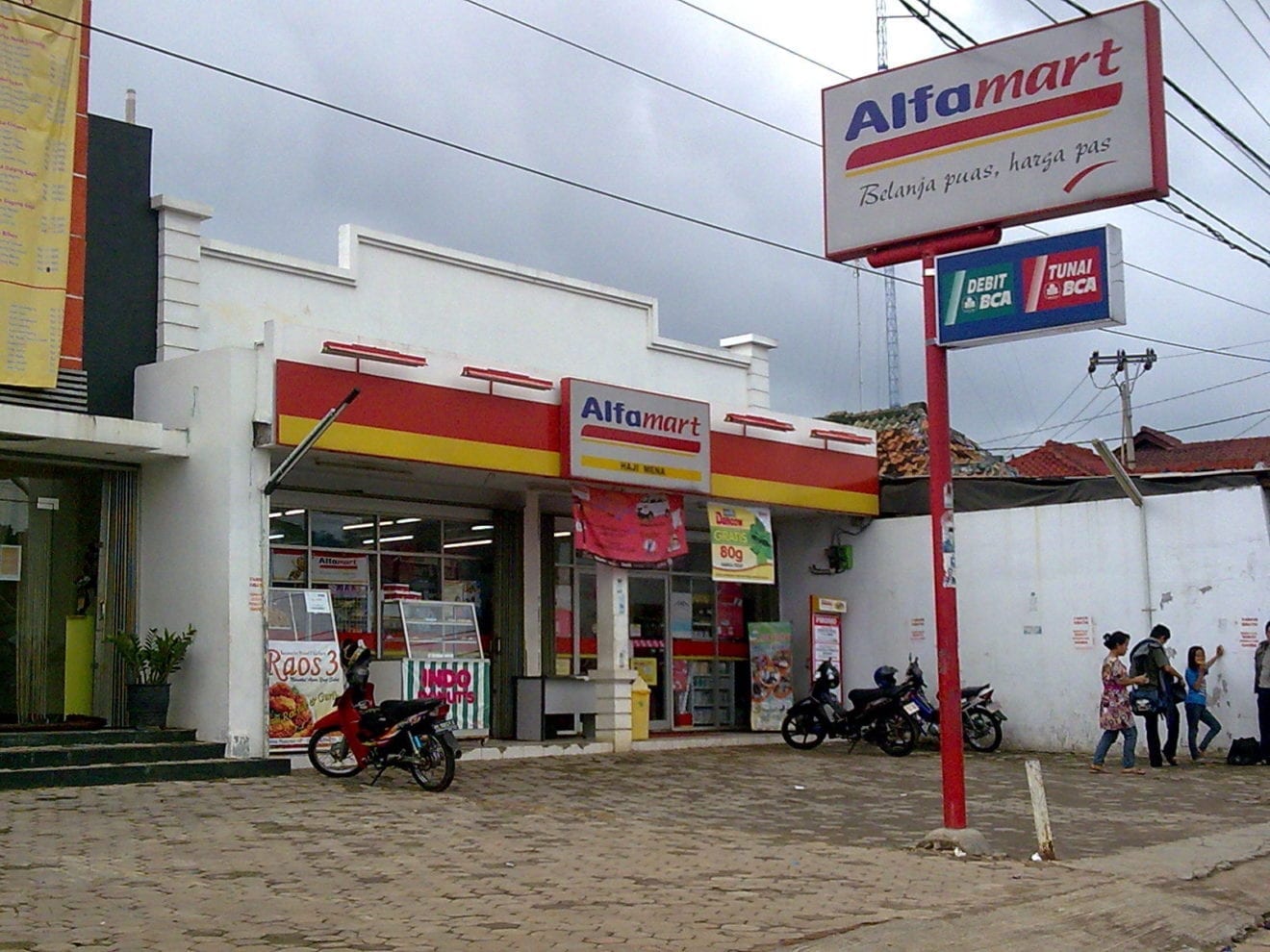
    Sumber Alfaria Trijaya, operator of Alfamart convenience stores in Indonesia, plans to add up to 200 units in the Philippines this year that will nearly double its presence there.

    SAT began its Philippine business in 2014 with a 35% stake in a joint venture with SM Investments, the Philippine banking, retail and real estate conglomerate. In a press conference on Thursday, SAT President Hans Prawira said the company’s concept of “minimarkets,” which are smaller than traditional convenience stores and that sell staples, is untapped in the Philippines.

    “The characteristics of the Philippines market are similar to Indonesia,” Prawira said. “The difference is that there are not many minimarkets in the Philippines. So it’s like a blue ocean.”

    SAT said it had 210 stores in the Philippines at the end of last year, and that about 60 of the planned 200 new outlets were already added in the January-March quarter. The JV is still loss-making but can become profitable once it reaches 400 outlets, something it aims to achieve in two years.

    Indonesian companies are increasingly targeting the Philippines, which has a large population, young demography and a growing middle class. Nippon Indosari Corpindo, Indonesia’s largest bread maker, set up a joint venture in the country last year.

    For SAT, the overseas expansion could help offset a slowdown in consumer spending at home, where the company runs some 13,000 stores across the archipelago. Sales of fast-moving consumer goods, including food and home care products, increased by 3.9% year-on-year in the first quarter, a major slowdown from 11.3% a year ago, according to Nielsen data presented by SAT. The company also faces cutthroat competition with rival Indomaret, which is controlled by the Salim Group conglomerate and has about 14,000 stores.

    “We experienced so many price increases … maybe this time there is this kind of stagnant period,” Prawira said.

    SAT still managed to log a 12% increase in revenue for the first quarter at 13.76 trillion rupiah ($1.03 billion). Prawira said he expected spending to pick up during the Ramadan fasting period that begins later this month. The company plans to open more than 1,000 stores in Indonesia this year, similar to last year’s expansion rate.