Category: General

Retail News Asia is committed to providing both local and global retailers with the latest General Retail news throughout the Asian market. This on a daily base.

  • Boeing, Vietjet Finalize Vietnam’s Largest Ever Commercial Airplane Purchase

    Boeing, Vietjet Finalize Vietnam’s Largest Ever Commercial Airplane Purchase

    Vietjet Aviation Joint Stock Company and Boeing [NYSE: BA] have finalized an order for 100 737 MAX 200 airplanes, the largest ever single commercial airplane purchase in Vietnam aviation. His Excellency Mr. Trần Đại Quang President of the Socialist Republic of Vietnam, and U.S. President Barack Obama witnessed the historic agreement, valued at approximately $11.3 billion at current list prices.

    The signing ceremony, conducted by Vietjet President and CEO Nguyễn Thị Phương Thảo and Boeing Commercial Airplanes President and CEO Ray Conner, took place at the Presidential Palace in Hanoi, at approximately 11:40 a.m. local time.

    “Boeing is proud to again play an integral role in advancing Vietnam’s aviation industry. We’re honored to be joined by President Trần Đại Quang and President Obama for this historic milestone and order of 100 737 MAX airplanes,” said Conner. “Incorporating the latest design and technology features, the highly efficient 737 MAX will provide Vietjet’s growing network with market-leading economics, a superior passenger experience and contribute significantly to their future success.” – Mr Ray Conner shared in the event.

    The 737 MAX incorporates the latest technology CFM International LEAP-1B engines, Advanced Technology winglets and other improvements to deliver the highest efficiency, reliability and passenger comfort in the single-aisle market. The new single-aisle airplane will deliver 20 percent lower fuel use than the first Next-Generation 737s.

    At the signing ceremony, The President & CEO of Vietjet Nguyen Thi Phuong Thao, shared: “Vietjet is efficiently operating a fleet of narrow body airplanes. Our investment in a fleet of B737 Max 200 will accommodate our strategy of growing Vietjet’s coming international route network including long haul flights. Through this Agreement, Vietjet will contribute increasing bilateral trade turnover between Vietnam and the United States, as well as contributes in the integration and development of the aviation industry in Vietnam.”

    The airplanes in this purchase will be delivered to Vietjet from 2019 until 2023 for supporting Vietjet to continuously extend the domestic network as well as international network in the region. This agreement helps Vietjet increase its fleet to more than 200 aircraft by the end of 2023 with the most modern and advanced technology in the world.

  • AirAsia Mega Sale: Two Days Left To Avail Big Discounts

    AirAsia Mega Sale: Two Days Left To Avail Big Discounts

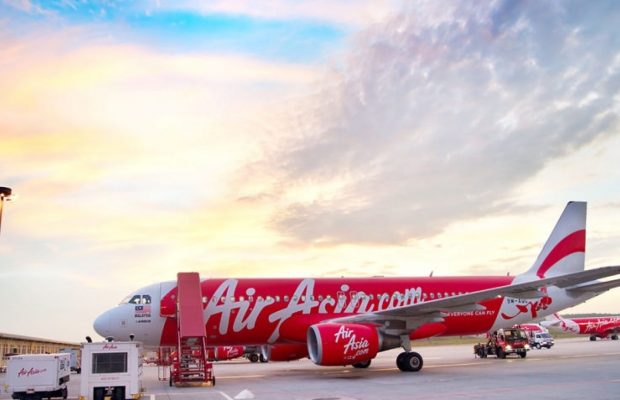
    AirAsia India is offering all-inclusive fares starting from Rs. 1,249 for domestic travel while its Malaysian parent AirAsia is selling tickets from Rs. 1,999 for international travel as part of the “Mega Sale” scheme, which is open till April 9, 2017. Some of the domestic routes covered by AirAsia India include Guwahati-Imphal (all-inclusive fare from Rs. 1,249), Bengaluru-Hyderabad (Rs. 1,619), Kolkata-Ranchi (Rs. 2,249), Bengaluru-Goa (Rs. 1,719) and New Delhi-Ranchi (Rs. 2,699), as per the AirAsia website. The AirAsia India sale is applicable for travel till September 30, 2017, the airline said on its website.
    AirAsia is also offering discounts on international flights under the same offer to South-Asian countries, including Bhubaneswar – Kaula Lumpur (Rs. 1999), Bhubaneswar -Phuket (Rs. 3,739) and Bhubaneswar-Penang (Rs. 3,633). With the summer holidays just around the corner – traditionally the time when most Indian families go on vacation – airlines have taken to lucrative discounts and schemes to corner market share.

    Another airline Vistara had announced a Holi sale in March with fares starting as low as Rs. 999 while other airlines have also announced discounted fares to attract customers ahead of the summer rush.

    India’s aviation sector has witnessed a spurt of growth in the past few years with a 16 per cent rise in passenger traffic in February on year-on-year basis, data from aviation regulator DGCA (Directorate General of Civil Aviation) showed.

  • New Anchor Travel Retail Concessions Set to Elevate Overall Airport Experience

    New Anchor Travel Retail Concessions Set to Elevate Overall Airport Experience

    Airport Authority Hong Kong (AA) has awarded the “Liquor & Tobacco” concession to CDF – Lagardère Company Limited (CDF – Lagardère), and the “Perfume & Cosmetics and Fashion Accessories” concession to Shilla Travel Retail Hong Kong Limited (Shilla) at Hong Kong International Airport (HKIA), which would open for business from November 2017. The award is a result of the open tender exercise held earlier.

    Cissy Chan, Executive Director, Commercial of the AA said, “As a world-class international and regional aviation hub welcoming over 70 million passengers in 2016, we strongly believe that this collaboration will form HKIA’s signature stores introducing attractive and diverse choices, sought after brands, as well as unique and engaging shopping experiences. We are confident that the new concessions will elevate the overall airport experience and create a new shopping journey for the worldwide passengers.”

    The Liquor & Tobacco concessionaire will have the flexibility to include complementary products and upmarket gourmet food items.  The Perfume & Cosmetics and Fashion Accessories concessionaire will offer a one-stop shopping destination for beauty and fashion accessories, such as sunglasses, fashion watches, small leather goods and handbags.

    CDF – Lagardère, the awardee of the Liquor & Tobacco concession, will be introducing new experiential concepts, which include the widest selection of Chinese liquor assortment, a whisky chamber bringing an extensive offering under one roof, an in-store VIP lounge, tasting bars and more.

    Shilla, who will be operating the “Perfume & Cosmetics and Fashion Accessories” shops, will bring a wide spectrum of beauty products and fashion accessories representing almost 100 brands that are new to HKIA.  There will be a dedicated zone for male-specific products, as well as a “New Generation” zone providing a platform for emerging Korean and Japanese brands

    With the emerging trend of omni-retailing, both concessionaires will bring in new ideas to deepen customer engagement through digital initiatives. Interactive zones with virtual reality (VR), interactive and digital devices, together with iBeacon technology, will be installed inside the shops to enhance in-store navigation and real-time promotional offers.

    Charles Chen, President of China Duty Free Group said, “We are honoured to be awarded the Liquor & Tobacco concession at HKIA. This marks an important milestone in the international development of our organisation’s duty free business. We extend our sincere gratitude to the AA for their trust, and we will join hands with Lagardère Travel Retail to present a world class duty free shopping experience to the HKIA passengers.”

    Dag Rasmussen, Chairman & CEO of Lagardère Travel Retail said, “We look forward to growing our long-standing partnership with one of the world’s finest airports. Our teams across the world are excited to collaborate with our brand partners to bring to life a new benchmark for quality and engagement in travel retail.”

    Roberto Graziani, President, Hotel Shilla Travel Retail said, “This highly competitive win is attributed to our teams’ innovative category insights, our deep understanding of customer needs as well as our long standing operational excellence. We are grateful to the AA for this vote of confidence and look forward to warrant to our customers and all stakeholders, offers, services, and operational performances which will stay abreast of trends and changes in the consumers’ preferences, always maintaining a strong competitive edge throughout the length of the concession.”

    The two concessions will be open for business from November and December 2017 respectively. The AA will also fully assist the two concessionaires for a smooth fitting out and changeover.

  • AirAsia joint venture’s prospects uncertain

    AirAsia joint venture’s prospects uncertain

    Talking to VIR, an official from the Department of Enterprise Management under the Ministry of Transport said that AirAsia has yet to submit an official application to establish a joint venture with Gumin and Hai Au Aviation.

    Civil Aviation Authority of Vietnam said the first time it heard of the news was from the media.

    “Hai Au, Gumin, and AirAsia. None of them has applied for a certificate to do business in air transport,” said Vo Huy Cuong, deputy director of CAAV.

    Hai Au has a license to provide general air transport for commercial purposes, with a fleet of four amphibious airplanes.

    Gumin, which operates in management consultancy, has only started operation on March 29.

    Official information is forthcoming only from Thien Minh Group.

    According to the company’s website, the new airline is going to start operation in 2018 after being ratified by the Vietnamese government.

    The new airline is going to provide “high-quality service at affordable prices.”

    An expert said that it is currently unclear whether this airline is going to be a new entity or part of Hai Au.

    However, given the time that it normally takes to obtain a license to fly commercially, the joint venture is unlikely to get a license by the end of 2018.

    Vietstar One-member Co., Ltd., which applied for a license to provide air transport services in July 2016, is still waiting.

    Narrow window

    This is AirAsia’s third attempt in 10 years to join hands with a Vietnamese partner to set up an airline.

    Earlier, Air Asia made an agreement with Vinashin (now Vietnam Shipbuilding Industry Corporation) in 2007 and with Vietjet in 2010 to set up the second foreign-invested airline in Vietnam after Jetstar Pacific.

    For one reason or another, these plans failed to materialise.

    At the moment, AirAsia has two airlines that fly frequently to Vietnam, Thai AirAsia (FD), which flies from Thailand, and AirAsia Berhad (AK) which flies from Malaysia.

    There was also Indonesia AirAsia which used to fly from Indonesia, but at the moment this activity has been suspended.

    The Vietnamese aviation market sees ripe competition from Vietnam Airlines and SkyViet/VASCO, as well as two low-cost airlines, namely Vietjet and Jetstar Pacific, the former of which is considered to be on par with big regional airlines, such as AirAsia, in terms of capital and governance ability.

    The growth in demand still outpaces the growth in supply. However, in the first quarter, demand  showed signs of slowing growth.

    Moreover, the price of airplane fuel is increasing sharply, affecting the profit of airlines.

    The average price in January this year was $65.15 per barrel, up 1.57 per cent compared to December 2016.

    CAPA Centre for Aviation expects that the profit margin for global air transport will decrease from 8.3 per cent in 2016 to 7.4 in 2017 and further to 6.6 in 2018, due to the increasing price of fuel and the surplus in airplanes as airlines have been buying too many of them recently.

    “AirAsia is very late to the party in Vietnam and as a result faces huge challenges,” said Brendan Sobie, Singapore-based chief analyst at CAPA Centre for Aviation at a recent interview with Bloomberg on the issue.

    “The market is now well served by two low-cost carriers, VietJet and Jetstar Pacific. The rate of growth will likely slow in the coming years as the market is now more mature.”

  • DataLase & Xerox Team for Late-Stage Inline Digital Printing Solutions

    DataLase & Xerox Team for Late-Stage Inline Digital Printing Solutions

    Xerox, the global leader in digital print technology and services, has signed an agreement with DataLase, the newly acquired SATO subsidiary and inline digital printing experts, to launch a new inkless printing solution that allows brand owners to connect with consumers with personalisation and late-stage ability to differentiate products and packaging.
    Variprint™ is the next generation of revolutionary inline digital printing solutions from DataLase which uses the new Laser Imaging Module (LIM) designed and built by Xerox. The LIM is capable of printing at higher resolutions than most inkjet digital printing solutions, creating sharper images. The LIM can produce greyscale images with a natural resolution up to 1,200 dpi and can digitally print variable information such as graphics, barcodes and text up to 1 metre per second.
    The patented laser reactive pigments are incorporated into a coating that is conventionally printed onto a variety of products or packaging. When exposed to the LIM, a colour change reaction is generated in the coating resulting in a high definition, premium quality, digital print.
    “Building on the huge interest we generated at drupa 2016, the DataLase solution can deliver a unique way to help connect brands with consumers on a one-to-one basis through personalisation and late stage differentiation of products and packaging – such as adding timely local promotions and marketing material. Real time marketing capability on pack is now a reality,” said Dr. Chris Wyres, CEO of DataLase.
    “The digital print and packaging market is growing at a healthy pace,” said Aanand Parthasarathi, Manager, Packaging Programs at Xerox. “Our new lasers, coupled with DataLase technology, will deliver new capabilities in the fulfilment process such as switching languages or a last-minute change in an ingredient list.”
    DataLase is seeing the development of a range of market applications for its technology on a global basis. Its technology can be used across a wide range of product and packaging applications in the food and drink, pharmaceutical, personal care and household sectors for case coding, labelling, product coding and folding cartons.
  • Jetstar adds low-cost services between Australia and Vietnam this summer

    Jetstar adds low-cost services between Australia and Vietnam this summer

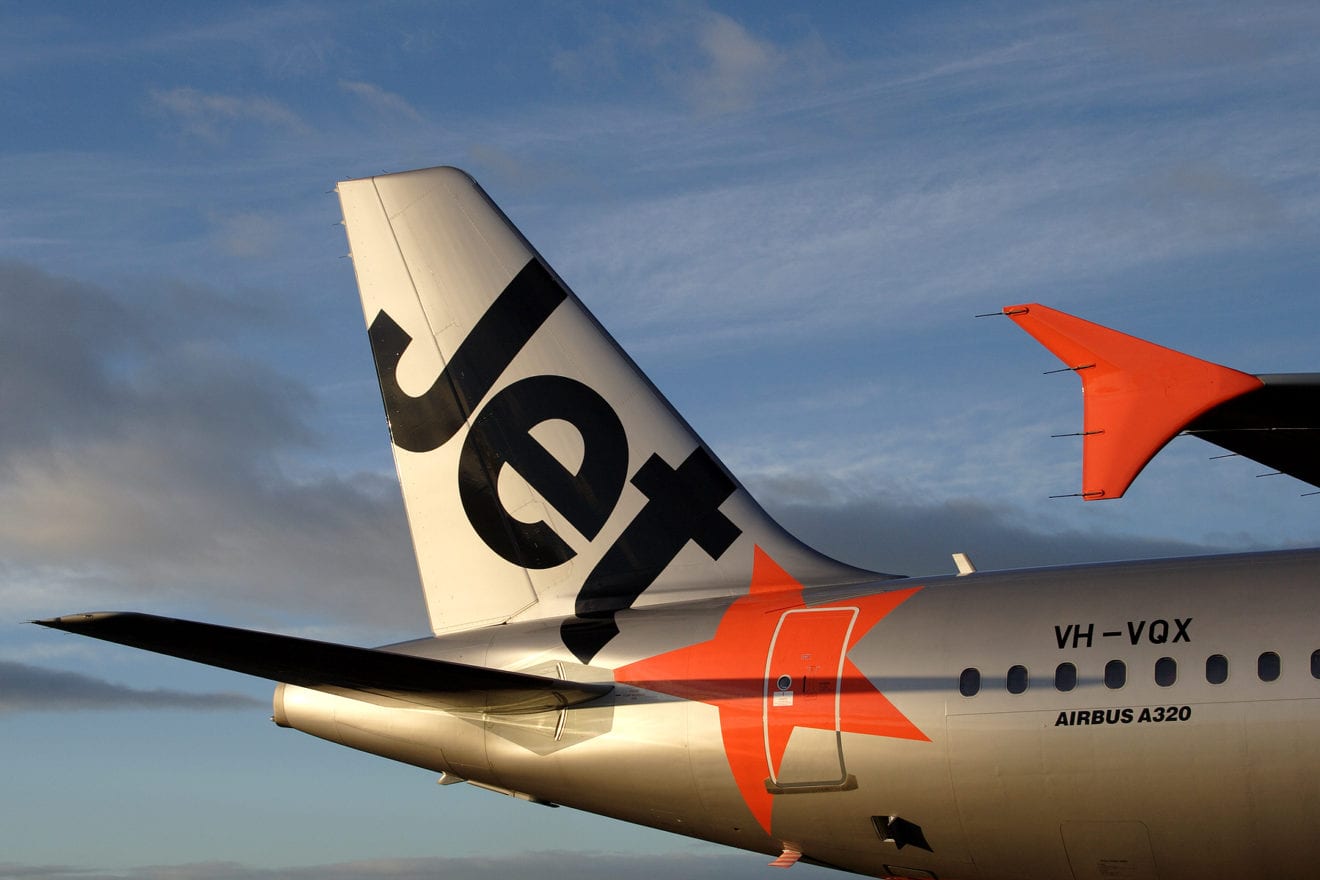
    The Qantas unit hopes to break the monopoly currently held by national carrier Vietnam Airlines, which is also a Qantas partner. Australia’s trade and tourism ministry on Wednesday announced two low-cost direct services from Melbourne and Sydney to Ho Chi Minh City by Jetstar Airways.

    The new services will take off in May this year, Assistant Minister Keith Pitt told a meeting with local media in HCMC.

    Jetstar Airways, a wholly owned subsidiary of Australia’s Qantas Airways, will operate the flights four times a week from Sydney and three times weekly from Melbourne using the Boeing 787 Dreamliner.

    Ticket sales began in January. Flights from Melbourne to HCMC will be launched on May 10, and flights from Sydney will commence one day later, subject to regulatory approval.

    “These flights will stimulate inbound tourism, business and trade to Australia. In the last 12 months, there has been a 21 percent increase in visitors from Vietnam to Australia and we expect to see that grow with the introduction of our low fares on the route,” Paul Rombeek, Jetstar Group’s Global Head of Sales, told the press.

    The new flights from Australia to HCMC by Jetstar Airways would link up to 15 domestic destinations from HCMC thanks to daily services operated currently by Vietnamese domestic partner Jetstar Pacific, Jetstar Group Chief Executive Jayne Hrdlicka said in a statement.

    Jetstar Pacific, 70 percent owned by flag carrier Vietnam Airlines and 30 percent by Qantas, is growing rapidly in an attempt to fend off a competitive threat from domestic budget rival VietJet, she said.

    Vietnam Airlines and Qantas last year said they would invest $139 million to more than double the size of Jetstar Pacific’s fleet to 30 aircraft by 2020.

    Jetstar’s non-stop flights from Australia to Vietnam will break a monopoly of direct services held by Vietnam Airlines, said the report.

    More than 320,000 Australian visitors came to Vietnam last year, up 5.6 percent against 2015. The figure in the first three months this year was over 95,000, up 3.4 percent, according to data of the Vietnam National Administration of Tourism.

  • AirAsia sets up low-cost airline in Vietnam

    AirAsia sets up low-cost airline in Vietnam

    Malaysian budget airline AirAsia Berhad plans to start a low-cost carrier in Vietnam, co-operating with local businesses to enter the country’s booming travel market, company representatives told Retail News.

    AirAsia signed a shareholders’ agreement with Vietnam’s Gumin Company Limited, Hải Âu Aviation Joint Stock Company and Trần Trọng Kiên, the owner of these two companies, to form the venture last Friday, which the airline announced in a statement to Malaysia’s stock exchange.  

    The carrier, expected to start flying at the beginning of 2018, will need an investment of VNĐ1 trillion (US$44 million), of which AirAsia will hold 30 per cent stake and Gumin will hold 70 per cent.

    Vietnam is the latest country to lure Malaysian billionaire Tony Fernandes, head of AirAsia, who is aspiring to build a low-cost airline network covering Asia, as the 28 per cent growth inVietnam’s aviation market triples the rate in other Southeast Asian countries.

    Vietnam is also the fifth biggest aviation market in the region, after Indonesia, Thailand, Malaysia and Singapore, with a passenger volume that has doubled since 2013 thanks to a middle class population accounting for 25 per cent of the total population by 2010.

    In recent years, AirAsia has established affiliates in Indonesia, Thailand, India and Japan. The airline is betting on low cost airline models for international travel through its AirAsia X subsidiary. Fernandes has also ordered hundreds of Airbus aircraft worth billions of dollars to meet his ambition of growth, and he is in the process of selling a subsidiary specialising in leasing aircrafts to raise cash.

    However, Brendan Sobie, CAPA Centre for Aviation’s analyst, told that AirAsia would face huge challenges, because it entered the Vietnamese market too late. “The market is currently well served by two carriers, VietJet Air and Jetstar Pacific. The growth rate will slow down in the coming years, as the low-cost market is now more mature. ”

    Vietjet Aviation Joint Stock Company shares have grown 52 per cent since its listing on HCM Stock Exchange in February 28.

    According to a report released by ACB Securities in December last year, passenger traffic inVietnam will continue to grow at double digit rates over the next decade, after an annual growth of 17 per cent in the last decade.

  • AirAsia X in talks with South Korea’s Jeju over Kuala Lumpur service

    AirAsia X in talks with South Korea’s Jeju over Kuala Lumpur service

    AirAsia X is in talks with Jeju’s provincial government about direct flights between Kuala Lumpur and the South Korean resort island.

    Jeju officials said discussions were held last week in Kuala Lumpur about frequencies in the absence presently of direct flights. “We hope that we will have flights by the end of this year,” said Seo Hye-jin, a provincial official. “We have been marketing in Southeast Asia since last year.” She declined to speculate on possible frequencies while discussions are ongoing.

    China accounted for almost 96% of the island’s inbound flights in March, according to Jeju tourism officials. There were over 5,000 arrivals from Malaysia in January, making it the second largest source market after China with over 184,000.

    Observers expect Malaysia’s presence in Jeju to increase after the curtailing of Chinese arrivals in the wake of deployment of a new U.S. missile defense system in South Korea.

    China opposes the Terminal High Altitude Area Defense system because of concern about related U.S. surveillance. Seoul and Washington maintain that their sole purpose is to defend against North Korean missile strikes.

    According to travel agencies in China, tours to South Korea were curtailed from Mar. 15 under official pressure, posing a serious threat to the industry there.

    AirAsia X is an AirAsia subsidiary offering long-haul services to 23 destinations in Asia-Pacific, the Middle East, and Africa.

  • Indonesia to build circuit for MotoGP in West Nusa Tenggara

    Indonesia to build circuit for MotoGP in West Nusa Tenggara

    Indonesia will construct an international circuit for MotoGP in West Nusa Tenggara province of central parts of the nation, an official said here on Tuesday.

    An agreement on the construction of the sport facility had been inked, involving a French investor, said Edwin Darmasetiawan, Director for Indonesia Tourism Development Corporation, reports Xinhua news agency

    “The commitment is clear, construction of a circuit for MotoGP in Lombok,” he said.

    The circuit would be constructed on 120 hectare of land in Lombok of the province, the director said.

    The construction is expected to be completed in 2019, said Darmasetiawan.

    The project requires funding of 13 trillion rupiah (some $1.049 billion), he added.

    The director said that the new facility is expected to help attract more foreign tourist to the province.

  • AirAsia steps up broadband co-operation with Inmarsat

    AirAsia steps up broadband co-operation with Inmarsat

    AirAsia has signed a tentative deal with Inmarsat to provide broadband access on Airbus A320s and A330s through the satellite communications specialist’s GX Aviation service.

    The airline currently uses Inmarsat’s SwiftBroadband service. It says the new service will provide improved broadband access with “reliable, seamless high-speed global coverage”.

    Passengers will be able to stream films, music and games through AirAsia‘s Rokki in-flight entertainment and connectivity platform, the carrier says. Installations are scheduled to begin in late 2017, with the service set to become available in 2018.

    At a media briefing during the Aircraft Interiors Expo in Hamburg today, AirAsia X chief executive Benyamin Ismail indicated that the system would initially be installed on the group’s A330s, with supplemental type certification for the widebody targeted for November. He adds that the new service will be rolled out “over time” across the entire fleet.

    Inmarsat Aviation president Leo Mondale says the partnership is of strategic importance and describes AirAsia as a “leading digital airline in Asia” as well as “one of the most important airlines in the world”.

  • Singapore Airlines locks in daily Airbus A350 for Melbourne

    Singapore Airlines locks in daily Airbus A350 for Melbourne

    Singapore Airlines is locking in its advanced Airbus A350 jet for a year-round schedule between Melbourne and Singapore starting May 11, 2017.

    The sleek jetliner has made a number of short-term appearances on the route, but later this year it’ll be running daily as Melbourne-Singapore flight SQ208 and the SQ207 return leg.

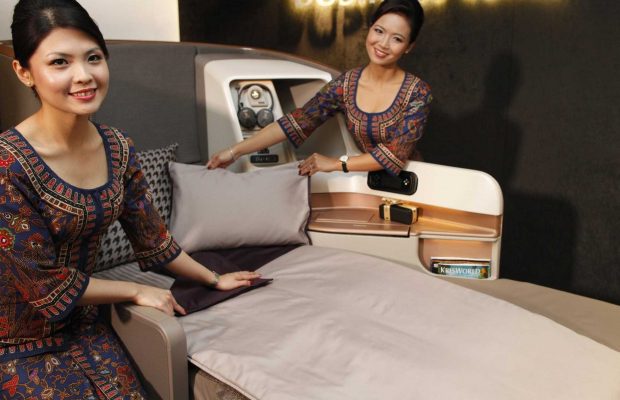
    Travellers at the pointy end can relax in the Star Alliance member’s latest business class seat, evolved from that of the  Boeing 777-300ER flagship.

    It’s an “evolutionary, not revolutionary” approach, reported AusBT’s Suzanne Wu from one of the first SQ A350 flights – “and that’s not a bad thing. Not a whole lot was broke, so not a whole lot needed fixing.”

    Melbourne’s SQ218/SQ217 is also running on an A350 until June 30, after which it will revert to the Airbus A380 superjumbo.

    Asian rival Cathay Pacific already has one Airbus A350 on the Melbourne-Hong Kong route as CX104/105, with a second slotting into CX134/135 from October 29, while Thai Airways says its own on-again off-again Melbourne A350 flights should launch before the year’s end.

    April sees Singapore Airlines celebrate 50 years of flying to Australia, and is tipped to debut its newest Airbus A380 – fitted with next-generation first class suites and business class seats – on the Singapore-Sydney route in October 2017.

    The redesigned first class suites will be fewer in number – down the current superjumbo’s 12 to between six and eight – but much larger in footprint, and have been relocated to the upper deck.

    Next year will see Singapore Airlines restart direct flights between Singapore and the USA, with both New York and Los Angeles in line for an ultra-long range version of the A350 dubbed the A350ULR.

    This long-legged jet will carry all-new business class seats compared to the Melbourne A350, but only around 170 seats – some 80 less than the airline’s regular A350-900s – in order to minimise fuel burn and maximise range for the 18-19 hour journey.

  • Vietnam beats China in product reputation ranking, but scores below most ASEAN peers

    Vietnam beats China in product reputation ranking, but scores below most ASEAN peers

    Made in Vietnam products score low in almost all product attribute categories. Vietnam has been ranked 46th on the Made in Country Index 2017 released by Germany’s Statista Market Research Co, which asked more than 43,000 people in 52 countries and territories to look at goods produced in 49 countries and the European Union as a group.

    Vietnam hit an index score of 34, while China took the 49th position with a score of 28, said the survey.

    However, it stood behind most Southeast Asian countries in the survey, except for the Philippines, which ranked 47th.

    The index features 10 categories: high quality, high security standards, very good value for money, uniqueness, excellent design, advanced technology, authenticity, sustainability/eco-friendliness, fair production and status symbol.

    Vietnam scored low in all categories but “very good value for money”, where it made it to the top 10, standing in eighth place. “Made in China” products claimed the top spot as voted by over a third of respondents.

    Even “in Vietnam itself, ‘Made in Vietnam’ does not have a good reputation”, the survey said.

    Vietnamese consumers like products from Japan the most. Other products most preferred in Vietnam come from Denmark, Australia, the Netherlands and South Korea.

    “Made in Vietnam” products are found popular in Ecuador and the United Arab Emirates, where they rank 10th and 20th, respectively.

    Germany tops the Made-In-Country Index, scoring 100 points, while Switzerland and the EU are runners-up, scoring 98 and 92, respectively. Iran sits at the bottom of the pile.

    In most countries, products from Germany, the U.S. or Japan are the most favored.

    Specifically, in 13 of the 52 responding countries, Germany has the best image as a manufacturing country. The U.S. holds this status in eight countries, while Japan claims seven.

  • Vietnam may become a target as Trump set to curb ‘trade abuses’

    Vietnam may become a target as Trump set to curb ‘trade abuses’

    U.S. President Donald Trump will sign executive orders on Friday aimed at identifying abuses that are causing massive U.S. trade deficits and clamping down on non-payment of anti-dumping and anti-subsidy duties on imports, his top trade officials said.

    The orders come as Trump prepares for his first face-to-face meeting with Chinese President Xi next week in Florida, where trade issues promise to be a major source of tension. China was the biggest contributor to the $734 billion U.S. goods trade deficit last year.

    The directives allow Trump to focus on meeting his campaign promises to combat the flow of unfairly traded imports into the United States just a week after his pledge to repeal and replace Obamacare imploded in Congress.

    Commerce Secretary Wilbur Ross told reporters that one of the orders directs his department and the U.S. Trade Representative to conduct a major review of the causes of U.S. trade deficits. These include trade abuses such as dumping of goods below costs and unfair subsidies, “non-reciprocal” trade practices by other countries and currencies that are “misaligned.”

    Ross took pains to say that currency misalignment was not the same as manipulation, and only the U.S. Treasury could define currency manipulation. But he said in some cases, currencies can become misaligned from their traditional valuations unintentionally, citing the Mexican peso’s sharp decline late last year after Trump’s election.

    The study also will examine World Trade Organization rules that Ross said do not treat countries equally, such as on taxation. The United States has long complained that WTO rules allow exports to be exempt from value-added taxes, but do not allow export exemptions from the U.S. corporate income tax. The study also will examine the effects of trade deals that have failed to produce forecast benefits, Ross said.

    Ross said he aims to complete the study and report the findings to Trump in 90 days — a time frame that coincides with the expected start of negotiations to revamp the U.S.-Canada-Mexico North American Free Trade Agreement.

    The study’s findings will underpin the Trump administration’s future trade policy decisions, Ross said, and will be the first “systematic analysis” of the trade deficit’s causes, “country-by-country, product-by-product.”

    “It will demonstrate the administration’s intention not to hipshoot, not to do anything casual, not to do anything abruptly,” Ross told a White House briefing.

    Ross has promised tougher enforcement of U.S. trade laws and more anti-dumping and anti-subsidy cases initiated by the Commerce Department, rather than relying on companies to claim injuries from imports.

    He said the study would focus on those countries that have chronic goods trade surpluses with the United States.

    China tops the list, with a $347 billion surplus last year, followed by Japan, with a $69 billion surplus, Germany at $65 billion, Mexico at $63 billion, Ireland at $36 billion and Vietnam at $32 billion.

    The second trade order to be signed by Trump is aimed at halting the non-payment and under-collection of anti-dumping and anti-subsidy duties the United States slaps on many foreign goods.

    White House National Trade Council Director Peter Navarro said that some $2.8 billion in such duties went uncollected between 2001 and the end of 2016 from companies in some 40 countries.

    Navarro said the order directs the Commerce and Homeland Security departments to close these gaps by imposing tougher bonding requirements to ensure duty collections and new legal requirements for assessing risks associated with importers.

    Navarro, a harsh critic of China’s trade practices, insisted that the orders were not aimed at sending a message ahead of Xi’s visit.

    “Nothing we are saying tonight is about China,” he said. “This is a story about trade abuses, this is a story about under-collection of duties, this is a story about 40 countries that basically subsidise their products unfairly and send them into our country or dump their products.”

  • AirAsia plans Vietnam venture on Southeast Asia travel boom

    AirAsia plans Vietnam venture on Southeast Asia travel boom

    AirAsia, the low-cost carrier headed by Malaysian tycoon Tony Fernandes, plans to start a Vietnamese carrier in a local partnership, as cheap fares and rising incomes fuel a travel surge in the Southeast Asian nation.

    The region’s largest budget airline will partner Gumin Co., Hai Au Aviation Joint Stock Co. and businessman Tran Trong Kien for the venture, which is expected to start flying early next year, AirAsia said in a statement to the stock exchange. Gumin will own about 70 percent of the new venture, with AirAsia holding the rest.

    Vietnam is the latest country to lure Fernandes, who is seeking to build a pan-Asian budget airline, as the 28 percent growth in passenger traffic was triple the pace in other Southeast Asian nations. The fifth-biggest market in the region has seen domestic traffic double since 2013, and the middle-class will comprise close to a quarter of its population by 2010, AirAsia said.

    Shares of AirAsia climbed 1.3 percent to 3.14 ringgit in Kuala Lumpur on Friday. They have gained 37 percent this year.

    AirAsia has over the years established affiliates in Indonesia, Thailand, India and Japan, and is betting on a low-cost, long-haul model for international travel through its AirAsia X unit. It has ordered hundreds of planes worth billions of dollars from Airbus SE to meet its growth ambitions, and is in the process of selling a plane-leasing unit to raise more cash.

    Marketing stunts

    VietJet Aviation Joint Stock Co., known for marketing stunts like bikini-clad flight attendants, listed its shares on an exchange last month, and has gained 52 percent since. Vietnam will continue to see a double-digit gain in passenger numbers in the next decade, after annual growth of 17 percent in the past decade, according to ACB Securities in December.

    “AirAsia is very late to the party in Vietnam and as a result faces huge challenges,” said Brendan Sobie, Singapore-based chief analyst at CAPA Centre for Aviation. “The market is now well served by two low-cost carriers, VietJet and Jetstar Pacific. The rate of growth will likely slow in the coming years as the market is now more mature.”

    AirAsia’s Vietnam venture will need investments of 1 trillion Vietnamese Dong ($44 million), and AirAsia will contribute 30 percent of that after raising internal funding, according to the filing.

    Kien is the chief executive officer of Hanoi-based Gumin, which was founded March 29, according to Vietnam Planning and Investment Ministry’s website. He is also the chairman and CEO of Thien Minh Group, or TMG, which owns Victoria Hotels & Resorts in Vietnam and Laos. Hai Au Aviation is a unit of TMG.

  • Shinsegae Department Store uses AI in marketing push

    Shinsegae Department Store uses AI in marketing push

    Shinsegae Department Store has become the first South Korean retailer to deploy a marketing strategy using AI technology.

    A wave of artificial intelligence (AI) is sweeping the nation’s retail industry, as major department stores and online shopping malls rush to adopt the latest technology to attract consumers.

    From this week, Shinsegae Department Store is introducing a personalisation service called “S Mind”, which will analyse each customer’s brand preferences and come up with product suggestions.

    Using a database of some 5 million existing customers, S Mind will take into consideration around 100 factors including the purchase history, gender, age, and location.

    The results, which will include suggested brands and related shopping information, will be sent to customers through Shinsegae’s mobile application.

    AI Korea

    Shinsegae predicts its latest move will generate additional sales revenue of 100 billion won annually.

    The new system, established solely with South Korean developers and data analysts, was four years in the making before its completion.

    Shinsegae Department Store’s rival, Lotte Department Store, teamed up with IBM Korea last December to develop a new mobile app AI feature that is expected to be released by the end of this year.

    Lotte’s new ‘Recommendation Bot’ will work as a shopping advisor to make suggestions through voice messages or texts, and will give app users information on the latest trends and celebrity fashion news.

    Kim Myeong-gu, who is responsible for omni-channel marketing at Lotte, said, “With the overload of information today, many customers find it tiresome to make a choice.

    “Our new AI-based recommendation feature will differentiate our marketing strategy with that of our competitors,” he added.

    As the major retail chains are beginning to embrace AI technology that will redraw the landscape of how we shop, the industry as a whole and the government are also backing the trend.

    A new alliance was formed yesterday which will see the retail and distribution industry work closely with IT and manufacturing companies to adopt the fourth industrial revolution.

    Dubbed the “Retail Industry Convergence Alliance,” the cross-industry coalition will help spread the use of new technologies in various fields including research and development.

    The fourth industrial revolution, typified by advanced technology such as AI, IoT, robots, augmented reality and virtual reality is rapidly being incorporated into the retail and distribution industry around the world.

    An official from the Korean Ministry of Industry said: “For our retail industry to be acknowledged as a global platform, it’s important to emphasise having the right business environment for innovation and cooperation.

    “The government will help with subsidies to make sure the collective effort between various industries leads to new business opportunities and markets.”