Category: General

Retail News Asia is committed to providing both local and global retailers with the latest General Retail news throughout the Asian market. This on a daily base.

  • Manager in China motivates staff by making them tear up their money

    Manager in China motivates staff by making them tear up their money

    A manager at a retail store in eastern China motivates her underperforming sales staff by forcing them to tear up their own 100-yuan bills.

    A video showing five young salespeople tearing up the notes at the command of their boss at a Gome electrical appliance store in Jinan, Shandong province drew condemnation over the weekend.

    The incident took place on the evening of March 22. The five employees were forced to tear up the cash because they did not meet their daily sales quotas of 100 deals.

    The local police department gave the manager a warning and fined her 1,000 yuan (US$688). The manager said that she had meant to teach her employees not to waste company resources.

    In the video, the manager shouts at the employees and insists that they tear up the cash if they want to keep their jobs, although it also shows staff members warning her that destroying money is illegal.

    The police department said that any deliberate destruction of yuan would result in a police warning and a fine of up to 10,000 yuan.

    The video caused widespread outrage among mainland social media users.

  • Lily builds new life for youth in Thailand

    Lily builds new life for youth in Thailand

    Helping young people who are living in disadvantaged communities has always been a passion for Lily Simpson and her late husband John.

    The former Ipswich residents spent many years working with people who have disabilities and assisted them to achieve independent life skills.

    After numerous trips to Thailand, the pair realised there were many children who needed help, which prompted them to form their own charity.

    “We had been travelling to Thailand volunteering with disadvantaged children in various orphanages for many years,” Mrs Simpson said. “During these visits we noticed that there were many youth and young adults in the most disadvantaged and at risk categories who were not receiving training and assistance in the life skills necessary to survive and thrive.

    “God placed it on our hearts to reach out to these people and ask them to work together with us to improve their future.”

    The pair moved to Thailand in 2012 and in that time co-founded the Chii wi mai, which means “new life” in Thai.

    “It is the aim of the service to provide an individualised approach in assisting youth and young adults to access the vocational and learning opportunities of their choice to achieve their dreams and goals,” Mrs Simpson said.

    “In 2013 Chii wi mai received registration and we officially commenced our ministry.”

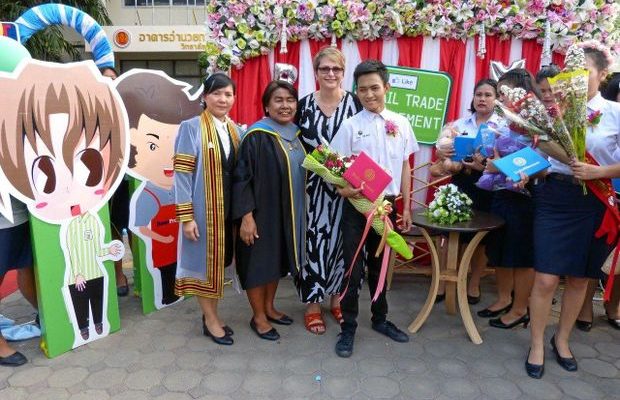
    One of the young people who has benefited from Lily and John’s generosity is a young Thai boy named Sanya.

    “Sanya has studied hard and overcome many challenges in his life to achieve his goal,” she said.

    “He was born HIV positive, both of his parents passed away, he is blind in one eye from a virus he got when he was three years old and lived in an orphanage until he was 16.

    “He has a grandmother whom he loves dearly, and she makes a living selling flowers at the market in another town.”

    With their help, Sanya recently graduated with a Diploma in Retail Management and plans to study for the next two years.

    Mrs Simpson got up at 4am and caught a plane to Khon Kaen so she could be present at his graduation ceremony.

    “Sanya had a dream and he is well on his way to achieving it and I am so glad Chii wit mai is part of his life,” she said.

    “John was so proud of Sanya, but last July he passed away unexpectedly. He was missed by all of us.”

    Mrs Simpson also had help in providing a better future for Sanya, thanks to the Kiwanis Club of Brisbane.

    “Without their financial support for the last eight years, Sanya may not have been able to continue with his education,” she said.

    “Sanya and I are very grateful and Sanya has written a letter to thank Kiwanis for all they have done for him.”

  • Vietnam convenience store growth to lead Asia

    Vietnam convenience store growth to lead Asia

    Vietnam will be the fastest-growing convenience market in Asia by 2021, predicts international grocery research organisation IGD.

    According to the researcher, Asia’s grocery market will be the largest in the world with predicted 6.3 per cent of compound annual growth rate, up to US$4.8 trillion by 2021.

    Of that, the convenience store sector will see double-digit compound annual growth in the next four years.

    IGD predicts the Vietnam convenience store market will grow by 37.4 per cent in that time, followed by the Philippines at 24.2 per cent and Indonesia at 15.8 per cent. Those figures are based on assessments of the performance of the leading convenience store operators in each market.

    Cstores IGD

    During the past couple years, Vietnam convenience stores have become popular destinations, especially for young consumers. Savvy operators, like Circle K and FamilyMart have recognised local demand for c-stores as a place to not only shop but to hang out as well, providing an air-conditioned area to consume freshly-served convenience foods and snacks, up-to-date merchandising systems, a mix of imported and local goods and –  in some stores – even free Wi-Fi.

    It is also easier for businesses to get licences for stores with footprints under 500 sqm.

    According to IGD, Vietnam, the Philippines and Indonesia share similar characteristics that make their convenience markets particularly ripe for growth, including:

    • Store expansion: In all three markets, major players are speeding up store roll-outs in a battle for marketshare. For example, the number of c-stores operated by the top five retailers in the Philippines has more than doubled during the last five years and retailers are gradually shifting their focus from the capital to more provincial areas for greater opportunities.
    • Local players are gaining a stronger foothold: Asia’s convenience market has traditionally been dominated by Japanese retailers, such as 7-Eleven (which has yet to debut in Vietnam), FamilyMart and Aeon. However, there have been more market consolidations and partnerships and most noticeably, domestic players such as VinMart in Vietnam and SM Retail in the Philippines have been scaling up their operations and establishing leadership in their local markets.
    • Neighbourhood mini-supermarkets are becoming more popular: Apart from the modern convenience store format, local operators such as Indonesia’s Indomaret and Dairy Farm’s Wellcome format in the Philippines have developed a successful neighbourhood mini-supermarkets model, which better cater to local needs. These mini-supermarkets are typically between 150 and 300 sqm in size and are located in residential areas, with a focus on fresh food, top-up grocery and food-for-tonight.

    Thanks to the positive economic outlooks of all three countries, consumers are shifting from traditional wet-markets to the so-called modern trade, like convenience stores and supermarkets.

    Increased GDP per capita and foreign investment have also encouraged the market growth.

    “Among all the brick-and-mortar grocery channels, convenience shows the strongest growth prospects in Asia, thanks to rapid urbanisation, a growing young population and greater levels of disposable income,” says Nick Miles, head of Asia-Pacific at IGD.

  • South Korean group in advanced talks to buy into AirAsia leasing unit

    South Korean group in advanced talks to buy into AirAsia leasing unit

    A little-known South Korean group is in advanced talks to acquire a stake in AirAsia Bhd’s aircraft leasing unit, according to three people familiar with the matter.

    Two of the people said a deal would value AirAsia’s fully-owned unit, Asia Aviation Capital, at roughly $900 million.

    Privately-owned KOTAM, or Korea Transportation Asset Management, has been picked as the preferred bidder, the people said, with one adding that state lender Korea Development Bank (KDB) was tapped to provide funding, though it was not clear whether the bank had agreed to back the deal.

    Philippines AirAsia CEO Dexter Comendador (3rd from left), Clark International Airport Corporation (CIAC) President-CEO Alexander Cauguiran (4th from left), and Central Luzon Regional Tourism Director Ronaldo Tiotuico (2nd from right) are flanked by flight attendants during the send-off ceremony for the inaugural flight of AirAsia from the Clark International Airport (CRK) to Kalibo in Aklan, one of the routes to the world-famous Boracay. A total of 146 passengers took the inaugural flight going to Kalibo. The Kalibo flight arrives at 1:10 p.m. and departs from the Clark airport at 1:35 p.m. every Mondays, Tuesdays, and Wednesdays.

    Philippines AirAsia CEO Dexter Comendador (3rd from left), Clark International Airport Corporation (CIAC) President-CEO Alexander Cauguiran (4th from left), and Central Luzon Regional Tourism Director Ronaldo Tiotuico (2nd from right) are flanked by flight attendants during the send-off ceremony for the inaugural flight of AirAsia from the Clark International Airport (CRK) to Kalibo in Aklan, one of the routes to the world-famous Boracay. A total of 146 passengers took the inaugural flight going to Kalibo. The Kalibo flight arrives at 1:10 p.m. and departs from the Clark airport at 1:35 p.m. every Mondays, Tuesdays, and Wednesdays.

    KOTAM is part of Kukje Maritime Investment Corp., known as KMarin, which was founded in 2005 and has a fleet of 46 ships, according to its website.

    KOTAM, KDB and AirAsia did not have immediate comment.

    A successful deal would mark South Korea’s biggest move into the $256-billion global aircraft leasing sector, which has attracted others in Asia, including Industrial and Commercial Bank of China, BOC Aviation, China’s acquisitive HNA Group, and Japanese banks.

    KOTAM and AirAsia are negotiating final terms of the purchase of a majority stake in the leasing unit, one of the sources said. Asia’s biggest budget airline has sought buyers for its subsidiary since last year, and has said it aimed to close a sale early this year.

    A deal with KOTAM could still fall through, and two sources said that Air -Asia has not closed the door to a deal with a Chinese bidder.

    The sources declined to be identified as the negotiations are ongoing and confidential.

    South Korean insurers, asset managers and securities firms are attracted to aviation finance as aircraft leases offer fixed returns and are often seen as relatively safe transactions.

    Paid for in US dollars, aircraft are comparatively easy to release to various airline operators across the world.

    Reuters reported in December that AirAsia had received strong interest from North Asian firms, besides many Chinese companies.

    One of the sources said AirAsia was becoming concerned about Chinese buyers’ ability to close a deal due to China’s recent measures to tighten controls on money moving out of the country.

  • ​​Robinsons Store launches first​ ​Go Lokal! store in Robinsons Place Manila

    ​​Robinsons Store launches first​ ​Go Lokal! store in Robinsons Place Manila

    Robinsons Department Store, in partnership with the Department of Trade and Industry (DTI) opens today the first Go Lokal! store in Robinsons Place Manila.

    Robinsons Department Store, an affiliate of Robinsons Retail Holdings Inc., is the first mainstream outlet to launch Go Lokal!, a public-private collaboration between DTI and local retailer partners that aims to showcase modern and indigenous quality products crafted, designed, and created by innovative Philippine micro, small and medium enterprises (MSMEs).

    The Go Lokal! program has been designed to serve as incubation, marketing, and branding platform for the best of Philippine MSMEs products including next generation One Town One Product (OTOP) offerings. This new market access platform via a design-led concept store is set to revolutionize the way hard-to-find and artisanal Filipino products are sold in the local market, and will bring together a specially-curated line-up that ranges from food, apparel, accessories, home décor, gadgets and gift items. They can be found in consumer-frequented locations as a mainstream distribution channel for world-class Filipino products while offering value for money for targeted consumers and tourists.

    Trade Secretary Ramon Lopez said DTI is more than excited to open its first mainstream  Go Lokal! store with Robinsons Department Store as its dynamic partner in this effort of maximizing market access and providing exposure to our MSMEs. “Go Lokal! is truly a vibrant model for MSME development and inclusive business. We are happy that committed partners like Robinsons have taken on this challenge. We look forward to opening more outlets in their malls and department stores across the country,” Sec. Lopez said.

    Robina Gokongwei-Pe, President and COO of Robinsons Department Store, said that the program will benefit MSMEs because it’s a mainstream platform that brings them closer to a more diverse market and creates positive effects to the economy by encouraging entrepreneurship. “This partnership with DTI is Robinsons Department Store’s contribution to nation-building by providing our entrepreneurs an environment where they can be passionate about their businesses and prosper from their efforts, as we create opportunities for MSMEs to grow, succeed and make an impact to the retail industry,” said Gokongwei-Pe.

    Johnson Go, General Manager of Robinsons Department Store, said that Go Lokal! is Robinsons Department Store’s way of supporting Filipino entrepreneurs into their initial foray into more mainstream markets by making them more accessible to both local and foreign consumers. “The diverse product line of Go Lokal! brings together the best products that the Philippines has to offer which are world-class locally-made quality products by our MSMEs,” said Go.

    The DTI Secretary also said that aside from providing market access for MSME products, the Go Lokal! program is a platform for new entrepreneurs to test the marketability of their products without the fear of losing rental and commercial costs because their experience is free of charge

    Portion of Go Lokal! revenues will go to the various corporate social responsibility (CSR) projects of Robinsons Department Store including the government’s drug rehabilitation program.

    Robinsons Department Store, an affiliate of Robinsons Retail Holdings Inc., is the first mainstream outlet to launch Go Lokal!, a public-private collaboration between DTI and local retailer partners that aims to showcase modern and indigenous quality products crafted, designed, and created by innovative Philippine micro, small and medium enterprises (MSMEs). Launching the partnership recently were (l-r) Mr. Johnson Go, General Manager of Robinsons Department Store; DTI Bureau of Domestic Trade Promotion Director Rhodora Leaño; DTI Assistant Secretary for Industry Promotion Group Rosvi Gaetos, Secretary Ramon Lopez of the Department of Trade and Industry, Ms. Robina Gokongwei-Pe, President and COO of Robinsons Department Store; Mr. Irving Wu, Robinsons Malls Operations Director for Luzon and Ms. Maricar Reyes, celebrity endorser of Robinsons Department Store.


  • Sales slide continues for Japanese retailers

    Sales slide continues for Japanese retailers

    The supermarket and department-store sales slide in Japan continued last month, say industry bodies.

    There was little impact yet from the Premium Friday campaign launched last month by the government and business community to encourage people to spend more with Japanese retailers by letting workers finish work early on the last Friday of every month, reports Japan Today.

    Supermarket sales fell 3.3 per cent from a year earlier, down for the third straight month. This is partly because of weak sales of clothing and household products, says the Japan Chain Stores Association. Overall sales at 9464 supermarkets run by 57 companies totalled ¥961.62 billion (US$872.9 billion).

    While sales of clothing dropped 9 per cent, household products including pharmaceuticals and furniture declined 4 per cent, says the association.

    Department-store sales slid 1.7 per cent, falling for the 12th consecutive month, says the Japan Department Stores Association. Overall sales at 234 stores run by 81 companies totalled ¥433.67 billion.

    Sales of clothing dropped 4.5 per cent, while sales of household items and food fell 8.6 and 0.8 per cent respectively, says the association.

    Both associations say the month’s weak retail sales were also affected by one less trading day in February last year, a leap year.

    While the Premium Friday campaign helped push up sales at department stores in large cities, it had little impact on supermarket sales, the associations say.

  • APEJ consumers more wary of sharing personal data

    APEJ consumers more wary of sharing personal data

    Almost four in five (78%) of consumers in the APEJ region will not choose to purchase from a brand again if their data had been used without knowledge, according to the latest SAP Hybris Consumer Insight survey

    Despite that fact that more than 83% of respondents are willing to share at least some form of personal information with brands, APEJ consumers (67%) expect brands to protect their interest when using their personal data.

    Consumers also want transparency in data usage (52%) and want brands to ensure customer privacy in the event of criminal investigations (47%).

    Nicholas Kontopoulos, Global Vice President of Fast Growth Markets Marketing at SAP Hybris, said APAC accounts for half of the world’s total 3.6 billion internet users and the fastest growing region, accounting for 70 percent of total growth in global internet users in 2016.

    “This rapid growth of the internet, mobile phones, and other digital technologies has created opportunities and challenges for millions of consumers and brands in the region,” he said.

    The SAP Hybris survey found that APAC consumers are most comfortable with sharing the email addresses (58%), shopping history and preferences (49%), and mobile numbers (36%) with brands. However, while these allow brands to create personalized customer experience for the consumers, usage of consumer data has to be approached with extra caution.

    APAC consumers also have higher expectations. Over 80% of respondents in APAC indicated that they expect brands to respond to their queries within 24 hours, and 56% expect responses within three hours, setting that as the baseline expectations on the speed of response.

    Thailand and China are the most demanding markets in the region, with almost 1 in 2 (48%) expecting brands to respond to their queries within the hour. More than half (56%) of consumers from these two countries also indicated that there will not use of brand again if it makes a mistake twice.

    “With customer expectations higher than ever due with digitization, the pressure is on for marketers to keep up with tech-savvy, always-on consumers—or risk getting trampled by the competition,” Kontopoulos said.

    “In addition to speed and timeliness, relevance and personalisation of content served to consumers have also become key measures of success for brands attempting to connect with customers.”

  • AirAsia ready to make Clark International Airport its operations center again

    AirAsia ready to make Clark International Airport its operations center again

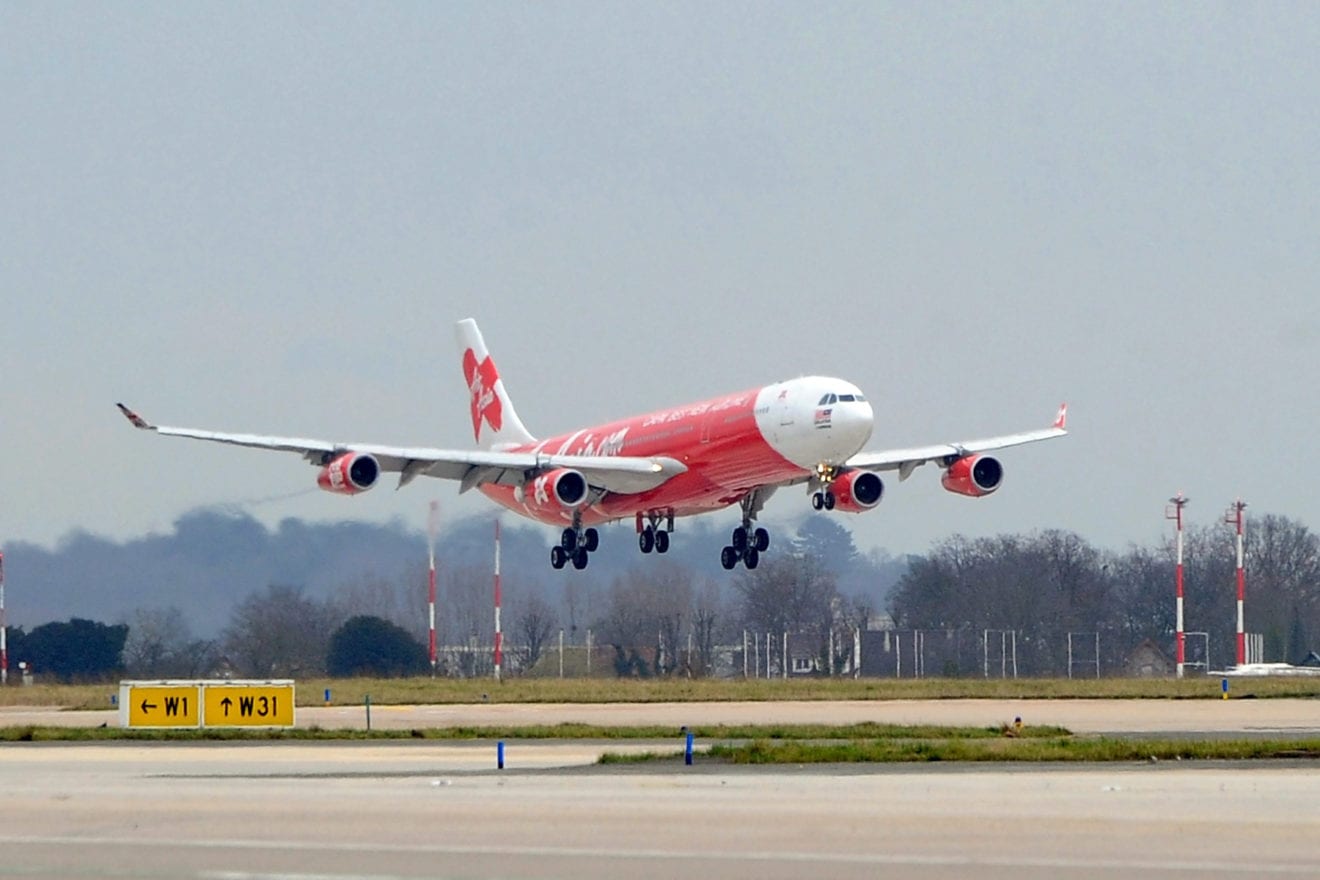
    Five years ago today, the Filipino subsidiary of Southeast Asia’s largest low-cost carrier graced the skies of the Clark International Airport with its signature red planes en route to the island of Kalibo, Aklan.

    A year after however, it decided to leave the north, and focus on the capital to support its then-newly acquired company’s dwindling operations.

    Now that its top line is stabilizing—thanks to years spent in increasing efficiencies, cost rationalizations and a management revamp—it is ready to go back to its birthplace, and once again help spur tourism and trade in the north.

    “We are thrilled to be painting Clark’s skies red again,” Philippines AirAsia CEO Dexter M. Comendador said during the inaugural flight of its Clark-Kalibo route on Monday. “We are now building Clark again.”

    He said his group, born in Clark in 2012, sees the airport as the only area left where it could expand its operations near Manila, whose main international gateway is riddled with slot constraints and air-traffic congestion.

    “AirAsia believes in Clark. We established our base of operations here, and launched commercial flights in 2012 with only two planes, and now, we have a fleet of 14 jets. We aim to expand and grow our operations here in the next five years,” Comendador said. “We can only expand here in Clark.” After launching thrice-weekly flights from Clark to Kalibo, the airline will also start flying to Davao from Clark on April 22.

    “AirAsia was with us in the past, but it decided to move to Manila in recent years. During its stay here, it contributed a lot in terms of passenger volume, specifically in 2013, when we posted a record of about 1.3 million passengers,” Clark International Airport Corp. President Alexander S. Cauguiran said. “I hope it could stay for good here at Clark. Hopefully, AirAsia will not only be flying domestic here, but also to major cities in Asia.”

    Comendador vowed to connect Clark to other major Philippine destinations, like Cebu and Puerto Princesa, when the time is ripe. The company will also launch international services to East Asia.

    “I will try to connect to our present international destinations, like Taipei, China and Korea,” he said. “We are growing the airport to prepare it as one of our central hubs.”

    Clark is seen as the immediate saving grace for the Ninoy Aquino International Airport, which has been operating at overcapacity for almost two years now.

    But local carriers have shied away from launching flights or expanding their operations in Clark due to the lack of full-service facilities, its distance from the capital and the dearth in mass transit going to Manila, among others.

    The government has programmed a P2.8-billion budget for the expansion of the airport, which will open its new terminal four years from now.

    Several groups have offered to develop Clark through unsolicited proposals.

    Claiming its P187-billion offer is “fully compliant” with the requirements of the build-operate-transfer law, the consortium of Filinvest Development Corp. and JG Summit Holdings Inc.’s proposal involves the modernization of the airport under a five-decade concession, and will start with an initial capacity for 8 million passengers per year.

    Its proposal, based on the Aeroport de Paris master plan prepared for Clark in 2015, also allows the airport to expand its terminals and runways to easily accommodate for traffic growth over the next 50 years.

    The P250-billion proposal of GMR-Megawide Cebu Airport Corp. involves the development of the airport in six phases, leading to a total annual passenger capacity of 100 million per year.

    Under a 50-year development plan, it aims to build two terminals and three runways, two of which will be independent in an 850,000-square-meter land. The plan also involves the construction of an integrated railway connection from Manila, similar to the one in Delhi, India.

    This unsolicited offer is at no cost to the government, will not require any subsidy, guarantee or mandatory movement of airlines from Naia to Clark.

    Instead, the proponent “committed to pay the government annually a share of the airport revenues over the concession period.”

    Metro Pacific Investments Corp. is also readying its own unsolicited proposal, even as it waits for a public tender to take place.

    The government wants to place contract to develop Clark under public bidding. It will be done through the Public-Private Partnership (PPP) scheme. The website of the agency, however, did not enumerate the specific details of the contract.

    Clark Civil Aviation Complex, located within the Clark Freeport Zone in Pampanga, covers an area of approximately 2,367 hectares with a 3,200-meter long runway and associated taxiways, aircraft parking apron, a passenger terminal building and related facilities. It has two runways in parallel configuration.

    The airport logged in a total of 6,205 international and domestic flights with 950,732 passengers for local and foreign routes in 2016.

    Although underutilized, Clark has a local catchment area with an estimated population of 23 million. It also serves passengers from Manila, and those with connecting flights from Cebu, Davao, and other local destinations.
  • Rising exports to China portend greater risks

    Rising exports to China portend greater risks

    Despite China’s retaliatory moves against Seoul’s hosting of a US missile defense system, South Korea has seen its exports to the world’s No. 2 economy increasing in recent months.

    The country’s shipments to China rose by 16.4 percent from a year earlier during the first 20 days of this month, following four consecutive months of on-year increases, according to the latest customs data. In February, the growth rate was 28.7 percent, the highest since late 2010.

    This continuous increase in shipments of South Korean goods to China, which betrays a widening range of retaliatory steps taken by Beijing, reflects the structure of bilateral trade between the two countries.

    More than 70 percent of South Korean products shipped to China are intermediary goods, including semiconductors and flat-panel displays, which Chinese manufacturers need to make their key export items.

    The on-year increase in South Korea-made semiconductors to China accelerated from 5.5 percent in November to 75.9 percent last month, according to data from the Ministry of Trade, Industry and Energy.

    Mentioning the dominant position of the country’s chipmakers, a South Korean proposed in a recent newspaper contribution that Seoul consider banning exports of semiconductors to China in response to Beijing’s moves, though many here dismissed the idea as destructive to both economies.

    China’s retaliatory measures have so far targeted consumer goods such as cosmetics and food, cultural content, package tours and retail stores run by a South Korean business group that agreed to offer land for the installment of a US anti-missile battery.

    But Beijing has shied away from imposing restrictions on imports of key manufactured items from South Korea to avoid doing direct damage to its own economy.

    China also seems to be trying to stop short of violating international trade rules in an outright manner, which would hamper its efforts to be granted the most favored nation status by the US and other major advanced countries.

    The Chinese Commerce Ministry on Thursday said China valued trade with South Korea and was respecting World Trade Organization rules. The statement came in response to an earlier appeal by South Korea to the WTO service council to determine if the Chinese measures are in conflict with WTO regulations.

    “Both economies are mutually dependent, so wisdom is needed to approach political and economic matters separately,” said Yu Byoung-gyu, head of the Korea Institute for Industrial Economics and Trade.

    China’s reliance on manufacturing components and equipment from South Korea has led observers to see Beijing’s efforts to affect Seoul’s security policy by applying economic pressure is just doomed to fail.

    A report released last week by the state-run Korea Development Bank estimated the escalation of China’s retaliation against the deployment of the anti-missile shield officially called Terminal High Altitude Area Defense would result in South Korea suffering about $20 billion in economic losses, mostly in the tourism and duty-free sectors.

    But the amount of loss would be far from painful enough to get Seoul to reconsider THAAD deployment aimed at countering nuclear and missile threats from North Korea.

    In an apparent reflection of growing resentment against Beijing’s retaliatory measures, the proportion of South Koreans opposing the installment of the missile defense shield dropped from 40 percent in January to 34.7 percent in March, according to surveys by local pollsters.

    A recent study by a local research institute also showed South Koreans feeling less favorable toward China than Japan.

    Some observers see China’s moves against the South may be subdued ahead of President Xi Jinping’s planned visit to the US in April for his first meeting with President Donald Trump.

    A group of US House of Representatives legislators last week introduced a bipartisan resolution condemning and calling for an immediate end to China’s retaliatory measures against South Korea.

    The move was viewed as a warning that Beijing’s inappropriate pressure against Seoul would not be left unaddressed by Washington.

    China’s retaliation, even if eased sooner than later, is set to be serving as a decisive occasion to prompt South Korean firms to be more earnest in their efforts to reduce reliance on the Chinese market.

    “Regardless of the fallout from the THAAD dispute, the country’s companies are in the final stages of gaining profits from rising demand from China,” said a Trade Ministry official, asking not to be named.

    China accounted for 26.9 percent of South Korea’s total exports last month, the largest proportion ever. This hefty dependence is simply unsustainable as China is striving to curtail processing trade and expand domestic supply chains by pushing for a plan to transform itself into a global manufacturing power in high-tech sectors by 2025.

    Shin Seung-kwan, a chief researcher at the Korea International Trade Association, said South Korean companies need to focus on maintaining competitive edges over Chinese rivals in certain intermediary goods while diverting shipments to other emerging markets.

    He noted it is also necessary to increase exports of high-end consumer goods to China to offset a possible decrease in demand for intermediary goods. But those items would still remain easy targets for China’s boycotts in the future.

    South Korean companies would likely face broader and more fundamental risks from China unless they diversify export markets and production bases to other regions, including Southeast Asia and India, with a greater sense of urgency, experts say.

  • Lotte founder’s 50-year reign comes to an end

    Shin Kyuk-ho, founder and general chairman of the Korean retailer Lotte, has been removed from his company by shareholders, solidifying the succession of his second son, Shin Dong-bin, and coming closer to ending a family feud that started in 2015.

    Lotte is the country’s fifth-largest family controlled conglomerate, with 90 affiliates here and abroad.

    The shareholders voted in favor of denying the 95 year-old patriarch the position of board director of Lotte Shopping on Friday, which he has held since the affiliate was founded in 1970.

    The elder Shin’s term was terminated on March 20.

    Kang Hee-tae, CEO of Lotte Department Store, and Yoon Jong-min, Lotte Group’s human resource director, were newly appointed to the directors’ post at Lotte Shopping. Friday’s decision has completed the full control of the younger son, Dong-bin, who took his current role in 2011.

    “Lotte Group was able to grow with Shin Kyuk-ho’s leadership until now, but it is time for a new era under the new leadership of Shin Dong-bin,” said Lotte Group spokesman.

    Despite taking the role of chairman, Dong-bin was not allowed to make independent business decisions without the final call coming from his father, who held the board director position at most of Lotte’s affiliates.

    The father has been losing his board director position starting with Lotte International in 2015, followed by Lotte Confectionery and Hotel Lotte in March 2016.

    Lotte Confectionery is the founding company and the foundation of Lotte Group, while Hotel Lotte is the de facto holding company.

    Shin Kyuk-ho has been losing his title since he sided with his older son, Shin Dong-joo, who was trying to take full ownership of the group, and fired Dong-bin and six other executives at Lotte’s key operation in Japan.

    The founder still has several director positions, but his tenure is coming to an end and is unlikely to be extended. His role at Lotte Engineering & Construction is poised to be terminated on Sunday, followed by Lotte Aluminum and the Lotte Giants in coming month.

    Unlike his father, Dong-bin on Friday was appointed as the new director of Lotte Chilsung Beverage during the shareholders’ meeting, which industry insiders say is a necessary step to realigning the organization under his new leadership.

    Hwang Kak-gyu, who has worked with Shin Dong-bin for 27 years, was newly appointed as the CEO of Lotte Confectionery, a position that he will share with Dong-bin and Kim Yong-soo. The company said the decision was made to strengthen the company’s overseas business.

    Meanwhile, Dong-bin has been increasing his efforts to appease China, which has been bombarding Lotte’s business there as a retaliation against the Korean retail conglomerate’s decision to offer its golf course for the deployment of the U.S. antimissile defense system known as Thaad.

    In an interview he had with the Wall Street Journal on Thursday, Dong-bin said, “We definitely want to continue our business in China.”

    He added that he “loves” China and believe there has been a “misunderstanding.

    “If the government asks a private corporation like ours to give up land, then I don’t think we have the luxury of rejecting the government,” Dong-bin was quoted as saying in the Wall Street Journal.

    Lotte Mart, which runs 99 local branches in China, shut down 90 of them in the past couple weeks, partly forced by the Chinese government, which cited safety concerns, and also because of fierce protests in front of its stores.

    Lotte Shopping on Friday announced it will issue new shares worth 230 billion won and borrow 130 billion won in order to maintain its Chinese Lotte Mart branches.

    “Due to the suspension of Lotte Mart operations in China, there is no revenue generated, which we plan to compensate through capital increase,” Lotte Mart explained. “We need to pay local staff and purchase products.”

    Shares of Lotte Shopping jumped 2.61 percent on Friday, closing at 216,500 won.


  • China, South Korea Meet in World Cup Qualifier Amid Tensions

    China, South Korea Meet in World Cup Qualifier Amid Tensions

    Thousands of riot police were deployed for a soccer showdown Thursday night that was more than the average grudge match.

    The World Cup qualifying game in Changsha pitted hosts China against South Korea. It also whipped up Chinese nationalist sentiment at a time of high political tension over the rollout of a U.S.-made missile defense system in Asia.

    Officials were so worried about clashes that the Hunan provincial sports administration urged fans to show “rational patriotism” to avoid trouble.

    To ensure that, a 10,000-strong security force was deployed to watch over the capacity crowd of 55,000.

    Dozens of trucks carrying paramilitary and riot police were stationed around the stadium.

    Chinese fans were given free red T-shirts with the slogan “Changsha War” in Chinese characters.

    In the sea of red, only around 150 South Korean supporters were in the 250 seats designated and guarded for them.

    Image: Police and South Korea fans during World Cup qualifier on March 23, 2017
    Police (seen top) sit behind South Korean fans during the World Cup qualifer against China on Thursday. 

    The event illustrated the extent to which China’s relationship with South Korea has deteriorated since the first components of the Terminal High Altitude Area Defence, or THAAD, anti-missile system arrived to the region earlier this month.

    THAAD is designed to protect U.S.-ally South Korea and American bases there from the growing threat of North Korea’s weapons programs.

    Kim Jong Un’s regime has stepped up testing of its missiles as a protest of the U.S. joint military drills with South Korea, and there is concern preparations for a sixth nuclear test are underway.

    China is fiercely opposed to THAAD, arguing a system to intercept short-and-intermediate range ballistic missiles installed so close to North Korea’s launch sites will only serve to undercut China’s strategic defenses.

    The longer term concern for China’s military: If THAAD expands to Japan, it creates a common operating picture for U.S. allies in Asia.

    “Even if North Korea collapses, missile defencs would not go away,” a former U.S. national security adviser said. “The worry [for China] is that THAAD is a basis for a collective security system… that does not include China.”

    THAAD was among the issues on the agenda during Secretary of State Rex Tillerson’s recent visit to Asia.

    Experts stress that THAAD is a major concern for China’s government.

    The issue has stoked nationalist fervor in China, and triggered an anti-South Korean backlash with state media urging a boycott.

    “Some critics in the West have said that China, as a country under the rule of law, has no reason to punish South Korean enterprises that are doing businesses in the Chinese market,” a Global Times op-ed published earlier this month read. “However, all states have the right to sanction those that have posed a threat to their national sovereignty and strategic security interests.”

    Some Chinese travel companies have already stopped booking tours there, causing a drop in crucial tourism business.

    China has also blocked streaming of popular South Korean television shows and soap operas, and K-pop stars have cancelled concerts on the mainland because of problems getting travel visas.

    Across China, there have been protests at outlets of Lotte Group, the South Korean retail giant that gave up its golf course as a THAAD deployment site.

    A few days after it agreed to the deal, a cyberattack took down its online shopping sites. Other Lotte stores have been mysteriously closed by Chinese authorities for various municipal infractions.

    Officially, China hopes it can pressure Seoul to reconsider.

    The snap election in May could bring the country’s opposition Democratic Party to power. Its leader Moon Jae-in has expressed reservations about hosting an anti-missile system that might reinforce South Korea as a North Korean target.

    The regional rivalry came to a head on the soccer field, in the city where Mao Zedong, the late Communist leader and founder of modern China, started his political career.

    The sheer size of the security force showed that authorities had no tolerance for violence, even if nationalist protests had been allowed in the past.

    In the end, China won the game, 1-0. The only commotion: cheering by surprised Chinese fans who became more distracted by the World Cup qualifier than global affairs.

    -NBC

  • SEA consumers online at least 16 hours a week

    SEA consumers online at least 16 hours a week

    Smartphones are the go-to device for accessing the internet throughout South East Asia, and consumers expect fast performance of websites across all devices.

    This is among the key findings of a new “State of the user experience” research report released by Limelight Networks.

    “Our new research shows that nearly half of adult consumers in South East Asia are online 16 hours or more each week, outside of work, and they have high expectations for website performance, especially when it comes to e-commerce,” said Jaheer Abbas, Regional Sales Director at Limelight.

    “Nearly everyone surveyed said that they’re likely to recommend a brand to a friend if they have a positive web experience, and on the flip side, that they’ll leave and go to a competitor if it isn’t a good experience.”

    While there is a great deal of behavioral consistency throughout the region, some interesting regional differences were identified. Personalized web experiences were ranked as very important in all countries, but were slightly less so in Singapore. Also, while the majority of respondents regionally will abandon a website if the experience is slow, there is slightly more tolerance in the Philippines.

    Despite these differences, the report clearly illustrates the need for organizations to prioritize the optimization of mobile experiences, understand the expectations of consumers within each country rather than implementing a “one-size-fits-all” approach, and accelerate website performance to keep visitors engaged.

    Time spent online varies by country and generation. People in the Philippines spend the most time online closely followed by those in Malaysia. People in Singapore are online the least. In Thailand, millennials are online the least, with 34% online 16 hours or more a week compared to 42% for all other age groups. The gap is even greater in the Philippines, where 39% of millennials versus 56% of all other age groups are online this amount of time.

    The survey also suggests that nearly half (43%) of consumers will leave a website and go to a competitor if a webpage takes too long to load. Websites should also load quickly on all connected devices as 84% of respondents report they expect equally fast load times on any device.

    Social media is the top online activity closely followed by online video, and fresh and updated content ranks as the top expectation for web experiences. Most consumers (67%) surveyed want a website to remember them and make recommendations based on previous visits.

  • South Korea becomes Vietnam’s biggest foreign investor in Q1

    South Korea becomes Vietnam’s biggest foreign investor in Q1

    South Korea has taken over Singapore to become Vietnam’s biggest foreign investor in the first quarter, with investment totaling $3.74 billion, or 48.6 percent of the total foreign direct investment (FDI) pledged for the period, the Vietnamese government said Friday.

    Singapore, which held the top position in January and February, came second with $911 million, followed by China with $823.6 million, the Foreign Investment Agency under the Planning and Investment Ministry said in a monthly report.

    Actual FDI inflow in the first three months rose 3.4 percent from a year ago to $3.62 billion, while new pledges rose 6.5 percent to $2.92 billion, the report said.

    FDI is a major source of foreign exchange, which along with overseas remittances, helps Vietnam improve its trade balance.

    During the period, foreign firms from 71 countries and territories have new pledges and additional funds in 18 sectors, with the manufacturing and processing industry attracting $6.54 billion, or 84.9 percent of the total.

    The real estate sector comes second, while the wholesale and retail sector has the third position.

    Foreign investments have been poured into 52 cities and provinces in the three-month period, with the northern province of Bac Ninh, 30 kilometers (18 miles) northeast of Hanoi, attracting $2.61 billion, or 33.86 percent of the total.

    Binh Duong Province, about 40 km north of Ho Chi Minh City, ranks second with 18 percent and Ho Chi Minh City comes third with 7.78 percent.

    As of March 20, Vietnam has had more than 23,000 FDI projects in operation, with a combined registered capital of $300.7 billion.

    Most of them are in the manufacturing and processing industry, making up 59.3 percent of the total investment.

    Overall, South Korea also led the foreign investor list, with investment totaling $54 billion, followed by Japan with $42.49 billion.

    Large-scale FDI projects in the first quarter include a $2.5 billion expansion project of Samsung Display Vietnam, a subsidiary of Samsung Display South Korea, in Bac Ninh Province.

    Taiwan’s Polytex Far Eastern Ltd, which manufactures polyester fiber and cotton spinning in Binh Duong Province, got the green-light to increase its registered capital by $485.8 million to $760 million.

  • Indonesia’s First Green Airport Ready for Operations

    Indonesia’s First Green Airport Ready for Operations

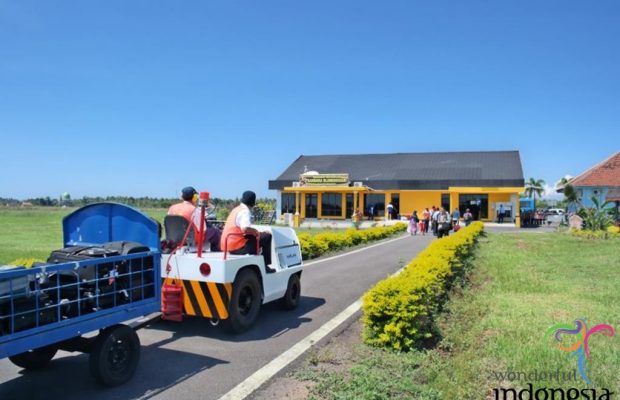
    Indonesia’s first airport built on the green concept in Banyuwangi, East Java, is ready to start operations, Banyuwangi District Head Abdullah Azwar Anas stated on Saturday.

    “It has been ready. God willing, before Eid, it will become operational with the realization of a direct flight service on the Jakarta-Banyuwangi route. There are some technical matters that need to be addressed,” he noted during a visit to the Blimbingsari Airport in the district.

    He explained that the new airport will become a tourism icon to offer sufficient room to accommodate passengers following an increase in the number of air travelers by more than 1,300 percent in the past five years.

    Anas said the architectural concept of a public space must not be made arbitrarily, adding that so far, it has been difficult to implement architectural principles that break standards in projects funded by the government due to a conventional concept or administrative constraints.

    “However, in Banyuwangi, we have given room to work that goes beyond the mainstream. Besides the airport, other public facilities, such as parks, campus, halls, marketplace, and tourist destinations, have been built based on thoroughly considered architectural principles,” he emphasized.

    Anas pointed out that the concept for the airports development was aimed at meeting three goals, with the first being a tourism icon and secondly, ensuring a transfer of knowledge from national to local architects.

    It was hoped that in future, all buildings, including restaurants and shop houses, would have a clear architectural concept, Anas stated.

    “Buildings, with characteristic architectural designs, can serve as examples for public and private parties. People can follow concepts that are simple but iconic,” he noted.

    The third goal is that they will be functionally effective and sustainable as well as efficient, he remarked, adding that the new terminal will be energy efficient in line with the concept of a tropical house that uses natural air for ventilation.

    He pointed out that the new terminal will be iconic, as it adopts the concept of the local traditional Osing communitys house.

    “Local wisdom has been adopted to boost Banyuwangis local arts and culture by providing a large gallery, so that all will be accommodated,” he stated.

    A public building is not just a project but must also offer economic benefits to the community and help in social-cultural development, Anas added.

  • Cebu Pacific earned P9.8B in profits, up 122%, in 2016

    Cebu Pacific earned P9.8B in profits, up 122%, in 2016

    Budget carrier Cebu Pacific has vowed to increase inter island connectivity within the Philippines to stimulate trade and tourism within the country.

    Cebu Pacific Vice President for Corporate Affairs Paterno S. Mantaring said this commitment comes on the heels of the company registering a 122-percent increase in net income in 2016.

    A filing with the stock exchange showed Cebu Air Inc. booked P9.8 billion in profits last year, thanks to the strong demand for low-cost air travel and robust growth in ancillary revenues.

    Total revenues, including that of subsidiary Cebgo, rose by 9.6 percent to P61.9 billion, while expenses inched up by a mere 1 percent to P54.06 billion.

    “The year 2016 was a great year for Cebu Pacific, as we continue to enable every Juan to fly to more destinations around the Philippines and to key destinations in Asia, the Middle East, Australia and the US,” Mantaring said. “Cebu Pacific remains committed to further increase inter-island connectivity within the Philippines to promote trade and tourism and help more people connect with their families and friends all around the world, while consistently providing our trademark best-value fares.”

    In 2016 Cebu Pacific flew to 36 domestic and 30 international destinations through 102 routes and more than 2,820 flights weekly. It boosted its intra-regional network in the Visayas with flights from Cebu to Ormoc, Roxas and Calbayog.

    The airline also launched direct service between Kalibo and Incheon, Korea, as well as its first US destination, Guam. It also teamed up with some of the world’s leading low-cost carriers to form Value Alliance, the world’s largest budget-carrier alliance, which aims to provide greater value, connectivity and choice for travel throughout Southeast Asia, North Asia and Australia.

    In total, the airline flew 19.1 million passengers in 2016, up by 4.1 percent versus the 18.4 million passengers carried in 2015.

    The Gokongwei-led carrier capped 2016 with 57 aircraft, adding two brand-new ATR 72-600 aircraft in February 2017, to bring its current fleet to 59.

    For the rest of 2017, CEB expects to take delivery of one Airbus A330, two Airbus A321neo, and four more ATR 72-600; and delivering out three of its four Airbus A319 to end the year with 63 aircraft.