Category: General

Retail News Asia is committed to providing both local and global retailers with the latest General Retail news throughout the Asian market. This on a daily base.

  • Steelmaker Hoa Phat in the red after 13 years

    Steelmaker Hoa Phat in the red after 13 years

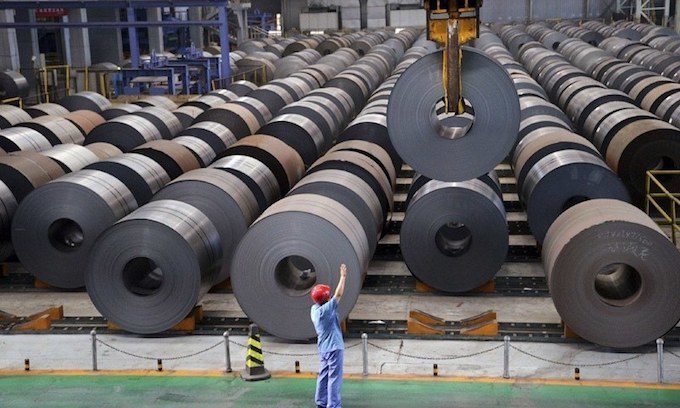
    Leading steelmaker Hoa Phat lost VND1.79 trillion ($73 million) in the third quarter, its first quarterly loss in 13 years.

    It reported revenues of VND34.44 trillion in the quarter, down 12% from the same period last year and 8% from the previous quarter.

    Its revenues have declined steadily after peaking in the fourth quarter of last year.

    Steel demand is down in both Vietnam and globally, raw material prices have risen sharply – by three times in the case of coal – and exchange and interest rates have become adverse, the company said to explain the loss.

    For the first nine months, the company’s revenues were VND116.6 trillion, with the steel segment contributing 90%, and profits topped VND10.44 trillion.

    It said the agricultural segment was profitable again, with revenues and profits rising by 10% and 32% year-on-year in the third quarter.

    Another major steel firm, Nam Kim, announced Friday that it racked up losses of over VND400 billion in the third quarter. It dragged the profits for the year down to VND290 billion, a sixth of the figure a year earlier.

  • Google to improve shopping experience across platforms

    Google to improve shopping experience across platforms

    In its annual Google I/O livestream, Google has just announced a bunch of improvements it is bringing to the search platform (and others), aimed towards improving the experience of both merchants and customers when it comes to shopping online.
    Google introduces the “Shopping Graph,” a newly developed comprehensive dataset, backed by artificial intelligence, to help shoppers find exactly what they are looking for, updated in real time and ensuring products are currently available.
    The Shopping Graph is able to understand and tie together the billions of “products, sellers, brands, reviews and most importantly, the product information and inventory data received from brands and retailers directly.”
    The Shopping Graph will span all of Google’s platforms, connecting and inspiring people with things they may be looking for (whether they be virtual or physical) from what Google claims are over 24 billion listings from merchants online. This means you should be able to find what you are searching for even more easily than before, with Google adding new interactive features for interconnectivity between platforms as well.
    For example, Google Lens has been integrated into Google Photos to make searching for products online easier. Rather than screenshotting an item you are interested in and then forgetting about it, as soon as you snap that screenshot, Google Lens will analyze it, pick out objects within the image, and allow you to instantly search online for them (should you choose to do so).
    Google also teased a new user experience on its YouTube platform, which should be making it simpler to shop for products featured by your favorite YouTube creators. Hopefully this will alleviate the repeated-to-death phrase “links in the description, guys” (links which are sometimes forgotten as well)! Google didn’t us give any more details, other than that the new features are “in pilot.”
    We are also told to expect online shopping research and product comparison to get infinitely easier, with a new widget we’ll be seeing on our Google home page. We all know the hassle of trying to research the heck out of where a particular item is sold for the lowest price (such as the best new smartphone you may want to upgrade to).
    With so many shops and online retailers to review, most of us end up opening a hundred tabs on our browser until we can barely keep track of what’s where.
    Soon, every time you open a new tab, a widget across the center will display the carts across different sites where you’ve shopped the last few weeks. This should let you keep track of desired purchases or items to compare from different sellers much more easily. You can opt to be shown available discounts on your cart icons, as well as having integrated access to the loyalty programs of your favorite stores.
    Once your carts are full, Google will be able to send you notifications when prices of any items drop—only if you opt in, of course. Google has also announced a new collaboration with Shopify to facilitate your shopping experience across all of Google’s platforms: from Google Search to Google Lens, Google Maps, Google Images, and YouTube.
    We’ll keep you updated once we have more details on some of these changes!
  • Vietnam Boosts Agriculture: Imports 8 Million Tons of U.S. Soybeans for Growing Demand

    Vietnam Boosts Agriculture: Imports 8 Million Tons of U.S. Soybeans for Growing Demand

    The recent report from the U.S. Soybean Export Council reveals that Vietnam is poised for remarkable growth, positioning itself as the world’s sixth largest pork producer and the fourth largest aquaculture producer. This thriving agricultural landscape is notably bolstered by the burgeoning middle class, which is increasingly driving demand for soy foods.

    Vietnam’s trade-friendly policies and modernized feed sectors, complemented by new crush facilities, create abundant market opportunities for U.S. soy exports, boosting livestock, aquaculture, and soybean oil production. It’s a deliciously symbiotic relationship ripe for the picking!

    Last week, in a significant move, the Ministry of Agriculture and Environment inked contracts with the U.S. Soybean Export Council to procure US$1.4 billion worth of soybeans, corn, wheat, meat, distiller’s dried grains, and timber. Timothy Loh, the council’s regional director for Southeast Asia, emphasized the complementary strengths of U.S. and Vietnamese agricultural sectors. He remarked, “Vietnam imports U.S. soybeans to produce aquaculture feed and exports seafood back to the U.S.” This highlights a shared supply chain that is clearly a win-win for both nations.

    Nguyen Do Anh Tuan, director of the Ministry of Agriculture and Environment’s international cooperation department, noted the strengths of both countries: while the U.S. excels in growing corn, soybeans, and wheat, Vietnam shines in tropical products like coffee, cashew, rubber, and fruits. Over the past decade, two-way agricultural exports have consistently increased by 10%.

    Earlier this month, Minister of Agriculture and Environment Do Duc Duy led a delegation of nearly 50 agencies, businesses, and agricultural associations to the U.S. for discussions aimed at establishing balanced and sustainable trade. The visit included meetings in Iowa, Ohio, Maryland, and Washington, D.C., culminating in the signing of 20 memoranda of understanding for agricultural purchases worth an impressive $3 billion, including soybeans.

    Questions & Answers

    What is driving the growth of Vietnam’s agricultural sector?
    The growth is fueled by Vietnam’s sixth-largest pork production and fourth-largest aquaculture production, alongside a rising middle class demanding more soy foods.

    How much is Vietnam planning to purchase from the U.S. Soybean Export Council?
    Vietnam is set to purchase US$1.4 billion worth of soybeans, corn, wheat, meat, distiller’s dried grains, and timber.

    What were the outcomes of the recent trade discussions led by Minister Do Duc Duy?
    The discussions resulted in the signing of 20 memoranda of understanding for agricultural purchases worth $3 billion, reflecting a commitment to balanced and sustainable trade.

  • Ex McDonald’s Korea CEO to take leading role in Homeplus

    Ex McDonald’s Korea CEO to take leading role in Homeplus

    South Korean supermarket chain Homeplus has appointed former CEO of McDonald’s Korea Cho Ju-yeon as its new chief marketing officer, in an executive reshuffle announced on Thursday.

    Cho made headlines in 2016 when she became the first female CEO at the South Korean unit of the fast-food restaurant.

    Hwang Jeong-wook, who formerly served as the chief financial officer at the Korean unit of AstraZeneca, will become the new chief financial officer at Homeplus.

    The move comes as the company seeks to strengthen professionalism and product sourcing capabilities by hiring new executives externally and separating the department in charge of products into two, the supermarket chain said.

    One team, led by the company‘s executive Kim Woong, will focus on fresh food, bakeries, home appliances and product support and safety. The other team, which will be led by newly appointed executive Oh Jae-yong, will focus on groceries, private label products and fashion and interior design products.

    The decision follows the appointment of current CEO Lee Jea-hoon earlier this year.

    “Through the reorganization, we want to present a clear reason why customers want to visit Homeplus,” Lee said in a statement.

  • Hong Kong ‘losing its edge’ as China Mainlanders look elsewhere

    Hong Kong ‘losing its edge’ as China Mainlanders look elsewhere

    Growth in overnight Mainland visitors to Hong Kong has slumped to a fraction of last year’s figures.

    Total visitor numbers from China’s Mainland in May rose by five per cent year on year – but it’s the day trippers making the numbers, not the cashed up Chinese staying in Hong Kong hotels and splurging on luxury goods.

    The latest Visitor Arrivals Statistics for May released by Hong Kong Tourism Board show the number of overnight visitor arrivals grew a mere 1.1 per cent when compared to last year’s 6.7 per cent.

    Combined with the retail sales for May released earlier this week – which saw a 4.6 per cent seasonally adjusted increase in spending but a 15 per cent slump in luxury goods sales – the drag from the slowdown in tourist spending at retail level is notable.

    Hunter Williams, a partner with OC&C Strategy Consultants, Greater China, believes Hong Kong is losing its edge to attract tourist money in the future.

    Furthermore, he argues, more Chinese travellers are expected to flush all over the world yet the growth in “per pax” spending is likely to be slower.

    The number of outbound Chinese travellers topped 100 million for the first time last year – and that figure is predicted to double by 2020 at the current annual growth of 33 per cent.

    Williams says the problem for Hong Kong and Macau is that both SARs have lost their competitiveness.

    “Hong Kong and Macau are relative losers in the fight for the Chinese travel dollar. Both are seeing lower tourist arrival numbers and significantly lower “per pax” spending. Attempting to shift from exclusively targeting “high rollers” to competing for “middle class” tourists is likely to prove a painful transition,” he says.

    Group travel is still popular amongst Mainland Chinese and draws from “a seemingly bottomless reservoir of first-time travellers,” but the world is now welcoming greater numbers of independent Chinese travellers.

    “We believe there is no longer a “Chinese traveller” per se, but rather, four segments with distinct shopping behaviour.  OC&C Strategy Consultants defines these segments as first-time “travel tasters,” deal-savvy “savvy shoppers,” “white collars” and the high-spending “new elite.”

    Growth in “per pax” spending is likely to be slower, driven by several factors.

    “Firstly, overseas travel is increasingly democratised and open to middle class Chinese, rather than being the exclusive preserve of the elites. Secondly, reacting to exchange rate changes and cuts in import duties, many luxury brands have lowered domestic prices in China, lessening the incentive to shop abroad.

    “Thirdly, China’s anti-corruption campaign continues and “tigers and flies” alike are rightly wary of flaunting ill-gotten gains.”

    A “wealth effect,” says Williams, due to soaring stock market performance could offset some of these factors or a crash could exacerbate them – but the volatility of China’s equity markets makes such speculation problematic.

    Williams also warns retailers to make sure they appreciate how Chinese consumers almost live their lives on their smartphones.

    “From ordering a taxi (Didi Kuaidi); socialising with friends (WeChat); making discounted reservations for dinner (Dianping); shopping the latest fashions (Taobao and Tmall), and even paying for daily necessities at the local convenience store (Alipay), Chinese live on their phones.”

    He says retailers in destinations preferred by Mainland Chinese should expect greater numbers of Chinese travellers than ever this summer.

    “However, these travellers will spend less and will be more digitally demanding than ever. This can be a challenge for the overseas businesses targeting them, as the digital tools and platforms they are accustomed to using are generally China-only.

    “More and more international brands are active on Chinese social media sites like WeChat, but few have a full, 360-degree digital presence.”

  • Ikea Germany and Infarm create instore herb gardens

    Ikea Germany and Infarm create instore herb gardens

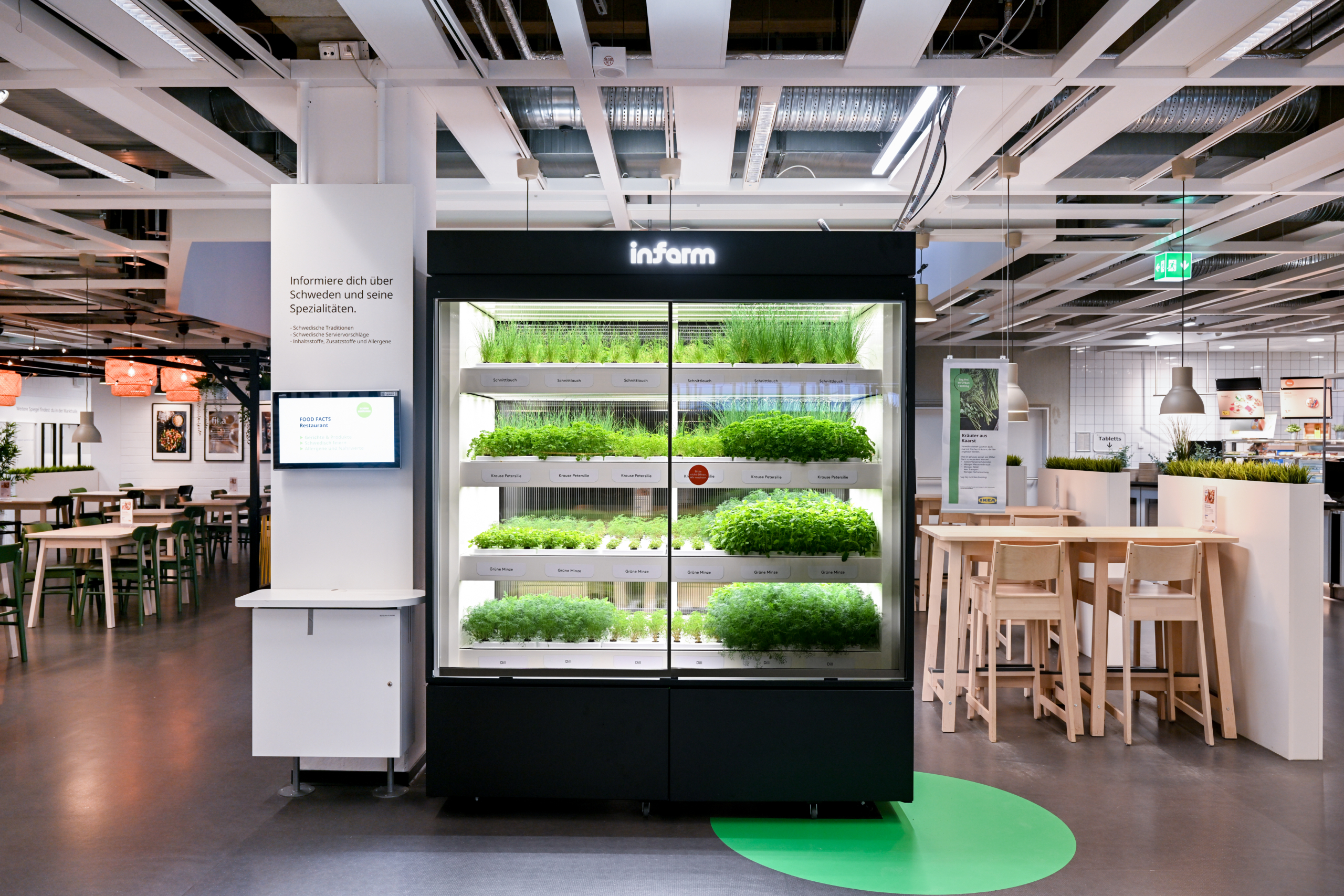
    Ikea has partnered with Infarm to grow three instore herb gardens in Germany as the demand for sustainable products is growing locally.

    The collaboration aims to motivate Ikea employees and customers to live healthier, more sustainable lives.

    Customers visiting Ikea Kaarst, Ikea Duisburg, and Ikea Munich-Eching can see Infarm herbs such as dill, curly parsley, and Italian basil growing in modular, in-store vertical farms. They can order directly at the restaurant.

    “Infarm’s concept convinced us because we can make the topics of sustainability and healthy eating tangible for our employees and customers in a prominent place in our furniture stores,” said Tanja Schramm, country food manager at Ikea Germany.

    “As part of our People & Planet Positive strategy, we aim to inspire and empower people to lead healthier, more sustainable lives. That’s why we’re increasingly focusing on plant-based foods and dishes with a lower environmental impact and at a price that everyone can afford.”

    Infarm, which was founded in 2013, considers itself to be one of the world’s fastest-growing vertical farming companies. Its modular technology system enables the implementation of vertical farms of varying sizes, and its products are sold in more than 1850 stores around the world.

  • Resorts Expands Presence in Indonesia with Opening of Sheraton Jakarta

    Resorts Expands Presence in Indonesia with Opening of Sheraton Jakarta

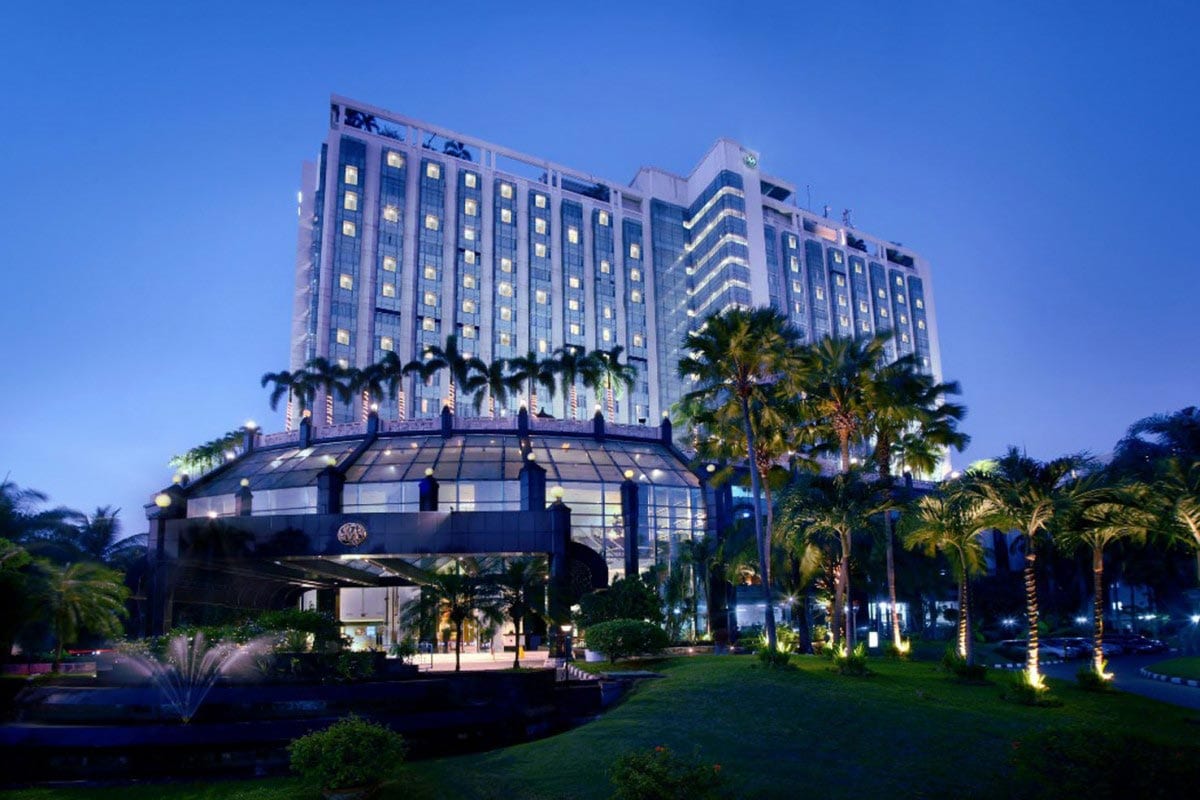
    Starwood Hotels & Resorts Worldwide, Inc. today announced the opening of Sheraton Jakarta Gandaria City Hotel, the second Sheraton to debut in the cosmopolitan city of Jakarta, Indonesia. Owned by PT. Pakuwon Jati Tbk, the opening further propels the brand’s fast pace growth in Asia Pacific, and drives Sheraton closer to its goal of adding more than 150 new hotels worldwide by 2020. This is just one of many new initiatives currently underway for Sheraton 2020, the all-encompassing plan to make Sheraton the global hotel brand of choice, everywhere.

    “Jakarta has established itself as a thriving destination for travelers, and we are excited to respond to this rising demand by opening our second Sheraton hotel in this bustling city,” said Dave Marr, Global Brand Leader for Sheraton Hotels & Resorts. “Sheraton is diligently focused on growing the brand worldwide, with a goal to add at least 150 hotels by 2020, and opening in primary urban destinations such as Jakarta further solidifies Sheraton as a global hotel leader.”

    Sheraton Jakarta Gandaria City Hotel features 293 contemporary guestrooms and suites, outfitted with the Sheraton brand’s signature amenities and services, including its signature sleep experience. The hotel also features a state-of-the-art fitness center, outdoor pool and an ultra-modern Sheraton Club lounge where Club level guests can enjoy complimentary breakfast and all-day refreshments while taking in panoramic views of the urban skyscape. The hotel offers a variety of dining options to delight any palate, including Anigre, the all-day dining restaurant serving international cuisine, as well as local delicacies; the lobby lounge where guests can enjoy Paired—the Sheraton brand’s reinvigorated food and beverage program—complete with expertly matched small plates, premium wines and local craft beers; and the pastry shop Cafe Grande.

    “Indonesia continues to be a key growth market in Asia Pacific and is well-suited for the expansion of the iconic Sheraton brand,” said Charlie Dang, Regional Vice President, Southeast Asia, Starwood Hotels & Resorts Asia Pacific. “The opening of Sheraton Jakarta Gandaria City Hotel will help meet the rising demand for high-caliber lodging generated by the influx of business and leisure travelers to Jakarta, the gateway to Indonesia.”

    Sheraton Jakarta Gandaria City Hotel is part of the Superblock Gandaria City complex, which includes a retail shopping mall, convention and exhibition facilities, a helipad and several restaurants. The newly constructed hotel is ideal for large meetings and conventions, featuring 3,567 square meters of versatile function space – one of the biggest in Jakarta – and is conveniently located just five kilometers from the emerging commercial hub of South Jakarta (SCBD) and 32 kilometers from Soekarno-Hatta International Airport (CGK).

    Sheraton Jakarta Gandaria City Hotel Opening Offer

    To celebrate its opening, Sheraton Jakarta Gandaria City Hotel is offering an exclusive package of 20% off opening rates including daily breakfast for 2 persons and double starpoints for SPG members valid until April 30th, 2016.

    For more information, visit Sheraton.com/jakartagandariacity

    About Sheraton Hotels & Resorts

    Sheraton Hotels & Resorts, the largest and most global brand of Starwood Hotels & Resorts Worldwide, Inc., makes it easy for guests to explore, relax and enjoy the possibilities of travel through smart solutions and effortless experiences at more than 440 hotels in more than 72 countries around the world. The brand is currently in the midst of implementing Sheraton 2020, a 10 point plan designed to make Sheraton the global hotel brand of choice, everywhere. Sheraton recently launched “Where Actions Speak Louder,” a multi-channel, multi-million dollar advertising campaign that highlights the brand’s ongoing enhancements to its guest experience, including new products and partnerships, and a renewed focus on service. With work well underway, the brand has already rolled out a variety of initiatives under Sheraton 2020, including Paired, a new imaginative lobby bar menu; the richest SPG promotion in the brand’s history; and Sheraton Grand, a new premier tier that recognizes exceptional Sheraton hotels and resorts. To learn more, visit www.sheraton.com. Stay connected to Sheraton: @sheratonhotels on Twitter and Instagram and facebook.com/Sheraton.

  • Vietnam eyes $300 bln exports in 2020

    Vietnam eyes $300 bln exports in 2020

    Vietnam targets its export revenues of $300 billion next year despite concerns over trade deficits amid a global economic slump.

    The target, announced by Prime Minister Nguyen Xuan Phuc at an online meeting with leaders of cities and provinces on Monday, means exports would need to rise by 13.8 percent from this year’s $263.5 billion to give the country a trade surplus for the fifth year in a row.

    It would mean a higher growth rate than the 8 percent recorded this year.

    “After a subsidy period, Vietnam turned into a major global exporter. The country now has most products in excess and can find a market to sell them,” the PM said.

    Although Vietnam in 2019 recorded the fourth trade surplus in a row at $9.94 billion, government officials worry the winning spree would be broken by a deficit next year.

    Minister of Industry and Trade Tran Tuan Anh told the National Assembly in November as growth in exports slow to 6-7 percent in 2020, and imports grow at a faster rate of 8-10 percent, there could be a minor trade deficit.

    The coming into force of the EU-Vietnam Free Trade Agreement (EVFTA) and the worsening impact of the U.S.-China trade war could lead to a surge of imports into Vietnam next year, according to a government report submitted to the legislative body.

    PM Phuc demands all government bodies create favorable conditions for exporters and cease any bureaucratic activity that could hinder the process.

    The country needs to reduce logistics costs to increase exports value, he added, citing the case of mango export as an exported Vietnamese mango now bears a logistics cost of 50 percent its price.

    Vietnam’s GDP growth of 7.02 percent in 2019 exceeded the parliament’s target of 6.6-6.8 percent as well as forecasts by several international organizations like World Bank and Asian Development Bank.

    The country’s foreign trade for the first time reached $517 billion this year, up 8 percent year-on-year.

  • Google’s litigator cringes in court after witness reveals secret data about its deal with Apple

    Google’s litigator cringes in court after witness reveals secret data about its deal with Apple

    We’ve mentioned more than a few times that the U.S. v. Google antitrust trial has revealed interesting information about Google’s search revenue sharing with Apple and other firms. While there had always been talk of such deals, testimony elicited during the trial drew out more specific details. For example, University of Chicago professor Kevin Murphy was on the witness stand today, and information he said under oath brought out a reaction from Google’s main litigator, John Schmidtlein.

    On the stand, Murphy revealed that Google pays Apple 36% of its revenue from search advertising via the Safari browser. That this data had never been made public before was obvious from Schmidtlein’s reaction when the figure was said in the courtroom. The attorney “visibly” cringed when the percentage was mentioned by the witness.

    Understandably, Google would want to keep that figure secret, not necessarily to prevent the public from knowing this percentage, but to keep it away from other manufacturers like Samsung that might want to renegotiate their own deal with Google if they ever found out how much Apple was receiving. And Google knew this as last week it submitted a filing with the court saying that revealing more information about its deal with Apple “would unreasonably undermine Google’s competitive standing in relation to both competitors and other counterparties.”

    Apple and Google have had a revenue-sharing agreement that predates the iPhone and goes back to 2002. The agreement is considered to be the most important of Google’s deals with hardware manufacturers since it also calls for Google to be the default search engine on the iPhone. However, these deals are being used by the Justice Department as evidence to prove that Google is making these payments to prevent other search engines from becoming the default option on tech devices. And that could be considered anti-competitive.

    If the DOJ does win its case and proves that Google is being anti-competitive in search, it could demand that the company be broken apart into different business units.

  • Malaysia Airlines offers up to 30% savings in mid-year marvels sale

    Malaysia Airlines offers up to 30% savings in mid-year marvels sale

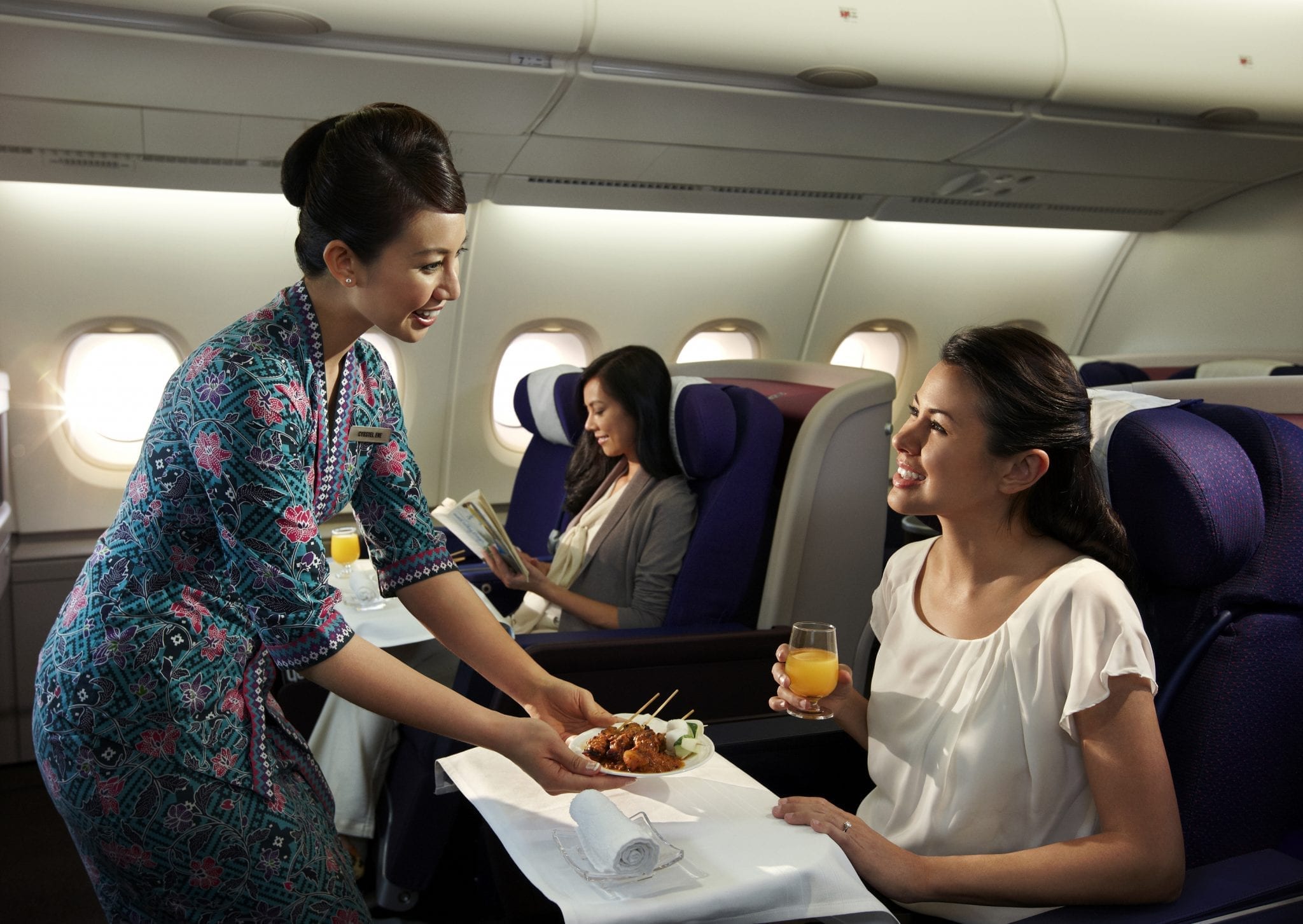
    Malaysia Airlines (MAS) is offering customers up to 30% savings on both international and domestic routes starting from Tuesday until May 15, 2017 under its “Mid-Year Marvels” promotion.

    The national carrier said on Monday  the offers were up for grabs on all Malaysia Airlines’ distribution channels for travel from May 19 to Oct 31, 2017 on business and economy class on all international destinations.

    MAS said all-inclusive return fares on economy class from KL International Airport starts from RM 1,469 to Sydney, from RM 1,379 to Narita and from RM 1,079 to Beijing.

    The airline is also offering all-in, one-way promotions from RM99 to all domestic destinations, during selected periods throughout the year.

    The economy class fares come with no hidden charges or credit card fees for online ticket purchases and includes a generous baggage allowance of 30kg and complimentary meals.

    MAS added the Mid-Year promotion includes business class fares, starting from RM999 to Denpasar, from RM2,799 to Xiamen and from RM11,399 to London. As for domestic routes, such as Kota Kinabalu and Labuan, the fares are from RM 839 and RM1, 455 respectively. The promotion on business class to domestic destinations is valid for travel from May 11 to July 31, 2017.

    Its chief commercial officer, Arved Nikolaus von zur Muehlen said the fantastic deals start from as low as RM 99 all-in, one way on all its domestic routes.

    He said customers could also choose a business class trip to Denpasar, Bali from only RM999 all-in, return.

  • Android version of Chrome app receives useful shopping tool

    Android version of Chrome app receives useful shopping tool

    If you’re the type of person that likes to browse for the lowest price before making a purchase, Google recently announced something that is going to be of interest to you. The price tracking feature found in the desktop version of the Chrome browser is now available on Chrome’s Android app.
    Google says, “Available starting in the U.S. on desktops and Android devices, next time you’re shopping, select “track price” in the Chrome address bar. You can manage the products you’re tracking through the side panel, or through the notifications you receive.”

    Using the mobile Chrome app for Android, eligible pages will display a lozenge-shaped button at the top of the screen that reads, “Track Price.” The left side of the button will show the price-tracking icon which is a bell with the “+” symbol to the upper right of the bell. This is the same setup that you’ll see on the desktop version of Chrome. Tapping on the icon will cause a popup on the bottom of the screen to surface; the latter includes a toggle switch for price-tracking that says “Get alerts if the price drops on any site.”

    If the price for an item you’re tracking drops, you will receive a notification from Google that not only includes the new, lower price but also states where you can find the item at that lower price. The tracker runs across multiple stores and websites so you won’t have to track the same item in several stores in order to get the best deal.
    Even though Google says that the new feature is available in the U.S. for Android users, so far this writer hasn’t seen it on my Pixel 6 Pro running Android 13 QPR2 Beta 1. It might be too late to use for this year’s holiday shopping season but it will be available for next year’s holidays and for all of the birthdays and other times that you’ll be shopping until then.
  • Gold prices hit 4-month high

    Gold prices hit 4-month high

    Vietnam’s gold prices hit a four-month high Wednesday aided by a weaker dollar, with investors expecting further stimuli in U.S. policies.

    The state-owned Saigon Jewelry Company was selling its popular SJC gold at VND57.2 million ($2,484.62) per tael, up 0.17 percent from Tuesday. A tael equals 37.5 grams or 1.2 ounces.

    The country’s largest jewelry company, DOJI, was also selling at the same price on Tuesday.

    In the last three days, prices have increased by around 1.5 percent to their highest point since September 3 last year.

    Global gold prices rose 0.1 percent to $1,950.46 per ounce after hitting a peak in almost two months earlier in the session as the U.S. dollar went to a low not seen in more than two years, according to data.

    Other reports have said that investors are waiting for the outcome of the U.S. Senate runoff elections in Georgia, which will have a bearing on the fiscal policy adopted by President-elect Joe Biden’s administration.

    “The underlying motivations in gold are unchanged, with lower interest rates, high inflation expectations, weaker dollar…, all these are supportive for gold in the near to long term,” said Howie Lee, an economist at OCBC Bank.

  • Vietnam to import coal from Laos

    Vietnam to import coal from Laos

    Vietnam has signed a deal with Laos to import around 20 million tons of coal a year for the next five years.

    The memorandum of understanding was signed for the purpose Thursday by the Vietnamese Ministry of Industry and Trade and the Lao Ministry of Energy and Mines.

    Laos has been an important supplier of coal and other minerals to Vietnam in recent years.

    Vietnam imported 1.8 million tons of ores and minerals for US$78.2 million from that country last year, and 900,000 tons worth $31.6 million in the first half of this year.

    The two also have many cooperation projects in energy such as building hydropower plants and connecting grids while Laos exports electricity to Vietnam.

    Vietnam has 220 kV lines linking Laos, and is set to import at least 3,000 MW of electricity by 2025 and 5,000 MW by 2030.

  • Singapore partner pulls out of Vietnam taxi joint venture

    Singapore partner pulls out of Vietnam taxi joint venture

    Singaporean transport firm ComfortDelGro has decided to sell its entire stake in the Vietnam Taxi Company to a local company and pull out of Vietnam.

    Under a deal it has signed, it will transfer its 70-percent stake in Vinataxi to the HCMC-based Helios Service and Investment Joint Stock Company for VND55 billion ($2.4 million).

    Vinataxi was established in 1992 by Vietnamese firm Tracodi and Hong Kong company Tecobest Investment, which sold its share to ComfortDelGro in 2003.

    The company reported revenues of VND20 billion and a loss of VND7.6 billion in 2020.

    In 2018, ComfortDelGro and another local firm, Savico, would up their joint venture, ComfortDelGro Savico Taxi, unable to cope with the fierce competition from tech-based taxi operators.

    According to ComfortDelGro, the Vietnamese market fetched revenues of $500,000 in the first half of this year, or less than 0.1 percent of its total revenues.

  • Subsea cable leaves Telstra customers with Apple download delays

    Subsea cable leaves Telstra customers with Apple download delays

    Customers on the Telstra network have complained about substantial delays in downloading Apple services for most of the week, with Telstra now acknowledging a subsea cable issue and claiming that it is working on resolving it.

    The issue, flagged on broadband enthusiast website Whirlpool and on Twitter, has seen Telstra customers attempting to download or update their operating systems or apps across the iTunes Store and the App Store, as well as use streaming services Apple Music and Apple Radio, experience severe delays.

     This has been the case across mobile, cable, ADSL, and business fibre connections, with app updates taking dozens of minutes rather than seconds, music streaming “impossible”, and updates to its newly launched OS X El Capitan taking more than a day.

    “I’m on 100Mbit cable and I’m lucky if I’m getting 20KB/sec from Apple,” complained Whirlpool user sebastiankong.

    “I couldn’t even purchase an app. My ADSL 2 plus is getting speeds of 1Mbps for a week compared to 14Mbps,” added worldcitizen.

    Circumventing the Telstra network with a VPN has been the only way that customers have been able to avoid the issue.

    “Same here too (in Brisbane), both with my home 100mb cable connection and over 4G across the city during the day,” said BurndtJam.

    “Downloads crawl and Apple Music streaming is impossible. Once I start running traffic through a VPN, there’s no issue. Whatever Telstra is doing with Apple traffic is very broken.”

    Telstra acknowledged the problem on Twitter, telling numerous customers who complained over the social network variations of: “There is an issue with the speeds to Apple servers that we are working to resolve. Apologise for the inconvenience.”

    Telstra has since identified a subsea cable as the cause of the issue.

    “We are experiencing issues with an undersea cable connecting Australia with Singapore. As a result, some customers are experiencing slow service when using mobile devices to download or update apps or stream music from some providers,” a Telstra spokesperson told ZDNet in a statement.

    “We are working to resolve this issue as quickly as possible, including utilising alternative paths while repairs are undertaken. We apologise for any inconvenience caused and as soon as we have an update on the current situation we will let our customers know.”

    Telstra upgraded its subsea cable connectivity to 100Gbps in January this year in order to cope with the increasing demand for high-definition video services.

    “The move to 100G is much more than just raw capacity. Alongside enhanced efficiency, 100G can help customers reduce operational expenditure and simplify network maintenance thanks to the service’s ability to consolidate bandwidths. It is also flexible enough to meet the requirements of most cable companies by offering landing station and point of presence options, too,” Telstra Global Enterprises and Services chief operating officer Darrin Webb said at the time.

    Telstra’s 100G wavelength service is available across its Telstra Endeavour, Australia-Japan cable, Asia-America Gateway, Reach North Asia Lop, and UNITY cable systems.