Category: General

Retail News Asia is committed to providing both local and global retailers with the latest General Retail news throughout the Asian market. This on a daily base.

  • Check out which industry dragged Singapore’s retail sales in November

    Check out which industry dragged Singapore’s retail sales in November

    The said industry posted a 13.5% decline.

    Due to the 17% growth in motor vehicle sales, overall retail sales in Singapore posted a 1.1% spike. Without the said industry, retail sales would have slumped 2.1%. Guess which industry posted the heaviest drag.

    According to the Department of Statistics, retail sales of computer & telecommunications equipment declined 13.5% in November compared to last year.

    Likewise, retail sales of watches and jewellery, wearing apparel & footwear, furniture & household equipment, supermarkets, f&b, department stores, mini-marts & convenience stores, and petrol services fell between 1.1% to 6% during the said period.


  • Little CNY cheer for retailers as consumers curb their spending

    Little CNY cheer for retailers as consumers curb their spending

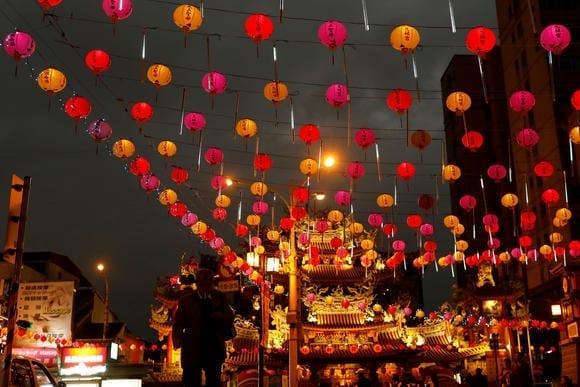
    Usually, at this time of the year when Chinese New Year (CNY) is just around the corner, Ms Evelyn Ng, a shop assistant at a candy store, would be very busy at work. These days, however, business has been lukewarm — so much so that the shop will be moving out of 112 Katong in a few days.

    “Look around — does it feel like it’s just days away from CNY?” said Ms Ng, pointing to the mall’s vacant atrium space, which, in better times, would be filled with vendors, especially during the festive period. “I am managing some S$200 worth of sales like I do on usual days,” she said.

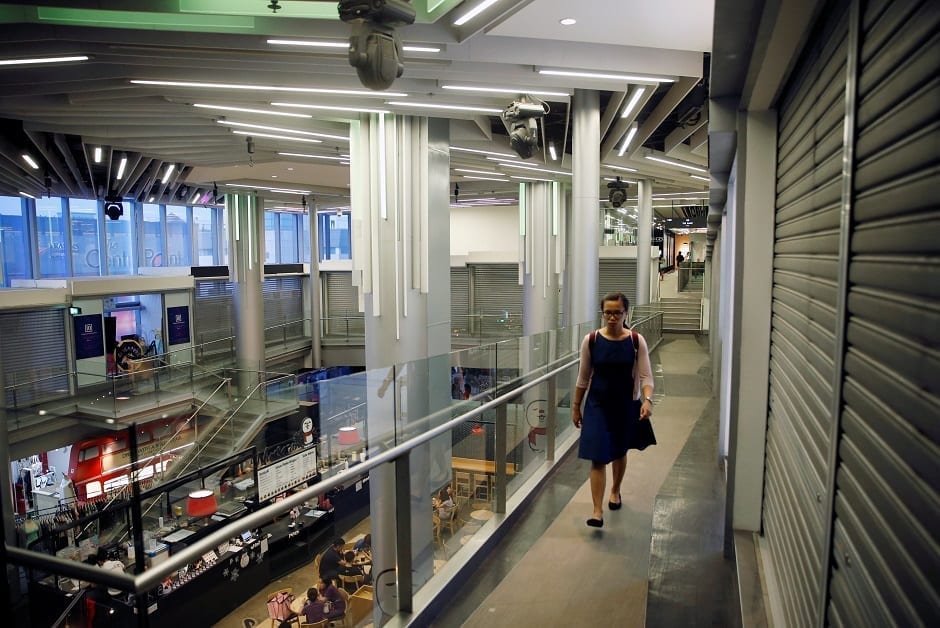
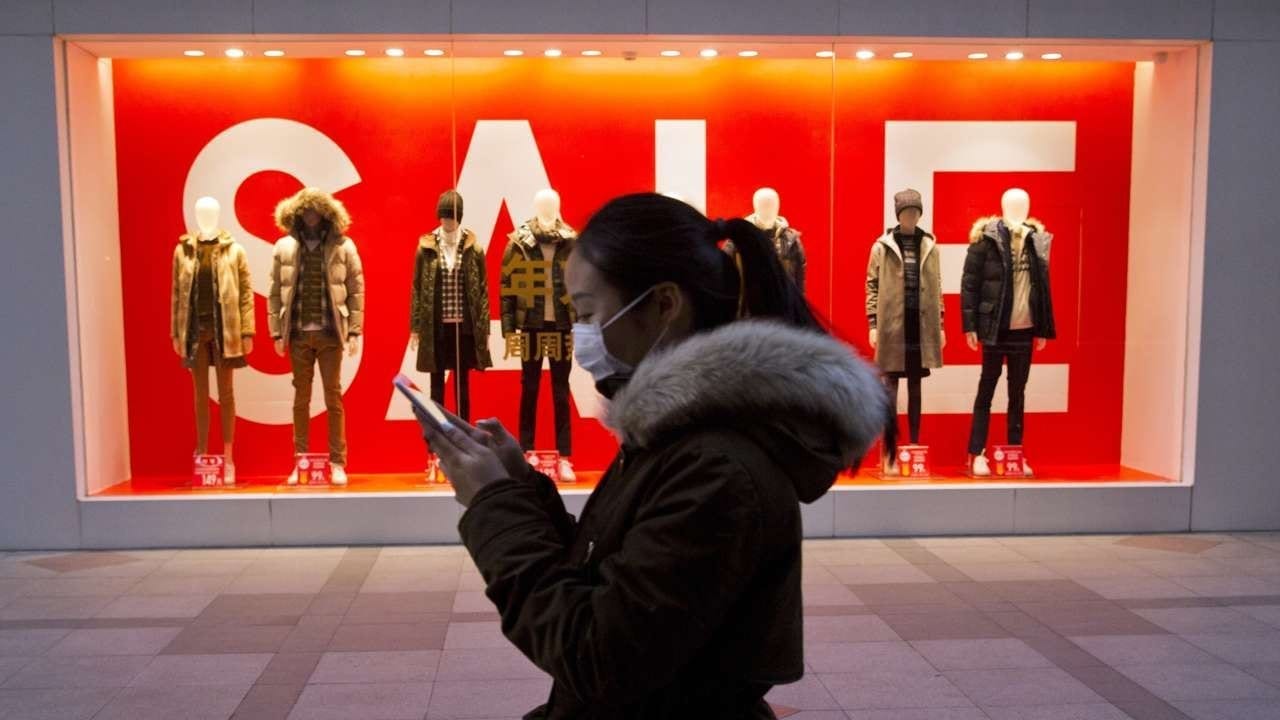
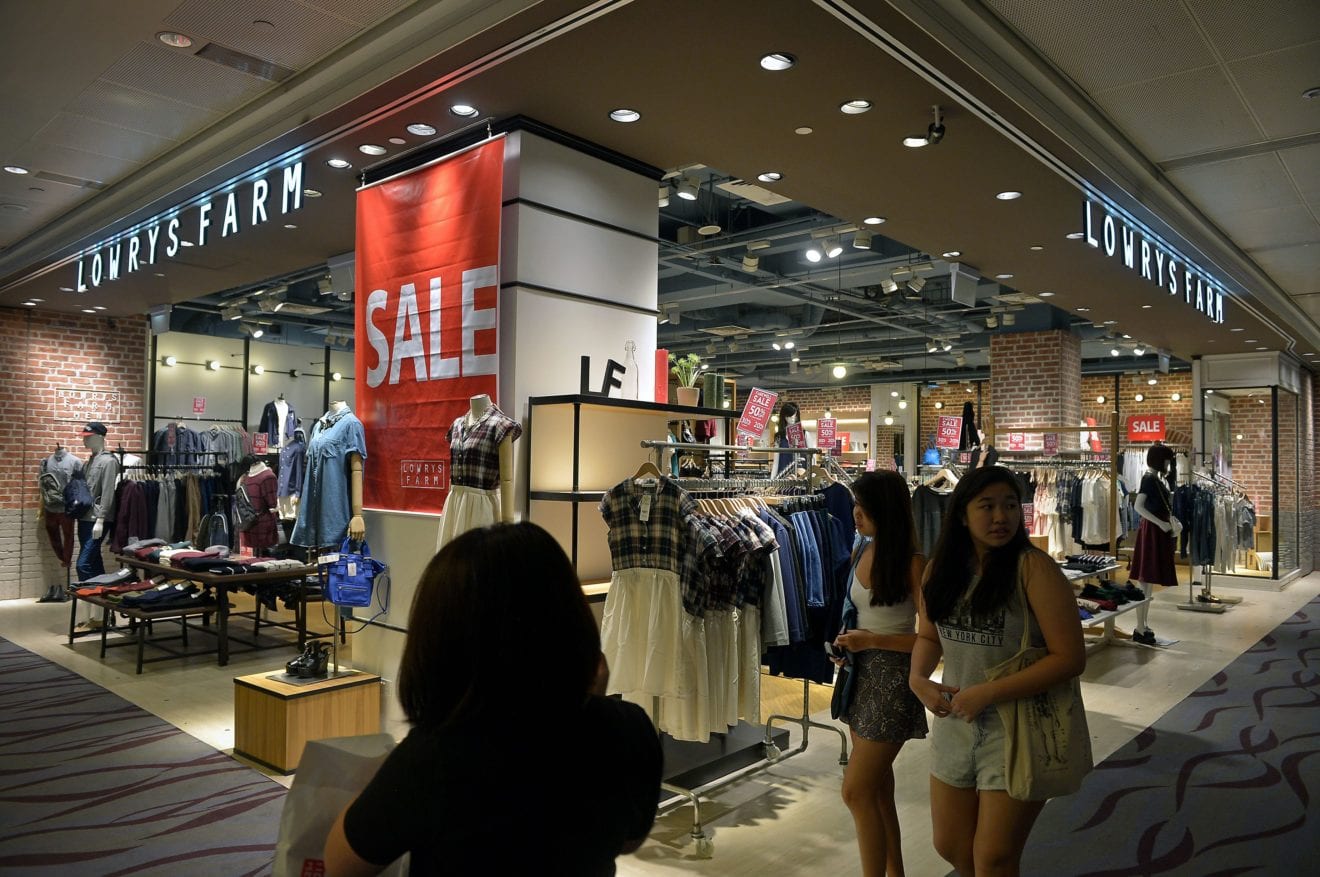
    The uncertainty plaguing the economy and the jobs market have dampened shoppers’ mood at malls in the run-up to CNY. Shops in several malls we visited over the past few days reported lower earnings compared with the same period in previous years, and atrium spaces were uncharacteristically empty.

    A cashier at an international fashion store at 313@Somerset, who declined to be named, said that sales are “40 to 50 per cent” lower, compared with the CNY period in the past two years. “We now have two to three assistants per floor, compared with about six last year,” she said.

    Mr Pushpendra Sharma, founder of SpacesGenie.com — an online retail spaces booking and listing platform — said demand for atrium space has been lacklustre amid the slump for brick and mortar retailers.

    Singapore’s traditional retailers have been hit by a double whammy of an economic slowdown and the rise of e-commerce. But those who have adapted to the new landscape are faring better. For example, home decor retailer Crate and Barrel said its business this festive season had improved from the past year. “We are certainly responding to the trend of consumers going digital through our communication efforts,” said Mr Samuel Stephen Wright, brand manager at Crate and Barrel Singapore.

    Some mall owners noted that the unusually short period this time — of about one month — between Christmas and CNY may have resulted in consumers cutting down their spending.

    A City Square Mall spokesperson said the shopping centre has seen “healthy level of footfall and in-mall spending redemptions” during Christmas, which is expected to continue through CNY. Similarly, a Frasers Centrepoint Malls spokesperson said its promotions have been “well-received through Christmas, and we expect it to carry on into the CNY period”. “However, with such a short gap between the celebrations for the two festive periods, there is a higher tendency for shoppers to combine their spending.”

    With the first two days of CNY falling on a weekend, mall managers expect a large number of shops and eateries to be open during the public holidays. Mall owners said there has been no let-up in promotional efforts to spur consumer spending. For example, at Northpoint in Yishun — which is owned by Frasers Centrepoint — there is an ongoing lucky draw promotion that runs until June 30. A lion dance performance and red packet giveaways, among other initiatives, are also on the cards.

    Ms Ameerah Khairudin, 20, who works in the Orchard Road area, said there was “no point spending when it is so tough to find jobs”. She said: “We see so many people losing jobs. It worries me.” Retiree Gloria Leong, 68, noted that the malls are quieter. But with retailers desperate to drive up sales, she said: “I have not seen shops offering such hefty discounts during peak season before. Given the smaller crowd, we find it easier to shop around these days.” Rumi Hardasmalani

  • Garuda Indonesia to operate Boeing B-737-800 to serve Sorong-Jakarta route

    Garuda Indonesia to operate Boeing B-737-800 to serve Sorong-Jakarta route

    Garuda Indonesia will operate Boeing 737-800 to serve Sorong-Jakarta route, in order to increase its service to the people in Papua.

    The state-owned airline company’s Sorong sales manager Radhitya Prastanika said here on Monday that the service is scheduled to begin early in April.

    He stated that Garuda Indonesia wished to support the government in opening an easier access to Raja Ampat tourist destination by operating the wide-body aircraft.

    “We are now waiting for an official letter from the security authorities of Sorongs Domine Eduard Osok airport regarding the safety of the airport for the landing of the aircraft,” he remarked.

    He noted that Boeing 737-800 has 162 seats, consisting of 150 seats in the economy and 12 seats in the business class.

    “Garuda Indonesia wishes to provide comfort to people in Sorong by providing a Boeing aircraft and adequate facilities,” he added.

    He said Garuda Indonesia plans to increase the number of planes and new routes to Papua and West Papua provinces this year.

  • Why China’s ivory ban is a mammoth step towards saving the elephant

    Why China’s ivory ban is a mammoth step towards saving the elephant

    At the end of last year, China announced a complete ban on its ivory trade and processing activities by the end of 2017. The news, a late Christmas gift to many conservationists, was greeted as a “game changer” by groups including the World Wildlife Fund, which says around 20,000 African elephants are being killed every year for their ivory. As the world’s largest consumer of ivory products, Chinese demand has seen poaching increase and ivory prices rise. The country has had a seemingly insatiable appetite for so-called “white gold”.

    At a meeting of the Convention on International Trade in Endangered Species of Wild Fauna and Flora (CITES) last September, a resolution was tabled which recommended that its 183 member states “close their domestic markets for commercial trade in raw and worked ivory as a matter of urgency”. China’s support of the resolution surprised many and led to it being adopted by consensus. The country had taken a big step in re-evaluating its relationship with ivory and its effect on the world’s elephants.

    The subsequent announcement on December 30 2016 saw China commit to closing up to 15 of its 34 ivory processing firms and 50 to 60 of its 130 licensed ivory retail shops by March 31 2017. The second stage will see China phase out the country’s remaining registered legal processors and traders by the end of the year.

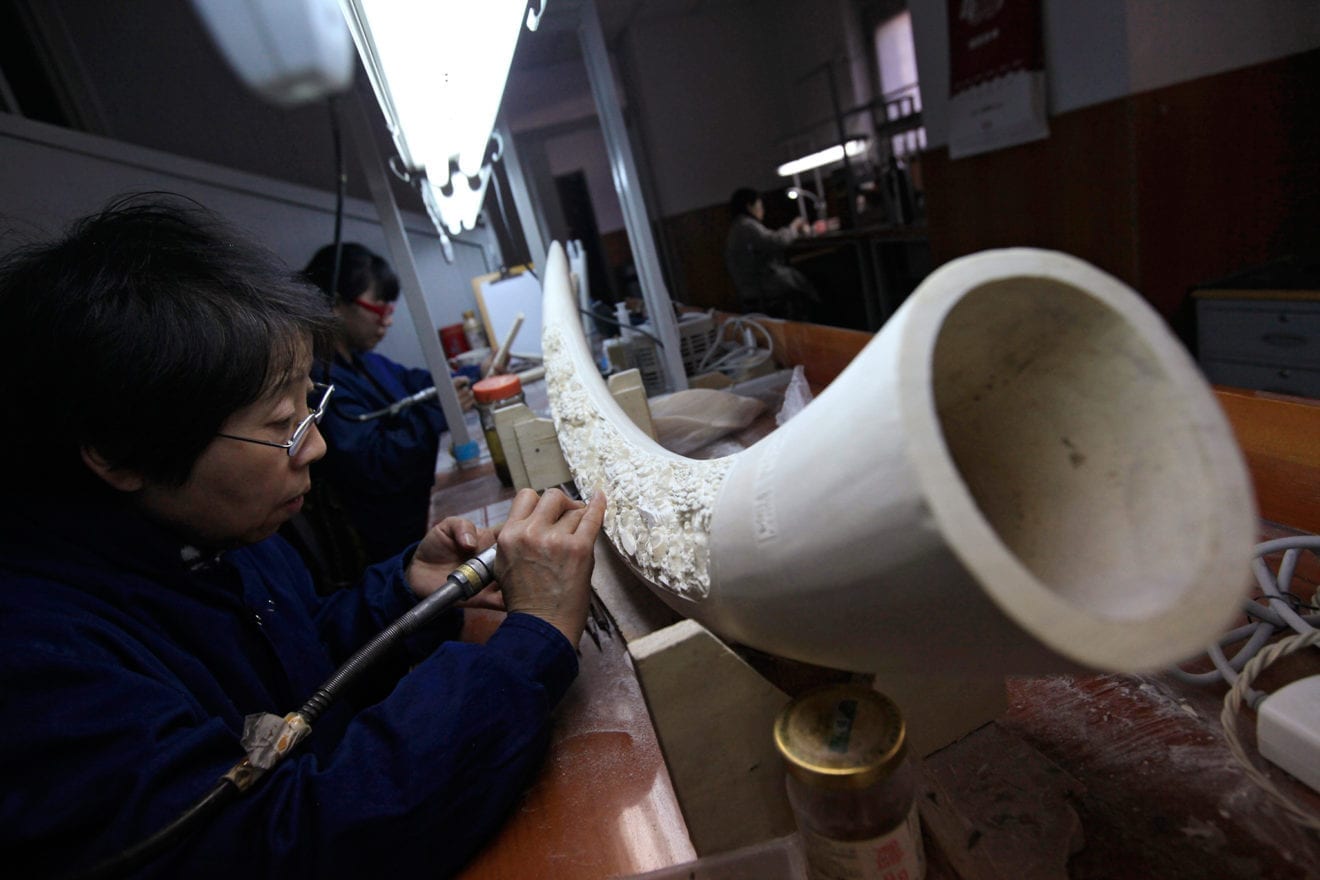
    China has a popular ivory carving industry with a history which stretches back to the Ming and Qing Dynasties. To assist those who carry out this work, there will be schemes to assist ivory carvers with the transition into working with other mediums. “Master carvers” will be encouraged to work in museums and in the repair and maintenance of artistic and culturally significant ivory artefacts.

    The Chinese move effectively brings to an end the future of the country’s domestic ivory market. But there are millions of pieces of (currently) legally owned ivory artefacts all over China which will have to be dealt with through a strict new management system. Ivory products will only be displayed in museums and art galleries for non-commercial purposes or exhibition and the giving and inheriting of ivory will still be allowed.

    The elephant in the sale

    More worryingly, the Chinese ban on trade specifically excludes items described as “genuine antiques”. This exemption raises concerns that elephants will continue to be poached to supply an increased trade in “ghost ivory” (illegal ivory sold as antique legal ivory) as the legitimate market closes.

    Another problem is that a large portion of China’s ivory trade will simply shift to Hong Kong, which is not subject to the Chinese ban. Hong Kong is the world’s biggest legal retail market for elephant ivory and a major transit hub for illegal imports. Hong Kong has itself pledged to phase out its domestic ivory market by 2021 and it is hoped that the Chinese announcement will encourage Hong Kong to speed up the timescale. But there is no guarantee this will happen.

    Concerns over the sale of “ghost ivory” alongside legitimate legal ivory pieces are even greater in Hong Kong. “Hong Kong ivory” has even come to be a derogatory term to describe new ivory masquerading as old.

    This point was recently highlighted by British auctioneer James Lewis, who said of his experiences in Hong Kong:

    You see old ivory on the same shelf as new ivory. I realised then there’s a major market in the Far East that looks at ivory as a commodity as well as an art form, and that the old ivory market is fuelling modern ivory demand.

    But these concerns should not distract us from the positive aspects of China’s plans. In terms of addressing the decline in wild elephant populations and Asia’s attitudes to ivory, the Chinese ban can only be a good thing. Provided Beijing is able to police and manage the changes effectively it could even be the “game changer” conservationists hope for.

    Just as importantly, the fact that China has gone so far and with such a strict time scale after years of negotiation could be the catalyst for other states such as Hong Kong, Laos, Myanmar and Vietnam to follow suit. Demand for “white gold” has taken the elephant to the brink of extinction. Chinese remorse could be the species’ salvation.

  • AirAsia X gets license to fly to US

    AirAsia X gets license to fly to US

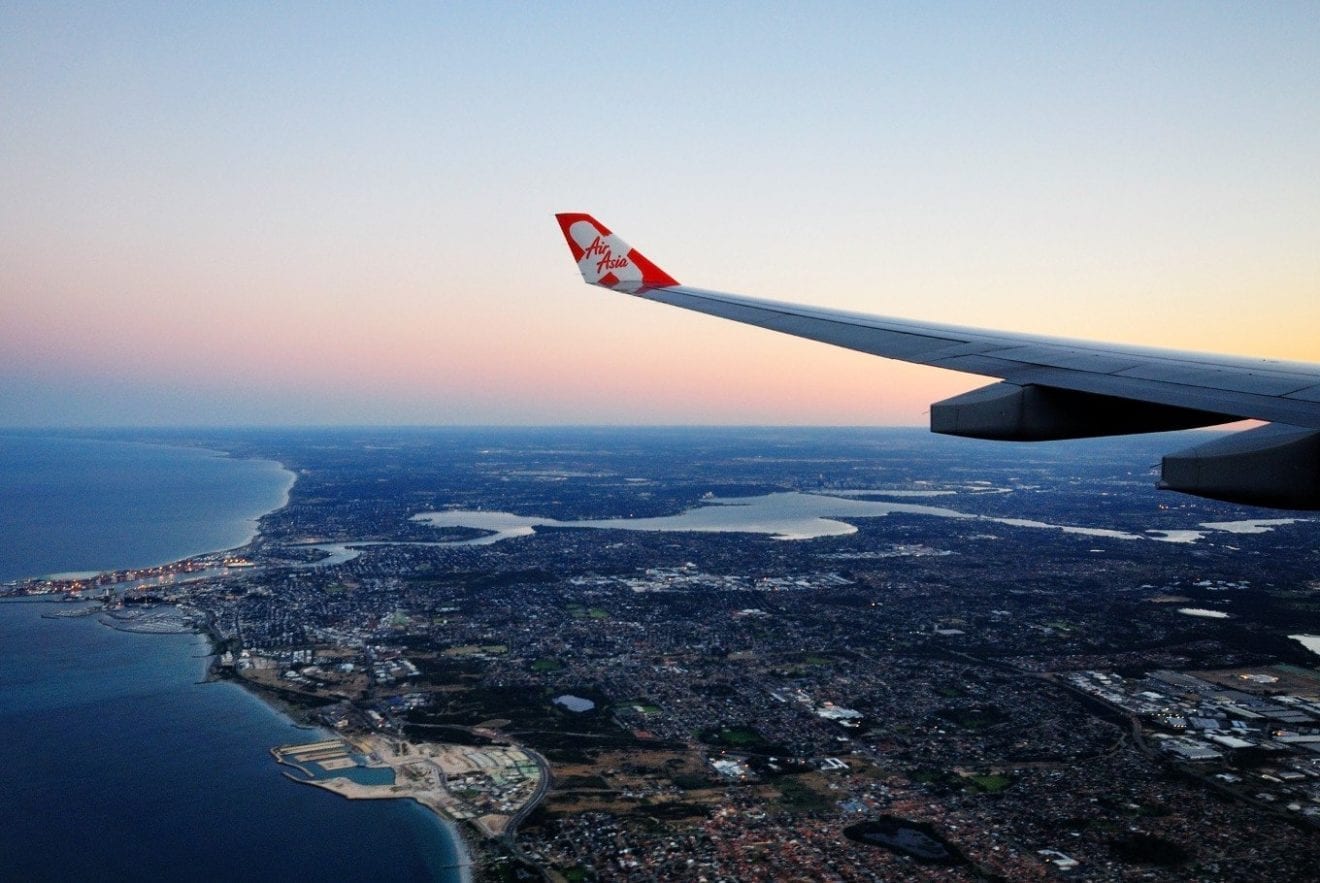
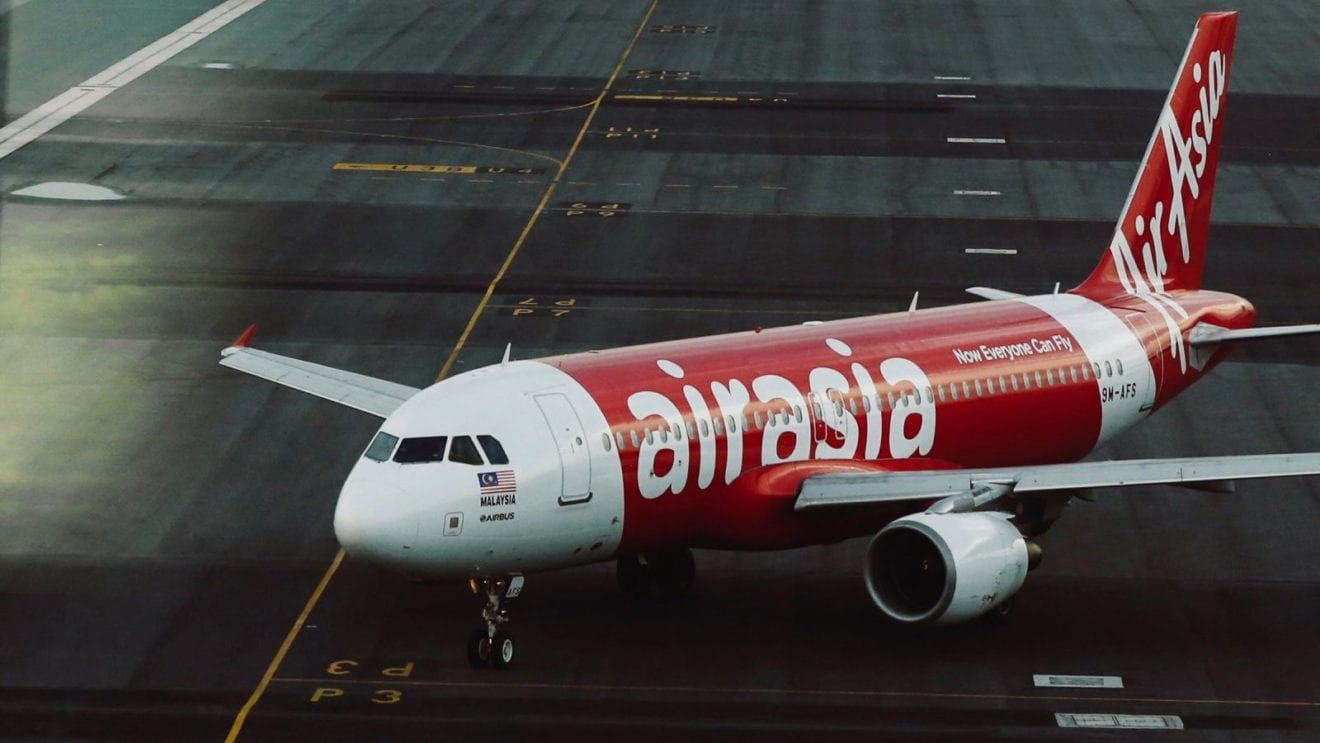
    AirAsia X has obtained a license from the Federal Aviation Administration (FAA) to fly to the United States, AirAsia X CEO Datuk Kamarudin Meranun has said.

    With this achievement, AirAsia X becomes the first Asian budget airline to hold a license to fly to the US, said Kamarudin.

    “It is an extraordinary achievement. Our expansion so far only focused on Asia, Australia and the Middle East. We are in high spirits to expand farther than just the Asia-Pacific,” he said on Monday.

    With such a license, AirAsia X planes would be able to fly to any place in the country, said Kamarudin, adding that his company also planned to restart its flights to London and the relevant licenses were being arranged.

    The AirAsia Group has 120 flight destinations in the Asia-Pacific, including 60 routes within ASEAN countries.

  • Thai tourism officials expect 10 percent growth in 2017

    Thai tourism officials expect 10 percent growth in 2017

    Thailand received a record 32.59 million foreign visitors last year, with revenue beating expectations and likely to exceed previous forecasts this year by growing 10 percent or more, officials said Monday.

    Thailand is proving popular even as terror scares, including a series of bombings in resorts towns killing four people, and the death of King Bhumibol Adulyadej had hotels and tour guides across the country on edge. Tourism fared better than expected after a bloodless coup deposed Thailand’s elected government in 2014 as well.

    The Tourism Authority of Thailand said Monday that the tourist industry earned 2.52 trillion baht ($71.4 billion) last year, up 11 percent from 2015.

    It said the country’s tourism industry is projected to bring in 733 billion baht ($20.8 billion) in the first quarter of this year, up 8 percent from the first quarter of 2016. Officials said their estimates, covering foreign and domestic tourists combined, indicate tourism revenue for all of 2017 may surpass earlier forecasts of 2.77 trillion baht ($78.5 billion).

    Thailand is the eleventh most-visited country in the world and boasted the sixth largest tourism industry by revenue in 2015, according to a U.N. report. Most travelers come from China, South Korea, and Japan, lured by Thailand’s year-round warm weather, as well as Western countries and Thailand’s neighbors in Southeast Asia.

    Foreign tourists are by far the most lucrative for the economy. Foreign arrivals are projected to total 9.3 million in the first quarter of this year, accounting for 490 billion baht ($13.9 billion) in revenue. In the same period, some 32.5 million Thai travelers accounted for 240 billion baht ($6.8 billion).

    “Thailand is still a popular destination,” Yuthasak Supasorn, governor of the Tourism Authority of Thailand, said at a news conference. “We have a lot of different things to offer our foreign visitors.”

    A steady economy and a growing number of travelers worldwide explain the boom, Yuthasak said.

    “Stability and improvements in the economy mean more foreign tourist arrivals,” he said. “So there’s clearly demand, and it’s up to us to accommodate everyone who wants to come.”

  • IDC Philippines Unveils its Top ICT Predictions for 2017 and Beyond

    IDC Philippines Unveils its Top ICT Predictions for 2017 and Beyond

    IDC Philippines announced its top predictions for the Philippine ICT industry for 2017 and beyond and predicts 25% of its top 1,000 companies will see majority of their business depend on their ability to create digitally enhanced products, services and experiences by 2020.

    IDC expects digital transformation (DX) will attain macroeconomic scale over the next three to four years, changing the way organizations operate and reshaping the global economy and calls this as the dawn of the “DX Economy”.

    “The rise of DX definitely has an incredible effect on the market. It opens massive opportunities for businesses as it helps strengthen relationships with end users, flattens organizational structures, and redefines traditional industries,” says Jubert Alberto, Business Operations Head, IDC Philippines.

    IDC Philippines’ technology and industry analysts also revealed the strategic top predictions and major technology trends that are set to present opportunities and challenges to IT leaders in 2017 and beyond.

    #1: DX Economy. By 2020, 25% of top 1,000 companies in the Philippines will see the majority of their businesses depend on their ability to create digitally enhanced products, services, and experiences.

    The market dynamics are quickly changing, and the enterprise must continually improve productivity and effectiveness while lowering costs in order to enable a transformation that will allow it to best compete in the constantly evolving market environment.

    „Year 2020 will see Filipino companies level up their DX journey to a macroeconomic scale, as their ability to offer digitally transformed offerings and experiences becomes an important measure of competitiveness and success in the market,” says Karen Rondon, Research Manager for Enterprise Computing – Networking, IDC Asia/Pacific.

    #2: Pinoy DX Teams. By 2018, 25% of Philippine organizations will have dedicated digital transformation/innovation teams.

    „These specialized ‚PH DX teams’ will be in charge of formulating plans both for internal and external applications of digital technology. These include identifying and using new technologies to improve operations, creating digital marketing strategies, developing their IT capabilities, and other related initiatives,” says Jan Edward Tañeca, Market Analyst – Imaging, Printing, Document Solutions (IPDS), IDC Philippines.

    #3: More Strategic ICT Push. By 2021, the government will have a more strategic ICT push to enable technology adoption among Philippine organizations.

    Year 2016 has been a good year as far as the country’s ICT agenda is concerned. According to the latest findings of the United Nations E-Government Survey, the Philippines went up 24 notches to rank 71st out of 193 countries in e-government development. With a dedicated, centralized agency at the helm of the country’s ICT development, IDC sees that by 2021, the government will be able to lay the much-needed groundwork that would enable robust technology adoption among Philippine organizations and raise the nation’s standards to be on par with other digital economies.

    #4: Cybersecurity. By 2018, cybersecurity will become a tier-1 business priority receiving fixed capital spending for 30% of the top 1,000 companies in the Philippines.

    Increasing security breaches and attacks has significantly raised interest in and awareness of the need to modernize security infrastructure in the Philippines. „In the coming years, enterprises will realize that rather than reacting to global security trends, the best-run businesses try to anticipate them. Thus, they will make cybersecurity a core part of their overall business strategy, taking into account the existing security industry trends and evolving criminal tactics and couple those factors with the organization’s risk tolerance, security program maturity, a holistic security strategy and, most importantly, business targets,” says Jan Edward Tañeca, Market Analyst – Imaging, Printing, Document Solutions (IPDS), IDC Philippines.

    #5: Information-Based Products. By 2020, revenue growth from information-based products will be double that of the rest of the product/service portfolio for a quarter of the top 1,000 Philippine companies.

    “In the Philippines, companies in the telecommunications, retail, and banking industries, among others, have unlocked new opportunities in creating revenue through analyzing and making sense of the aggregated customer information. Some organizations that have explored these options benefited in the form of penetrating new markets and generating new revenue streams as the information may vary from customer data to consumer buying patterns,” says Nicolo Santos, Market Analyst – Imaging, Printing, and Document Solutions (IPDS), IDC Philippines. „This opportunity requires a constant effort for organizations to address data privacy and security issues, and government regulations that surround the collection, storage, use, and sale of consumer data.”

    #6: Hyper-disruptive marketplaces. By 2019, 40% of customer-facing top 1,000 companies will experiment with augmented reality/virtual reality (AR/VR) as part of their marketing efforts.

    The potential impact of AR/VR across industries will become so big that by 2019, IDC sees 40% of the Philippines’ top 1,000 companies experimenting with these technologies to create their own unique experiential marketing strategies. „Consumer brands will be compelled to think out of the box and reinvent their marketing approaches – incorporating more AR/VR elements and placing emphasis on gamification – in a bid to gain the patronage and loyalty of consumers, especially young and tech-savvy millennials,” says Sean Agapito, Market Analyst – Client Devices, IDC Philippines.

    #7: Customer-/Ecosystem-Facing Digital Services. By 2019, 65% of Philippine IT organizations will create new customer-facing and ecosystem-facing services to meet the business DX needs.

    Customer-experience initiatives are on the rise across organizations, and as they increase the level of control customers and business-to-business (B2B) organizations have over their own experience, the scale of interactions will concurrently explode. „Failure to scale up the number of direct and indirect customers with whom an organization does business will lead to revenue shortfalls and uncompetitive cost structures. Improve profitability, we expect organizations to increase their use of virtual agents or digital assistants. Intelligent assistants will use artificial intelligence (AI)/cognitive technology to automatically adjust experiences to the users’ preferences and context,” says Alon Anthony Rejano, Market Analyst – IT Services, IDC Philippines.

    #8: Digitalized Customer Support Interaction. By 2018, 60% of customer support interactions will be digitalized and occur in online communities.

    With an increasing proportion of the Filipino population – reaching nearly half of the country’s total population in 2016 – actively using social media, IDC expects more organizations to interact with customers through social and online communities. Online customer support not only help solve customer problems but it also improves brand image. Additionally, a successful community will create brand champions or advocates and will not only recommend the product or the service to customers but will help solve customer problems on behalf of the brand. „This will make the theme of customer reciprocity strong moving forward. Also in the near future, more organizations will use IT to integrate existing customer services and support systems like integrating pre-built connectors, mining the community for insight into customers’ behavior, and proactively solve any emerging issues,” says Jerome Dominguez, Market Analyst – Client Devices, IDC Philippines.

    #9: Next-Wave Sari-Sari Store. By 2020, 30% of Philippine sari-sari stores will evolve to become another channel for one-stop payments and remittance centers.

    Something unique in the Philippine retail scene will be the presence of sari-sari stores in different localities. IDC foresees a future where sari-sari stores, a Pinoy cultural phenomenon, can offer services such as payment of utility bills, e-loading, and buying of travel tickets can also be done through these neighborhood stores. Serving as complimentary touchpoints especially in the rural areas, sari-sari stores play a pivotal role in filling the „unbanked” gap in the countryside. Organizations looking to engage more in the rural areas will have a viable channel, as in alternative to building brick-and-mortar branches, which may be cost-prohibitive to most companies.

    #10: ICT and BPO Disruption. By 2020, ICT and BPO markets will be disrupted by the pivot and policy changes from the Duterte and Trump administrations, if the industry does not take critical steps safeguarding the country’s inherent growth drivers.

    The BPO industry is one of the great contributors to the total ICT spending in the country. IDC maintains that the burgeoning and evolving to higher-value services around contact centers, medical transcription, software development, animation and game development, and global captive operations centers will still be very much viable in the short term, given the country’s inherent strengths. „In the longer-term view, however, this may change due to the shift in pivot and policy changes from the Duterte and Trump administrations. This may lead to an impression of the country’s volatility and together with issues on manpower and availability of skillsets, it may result in the industry stagnating in the near future due to lack of new investments and expansionary plans from incumbents. Far-reaching measures to address key issues are of paramount importance this year,” adds Alberto.


  • Singapore businesses eye growth in China despite slowdown

    Singapore businesses eye growth in China despite slowdown

    Singapore brands continue to eye growth in China despite increased domestic competition, higher costs and a slowdown in the world’s second-largest economy.

    For some, China provides an alternate avenue for growth in sectors such as property and retail, helping to buffer lower-performing regions.

    Other Singapore companies in sectors that have taken harder hits recently, such as manufacturing, have been reassessing and realigning their business models to stay competitive.

    China is, after all, “too large a market for ambitious foreign investors to ignore” despite having lost some shine, said Mr Chio Kian Huat, CEO of accounting and business advisory group Stone Forest.

    This is especially so as the central government continues its crackdown on corruption and improves the transparency and predictability of doing business in China, said Ernst & Young Asia Pacific transaction advisory services leader, Harsha Basnayake.

    For CapitaLand, diversification in China has provided “respite from weakness in the Singapore property market”, said Maybank Kim Eng analyst Derrick Heng.

    The real estate developer has increased its presence in China over the years with the country accounting for 45 per cent of its asset base today, up from just six per cent in the early 2000s, Mr Heng told The Business Times.

    “With robust China home sales in recent years… we expect strong earnings contribution from the country in the next one to two years,” he said.

    CapitaLand Retail China Trust Management Limited (CRCTML), the manager of CapitaLand Retail China Trust, announced its 2016 Q4 net property income (NPI) on Jan 26, bringing the NPI for the whole of 2016 to a total of RMB669.8 million (S$139 million) – 4.1 per cent higher than in 2015.

    “We remain positive that CRCT’s portfolio of family-oriented shopping malls will continue to benefit from China’s growing urban population and rising retail sales,” said CRCTML chairman Victor Liew.

    Singapore-based beauty products seller Best World International is also projecting growth in China, its second largest market.

    China contributed 30 per cent of the group’s revenue as of the third quarter of 2016, after growing more than 200 per cent year-on-year, and the company is aiming to grow its sales in China eight-fold from 2016 to 2020, said Maybank Kim Eng analyst John Cheong.

    “Demand for Best’s products has not been impacted by the general slowdown, its products continue to gain traction from a low base, market expansion in China and increase in popularity from the recent approval of its direct selling licence,” he said.

    In announcing the licence approval in November, which allows Best World to conduct direct selling in Hangzhou, group co-chairman and president Doreen Tan said Best World is “cautiously optimistic” about its China growth prospects in the next five to eight years.

    “We will continue to expand the geographical coverage of our direct selling licence, drive membership growth through more marketing activities and introduce new products and services,” she said.

    Those in manufacturing have not been as fortunate – labour costs in China have been increasing at an average of 20 per cent annually for the past four years, and other rising costs such as electricity and natural gas are also eroding margins, said Mr Chio.

    Singapore design manufacturer Koda would know.

    The company was forced to shut down its manufacturing facilities in China in the last few years and has shifted its focus to its furniture retail arm, Commune, “to cater to the rising middle class”, Koda chief financial officer Joshua Koh told BT.

    “Commune is well received by this younger and more design-savvy generation and we still have a positive outlook on growth in this segment.”

    The China arm has been “growing consistently” and has “helped to buffer the drop in sales from our other markets like Malaysia, which has suffered due to the uncertain economic situation and reduced margins”, he added.

    Over in the food and beverage sector, stiffer domestic competition and changing consumer demands have translated into a race to deliver fresh tastes.

    BreadTalk, for one, has been working on new concepts for its stores to continually engage and excite customers, said a company spokesman. The company’s first store in China, which opened in 2003, has since undergone “its fifth round of renovations with a brand new concept”.

    BreadTalk has grown its total number of outlets from 453 across the mainland and in Hong Kong as of end 2015 to “about 500 outlets in 50 Chinese cities” today.

    Annual reports show that the company’s business in Hong Kong and mainland China contributed about 42.7 per cent of total revenue in the 2015 financial year, up slightly from 41.3 per cent in 2012.

    “Despite the slowing economy, the growth of consumerism and influx of new brands in China remains unabated,” said the BreadTalk Group spokesman.

    “Consumer spending continues with the desire to try new products and experiences all the time. Brands will always need to present exciting and engaging offerings to attract consumer loyalty with competition being stiff in such a diverse market.”

    For restaurants, establishing a niche product is the key to good business, said Mr Basnayake.

    Singapore’s Jumbo Group of chilli crab fame may be one such example of building success on a signature dish that continues to draw crowds of Chinese diners.

    Jumbo had percentage revenue contribution from its restaurant operations in Shanghai increase from eight per cent in the 2015 financial year to 15 per cent in 2016, and intends to expand its brands to other major Chinese cities, CEO and executive chairman Ang Kiam Meng told BT.

    China’s economy may not be expanding at the rate it was a decade ago – the Chinese Academy of Social Sciences forecast economic growth to dip again this year to 6.5 per cent, which would be the slowest pace in more than 25 years – but Mr Ang is among those who are confident that business opportunities remain.

    So, too, is Citi’s chief China economist Liu Li-Gang.

    “It is no longer as easy as in the past for foreign investors to make money… but in many areas there should be many investment opportunities, especially in the service sector,” said Dr Liu, noting that China is progressively liberalising its healthcare and financial services.

    Stone Forest’s Mr Chio said: While China is no longer a low-cost producer, there is a still a “huge market for services and products that cater to the needs of its growing middle class.”

    China is also making strides in technology and other emerging sectors, he added.

    “These factors, along with China’s growing middle class and their increasingly sophisticated demand, mean that businesses need to look at the Chinese domestic market for opportunities and not depend on low cost production to succeed.”

  • Services as a New Driver of Growth for Thailand

    Services as a New Driver of Growth for Thailand

    There’s a good chance you work in the service sector. Services account for 17 million jobs in Thailand, or approximately 40 percent of the Thai labor force. Service encompasses diverse industries such as tourism, retail, health, communications, and transportation, and many sought-after professions in architecture, engineering, law and medicine, for example. Many Thai parents aspire for their children to join the service sector, which carries many of Thailand’s economic hopes and ambitions.

    Industries that are likely to be important in the future such as medical and wellness tourism as well as logistics and aviation are in the service sector. Other key industries like robotics, food for the future and smart electronics will depend on services for critical inputs. Education services will also provide the training and skills necessary for any modern and innovative economy.

    Why do services matter for the Thai economy? A dynamic and growing service sector can become a critical engine of growth for Thailand. Advanced economies like the U.S. and the Euro area are dominated by the service sector, which makes up more than 70-80 percent of  GDP. Much of the value—even of manufactured goods—is derived from support services rather than manufacture itself. For example, approximately two-thirds of the value-added of smartphones, such as the Apple iPhone or Nokia N95, stem from internal support services, licenses, retailing, distribution and operating profit. Assembly accounts for less than 10 percent of their value.

    Even the value-added of a typical jacket made in China and sold in the U.S. is accounted for largely by invisible assets such as services, intellectual property and profits. While developing Asia accounts for most of the world’s manufacturing and assembly needs, most of the benefits go to service providers based in advanced economies.

    How does Thailand’s service sector fare? Thailand’s service sector share has remained static at approximately 50 percent over the last two decades. It is dominated by lower-productivity industries employing lower-skilled workers, and a low share of service exports which tend to be in ‘traditional’ sectors. Thailand has not shown sustained increase in the share of the service sector observed in ASEAN and non-ASEAN peers as well as in advanced economies. For example, China’s service sector as a share of GDP is growing rapidly and is close to catching up with Thailand.

    How can the potential of the service sector be unleashed? A number of examples from ASEAN countries highlight how a combination of private sector initiative and government support to enable businesses and monitor quality standards can increase service output and exports. For example, financial services in Singapore, higher education in Malaysia, health services in Thailand, and telecommunications-based services in the Philippines.

    Thailand’s commitment to structural reforms can unleash the potential of its service sector and lift income levels.

    For Thailand, a supportive regulatory environment for doing business, reduced policy restrictiveness both at the border and behind the border, greater competition and deeper trade integration through, for example, implementation of the ASEAN Economic Community commitments will be critical for fostering productivity growth and innovation, particularly in services. In addition, addressing skill gaps and ensuring quality education for all are also important for ensuring worker readiness.

    A global World Bank study finds that Thailand has a more restricted service market on average compared to ASEAN peers and other regions in the world, particularly in professional services such as accounting, legal, architecture, engineering and management consulting. For example, a dentist from the Philippines would have to take an exam in Thai to practice in Thailand.

    While Thailand has reaped the benefits of past liberalization in manufacturing, merchandise trade and imports of capital with tariff rates coming down from 40 percent in the 1980s to 9 percent in 2006, liberalization failed to encompass the whole economy. Many services, state enterprises and domestically oriented industries remained relatively sheltered from competition.

    For instance, foreign entry and investment into many of the service sectors, as well as delivery of some services by foreign firms, are restricted. Education and health facilities, for example, are required to be majority Thai-owned. In the financial services sector, liberalization has made progress despite apparently restrictive laws. Most, if not all, commercial banks are majority foreign-owned, but not necessarily foreign-controlled. So far, two foreign bank licenses for both wholesale and retail have been granted.

    Thailand’s economic growth is expected to attain 3.2 percent in 2017, from 2.8 percent in 2015. While there will be external challenges from more uncertain global economic prospects, Thailand’s continued commitment to structural reforms can unleash the potential of the service sector and lift Thailand’s long-term growth path above 4 percent per year and take the country from upper-middle to high-income levels.

    Thailand’s economy is on track to recovery, and further strengthening the service sector will help create new and better jobs, higher incomes and more opportunities for Thai people.  And who knows, perhaps you could be the next Jack Ma or Tony Fernandes.

  • China retail sales grow 10.4 pct in 2016

    China retail sales grow 10.4 pct in 2016

    China’s retail sales of consumer goods, a key indicator of consumption, grew 10.4 percent year on year in 2016, the same as the first three quarters, official data showed Friday.

    Retail sales grew 9.6 percent year on year after deducting price factors, according to the National Bureau of Statistics (NBS).

    Total retail sales of consumer goods hit 33.23 trillion yuan (4.84 trillion U.S. dollars) last year.

    The data showed strong consumption potential in rural areas, with retail sales expanding 10.9 percent, outpacing the 10.4 percent rate in urban areas.

    The NBS said that retail sales of communication equipment and housing goods had grown fast. Sales of communication equipment jumped 11.9 percent year on year, furniture went up 12.7 percent, and building and decoration materials climbed 14 percent.

    The catering industry garnered 3.58 trillion yuan in revenue last year, up 10.8 percent year on year.

    Online sales boomed, surging 26.2 percent year on year to reach 5.16 trillion yuan.

    Per capita spending was 17,111 yuan, representing a nominal growth of 8.9 percent year on year, though real growth was 6.8 percent after deducting price factors.

    In December, nominal growth of retail sales was 10.9 percent year on year, slightly higher than the 10.8 percent increase in November.

    Retail sales contributed significantly to China’s economic growth as the country shifts from an export-driven economy to a consumer society.

    Consumption contributed 64.6 percent of China’s economic expansion in 2016, the NBS said.

    Retail sales of consumer goods are expected to jump by 10.2 percent year on year to exceed 37 trillion yuan in 2017, contributing more than 70 percent of the country’s economic growth, according to a report issued by the China General Chamber of Commerce.

    China’s economy grew 6.7 percent year on year in 2016, well within the government’s annual growth target of 6.5 to 7 percent.

  • Philippine Airlines awards five-year DF contract to ISG

    Philippine Airlines awards five-year DF contract to ISG

    Inflight Sales Group (ISG) founder and CEO Jean-Marcel Rouff has confirmed that the retailer has been awarded a five-year contract to operate the Philippine Airlines (PAL) duty free contract.

    This follows the narrowing down of the list of bidders to a final three in mid-2016, led by ISG, DFASS and the Regent Travel Retail Group in partnership with Duty Free Philippines’ ground shops.

    As exclusively reported last July, the airline amended the concession length from three to five years with the inclusion of a two-year extension, according to Resty Tizon, Inflight Duty Free Director who handled the process last year.

    INTEREST WAS HIGH IN THIS LONG-RUNNING TENDER

    At that time she confirmed to TRBusiness that there were additional companies who showed initial interest in the contract, but ultimately decided not to bid. These were Tourvest Duty Free and Lagardère Travel Retail.

    According to the airline, the average spend onboard last year was around $2, although the airline has been trying to attract more Chinese passengers.

    In the last 18 months it has also acquired several new aircraft, including five Airbus 321 planes and two B777s. This year it is also due to take delivery of another two A321s.

    NEW ROUTES – MORE INTERNATIONAL PASSENGERS

    On January 1 this year, Philippine Airlines also launched its first international flight from Clark Airport, marking its new policy to try and spread more international connectivity outside the heavily congested capital city of Manila.
    A Philippine Airlines Airbus A340.

    PAL also launched a second new non-stop service to Singapore from Mactan-Cebu Airport in December 2016.

    In addition to the duty free contract to sell goods onboard, PAL has also increased the number of products now available through its Philippine Airlines Boutique online store.

    This offers online purchasing of ‘lifestyle merchandise’, including special hotel deals, car rentals, tours and recreation packages, fashion items and gadgets.

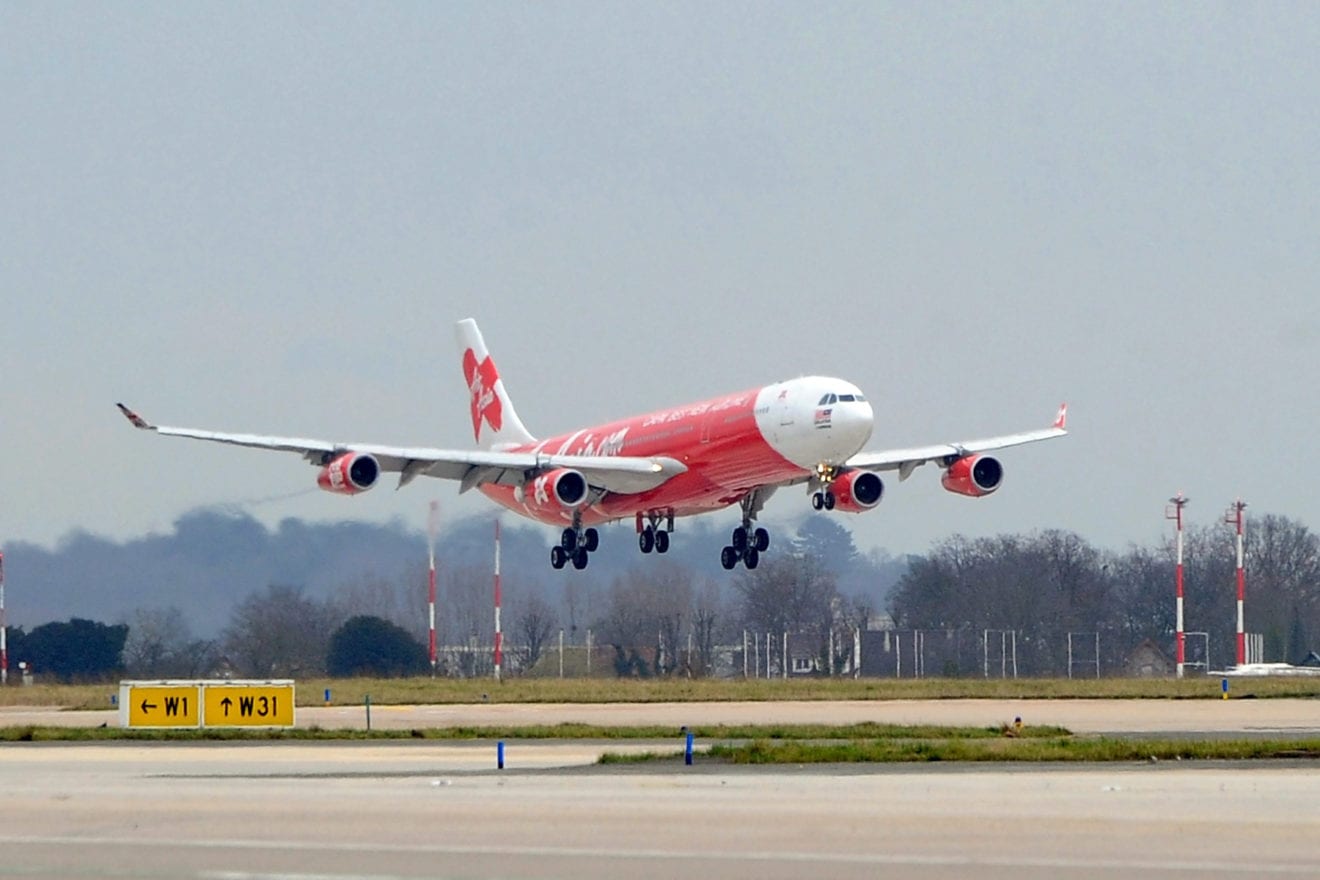
  • AirAsia X plans to lease two used 777-300ERs for London Gatwick summer 2017

    AirAsia X plans to lease two used 777-300ERs for London Gatwick summer 2017

    Malaysian long haul low cost airline AirAsia X is planning to dry lease two 777-300ERs from 2Q2017 to support the resumption of services to London Gatwick in Jun-2017. Its joint venture airline in Thailand is also aiming to launch long haul services to Europe in summer 2017 with a new route to Frankfurt, using the group’s existing A330-300ceo fleet.

    The lease of second hand 777-300ERs enables AirAsia X to accelerate the relaunch of flights between its main home market of Malaysia and Europe. Previously AirAsia X was intending to wait for the delivery of the A330-900neo to resume long haul flights, which it last operated in 2012 with inefficient A340-300s.

    The group was initially aiming to start operating A330-900neos from 2018, but first delivery has been delayed to early 2019. Short term leases on two 777-300ERs therefore give AirAsia X at least an 18 month jump on resuming London – a strategically important market.

    However, the 777-300ERs come with high risks and costs, particularly given the current market conditions and the relatively low density full service airline configuration that AirAsia X inherits with the aircraft.

  • Spending power to back China’s growth in 2017

    Spending power to back China’s growth in 2017

    Consumer spending will continue to grow at a healthy pace in 2017 as the country moves quickly toward a consumption-driven economy, analysts have said.

    Market observers estimated the country’s consumption will grow at an annual rate of 10 percent in 2016 and 2017, a key driver of overall growth eclipsing investment and exports.

    Consumption has played an increasingly important role in stabilizing the world’s second-largest economy, with its contribution to GDP growth up from 50.2 percent in 2014 to 71 percent in the first three quarters of 2016.

    Li Yang, an expert with the Chinese Academy of Social Sciences, expected retail sales in China to increase by 10 percent to reach 33.1 trillion yuan in 2016. Consumption will contribute 73 percent of GDP growth, the highest level since 2001.

    Consumption data in the fourth quarter of 2016 is slated to be released on Friday.

    China has embarked on a historic rebalancing from exports and investment to consumption in order to boost the economy’s potential amid volatile global conditions.

    China’s fast-growing middle class has become a key driver of consumption growth as they seek more expensive and premium brands and spend more on high-quality goods and services.

    According to research by the Economist Intelligence Unit (EIU), a think tank, the proportion of the population earning upper-middle and high incomes in China will expand from 10 percent to 35 percent by 2030.

    Gao Yuwei, an analyst with Bank of China’s research department, estimated retail sales will grow at around 10.2 percent in 2017, with spending on healthcare, telecommunications and high-end products rising rapidly.

    To encourage the spending potential of wealthy families, Chinese authorities are considering reducing tariffs of imported goods, which typically cater to the demands of the upper-middle class.

    In the past, Chinese consumers tended to buy foreign premium brands overseas to avoid high customs duties, which usually account for at least 15 percent of the full price.

    The Ministry of Commerce is creating policy to further reduce import tariffs for high-end consumer goods, expand categories of duty-free products, and open more duty-free malls to guide consumption back to China.

    With consumption becoming a key engine of growth, experts warned the slowing growth of personal income could restrain spending power.

    China’s economy grew 6.7 percent in the first three quarters of 2016. Analysts have forecast China’s 2016 annual growth to remain at 6.7 percent, significantly faster than the growth rate of other major world economies.

  • AirAsia to operate flights on Patna-Delhi route from July

    AirAsia to operate flights on Patna-Delhi route from July

    Malaysian budget airline AirAsia is most likely to start its flight operations from Jayaprakash Narayan International Airport here in July. It will operate two flights on Delhi-Patna-Delhi route from July following a final nod from the Director General of Civil Aviation (DGCA).

    In fact, different airlines have made proposals to operate total 32 flights from Patna airport under the summer schedule. Twenty flights operate from Patna airport at present under the winter schedule, which is likely to end by February 15.

    Patna airport director Rajendra Singh Lahauria told TOI on Friday, “AirAsia has submitted a schedule to the DGCA for operating two flights between Delhi and Patna from July. The first flight will land here at 8:30am and the second at 8:30pm.”

    AirAsia apart, four other airlines operating from Patna airport — Air India, IndiGo, GoAir and Jet Airways — have also sought permission to increase their number of flights from Patna in July.

    As flights are mostly not allowed to land at the city airport before 10am due to foggy conditions normally from first week of November, most airlines had cancelled or rescheduled their morning flights and added in the afternoon under their winter schedule, which came into effect from December.

    IndiGo sources said the total number of flights has been proposed to increase from 11 to 14 from February 16 under their summer schedule. Its seven flights would operate on Patna-Delhi route.

    GoAir has also proposed to increase the number of flights from Patna from five to eight. Also, both Air India and Jet Airways have proposed to increase the number of flights from 2 to 4.

    Patna airport has witnessed a steep surge in aircraft traffic over the past few years as it has increased from 10 flights in 2010 to 20 at present. Altogether 26 flights were operating from the city airport last summer.

    The rise in number of flights has been attributed to the increase in passenger traffic. The passenger flow at the city airport increased from 14.5% in 2014-15 to 32.4% in 2015-16.

    Efforts are also being made to expand the terminal building at the city airport with two-storey swanky building with six aerobridges in order to accommodate an expected traffic of 30 lakh passengers per annum. Union cabinet on Tuesday approved the transfer of 11.35 acres of land to Bihar government in exchange of equivalent land of the Airports Authority of India (AAI) at Anisabad. Airport director Lahauria said construction work is expected to commence from June this year.

  • Taiwan, South Korea feel pinch as Chinese Lunar New Year tourism slows

    Taiwan, South Korea feel pinch as Chinese Lunar New Year tourism slows

    The weeklong Lunar New Year holiday season has started in China, and surrounding countries and regions are expecting the usual surge in spending by Chinese tourists. This year, however, things may be different.

    According to China’s biggest online travel agency, Shanghai-based Ctrip, the number of Chinese visiting foreign countries during the holiday period this year is expected to level off, at around 6 million, as a weaker yuan has made shopping overseas less advantageous.

    The depreciation of the yuan has slowed the growth in the number of Chinese tourists going abroad. A survey found that prices of tours to Asian destinations from China during the Lunar New Year holiday season rose more than 10% after the yuan fell 6.6% against the U.S. dollar.

    In addition, the popularity of countries and regions whose relations with China have been strained has sharply dropped among Chinese tourists. The hardest hit may be Taiwan and South Korea.

    Taiwan has seen a decline in Chinese tourists since President Tsai Ing-wen, whose party advocates independence for the island, took office last May. Relations between Taipei and Beijing have cooled significantly under Tsai, compared with the eight-year reign of her predecessor, Ma Ying-jeou.

    The number of Chinese tourists visiting Taiwan during all of 2016 fell to 3.51 million from 4.18 million a year earlier, according to the Taiwanese Tourism Bureau.

    “We haven’t been seeing Chinese tourists lining up for visas for Taiwan since mid-2016,” a Taiwanese Tourism Bureau official said. The situation has been improving recently thanks to the approaching Chinese New Year holiday, but “incoming Chinese tourists will still drop substantially from a year ago, for sure,” the official said.

    The decline in tourists participating in group tours has been the most noticeable, compared with visits by self-guided Chinese tourists, according to the bureau.

    Self-guided Chinese travelers tend to go to different places and eat differently, compared with group tourists. Group tourists visit popular spots such as Sun Moon Lake or Alishan, shop more in souvenir stores, and eat group meals, while self-guided tourists like to visit exotic towns such as Jiufen, Shifen and Pingxi. Independent travelers also spend more time in the southern Taiwanese town of Kenting, enjoying beaches and water activities.

    South Korea

    South Korea expects 140,000 Chinese tourists will come to the country during the Lunar New Year holidays, an increase of 4% from a year earlier, according to the Korea Tourism Organization.

    The country used to be one of Chinese tourists’ most popular destinations. During all of last year, 8.1 million Chinese visited South Korea, up 34.8% from 2015. They accounted for 46.8% of foreign visitors to the country. But growth has slowed, reflecting China’s souring relationship with South Korea over the U.S. military’s introduction of the Terminal High Altitude Area Defense missile defense system on the Korean peninsula. Word in the local tourism industry has it that Chinese government officials have instructed travel agencies to reduce the number of visa applications for South Korea.

    The slowing growth in Chinese visitors is worrisome for duty-free shop operators in South Korea. In an attempt to attract Chinese tourists, industry leader Lotte Duty Free has begun giving gifts to all shoppers from greater China at its head store in Seoul if they make purchases worth $1,000 or more.

    At Gimhae International Airport in Busan, the Busan Tourism Organization set up a photo zone where tourists can take a photo with a model dressed in Korean royal apparel. The agency will also host welcoming events at the Busan International Passenger Terminal for Chinese tourists arriving on cruise ships. Interpreters and volunteers will be dispatched to the terminal to help them.

    In a distinct contrast, Malaysia, which has maintained good relations with Beijing, is enjoying a substantial surge in Chinese tourists.

    Thanks to a number of promotions by the Malaysian government, tourist arrivals from China have increased considerably. Between March and December last year, the number reached 2.2 million, compared with 1.2 million during the same period in 2015. That number is expected to increase further as the country looks to draw in more holidaymakers during China’s “golden week” break.

    Alibaba Group has launched Alitrip Malaysia Tourism Pavillion, an e-marketplace offering travel products and services.

    Following in the footsteps of budget carrier AirAsia, Malaysia Airlines has extended its reach further into China’s second- and third-tier cities. The national flag carrier will start nine new routes in 2017, connecting Malaysian cities to destinations including Haikou, Nanjing, Fuzhou, Wuhan, Chengdu and Chongqing. AirAsia is one of the biggest foreign airlines operating in China, offering over 300 weekly flights.

    Retailers in Hong Kong are also feeling the effect of the weaker yuan. Mainland visitors may be back for the Chinese New Year, but their waning spending power is seen as bad news. “Many of them are looking for bargains rather than luxury goods, and shopping for themselves rather than friends and relatives,” said Thomson Cheng Wai-hung, chairman of the Hong Kong Retail Management Association.

    Businesses have mixed views on Chinese New Year sales. Retailers are worried about a falling Chinese yuan that discourages spending. The Hong Kong dollar’s peg to the stronger U.S. dollar will make shopping more expensive for mainlanders. “This is negative for us,” said Cheng. Tourism sector lawmaker Yiu Si-wing expects hotel bookings to be satisfactory, as a recent correction in room rates will partly offset the currency impact for mainland tourists.

    In December, Chinese tourist numbers in Hong Kong reversed months of declines to grow 6.1% from a year earlier, led by a 9% spike in mainland arrivals during the four-day Christmas holiday. But recent official statistics show that their average spending per trip was 7,100 Hong Kong dollars ($915) in the first half of last year, down from HK$9,000 in 2014.

    “Hong Kong’s tourism industry has entered a period of adjustment,” Gregory So Kam-leung, the territory’s secretary for commerce and economic development, said on Jan. 23. He said the territory would roll out 16 food trucks selling local snacks and international cuisine, in addition to an annual night parade at an estimated cost of HK$33 million, to woo visitors during the week of the Chinese festival.