Category: General

Retail News Asia is committed to providing both local and global retailers with the latest General Retail news throughout the Asian market. This on a daily base.

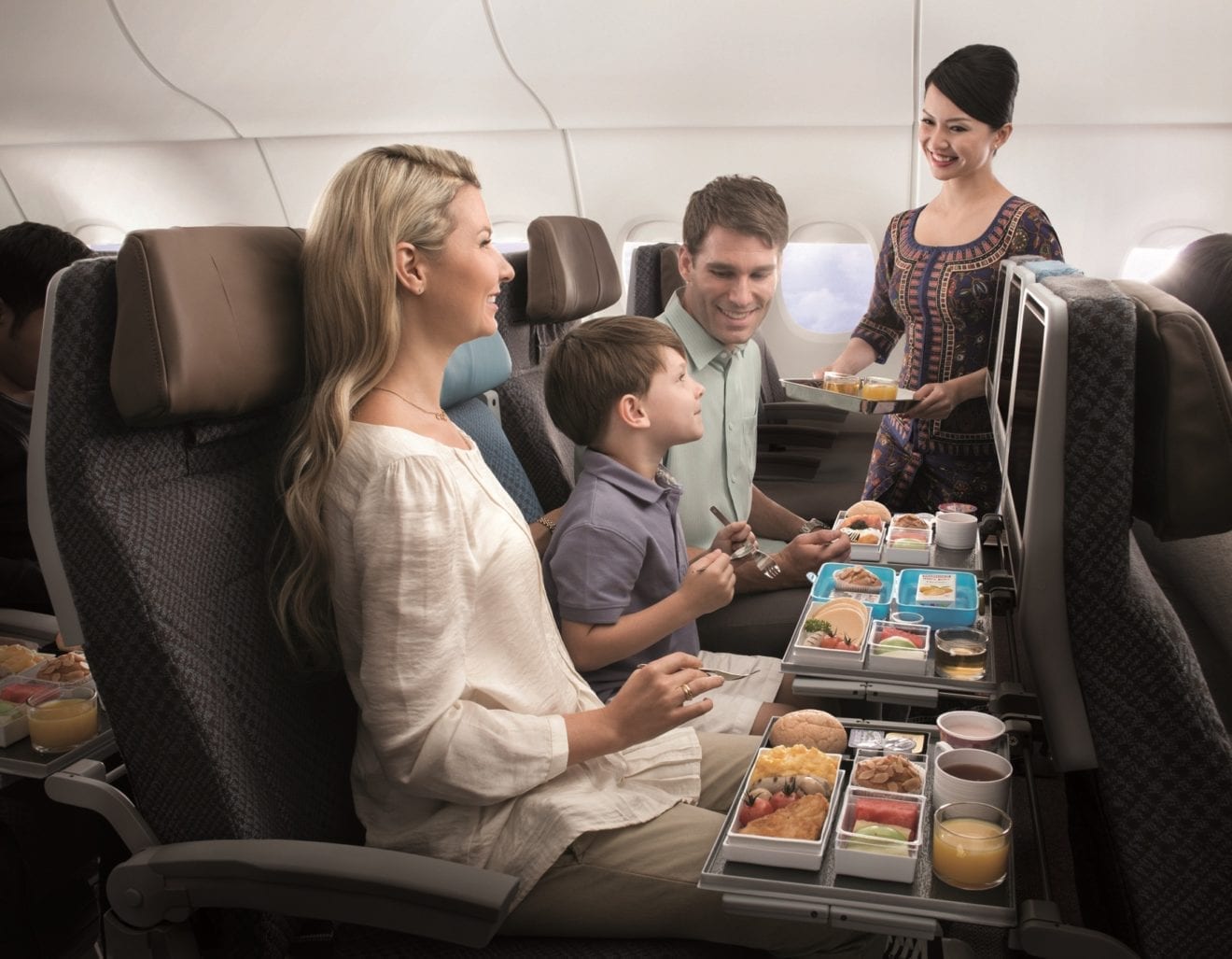
  • Singapore Airlines rolling out more planes with premium economy cabins

    Singapore Airlines rolling out more planes with premium economy cabins

    Singapore Airlines (SIA) is banking on premium economy services to entice travelers to pay more for extra comfort.

    About four in 10 SIA planes now offer the service, slightly more than a year since it rolled out premium economy cabins, which offer perks such as more legroom and better food.

    And the carrier said it will continue to retrofit more aircraft with such cabins to meet travelers’ needs.

    Demand is especially strong on long-haul routes, said SIA spokesman Nicholas Ionides.

    The premium economy cabin includes features such as wider seats with greater recline and more legroom.

    First introduced more than two decades ago, such cabins are now found on more than 50 carriers worldwide, including American, European and Asian airlines.

    Apart from SIA, airlines that have rolled out such cabins in recent years include Hong Kong’s Cathay Pacific, which introduced them in 2012.

    Middle Eastern airlines, which have so far resisted the option, are now considering it as well.

    Premium economy services have caught on as they are popular with travelers who do not mind paying more for extra comfort, especially on long-haul flights.

    Cost-conscious businesses are also turning to them as an option for their executives on work trips, experts said.

    A premium economy ticket can cost up to 1 ½ times more than the economy fare, though this also varies depending on routes and time of travel.

    “The difference between the economy and premium economy fares for last-minute bookings can reduce significantly to just around 20 per cent to 30 per cent in some cases,” said Akshay Kapoor, director (Asia-Pacific) at CWT Solutions Group, which manages travel for corporate clients.

    While most airlines have taken a keen interest in the premium economy product, most tend to roll this out rather cautiously, he said.

    The number of premium economy seats is typically below 10 per cent of the total number of seats on the aircraft, said Kapoor.

    One concern that airlines have is that instead of economy travelers upgrading, business travelers could end up downgrading.

    Brendan Sobie, a Singapore-based analyst at the Centre for Aviation think-tank, said: “The idea is always to get economy class passengers to upgrade rather than to cannibalise business class.

    “However, there is always some cannibalisation – generally not a significant amount but there’s always the risk.”

    At Cathay Pacific and SIA, premium economy passengers are a mix of those who have downgraded from business and those who used to fly economy but are increasingly drawn to premium economy, especially on long-haul flights to North America and Europe, for example.

    However, given the uncertain global economic outlook, experts expect more business travelers to downgrade.

    Kapoor said: “With continued economic uncertainty expected over the next few quarters, we believe that organisations will increasingly be seeking avenues to drive savings in their travel spend without having to cut down on the amount they travel.

    “Taking premium economy over business class could save 60 to 70 per cent of the airfare and allow for more trips to a destination for the same dollar amount.”

    Rayman Som, 51, a human resource director who travels four to five times a year, has flown twice on SIA’s premium economy class on company expense.

    He said he took a short flight to Hong Kong the first time, so it did not make much difference. But he flew to Paris the second time and it proved a different experience.

    “The wider seat, more legroom and greater recline were much welcomed on the longer flight,” he said.

    He added: “Would I pay out of my own pocket for premium economy? For a short flight, no. For longer journeys, it makes sense if the price is right. I think 30 to 40 per cent more is reasonable.”

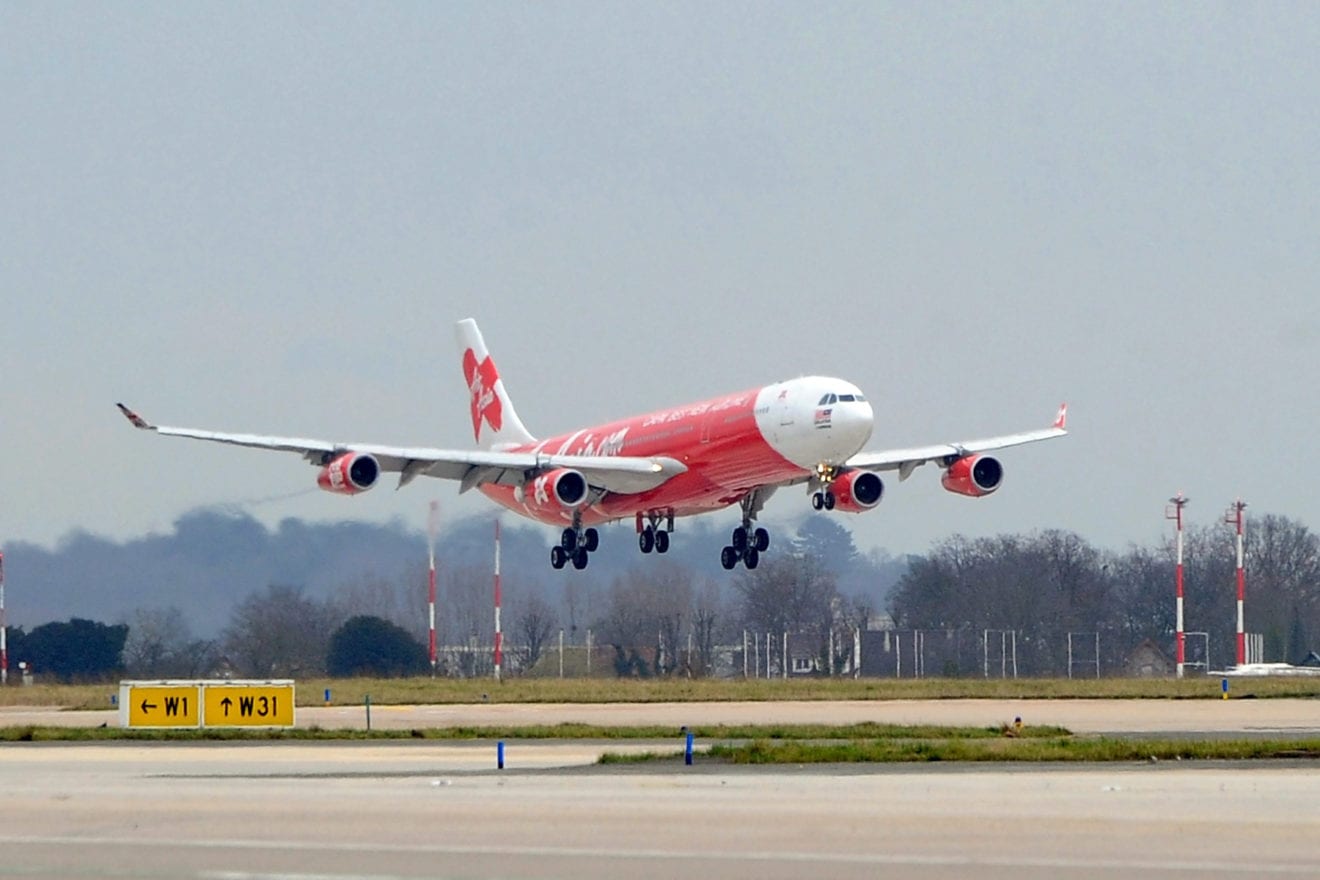
  • AirAsia Philippines wants flights to India

    AirAsia Philippines wants flights to India

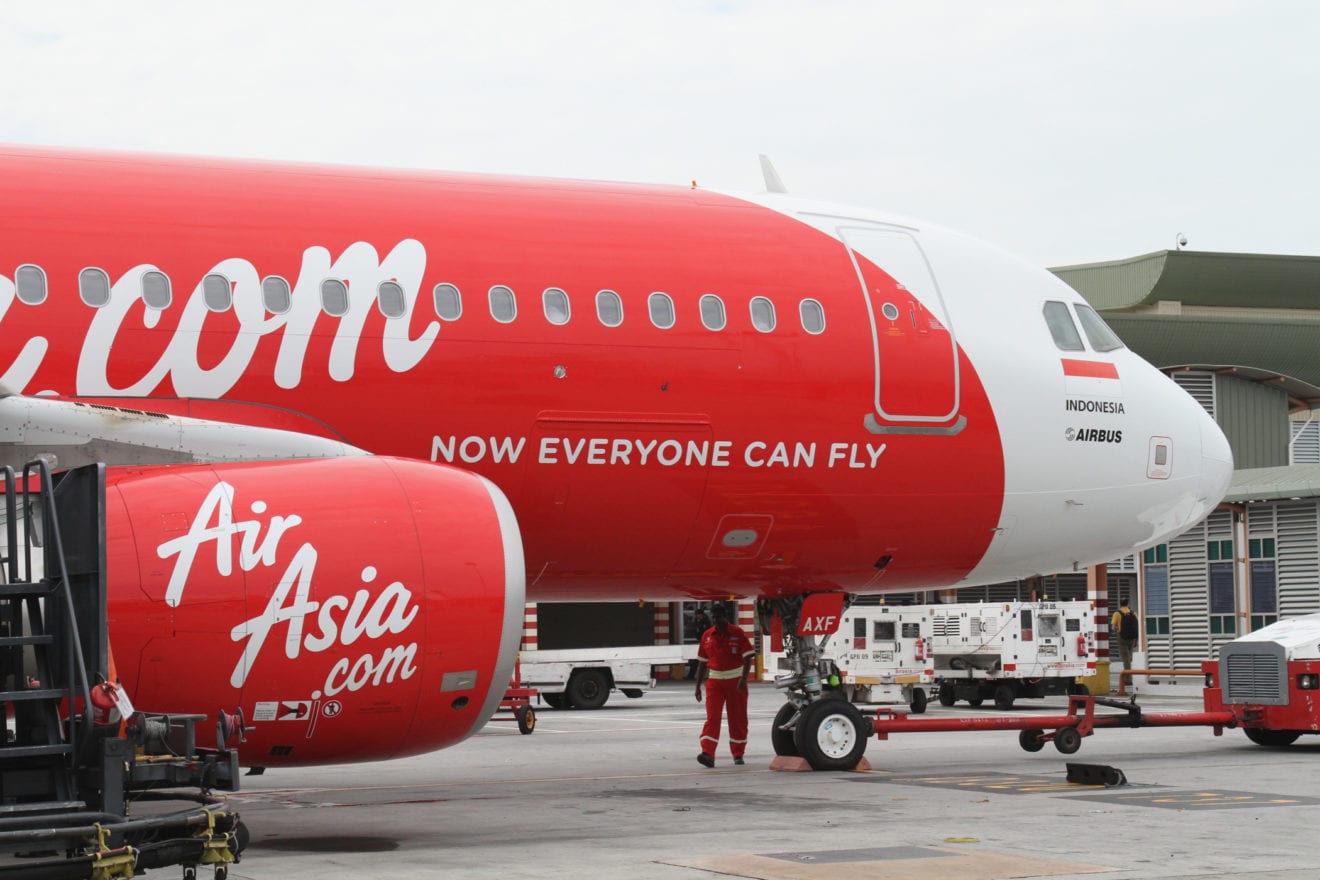
    Budget airline Philippines AirAsia wants flights to India and has sought the Philippine government’s approval for the right to launch a route to New Delhi.

    Philippines AirAsia, the domestic unit of Malaysian budget carrier giant AirAsia Berhad, filed an application with the Civil Aeronautics Board (CAB) last month, a regulatory filing showed.

    According to the filing, the airline was seeking an allocation of seven weekly flights to New Delhi’s Indira Gandhi International Airport, via Bangkok, Thailand. This was in accordance with the existing air services agreement between the Philippines and India, it said.

    The move was in step with a strategy to broaden its market share in the Philippines for both domestic and international markets.

    Philippines AirAsia, which took over Zest Airways, controls about 10 percent of the Philippine commercial aviation market, which is still dominated by Philippine Airlines and Cebu Pacific Air.

    AirAsia Bhd Group CEO Tony Fernandes said last month he remained bullish on their prospects in the Philippines. Philippines Air Asia, which has yet to post a full-year profit, would be back in the black by 2017, the airline said in a financial filing.

    Fernandes noted that the carrier would soon be able to finance its own expansion plans.

    He said Philippines  AirAsia would accelerate plans to hold an initial public offering in the Philippines, originally eyed in 2018, to next year. He said this would raise over $200 million.

    Philippines AirAsia, which still relies on AirAsia Bhd for financial support, has a fleet of 15 Airbus A320s, which it uses for domestic and regional routes.

    Philippines AirAsia reported a net operating loss of P914.8 million, lower by 2 percent, while net loss after tax narrowed 12 percent to P1.2 billion for the third quarter of 2016, a filing with the Malaysian Stock Exchange showed.

    The airline continued to grow, with revenues up 24 percent to P2.57 billion. Philippines AirAsia said this was due to an 8 percent increase in passenger volume, and increase in average fares by 21 percent to P2,245.

  • South Korea allows new ‘comfort women’ statue

    South Korea allows new ‘comfort women’ statue

    The southern South Korean port of Busan said on Friday (Dec 30) it would allow activists to place a statue symbolising victims of Japanese wartime sex slavery outside the city’s Japanese consulate.

    The municipal authorities had previously removed the “comfort woman” statue, but changed track after Japan’s hawkish defence minister offered prayers at a controversial war shrine in Tokyo.

    Tomomi Inada’s visit on Thursday to the Yasukuni Shrine, which honours millions of mostly Japanese war dead – but also senior military and political figures convicted of war crimes – swiftly drew flack from China and South Korea.

    Activists had first placed their statue outside the consulate on Wednesday – marking their opposition to a South Korea-Japan agreement reached a year ago to finally resolve the comfort women issue.

    Under the accord, which both countries described as “final and irreversible,” Japan offered an apology and a one-billion yen (S$12.4 million) payment to surviving Korean comfort women.

    Critics said the deal did not go far enough in holding Japan responsible for its wartime abuses.

    The statue – a copy of one that sits across the road from the Japanese embassy in Seoul – was swiftly removed from outside the Busan consulate by the authorities.

    But after Inada’s visit stoked an outpouring of public anger, they said it would be returned to the activists.

    “We won’t stop the civic group from setting up the statue there if they wish to do so,” Yonhap news agency quoted local official Park Sam Seok as saying.

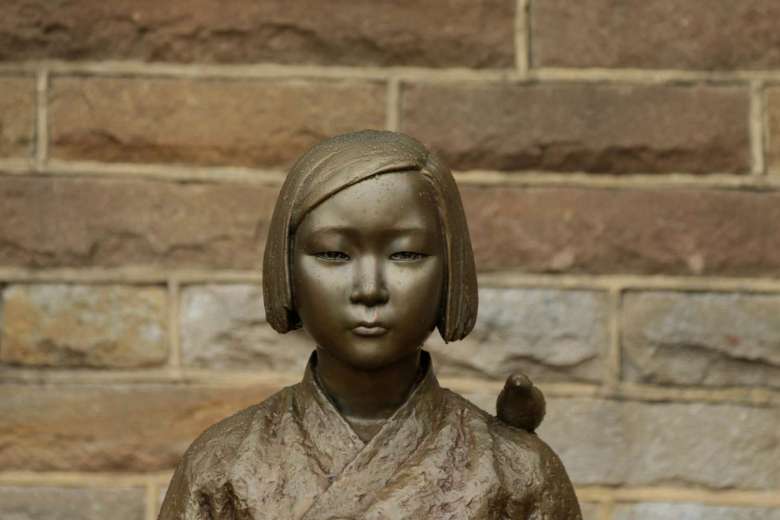
    The statue in Seoul – a bronze of a young, seated woman with a small bird on her shoulder – has proved an extremely potent and popular symbol.

    Japan says it should have been removed after the comfort-women accord was signed, but Seoul argued it had only agreed to look into the possibility of moving it.

    For the past year, activists have maintained a 24-hour vigil to prevent the statue being taken away.

    More than two dozen similar monuments have been erected around South Korea, and another dozen or so abroad in the United States, Canada and elsewhere.

  • E-Land refutes credit downgrade

    E-Land refutes credit downgrade

    E-Land Group, headed by Chairman Park Sung-su, is fiercely refuting the Korea Investors Service’s latest credit downgrade of its holding firm, E-Land World, vowing to file a lawsuit against the ratings agency affiliated with the U.S.-based Moody’s.

    Officials at the mid-tier fashion-and-retail business group argued that the ratings agency’s assessment was flawed, calling on the company to retract its decision to cut the credit worthiness of E-Land World, which has a controlling stake in E-Land Retail and E-Land Park.

    E-Land Retail owns Kim’s Club and other retail outlets, while E-Land Park operates hotels, restaurants and other leisure-related businesses.

    On Monday, the Korea Investors Service lowered E-Land World’s credit ratings by one notch to BBB- from BBB, citing its deteriorating financial health as a result of snowballing debt. The agency maintained its negative outlook for the holding firm.

    “We see no improvement for E-Land Group’s financial conditions even though it has implemented self-rescue measures,” a company analyst said. “With E-Land’s struggling retail and fashion businesses, it would be difficult for the company to generate an operating profit. It is uncertain as to whether E-Land would be able to improve its financial health by executing self-rescue plans.”

    E-Land officials were furious over the credit downgrade, pledging to take the ratings agency to court.

    “It is absurd for the Korea Investors Service to cut the credit ratings for E-Land World when it has successfully been improving its financial soundness over the past few months,” an E-Land Group spokesman said. “The agency assessed the holding firm based on the data available in early September. But it should have included what happened in the fourth quarter of 2016. This is what they did wrong.”

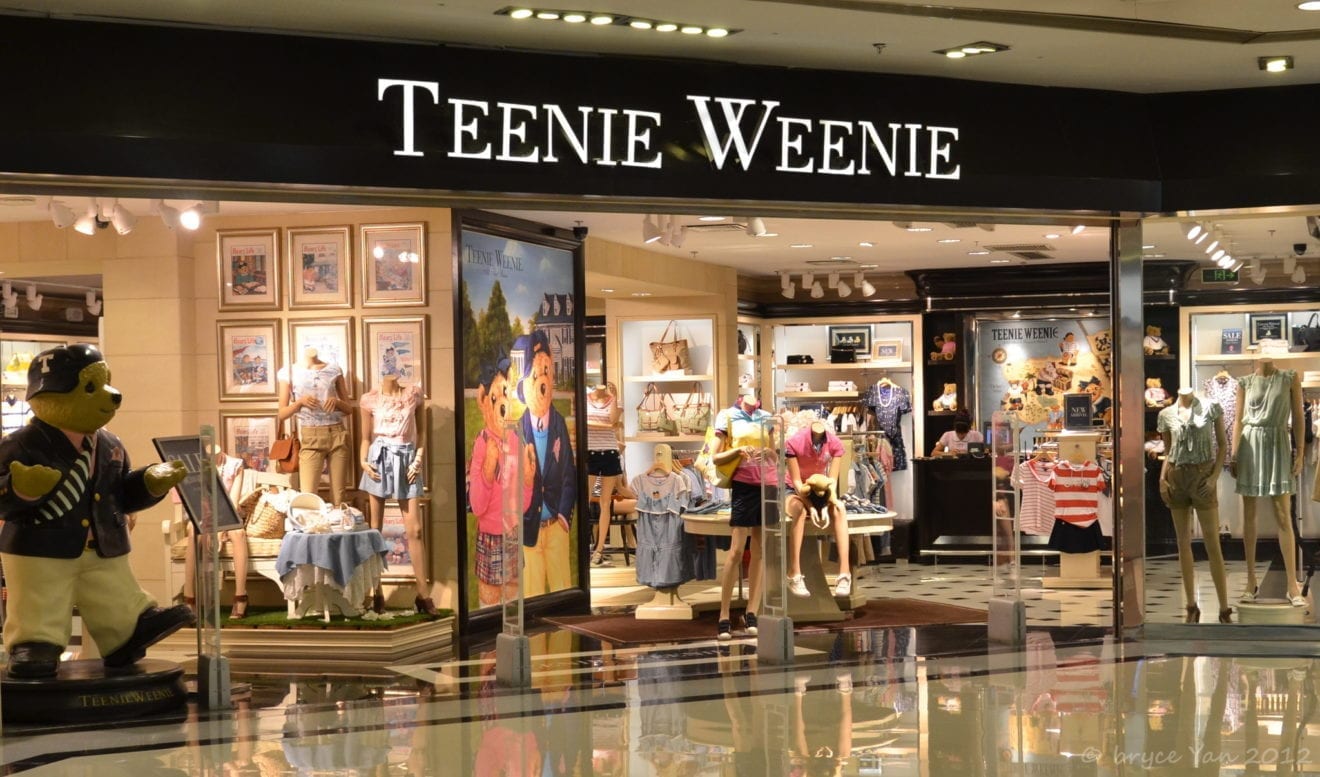
    In late September, E-Land, sold its casual clothing brand, Teenie Weenie, to Chinese fashion brand, V-GRASS, for 1 trillion won ($900 million). Teenie Weenie has about 1,200 stores in major department stores and shopping malls in China.

    The group, which has been desperate to raise cash over the past year, has also sold real estate and plans to list the shares of E-Land Retail in the first half of this year.

    “We believe that the Korea Investors Service has failed to reflect a series of self-rescue moves in its credit assessment of E-Land World. This is just irrational,” the spokesman said. “We will file a lawsuit against the agency to correct its irresponsible behavior.”

  • Art work in Hong Kong malls

    Art work in Hong Kong malls

    The trend of hosting art shows in privately owned spaces with public access is catching on in HK. Is exhibiting in malls the future in a city where galleries are struggling to cope with depleting footfalls?

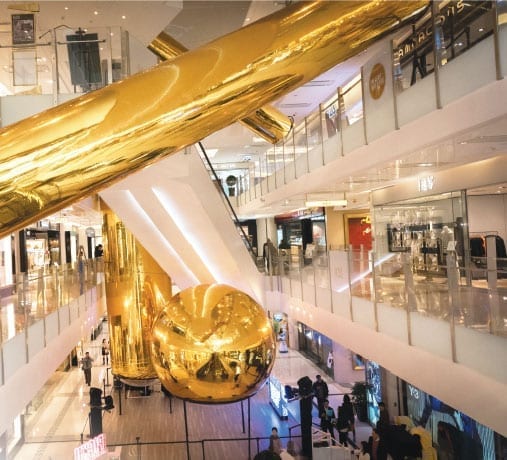
    Last April it was the giant balloons. This month it is mirrors and glass. Last time it was a 17.5-meter high installation by the architect James Shen, shooting up skyward from the base of K11 Atrium at Tsim Sha Tsui, reflecting and transmogrifying the never-ending stream of shoppers riding the escalators on its golden PVC coating. This time it is all about interiority.

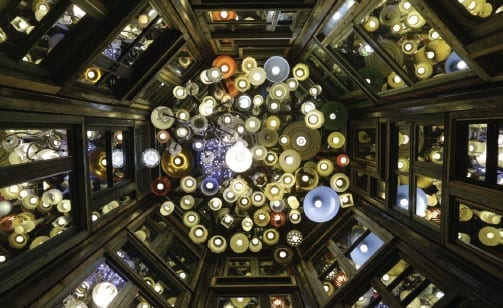
    Shen’s gleaming cylinders and spheres have given way to an octagonal tower made of recycled window panes and mirrors, created by Song Dong. The interiors of the glass capsule are awash with lights streaming down from a complicated chandelier overhead. Placed strategically, the mirrors throw infinite reflections of the light bulbs, near-obliterating the viewer standing inside, even as they accentuate and multiply the “glamorous emptiness” within.

    These two works of art, mounted in K11 Atrium within a few months of each other, explore how our perceptions of in and out might change without warning. In a way they also serve as a metaphor for privately owned public spaces, such as K11 is. Hong Kong’s only “art mall” was founded with a view to making art and commerce a simultaneous experience. Visitors to K11 are expected “to appreciate art while shopping”.

    When a primarily profit-driven, corporate-managed property gives up part of its space to exhibit art for free, the gesture is both radical and beautifully imaginative, much the same way as Shen’s giant balloon and Song’s bottomless glass “well” are in the way they resist the idea of the outside-inside binary as being absolute and irrefutable.

    Happily, K11 is not the only commercial enterprise in Hong Kong to put art under the same roof as retail trade. Hongkong Land hosts art shows periodically in its Rotunda at the Exchange Square and Landmark Atrium, where museum-worthy pieces by classic Western master painters, Peter Paul Rubens and Pierre-Auguste Renoir were on show alongside works by heavyweights of Chinese contemporary art, Luis Chan and Chu Teh-chun, in March. In July Pacific Place held an exhibition of Hong Kong landscapes by city artists to raise funds for a charity.

    The great leveler

    The day when a Zhang Xiaogang or a Liu Wei competes with Gucci bags and Louboutin heels for audience attention from the same store window may not be that far away. The sculptor Richard X. Zawitz, whose show Civilization and the Monkey concluded last month at the Rotunda in Exchange Square at Central, probably won’t mind such an eventuality. In March, Zawitz’s shiny, idiosyncratic metallic loops which playfully imitate the human form were part of a display showcasing pouch bags by JW Anderson at Colette in Paris. The Zen-inspired “tangles”, which is Zawitz’s trademark style, were replicated in the design of the bag handles.

    Zawitz seems unfazed by the fact that many in the audience came to check out the fashion accessory and got to see his sculptures by default.

    “What I like about exhibiting in malls is that there’re a lot of accidental discoveries by people perhaps less inclined to art,” says Zawitz. “Here you are reaching people who never go to museums, reaching a broader audience, bringing creativity to them.”

    He fondly recalls school children trooping down to his last show at the Exchange Square and how they made sketches of his sculptures, some of them scribbling “I love you, Richard” notes on the drawings. There was also a gentleman who walked up to the centerpiece, Zawitz’s abstract rendition of a tree. “He started praying to the tree, to the invisible energy it seemed to disseminate,” says Zawitz, still quite overwhelmed by the power of his own creation.

    It also felt like a vindication of his artistic goals. “I want my audience to engage with my art, look at it, feel it smell it. I very much create art hoping they would evoke passion in people and inspire.”

    The Rotunda seemed like a perfect fit, not only because “its 30-meter diameter and the amazing dome which reflects the positive energy from around the environment” matched Zawitz’s Zen-inspired sculptures in spirit, but also because of the amazing cross section of people it drew. There were bus drivers, Filipino maids, bank executives in business suits and high-profile art collectors.
    Piggybacking on luxury goods

    By hosting art shows in its various open-access private properties all the year round Hongkong Land continues to play a significant role in democratizing high culture. However, says Stefan Al, who teaches urban design at the University of Pennsylvania and edited Mall City: Hong Kong’s Dreamworlds of Consumption (HKU Press), the trend of “making elite art more accessible” is also “a sign of art being increasing commercialized”. “It’s a reflection of shrinking public budget for art and also of people’s growing taste for high-end products,” he adds.

    The existence of K11, founded with a view to marrying shopping with art appreciation, says Al, is “especially symptomatic in Hong Kong where culture has been so much underfunded and developing platforms to showcase art is so much more expensive”.

    It’s almost as if K11 materialized because of a gap created in the realm of conventional exhibition spaces. Tired of waiting for museums closed for long-term renovation work to reopen even as others take longer than anticipated to build, audiences are open to exploring alternative venues to see art. Malls seem like a natural choice in Hong Kong where people like the idea of getting more value for the money spent. Art resonates better with the affluent city-dweller when presented as part of a composite consumer experience, with dining, shopping and an afternoon at the spa thrown into the package.

    Expectedly, not everybody is happy to see art piggybacking on Luis Vuitton bags, especially when the two are thrown together arbitrarily. Critics of the consumerist impulse to appropriate art, says Al, “call it co-op art, referring to art placed in sites – malls, corporate office spaces and public plazas – with which they do not have a relationship.” Al’s personal view, however, is that “if it’s done well there is nothing wrong with having art in a mall. It provides opportunity for the artist to display and finance his work. It also is an opportunity for the public to see art.”

    At a time when gallery owners complain about spiraling rents and depleting footfalls, “shopping malls can make for a great, at least interim, solution to bring art to as many people as possible”, says Lee Ho-yin, director of architectural conservation programs at the University of Hong Kong. Even architecturally speaking, malls make for sensible, user-friendly choices, he says.

    “Modern high-end shopping malls have a huge atrium space with the flexibility of displaying art of different sizes, hung from the ceiling, free-standing on the ground or displayed on the wall,” explains Lee. “Also these are air-conditioned, comfortable for the visitor, have good security. Climate control guarantees a degree of protection against wear and tear and humidity.”

    But is there a chance the juxtaposition of art and merchandize might deflect attention towards the flashier one of the two? Could malls be the right space for a serious connoisseur of art?

    Lee doesn’t quite see a conflict of interest as “ultimately it is about drawing people to the shop fronts”. And neither does he anticipate malls turning into a gallery for mediocre art by pandering to popular tastes. “Commercial enterprises are profit-oriented. And to be able to make money out of a project, commercial players would want to bring in the very best,” says Lee. “Shopping and accessing art could be very compatible.

    Ground realities

    Interestingly, quite a few art projects mounted in K11 were a tongue-in-cheek comment on the idea of consumerism and its trappings. One of the most striking examples of using elements from pop art and kitsch to subversive effect was a series of photographs by the South Korean-born artist, Lee Jee-young, shown at K11 in 2014. Matchboxes, dices, Lego blocks and other tokens of a consumerist culture were magnified and photographed against closeted, distorted psychedelic backgrounds, showing the lone woman figure as cowering in their menacing presence. In one of the 18 images she is seen drowning in a vortex of hand-painted Chinese fans.

    The series was a dig at the way the goods of desire often take up more space in people’s lives than they had bargained for. Like Shen’s balloon sculpture and Song’s monument of mirrors, Lee tweaked elements borrowed from a consumerist culture and had the show in a space where consumerism thrives to underscore the irony.

    “Having pop art exhibited in a mall is sort of art coming full circle,” says Al.

    Zawitz and Lee won’t rule out malls devoting more spaces to art in the future, taking a share of the market that has conventionally belonged to art galleries and museums. Zawitz says such a trend would be particularly welcome in a city like Hong Kong since “there are hardly any galleries at the street level here because it’s so expensive”. Malls have a distinct advantage over galleries tucked away in the higher floors of industrial buildings, usually visited only by the invited aficionados on opening nights, he says, with less chances of attracting a potentially interested passer-by.

    Al, however, wouldn’t want to see the galleries in Central and Sheung Wan go, or, at any rate, lose their influence in the city’s art ecosystem if indeed malls ate into a chunk of their business. “Walking from gallery to gallery is an outdoor experience, whereas malls are introverted, insulated from the city.”

    He, for one, would miss the vibe an art gallery inspires in the street on which it is located if more of them shut shop and the art they dealt in ended up on a shopping mall display window.
     

  • Vietnam Airlines conquers French market

    Vietnam Airlines conquers French market

    At a customers and agents meeting on December in Paris, Phuong reported that Vietnam Airlines’ revenue in France has increased by 10 percent against last year, in which business class turnover upped 20 percent.

    The carrier’s flights from France to Vietnam made up 54 percent of the market share, posting a year-on-year increase of 1 percent, Phuong said.

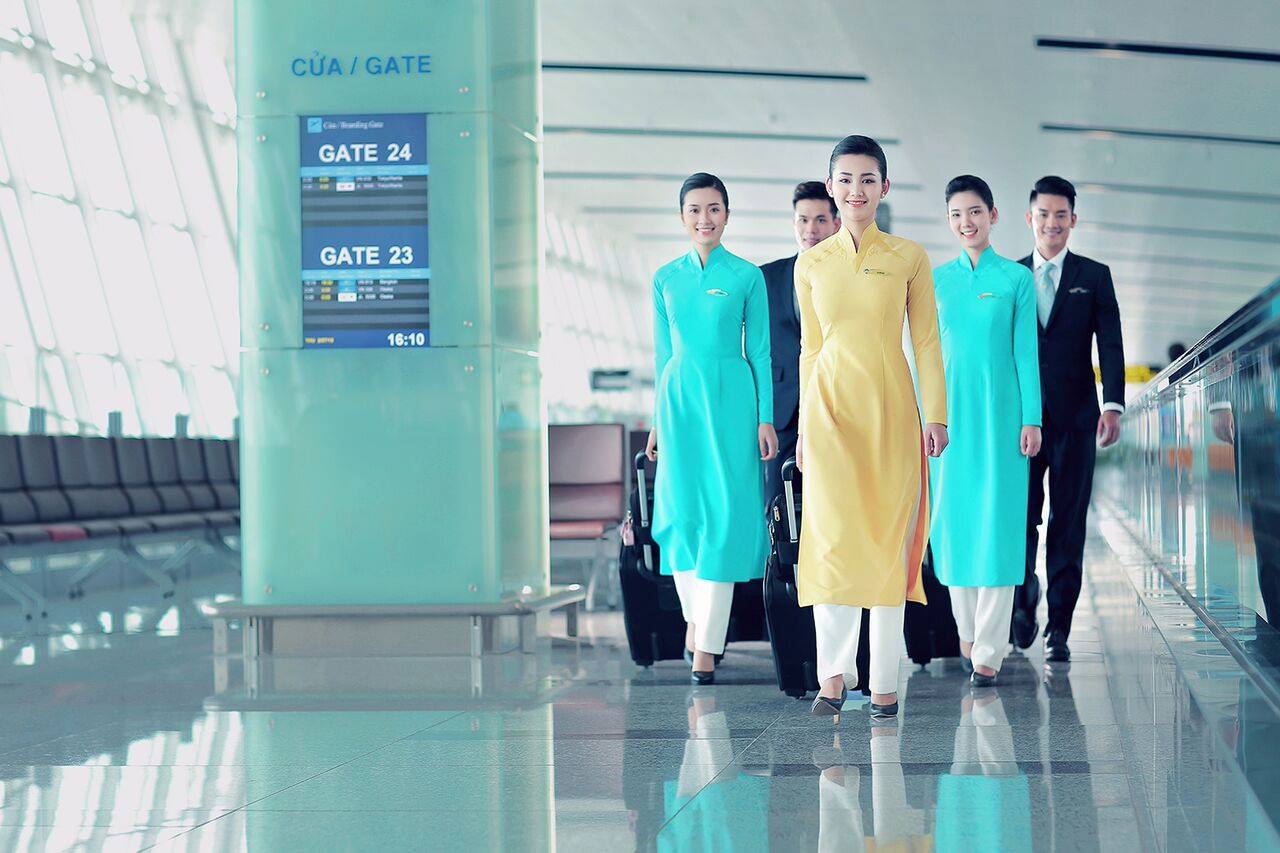
    He also noted that the national flagship will continue use Airbus A305 on Hanoi/Ho Chi Minh City – Paris routes, adding that the modern planes and service improvement have helped Vietnam Airlines meet requirement of passengers and gain a SkyTrax’s four-star airlines title.

    Vietnam Airlines is always the first choice of Vietnamese living in France and French customers, said representatives from many agents.

    It has made a record of transporting over 20 million passengers in 2016.

  • Selangor to ban retail use of plastic bags in 2017

    Selangor to ban retail use of plastic bags in 2017

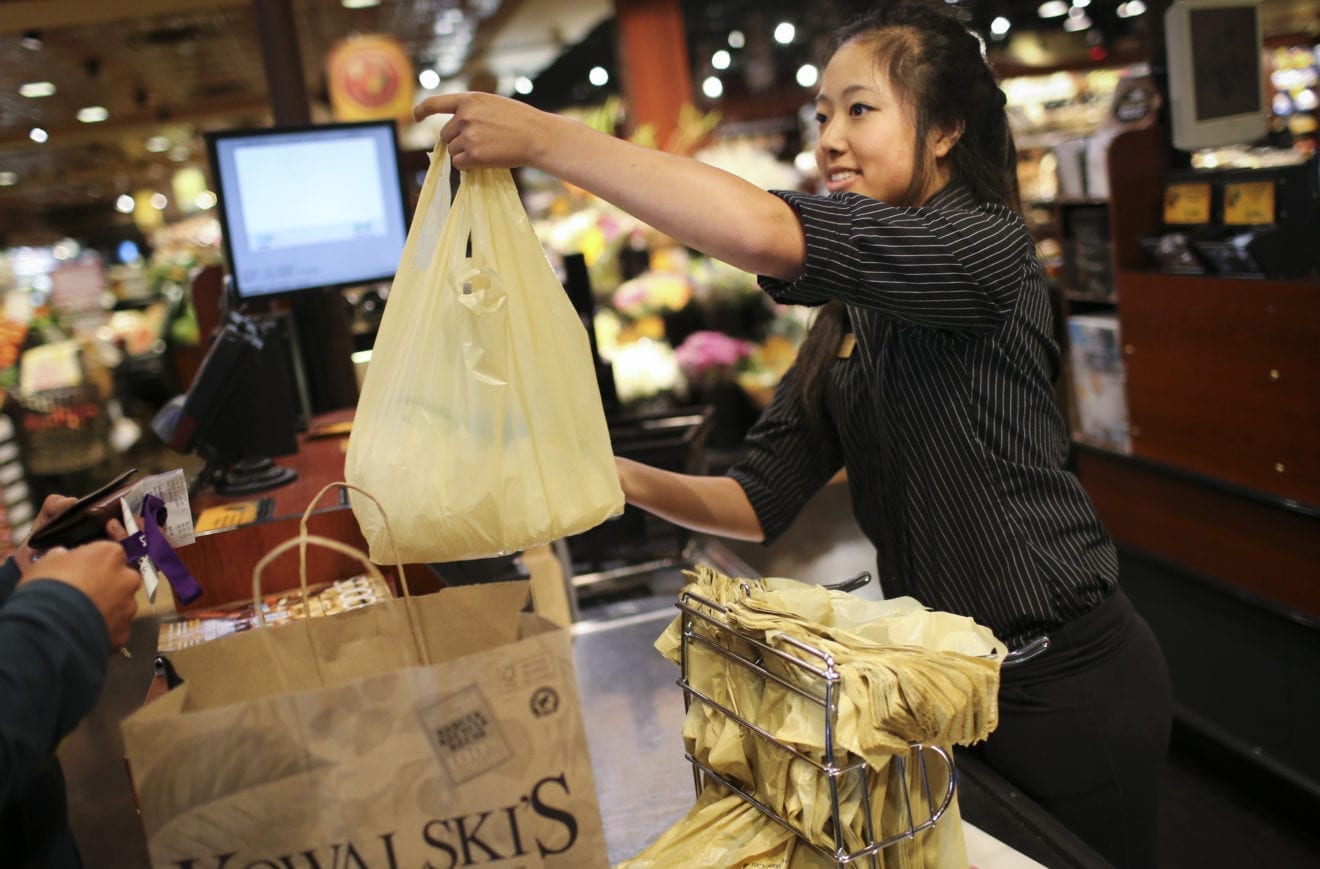
    The Selangor government’s “No Plastic Bag Day” campaign, now held on Saturdays, will be extended to every day of the week starting 2017. Elizabeth Wong said the state government will couple this with the polystyrene-free containers campaign next year.

    “Beginning Jan 1, 2017, all retailers in Selangor will no longer provide polystyrene containers and free single-use plastic bags.

    “Local council by-laws have been revised to support this policy and retailers must agree to go plastic-free when applying for or renewing their licences.

    “All retailers will be provided with visual materials to build awareness of the #BebasPlastik campaign,” she said at the #BebasPlastik campaign launch at the Selangor state secretariat building today.

    Wong, who is Green, Technology, Environment, Tourism and Consumer Affairs Committee chairman, said the state government through research found that 71% of Selangorians felt that the “No Plastic Bag Day” on Saturdays was insufficient.

    “We need change and we are committed to this change by making it a policy to fight rampant littering and to address environmental issues like global warming.

    “The Selangor government has also stopped using plastic bags and polystyrene at all official events and buildings.

    “Change can only happen when every level of society gets involved in the effort,” she said.

    The state aims to collect 20,000 pledges by the new year.

    Selangor started the “No Plastic Bag Day” in 2010 with support from most supermarkets, mini markets and retail premises every Saturday.

    Customers are charged 20 sen for each plastic bag they require and the money is channelled to charity bodies or consumerism programmes and environmental conservation efforts.

  • Enduring lure of pen and paper boosts Moleskine

    Enduring lure of pen and paper boosts Moleskine

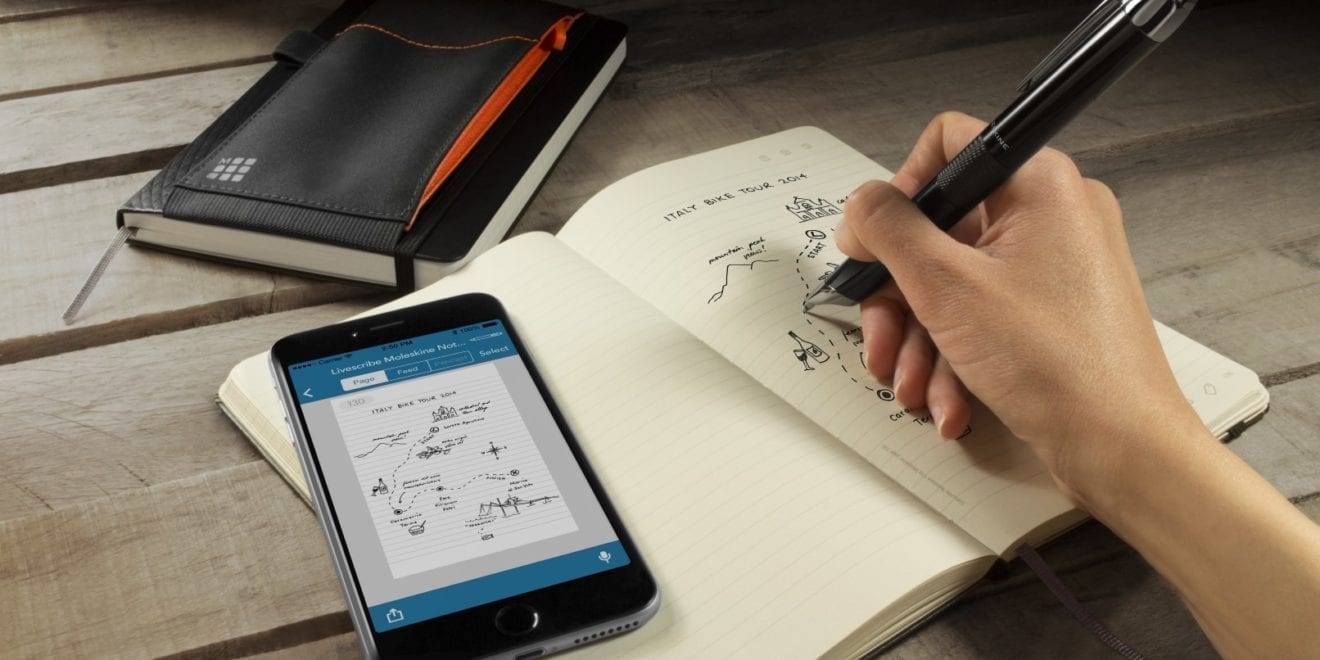
    From spelling out New Year’s resolutions to jotting down designer brainwaves, sometimes only a pen and paper will do, even in the digital era.

    And those are the kind of niches that have enabled Italian notebook manufacturer Moleskine to leverage its historically evocative brand into the kind of rapid growth not usually associated with the staid world of stationery.

    The Italian group’s sales have more than tripled in the last seven years.

    Turnover in 2015 was 128 million euros (US$134mil); 200 million is the target for 2018 with Asia in the frontline of the company’s plans to expand its retail network from 80 outlets to 120 over the same period.

    According to business expert Alessandro Brun, the growth has been driven by Moleskine’s ability to successfully pitch an “extremely ordinary” item as being an object of desire imbued with history and an essential lifestyle tool for the contemporary creative.

    “It is fair to talk about a Moleskine phenomenon,” said Brun, professor of company management at Milan Polytechnic.

    From its launch as a brand in 1997, under then-owner Milanese publisher Modo & Modo, Moleskine has hammered away at the idea that it has revived the classic notebooks favoured by the likes of Picasso, Van Gogh and Hemingway.

    Those now sold under the Moleskine brand are indeed modelled on those once manufactured by a French provincial bookbinder for Paris stationers. But they are made in China, rather than the Loire valley.

    With their rounded edges and distinctive elastic binder, the original notebooks were known as “carnets moleskines” in French, because their smooth black covers were thought to resemble moleskin.They were a classic of simple design but production stopped in 1986 when their original manufacturer, based in the town of Tours, closed.

    Famously, travel writer Bruce Chatwin was so distraught he went round buying up as many as he could find, then wrote a lament to the notebooks in his book The Songlines that came out the following year.

  • Jubilee Enterprise plans stores for two diamond brands

    Jubilee Enterprise plans stores for two diamond brands

    Jubilee Enterprise, a listed diamond-jewellery retailer in Thailand, has revealed a plan to open physical stores under two strategic brands.

    Chief executive officer Unyarat Pornprakit said Jubilee Enterprise was currently managing two brands, Jubilee Diamond and Forevermark.

    “Jubilee Diamond is a diamond-jewellery brand that the company owns, which is currently the No 1 diamond-jewellery brand in Thailand, with the largest number of outlets, more than 120 branches across the country,” she said.

    “Meanwhile, Forevermark is a diamond brand owned by De Beers Group for which Jubilee Enterprise is Thailand’s exclusive authorised retailer.

    “The business plans for the two brands are different in direction and each will contribute to the company in a different way.

    “Forevermark has so far been in Thailand for less than a year but is the No 1 diamond brand in the world. Forevermark has a unique diamond selection process and works exclusively with top-class diamond cutters, which results in all Forevermark diamonds being stunningly beautiful. The difference is so obvious we can experience it with the naked eye.

    “‘Beautiful’ is one of the promises of the Forevermark brand, where other promises are ‘rare’ and ‘responsibly sourced’. Therefore the plan for Forevermark involves brand education and outlet expansion.

    “We currently only have three doors outlets for Forevermark but all of them perform quite well. We plan to have at least three and as many as five more doors outlets by the end of 2017. We see potential in more locations within Bangkok as well as other major cities,” Unyarat said.

    She said that for now the company only had Forevermark exclusive rights for Thailand, including e-commerce. Thus no plans to take Forevermark outside the country are on the drawing board yet.

    The focus of the outlet expansion for Forevermark will be physical stores in Thailand.

    For Jubilee Diamond, the company is looking into the obvious potential within Cambodia, Laos, Myanmar and Vietnam but no solid plans have been drafted yet.

    As Thailand’s retail developers have started their own overseas expansion, the company’s choice of investment platforms has also increased. Its expansion strategy will likely involve business partners, but not for financial reasons.

    “One of the key trigger points will be when our e-commerce platform is launched. Even without the platform, there are some demands from nearby countries through digital channels. Therefore, physical expansion may not be our first overseas initiative,” Unyarat said.

    She said the budget for next year’s expansion would mainly go into diamond inventory, which can always be liquidated. Normally, the investment per branch expansion is around Bt7 million and Bt10 million. So the total cost for the new outlets would be between Bt80 million and Bt100 million next year. Other costs are significantly less critical, thus make the company’s expansion plan a safe move.

    “Jubilee Diamond’s business plan does not have brand expansion as a key strategy, since the brand is already the largest in the market.

    The key business driver for Jubilee Diamond is market differentiation, which comes from product innovation, a unique brand experience, and supply sourcing strategy.

    “Best-quality diamonds have always been the brand’s key strength, but a few years ago, Jubilee Diamond began slowly introducing a unique brand experience and product innovation,” she said.

    Unyarat said the company’s outlet-expansion strategy would be tied closely with partners that are major retail developers.

    “For the Jubilee Diamond brand, you can expect to find our stores in all major shopping complexes and department stores. So by next year, there should be at least over 125 Jubilee Diamond stores throughout Thailand,” she said.

  • South Korea’s consumer sentiment suffers due to political turmoil

    South Korea’s consumer sentiment suffers due to political turmoil

    It’s been a dramatic year for South Korea. And that drama has played out both in the political and business spheres.  Let’s show you what it’s done to consumer spending.

    Consumer sentiment last month dropped its the lowest level since the 2009 financial crisis. The Bank of Korea, says the consumer sentiment index stood at 95.8 in November.

    Retail sales in South Korea have dropped more than 1 percent on a yearly basis since the beginning of November. Box office receipts plunged 17 percent on the year in November alone.

  • Trump’s Indonesia projects proceed despite potential conflicts of interest

    Trump’s Indonesia projects proceed despite potential conflicts of interest

    One resort, planned as the largest in Bali, will overlook a spectacular Hindu temple. The other, in the verdant hills of West Java, will adjoin a theme park. The properties will be so luxurious, the Trump Organisation says, that even an impressive five-star rating will not do them justice. So it will give them six stars instead.

    Even as President-elect Donald Trump promises to end foreign business deals that could pose conflicts of interest — there will be “no new deals” while he is in office, he has said — his company is moving ahead with two Indonesian projects that illustrate how tricky that pledge might be.

    None of the construction work to build or renovate structures at the Indonesian resorts has even begun, but Mr Trump has forged relationships with powerful political figures in Indonesia, where such connections are crucial to pushing through big projects.

    That tangle of relationships includes an Indonesian business partner who aspires to high office; a powerful politician accused of trying to extort billions of dollars from a United States mining company; and Mr Trump’s new adviser on regulatory issues, Mr Carl C Icahn, a top shareholder in the mining company.

    The resort projects, which a Trump spokeswoman said last week were “binding contracts”, have created a grey area of conflicting interests that could be hard to separate from an array of issues facing the US and Indonesia, including trade and contested claims over the South China Sea.

    Mr Trump’s local partner on the resorts, Mr Hary Tanoesoedibjo, is a billionaire media mogul with his own political ambitions. He ran for vice-president of Indonesia in 2014 and is organising a political party for another possible run at national office in 2019. If Mr Tanoesoedibjo or his party wins a major role in government, the potential conflicts could escalate significantly.

    “You could have two world leaders that are business partners,” said Professor Richard W Painter, who served as a White House ethics lawyer during the George W Bush administration. “It makes it almost impossible to conduct diplomacy in an even-handed manner. That does not work.”

    Through the partnership with Mr Tanoesoedibjo, Mr Trump has gained access to some of Indonesia’s top political figures, including Mr Setya Novanto, Speaker of the House of Representatives, who was temporarily forced to surrender his leadership post because of corruption allegations in 2015. Mr Novanto was heard on an audio recording seeking a US$4 billion (S$5.8 billion) payment from the US mining giant Freeport-McMoRan.

    Months before the recording came out in December 2015, Mr Trump met Mr Novanto during the presidential campaign at Trump Tower. After their lunch, Mr Trump pulled Mr Novanto before the cameras at a news conference and called him “a great man”, adding, “We will do great things for the United States.”

    The knot of potential conflicts includes Mr Icahn, the billionaire investor who will serve as a special adviser to Mr Trump. He is one of the largest shareholders in Freeport, which does so much business in Indonesia that it is the country’s largest taxpayer and has been seeking to extend its mining contract with the Indonesian government.

    “This stuff is so murky,” said Ms Karen Hobert Flynn, president of Common Cause, a nonprofit group that has called for Mr Trump to sell off his businesses to avert conflicts of interest. “It is not going to be clean moving forward. There are going to be complications as these projects move forward.”

    Mr Trump has provided little clarity about what he means by “no new deals”, a vow made in a Twitter post he sent out in mid-December. His aides suggested in interviews last week that even if construction had not started on a project, the Trump Organisation would move ahead if it had a binding agreement.

    For Mr Trump, the Indonesian deals are licensing and management agreements in which he provides the use of his name and his company manages the resorts.

    Even though no structures were built, Mr Trump secured a considerable payout on the two deals, according to a financial disclosure report that listed payments ranging from US$1 million to US$5 million for each of the projects between January 2015 through May 2016. That is far more than the US$400,000 salary paid to the President, which Mr Trump has said he will decline.

    Mr Trump created the corporations that manage these projects — including DT Bali Hotel Manager and DT Lido Hotel Manager — in late June 2015, just a week after he declared his intention to run for President.

    His companies have operations in at least 20 countries, including the Philippines, India, Turkey and Britain, but the full extent of his foreign financial ties is unclear because he has refused to release his tax returns or disclose the identity of his lenders.

    In addition to the no-new-deals pledge, Mr Trump has said that his sons, Eric and Donald Jr, along with other executives, will manage the family’s global real estate business.

    The Trump Organisation has recently moved to resolve potential controversies, in part by closing family foundations. It has also dropped a number of its proposed projects, including Trump Office Buenos Aires in Argentina; Trump Towers Rio and Trump Hotel Rio de Janeiro, both in Brazil; Trump International Hotel & Tower Baku in Azerbaijan; Trump Tower Batumi in Georgia; and Trump Riverwalk in Pune, India, representatives from the Trump Organisation have said last week, in response to questions.

    But other projects — including some on which construction has not started or is not well underway — are moving ahead, including Trump Tower Mumbai and a Trump tower in Gurgaon, both in India; Trump Tower Punta del Este in Uruguay; Trump International Golf Club, Dubai, and Trump World Golf Club, Dubai, both in the United Arab Emirates; and Trump International Hotel & Tower Vancouver, in Canada, the Trump Organisation confirmed.

    Ms Amanda Miller, the Trump Organisation spokeswoman, said of the two Indonesian projects: “Construction is well underway and will proceed as planned.”

    In fact, construction has started only on a golf course and toll road as part of the Lido Lakes resort in West Java. Separating the enterprise from politics may also be difficult because Mr Tanoesoedibjo’s MNC Group is building the road to the site as part of a government highway project.

    No new structures have been built at Lido Lakes or at the resort near the stunning Tanah Lot temple in Bali. A 20-year-old hotel, the Pan Pacific Nirwana Bali Resort, stands on the Bali property and could be renovated to create a Trump hotel, but that work has not begun.

    The two resorts will give the Trump brand a high profile in Indonesia — which has the world’s largest Muslim population — with the Trump name adorning two luxury hotels and premier golf courses as well as high-end villas and condominiums. Yet the US President’s name on the projects could also make them potential targets. During the campaign, Mr Trump made statements about Muslims widely viewed as inflammatory. US hotels in Jakarta have been attacked by terrorists several times.

    On Wednesday, Mr Trump accused the news media of exaggerating any potential conflicts presented by his business holdings. “It’s not a big deal; you people are making it a big deal, the business,” Mr Trump said on the steps of his Mar-a-Lago resort in Florida, where he was spending the holidays. “They all knew I had big business all over the place.”

  • Use underground space to boost retail in Singapore

    Use underground space to boost retail in Singapore

    In land-scarce Singapore, land optimisation is a strategic thrust that is achieved by reclaiming land, intensifying land use upwards, and building downwards.

    However, there are limits to land reclamation and building upwards due to maritime and aviation constraints respectively.

    Therefore, unlocking underground space and synergising below and above-ground land use is the next frontier for Singapore.

    To facilitate the growth of an extensive underground pedestrian network, the Urban Redevelopment Authority (URA) developed an Underground Master Plan to guide the construction of underground walkways in the Central Area.

    INCENTIVE SCHEME

    While the government has the ability to finance public underground development, the commercial viability of an underpass is a significant consideration for building owners and developers.

    Consequently, URA implemented an incentive scheme in 2004 to co-fund the construction of strategic underground links in the Central Region, in particular Orchard Road.

    However, no developer on Orchard Road has voluntarily capitalised on the URA incentive scheme to construct underground connections.

    This provided the key impetus for this study, which focuses on the integration of underground walkways with existing buildings on Orchard Road.

    It evaluates the feasibility of an underpass from the perspective of developers, retailers, and the public.

    PERSPECTIVES OF DEVELOPERS, RETAILERS AND THE PUBLIC

    From a developer’s perspective, there are two motivations for an underpass.

    First, an underground walkway provides a seamless, all-weather retail experience.

    Second, an underpass enhances underground connectivity which could generate higher foot traffic, resulting in higher rents for landlords.

    Furthermore, we found that there are two tiers of underpass in terms of connectivity efficiency, whereby a primary underground linkway provides a direct connection between an MRT station and shopping mall, while a secondary underpass connects two adjacent shopping malls.

    However, there are six barriers to the development of an underground walkway, namely:

    • (a) high construction cost;
    • (b) subterranean land premium;
    • (c) extensive underground infrastructure beneath public roads;
    • (d) structural building limitations;
    • (e) loss of rental revenue during construction period; and (f) diversion of pedestrian traffic to competitors’ shopping malls.

    Consequently, the total development cost – comprising high construction cost and subterranean land premium – renders an underpass commercially infeasible.

    A robust tenant mix is central to the success of an underpass, and the demand for retail space along the link depends on the rent and trade mix.

    Generally, retail rent is contingent upon the location within a shopping mall, shop size, and the building’s proximity to transportation nodes.

    The rents are highest on the ground-level retail spaces fronting Orchard Road, while rentals in the basement levels are typically lower than those of levels one through three, except in cases with direct connectivity to an MRT station.

    Our study found that the suitable tenant mix for an underground walkway includes fashion, convenience, pharmacy and healthcare, food and beverage, and accessories.

    Furthermore, the tenant mix within an underpass is distinguished from those in the basement levels of a shopping mall.

    From a shopper’s perspective, one may use an underpass to commute, shop, or do both.

    It is dependent on the visibility and connectivity efficiency of an underpass.

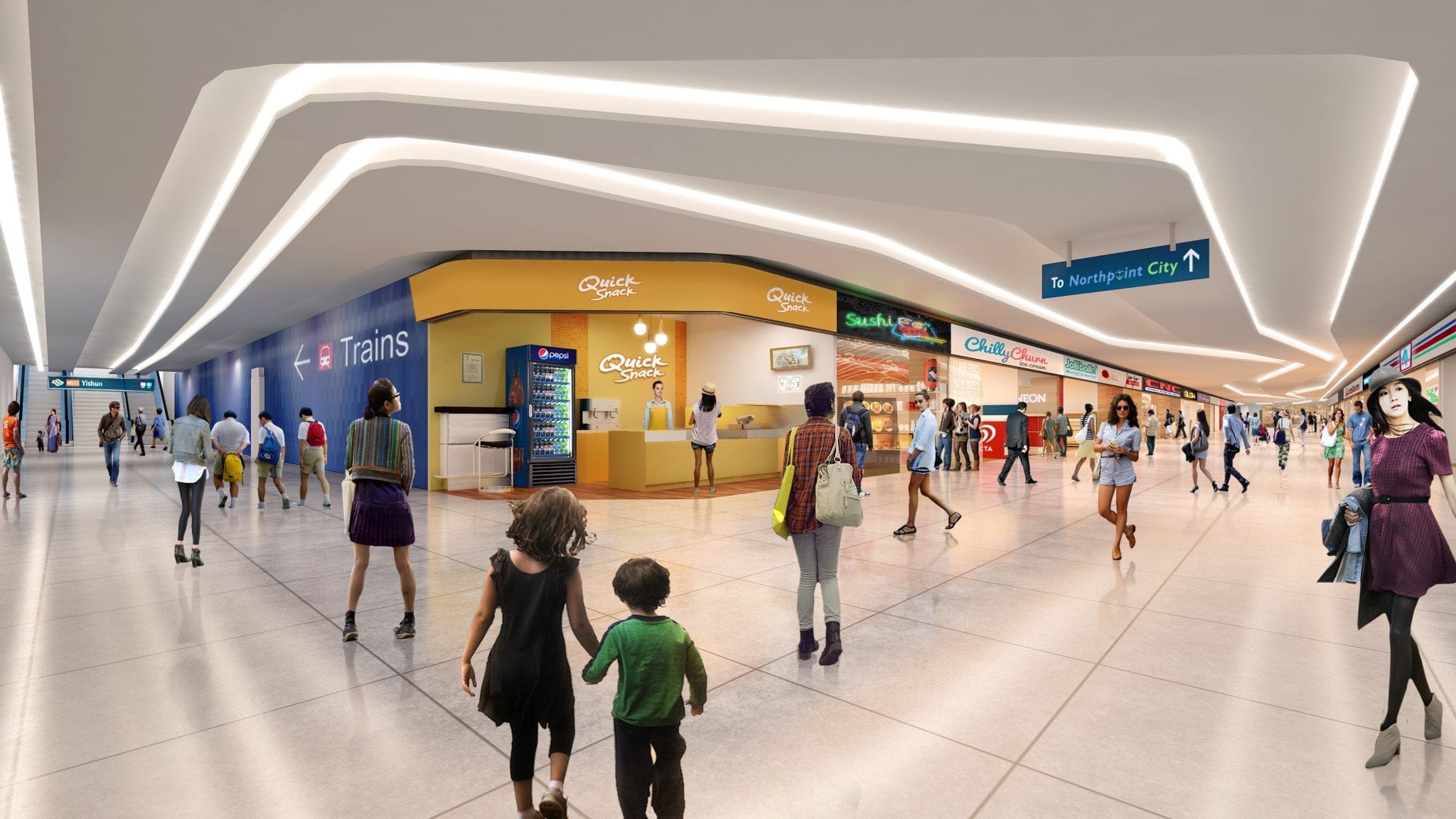
    For instance, the primary underpass between Orchard MRT Station and Tangs Plaza is heavily utilised because it is not only highly visible, but it also serves as an efficient linear connection between the two shopping malls.

    Conversely, the secondary underpass between Orchard Central and The Centrepoint was previously underutilised due to a lack of both visibility and awareness of its existence.

    However, the completion of Orchard Gateway provided a more seamless underground connection between Somerset MRT Station and Orchard Central, generating higher traffic flow to The Centrepoint.

    RECOMMENDATIONS

    Our study proposes four recommendations to encourage the development of new underpasses:

    First, the government could undertake the construction of an underground linkway and sell the retail spaces to investors.

    The precedent was set by the sale of Tangs Underpass, connecting ION Orchard and Tangs Plaza, to joint-venture partners CapitaLand and Sun Hung Kai Properties.

    Today, the Tangs Underpass is lined with retail spaces on both sides of the walkway.

    Second, our study proposes further enhancement to the subsidy on public pedestrian walkways and an introduction of a subsidy for retail space under the URA incentive scheme.

    These refinements significantly reduce the construction cost of an underpass, thereby making it commercially viable for building owners and developers.

    Third, the government may consider the provision of feasibility studies and infrastructure support under the URA incentive scheme, which would benefit both the state and the market.

    From the state’s perspective, this would develop the underground database to aid future planning of subterranean space.

    Furthermore, it would provide the market with clarity on the physical conditions encompassing land parcels and technical requirements of an underpass.

    Additionally, infrastructure support could be offered in the form of cash subsidies to partially offset the high construction costs of underground tunnels on Orchard Road.

    Fourth, an increase in plot ratio could incentivise developers to undertake redevelopment or major addition and alteration works, leading to the construction of an underpass which is mandated by URA.

    The 2014 URA Master Plan allows up to a 15 per cent bonus in base plot ratio for land sites above 10,000 square metres in the Orchard Planning Area.

    Furthermore, there is a variety of space and design incentive schemes to maximise a site’s development potential.

    The upcoming Orchard Boulevard MRT Station in 2021 may motivate building owners to amalgamate land parcels in West Orchard and carry out redevelopment or major addition and alteration works, giving rise to the creation of new underground walkways.

    In conclusion, an effective incentive scheme entails a delicate balance between the objectives of the state in enhancing underground connectivity and the market, where profit matters.

    Ultimately, the exploitation of underground space has limitless potential in expanding Singapore’s physical space boundary vertically downwards and optimising land use through the seamless integration of below and above-ground activities.

  • Retail sales in Japan rise by 1.7 percent

    As per industrial data released on Wednesday, Japan has witnessed economical growth after months of stagnation. The country’s industrial output increased 1.5 percent on month, and inventories fell 1.5 percent on month and 4.8 percent on-year.

    Japan’s retail sales also rose by 1.7 percent on-year in November, however, sales of large retailers were down by 0.3 percent on year. The manufacturing industry is meanwhile expected to grow 2 percent in December and 2.2 percent in January.

    The country released revised figures earlier this month, showcasing that its gross domestic product (GDP) for the July-to-September quarter grew 1.3 percent on-year.

    Izumi Devalier, Head of Japan economics at Bank of America-Merrill Lynch said, “We’re now down to levels we saw pretty much at the time of the VAT value-added tax hike. So, inventories are very lean, which means that we should some pretty strong production numbers in the months ahead.”

    “While domestic demand still lacks strength, a pick-up in exports is driving up production. Output will likely continue recovering moderately ahead,” said Takeshi Minami, Chief Economist at Norinchukin Research Institute.

    Growth in exports and factory outputs is offering the country’s economy a boost, while also encouraging policymakers to pull the country’s economy from stagnation.

    Further, the data released showed that Japan’s core consumer price index including oil products dropped 0.4 percent on-year.

    Such a drop has been recorded for the ninth straight month in November.

  • AirAsia X increasing more Teheran flight

    AirAsia X increasing more Teheran flight

    Airasia X Bhd, the long-haul low-cost arm of budget carrier AirAsia, is adding more flights to Teheran from Kuala Lumpur six months after resuming its flight to the capital of Iran. AirAsia X’s chief commercial head Arik De said the airline had received positive response from travellers and seen a steady increase in the Kuala Lumpur-Teheran route load factor.

    He said the airline had recorded 80 per cent average load factor on the route with strong forward bookings trend, especially towards Nooruz celebration in March. “We will raise frequency starting next month onward with four times weekly direct flights to Teheran from Kuala Lumpur,” said Arik. The improved connectivity’s timing will also benefit from Malaysia’s plan to boost bilateral trade and investment ties with Iran.

    Last month, International Trade and Industry Minister Datuk Seri Mustapa Mohamed said the Cabinet had given its approval to embark on bilateral free-trade agreement talks with Iran to take advantage of the potential growth of two-way businesses since trade sanctions were lifted.

    Bilateral trade so far has been small with about US$700 million (RM3.14 billion) in 2015. Malaysia hopes to boost exports to Iran, especially palm oil. Both the governments agreed during a visit by Iranian President Dr Hassan Rouhani in October to double the trade volume. Mustapa said with a population of 80 million, Iran was one of the largest markets in the Gulf region and already businesses were making a beeline to tap potential since sanctions were lifted in January last year.

    Arik said almost a quarter of AirAsia X’s passengers travelled to Tehran via AirAsia’s FlyThru service from the airline’s long- and short-haul networks. The airline resumed its direct flight to Teheran on June 21 last year after suspending the destination in October 2012 following sanctions against Iran.

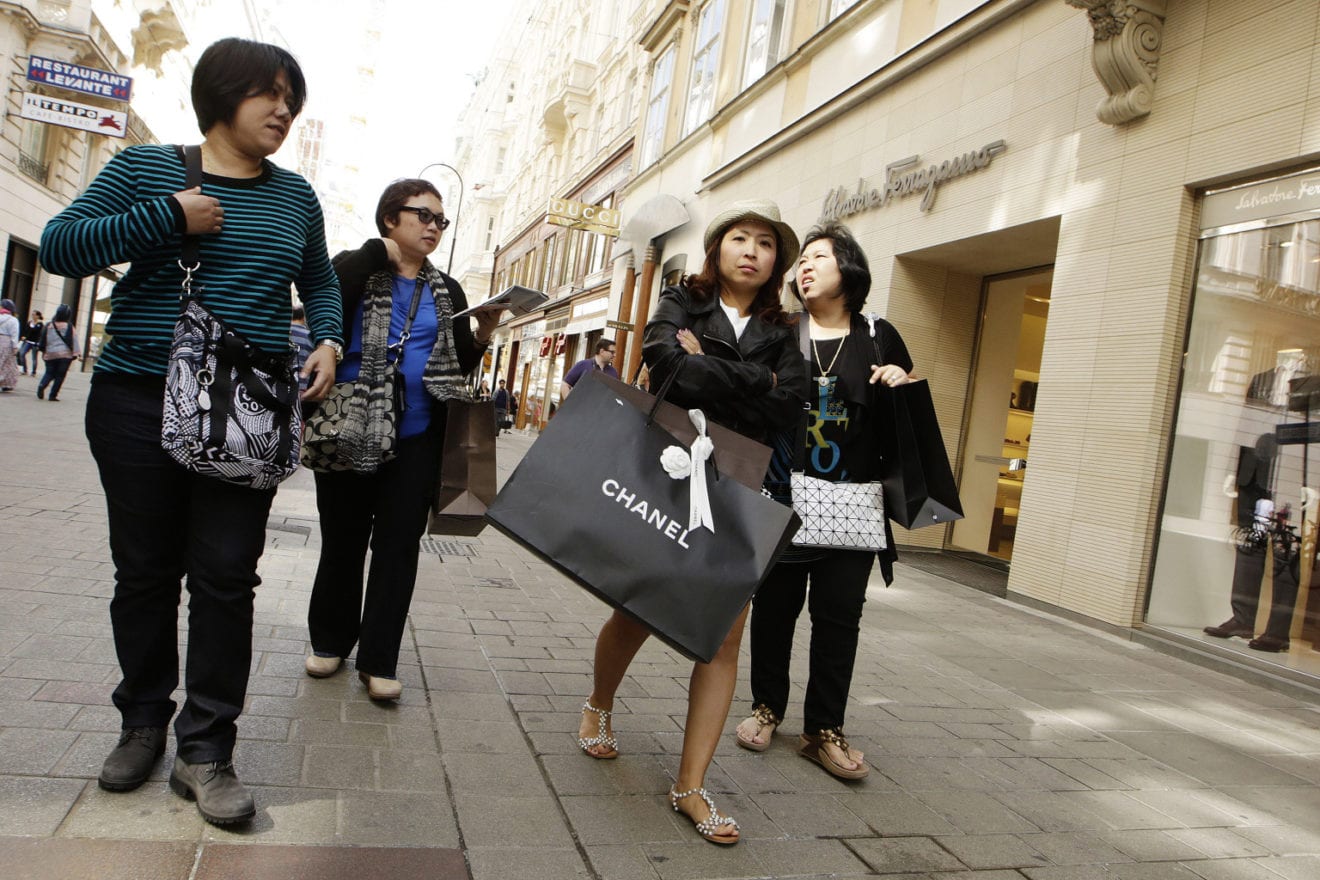
  • Reliance on China makes tourism vulnerable

    Reliance on China makes tourism vulnerable

    A senior director at Lotte Duty Free said the Korean retail giant has lost customers recently. “I don’t think the situation will get any better this year,” the director said. The duty-free company saw its customers decrease by at least 10 percent in December compared to the same period last year.

    This year will be tough for Korea’s tourism industry as a whole as more youke, or Chinese tourists, are turning their backs to what was until recently one of their favorite destinations.

    The main cause is geopolitical. After Korea decided to deploy an American Terminal High Altitude Area Defense system (Thaad) missile defense system, Beijing ordered retaliation against a range of Korean businesses, particularly its entertainment exports. The Chinese government denies issuing vindictive orders to reduce tourists to Korea by 20 percent, but the numbers tell a different story.

    Mismanagement of Chinese group tours, such as forcing them to buy merchandise, is another factor.

    In November, the number of Chinese tourists coming to Korea was 520,000, a mere 1.8 percent increase year on year, according to the Korea Tourism Organization. The growth rate in August was 70.2 percent – partly due to a base effect related to the low number in August 2015 during an outbreak of Middle East respiratory syndrome. This dropped to 22.8 percent in September and 4.7 percent in October.

    For the first time in three years, the rate of Chinese tourists to all tourists in Korea fell below 40 percent to 39.5.

    One internal problem in Korea’s industry is group tours that overly emphasize shopping. The tour groups get commissions from the merchants.

    Ms. Wong, a 32-year-old office worker, was hauled to six shopping places in a single day as part of a five-day group tour to Korea in November. The guide informed the group that the stores were certified by the government, adding that all the salesperson were public officials.

    “I really doubted whether any of the stores I visited today were approved by the government,” she said. “I’ve never heard of the brands before and yet the products were all so expensive.”

    Government approval of stores does exist – a system jointly operated by the Korea Tourism Organization and the Ministry of Culture, Sports and Tourism. Three of the six stores Wang went to were not among the 1,004 certified stores. The other three were well-known duty-free stores.

    “There is no case whatsoever in which a public official works as a sales person at a commercial store,” confirmed a KTO spokesman.

    To tackle the problems with group tours, the Korean and Chinese governments have started to launch regulation on the business.

    According to local industry insiders, China’s tourism companies, who organize and send tourists to Korea, have increasingly made demands such as requesting lower fees from the Korean side or charging incentives per person in exchange for sending groups.

    “I heard of one case in which a Chinese travel agency asked for 300 yuan ($43) per person,” said a source working for a domestic travel company.

    Because the local tourism industry depends so heavily on Chinese tourists, local companies find it hard to resist such requests.

    To make up for those concessions, local tour companies try increasing their revenue by taking groups to duty free shops, where they get commissions.

    After the government issued new duty-free licenses in Seoul, competition among the stores got fiercer.

    “About 10 to 20 percent of sales are given to travel companies as commissions when their customers spend money at our branches, but after the competition heated up, I heard some even started paying up to 30 percent,” said one source.

    That’s causing a kind of race to the bottom in terms of profitability. “The competition has gotten so cut-throat,” said another duty free source, “that even with rising sales, profits are constantly going down.”

    Tourism specialists say Korea’s tourism industry has to reduce its dependence on China and shopping.

    They emphasize the importance of enhancing the cultural experiences for visitors.

    Lee Sho wen, 52, and Lee Li Mei, 47, sisters from Taiwan, spent two of their six days in Korea at a cooking class they found on the internet. The OME Cooking Class has provided Korean cooking classes in English and Chinese for foreigners since March 2015.

    Ha Wong Ming, a 27-year-old from Hong Kong, came to Korea for four days to learn K-pop dancing. He practiced the choreography of Big Bang’s “Bang Bang Bang” for two hours at Coreart, which organizes classes in K-pop dance and samulnori, a traditional percussion performance. “The objective is to offer a chance to experience Korean culture,” said CEO Jee Yoon-seong.

    “Shopping tourism has a limit,” said Lee Ki-Jong, a professor of hospitality and tourism management at Kyung Hee University. “Korea is relatively short of natural scenery so we have to focus more on cultural tourism.”

    In terms of diversifying target markets, a rising alternative to Chinese is Southeast Asians, many of whom are already familiar with Korean culture from hallyu, or the so-called Korean wave of cultural exports like K-pop and television serials.

    The number of Indonesian tourists to Korea November jumped 49.2 percent from 2015, according to the Korea Tourism Organization. Visitors from Vietnam rose 38.7 percent and from Taiwan 35.3 percent during the same period.

    Widening the spectrum of visitors can open new opportunities. For example, Taiwanese tourists have a keen interest in visiting Korea’s strawberry fields and picking fruit.

    Indonesians, many of whom have never seen snow, enjoy ski trips to Korea.