Tag: android

  • Android Auto To Get A New Interface

    Android Auto To Get A New Interface

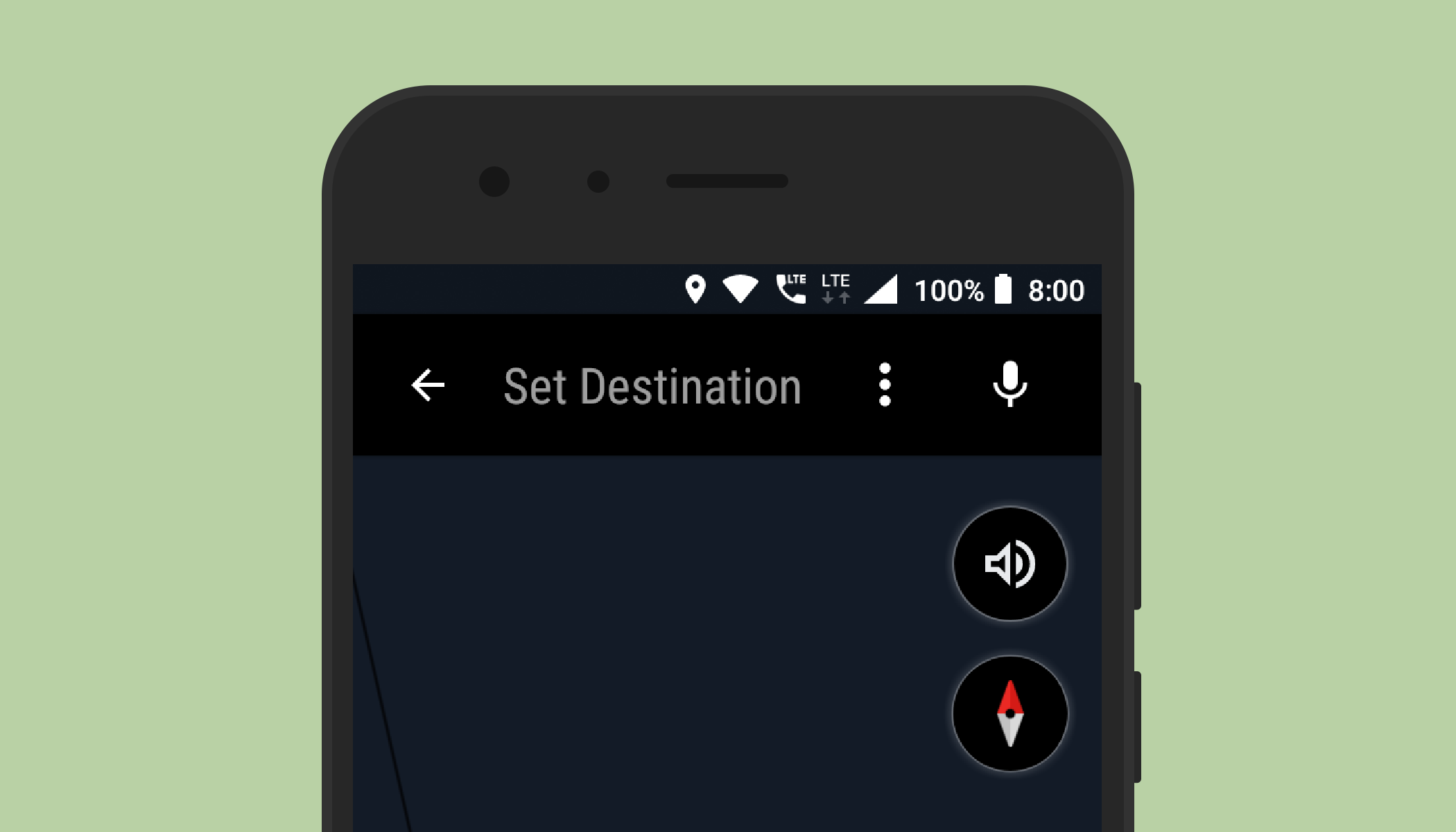
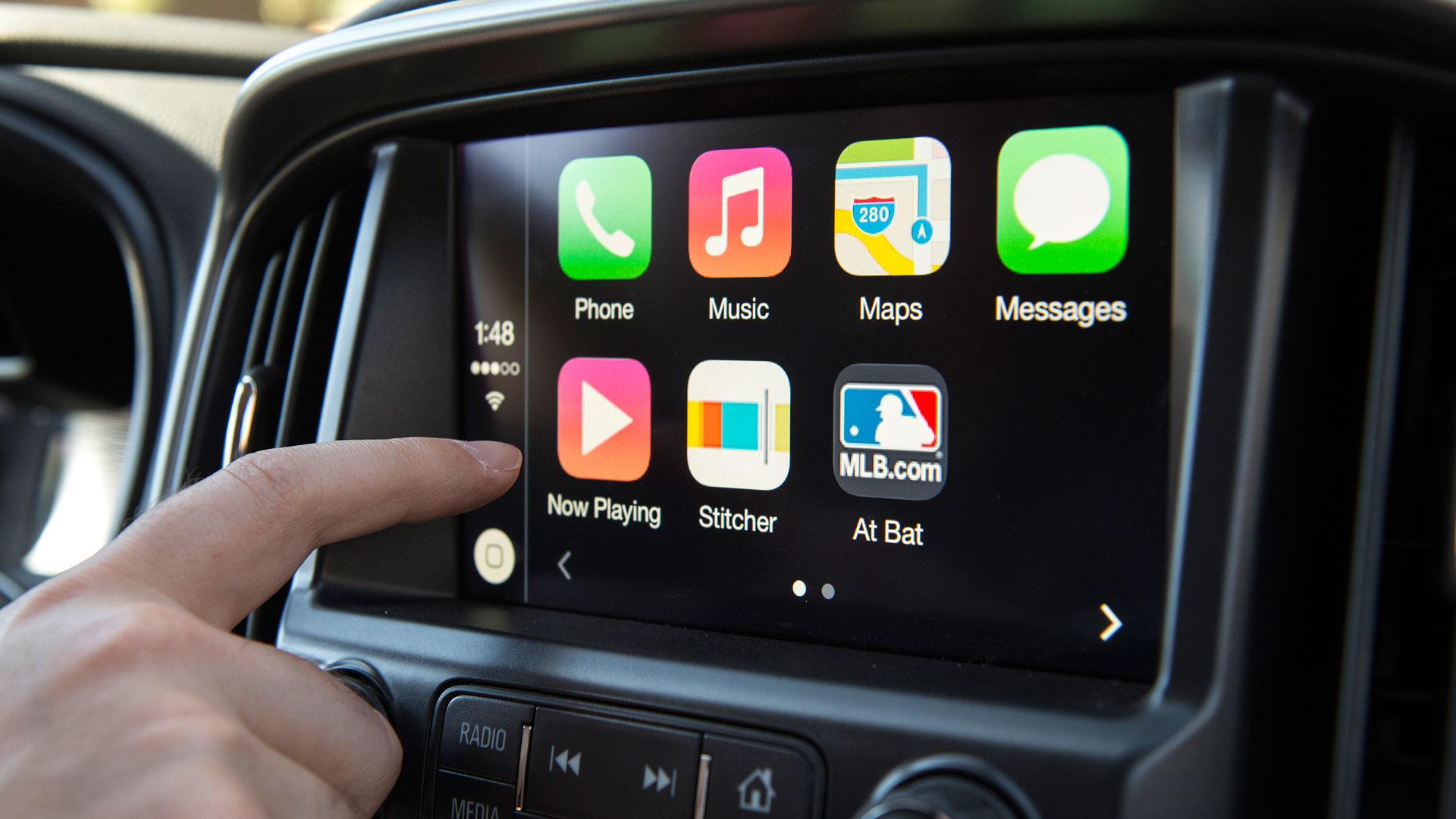
    With connected cars and inbuilt eSIM technologies coming in, chances are that smartphone connectivity in cars is the next big thing. However, Google is going the whole hog and is making Android Auto a lot more engaging. In a blog post, the company shared that Android Auto will be updated with a new interface and some added features will help simplify operations for users.

    The new interface will get a dark theme which will be coupled with colored accents and the fonts will be easier to read. It will also adjust automatically to the size of the display to show more information on the screen like next-turn indicators, playback controls, and ongoing calls. The new notification center will also cover a wider space to show calls, texts, and alerts. Android is also adding a new navigation bar which will show turn-by-turn directions and you will be able to use the rest of the screen for other apps. Moreover, along with resuming your song playlist as soon as you start the car, Android Auto will also suggest locations on your screen based on your commutes. You can also navigate to a new place using the “Hey Google” voice command.

    All in all, the new interface will make your experience even speedy and you will require lesser taps as the majority of the applications will be working simultaneously on the screen of your car along with navigation. Google says that the new dark theme has been made standard to go with the interior of new-age cars. Bigger fonts and lesser taps also allow drivers to focus on the road.

  • Outlook for Android and iOS gaining Fresh Feature

    Outlook for Android and iOS gaining Fresh Feature

    Microsoft is bringing support for a new feature to Outlook for mobile – Actionable Messages. The new feature will be available once the latest update goes live in the App Store and Google Play Store, and it’s meant to allow Outlook users to act fast while on the move.

    For example, whenever you receive an email that has an option to take action (i.e. approving a timesheet, granting system access, answering a survey), you will now be able to respond right inside the email without leaving your inbox or switch apps.

    Moreover, Actionable Message with Adaptive Cards will allow developers to deliver messages in Outlook so that users can stay in context and act fast when they need to. The first brands to work with Microsoft on Actionable Messages are SurveyMonkey, Freshworks, ServiceNow and Sage.

    However, Microsoft is expected to partner with additional brands in the coming months. It’s also worth mentioning that Microsoft will be rolling out Actionable Messages to Android devices in the coming week, while iOS users will be able to take advantage of the new feature starting today.

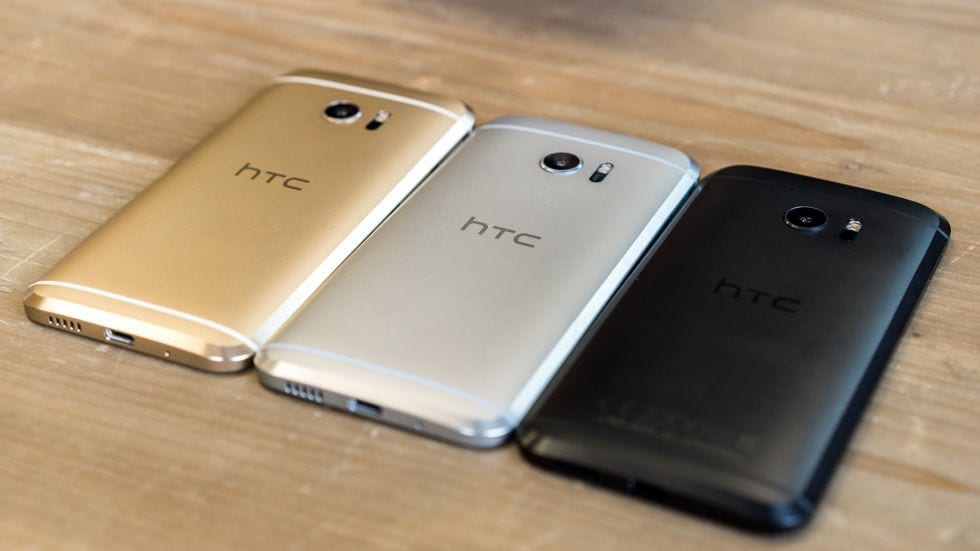
  • HTC’s April Revenue Figures Still Low Despite Efforts

    HTC’s April Revenue Figures Still Low Despite Efforts

    HTC had a pretty rough start to 2019 with record-low revenue numbers in both January and February. Nevertheless, things then started to look more positive in March as HTC’s sales increased dramatically thanks to the popularity of its VR headsets. But as revealed by the company’s latest figures, this resurgence was short-lived.

    Between April 1st and April 30th, HTC generated a total of NT$0.59 billion ($19.07 billion) in revenue. It’s unclear how this figure is split between smartphone and VR sales, but it, unfortunately, represents yet another record-low for the HTC One creators. Comparing the results to previous ones, April’s numbers translate into a big 54.85% month-on-month drop from the NT$1.31 billion ($42.46 billion) it generated in March and also amount to an even bigger 71.77% year-on-year decline.

    Way back in December, HTC stated that its focus for 2019 would be turning a profit and regaining its market share in the smartphone segment. So far, though, the Taiwan-based company has done little to achieve this with zero launches since December and no devices on the horizon. HTC has, however, released the Vive Focus Plus VR headset and launched its Viveport Infinity subscription service.

    Looking to the second half of 2019, HTC is largely expected to announce its first 5G flagship smartphone. Presumably, this will be available to purchase through multiple carriers and will provide a decent boost to the company’s finances. Additionally, rumor has it HTC is negotiating a brand licensing deal in India which could prove beneficial too.

  • Global smartphone sales still in freefall

    Global smartphone sales still in freefall

    The global smartphone market remains in “freefall”, having experienced its sixth consecutive quarter of declining shipments during the first quarter, according to Canalys.

    Total unit shipments fell 6.8% year-on-year to 313.9 million during the quarter, the lowest result in nearly five years, the research firm said.

    Apple was the hardest hit of the big smartphone vendors, with iPhone shipments dropping 23.2% year-on-year to 40.2 million units, which marked the largest single quarter decline in the history of the iPhone.

    But market leader Samsung also experienced a 10% decline in shipments to 71.5 million.

    By contrast, Huawei had a strong performance during the quarter, with shipments growing 50.2% during the first quarter to 59.1 million.

    Huawei has publicly set its sights on overtaking Samsung as the world’s top smartphone vendor by unit shipments by 2020, but it will not be an easy battle, the research firm said, with its chance of success hinging on its ability to take customers in the low to midrange price bands.

  • Angry Birds augmented reality mobile game Launched

    Angry Birds augmented reality mobile game Launched

    Rovio, the Finnish company behind the Angry Birds smash hit, announced last month that their first augmented reality mobile game is available for pre-order. Dubbed Angry Birds: Isle of Pigs, the game has now been released in the App Store and is available for free.

    Angry Birds AR uses Apple’s ARKit framework and is fully compatible with iOS devices like iPhone 6s and newer, as well as iPad 5th generation and later. Since this an Apple prime exclusive, it’s not available on Android and won’t be for a while. However, Rovio says that it’s exploring other platforms like Android, so we can expect the Finnish developer to expand the game’s availability to Google’s operating system too.

    As far as the gameplay goes, Angry Birds: Isle of Pigs takes players to a remote island where the greedy green pigs vacation in over 40 levels. You’ll meet some of the birds you already know and love, but in a more realistic environment that brings Angry Birds to life like never before.

    Thanks to the augmented reality technology, players can physically walk around structures overlaid onto objects in their own environment to find weak elements, identify different angles for the best accuracy, or discover hidden surprises that will allow them to take on the green pigs, earn more points, as well as unlock additional content.

    Keep in mind that the game may require internet connectivity and subsequent data transfer charges may apply. Even after the initial download, additional content may be downloaded, which may include data charges.

  • The Motorola One Vision Will be Announced Soon

    The Motorola One Vision Will be Announced Soon

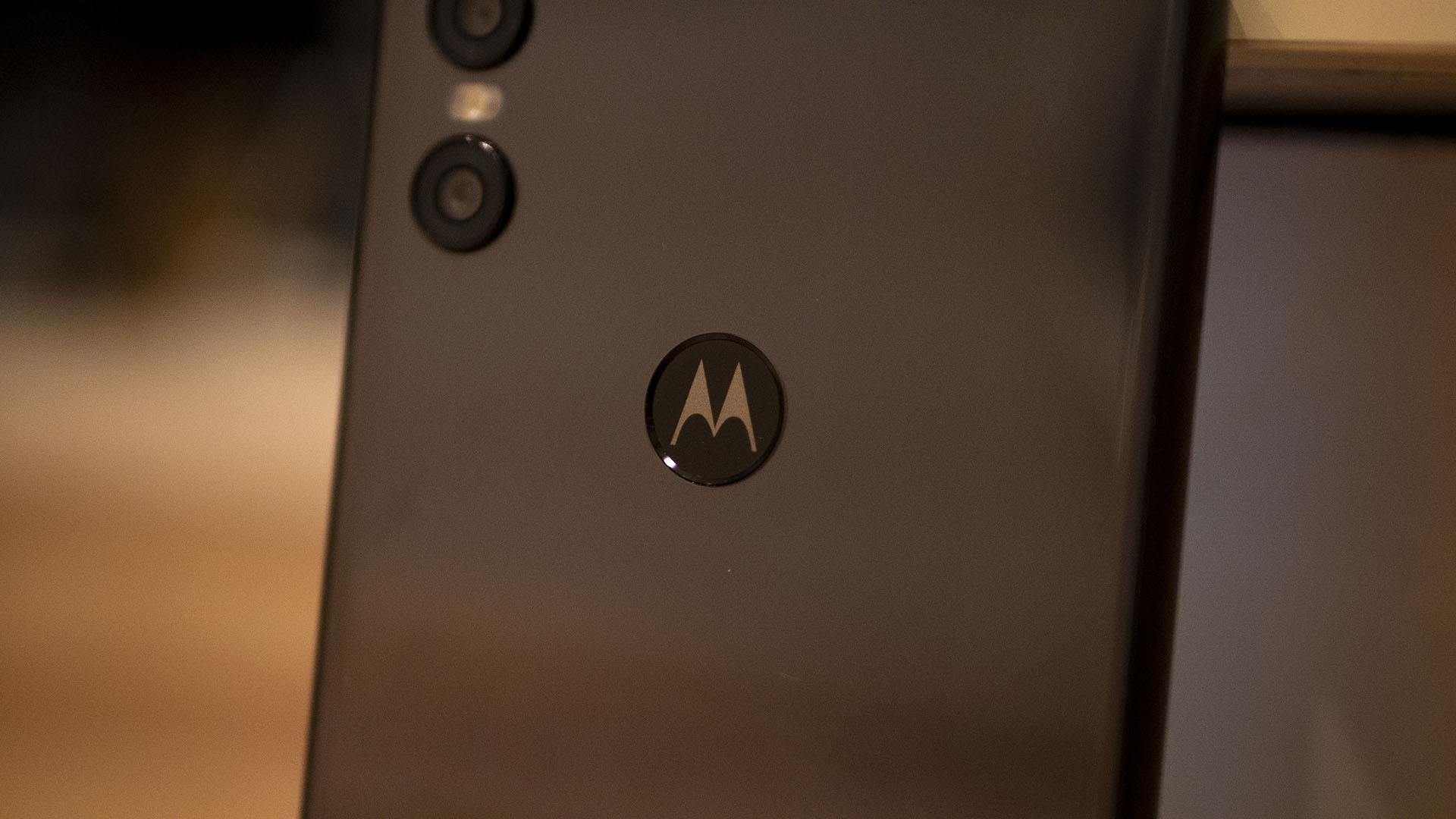
    Motorola has released a total of three Android One smartphones since 2017 – the Motorola One, One Power, and Moto X4 – but soon this list could expand with the launch of the Motorola One Vision.According to one Twitter user with a seemingly solid track record, the Motorola One Vision will make its official debut at an event held in São Paulo, Brazil on May 15th. To further back up his claim, an official-looking invite to the event was provided.

    Brazil isn’t typically the first place manufacturers head to for device announcements, but for Motorola it’s nothing out of the ordinary. Since mid-2014, the Chicago-based brand has been the second-largest smartphone vendor in Brazil behind Samsung. Most of this success is down to the budget Moto G and Moto E lineups, but from the look of things Motorola now wants to increase its sales in the mid-range segment.

    As specified by recent leaks, the Motorola One Vision should arrive equipped with a large 6.2-inch display that boasts a tall 21:9 aspect ratio and a small cut out in the top corner. It’s unclear at the moment what kind of selfie camera the latter will house, but rumor has it the smartphone will come equipped with a 48-megapixel sensor on the rear that’ll be paired with a dedicated depth sensor.

    On the internal side of things, the One Vision looks set to be Motorola’s first smartphone with a Samsung processor in side. Specifically, the Exynos 9610 that was recently used inside the Galaxy A50 was rumored. Performance-wise, this should be on par with the Snapdragon 660.

    Also to be expected is stock Android 9 Pie and a decent 3,500mAh battery. Additionally, 3GB of RAM and 32GB of storage are expected, although variants with 4GB of RAM and either 64GB or 128GB are said to be on the way too.

    Lastly, regarding the pricing and availability, the Motorola One Vision will apparently be sold in both Blue and Gold and could potentially be sold in the US in addition to Europe, Latin America, and China. The smartphone’s pricing currently remains a mystery, but this device could potentially replace the original Motorola One which means a $399 price tag seems likely.

  • Google struggled to sell Pixel 3 smartphones

    Google struggled to sell Pixel 3 smartphones

    Apple, Samsung, LG, Sony, HTC… The list of smartphone manufacturers that have experienced a decline in sales at some point throughout the past year is already pretty long but today it grew by one.

    During Alphabet’s earnings call earlier today, the company’s Chief Financial Officer Ruth Porat revealed that Google experienced a year-on-year decline in Pixel smartphones sales during the first quarter of 2019. Specific numbers weren’t provided, but the negative results do appear to have dragged down the company’s hardware business as a whole.

    Regarding the cause of this drop, Google didn’t mention any concrete details but it did highlight the general “pressures in the premium smartphone industry” at the moment. Moreover, it noted the “heavy promotional activity” by competitors which have been struggling to keep sales up recently.

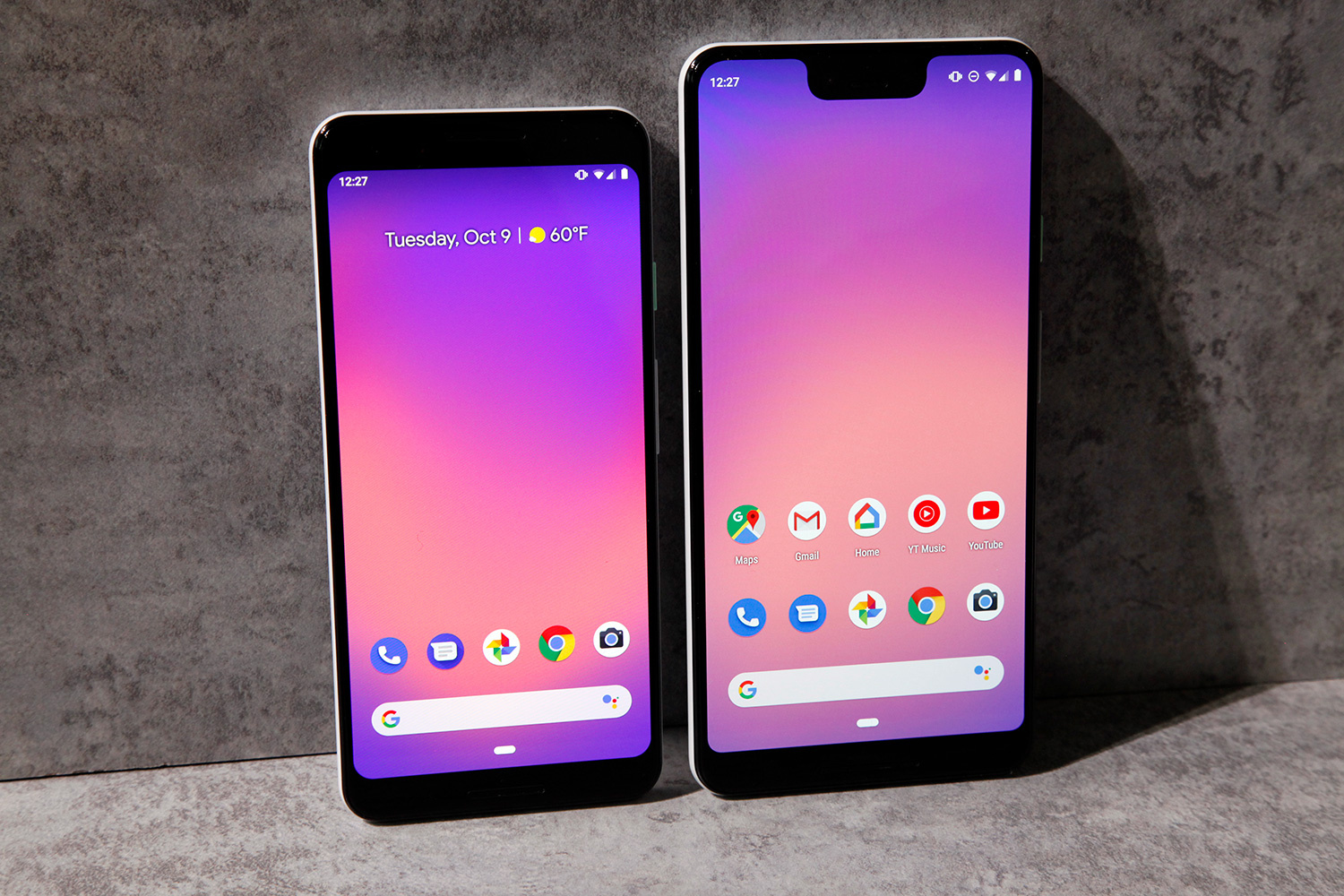
    Another factor that wasn’t mentioned but one that may have negatively affected Pixel 3 smartphone sales is design. Although Google’s smartphone cameras have once again received almost universal praise, the larger Pixel 3 XL has been heavily criticized since before it even launched due to the large notch and huge chin that it features.

    The Google Pixel 3 and Pixel 3 XL were also plagued with memory management issues, something that affected day-to-day use by prematurely closing apps running in the background.

    Despite the lack of Pixel sales, Google pointed out that it was pleased with the “momentum for Assistant-enabled home devices, particularly the Home Hub and Mini devices.” It also mentioned plans for hardware announcements on May 7th at Google I/O, essentially confirming the Pixel 3a’s debut at the event.

    The Google Pixel 3a and Pixel 3a XL, for those of you that don’t already know, are expected to represent Google’s first entries in the mid-range smartphone segment. Building upon the reputation of flagship Pixels, both Pixel 3a smartphones are expected to carry the same rear camera as the Pixel 3 and support software features such as Night Sight. But in order to keep costs down, a number of modifications have been made internally.

    Rather than utilizing Qualcomm’s flagship-level Snapdragon 845, the Pixel 3a duo is expected to include the Snapdragon 670 which will be paired with 4GB of RAM and either 32GB or 64GB of internal storage. This will then be accompanied by stock Android 9 Pie, eSIM support, Google’s dedicated Titan M security chip, and the Active Edge squeezable frame. The smartphones also look set to support 18W fast charging. Speaking of which, the 5.6-inch Pixel 3a will carry a 3,000mAh battery while the 6-inch Pixel 3a XL should feature a larger cell, although its capacity is yet to be specified.

    Pre-orders for the Google Pixel 3a and Pixel 3a XL are expected to commence immediately after their announcement at Google I/O next week. Regarding official pricing, US market details are yet to leak. However, previous information has pointed towards price points of $400/€450 for the Pixel 3a and $500/€550 for the Pixel 3a XL.

    In terms of availability, the devices were previously rumored to be Verizon exclusives. However, more recent reports suggest T-Mobile will also carry them. And for those of you out there that aren’t fans of carriers, the smartphones should be sold unlocked via the Google Store too.

    At the price points mentioned above, the Pixel 3a and Pixel 3a XL probably won’t become runaway successes. But with Google’s smartphone business currently struggling, a boost from the mid-range segment could be all it needs to get back on track.
  • Google adds Dark mode to an Android Apps

    Google adds Dark mode to an Android Apps

    If your eyes feel strained at the end of every day, it could be because of Google’s Material Design, which it is using on many of its core apps. Because Material Design uses plenty of bright white background, it can be blinding to look at at night or in a dark room. Not only can the light hurt a phone user’s eyes, but it can also be annoying to other people in a dark room.

    To combat this, Google started adding a Dark mode feature on apps that it gave a Material Design makeover. This changes the appearance of an app from having black text on a white background, to show white text on a black background. While many only use Dark mode at night or in a movie theater, others just like the look and keep the setting enabled on all compatible apps at all times.

    And thanks to the use of the black background, those using a phone sporting an AMOLED screen could end up extending their battery life. The color black is created on an AMOLED display by turning off the RGB sub-pixels in the screen. This means that battery power is not needed to make an OLED panel display the color black. An LCD screen uses a backlight and when the color black is called for, the pixel turns opaque blocking the LED light from being seen on the display. In this case, there is still a draw on the battery to power the backlight.

    The latest Android app to receive the Dark mode option is the Google Calculator app for Android. This is a must-have for the calculator, which has a huge white box that covers the top 40% of the screen. Dark mode can be found in version 7.6 of the utility app, although only version 7.5 is currently available from the Google Play Store. Once the new version is installed on your Android phone, open it and tap on the three-dot overflow menu in the upper right corner. You’ll see a box with several options; click on Choose theme. You can select from the regular retina melting Light theme, Dark theme or Set by Battery Saver. The latter is supposed to turn on the Dark theme once the battery saver feature is enabled.

    Android Q and iOS 13 are both supposed to include a system-wide Dark mode. We should learn more at Google I/O and WWDC, which start May 7th and June 3rd, respectively.

  • Roadmap reveals the Transition for an Android browser will Happen

    Roadmap reveals the Transition for an Android browser will Happen

    Back last summer, we told you that Mozilla is working on a new Android browser called Fenix. The app will eventually replace Firefox for Android and a support document posted by Mozilla offers something of a roadmap for this transition. After the Firefox browser app for Android receives Firefox68 in July, future updates will only carry security patches and bug fixes. The Firefox browser will be moved to the Extended Support Release (ESR) branch where Mozilla can manage engineering, testing, and release builds until Firefox reaches EOL (End-of-life) status.
    As we said, the Fenix browser will replace Firefox, but not until Mozilla is sure that Fenix has reached “migration readiness status.” So Firefox will continue to be kept secure and supported until Mozilla is sure that its new browser is ready to receive the migration of Firefox users. Based on the timeline created by the not for profit developer, Firefox will be kept alive until sometime next year.
    The timeline for Firefox, calls for an update to version 67 on May 14th, 2019 followed by the Firefox68 update to be disseminated on July 9th. After being moved to the ESR branch, the browser app will be updated in September, October, and December (again, these updates are for security and bug fixes only). As soon as Fenix is ready to receive those using the legacy version of Firefox, support for the latter will come to an end.
    Fenix was built from scratch; it will feature a brand new UI. Like Samsung’s OneUI interface, the most used elements will be found on the bottom of the screen. Swiping up on the display will show more available actions, and once you’re finished browsing on Fenix, open tabs are saved in a bundle called “sessions.” When the browser is in use, active tabs can be manually saved in sessions.
    Mozilla once said that “Fenix is not your parent’s Android browser.” We won’t know how accurate that statement is until the app is ready for prime time next year.
  • View Android Notifications on your Windows 10

    View Android Notifications on your Windows 10

    Last month, we told you that Microsoft was testing phone screen mirroring between Windows 10 and a limited number of Android handsets. The feature uses Wi-FI and Bluetooth to allow Android apps to appear on your Windows 10 PC. Originally, mirroring apps was a function available only for the Samsung Galaxy S8, Samsung Galaxy S8+, Samsung Galaxy S9, and the Samsung Galaxy S9+. Microsoft said that it would expand the list, and they weren’t lying.

    Before we tell you the additional handsets that now support this feature, we do need to tell you that it requires you to install the Your Phone Companion app from the Google Play Store. Microsoft says that the additional phones that now support the mirroring include the OnePlus 6, OnePlus 6T, the Samsung Galaxy S10e, Galaxy S10, Galaxy S10+, Galaxy Note 8 and Galaxy Note 9.

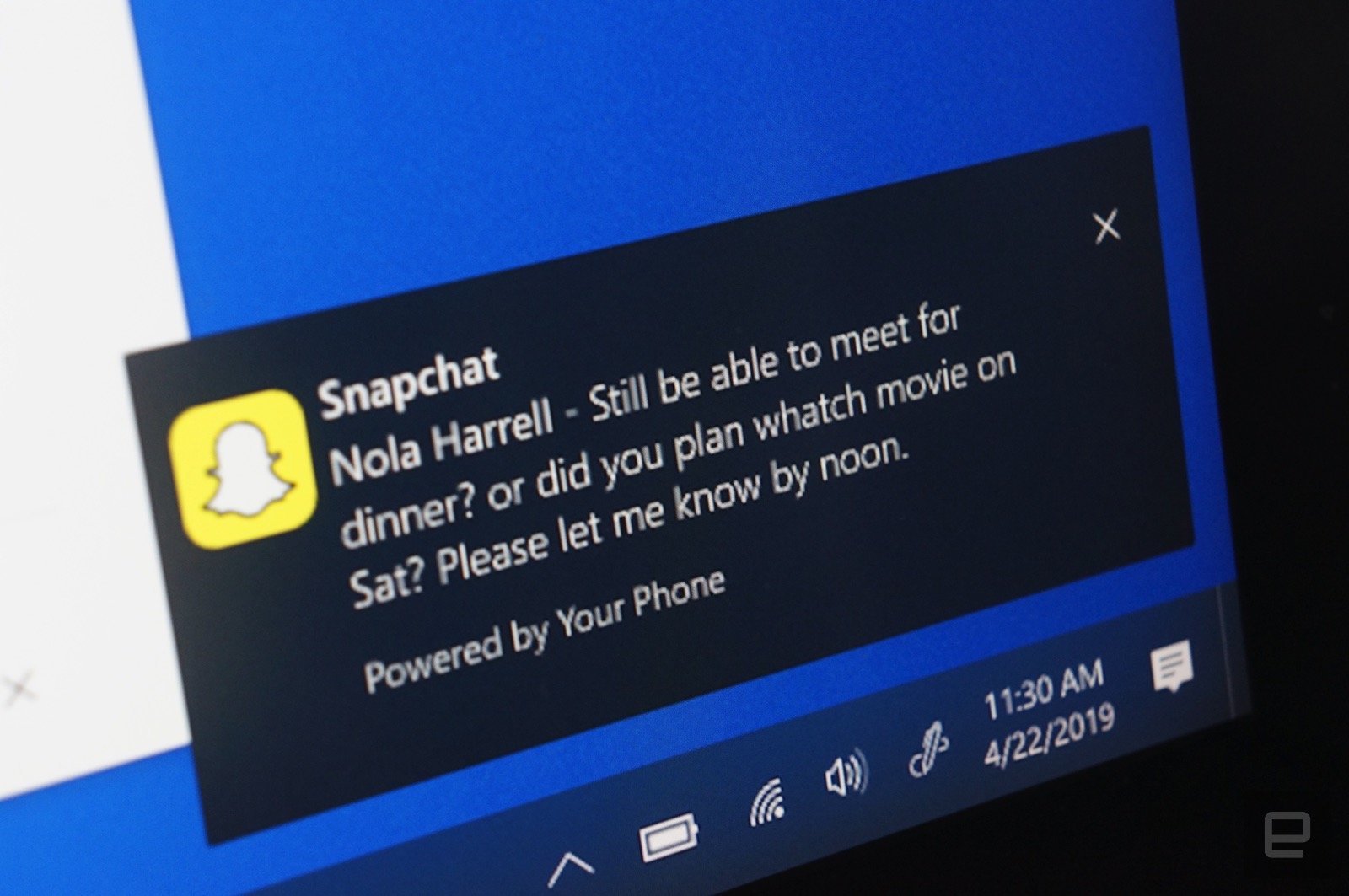
    Besides the mirroring available with the aforementioned phones, the Your Phone Companion app allows your PC to get texts, documents, and photos from any phone running Android 7 and higher. And now, the app will allow you to see phone notifications on your PC screen. Microsoft says that insiders on the 19H1 build will soon receive a preview that brings these notifications from your phone to your desktop in real time. You can decide which apps you will see notifications from on the computer screen, and if you dismiss one from the desktop, it will also disappear from your phone. These new features also will soon appear in the Your Phone Companion app.

    To see phone notifications on your Windows PC, your Android device running Android 7.0 or higher must have 1GB of RAM or more. and the Windows 10 PC must be using build 1803 (RS4) or newer. If notifications are disabled on the computer due to work policies, this feature will not work.

  • Mario Kart Tour beta registrations open for Android users

    Mario Kart Tour beta registrations open for Android users

    Nintendo plans to bring yet another game to Android and iOS device this summer – Mario Kart Tour. Officially revealed two months ago, the next Mario game for mobile won’t be released until at least June.

    However, Nintendo fans will have a chance to take a peek at what’s to come thanks to the closed beta program the Japanese company has just announced. Assuming you’re living in the United States or Japan, you can now register for the Mario Kart Tour closed beta on the game’s dedicated page.

    Unfortunately, it’s only Android users that are allowed to register for the closed beta, and there’s little chance the iPhone owners will be given the chance to test Mario Kart Tour before the official release.

    Obviously, the number of Android users who may participate in the closed beta is limited. According to Nintendo, if the number of applications exceeds the number of possible participants, the company will randomly select the participants.

    Android users can register for the closed beta between April 23 and May 7, while the beta test is scheduled for May 22-June 4, but these dates can be changed prior notice.

  • Google removes apps from the Play Store for Ad fraud

    Google removes apps from the Play Store for Ad fraud

    A successful Android app developer with over half a billion installs to its credit is having its apps removed by Google from the Play Store. DO Global, based in China, has had 46 apps erased from Google’s Android app storefront after an investigation conducted by BuzzFeed found serious issues with the apps. Before Google started taking action against the developer, DO Global had approximately 100 apps in the Google Play Store making this one of the biggest actions ever taken against an app developer by Google. The remaining apps will be removed shortly. DO Global had been a wholly owned subsidiary of well know Chinese internet firm Baidu. But last year, the unit was spun off and Baidu kept a 34% stake.

    The initial report from BuzzFeed said that at least six of the apps from DO Global would click on ads even if the app was not being used. Online security firm Checkpoint, in partnership with BuzzFeed, found the apps loaded with malware that it dubbed PreAMo.That’s because the apps fraudulently clicked on banner ads served up by mobile ad networks Presage, Admob, and Mopub. Checkpoint states that the malware was installed from these six apps a total of 90 million times.

    Some of the apps involved were credited to developers like “Pic Tools Group” and “Photo Artist Studio,” and their true ownership was hidden by DO Global. That’s another violation of Play Store rules. The developer contact information was also different on several of the apps, obfuscating their true owners. The actual titles include apps like RAM Master-Memory Optimizer; Photo Editor-Makeup Camera & Photo Effects and Crashy Cops. DO Global claims that its apps have 250 million monthly active users, and said that its mobile ad platform reaches 800 million people.

    “We fully understand the seriousness of the allegations. Therefore, after reading the reports about our apps, we immediately conducted an internal investigation on this matter. We regret to find irregularities in some of our products’ use of AdMob advertisements. Given this, we fully understand and accept Google’s decision. Moreover, we have actively cooperated with them by doing a thorough examination of every app involved…moving forward, we will strictly follow relevant regulations and continue conducting a comprehensive review of our products. Lastly, during this process, we have caused misunderstandings and great concern due to our being unable to communicate in a timely manner and provide complete information. We offer our sincere apologies.”-DO Global

    In a statement, Google said that it will always investigate malicious behavior by apps. When it finds violations, it will prevent a developer from monetizing an app through AdMob and/or remove an app from the Play Store.

  • New features added to the official Google I/O 2019 App

    New features added to the official Google I/O 2019 App

    You know that the annual Google I/O developers conference is just around the corner when the latest Google I/O app becomes available in the Google Play Store. With Google I/O taking place this year from Tuesday, May 7th through Thursday, May 9th, the app is now ready to be installed on your Android phone. Now laid out in Google’s Material Display (bright white backgrounds, Google Sans font), the app allows attendees and the curious alike to view the schedule of sessions for the conference. In fact, those planning on making the trip to Mountain View can reverse seats for each event through the app.

    In addition, the Google I/O app allows attendees to create a schedule that they can view, and set reminders to go off before each session starts. This custom schedule can be synced between a developer’s mobile devices and the Google I/O website. This year, the app also adds events to the user’s personal calendar and allows those attending the conference to view the grounds using Augmented Reality. Individual sessions can now be found by looking under topics and speakers, and the home page will show upcoming events, announcements and more. For those interested in the Keynote, it will take place at 10 am PDT (1 pm EDT) on May 7th.

    With the use of Material Design, Google has added a Dark mode for the app that shows up once the Battery Saver has been enabled on an Android phone. This will change the app from showing black text on a white background to white text on a black background. Dark mode has been added as a feature on many of Google’s core Android apps over the last year and protects users’ eyes from the blinding white background when the app is viewed in the dark.

    When you install the app, make sure it is for the 2019 Google I/O conference. Even though the Google Play Store listing showed that we were installing the 2019 app, we received last year’s app instead.

  • Google launches its health-tracking app for Iphone Users

    Google launches its health-tracking app for Iphone Users

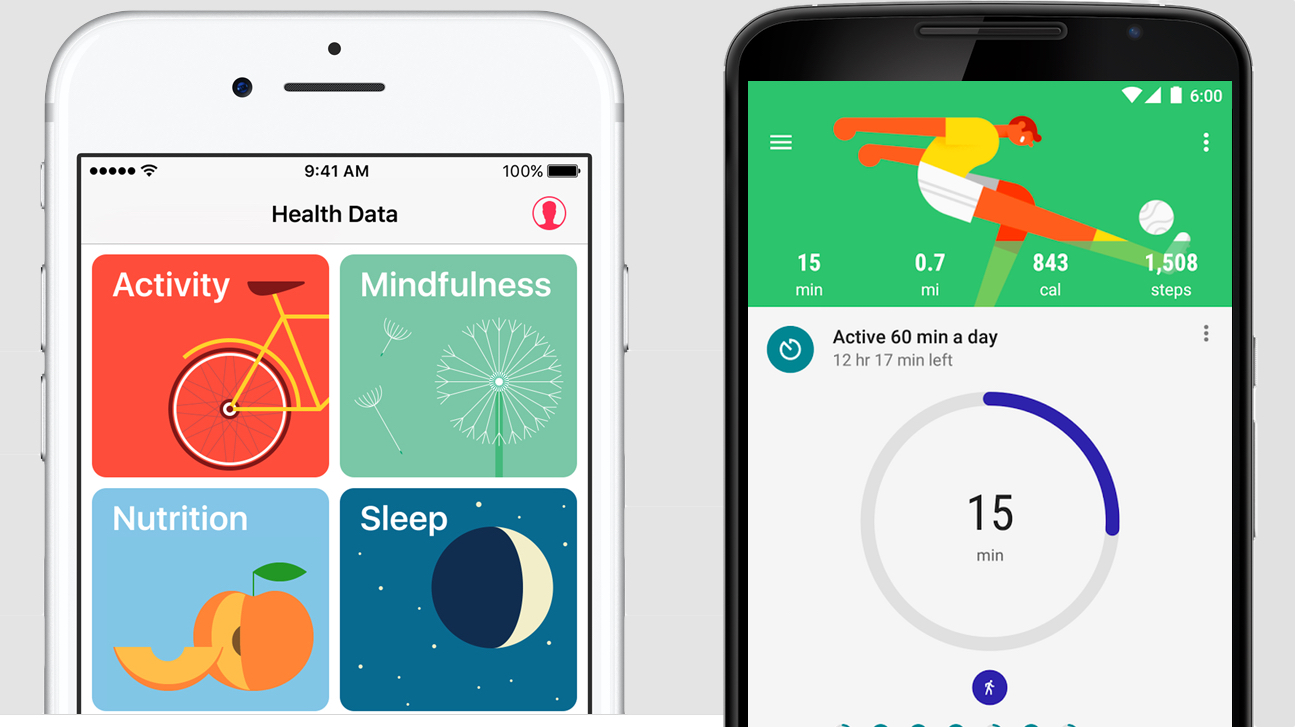
    Google Fit, the health-tracking app that made its debut on Android four years ago, has now been released on iOS. The app has gone through multiple overhauls since its launch back in 2014, but the last major update released last year made it extremely simply to use.

    Starting today, iOS users will be able to track their Heart Points and Move Minutes, the best way to build smarter, healthier habits throughout the day. Google Fit awards users so-called Move Minutes and Heart Points the more they move and the more intensely they move. Based on the scores, you’ll be closer to reach the recommended amount of weekly physical activity and reap the health benefits.

    It’s purely motivational, but very helpful if you’re trying to exercise but don’t find the courage to do it regularly. More importantly, Google Fit allows users to track their progress throughout the day using various apps.

    For example, app connected to Apple Health, such as Sleep Cycle, Nike Run Club and Headspace, can be synced with Google Fit to offer a more holistic view of your health. You’ll also be able to see how many Heart Points and Move Minutes you earn through other activities.

    Moreover, if own an Apple Watch as well, Google Fit will keep track of all your workout sessions too. Just don’t forget to check the app’s journal to see what you need to do to sleep better and get more active. You can download Google Fit for iOS right now via the App Store.

  • Xiaomi just patented a weird-looking inverted Notch

    Xiaomi just patented a weird-looking inverted Notch

    Since notches first arrive back in 2017, smartphone brands have attempted a range of implementations ranging from wide ones to much subtler water drop alternatives. One thing that hasn’t been attempted, however, is an outward facing one. But Xiaomi’s latest patent suggests it could be working on one.

    In what is presumably an attempt at creating a low-cost smartphone that also presents a notchless display, Xiaomi’s latest patent envisions a smartphone that features minimal bezels and a rather large hump on the very top of the device. This looks exactly like an inverted notch and is home to the in-ear speaker and two selfie cameras.

    On more expensive devices such as the Xiaomi Mi Mix 3, the Chinese brand has chosen to implement a slider design that hides the front-facing cameras and allows for an all-screen design. However, this comes at an added cost that most likely wouldn’t be financially viable in the low-end segment. The company is also rumored to be working on two flagships with pop-up cameras but, once again, this is a costly feature.

    More often than not, patents are a good indication of what’s to come from smartphone brands in the future. But considering the very unusual design that is shown in the included sketches, it seems likely that this particular  patent will never result in a production device.