Tag: apple

  • Apple is charging employees to get their feedback on Apple Arcade

    Apple is charging employees to get their feedback on Apple Arcade

    Back in March, Apple introduced its new Apple Arcade service. For a yet to be decided monthly fee ($4.99, $9.99?) subscribers will be able to choose from over 100 new mobile games. Apple says that it expects to launch Arcade this fall, but in the meantime, the company is giving employees a preview of the service. Those toiling for the tech giant are getting a one-month free trial; once the trial period expires, they are paying 49 cents a month to test early builds of some of the games that will be offered to subscribers once the platform launches. This early access program is expected to end once the final version of iOS 13 drops.

    The games that are available for the early access program include Way of the TurtleDown in BermudaHot LavaSneaky SasquatchKings of the CastleFrogger in Toy Town and Lame Game 2. Apple Arcade will allow subscribers to play any title available for as long as they want, and players can switch devices from the iPhone to an iPad, a Mac and Apple TV without missing a beat. Users will also be able to play games while offline and a family with up to six members will be able to share a family subscription. Because players will be paying monthly, there are no in-app purchases offered.

    After iPhone shipments peaked in 2015 at 231.22 million units, the company decided to focus on its services unit. This was a smart move because many of the businesses under the services umbrella, like Apple Music and Apple News+, require recurring payments from subscribers. And these businesses are less reliant on new iPhone sales, depending instead on the large number of active iPhone users which at last count totaled 900 million people. The company has targeted $50 billion in services revenue by 2020 which would be twice the $25 billion that the division grossed in 2016. For the recently announced fiscal third quarter, covering April through June, the services unit took in a record $11.5 billion in revenue. That is a 12.7% year-over-year gain from the $10.2 billion that the division took in during the same quarter in 2018. Overall, the services unit is Apple’s second-largest business unit and is it’s most profitable. The success or failure of Apple Arcade will go a long way toward determining whether Apple meets its $50 billion revenue goal next year.

    Earlier this year, a report claimed that Apple has spent $500 million on Apple Arcade; analysts at HSBC Bank see the subscription service generating $370 million in revenue next year before jumping to $2.7 billion by 2022 and a whopping $4.5 billion by 2024. The bank’s analysis forecasts Apple Arcade having 29 million subscribers by 2024 with individual subscriptions costing $12.99 a month.

    Besides paying the monthly subscription price, Arcade members are expected to shell out the cash required for them to pick up accessories for their Apple devices such as controllers. While subscribers will be able to navigate through Arcade games using the buttons on their iPhone, iPad or Mac, picking up an MFi (Made for iPhone, iPad) controller could make gameplay a little easier for some.

    It seems a little strange that Apple is asking employees to pay 49 cents a month so that the company can collect feedback from them; after all, the point of the early access program is to find out where Apple and the game developers can make changes to improve the user experience. While we have no data revealing how many have signed up for the short-lived program, we’d bet that it was more than enough for Apple and its developer partners to get a good idea of the work that still needs to be done on Arcade before its launch.
  • Apple sues company that sells a virtual iPhone complete with iOS

    Apple sues company that sells a virtual iPhone complete with iOS

    We know that Apple is giving away special iPhones to certain security researchers who are looking for a big payday that could add up to as much as $1.5 million. The big jackpot will go to the researcher who finds a flaw in the iPhone and iOS that will allow a hacker to take full control over an iPhone without the phone’s owner having to touch any part of the device. That discovery is good enough for $1 million dollars. Any vulnerability found on beta software will reward the researcher with a 50% bonus. That’s because the discovery is taking place before the software has been disseminated to the public.

    To help researchers find flaws in iOS, a company called Corellium has been offering them a virtual version of the iPhone and iOS over the last few years. Apple is not taking this sitting down and has filed a lawsuit in the United States District Court for the Southern District of Florida for what it calls “a straightforward case of infringement of highly valuable copyrighted works.” Apple points out that without obtaining a license or permission from Apple, Corellium offers a “virtual” version of Apple’s devices with “fastidious attention to detail.” The tech giant says that not only does the facsimile look and respond the same on a web browser as the mobile device that its customers pay for, Corellium also includes the appropriate computer code.

    And sure, you might say that Corellium is doing Apple a big favor by selling the virtual iPhone because it will help researchers pass along their findings to Apple. However, as Apple points out in the suit, those who paid to use the virtual iPhone ended up selling discovered flaws to third-party exploit traders. This makes sense because a private installation of the virtual iPhone costs as much as $1 million according to the court papers filed by Apple.

    “This is a straightforward case of infringement of highly valuable copyrighted works. Corellium’s business is based entirely on commercializing the illegal replication of the copyrighted operating system and applications that run on Apple’s iPhone, iPad, and other Apple devices. The product Corellium offers is a “virtual” version of Apple mobile hardware products, accessible to anyone with a web browser. Specifically, Corellium serves up what it touts as a perfect digital facsimile of a broad range of Apple’s market-leading devices—recreating with fastidious attention to detail, not just the way the operating system and applications appear visually to bona fide purchasers, but also the underlying computer code. Corellium does so with no license or permission from Apple.”-Excerpt from Apple’s lawsuit.

    Apple claims that at the Black Hat security conference that took place earlier this month, Corellium “specifically emphasized” that its Apple Product is an exact copy of Apple’s copyrighted works and was created to help researchers and hackers test iOS for vulnerabilities. Apple even points out that 15 days after unveiling the iPhone XS, iPhone XS Max and iPhone XR on September 12, 2018, Corellium announced that its Apple Product supported the new phones and the latest version of iOS.

    An image included in the suit shows how Corellium subscribers can even choose which virtual iPhone they want to use and then select the version of iOS that they want to run on it. Once a subscriber has created a virtual iPhone, copies of the virtual device and the iOS version selected can be made. Apple alleges that Corellium’s servers contain “numerous copies of iOS.”

    Apple is seeking a permanent injunction against Corellium and an order preventing the company from marketing, selling, and distributing its Apple Product. Apple also wants to stop all subscribers from using the virtual iPhone and wants the defendant to issue a notice to past and present subscribers telling them that use of the product infringes on Apple’s copyrights. Apple also wants all infringing material destroyed and is seeking damages, lost profits, court costs and attorney’s fees.

  • Apple seems to have revealed the date of its iPhone 11 event

    Apple seems to have revealed the date of its iPhone 11 event

    Less than two weeks after the iPhone 11’s release date was seemingly revealed, an iOS 13 screenshot found within the latest beta version appears to confirm when Apple will be announcing its next-gen devices.

    The screenshot is named “HoldForRelease” and features the Calendar app with the date clearly set to Tuesday the 10th. The month isn’t displayed but the day lines up perfectly with September, which itself coincides with Apple’s usual announcement schedule. Lending further credence is the fact a similar screenshot was found in one of Apple’s iOS 12 beta releases last year which showed September 12th, the date that was subsequently confirmed for the iPhone XS and iPhone XR introductions.

    Considering the iPhone 11 series is now expected to debut on Tuesday, September 10, pre-orders for Apple’s upcoming trio of devices will likely commence on Friday, September 13. The actual launch, on the other hand, should happen on Friday, September 20. This coincides perfectly with the previously reported release date.

    On an unrelated note, an iPadOS 13 screenshot showing the same date was also spotted. Apple has been rumored to be planning the debut of a new 10.2-inch iPad alongside its next-generation iPhones and this image suggests this will indeed be the case.

    If Apple sticks to its typical iOS launch schedule, the upcoming iOS 13 and iPadOS 13 releases will be made available to download for devices such as the iPhone 8, iPhone XS, iPad Pro (2018), and iPad Air (2019) on Monday, September 16. However, today’s findings suggest this may not be the case.

    Another pair of iOS 13 and iPadOS 13 screenshots which are destined to be used on older devices show the Calendar display Monday the 23rd. This is one week later than expected and ultimate suggests Apple may be giving its developers an extra week to ensure everything’s in working order on previous-gen products. After all, unlike iOS 12 which was largely bug free, iOS 13 and iPadOS 13 beta releases have been plagued with issues since the beginning, many of which are still unresolved.

    The downside to this move is that iOS 13 and iPadOS 13 will be exclusive to the iPhone 11 series and 10.2-inch iPad (2019) for roughly three days because these are all set for release on Friday, September 20, as mentioned above.

    The upcoming iPhones have been consistently referred to as either the iPhone XI or iPhone 11 lineup over the course of the past year but a reliable tipster recently suggested Apple’s final names may be slightly different. Specifically, they mentioned the ‘Pro’ moniker but left quite a bit of room for speculation because they didn’t elaborate on the matter.

    The most logical strategy would be the creation of two very separate lineups. The successor to the iPhone XR could be marketed simply as the iPhone (2019) while the iPhone XS and XS Max replacements could be called the iPhone Pro (5.8-inch) and iPhone Pro (6.5-inch).

    An alternative strategy which was recently mentioned by a case maker would also make sense, although the names would ultimately be more clunky. In this case, the 2019 iPhone XR would be branded as the iPhone 11 and the iPhone XS’s successor would be called the iPhone 11 Pro. Meanwhile, the 6.5-inch model could land as the iPhone 11 Pro Max.The final possibility is perhaps the most straightforward one of all. It’d involve the iPhone XR, iPhone XS, and iPhone XS Max replacements being marketed as the iPhone 11R, iPhone 11, and iPhone 11 Pro respectively.

  • Apple issues statement regarding third-party battery replacements for iPhones

    Apple issues statement regarding third-party battery replacements for iPhones

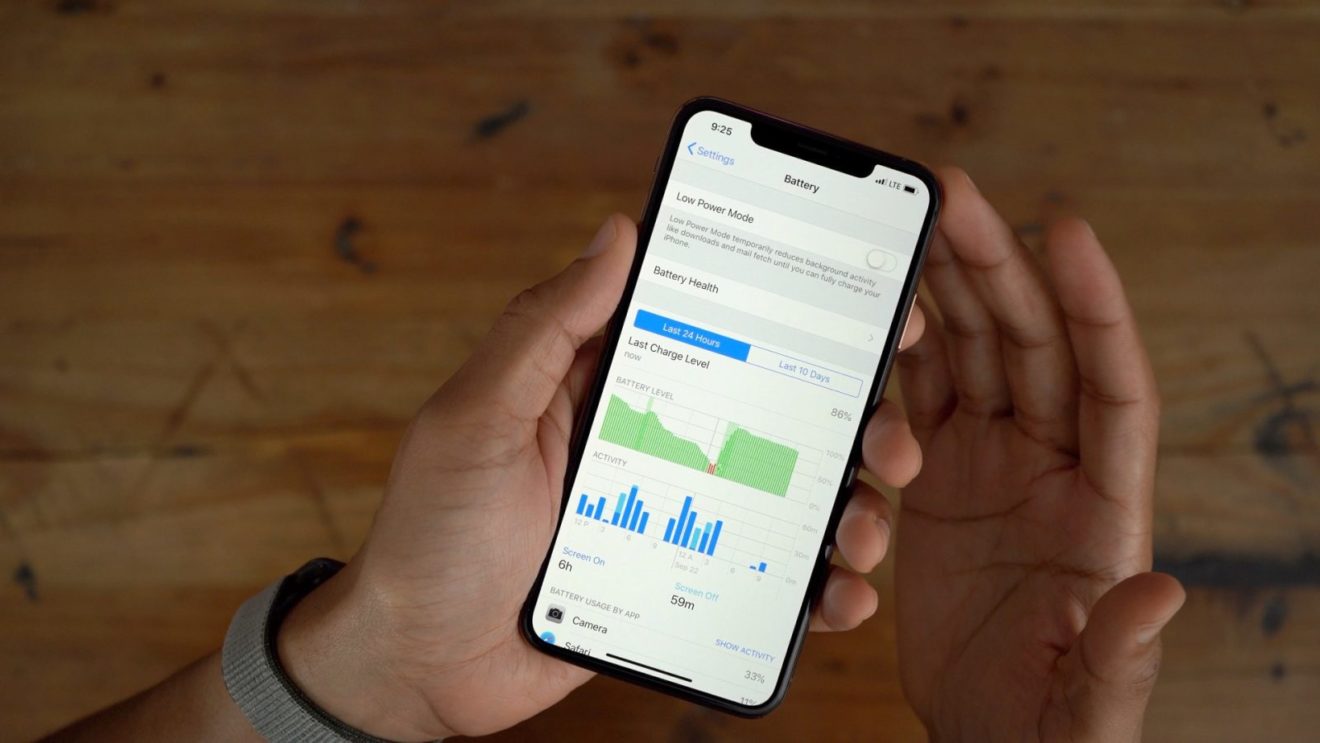
    The folks over at iFixit discovered that Apple introduced a software lock in iOS, which will prevent iPhone users from checking the health of the battery if it was replaced by an unauthorized third-party.

    Instead of showing them the health of the iPhone battery, a message would pop up that would inform them that such information is not available: “Unable to verify this iPhone has a genuine Apple battery. Health information not available for this battery.”

    Moreover, the message would pop up even if the battery would be replaced with a genuine one from another iPhone, and the reason is that the chip used in newer iPhone batteries includes an authentication feature that stores the info for pairing the battery to the phone’s logic board.

    There were so many iPhone users who voiced their disappointment about Apple’s approach that the company felt the need to issue a statement on the matter to iMore, which you can read below:

    We take the safety of our customers very seriously and want to make sure any battery replacement is done properly. There are now over 1,800 Apple authorized service providers across the United States so our customers have even more convenient access to quality repairs.Last year we introduced a new feature to notify customers if we were unable to verify that a new, genuine battery was installed by a certified technician following Apple repair processes. This information is there to help protect our customers from damaged, poor quality, or used batteries which can lead to safety or performance issues. This notification does not impact the customer’s ability to use the phone after an unauthorized repair.

    Obviously, that doesn’t solve the “issue,” but at least it sheds some light on the reasoning behind Apple’s decision to include a locking software for third-party iPhone battery replacements. Many will not like it, while others will feel Apple’s explanation is enough to quench any fears they might have had.

  • Apple’s mobile devices can help diagnose a serious health issue

    Apple’s mobile devices can help diagnose a serious health issue

    With Apple working hard to come up with more health-related features for its products, drugmaker Eli Lilly announced last week that certain Apple products can help spot people with dementia. Early results from a test showed that devices including the iPhone, iPad and Apple Watch, in combination with certain apps and the Beddit sleep monitoring device, can reveal whether a person has “mild Alzheimer’s disease dementia” and “mild cognitive impairment” (MCI). The study was conducted by Apple, Lilly and health care company Evidation Health on 113 people age 60 to 75 over a period of 12 weeks.

    Those participating in the study were asked to answer a pair of one-question surveys each day. They also were asked to perform certain tasks on an app such as tapping on a circle as fast as possible and dragging on screen an object with a certain shape to another object. Other tests were performed on the participant’s ability to type and read. The results of the study were presented at the Association for Computing Machinery’s KDD conference in Anchorage and found that those with symptoms of dementia tended to type at a slower rate of speed than others, and sent fewer text messages over a set period time.

    16TB of data were collected from the participants, and the study showed that Apple devices and certain apps can help monitor symptoms of those diagnosed with MCI or mild Alzheimer’s disease dementia; detect cognitive changes that could point to MCI; test the effectiveness of treatment and therapies; and speed up the development of therapies to produce more accurate diagnostic tools.

    Over the past few years, we’ve seen how data and insights derived from wearables and mobile consumer devices have enabled people living with health conditions, along with their clinicians, to better monitor their health. We know that insight from smart devices and digital applications can lead to improved health outcomes, but we don’t yet know how those resources can be used to identify and accelerate diagnoses. The results of the trial set the groundwork for future research that may be able to help identify people with neurodegenerative conditions earlier than ever before.”-Nikki Marinsek, Ph.D., first author and data scientist, Evidation Health

    “Lilly has been leading the fight against Alzheimer’s disease for more than 30 years, and we’re broadening the application of digital health to identify tools that may improve the lives of people with chronic conditions and diseases. While further research is needed, the study findings provide important insight into the potential benefits of wearable devices in identifying chronic health conditions such as MCI, Alzheimer’s disease, and dementia. These findings could inform subsequent research that may eventually lead to early screening or detection tools for neurodegenerative conditions.”-Divakar Ramakrishnan, Ph.D., chief digital officer, Eli Lilly ”

    Apple has already demonstrated that it can integrate life-saving health tools in the Apple Watch; the heart-rate monitor has already saved a number of lives and the breakout feature on the Apple Watch series 4 is the electrocardiogram (ECG) sensor. The latter detects abnormal heartbeats indicative of Atrial fibrillation, which can lead to blood clots, heart failure, strokes, and death. This life-saving feature has become so popular that Samsung is including it on the Galaxy Active Watch 2. However, as it did with Apple’s ECG sensor, the FDA needs to greenlight the one on Sammy’s phone. As a result, the ECG sensor will be disabled on the new Tizen-powered timepiece until sometime during the first half of next year.

    Apple released a very brief statement related to the release of the study. Myoung Cha, Apple’s Head of Health Strategic Partnerships, said, “We are excited to work alongside Lilly and Evidation in supporting the research community, as they seek to discover digital biomarkers of cognitive impairment.”

  • Apple is giving out a special iPhone that can lead to a $1 million reward

    Apple is giving out a special iPhone that can lead to a $1 million reward

    Apple is giving out special versions of the iPhone to security researchers who have the opportunity to collect as much as $1.5 million from Apple. Announced last week at the Black Rock cybersecurity conference in Las Vegas (where ironically Apple earlier this year put up a billboard reading “What happens on your iPhone stays on your iPhone”), the tech giant is giving these experts the task of hacking into the iPhone to find vulnerabilities and security flaws. Apple security chief Ivan Krstic says that these special iPhones come with “advanced debug capabilities.” Unlike the units sold to consumers, these will allow researchers to access parts of iOS that are off-limits to most users.

    The so-called iOS Security Research Device Program will get underway next year and while anyone can apply to receive one of the special iPhone units, Apple says that there will be a limited amount handed out. Most likely only qualified security researchers will be able to obtain one of these devices. Even though they will be much more open than a store-bought iPhone, the researchers won’t have the same access that Apple’s own internal security team has on their iPhones.

    Companies like Apple and Google pay these researchers to find flaws as an incentive. In addition, Apple would prefer that a security expert who finds a vulnerability tell the company about it instead of selling it or using it for their own evil intentions. Flaws found on iOS are said to bring researchers as much as $1 million from hackers willing to pay that much. Apple announced last week that a researcher can receive $1 million by finding a flaw allowing him or her to take over full control of an iPhone without the owner touching the handset. Other flaws can also handsomely reward a researcher as Apple is willing to pay up to $500,000 for the information. Google announced last month that it will pay up to $30,000 to a researcher finding flaws in its Chrome browser while paying $150,000 if it is told about a flaw that can compromise its Chrome OS.

    “We want to attract some of the exceptional researchers who have thus far been focusing their time on other platforms. Today many of them tell us they look at our platform and they want to do research but the bar is just too high. We have by far the highest maximum payouts in the industry, and we have the iOS security research device program for exceptional researchers that are new to our platform”-Ivan Krstic, head of security engineering and architecture, Apple

    Researchers who find a vulnerability in code found on beta software will receive a 50% bonus from Apple. That is to reward an expert who has identified a problem before the bug is passed along to the public, and brings the top possible award handed out by Apple to $1.5 million. As the company’s security chief points out, “The second-best reason to have a bug bounty is to find out about a vulnerability that’s already in the users’ hands and fix it quickly. The number one best reason is to find a vulnerability before it ever hits a customer’s hands.”

    Apple’s new program might have received more applause if it wasn’t for the limited number of special iPhones it is handing out. As iOS security researcher Will Strafach noted, “It’s a huge step, but I do think it would be great if there were a bit more wide availability of the devices.” Apple might be concerned that the wider availability of these units might lead to several ending up in the wrong hands, creating more problems for the company. Still, with all this money at stake, regular iPhone owners should benefit from the incentives that Apple is throwing at security experts.

  • New iMessage exploit allows hackers to hijack your iPhone by simply sending you a message

    New iMessage exploit allows hackers to hijack your iPhone by simply sending you a message

    A new, “interaction-less” bug in iMessage was recently discovered that could allow hackers to gain access to your iPhone. The exploit being interaction-less means that you don’t need to do anything—download any files or click any suspicious links—to get your device compromised. What’s even worse, you don’t even need to open the iMessage app for the exploit to work.

    At the Black Hat security conference in Las Vegas this week, Google Project Zero researcher Natalie Silvanovich showed off a number of these so-called interaction-less bugs in iMessage that could be used to gain remote access to an iPhone. Apple has already patched five of them, but there are a handful that are yet to receive the company’s attention.

    Following the recently uncovered vulnerabilities in WhatsApp, Silvanovich and her colleague Samuel Groß started investigating for similar exploits in SMS, MMS, and voicemail but found none. Then, they shifted their attention to iMessage and started reverse-engineering the app, which lead to some worrisome discoveries.

    According to the researchers, the vulnerabilities that they uncovered in iMessage are likely a result of the complex (and ever-expanding) nature of the app. Apple’s messaging client not only allows users to send each other files, voice messages, photos, and Animojis, but also has many integrations with third-party apps, like OpenTable and Airbnb. This makes securing every potential backdoor increasingly difficult, though the researchers claim that Apple is actually doing a good job.

    Silvanovich says that iOS has many security checks in place, but the bug she and Groß discovered takes advantage of the underlying logic of the operating system, which makes it possible to bypass the security net. A potential attacker could send a targeted iMessage with specific content in it that Apple’s servers would interpret in a certain way and send the target a message that would then automatically trigger the exploit, granting the attacker access to the phone.

    Interaction-less bugs are highly sought after in the hacking community, as they don’t require the target to do anything. The iMessage vulnerabilities discovered by the Google Project Zero members could fetch prices in the vicinity of “millions or even tens of millions” on the exploit market.

  • Apple Music app soon to receive dark mode on Android devices

    Apple Music app soon to receive dark mode on Android devices

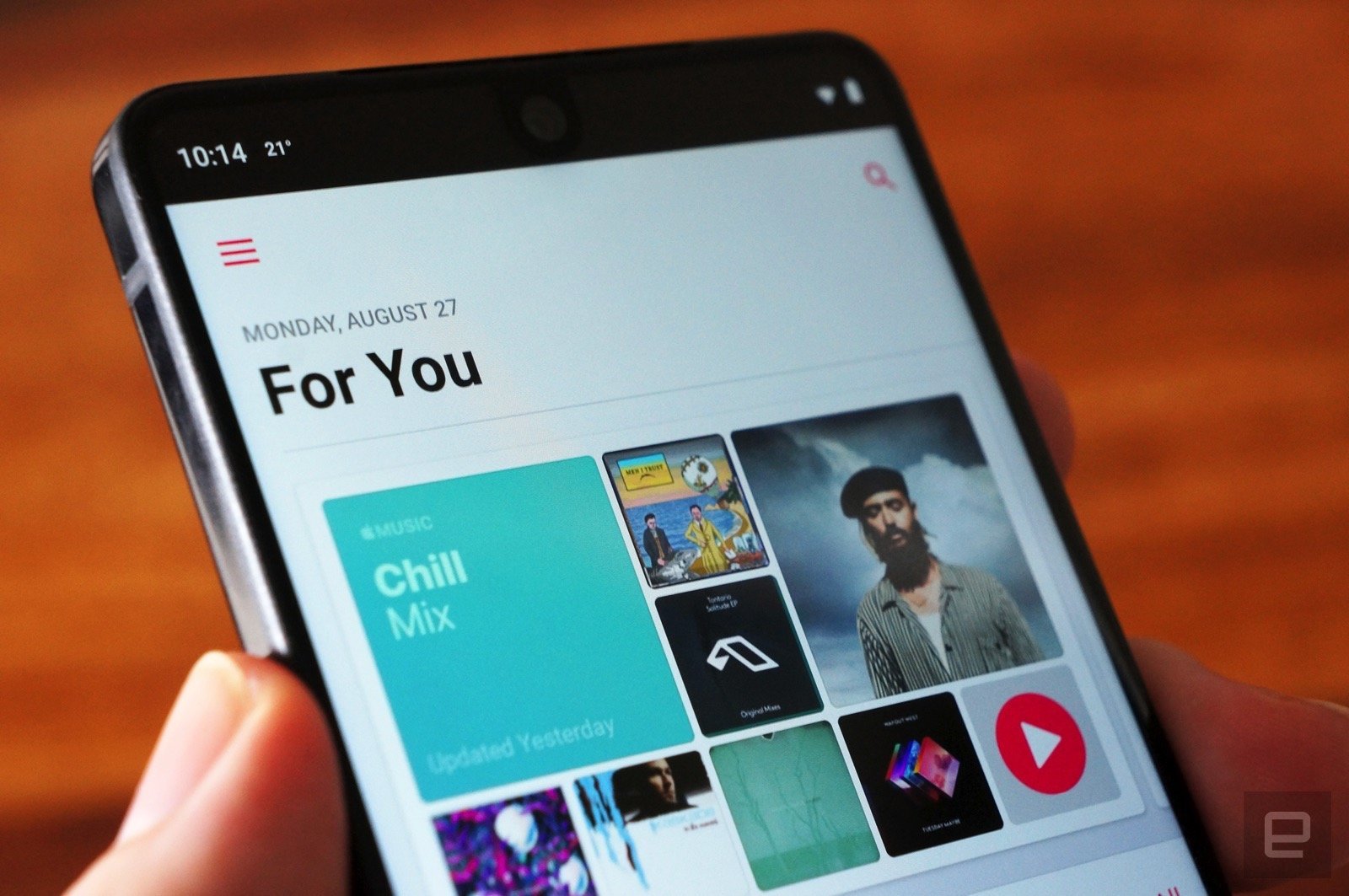
    Unlike Google, Apple is a bit slower when it comes to adding dark mode to its Android apps, but that’s quite understandable. If you happen to use Apple Music on your Android smartphone, you’ll be pleased to know that an upcoming update will bring the long-awaited dark mode.

    If you want to try it out before Apple makes it available to everyone, you can install the beta version of the app via the Play Store. The guys at 9to5mac have recently spotted a new update to Apple Music beta, which adds not only a dark theme but also several features from iOS 13.

    Apart from dark mode, the update will also add the redesigned Now Playing UI and time-synced lyrics, which lets users follow along with their favorite music as it plays. The time-synced lyrics feature comes with appealing animations to make following along more fun, as well as some gesture controls that will allow you to jump to your favorite verse.

    Apple hasn’t yet committed to a release date for this update, but there’s a high chance that the new update will be pushed out around the same time Apple releases iOS 13 in the fall.

  • Apple Card terms specify that iPhone holders can’t jailbreak their phone

    Apple Card terms specify that iPhone holders can’t jailbreak their phone

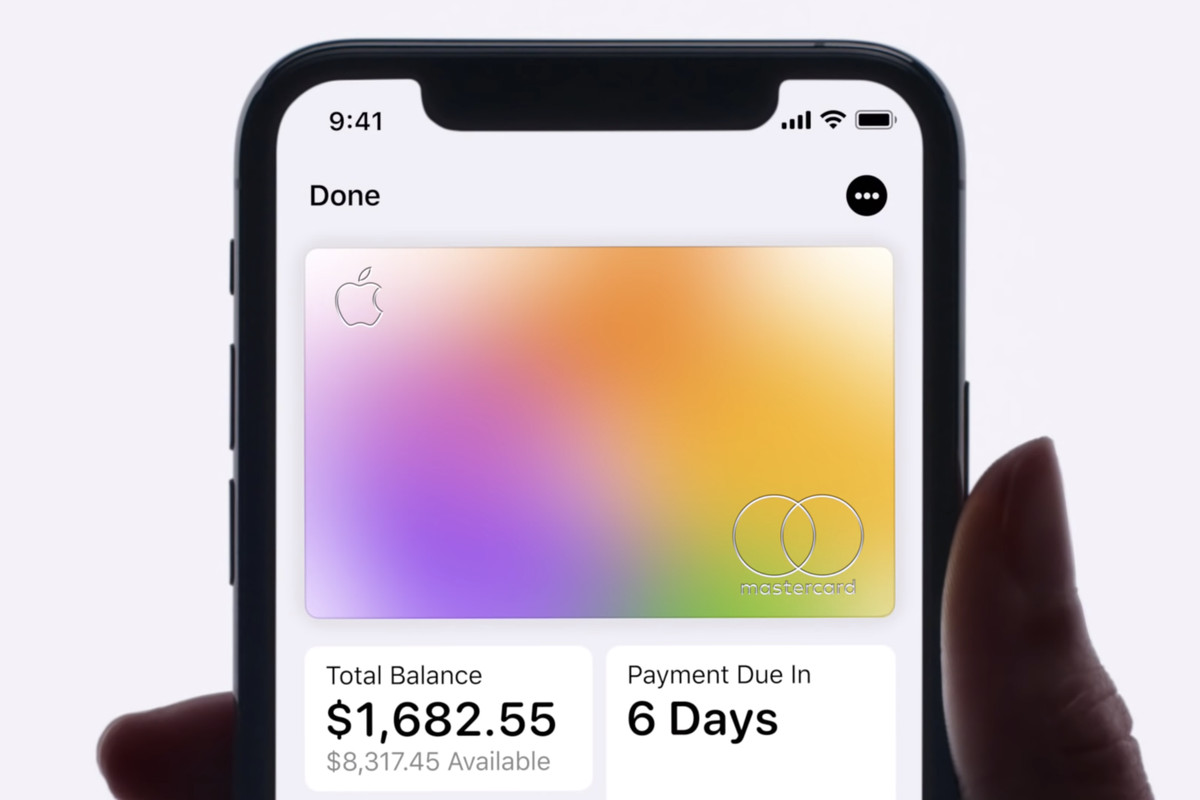
    Back in March, Apple introduced the Apple Card. The virtual card sits in the iOS Wallet app, although an actual physical card can be ordered. For privacy reasons that card will not include the account number, but will have the user’s name on the card. Apple Card users will face no fees. That’s right, say goodbye to Late fees, Annual fees, International fees, and Over-limit fees. Card users will get back 2% of the value of transactions made outside of the Apple ecosystem and 3% of those purchases made from the App Store, Apple Store, and other Apple properties. Transactions paid for with the physical card will get 1% back. These rebates will be computed daily and made available each day.

    The card is expected to launch sometime this month and investment banking firm Goldman Sachs is Apple’s partner for this project. Goldman Sachs has posted the Apple Card Customer Agreement and this reveals some interesting things. First of all, depending on the card user’s credit ratings, the annual interest on the card will range from 13.24% to 24.24%. Future changes will be based on any rate hike or cut made to the Prime Rate. This is the rate that banks charge their best customers for loans.

    To be eligible for an Apple Card, you must have an Apple ID that is associated with a valid iCloud account. There must be an active email address connected to the Apple ID, with Apple’s two-factor authentication turned on. And those iPhone users who “jailbreak” their phone to remove iOS software restrictions are at risk of having the account closed. In addition, the Apple Card cannot be used to buy casino chips, lottery tickets, and cryptocurrencies. In other words, you can’t use the Apple Card to buy Bitcoins. This is probably not devastating news for the majority of consumers looking to open an Apple Card account.

    “If you make unauthorized modifications to your Eligible Device, such as by disabling hardware or software controls (for example, through a process sometimes referred to as “jailbreaking”), your Eligible Device may no longer be eligible to access or manage your account. You acknowledge that use of a modified Eligible Device in connection with your Account is expressly prohibited, constitutes a violation of this Agreement, and could result in ours denying or limiting your access to or closing your Account as well as any other remedies available to us under this Agreement”-Apple Card user agreement.

    So if you own a jailbroken iOS device, you’re not allowed to use it to apply for the card. And if you have an iPhone that you used to obtain a card, you cannot jailbreak it. Pretty simple rules. In fact, all of the terms and conditions of the Apple Card can be found on the Goldman Sachs website.

    The Apple Card will be another business in Apple’s Services unit. After the iPhone, this segment is the second-largest in terms of revenue for the company, and it is the tech giant’s second most profitable division. Apple is aiming to hit $50 billion in annual revenue by next year for the Services group, double the $25 billion the unit grossed in 2016. For Apple’s fiscal third-quarter covering April through June, the company reported record Services revenue of $11.5 billion. The reason why this business is so important to Apple is that it is less dependent on iPhone shipments and is more dependent on the global active number of iPhones. At the beginning of this year, that number was approximately 900 million. Other businesses under the Services umbrella include the App Store, iCloud, Apple Music, Apple TV+, Apple News+, Apple Arcade (once it launches), AppleCare, Apple Pay and more.

  • Apple iPhone 11 suppliers are reporting low component orders

    Apple iPhone 11 suppliers are reporting low component orders

    Despite recently setting a revenue record for the April-June quarter, Apple’s iPhone business hasn’t been doing too well lately. The arrival of new iPhones in September will inevitably help improve the situation but suppliers are receiving low orders for the iPhone 11.

    Citing “industry sources,” today’s report says the order momentum for touch panels and other iPhone components has so far “been weak.” Apple is currently gearing up for mass production but the “low order visibility” ultimately suggests the company is forecasting combined iPhone 11 sales that could either be on par or below those of the iPhone XS and XR devices.

    Bloomberg recently reported a similar situation. According to Mark Gurman, Apple has ordered an initial batch of 75 million combined iPhone 11, iPhone 11 Max, and iPhone 11R units. The figure is roughly the same as a year earlier and suggests Apple is preparing for flat year-on-year sales. But if everything goes to plan, overall revenues should be up thanks to better performance by the Wearables, iPad, and Mac businesses.

    Apple often diversifies its supply chain as much as possible but this year it’s expected to take things to the next level in light of the current trade war between the US and China. Because of this, there’s no guarantee these reports about orders paint the entire picture. However, considering the iPhone 11 lineup isn’t expected to bring any groundbreaking changes, there’s also no reason to believe there will be a sudden boost in demand.

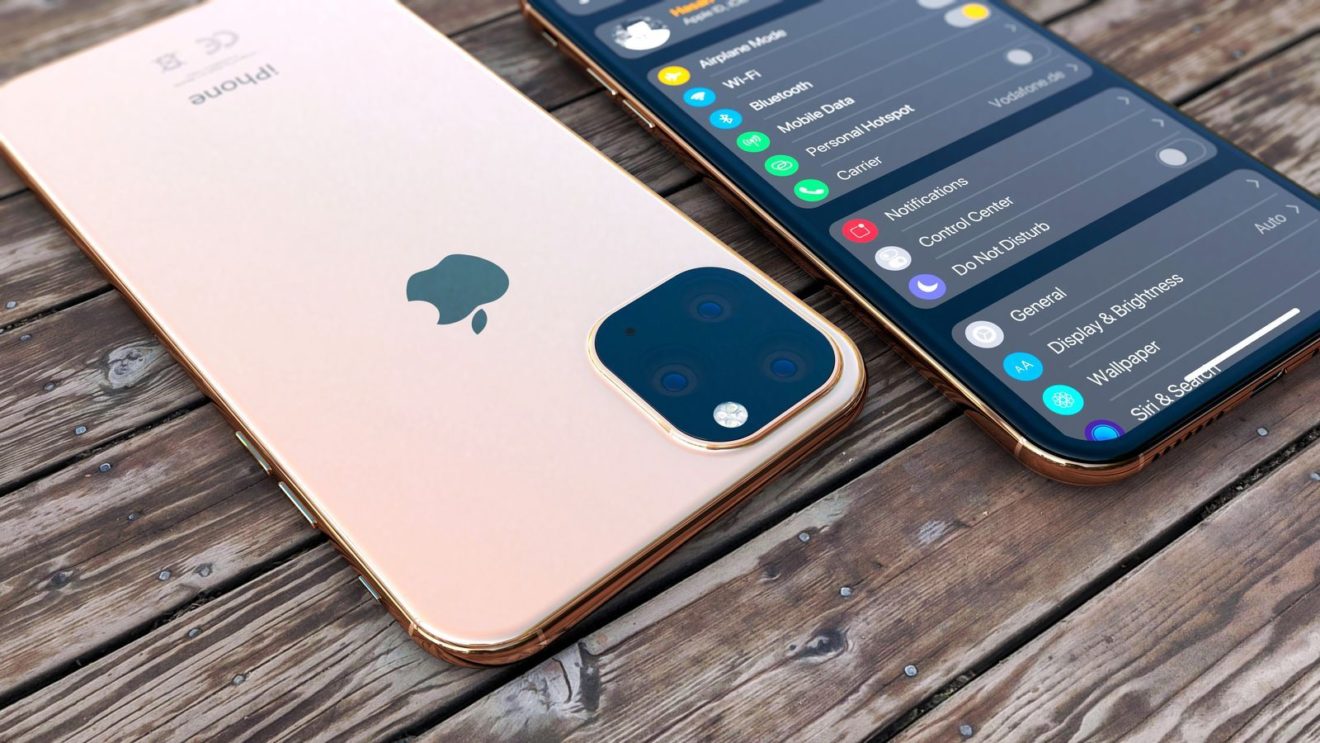
    For those of you that aren’t yet aware, all 2019 iPhone models will be virtually indistinguishable from their direct predecessors when it comes to the front panel. Reports suggest Apple has plans to retain the 5.8-inch and 6.5-inch OLED displays used on last year’s iPhone XS series and the 6.1-inch LCD found on the iPhone XR. As a direct result of this, Apple’s controversial notch will remain unchanged for another year.

    Despite the lack of physical changes upfront, reports suggest there will be some important upgrades. Specifically, the 7-megapixel selfie camera will be replaced by an all-new 12-megapixel sensor and Face ID will benefit from updated components that’ll allow it to work at shorter distances and wider angles. It is, however, still unclear if Apple’s new Face ID system will support horizontal or upside-down unlocking like the upcoming Pixel 4.

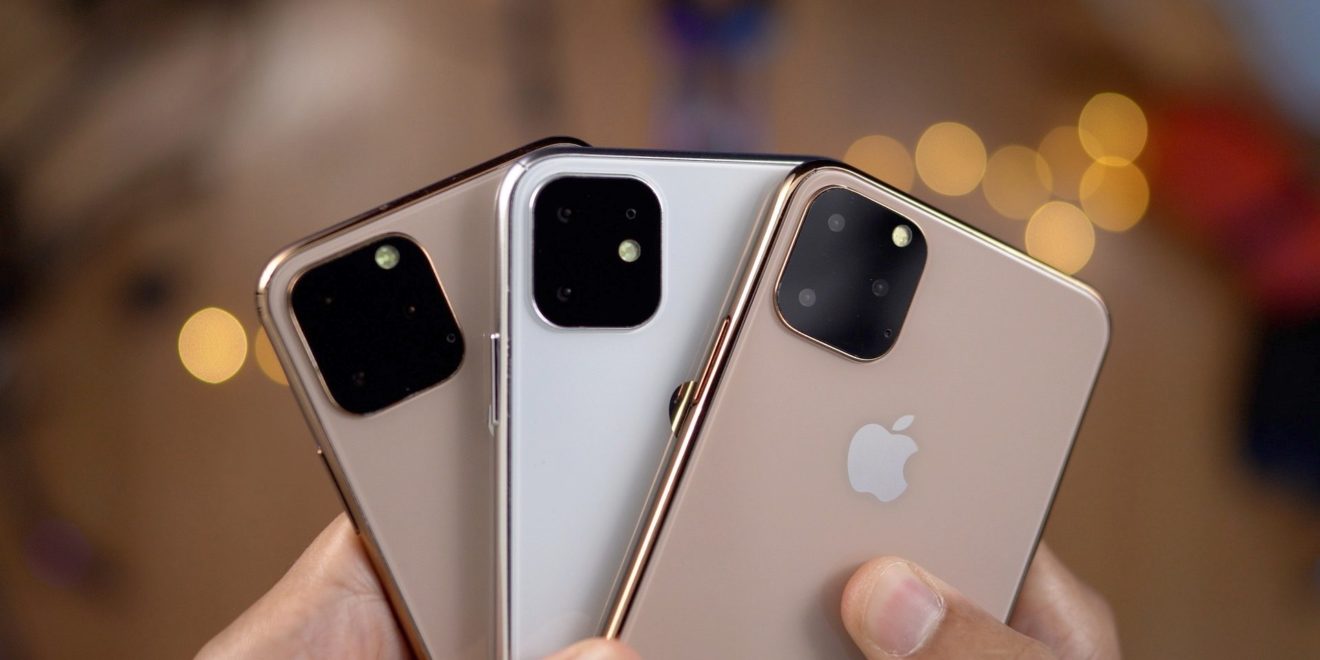
    Moving over to the rear, numerous leaks suggest Apple will be adopting a totally redesigned camera setup. Both the iPhone 11 duo and the iPhone 11R will feature square-shaped modules in the top-left corner which house the new cameras. All three smartphones will feature a main 12-megapixel sensor and a second one of the same resolution that boasts a 2x telephoto zoom lens. These shouldn’t differ too much from the iPhone XS cameras.

    To help make the iPhone 11 and iPhone 11 Max more competitive, Apple is also planning a third camera. This sensor should also offer a 12-megapixel resolution but it’ll reportedly arrive paired with a new super-wide-angle lens that’ll permit a new feature called Smart Frame. This captures the area around the framed area in pictures and videos, therefore giving users the ability to adjust framing or perform crop corrections after a photo has been taken. The extra information will be retained for a short period of time and eventually deleted automatically.

    The iPhone 11 series is expected to go official in early September alongside the Apple Watch Series 5 and 10.2-inch iPad. Pre-orders are expected to kick off Friday, September 13. As for the release date, Apple’s previous launch schedules suggest the new models will be available on Friday, September 20.

  • Apple Pay is gaining popularity

    Apple Pay is gaining popularity

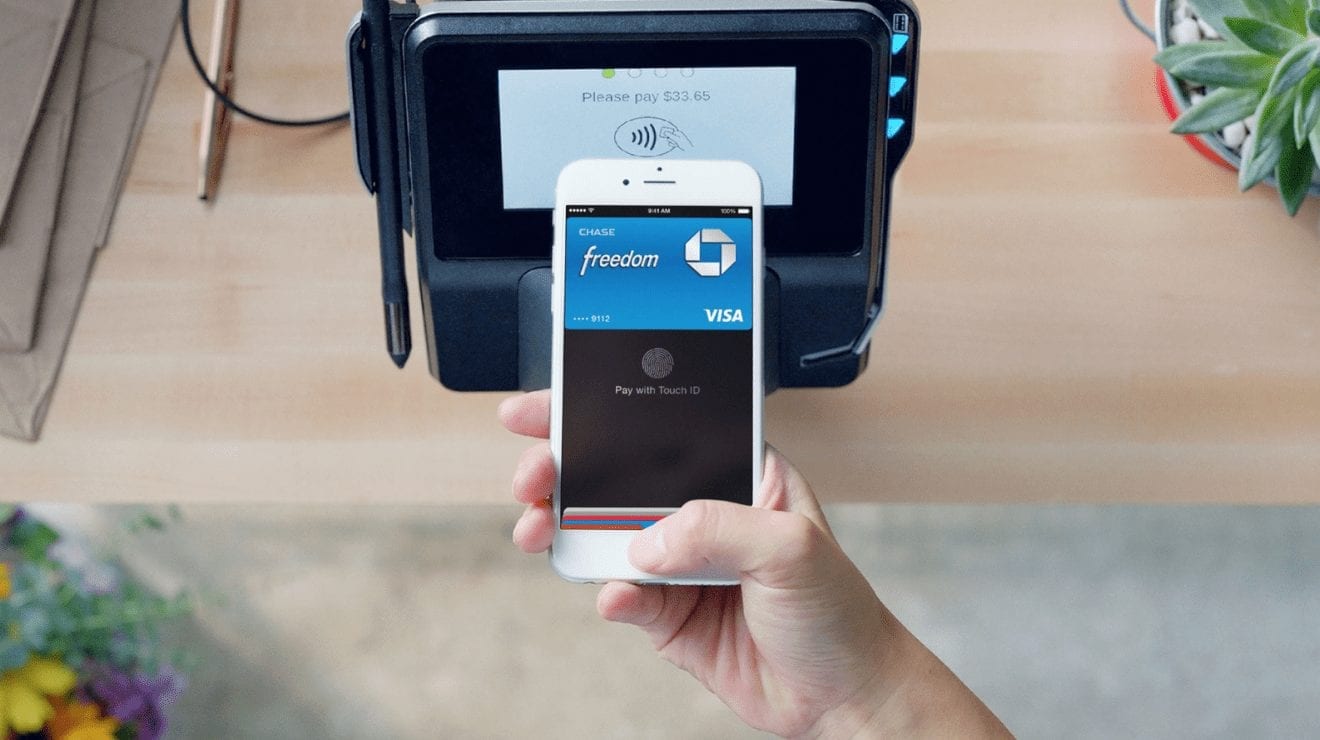
    Apple’s Services business generated record revenue of $11.5 billion during its fiscal third quarter. This is Apple’s second-largest unit and its most profitable. And one of the businesses in this segment is Apple Pay. This is Apple’s mobile payment system and the company takes .15% of the value of each transaction rung up on the platform. For example, if someone with a compatible device (iPhone 6 and later, iPad Air and later, Macs sporting Touch ID and all Apple Watches) uses the system to make a $100 purchase, the company takes 15 cents. That might not sound like a lot of money, but multiply that by the number of transactions a month that use Apple Pay and you can see how this can be a lucrative business for Apple.

    So how many transactions a month involve Apple Pay? The tech titan said during today’s earnings call that its payment platform is used on nearly 1 billion purchases each month. And that is close to doubling the number of monthly transactions that Apple Pay was involved in last year. According to CEO Tim Cook, “Based on June quarter performance, Apple Pay is now adding more new users than PayPal and monthly transaction volume is growing four times as fast.” During the quarter, Apple Pay was rolled out to 17 new countries and is now available throughout the European Union. Cook says that the service can be found in 47 markets.

    Apple also is expanding the number of transit systems that use Apple Pay. It has already added support for TriMet, Portland’s mass transit system, and has started rolling out support for the massive New York City transit system. Later this year, Chicagoans will be able to use the system to cover fares when commuting.

    “In the United States, in addition to successful integration into Portland’s transit system in May, we’re beginning the rollout of New York City transit, and will launch in Chicago later this year. In China, Apple Pay launched the payment card for Didi, the world’s largest ride-hailing provider. As I’ve said before, transit integration is a major driver of a broader digital wallet adoption, and we’re going to keep up this push to help users leave their wallet at home in more and more instances.”-Tim Cook, CEO, Apple

    After Apple iPhone shipments worldwide peaked at 231.22 million units in 2015, the manufacturer decided the next year to focus on its Services unit. This was a good idea because much of the revenue in this segment is recurring such as subscriptions for Apple Music and Apple News+ (and soon, Apple Arcade). Also in this category is AppleCare, iCloud, the App Store and more. The company set a goal of $50 billion in Services revenue for 2020, double the amount it garnered in 2016. This part of Apple’s business is dependent on the number of active iPhone units (900 million at the beginning of this year). As a result, growth in shipments is nice to have but is not nearly as important.

    Based on the firm’s fiscal third-quarter report, the Services unit is currently generating revenue at a rate of $46 billion on an annual basis. But $50 billion in gross next year can be achieved if Apple Pay and Apple Music continue to grow and if Apple Arcade captures the imagination of mobile game players.

    Overall, Apple reported fiscal third-quarter revenue of $53.81 billion up from $53.27 billion. Net profits decreased from $11.52 billion during the same period last year to $10.04 billion. Earnings per share decreased to $2.18 from $2.34 during the 2018 quarter.

  • Apple iPhone revenue drops significant

    Apple iPhone revenue drops significant

    Apple this afternoon reported its fiscal third-quarter earnings covering the three month period from April through June. The company said that iPhone revenue hit $25.99 billion during the quarter, down from the $29.47 billion it recorded one year ago. That is a 12% decline on an annual basis and was lower than Wall Street expectations. For the nine months ended in June, Apple rang up $109 billion in handset revenue versus the $128.1 billion it took in over the same period in 2018.  It was the first time since 2012 that Apple’s iPhone sales failed to make up 50% or more of the firm’s revenues for a quarter. During the fiscal third quarter, sales of the iPhone contributed 48.3% to Apple’s total revenue of $53.8 billion.

    Sales of the Apple iPad continue to do better than the tablet market as a whole. During the company’s fiscal third quarter, revenue attributed to the device rose from $4.63 billion to $5.02 billion. Last quarter, the iPad recorded its strongest revenue growth in six years. The turnaround started with the release of two new iPad Pro models last year and a new iPad Air and new iPad mini this past March.

    Apple is expecting its Services unit to help make up for the sluggish performance of the iPhone. The tech giant is banking on a large number of active iPhone users to take this unit to $50 billion in revenue next year. For the latest quarter, the division grossed a record $11.5 billion compared to the $10.2 billion it generated last year. This unit, Apple’s second-largest and it’s most profitable, includes recurring subscription services such as Apple Music, Apple News+ and the upcoming Apple Arcade. It also includes AppleCare, ApplePay, the App Store, iCloud and more.

    Led by the AirPods wireless earbuds and the Apple Watch, the Wearables, Home and Accessories segment was extremely strong with sales of $5.53 billion during the three month period. During the same quarter last year, this unit took in $3.73 billion.

    Sales backed off in China as expected due to the strength of the dollar and the current trade war between the U.S. and China. And we can’t forget that some Chinese consumers are individually boycotting Apple to protest the placement of Huawei on the U.S. Commerce Department’s Entity List. The manufacturer’s inclusion on the list prevents Huawei from accessing its U.S. supply chain. For the quarter, Apple had sales of $9.16 billion in the country, down from last year’s $9.55 billion. Revenue also declined slightly in Europe to $11.93 billion while rising in the Americas ($25.06 billion), Japan ($4.08 billion) and the rest of the Asian Pacific Market ($3.59 billion).

    “This was our biggest June quarter ever — driven by all-time record revenue from Services, accelerating growth from Wearables, strong performance from iPad and Mac and significant improvement in iPhone trends. These results are promising across all our geographic segments, and we’re confident about what’s ahead. The balance of calendar 2019 will be an exciting period, with major launches on all of our platforms, new services, and several new products.”-Tim Cook, CEO, Apple

    “Our year-over-year business performance improved compared to the March quarter and drove strong operating cash flow of $11.6 billion. We returned over $21 billion to shareholders during the quarter, including $17 billion through open market repurchases of almost 88 million Apple shares, and $3.6 billion in dividends and equivalents.-Luca Maestri, CFO, Apple

    After the results were released, investors rushed to buy the stock. In after-hours NASDAQ trading, Apple is up $9.16 or 4.4% to $217.94. Once again, the company is closing in on a valuation of $1 trillion. Almost exactly one year ago, Apple became the first publicly traded U.S. company to reach such a lofty valuation.

    For its fiscal third quarter, Apple reported a net profit of $10.04 billion, down from $11.52 billion last year. Earnings per share on a diluted basis (all convertible shares accounted for) declined from 2018’s $2.34 to $2.18.

  • Asia Music acquires audio-book business

    Asia Music acquires audio-book business

    Asia Music Investments (AMI) has bought a music-book business and expanded its operations and distribution partnerships with major publishers.

    The company has taken over the music-book distribution business from Gramercy Music, which occupied 2700sqft of space on Bukit Timah Road. AMI says the S$1.2 million acquisition and investment is a strategic move to expand its repertoire of services, expand its customer base and develop new competencies.

    AMI also operates four music schools offering a range of musical courses including piano, violin, guitar, guzheng, vocal, erhu and dance. The music-book business deal will enable AMI to provide greater value to its students, by making available the largest and latest range of musical books in the market.

    “Our acquisition has enabled us to immediately offer our customers better value-added service as they can access and purchase music books easily,” says Vivian Gao, MD of AMI.

    “In addition, we are also able to strike up new partnerships and distributorships with publishers to expand the music book business.”

    Customers can purchase music books online via its official online store or drop by the bookstore, which is a one-stop music concept offering books, accessories and musical instruments.

    “Having a physical store enables our customers, many of whom are music teachers, to be able to conveniently compare the many books available on the shelves. This better helps them to make decisions on which books to use for teaching,” Gao added.

    In May this year, AMI finalized partnerships with Alfred Music to be the exclusive distributor of its UK’s Basic Graded Piano Course series. Alfred Music is the leading publisher of music education books and currently has 150,000 titles worldwide.

    It is also teaming up with Poco Studio, a music education publisher, to distribute its full range of titles in Singapore.

  • Original DOOM game now available on Android and iOS

    Original DOOM game now available on Android and iOS

    Back in 1993, a little game called DOOM developed by a small studio called id Software set the gaming world on fire. About 25 years later, Bethesda decided to release classic DOOM titles to new platforms, including Xbox One, PlayStation 4, Nintendo Switch, Android, and iOS.

    While DOOM, DOOM II and DOOM 3 are now available for download for Nintendo Switch, Xbox One and PlayStation 4, only the first two are hitting Android and iOS devices. If you want to try them out, you can download them from the Google Play Store and App Store, respectively, for $5.

    The original game, DOOM comes with all the content released back in 1993, and the fourth expansion Thy Flesh Consumed. The re-release of DOOM II includes the Master Levels, 20 additional levels made by the community and curated by the developers.

    Although the classic DOOM game has been available on iOS since 2009, this is the first time both games are ported to Android and, of course, the first time DOOM II hits iOS devices. There’s one small issue though, you’ll need to log into a Bethesda account to play the games. If you don’t have an account yet, you’ll have to create one. The BehesdaNet login requirement was included for the Slayers Club with the purpose of rewarding members for playing the classic DOOM games.

    However, Bethesda said that the login should be optional and that it’s working on changing the requirement to optional right now.

  • Trump says Apple will soon announce plans to build a new apple factory in Texas

    Trump says Apple will soon announce plans to build a new apple factory in Texas

    Stop us if you’ve heard this before. President Donald Trump said that Apple will follow his wishes by opening a U.S. factory in Texas. The president’s comments were made the same day that he disseminated a tweet saying that he would not grant the tech giant a waiver that would prevent it from having to pay import taxes on parts for the Mac Pro imported from China. Trump also pointed out that if Apple made the parts in the states, it wouldn’t face tariffs on them. While Apple designs its products in the U.S., many of them are actually manufactured in China. Even though there is a “truce” in the trade war between the U.S. and China, the already announced tariffs remain in place.

    You might remember that in July 2017, Trump said that he was told by Apple CEO Tim Cook that the company was building “three big plants, beautiful plants.” The only problem with that comment was that it was not true. Apple later denied that any such conversation took place and said that it certainly did not have plans to build any factories in the U.S.

    Trump has had a love-hate relationship with Apple, calling for a boycott of the company back in February 2016. Apple had refused a court order to unlock the iPhone 5c that belonged to San Bernardino shooter Syed Farook. Apple refused to do so because it would have required that the company develop a special operating system for the government; Apple was afraid that the software could get into the wrong hands making all iPhones vulnerable to getting hacked. Trump threatened to stop using his iPhone and said that he would use a Samsung handset until Apple gave the FBI what it wanted. An unnamed Apple executive responded by saying, “Trump’s call for (an) Apple boycott puts the company in standing with other good people he has criticized.”

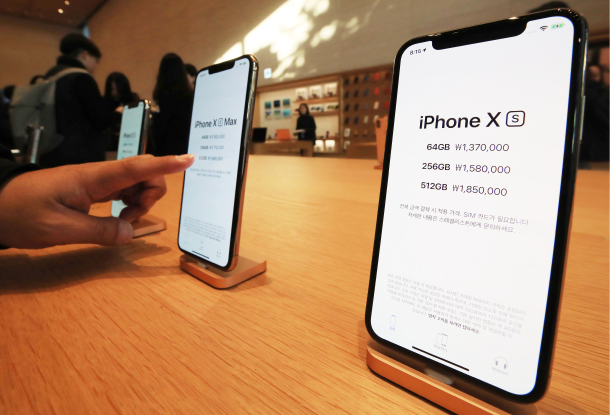
    In June of 2018, The New York Times reported that Trump had promised Cook that the iPhone would not be subject to any tariffs. Economist and Trump advisor Peter Navarro denied that this promise was made. And while Apple’s most important product has not yet been hit with tariffs, if the current truce doesn’t hold up, the next tier of products from China to receive an import tax is said to include smartphones like the iPhone. According to Morgan Stanley analyst Katy Huberty, tariffs could add $160 to the price of the iPhone XR. That would raise the retail price of the 64GB model from $749 to $909. Last month, Apple tried to warn the president that tariffs on the iPhone could damage the U.S. economy.

    Some of you might be surprised to learn that the tariffs are actually an import tax paid by consumers. In May, President Trump incorrectly tweeted that “tariffs are NOW being paid to the United States by China of 25% on Billions of Dollars worth of goods and services. These massive payments go directly to the Treasury of the U.S.” Either Trump doesn’t know how tariffs work, or the president purposely tried to mislead the country. China does not pay one cent of the tariffs. They are taxes paid by U.S. corporations that can eat them, or pass them along to U.S. consumers by raising prices. Apple, to its credit, has eaten the tariffs imposed on certain iPhone and iPad cases in order to keep the cost to consumers the same. This lowers Apple’s profit margin on those products. So if a tariff is imposed on the iPhone, either Apple will be negatively impacted, or U.S. consumers will be in the form of higher prices for the device.

    Meanwhile, we wouldn’t be holding our breath waiting for Apple to announce a new plant in Texas. It is likely to be found next to the three non-existent factories that Trump said Apple was going to build two years ago.