Tag: apple

  • Apple took unfair profits: Korea FTC

    Apple took unfair profits: Korea FTC

    Korea’s corporate watchdog claimed Apple Korea has bargaining power over local mobile carriers and that it has reaped unfair profits from them in a statement Monday. According to the Fair Trade Commission (FTC), experts called in by the antitrust body said Apple Korea exploited its market position to place part of its advertising costs on local telecommunications companies.

    The statement comes after exchanges between the FTC and the iPhone maker during a deliberation on the company’s position on Jan. 16. It was the second round of hearings since the first deliberation in December.

    Apple Korea has been under investigation by the FTC since 2016 on whether it forced carriers to pay advertising and warranty costs.

    Korea’s fair trade law prohibits abuse of one’s position during a transaction.

    Apple Korea claimed through its expert witnesses, which included economists and business experts, that it does not have leverage over local carriers and defended its actions, saying that its advertisement fund was able to help all parties involved.

    The experts also argued that Apple’s involvement in advertisements was justifiable to maintain the iPhone brand.

    Expert witnesses for the FTC responded that Apple Korea can be regarded as being in a position of power over carriers and that the advertisement fund served to collect additional profit from them. They also stated that the company’s activities in taking part of carrier advertisements cannot be seen as part of their branding strategy.

    The FTC’s Economic Analysis Division provided similar analysis to those made by its witnesses.

    The hearings on the investigation will continue, with the third round of deliberations scheduled for Feb. 20.

    The antitrust body said that the third hearing will discuss specific actions made by Apple. It is unclear whether the third hearing will be the last.

    If found to have abused its position, Apple Korea could face fines worth up to two percent of its related sales.

    The iPhone maker has a history of trouble with the FTC.

    The company made corrective measures under the corporate watchdog for its product replacement policy back in 2011 and its services agreements with local companies in 2016.

  • Johnson & Johnson, Apple collaborate for healthcare

    Johnson & Johnson, Apple collaborate for healthcare

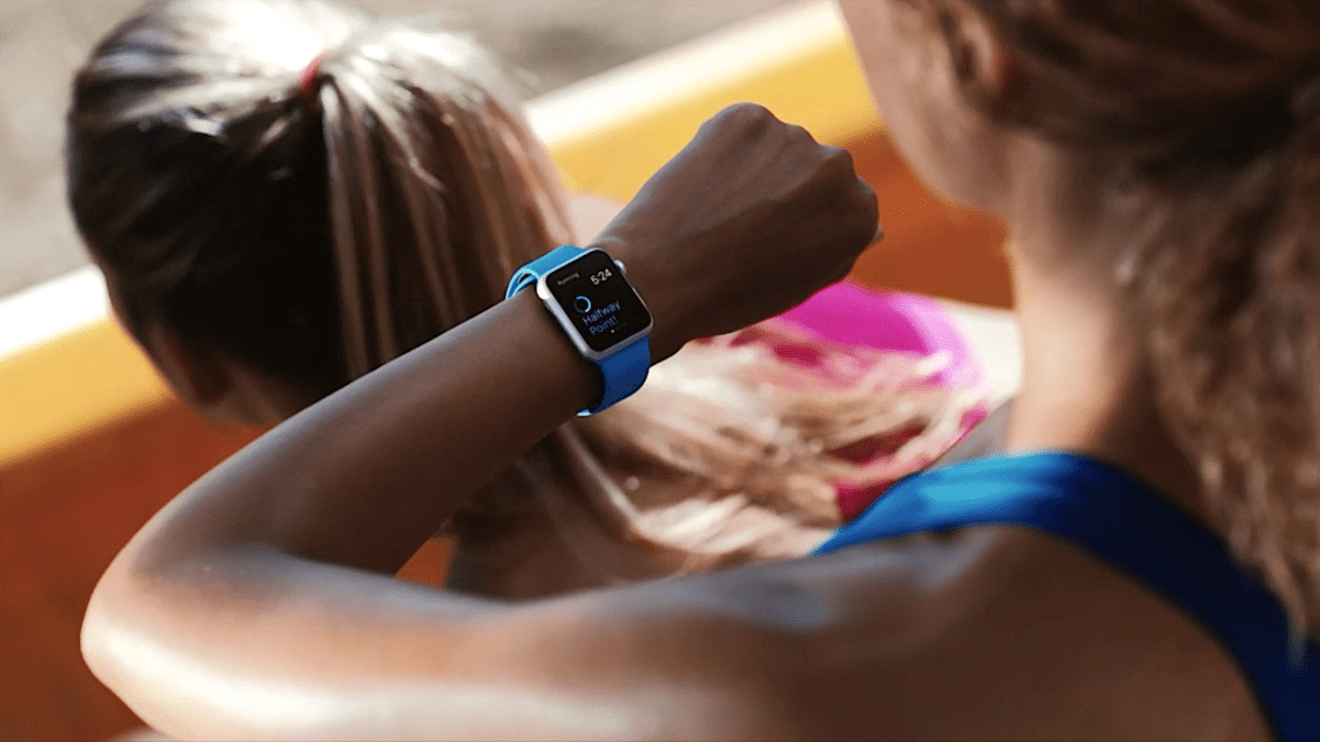
    Apple and Johnson & Johnson are teaming up on a study to determine whether the latest Apple Watch, in conjunction with an app from the pharmaceutical company, can accelerate the diagnosis of a leading cause of stroke. Atrial fibrillation, or AFib, is an irregular and often rapid heart rate that causes about 130,000 deaths and 750,000 hospitalizations each year in the U.S., Johnson & Johnson said. Up to 30 percent of cases go undiagnosed until life-threatening complications occur. Worldwide, about 33 million people have the condition.

    The controlled, randomized multi-year Johnson & Johnson study will start later this year and be limited to U.S. adults ages 65 years and older who wear the Apple Watch Series 4. Specific details on how to participate will be released later.

    The Apple Watch Series 4, which costs $399 or more, has an irregular heart rhythm notification feature, as well as an FDA-cleared ECG app, both of which are designed to detect AFib.

    “We are receiving thank you letters daily from Apple Watch wearers who are discovering they have AFib,” said Apple Chief Operating Officer Jeff Williams. “We want a deeper understanding about outcomes and prevention associated with early detection. We are excited to work with Johnson & Johnson, which has a long history and expertise in cardiovascular disease.”

    Paul Stoffels, Johnson & Johnson’s executive vice president and chief scientific officer, said “the goal is to identify early on AFib and prevent stroke by combining the physical know-how from Apple and what we have from the medical and scientific know-how.”

    Cardiologist Paul Burton, Johnson & Johnson’s vice president of medical affairs for internal medicine, added the watch has a good detection rate for the condition, but there can be false positives.

    If an AFib reading appears, patients are directed to seek a formal diagnosis from their medical provider. Johnson & Johnson’s goal is to collect aggregate data from study participants, rather than tracking individual patients.

    “When we do clinical trials, we always respect the privacy of patients,” Stoffels says.

    Burton believes “the study has the potential to show that there is a lot more atrial fibrillation out there in the real world in older people than we ever imagined, and if you use a tool like an Apple Watch to detect and funnel people to care, you can really drive down stroke risk in those patients.”

    Apple CEO Tim Cook recently talked about Apple’s ambitions in the health space. “I think you’ll be able to look back at some point in the future and Apple’s greatest contribution will have been to people’s health. I think it’s that big.”

    In November 2017, Apple teamed up with the Stanford University School of Medicine on an Apple Heart Study app that uses the heart rate sensor inside the Apple Watch to collect data on irregular heart rhythms. That study is ongoing.

    Apple also hopes iPhone owners will store medical records inside the Health app.

    Stoffels says wearable technology will continue to take on increased importance in the health field, from monitoring whether patients take medications to measuring sleep. “Digital and data will become part of everything we do.”

  • Samsung cooperates with Apple

    Samsung cooperates with Apple

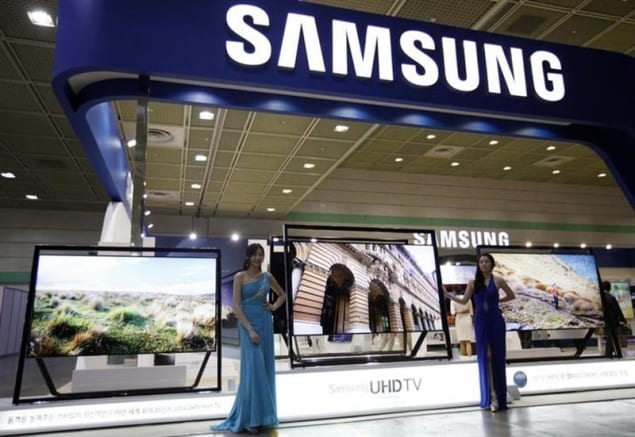
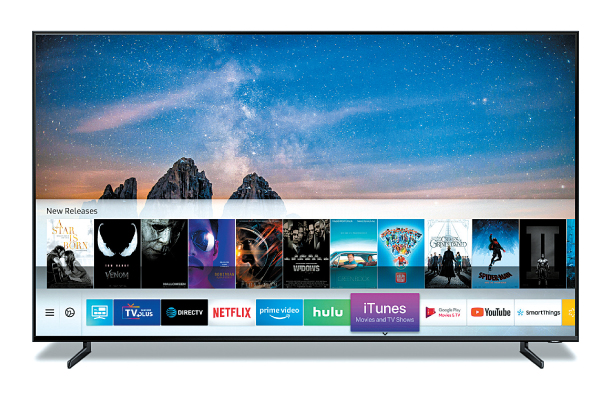
    Samsung Electronics is teaming with arch-rival Apple to enable its smart TVs to access video, audio and other programming from iTunes. It is the first time the two have cooperated on content. The partnership was announced Monday. Beginning this spring, Samsung smart TVs will have iTunes movies and TV as a default option, along with YouTube and Netflix. For customers with older versions of Samsung smart TVs, the service can be added with a software update.

    Apple’s new movie and TV streaming service is set for official introduction in March. Samsung Smart TVs will be the first non-Apple devices to have access to the service.

    Another feature to be made possible on Samsung TVs is AirPlay 2, a function that allows for wirelessly access to movies, photos, podcasts or music from Apple devices.

    Until recently, before Chinese manufacturers became smartphone leaders, Apple and Samsung competed intensely for domination in the market.

    The two were also embroiled in a seven-year patent battle that was only concluded last year.

    Despite the rivalry, they have continued to do business with each other. Samsung has supplied Apple with smartphone chips and displays.

    At an event held in Las Vegas Monday before the Consumer Electronics Show 2019, the president of the Samsung visual display business, Han Jong-hee said that the collaboration is a “win-win” for both companies while customers will benefit from a wider range of choices.

    “For now, the collaboration will be about content. But in the future, I expect there to be other fields in which we can work together as well,” said Han. According to another senior executive at the event, the project was initially suggested by Samsung.

    The company suggested that it is open to partnerships with other companies as well, saying in a press release that it aims to minimize the barriers between products and providers to offer a “rich selection of content.”

    For Samsung, Apple programming will give it an upper hand in attracting customers.

    The war in the TV market is now as much about what is available on devices as it is about brighter, more colorful and slimmer panels. How TVs seamlessly link to online resources is one of the major battlegrounds.

    The partnership also reflects how Apple is increasingly putting weight on services instead of hardware – the reason it came up with the iTunes video streaming service. Global iPhone sales are falling short of expectations as customers don’t change phones as frequently as before and many are being turned off by the high prices.

    Samsung brings with it the strength of being No. 1 in the global TV market, with more than a 40 percent share.

    “We look forward to bringing the iTunes and AirPlay 2 experience to even more customers around the world through Samsung smart TVs, so iPhone, iPad and Mac users have yet another way to enjoy all their favorite content on the biggest screen in their home,” said Eddy Cue, senior vice president of Internet Software and Services at Apple.

  • Coupang to become an authorized Apple retailer

    Coupang to become an authorized Apple retailer

    Coupang, Korea’s top e-commerce platform, has been selected as an authorized retailer to sell Apple products, the company announced Friday. It said that the e-commerce giant was selected to become an authorized reseller of Apple products, and the service will begin sometime this month. The products that will be offered include iPad Pros, MacBooks and Apple Watches, as well as related accessories.

    Coupang said that its shoppers can get access to Apple products that carry a full Apple warranty and come with after-sales customer services from Apple.

    “Coupang will be an attractive purchase channel for customers who love or want to experience Apple products,” said Navid Veiseh, Coupang’s senior vice president of global e-commerce. “We will continue to expand the range of premium electronics brands like Apple, which, when combined with our Rocket delivery and RocketPay services, make Coupang the first place for customers to turn when shopping for premium electronics.”

    Coupang is known for its fast Rocket delivery service that sends items purchased the following day.

  • Apple sales plummet in Greater China

    Apple sales plummet in Greater China

    “In fact, most of our revenue shortfall to our guidance, and over 100 per cent of our year-over-year worldwide revenue decline, occurred in Greater China across iPhone, Mac and iPad,” he said.

    The Apple sales decline in China, Hong Kong and Taiwan would most likely exceed $4.3 billion, roughly equal to the company’s overall drop in revenue.

    Previously, Apple had forecast revenue of between $89 billion and $93 billion. Now it expects the figure will be closer to $84 billion, but notes final figures will not be calculated for several weeks.

    Cook said the rising tension between the US and China played a part in the declining sales, with traffic to Apple stores in the region declining as the quarter progressed. This, in turn, led to lower than expected iPhone revenue in the region, which was compounded by the stalling iPhone upgrades seen in other markets.

    “We believe there are other factors broadly impacting our iPhone performance, including consumers adapting to a world with fewer carrier subsidies, US dollar strength-related price increases, and some consumers taking advantage of significantly reduced pricing for iPhone battery replacements,” Cook explained.

    In response to these trends, the business is seeking to make it easier to trade in used iPhones at Apple stores, as well as allow payments to be made over a longer period.

    “This is not only great for the environment, it is great for the customer, as their existing phone acts as a subsidy for their new phone,” Cook said.

    Despite the slowing traffic, Apple’s other categories grew over the period, with the company’s wearables category growing by almost 50 per cent due to the popularity of Apple Watch and AirPods.

  • Korean iPhone owners claim low trade-in prices

    Korean iPhone owners claim low trade-in prices

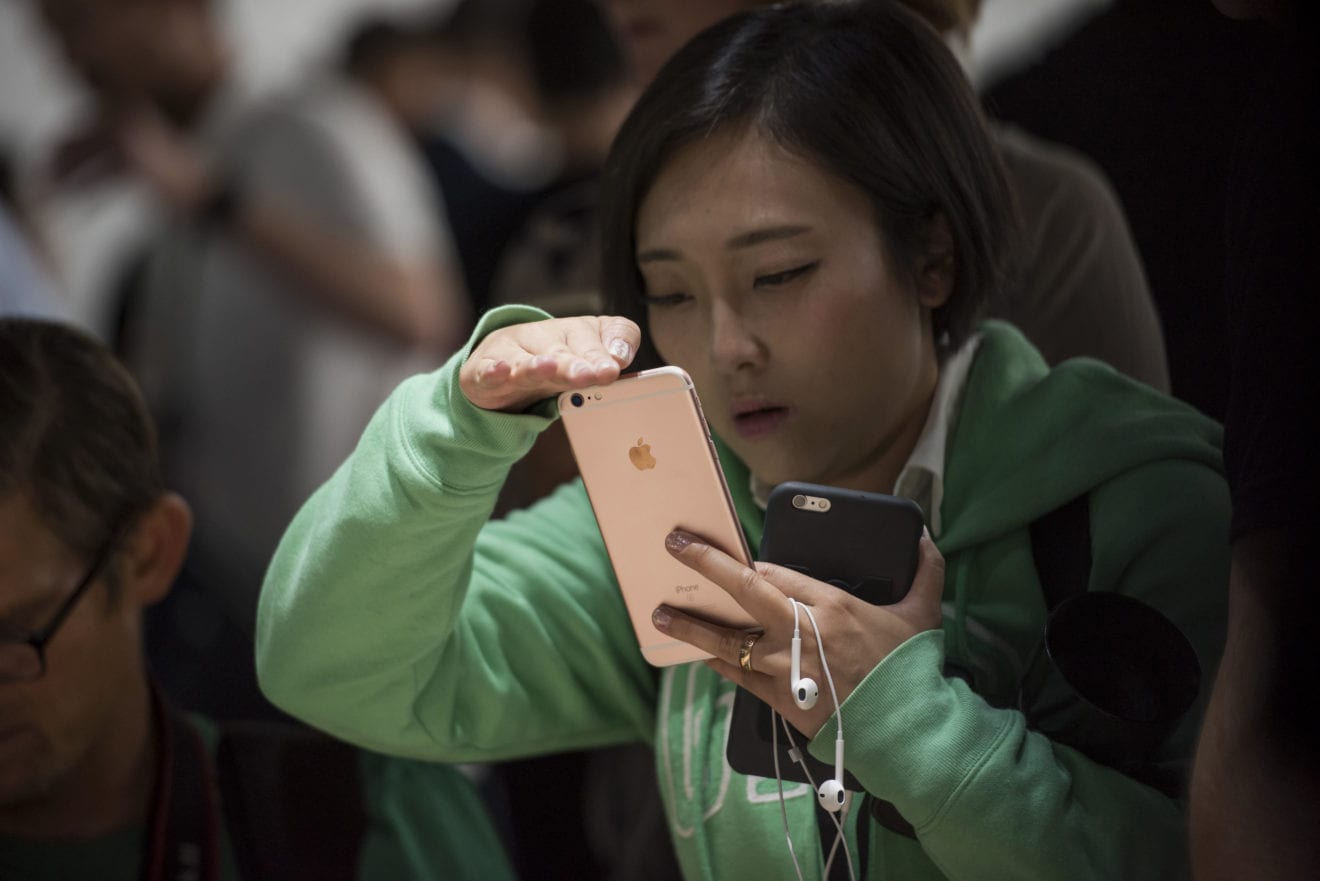
    iPhone users are accusing Apple of paying Korean customers less for their trade-ins than the devices are worth, while noting differences between promotions in other countries and those in Korea.  If an iPhone owner wants to return an older model when buying a new device, iPhone Korea said it will offer up to a 300,000-won ($268.56) discount on the latest smartphones, the iPhone XS and iPhone XR. Korean customers are outraged.

    They claim that the deal has been made available to them a full month later than in other countries. In the United States, Japan and China, trade-in opportunities started in late November. The amount in compensation is also said to be too low.

    Apple Korea announced on Dec. 24 that it is taking iPhone trade-ins at its retail store in Garosugil, Seoul, and will continue to do so until late January next year.

    If the user returns an older model, it is possible for them to buy the 990,000 won iPhone XR for 690,000 won and the 1.37 million won iPhone XS for 1.07 million won.

    Internet community Clien exploded with comments on Dec. 25, the day after the announcement. “I might as well sell it at the Gangbyeon Electronics Mart rather than returning it to Apple,” said one. Another added: “It is disrespecting the customers.”

    While iPhone Korea only compensates up to 300,000 won for an iPhone 7+ released two years ago, the price for an iPhone 7+ in the second-hand market near Gangbyeon and Sindorim is around 380,000 won, according to mobile community Cetizen.

    If the product is an S class with almost no cracks, the price goes up to 450,000 won.

    After typing in the serial number for a black iPhone 7 with 128 gigabytes into the trade-in page on Apple Korea’s website, a reporter received a quote of 174,000 won. In the second-hand market, users can sell the phone for at least at 289,000 won. Apple is offering 115,000 won less for the device.

    Lee Doo-hee, a programmer who enjoys using Apple products said, “I can get more money if I sell directly, so I do not feel any need to go to the Apple store in person and exchange my iPhone.”

    Apple U.S. announced that it is offering trade-ins of about $300 for those buying an iPhone XR and iPhone XS. This is about 10 percent more than in the Korean market.

    NTT Docomo, Japan’s No. 1 mobile company, is offering the iPhone XR for 25,920 yen ($235.05), around 260,000 won, for those signing a two-year contract. No similar discounts are offered in Korea.

    “For Apple, Korea is the home turf for Samsung Electronics, Apple’s old enemy,” according to a source in the sector.

    “Apple only has to get a fair amount of earnings from hard-core iPhone fans, which possibly account for 15 percent of all mobile communications users in Korea. That is why it is pursuing unfavorable policies, like excluding certain countries from promotions.”

    It is believed that the current promotion from Apple Korea is due to the slump in sales of recent iPhones. High prices are seen as the main cause of the recent slowing of sales growth.

    Kuo Ming-chi, a Taiwanese Apple expert as well as an analyst at TF International Securities, has revised his first-quarter 2019 sales volume estimate for iPhones from a 47 million to 52 million range to a 38 million to 42 million range.

    A report written by Kuo was titled: “Shipments of iPhones in 2019 could be below 190 million.”

    The market value of Apple exceeded one trillion dollars in September last year. It is now around $700 billion.

  • Apple assembler Foxconn considering iPhone factory in Vietnam

    Apple assembler Foxconn considering iPhone factory in Vietnam

    Apple’s biggest iPhone assembler Foxconn is considering setting up a factory in Vietnam to mitigate any impact of the ongoing trade war. The report from Vietnamese state media comes after several executives interviewed last week singled out Vietnam and neighboring Thailand as preferred destinations should they need to shelter operations from the trade war, braving hurdles such a lack of skilled labor and inadequate infrastructure.

    Foxconn Group and the Hanoi People’s Committee are working together to open an iPhone manufacturing facility in Vietnam to negate the impacts of the U.S.-China trade war.

    Vu Tien Loc, head of the Vietnam Chamber of Commerce and Industry, raised the matter with Prime Minister Nguyen Xuan Phuc at a meeting on Nov. 22.

    “We are discussing the possibility of this with Foxconn,” Loc said, without elaborating. Hanoi People’s Committee Chairman Nguyen Duc Chung declined to comment.

    Taiwan’s Foxconn, formally Hon Hai Precision Industry Co Ltd said it “follows a strict company policy of not commenting on any matters related to current or potential customers, or any of their products”.

    In trade talks on Saturday, U.S. President Donald Trump and Chinese President Xi Jinping agreed not to introduce any tariffs for 90 days as negotiations continue.

  • Amazon briefly edges out Apple to top Nasdaq

    Amazon briefly edges out Apple to top Nasdaq

    Amazon briefly became the most valuable company on Wall Street in intraday trade on Monday, days after Microsoft dethroned long-time leader Apple. Amazon rose by 4.7 percent at one point, putting its market capitalization at $865.0 billion. At the same time, Apple traded up 2.1 percent, giving it a market capitalization of $864.8 billion.

    Microsoft, which on Friday closed above Apple’s market capitalization for the first time in eight years, was up 0.9 percent, leaving its stock market value at $859.0 billion, third in the group.

    Amazon’s lead lasted only a few seconds. At the close, Apple was back on top with a 3.49 percent increase in its stock that put its total value at $877 billion. It was followed by Amazon, up 4.86 percent with a market capitalization of $866.6 billion, and then Microsoft, up 1.08 percent and a stock market value of $860.4 billion.

    The tight race between the trio of high-powered technology stocks coincided with a broad stock market rally after the United States and China agreed on a temporary truce in their ongoing trade dispute.

    Apple in August became the first U.S. publicly listed company to reach a $1 trillion market capitalization, but its share price has fallen sharply in recent months as investors worried that demand for iPhones was losing steam.

    Its market capitalization overtook Microsoft’s in 2010 as Microsoft struggled with slow demand for personal computers, due in part to the explosion of smartphones like the iPhone.

    Amazon’s stock has recovered most of the ground it lost after the online retailer in October forecast disappointing sales for the holiday quarter.

  • Kering’s new digital strategy revealed

    Kering’s new digital strategy revealed

    Customers draw inspiration from today’s hyperconnected world and they engage with luxury brands through the digital tools they use every day. In a fast-changing environment, the success of luxury houses depends upon their ability to offer creative propositions, and a consistent customer experience across all distribution channels and devices.

    In December 2017, Kering appointed Grégory Boutté as Chief Client and Digital Officer with the mission to carry out Kering’s digital transformation and to take the lead on e-commerce, CRM, data science and innovation for the Group. Since then, e-commerce has been the fastest growing channel for all Kering’s brands and represents 6% of the Group’s total retail sales for the first half of 2018.

    “Digital can be many different things at once – a distribution channel; a platform for offering seamless omni-channel services to clients; a driver of brand image and visibility; and a tool for engaging with customers in a personalized way. Digital technology, data science and innovation provide a way of offering our customers the best possible experience – on every touchpoint”, declared Grégory Boutté.

    Drawing upon his vision, Kering’s digital approach is based on the following objectives:

    • to provide the Group and its Houses with a real-time 360-degree view of their customers, and to deliver rich and personalized experiences;
    • to offer clients high levels of service, from initial transaction to after-sales;
    • to enable Kering’s Houses to develop close relationships with their clients and to adapt their offerings in order to meet specific needs.

    Today, Kering is announcing new milestones on its digital journey.

    The following initiatives will strengthen Kering’s focus on enhancing the Group’s omni-channel capabilities and further developing its Houses’ digital activities.

    In-store customer experience

    Kering is working on a suite of apps in partnership with Apple to be used by Houses staff in store, the first of which is a store experience app that enables sales associates in-store to access stock levels in real time to provide their customers with a fully personalized service.

    Via the app, sales associates know instantly if a specific size or color is available in-store or if it can be ordered from other stores; they can also give customized styling recommendations.

    Client service

    Kering developed a new approach to customer service with centralized teams in Europe and the US focused on addressing customers’ requests.

    Gucci, Saint Laurent and Bottega Veneta have dedicated teams, while other brands grouped their efforts under a single customer service unit, operated by Kering on their behalf.

    CRM and Communication

    Kering has launched several pilot projects using data science techniques to deliver personalized messages and experiences to customers, based on their profile and purchasing history.

    All Kering Houses have launched or are launching WeChat mini-programs in order to build as close a relationship as possible with their Chinese customers and to offer social commerce.

    E-commerce 

    Kering will leverage its in-house technology and operations team to fully internalize the e-commerce activities currently handled through the joint venture with YNAP.

    Following a highly successful and fruitful seven-year partnership with YNAP, these e-commerce activities will transition to Kering in the first half of 2020.

    Coordinated efforts and shared expertise with YNAP have enabled Kering Houses to enhance the level of service of their e-commerce websites. Most of them now offer services such as check availability, reserve in store, make store appointment, pick-up in store, return in store, exchange in store, and buy online in store.

    Kering will continue to develop partnerships with third-party e-commerce platforms when relevant.

    Digital capabilities

    A data science team has been created at Group level to improve the service provided to the clients of Kering’s Houses by making the best use of the available data.

    A China-based Client & Digital team is currently being formed. It will be responsible for adapting digital practices to the Chinese market, along with identifying and promoting innovations from China to other markets.

    Kering’s Group Innovation team has been tasked with two missions: to instill an internal culture of innovation (test-and-learn approach, quick sharing of discoveries, scouting business trends), and to work on disruptive technologies to further improve the client experience in the future in terms of business or environmental matters.

    Kering’s Chief Client & Digital Officer Grégory Boutté added: “These exciting new initiatives have been designed to meet – and exceed – the needs of our Houses’ customers and to ensure we continue to offer them an exceptional experience across all channels in a fast-changing global market. These opportunities have been made possible by the experience and know-how that Kering has gained over the years, notably through its successful joint venture with YNAPWe will continue to work with them post-transition and to enjoy a fruitful relationship.”
  • Apple pilloried over display model policy

    Apple pilloried over display model policy

    Just before the Fair Trade Commission comes to a decision on whether Apple has violated domestic fair trade laws, Korean phone distributors are calling the tech giant out for being the only phone manufacturer in the country that makes them pay for display phones in their stores.

    The Fair Trade Commission (FTC) is due to hold a meeting in mid-December after two years of investigating accusations against Apple and finally decide whether the company indulged in unfair practices. Some complaints are that Apple charges mobile carriers for repair and advertising costs of Apple products.

    On Wednesday, the Korea Mobile Distributors Association (KMDA) accused the company of doing something that no other handset maker did in Korea. “Apple doesn’t let us sell iPhones at all if we don’t purchase the demo phones needed for store displays,” read a statement from the KMDA. “Other manufacturers provide the display phones themselves, and come to collect them later.”

    According to the association, Apple even charged retailers for the costs of building shelves for display models and controlled where the promotional posters for new products were placed. Most of the demo devices are priced at around 70 percent of the market price. Distributors say they also had to purchase demo iPads and Apple Watches.

    iPhones are getting more costly, which could be a factor in the distributors going public with complaints against the company.

    In the past, Apple phones cost no more than 1 million won ($883). Last November, the iPhone X launched just three weeks after the iPhone 8 with a 1.42 million won price tag for a 64 gigabyte model. With the release of the iPhone XS, XS Max and XR on Nov. 2, iPhone prices have reached new highs. The iPhone XS Max is selling for more than 30 percent higher than the iPhone X at 1.97 million won for a 512 gigabyte model.

    “Previously, I spent around 1.1 million won on demo devices for Apple’s new products,” said a 53-year-old owner of a wireless store in Jongno District, central Seoul.

    Branches of the three major mobile carriers – SKT, LG U+ and KT – are the main distributors of mobile phones in Korea.

    “But recently, with Apple products becoming more expensive, the costs I have to bear have risen tremendously,” he said.

    The owner estimated that he spent nearly 5 million won on purchasing demo phones for Apple’s newest models.

    According to industry estimates, each mobile retailer spends around 2.9 million won a year purchasing Apple demo phones. This means that Apple will earn around 25.5 billion won in total sales of demo phones from the country’s 8,800 wireless stores.

    “We are not trying to sue Apple right away at this point, but rather figure out who holds responsibility,” added a KMDA spokesman. “Mobile carriers may be responsible for allowing Apple to pursue such unfair practices, leaving distributors to pay for the costs.”

    Korea is not the only country that has investigated Apple for unfair practices. This July, Japanese authorities called out the tech giant for antimonopoly practices that included forcing local mobile carriers to subsidize iPhone prices to boost sales. In 2016, France sued Apple for $55 million over unfair practices that also involved unfair contracts.

    Apple has not released an official response to the KMDA’s complaints.

    Sales of Apple’s new products have been less than stellar, which is also fueling dissatisfaction among distributors. According to industry estimates, the number of customers buying Apple’s three newest models between Nov. 2 and Nov. 7 was only 60 percent of the number that purchased Apple’s iPhone X and iPhone 8 in their first week last November.

  • Retailers attack ‘unfair’ Apple South Korea practices

    Retailers attack ‘unfair’ Apple South Korea practices

    Apple South Korea is under fire from retailers, accused of using unfair commercial practices. South Korean retailers have joined forces to confront Apple’s continuous “gapjil” — a uniquely Korean term referring to the abuse of power by someone against a person in a weaker position — that has put an increasing financial burden on their operations.

    The Korea Mobile Distribution Association has claimed in a statement that Apple South Korea had habitually forced local dealers to buy the iPhone maker’s new models for demonstration or demo phones, as opposed to other brands’ practices, putting an increasing financial burden on them, and that “they cannot stand it anymore”.

    The retailers say they had no choice but to accept Apple’s overbearing demands, since the popular iPhone’s position in the market makes it difficult to ignore, to say the least.

    It is reported that the retailers had to buy Apple’s new models including the iPhone XS, iPhone XS Max and iPhone XR, but having to buy too many new models in a short period of time and the “exorbitant prices” of the new phones resulted in a significant financial burden.

    According to the KMDA, most mobile phone manufacturers offer their new models for demonstration for free, and collect them when newer models are released. Apple, however, has imposed additional conditions regarding the brand’s new model promotion: forcing retailers to pay for the manufacturing cost of phone stands, and determining where the stands and promotional posters will be placed in stores, according to local retailers.

    Domestic mobile carriers are no exception to Apple’s overbearing position. Industry watchers say local carriers had to shoulder advertising expenses aimed to promote Apple’s new lineup. Even the costs of subsidy plans and repair fees for Apple’s phones tend to be covered by mobile carriers.

    The Fair Trade Commission ruled that Apple South Korea’s sales practices were in violation of local competition laws, and sent a review report to the iPhone maker that indicates the corresponding fines and required measures to address the company’s anticompetitive behavior. Apple has yet to respond.

  • Apple store to sell wearable skincare product

    Apple store to sell wearable skincare product

    Apple is now selling L’Oreal’s newest tool called the My Skin Track UV, made by the La Roche-Posay brand. The company first unveiled this product at the 2018 Consumer Electronics Show in January 2018 and it is now ready for consumers.

    This is the first time that Apple is venturing into the world of beauty and skincare in its store.

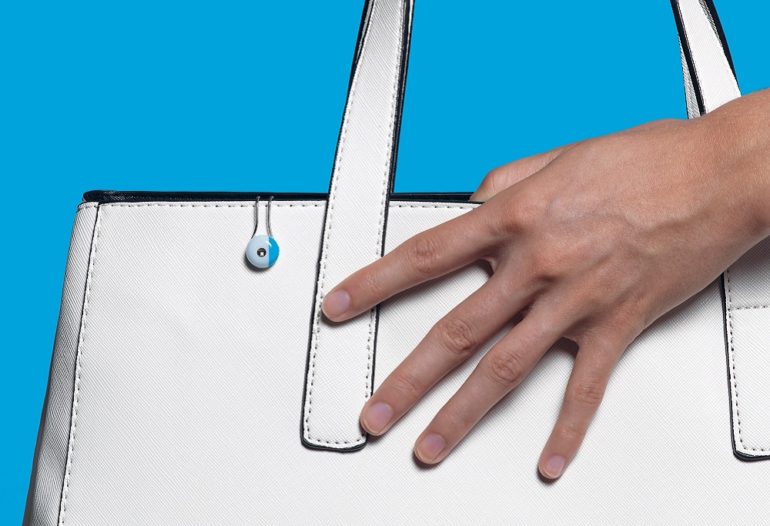
    My Skin Track UV is a small wearable device to attach on the customer’s clothes to measures their individual exposure to UVA and UVB rays; a companion app tracks their exposure to pollution, pollen, and humidity.

    The device is cleverly designed to be battery free–its sensor is activated by the sun, and is then powered by the user’s smartphone using near field communication.

    The product was designed in collaboration with Yves Behar, and relied on research gathered by Northwestern University’s John Rogers, who has developed a range of stretchable electronic devices.

    It is designed to motivate wearers to engage in safer outdoor behavior.

    While most people are aware about the sun’s impact on the skin, this knowledge often doesn’t actually prompt them to change their behavior.

    L’Oreal’s research found that when consumers had regular, accurate updates about their sun exposure, 34% applied sunscreen more often, and 37% sought shade more frequently

  • Long queues in Apple Bangkok store opening day

    Long queues in Apple Bangkok store opening day

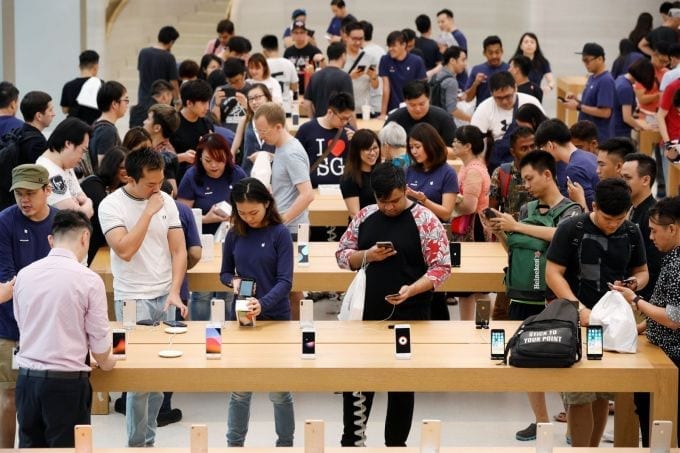
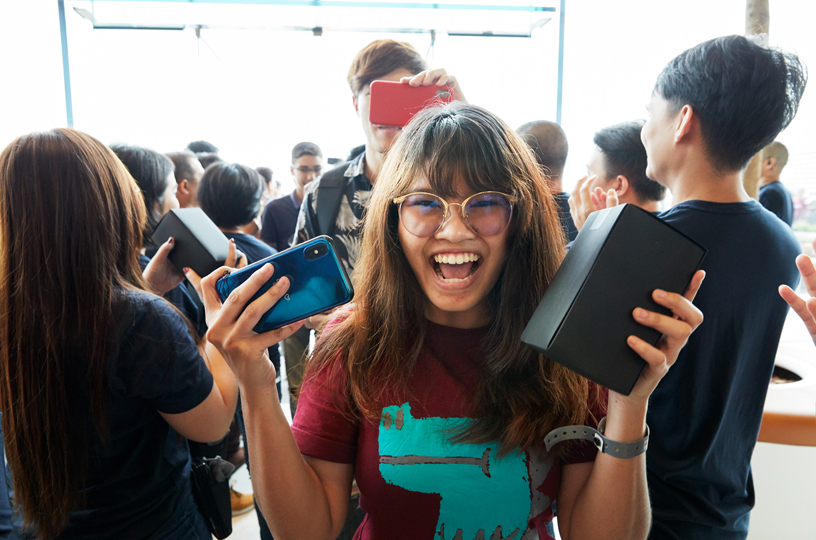
    The first official Apple Bangkok store is now trading, located in the heart of the new US$1.6 billion IconSiam project. Queues formed overnight as Thai Apple fans vied to be among the store’s first customers and the company says “thousands” of shoppers visited the store in the first day of trading on Saturday.

    Inside Retail understands Apple’s designers, London-based Foster + Partners, worked with the architecture team from IconSiam to make the store stand out from the centre’s curved river-facing facade. The result is a clean, open square profile fronting a large outdoor courtyard, giving the store a ‘high-street feel’ despite being inside a larger mall structure.

    The interior features living trees and floor to ceiling glass facing both into the mall and out of it.

    For opening weekend, the store hosted local band Polycat performing live and the company also gave its iconic Apple logo a Thai-style makeover to celebrate its debut in the country.

    A second Apple store is believed to be under construction in the basement of the CentralWorld shopping centre in downtown Bangkok. See how long the queue in the gallery below (4 images) :

  • Apple concerns hit supplier stocks

    Apple concerns hit supplier stocks

    Shares in Asian suppliers and assemblers for Apple fell on Tuesday after several component makers warned of weaker than expected results, leading some market watchers to call the peak for iPhones in several key markets. Following a poor forecast earlier this month, analysts and investors voiced concern over the state of Apple’s business, contributing to growing worries that iPhone sales were stagnating and could hurt suppliers.

    Fresh warnings on Monday from screen maker Japan Display, British chipmaker IQE and Lumentum Holdings, the main supplier of the Face ID technology in the latest generation of iPhones, hurt technology stocks in Asia on Tuesday.

    Taiwan-based assembler Hon Hai Precision Industry (Foxconn) dropped more than 3 percent. Rival Pegatron fell more than 5 percent but later recouped losses. Both companies count Apple as a major customer.

    The world’s largest contract chipmaker, Taiwan Semiconductor Manufacturing, fell 2.6 percent, while Flexium Interconnect was down 1.5 percent. The Taiwan Weighted Index was down around 1.6 percent.

    “Apple’s iPhone weakness has been a long-term issue for the Asia supply chain,” said Arthur Liao, an analyst at Fubon Research in Taipei.

    “For Apple, iPhone shipment has reached its peak. For tech suppliers facing the future, they have no other big client like Apple.”

    The company’s shares fell to their lowest level in more than three months on Monday.

    Last week, a media report saying the iPhone maker had told its smartphone assemblers to halt plans for additional production lines dedicated to its new lower-priced iPhone XR had pressured supplier stocks.

    Analysts said the lack of technological breakthroughs had put a cap on demand.

    “With no new technology in sight next year for the supply chain, this is not ideal for the companies involved,” said Nicole Tu, a Taipei-based analyst at Yuanta Investment Consulting.

    “Up through the first half of 2019, we likely won’t see any breakthrough.”

    Lumentum on Monday slashed its profit and revenue forecast for the current quarter, while IQE warned that current-year results would be lower. Japan Display lowered both sales and margin outlook for the year as well.

    Apple warned earlier this month that holiday sales would miss Wall Street expectations due to weakness in emerging markets.

  • New iPhones sell slowly in Korea

    New iPhones sell slowly in Korea

    A week after Apple introduced its latest iPhone series at stores in Korea, sales are only about 60 percent of those reported for the previous lineup over the same period of time. According to estimates compiled by local mobile carriers, a total of 170,000 iPhone XS, XS Max and XR models were purchased between Nov. 2 and Nov. 7. A total of 280,000 iPhones 8 and X models were sold in the first week of their release in November 2017. Sales of the two models began three weeks apart.

    Industry watchers assumed that Apple’s simultaneous release of the three models was designed to garner greater attention and boost sales in the early days.

    However, figures so far show that the latest iPhones are selling more slowly than earlier models.

    “It’s not doing that great,” said an employee at a brick-and-mortar phone shop in central Seoul on Friday when asked if the new iPhones are popular.

    “There’s the expensive price tag, but it also has to do with the fact that there aren’t dramatic function upgrades. To be honest, even I can’t really notice a big difference between the iPhone X and XS. Maybe the next series will come with more innovative features – we’ll see.”

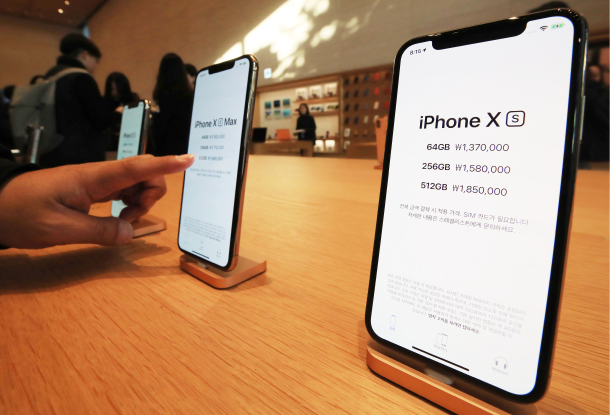
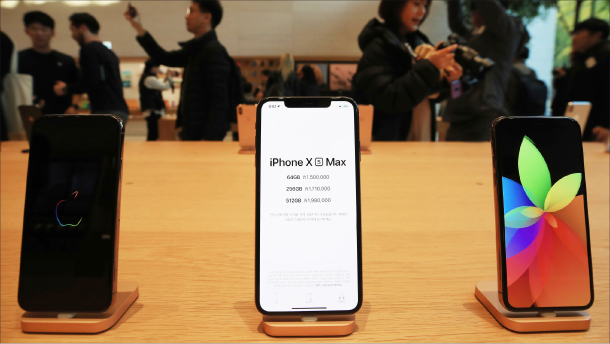
    Price became an issue as soon as Apple introduced the new models. In Korea, the 512-gigabyte iPhone XS Max sells for nearly 1.97 million won ($1,745), while the 256-gigabyte XS retails at 1.56 million won.

    Even the budget XR model is priced slightly below one million won.

    Despite the price concerns, presales have been reasonably strong. SK Telecom, KT and LG U+ took orders between Oct. 26 and Nov. 1.

    Presales results for the three new models differed per company, but the general assessment was that demand was similar or stronger than for previous generation iPhones.

    Presale results don’t necessarily indicate success. Customers who preorder iPhones in Korea, even before actually touching the product, are likely to be loyal Apple fans.

    “The thing about Apple maniacs is that they will get their hands on the next iPhone no matter what,” said a source from one of the mobile carriers.

    “But success doesn’t just come from them. The general public, especially those switching between smartphone brands, should be attracted to buying it, too. The new iPhone seems to be failing in that respect this time.”

    Up until a few years ago, a few manufacturers like Apple and Samsung dominated the smartphone market. Customers nowadays have a much wider ranges of options in terms of price and style.

    Over the last decade, smartphone technology has advanced so much that even budget models priced at half that of the latest iPhones come with high-tech functions, such as face unlock.

    From Apple’s side, there are signs that the company is well aware of the slower demand.

    Japan’s Nikkei Asian Review reported on Monday that Apple told smartphone assemblers Foxconn and Pegatron to halt plans to bring on additional lines for iPhone XR production. All companies involved declined to comment.