Tag: asia

  • Samsung may launch foldable Galaxy in 2019

    Samsung may launch foldable Galaxy in 2019

    Samsung Electronics may launch a foldable smartphone called the Galaxy X next year as global phone producers struggle to find innovative features to boost their slowing sales.

    Multiple leaks indicate that Samsung will launch the phone soon.

    The Wall Street Journal reported Wednesday that Samsung will introduce the bendable phone “early next year,” while Phone Arena, a media outlet specializing in phone industry leaks, reported that Samsung may unveil its first foldable smartphone at the Consumer Electronics Show 2019 next January in Las Vegas.

    According to the Wall Street Journal, the code name for the prototype phone is Winner.

    Its display is reported to be seven inches diagonally when opened, which is similar to a small tablet. It will bend towards the inside of the device like a wallet. This would allow users to watch videos on a large screen and also carry the phone around more conveniently by folding it. The phone’s diagonal size is expected to shrink to 4.5 inches when folded.

    The U.S. smartphone giant Apple is also working on a foldable phone. It applied for a foldable phone-related patent to the United States Patent and Trademark Office at the end of 2016. Its foldable phone is reportedly 9.7 inches diagonally when unfolded and 5.5 inches when folded.

    Samsung’s local rival, LG Electronics, is also joining the competition. It is waiting for the U.S. patent office to approve its patent application for foldable phones by the end of this month. In August last year, it also applied for a design patent for a foldable phone to the World Intellectual Property Organization. Motorola recently received a design patent for a foldable phone from the World Intellectual Property Organization. The design reportedly includes a long rectangular screen that can be folded to function as a smartphone and unfolded to act like a tablet. China’s Huawei Technologies originally planned to unveil its first foldable phone in November, but the company has likely pushed back its launch date to 2019.

    The global focus on foldable phones is largely due to consumer expectations for changes to smartphone designs, which have been stagnant for some time.

    As today’s premium smartphones now have similar specs, consumers have grown tired of their similar designs and features, and sales growth for many brands has slumped.

    The high expectation for the foldable phones, however, is making electronics companies cautious as they prepare to launch them.

    “Their biggest struggle is to come up with content and a user interface that is specific to a foldable display,” said a source in the display industry.

    The marketability of these products is also another concern. Market tracker Strategy Analytics projects that global foldable phone sales will start at 3.2 million units next year and grow to 50.1 million units by 2022. According to this prediction, even if the foldable phone market expands by roughly 15 times over the course of three years, their sales will only account for 2.5 percent of total smartphone sales in 2022. Industry insiders speculate Samsung’s foldable phone will carry the hefty price tag of $1,500.

    The Wall Street Journal noted that the launch date may change and added that Samsung may not put the phone on sale immediately after unveiling it.
  • A Dior Saddle Bag Campaign Video is Perceived Tacky in China

    A Dior Saddle Bag Campaign Video is Perceived Tacky in China

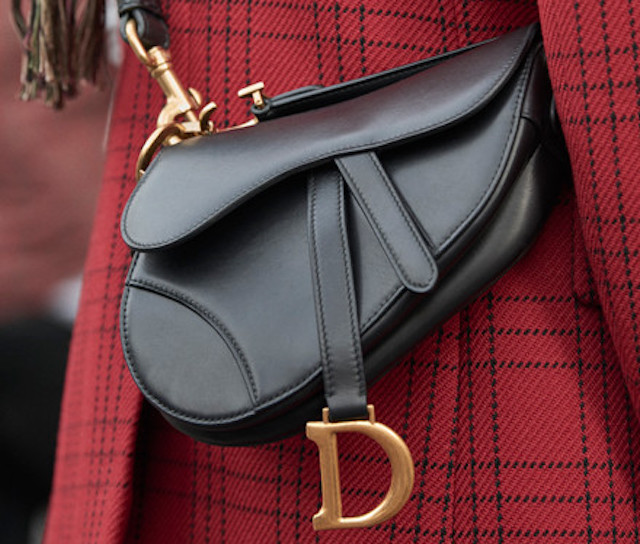
    French luxury retailer Christian Dior has suffered a PR setback in China with the relaunch of its Saddle Bag, one of the brand’s most iconic items.

    Timed to coincide with a global influencer campaign, the launch was marred by a poorly-received advertisement that many Chinese netizens felt made the product – which retails for about US$2650–$6000 – look cheap.

    “Is Dior serious? The shooting angle and lighting of the video is absolutely kitsch, and it makes the bag look so cheap,” one person wrote on social media after seeing the video. Another, named “kaichequBBQ” made fun of it, writing “I thought this lady will teach us how to find discounts and coupons to buy it.”

    A spokesperson for Dior China said that the video was an outside production, saying “This is not a part of the official ad campaign for the Saddle Bag in China, but footage of how fashion influencer Elle Lee presents the bag. Elle Lee, as a winner of the Miss Hong Kong Pageant (last year), is active in the fashion circle and maintains a good relationship with Dior China.”

    The Saddle Bag first debuted in 1999, and was relaunched globally on July 19.

  • Foreign selling on Bursa Malaysia last week halves to RM247.1m

    The net amount sold by foreign investors last week shrank by more than half from RM531.8 million to RM247.1 million, the smallest weekly attrition so far this year.

    The pace at which international investors are disposing of stocks listed on Bursa Malaysia has been slowing down for the past four consecutive weeks, MIDF Research said in its weekly fund flow report.

    The research firm noted that global investors were net sellers on every single day except on Wednesday, which saw a foreign inflow worth RM71.7 million net, the first since June 29.

    The local bourse ended 0.91% higher at 1,753 points that day after Federal Reserve Board chairman Jerome Powell’s reaffirmation of his upbeat assessment on the US economy.

    Bursa Malaysia’s Asian peers, namely South Korea, Taiwan and the Philippines, also experienced a surge of inflows on the same day.

    MIDF Research said foreign net selling that occurred on other days remained well below RM100 million, a level deemed moderate, while Thursday recorded the highest foreign net selling during the week at US$95.6 million net.

    “Notwithstanding this, the FBM KLCI marked its nine-day winning streak on the same day supported by the rise in construction stocks following the announcement that the KL-Singapore HSR project will be deferred instead of being unilaterally cancelled,” it added.

    However, MIDF Research said the reduction of outflows to RM64.6 million net on Friday coincided with the 0.26% decline in the FBM KLCI amid profit-taking activity in telecommunication stocks as they led decliners.

    MIDF Research said Malaysia’s year-to-date foreign net outflow has reached RM8.31 billion or US$2.07 billion, offsetting approximately 80% of last year’s RM10.33 billion inflow.

    “Nevertheless, this figure is still the second lowest outflow amongst the four Asean markets we track, standing below the Philippines which has a year-to-date outflow of US$1.31 billion net.”

    The research house added that participation amongst foreign investors, retailers and local institutional funds remained upbeat as each of their average daily traded values stood above RM1 billion, RM800 million and RM2 billion, respectively.

  • Duty-free shops enjoy turnaround in 2018

    Duty-free shops enjoy turnaround in 2018

    Korean duty-free shops are reviving their once-stagnant sales, with Lotte, Shilla and Shinsegae leading the turnaround.

    According to the Korea Customs Service on Saturday, duty-free sales in the first half of the year reached 9.94 trillion won ($8.79 billion), up 38 percent from the same period last year.

    If the trend continues in the second half of this year, sales at duty-free shops will likely rise by 30 percent from last year’s 14.47 trillion won.

    Shinsegae Duty Free said on Tuesday that its daily average sales reached 1.7 billion won after the opening of its Gangnam branch in southern Seoul on July 18, far exceeding the company’s sales expectations of 1 billion won a day.

    “Our goal is to reach 180 billion won by the end of this year, and 500 billion during our first year of operation,” said Ahn Joo-yeon, a public relations manager for Shinsegae Duty Free. “We have a good start.”

    If sales at the company’s Gangnam branch continue at this pace, they will reach about 250 billion won this year.

    Chinese consumers made up about 90 percent of the foreign shoppers at Shinsegae Duty Free’s Gangnam branch.

    Group tourists accounted for 36 percent of overall foreign customers, while 64 percent were individual tourists.

    Starting early next month, Shinsegae will also begin operating in duty-free sections 1 and 5 of Incheon International Airport Terminal 1, which Lotte Duty Free withdrew from.

    Shinsegae estimates it will take in about 300 billion won in sales between this August and December.

    Shinsegae’s Terminal 2 Duty Free Shop, which opened early this year, is expected to bring in about 200 billion won in sales this year.

    “Total sales are expected to increase from 1.8 trillion won last year to around 3 trillion won this year,” a Shinsegae Duty Free official said.

    Shinsegae, once at the bottom of the Korean duty-free trinity, increased its market share this year.

    Industry experts predict that Shinsegae will take about 20 percent of the Korean duty-free market this year, up from 13 percent last year.

    Shilla Duty Free was behind Shinsegae in its bid for the Incheon Airport duty-free slots last month, but Shilla’s operating profit hasn’t taken any hits.

    Shilla’s duty-free shops in the Hong Kong, Singapore and Incheon airports continue draw in sales, and 42.6 percent of the company’s sales in the first quarter came from the airport shops.

    Shilla Duty Free saw a 29-percent rise in first quarter sales from 782.7 billion won last year to 1.37 trillion won this year, while operating profit rose 181 percent to 476 billion won.

    Shilla Duty Free brought in about 4 trillion won in sales last year, accounting for 27 percent of the market. It’s expected to have a similar market share this year.

    Lotte handed over two out of its three duty-free locations at Incheon International Airport Terminal 1 to Shinsegae this year and didn’t open any new locations.

    If Lotte Duty Free had operated all of its Terminal 1 locations until the end of its contract in 2020, it likely would have suffered losses. Lotte’s most valuable Terminal 1 duty-free section, the liquor and tobacco area, is still open.

    According to an official at Lotte Duty Free, sales at the duty-free store’s location in Sogong-dong, central Seoul, are expected to reach 4 trillion won this year, up 30 percent from 3.169 trillion won last year.

    Lotte, the world’s second-largest duty-free company after Dufry in Switzerland, has expanded its overseas duty-free shops, opening its seventh location in Nha Trang Airport in Vietnam at the end of last month.

    It also plans to bid on space in Taiwan’s Taoyuan Airport this month. Lotte is also in the process of acquiring JR Duty Free, an Australian company.

    Last year, Lotte Duty Free raked in 6.2 trillion won in sales, 150 billion of which were made overseas.

    “We will record 7 trillion won in sales at the Sogong location and 1 trillion won in the World Tower [southern Seoul] location within this year,” said a Lotte Duty Free official. “We expect to see a massive increase in operating profit from 2.5 billion last year, as well.”

  • Mothercare Vietnam opens second store

    Mothercare Vietnam opens second store

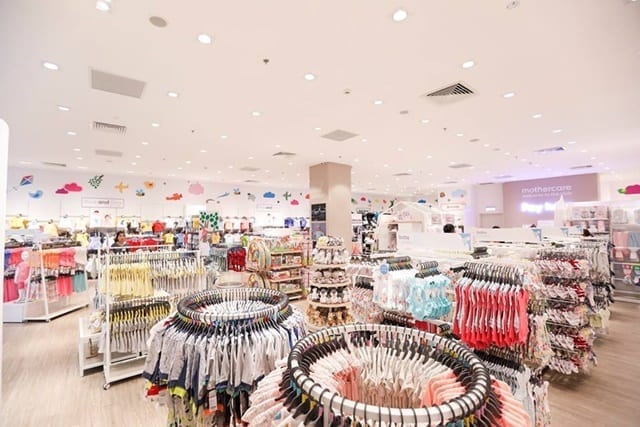
    UK-based baby-goods retailer Mothercare Vietnam is opening its second store, inside the newly-opened Vincom Landmark 81 in Ho Chi Minh City.

    Opened three months after the first store at Crescent Mall, the new 286sqm shop offers a full range of products for mothers, and for kids under five years old.

    The brand plans to open a third store by the end of this year at another, as yet unidentified, shopping mall.

    The baby goods retailer was brought to Vietnam under franchise agreement between Mothercare UK and IPP Group’s subsidiary ACFC, which also manages Gap, Nike, Old Navy, and Tommy Hilfiger.

    While expanding in international markets, the UK brand has shuttered stores in an effort to survive in its home market.

  • Cabin crew for Jeju Air can ditch the high heels

    Cabin crew for Jeju Air can ditch the high heels

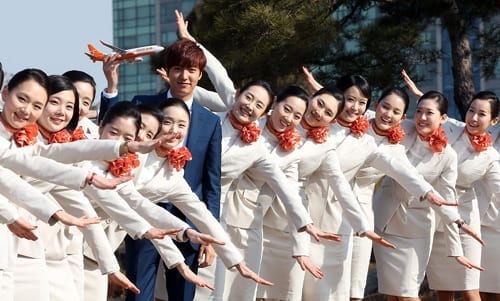
    Korea’s largest budget airline, Jeju Air, will now allow female flight attendants to wear shoes with lower heels when in uniform, the company announced on Thursday.

    Female attendants had to wear shoes with five to seven centimeter (1.9 to 2.7 inch) heels when they were working in uniform outside of planes.

    Once they boarded a plane, attendants wore shoes with low, three-centimeter heels for safety reasons.

    Jeju Air has now decided to let attendants choose between shoes with high heels or lower heels when wearing their uniforms outside of planes.

    The airline has been changing its service guidelines from earlier this year to reduce stress on flight attendants.

    From April, the airline has let flight attendants wear glasses and have painted nails while serving on board.

    While Jeju Air didn’t have official guidelines that prohibited attendants from wearing glasses, the industry norm was to wear contact lenses, so the airline decided to officially allow glasses.

    The airline previously only allowed nails to be painted with one color, but now flight attendants can decorate their nails with a variety of colors. However, additional textured nail decorations are still prohibited as they could scratch customers, the airline said.

    The uniform guidelines for flight attendants in Korea became a hot topic after employees of Korean Air’s budget airline Jin Air complained about their skinny jeans-based uniform.

    The idea of wearing jeans as uniform was reportedly introduced by Korean Air heiress Cho Hyun-min, who stepped down from all her positions at both Korean Air and Jin Air after throwing drinks at employees out of anger earlier this year. Jin Air is currently redesigning its uniforms.

  • Vietnam tops ASEAN in luring Japanese investment

    Vietnam tops ASEAN in luring Japanese investment

    Almost 1,800 Japanese businesses have invested in Vietnam in the first half of the year, the highest among ASEAN countries.

    This number accounts for 24.6 percent of total number of Japanese firms investing in ASEAN countries, said Keiichi Kadowaki, chairman of Japanese Chamber of Commerce and Industry in ASEAN (FJCCIA).

    He was speaking at the 11th Dialogue between the Secretary General of ASEAN and the Federation of the Japanese Chamber of Commerce and Industry in ASEAN (FJCCIA) in Ho Chi Minh City on Monday.

    Japan and Vietnam also signed 36 memorandums of understanding worth $21 billion last month.

    “This shows that Vietnam is becoming more attractive to Japanese firms,” Kadowaki said.

    Vietnam’s open business environment and robust economic growth of 5-6 percent each year has increased its attractiveness in recent years, he added.

    Up to 70 percent of Japanese firms in Vietnam plan to expand their business in the country, as most of them believe that revenue will continue to increase, according to a recent survey by the Japan External Trade Organization (JETRO).

    Over 65 percent of surveyed firms said they have been profitable in Vietnam.

    Japan was the fourth largest trading partner of Vietnam last year, with a total turnover of almost $34 billion, up 13.8 percent from 2016, according to Vietnam Customs.

  • Malaysia’s economy seen expanding at slower rate

    Malaysia’s economy seen expanding at slower rate

    Malaysian economy is anticipated to expand at a slower rate in the next four to six months ahead, based on the findings of Malaysian Economic Indicators: Leading, Coincident & Lagging Indexes for May 2018.

    The Leading Index (LI) indicators are designed to observe the economic performance in the short term.

    The Statistics Department said in a statement that the monthly change of LI showed a negative growth of 1.1% to 117.8 points in May 2018 from 119.1 points in April 2018, mainly due to the 0.5% decrease in the number of new companies registered.

    It said the annual change of LI also registered a decrease of 0.7% in the same month against 1.4% in April 2018.

    However, the Coincident Index (CI), which reflects the current economic activity, improved in May 2018, registering a growth of 0.3% in the reference month.

    “The annual change of CI rose 2.2% in May 2018. The Diffusion Index for CI remained at 66.7% since January 2018. Nevertheless, the level of Diffusion Index for LI was below 50% (14.3%),” it added.

  • BMW under pressure as cars keep catching on fire

    BMW under pressure as cars keep catching on fire

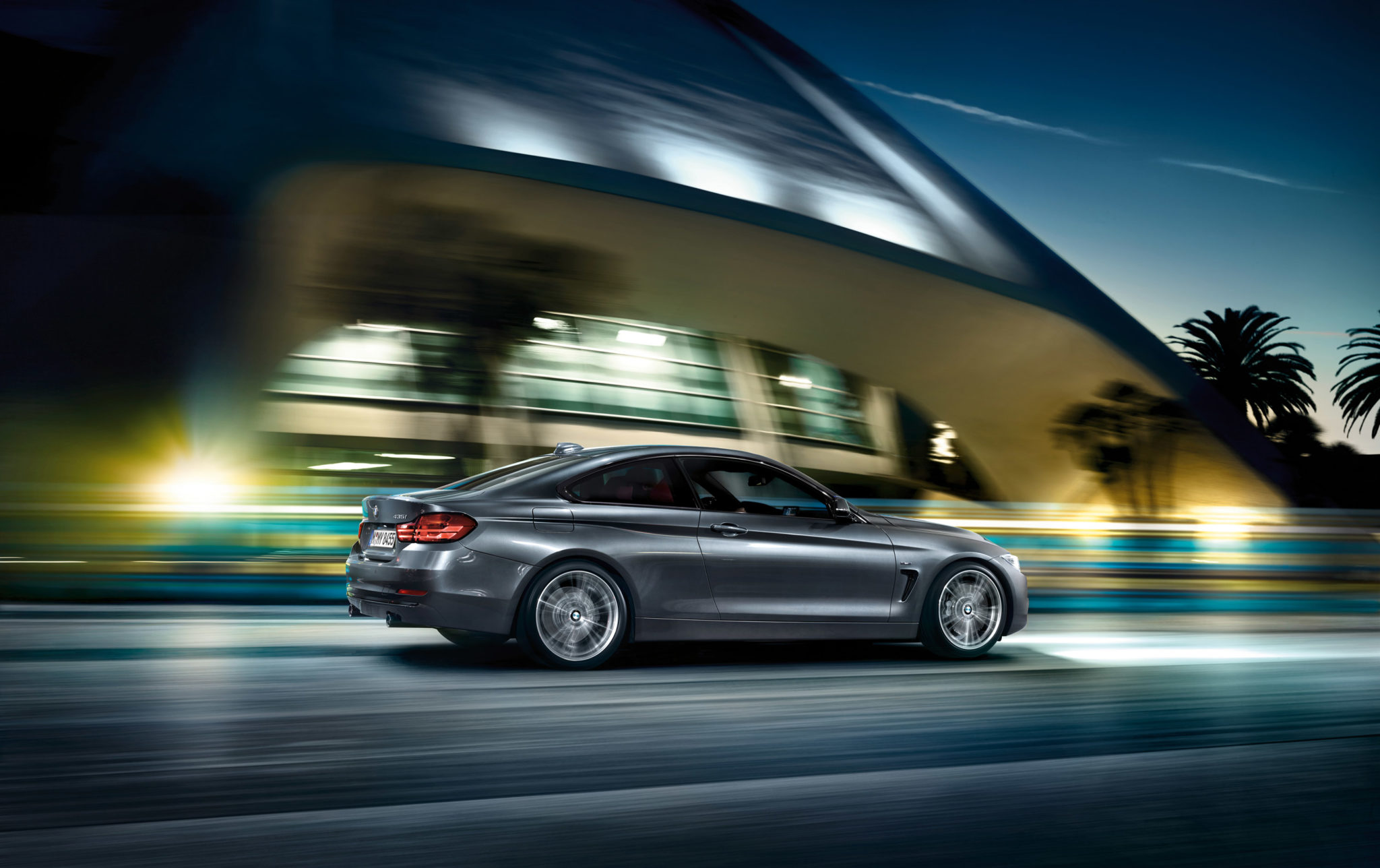
    Reports of BMW 520ds catching on fire are on the rise in Korea, posing a serious threat to the carmaker’s credibility.

    An official recall of the vehicles has still not been announced, making owners of the country’s second most popular import brand anxious about their own cars.

    The latest fire broke out on Monday in Incheon on a highway in Incheon headed toward Ilsan, Gyeonggi. The engine of the 520d sedan reportedly caught fire while the vehicle was moving, resulting in damages worth 37.5 million won ($33,000) according to the local fire station. The driver was not injured.

    Monday’s incident was the latest in a slew of fires. A total of 15 fires in BMW 520ds have been reported to Korea’s Ministry of Land, Infrastructure and Transport this year as of Monday, according to the ministry.

    In the month of July alone, four fires have been reported; some while driving and some while the car was parked.

    “It seems the manifold -part of the emissions system – has defects,” said an official from the Transport Ministry Monday.

    “But since all but one of the vehicles were completely burnt out, it will take more time to come up with an exact reason as to why these 520ds caught fire,” the official added.

    BMW Korea said it will carry out a recall “soon,” but the range of affected cars and when the recall will take place has not been decided.

    The ministry launched its own investigation into the problematic car on July 16 and is waiting for the carmaker to submit a detailed recall plan.

    BMW Korea said it needs more time to come up with a plan.

    If the recall plan is finalized, it would be the first time that BMW Korea has ever had to carry out a recall due to the risk of fire.

    “The fact that we will carry out a voluntary recall has been decided but more time is needed to decide when and what models will be recalled since it is a sensitive matter,” a BMW Korea spokesman said Monday.

    “We are considering expanding the recall beyond just the 520d model to ones that use the same parts,” the official added.

    This is not the first time a safety issue has been raised with BMW vehicles due to fire hazards.

    In 2015, four fires were reported in less than a month in BMW vehicles including the 5-Series and 7-Series, resulting in then-BMW Korea CEO Kim Hyo-joon issuing an official apology. The vehicles were not recalled.

    The 520d model is the most popular vehicle within the BMW Korea lineup. In the first half of this year, sales of the 520d accounted for nearly 30 percent of the company’s entire sales.

  • Roberto Cavalli opens first flagship store in Germany

    Roberto Cavalli opens first flagship store in Germany

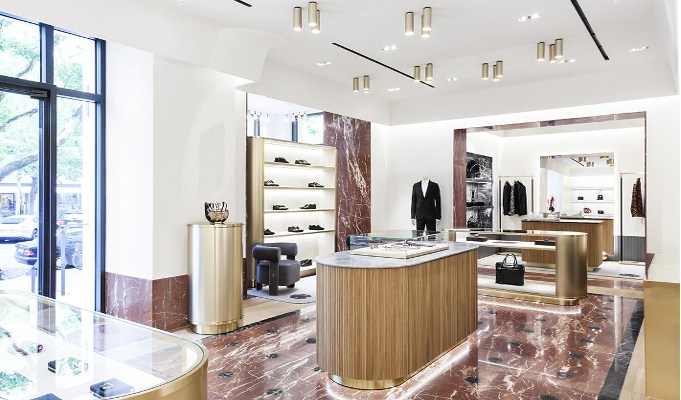
    Roberto Cavalli has opened a sleek and luxurious 2,475 sq ft flagship in Berlin’s Charlottenburg district, inspired by Florence’s Renaissance architecture and the rich tones of Tuscany.

    The concept of the store has been created by the luxury brand’s creative director, Paul Surridge. He worked with Milan-based interior firm Rodrigo Izquierdo Design Studio on the store concept.

    The airy chic flagship store is designed to welcome customers into a charming space where easily discover the brand’s full range of women’s and men’s collections, bags, shoes, fashion jewelry and accessories, eyewear, fragrances and watches next to a selection of home accessories.

    Surridge has combined precious marble floors and elegant vaulted ceilings, classic geometric shapes with brass, leather, marble and noble woods to echo the sumptuous atmosphere of a Florentine palazzo. The center of each room is highlighted by a group of three cylindrical gold pendant lamps.

  • Walmart to open 6 more stores in Uttar Pradesh India soon

    Walmart to open 6 more stores in Uttar Pradesh India soon

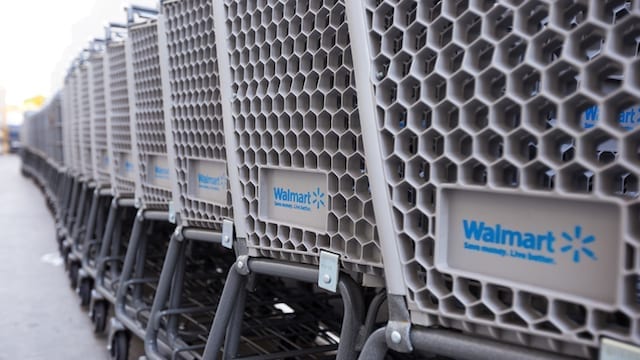
    US retail major Walmart will open six more stores in Uttar Pradesh soon, taking the number of such outlets to ten, a top company official said.

    “We have four stores at present – two in Agra, and one each in Meerut and Lucknow,” Krish Iyer, President and CEO of Walmart said.

    According to a PTI report: He was addressing reporters after launching Walmart India’s second B2B Fulfilment Centre here — the first in Uttar Pradesh and the second in the country after Bhiwandi, Mumbai, which was set up last November.

    “Uttar Pradesh is a very important and priority growth region for us and we are further expanding our business in the state to support kiranas, small farmers and local suppliers to help make them successful,” Iyer said.

    “The next such centre will be set up in Hyderabad,” he said.

    Iyer said that these centres would support ‘kirana shops’ and other small businesses.

    “It aims to contribute to local and state economy by creating thousands of job opportunities at the local level, besides giving a boost to the SME sector and the farmers,” he said.

    “The Fulfilment Centre will cater to the business needs of under-served small businesses such as kiranas (re-sellers), offices and institutions, and hotels, restauants and caterers,” he said.

    Walmart also plans to set up its ‘Best Price’ stores at various locations in Uttar Pradesh, including Kanpur, Moradabad, Varanasi, Gorakhpur, Sharanpur, Lucknow and Ghaziabad.

  • SE Asia Stocks: Indonesia, Vietnam rise; others subdued

    SE Asia Stocks: Indonesia, Vietnam rise; others subdued

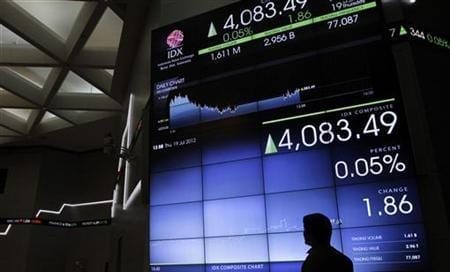
    Investors’ risk appetite soured on fears of more trade protectionist measures from the United States as U.S. President Donald Trump said on Friday he was ready to impose tariffs on all $500 billion of imported goods from China, threatening to escalate a clash over trade policy that has unnerved financial markets.

    The dollar declined against major currencies after Trump criticised the Federal Reserve’s monetary tightening policy.

    “Market players will likely closely monitor China’s policy reaction, especially on the RMB front in the interim. Asian markets are likely to also trade with a cautious tone today,” OCBC said in a note.

    Singapore shares were down after four straight sessions of gains ahead of June inflation data.

    The annual headline inflation rate is expected to have risen in June from the previous month, according to a Reuters poll.

    Financials were among the biggest drag with index heavyweights DBS Group Holdings, Oversea-Chinese Banking Corp and United Overseas Bank shedding between 0.9 percent and 1 percent.

    Indonesian shares rose 0.9 percent with all sectors but materials in positive territory.

    Financials led the charge, with Bank Central Asia Tbk PT rising 1.7 percent to its highest in more than three months, while Bank Mandiri (Persero) Tbk PT gained nearly 2 percent.

    The impact of U.S.-China trade tensions on Indonesia is “not a lot” as exports to these countries are not the biggest parts of Indonesia’s economy, said Nomura Indonesia analyst Elvira Tjandrawinata.

    “Indonesia is instead affected through the impact global events have on the local currency, which pours into general sentiment in the economy,” she said.

    Last week, the central bank kept its benchmark interest rate unchanged as expected, taking a pause in its monetary tightening cycle.

    Vietnam shares jumped 1.4 percent, driven by gains in real estate and financial stocks. Vingroup JSC and Petrovietnam Gas Joint Stock Corp were the top gainers.

  • Indonesia Apartment Sales Slump in H1 2018, No Sign of Recovery

    Indonesia Apartment Sales Slump in H1 2018, No Sign of Recovery

    Apartment sales in Jakarta slumped in the first half of this year, due to a lack of confidence among top-tier buyers to commit to big-ticket purchases amid economic and political uncertainty, property consultancy Jones Lang LaSalle said on Wednesday (18/07).

    However, the silver lining is that demand for lower- and middle-class apartments has kept growing, although it was barely enough to curb a further sales decline in the rest of the year.

    Developers sold 2,100 units in the country’s largest property market between January and June, which is 6.2 percent less than in the corresponding period last year, Jones Lang LaSalle said in the report.

    The slump was mainly cause by a decline in sales of the most expensive units, the consultancy said. The government imposed a 20 percent luxury tax on sales of apartments worth Rp 10 billion ($694,000) or more in March last year, further curbing top-tier buyers’ appetite for new apartments.

    “For most people, the condominium is the part of an investment,” Vivin Harsanto, head of advisory at Jones Lang LaSalle, said on Tuesday.

    “In the first half of this year, they were still not confident enough because of volatility of the rupiah, and they also held off purchases of investment products due to the fasting month and the Idul Fitri celebration,” she said.

    Vivin said there is always a slowdown in apartment sales during Ramadan as consumers are usually more focused on other needs, such as going on holiday and the Idul Fitri celebration.

    Still, demand for lower-cost apartments – priced between Rp 300 million and Rp 500 million – remains robust and growing. Cleon Park, a middle-class apartment project in East Jakarta by listed property developer Modernland Realty, was sold out when it launched in May, according to Luke Rowe, head of residential project marketing at Jones Lang LaSalle.

    The consultancy said in the report that there might be an improvement in property demand as some large, reputable developers offer units close to public transportation, such as the mass rapid transit and light rail transit systems, currently under development in Jakarta, while smaller developers are offering more affordable units.

    Bank Indonesia has dropped its requirement for mortgage down payments in April this year. It formed part of the central bank’s effort to ensure domestic economic growth after it had to increase its benchmark interest rate by 100 basis points in the preceding three months to maintain economic stability amid global capital outflows.

    Still, Vivin said she does not expect the central bank policy to significantly impact current sales trends, which have been on a decline since 2014.

    “[Apartment buyers] want to see a stable rupiah and a steady political situation as we enter an election year in 2019,” she said.

    According to research by Jones Lang LaSalle, apartment prices in the greater Jakarta area are expected to remain flat amid weak demand for the remainder of the year.

    Developers only built 1,292 units between January and June this year, bringing the number of total unsold units to 144,000. In the same period last year, developers built 4,843 units, resulting in total stock of 134,536 units.

  • Mr Bags x Tod’s big success in China event

    Mr Bags x Tod’s big success in China event

    The influential fashion blogger is also collaborating with Montblanc on a limited-edition collection of women’s handbags, a new category for the brand.

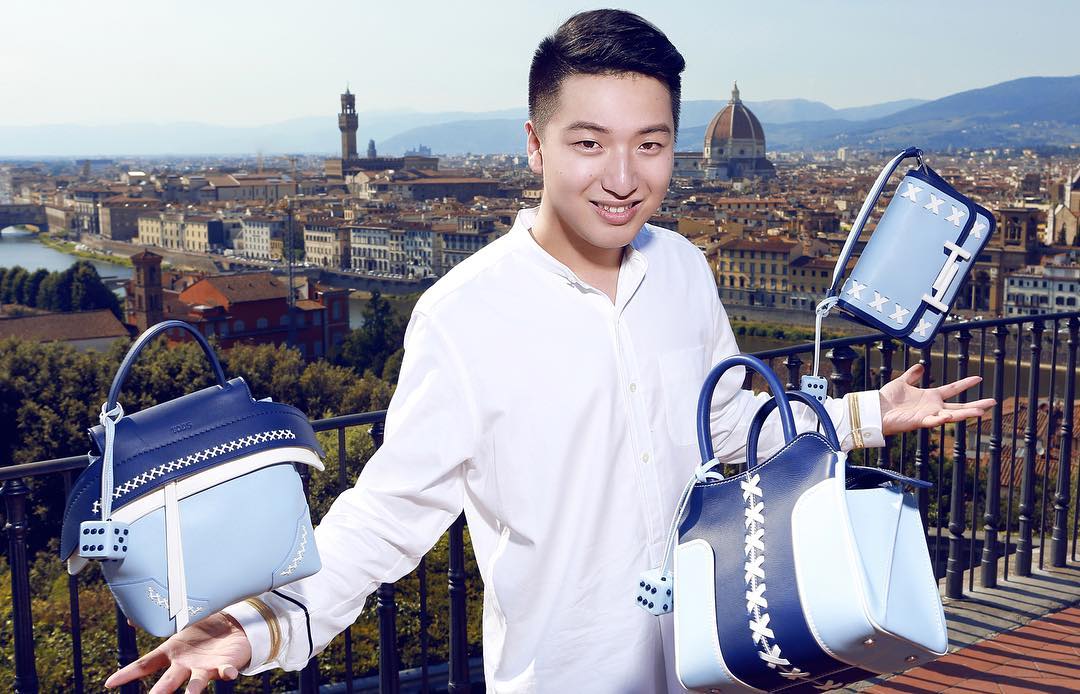
    Tao Liang has an unapologetic love for handbags. And he also knows how to sell them to his over 3.5 million readers on China’s biggest social media platform Weibo and more than 850,000 followers on WeChat, a microblogging messaging app.

    In just six minutes, Mr. Bags, as Liang is better known, helped Tod’s sell 3.24 million RMB worth of handbags on his new Mini Program shop within WeChat, called “Baoshop.” The second collaboration between the Beijing-based fashion blogger and Tod’s, 500 pieces of the limited-edition “Wave” backpacks were created — double the amount from last year’s capsule collection.

    Three-hundred of the canine-like handbags, a nod to the year of the dog being celebrated in China this year, pre-launched on Mr. Bags’ Baoshop in June. The handbags, each priced at 10,800 RMB (about $1,620), sold out within six minutes, generating 3.24 million RMB (almost $500,000) — a new record for the 26-year-old influencer. (His previous record was selling 1.2 million RMB worth of Givenchy handbags in 12 minutes in 2017.)

    “China is a key strategic market for Tod’s and Mr. Bags, with his extensive and insider knowledge of this market and its customer, is the perfect collaborator for us,” a spokesperson from Tod’s said. High-profile individuals from Zhang Zetian, China’s youngest female billionaire, to models like Liu Wen and Xiao Wen Ju and actresses Ouyang Nana, Guli Nazha, Sun Yi and Song Zuer, also wore the “Wave” backpack and posted images on social media, helping to popularise the style.

    Now, Mr. Bags is readying for his next launch: a collection of limited-edition Montblanc handbags for both men and women.

    The partnership came about, said Liang, after “many bag fans commented on social media, asking [for recommendations] for mini-backpacks that are classic, good-looking, affordable and practical.”

    It will be the first time the stationery brand, which has recently been expanding its offering of leather accessories, has introduced handbags for women. It also marks the first time the company has collaborated with a fashion blogger. The capsule is designed for the Qixi festival — commonly referred to as Chinese Valentine’s Day — which falls on August 17 this year. “We wanted to give it a modern interpretation,” said Montblanc’s creative director Zaim Kamal. A total of 497 pieces will be pre-launched on Baoshop, with prices starting at 4,800 RMB (about $717.1).

    Liang launched Mr. Bags in 2012 and quickly became an arbiter of handbag taste among Chinese readers locally and internationally. Ranked #3 on Exane BNP Paribas’ 2017 list of China’s most influential fashion bloggers, Liang uses his encyclopaedic fashion knowledge not only to keep his following informed about luxury brands and the latest handbag trends, but also to help mega brands understand what Chinese consumers are looking for in the latest “it” accessory.

    Baoshop, which Mr. Bags launched last month, only sells exclusive or customisable products, and claims to be the first WeChat Mini Program in China to work directly with luxury brands and sell handbags costing over 10,000 RMB. “For me, the success of a project is not measured by how many bags we sold in a short period of time or how much revenue we generated. It’s really about how much impact it creates,” he said.

    And there’s significant opportunity. Luxury goods purchased in China make up 8 percent of global sales, while Chinese shoppers — who make three-quarters of their luxury purchases overseas — drive 32 percent of the worldwide total, more than any other nationality, according to Bain.

    While collaborations between fashion bloggers and companies are not uncommon in China, e-commerce partnerships through WeChat are growing as luxury brands become more comfortable with hosting sales on the social media platform.

    Recently, top Weibo fashion blogger Gogoboi launched a WeChat store, called Bu Da Jing Xuan (不大精选), where he curates and sells luxury goods from online retailers like Yoox and Farfetch.

  • Beauty Garage launches in Singapore

    Beauty Garage launches in Singapore

    Japanese beauty product mail order service Beauty Garage has opened e-commerce sites and showrooms in Singapore and Malaysia.

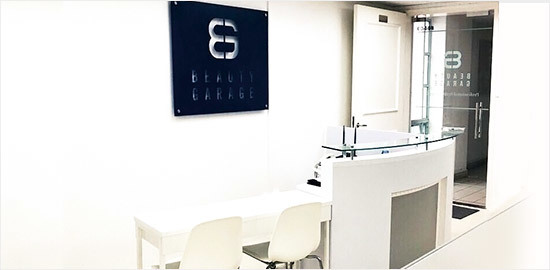
    Beauty Garage Online Shop Singapore, the company’s first overseas base, opened mid July as an e-commerce platform and a showroom store selling wholesale merchandise. The Singapore service was established by partnering with beauty merchandise wholesale/seminar business Haru Singapore into a group company through third party allotment of capital increase. Haru’s roadside shop has been renovated to house the new showroom.

    A spokesperson for the company said “In the future, we will use the experience and expertise that Beauty Garage has cultivated in the Japanese market [over] a long time, not only to aggressively develop new customers and expand our handling products, but also [to] establish logistic bases in the Southeast Asian market. We will develop the strength of ‘IT × logistics’ as a trading company globally.”

    Beauty Garage Malaysia plans to open e-commerce sites and showroom stores in August.