Tag: asia

  • Kate Tokyo counter opens at Hong Kong airport

    Kate Tokyo counter opens at Hong Kong airport

    Japan’s Kanebo Cosmetics has partnered with The Shilla Duty Free to open a Kate Tokyo counter in arrivals at Hong Kong International Airport.

    Kanebo says Kate Tokyo aims to establish itself in the global travel retail arena through increased exposure in Asia.

    In Japan, it has the highest sales volume among make-up brands, says Kanebo. Its range includes eye palettes, foundation lipstick and mascara.

    Kanebo brands include Impress, Kanebo and Lunasol.

    Meanwhile, Kanebo has appointed Blue Chip Group as its travel retail sales agent.

  • Fatburger Buffalo’s Express opens Tokyo burger restaurant

    Fatburger Buffalo’s Express opens Tokyo burger restaurant

    A co-branded Fatburger Buffalo’s Express is opening its first Tokyo location tomorrow. Located at the Magnet by Shibuya109 building in Shibuya Crossing, the US fast-food brands’ outlet will feature all-American fare from Buffalo’s Express and Fatburger, as well as alcoholic offerings from bar concept, FatBar.

    “We’ve been waiting for the perfect opportunity to enter Japan and it’s finally here. As a team, we couldn’t be more pleased with how this flagship location has developed,” said Andy Wiederhorn, CEO of Fat Brands.

    “Our recipes, ambiance and service have exceeded expectations in other locations across Asia and I expect nothing less in Tokyo.”

    The Japanese outlet is operated by Green Micro Factory, subsidiary of G Three Holdings.

    Fatburger parent company Fat Brands has recently announced openings and development deals in Canada, the Philippines, Scotland, Singapore and Southern California.

  • Telenor Myanmar trials 1Gbps LTE-A

    Telenor Myanmar trials 1Gbps LTE-A

    Telenor Myanmar and Ericsson have completed a trial of 1Gbps LTE-Advanced services using technologies including licensed assisted access (LAA).

    The trial also utilized LTE technologies including 256 quadrature amplitude modulation (QAM), 4×4 multiple-input multiple-output (MIMO) and carrier aggregation, the companies said.

    According to Telenor Myanmar CEO Lars Erik Tellmann, the 1Gbps peak speeds were the fastest speeds ever achieved in the nation.

    “Today’s Gigabit 4GLTE trial result is a remarkable breakthrough for Myanmar and the country’s telecom industry. Telenor has already established the fastest and most consistent mobile data network in Myanmar, and with this speed trial we have showcased that our network is capable for increased future demands,” he said.

    “Today’s successful trial reached 5G speed levels, and for Telenor this is another major step in our network improvement in Myanmar.”

    He said monthly average data usage for the operator’s 4G customers has already reached 5.6GB and is increasing, and the sucessful capacity trial of its LTE network has given the company confidence that it will be able to meet customers’ growing demands for faster speeds and better capacity.

    Telenor Myanmar already offers the nation’s fastest mobile speeds, according to a 2H17 ranking compiled by internet testing company Ookla.

  • Huawei may face criminal probe from US DoJ

    Huawei may face criminal probe from US DoJ

    The building US-China trade war could have an even more substantial impact on the telecommunications sector following reports that Huawei may be facing a criminal probe from the US Department of Justice.

    The Department of Justice is investigating allegations that Huawei violated US sanctions by selling equipment with US components to Iran.

    This is the same offense for which ZTE was recently hit with a seven year export ban prohibiting the company from procuring US components, although the ban was only put into effect after the department accused ZTE of violating its settlement agreement over the initial investigation.

    Huawei’s ambitions of gaining a foothold in the US already faced a potentially fatal blow earlier this month following a vote by the US FCC to prohibit US government departments from acquiring equipment from the vendor and rival ZTE. Now the company could face even more significant consequences.

    Neither the department or Huawei have publicly confirmed that an investigation is underway, but analysts are already exploring the potential impact of the imposition of US sanctions on Huawei.

    The worst case scenario would involve Huawei being banned from acquiring US components just like ZTE. But while the sanctions imposed on ZTE have put the vendor in survival mode, Huawei is thought to be in a better position to weather the potential impact.

    One reason for this is that Huawei has been investing heavily in developing its own components, including with its Kirin chips. According to the South China Morning Post, Huawei has confirmed that it will be able to substitute its Kirin chips for the more high-end chips it acquires from the US should need arise.

    Meanwhile the vendor is also said to have been developing its own smartphone OS since 2012 as a preparation for worst-case scenarios that would leave the vendor unable to continue licensing Android.

    But according to sources cited in the report, the company has not yet released it because it is not as good or has as many third party apps available as Android.

    The Chinese government is nevertheless appealing to the US to avoid undermining investor confidence by imposing any unilateral sanctions on Huawei.

    The government is also making moves to reduce the nation’s reliance on US semiconductors by establishing a nearly $19 billion fund to support the domestic chip sector.

    The second fund from the National Integrated Circuitry Investment Fund would focus on boosting local chip production and technologies, three sources told the news agency.

    While the fund has been in the pipeline since before the flare-up of the US China trade war and the ZTE sanctions, the government now plans to invest more in the sector due to these tensions.

  • Huawei details latest HK partner programs

    Huawei details latest HK partner programs

    Huawei has unveiled its latest partner programs and strategic digitalization plans at the Huawei Enterprise Partner Summit 2018 in Hong Kong.

    The Chinese ICT infrastructure provider’s partner programs in Hong Kong will be focused on business development in fintech, smart city, healthcare, and large enterprises.

    Huawei meanwhile plans to deploy 20 open labs worldwide to develop solutions catered to local needs, as the company seeks evolve its partner ecosystem to explore new opportunities for continued digital transformation.

    “Huawei embraces digital transformation with its ‘platform and ecosystem; strategy and we strive to integrate the cloud, pipe, and device, in order to build an open, flexible, secure and full-stack ICT platform,” Huawei Hong Kong managing director for enterprise Steven Pan said.

    “Huawei has established a public cloud node in Hong Kong to provide customers with hybrid cloud offerings under a unified architecture, API, and set of service, including more than 60 solutions for different vertical sectors and more than 100 IaaS and PaaS services.”

    At the summit, Huawei also a announced the winners of its Partner Summit awards for 2017.

    Best Distributor was awarded to Karin Electronic Supplies, Best Value Added Partner went to China Comservice (HK), Best Innovation Solution Partner went to PCCW Solutions and Best Industry Solution Partner was awarded to IT Channel (Asia).

    Meanwhile BoardWare Information System won Best Performance Excellence Partner, HKTwon Best Commercial Partner and Automated Systems Holdings was named Best Solution Partner and Best Certified Services Partner.

  • Tigerair has the most delayed flights of any airline

    Tigerair has the most delayed flights of any airline

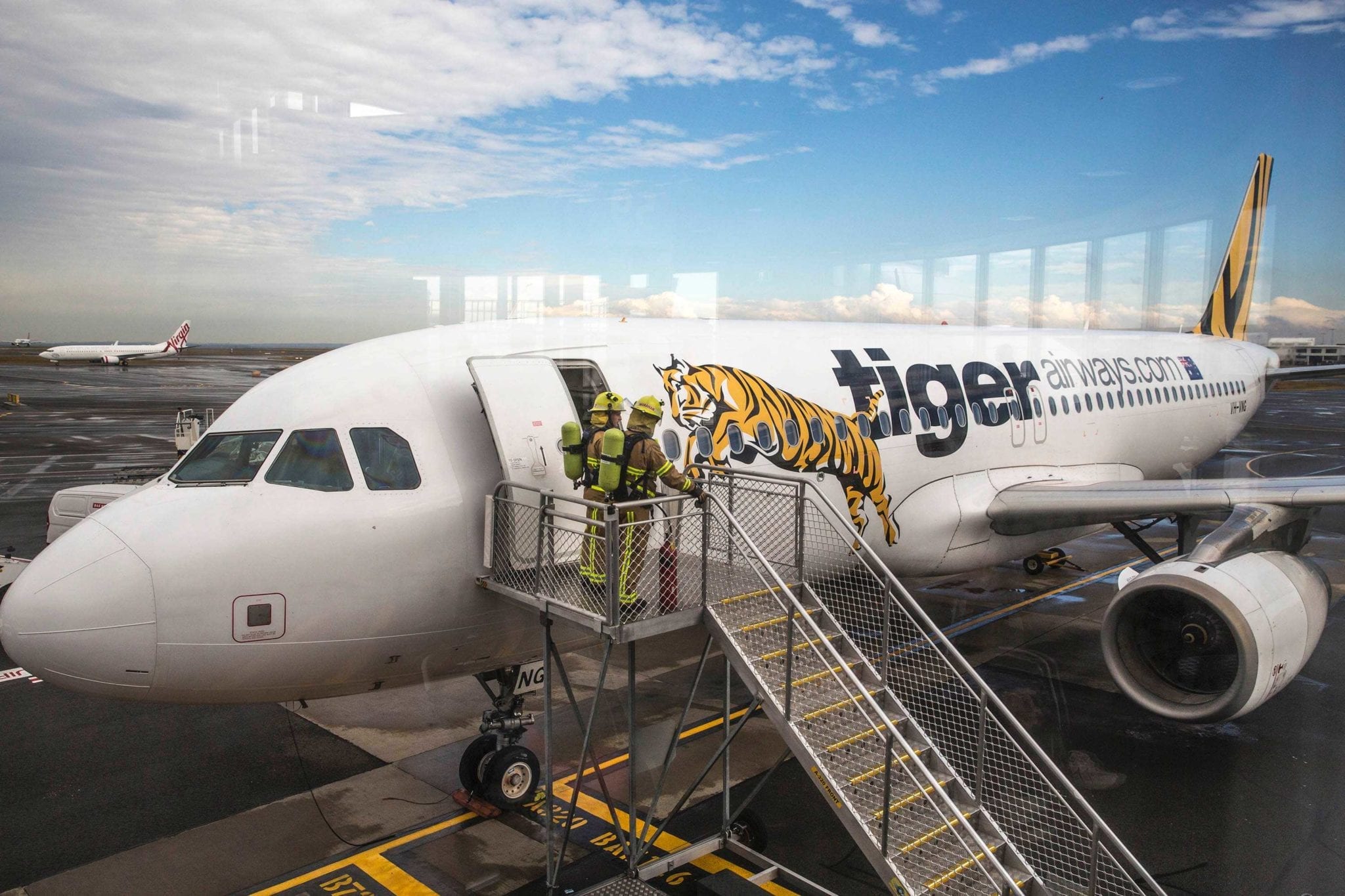
    Delayed and cancelled flights are on the rise, leading to calls for Australian passengers to be ‘better compensated’. Tigerair has the most delayed flights, followed by Jetstar, Virgin and Qantas, data from the Bureau of Infrastructure, Transport and Regional Economics shows.

    Only 71.4 per cent of Tigerair flights arrived on time, compared to 77.2 per cent for Jetstar, 83.4 for Virgin Australia and 84.7 for Qantas, the report revealed. Delayed and cancelled flights are on the rise, leading to calls for Australian passengers to be ‘better compensated’ Only 71.4 per cent of Tigerair flights arrived on time, compared to 77.2 per cent for Jetstar, 83.4 for Virgin Australia and 84.7 for Qantas, the report revealed.

    The average on-time arrivals across all airlines was 82 per cent and 1.9 per cent of all flights were cancelled.

    This represented an increase of delayed flights and cancellations compared to previous years.  QantasLink had the highest rate of cancellations in 2017, following by Tigerair and Virgin Australia Regional Airlines.

    The highest rate of cancellations was 6.2 per cent on the Sydney-Hamilton Island route, followed by Hamilton-Island to Sydney at 6.1 per cent and Melbourne to Hamilton Island at 5.2 per cent.

    The average on-time arrivals across all airlines was 82 per cent and 1.9 per cent of all flights was cancelled

    Choice spokeswoman Stefanie Menzies told Australian airlines are ‘flying below the radar’ on consumer protection.

    ‘Compensation should be fair and standardised, no matter what airline you’re on or what the customer service agent decides you deserve on the day,’ she told the publication.

    ‘Airlines should take responsibility for their own mistakes instead of making passengers pay for a delay.’

  • Facebook fighting a war against clickbaiting posts

    Facebook fighting a war against clickbaiting posts

    Facebook will this week begin demoting news feed posts from people and pages that use clickbaiting to get greater reach.

    In what it describes as an effort to promote more meaningful and authentic conversations on the platform, Facebook staff have detected different types of clickbaiting – or in social media lingo, “engagement baiting” – to show spammy and sensational content less on the news feed. But the clampdown will exclude posts that ask people for help, advice, or recommendations.

    Facebook warns that business pages and publishers that use engagement baiting will get less engagement, and more significant drops in reach if they repeatedly use the tactic.

    As a result, pages should continue to focus on posting relevant and meaningful stories that do not use engagement bait tactics.

    To learn more about clickbaiting and how to avoid using it on Facebook guidelines.

  • Cebu Pacific targets 12% passenger growth with A321 deliveries

    Cebu Pacific targets 12% passenger growth with A321 deliveries

    Cebu Pacific is targeting for passenger numbers to hit 22 million in 2018, a 12% increase from the year before.

    Last year, the Philippine low-cost carrier handled 19.7 million passengers, a 3% year-on-year increase, largely driven by an 8% growth in the number of international passengers. Performance was strong in its key markets of Sydney, Dubai, Hong Kong, Tokyo Narita, Taipei, and Seoul.

    “To reach our goal of flying 22 million passengers this year, we remain committed to offering a compelling route network where we can meet rising demand and sustain our year-round low fare proposition,” says JR Mantaring, the airline’s vice-president for corporate affairs.

    He adds that despite the higher fuel price, the weakening of the Philippine peso against the US dollar, security concerns and travel advisories, the carrier has “remained relatively resilient”.

    This year, the carrier is scheduled to add seven A321s from March through September, before its first Pratt & Whitney PW1100G-powered A321neo is delivered in November. These large narrowbodies will add capacity and also free up some A330s that are used on short-haul services to go further afield.

    Two of these A321s have already been delivered, while another three are scheduled to arrive “in the coming days”.

    Last year, operating profit slipped 17.3% to Ps10.1 billion ($194 million), as the growth in expenses outpaced that of revenue. Net profit fell 18.9% to Ps7.91 billion.

  • Vietjet reports a year of success with high growth and more international routes in 2018

    Vietjet reports a year of success with high growth and more international routes in 2018

    Vietjet yesterday reported a year of success at the Annual General Shareholders Meeting (AGM) 2018 of Vietjet Aviation Joint Stock Company (HoSE: VJC – HOSE), with 91.74% shareholders in attendance and high approval ratings for all issues raised at the AGM.

    According to the report presented by Vietjet Managing Director, Luu Duc Khanh, who spoke on behalf of the Board of Management, the company enjoyed a successful year across all categories.

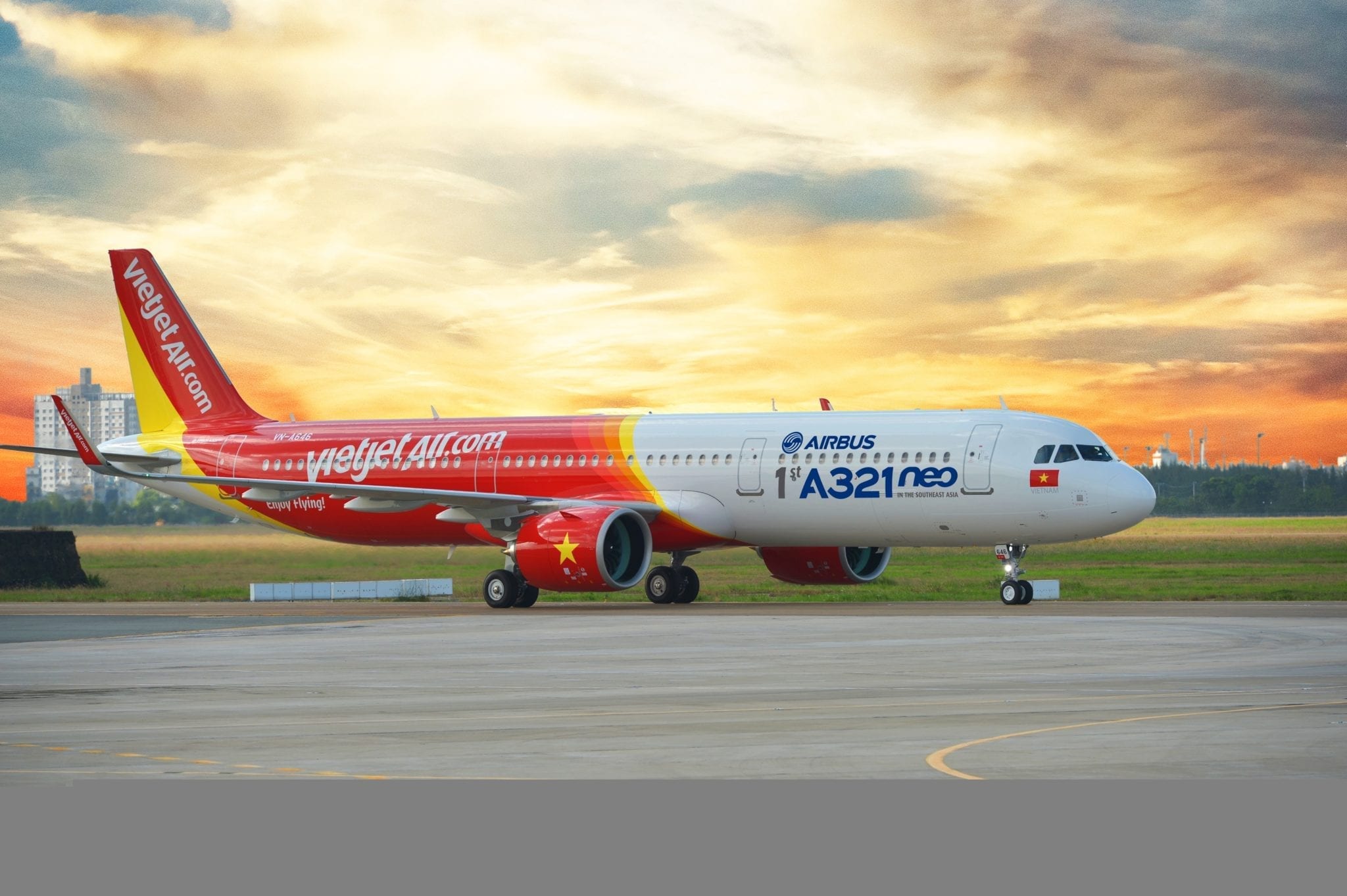
    Specifically, Vietjet received 17 aircraft, including the first A321 Neo in Southeast Asia. By continually saving costs efficiently and effectively, Vietjet has maintained the most efficient operating costs in the region. Indicators for operation safety and ground operation were also among the highest in the region. The airline’s technical reliability reached 99.66%, the highest level among the Airbus’ A320/321 fleet worldwide.

    To continue its expansion of domestic routes as well as penetrating the markets in the North Asia region, up until the end of 2017, Vietjet operated 38 domestic routes and 44 international routes connecting major cities in a part of the world that is home to more than half of the world’s population. In 2017, the company operated 98,805 safe flights, transporting 17.11 million passengers, a 22% increase over 2016.

    Besides increasing the volume of international passengers and the number of international charter flights, ancillary services also grew in proportion to the number of flights. At the AGM, Vietjet also announced that the airline had surpassed its financial targets. According to the audited and consolidated financial statements of 2017, revenue stood at VND42,303 billion (US$1.92 billion), after-tax profit stood at VND5,073 billion (US$230.59 million), with increases of 54% and 73% respectively over 2016. Earnings per share reached VND11,356 (US$0.52).

    On February 28, 2017, Vietjet listed its shares on the Ho Chi Minh City Stock Exchange (HoSE) with the Board of Directors’ total commitment in applying international standards in corporate governance, management and information transparency.

    On the back of these positive business results, the Board of Directors proposed and received approval from the shareholders to increase the dividend payment of 2017 from 50% to 60%. Accordingly, the company advanced a 30% dividend payment in cash and will pay a cash dividend of 10% on May 25. Vietjet will pay a further dividend of 20% by shares.

    In 2018, the company has set a target to reach VND50,970 billion (US$2.24 billion) in revenue and VND5,800 billion (US$254.75 million) in profit, with increases of 20.5% and 10% respectively compared to those of 2017. The Board of Directors also submitted a proposal to the shareholders to increase the dividend payment of 2018 to 50%.

    The aviation market of Vietnam and the region is expected to continue growing strongly in 2018, especially as the economy is forecast to achieve the highest GDP growth ever, and the government is promoting tourism as a key economic sector that will attract millions of tourists to Vietnam. With its expanding fleet and increasing number of new international routes to destinations in countries such as Japan, India and Australia, Vietjet is on its way to becoming a multi-national airline with a global vision and competitive abilities.


  • Nokia Q1 profit slumps 59%

    Nokia Q1 profit slumps 59%

    Nokia has reported a sharp 59% decline in net profit for the first quarter of 2018 to €86 million ($104.1 million) due to the ongoing weakness in the telecoms equipment market.

    Revenue for the quarter fell 9% year-on-year to €4.93 billion, with networks revenue down 12% to €4.32 billion.

    The vendor said sales and profitability for the quarter were primarily impacted by lower net sales in North America, but there were signs of improvement in terms of orders, suggesting that sales and profitability will improve over the rest of the year.

    Based on the orders received during the quarter, the company expects demand for 5G to accelerate further, particularly in North America where the first 5G fixed wireless access deployments are expected in the second half of the year.

    Licensing revenue for the quarter meanwhile grew 65% year-on-year, and the company expects further smartphone licensing opportunities in China, as well as brand licensing and in the automotive sector.

    “We see strong momentum building for the full year despite a slow start in networks. I have considerable confidence that Nokia is well-positioned to out-perform a strengthening networks market and meet our full-year 2018 guidance,” Nokia CEO Rajeev Suri said.

    These targets include an earnings per share of €0.23 to €0.27, with an operating margin of between 9% and 11%.

  • Sofina Beaute continues its growth

    Sofina Beaute continues its growth

    Japanese brand Sofina Beaute has arrived in Singapore as part of its rollout in Asean countries.

    Under the wing of cosmetics group Kao Corporation, the brand’s offshore expansion has already included Taiwan, Hong Kong and Mainland China.

    Its Singapore counters will offer skin-analysis technology with consultants available for beauty advice.

  • UNIQLO Singapore Announces New Store Openings at Downtown East and Great World City

    UNIQLO Singapore Announces New Store Openings at Downtown East and Great World City

    UNIQLO Singapore today announces that it will be opening two new stores at Downtown East and Great World City towards the end of this year. This brings the brand’s total number of physical stores in Singapore to 28, excluding its online store, www.uniqlo.com/sg.

    The launch of these new stores displays the commitment UNIQLO is making to Singapore and its economy. Aiming to meet the needs of the residents in the central and eastern parts of Singapore through offering quality and innovative clothing, UNIQLO demonstrates its LifeWear philosophy in making the brand accessible for all to enjoy.

    Downtown East

    A well-known entertainment hub in the East which caters to families and youths alike, Downtown East will be home to a new UNIQLO store that is estimated to cover approximately 10,200  square feet. The store will be located in Downtown East’s new wing and it will offer affordable essentials for people of all ages to enjoy.

    Great World City

    Situated along the fringe of Singapore’s most popular shopping belt, UNIQLO Great World City is estimated to cover approximately 9,000 square feet. The new store presents local shoppers and tourists alike with the opportunity to shop for their favourite quality clothing at a central location without having to worry about busy shopping crowds.

  • Sesame Street Asia is making its way in Fashion

    Sesame Street Asia is making its way in Fashion

    Sesame Street Asia is expanding its fashion and lifestyle offerings with new apparel and accessory collections.

    Cookie Monster, Elmo and the rest of the gang from the Sesame Street children’s television series have been interpreted by regional fashion labels. These include:

    • Lalabobo. The premium casualwear brand has already introduced a Sesame Street capsule collection in its 200-plus stores in China. The collaboration features pieces for women and children including sweatshirts, sweaters, bomber jackets, jeans, down garments and dresses.
      • B.Duck. The Hong Kong-based retailer launches a Sesame Street collection for adults and children this month, including graphic t-shirts, sweatshirts and pants.
      • Tyakasha. The Shanghai-based fashion label this month introduces a collection of Sesame Street apparel and accessories including lunch boxes, umbrellas and mobile-phone cases via its online shop.
      • Chocoolate. The Hong Kong-based fashion label will debut a line of Sesame Street t-shirts, hoodies and tote bags next month to be sold also in Canada, China, Macau, Singapore and Taiwan.
      “Collaborating with these fashion labels allows our brand to continue expanding and growing as we approach our landmark 50th anniversary,” says Sesame Workshop senior VP Ed Wells, who also head up international media and education.
  • China Airlines adds new route to U.S.

    China Airlines adds new route to U.S.

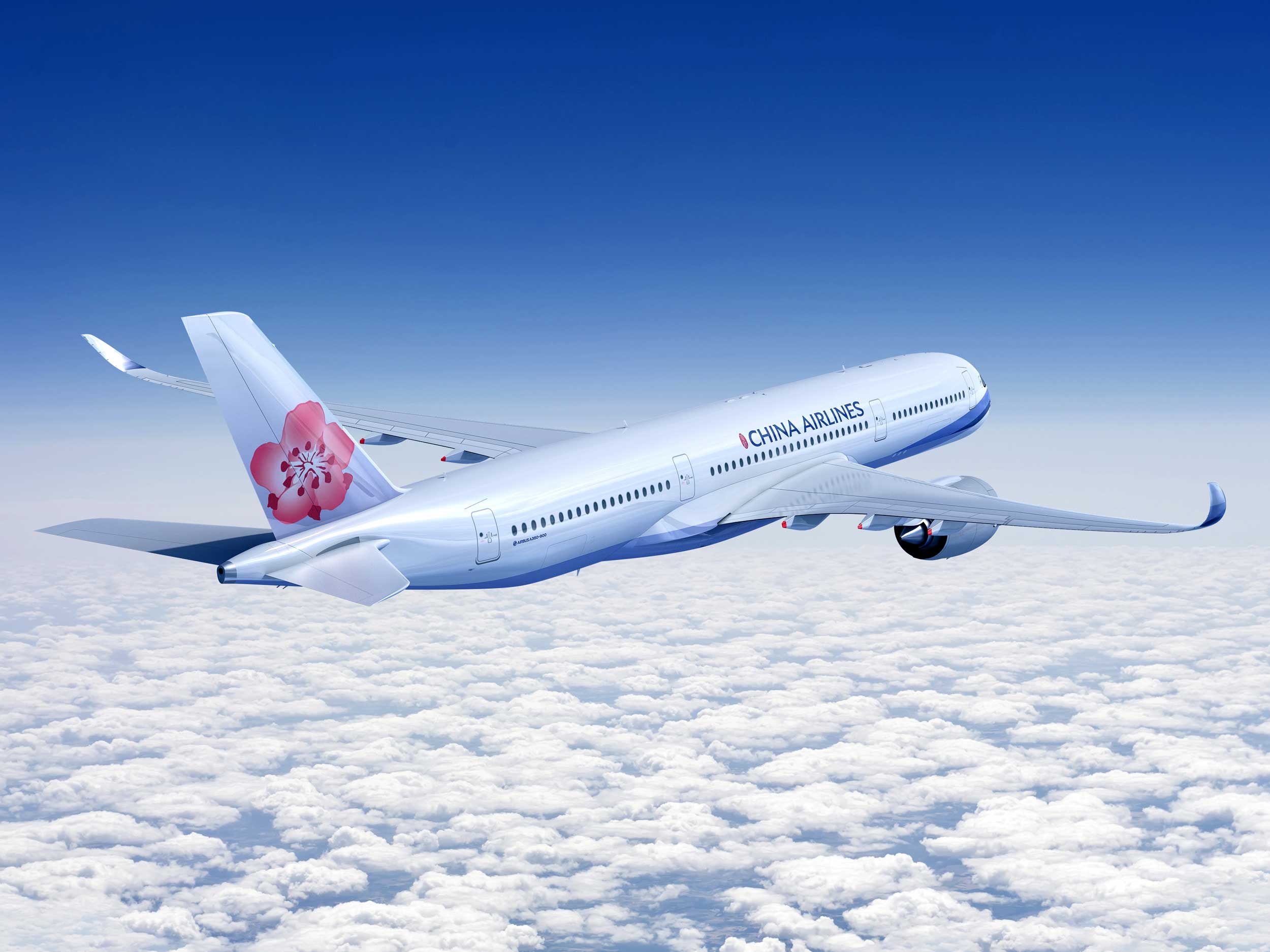
    A new route to the United States has been added by China Airlines. The TPE-ONT (Taoyuan to Ontario in California) route that the market has long been waiting for was officially commissioned. China Airlines will operate Boeing 777-300ER aircraft on the route with seven flights a week. The new regular service will be the first direct flight from Asia to Ontario CA. It has already achieved average bookings of 70% at launch despite March through to April being the off-peak season. The launch means China Airlines now offers six direct flight destinations in the U.S. with 32 flights a week to choose from.

    To celebrate the launch of the all-new route, China Airlines Chairman Nuan-hsuan Ho hosted a ceremony at Taoyuan Airport on 25 March 2018. The milestone moment was witnessed by Mayor of Taoyuan City Wen-tsan Cheng, VISIT CALIFORNIA – Taiwan Travel Trade Director Milane Tsai, Taoyuan International Airport Corporation President Deng-Ke Shiau, Taoyuan Metro Chairman Kun-Yi Liu and other guests, all of whom gathered to bestow their blessing on the inaugural flight.

    China Airlines Chairman Nuan-Hsuan Ho said that the extensive studies and assessments carried out by China Airlines have now finally paid off. The launch of the Taoyuan – Ontario route will tap into the market for travel between Taiwan, Mainland China, Hong Kong and Macau among eastern Los Angeles’ Chinese community. The new route, along with the existing Taoyuan – Los Angeles service, will expand options for travel to and from Asia for metropolitan Los Angeles as a whole, fostering closer Taiwan-U.S. ties as well as strengthening links with the Asia market.

  • UnPackt Singapore offers package-free groceries

    UnPackt Singapore offers package-free groceries

    Singapore is about to have its first zero-waste grocery store, UnPackt. It will sell its goods without any packaging, encouraging customers to take along their own containers.

    In self-serve gravity bins to reduce food waste, dried food and cleaning supplies will go on sale first, with plans to introduce fresh fruit and vegetables when sales volumes pick up. Goods will be priced lower than regularly as they are free of packaging.

    The store will also run a recycling scheme offering donated containers for customers who visit the store without their own. Reusable containers can also be bought.

    Co-founded by former business executives Florence Tay and Jeff Lam, UnPackt is a social enterprise that aims to spread the zero-waste message and make packaging-free shopping more accessible in Singapore. The store will hire staff from two disadvantaged groups, seniors and single parents.

    Tay had the idea for the store while exploring how to cut back on plastic waste. She was particularly looking at how to buy food in small quantities to reduce food waste. A survey she ran this month gave her confidence that Singaporean shoppers will support a zero-waste store.

    On Jalan Kuras, in the commuter district of Ang Mo Kio, Unpackt will open early next month. An online version will be introduced later.

    Singaporeans consume at a rate that would need four Earths to support them, using an average of 13 plastic bags a day per person, reports Eco-Business. Last year the island produced more than 800 million kilograms of plastic waste, with only 6 per cent being recycled.