Tag: asia

  • Products funded on Kickstarter sold in a store in Singapore

    Products funded on Kickstarter sold in a store in Singapore

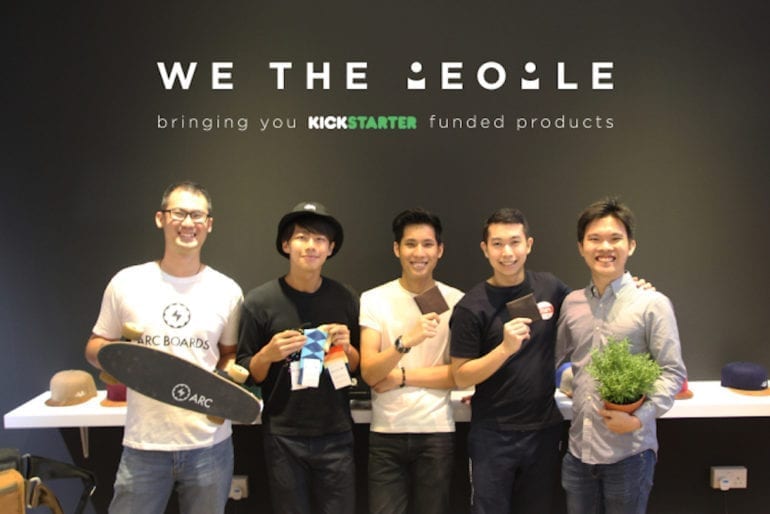
    We The People, a Singapore-based retail store, exclusively carries products that were developed through the online crowdfunding platform Kickstarter.

    It provides customers with a chance to buy Kickstarter products without having to wait or pay for shipping.

    We The People’s shop owner contacts the creators of campaigns and works with them to expand their products to the Asian market.

    All of the items in the store come with the backstory of the item, how much was raised in the crowdfunding campaign and the number of people who originally donated to the campaign.

    The We The People website also shows in-progress campaigns they would like to see fully funded.

    Four different We The People retail shops currently exist in Singapore, and the company plans to expand to other countries, such as Sweden and South Korea.

  • tomas maier and uniqlo collection to Debut in Early Summer 2018

    tomas maier and uniqlo collection to Debut in Early Summer 2018

    UNIQLO yesterday announced a new collaboration with the tomas maier brand, famed worldwide for its casual yet designed lifestyle concept. The new tomas maierand uniqlo collectionis for women and men, and it will be available in early summer at selected UNIQLOstores and online. The range infuses the time offand escapephilosophy of the tomas maier brand into LifeWear,which embodies UNIQLOs enduring commitment to top-quality fabrics, outstanding technology and functionality.

    Commenting on the announcement, Tomas Maier said, “The concept of my brand is based on simple, yet sophisticated designs. tomas maieris all about clothes for time off -a way for people to enjoy a much-needed escape from some of the complexities of modern living. I am confident that we wereable to incorporate UNIQLO’s remarkable technologies and expertise successfully into our collaboration line, which I hope can help people to relax and get away from the hustle and bustle of daily life.”

    Yuki Katsuta, Group Senior Vice President of Fast Retailing and Head of Global Research and Design at UNIQLO,commented that, “LifeWearembodies our belief that individualitycomes not from clothes, but the people wearing them. That’s why we devote our energies to creating clothes that people will enjoy and value for a long time. UNIQLO and the tomas maier brand share a long-held philosophy of including contemporary touches in casual clothes that are made fromqualityfabricsand are comfortableto wear. Our first resortwear collection marks a newstage in the evolution of LifeWear and adds a splash of summer fun to people’s lifestyles.”


  • Christopher Bailey takes final bow for Burberry at LFW

    Christopher Bailey takes final bow for Burberry at LFW

    Christopher Bailey has marked the end of his tenure at Burberry with a final, rainbow-themed collection unveiled at London Fashion Week over the weekend.

    Bailey first joined Burberry in 2001 and has since been a driving force behind the brand’s revitalisation and success both as a high street retailer and wholesaler.

    He is credited for transforming the once-struggling British label into a luxury powerhouse and the biggest drawcard in London Fashion Week.

    He was promoted to the dual role of chief executive and chief creative officer in May 2014, a position he held for just over three years.

    In July last year, he gave up his chief executive officer duties for Marco Gobbetti and transitioned into his current dual role of president and chief creative officer.

    Bailey’s final collection for Burberry, which was unveiled on the second day of London Fashion Week on Saturday, featured a mix of styles from the past, present and future.

    The rainbow was a central motif, with rainbow stripes woven into Burberry’s famous heritage check, a nod to the brand’s support for three LGBT charities and Bailey’s career as an openly-gay chief executive of a FTSE 100 company.

  • Large emitters, observers welcome initial carbon tax rate of S$5 per tonne of greenhouse gas emissions

    Large emitters, observers welcome initial carbon tax rate of S$5 per tonne of greenhouse gas emissions

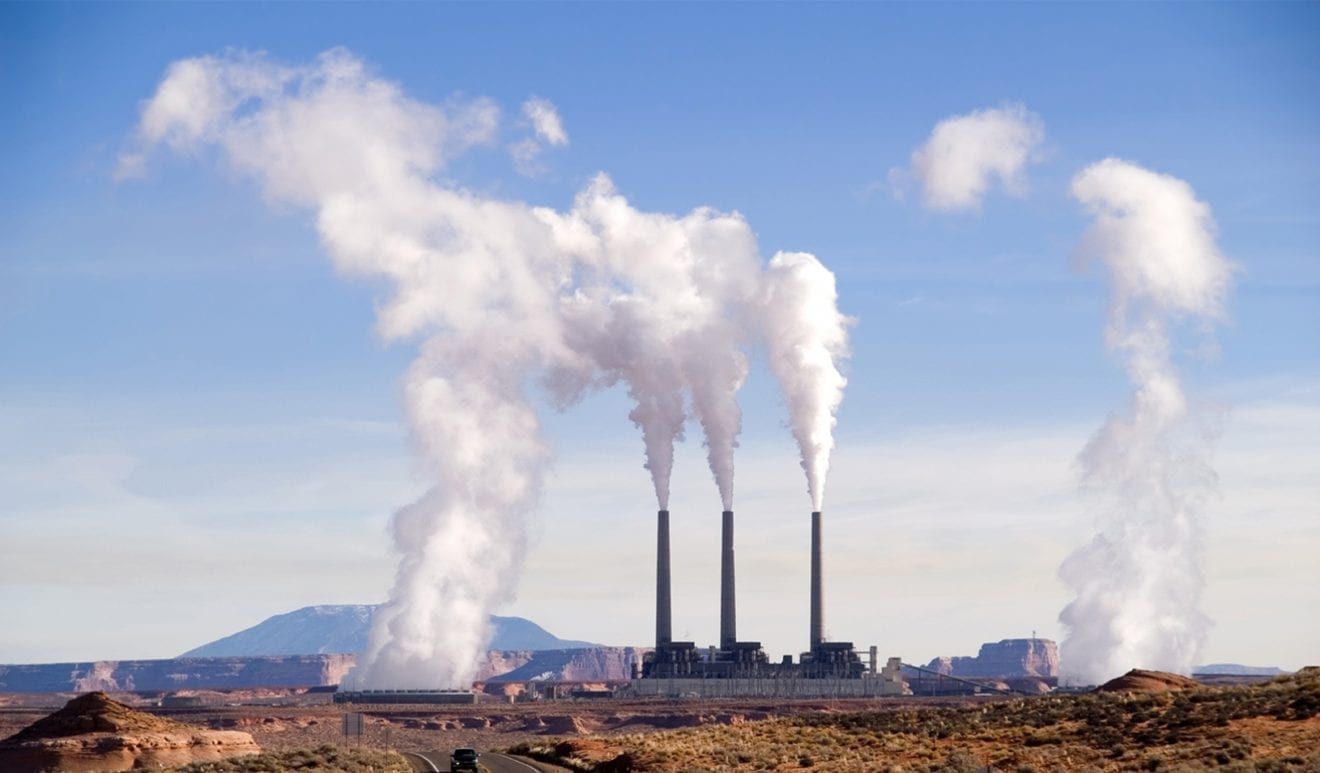
    Large emitters and environmental observers have welcomed the progressive implementation of the carbon tax, saying that it encourages companies to adopt energy efficiency measures while giving them the time to adapt to the changes.

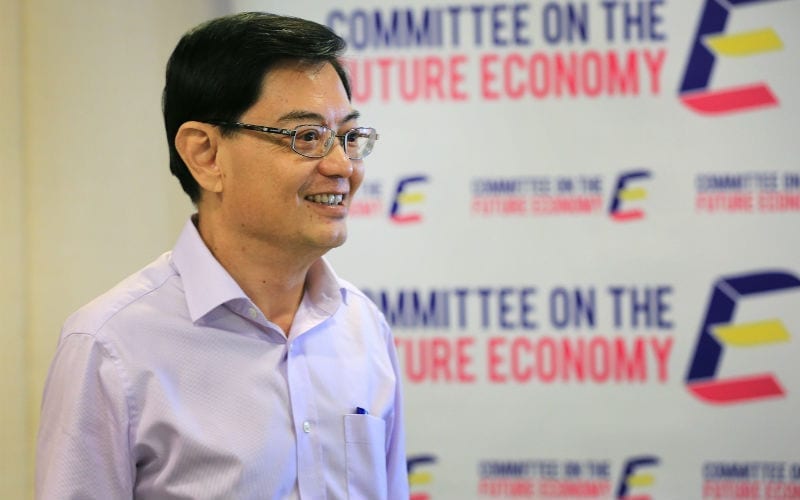
    Singapore’s Finance Minister Heng Swee Keat announced in his budget speech that large emitters in Singapore will be charged S$5 per tonne of greenhouse gas emissions under the carbon tax that will be implemented next year.

    The tax rate will be reviewed by 2023, with the intention of increasing it to between S$10 and S$15 per tonne by 2030. The review will consider global climate change developments, the progress of Singapore’s emissions mitigation efforts and its economic competitiveness, Mr Heng said.

    Mr Yu Tat Ming, chief executive of PacificLight, a power generation company, welcomed the Government’s proposal to review the carbon tax over time.

    “The initial imposition of S$5 per tonne encourages industry to implement efficiency improvements and consumers to adapt their consumption pattern,” he said. “Future changes in the carbon tax can be made by the government depending on how close Singapore is to achieving its emission targets.”

    The carbon tax is just one in a range of measures aimed at reducing emissions intensity in Singapore by 36 per cent from 2005 levels by 2030 under the Paris Agreement.

    Likewise Mr Steven Fries, chief economist at Royal Dutch Shell, said the carbon tax represents an “important step” in meeting Singapore’s emission targets.

    “However, it is important to design this tax so that it will be an effective incentive to cut emissions and also support industry competitiveness, both of which are Government goals,” he added.

    To that end, Mr Yu said he still supports the setting of industry benchmarks based on “best in class” targets to encourage efficiency improvements without compromising future economic growth.

    “International experience has shown a good way to deliver on both objectives is for Governments to set an appropriate carbon ‘price’ on emissions which exceed an acceptable industry performance,” Mr Fries added.

    “This allows the government to set a carbon price high enough to incentivise companies to be more efficient, while safeguarding competitiveness by keeping the average carbon tax low.”

    Still, Ernst & Young tax analyst Chia Seng Chye believes the carbon tax is a “good start”.

    “It’s also about creating the right kind of behaviour, incentivising emitters who proactively manage their carbon emissions, rather than treating it purely as a source of additional tax revenue for the Government,” he explained.

    The progressive nature of the carbon tax also lets emitters warm up to it, he added. “So after 2030, when the rate is actually increased, they would not find it so prohibitive in terms of the cost.”

    Energy Studies Institute research fellow Melissa Low said the time frame of five years before the tax is reviewed is an “adjustment period” for companies to become more efficient.

    “The current fleet of power generators, such as turbines they have for example, is about 15 years of age, and the technology purchased by them is ‘locked-in’ for decades,” she explained.

    In addition, 2023 is also when countries – as part of the Paris Agreement – will do a global stocktake on what has been achieved so far, she pointed out.

    Therefore, that will be a good time for the Government to review whether the current carbon tax has worked in reducing emissions, as well as to review its suite of measures, she said.

    More importantly, Ms Low pointed out that unlike the European Union’s Emissions Trading Scheme which provides “free allowances” to certain emitters, Singapore’s carbon tax system does not exempt anyone.

    So while the carbon tax rate might be lower than the previously announced range of between S$10 and S$20, it still sends a price signal to companies, affecting their bottom lines, she added.

    Member of Parliament (MP) for Nee Soon GRC Lee Bee Wah said the carbon tax sends a “very clear” signal that reducing carbon emissions is an issue that needs to be dealt with.

    Dr Lee, who also sits on the Government Parliamentary Committee (GPC) for Environment and Water Resources, said the progressive nature of the tax gives companies the time and space to adapt.

    “As Minister Heng mentioned just now, he’s prepared to spend more than what he collects for companies to come up with innovative solutions, so it gives a balance,” she added.

    HOUSEHOLDS SHOULD PLAY PART

    Beyond what emitters can do, Mr Yu stated that achieving emissions targets would require a “concerted effort” from all parties.

    “On the demand side, the carbon tax must achieve the intended objective of encouraging consumers to adopt efficient practices and appliances,” he said.

    To that end, he noted that the carbon tax would likely impact customers, adding that it would cost his company an additional S$8.25 million a year.

    “As an electricity retailer, we shall do our part to cushion the impact on consumers,” he said. “For example, we encourage our customers to consume energy during off-peak hours, when electricity prices are likely to be lower and we can operate our plant more efficiently.”

    The carbon tax will make up about 1 per cent of total electricity and gas expenses on average, translating to a rise in electricity prices of about 0.21 cents per kWh, assuming the full tax is passed on to end-users.

    To help households adjust, the Government will provide additional Utilities-Save (U-Save) rebates from 2019 to 2021. During this period, each eligible Housing and Development Board household will receive S$20 more per year.

    MP for Holland-Bukit Timah GRC Liang Eng Hwa, who also sits on the Environment and Water Resources GPC, said the rebates would be “more than enough” in offsetting the increase in electricity bills.

    “I think these are schemes that have to be put in place to help mitigate the impact of all these tax increases,” he said.

     

  • Singapore to impose tax on digital services from 2020

    Singapore to impose tax on digital services from 2020

    Singapore’s Finance Minister Heng Swee Keat announced at the country’s Budget 2018 yesterday, Feb 19, that Goods and Services Tax (GST) will be imposed on businesses providing digital services from Jan 1, 2020.

    These services include mobile applications, and the streaming of music and shows. It is likely that firms affected by the measure to pass on the extra cost to consumers.

    The move is aimed at making tax system in Singapore “fair and resilient” in today’s digital economy, said Heng. “Today, services such as consultancy and marketing purchased from overseas suppliers are not subject to GST. Local consumers also do not pay GST when they download apps and music from overseas. This change will ensure that imported and local services are accorded the same treatment.”

    Measure will not apply to online sale of goods

    It is reported that according to a statement by the Ministry of Finance, this new measure will not affect online sale of goods.

    With regards to online retail, Mr Heng commented that international discussions are ongoing to see how taxes could be applied. There would also be a review before a decision is made.

  • Alibaba, Tencent rally troops amid $10 billion retail battle

    Alibaba, Tencent rally troops amid $10 billion retail battle

    China’s tech giants Alibaba Group Holding Ltd and Tencent Holdings Ltd, worth a combined $1 trillion, are on a retail investment binge, forcing merchants to choose sides amid a battle for shoppers’ digital wallets.

    Since the start of last year, the two companies have between them spent more than $10 billion on retail-focused deals, boosting their reach online and in brick-and-mortar stores.

    The aggressive drive, supported by large cash piles and soaring share prices, is part of a battle to win over consumers and store operators to the two firms’ competing payment, logistics, social media and big data services.

    The result: fewer and fewer retailers left without allegiance to either Tencent or Alibaba.

    “All of the retailers in the brick-and-mortar world are very worried. They have to take a side,” said Jason Yu, Shanghai-based General Manager of market research firm Kantar Worldpanel.

    “Otherwise they are afraid they will be eaten alive in the future.”

    Alibaba is China’s top e-commerce player and its affiliate Ant Financial leads in mobile payments. Tencent’s strengths lie in social media, digital payment and gaming. It also has a major stake in the second-largest online retailer, JD.Com.

    Tencent and JD.com have a growing range of allies, including French grocer Carrefour SA, which has announced a potential investment from Tencent, and U.S. retail giant Walmart, which has a stake in JD.com.

    Tencent also bought a stake in Yonghui Superstores Co Ltd, apparel retailers Vipshop Holdings Ltd and Heilan Home, mall operator Wanda Commercial, and this month snagged a strategic tie-up with grocer Bubugao.

    In the other corner is Alibaba, which has invested even more heavily in Suning.com>, Intime Retail, Sanjiang Shopping Club, Lianhua Supermarket, Wanda Film and IKEA-like home
    improvement store Easyhome.

    Key to the battle is China’s nearly $13 trillion mobile payment market, where Alibaba and Tencent are going head-to-head. Alibaba took a 33 percent stake in its payment affiliate Ant Financial this month ahead of an expected mega IPO.

    Ant operates China’s top mobile payment platform, Alipay, while Tencent’s payment system on its hugely popular Weixin chat app is catching up fast. Both firms are also making a big push in cloud computing and data.

    “I think for payment (the retail push) is a very critical part because it’s almost a gateway,” said Yu. Brick-and-mortar stores in China account for about 85 percent of retail sales, creating a huge lure for tech giants.

    “That’s the pot that Alibaba, JD.com and even Tencent want a slice of,” Yu added. “That’s the majority of the business where they can actually look for future growth.”

    In return, the physical stores get access to payment systems, logistics networks and other services – not to mention the reams of data on consumers that the tech firms control.

    Alibaba invested $486 million this month in a retail-focused big data firm, saying the deal meant it could better “help brick-and-mortar retailers succeed in the digital age.”

  • Indonesia and Singapore to boost cooperation in investment and vocational education

    Indonesia and Singapore to boost cooperation in investment and vocational education

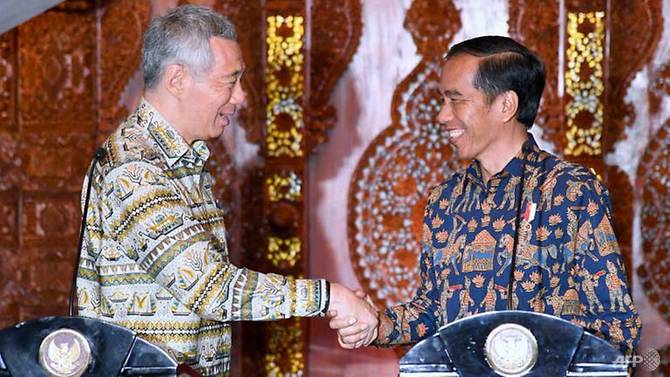
    Indonesia and Singapore have agreed to boost cooperation in investment and vocational education, especially in the industrial sector, with Indonesia offering the development of three industrial estates to Singapore.

    Indonesia’s Minister for Industry Airlangga Hartarto said on Monday (Feb 19) that Indonesia has encouraged Singapore to continue developing industrial parks in North Kalimantan, North Sumatra and North Sulawesi, with an integrated concept similar to that in Kendal Industrial Park in Semarang, Central Java.

    The park, which was launched by Prime Minister Lee Hsien Loong and President Joko Widodo in 2016, has attracted 39 companies so far, with a total investment of US$360 million, and employed more than 1,950 people. It is a joint venture between developers from Singapore and Indonesia.

    The companies are from various industries – from furniture to food packaging. A polytechnic in the industrial park to produce trained workers to support the project is also almost completed.

    “Singapore is one of the neighbouring countries that have a strategic role towards the interests of Indonesia and the region,” Minister Airlangga was quoted as saying.

    His comments came after a visit by Singapore Foreign Minister Vivian Balakrishnan last week, where he met several officials, including his Indonesian counterpart, Retno Marsudi, Jakarta Governor Anies Baswedan and the Industry Minister.

    Minister Airlangga said that during the visit, he discussed the Bilateral Investment Treaty and negotiated a renewal of the Double Taxation Agreement with Dr Balakrishnan.


  • DHL to offer more secure shipment service in Indonesia

    DHL to offer more secure shipment service in Indonesia

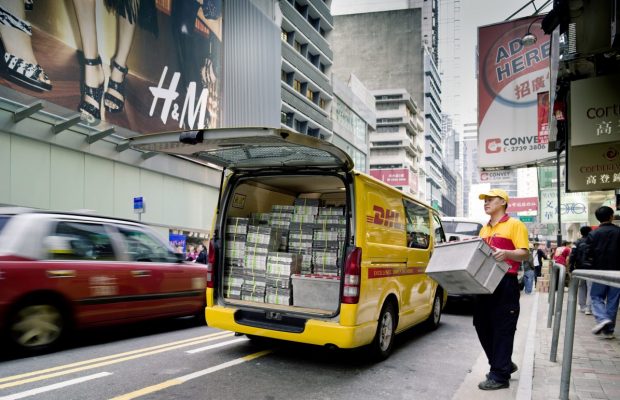
    DHL Global Forwarding, the air and ocean freight specialist of Deutsche Post DHL Group, has obtained an Authorized Economic Operator (AEO) certification by Indonesia’s customs authority, The Directorate General of Customs and Excise. The AEO certification will allow DHL Global Forwarding Indonesia to provide secure and quality logistics services while offering cost savings that can help customers become more globally competitive.

    The AEO accreditation is a cornerstone of the World Customs Organization’s (WCO) SAFE Framework of Standards to Secure and Facilitate Global Trade, and to date, fewer than 70 companies in Indonesia have been recognized with the certification. The country’s adoption of the AEO program as part of its ongoing Customs and Excise Reform will give trusted companies like DHL Global Forwarding a number of added benefits, including fewer physical consignment checks and preferential treatment in terms of customs regulations. Under the AEO principle of Mutual Recognition, DHL Global Forwarding will now also benefit from being part of a global supply chain that connects AEO-certified organizations, further decreasing shipment time.

    Thomas Tieber, CEO for ASEAN and South Asia, DHL Global Forwarding, said: “Global trade continues to grow positively, and this raises important security concerns for customs authorities around the world. However, stricter security and safety measures alone risk increasing the complexity of cross-border movement of goods and adding transaction costs to the overall supply chain process, potentially impacting the ability of all participants to remain globally competitive.”

    With the AEO, the Indonesian Directorate General of Customs and Excise has helped to ease processing at ports, reduce logistics cost and promote greater ease of business in Indonesia. The Indonesian Directorate General of Customs and Excise also plan to increase the number of AEO-certified companies in Indonesia so as to amplify end-to-end trade synergies and provide a safe and secure trading environment in the country.

    The program shares the same methodology as ISO in terms of implementation, execution, risk assessment and management engagement. To obtain AEO certification in Indonesia, DHL Global Forwarding set up a dedicated AEO team to ensure the business met or exceeded rigorous logistics and customs-related criteria, and high accounting and security standards, as well as proved financial solvency, among other requirements.

    Vincent Yong, Managing Director, DHL Global Forwarding Indonesia, said, “Achieving AEO status in Indonesia not only confirms our commitment to high safety and supply chain security standards in global trade, but also serves as a strong argument for our customers when choosing a logistics partner. The certification will enable us to offer an even more efficient service and deliver better value for our customers.”

    World Customs Organization (WCO) launched the SAFE program globally post 9-11 incident in New York to encourage customs authorities and certified businesses such as logistics providers, exporters and shippers, to be jointly responsible for safe and secure cross-border transactions and keep world trade flowing swiftly. WCO is an independent intergovernmental body whose mission is to enhance the effectiveness and efficiency of customs administrations. There are 182 WCO members, which together process about 98 per cent of world trade.

  • Malaysia’s 2017 exports up 18.9%, highest jump in 12 years

    Malaysia’s 2017 exports up 18.9%, highest jump in 12 years

    Malaysia’s total exports saw an increase of 18.9% to RM935.4 billion in 2017, the highest growth since 2005, official data showed.

    Total imports rose 19.9% to RM838.1 billion, lifting the 2017 trade surplus 10.3% to RM97.25 billion, the highest surplus recorded since 2012. Total trade surpassed RM1.7 trillion in 2017.

    MIDF Research projects export growth to average 9.3% in 2018, underpinned by continuous buoyant momentum in global trade activities, further recovery in commodities prices and receding protectionism threat.

    “Similar to 2017, we foresee upbeat momentum in global trade activities will continue and supported with gradual rise in commodity prices as well as receding of protectionism threat. Hence, we are optimistic that Malaysia’s external trade performance will continue expanding at steady pace in 2018.”

    In December 2017, Malaysia’s export growth moderated to 4.7% to RM79.3 billion, while imports expanded 7.9% to RM72.1 billion. Total trade stood at RM151.4 billion, representing a 6.2% growth compared with the same month in 2016. However, it posted a decrease 3.6% compared with the previous month.

    The trade surplus for December 2017 declined 19.% to RM7.3 billion against December 2016. It dropped 27.2% compared with November 2017.

    The value of electrical and electronic products, which accounted for 36.2% of total exports, increased 6.2% to RM28.7 billion, while liquefied natural gas and crude petroleum rose 4.8% and 6.9% to RM4.1 billion and RM2.7 billion, respectively.

    However, decreases were registered in refined petroleum products (-6.2%), timber and timber-based products (-11.4%), natural rubber (-24.4%), and palm oil and palm oil-based products (-0.4%).

    Geographically, export growth was supported by expansion in shipments to Hong Kong (+RM1.6 billion), China (+RM1.3 billion), European Union (+RM853.0 million), Vietnam (+RM589.7 million) and South Korea (+RM512.5 million).

  • Mercedez’s owner warns of supply chain risk from switch to electric cars

    Mercedez’s owner warns of supply chain risk from switch to electric cars

    Daimler AG, owner of the Mercedes-Benz brand, warned that a fall in demand for diesel cars and a switch to electric vehicles could force it to prop up its supplier base.

    Carmakers face increased legal and regulatory scrutiny over pollution levels produced by their diesel-engined vehicles after Volkswagen (VOWG_p.DE) in 2015 admitted to cheating emission tests using engine management software.

    To avoid a total ban on their diesel vehicles, Daimler and other carmakers have stepped up development of electric cars and agreed to update their engine management software to cut down pollution levels.

    Daimler’s suppliers are being forced to invest to help electrify the entire Mercedes-Benz range by 2022, prompting the carmaker to use unusually frank language to warn about the impact of the shift to electrified cars in its report.

    “Due to the planned electrification of new model series and a shift in customer demand from diesel to gasoline engines, the Mercedes-Benz Cars segment in particular is faced with the risk that Daimler will require changed volumes of components from suppliers,” the carmaker said in its annual report.

    “This could result in over- or under-utilization of production capacities for certain suppliers. If suppliers cannot cover their fixed costs, there is the risk that suppliers could demand compensation payments,” Daimler said.

    “Necessary capacity expansion at suppliers’ plants could also require cost-effective participation,” Daimler added.

    Daimler created a risk management committee to oversee its suppliers in the aftermath of the 2008 financial crisis, when some smaller companies ran into cash-flow problems, forcing Daimler to step in.

    Daimler said earlier this month that its profit growth would be dampened this year by spending on new technologies such as electric and autonomous vehicles.

    In its annual report, Daimler also said that political crises and uncertainties could lead to supply bottlenecks for specific raw materials, leading to volatile prices.

    “Generally, the ability to pass on the higher costs of commodities and other materials in the form of higher prices for the manufactured vehicles is limited because of strong competitive pressure in the international automotive markets,” the annual report said.

    Daimler’s report showed that provisions stood at 14 billion euros ($17.3 billion) at the end of 2017, 2.1 billion higher than a year earlier.

    The Stuttgart-based carmaker did not provide a detailed breakdown of the rise but said it was primarily due to increased obligations from sales transactions, provisions for warranty obligations, and provisions relating to legal proceedings.

    Daimler is being sued by owners of diesel-engined Mercedes-Benz vehicles in the United States in a class-action suit which alleges the German carmaker used software to reduce emissions.

    Daimler views the lawsuit as being without merit, but added it could not quantify the legal risks from class-action lawsuits, the annual report showed.

    Among the legal risks faced by Daimler is a regulatory probe tied to raids at several car manufacturers and suppliers, with regard to steel purchasing. Daimler reiterated in its report that it was cooperating in full with the authorities.

    Daimler also said in its report that Chief Executive Dieter Zetsche’s total remuneration for 2017 amounted to 8.61 million euros, an increase from 7.61 million euros a year earlier.

  • Unilever Lays Bare Palm Oil Supply Chain in Rare Industry Move

    Unilever Lays Bare Palm Oil Supply Chain in Rare Industry Move

    Consumer goods giant Unilever said on Friday (16/02) it had laid bare its entire palm oil supply chain, including all the suppliers and mills it sources from, to boost transparency in a rare industry move.

    Unilever said it was the first consumer goods company to publish such details, having disclosed the location of more than 1,400 mills and over 300 direct suppliers of the oil used in products from snacks and soaps to cosmetics and biofuels.

    The $62 billion palm oil industry has been plagued by concerns about deforestation and human rights abuses in countries such as Indonesia, the world’s biggest producer.

    Marc Engel, Unilever’s chief supply chain officer, said the company hoped sharing the information would be the start of a new industry-wide movement toward supply chain transparency.

    “Unilever believes that complete transparency is needed for radical transformation,” Engel said in a statement posted on Unilever’s website.

    “This is a big step toward greater transparency, but we know there is more work to be done to achieve a truly sustainable palm oil industry and we will continue our efforts to make this a reality.”

    Unilever said transparency and the ability to trace palm oil are vital in addressing deforestation and human rights abuses.

    Palm oil supply chains are complex as the fruit changes hands many times from farmers to agents before it reaches a mill. It is then transported via traders to refineries for further processing, when it enters a company’s supply chain.

    Over the past decade, consumer activist groups have pressed big palm oil buyers such as PepsiCo, Unilever and Nestle with supermarket boycotts and other protests over palm oil’s perceived links to deforestation and human rights abuses.

    PepsiCo last month suspended procurement from a palm oil supplier over claims of labour abuses on its Indonesian plantations.

  • Japan’s Honda to recall 350,000 cars in China over engine issue

    Japan’s Honda to recall 350,000 cars in China over engine issue

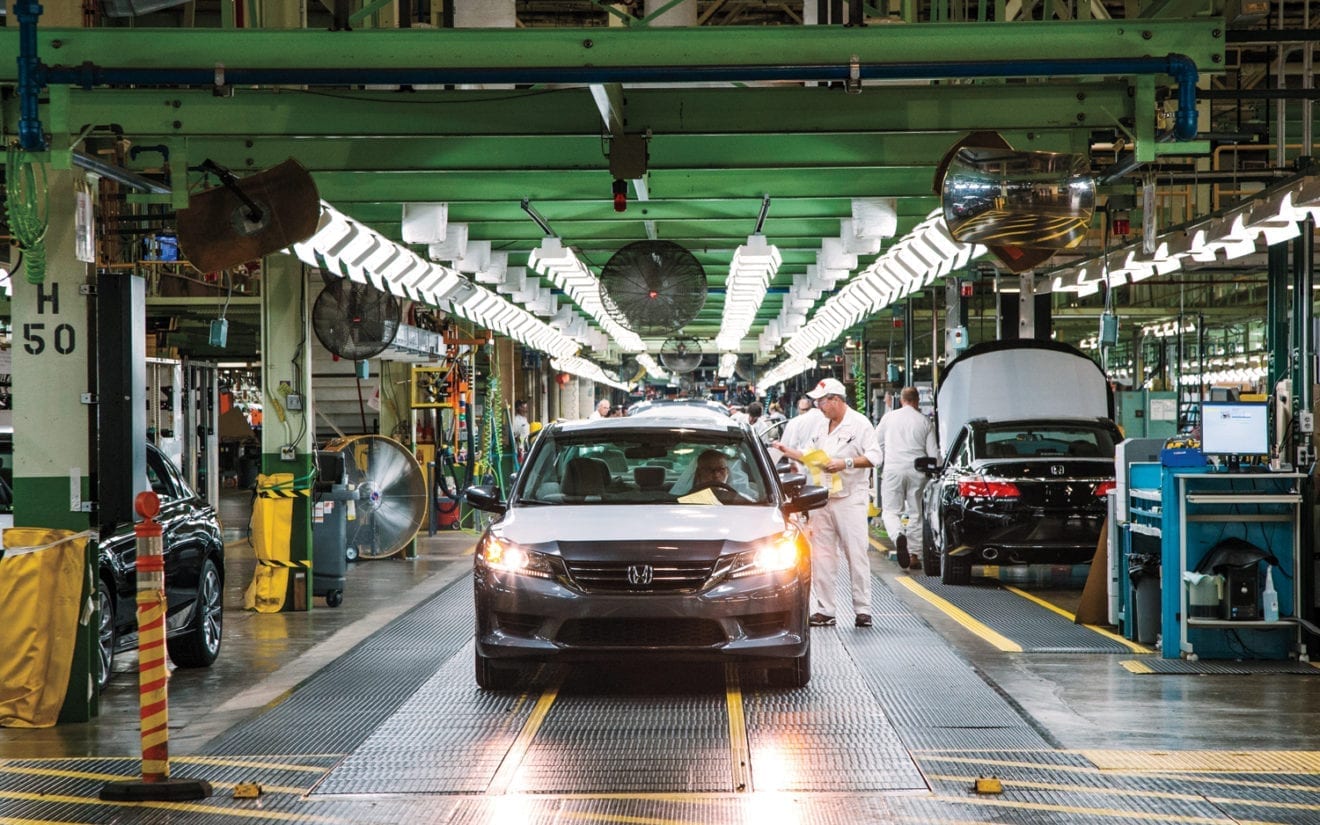
    Honda Motor Co Ltd will recall roughly 350,000 vehicles in China to resolve a cold-climate engine issue and quell a barrage of customer complaints that has hit the automaker over the past month.

    The recall involves the CR-V sport utility vehicle and the Civic car equipped with a 1.5-litre turbo engine, Honda’s joint venture with Dongfeng Motor Group Co Ltd (0489.HK) said in a statement on Monday.

    The company is calling back those cars to resolve a problem caused by an unusual amount of un-combusted petrol collecting in the engine’s lubricant oil pan.

    The issue in some cases caused a strong odor of gasoline inside the car and in other cases the car’s check-engine light came on. Honda and Dongfeng plan to resolve the issue by updating the engine’s gasoline injection control software.

    Honda officials said there had been no reports of accidents. They said the engine oil issue doesn’t affect the engine or the car’s performance.

    The measure comes after CR-V and Civic owners turned to the Weibo microblog – China’s Twitter equivalent – and other means to air their complaints since mid January.

    The recall points to an emerging pattern in China where customer complaints spiral out of control as they are aired out on Weibo, forcing an automaker to respond.

    Years ago the kind of recall Honda announced on Monday could have been dealt through a so-called customer service action, industry officials and experts say. That refers to what the auto industry calls a “quiet recall”, which is less damaging financially and image-wise, where an automaker fixes a non-safety issue, often free of charge, whenever the customer comes to the dealership.

    “Without Weibo, it would have gone on for years,” said James Chao, chief automotive analyst for IHS Markit in the Asia-Pacific region. “That’s the way it was for the industry in the pre-Weibo, pre-Twitter era.”

    Honda did not say the scale of the move in its statement, but a Beijing-based spokesman and other company officials said Honda and its joint venture partner are likely to call back roughly 350,000 vehicles. “We’re still trying to determine the precise number of cars affected,” the spokesman said.

    Normally un-combusted petrol ends up accumulated in the lubricant oil pan but evaporates under heat from the engine. Such evaporated petrol is by design put back into the engine combustion chamber as fuel.

    The issue involving the CR-V and the Civic has occurred in northern China where temperatures can dip well below the freezing point and when drivers of the affected vehicles drive short distances frequently.

    On short runs, Honda engineers believe the engine doesn’t warm up enough to help un-combusted petrol accumulated in the lubricant oil pan to evaporate.

  • European car sales up 6.8 percent in January, led by French gains

    European car sales up 6.8 percent in January, led by French gains

    Sales of passenger cars in Europe rose twice as fast in January as in the whole of 2017, helped by strong gains at France’s PSA Group and Renault, industry data showed.

    Registrations increased 6.8 percent to 1.29 million cars last month in the European Union (EU) and European Free Trade Association (EFTA) countries, Brussels-based industry body ACEA said on Thursday, from 1.20 million a year earlier.

    By comparison, sales in the region climbed for a fourth straight year in 2017 by 3.3 percent to 15.6 million vehicles.

    “January is usually a strong month, people resorted to buying after holding back on purchases at the end of last year,” a spokeswoman for ACEA said, adding the number of selling days was unchanged compared to the same month a year earlier.

    Sales by PSA including the newly-acquired Opel-Vauxhall brands surged 73 percent to 211,097 vehicles and were still up 12 percent if figures for the former General Motors division were excluded, the data showed.

    French rival Renault posted a 9.5 percent gain to 118,405 models, marginally beating Europe’s biggest automotive group Volkswagen which grew 8.7 percent to 316,783 cars with its volume brands Skoda and Seat contributing a major part to the increase.

    Four of Europe’s five biggest auto markets posted higher sales with only Germany and Spain managing double-digit advances while France and Italy recorded lower single-digit gains.

    Europe’s No. 2 market Britain suffered its tenth consecutive monthly drop, with sales down 6.3 percent in part due to customers being put off from buying diesels, which politicians have targeted over air pollution concerns.

  • Indonesia Not Yet Ready for the Automated Era

    Indonesia Not Yet Ready for the Automated Era

    The government must prepare Indonesia’s workforce to be competitive to anticipate future challenges associated with coming technological advancements, especially in business, a former deputy foreign minister said on Sunday (18/02).

    The 4th Industrial Revolution (4IR) will inevitably bring changes in the economy and social structure due to exponentially expanding technological advancements, said Dino Patti Djalal, the former deputy foreign minister and also the founder of the Foreign Policy Community of Indonesia (FICP).

    According to Dino, jobs will face the greatest disruption from technology and is one of the major challenges expected to come about as a result of the advent of the 4IR. Automation, advanced robotics and artificial intelligence are expected to replace millions of existing jobs.

    Recently, around 10,000 toll road personnel in Jakarta were laid off after the government began to employ cashless transactions on major roads in the capital city.

    “Based on data from [global consultant] McKinsey, by 2050, hundreds of millions of people around the world will lose their jobs; that will occur mostly in China, which is expected to lose over 200 million jobs,” Dino said in a speech at the 21st Supermentor event hosted by FICP in Jakarta.

    According to state-owned China Central Television news network, Yangshan deepwater port in Shanghai, the world’s busiest container port, in December last year conducted trials on 100 pieces of intelligent equipment, including 50 driverless automatic guided vehicles, to handle cargo.

    Qingdao New Qianwan Container Terminal in China became Asia’s first automated port terminal in May last year. The port reduced the amount of workers required to unload a cargo ship from 60 to nine.

    Highly skilled workers will benefit from the technological changes but low skilled workers will have to compete with automated processes, Dino said.

    While Indonesia seems to have a long way to go before a fully automated workplace becomes commonplace, the government should start preparing to create a balance between the workforce and profitability to avoid job loss. New approaches to education are expected to rein more innovative solutions to 21st-century workplaces.

    “Nothing will change much regarding community empowerment if there is no change in education to adapt to the technology, which is currently thriving at full speed,” Dino said.

    Erik Meijer, president director of telecommunications company TelkomTelstra, said the technology utilization in jobs will increase safety as it reduces the risk of human error.

    According to Erik, jobs available over the next 10 years will be divided into “personal areas,” such as nurse practitioners, physical therapists and personal financial advisers, and “science,” which will include jobs like cybersecurity experts, developers and network engineers. Meanwhile, assembly line workers, service jobs and administrative jobs will ultimately be replaced.

    “We must be aware of the skill shifts needed in the digital era to get opportunities from technology and not be sidelined,” Erik said.

    Speakers at the event included other influential figures, including Dato Sri Tahir, founder of Mayapada Group and Tahir Foundation, and Tony Fernandes, chief executive of budget airline group AirAsia.

  • SmarTone 1H17 profit falls 17%

    SmarTone 1H17 profit falls 17%

    Hong Kong’s SmarTone has reported a 17% year-on-year decline in net profit for the last six months of 2017, due largely to intense competition, increased spectrum expenses and lower handset sales.

    Profit for the six-month period fell to HK$328 million ($41.9 million), with revenue declining 23.5% to HK$4.1 billion.

    Service revenue fell 6% year-on-year but improved 1% sequentially to HK$2.52 billion, as a result of ongoing migration to SIM only plans.

    This and lengthening handset replacement cycles led to a steep 41% year-on-year decline in handset and accessory sales to HK$1.58 billion, although this was an 85% improvement on the previous half-year period.

    Net of handset subsidy amortisation, postpaid service revenue was flat year on year and increased 3% from 1H17.

    SmarTone increased its Hong Kong customer base by 7% over the course of the six-month period to 2.2 million, while postpaid customer churn fell to a low of 0.8%. But mobile postpaid ARPU fell 13% year-on-year to HK$262.

    During a presentation announcing the company’s results, SmarTone CEO Anna Yip detailed plans to roll out licensed assisted access (LAA) five component carrier aggregation (5CC CA) and improve its network speed to over 1Gbps in mid-2018, and deploy FDD Massive MIMO in 2H18.

    But she warned that the challenges facing Hong Kong’s mobile industry are expected to continue, including ongoing price pressure from the intense competitive environment and ongoing declines in voice roaming revenues.