Tag: asia

  • From Smartphones To Smarthomes, Xiaomi’s Resurgence As A Global Hardware Leader

    From Smartphones To Smarthomes, Xiaomi’s Resurgence As A Global Hardware Leader

    Xiaomi relied a lot on online sales in its first years, selling competitively-equipped smartphones at cost. With that strategy, Xiaomi managed to rise to the top of the smartphone charts in China and India within four years of its establishment, becoming the third largest smartphone maker in the world by 2014.

    However, the rising giant hit a rough patch at home in 2015, dealing with a crowded, slowing Chinese market. Xiaomi’s smartphone shipments grew by 226 percent in 2014, slowing to just 17.6 percent growth in 2015. Shipment volume declined in 2016 to a rumored 41 million (down from over 70 million in 2015) scaling back global expansion and giving its investors something to worry about.

    That setback didn’t last. Xiaomi has since expanded its smartphone shipments to Europe, becoming the fourth largest company behind Samsung, Huawei, and Apple in Central and Eastern Europe in Q2 2017.

    But the world outside of China was not enough. As the world’s largest smartphone market, China is strategically important to Xiaomi, but its strategies for early success in this ever-changing region were unsustainable. Today we’ll explore how the combination of platform, offline retail, and marketing expansion has allowed Xiaomi to regain traction back in China and expand globally.

    Xiaomi’s China Struggle

    Xiaomi’s 2015 stagnation and 2016 shipment decline was due to a number of factors. Slowed growth in the Chinese smartphone market in 2015, for one, contributed to the setback. However, the changing competitive landscape in the region was possibly the unicorn’s biggest challenge.

    Competitive Advantage Disappears

    Xiaomi maintained a strategy of flash sales and relying on its loyal user base to bypass traditional marketing expenses combined with online sales to forgo the costs of brick and mortar retail stores.

    Xiaomi’s business strategy proved to be a strength in its first couple of years, but contributed to its struggle in 2015 and 2016 as the flash sales system has for other e-commerce companies in the past. Furthermore, with online sales its primary means of attracting users, Xiaomi potentially neglected key consumers in lower-tier cities and rural areas of China, where individuals relied more on local retailers because of logistical barriers.

    Emerging players like Oppo and Vivo filled the gap left by Xiaomi’s absence in these areas in 2015 and 2016, selling low-end smartphones, but also offering offline retail stores in rural areas. Oppo now has a reported 200,000 brick and mortar retailers in rural China.

    Furthermore, unlike Xiaomi, with an offline approach to sales and no online fanbase, Vivo and Oppo relied on aggressive advertising and retail subsidies to market their products and gain users. This strategy worked well for the two companies. Oppo became the leading smartphone supplier in China in 2016, with a year over year growth in shipments of 122.2 percent.

    After Xiaomi’s slowed growth in 2015, the company had to prove its viability to investors, especially with a $45 billion valuation riding on its back. It declined to release its sales numbers in 2016, with CEO Lei Jun admitting that the company “grew too fast and drew on some long-term growth.” Xiaomi refocused on switching strategies, playing off of its branding as a company for the Internet of Things (IoT), responding to retail challenges, and refocusing its marketing techniques.

    Xiaomi Responds With Investments, Brick And Mortar, And Celebrities

    As he stated stated in the early days of the company, Lei Jun always claimed to imagine Xiaomi as less of a smartphone provider and more of a smart home device innovator. Xiaomi started selling TVs back in 2014, adding to the list of non-smartphone items that it had already offered, including portable batteries, set-top boxes, and fitness trackers. The company also developed online media and gaming content.

    With players like Oppo, Vivo, Huawei, and Lenovo taking note of the company’s low-end smartphone approach, Xiaomi aimed to do more to brand itself as a tech company for the Internet of Things.

    In 2016, it launched a mobile payment service, an electric bicycle, a thin MacBook Air-like computer (the creatively-named Mi Notebook Air), a drone, a smartphone-connected rice cooker, a new, thinner MiTV, and an electric ukulele. Xiaomi’s Mainland China website is filled with connected devices, including everything from smartphone-controlled water purifiers and vacuum cleaners to story-telling kids toys and GoPro-like cameras—all connected through the Xiaomi Mi Home app exclusively on its smartphones.

    Xiaomi managed to build out its smart home platform by investing in hardware-focused startups and “giving them access to its designers, marketers, and massive supply chain in exchange for a 10- to 20-percent stake and the right to brand and sell those products.” This outsourcing strategy allowed the company to develop its smart home ecosystem. Further, the company maintained its goal of selling its flagship, increasingly innovative smartphones at lower prices than its competitors, as its earnings are driven by its other devices.

    Offering the lowest priced smartphone was key to smartphone shipment growth, but by linking its smart ecosystem exclusively through its smartphones, Xiaomi could drive growth even more. However, if the company wanted to compete with Oppo and Vivo, it could no longer neglect those retail customers outside of the urban landscape. The second part of Xiaomi’s comeback involved a huge platform shift.

    Brick And Mortar Expansion

    “Xiaomi has great ambitions, and we are not satisfied with just being an e-commerce smartphone brand,” Jun told Techcrunch in 2017. “So we have to upgrade our retail model, and incorporate offline retail for a new retail strategy.”

    The company that was built upon a platform that eschewed brick and mortar retail decided to bring its sales offline.

    Following through with this plan, by the end of 2016 Xiaomi opened more than 50 Mi Home stores in Mainland China. In 2017 it expanded that effort, opening stores in major metropolitan areas, like Beijing, with plans to launch 1,000 stores in China, and 2,000 stores globally by 2019.

    Xiaomi differentiated its brick and mortar effort from that of Oppo, Vivo, Lenovo and Huawei by essentially combining Apple’s physical retail setup with product variety. It packed its stores with its smartphones and new smart home devices to entice customers to return to the store frequently and spend more time and money buying its products.

    The People’s Smartphone

    Xiaomi met its new retail and platform expansion projects with a reinvigorated marketing approach– a marked shift from relying on its online fanbase. An IDC analyst said that the company is directing more of its funds to marketing and advertising.  In 2016, more billboards and ads popped up in public areas calling its Redmi line of smartphones the “People’s Smartphone.” In July 2017, the company unveiled its new dual-camera flagship the Mi 5X along with a flashy endorsement by Chinese musical sensation, Kris Wu.

    With its shifted strategy, Xiaomi began to regain some ground in the Chinese market in 2017.

    Looking at quarterly data in the Chinese smartphone industry, Canalys analyst Hattie He told Crunchbase News that the company led in the under $200 market in China in Q3 2017 with 22 percent of the market share in the segment. In Q4 it ranked second in that category by a small margin, with Huawei taking 25 percent and Xiaomi 24 percent, followed by Vivo and Oppo at 12 and 8 percent, respectively.

    Even so, Apple overtook Xiaomi in 2017 for fourth place in China. With a decline in smartphone sales in the region in 2017, competition is only going to heat up in the industry. Companies that heavily rely on their home market for cashflow will likely face significant difficulties in 2018, with Lenovo and ZTE refocusing on the Chinese market.

    Hattie expects Xiaomi to stick to its current strategy.

    “Xiaomi will keep paying attention to in-house hardware investments, including smartphones and IoT devices… [It] will partner with other well-known hardware and software companies to go into different sectors and provide customized experiences for [the Chinese] market,” Hattie explained.

    She also expects the company to continue its online-offline approach by establishing more MiHome stores in sub-tier cities in 2018 to reach a broad consumer base and build a reliable brand image.

    Xiaomi’s Global Expansion

    In 2017, Xiaomi’s rebound was mirrored in its efforts and successes abroad. After scaling back its global efforts in 2016, the company has since expanded again to markets in South East Asia and elsewhere, taking a top five spot in Central and Eastern Europe in 2017. It increased its offline activity and partnered with local smart device companies in India in 2017, and overtook Samsung as the lead player in the region that year.

    Of course, even with these global wins, the company has a long way to go to compete with Apple in the West. It launched an online store for the U.S. and has been selling its globally successful fitness wearable and battery packs in the U.S. since 2015. It started selling set-top boxes in Walmarts beginning in 2016, and in November 2017 released a few of its products on Amazon.

    However, expanding smartphone sales to the U.S. is something the company has considered carefully. If Xiaomi entered the U.S., it would compete with Apple and Google in their home markets, but that isn’t its biggest problem. Xiaomi’s past experiences with the companies regarding intellectual property and design theft mean that the company will have to come into the market patented up and prepared for legal backlash– something Xiaomi has dealt with before. When it entered India in 2014, its sales were initially halted when it was slapped with an IP lawsuit. Coming from China, where regulations surrounding IP are significantly more lax, to the U.S. will be quite a shift.

    Beyond IP, the company will also have to face the mounting security concerns surrounding Chinese tech companies which have intensified over the past few months. As we reported, a move to the U.S. didn’t work out for Xiaomi competitor Huawei, who was abandoned by AT&T before CES 2018. Xiaomi has made efforts in the past to overcome the narrative surrounding Chinese companies by placing the data of global users in data centers outside of China. However, with the U.S. government increasingly concerned about cybersecurity, it isn’t likely that carriers will be willing to partner with Chinese companies in the near future.

    Despite these challenges, Xiaomi may prove to be the dark horse in a global competition with Apple, Google, and Samsung, as it continues to dominate in markets like India where highly-priced devices aren’t the consumer’s choice. Focusing on becoming the “People’s Smarthome” of emerging communities around the world may very well be its winning

  • Spanish wine made for Asia

    Spanish wine made for Asia

    The practice of dining together and sharing plates is something Asian and Spanish cultures have in common.

    So Spanish winemaker Alejandro Garcia Lopez, director of Rioja winery Vina Pomal, wanted to make a wine to suit the shared dining experience in Asia. He created the Vina Pomal Edicion Limitada 2012, which will be sold exclusively in Asian markets, including Singapore, China, Japan and Indonesia.

    “In Asia, you have different profiles of food with spices, flavours and aromas, so to complement that, I wanted to make a special-edition wine with a good structure and body, and the potential to age,” he tells The Sunday Times during a promotional trip in Singapore last week. “We also wanted the wine to be easy to pair with food.”

    Vina Pomal is the flagship label of Bodegas Bilbainas, one of Rioja’s oldest wine estates. Only 10,000 bottles of the Edicion Limitada – made of 100 per cent Tempranillo grapes – have been produced.

    The grapes are sourced from only old vines that are between 45 and 55 years old and planted in the clay and limestone soil typical of the region. Some of the land on which they are grown has been worked by the winery since 1904.

    The climate of the Riojan capital of Haro, where the winery is located, is also influenced by the Atlantic Ocean, which lies 160km to the north.

    “So the grapes have a really long ripening process because of the climate, which makes the tannins very soft,” Mr Lopez, 40, says.

    The grapes are handpicked from three different vineyards – they add up to no more than 2ha of land – within the 250ha property. Each vineyard contributes a different quality, including fruitiness and minerality, to the blend.

    Even the ageing process had to be tailored to these grapes. Since the grapes were from old vines, Mr Lopez decided to age the wine in French oak barrels instead of American ones that are typically used for Rioja wines. For Edicion Limitada, 70 per cent of the wine is aged in new oak barrels and the remainder in barrels that have been used for a year.

    French oak, Mr Lopez notes, results in a wine “with more structure and flavours like tobacco, wood and spices”.

    After 18 months in the barrel, the wine spends another year ageing in the bottle.

    The result is a deeply aromatic Rioja with black fruits and spiced flavours on the nose, and a velvety soft texture and long finish on the palate. Even though Edicion Limitada has spent six years ageing, the wine still tastes fresh.

    It also does not adhere strictly to Rioja’s wine classification, which is based on how long the wine spends in the barrel. One that is labelled Rioja spends only a few months in oak before it is bottled, while Gran Reserva must be aged in oak for at least two years and then spend three more years in the bottle.

    But Mr Lopez did not want to feel restricted when creating the Edicion Limitada.

    “We wanted to feel free as winemakers to do what the wine needs, not what the rules require,” he says.

    While the wine can be drunk immediately, he adds that it also has great ageing potential.

    “It is made of a selection from our best vineyards and, because it spends such a long time in the barrel and bottle, it can also be opened in the next 10 to 20 years,” he says.

    Vina Pomal Edicion Limitada 2012 has a recommended retail price of $85 and can be ordered from its distributor, Singapore Beverages, or at Cellarbration stores in Circular Road, Seletar Mall, Ubi Road and Marina Square.

  • Chinese tourists drive WeChat Pay growth in Philippines

    Chinese tourists drive WeChat Pay growth in Philippines

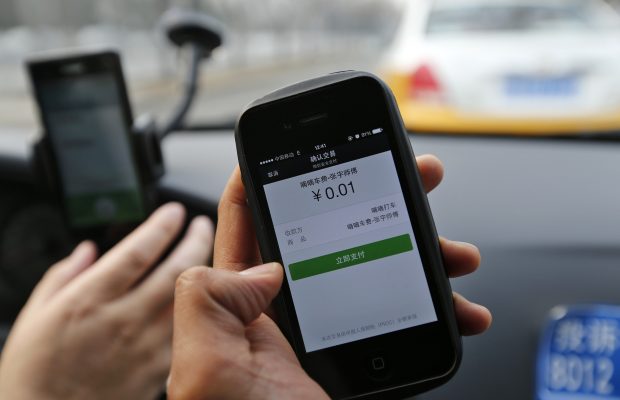
    Chinese tourists are helping drive the growth of cashless payments using Tencent’s WeChat in the Philippines, according to its Filipino partner, Asia United Bank.

    Chinese tourist arrivals are projected to hit 1 million. Staying in the country for 8 days on average, WeChat Pay in the Philippines can generate up to P48 billion in revenue, said AUB vice president and credit card business head Mags Vazquez Surtida.

    “The transaction counts are increasing. The transaction values are increasing. We can see more merchants. We see the growth happening on a daily basis,” Surtida said.

    WeChat Pay is accepted in 1,000 retail outlets in the Philippines, including hotels and restaurants, Surtida said. The number of daily transactions recently reached up to 2,500 in the run-up to the Chinese New Year, twice the average per day, she said.

    The value of single transactions were as high as P90,000, recorded in Boracay. Diners spend P6,000 to P12,000 while shoppers pay P4,000 to P7,000 using WeChat Pay, she said, Surtida said.

    Surtida said AUB hoped to grow the number of WeChat Pay merchants in the Philippines to 5,000 by March.

  • Aidijuma Colors Group, Hijup, acquire majority stake in United Kingdom’s e-commerce retailer, Haute Elan

    Aidijuma Colors Group, Hijup, acquire majority stake in United Kingdom’s e-commerce retailer, Haute Elan

    Aidijuma Colors Group of Companies — which owns the popular Malaysian ‘Bawal’ hijab range under the Aidijuma label — together with its modest wear e-commerce site Hijup have acquired a majority stake in UK-based modest fashion and e-commerce company Haute Elan ahead of Hijup’s expansion into the UK market.

    Established in 2012, modest fashion brand Aidijuma adopts the creative business model of online merging offline to offer the best possible experience to customers.

    With its omnichannel strategy, Aidjuma is the only brand in Malaysia that offers online shopping and owns 12 retail concept stores nationwide, complemented by 12 Scarf Machine.send.sell.story mobile concept stores to provide a seamless experience for consumers.

    With plans for listing by 2020, the latest venture capital investment for Aidijuma Colors Group is in Haute Elan, which is also the organiser of the London Modest Fashion Week – the UK’s very first modest fashion week — that was held for the first time last year that brought together more than forty designers from countries including the United Arab Emirates, Saudi Arabia, Egypt, Turkey and -Malaysia.

    Modest fashion has become increasingly popular among millennial Muslim women worldwide who see it as a way to dress stylishly.

    “Modest fashion is a growing trend that offers women options, choices and freedom to express themselves while being fashionable which mass-market retailers and designers are already taking notice of the market’s potential so we are investing in the future by taking a stake in it now. We look forward to build strategic business partnerships around the world to expand this business model for Modest Fashion globally,” said Aidijuma Colors Group Chief Executive Officer and founder, Datin Norjuma Habib Mohamed.

    The latest investment in Haute Elan brings Aidijuma Colors Group’s total venture capital investment amount to date to US$20 million, which includes stakes in Brunei’s event organising company and retailer BIFASH, Singapore e-retailer MODESTyle, Malaysian cosmetic and skincare brands Simplysiti and Zawara, as well as Indonesia’s Hijup.com in which it also controls.

  • Braccialini declared bankrupt

    Braccialini declared bankrupt

    A court in Florence has declared the Italian fashion brand Braccialini bankrupt after rejecting a request for an arrangement with creditors.

    The request was filed by the fashion house in June 2016 but the tribunal on Wednesday ruled that in Braccialini’s case there was the “technical impossibility” of managing a company that is “at this point insolvent”.

    The tribunal said that “several uncertainties weighed on the arrangement”, not enabling to “ensure the payment of the minimum 20%” to creditors. Luxury handbag-makers Braccialini and Tua in 2017 were bought by Arezzo-based jewelry and luxury brand Graziella Group, which is continuing production.

    Braccialini Spa had retained property of real estate, a depot and other brands after the acquisition, all assets that will now be managed by a trustee.

    The decision was reportedly affected by the issuing in 2016 of invoices to four suppliers, all Chinese creditors, according to court documents.

    The agreement included the “duplication of invoices” and delayed payment of money Braccialini owed to the four Chinese suppliers, among other things – “operations worth hundreds of thousands of euros” allegedly made right before and after the request for an arrangement with creditors, according to the ruling.

    Braccialini’s attorneys have denied that the company forged invoices, insisting it pursued the “interest of all creditors” and its over 80 employees.
    Meanwhile prosecutors in Florence are investigating 25 people, including members of the company’s board and trustees between 2011 and 2014, when the company’s crisis worsened.

    The label, known for its colorful and trendy handbags and accessories, celebrated its 60th anniversary in 2013 with a new museum inside its headquarters in Scandicci, near Florence.

    The family-run business was first launched by Carla Braccialini in 1953 with a collection that included dresses and hats, as well as bags.
    It quickly became popular thanks to its combination of different materials and bold take on patterns and color.

    Luxury purse maker was bought by Graziella Group in 2017

  • Further steps needed to thwart EU’s move to ban palm oil in biofuels

    Further steps needed to thwart EU’s move to ban palm oil in biofuels

    More engagements, consultations and follow-up actions are needed to remove the European Union’s (EU) threat to ban palm oil use in biofuels, said industry veteran Tan Sri Dr Yusof Basiron.

    The former Malaysian Palm Oil Council CEO said Malaysia’s stance was still not being heeded by the EU Parliament, despite various talks and engagements being undertaken and conducted at the government-to-government level.

    “There have been clear statements by the governments of major palm oil-producing countries to oppose the ban and even those hinting at possible trade actions or retaliation, including consulting the World Trade Organisation, to deter the EU from implementing the discriminatory ban on palm oil for biofuels,” he said.

    Yusof said the MPOC and the Malaysian Palm Oil Board representative offices in the EU recognised the need to counter the ban when the threat first emerged.

    As a result, many initiatives had been taken, including continuous talks with the EU countries, to oppose the proposed ban by the trading bloc.

    The EU Parliament voted on Jan 17, 2018, to ban palm oil-based biofuels by 2021, while other vegetable oil-based biofuels such as those from soya oil and rapeseed oil can continue to be used until 2030.

    Spain was the latest EU country to speak out against the resolution after France, Sweden, the United Kingdom (Conservative MPs who are part of the governing party of Prime Minister Theresa May), Germany and the Netherlands.

    Yusof said palm oil-producing countries had reacted to this singling out of palm biofuels for the ban as a trade discrimination that would affect the imports into the EU, because locally-produced soya and rapeseed oils were not similarly subjected to the ban.

    “There are also Members of the European Parliament (MEPs) who are sympathetic to maintaining good trade relations with palm oil-producing countries.

    “This is reflected in an amendment submitted by 57 MEPs to drop the ban on palm biofuels. Nevertheless, 492 MEPs voted in favour of the ban, although the number was far less than the 640 who had voted for it in April 2017,” he said.

    However, he said, it was common for the EU Parliament to vote based on popularity trends, knowing that the next round of scrutiny for approving the Renewable Energy Directive (RED) Bill would be done at the tripartite meeting or trilogue, where the council would discuss and recommend the final version of the RED Bill.

    The trilogue to be held soon will consist of government representatives of EU member countries, the Commission and Parliament.

    “It is already envisaged that the Council and Commission, being technically competent with the legal, economic and scientific ramifications of the proposed discriminatory ban on palm oil, are not supportive of the ban.

    “We are hopeful that any future ban on the use of biofuels to be approved in the RED Bill will not be discriminatory towards palm oil,” Yusof said.

  • Vietnam seeing a boom in renewable energy projects

    Vietnam seeing a boom in renewable energy projects

    Vietnam has seen a boom in renewable energy projects, in a bid to meet the nation’s future demands for power, after the Government scrapped plans to build a nuclear power plant in Ninh Thuận Province.

    Experts have noted that this is a golden opportunity for the country, which is confronted by environmental issues, to develop renewable energy, given the huge potential of wind and solar power.

    In 2015, the Prime Minister approved a renewable energy development strategy by 2030 with a vision to 2050, which targeted an increase in the ratio of power generated from renewable energy to 32 per cent by 2030 and 43 per cent by 2050.

    The national project for power development in 2011-20 also identified developing renewable energy as a breakthrough to ensure the security of the nation’s energy supplies, and reduce the negative impact of generating power on the environment.

    This could be regarded as a launching pad to promote investment in developing renewable energy in Việt Nam, according to Võ Tân Thành, deputy chairman of the Việt Nam Chamber of Commerce and Industry.

    There were some 50 wind power, and more than 100 solar power projects, along with a number of biomass projects being developed in the country.

    Hundreds of solar projects have been registered, as of July 2017, allowing them to seek investors, with a total capacity of up to 17,000 MW, according to an estimate by the Energy Programme’s officer under the US Agency for International Development.

    Also, many investors recently announced very large investments in renewable energy projects in Việt Nam.

    Thiên Tân Group announced it would invest US$2 billion in building five solar power projects in Ninh Thuận Province by 2020. The group also seeks to develop some 20 large-scale solar power plants in the northern provinces by 2020.

    In late January, BIM Group began construction of the BIM 1 solar power project in Ninh Thuận Province, with a planned annual electricity output of 50 million kWh, in cooperation with AC Energy, a subsidiary of Philippines’ Ayala Group.

    The group planned to develop the largest clean energy farm in Việt Nam in Ninh Thuận Province, with a total capacity of 300 MW, by the first quarter of 2019, with a target of producing 1,000 MW of clean energy by 2025.

    Besides Ninh Thuận, investors were also keen on developing solar power projects in other provinces, with a potential for generating solar power in Phú Yên, Bình Phước and Khánh Hòa.

    Recently, Asia infornet INC, a member of Japan’s AIN Group, began working with Bình Phước Province on the feasibility of developing a solar power project in Becamex Industrial – Urban Zone.

    The Phú Yên People’s Committee said that it allowed 17 investors to carry out field surveys and study the possible development of solar power projects, with a total capacity of 1,310 MW, in the province.

    Besides solar power, wind energy projects are also being developed, such as a 98 MW wind power plant by Super Wind Energy Công Lý Sóc Trăng in Sóc Trăng Province, the 373 million kWh Bạc Liêu wind power plant phase three, and phase two of the Đầm Nại wind power project in Ninh Thuận Province.

    Read more at https://vietnamnews.vn/economy/422909/vn-seeing-a-boom-in-renewable-energy-projects.html#72dOEXroH8LmVOYq.99

  • Valentine’s Day : who are the big spenders in Asia-Pacific?

    Valentine’s Day : who are the big spenders in Asia-Pacific?

    People who live in Mainland China are, on average, Asia’s biggest Valentine’s Day spenders, according to the results of a MasterCard poll which tracked spending around the romantic occasion in the Asia Pacific region.

    They are prepared to spend US$274 on Valentine’s Day (February 14) presents, with Taiwan and Hong Kong following closely on US$245 and US$231 respectively.

    The survey, conducted by the American multinational financial services firm, involved more than 9,100 respondents from 18 Asia Pacific markets and began last October. Singapore, with US$180, ranked fourth and Thailand completed the top five on US$145.

    The amount Chinese couples plan to fork out has dropped slightly from last year’s US$310, due to the strengthening of the Chinese yuan against the US dollar and the fact that Chinese Lunar New Year (February 16) falls just two days later in 2018—in 2017, Chinese New Year fell at the end of January 2018.

    The run-up to Valentine’s Day has also witnessed a decrease in the sales of fresh flowers in China.

    This is because of the unusually cold weather experienced by the country this winter and the aforementioned date clash, China Daily noted.

    China has its own equivalent to Valentine’s Day known as the Double Seventh Festival, as well as the Qixi Festival.

  • Indonesia signs US$1b deal to buy 11 Russian jets

    Indonesia signs US$1b deal to buy 11 Russian jets

    Indonesia has inked a billion-dollar deal to buy 11 Sukhoi Su-35 jets from Russia, an official said Saturday.

    The contract, signed by both countries’ representatives in Jakarta on Wednesday, is worth a total US$1.14 billion (RM4.43 billion), Indonesia defence ministry spokesman Totok Sugiharto said.

    The deal comes after Indonesia said in August that it would seek to trade palm oil, coffee and tea for Russian fighter jets, saying it wanted to capitalise on international sanctions on Moscow.

    The EU and US have targeted Russia with sanctions for alleged meddling in the US presidential election and its annexation of Crimea.

    However, Indonesia’s trade minister said the sanctions could be good news for his country as Russia is forced to seek new markets to import from.

    Indonesia and Russia signed a memorandum of understanding to exchange 11 Russian-made Sukhoi fighters for key commodities in Moscow early August.

    It was not announced Saturday in what form payment would be made.

  • Lotte Group Chairman jailed for duty free licence bribery

    Lotte Group Chairman jailed for duty free licence bribery

    Lotte Group, parent of the country’s leading travel retailer Lotte Duty Free, is reeling from the shock jailing of its Chairman Shin Dong-bin on 13 February 2018.

    Following a Seoul Court’s guilty verdict and simultaneous sentencing of 2 1/2 years in jail to Lotte Chairman Shin Dong-bin for bribery, Lotte Group voiced concerns over its future business plans.

    In an official statement, Lotte Group said the outcome was “unexpected” and it was “regretful” about the jail term, and insisted that Shin was innocent.

    “As soon as we receive the written judgement, the group will discuss with its attorneys for further process,” the group said.

    “But what worries us is not being able to achieve our promise with customers, such as listing our hotel business, completing the establishment of the holding company, as well as investment and employment expansion plans,” the group added.

    The group said it would activate its emergency management system to reassure employees, customers and shareholders.

    With Shin’s sentence, the business license for Lotte Duty Free branch in World Tower in southern Seoul may be at risk, according to industry watchers.

    The National Tax Service said it has launched a review of the licensing process upon the sentencing.

    In what is now referred to as the “duty free war” in 2015, Lotte had lost its duty free business right in the license screening process in November of that year. Then in 2016, the government announced a plan to dole out an additional duty free license in Seoul, for which Lotte won in December of the same year. The court found the duty free business as one of the management issues for Shin.

    The company will continue to support the ongoing 2018 PyeongChang Winter Olympic Games as an official partner with help of the vice president of Korea Ski Association, it added.

    Shin became the president of the Korean Ski Association in 2014 and has been supporting the Korean ski team since then. He is also a member of the 2018 PyeongChang Organizing Committee’s governing board and has been a member of the International Ski Federation since 2016.

  • Blockchain revolution comes to world of humanitarian aid

    Blockchain revolution comes to world of humanitarian aid

    Blockchain, the technology behind the cryptocurrency Bitcoin, is taking root in a sector far from finance: the world of humanitarian aid.

    By offering refugees a virtual identity, reassuring donors that their money is being well spent, or rushing funds where they are needed most, aid charities are experimenting with the technology in the hope that it can improve their work.

    “We are at the very beginning. There is a lot of hype,” said Christopher Fabian, leader of Unicef’s Ventures Fund, which invests in open source technology solutions.

    At the end of 2017, Unicef – the UN agency dedicated to protecting children – brought together Russian-speaking blockchain experts in a meeting in Kazakhstan.

    The goal? To develop a “smart contract” that would facilitate transactions between the organisation and its numerous partners for deliveries and payments, if certain conditions were met.

    “It totally failed, but we learned a lot from that and will do the same challenge this year in Mexico,” Fabian admitted, adding that he could envision a host of future projects using blockchain for the “social good” – even if most of them will fail.

    But the UN gency is thirsty for innovation.

    Its French office has also launched an operation dubbed “Game Chaingers” (for blockchain), which challenges tech geeks and gaming enthusiasts to install on their computers software aimed at creating Ethereum, a virtual currency, to help Syrian children.

    Blockchain allows users to create and spread information across a large network of computers, which its proponents say lends it both transparency and security. And the applications for the technology are multiplying quickly.

    For aid and development groups, blockchain can come in all shapes and sizes.

    Aid donors could, for example, trace their contributions as they spread across an organisation. The platform Disberse, supported by a network of 42 humanitarian groups, already road-tested this application by tracking money sent by a British association to four schools in Swaziland.

    In theory, the technique can reduce transaction costs, fight corruption by making everything transparent, and allow a better record of where food aid is directed, or make sure that medicines are not counterfeited.

    Those in charge of programmes that directly send money to people in need also see it as a way of more easily controlling the disbursement of funds or avoiding use of financial intermediaries such as banks, which might also take a cut.

    “In the old days, we were delivering aid at the back of the truck,” said Alex Sloan, a consultant at the World Food Programme’s Innovation Accelerator, which works with startups and others to help fight hunger.

    “Now, we are moving towards distributing cash to our beneficiaries, in the form of actual cash, through vouchers, e-cards, etc.”

  • Fees, retail services to be banks’ main income

    Fees, retail services to be banks’ main income

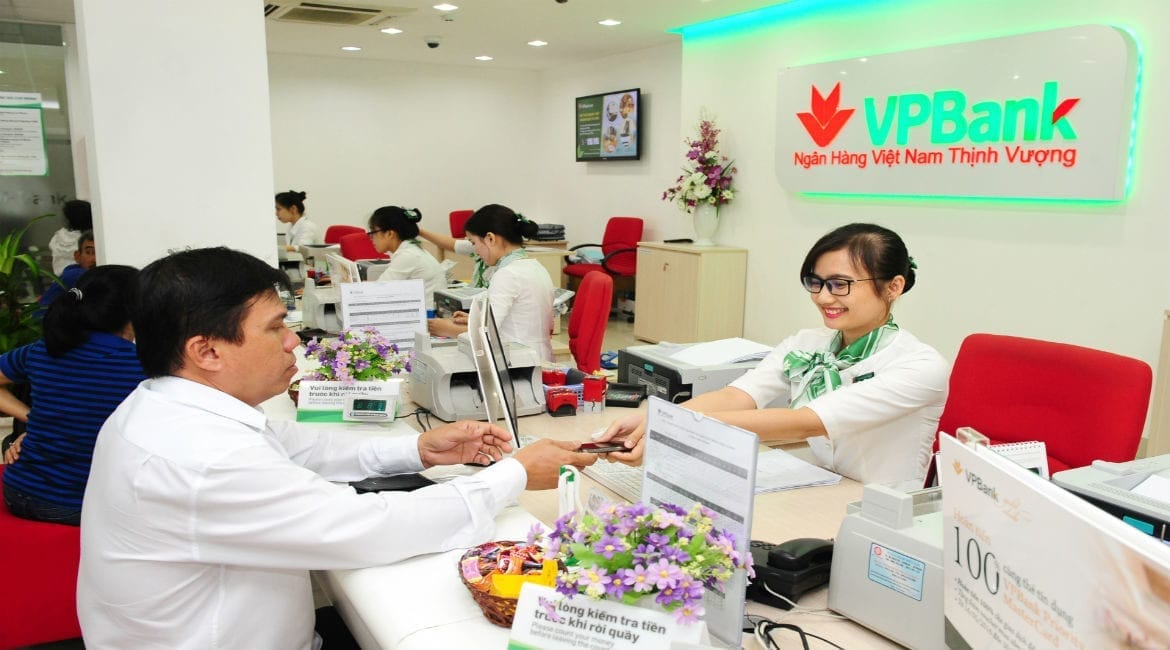
    Commercial banks are expecting the revenue from fees and retail banking services to become their main income sources this year, as a result of rising market demands.

    According to Nguyễn Đức Vinh, general director of VP Bank, after years of investing in the financial company FE Credit, his bank was expecting to receive a large profit from the company in 2018.

    FE Credit started to gain profits from the retail banking segment in 2016, and the profit improved continuously last year. VP Bank’s financial reports showed that the bank’s profits last year hit a record high of more than VNĐ6.43 trillion (US$283.25 million), of which FE Credit made up some 51 per cent.

    Vietcombank also expects to better exploit the potential retail banking segment this year, as it recruited Thomas William Tobin, a Canadian foreign senior expert in retail banking, last year, to be its retail banking director. It was the first time the State-owned bank appointed a foreigner in its management board, showing its priority for the retail banking segment.

    Vietcombank’s chairman Nghiêm Xuân Thành hoped that the expert, who has expertise in global and Vietnamese finance, will help the bank make a leap in the retail banking segment.

    Vietcombank is targeting to become the country’s leading bank in retail segment in 2020, Thành said.

    According to Nguyễn Đình Tùng, general director of the Orient Commercial Joint Stock Bank, his bank is expected to earn a pre-tax profit of more than VNĐ1 trillion in 2018, thanks to specific strategies in the sales of financial products, especially in non-credit services.

    Some other banks have also planned to better exploit the potential business segment in 2018 through mergers and acquisitions last year. Typically, Shinhan Bank Vietnam acquired ANZ’s retail banking services or the Vietnam International Bank (VIB) acquired the HCM City’s branch of Commonwealth Bank of Australia.

    According to experts, banks are investing significantly in retail banking services, instead of only focusing on corporate lending in the hope of gaining higher profits from the potential segment this year.

    With more than 93 million people and sharply increasing consumption, Việt Nam is considered a hot destination for the retail banking segment, which is why banks have strategically planned to boost the segment.

    In fact, the in-cash habit of Vietnamese people is no longer an obstacle to the development of card network and non-credit services. Thus, several banks are aiming to give their customers a variety of non-traditional credit services, such as savings and transactional accounts, mortgages, personal loans, debit and credit cards.

    Notably from the beginning of this year, many banks have considerably improved the quality of their retail banking services to enhance competitiveness in the market. They are also focussing on other aspects such as marketing, technology and human resources to attract more individual customers to non-credit services.

    The move was decided after the retail banking segment contributed to a large amount of the total profits of many banks last year. BIDV and MB Bank, for example, gained high profits last year, thanks to a 34 per cent to 35 per cent rise in retail banking services.

    Nguyễn Thanh Nhung, general director of VietBank, said retail banking services would be a key to making a sustained and stable profit for the banking sector this year. The development of non-credit services contributes to diversifying bank’s services, thereby bringing more customers. This type of service will also disperse risks and create higher profits for commercial banks, said Nhung.

    According to Trần Du Lịch, a member of the National Financial and Monetary Policy Advisory Council, banks currently not only gain profits from lending but also from retail banking services, so the move to invest in retail services is inevitable in the future.

    Based on the results gained, leaders of commercial banks said they would continually apply this business strategy, with a focus on retail banking services next time.


  • Chinese tourists take over the world

    Chinese tourists take over the world

    A rising tide of travelers from China is spreading out across the region, out-shopping, outspending and out-eating every other nation.

    They are filling hotels, tour buses and cruise ships. They are overwhelming airports and train stations, and they are sending home petabytes of pictures that encourage their compatriots to join the global invasion.

    Their ranks are being swollen by millions of others from around Asia, a generation who would rather raise their status with a foreign adventure than with a luxury bag.

    “People’s personal brands are being defined by the places they visit,” said Simon Russell, chief executive officer of London-based luxury travel group Scott Dunn, which last month bought rival Country Holidays Travel from Singapore to expand its Asian clientele.

    China already accounts for more than a fifth of the money spent by outbound tourists, twice as much as the next-biggest spender, the U.S., according to the United Nations World Tourism Organization. And the Chinese have barely started — only around 5 percent of them even have passports, and the government is issuing about 10 million new travel documents every year.

    As with Japan in the 1980s, citizens of nations that get rich, go places. The emerging nations of Asia-Pacific will add more than 50 million new outbound travelers in the five years ending in 2021, according to Mastercard Inc.

    Overwhelmingly, they come from a smartphone-addicted generation that is rewriting the rules. The ubiquitous flag-following Chinese tour groups are giving way to what the industry calls FITs — free, independent travelers — who are using the internet to plan itineraries, book flights, translate signs and chronicle their exploits.

    The shift is transforming the region, unleashing more than $100 billion in infrastructure spending for bigger airports and jet fleets, new railways, hotels and theme parks. The effects of this boom include soaring property prices, stress on the environment and an avalanche of apps and innovations that reimagine the way we experience the world.

    By 2021, Chinese tourists will spend $429 billion abroad, according to a report by CLSA. And they are spreading out. Weekend jaunts to the shops in Hong Kong or the casinos in Macau are being usurped by new favorite destinations. During the next three years, Japan, Thailand, the U.S. and Australia top the must-visit list, according to the report, with other destinations in Southeast Asia — especially Singapore, Indonesia, Malaysia and the Philippines — following close behind.

    For developing nations, that is putting a strain on infrastructure, underpinning the biggest airport-building program in the region’s history.

    Thailand does not have a single international airport that isn’t way over its designed capacity, and long lines at immigration are common. At least 178 new airports are planned in Asia-Pacific, according to Visa Inc., and hundreds of existing facilities are being expanded or upgraded.

    The result is a second revolution in tourism in the region — one that is being fueled by social media: the opening up of more islands, cities and remote locales to divert vacationers from the overcrowded and increasingly jaded tourist hotspots of the 1990s and 2000s.

    Indonesia has a plan to create “10 Balis,” targeting places like the former World War II battleground of Morotai Island for new holiday destinations. Thailand, which heavily promotes tourism under the banner “Amazing Thailand,” has teamed up with Japan to build a high-speed railway that would open up places along the route to the north of the country. Neighbor Malaysia is countering with its own cross-country rail project to the coasts of Kelantan and Terengganu, states promoted this year in the capital’s international airport under a “Joyful Malaysia” campaign.

    At the heart of the changes transforming the industry is the nexus of internet, smartphone and big data.

    The link is the smartphone, the tourist’s connection with the web, a fact that has drawn dozens of startups to join the fray in Asia.

    With visitors wielding tablets and smartphones, hotels and airlines are realizing they do not need to fill planes and rooms with technology and content – they just need to give the customer control. The phone becomes the room key, the menu, the bill.

    “There is absolutely no point in providing what people already have,” said Hubert Viriot, chief executive officer of Yotel Ltd., which opened its first Asian hotel in Singapore in November. “Everybody has a smartphone.” The London-based chain runs city-center properties with hundreds of small, high-tech, budget rooms that include features such as mood lighting and app-based electronic keys.

    Viriot sums up the attitude of the new generation of traveler: “I don’t need 10 guys on the ground floor with the gold keys to tell me how to travel. I’ve got a smartphone. I’ve got apps, social media. I know how to travel.”

    The ubiquity of the technology means it is now embedded into every strata of the market, from Yotel’s high-density hubs to luxury island eco-lodges that you need a seaplane to reach.

    Asia has long been on the map for well-heeled travelers. Hotelier Adrian Zecha started the first Aman Resort in 1988 in Phuket, Thailand, for an elite club of jetsetters. Four Seasons Holdings Inc. officially opened its first ultra-small boutique resort in Chiang Rai in Thailand in 2006.

    Zecha, who left Aman Resorts Group Ltd. in 2015, is looking to exploit a new niche he calls “affordable” luxury through his Azerai brand, which opened its first property in Luang Prabang, Laos, last year.

    “I noticed a new generation of younger people that is growing in numbers for whom taking holidays signifies an aspect of their lifestyle,” Zecha said. “They might not be as wealthy as my Aman junkies, so my challenge is affordability.”

    From spa clinics like The Farm at San Benito in the Philippines to exclusive eco-resorts like Bawah Island in Indonesia, Asia offers hundreds of possibilities for super-luxury globetrotters. And developers are eyeing hundreds more. There are more than 13,000 uninhabited tropical islands in Indonesia and the Philippines alone, almost twice as many as all the islands in the Caribbean. Some, like Siroktabe, can be rented as a private desert island for a true Robinson Crusoe experience.

    But the biggest money is to be made in drawing hordes of tourists together to one location, whether it be a casino resort in Singapore, an ancient temple in Cambodia, a giant theme park in China or the latest super-cruise ships like Royal Caribbean Cruises Ltd.’s Ovation of the Seas, which can cater to more than 4,000 passengers as it sails the seas around China each summer.

    retailThat is when the real power of all the collected data comes into its own.  By knowing where a traveler is, how they like to eat, what they like to buy, which hotels they prefer and so on, travel platforms can begin to move beyond providing a passive service and start actively influencing your holiday.

    A passenger whose flight has been delayed and who has not bought a meal since they left home three hours ago might get a phone notification offering a 10 percent discount at the restaurant they are about to walk past after going through immigration. An airline could raise fares on a particular route after learning that pictures of that destination are suddenly trending on social media.

  • Sunway Developments in bid to redevelop residential estate in Singapore

    Sunway Developments in bid to redevelop residential estate in Singapore

    Sunway Bhd’s unit Sunway Developments Pte Ltd (SDPL) and Singapore-based Hoi Hup Realty Pte Ltd have entered into a sale and purchase agreement with the collective majority owners of a 160-unit private residential estate in Clementi, Singapore for S$530.0 million (RM1.6 billion).

    According to a filing with Bursa Malaysia, SDPL, Hoi Hup and S C Wong Pte Ltd plan to set up a joint venture company to re-develop Brookvale Park, which sits on a 999-year leasehold land measuring 34,654 square meter, into a new private residential development with an allowed plot ratio of 1.6 times. The plan is subject to authorities’ approval.

    Hoi Hup, SDPL and S C Wong Pte Ltd will have 60% : 30% : 10% interests respectively in the joint venture.

    SDPL is expected to pump in about S$70.0 million or RM210.0 million into the venture.

    The proposed project is expected to contribute positively to the earnings of Sunway Group from the financial year ending Dec 31, 2019 onwards.

    The group’s share price closed down one sen at RM1.65 with some 921,500 shares changing hands last week.

  • Who are the wealthiest individuals in China?

    Who are the wealthiest individuals in China?

    Chinese business news website Jiemian has released its annual China Rich List, detailing the country’s wealthiest individuals.

    All 1,000 billionaires on the list have a minimum net worth of approximately RMB30 billion (US$4.7 billion), while Pony Ma, the Tencent founder who sits at the top of the list, is worth an estimated RMB282 billion.

    While some of the names on the list will be familiar to many, one pattern that might not instantly jump out is the number of people at the top who started with nothing. Of the top six names on Jiemian’s list, five of them are self-made entrepreneurs who pulled themselves up by their bootstraps. Here’s how they made their billions.

    Ma Huateng, Technology and media, Net worth RMB282.0 billion

    Ma Huateng, also known as Pony Ma, co-founded Chinese internet giant Tencent in 1998 with four Shenzhen classmates. Legend has it Ma was pulling in a monthly salary of US$176 at the time. Tencent’s breakout product was messaging service QQ, which was based on ICQ, the world’s first online messenger. Over a decade later, Tencent launched WeChat—now the most popular messenger service in the world and closing in on a billion users worldwide.

    Xu Jiayin, Real estate, Net worth RMB260.9 billion

    Xu Jiayin is the founder and chairman of Evergrande Real Estate Group, one of the largest property developers in the country with a footprint in over 170 cities nationwide. Born in small village in Henan province, Xu went on to found Evergrande in 1996, listing the company in Hong Kong in 2009. Despite being one of China’s most indebted companies, Evergrande’s shares surged almost 400 per cent in 2017, resulting in an estimated rise of 360.6 per cent, or US$26.7 billion, to Xu’s personal fortune.

    Jack Ma, E-commerce, Net worth RMB213.8 billion

    Alibaba founder Jack Ma was an English teacher in his native city of Hangzhou before he made it big with the company’s first successful e-commerce platform, Taobao. Ma famously told the press that he was rejected from 30 jobs after graduating university, including at his local KFC. Today, Alibaba is one of the world’s biggest companies, dominating China’s e-commerce market. Its affiliate Ant Financial, which operates e-wallet service Alipay, is also the most valuable fintech company in the world, worth over US$60 billion.

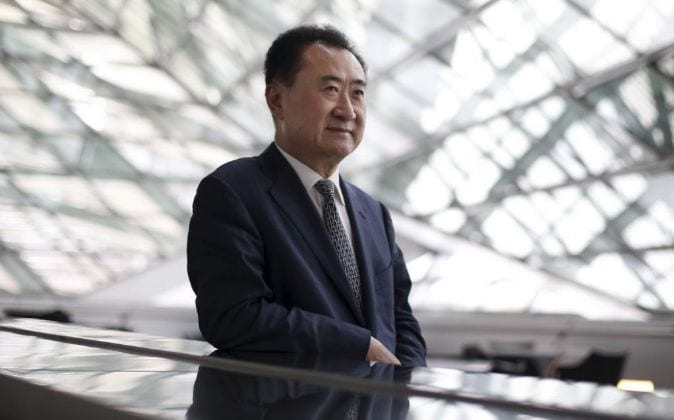
    Wang Jianlin, Real estate and entertainment, Net worth RMB164.7 billion

    Wang Jianlin is the founder and chairman of Dalian Wanda Group, one of China’s biggest real estate groups and the world’s largest cinema operator. After 16 years in the People’s Liberation Army, Wang entered the world of business in the late ’80s, eventually founding Dalian Wanda in 1992. Wang may have backed down from his famous posturing in 2016, where he said he wanted to “crush” Disney with his chain of theme parks, but Wanda remains a heavyweight in the world of entertainment—the group’s 2016 acquisition of Legendary Entertainment for US$3.5 billion, on top of its ownership of AMC, made Wanda Film Holdings one of the biggest film companies in the world.

    Yang Huiyan, Real estate, Net worth RMB149.4 billion

    Yang Huiyan stands out as the only person in the top six to have inherited their wealth. In 2007, at the age of 25, Yang became China’s richest person after her father transferred 70 percent of his ownership of real estate group Country Garden Holdings to her before taking the company public. Today, Yang holds the title of China’s richest woman, and hit headlines by making US$2 billion in under four days last month, thanks to a huge surge in the company’s share price.

    Wang Wei, Logistics, Net worth RMB144.4 billion

    Wang Wei is the chairman and founder of Chinese delivery company SF Express. Wang was born in Shanghai but grew up in Hong Kong, eventually starting SF Express from a small shopfront in Mong Kok after realising how difficult it was to move goods across the border. When SF was launched in ’93, Wang would personally load boxes into vans with his six employees. Today, SF employees over 80,000 couriers and owns over 80 airplanes.