Tag: asia

  • Piquadro launches Mystartup Funding Program

    Piquadro launches Mystartup Funding Program

    Piquadro is ready to promote innovation and young entrepreneurship, supporting the best business idea in the technology area applied to the luggage field and fashion accessories.

    The prizes are up to € 100K and a period of acceleration program in Silicon Valley to train and help the business development.

    Piquadro has been incorporating innovative technologies in its products: for example, for the Bagmotic capsule collection.

    The collection includes a computer backpack able to communicate with smartphones thanks to a powerbank wireless, that allows to recharge devices and to connect them with the Connequ app, created by Piquadro.

    This app manages a lot of functions, and it can be used for different purposes. It alerts in the case of theft, or loss of the luggage. It can weigh the baggage, for instance, among many other features.

    Furthermore, a lot of products present a socket integrated to the bags that allow recharging all the devices.

    Last but not least, recently a smart-lock easy to manage from smartphones has been developed.

    The aim of the Funding Program is to find innovative and exciting ideas grown outside Piquadro, to create stimulating activities in different fields.

    The contest will end with an event, in which Startups will pitch their ideas to a judging board including some internal advisors and some investors.

    Prizes for € 100.000 have been allocated for the winners, to allow a capital increase in return of percentage of shares from the company’s capital.

    Through Piquadro investment company, named PIQUBO, Piquadro has gained experience in the startup field, and it will be used to evaluate all the applications received considering the fit they may have to Piquadro company’s values.

    Piquadro is open and willing to invest in other categories but fashion and travel accessories is priority.

    Further than the investment part, Piquadro will support the winning team widely, to help with some assets and company know-how. That could go from hosting the startup in the headquarters in Italy to supporting it within the company’s network.

  • Saigon Co.op to launch retail startup TV reality show

    Saigon Co.op to launch retail startup TV reality show

    Vietnam grocery retailer Saigon Co.op has launched a TV reality show on retail startups.

    The show called “One Billion Start up With Saigon Co.op’’ aims to find and train the next generation of successful entrepreneurs. It will kick off on October 15 and run until December 31 this year.

    Broadcasted weekly on HTV9, the show expects to attract around 5000 candidates with three finalists standing a chance to receive the Grand Prize of VND1 billion (US$44,000), and become the owner of a Co.op Smile modern grocery store.

    A typical Co.op Smile store has flexible operational space suitable with urban and suburban residence and stocks 750 – 1300 products across various categories.

    Saigon Co.op aims to work with the Ho Chi Minh City government to drive entrepreneurship and make the city the birthplace for start-ups.

    Qualified challengers will compete against one another in a “common house” on specific knowledge, creativity and situation management, which are crucial factors for a successful start-up.

    “With the growing start-up trend, we are looking to encourage the younger generation to participate in the challenge to gain more knowledge towards having a successful business,” said a Saigon Co.op representative.

    During the competition, Saigon Co.op will provide competitors with useful advice, including retail business models, mobile sales tips, store design and advertising and marketing concepts to drive customers into stores.

  • L’Oréal unveils new-look YSL boutique in Haitang Bay

    L’Oréal unveils new-look YSL boutique in Haitang Bay

    An astounding 35 million people engaged via social media with the opening of a revamped Yves Saint Laurent boutique at China Duty Free Group’s Haitang Bay International Shopping Complex, according to L’Oréal Travel Retail Asia Pacific.

    When it first opened in 2014, the Haitang Bay  Shopping Complex, was described as an extraordinary vision by the attendees of the Grand Opening.

    Today, it is one of the top points of sales for Yves Saint Laurent in Asia Pacific travel retail.

    The building is magnificent, the range of brands and stores dazzling, the execution consistently excellent and the level of consumer excitement unprecedented in travel retail history.

    The French beauty group held a three-day pop-up party, themed #MYLIPVIBES, in August to celebrate the new-look 55sq m boutique.

    An estimated 5,000 travellers attended the event in person.

    The event highlighted Vernis à Lèvres products via a podium which included celebrity make-up shows and performances by internationally-renowned DJs.

    Vernis à Lèvres is said to offer an “innovative lip product” by combining the texture and shine of a lip gloss with the long-wear of a stain. The applicator’s slanted tip and short soft bristles allow for easy, precise application, stated L’Oréal.

    Travellers were encouraged to shoot personalised Vernis à Lèvres music videos using L’Oréal Travel Retail Asia’s first digitalised video booth.

    The event was designed to merge offline and online customer experience and make sure that #MYLIPVIBES would populate the cyberspace.

  • Jeanswest in largest Australian Cotton woven launch

    Jeanswest in largest Australian Cotton woven launch

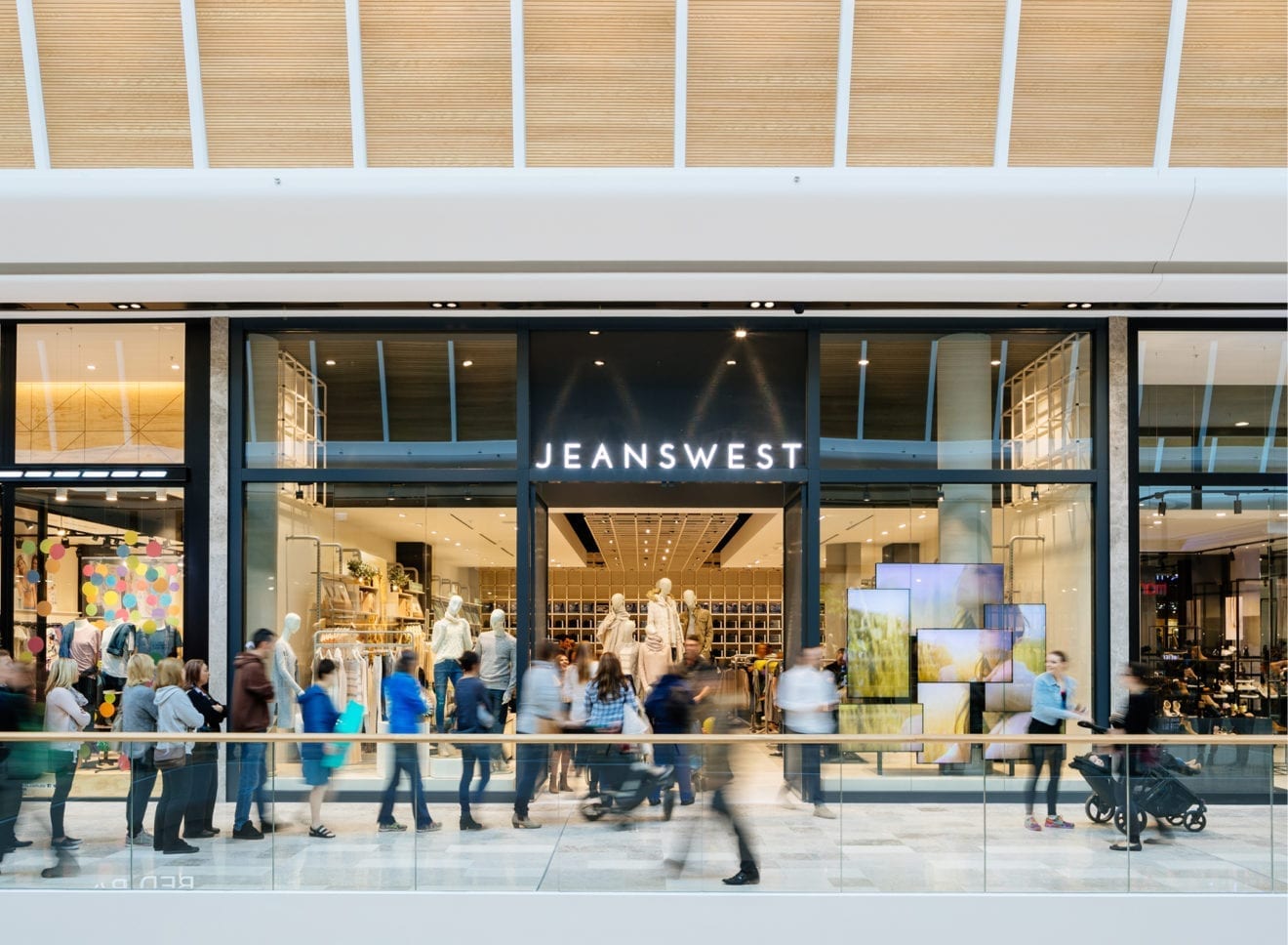
    Jeanswest is partnering with Cotton Australia to launch its largest woven womenswear collection, with the summer collection set to hit stores on September 19.

    The fashion retailer said the collection continues its commitment to traceability and ethical sourcing in manufacturing, with the partnership the next step in delivering world-class woven product for its female consumers in partnership with a local agricultural industry.

    Unveiling its plans at a media event held at the Sydney Opera House yesterday, Jeanswest said the collection taps into key trends for the coming season.

    “The soft stripes, embroidery, and tie detailing align with the trends we’re seeing come through for this summer, and of course we’ve included a pair of jeans; a beautifully crafted ripped and repaired slim boyfriend fit that customers will love,” said Lisa Hunter, Womenswear senior product manager for Jeanswest,,

    “This collection is an Australian fashion story, so in designing the product we’ve really worked to ensure there’s something new in this range for every woman, across all ages and body shapes.”

    In developing the range, Jeanswest joined Cotton Australia on a farm tour in Narrabri, northern NSW for further understanding of the industry and its processes.

    “We were thrilled to be standing in a cotton field, where it all begins, at the very start of a manufacturing supply chain, said Hunter.

    Adam Kay, CEO of Cotton Australia, said Aussie cotton is grown under the world’s best environmental social practices and produces a high quality ethical end product,

    “Buying Australian Cotton not only means a quality, sustainable product – it also means you’re standing beside farmers, and the 150 local communities they support across Queensland and New South Wales where cotton grows,” he said.

    The collection will launch in-store and online across Australia and New Zealand.

  • Watchdog grants Essilor and Luxottica merger

    Watchdog grants Essilor and Luxottica merger

    The Commerce Commission has granted clearance for Essilor International (Compagnie Générale d’Optique) S.A. and Luxottica Group S.p.A to merge their business activities in New Zealand.

    The proposed global merger brings together a supplier of prescription lenses (Essilor) with a supplier of prescription frames and sunglasses (Luxottica). The parties have sought clearance from a number of regulators in different countries including New Zealand.

    Commerce Commission Chairman Dr Mark Berry said the watchdog is satisfied that the acquisition is unlikely to substantially lessen competition in New Zealand markets.

    “Competition is strong and we believe the merged entity will be sufficiently constrained by the presence of existing competitors with the ability to expand at all levels of the supply chain and in all relevant markets.”

    In reaching its decision, the government agency said it considered the impact on New Zealand markets for the import and supply of unfinished prescription lenses, the wholesale supply of finished prescription lenses and frames, and the retail supply of prescription lenses and frames, contact lenses and non-prescription sunglasses.

    In New Zealand, Essilor is principally active in the wholesale supply of finished prescription lenses to optical retailers. Essilor is also active in the retail market to a limited extent via its online store. Meanwhile Luxottica is a global manufacturer and wholesale supplier of prescription frames and sunglasses. In New Zealand, Luxottica’s activities are limited to the wholesale supply of prescription frames and sunglasses, and the retail of optical products and services (via its OPSM, Sunglass Hut, and Oakley stores).

  • Second Jalan Jalan Japan for Kuala Lumpur

    Second Jalan Jalan Japan for Kuala Lumpur

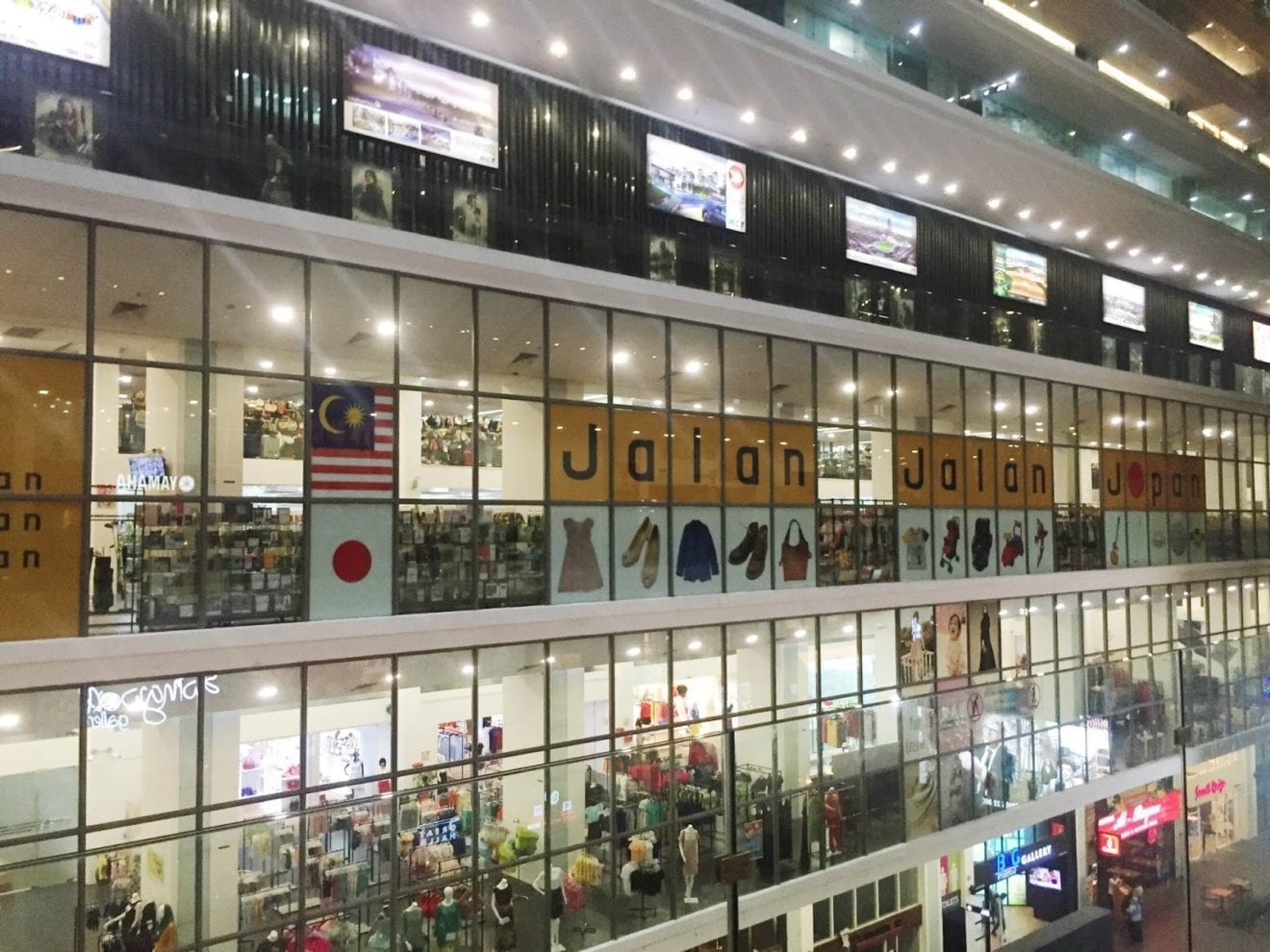
    Japanese used-book retailer Bookoff Corporation, through its subsidiary Bok Marketing, will open a second Jalan Jalan Japan outlet in Kuala Lumpur.

    Opening at 1 Shamelin Mall on September 30, it is the brand’s second Southeast Asia store.

    Also known as “JJJ”, the first Jalan Jalan Japan store opened at Skypark One City in Subang Jaya in November. It offers not only books, but also clothes, bags, shoes, household items, baby goods, toys, hobby items, sporting goods, instruments, furniture and accessories.

    Bookoff has more than 800 shops in Japan, buying more than 400 million items and selling more than 300 million pieces  annually. All JJJ goods are imported from Japan.

    Another two or three stores are planned for around Kuala Lumpur over the next few years.

  • Platinum Group sees gold in Chinese tourism

    Platinum Group sees gold in Chinese tourism

    Mall company The Platinum Group is banking on Chinese tourism to support a retail shopping centre it plans to open next year.

    With a wholesale fashion mall in Bangkok that attracts about 15 million people annually, the group is investing about THB6 billion (US$180 million) in the project, says president Chanchai Phansopha.

    “We want to transform the company from an operator of a wholesale fashion mall into a commercial property developer,” he says. The Bangkok project is part of a wider, THB11-billion investment plan that will also add hotel and office space over five years.

    Thailand last year had nearly 9 million Chinese visitors who spent an above-average $176 a head daily.

    Chanchai says he foresees double-digit growth in sales and profit, with the new mall, The Market, expected to boost revenue at least 30 per cent in 2019.

  • Megaworld aims to launch 13 malls in three years

    Megaworld aims to launch 13 malls in three years

    Property developer Megaworld Corp says it plans to open 13 malls in the next three years in line with its target to hit 28 by 2020.

    It already has 13 malls across the Philippines, with Southwoods Mall about to open in Laguna.

    Megaworld Lifestyle Malls head/senior VP Kevin Tan says the Southwoods Mall covers 58,000sqm in Megaworld’s only fully integrated township, Southwoods City. The 561ha township is at the boundaries of Binan, Laguna and Carmona, Cavite, and is the largest township in the country to feature a golf course.

    There is also a CBD, commercial and retail stores, malls, schools, church, a cyberpark, a medical centre, parks, leisure activities, a weekend market and a transport hub.

    Megaworld is a property unit of magnate Andrew Tan under his conglomerate Alliance Global Group.

  • British Essentials, the first Hong Kong online British supermarket

    British Essentials, the first Hong Kong online British supermarket

    British Essentials is Hong Kong’s first online British supermarket that has the largest British grocery range of any supermarket in the city.

    It is also the exclusive online retailer of the Morrisons brand, which is one of UK’s leading grocery chains with almost 500 stores.

    The online supermarket in a one-stop shop meets all daily needs as it sells a broad range of groceries at competitive prices.

    It offers shoppers a complete wealth of choice between branded British groceries and Morrisons own label range, including dairy-free, gluten-free, and organic products.

    British Essentials is also a very convenient grocery shopping solution for busy Hongkongers. They can place orders anytime in the comfort of their homes and have it delivered to them across Hong Kong at their own convenience.

    As a zero-waste company, the online supermarket delivers in reusable crates and cardboard boxes which can be returned.

  • Seoul’s largest shopping district shrouded in uncertainty

    Seoul’s largest shopping district shrouded in uncertainty

    Hit by the absence of Chinese tourists over South Korea’s deployment of a politically charged THAAD missile defense system, the future of Seoul’s largest shopping district Myeongdong is shrouded in uncertainty.

    Reports of the economic damage caused by the lack of Chinese tourists on Myeongdong, a busy shopping precinct in downtown Seoul, continue to dominate the headlines of the South Korean media.

    As the ongoing political tension takes its toll on retailers, an increasing number of shops that are falling behind on rent in the pricey neighborhood are pulling out, particularly South Korean cosmetics stores that used to rely heavily on Chinese and Japanese tourists, including It’s Skin, Holika Holika, and Orchid Skin.

    According to data released earlier this year by the Ministry of Land, Infrastructure and Transport, nine out of the 10 most expensive rental properties were in Myeongdong, with the flagship store of South Korean cosmetics chain Nature Republic sitting on the most expensive real estate in the country for the 14th consecutive year.

    What stands out amid these troubled times is the lack of sympathy for the struggling retailers and a smug sense of poetic justice felt by many South Koreans.

    Locals “unwelcome”

    Prior to talks of the highly political THAAD system, reports continued to come out in the South Korean media that a significant number of South Koreans felt they weren’t welcome in Myeongdong, as what was once the country’s busiest shopping district rapidly became a mere cash cow for cosmetics giants and fast-fashion retailers.

    It has been a very common sight for years in Myeongdong to see cosmetics chain stores focusing on luring Chinese and Japanese tourists with staff members prowling the sidewalks incessantly touting their wares in both Chinese and Japanese.

    With the tempting bonanza of foreign tourists, things began to get out of control.

    Some cosmetics stores in Myeongdong began hiring staff members who weren’t capable of communicating sufficiently with Korean customers, while others reportedly offered special deals to foreign tourists, a controversial marketing policy that bordered on casual racism, leaving a sour taste in the mouths of many South Korean shoppers.

    After years of feeling neglected by Myeongdong retailers, the sentiment that ‘it serves them right’, with ‘them’ being the shops that focused far too much on foreign tourists for years, is loud and clear in numerous comments found on major online portals like Naver.

    “Karma serves them right. I knew this was coming when (shops in Myeongdong) neglected South Koreans. Chinese tourists won’t keep coming for centuries and they can suddenly stop coming the next day because of political relations,” said one online post, among the many that reflect the feelings of a significant number of South Korean shoppers who somehow feel avenged, relishing the sense of revenge, even if at the cost of their own economy.

    Other comments shed light on more serious issues that need to be dealt with, such as dishonest taxi drivers and far too prevalent rip-offs targeting foreigners, while some raise the issue of the lack of attractions compared to almost universally popular holiday destinations like Thailand.

    “Would you want to come to Korea when they charge you 10,000 won for gimbap and taxi drivers rip you off?” one comment left on Naver read.

    “Plagued with complaints”

    Long before political discord saw the number of Chinese tourists visiting Korea plunge, Myeongdong was plagued with complaints of disorganisation, an absence of trash cans, and most importantly, a lack of character that makes the area come across as ‘bland’ and ‘far too busy’, leaving those other than Korean pop culture fans with no compelling reason to visit the district.

    In a survey conducted with Chinese tourists earlier this year by Pengtai, Cheil’s marketing affiliate, Myeongdong was even knocked out of the top 10 most popular spots in Seoul by the likes of emerging places like Hongdae and Yeouido Hangang Park, down 10 places from last year.

    With all the flaws and challenges facing Myeongdong, it’s worth acknowledging that the void left by Chinese tourists is beginning to be filled by South Koreans and a growing number of Southeast Asian tourists, with many of them ironically coming back because the area is no longer packed like sardines with foreign tourist groups, which put many locals off coming to the area.

    As tourism authorities and business operators contemplate a new direction for the shopping district during these trying times, Myeongdong must learn a lesson from the past, open its arms once again to local consumers, and remember that putting all of one’s eggs in the same basket is never a good idea.


  • My Cofi cafe goes canine

    My Cofi cafe goes canine

    Latte art has gone to the dogs in Taiwan, where the baristas at My Cofi cafe copy photos of customers’ canine companions on to their foam.

    They don’t just confine themselves to dogs, drawing such delights as parrots and cute cartoon characters, and even short phrases.

    In the southern city of Kaohsiung, the cafe is too busy to make coffee creations for every guest’s pet, confining the service to special occasions.

    They do have a regular specialty, however, in somewhat dubious taste: a cockroach portrait. One has to wonder whose pet that might be.

  • Proposal made to restructure Surfstitch

    Proposal made to restructure Surfstitch

    A party previously involved with Surfstitch has submitted a draft bid to restructure the company, which would see it re-list on the ASX, pending support from a creditor vote in coming months.

    Administrators FTI Consulting, appointed last week, notified creditors of the proposal at a meeting in Sydney on Tuesday morning, but FTI senior MD John Park declined to say what the response was, other than that the meeting was “quick” and “calm”.

    Park would not confirm whether major shareholder and co-founder Justin Cameron was behind the proposal, but said Cameron did not attend the creditor meeting.

    “I’ve received one draft deed of company proposal this morning,” Park said. “It’s a proposal to see…a relisting of the vehicle.”

    Creditors include management, advisors and the shareholders associated with the Quinn Emanuel Urquhart & Sullivan and Gadens shareholder class actions, as well as Crown Financial’s Kim Sundell, who also has pending legal action against the company.

    FTI expects to receive more restructure proposals for the company over the next 30-50 days before its due to deliver its report and recommendation to creditors about the future of the business.

    Liquidation is still a possibility, although not something that Park believes will deliver an optimal outcome for stakeholders.

    “My experience is that creditors look upon a deed of company arrangement a lot more favourably than a liquidation scenario,” he said.

    “[Litigators will] be looking for a palatable commercial outcome.”

    The administration was undertaken to put a stay on the legal proceedings. Park said a restructure would be the only outcome that would generate a return for shareholders.

    “[Litigaton funders] have indicated that they are receptive to looking at some form of restructuring proposal which takes into account their interests and they will assess it on its merits and make a decision,” Park told journalists on Tuesday afternoon.

    Park could not quantify what the company owed to creditors, citing the inability to determine the value of the pending legal action.

    Quinn Emanuel filed a $100 million class action on behalf of shareholders against SurfStitch in May and was in the process of negotiating a settlement with the company when it entered voluntary administration two weeks ago.

    Quinn Emanuel partner Damian Scattini has previously declined to say what size settlement would be acceptable to shareholders, at the time citing ongoing negotiations.

    Meanwhile, Gadens did not place a specific value on the claim it filed in June, other than to say it would be a “large” claim.

    “It’s a bit pointless to pluck figures out of the air. It all depends on how loss is to be calculated. What’s more, we don’t know the full spread of members of the class in order to make that calculation,” Gadens’ Melbourne-based partner, Glenn McGowan, QC, told IR last week.

    McGowan said he has not been contacted by administrators, except for a standard form letter to prove the claimed debt.

    “I imagine they have spoken to the [litigation] funders. But they [the administrators] will have to speak to the lawyers in each proceeding if any agreement is to be reached,” he told IR on Tuesday.

    However, he has previously said he is pessimistic about shareholders’ chances of recouping losses from Surfstitch. That is why Gadens in June also filed a class action against Cameron, who, like many CEOs, holds an insurance policy.

    Surfstitch’s operating subsidiaries continue to trade while the holding company is in administration, Park said there was initial concern from suppliers but that they’d been “pleased” with internal stakeholder response so far.

  • Central Pattana forms JV with Tesco

    Central Pattana forms JV with Tesco

    Retail property developer Central Pattana (CPN) has set up a JV with British retail giant Tesco to co-develop property in the Thai market.

    The  Central Group subsidiary has told the Stock Exchange of Thailand (SET) that the new company, Synergistic Property Development, will support business expansion. It has registered capital of THB100,000 (US$3000) with ordinary share capital of 1000 shares at a par value of THB100 each.

    CPN holds a 50 per cent stake in the JV company while the other 50 per cent belongs to Ek-Chai Distribution System, which runs Tesco Lotus hypermarkets in Thailand.

    Details of the business model to be developed under the new company are under study, says CPN executive VP for marketing Nattakit Tangpoonsinthana.

  • Cebu Pacific’s new menu gives in to your foodie desires

    Cebu Pacific’s new menu gives in to your foodie desires

    Fliers of Cebu Pacific are in for a treat as the airline company just unveiled a new set of tasty inflight menu.

    Charo L. Lagamon, Cebu Pacific’s director for corporate communications, during a recent press event, revealed “It’s going to be part of your journey, your experience in Cebu Pacific. In September, your journey will start on board with these new flavors and treats.”

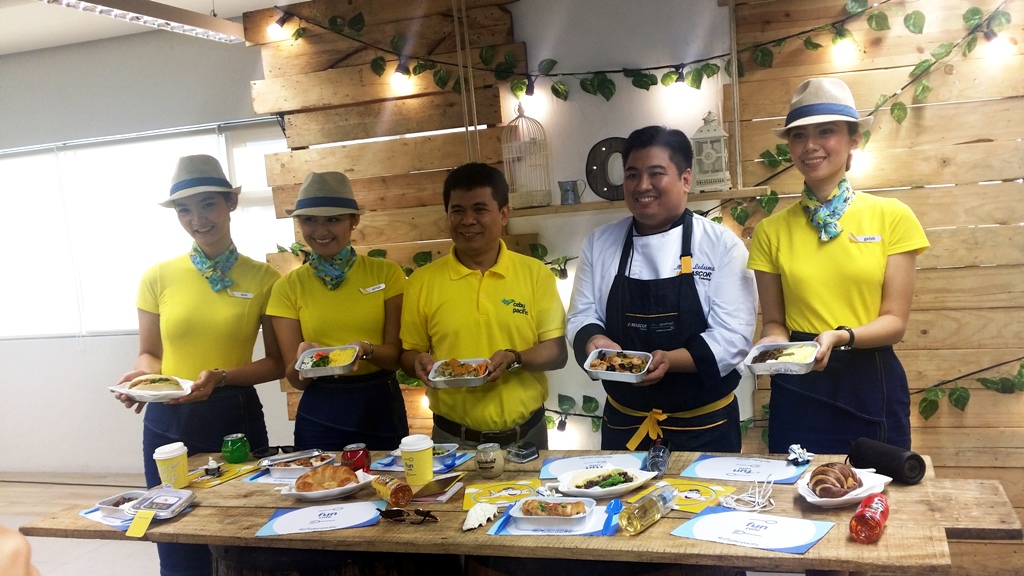
    The menu is composed of 12 new dishes ranging from light meals to satisfying rice dishes as prepared by MIASCOR-Gate Gourmet Philippines.

    Jem Calungcaguin, Cebu Pacific’s manager for inflight sales and merchandise told InterAksyon, “We’ve been continuously developing the menu for our pre-ordered meals. With the previous ones, we have received feedback from our passengers and also from our cabin crew, and we’ve taken consideration of all those insights.

    “Those insights inspired us to think maybe it’s time for us also to freshen the range because our travellers—especially the frequent ones–might have tried everything already.”

    Known for offering mostly Filipino staples, Cebu Pacific expanded their menu’s flavor profiles and incorporated Asian flavors and Western ones.

    “This one so far is the widest array of meals that we have for our pre-ordered meals. We are very excited to launch it because this time, we’re going to cater to more people and more taste palates,” Calungcaguin pointed out.

    Cebu Pacific vice president for corporate affairs Atty. Paterno Mantaring, Jr. (third from left) and executive sous Chef Mark Javier Ledesma led the unveiling of Cebu Pacific’s new inflight menu.

    The new dishes, which are all Halal-certified and adhere to the Hazard Analysis Critical Control Points (HACCP), are composed of four sandwiches, one pasta, one noodle dish, and then the rest are rice meals as developed by Chef Mark Ledesma, executive sous chef of MIASCOR Gate Gourmet Manila.

    “It’s inspiration comes actually from different destinations and flavor palates that we were trying to target,” Chef Ledesma shared during a cooking demo.

    Ledesma assured that these dishes are prepared a few hours before the scheduled flight to ensure freshness and quality.

    Cebu Pacific fliers can pre-order these dishes on all flights departing 24 hours or more from the time of booking.

    For domestic flights, the selection is limited to light snacks like sandwiches, whereas all the 12 dishes are available for international or long haul flights.

    Meanwhile, Cebu Pacific’s new inflight menu is divided into categories namely the Filipino series, Asian series, and Western series.


  • Citi Philippines sweeps awards

    Citi Philippines sweeps awards

    Global Finance Magazine has announced its best digital banks in Asia, and Citi dominated the awards with multiple wins across the region.

    For the 11th consecutive year, Citi Philippines was awarded Best Digital Bank for the Corporate/Institutional Bank category.  For Consumer Banking, it was Citi Philippines’ 11th win as Best Digital Bank.

    Winners were chosen among entries evaluated by a world-class panel of judges at Infosys, a global leader in consulting, technology and outsourcing.

    Winning banks were selected based on the following criteria: strength of strategy for attracting and servicing digital customers, success in getting clients to use digital offerings, growth of digital customers, breadth of product offerings, evidence of tangible benefits gained from digital initiatives, and web/mobile site design and functionality.

    In the category for World’s Best Corporate/Institutional Digital Banks in Asia Pacific, Citi won five regional sub-category awards, including Most Innovative Digital Bank, Best Online Cash Management, Best Online Treasury Services, Best in Mobile Banking and Best Mobile Banking App.

    “This award is a validation of Citi’s successful digital tansformation.  In all that we do, we combine the stability of a banking tradition of more than 200 years and the agility todevelop fintech solutions that will best serve our clients’ interests in the digital age.  We aim to serve our customers in the ecosystem in which they operate,” said Citi Philippines CEO Aftab Ahmed.

    Citi also swept the country awards in the Corporate/Institutional Digital Bank category, winning in 14 other countries including Australia, Bangladesh, Hong Kong, India, Indonesia, Kazakhstan, Malaysia, New Zealand, Pakistan, Singapore, South Korea, Sri Lanka, Thailand, and Vietnam.

    In the Consumer Banking digital bank awards, Citi was also named best digital bank in Australia, Indonesia, Malaysia, South Korea and Thailand.

    Asia is responsible for 17 of the Global Consumer Bank’s 19 markets worldwide. To deliver new growth, the focus for the bank was on increasing profitable market share in key markets, and products (Retail, Cards, Wealth Management and Commercial) while digitizing our business from end-to-end to deliver a better customer experience, reduce costs and improve efficiency. In the most recent quarter Citi’s consumer bank in Asia reported its fourth consecutive quarter of growth.