Tag: asia

  • Steelmaker Hoa Phat in the red after 13 years

    Steelmaker Hoa Phat in the red after 13 years

    Leading steelmaker Hoa Phat lost VND1.79 trillion ($73 million) in the third quarter, its first quarterly loss in 13 years.

    It reported revenues of VND34.44 trillion in the quarter, down 12% from the same period last year and 8% from the previous quarter.

    Its revenues have declined steadily after peaking in the fourth quarter of last year.

    Steel demand is down in both Vietnam and globally, raw material prices have risen sharply – by three times in the case of coal – and exchange and interest rates have become adverse, the company said to explain the loss.

    For the first nine months, the company’s revenues were VND116.6 trillion, with the steel segment contributing 90%, and profits topped VND10.44 trillion.

    It said the agricultural segment was profitable again, with revenues and profits rising by 10% and 32% year-on-year in the third quarter.

    Another major steel firm, Nam Kim, announced Friday that it racked up losses of over VND400 billion in the third quarter. It dragged the profits for the year down to VND290 billion, a sixth of the figure a year earlier.

  • Line Launches Digital Bank in Indonesia

    Line Launches Digital Bank in Indonesia

    The country – the world’s fourth most populous – is its third overseas market, following launches in Thailand and Taiwan.

    Japan-headquartered mobile and internet services firm Line has launched a digital banking platform in Indonesia in collaboration with Bank KEB Hana Indonesia, a subsidiary of South Korea’s Hana Bank, and LINE Financial Asia.

    Line Bank by Hana aims to make banking easier and expand access to financial services in a country that counts one of Southeast Asia’s largest unbanked populations. Its product line includes savings accounts, time deposits, debit cards, and bill payments. Line said it plans to expand the range of products to include loans, partnership loans, and QR payments.

    In Indonesia in particular, due to this market’s unique geographical characteristics, we believe bringing banking services to people’s mobile phones will greatly increase their availability and convenience,» Young Eun Kim, Line Financial Asia CEO, said in an announcement on Friday.

    Founded in 2011 as a messaging app in Japan, Line has since grown into a global ecosystem that includes AI technology, fintech, and more. The company has lay the groundwork in Indonesia since 2018, when it became the second-largest shareholder of Hana Bank Indonesia when it acquired 20 percent of the company through a Share Subscription Agreement.

    Line has its work cut out in the country: it is competing in a crowded market with giants such as Gojek with Bank Jago, Sea Group with Seabank Indonesia, Akulaku with Bank Neo Commerce, and Kredivo.

  • Google to improve shopping experience across platforms

    Google to improve shopping experience across platforms

    In its annual Google I/O livestream, Google has just announced a bunch of improvements it is bringing to the search platform (and others), aimed towards improving the experience of both merchants and customers when it comes to shopping online.
    Google introduces the “Shopping Graph,” a newly developed comprehensive dataset, backed by artificial intelligence, to help shoppers find exactly what they are looking for, updated in real time and ensuring products are currently available.
    The Shopping Graph is able to understand and tie together the billions of “products, sellers, brands, reviews and most importantly, the product information and inventory data received from brands and retailers directly.”
    The Shopping Graph will span all of Google’s platforms, connecting and inspiring people with things they may be looking for (whether they be virtual or physical) from what Google claims are over 24 billion listings from merchants online. This means you should be able to find what you are searching for even more easily than before, with Google adding new interactive features for interconnectivity between platforms as well.
    For example, Google Lens has been integrated into Google Photos to make searching for products online easier. Rather than screenshotting an item you are interested in and then forgetting about it, as soon as you snap that screenshot, Google Lens will analyze it, pick out objects within the image, and allow you to instantly search online for them (should you choose to do so).
    Google also teased a new user experience on its YouTube platform, which should be making it simpler to shop for products featured by your favorite YouTube creators. Hopefully this will alleviate the repeated-to-death phrase “links in the description, guys” (links which are sometimes forgotten as well)! Google didn’t us give any more details, other than that the new features are “in pilot.”
    We are also told to expect online shopping research and product comparison to get infinitely easier, with a new widget we’ll be seeing on our Google home page. We all know the hassle of trying to research the heck out of where a particular item is sold for the lowest price (such as the best new smartphone you may want to upgrade to).
    With so many shops and online retailers to review, most of us end up opening a hundred tabs on our browser until we can barely keep track of what’s where.
    Soon, every time you open a new tab, a widget across the center will display the carts across different sites where you’ve shopped the last few weeks. This should let you keep track of desired purchases or items to compare from different sellers much more easily. You can opt to be shown available discounts on your cart icons, as well as having integrated access to the loyalty programs of your favorite stores.
    Once your carts are full, Google will be able to send you notifications when prices of any items drop—only if you opt in, of course. Google has also announced a new collaboration with Shopify to facilitate your shopping experience across all of Google’s platforms: from Google Search to Google Lens, Google Maps, Google Images, and YouTube.
    We’ll keep you updated once we have more details on some of these changes!
  • Uniqlo Launches New Game Model Worn by Global Brand Ambassador, Roger Federer

    Uniqlo Launches New Game Model Worn by Global Brand Ambassador, Roger Federer

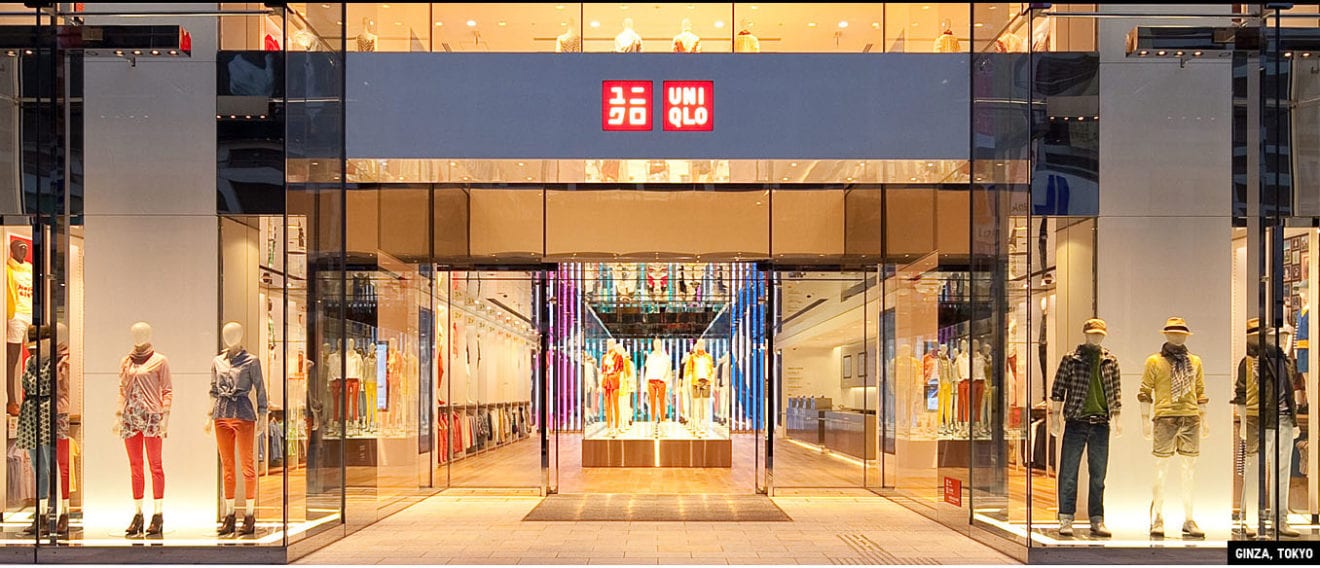
    UNIQLO, Japanese global apparel retailer announces that it will offer replica game wear and other items worn at the 2019 Wimbledon Championships by its Global Brand Ambassador, Roger Federer. Items will be available from July 1, 2019 (Monday) at UNIQLO Orchard Central Flagship store and UNIQLO.COM. The new game wear model was developed by the design team at the UNIQLO Paris R&D Centre, led by Artistic Director Christophe Lemaire, in consultation with Roger Federer.

    Roger Federer – “It’s now been a year since I partnered with UNIQLO, and I still clearly remember the excitement of first walking on court in UNIQLO at last year’s Wimbledon Championships. I’m thankful to the design team at UNIQLO, and I appreciate UNIQLO’s efforts to have a vision beyond sports through its LifeWear philosophy. I’m looking forward to this year’s outfit as well as the many more opportunities to come.”

    Roger Federer model: A classic design for a classic tournament – The Roger Federer polo features a classic cutaway collar and design that is well suited to this traditional tournament and Roger Federer’s elegant playing style.

    Jointly developed by UNIQLO and Toray Industries, Dry EX features a special arched structure that dries faster than ordinary dry function material, preventing the steamy and sticky feeling due to perspiration to maintain comfort throughout play. The raised structure is well suited to the strenuous movements of tennis. Highly breathable mesh has been used in areas that accumulate sweat, helping to avoid overheating and allowing the athletes to be at their best during competitions.

  • Ooredoo Qatar Chief Strategy Officer Shortlisted for Award Alongside Just 24 Leading Female Executives

    Ooredoo Qatar Chief Strategy Officer Shortlisted for Award Alongside Just 24 Leading Female Executives

    Munera Al-Dosari, Chief Strategy Officer (CSO) of Ooredoo Qatar, today joins an exclusive group of women shortlisted for the prestigious WeQual EMEA 2020 Awards.

    The Ooredoo CSO is one of just 24 world-class female executives nominated for the shortlist in the WeQual EMEA awards, which recognise and celebrate potential C-suite leaders. The nomination is based on the WeQual organisers finding successful senior women who are one level below C-suite. Each of the 24 finalists was assessed against seven criteria: Leadership, Cognitive Ability, Integrity, Drive & Resilience, Equality, Knowledge of the Business and Personal Development.

    Sabah Rabiah Al-Kuwari – Director PR at Ooredoo – said: “Congratulations to my colleague and CSO Munera Al-Dosari on being named as a finalist for WeQual EMEA 2020. This is a tremendous achievement and we welcome the way her existing industry recognition and reputation is beginning to reach a global audience.”

    Munera Al-Dosari – Ooredoo Qatar CSO – said: “I am proud to be shortlisted for one of these awards, among the first to target women at this level. As well as connecting me to like-minded female executives, it builds awareness of both Ooredoo and of this group of talented people from across the business world.”

    The WeQual Awards were founded by CEO Katie Litchfield in order to augment representation of women in leadership roles within the world’s biggest businesses, in response to her perception of a lack of diversity and equality in such roles and organisations.

    Al-Dosari joins a senior group of 24 executives who will become members of the WeQual Club, alongside an existing cohort of 72 senior FTSE and Fortune 500 female executives. A quarter of the winners of previous UK and US WeQual Awards have since been promoted to the executive committees of FTSE and Fortune 500 companies.

    After the assessment of all candidates, eight executive interviewers will hold 30-minuteinterviews with the three finalists in their category before each choosing a category winner.

    The winners will be announced in December 2020.

  • Zara to open at Changi Airport

    Zara to open at Changi Airport

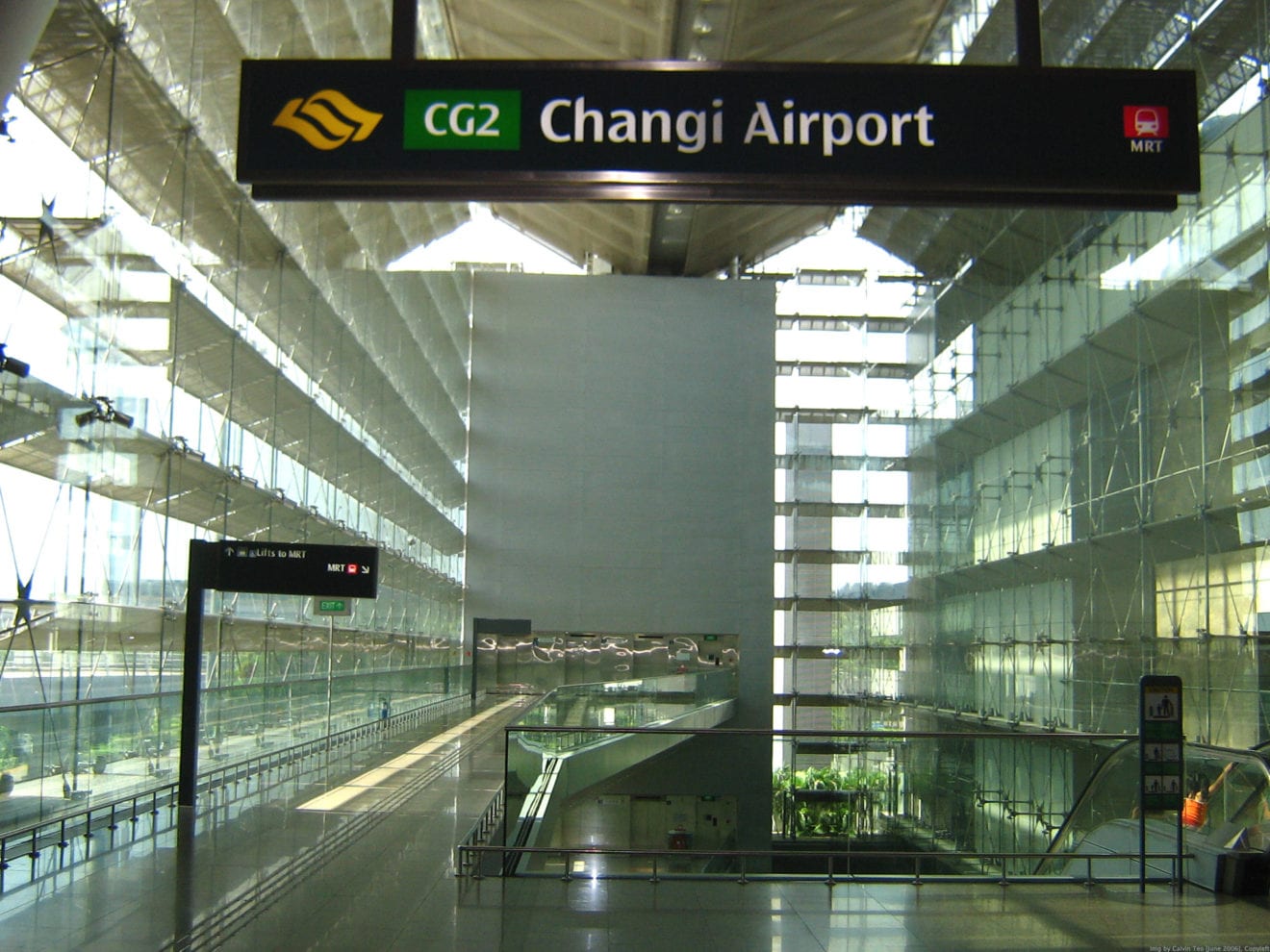
    Spanish clothing brand Zara will open a shop in Singapore’s Changi Airport in May.

    The new store, in Terminal 3, is part of a broader plan by Singapore Zara franchisee, Dubai-based Al-Futtaim Group, to ramp up the Zara brand’s retail offer in the city state.

    In the same month, Al-Futtaim Group will reopen the brand’s store in Ion Orchard, in the heart of the Orchard Rd shopping strip, after an extensive renovation and expansion.

    The Zara expansion plan was outlined in concert with revelation of plans to refocus the Robinsons and Marks & Spencer operations in Singapore. Al-Futtaim Group also has Royal Sporting House in its retail brand portfolio.

    The company plans to open the first stand-alone Royal Sporting House Junior store at Suntec City in May, ranging footwear for those aged between six and 12.

    Kesri Kapur, head of the Al-Futtaim Group’s Asian business said the changes were about reacting to “the ever-evolving retail landscape” in Singapore.

    He said the relevancy of the mall space had to be balanced with the brand profile, shoppers’ consumption patterns and increasing competition as well as Singapore’s labour shortage, so the business “stayed relevant in the retail market”.

  • Bangkok’s premium retail complex Park Silom set to open in June

    Bangkok’s premium retail complex Park Silom set to open in June

    Park Silom, a premium mixed-used complex in the heart of prime Bangkok’s CBD Silom, is a collaboration between Nye Estate, Minor International and Siam Piwat. Synergizing their prestigious expertise, the three forefront developers are driving Park Silom into a ‘Third Space Retail,’ offering a new retail experience to Silom under the concept “Everyday Indulgence for New Breed City Living.” The new 39-storey complex on a 6-rai plot in the center of Silom with its retail space spanning over 5 floors is meticulously designed to cater to the lifestyle needs of individuals with high purchasing power, including local working professionals and international tourists, by providing them with a unique and modern way of daily living in the city. The planned date for the soft opening is set to take place in June 2023.

    Ms.Ornruedi Na-Ranong, Executive Directorof NYE & RPG Development Company Limited, said: “The Park Silom project has been developed under NYE & RPG Company Limited, a   joint venture between Nye Estate and Minor International Public Company Limited. It is a 39- storey high-end office and retail complex that spans over 6 rai in Bangkok’s central Silom’s area. The idea behind its creation is based on the ‘New Breed of Silom’ vision which takes into accounts the needs and lifestyles of the people and communities in the Silom area. The determination is to transform this land into a space that caters to the diverse needs of city dwellers while also connecting and empowering the Silom community, which is renowned for its dynamic nature. It is truly a Symbol of Dynamism.”

    She continued, “We are collaborating with Siam Piwat Company Limited, a leading property and retail developer to handle the management of Park Silom retail assets and properties. The partnership is expected to provide a thrilling and well-balanced urban living experience for the residents of Park Silom and surrounding areas on a daily basis. The place serves multiple purposes such as work, shopping, and a hang-out spot during the day. Moreover, it can provide a unique and vibrant to unwind after work. The soft opening is scheduled in June 2023.”

    Chanisa Kaewruen, Head of Corporate Strategy Group of Siam Piwat,  said “Siam Piwat adheres to ‘The Visionary ICON’, a corporate vision that reinforces its leadership in creativity, and is known for its exceptional expertise in developing and managing globally respected real estate and retail destinations.” Siam Piwat is  a leading property and retail developer, the owner and operator of world-class destinations, such as Siam Paragon, Siam Center, and Siam Discovery, and a joint venture partner of ICONSIAM and                        Siam Premium Outlets Bangkok.

    She pointed out that through the collaboration, Siam Piwat will enhance the retail management of the retail space on the first five floors of Park Silom, which spans an area of 9,300 square meters. The Silom area will soon experience a new concept of retail space that combines the comfort of home with the convenience of a shopping complex. This ‘Third Space Retail’ will be designed under the concept “Everyday Indulgence for New Breed City Living.” The aim of the project is to connect lifestyles of working individuals and affluent Thai and international tourists. This will be achieved by catering to their daily urban living and lifestyle needs in innovative ways.

    “The research conducted on retail business and consumer behavior in Silom and its surrounding areas has revealed a business opportunity to address the needs of the Silom community and fulfill their lifestyle requirements. This location offers great potential due to its position as a hub for many leading organizations, financial institutions, enterprises, and multinational companies, along with its surrounding population of high purchasing power.”

    “Our project is primarily focused on the new generation of working professionals in the Silom and Sathorn areas, who possess a high level of purchasing power. These individuals have a desire for an urban lifestyle and enjoy a balanced work-life. Furthermore, they seek to lead a vibrant and enjoyable life, while also taking care of their physical and mental health. Families who reside in the Silom and Sathorn districts, with high financial capabilities, as well as those who commonly travel to the area for purposes such as visiting hospitals, or being parents to students at renowned schools in the area, are our secondary targets. These households reflect the urban lifestyle and modernity of city-dwellers, possessing both a large purchasing power and an exquisite taste.”

    “Within the retail area, there will be a selection of more than 80 leading brands covering lifestyles, fashion, and wellness of the highest quality. The dining zone boasts an array of eateries, ranging from celebrated restaurants to innovative concepts, as well as cozy cafes, coffee shops, bars, and bistros. This vibrant hub of culinary delights is the perfect spot for a delicious meal and a new hangout spot in Silom. The Food Market is a premium supermarket zone dedicated to offering quality products, as well as providing a platform for new brands and a space to support the lifestyle of the modern generation who strive for a work-life balance. This location is an ideal spot for both shopping and socializing, attracting both office workers and tourists from both inside and outside of Thailand, once the country reopens. It is a perfect gathering place for those looking to enjoy the best of both worlds,” said Ms. Chanisa.

    Covering the first five floors of the building, the retail space commences on the basement floor under the name of THE HELP & SERVICES which offers a variety of shops and services tailored to provide convenience to customers. These include 24-hour shops, parcel delivery services, supermarkets, and leading restaurants among others.

    The G Floor is divided into zones, with THE BALCONY providing a comfortable and inviting atmosphere for brunch and all-day dining. An ideal meeting place for those in the Silom area, THE BALCONY is the perfect spot to relax and converse throughout the day. THE CELLAR offers a relaxed meeting space for people to unwind after work. SIVADON COURTYARD is a sprawling green space of more than 1 rai in front of Park Silom, offering a place for relaxation and a new experience for the Silom community. With many activities tailored to meet the needs of local residents and visitors alike, this courtyard is “the new lung of Silom”.

    THE LOBBY on the lobby floor houses chic cafes for starting the day or transforming the atmosphere into an informal setting for young professionals to gather and meet. THE DINING ROOM provides professionally selected restaurants to meet everyday dietary needs and energy replenishment.

    The 2nd floor is home to THE DRESSING ROOM, a collection of fashion and beauty stores offering an array of cosmetics, clothing, and accessories, and much more.

    Located on the 3rd floor, THE CLUBHOUSE & SPA offers a collection of stores that specialize in beauty and health care, as well as other related items.

    “Siam Piwat, a world-renowned destination developer, has accumulated knowledge, experience, and expertise in various aspects of real estate development, retail, department store business, food and beverage business, marketing communication, and real estate asset management. Confident in our ability to revolutionize real estate development and retail, we can create a remarkable, one-of-a-kind retail experience in the Silom area, adding both value and success,” concluded said Ms. Chanisa.


  • Cloud innovations transforming UCC market

    Cloud innovations transforming UCC market

    Growing demand for custom solutions that seamlessly integrate with third-party business software is fueling the development of service-based business models in the unified communications and collaboration (UCC) market, according to Frost & Sullivan.

    Innovation in cloud communications is breaking the IP telephony and UC as a Service (UCaaS) silo, enabling players in the UCC market to expand their service portfolios. Multi-level disruption at the pricing, packaging, feature, functionality, and business model levels is also accelerating innovation and intensifying competition.

    “Diversified solutions portfolios and more holistic approaches are a necessity to support business transformation, but simultaneously maintaining core competencies is the key to success,” Frost & Sullivan digital transformation principal analyst Robert Arnold said.

    “Mobility, device independence, social capabilities, mashups and personalization will be significant elements of future-proof cloud communications solutions.”

    The challenges for companies operating in the global UCC space include continuing reliance on unamortized and premises-based solutions, preference for newer operating expenditure-based business models, and security and reliability concerns surrounding cloud-based deployments.

    Market majors, such as Vonage, Orange, AT&T, BT, Cisco, Slack, IBM, Vodafone, Microsoft, Tata, and others are attempting to overcome these issues by offering solutions with the deployment and integration flexibility customers increasingly require for UCC integration with workflows, along with the high quality and reliability that are expected of mission-critical services.

    This will validate for customers that making UCC integral to their digital transformation efforts will result in the best return on investment (ROI) as demonstrated through uninterrupted productivity, agility of business operations, and performance efficiency.

    “Cloud communication services adoption is accelerating as premises-based equipment markets decline,” observed Arnold.

    “Mergers and acquisitions in all market tiers and into adjacencies will persist as competitors seek scale and financial stability to round out their portfolios, enhance development resources, increase reach, and grow installed bases.”

  • Grace over on Hong Kong bag fees  April 28, 2015

    Grace over on Hong Kong bag fees April 28, 2015

    Hong Kong’s Environmental Protection Department (EPD) has warned retailers that from May 1 – Friday – they’ll face fines if they don’t charge customers for plastic bags.

    A month after the new law took effect, EPD officials have been issuing verbal warnings to retailers caught failing to charge customers a plastic bag levy. On April 1, a controversial law took effect forcing retailers to charge for bags – but rather than pass on the fees, they are allowed to keep them. That’s because the law is designed to reduce plastic bag usage in the territory, not raise revenue.

    Retailers who don’t charge a fee face instant fines of $2000 or even prosecution for second offences.

    An EPD spokesman said the full implementation of PSB charging has been largely proceeding smoothly at the retail level since April 1. Most retail outlets comply with the legal requirements and charge at least 50 cents for each plastic bag provided to customers, unless such use is exempted from the PSB charge.

    “A small number of individual retail outlets have been found contravening the law by distributing PSBs free of charge, leading to verbal warnings and on-site explanations of the legal requirements given to the shop operators concerned by EPD enforcement officers,” a statement from the EPD said.

    *Since late March, the Environmental Protection Department has set up promotion booths in popular shopping centres and retail outlets to educate the general public on details of the PSB charging scheme.

    Between April 1 and 25, about 7000 retail outlets were inspected by EPD officers with 62 verbal warnings given to non-complying stores including market stalls, grocery stores, bakery shops, fashion shops and shops selling computers, aquariums or other items. The contraventions included providing free PSBs for non-foodstuff or airtight food or free PSBs for both exempted items and non-exempted items, or providing non-woven bags or other kinds of plastic bags without charging customers, as well as offering rebates to customers to offset the PSB charge.

    The spokesman said the arrangement of giving verbal warnings against contraventions enabled retailers and members of the public to better adapt to the new requirements so that PSB charging could be implemented smoothly.

    “Starting from May 1, this Friday, immediate enforcement action including a fixed penalty notice or prosecution action will be taken against non-compliance with no prior verbal warning given by the EPD’s officers.”

    Exemptions apply to PSBs used for food hygiene reasons, such as for containing a food item which is unpackaged or contained in non-airtight packaging or in frozen/chilled state.

    PSBs used for the pre-packaging of goods are also exempt, while bags provided with services fall outside the scope of regulation.

    The spokesman said the EPD will continue to publicise the new measures and promote the green habit of “BYOB” (bring your own bag) among shop owners and the general public through various channels and public education campaigns.

  • ‘Google Analytics for the offline world’

    ‘Google Analytics for the offline world’

    A young Malaysian entrepreneur has developed what he describes as “Google Analytics for the offline world” – a unique application aimed to revolutionise the way bricks and mortar store owners interact with their customers.

    TechInAsia.com reports that while ecommerce might be all the rage in the tech world, 94 per cent of total retail sales are being generated in bricks-and-mortar stores, (source: market research firm eMarketer).

    Considering that business-to-consumer (B2C) ecommerce sales worldwide are estimated to reach US$1.471 trillion by the end of this year, the size of the offline market is mind-boggling.

    This is what Lim Chee How, founder of Malaysia-based Tapway, is counting on; he believes Tapway is something store owners sorely need.

    “Whenever I purchased something through Amazon, they were really awesome at identifying who you are, what you have purchased, and giving you really personal recommendations,” Lim expains.

    “I’m a rock fan, so I always purchase CDs through Amazon, and when I returned to Malaysia [after studying abroad] I always shopped at this record store, but despite being a repeat customer, they couldn’t remember me at all. They couldn’t give me good offers and it was always the same boring welcome and goodbye message. That’s why I created this.”

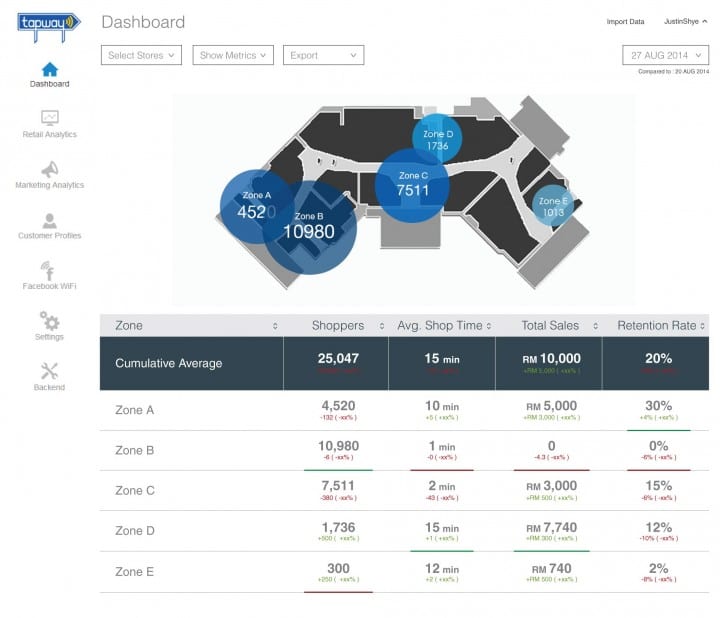
    Much like Google Analytics, a lot of insight on shopper behavior and activity can be drawn from the data captured on Tapway’s platform, but it is up to the store owner to act on them.

    The startup’s basic package – which captures metrics such as walk-by traffic, visitor traffic, and average visit duration – relies on wi-fi presence and triangulation technology. It’s currently charging MYR100 (US$30) per month for this service.

  • SmarTone, Ericsson conduct Hong Kong’s first 5G demo

    SmarTone, Ericsson conduct Hong Kong’s first 5G demo

    Hong Kong mobile carrier SmarTone has joined force with Ericsson to conduct the city’s first demonstration of 5G technologies using millimeter wave spectrum. The pair also committed to launch a mobile technology innovation lab later this year, paving the way for the 5G deployment in Hong Kong.

    During the demo, which took place Wednesday at Ericsson’s office in Hong Kong, the companies achieved a data throughput of 5.7Gbps over a 5G prototype [pictured] through the use of 4×4 MIMO antenna technology in the 15-GHz band. The prototype, built by Ericsson, comprises a 5G base station, next-generation antenna and a test mobile station.

    SmarTone chief technology officer Stephen Chau said the operator will later upgrade the 5G prototype to support 8×8 MIMO antenna technology, which will double the transmission speed to over 10 Gbps.

    Michael Lee, CTO for Hong Kong and Macau at Ericsson, said the demo uses 400Mz of spectrum and OFCA has allocated a total of 612MHz of spectrum for all mobile operators in the city.

    SmarTone and Ericsson also demonstrated use cases for potential 5G applications, including a so-called “Human-IoT Interaction arm”, which allow humans to control a robotic arm remotely in real-time with 5G capabilities of low latency and high-bandwidth. Such applications, Chau said, could allow surgeons to conduct operations remotely using robots or be used in road accidents, operations/activities in scenarios unsafe for human presence.

    In another proof-of concept demo, a robot was connected to the cloud via a simulated 5G network, using real-time analytics to balance the robot with the latency set at 10ms. In future this application could be used for mission-critical apps, AI and intelligent automation like self-driving cars or real-time traffic system.

    While commercial 5G services won’t be ready by 2020 and standards are still to be ratified, the advent of 5G will open up a lot of opportunities for operators and allow for range of different applications, such as AI, VR/AR and the IoT-enabled world of real-time applications and services. The demo just offers a glimpse of 5G capabilities that will enable users to download a 4K movie in mere seconds or sit behind the wheel of a driverless car, Chau said.

    The executive said SmarTone’s innovation lab with Ericsson, which is expected to be ready in the middle of year, is aimed to facilitate cross-industry collaboration and develop potential 4.5G/5G use cases and vertical applications.

    The innovation hub will provide a platform for development in areas such as ICT and wireless convergence,  mobile, IoT and cloud, Chau said.

    “5G will herald a significant shift towards the hyper-connected and real-time world of IoT. Our innovation hub will see SmarTone and Ericsson forge collaboration with other industry and technology leaders to usher in a new era of mobile possibilities for consumers and businesses,” he noted.

    As part of its ongoing investment in 4.5G, SmarTone plans to roll out Licensed Assisted Access (LAA) network later this year, which will leverage existing licensed and unlicensed spectrum to enhance the operator’s LTE network to deliver up peak speeds up to 800Mbps.

    The company also plans to introduce a narrow-band IoT (NB-IoT) network with enhanced coverage later this year. Last week SmarTone forged a partnership with Cisco Jasper to launch IoT services in the city, in its latest attempts to tap the burgeoning IoT market.

    Last November SmarTone contracted Ericsson as its sole supplier for core and RAN equipment in a five year deal which aimed at paving the way for 5G  deployment.

  • Don’t Yell At Me starts selling in Hong Kong

    Don’t Yell At Me starts selling in Hong Kong

    Operations director Tony Wang said: “When people visit Don’t Yell At Me, we hope that they are not here just for our teas, but here for our message and the positivity. We hope that through our daily teas will inspire our customers so that they can carry this attitude forward no matter what they are facing.”

  • China remains Vietnam’s top rice importer

    China remains Vietnam’s top rice importer

    According to the Ministry of Agriculture and Rural Development, Vietnam exported 2.8 million tonnes of rice valued USD1.2bn in the first six months of 2017. Both the volume and value increased by 6.3% and 4.9% respectively compared to last year.

    However, average prices in the first five months decreased by 0.9% to USD445.5 per tonne compared to last year.

    China continues to be Vietnam’s top importer. In the first five months, Vietnam exported 1.1 million tonnes of rice to China for USD488m as demands from China is huge. Chinese traders often buy rice directly from the firms’ storage and then imported into China via border gates or commissioned another importer. They also re-export the rice to other countries.

    Pham Thai Binh, director of Trung An Hi-tech Farming JSC, said requirements from Chinese traders were getting tighter, similar to other markets like the US and Japan. Not only the rice must be safe but their origin could also be tracked. Currently, only 22 out of 150 Vietnamese firms were able to export to China.

    Despite exporting huge volumes of rice to China, Vietnam is still unable to build a recognisable brand name there as most of the rice is repackaged by Chinese traders.

    Loc Troi Group is the only firm that have a contract with Hunan Leading Science and Technology Development Co Ltd to officially distribute rice and other agriculture products in an attempt to build a Vietnamese rice brand in China.

  • Apple India aims 5,000 employees eventually for Hyderabad facility

    Apple India aims 5,000 employees eventually for Hyderabad facility

    Apple has hired 3,500 people for their development centre here and is expected to take the number to 5,000 eventually, said a senior Telangana Government official.

    “Apple has taken 3,500 people so far for their development centre in Hyderabad. They will totally hire 5000 people eventually. There is no time frame for that (to achieve 5000 headcount),” Jayesh Ranjan Principal Secretary IT and Industries said.

    According to a report: The Cupertino, California-based tech giant in May last year opened it development centre here that will focus on development of Maps for its products, including iPhone, iPad, Mac and Apple Watch.

    The Californian firm had then said the investment in the facility will accelerate Maps development and create up to 4,000 jobs.

    Meanwhile, Jayesh Ranjan today inaugurated Pactera Technologies’ first office in India here.

    The Hyderabad office of Pactera Technologies reflects its strategic focus on becoming an industry leading provider of IT services on a global scale, a press release from the company said.

    The new office can seat 150 people in Phase 1 and additional 300 people in Phase 2.

    The abundant talent that is currently part of Pactera would help contribute much more to the digital and innovation world, which would also help them grow to 3,000 people organization in the next 2-3 years, it added.

  • AirAsia’s Cebu-Kaohsiung service Started August 1st

    AirAsia’s Cebu-Kaohsiung service Started August 1st

    AirAsia is set to commence operation of its direct service to Kaohsiung International Airport in Taiwan from Mactan-Cebu International Airport (MCIA) in Cebu beginning Thursday, August 1, 2019.

    AirAsia will service the Cebu-Kaohsiung route thrice weekly every Tuesday, Thursday, and Saturday using an Airbus A320 aircraft with 180 all-economy seats.

    GMR Megawide Cebu Airport Corporation (GMCAC), together with the Mactan-Cebu International Airport Authority (MCIAA), welcomed this development, with some officials saying they are excited, as it will help position Cebu as a hub not just in the country but in Southeast Asia.

    “We at the MCIA community are excited by the opening of AirAsia’s Cebu-Kaohsiung route. GMCAC is committed to positioning Cebu as a hub in Southeast Asia and in the Philippines. Our location makes MCIA the ideal jump-off point to other tourist destinations in the central and southern islands, and we are making this happen through strategic airline marketing efforts and partners such as AirAsia,” GMCAC President Louie Ferrer said.

    Ferrer also expressed his thanks to the carrier.

    “AirAsia has been one of our most dynamic partners in developing international connectivity and we thank them for their continued support of MCIA and Cebu,” he said.

    A water cannon salute will welcome the inaugural flight from Kaohsiung to Cebu and its passengers on Thursday, August 1, at 4:40 p.m.

    “The Philippines continues to be one of the top holiday destinations for Taiwanese. As the only Philippine airline to connect Cebu and Clark directly to Kaohsiung, we are pleased to be able to contribute to Philippine tourism and bring Cebuanos and Kapampangans closer to southern Taiwan as well,” said Philippines AirAsia President and CEO Dexter Comendador in a statement.

    AirAsia will also launch the Clark-Kaohsiung route on the same day marking Kaohsiung as the airline’s 10th international destination to be launched this year.

    “While Taipei has been one of the recently favored travel destinations of Filipinos, we urge the Cebuanos to explore the different sights and distinct flavors that can only be experienced in Kaohsiung,” said Aines Librodo, GMCAC Airline Marketing and Tourism Development head.

    From Mactan-Cebu International Airport, AirAsia flies to 13 destinations, namely, Manila, Clark, Davao, Cagayan De Oro, Puerto Princesa, Caticlan, Kuala Lumpur, Singapore, Seoul, Shenzhen, Macau, Taipei, and Kaohsiung.

    With the addition of this new route, Mactan-Cebu airport is now connected to 28 domestic destinations and 23 international destinations with nine Philippine-based and 17 foreign airline partners.