Tag: asia

  • Cosmetics dominate Korean duty-free sector in 2016

    Cosmetics dominate Korean duty-free sector in 2016

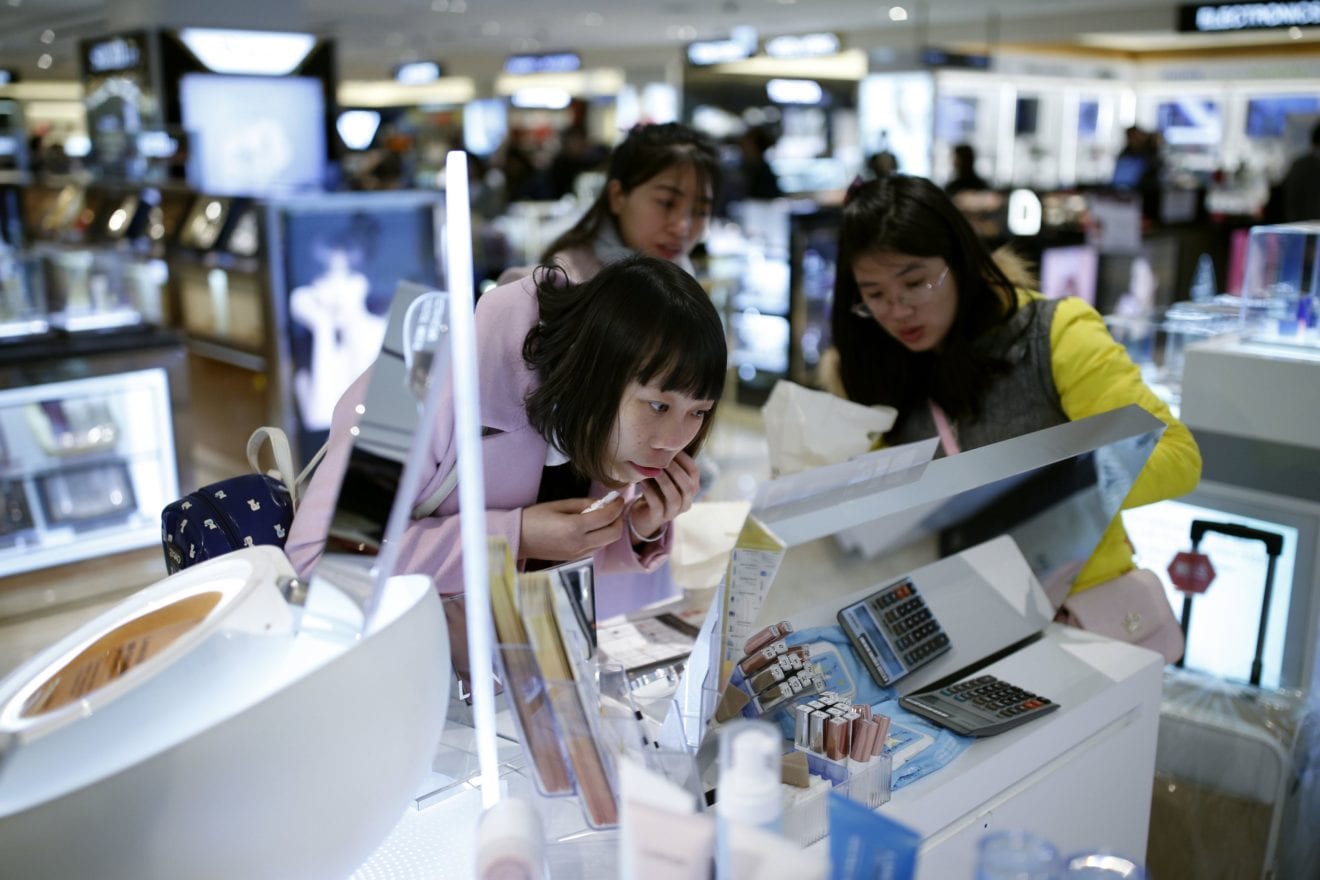
    Make-up products accounted for more than half of the annual sales at duty-free shops in South Korea last year, fueled by brisk demand from foreign tourists immersed in Korean entertainment culture.

    Fresh data from the Korea Customs Service and companies reveals the combined cosmetics revenue from duty-free chains, including top players Lotte Duty Free and Shilla Duty Free, stood at 6.28 trillion won (US$5.48 billion) at the end of 2016, up 51.7 per cent from a year earlier.

    The sales of such beauty products took up 51.2 per cent of all sales, jumping from 45.1 per cent in 2015.

    Their proportion far outstripped those of other products, such as handbags or watches, whose sales grew 14 per cent and 7.6 per cent on-year in 2016, respectively.

    The upbeat figure came as Korean-made cosmetics have become very popular among Asian tourists who come here to shop, fascinated by Korean pop culture and TV drama series, a phenomenon commonly referred to as the Korean Wave or Hallyu.

    Local cosmetics companies have rushed to boost their marketing targeting these Hallyu fans, making advertisement clips using the celebrities who have gained popularity through movies and dramas exported to those countries.

    Thanks to such efforts, the revenue portion of domestic cosmetics brands at duty-free stores also made a big leap, accounting for nearly 40 per cent of the overall sales, the data showed.

    “The portion of Korean brands being sold at duty-free shops is growing rapidly unlike in the past when most of the top-selling items were imported products,” Ahn Ji-young, a market analyst at IBK Securities Co.

    Industry watchers said the cosmetics firms should plan ahead in developing products in line with a fast-changing beauty trends and discriminate their strategy by country or region.

    “Younger Chinese tourists these days are showing a tendency to fall for color make-up so the companies need to closely track such trend,” an industry source said.

  • Henkel reports sales and earnings at record levels

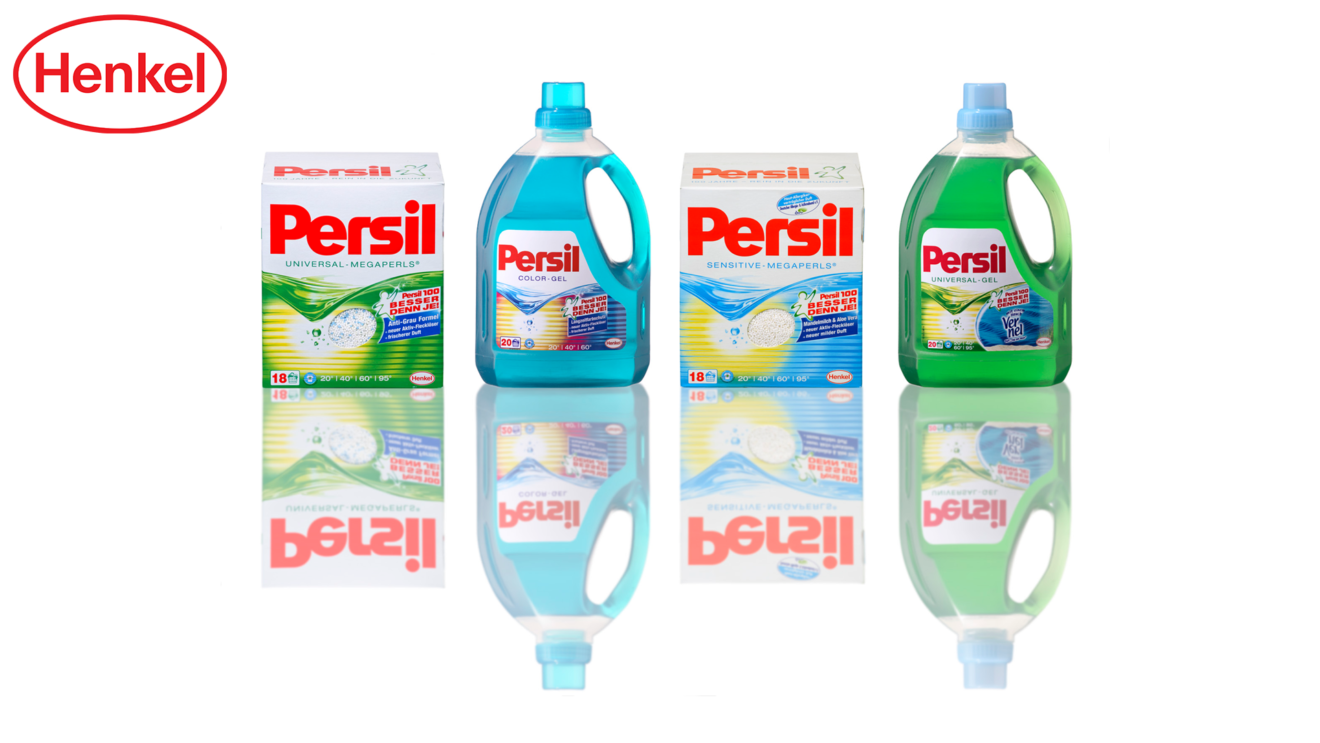
    Henkel reports sales and earnings at record levels

    “2016 was a very successful year for Henkel. In a challenging market environment, we achieved again new record levels for sales and earnings and met our financial targets for the fiscal year. We delivered a high quality of earnings. For the first time we reached an adjusted operating profit of more than 3 billion euros,” said Henkel CEO Hans Van Bylen. “In September, we closed the acquisition of Sun Products, which was the second-largest transaction in our company’s history. This marks a major step for Henkel and substantially strengthens our Laundry & Home Care business in North America. In November, we presented our new ambitions and strategic priorities for 2020 and beyond. Based on our strong foundation, our excellent results in 2016 and our clear priorities for the coming years, we are committed to continue our successful development in the future.”

    Outlook for 2017 

    Looking at the current fiscal year 2017, Hans Van Bylen said: “We expect the highly volatile and uncertain market environment to continue. Nevertheless, based on our clear strategic direction, our strong global team and our innovative brands and technologies with leading market positions, we are well-positioned for further profitable growth: For the full fiscal year 2017, we expect organic sales growth of 2 to 4 percent. We expect our adjusted EBIT margin to increase to more than 17.0 percent and adjusted earnings per preferred share to grow between 7 and 9 percent.”

    Sales and earnings performance 2016 

    At 18,714 million euros, sales in the fiscal year 2016 reached a new record level and grew by 3.5 percent compared to the previous year. Adjusted for foreign exchange effects, sales grew by 7.1 percent. The positive effect from acquisitions and divestments amounted to 4.0 percent, mainly as a result of acquiring The Sun Products Corporation. Organic sales, which exclude the impact of foreign exchange and acquisitions/divestments, showed a solid increase of 3.1 percent.

    All business units reported solid organic sales growth. The Adhesive Technologies business unit achieved organic sales growth of 2.8 percent. Sales in the Beauty Care business unit grew organically by 2.1 percent and the Laundry & Home Care business unit recorded organic sales growth of 4.7 percent.

    After allowing for one-time charges, one-time gains and restructuring charges, adjusted operating profit (EBIT) improved by 8.5 percent to a new high of 3,172 million euros (previous year: 2,923 million euros). All three business units contributed to this positive performance. Reported operating profit (EBIT) amounted to 2,775 million euros compared to 2,645 million euros in the previous year.

    Adjusted return on sales (EBIT margin) rose by 0.7 percentage points from 16.2 percent to 16.9 percent, reaching a new record level. Reported return on sales increased by 0.2 percentage points to 14.8 percent (previous year: 14.6 percent).

    The financial result improved from -42 million euros to -33 million euros. The financing costs relating to the acquisition of The Sun Products Corporation were more than offset by the positive effects from the repayment of the hybrid bond.

    Adjusted net income for the year after non-controlling interests increased by 10.0 percent to 2,323 million euros (2015: 2,112 million euros). After deducting 40 million euros attributable to non-controlling interests, reported net income increased by 6.9 percent from 1,921 million euros to 2,053 million euros.

    Adjusted earnings per preferred share grew by 9.8 percent from 4.88 euros to 5.36 euros and reached a new record level. Reported earnings per preferred share rose from 4.44 euros to 4.74 euros.

    The Management Board, Supervisory Board and Shareholders’ Committee will propose to the Annual General Meeting on April 6, 2017 an increase in the dividend per preferred share of 10.2 percent to 1.62 euros (previous year: 1.47 euros) and an increase in the dividend per ordinary share of 10.3 percent to 1.60 euros (previous year: 1.45 euros). This would be the highest dividend in the company’s history and equal a payout ratio of 30.3 percent.

    Net working capital as a percentage of sales improved by 0.3 percentage points from 3.8 percent to 3.5 percent.

    The net financial position closed the year at -2,301 million euros (December 31, 2015: 335 million euros). The change compared to the end of the previous year was primarily due to payments for acquisitions.

    Business unit performance

    The Adhesive Technologies business unit generated solid organic sales growth of 2.8 percent in fiscal 2016, thus outperforming market expansion. Nominally, sales were at 8,961 million euros after 8,992 million euros in the previous year.

    The emerging markets continued their successful performance with strong organic sales growth, with double-digit increases in the Latin America region and strong growth in the Eastern Europe region. Sales in Asia (excluding Japan) showed a solid development. Sales performance in the Africa/Middle East region was positive, despite the ongoing uncertain political situation and deterioration in the economic conditions prevailing in parts of the region. Sales in the mature markets were on prior-year level. Sales performance in North America was positive, while sales in the Western Europe region were the same year-on-year. In the mature markets of the Asia-Pacific region, sales remained below the level of the prior year.

    Adjusted operating profit of the Adhesive Technologies business unit rose by 6.2 percent to 1,629 million euros compared to the previous year. Adjusted return on sales showed an excellent increase of 1.1 percentage points, reaching a new high of 18.2 percent. Reported operating profit increased by 6.8 percent to 1,561 million euros.

    In 2016, the Beauty Care business unit continued its profitable growth path of previous years. At 2.1 percent, organic sales growth was once again above that of the relevant markets. Nominally, sales rose to 3,838 million euros (2015: 3,833 million euros).

    From a regional perspective, business performance was very strong in the emerging markets. Eastern Europe and Latin America achieved double-digit organic sales growth. Sales in Asia (excluding Japan) and in Africa/Middle East showed a positive development. Mature markets continued to be impacted by intense price and promotional pressure. In this challenging environment, sales in mature markets remained slightly below the level of the prior year. In Western Europe and in the mature markets of the Asia-Pacific region, sales were lower year-on-year. Beauty Care recorded solid growth compared to the previous year in North America.

    Adjusted operating profit of the Beauty Care business unit increased by 6.1 percent to 647 million euros. Adjusted return on sales showed an excellent increase of 1.0 percentage points to a new high of 16.9 percent. Reported operating profit amounted to 526 million euros, after 561 million euros in the previous year.

    The Laundry & Home Care business unit also continued the profitable growth of previous years in the fiscal year 2016. Sales grew organically by 4.7 percent year-on-year, significantly outperforming the relevant markets. Nominally, sales increased by 12.8 percent to 5,795 million euros, driven by the acquisitions closed in 2016.

    With a very strong increase, emerging markets were once again the major driver of organic sales growth. In Asia (excluding Japan), Laundry & Home Care recorded double-digit organic sales growth. Sales in Africa/Middle East showed a very strong development. Sales in the Eastern Europe and Latin America regions achieved a strong increase, contributing to the successful development. Performance in the mature markets was solid. North America recorded a solid increase in sales, while sales growth in Western Europe was positive.

    Adjusted operating profit of the Laundry & Home Care business unit increased double-digit by 13.7 percent to 1,000 million euros. Adjusted return on sales increased by 0.2 percentage points, reaching a new high of 17.3 percent. Reported operating profit rose by 2.2 percent from 786 million euros to 803 million euros.

    Regional performance

    In a market environment that continues to be highly competitive, sales in Western Europe were organically on the level of the previous year. The positive performance in Southern Europe could not entirely compensate the decline in France. At 5,999 million euros, nominal sales in the region were slightly down year-on-year, due to negative currency effects. In Eastern Europe, sales grew organically by 7.0 percent. The main contribution to this performance came from the businesses in Russia and Turkey. Nominally, sales in the region increased by 0.7 percent to 2,713 million euros (2015: 2,695 million euros). Despite the political and social unrest in some countries, organic sales growth of 5.6 percent was achieved in the Africa/Middle East region. Nominal sales increased by 3.7 percent to 1,378 million euros (2015: 1,329 million euros).

    Sales in the North America region increased organically by 1.7 percent. At 4,202 million euros, nominal sales increased by 15.2 percent (2015: 3,648 million euros). The acquisition of The Sun Products Corporation contributed substantially to the increase in nominal sales. Organic sales in Latin America increased by 13.8 percent, with business performance in Mexico making a significant contribution to this improvement, delivering a double-digit increase. Nominal sales amounted to 1,055 million euros, following 1,110 million euros in the previous year. Sales in the Asia-Pacific region grew organically by 3.2 percent. Nominal sales increased by 3.6 percent to 3,246 million euros.

    With an increase in organic sales of 6.8 percent, driven by all business units, the emerging markets again made an above-average contribution to the organic growth of the Group. Nominal sales were slightly higher year-on-year at 7,814 million euros. The share of sales from emerging markets was 42 percent, which was slightly lower year-on-year due to foreign exchange and acquisition effects. In the mature markets, sales grew organically by 0.4 percent to 10,779 million euros.

    Outlook for the Henkel Group 2017

    Henkel expects to generate organic sales growth of 2 to 4 percent in the fiscal year 2017. Henkel expects that each business unit will generate organic sales growth within this range. For adjusted return on sales (EBIT), Henkel expects an increase versus the prior year to more than 17.0 percent. Henkel expects an increase in adjusted earnings per preferred share of between 7 and 9 percent.
  • Esprit Holdings moves out of the red

    Esprit Holdings moves out of the red

    Fashion group Esprit Holdings says it has made a “significant recovery”, turning around its HK$238 million (US$30.6 million) loss to record a net profit of HK$61 million for its first half.

    While the improvement was driven by retail sales, the group says two other major developments were a vital element of the growth in overall profitability for the half-year, to December 31:

    • The ongoing downsizing of the scale of the business, including the closure of unprofitable stores and low-performing wholesale locations.
    • Management moves increased the group’s gross profit margin, including fewer promotional activities, price markdowns and discounts for wholesale partners.

    As a result, the first-half unaudited figures show a 9.9 per cent drop in revenue to $8.323 billion. However, the measures produced the intended improvement in profitability, with gross profit margin increasing by 2 per cent .

    During the period, the group closed 9412 sqm of retail space, with coupled with the closure of 25,806 sqm in the previous six months represented a 11.1 per cent year-on-year reduction.

    Asia Pacific retail, excluding online sales, at HK$951 million, fell by 21.5 per cent. Retail space was reduced by 18.5 per cent.

    “It is important to note that in APAC we had the most drastic reduction of promotional activities and price markdowns,” says the company.

    Esprit’s Eshop brought in 24 per cent of total group revenue, generating HK$1.993 billion, down by 2.4 per cent. However, there was a 58.7 per cent leap in revenue for Eshop APAC to HK$119 million.

    China represented more than 80 per cent of the Eshop sales in the region. It recorded revenue growth of 54.9 per cent, fuelled by the integration of the Esprit Friends loyalty program, the strengthening of activities with Tmall, the expansion of its online presence through platforms such as WeChat and Weibo, and collaborations with celebrities and opinion leaders to enhance brand equity through social media.

  • McDonald’s China does nothing, but under attack anyway

    McDonald’s China does nothing, but under attack anyway

    McDonald’s China is drawing criticism from Hong Kong trade unions, who fear the impact of the new owners on employment conditions.

    Despite reassurances from local McDonald’s management – or any evidence at all suggesting changes to labour policies are looming – the fast food giant has come under attack on both sides of the border.

    The new business unit taking over the McDonald’s business in China and Hong Kong is jointly owned by state investment group Citic Ltd and US private equity company Carlyle Group. McDonald’s Corporation (US) will maintain a cornerstone minority stake. The new company holds 20-year franchise rights.

    In a statement issued this week, the Hong Kong Confederation of Trade Unions (HKCTU) said the change of ownership will put further pressure on pay rates at Hong Kong outlets, where it says many workers earn little more than the minimum wage of HK$32.50 (US$4) per hour.

    “In other countries where McDonald’s has sold a large stake of its business, the resulting model has placed enormous pressure on franchisees, which has made it harder for franchise operators to provide adequate pay and conditions for their workers,” HKCTU official Wong Yu Loy said.

    “If the buyers in Hong Kong get squeezed by McDonald’s as they have in other countries, workers here may get even less as a result,” Wong said.

    Last week, a Chinese labour consultancy Hejun Vanguard Group filed a formal complaint with the mainland’s Ministry of Commerce claiming the move to the new business model may adversely impact its 120,000 workers in China – and McDonald’s customers.

    But McDonald’s has rushed to placate concerns saying its franchise models all over the world are based on “mutually beneficial partnerships” and the company “treasures” its employees.

    “The level of remuneration of our employees is based on their positions, working experience, expertise, performance, as well as market conditions,” said a spokeswoman.

    “McDonald’s strictly abides by Hong Kong labor legislation and the statutory requirements. The current compensation and benefits of McDonald’s Hong Kong will not be affected as a result of bringing in strategic partners.”

    The HKCTU, which represents 90 affiliate labour organisations covering 170,000 workers, appears unmoved.

  • 25 operators are already testing 5G

    25 operators are already testing 5G

    Despite 5G standardization not being expected until 2020, 25 mobile operators have already commenced lab testing 5G technologies, according to industry data from network testing company Viavi.

    Of the 25 operators testing 5G, 12 have progressed to field testing, the company said. An additional four operators have announced plans for 5G trials but have not yet commenced them.

    Five operators have achieved data speeds of at least 35 Gbps in 5G trials, including Optus, M1 and StarHub.

    To date, Etisalat has the speed record at 36Gbps, Viavi said, with Ooredoo close behind at 35.46Gbps. All operators conducting 5G trials have reported data transmission speeds of at least 2Gbps.

    Viavi’s data also show that operators are testing 5G across a wide range of bands, ranging from sub 3-GHz up to 86-GHz.

    The most commonly trialed bandwidth among operators that have disclosed their test spectrum is currently 28-GHz – with eight operators using it – followed by 15-GHz, which is being used by seven operators.

    Among equipment suppliers, five major vendors have announced an involvement in 5G trials – Ericsson, Huawei, Nokia, Samsung and ZTE. Many operators are working with multiple vendors on their trials, with KT including all five equipment providers.

    “The pace of 5G development is already beyond the expectations of many observers,” Viavi CTO Sameh Yamany commented.

    “Now, as the technical delivery of data is starting to coalesce, it is time to think ahead to how future 5G networks can manage the disparate requirements of high data rates, very low latency applications and large-scale IoT services while maintaining QoS.”

    He said network slicing, involving the automation and programming of multiple cloud-based functions within a virtualized network, will be important to achieving these goals.

    “Service providers and their partners will require solutions that are virtualized from one end of the network to the other and have automated and correlated intelligence across each network slice for monitoring, optimization and service assurance.”

  • Huawei passes 5G NR field performance tests

    Huawei passes 5G NR field performance tests

    Huawei first to pass China’s 5G NR field performance tests

    Huawei has announced it was first to pass the recent field performance tests of 5G new radio (NR) technology in the 3.5-GHz band as part of the second phase of China’s 5G trials. The field tests commenced late last year within a 5G trial zone established by the IMT-2020 Promotion Group. Huawei demonstrated its 5G NR solution, proving it capable of meeting the ITU’s performance specifications for 5G, including 10Gbps throughput for for over one million simultaneous with an air interface latency of under 1ms.

    Singtel trialing Massive MIMO and Cloud RAN

    Singtel and Ericsson have teamed up to pilot Massive MIMO and Cloud RAN in Singapore on Singtel’s LTE network. Singtel aims to use the technologies to provide Gigabit-level LTE speeds and prepare its network for a smooth eveolution to 5G. The operator plans to use Massive MIMO and Cloud RAN to be able to offer faster speeds over its network by the end of the year. Singtel CEO consumer Singapore Yuen Kuan Moon said the company is investing to ensure its network can meet the exponential growth in demand for data traffic triggered by the rise of services including 4K video streaming, VR, AR and augmented reality.

    Nokia to launch “anyhaul” mobile transport portfolio

    Nokia has introduced a new “anyhaul” end-to-end mobile transport portfolio, combining technology across microwave, IP, optical, mobile and fixed access. The portfolio of solutions are designed and optimized to meet the requirements of the 5G era, employing a carrier SDN configuration for improved programmability and service assurance. The company plans to launch its new portfolio at Mobile World Congress 2017 next week. The portfolio has been optimized for 10Gbps cell site connections with enhanced capabilities including timing, synchronization and OAM.

  • H&M Vietnam to open first store in Hanoi

    H&M Vietnam to open first store in Hanoi

    H&M Vietnam has revealed it will open its first store in Hanoi, not Ho Chi Minh City, the nation’s largest population base.

    The Swedish-headquartered fast-fashion giant has already commenced recruiting staff.

    According to the recruitment ads, H&M will open its first store on a 2000 sqm in Hanoi with roughly 100 employees.

    The recruited employees will be trained overseas for three to five months before coming back to Vietnam to set up stores.

    The firm also plans to hire employees in Ho Chi Minh City where the second store is said to scheduled to open in Vincom Thao Dien, District 2.

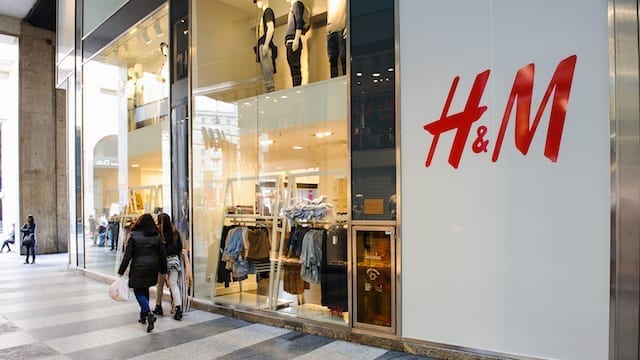
    MILAN ITALY – MARCH 18 2015: On the streets of the city. H&M store.

    H&M currently operates around 4300 stores across 64 markets. Last year, after the other fast-fashion empire Zara opened the first flagship Vietnam, H&M announced it would open a store here as part of its global expansion plan for 2017 which also includes Georgia, Colombia, Iceland and Kazakhstan.

  • Benoy updates Sanya Eyot project designs

    Benoy updates Sanya Eyot project designs

    Designs have been updated by international architectural/design company Benoy for the retail-centred China International Travel Service (CITS) Sanya Eyot scheme on Hainan Island.

    It is the second phase of the wider CITS scheme in the new resort area of Haitang Bay in Sanya. The development is on the reclaimed Hexin Island, surrounded by luxury international hotels and natural attractions. A pedestrian bridge connects the two phases of the scheme.

    “Our vision is to bring a completely new experience and break the mould for retail-led tourism developments in Haitang Bay,” says Benoy director Ferdinand Cheung.

    As a point of difference, the 32,000 sqm mixed-use, retail-led destination introduces a porous and multi-layered environment. The design clusters together distinctive, small-scale buildings to create a series of indoor and outdoor spaces. These will host entertainment and retail activities.

    Elevated walkways and bridges spanning the length of the pedestrian precinct will connect the buildings.

    Canopy structures inspired by seashells firmly root the design into its seaside context. They have been designed in accordance with solar paths and prevailing winds to encourage natural ventilation and open up sightlines across the island.

    “The canopy designs have not only allowed us to fulfil the brief for the project environmentally, helping to encourage air circulation and provide sun shading within this known humid and hot climate, but they also bring a real identity to the scheme. Their form and colour connect back to the coastal and resort quality of the site,” says Benoy senior associate director Janet Chan.

    Anchoring the development at the north end is a covered market area which will sell produce from fish farms and provide stall areas for imported goods.

    An aquarium with a reflective pool will bookend the market space, providing the backdrop for the al fresco and market-style dining area.

    With the reclamation of Hexin Island complete, construction work on the CITS Sanya Eyot scheme will start this year. The development is targeting a China three-star sustainability rating.

  • Many ‘Firsts’ at SEA’s Largest Coffee Tea and Bakery Event

    Many ‘Firsts’ at SEA’s Largest Coffee Tea and Bakery Event

    Visitors to the Café Asia 2017, International Coffee & Tea Industry Expo (ICT) 2017 and Sweets & Bakes Asia 2017 will witness several ‘firsts’ at the 5th edition of the international coffee show and 4th edition of the annual gathering of bakers here, including the inaugural Tea Masters Cup Singapore and the first-ever Singapore Coffee in Good Spirits Championship.

    The concurrent shows mark the largest gathering of the tea and coffee industries in Southeast Asia and celebrate the vibrant café scene in Singapore. The organiser will welcome more than 150 exhibitors from 20 countries to the comprehensive one-stop showcase of innovations and technologies in all things coffee, tea and baked goods when the shows open on March 2, 2017 at the Marina Bay Sands Expo and Convention Centre. Some 11,000 baristas, café and coffee purveyors, coffee roasters, tea and baked ingredients suppliers, equipment distributors and members of the public are expected to converge at the region’s largest coffee, tea and baked goods event.

    From the traditional kopi-O to a cup of perfectly-brewed espresso, Singaporeans’ love affair with coffee is undeniable. With rising affluence, appreciation of coffee as an artisanal foodstuff, like wine, has grown in sophistication. It is therefore not surprising to see more cafes serving a variety of cold brews and drip coffees concocted using the latest technology and equipment.

    Similarly, the demand for baked and pastry goods is being driven by changing lifestyles globally, fuelling market expansion and demand for gourmet baked goods.  Bakers are also challenged by the appetite for healthier fortified baked products.

    The Café Asia series has established itself as Southeast Asia’s trade and consumer event dedicated to the café and teahouse communities. It brings together café and teashop owners, managers, importers, exporters, distributors and suppliers of machinery, equipment, and raw materials. It is a dynamic B2B platform for the sourcing and buying needs of key decision makers and for them to explore new opportunities for collaboration and distribution of new products.

    Concurrently, the International Coffee & Tea Expo 2017 serves as a springboard for local and international industry players to tap into Asia’s huge market potential, and for them to gain in-depth insight of the latest market trends and developments. The platform also offers them opportunities to raise brand awareness and to forge strategic business contacts among key suppliers, industry buyers and exhibitors.

    The fourth edition of Sweets & Bakes Asia showcases a range of products and services for the baking and confectionery industries’ supply chain, from machinery to equipment, to ingredients and packaging. It serves as a one-stop hub for baking and confectionery industry professionals to source for suppliers and vendors, to explore business opportunities, as well as to stay up-to-date with the latest innovations and developments in the industry.

    The concurrent events boast of a comprehensive programme for visitors who can look forward to an exciting line-up including live presentations, demonstrations and workshops on every aspect of the coffee, tea and baked goods industries. There is also an extensive range of specialty coffees and teas from around the world to sample. The 3-day exhibition will also be teeming with networking and business opportunities for trade visitors who are looking to elevate their business aspirations.

    The line-up of programme has also been designed to offer insights on the latest trends for the cafe industry. This includes an exploration of exotic coffee and tea from Rwanda, ‘Rwanda Coffee & Tea: Shift from Quantity to Quality’, a demonstration on the art of making gelato in ‘The Craft of Gelato/Ice Cream Making and Demonstration of Fun Flavours’ and a case-study presentation on ‘Starting a Café in a Coffee Producing Country: Example of Laos’.

    Visitors can also embark on a Coffee Education Tour to learn from a panel of experts on the importance of coffee beans selection, how coffee beans are roasted, on what makes a good coffee machine and how the choice of milk can determine the quality and taste of the brew.

    Aspiring baristas, brewers, latte artists and bakers will be fascinated by the competition standards of the seven National Championships hosted by the event. New to this year’s edition are two competitions held to celebrate the art of tea-brewing and the art of mixology. The inaugural Tea Masters Cup Singapore will see local tea specialists demonstrate their skills in different ways of working with tea, with three judging categories namely, Tea Preparation, Tea Pairing and Tea Tasting. The first-ever Singapore Coffee in Good Spirits Championship promotes innovative beverage recipes that showcase barista’s mixology skills and creativity in illustrating the harmony of coffee and alcohol. The winners of these championships will proudly represent Singapore on the world stage at the respective championships to be held later this year.

    Returning to the event this year are the national coffee championships: Singapore National Barista Championships, Singapore Latte Art Championship, Singapore Brewers Cup Championship and Singapore Cup Tasters Championship. Watch some of Singapore’s best baristas, brewers and latte artists contend for the national titles and the opportunities to represent Singapore at the world coffee championships.

    The Singapore Bakery & Confectionery Championship 2017 attracts top bakers and confectioners to showcase their skills to create the most delicious and delightful breads and pastries. Watch these bakers from some of the best hotels and bakeries here in Singapore compete as they knead, bake and work magic with their creations into stunning displays of edible art.

    You and your camera crew are cordially invited to the official opening of Café Asia 2017, International Coffee & Tea Industry Expo 2017 and Sweets & Bakes Asia 2017 and to relish some perked-up moments at an event wholly dedicated to celebrate the vibrant cafe culture in this region. This multi-sensory event will be held at

    Marina Bay Sands

    Sands Expo & Convention Centre, Hall E

    Thursday, 2 March 2017 at 9am

    Media registration begins at 8.15am

  • Some bright future for Bossini International

    Some bright future for Bossini International

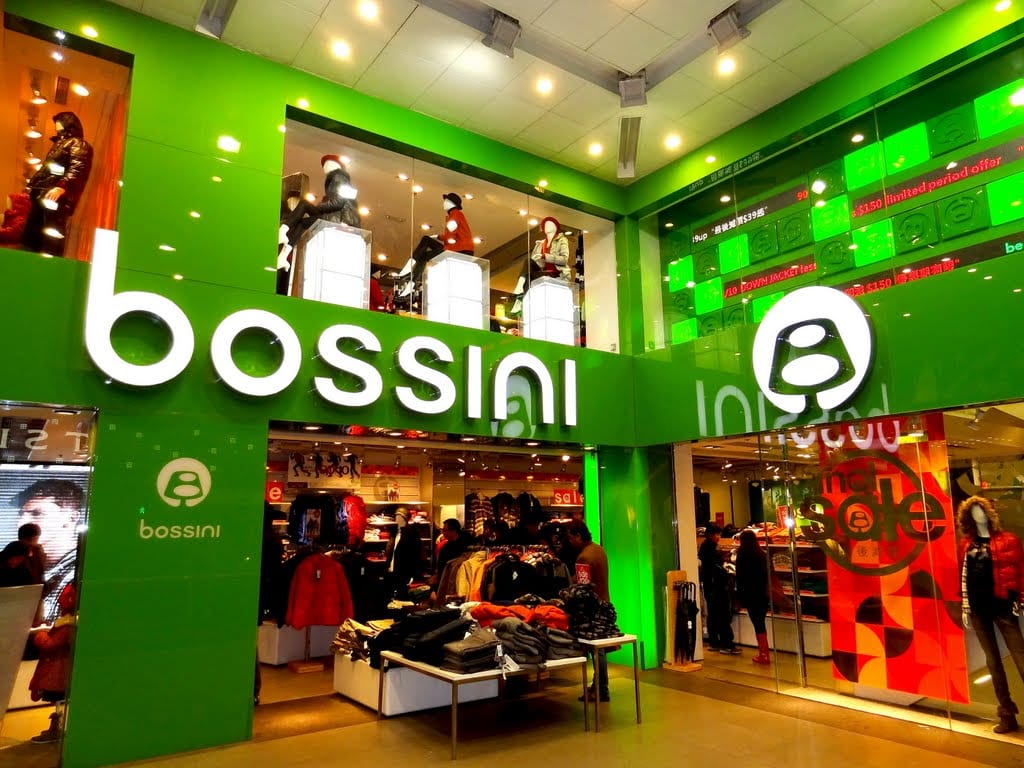
    Overall revenue fell 11 per cent for apparel retailer Bossini International during the first half of its financial year.

    However, its interim results to December 31, showed an improvement in gross margin – by four points to 51 per cent, attributed to more effective sales and marketing strategies. Profit for the period attributable to the owners increased by 20 per cent.

    The Hong Kong and Macau market, the Mainland China market and the Taiwan market showed signs of having bottomed out, says the company, with same-store gross profit level after a period of negative growth for more than a year.

    With a footprint across 28 countries, the group says it is still optimistic in the long run, adding 16 shops during the half-year.

    Its revenue for the six months was HK$1.022 billion (US$131.6 million), down 11 per cent from HK$1.146 billion in the same period a year earlier. Gross profit slipped 4 per cent to HK$519
    million.

    For directly managed stores, same-store sales in Hong Kong and Macau fell 6 per cent, a slight improvement, and Mainland China and Taiwan stores performed similarly, declining by 2 per cent. Same-store sales in Singapore dropped by 8 per cent compared to per cent in the previous first half. The group’s overall same-store sales slipped 6 per cent.

    At December 31, the Group had 952 stores, up five from six months earlier. Directly managed stores grew to 287 from 280, while franchised stores dropped by two to 665.

    The group continued its strategy of working with licensing partners to strengthen brand recognition and boost sales. Three licensing programs were launched in the first half of the financial year, working with Disney and Universal Studios.

  • AirAsia to run Bhubaneswar-Kuala Lumpur flights from April 26

    Malaysia-based low-cost airline AirAsia has added Bhubaneswar to the list of destinations in India with four weekly direct flights from Kuala Lumpur. It will commence operations on April 26, 2017, making AirAsia Group’s 16th route into India.
    On February 17, the low-cost carrier had signed a pact with the Odisha government for running direct international flights from Bhubaneswar to Kuala Lumpur.
    This new route is operated exclusively by AirAsiaBerhad (flight code AK) and will offer guests an experience of the rich culture, tantalising food scene and multi-faceted sights of the country’s capital city, Kuala Lumpur, the company said in a statement
    “With Bhubaneswar now added to our extensive network, AirAsia is unlocking the potential of international air travel from Kuala Lumpur to Eastern India and its surrounding areas. We are thrilled to be serving Bhubaneswar direct, a huge market that no other airline is serving directly from Malaysia. Now, everyone from across the region can connect to Bhubaneswar with AirAsia via Kuala Lumpur. At the same time, the people of Odisha can use Bhubaneswar as a gateway to our extensive route network to Asean and beyond, where they will have access to over 120 destinations across our extensive route network”, Aireen Omar, chief executive officer of AirAsiaBerhad said.
    AirAsia Group also connects Bengaluru, Visakhapatnam, Kolkata, Kochi, Hyderabad, Chennai, Tiruchirappalli, New Delhi directly to Kuala Lumpur, and from Chennai, Bengaluru, Kochi and Kolkata directly to Bangkok in Thailand.
    AirAsia was selected through competitive bidding to start operations from Odisha. The state government had invited an Expression of Interest (EoI) from the scheduled air carriers for running flights to destinations in South East Asia like Singapore, Bangkok and Kuala Lumpur. To woo the air carriers, the state government had agreed to provide reasonable Viability Gap Funding (VGF) in the form of subsidy grant.
  • Philippines to crack down on spectrum hoarding

    Philippines to crack down on spectrum hoarding

    The Philippines’ Department of Information and Communications Technology (DICT) plans to crack down on spectrum hoarders, threatening to recall unused frequencies and potentially auction them to a third or even fourth local player.

    A recent audit of the National Telecommunications Commission (NTC) shows that a number of companies are not using the spectrum that has been assigned to them, and many of these have unpaid spectrum usage fees owing.

    In response, the government plans to ask these companies to explain their lack of use or their non payment of spectrum fees. In cases where it is deemed warranted, the government plans to initiate recall procedures for the spectrum. The report cites DICT undersecretary Jorge Sarmiento as stating that there is enough unused spectrum in the Philippines’ airspace to allocate to a third or even fourth player.

    The NTC is preparing to hold a new entrant spectrum auction by the middle of the year, as part of efforts to attract new competition to break up the Globe-PLDT duopoly.

    The ministry is also under pressure to resolve consumer complaints about the quality of internet services in the Philippines, and recently announced it will hold a “no-holds-barred” summit to address these concerns.

    The audit shows that spectrum has been allocated but is not in use in the 400-MHz, 700-MHz, 800-MHz, 2500-MHz, 3.4-GHz and 10-GHz bands.

  • Fujitsu enables biometric authentication for IoT

    Fujitsu enables biometric authentication for IoT

    Fujitsu Laboratories says it has developed a technology that enables safe and easy use of cloud services through IoT devices by leveraging the biometric authentication functionality and near-field wireless functionality of modern smartphones.

    In the era of IoT, various devices are connected to cloud services. When using these services such as parcel delivery lockers in apartments or public facilities, or when using car sharing services, user authentication will need to take place each time a service is used.

    With existing ID and password systems, users have to manage multiple IDs and passwords which make the authentication process cumbersome.

    Fujitsu Laboratories has developed technology that enables biometric authentication of a cloud service’s user without extracting biometric information from that user’s smartphone.

    The technology establishes a secure network between a cloud service, an IoT device and a smartphone, and then simultaneously verifies the identity of the user and that the user is in front of the IoT device.

    With the new technology, users can safely and conveniently access cloud services through a variety of IoT devices without inputting an ID and password, using just their smartphone’s biometric authentication.

    In addition, Fujitsu said this technology enables the provision of a strong personal authentication service using biometrics without requiring service providers to manage an individual’s biometric information for each device or service.

  • DHL eCommerce launches Fulfillment Center in Sydney

    DHL eCommerce launches Fulfillment Center in Sydney

    The Fulfillment Center will provide overseas merchants with fast, flexible shipping that integrates inbound freight, inventory, and last mile delivery in a single consolidated service.

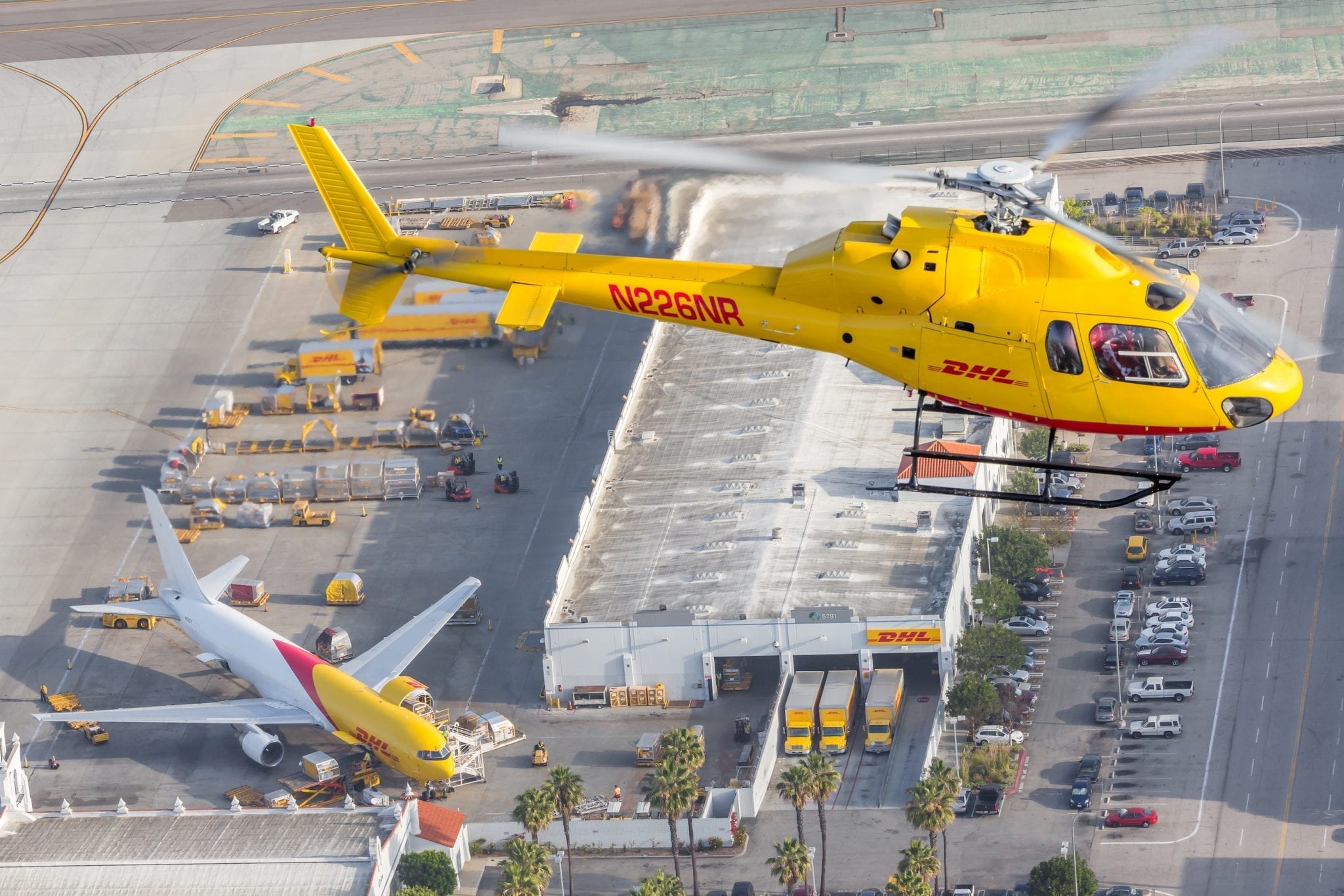
    DHL eCommerce, a division of the world’s leading logistics company, Deutsche Post DHL Group, announced the launch of its Fulfillment Center in Sydney, Australia to support booming demand for overseas goods amongst Australia’s online shoppers. International brands and retailers are now able to reach out to the rapidly growing Australia market.

    “Australian shoppers are the second-most likely in the world to buy online from overseas merchants, and the significance of their purchasing power will only increase as cross-border e-commerce grows at an average of 29 percent per year until 2020,” said Damien Sheehan, managing director Australia, DHL eCommerce. “Online retailers need to overcome the traditional problems associated with overseas expansion – finding new suppliers in each market, delivering shipments within days not weeks, and keeping costs in check – if they want to stay competitive in this borderless future.”

    Adding, “The launch of our Australian Fulfillment Center gives our customers immediate access to one of the world’s most mature and fastest growing e-commerce markets, with the scalability and quality needed to reach Australia’s highly savvy online shoppers.”

    The Fulfillment Center will provide overseas merchants with fast, flexible shipping that integrates inbound freight, inventory, and last mile delivery in a single consolidated service. The center also operates using the same service level agreements, management platforms, and customer support as all other parts of DHL eCommerce’s global Fulfillment network, allowing existing customers to expand their sales into Australia with minimal onboarding time and hassle.

    “E-commerce has gone borderless, and order fulfilment needs to do the same,” says Charles Brewer, CEO DHL eCommerce. “Our Australian facility adds another node to our standardized global network of Fulfillment Centers located in US, Mexico, India, Hong Kong and Central Europe, eliminating the need for e-commerce merchants to hunt for new logistics partners as they look to expand their global reach.”

    The center’s design accommodates front-end integration with a range of popular marketplace and web-shop platforms, as well as multichannel order management and last-mile solutions for immediate and highly-accurate deliveries all across Australia. All of the center’s services operate on a pay-per-use model with no capital spend or fixed costs.

    “The value of Australian e-commerce sales is expected to grow by nearly 50 percent between now and 2020, making cost-effectiveness and scalability the critical issues for online retailers in the country,” said Malcolm Monteiro, CEO Asia Pacific, DHL eCommerce. “Whether it’s extending into new channels, offering more delivery options, or simply increasing inventory and warehouse capacity, global brands need fulfilment solutions that can adapt to their needs without requiring hands-on intervention every time a change occurs.”

    Concluding, “Global e-tailers can access our latest fulfillment center for simplified nationwide inventory and last-mile delivery and also as part of a rapid and painless global expansion.”

  • Proton Iriz enters Indonesia

    Proton Iriz enters Indonesia

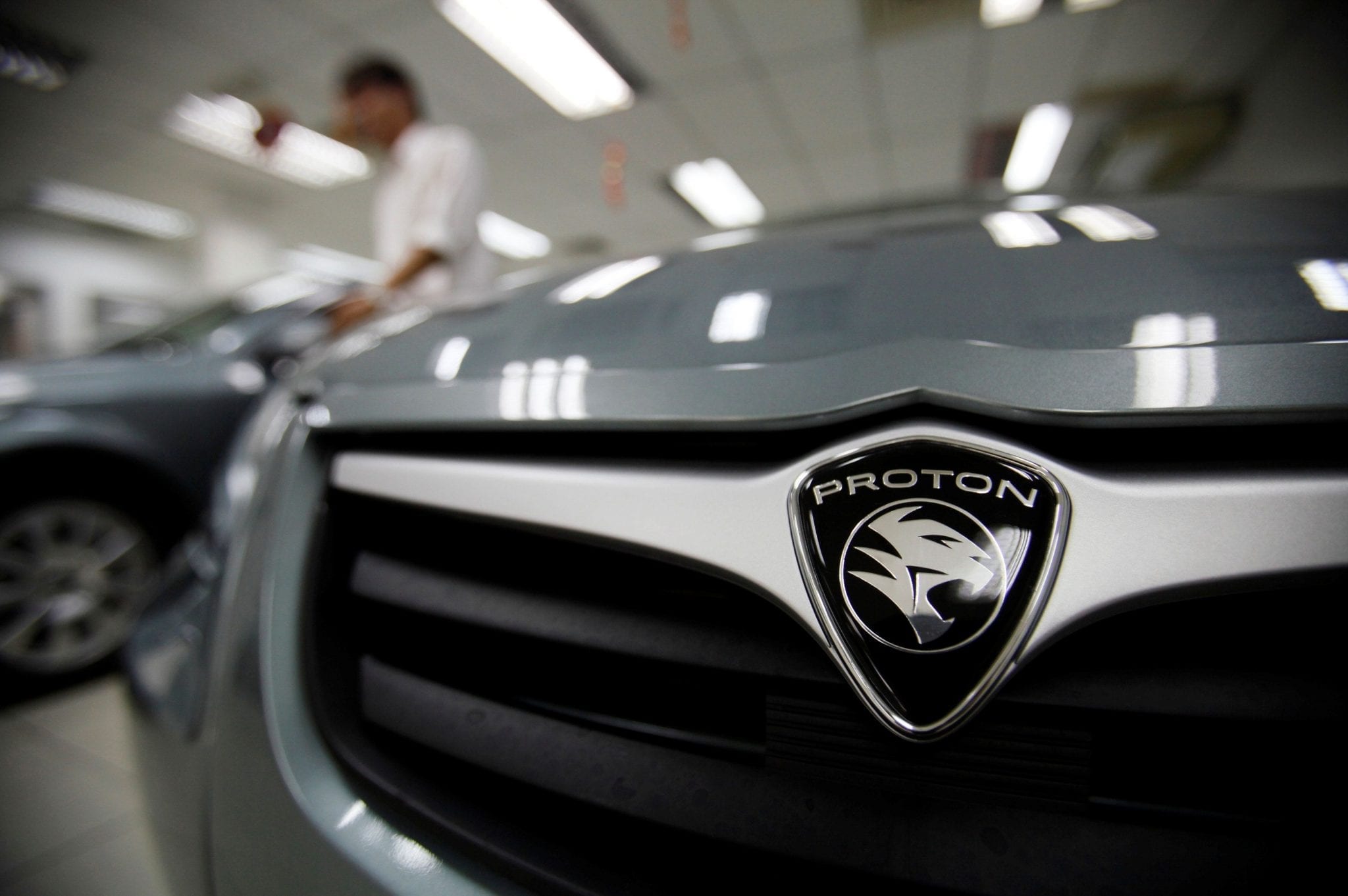
    Proton Holdings, via its Indonesian unit, PT PROTON Edar Indonesia (PEI), has launched its latest hatchback vehicle, the Proton Iriz in several cities in the republic.

    In a statement today, Chief Executive Officer Datuk Ahmad Fuaad Kenali said Indonesia is an important market for the national carmaker.

    “Not only have we maintained strong government-to-government relations being ASEAN founding members, but we also share many similarities in terms of people, language, culture as well as the weather,” he said.

    Ahmad Fuaad said Indonesia is the second country after Brunei to import the vehicle.

    He said two variants have been made available to the Indonesian market, namely the 1.3L MT Standard and 1.3L CVT Standard, priced at IDR 175,250,000 and IDR185,283,000, respectively (RM1=IDR 2996.52).

    The PEI is supported by a total of 25 sales and after sales outlets in Indonesia, and locals can get up close and personal with the Proton Iriz in all the sales outlets from Feb 20.

    Since its debut, the Proton Iriz has received many awards and accolades from the automotive industry in Malaysia. Among them, is a 5-Star rating from the Asean New Car Assessment Programme.

    Interested customers can visit any of the dealers at their showrooms across Indonesia or visit the PEI website at www.proton-edar.co.id.