Tag: asia

  • Global giants crave for pieces in Vietnam e-commerce market

    Global giants crave for pieces in Vietnam e-commerce market

    Foreign investors have been pouring billions of dollars into the e-commerce market, seeking to change shopping habits in Vietnam and eventually profit from a likely online boom.

    Since the pandemic began, Tran Thi Linh in Hanoi has picked up a new habit of lying on her couch for hours to browse through e-commerce apps, looking for promotions.

    “With social distancing, I became reluctant to leave the house, and I realize it is more convenient to shop for certain items online,” the 47-year-old housewife said.

    With the apps she no longer has to carry heavy bags of detergents and rice from the supermarket to her apartment, while the coffee her husband drinks is cheaper online.

    “I read reviews and watch videos to make shopping decisions. I still go to the supermarket but less often.”

    Linh is among many Vietnamese that have become more familiar with e-commerce platforms and saw their shopping habits changed during the pandemic, a goal that that Vietnamese and foreign companies have spent billions of dollars to achieve as they seek to claim a bigger share in a booming industry.

    Vietnam’s digital economy is forecast to grow by 29 percent annually from 2020 to $52 billion by 2025, according to a study by Google, Temasek Holdings and Bain & Co.

    But data from Euromonitor International estimates e-commerce accounted for only 3 percent of the nation’s retail market last year, the smallest amount in Southeast Asia.

    This is why major global companies have been making moves to secure a place in the market. From 2016 to the first half of 2020, investors poured $1.9 billion into Vietnam’s online sector, the study by Google, Temasek and Bain showed.

    The latest deals include a $400 investment by an Alibaba Group-led consortium into a unit of conglomerate Masan Group, which is set to team with Lazada as part of the deal to win Vietnam’s e-commerce market.

    Equity firm Warburg Pincus in January poured more than $100 million into M-Service JSC, a Vietnamese startup that operates the MoMo payment app.

    Domestic platform Tiki had earlier raised $192.5 million from Japan’s Sumitomo Corp and China’s JD.com.

    “Vietnam is at the beginning of becoming a digitalized society with a young population that loves technology,” Bloomberg cited Ralf Matthaes, managing director of Ho Chi Minh City-based Infocus Mekong Research, as saying.

    “So all these companies are tripping over themselves to offer these services.”

    But changing Vietnamese people’s shopping habit while dominating the market in the process is easier said than done.

    Linh, the Hanoi housewife, said that until now she only pays for online orders by cash, because she does not know how to link her shopping account with her debit card.

    “Another reason is that I can refuse to accept orders if they do not meet the quality I expect. There are many online shopping frauds and I want to be careful.”

    Cash remains the most popular payment method in Vietnam with around 80 percent of the population preferring it in daily transactions, according to the Ministry of Industry and Trade.

    “Cashless payment remains unpopular in Vietnam because people prefer to see and touch products before paying for them,” said Le Xuan Vu, board member of Military Bank, adding that if local banks can guarantee to compensate customers for fraud and fake products, they will trust cashless payment and use them more regularly.

    Dominating the market remains a challenging task for e-commerce firms with so many players seeking a piece of the pie. Among four major platforms, Shopee, Tiki, Lazada and Sendo, none has been able to secure a paramount position to become the go-to marketplace for every need.

    Electronic companies like Mobile World, FPT and CellphoneS have also established their own platforms so not to be left behind in the race.

    “I have apps of Tiki, Shopee and Lazada and use them all. I don’t feel the need to commit to only one platform,” said Nguyen Duc Anh, who works for an advertising agency in Hanoi.

    Duc Anh often compares prices and reviews of a product on all three platforms to make the decision. Usually the platform with the highest number of purchases and offers the best price and delivery time wins.

    “For now I’m having the best of several worlds.”

    This is why e-commerce companies are trying different strategies to make its platform the best and the only.

    Almost every month Shopee offers a period of major discount with a variety of items priced as low as VND1,000 (4.3 U.S. cents).

    Tiki has been working to remove counterfeit products and increase the number of items eligible for a two-hour delivery. It also offers up-to-30-day return policy for certain electronics products to gain customers’ trust.

    In the new partnership with Lazada, Masan seeks to blend offline and online shopping into one experience by making its 2,200 VinMart+ outlets the pickup points for purchases on the platform.

    But while platforms race to win more customers, people like Linh are still reluctant to abandon the traditional shopping method.

    The other day she used online platforms to check prices of an air purifier but ended up driving her motorbike to an electronics store to make the purchase even though it was priced slightly higher there.

    “I still need to touch it. I want to see it with my own eyes.”

  • DHL supply chain sharpens growth focus on Singapore, Malaysia and the Philippines

    DHL supply chain sharpens growth focus on Singapore, Malaysia and the Philippines

    DHL Supply Chain, the global market leader for contract logistics solutions, has named Jerome Gillet as CEO of the new Singapore cluster which includes Singapore, Malaysia , and the Philippines . In this role, Jerome will continue to report to Terry Ryan, CEO, DHL Supply Chain Asia Pacific, while remaining as a member of the regional board.

    The appointment will bring synergy for the three markets and drive new growth for the region. The DHL Supply Chain businesses locally continue to be led by the respective country heads – Jason Goh, managing director, DHL Supply Chain Singapore; Mike Davies, managing director, DHL Supply Chain Malaysia; and Suzie Mitchell, managing director, DHL Supply Chain Philippines — who now report to Jerome.

    “We see tremendous opportunity in Singapore, Malaysia and the Philippines to grow our business with even more focus on greater service quality in the markets. Jerome has repeatedly demonstrated his commitment to customer needs, and, in a changing economic climate, he is well placed to help customers deliver greater value from their supply chains,” said Terry Ryan , CEO, DHL Supply Chain Asia Pacific. “An innovator and strategic leader, Jerome is well suited to lead the next stage of growth transformation in our Singapore cluster. With his track record of delivering accelerated growth and building strong customer relationships, I am confident he will drive this new cluster in achieving high and sustainable growth.”

    “I am looking forward to accelerating growth in the newly formed cluster with a strong focus on Quality, Innovation and Customer centricity,” said Jerome Gillet , CEO, Singapore cluster, DHL Supply Chain.

    Jerome’s career in logistics spans over 20 years (the last 17 years in Asia Pacific ) and includes roles in general management, operations and business development. His last appointment as chief customer officer (CCO) of DHL Supply Chain Asia Pacific saw him turn Asia Pacific into the fastest-growing region worldwide within DHL Supply Chain. The tremendous growth was driven by his business development efforts in key sectors such as consumer & retail, technology and life sciences. Prior to his role as the CCO, Jerome was the vice president of consumer sector for Asia Pacific , and increased annual new business gains by over 200 percent between 2008 and 2014.

  • Star Cloud Services Brings First Digital Receipt Solution to Singapore Retailers

    Star Cloud Services Brings First Digital Receipt Solution to Singapore Retailers

    Star Cloud Services, a subsidiary of leading receipt printer manufacturer Star Micronics, announced it has expanded support to retailers in Singapore.

    Built to bring IoT solutions to retailers, Star Cloud Services helps them better engage with, activate and retain shoppers by turning receipt printers into cloud-connected devices and offers a suite of free services to get the most out of shopper data available from receipts.

    Star Cloud Services powers all retailers with AllReceipts™, a fast, free, and secure digital receipt solution making it easy to offer customers digital receipts without sharing an email address or taking a picture of the physical copy.

    “We are really excited to expand our support to Singapore,” said David Salisbury, VP of Sales and Marketing at Star Cloud Services. “Small brick and mortar retailers have found themselves not only competing with the big box stores, but with the drastic growth of ecommerce. With so many people in Singapore reliant on their smartphones, digital receipts just make sense.”

    The opportunity for digital transaction data, especially in Singapore, is growing rapidly. According to the “Consumer Barometer,” a study done by Google, Asia leads the world with smartphone usage and engagement. Singapore currently holds the highest smartphone penetration at 85 percent, according to the same study. More people in Singapore have smartphones than computers, with an astonishing 60 percent of those surveyed saying they use their phones compared to their other digital devices.  

  • Christopher Bailey to depart Burberry after 17 amazing years

    Christopher Bailey to depart Burberry after 17 amazing years

    Christopher Bailey is to depart from Burberry after 17 years as its creative head. In a statement issued overnight, Burberry said Bailey, 46, will remain in his dual roles of president and chief creative officer until March 31, when he will also resign from the board.

    He will design the Spring/Summer 2018 collection and exit the business in December after a period of transition.

    “Burberry has undergone an incredible transformation since 2001 and Christopher has been instrumental to the company’s success in that period,” said Burberry CEO Marco Gobbetti.

    Bailey described his tenure at the UK-headquartered luxury fashion brand as “the great privilege of my working life”.

    “I am excited to pursue new creative projects but remain fully committed to the future success of this magnificent brand and to ensuring a smooth transition.”

    Replacement tipped

    Some analysts are already picking Bailey’s replacement: Phoebe Philo, who worked with Gobbetti at Celine, has been identified as a frontrunner.

    “For now, Philo remains in her role at Celine” But LVMH is interviewing designers to replace Philo and rebuild Celine’s design team in preparation for her eventual departure. The conglomerate vehemently denied that Philo’s departure was “imminent” without denying that interviews for her replacement were taking place.”

    “Phoebe used to work with Marco Gobbetti and they know each other well,” Mario Ortelli, head of the luxury goods sector at Sanford C Bernstein. “She is a big name, and in terms of brand elevation she can be one of the possible candidates for the role. In our view Phoebe Philo could move across to Burberry and recreate the powerful CEO-creative director combination Gobbetti and Philo experienced at Celine.”

    Thomas Chauvet, head of luxury goods equity research with Citigroup, concurred in a note issued after the Bailey announcement.

    “Early feedback from investors suggests that the successful partnership she previously had with Mr Gobbetti makes her a suitable potential candidate.”

    Pascal Martin, partner with OC&C Strategy Consultants in Hong Kong, said 17 years at the helm of a luxury brand’s design team is a long tenure – longer than most design directors in global luxury houses, with the exception of very rare cases like Chanel’s Lagerfeld.

    “In his time, Bailey had completely revived the brand and had the genius to re-invent the trench, Burberry’s iconic product, and make it trendy and aspirational. He has also led Burberry’s charge into the digital world, ahead of the entire luxury sector, making the brand “cool” to the millennials generation when other luxury brands were still very hesitant and protective.”

    Rivals catching up

    But Martin said Burberry’s designs and stores have lost a bit of their innovativeness lately, while many luxury brands have caught-up with Burberry on the digital front.

    “Looking ahead, creating new excitement around the brand – through product design and store design – is going to be one of the major challenges for the new design director.”

    Charlotte Pearce, a retail analyst with GlobalData, said since Bailey became creative director in 2004, he has contributed to total revenue growth of £2 billion and has helped to regenerate the brand, turning it back into the aspirational, iconic label that it once was.

    “With just over a year until Bailey leaves, there is plenty of time for Marco Gobbetti, who took over as CEO in July, to find the right candidate to fill Bailey’s shoes. It is crucial that Burberry finds someone with respect for the brand’s British heritage but is able to further evolve the label creatively and bring it into a new era,” said Pearce.

    Gobbetti said Burberry has “a clear vision for the next chapter” to accelerate the growth and success of the brand.

    “I am excited about the opportunity ahead for our teams, our partners and our shareholders.”

  • New Zealand-based property group buys Entrada Shopping Centre

    New Zealand-based property group buys Entrada Shopping Centre

    New Zealand-based Cook Property Group has bought the Entrada Shopping Centre in the heart of Parramatta for $41.32 million, reflecting a yield of 5.7 per cent.

    The the 5,570sqm Coles-anchored centre, which was developed by Dyldam Developments in 2011, is located in a high profile corner position – and supported by a number of specialty retailers, medical centre and child care provider.

    The centre, which also includes 196 car parks, is underpinned by a 20-year lease to Coles and total weighted average lease expiry of 10 years.

    CBRE Retail Investments’ Justin Dowers, Nick Willis, Mark Wizel and Peter Vines negotiated the sale of the centre on behalf of Centennial Property Group.

    “The sale of Entrada Shopping Centre further highlights that the market is pricing strata retail investments at a similar level to freehold investments,” said Dowers.

    “This is related to the lack of freehold centres offered for sale, but also an increased level of confidence in how these centres perform and the acceptance of this retail platform from the customers.”

    Dowers said strata retail centres are generally developed in highly built up areas where major supermarkets have found it difficult to get a presence in.

    “The benefit for owners of these assets is that they generally provide consistent rental growth underwritten by population growth, and the competition risks are much less when compared to outer growth areas of major capital cities,” he said.

    Willis said the property’s position in Greater Western Sydney’s growth corridor underpinned strong buyer interest in the asset.

    “We received a lot of interest from interstate and international investors given their desire to obtain retail holdings in Sydney – and more specifically the western growth corridor, noting the forecasted population growth in this region,” Willis said.

    Ben Cook of Cook Property Group said the Entrada Shopping Centre is a good strategic fit for his Sydney portfolio.

    “The anchor tenant, Coles, is enjoying exceptional turnover growth as a result of the centre’s prime location,” Cook said. “The barrier to entry for a competing development is significant, Parramatta’s growth story is compelling and the income generated from the asset is mostly non-discretionary.”

    “This fits with my investment model of acquiring defensive assets in core Sydney locations, with excellent growth prospects,” he added.

    Willis said major growth precincts in Sydney’s west such as Parramatta and Westmead were benefitting from significant investment that was helping underpin demand for retail amenity.

    “Investors see this as an opportunity to gain exposure in Australia’s most exciting future cities,” Willis said.

    “With over $10 billion worth of development occurring including the Light Rail, Parramatta Stadium, Parramatta Square and the Westmead Hospital, coupled an estimated 30,000 new dwellings in the region, the future income potential of Western Sydney will continue to underpin investor confidence.”

  • Marine tourism sector expected to contribute US$4 billion

    Marine tourism sector expected to contribute US$4 billion

    The marine tourism sector is expected to contribute US$4 billion in 2019, or a four-fold increase from the present contribution, according to Tourism Minister Arief Yahya.

    “We hope that the foreign exchange earnings from marine tourism will increase in 2019 from $1 billion this time,” Yahya remarked, during the signing ceremony of cooperation between the Ministry of Maritime Affairs and Fisheries and the Ministry of Tourism in the field of marine tourism here, on Tuesday.

    The minister admitted that the contribution of marine tourism to the foreign exchange at present was still lower than that of the tourism sector as a whole.

    He said that the marine tourism currently contributes to only about 10 percent of the overall foreign exchange of national tourism that reaches $10 billion per year. Thus, the contribution of marine tourism is only about $1 billion.

    The minister compared this to Malaysia, where marine tourism contributes to about 40 per cent of the total foreign tourists.

    Malaysia itself is expected to rake in tourism foreign exchange of about $25 billion per year.

    Yahya argued that the factors that lead to minimal contribution of marine tourism in Indonesia, among others, were regulatory factors, human resources, and the approach on being more concerned about security than services.

  • Hanwha gets smart about solar cell production

    Hanwha gets smart about solar cell production

    Hanwha Group has been striving to make the solar business its future growth engine since it first entered the industry in 2010, and that hard work is starting to pay off. Hanwha Q Cells, the group’s solar cell producer, is now one of the largest manufacturers in the industry, but competition is getting much tougher. Even some of the more established companies in Europe and the United States are struggling due to fast-growing Chinese manufacturers, according to Hanwha. As a result, the United States imposed tariffs on solar cell and module imports earlier this year.

    In a bid to tackle fierce competition and fortify its leadership, the group invested in making its new solar cell plant smarter using wearable gadgets, big data and robots.

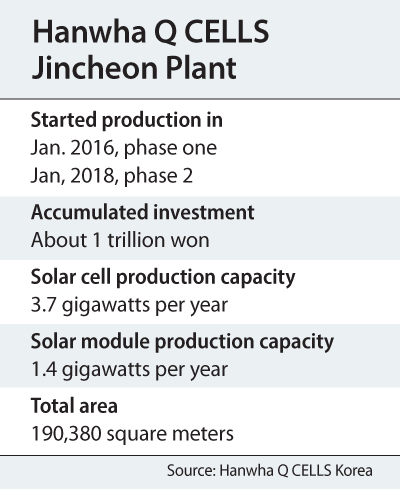
    The Jincheon 2 plant, which started mass production of solar cells and modules in January, is an addition to the original complex built in 2016. With the first and second plant combined, the Jincheon facility is the largest single solar cell production site in the world, according to Hanwha, with 3.7 gigawatt production capacity.

    When we visited the solar cell production line on the third and fourth floor of the newly-built plant on Tuesday, some workers were moving busily from machine to machine wearing what looked like a smart watch.

    “It looks like a smart watch because we took the hardware from electronics companies like Samsung,” a spokesperson from Hanwha said. “But we applied our own software so that workers receive alarms when there are problems with the machines.”

    According to the solar cell maker, the watch does not provide a detailed cause or explanation of the problems, but it makes workers respond immediately to issues by alarming them with notices categorized into four stages – S, A, B and C – depending on the severity and complexity of the problem.

    The system means that just 40 workers are required to manage 220 machines lined-up horizontally in five production lines in the 330-meter-long (1082 feet) solar cell production room, according to Hanwha.

    Another unusual scene inside the plant was a huge stack of 200 solar cells moving around over workers’ heads.

    “We call it a cassette,” said Yang Byung-ki, a manager of cell production at Hanwha Q Cells Korea, the company in charge of cell production in Korea. “This automated overhead logistics system delivers solar cells quickly and safely to the next destination.”

    The automated delivery system moves cells through the 10 stages of production.


  • Espoir enhances customer experience by new concept store “MAKE-UP MARKET”

    Espoir enhances customer experience by new concept store “MAKE-UP MARKET”

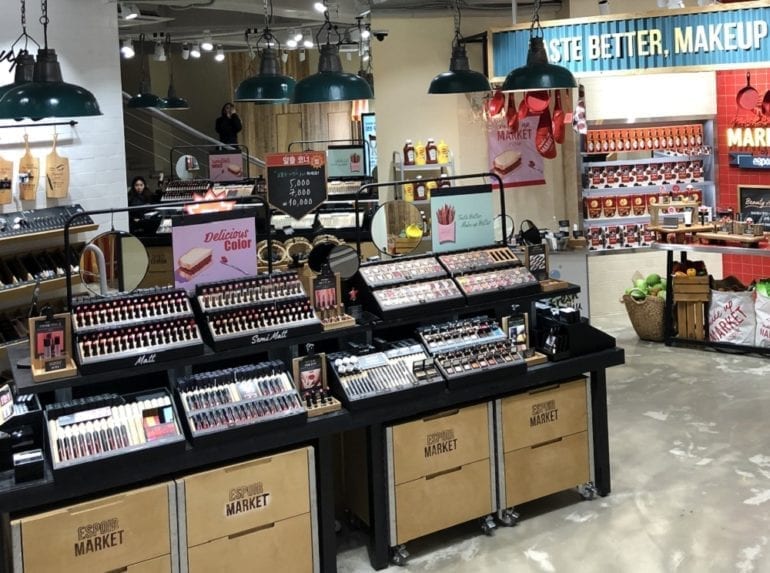
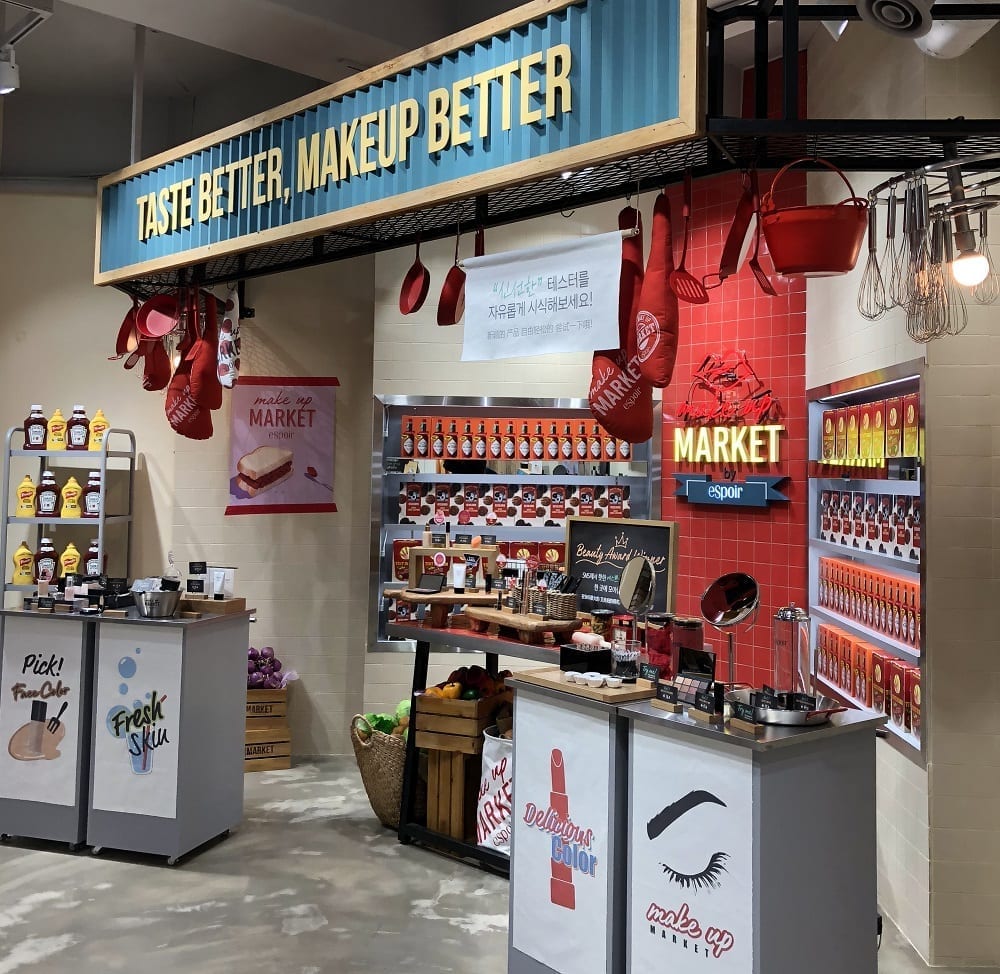
    Espoir opened new concept store with the theme ‘Market’ in order to provide a new brand experience in Shinsa-dong, Seoul.

    Inspired by the European market, the ‘MAKE-UP MARKET’ of Espoir brings a feeling of a colorful  interior to the actual food market.

    The make-up market store is the first self-picking concept store.

    Espoir has introduced a self-picking process that allows customers to test and buy their own products through a space configuration that considers the customer’s movement.

    Additionally, they provide free stamps, ribbons, etc. in the self-packing zone so that customers can freely wrap their own products when they have finished all their purchases.

    There is a tasting zone in the market  so that anyone who visits the store can test the best-selling products of Espoir. There is also a flea market zone on the first floor and the basement floor for best-selling items at special price.

    In this concept store, pre-sales promotions that were only offered online will be carried out in the off-line store alone so that customers can experience new more quickly than anyone else.

    There are also a variety of exclusive set items available only in ‘MAKE-UP MARKET’ store.  Customers will receive a ‘slim fit air puff’ or a special market sticker on a first-come, first-served basis for customers purchasing from a concept store during February 2018.

    “We hope that customers will be able to experience various aspects of our products through the new concept store of ‘MAKE-UP MARKET’ following the concept store of Hongdae ‘MAKE-UP PUB concept store’, and we will prepare a various event that will provide fun and new products for customers in the future,” company said.

  • Real Madrid Partners with Alibaba Group to Launch its Official Online Store on Tmall Global in China

    Real Madrid Partners with Alibaba Group to Launch its Official Online Store on Tmall Global in China

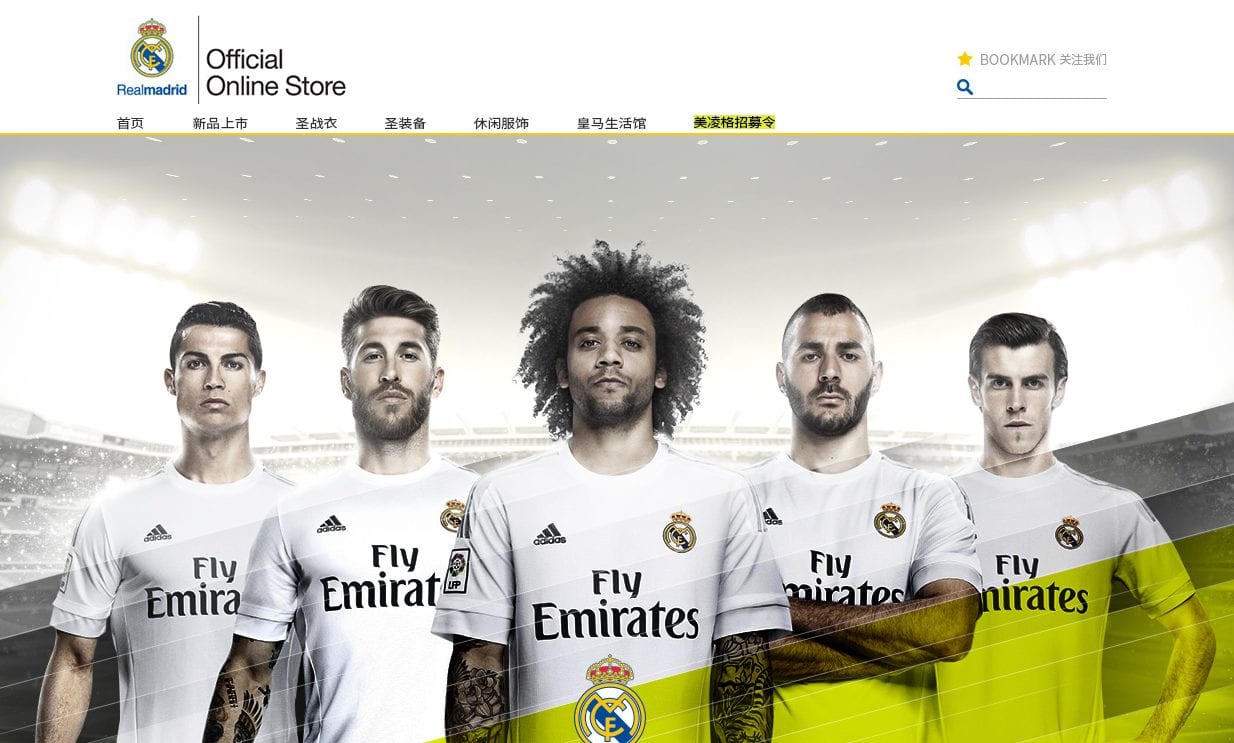
    Real Madrid, the world’s leading sports club and Tmall Global, an overseas platform and an extension of Alibaba Group’s B2C Tmall.com business in China, jointly announced today the launch of the official online Real Madrid store (https://realmadrid.tmall.hk) for consumers in China. This strategic partnership will allow consumers in China to enjoy a selection of the sports club merchandise including official player jerseys, club apparel for men, women, and children, and club memorabilia.

    The Real Madrid online store is another example of Alibaba Group’s strategy to bring premium foreign brands and products directly to Chinese consumers. Fans of Real Madrid can now directly purchase their favourite and genuine Real Madrid merchandise on the club’s Tmall Global online store.

    The partnership launch ceremony held in Guangzhou today was attended by Jeff Zhang, President of Alibaba Group’s China retail marketplaces, Florentino Perez, President of Real Madrid, and the team’s first string players. Widely known as the most valuable sports club in the world, Real Madrid will work together with Tmall Global to develop their business within China targeted at Chinese consumers.

    Jeff Zhang said: “As one of the world’s most recognizable and popular football brands, Real Madrid is the second football club that has reached a strategic cooperation with Tmall Global, closely following our collaboration with FC Bayern Munich in May this year. Real Madrid and Tmall Global will work together to promote the exciting world of international sport to the Chinese market. As part of our Tmall Global strategy, Alibaba is committed to bringing new cultural experiences and brands on to our China retail marketplaces and we will continue to work with European brands and municipalities to bring the world to Chinese consumers.”

    Florentino Perez said: “Today, we continue to reach out to this incredible country. Today we start a partnership that will strengthen our ties. The best club in the world, Real Madrid, is establishing a strategic alliance with Alibaba’s Tmall Global platform. Initiating this new path is an honour for us, and without a doubt, teams us up with the global player and absolute leader in global ecommerce. This strategic alliance allows us to launch the official Real Madrid store in China for more than 600 million consumers online.”

    The official Real Madrid store on Tmall Global offers a unique player fitting room interactive function so fans can choose outfits and products from their favourite players. In addition, the sports club also has a broad range of lifestyle merchandise from mouse pad and lunch box packs to embrace a complete lifestyle selection for fans to choose from. In the future, Tmall Global and Real Madrid will have special edition or exclusive products targeted for Chinese consumers.

    Real Madrid is the first club in the world to have opened offices in China, headquartered in the Beijing capital. With millions of Real Madrid fans in China, the club aims to reach new fans through Alibaba Group’s China retail platforms.

    About Tmall Global

    Launched in February 2014, Tmall Global (www.tmall.hk) is an overseas platform and an extension of Alibaba Group’s B2C Tmall business, which enables overseas merchants to enter China’s online retail market. By joining Tmall Global, merchants can conduct business from overseas without the need for physical operations within mainland China. International brands on Tmall Global benefit from the exposure to the hundreds of millions of visitors on Taobao Marketplace and Tmall.com. Through Tmall Global, Chinese consumers have access to a variety of branded products sourced and fulfilled from outside mainland China.

  • Nike sued over copycat sports bra design

    Nike sued over copycat sports bra design

    A Florida-based entrepreneur is suing Nike for allegedly copying her design patents pertaining to a sports bra with pockets.

    SherryWear LLC claimed in a lawsuit filed this week that Nike copied its pocket bra design after its founder, Sherry Goff, submitted the SherryWear pocket bra design to Nike via an online submission. The design at the time had some issued and pending patents.

    According to the suit filed in a Massachusetts court on Monday, Nike rejected Goff’s design in March 2017. Just a few months later, Nike filed a U.S. patent application for a “Bra With Storage Pockets.” Goff submitted the SherryWear pocket bra design to Nike again after that and was rejected again.

    SherryWear specifically takes issue with Nike’s Swoosh Pocket Bra and the Swoosh on the Run bras, both of which feature pockets.

    “Nike has never had authority to use, offer, sell or import any product or assembly covered by the Pocket Bra Patents or actively induce others to do so,” the suit claims. “By continuing to engage in commercial activities described in this complaint, Nike is knowingly, deliberately and intentionally infringing the Pocket Bra Patents.”

    Retail News has reached out to Nike for a comment. In a statement to Retail News, a spokesperson for SherryWear’s law firm, Caldwell IP Law, said it is “confident in the effectiveness of the patent system and its ability to empower small businesses, such as SherryWear.”

    Nike may be on the defensive this time, but the Swoosh has historically taken a harsh legal stance when it comes to protecting itself against potential copycats. Nike, in 2021, filed a trademark infringement and dilution complaint against MSCHF, the company that released its controversial Satan Shoes with Lil Nas X, and settled the lawsuit shortly after. Last year, Nike resolved its trademark infringement battle with footwear designer John Geiger after claiming he created sneakers that were similar to Nike’s Air Force 1 shoes.

  • MyIX to finalise deal with Netflix next month

    MyIX to finalise deal with Netflix next month

    The Malaysia Internet Exchange (MyIX) will finalise its deal with America’s popular online entertainment company, Netflix, to provide its video and movie content in Malaysia by end-August, says chairman Chiew Kok Hin.

    The non-profit MyIX is the first neutral Internet Exchange where local Internet Service Providers (ISPs) and content providers connect to exchange Internet traffic.

    He said with the deal entered into with the entertainment company, neighbouring countries such as Indonesia could also obtain the content from Malaysia at a nominal fee, hence paving the way for the country to become a content hub in future.

    “We hope with the sealed deal, we can attract other international players to come to Malaysia in the future as we are working to position the country as a regional Internet exchange gateway,” he said.

    Netflix is a popular online American entertainment company that provides a range of videos and movies and is also the world’s ninth-largest Internet company by revenue (US$8.83bil).

    Chiew added that with the country being positioned as an Internet exchange gateway, it would attract South-East Asian countries such as Indonesia, Thailand, Vietnam and Cambodia to make Malaysia their content hub.

    “It will bring the content nearer to us, and neighbouring countries will not only save cost but also improve on content quality,” he said.

    Since MyIX’s inception in 2006, it has closed deals with various parties including Alibaba and Yahoo.

    Chiew also said the cost to bring the content had dropped over the years, allowing telecommunication companies (telcos) to reduce their pricing and offer more data and bandwith to their clients.

    “With this in effect (cost reduction), the pricing set by telcos is being monitored by the Malaysian Communications and Multimedia Commission to ensure it is fairly set,” he said.

    As for the Internet speed in the country, Chiew, who is also AIMS Data Centre Sdn Bhd chief executive officer, said overall, the speed offered to Malaysian Internet users was satisfactory.

    However, there still remained certain areas in the country that did not have receive good Internet coverage.

    “Telcos have taken steps to widen their connectivity but it is acknowledged that there are still obstacles in providing fast Internet speed nationwide,” he said.

    The 3rd Generation Partnership Project (3GPP) early this year mentioned at an international conference that the accelerated 5 Generation (5G) schedule, which would enable 3GPP-based large-scale trials and deployments as early as 2019, would be commercialised worldwide by 2020.

  • Citilink Adds Another A320 to its’ Fleet

    Citilink Adds Another A320 to its’ Fleet

    Indonesia’s flag carrier’s low cost subsidiary, Citilink Indonesia, has acquired a new aircraft that will alow it to operate extra services during the upcoming Eid holiday period.

    The Airbus A320 aircraft, which arrived from Hamburg, Germany on Thursday, is the 35th new aircraft acquired by the airline, said the Executive Director for Citilink Indonesia, Albert Burhan, through a press conference in Jakarta.

    “The addition of the new aircraft is reflective of the company’s growth in the first quarter (Q1) of 2015, which would also support Citilink’s ambition to expand its’ reach and stake in the domestic aviation industry,” said Burhan.

    “The arrival of this aircraft will also enable is to operate more services in light of the upcoming Ramadhan peak season,” said Burhan, before adding that Citilink plans to add up to 16 more flights per day between June 1 to June 15, 2015.

    It is known that extra services will be added to Citilink’s existing services between Jakarta’s Soekarno-Hatta Airport and Jogjakarta, Solo, Malang, Batam, Bali, and Medan’s Kuala Namu airport.

    Burhan explained in the press conference that Citilink needs to have at least 50 aircraft in order to get a bigger chunk of the domestic, low-cost aviation market. Citilink’s fleet, he continued, will grow to around 40 units by the end if the year, which will allow it to meet its’ target of delivering services to 11,2 million passengers annually – up from 7,6 million in 2014.

  • Globe launches Future Makers 2019 accelerator

    Globe launches Future Makers 2019 accelerator

    The Philippines’ Globe Telecom has launched the latest round of its accelerator program for startups working to tackle some of the market’s most challenging social problems.

    The Globe Future Makers 2019 program will be open to all Philippine-based individuals, groups, or organizations with solutions that use technology to achieve wide-scale positive impact.

    The technology can include devices, platforms, hardware, or software. The solution developed must be a functional product or service that has been working for at least two years, and be able to address one or more of the United Nations’ Sustainable Development Goals.

    Successful applicants will receive technology support from Globe Telecom as well as access to mentorship, collaboration and related support from industry partners.

    The Globe Future Makers program was first introduced in 2017 with the goal of helping encourage businesses to use technology for social good. This year’s event is being jointly implemented by Philippines’ based crowdfunding website and community for social projects The Spark Project.

    “Globe Future Makers offers a unique opportunity for our small enterprises using digital technology to scale up and test if their businesses are replicable in global markets. We encourage social innovators and startups to participate in GFM 2019.”

  • Korean retailer launches do-not-disturb shopping service

    Korean retailer launches do-not-disturb shopping service

    Lotte Department Store, one of South Korea’s country’s major department-store chain operators, will introduce a do-not-disturb shopping service it dubs ‘shop-alone’.

    Aimed at customers who do not wish to be approached by sales clerks and other employees – a bugbear of many consumers used to shopping in many Asian countries – has been inspired by the Covid-19 crisis and social-distancing practices.

    Customers will be able to shop alone without any offer of assistance from staff if they carry a ‘shop-alone’ sticker or bag ring available near stores’ information desks or escalators.

    The do-not-disturb shopping service is the brainchild of new, young staff born after the 1980s, and will be tested at Lotte Department Store’s flagship Young Plaza, and the company’s Jamsil branch starting today.

    For VIP customers, a personal-shopping consultant will be available for reservations, made via Lotte Department Store’s smartphone app, after they choose an item of interest.

  • Vietjet eyes 15 pct stake sale

    Vietjet eyes 15 pct stake sale

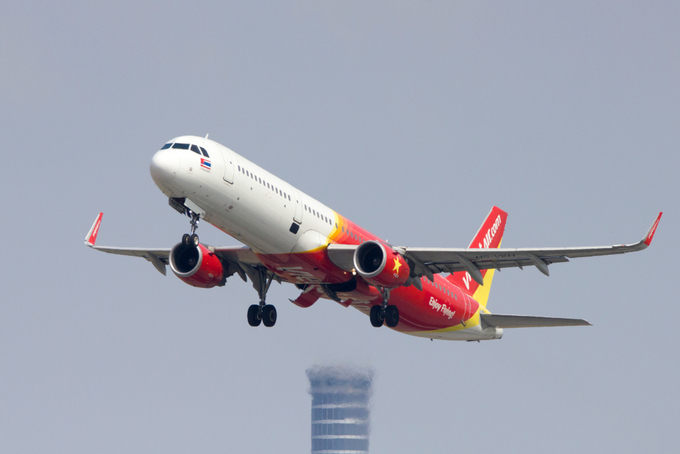
    Budget carrier Vietjet Air plans to sell a 15 percent stake in a private placement.

    It plans to sell 81 million shares at the average price of at least the last 10 sessions on the stock market but has not disclosed the timing or buyer’s identity.

    As of Tuesday, the average figure was VND115,700 ($5.02), putting the value of the deal at over VND9.3 trillion ($403 million). There will be a lock-up period of one to three years when the shares cannot be sold.

    Vietjet also plans to issue $300 million worth of international bonds on the Singapore Exchange this year.

    So far this year it has raised a total of VND2 trillion via bonds.

    In the first quarter it reported a post-tax profit of VND123 billion against a loss of VND989 billion in the same period last year.