Tag: asia

  • Globe Gains Approval to Sell 7,000 Towers

    Globe Gains Approval to Sell 7,000 Towers

    Globe announced that it received board approval to sell over 7,000 towers in what is to be the largest ever tower sale and leaseback deal in the Philippines.

    In a company disclosure, Globe said the tower assets offered for sale are comprised of 79% ground-based towers and 21% rooftop towers. The sale has been grouped into three distinct portfolios assigned to three different tower companies representing local and international groups.

    Globe said it expects to raise a significant amount of capital over the next few quarters by executing these transactions. Of the total proceeds, approximately 75% will be used to fund capital expenditures      to support ongoing network expansion and sustain industry-leading network consistency and reliability scores. The balance of 25% will be earmarked to cover 2023 debt servicing requirements.

    Globe said that this will significantly improve the overall health of its balance sheet and provide sufficient flexibility to properly compete in a dynamic market as well as further expand its digital ecosystem.

    As the biggest milestone of this initiative, Globe signed two sale and leaseback agreements for two portfolios consisting of 5,709 telecom towers and related passive telecom infrastructure for over 71 billion pesos.

    The first portfolio being sold consists of 2,180 telecom towers in Luzon, which will be acquired by MIESCOR Infrastructure Development Corp. (MIDC) for a total consideration of 26 billion pesos and be leased back to Globe for an initial period of 15 years. The first close for this portfolio is targeted      within the 3rd quarter of the year, with subsequent closings happening as and when closing conditions are met.  MIDC is a joint venture between investment firm Stonepeak and the country’s largest electric distribution utility company, Meralco.

    The second portfolio consisting of 3,529 towers will be sold to Frontier Tower Associates Philippines Inc. for 45 billion pesos and also leased back over an initial period of 15 years. The first closing target for this portfolio is set for the late third quarter, with subsequent closings happening as and when closing conditions are met.

    Globe is also in advanced discussions with one other tower company for the potential sale and leaseback of an additional ~1,350 telecom towers and related passive telecom infrastructure. This last portfolio is comprised of towers located in the Visayas and Mindanao islands. Globe expects to sign the sale and leaseback agreement with this tower company within the third quarter, with the first closing happening within the 4th quarter of the year.

    “These expanded long-term relationships with the tower companies show Globe’s commitment to help improve the Philippines’ internet condition, as well as our desire to have as many Filipinos enjoy the benefits of having access to reliable internet. We also believe that through these monetization efforts, Globe will be able to further improve overall operational efficiency, allowing us to serve our customers better, and supporting our goal of enabling the digital lives of Filipinos,” said Ernest Cu, Globe President and CEO.

    “We are very pleased with this landmark deal with Globe that marks a critical milestone in MIDC’s strategy to enter digital infrastructure space, which plays a pivotal role in driving economic growth and social well-being through digital inclusion. This also gives momentum to pursue more opportunities that will help us achieve our aspiration to become a trusted telco tower operator in the Philippines and eventually, a market leader in the digital infrastructure business,” MIDC Chairman, Ray Espinosa stated.

  • Thailand, Malaysia Among the New Google Cloud Regions in APAC

    Thailand, Malaysia Among the New Google Cloud Regions in APAC

    Google has announced that it is planning to expand its cloud services in more countries in the Asia Pacific, including Malaysia and Thailand.

    The company said in a statement that the move is to meet the growing demand for cloud services in the region.Google is bringing three new Google Cloud regions to Malaysia, Thailand and New Zealand — on top of six other regions that were previously announced: Berlin, Dammam, Doha, Mexico, Tel Aviv and Turin.

    It said that these new cloud regions represent their ongoing commitment to supporting digital transformation across Asia Pacific. It added that it will continue to invest in expanding connectivity throughout the region by working with partners in the telecommunications industry to establish subsea cables — including Apricot, Echo, JGA South, INDIGO and Topaz — and points of presence in major cities.

    When launched, these new regions will add to the internet giant’s 34 cloud regions currently in operation across the globe, 11 of them located in Asia Pacific. They deliver what Google says to be high-performance services running on the cleanest cloud in the industry.

    It added that enterprises across industries, startups and public sector organizations across Asia Pacific will benefit from key controls that enable them to maintain low latency and the highest security, data residency and compliance standards, including specific data storage requirements.

    “The new Google Cloud regions will help to address organizations’ increasing needs in the area of digital sovereignty and enable more opportunities for digital transformation and innovation in Asia Pacific. With this announcement, Google Cloud is providing customers with more choices in accessing capabilities from local cloud regions while aiding their journeys to hybrid and multi-cloud environments,” said Daphne Chung, Research Director, Cloud Services and Software Research, IDC Asia/Pacific.

  • Meal delivery startup ChefPrep buys Co-Lab Pantry

    Meal delivery startup ChefPrep buys Co-Lab Pantry

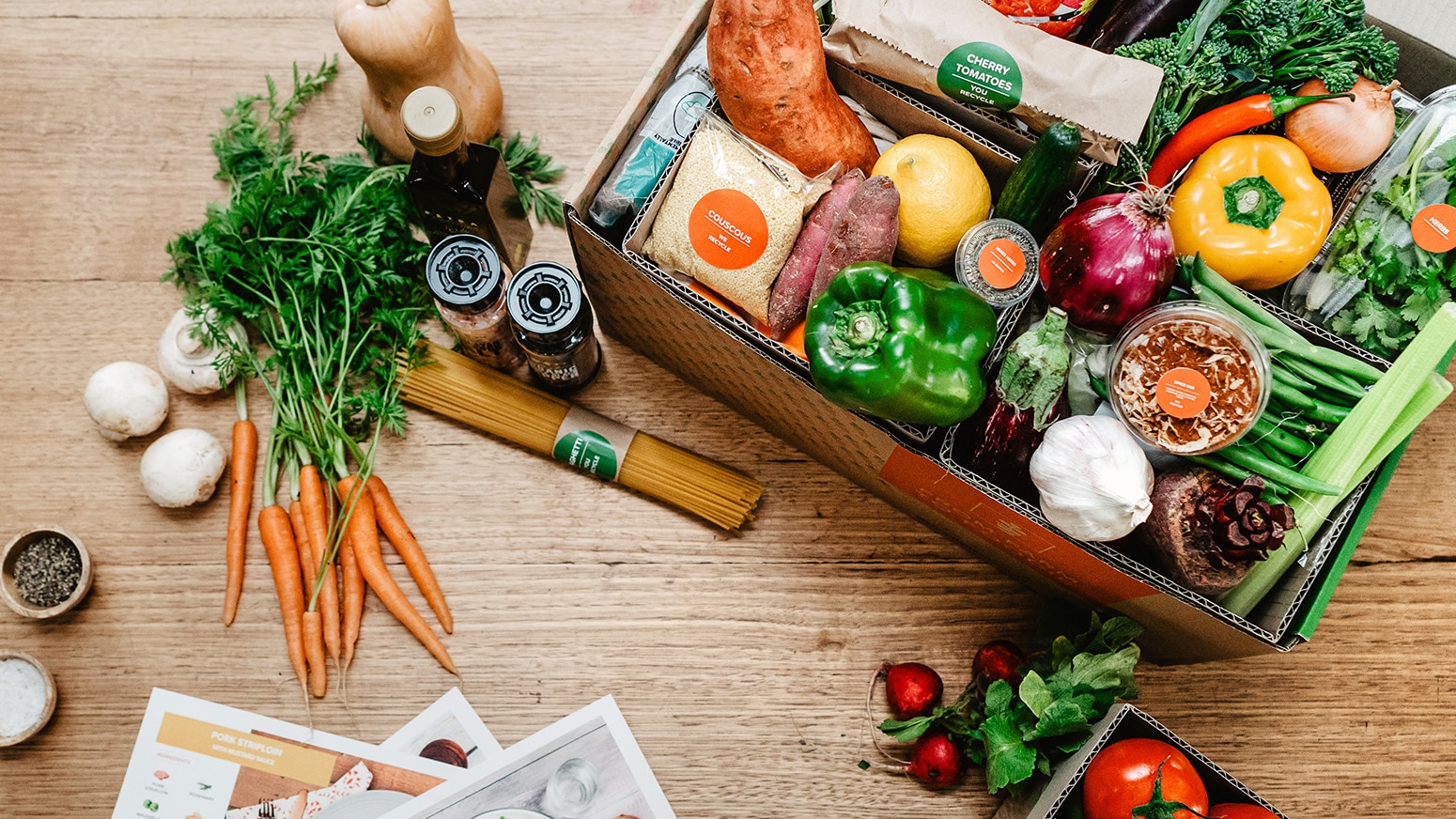
    Australian gourmet ready-meal delivery startup ChefPrep has acquired artisan food vendor Co-Lab Pantry, with the retooled venture promising to become the “Amazon for food” with next-day delivery across the country.

    Dubbed CoLab, the fresh face of Australia’s culinary delivery sector boasts ready-to-cook meals from more than 150 restaurants nationwide, spanning the fried chicken dishes of Sydney institution Butter, the comforting Italian fare of Salt Meats Cheese, to a slew of avant-garde Drumpling dumplings.

    In addition, the service offers top-shelf pantry goods from the nation’s top producers: Mount Zero olives, cold brew concentrate from Industry Beans, and even French eatery Entrecôte’s fabled herb butter sauce.

    Under the new CoLab banner, at-home diners can now enjoy Melbourne-made goods in Sydney with next-day delivery, and visa versa. The venture promises to offer same-day interstate delivery in the weeks to come.

    ChefPrep’s acquisition of Co-Lab Pantry was made possible by a successful $3 million seed funding round in April this year, led by led by Artesian Ventures and American VC firm Global Founders Capital.

    ChefPrep co-founders Elle Curran and Josh Abulafia now serve as co-CEOs of CoLab, with Avin Chadee and Natasha Buttigieg of Co-Lab Pantry’s leadership team staying on with the new combined venture.

    Speaking to SmartCompany, Abulafia says the Co-Lab Pantry acquisition was unexpected but a natural fit, given each startup’s shared ethos.

    Melbourne-based Co-Lab Pantry was already exploring its own capital raising options and the potential of a buy-out from another company, but invited the ChefPrep team to hold a conversation last last year.

    “I mean, I just thought it was such a good opportunity to bring one of those true partnerships together, but the sum of the parts would be greater than the whole,” Abulafia said. “So we were like, ‘Yep, that makes total sense.’”

    At the same time, the fact each startup offered somewhat different products proved beneficial to ChefPrep.

    “I think having both of those two elements and kind of coming from a different approach from the outset actually made it work,” Curran added.

    The fact both startups were so young meant there was no need to consolidate marketing or management teams, smoothing out the acquisition process.

    While both startups were borne of pandemic restrictions which kept diners from restaurants, the new CoLab brand will offer its wares in a minimally restrictive environment.

    As in-restaurant dining embraces its own new normal, CoLab will continue to find support among diners who aren’t looking to directly replicate the restaurant experience, Curran says.

    “I think that’s why the heat-and-eat meals that our partners do have done exceptionally well outside of lockdown,” she said.

    “Because it’s kind of cobbling both those key elements: you’re getting beautiful restaurant-produced products, but you could store them and keep them in your fridge or pantry, and actually enjoy them at your convenience, rather than having a meal kit that’s prepared by a restaurant that you have to make up on that one particular day, or in the next 24 hours, but you’re then trying to replicate a dining experience.”

    Now, the “core thesis” of the business is to become the “Amazon for food”, Abulafia says, claiming the brand offers a way for restaurant partners to become not just hospitality businesses, but food manufacturers.

    With that goal in mind, CoLab is now fielding discussions about potential expansion into the UK and the US, as it prepares to offer its domestic delivery services beyond Victoria and New South Wales.

  • Russian duo hail Stars Coffee as successor brand to Starbucks

    Russian duo hail Stars Coffee as successor brand to Starbucks

    A restaurateur and rapper duo unveiled Stars Coffee on Thursday, reopening the chain of coffee shops in Russia formerly owned by Starbucks Corp, the latest major company rebranding after a months-long Western corporate exodus from the country. At a packed launch in central Moscow, rapper Timati presented the new brand, whose logo features an image of a woman with a star above her head, alongside co-owner and restaurateur Anton Pinskiy, before shops start opening on Friday. Banned from using the

    Banned from using the Starbucks logo, Timati said they had sought to find some continuity, namely the circular shape and “female gender”, which he said contrasted nicely with the brown, cigar-like “masculine colour” in the new logo.

    “People’s perceptions may be different,” said Pinskiy. “But if you compare, then apart from the circle, you won’t find anything in common.”

    Starbucks declined to comment on the similarity of the logo and name, but referred to an earlier statement in which it said the company had made the decision to exit and no longer had a brand presence in the Russian market.

    Since Starbucks had its own resource and production base, Timati said the duo had to find new suppliers, but they had encountered no problems.

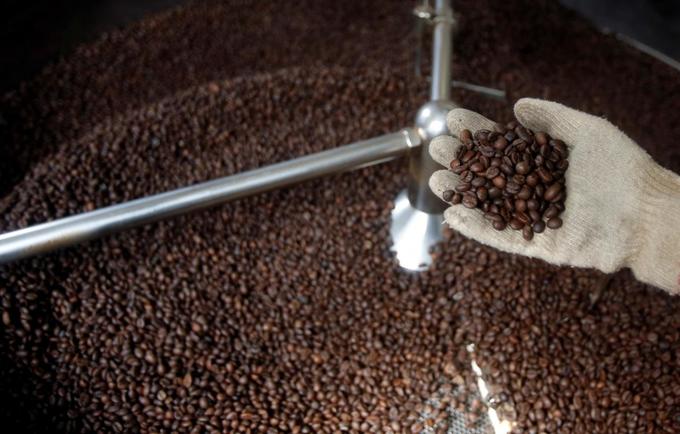
    Stars Coffee imports beans from Latin America and Africa, Pinskiy said, with suppliers of other items based in Russia.

    “We just found other suppliers, found the right roasters, and because the baristas mixed it all correctly, we have a product that we think will be competitive,” he said.

    Seattle-based Starbucks, which helped popularise takeaway coffee in a traditionally tea-loving society, said it would exit Russia after nearly 15 years in late May.

    Starbucks had 130 stores in Russia, operated by its licensee Alshaya Group, with nearly 2,000 employees in the country. Pinskiy said shops would gradually reopen throughout August and September.

    Wider Trend

    Global franchise operator Alshaya, established in Kuwait, had lost interest in doing business after Starbucks pulled its brand from Russia, Timati said. Alshaya did not immediately respond to a request for comment.

    “We won the tender – there were a lot of participants – acquired it and made our own brand,” he said.

    The deal mirrors a wider trend among Western brands, which has been changing the country’s retail and corporate landscapes as the conflict in Ukraine enters its sixth month.

    Renault sold its majority stake in carmaker Avtovaz to a Russian player for just one rouble, while McDonald’s Corp, whose restaurants have now become Vkusno & tochka, did not disclose a figure.

    Both of those deals included buyback options, but Pinskiy said that didn’t apply to Starbucks due to the franchise model it operated under in Russia.

    He declined to disclose figures concerning the deal with Alshaya. “We have invested as much as we paid them,” Pinskiy said. “This is (an) expensive pleasure.”

    The pair said they were interested in more acquisitions, but gave no further details.

    While the partnership may appear unlikely, Timati, one of Russia’s most famous rappers, co-founded the Black Star Burger chain in Russia, which sells a “Timati Burger”.

    He is also known for his support of the Kremlin and in 2015 released a track containing the lyrics “President Putin is my best friend”.

    Pinskiy, who earlier this month told Russian reporter and political activist Ksenia Sobchak that he had never tried coffee in his life, has a string of restaurants in his portfolio, including a joint project with Timati, REDBOX, which serves Pan-Asian cuisine.

  • HBO Max is set to become cheaper

    HBO Max is set to become cheaper

    The battle of the subscription services is on. This time around, it is time for HBO Max to shine with an exclusive offer of its own. HBO Max, the television giant’s take on a video streaming service, is set to become even more accessible. The company announced that it would be offering a 30% discount on its yearly subscription price to new and returning users.

    This translates to $104.99 for the ad-free plan, or just $69.99 for the ad-supported one. For reference, this means that HBO Max would cost either $8.75 a month (for the more expensive plan), or $5.85 (for the cheaper option).

    HBO Max’s main appeal lies in its plethora of original titles that tend to enjoy immense critical and commercial success. Through the platform, users can watch (in)famous series like Game of Thrones, Succession, The Undoing, alongside all-time classics like Sex and the City and The Sopranos.

    Admittedly, the roster of HBO Max is set to become somewhat more limited in the aftermath of the messy merger with Warner Bros. Discovery. As a result of the business decision, a number of HBO Max series have already been canceled and some are rumored to be on the chopping block.

    It should be noted that HBO Max will continue to coexist with Discovery Plus for the time being. However, there are plans for the two platforms to eventually become one. But even on its own, HBO Max is worth checking out especially given the current prices.

    The service is now cheaper than all of Netflix’s current subscription options. On the other hand, the ad-supported HBO Max plan now comes in at the same price as the Hulu equivalent. And we still haven’t mentioned the best part – the discount comes just in time for the premiere of House of the Dragon.

  • Smart Partners With Omnispace to Explore Space-Based 5G Technologies

    Smart Partners With Omnispace to Explore Space-Based 5G Technologies

    PLDT’s wireless subsidiary Smart Communications is collaborating with US-based Omnispace to explore and demonstrate the capabilities of space-based 5G communications using low earth orbit (LEO) satellites.

    In a statement, the Head of PLDT’s Technology Strategy and Transformation Office, Arvin Siena said, “This collaboration with Omnispace will allow our companies to work together to define use cases for the Philippine market.”

    He added that possible use cases include enabling 5G connectivity in remote areas, incorporating IoT and sensors for use in monitoring weather disturbances and natural calamities, and augmenting network coverage for disaster relief, maritime and telematics for vessels and equipment.

    “This is also part of PLDT’s broader initiatives to future-proof our services, including Smart 5G. This includes exploring opportunities to team up with companies like Omnispace, to test the interoperability of our network with their 3GPP-compliant 5G non-terrestrial network (NTN), which will support the 5G ecosystem of the future,” Siena added.

    Having launched Omnispace Spark-1 and Spark-2 in April and May, respectively, the company recently completed the deployment phase of Omnispace Spark™. This program is the initial phase in the company’s development and delivery of the world’s first global 5G-capable satellite network.

    The Omnispace 5G NTN global network will interconnect with terrestrial or land-based mobile networks to serve mobile subscribers utilizing the company’s 2 GHz mobile satellite spectrum allocation and operating in 3GPP band n256.

    As the world’s first 3GPP-compliant 5G NTN system, the Omnispace network is expected to deliver the power of 5G directly to billions of devices everywhere, extending the reach of mobile connectivity to enable people and assets to communicate in real-time through a single, seamless global service.

    “We are excited to announce this collaborative agreement with Smart Communications, which shares our vision of delivering reliable mobile connectivity to consumer, government and enterprise users, everywhere,” said Brian Pemberton, Omnispace. “Together with Smart, we seek to bridge the digital divide, while also providing the communications infrastructure to power the development of the Filipino economy of the future.”

    PLDT and Smart’s pioneering foray into satellite-powered communication is part of their broader initiative to deliver world-class customer services across the country, complementing the nationwide rollout of their fiber infrastructure, and wireless networks based on 4G and 5G technologies.

  • Golden Circle launches a new low-sugar range

    Golden Circle launches a new low-sugar range

    Golden Circle has released a delicious new range of fruit drinks with 50% less sugar, on average, compared to the Golden Circle Fruit Juice range and no artificial sweeteners, making them an alternative for those Aussies who want to enjoy drinking Golden Circle fruit juice but want to reduce their sugar intake.

    “We understand that Aussie families are looking for an alternative in their drinks. With 50% Less Sugar fruit drink we are bringing sunshine and joy back so that families can enjoy the taste of sunshine in a glass, with half the sugar,” said Sachin Rajpal, Head of Marketing – Beverages at Kraft Heinz.

    The new 50% Less Sugar range from Golden Circle includes the great taste of Golden Circle that consumers know and love, just with 50% less sugar. Available in three flavours including Orange, Apple and Pear, Pine & Pash. The convenient 2-litre packs can be stored at home for the times you’d like to share a glass of sunshine with family and friends.

  • Treasury Wine Estates boosts profit despite being shut out of China

    Treasury Wine Estates boosts profit despite being shut out of China

    Treasury Wine Estates Ltd posted a 5.3% rise in annual profit on Thursday, as strong U.S. sales and price hikes more than offset a hit from hefty Chinese tariffs on Australian wine.

    The world’s biggest standalone winemaker has been re-directing supply of its prized Penfolds label wines to the United States, Europe and domestically since China imposed an anti-dumping duty on some Australian wines in late 2020.

    The company, which also owns Wolf Blass and Wynns brands among others, said net sales revenue at its Americas unit grew 2.5%, benefiting from efforts to expand its presence in the market, including collaboration with rapper Snoop Dogg.

    Demand for Penfolds label wines, the company’s most premium offering, stayed strong despite soaring inflation in the United States and Europe. While total net sales revenue for the segment fell 9.1%, sales in markets outside China more than doubled.

    The winemaker said it was raising prices across divisions to offset the impact of higher input costs and that it expected to improve its margins further in 2023.

    Treasury Wine’s global supply chain optimisation programme, which was rolled out in 2021, helped the firm save A$90 million ($62.47 million), more than an earlier estimate of A$75 million, and offset the impact from higher input costs.

    “We expect TWE will deliver strong earnings growth in FY23, reflecting a COVID recovery in its higher margin channels,” analysts at Morgans said.

    Treasury posted a profit attributable of A$263.2 million for the year ended June 30, higher than A$250.0 million reported a year ago but below an estimate of A$282 million from Morgan Stanley. Overall sales revenue fell 3.6%.

    Shares of Treasury Wine fell about 1.5% in early trading, while the broader marker was down 0.5%.

    The company said its long-term financial objective was still to deliver sustainable top-line growth, high single-digit average earnings growth, and a group operating earnings margin of more than 25%.

  • Timex goes after Apple Watch with hypocritical billboard

    Timex goes after Apple Watch with hypocritical billboard

    Surely no one in the wristwatch industry expected the Apple Watch to have an amazing success that it has experienced so far. First released in April 2015, Apple’s original plan was to promote the timepiece as fashionable jewelry. But it quickly became apparent to Apple that the wearable was selling as part of the Apple eco-system and as a tech device in its own right. Apple pulled the device out of high-end jewelry stores and focused on carrier and department store sales.
    Eventually, the wearable became known for its health-related features that no doubt helped to drive sales. Now, the Apple Watch is the most popular watch on the planet. That’s right, the Apple Watch outsells every other watch on Earth and that includes your famous luxury brands like Rolex, other more downscale brands like Seiko, affordable brands like Casio, and of course, mid-to-low-end brands like Timex.
    Timex has been around since 1854 and has thus seen plenty of trends in the wristwatch market over the last 168 years. But we’d venture to guess that nothing has impacted the company more than the smartwatch, especially the Apple Watch. Timex decided to take on Apple and its timepiece on a billboard in New York City (yes, the “Big Apple”) that promotes its new $140 analog watch which was developed in partnership with a Brooklyn clothing company called Adsum.
    Even though this watch is sold out, Timex continues to have its billboard passing along the message that it wants Apple Watch users to read. “Know the time without seeing you have 1,249 unanswered emails,” the copy says on the sign. That refers to the Apple Watch’s ability to pass along notifications about your emails.
    Yeah, there is some hypocrisy involved with the billboard. Timex does have its own line of smartwatches and guess what? They pass along notifications. In fact, the Timex website notes that its smartwatch “Plays nice with your phone” and adds that “Over a hundred years of watchmaking has taught us that your watch becomes part of your soul. With notifications and fitness sensors, that bond is even stronger.”
    And the iConnect by Timex smartwatch, which is out of stock on the Timex website but is available from online retailers, will show email notifications. In fact, one retailer states, “Stay connected wherever you are. You can receive texts, Facebook, WhatsApp and email notifications on the touchscreen display of your iConnect by Timex smartwatch.”
  • Vietnam third largest market for bubble tea in Southeast Asia

    Vietnam third largest market for bubble tea in Southeast Asia

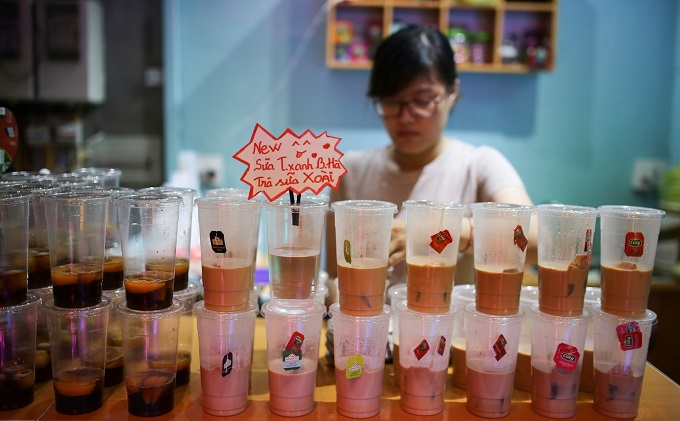
    Turnover of the Vietnamese bubble tea market hit $362 million in 2021, ranking third among six major Southeast Asian markets, according to a recent study.

    The region’s largest market was Indonesia with an estimated $1.6 billion annual turnover. Thailand came in second with $749 million, according to a study by Singapore-headquartered venture outfit Momentum Works and digital payments solution firm Qlub.

    Turnover in the Southeast Asian market last year accumulated to $3.66 billion, it added.

    As of April 2022, Vietnam had 439 bubble tea shops, with over half located in Ho Chi Minh City, a survey by German data portal Statista and Vietnamese market researcher Q&Me showed.

    Bobapop, a local brand, was the leader in terms of locations with 89 stores.

    It was followed by three foreign players, Tiger Sugar (48 stores), The Alley (47) and Gong Cha (42).

  • Telstra Boasts Fastest Speed in Australia

    Telstra Boasts Fastest Speed in Australia

    Telstra is Australia’s fastest mobile network for the first half of 2022, based on results from the Ookla Speedtest Awards from January to June 2022.

    Telstra has a median download speed of 81.57 Mbps and median upload of 11.38 Mbps, representing an improved speed from the second half of 2021.

    Telstra also has the fastest mobile network speeds in the cities of Sydney, Greater Melbourne and Greater Brisbane – where nearly half of Australia’s overall population resides.

    “Keeping our customers connected is at the centre of everything we do, and one part of that is giving customers access to the largest and most reliable mobile network in Australia. That includes expanding our 5G coverage to allow for faster speeds as well as improving the capacity of our 4G network, and it’s also about the new technologies we’re developing like mmWave 5G,” Telstra commented.

    Telstra currently covers 80% of Australia’s population with 5G, with plans to roll out 5G to 95% of the population by 2025.

  • Crab exports skyrocket

    Crab exports skyrocket

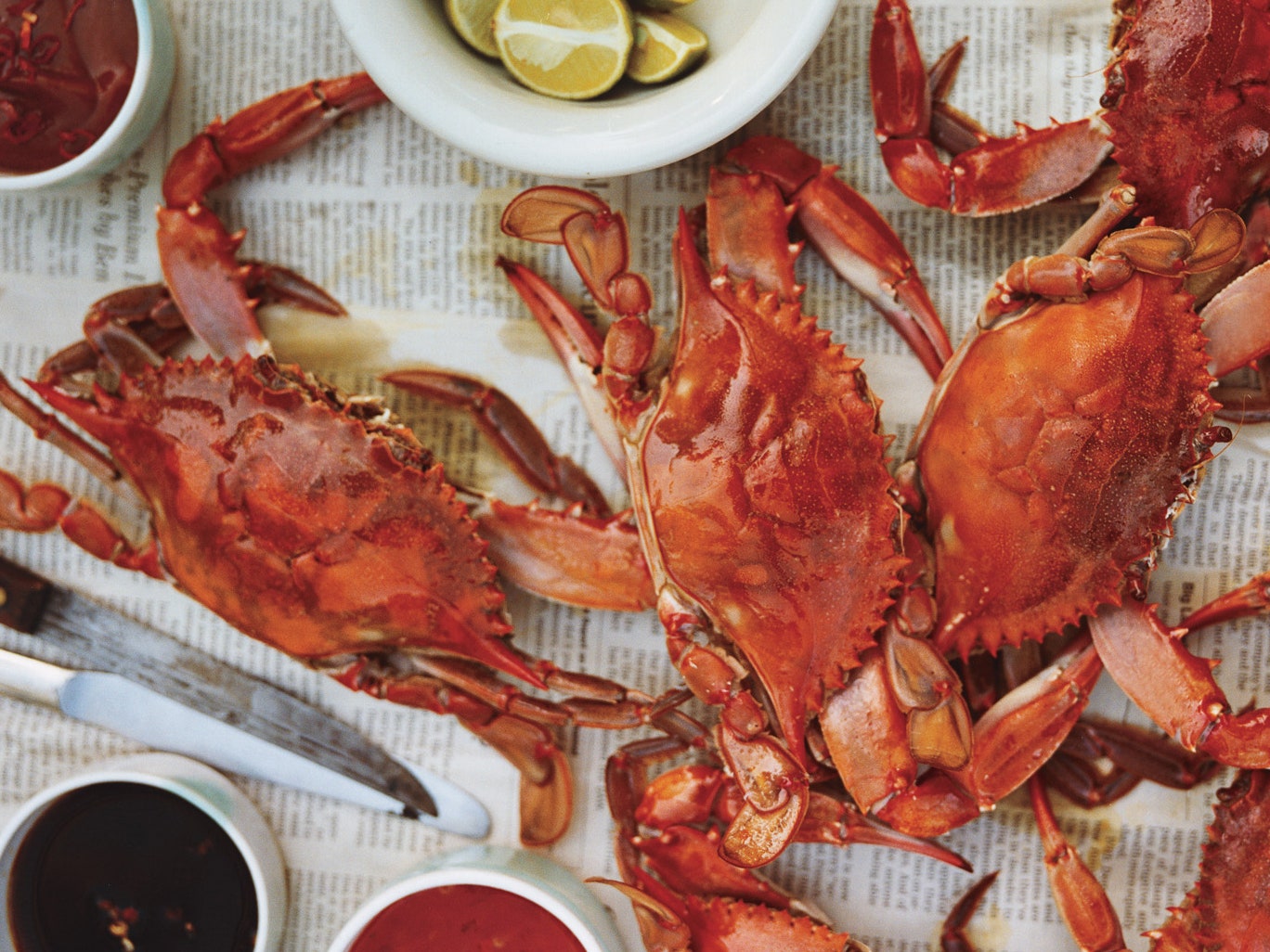
    Vietnam crab exports rose 41% to $111 million between Jan. 1 and July 15 this year, according to data from the Vietnam Association of Seafood Exporters and Producers (VASEP).

    The U.S, China, Japan and France were the four major markets accounting for 92% of the value.

    China was the fastest growing market as exports surged 74% year-on-year to $37 million, followed by France (up 60%) and Japan (51%).

    Exports to the U.S. grew 27%, though the country was Vietnam’s top market with a value of $38 million.

    Crab prices have surged amid domestic shortage and rising demand from major markets in the U.S., China and Japan.

    Hoang, a crab seller, said prices at-the-farm have risen 20% since last month to VND400,000-600,000 ($17-26) a kilogram but there was hardly enough for him to sell.

    VnExpress survey showed crab prices in HCMC have risen to the highest in the year-to-date at VND900,000 a kilogram.

    VASEP expects crab exports to thrive in the second half this year thanks to rising demand driven by holidays like Christmas and Lunar New Year.

  • UBS Hires Greater China Head of Philanthropy

    UBS Hires Greater China Head of Philanthropy

    UBS has hired a 25-year veteran as its head of philanthropy services for Hong Kong and the broader Greater China region.

    Ming Geng joins UBS Global Wealth Management as its head of philanthropy services for Hong Kong and Greater China, according to an internal memo. Based in Hong Kong, Geng reports to head of social impact & philanthropy services Tom Hall with local supervision by head of A&S client services Christina Tung.

    Geng has over 25 years of experience in global health, global development affairs and philanthropy. Prior to joining UBS, she was the head of corporate affairs at Viatris Pharmaceutical, Greater China.

    Previously she served as the deputy director at Bill & Melinda Gates Foundation’s China office between 2008 and 2019 following 10 years of leadership and management experience at various other global organizations including The Global Alliance for Improved Nutrition, The Yew Chung Education Foundation, and UNICEF.

    A spokesperson for the bank confirmed the hire.

  • CTM to Launch 5G Services Upon Awarding of Macau Government License

    CTM to Launch 5G Services Upon Awarding of Macau Government License

    Macau’s telecoms regulator has accepted the bids for the city’s first 5G licenses, including that of major telecoms firms CTM and China Telecom (Macao) Limited.

    According to the Macau Post and Telecommunications Bureau, the operators to be awarded the licenses are expected to launch 5G services by the first quarter of 2023.

    In a press release, Vice President, Commercial of CTM, Ebel Cham, announced that the company has already realized indoor and outdoor 5G signal full coverage which supports both NSA and SA modes.

    She added that CTM looks forward to launching 5G services within short order after being awarded the 5G license by the Macau SAR Government.

    Cham said that CTM is open to discussing different forms of cooperation with other operators under full      compliance with the local laws and regulations.

    Cham added that CTM has reached dual agreements with 58 countries and regions for 5G roaming services, including mainland China and Hong Kong, the launch of which will provide residents and tourists a seamless 5G experience.

    If the 5G license is to be awarded this year, CTM said it will strive for rolling out 5G service with competitive pricing by year’s end.

  • % Arabica makes its Taiwan debut

    % Arabica makes its Taiwan debut

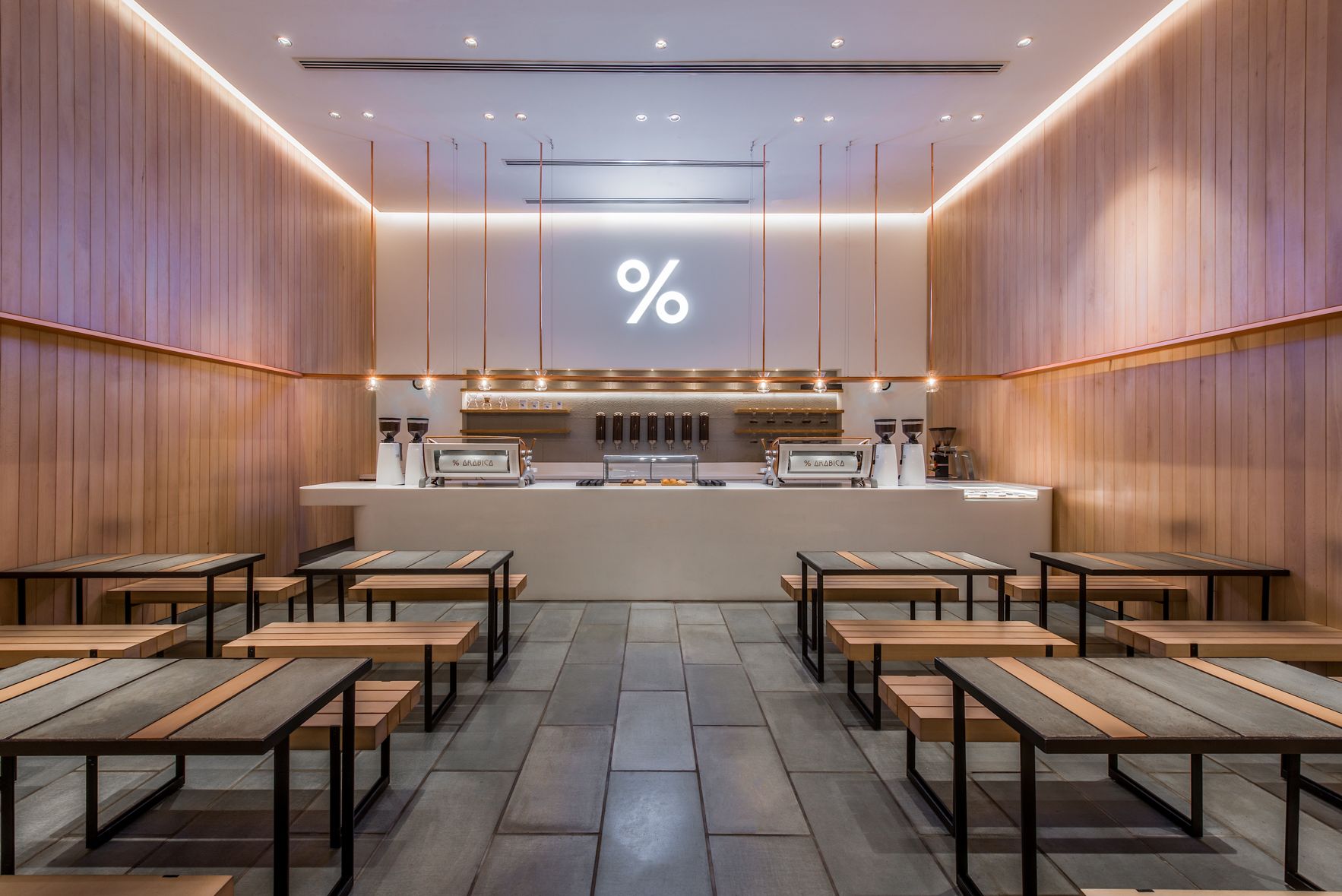
    Japanese boutique coffee group % Arabica has made its debut in Taiwan with a store in Taipei. The Elephant Mountain store is the second % Arabica outlet to open this month following the launch of store in the lobby of the new United Overseas Bank head office in Bangkok, the group’s fourth in the Thai capital.
    The boutique café group now operates 120 stores across 18 countries, including 61 in its largest market, China, and four in its native Japan.
    According to % Arabica’s website, the group will soon open stores in Vietnam, South Korea, Canada, Mexico, Spain and the Philippines.
    In July 2022 Lucky Ace International Ltd., which operates the group in China, was reported as seeking to raise $300m to support its expansion plans in the country.
    World Coffee Portal estimates the Taiwanese branded coffee shop market exceeds 2,500 outlets and forecasts it will reach 3,200 outlets by 2025. Louisa Coffee is the coffee-focused segment leader with approximately 520 outlets.