Tag: asia

  • Samsung is reportedly giving Apple the chance to close the gap in phone shipments this year

    Samsung is reportedly giving Apple the chance to close the gap in phone shipments this year

    Earlier this month we passed along a report from Reuters stating that smartphone production at Samsung’s Vietnam factories, which are responsible for half of the company’s annual phone production, had been curtailed sharply. Samsung continues to lead the world in smartphone shipments, it has dropped its target for 2022 and now plans to deliver 260 million units down 13.3% from its earlier estimate of 300 million units.

    The report added that Samsung originally planned to build 334 million smartphones this year and ship 300 million of them. Out of the 334 million units scheduled for production, 284 million handsets were set to roll off of Samsung’s own assembly lines with 50 million being produced by its China-based contract manufacturers. But after taking the headwinds into account such as supply chain issues (like the chip shortage and a shortage in experienced workers), inflation, and the drop-off in demand for smartphones, Samsung reportedly has cut production plans.

    TheElec says that between October and November, Samsung plans on building only 34 million smartphone units in its own factories. It says that this would be a huge decline compared to the same time period in previous years.

    Last year, the South Korean manufacturer shipped approximately 270 million units, so if Sammy does deliver 260 million handsets, it would be a 3.7% decline on an annual basis. It also could give Apple a chance to close the gap with Samsung. Last year, Apple delivered 235 million iPhone units and this year the iPhone 13 line has been selling well with the iPhone 14 series to be unveiled possibly inside three weeks.
    During the second quarter of 2022, Canalys reported a 9% year-over-year decline in smartphone shipments. Samsung still had the highest market share in the industry at 21% thanks to its mid-range Galaxy A product line. More affordably priced than its premium handsets, the Galaxy A models have big screens, viable cameras, and huge batteries. Apple was next with a 17% slice of the global smartphone pie followed by Xiaomi (14%), Oppo (10%), and Vivo (9%).
    If Samsung does see its smartphone shipments decline to 260 million units, it would be its lowest annual total since the pandemic reduced 2020 deliveries to 253 million. The year before, it had shipped 296.5 million smartphones.
  • Apple suppliers to make Apple Watch and MacBook in Vietnam

    Apple suppliers to make Apple Watch and MacBook in Vietnam

    Apple’s suppliers are in talks to produce Apple Watch and MacBook in Vietnam for the first time, Nikkei Asia reported on Tuesday, citing people familiar with the matter.

    Apple’s Chinese suppliers Luxshare Precision Industry and iPhone assembler Foxconn have started test production of Apple Watch and MacBook in Northern Vietnam, the report added.

    Apple has been shifting some areas of iPhone production from China to other markets, including India, where it started manufacturing iPhone 13 this year, and is also planning to assemble iPad tablets.

    India, the world’s second-biggest smartphone market, along with countries such as Mexico and Vietnam are becoming increasingly important to contract manufacturers supplying American brands, as they try to diversify production away from China.

    Apple, Foxconn and Luxshare Precision did not immediately respond to a Reuters request for comment.

    Last week, Taiwanese contract manufacturer Foxconn gave a cautious outlook for the current quarter after posting results that exceeded expectations, citing slowing smartphone demand after a pandemic-fuelled boom.

    Like other global manufacturers, Foxconn – formally called Hon Hai Precision Industry Co Ltd – has dealt with a severe shortage of chips that hurt production, as bottlenecks from the pandemic lingered and the Ukraine war further strained logistical channels.

  • Workers laid off as global demand falls

    Workers laid off as global demand falls

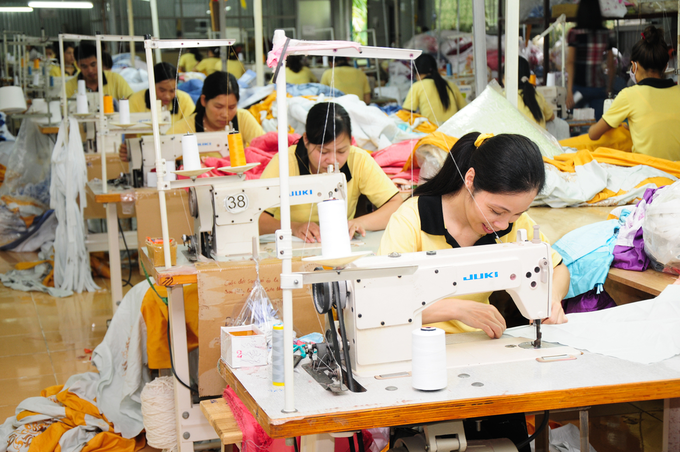
    Textile and electronics companies are cutting overtime and working hours to their workers’ dismay as global consumer demand fall.

    Tran Thu Huong and her husband were working at a garment factory in HCMC’s Go Vap District when last month, their income fell by 20% to VND15 million ($640.75) as new orders shrunk.

    Huong said their income was barely enough any more as they paid VND2.2 million for house rent, VND2.7 million for tuition for their five-year-old child and loan interest, and had to tighten their belt by “not buying miscellaneous things” such as fruits.

    Her husband, Hung, 33, recently quit his job after working at the factory for five years.

    “I can’t work in the garment industry anymore,” he said.

    He used to be paid VND13-14 million a month when he started working, but the amount had halved by the time he quit.

  • Viettel to produce chips amidst global shortage

    Viettel to produce chips amidst global shortage

    Telecommunication giant Viettel has proposed that it produces chips to meet domestic demand and for export in addition to offering e-payment services.

    Leaders of the military-owned Viettel Group made the proposal at a Tuesday meeting with Prime Minister Pham Minh Chinh.

    The proposal was made in the context of the recent global chip shortage, which has seriously affected many manufacturing sectors and business areas, prompting several countries to promote chip production as a national security measure.

    In this context, the group also asked to be assigned the tasks of ensuring national defense and security, promoting its strengths and demonstrating the pioneering role of state-owned companies in the fields of high-tech defense, construction and cyber security and safety.

    Viettel said it wanted to deploy a national digital conversion platform, and work as an intermediary for financial switching services and electronic clearing services to facilitate transfer of funds from one bank account to another.

    The group also wanted permission to research green energy technology and modernize important infrastructure in the field of transportation, logistics, urban areas, and science and technology.

    It also asked for more leeway in deciding investment capital and salaries, as well as organizing its internal units.

    At the same time, it suggested that the government adds a new legal corridor for state-owned firms, such as a mechanism to make evaluations based on the principle of overall investment efficiency instead of relying on individual investment items and projects, and a mechanism to establish a Venture Capital Fund for investment in innovative start-ups.

    PM Chinh said Viettel should research and produce chips to effectively and efficiently serve the country’s digital transformation process, including building a digital government, digital economy and digital society. He said Viettel must be a corporation that plays a leading role in this process.

    He also agreed that the group works as an intermediary for financial switching and electronic clearing services, and assigned related ministers to study the plan and report on it to the government.

    Viettel has been maintaining an average pre-tax profit of over VND40 trillion ($1.7 billion) each year for several years.

    The group is doing business in ten markets with a total population size of 260 million in three continents, and has so far reported profits in seven markets, at $250-350 million per year.

  • FedEx to expand operations at Guangzhou hub

    FedEx to expand operations at Guangzhou hub

    FedEx Express announced last week it has signed an agreement with Guangdong Airport Authority Logistics Company to expand and upgrade the FedEx Guangzhou Gateway by establishing a new operations center at Guangzhou Baiyun International Airport.

    The new ‘FedEx South China Operations Centre’ will cover an area of over 41,000 square metrers, more than double the size of its existing gateway, and is scheduled for operations in 2027.

    The facility will connect outbound shipments from southern China with the FedEx international network through the Asia Pacific hub, where it will also receive and process inbound shipments.

    The operations center will include offices, state-of-the art sorting systems, operations areas and a warehouse with a capacity to sort up to 25,000 packages and documents per hour, three times the sorting efficiency of the current facility.

    FedEx’s Asia Pacific Hub at Guangzhou Baiyun International Airport connects Asian customers to the US and North American network through Anchorage and Memphis (USA), and the European network through Paris (France) and Cologne (Germany).

    The FedEx Asia Pacific Hub currently operates more than 210 flights per week, with the Guangzhou gateway handling approximately 40 percent of the hub’s import and export cargo volume.

  • Bamboo Airways names new senior advisor amid restructuring

    Bamboo Airways names new senior advisor amid restructuring

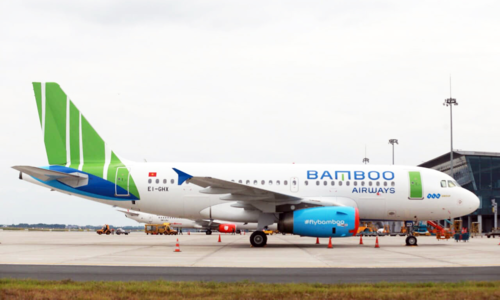
    Sacombank Chairman Duong Cong Minh was appointed senior advisor to the board of directors at Bamboo Airways to support the airline’s restructuring.

    Minh, 62, is also the founder and chairman of property developer Him Lam. His appointment came three days after the airline named a new chairman.

    Minh will be key to the restructuring of Bamboo Airways’ management and expansion, Chairman Nguyen Ngoc Trong said.

    Sacombank was one of the top lenders to Bamboo Airways and its parent company, FLC Group. Hundreds of millions of airline shares were used as collateral for loans at the bank under the reign of ex-chairman Trinh Van Quyet, who was arrested for allegedly manipulating the stock market.

    As of June 30, the group and its subsidiaries had finished paying off their VND1.8 trillion ($76.9 million) debt to Sacombank, according to FLC’s financial statements.

    Bamboo Airways currently operates nearly 170 flights a day on 40 domestic and 12 international routes.

    The carrier plans to continue launching new international services to tourism markets in Asia, Europe and Australia.

    It also plans to increase its fleet to 35 by the end of this year and triple its fleet size to 100 aircraft by 2028.

  • Grab says it canceled heatwave surcharge

    Grab says it canceled heatwave surcharge

    Grab canceled its new heatwave surcharge on motorbike rides on July 7 just one day after imposing it, Vietnam Competition and Consumer Authority announced Monday.

    It had announced a surcharge of VND3,000-5,000 ($0.13-0.21) meant for drivers.

    The consumer watchdog told the Singaporean ride-hailing company that all fees and surcharges Grab payable by customers must be clearly explained before implementation.

    It called on other ride-hailing companies to be transparent about them.

    Grab was the first to slap such a surcharge after many localities recorded unusually high temperatures but had said merely it would apply it during “extremely hot weather” without describing what it meant by the term.

    Grab Vietnam had an accumulated loss of VND4.36 trillion as of last year.

  • Buy now, pay later becoming popular in Vietnam

    Buy now, pay later becoming popular in Vietnam

    Many buy now, pay later services have launched or expanded operations to meet the burgeoning demand.

    “Cash is necessary for daily expenses, so I choose to pay later whenever possible,” Minh Tien, 33, of HCMC said.

    He bought braces and a motorbike using pay later services.

    The braces cost him VND35 million ($1,495.92) but he needed to pay only VND5 million upfront, and can pay the rest over three years. The bike cost him VND25 million, and he paid VND10 and the rest will be paid over six months.

    Thu of HCMC bought a VND10-million TV two months ago for her daughter. “My salary goes really quickly since prices are rising, so I decided on a six-month installment scheme.”

    Buy now, pay later provides customers and sellers “a convenient and budget-friendly payment option,” Nguyen Hoang Long, director of online commerce platform Sendo, said.

    Demand for it is skyrocketing as it serves those who cannot access traditional loans, Moin Uddin, CEO of fintech platform SmartPay, said.

    Vietnam presents a positive outlook for buy now, pay later services thanks to the popularity of cashless payment and low credit card ownership here, Krishnadas, senior vice president of business development at digital credit platform Kredivo, said.

    Kredivo expects the market to reach $4.6 billion in value.

    “Buy now, pay later will be a popular payment method in Vietnam over the next three years.”

  • Tencent Cloud Teams Up With Acclivis to Bring Cloud and ICT Offerings in SE Asia, Mainland China and HK

    Tencent Cloud Teams Up With Acclivis to Bring Cloud and ICT Offerings in SE Asia, Mainland China and HK

    Tencent Cloud and technology services provider Acclivis Technologies and Solutions announced that they have signed a strategic partnership to bring private, public and hybrid cloud and ICT solutions to enterprises in Southeast Asia, mainland China and Hong Kong.

    Tapping Acclivis’ presence in Singapore, Malaysia, Indonesia, Thailand, Philippines and Hong Kong as well as Tencent Cloud’s expertise and experience in China, the collaboration primes both parties to be the go-to partners for Southeast Asian enterprises who want to access China as well as Chinese enterprises keen to expand in Southeast Asia.

    The combined platform will offer Tencent Cloud’s cloud computing services and industry solutions available for verticals including financial services, entertainment, gaming, media and entertainment, retail and more.

    Additionally, the collaboration also provides a one-stop ICT platform featuring the internet services, managed services and IT end-user support provided by Acclivis to address the diverse and interconnected needs of every enterprise’s digital transformation journey.

    This full-suite ICT platform will allow enterprises to enjoy a better customer experience through simplified IT management using AI and machine learning, and also reap cost savings from the synergies expected from the partnership.

    Further highlighting Tencent Cloud’s commitment to bringing only the best cloud solutions to every part of the world, Tencent Cloud said it is pleased to team up with Acclivis to serve Southeast Asian enterprises who want to expand their reach to China.

    Kenneth Siow, regional director for Southeast Asia and general manager of Singapore, Malaysia and Indonesia, Tencent Cloud International, said, “Enterprises all over Southeast Asia have clamored for cloud technology that would help them easily connect their businesses to China. We are pleased to enter this new agreement with Acclivis to help businesses and organizations expand their global footprints, whether they are from Southeast Asia or China.”

    Meanwhile, Marcus Cheng, CEO of Acclivis Technologies and Solutions, added, “Acclivis’ mission is to provide reliable and comprehensive ICT solutions to help organizations realize the power of digital transformation. Leveraging on our deep roots in Southeast Asia, our internet connectivity and managed services capabilities, and Tencent Cloud’s years of experience in providing cloud services to various industries, our new partnership will put us ahead of the curve to access greater opportunities in Southeast Asia and China.”

  • SmarTone to Terminate 2G Services on October 14

    SmarTone to Terminate 2G Services on October 14

    SmarTone said that it would terminate its 2G services on October 14. This comes after Hong Kong’s Office of the Communications Authority announced the Communications Authority’s decision to grant prior consent to the application by SmarTone to discontinue its 2G services.

    In a press release, the company said that in response to the massive growth of mobile data usage in recent years and the decreasing market demand for 2G services, spectrum resources currently deployed for 2G network will be reallocated efficiently to drive 5G network development, bringing more innovative services and a better network experience to its customers.

    SmarTone said that in entering the 5G era, the need for and usage of mobile data and digitalized services are growing. The number of SmarTone customers upgraded to 5G has been increasing. As of April 2022, the number of SmarTone customers using 2G handsets or devices only accounts for less than 0.1% of its customer base.

    To fully appropriate the existing spectrum resources utilized by the 2G network (i.e. the 900 MHz and 1800 MHz bands of spectrum), the spectrum will be reallocated on October14 to better provide more advanced mobile services to customers using SmarTone’s 4G and 5G networks. SmarTone’s existing 2G network will continue as normal until October 14.

    Norman Tam, Deputy Chief Executive Officer of SmarTone, said, “The value of ‘Building Network with Heart’ has always been at the core of SmarTone’s development, and we will continue to adapt to the ever-changing needs of our customers to deliver the best possible user experience in 5G and beyond.”

    To facilitate a smooth migration from 2G to more advanced mobile networks, SmarTone has been facilitating the affected customers to upgrade their 2G handsets or devices to options that have supported a higher generation mobile network since early 2021.

    SmarTone is also working with a few enterprise customers who are still using 2G devices to ensure their smooth transition to 4G/5G services. SmarTone will continue to assist the affected customers in their upgrade of handsets or devices for the enjoyment of its 4G/5G services, and endeavor to offer proper arrangements to those who do not intend to upgrade from 2G.

  • Cathay Pacific resumes freight service from WTB

    Cathay Pacific resumes freight service from WTB

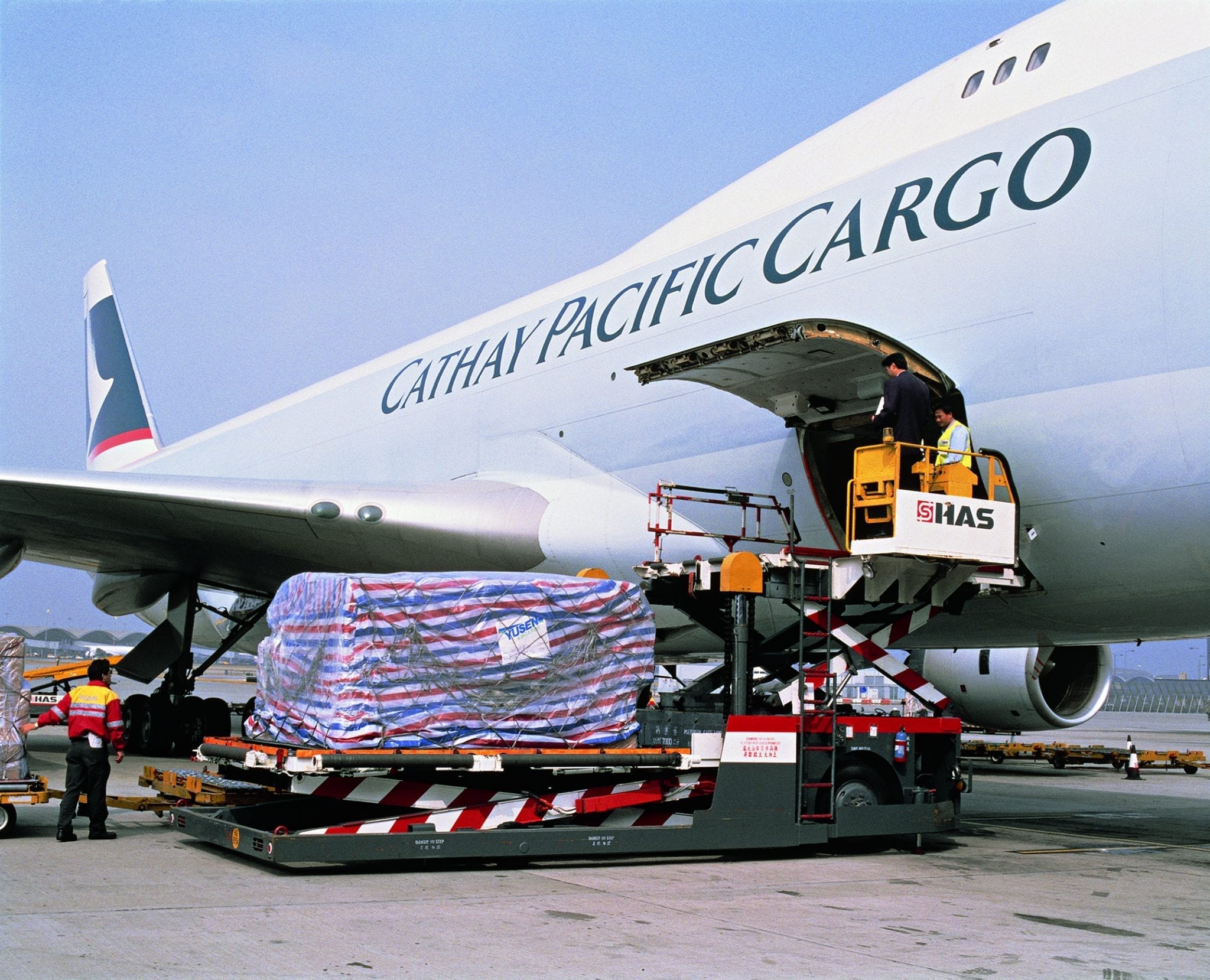
    Cathay Pacific Cargo has resumed its weekly Boeing 747 freighter service from Toowoomba Wellcamp Airport (WTB) in Queensland, Australia to Hong Kong (HKG).

    The carrier said in a LinkedIn post on 4 August the new service will support local producers and exporters of chilled meats, vegetables and more to reach the Hong Kong market and beyond.

    Toowoomba Wellcamp Airport said the freighter service will serve as a gateway for oversize cargo, chilled meat, horticulture-fruit/vegetables, seafood, oil and gas, mining equipment and artwork.

    The airport operates its international air cargo terminal in conjunction with Menzies Aviation.

  • DB Schenker offers charter flights to Latin America

    DB Schenker offers charter flights to Latin America

    Starting this week DB Schenker will offer additional charter capacities across the Atlantic. The new route starts from the Netherlands and reaches Brazil after two stopovers in the US. In South America, direct connections to Argentina and Chile are available. The weekly freight charter flight provides 50 tonnes of capacity and expands DB Schenker’s growing intercontinental flight network.

    Every Sunday night, the flight leaves Amsterdam (AMS) and stops in New York City (JFK) and Miami (MIA) on Monday before reaching Viracopos (VCP) near São Paulo on the same day. On Tuesdays, a direct connection can be made to Buenos Aires (EZP), and Santiago de Chile (SCL) can be reached on Wednesdays. An airline partner will be operating the new transatlantic route with Boeing 767 freighter jets. The charter flight’s stopover in Miami allows access to numerous further destinations in the operating carrier’s portfolio.

    The first bookings include a diverse range of goods, including many automotive parts. DB Schenker said emperature-controlled cargo and dangerous goods can also be transported upon request. Within Europe, the flights seamlessly connect to the forwarder’s land transportation network.

  • AirAsia and Malaysia Airports Resolve Their Legal Disputes

    AirAsia and Malaysia Airports Resolve Their Legal Disputes

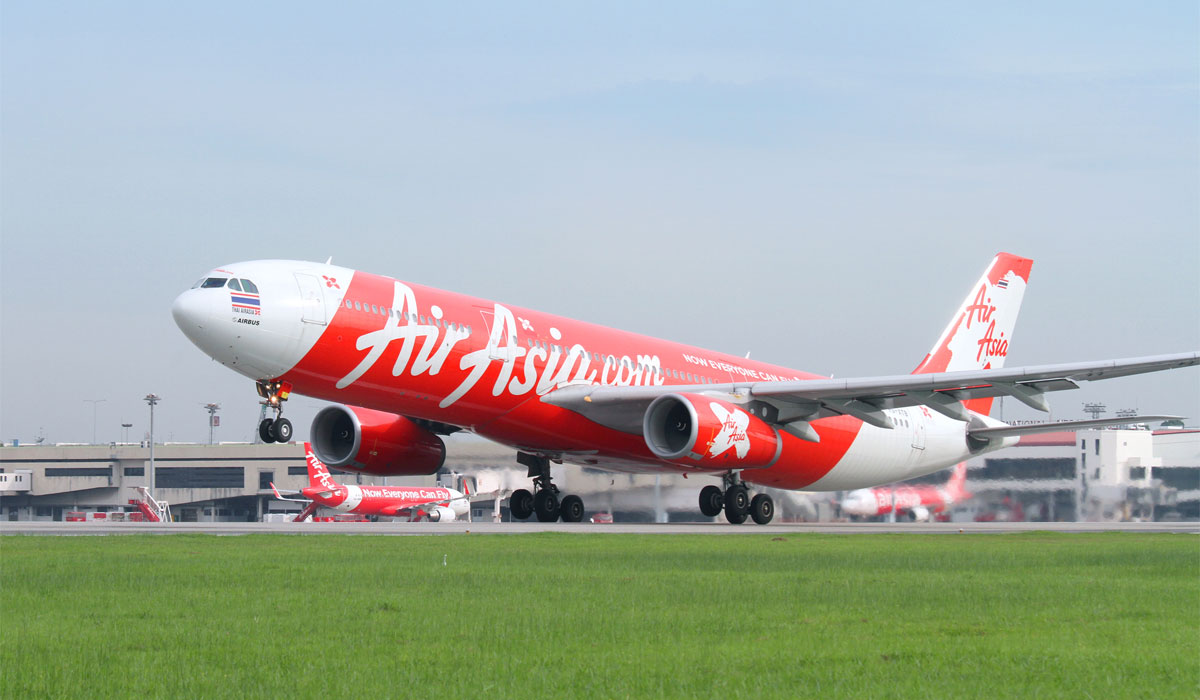
    In an attempt to revive air travel in the country, AirAsia and Malaysia Airports Holdings have decided to end all of their legal disputes. The two parties released a joint statement a few days ago saying that they have found “common ground to reach an amicable outcome” for their multiple disputes and plan to work together for the recovery of the industry.

    On August 10th, Capital A Berhad (the holding company of AirAsia Aviation Group Limited) and Malaysia Airports Holdings announced that they have mutually agreed to end all of their legal disputes for the sake of the country’s travel and tourism industry.

    Malaysia Airports Holdings Berhad (MAHB) Managing Director, Dato’ Iskandar Mizal Mahmood said,

    “We are pleased to confirm that all parties are dropping proceedings. There are no longer any legal proceedings or material litigation from MAHB against AirAsia Berhad/AirAsia X Berhad.”

    Capital A CEO Tony Fernandes was also happy with the decision and added,

    “As the world recovers from the pandemic, and substantial losses in the aviation sector in particular, it is integral that all stakeholders work together to stimulate the air travel revival. As two major players driving the aviation ecosystem, it is more important than ever that MAHB and our Malaysian based airlines AirAsia Berhad and AirAsia X Berhad, show solidarity in making Malaysia’s aviation industry competitive and attractive again.”

    The parties involved are believed to have put their differences aside for the benefit and success of all the aviation stakeholders, such as airlines, airports, and passengers, and to stimulate Malaysia’s tourism and economic growth.

    According to ch-aviation, one of the lawsuits was filed by the airport group for outstanding Passenger Service Charge payments amounting to MYR41.55 million ringgit (USD9.1 million) against AirAsia and AirAsia X.

    But the airline group contested that the airport operator had revised the fees in 2016, breaching a contract between the two sides.

    Another dispute involved the two LCCs filing a case against Malaysia Airports alleging losses and damages sustained between 2014 and 2018 due to negligence, multiple disruptions, and poor conditions at KLIA2, the second terminal at Kuala Lumpur airport where these airlines operate

    Spending time and resources on court cases is never an easy decision, more so in the wake of the pandemic, which crushed the airline industry in the last two years. But there have been green shoots lately as various stakeholders commit to bringing the industry back to good health.

    Tourism Malaysia is encouraging various programs and events such as the ‘World Top Gourmet Awards 2022’ and other similar initiatives to bring back tourist revenue and strengthen the economy. For that, there must be a cordial relationship between the country’s major airline group and airports.

    With the disputes ending, the hope is that AirAsia’s main hub at Kuala Lumpur International Airport will work seamlessly and be more affordable for millions of passengers each year.

  • Snapchat+ hits 1 million subscribers, announces new exclusive features

    Snapchat+ hits 1 million subscribers, announces new exclusive features

    Launched less than two months ago, Snap’s premium service has already amassed 1 million subscribers, the company announced today. Snapchat+ is available for $3.99/month and offers exclusive features that aren’t otherwise available.

    When it launched Snapchat+ back in June, Snap promised to add new features for premium users quite often. Today, the social network revealed a new batch of Snapchat+ features are now available for the service’s subscribers.

    First off, Snapchat+ subscribers are getting “Priority Story Replies,” meaning their replies will be more visible to Snap Stars. “Post View Emoji” is another new feature coming to the premium side of the service today. It allows paying customers to pick an emoji they want friends to see after they view their Snaps. Basically, it acts as a signature to sign-off you Snaps.

    Another interesting new premium feature coming to Snapchat+ is the ability to customize further Bitmoji backgrounds with “special backgrounds” like gleaming gold and a beach paradise. Last but not least, Snapchat+ subscribers are getting new icons for the app to put on their home screens.

    If you want to subscribe to Snapchat+, keep in mind that the service is only available in the United States, Canada, the United Kingdom, France, Germany, Australia, New Zealand, Saudi Arabia, United Arab Emirates, India, Kuwait, Qatar, Oman, Bahrain, Egypt, Israel, Sweden, Denmark, Norway, Netherlands, Switzerland, Ireland, Belgium, Finland, and Austria.

  • Amazon to invest in Japanese beauty retailer Istyle

    Amazon to invest in Japanese beauty retailer Istyle

    Amazon.com will invest in istyle, the company behind the @cosme review and retail site, gaining access to the Japanese beauty product vendor’s trove of user reviews.

    Under the agreement announced Monday, istyle will issue 2.5 billion yen ($18.7 million) in convertible bonds as well as 11.5 billion yen in warrants to Amazon on Sept. 6. If these convertible bonds and warrants are turned into stock, Amazon would become the top shareholder with a 36.95% stake.

    Amazon will open a dedicated page, tentatively named @cosme Shopping, on its site, where istyle will provide the latest on beauty products to the e-retailer’s members and sell cosmetics from a wide range of brands.

    Istyle has been pushing to merge online and offline sales, setting up a brick-and-mortar store in Tokyo’s Harajusku district. Going forward, Amazon and istyle could collaborate in operating stores using digital tech. The partnership could boost Amazon’s presence in the cosmetic market, where drugs stores and department stores are also formidable players.

    Istyle will also issue convertible bonds to investors including leading trading house Mitsui & Co.

    Mitsui plans to position the cosmetics business as one of its key growth fields and wants “to broaden access to istyle’s customers and manufacturers,” according to a spokesperson. It intends to leverage its sales network to offer Japanese-made cosmetics in overseas markets.