Tag: asia

  • Combating Deepfake Disruption in Asia

    Combating Deepfake Disruption in Asia

    In Asia, these risks are amplified by diverse linguistic landscapes, complex political environments, and a high penetration of mobile and digital services. According to Grand View Research, the global deepfake AI market size was estimated to be worth USD 562.8 million in 2023 and is projected to grow at a compound annual growth rate (CAGR) of 41.5% from 2024 to 2030.

    In the region, more than 2.8 billion people are connected to the internet. This massive digital audience offers both a ripe target and a potential shield, depending on how countries and telecoms respond.

    Telecommunication operators across Asia are no longer just internet providers; they’re digital gatekeepers. With their access to user data flow and infrastructure control, telcos are uniquely positioned to play a significant role in countering deepfakes.

    In Singapore, Singtel has launched an AI cloud service to democratize artificial intelligence (AI) for enterprises and the public sector. As part of this effort, it signed a memorandum of understanding (MoU) with Hive, whose enterprise-grade models specialize in detecting deepfakes, generative AI (GenAI) content, and other harmful media. Leveraging NVIDIA chips and Singtel’s AI infrastructure, Hive provides clients with access to state-of-the-art detection tools suited for sensitive data environments.

    In 2024, HONOR unveiled a real-time deepfake detection system at Mobile World Congress Shanghai, which is embedded in its smartphones and can identify manipulation during video calls. Moreover, Aletheia, a browser plug-in and endpoint software, can detect deepfakes by analyzing pixels and audio frequencies with up to 90% accuracy. Singapore’s ST Engineering developed Einstein.AI, which flags facial and audio anomalies in media content to protect public trust, especially ahead of elections.

    Recognizing the increasing prevalence of online scams, cyberbullying, and misinformation in the digital space, CelcomDigi is taking a proactive approach to ensure content authenticity. As part of its broader initiative to promote online safety, the company hosted two exclusive Online Safety and Anti-Scam Masterclasses to empower content creators, social media influencers, and radio presenters to become advocates for digital safety. CelcomDigi’s Head of Sustainability, Philip Ling, explained:

    The future of deepfake defense in Asia lies in collaboration. As the World Economic Forum points out, combating deepfakes requires a “whole-of-society” approach, involving governments, private companies, academia, and civil society.

    Proposed regional strategies to combat deepfake disruptions in Asia include the introduction of the Expanded ASEAN Guide on AI Governance and Ethics – Generative AI, which illustrates its policy recommendations through four detailed use cases highlighting public and private institutions in the region that are implementing responsible AI practices. These include PhoGPT and VinAI in Vietnam, which focus on ethical generative AI development; Accenture’s Responsible AI Internal Programme, applied across ASEAN; Singapore’s Project Moonshot, led by the AI Verify Foundation to build trustworthy AI frameworks; and Thailand’s ThaiLLM, a collaborative effort by BDI, NSTDA, VISTEC, and other partners to develop large language models (LLMs) under ethical guidelines.

    In 2024, the International Telecommunications Union’s (ITU) ‘AI for Good Global Summit’ brought together technology and media companies, artists, international organizations, standardization bodies, and academia, to discuss the security risks and challenges of deepfakes and generative artificial intelligence (AI). ITU experts predict that 90% of online content will be AI-generated in 2025; hence, they identified that the focus has shifted to developing technical standards for watermarking and verifying content authenticity. These efforts aim to distinguish between human-generated, AI-generated, and hybrid content, providing a reliable framework for content validation and helping combat misinformation in an increasingly synthetic digital environment.

    In 2025, the Philippine government launched the Asia-Pacific Deepfake Task Force and rolled out an artificial intelligence-powered detection tool to combat disinformation and potential election fraud in light of the upcoming May elections. According to Cybercrime Investigation and Coordinating Center (CICC) Undersecretary, Alex Ramos, this initiative is part of a broader strategy to empower citizens against the escalating threat posed by deepfakes.

    “This tool will be distributed to accredited institutions, including election watchdogs like the Parish Pastoral Council for Responsible Voting (PPCRV), universities, and fact-checking groups,” Ramos explained. “During community gatherings, if someone reports suspicious content, it can be analyzed quickly using this tool.”

    Deepfakes can be considered both insidious and intelligent; it’s a technological feat with the potential to harm or help, depending on its application. Hence, APAC-based telcos, governments, and stakeholders are collectively adopting a unified approach to address the challenges posed by synthetic media in the region.

    In Asia, where digital growth is outpacing regulation, the challenge is formidable; however, through forward-looking legislation, public-private partnerships, and telecom-driven innovation, the region is forging a resilient path forward.


  • Victoria’s Secret appoints new leaders for core brands

    Victoria’s Secret appoints new leaders for core brands

    Victoria’s Secret & Co has made several leadership changes as the company focuses on strengthening its core brands.

    The company said the move is part of its “Path to Potential” strategy, which aims to build momentum across its Victoria’s Secret, Pink and Adore Me banners.

    Anne Stephenson has been named brand president of the Victoria’s Secret brand, effective next month. She is currently the company’s chief merchandising officer and brings experience in product strategy, brand development and merchandising

    Meanwhile, Ali Dillon has been appointed president of Pink. Dillon previously held leadership roles in merchandising and brand development at several fashion retailers and most recently served as president of Alex Mill.

    Amy Kocourek took over as president of the beauty division in March. Before joining Victoria’s Secret, she was chief merchandising officer at jewellery and lifestyle brand Kendra Scott.

    All three brand presidents will report to CEO Hillary Super.

    In a separate appointment, fashion designer Adam Selman was named senior VP and executive creative director. He will report directly to Super until a new chief merchandising officer is named.

    “This is an exceptional team of product and creative leaders whose vision and operational expertise will drive new levels of growth, innovation and impact for our company,” said Super.

    “With their customer-centric approach, I’m confident they’ll help us unlock the full potential of our brands, capture the next generation of consumers and strengthen our market leadership.”

  • Prada brings Versace home to create Italian luxury contender

    Prada brings Versace home to create Italian luxury contender

    Prada’s deal to buy Versace revives hopes for a ‘made in Italy’ luxury champion after many other family-founded brands ended up in French, Swiss or US hands, and comes as many Italian groups are outperforming the struggling sector.

    The US$1.375 billion deal brings one of fashion’s best-known Italian labels back under Italian control after it was sold to US-listed Capri Holdings, then known as Michael Kors, for $2.15 billion including debt in 2018.

    Despite Italy accounting for 50 per cent to 55 per cent of global personal luxury goods production, according to consultancy Bain’s estimates, the country lacks a group with a scale that matches up to French players such as LVMH and Gucci-owner Kering.

    Milan-based Prada, controlled by designer Miuccia Prada and husband Patrizio Bertelli and listed in Hong Kong with a market capitalisation of about $15 billion, is the largest Italian luxury fashion group by revenue.

    But the group, which also includes the fast-growing Miu Miu label, has been a relative minnow in terms of stock market valuation compared with the likes of Louis Vuitton-owner LVMH.

    The Versace deal comes after Andrea Guerra became Prada’s CEO in 2023 to bridge a change in generation, with Lorenzo Bertelli, the son of the company’s main owners and its chief marketing officer, regarded as the heir apparent.

    “Prada’s ambition to become a leading Italian luxury conglomerate is a significant move in a market that is dominated by French groups. It’s exactly what many Italians have been hoping for”, said Achim Berg, a fashion and luxury industry adviser.

    The combined revenue of the five biggest Italian-owned listed luxury groups – Prada, Moncler, Ermenegildo Zegna, Brunello Cucinelli and Ferragamo is still well below Kering’s roughly $19 billion, even after a big fall in sales at the French group last year.

    Company founder Brunello Cucinelli summed up the difference in approach on the two sides of the Alps in typically colourful fashion.

    “Our esteemed French counterparts are great financiers,” he told the Milano Fashion Global Summit 2024 last October.

    “But we Italians regard our ‘tiny big’ companies as if they were our little children, so we want to look after them and hand them down to a next generation,” he added.

    While LVMH and Kering have swallowed many Italian brands, even the larger Italian groups have until now been comparatively reluctant to make big acquisitions.

    “This acquisition represents Prada’s serious attempt to build a group – and a much more ambitious one compared to their past ventures with Helmut Lang and Jil Sander,” Berg said.

    Prada’s chairman and co-owner Patrizio Bertelli defined the acquisition of those two brands – which were bought at the turn of the century and sold a few years later – as “strategic mistakes”. The group has since focused mainly on organic growth, with the exception of acquisitions of suppliers.

    Both Prada and Versace have their roots in Milan and still have headquarters there, just four kilometres (2.5 miles) apart.

    Milan-based Moncler, the mountain gear brand that was bought and revived by Italian entrepreneur and current main shareholder Remo Ruffini in 2003, has also shown some interest in dealmaking, buying Italian streetwear brand Stone Island in a $1.3-billion deal agreed in late 2020.

    Moncler’s net cash position of $1.5 billion has fuelled analyst talk of more deals, but the group has denied such speculation.

    Jil Sander is now part of Italian entrepreneur Renzo Rosso’s OTB Group, which also includes brands such as Diesel and Maison Margiela. But with annual sales of $1.9 billion, it remains relatively small.

    The big Paris-based groups, meanwhile, have continued to make forays into Italy, underscoring the challenge an enlarged Prada would face to compete with them.

    In the latest deals, Kering bought a 30 per cent stake in Italian maison Valentino in 2023, and LVMH last year helped to take Tod’s private and took a 10 per cent stake in Moncler’s top shareholder.

    In the longer-term, eyes are on companies such as Milan-based Armani and Dolce & Gabbana, among the few in Italy that are still fully family-owned and unlisted.

    Their ultimate fates could be decisive in any effort to create a true Italian powerhouse in global fashion.

  • Tim Hortons launches retail coffee range in South Korea

    Tim Hortons launches retail coffee range in South Korea

    Tim Hortons has launched its retail lineup in South Korea as part of its strategy to broaden the brand’s reach.

    The Canadian cafe brand’s retail coffee offerings include Original Blend whole bean coffee and fine grind coffee in five flavours: Original Blend, French Vanilla, Colombian, Maple, and Decaf.

    “Like all Tim Hortons coffees, our bagged coffee retail products start with 100 per cent premium Arabica beans that are roasted with care and blended to perfection,” said Mieka Burns, VP of consumer packaged goods at Tim Hortons.

    “Guests can already savour their favourite Tim Hortons beverages in restaurants and they can now complement that experience at home.”

    Tim Hortons’ whole bean and fine grind coffee are available at the Lotte Mart grocery store in Gangdong Millennial Jungheung S-Class Complex, and will soon be available in department stores and online.

    The Canadian coffee chain debuted in South Korea in 2023 and has quickly expanded to 16 locations.

  • Indonesian coffee chain Fore Coffee’s IPO oversubscribed by 200 times

    Indonesian coffee chain Fore Coffee’s IPO oversubscribed by 200 times

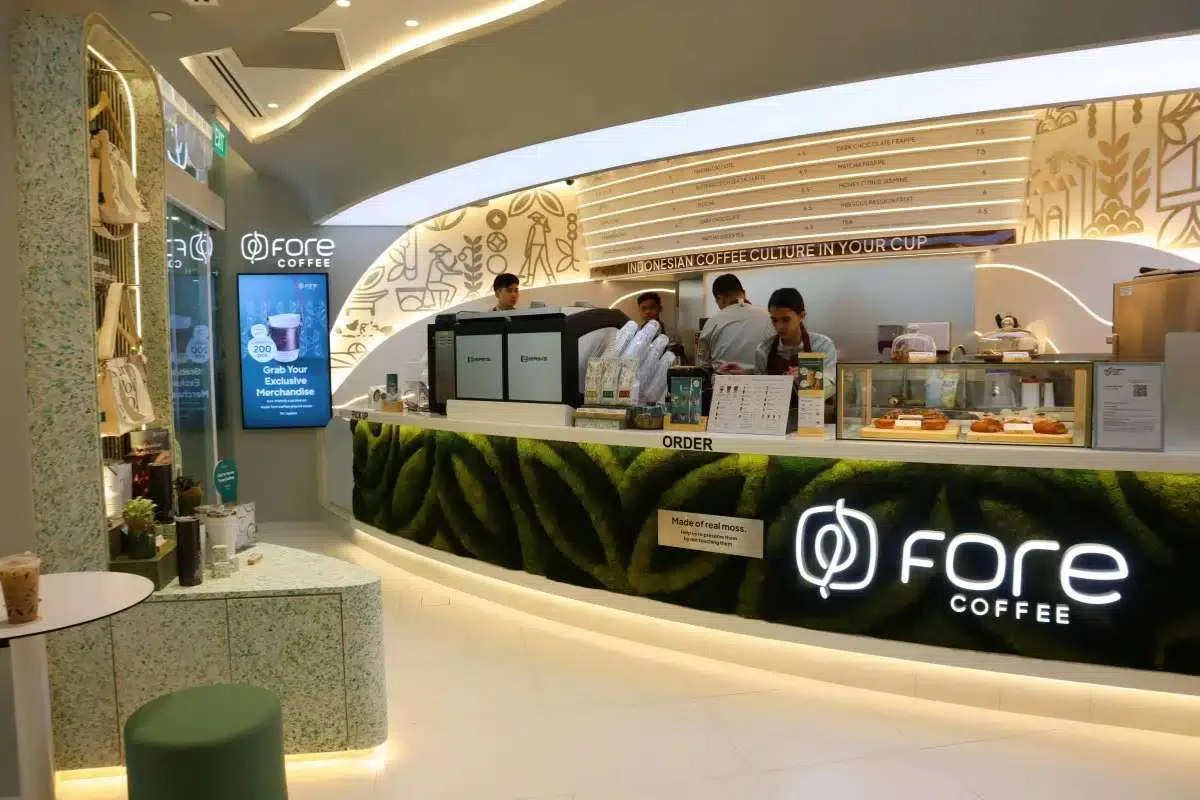
    Indonesian coffee chain Fore Coffee made its trading debut on the Indonesia Stock Exchange (IDX), following a heavily oversubscribed initial public offering that attracted more than 114,000 investors.

    The East Ventures-incubated company priced its IPO at US$0.012 (RP188) per share, issuing 1.88 billion new shares to raise approximately $22.3 million (RP353.44 billion) in fresh capital.

    Fore Coffee plans to allocate around 75 percent of the funds to its domestic expansion, with a target of 140 new outlets over the next two years.

    An estimated $3.8 million (RP60 billion) will be invested in launching a new doughnut concept, while the remaining $1.1 million (RP18 billion) will go towards working capital.

    Wilson Cuaca, president and chairman of Fore Coffee, and co-founder and managing partner at East Ventures, said the strong response to the IPO demonstrates the appeal of homegrown startups to public investors.

    “The counter-intuitive decision to proceed with the IPO during the lowest IDX Composite index since the pandemic paid off,” Cuaca said.

    Mandiri Sekuritas and Henan Putihrai Sekuritas acted as joint lead underwriters and intermediaries for the offering.

  • Pickle Juice debuts Extra Strength Shots in Coles

    Pickle Juice debuts Extra Strength Shots in Coles

    US beverage brand The Pickle Juice Company has launched its 75ml Extra Strength Shots in Coles supermarkets nationwide.

    The Texas-based company claims that its product uses a propriety formula that is scientifically proven to help alleviate muscle cramps by interrupting the nerve signals that trigger involuntary muscle contractions.

    Pickle Juice uses a blend of vinegar, grain ingredients, and a mix of vitamins and minerals.

    In addition, it contains no sugar, caffeine, or artificial additives and is rich in electrolytes.

    Blake Boulton, head of global sales at The Pickle Juice Company, said the rollout reflects the company’s strategy to improve accessibility globally.

    “Australia has always been a key market for us, and we’ve seen firsthand the impact Pickle Juice has had in the sports and wellness communities,” explained Boulton, head of global sales for The Pickle Juice Company.

    “By partnering with Coles, we’re making it easier for everyday Australians to access an effective solution for muscle cramps, superior hydration and enhanced recovery.”

    The Pickle Juice Company Extra Strength Shots is available for an RRP of $24 for a four-pack and $47.50 for a 12-pack in Coles stores across NSW, Victoria, Queensland, SA, WA and Tasmania.

  • API launches online B2B hub for pharmacies to source products

    API launches online B2B hub for pharmacies to source products

    Australian Pharmaceutical Industries (API) has launched an online B2B hub – MyAPI – for its wholesale pharmacy customers.

    API is a wholly-owned subsidiary of Wesfarmers Health and has more than 4000 wholesale pharmacy customers.

    According to the company, the platform offers “enhanced functionality and an elevated experience,” allowing pharmacies to research products, place orders, identify stock on hand, obtain pricing and deals, and manage their accounts.

    It also facilitates stock returns, backorder management, houses key documents and provides customer support and communications.

    “By investing in technology like MyAPI, we’re ensuring pharmacy owners have 24/7 access to critical products and essential information at their fingertips,” said Doug Swan, executive GM of wholesale and pharmacy services at Wesfarmers Health.

    “This means more convenience and flexibility, and empowers them to serve their communities with confidence knowing they have what patients need, when they need it.”

    In addition to the main features, the e-hub also supports compliance with Community Service Obligations for pharmaceutical wholesalers, including the timely delivery of Pharmaceutical Benefits Scheme items within 24 hours.

  • Aldi ranked Australia’s top supermarket for fifth consecutive year

    Aldi ranked Australia’s top supermarket for fifth consecutive year

    For the fifth time in a row, Aldi has been named Supermarket of the Year 2024 in Roy Morgan’s Customer Satisfaction Awards.

    The supermarket has won this title eight times. The ratings are calculated from an annual survey of 60,000 Australians and cover 40 industry categories.

    “With the rising cost of living, we know many Aussie families are feeling the pinch,” said Simon Padovani-Ginies, group director of Aldi Australia. “That’s why we’re more focused than ever on keeping grocery prices low and making every dollar count. Our entire business model is based on saving people money while making sure only the best products make it onto our shelves.”

    “As well as delivering a dependably high level of customer satisfaction to millions of Australians Aldi is also recognised by Roy Morgan as one of Australia’s top five most trusted brands – a position Aldi has held consistently over the last five years despite the challenges faced by the sector in an era of high inflation and rising interest rates,” said Roy Morgan CEO Michele Levine.

    She said Aldi had a perfect record of winning all 12 monthly customer satisfaction awards during 2024 with an average customer satisfaction rating of “an exceptional” 88.8 percent.

  • How the Banking Industry Drives Switzerland’s Economic Power

    How the Banking Industry Drives Switzerland’s Economic Power

    The banking association Swiss Banking has presented a study that underscores the importance of the financial industry for the Swiss economy. To ensure this remains the case, prudent strategic decisions and smart, focused regulation are needed.

    The study, commissioned by Swiss Banking (Swiss Bankers Association, SBA) and conducted by the consulting firm Oliver Wyman, concludes that the banking industry plays a key role in supporting economic growth and strengthening Switzerland’s capacity for innovation.

    In 2024, the Swiss financial sector contributed CHF 74 billion to the national economy, which corresponds to 9 percent of GDP. Of this contribution, 57 percent came from banking services (5 percent of GDP), and 43 percent from insurance and other financial service providers.

    Around 160’000 highly qualified professionals work in the banking sector. For each job in the industry, there is an additional job in another sector that depends on it. Annual tax contributions amount to CHF 7 billion, making banks one of the most important sectors in the Swiss economy. Every eighth tax franc comes from the financial industry, emphasized Swiss Banking President Marcel Rohner during the presentation of the study on Friday in Zurich.

    The Swiss financial center is considered one of the most important worldwide and is a key pillar for prosperity, innovation, and international connectivity in Switzerland. This has led to more favorable financing conditions and a lower interest rate level in Switzerland than abroad for many years, Rohner added. This represents an important competitive advantage for companies and also has positive effects for consumers.

    Another factor is the success in international wealth management,» said association CEO Roman Studer. Some of these assets also contribute to financing volumes.

    The industry provides efficient access to capital for both private and corporate clients – nationally and internationally. Especially for small and medium-sized enterprises (SMEs), a stable supply of credit is essential. There is a close symbiosis between the banking sector and the broader economy.

    The financial sector is growing, and much has emerged in recent years, said Rohner. He cited examples such as the relatively young financial service providers Swissquote and Partners Group, which are successful global publicly listed companies, as well as fully licensed digital asset banks like Amina and Sygnum. In 2024, there were 484 fintech firms.

    As a result, the financial ecosystem is deepening, and fintechs and banks are increasingly benefiting from one another. New markets are emerging with digital assets, such as crypto ETPs, ESG investments, or impact investments.

    To ensure that Switzerland’s financial center remains successful in the future, prudent strategic decisions are needed. Economic openness, smart and focused regulation, and a solid reputation, especially about money laundering or terrorism financing, are key to the financial center’s competitiveness.

    Regulation must be internationally aligned. This also includes robust and broad-based liquidity safeguards as well as solid and competitive capital requirements. We must and want to learn the right lessons from the Credit Suisse case, emphasized Studer. This includes liquidity safeguards and resolution capabilities. That must also apply to UBS.

    The only remaining major Swiss bank plays a crucial role in the ecosystem, from which smaller banks also benefit. «UBS is important on the corporate client side, and we need a global bank that can offer products and services others cannot, Rohner said.

    The position of the Swiss banking sector should not be taken for granted and must be protected,» he added. «We want to take good care of our financial center and shape it with ambition, in line with our tradition of excellence, trust, integrity, and stability. That’s how we stay globally relevant and future-ready. That is our responsibility – and our opportunity.

    When it comes to regulation and capital requirements for UBS, a middle ground will be found – I’m confident there’s no insurmountable divide.

    The fact that the political process is dragging on has both advantages and disadvantages. The extended timeline creates uncertainty, but also ensures that questions are addressed holistically rather than in isolation.

  • Vietnam discovers 12 mines containing over 10 tons of gold

    Vietnam discovers 12 mines containing over 10 tons of gold

    A major gold discovery in central Vietnam has revealed 12 mines containing over 10 tons of gold and 16 tons of silver, according to the Mid-Central Geological Division.

    The discoveries were made following geological investigations across 32 areas with gold ore potential.

    Vietnamese authorities have identified around 500 gold-bearing locations nationwide. Of these, 30 sites have undergone detailed surveys, revealing an estimated total of 300 tons of gold reserves. Most of these deposits are concentrated in mountainous areas of northern Vietnam and several central provinces.

    Starting in 2025, the Department of Geology and Minerals has been launching a new project to evaluate mineral potential in central Vietnam, focusing on localities like Quang Nam, Quang Ngai, Binh Dinh and Phu Yen provinces.

    Another mineral survey project, initiated in 2017, led to the recent discovery of 40 gold mines with total estimated reserves of nearly 30 tons.

  • Toymaker LEGO opens $1.3B green factory in Vietnam

    Toymaker LEGO opens $1.3B green factory in Vietnam

    Danish toymaker LEGO Group inaugurated its first factory in Vietnam, an over-US$1.3 billion green investment, at the Vietnam-Singapore Industrial Park III in the southern province of Binh Duong.

    The factory, inaugurated on Wednesday, is set to employ about 4,000 workers. It is expected to bolster LEGO’s supply chain in Asia, reflecting its global leadership in toy manufacturing.

    The facility, LEGO’s sixth globally and second in Asia, stems from active collaboration between the Vietnamese Government, ministries, agencies and Binh Duong authorities to attract hi-tech and green-focused foreign investment.

    Once fully operational, the factory will run entirely on renewable energy from an on-site solar system, serving as a model for green manufacturing and supporting Vietnam’s shift to a circular economy.

    Niels B. Christiansen, CEO of LEGO Group, called it a strategic move to expand the manufacturing capacity in the Asia-Pacific while reaffirming LEGO’s long-term commitment to sustainable development.

    Deputy Prime Minister Mai Van Chinh hailed LEGO’s investment as a boost to Binh Duong’s reputation as a hub for global manufacturers, citing its prime location, strong transport links, and pro-business climate.

    LEGO is also investing in Vietnam’s workforce, with over 100 foreign experts training local technical and management staff. The company plans to partner with educational groups to bring play-based learning to over 60,000 Vietnamese children this year.

    A distribution center in the nearby province of Dong Nai, its second logistics hub in Asia, is also slated for opening later this year.

  • Fuel prices plunge to 4-year low

    Fuel prices plunge to 4-year low

    Vietnam gasoline price plummeted to its lowest in four years Thursday afternoon.

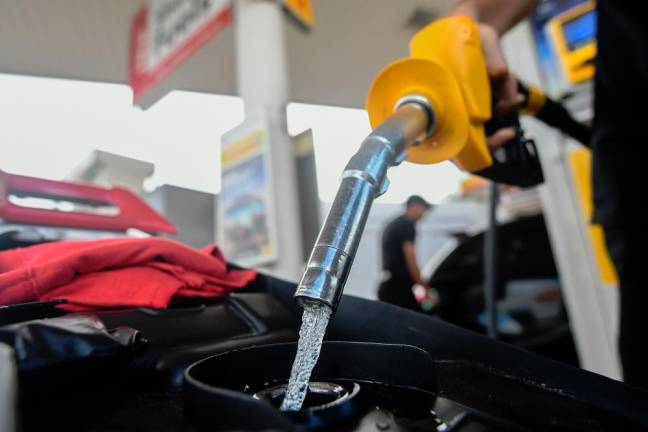
    The popular fuel RON95 fell 8.2% to VND19,200 (US$0.74) per liter, the lowest rate since May 2021.

    Biofuel E5 RON92 declined by 7.3% to VND18,880.

    Diesel dropped 6.7% to VND17,240.

    Regulators said that the global oil market over the past seven days has been influenced by several factors, including a rise in the U.S.’ crude oil inventories and its announcement of a 10% tariff on all imports.

    These factors pushed fuel prices down, with RON95 decreasing by 11.2% to $75.3 per barrel. Diesel went down by roughly 9% to $79.5.

  • WhatsApp’s most comprehensive update arrives today

    WhatsApp’s most comprehensive update arrives today

    WhatsApp receives new updates quite often, but many times developers don’t really reveal what’s been added to the app. That usually happens because the changes are minor or not significant enough to warrant a changelog.

    Today’s update, or better say changelog, is very different to what we’re used to. WhatsApp has just announced its first “feature roundup,” a comprehensive and informative list of new features and improvements that the app received recently.

    While these might not necessarily be rolled out today, they might have been part of very recent updates that not everyone received yet. That said, let’s take a deep dive into what’s coming and what’s already been added to WhatsApp recently.

    Most of the changes announced today revolve around conversations, chats, and Channels, so let’s start with the first on the list. First off, WhatsApp now features an “online” indicator in group chats, allowing users to see how many people are “Online” in real-time, right under the group name.

    Secondly, WhatsApp has added the ability to highlight notifications in groups. It’s an easy way to prioritize group chat notifications by using a new “Notify for” setting and selecting “Highlights” to limit notifications for @mentions, replies, and messages from saved contacts or “All” to receive all notifications.

  • Cathay continues its sustainability efforts as it builds momentum for future development

    Cathay continues its sustainability efforts as it builds momentum for future development

    Cathay released its 2024 Sustainability Report, reflecting steady progress in its sustainability journey and reaffirming its commitment to long-term sustainable development. As the Cathay Group moves into its next phase of growth, sustainability remains a key priority.

    Chief Executive Officer Ronald Lam said: Having successfully completed our two-year rebuilding journey, we have now set our sights on growth and development, where sustainability remains an area where we aspire to lead and is at the forefront of our path forward.

    Our environmental focus continues to be on climate change and a circular economy. As a pioneer and early adopter of sustainable aviation fuel (SAF), we continue to work towards fostering a local SAF ecosystem and expanding SAF usage globally, while acknowledging the challenges and opportunities ahead. We are also embracing the shift towards responsible use of resources by continuously reducing our reliance on single-use plastics (SUP) and exploring packaging alternatives. Beyond our environmental efforts, we remain committed to our deep roots in Hong Kong, enriching our communities through youth, sports, and arts initiatives while setting our sights on future growth by attracting, developing and retaining a strong pipeline of global talent.

    Key highlights from the 2024 report include:

    • Fostering a local SAF ecosystem with the Groups record global SAF usage: Cathay launched a landmark tripartite SAF partnership with HSBC Hong Kong and EcoCeres, enabling SAF usage from Hong Kong International Airport while demonstrating the potential of fostering an SAF system in Hong Kong. It also co-initiated the Hong Kong Sustainable Aviation Fuel Coalition (HKSAFC), a multi-stakeholder group, to drive SAF policy development and adoption in Hong Kong. Globally, Cathays Corporate SAF Programme recorded a 22-fold increase in SAF usage compared to its launch in 2022.
    • Advancing a circular economy: Cathay Pacific reduced its passenger-facing SUP items to an average of 2.6 pieces and set two new secondary SUP targets for 2025: increasing inflight recycling of water bottles to 33% and ensuring at least 50% of the remaining passenger-facing SUP items are made with recycled plastics. Working towards its goals, Cathay Pacific introduced a first-of-its-kind workflow for recycling plastic bottles and cans at Hong Kong International Airport.
    • Nurturing the Hong Kong community: 2024 marked the 20th anniversary of Cathays flagship youth development programme, I Can Fly, with its return after a five-year hiatus, expanding the initiative to include an exchange tour in the wider Greater Bay Area.

    The full 2024 Sustainability Report detailing Cathays sustainability performance and commitments is available here.

  • Instagram is reportedly changing its mind about this long-ignored Apple device

    Instagram is reportedly changing its mind about this long-ignored Apple device

    Instagram is finally working on something users have been asking for since the early days — a proper app for the iPad. According to a new report from The Information, Meta has started developing a version of Instagram made specifically for tablets. That means, more than a decade after launching exclusively on iPhone, the social platform could soon be much more usable on Apple’s larger screens. Sound familiar? I thought I’d heard that before.

    This change of heart doesn’t seem to be random. The push to bring Instagram to iPad is reportedly tied to the ongoing uncertainty surrounding TikTok. With a possible ban of TikTok in the United States being debated in Congress, Meta sees a real opportunity to win over creators who may be looking for a new home. Offering better tools and support for creators is one of Instagram’s current priorities — and that includes making sure the app works well on more than just phones.

    Instagram has long resisted building an iPad-specific app. Back in 2020, Instagram head Adam Mosseri said the company had limited resources and too many other things to work on. In 2022, he added that there just wasn’t a big enough group of users demanding an iPad app to make it a priority. As a result, users have been stuck using the iPhone version of the app on their iPads, which looks awkward and doesn’t take advantage of the extra screen space.

    However, we have seen how quickly Meta can make features appear seemingly out of thin air, especially when it involves one-upping a competitor. Let’s not forget how quickly the Meta-owned app “Threads” gained a ton of new features once the company realized that competing app “Bluesky” began to rise in popularity and eating into their user base.

    There’s still no official confirmation or timeline for release, and details on what the app might look like are limited. But the fact that Instagram is even considering it now shows how much the competition has shifted. TikTok already has an iPad-optimized app, and YouTube’s Shorts platform runs well across all devices. Instagram risks falling behind if it doesn’t meet creators where they are — and many of them use iPads for editing, planning, and posting content.

    If this finally happens, it could unlock a lot of potential for iPad users. Instagram now has a chance to capitalize on an opportunity to gain more users, and the timing couldn’t be more critical. Maybe this is one thing we can agree to be thankful to TikTok for. Maybe.