Tag: asia

  • Mercedes-Benz India Extends Warranty And Service Plans To Support Customers languagedropdown

    Mercedes-Benz India Extends Warranty And Service Plans To Support Customers languagedropdown

    Mercedes-Benz India has announced a host of warranty and service initiatives to support its customers during the COVID-19 pandemic. Given the ongoing lockdown, the carmaker is offering an extension on timelines to honor warranty claims and warranty protection against lapsed service. This means Mercedes-Benz car owners, whose warranty or free service plans have or will expire between April 15 and May 31, 2021, will now get an extension on these benefits until June 30, 2021. The announcement comes just a day after rival Audi India announced a similar initiative.

    These benefits are for Mercedes-Benz car owners, whose warranty or free service plans have or will expire between April 15 and May 31, 2021

    In addition to the extension on standard warranty package and protection against lapsed service, Mercedes-Benz India will also support claims related to extended warranty and motor vehicle insurance (Daimler Financial Services Insurance), until June 30, 2021. This is for customers whose extended warranty or motor insurance has lapsed between April 15 and May 31, 2021. Also, if the vehicle’s standard warranty is expiring during the aforementioned dates and the customers wish to purchase an extended warranty, they will get an extension till June 30. Mercedes-Benz India says that it will also continue to support its customers with the Road-Side Assistance program with special permissions, wherever required.

    Talking about the initiative, Martin Schwenk, MD & CEO, Mercedes-Benz India, commented, “In the current challenging situation it remains our endeavor to assure our customers of complete peace of mind when it comes to their vehicles. Through these specially crafted service initiatives along with our service teams’ ongoing support working remotely, our customers will continue to enjoy a hassle-free vehicle ownership.”

  • Facebook launches new video shopping feature on iOS devices

    Facebook launches new video shopping feature on iOS devices

    Facebook made all sorts of tools available to those who’d like to shop via its social network. The most recent one is called Live Shopping and it’s now available on iOS devices. The new feature combines the fun (or stress) of online shopping with the convenience of live video.

    iPhone users should be able to start using Live Shopping every Friday starting this week through July 16. Facebook users will be allowed to tune in to the Live Shopping streams on each brand’s Facebook Page or by visiting the Shop tab or bookmark on mobile.

    If anything shown during these live presentations catches your eye, you’ll be able to purchase it by tapping the products featured in the stream and checking. Everything can be done directly on Facebook without having to leave the app.

    Furthermore, Facebook announced the three brands will go live around a common theme each Friday: Glow Up, New Fashion Finds, and Self Care Spotlight. Here is when you can tune in to watch these presentations:

    • Glow Up – May 21, June 11 and July 2 12:00 PM – 1:30 PM PT/3:00 PM – 4:30 PM PT
    • New Fashion Finds – May 28, June 18 and July 9 12:00 PM – 1:30 PM PT/3:00 PM – 4:30 PM PT
    • Self Care Spotlight – June 4, June 25 and July 16 12:00 PM – 1:30PM PT/3:00 PM – 4:30PM PT

    Finally, Facebook revealed the full list of brands that will participate in Live Shopping Fridays until July 16: Abercrombie & Fitch, Alleyoop, Bobbi Brown Cosmetics, Clinique, Dermalogica, Dolce Vita, Sephora, and ZOX.

  • The role of telecoms in a growing big data analytics market

    The role of telecoms in a growing big data analytics market

    In today’s data-driven world, more organizations are investing in big data analytics to improve business performance and build business resiliency as the world experiences unprecedented digitalization.

    According to IDC, big data and analytics (BDA) spending in the Asia-Pacific region, has been on the rise. In 2020, revenue for BDA solutions reached US$22.6 billion, representing a growth of 12% from the preceding year. IDC predicts that this revenue will grow with a five-year CAGR of 15.6% for the period from 2019 to 2024.

    Banking is the top vertical leading the overall BDA market, followed by the telecommunications sector, where big data analytics has been applied to predictive customer churn analysis, for instance.

    Since telecom operators handle billions of records every day, the use of big data converts raw data into meaningful insights that are valuable to enterprises and the government.

    In the region, China accounts for the largest share of the BDA solutions market, driven by banking and state and local government. Even Chinese factories have turned to big data to focus on the domestic market when exports were disrupted last year. When overseas demand dropped and China was at the height of the pandemic, factories turned to e-commerce giants like Alibaba and JD.com to track consumer behaviors. Within just three months, Alibaba successfully helped 300,000 Chinese export factories to focus on local consumers.

    To secure tech supremacy, China is investing heavily in emerging innovations. Last month, China’s state media announced a US$3 billion plan to build a supercomputing center to analyze data obtained from space by the end of the year. The center will provide big data services for industries such as the aerospace and marine sectors as early as next year.

    Taking cues from the central government, companies are also investing in big data. Last month, tech giant Tencent and venture capital firm Sequoia China led a US$25 million funding round in a Chinese big data startup to capitalize on global digitalization efforts.

    In Malaysia, where big data analysis is still in its early stages, IDC has forecasted that the BDA market will grow from US$1.1 billion in 2021 to US$1.9 billion in 2025. In this research commissioned by Malaysia Digital Economy Corporation (MDEC), findings show that the services sector will dominate the BDA market, contributing 64% of total spending, followed by banking and telecommunications, with both contributing to a third.

    Malaysia has plans to become a regional data hub leader, with capabilities such as big data, IoT and AI. Last month, Microsoft announced that it is establishing its first data center in Malaysia’s Greater Kuala Lumpur area. Estimated to cost US$1 billion, this investment is expected to create 19,000 jobs and generate US$4.6 billion in revenue for Malaysia.

    New revenue sources across sectors
    Amid big data growth and advances in big data analytics, global telecom operators are well-positioned to take advantage to compete. Apart from transforming customer experiences within to reduce customer churn and improve operational efficiency, the telecommunications industry is in a unique position to mine the sheer volume of data for other sectors as data becomes a key differentiator to stand out among the competition.

    Insights into big data present telecom operators’ monetization opportunities when offered to organizations across increasing industries that are recognizing its perks. Such industries include logistics and shipping, as well as the retail industry.

    In the logistics industry, for instance, historic data and pattern analysis that take into consideration seasons and cycles can be used for predictive analytics. Insights from data can be used to predict future volumes, route planning using real-time analytics on weather and traffic conditions for route optimization, and more efficient dispatch of transportation vehicles to prevent delays. Predictive analysis also enables robotic systems to scale inventory management in warehouses as needed. Essentially, big data analytics offers visibility and transparency throughout the supply chain so that firms can better respond to immediate real-time information for smoother operations.

    Big data also promotes client segmentation and target marketing to attract and retain existing clients in the retail sector. For example, telecom operators can run analytics on consumer data that are sought after by retailers to enhance existing targeted marketing campaigns. More specifically, behavior analytics carried out by telecom operators can help retailers connect with their buyers both online and offline and decide if it is worthwhile opening a store or franchise in a particular precinct.

    Given that the telecommunications industry is inextricably linked to organizations in today’s digital age, data-driven insights are an important driver for the continued relevance and prosperity of organizations across diverse sectors. The onus is on telecommunications operators to tap on this growth area.

  • Maybank Kim Eng Appoints Singapore Chief

    Maybank Kim Eng Appoints Singapore Chief

    He replaces Harmeet Singh Bedi, who left after six years at the firm in 2020 for Prime US Reit, a Singapore real estate investment trust.

    Maybank Kim Eng, the fully owned investment banking arm of Malaysia-headquartered Maybank, has appointed Aditya Laroia as chief executive officer, Singapore, according to an announcement on Wednesday.

    Laroia joined Maybank Kim Eng in 2020 as head of prime brokerage and country head of investment management in Singapore. In his new role, he will be responsible for the firm’s overall securities and investment banking business in Singapore and the execution of its five-year plan that is anchored by a sustainability-first approach.

    The new chief brings over 23 years’ experience in financial markets in New York, London and Asia.

    He was previously head of sales Asia-Pacific at Saxo Markets, responsible for managing all sales and commercial activities for Saxo Group in the region. Before joining Saxo in 2012, he spent 4 years at Nomura in London, and 10 years at Lehman Brothers.

    Singapore is a key home market for Maybank Kim Eng Group as it is a financial gateway for many of its client segments, Group CEO Ami Moris said in the announcement.

    With Aditya’s global experience and strong capital markets knowhow, I am confident that he will strengthen our franchise in Singapore to continue providing Asean-leading solutions to our clients, Moris said.

  • Android 12 Beta is now available for download on these phones

    Android 12 Beta is now available for download on these phones

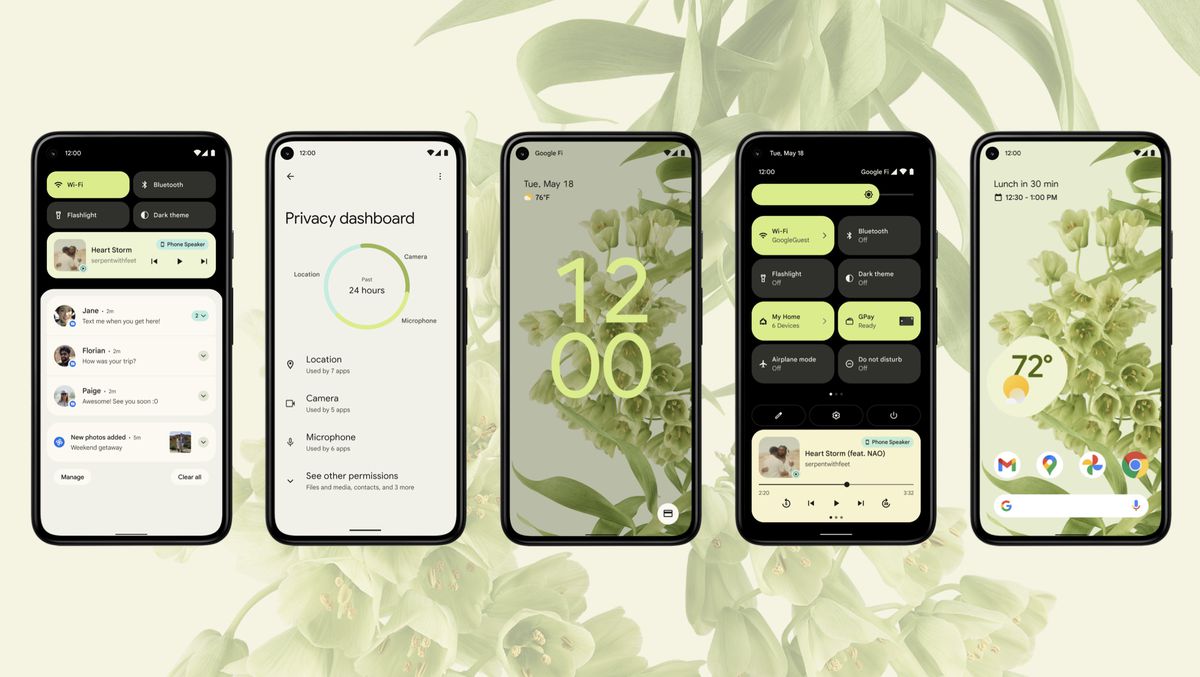
    Android 12 was officially announced during Google’s I/O 2021 event, offering a colorful Material New design and more fun changes. To those curious to try it out – you already can!

    Granted, you’ll need an eligible smartphone and it’s worth noting that running a developer Android beta version is not a good idea unless you’re actually an Android developer yourself. Beta software can be quite unstable, and your phone’s functionality will become limited, so proceed at your own risk or simply wait for the public Android 12 release later this year. In any case…

    Google

    During the I/O event, Google announced that the first smartphones to be getting access to the Android 12 beta will unsurprisingly include Pixel phones. You will need to be using the Google Pixel 3, Pixel 3 XL, Pixel 3a, Pixel 3a XL, Pixel 4, Pixel 4 XL, Pixel 4a, Pixel 4a (5G) or Pixel 5. Google has provided Android 12 beta downloads for each of those phones here.

    Asus

    If you have an Asus Zenfone 8, you can download the Android 12 beta for that phone from Asus’ website. That website also has step-by-step instructions on how to install it, and which features don’t work yet, such as the fingerprint sensor and face unlock.

    OnePlus

    Those using the OnePlus 9 and OnePlus 9 Pro can get the Android 12 developer preview from OnePlus’ website here. The site also explains the installation process for those particular phones.

    Warning: We’ve had reports that the Android 12 beta gets OnePlus devices stuck in a bootloop.

    Xiaomi

    Xiaomi users who own the Mi 11 Ultra, Mi 11, Mi 11i and Mi 11X Pro can download the Android 12 beta for those phones from this Xiaomi page. There Xiaomi has also listed what to expect in terms of bugs.

    Vivo

    Right now only the Vivo iQOO 7 can get the Android 12 beta. If you own that phone, please refer to Vivo’s Android 12 beta download page.

    Oppo

    Currently the OPPO Find X3 Pro can get the Android 12 beta from OPPO’s website.

    Others

    If you’re using a recent Android phone made by Realme, Sharp, Tecno, TCL or ZTE, you can refer to Google’s “Partners and eligible devices” page for relevant Android 12 beta downloads and instructions.

    If your smartphone or brand isn’t included there, then the Android 12 beta isn’t available to you right now, but it could be in the future. You can inquire with your phone’s manufacturer on when and if you can expect an Android 12 beta to become available.

  • Twitter relaunches verified program with a blue badge

    Twitter relaunches verified program with a blue badge

    For the first time since 2017, Twitter is letting anyone on its platform apply for verification. The feature is relaunching alongside strict new criteria, so not everyone is eligible. Here’s everything you need to know.

    To request verification on Twitter and receive the coveted blue badge next to your name, do the following:

    • Open Twitter
    • Head to Settings
    • Tap Request Verification
    • Fill in the details

    If you don’t see the option yet, don’t worry. It’ll be gradually rolling out to all users over the coming weeks.

    All Twitter users will be able to ask for verification once every 30 days, much like Instagram. The requests will be handled by humans rather than algorithms, and users should expect a response within 1-4 weeks.There are currently six account categories that qualify for verification:

    • Government
    • Companies, brands, and organizations
    • News organizations and journalists
    • Entertainment
    • Sports and gaming
    • Activists, organizers, and other influential individuals

    For the individual account category criteria, click here. Twitter has plans to add more categories in the future. In the coming months, scientists and academics will be eligible. Religious leaders will be added by the end of 2021.

    In addition to the above criteria, Twitters users must be able to verify their identity. A complete account is required too, meaning you must have a profile name and profile photo.

    You must also have logged into your account in the last six months, have a confirmed email address or phone number, and not have had an account lockout in the past 12 months (successful appeals are excluded).

  • Gojek and Tokopedia formally announce merger

    Gojek and Tokopedia formally announce merger

    Indonesian ride-hailing and payments firm Gojek and e-commerce leader Tokopedia formally announced their merger today in a transaction that will create a technology powerhouse in the country’s largest deal.

    Sources familiar with the situation had earlier said the companies were seeking a $18 billion merger. Neither firm confirmed a valuation for the merged group, named GoTo.

    The deal comes as Gojek and Tokopedia seek to boost profitability some 10 years after they were founded by offering a bouquet of services under a single platform, extending a regional trend.

    Alibaba Group Holding and SoftBank Group Corp are among Tokopedia’s investors, while Gojek’s include Warburg Pincus and Tencent Holdings.

    Last month, Southeast Asia’s biggest ride-hailing and food delivery firm, Grab, clinched a $40 billion merger with a special purpose acquisition company. Meanwhile Singapore-based regional internet firm Sea Ltd, which operates e-commerce platform Shopee, is also muscling into food delivery and financial services.

  • Global luxury sales could return to pre-Covid levels this year, Bain says

    Global luxury sales could return to pre-Covid levels this year, Bain says

    The luxury goods sector could shrug off the hit from the coronavirus crisis as early as this year as Chinese and US shoppers help sales recover to pre-pandemic levels, consultancy Bain said on Monday.

    Bain now sees a 30 percent probability that sales of high-end handbags, clothes and jewelry will return to or exceed their 2019 level of US$340 billion this year, depending on how quickly vaccines are rolled out and tourism picks up.

    Its more likely scenario is for a full rebound in 2022, which would still imply a faster convalescence than Bain predicted in November, when it said the sector may have to wait until 2023 to put the crisis squarely behind it.

    Luxury goods sales fell by 23 percent to $264 billion last year, the largest-ever drop and the first decline since 2009, as the pandemic forced shop closures and brought international tourism to a virtual halt.

    But the crisis does not seem to have had a lasting impact on consumers’ appetite and spending power for high-end wares.

    Soaring sales in China, the biggest market for luxury goods, and a stronger-than-expected US rebound thanks to a big stimulus program have helped revenues bounce back sharply in the first quarter of 2021.

    “The US market has been the unexpected bright spot,” Bain said. By contrast, Europe is lagging behind, hampered by a slower vaccination campaign and restrictions on tourism.

    The speed of the recovery has been uneven. The industry’s biggest groups such as LVMH, Hermes, and Kering are already above their 2019 levels, while smaller labels like Ferragamo and Tod’s still have to catch up.

    The crisis has forced brands traditionally more reluctant to sell online to fully embrace e-commerce, which is set to become the leading channel for luxury purchases in the next few years.

    Bain said that as people moved to countryside homes and worked remotely, sales in second-tier cities often went better than in big luxury capitals like New York or Milan – a factor brand will have to consider as they review their footprint.

    And while handbags, leather goods and jewelry have been driving the recovery, spending on clothes, makeup and perfumes is expected to pick up too as lockdowns ease and people resume going out.

  • Alibaba, partners invest US$400 million in retail arm of Vietnam’s Masan

    Alibaba, partners invest US$400 million in retail arm of Vietnam’s Masan

    Chinese e-commerce giant Alibaba Group Holding and partners have invested $400 million in the retail unit of Vietnamese conglomerate Masan Group, Masan said on Tuesday.

    The consortium, which includes Alibaba Group and Baring Private Equity Asia, has paid for a 5.5 percent stake in Masan’s retail arm, The CrownX, the company said in a statement.

    The CrownX, founded in 2019, is valued under the deal at $6.9 billion, equivalent to $93.50 a share, the statement said. Parent company Masan will hold 80.2 per cent of retail units.

    The deal will expand Alibaba’s presence in Southeast Asia after its $4 billion investment in e-commerce firm Lazada in 2018.

    “The CrownX will work closely with Lazada to accelerate our digital transformation into an ‘all-in-one platform to serve consumers both offline and online purchases,” Masan said in the statement.

    The company said it was in talks with other investors on an additional investment of between $300 million to $400 million in The CrownX with that deal expected to close in 2021.

    Masan shares opened up 5.57 percent on Tuesday to 110,000 dong after the announcement, giving the company a market capitalization at $5.3 billion.

  • UBS Cuts 700 Jobs

    UBS Cuts 700 Jobs

    Swiss bankers are the first to go in the Swiss bank’s current round of cuts. UBS has started cutting jobs as part of its current round of cost-savings measures, with around 700 employees in Switzerland affected.

    Most of the cuts will be in the corporate center although 200 jobs will go in wealth management and UBS Switzerland. These are in addition to the roughly 125 jobs UBS was going to get rid of before the Covid-19 pandemic put those plans on ice

    UBS CEO Ralph Hamers announced a $1 billion cost-savings target during first-quarter results last month. UBS’s cuts are aimed at the jobs expected to become redundant as a result of its ongoing digitalization processes. finews.com reported on the plans in April. They are expected to be wide-ranging and take out 3,000 jobs in total.

    UBS has not confirmed the figure but it is realistic in view of the savings targets and the bank’s cost structures. It also announced that restructuring costs would total $300 million in the second quarter, most of which were in the scope of the cuts originally announced last year.

    According to Bloomberg, around a dozen managing directors as well as more junior bankers in the advisory and trading business were recently let go. In wealth management, about five managing directors and several executive directors were impacted. In the investment bank, most of those cuts were those responsible for wealth management clients.

    CEO Hamers said his current efforts are aimed at implementing and executing the transformation and digitalization strategy, which is expected to take about three years.

  • Karen Chan to relinquish role as CEO of AirAsia.com

    Karen Chan to relinquish role as CEO of AirAsia.com

    Karen Chan, CEO of AirAsia.com, is stepping down from her position more than a year after she was appointed. A+M understands that chief commercial officer Amanda Woo will be taking over her position and that today is Chan’s last day. A+M has reached out to Chan (pictured) and AirAsia for a comment.

    Chan joined AirAsia in 2019 as a group chief commercial officer during which she was responsible for driving profitability and growth across markets it operates in, her LinkedIn said. During that same year, AirAsia redesigned its mobile app to include features such as new booking flow and interactive search map; flight chat rooms; exclusive content and deals; and seamless access to boarding pass via the Apple e-wallet. At the start of 2020, Chan was promoted to CEO of AirAsia.com to lead the business transformation of the airline into a travel and lifestyle platform.

    Close to a year later, the airline launched its super app and Chan told A+M previously that a super app is more than just a digital marketplace of products. It is where commerce meets the community. Having expanded its core identity as an airline into over 15 product lines, Chan explained that it is prepared to take on the incumbents of the online travel agency and lifestyle players.

    Before joining AirAsia, Chan was SVP of digital, Asia Pacific, Middle East and Africa at Clarks for close to two years. Prior to that, she led regional digital marketing efforts for Pizza Hut, Domino’s Pizza and Coca-Cola.

    AirAsia’s super app claims to offer a simpler, faster and more convenient user experience with over 15 types of products and services under three main pillars – travel, eCommerce and fintech. The list of categories included flights, hotels, SNAP, activities, insurance, Big Rewards, unlimited deals and wifi. Separately, it also entered the food delivery scene last year, expanding to various cities within Malaysia and even to Singapore.

  • H&M begins placing orders in Myanmar again after pause in wake of coup

    H&M begins placing orders in Myanmar again after pause in wake of coup

    Swedish fashion retailer H&M said on Monday it was gradually beginning to place new orders again with its suppliers in Myanmar after a temporary pause following the military coup in the country in February.

    “With our decision, we want to avoid the imminent risk of our suppliers having to close their factories which would inevitably result in unemployment for tens of thousands of garment workers,” it said in an emailed statement.

    H&M said that after due diligence, it had concluded the company had no direct links with the military in Myanmar. “We are now looking for legal guidance on how to handle any potential indirect links international companies may have.”

    The world’s second-biggest fashion retailer in March said it was shocked by the use of deadly force against protesters in Myanmar and that it had paused placing orders in the country.

    Shortly after the military seized power, it was among the 55 foreign investors in Myanmar who signed a statement committing to the country and employees there during developments of “deep concern”.

    It said on Monday it remained deeply concerned about the situation in Myanmar.

  • BTC Slide Continues as China Warns of Crackdown

    BTC Slide Continues as China Warns of Crackdown

    The People’s Bank of China repeated its warning against cryptocurrencies, saying that digital tokens could not be used as a form of payment.

    The country’s central bank posted a joint notice from banking and internet industry associations on its official WeChat account, warning the finance industry not to offer cryptocurrency services.

    Virtual currencies should not and cannot be used in the market because they’re not real currencies and that financial and payments institutions are not allowed to price products or services with virtual currency, the notice said.

    Bitcoin fell over 14 percent in 24 hours to hover around $40,000 on Wednesday. Other major cryptocurrencies also continued to fall, including ethereum, which dipped below $3,000 for the first time since May 2.

    Bitcoin’s weeklong slide was promoted by Tesla founder Elon Musk’s comments about its environmental impact. The cryptocurrency has fallen nearly 40 percent since its high of over $64,000 in February.

    Less than two years ago, regulators in Shanghai, Shenzhen and Beijing began ramping up efforts to probe or shut down exchanges, which resulted in the closure of several Chinese exchange operators.

    The country is readying to realize part of its blockchain ambitions with the launch of its own central bank-backed digital currency and has laid the regulatory foundation for the launch.

  • Amanda Woo appointed as CEO of airasia super app

    Amanda Woo appointed as CEO of airasia super app

    AirAsia Group Bhd’s website, airasia super app, previously known as airasia.com, has appointed Amanda Woo as chief executive officer effective May 19, 2021.

    Woo will replace Karen Chan who will be assuming a board position with the super app business.

    With over 15 years of experience in e-commerce, lifestyle brand and retail marketing with prominent global brands, Woo’s leadership has been instrumental to the expansion of AirAsia’s business in key Asean markets.

    Her notable achievements include AirAsia’s entry into new markets in Indochina and turnaround of the Indonesian market.

    She was promoted in early 2019 to chief commercial officer whereby she was part of the founding team of the airasia super app.

    As chief executive officer. Woo will continue to accelerate the growth of airasia super app, the company said in a statement.

    Woo looks forward in working closely with the management team and dedicated Allstars across the region to achieve the goals that have been set out for airasia super app.

    “The combination of an incredibly talented pool of Allstars, strong leadership team and a global footprint forms an unparalleled opportunity for a consumer-centric super app that will be an important part of the airasia group ecosystem, and a key revenue stream,” she said.

  • E-mart set to quit Vietnam

    E-mart set to quit Vietnam

    South Korean supermarket chain E-mart is to exit its Vietnam business, with reports suggesting it will be sold to local car manufacturer Truong Hai Auto Corporation (Thaco Group).

    According to The Korea Times, E-mart announced earlier this week that it will sell E-mart Vietnam to Thaco Group. However, a spokesperson of Thaco said the group has not signed any agreements with the South Korean firm.

    E-mart has spent five years trying to establish a footprint in Southeast Asia, but in Vietnam had managed to open only one store, a second suspended due to local licensing setbacks.

    A South Korean media report said E-mart would take royalty fees from Thaco Group and its supermarket will be run as a franchise.

    “Our strategic alliance with Thaco will not only pay us royalties for using the E-mart brand in Vietnam, but also give us the opportunity to export our private-brand products,” an E-mart employee told The Korea Times.

    Predictions that the South Korean supermarket chain would exit Vietnam arose last year. However, its representative then denied the news and said it was looking into other options such as a strategic alliance or business partnership.

    Thaco Group’s commercial-services arm includes managing and operating mix-used business models including shopping malls, hotels and developing business lines such as supermarkets, food courts and cinemas.

    The group is currently operating businesses at Yangon Myanmar Center Complex in Myanmar and building its Socar Sala mixed-used complex in Ho Chi Minh City’s District 2.