Tag: asia

  • Coles house brands win global recognition

    Coles house brands win global recognition

    Coles’ exclusive brands, KOi and Woofin’ Good, have won multiple awards in the US-based Vertex Awards 2021.

    With a focus on label and packaging design, the competition attracted 650 entries from 32 countries and 55 retailers.

    Besides winning a Gold award in the personal care category, Coles’ skincare range KOi earned the coveted best in show ‘Publishers Choice Award’. Meanwhile, the dog food range Woofin’ Good also received Gold in the pet-products category.

    Both of the Coles’ exclusive brands were designed by independent Australian branding and design agency Hulsbosch.

    “These products have packaging and design that our customers are proud to put on their shelves,” said Belinda Anderson, head of marketing for Own Brand at Coles. “Exclusive brands like KOi and Woofin’ Good are inspiring customers and strategically important to Coles’ strategy to be an Own Brand powerhouse.”

  • Unilever to convert to recyclable toothpaste tubes worldwide

    Unilever to convert to recyclable toothpaste tubes worldwide

    Global consumer company Unilever is to convert its entire toothpaste portfolio to using recyclable tubes by 2025. The company’s oral-care brands include Signal, Pepsodent, and Closeup.

    After four years of development, the recyclable toothpaste tubes will be available this year in two of Unilever’s largest oral care markets – France and India.

    According to Unilever, the new initiative will contribute to its commitment to make 100 percent of its plastic packaging designed to be reusable, recyclable or compostable, and to help collect and process more plastic packaging than it sells.

    First launching in France with Signal, Unilever will introduce the new across its widest range, Integral 8, representing 35 percent of Unilever’s toothpaste portfolio in the country.

    Traditionally, most toothpaste tubes use a mixture of aluminum and plastic, which gives the packaging flexibility but makes it difficult to recycle.

    The new tubes will use high-density polyethylene (HDPE) material, the thinnest plastic material on the market at 220-microns, reducing the amount of plastic needed for each tube. While products made from HDPE are not biodegradable, they are classified as recyclable and can be disposed of in plastic recycling bins.

    The new tubes have been approved by RecyClass, which sets the recyclability standard for Europe and laboratories in Asia and North America.

    Samir Singh, executive vice president of Global Skin Cleansing and Oral Care, said that with billions of toothpaste tubes dumped into landfills each year, he hopes this conversion to recyclable tubes will inspire other industries to make the change.

    “Plastic pollution is undoubtedly one of the biggest environmental challenges of our time,” said Singh

    “That’s why I’m proud of this latest packaging innovation which will see our entire toothpaste portfolio shift to recyclable tubes by 2025. It’s been a long and challenging journey to get to this point, but we hope this transformation will inspire the wider industry also to make the change.”

    According to Unilever, the technology will be available for other companies to adopt to encourage broader industry change. This decision is similar to one made by Colgate after launching its version of recyclable toothpaste tubes earlier this month.

  • HSBC Rolls Out Digital Wallet for SMEs in Singapore

    HSBC Rolls Out Digital Wallet for SMEs in Singapore

    The bank has launched a digital wallet for businesses in Singapore, which enables them to send, receive and hold cash in multiple currencies.

    HSBC’s Digital Wallet, which aims to significantly reduce the time it takes for SMEs to make business payments, is also being launched in the U.K. and the U.S., with a pipeline of further markets as well as new currencies and enhancements, the bank said in an announcement.

    The multi-currency wallet is integrated into its business banking platform HSBCnet, and removes the need for businesses to use third-party providers for international transactions, HSBC said. For example, businesses in Singapore can pay their Malaysia counterparts directly in ringgit.

    Li Lian Ng, HSBC’s head of business banking, Singapore, said the bank is committed to scaling up its SME banking capabilities in Singapore. The bank previously announced its strategy to scale-up its SME business and increase its share in the market to 15 percent by 2021.

    Since then, it has launched a number of products and initiatives for SMEs, including the online banking platform HSBCnet, Green Loans, the «Pioneer» programme for fast growing businesses, international business banking, and a not-for-profit proposition.

    HSBC said that Singapore’s SMEs are doubling down on their international connectivity and prioritizing resilience in their supply chains, with 87 percent planning to expand their international business, citing a survey conducted among local businesses with annual revenue between S$5 million and S$100 million.

    Drawing on HSBC’s deep digital expertise and wide global network, we are helping SMEs to build resilience and trust within their global supply chains whilst making everyday banking easier, Ng said.

  • Saxo Launches Crypto FX Trading in Singapore

    Saxo Launches Crypto FX Trading in Singapore

    Saxo Markets customers in Singapore will be able to trade in major cryptocurrencies as FX spot pairs.

    The online trading and investment platform’s new cryptocurrency offering enables customers to trade bitcoin, ethereum and litecoin against EUR, USD, and JPY from a single margin account, Saxo announced in a statement on Wednesday.

    Clients can trade and hedge both long and short exposure in the three cryptocurrencies, which will be in the form of derivatives and not the actual coins.

    Pairing cryptocurrencies with FX makes it more appealing to investors who are more active in the market as it offers a trusted and secure way to trade cryptos, Saxo said.

    Trading via ETNs for example lets more investors access this product in a way that works for their portfolio and makes the most of its volatility. It’s also fundamentally less risky than using cryptocurrency wallets where access can, and has, been lost to dramatic effect, Adam Reynolds, Asia Pacific CEO, Saxo Markets, said in the announcement.

    According to Saxo, its existing range of over 30 different cryptocurrency trackers and ETNs, which so far this year have seen trading volumes exceeding the entire turnover for the whole of 2020 –  a year in which volumes surged 130 percent.

  • UOB Issues First Green Trade Financing Under Industry Framework

    UOB Issues First Green Trade Financing Under Industry Framework

    The loans will help two of the bank’s clients in Singapore’s food supply chain build on their sustainability initiatives and strengthen their supply chain resilience.

    UOB has extended its first green trade finance facilities under the Green Finance Industry Taskforce’s Green and Sustainable Trade Finance and Working Capital Framework to palm oil and derivatives products producer Musim Mas and aquaculture company Barramundi, the bank said in Wednesday.

    Muslim Mas, which has been incorporating sustainability into its corporate agenda, will use the funds to supporting its working capital needs, in particular its sourcing of certified palm oil from responsible suppliers. Barramundi will further its sustainability initiatives to contribute to greater resilience and security in the seafood ecosystem, and source sustainable raw materials as part of its adoption of innovative solutions such as using climate-resilient and sustainable technologies.

    We are actively engaging our clients to reinforce the importance of sustainability to their business… Our collaborative approach helps to drive greater market adoption for green financing and encourages more businesses to advance responsibly, Frederick Chin, UOB head of group wholesale banking and markets, said in the announcement.

    UOB’s sustainability chief Eric Lim previously said the bank wants to help businesses advance responsibly on their sustainability journey and help their business models transition, as part of its goal of reaching $15 billion in sustainability loans by 2023.

    To qualify for green trade financing, companies must have a clear sustainability strategy and provide documents that show how the funds will be used, UOB noted. Companies also need to submit records that demonstrate the positive sustainability outcomes from their business activities or trades related to green trade financing.

    UOB highlighted, citing Singstat data, that more than S$1 trillion worth of trade flows through Singapore, of which more than S$90 billion meets the requirements of being green and sustainable.

    These trade flows provide an immense opportunity for us to work with companies to offer green trade financing and to support their trade flows through our regional network capabilities, Chin said

  • UBS Quietly Advances Token Efforts With Clients

    UBS Quietly Advances Token Efforts With Clients

    UBS has been quietly running a tokenization trial with weighty institutional investors. The Swiss-based bank has been offering more than 100 institutional clients access to a pilot program to tokenize real assetsThe project is operating on the Ethereum platform, the person said.

    This represents the next step in a push into putting assets on the blockchain and selling slices represented in coins. The project, being overseen by UBS investment banker Chetan Tolia, is looking at tokenizing traditional assets including debt, structured products, and physical gold.

    The Swiss wealth manager last week dipped its toes into cryptocurrencies, in a major concession to client demand. The tokenization program has quietly been running, separately out of UBS’ investment bank, for at least 12 months, the person said. UBS declined to comment.

    UBS has long held that it is interested in distributed ledger more than it is in cryptocurrencies themselves – which represent a threat to traditional banking. The Swiss bank transacts on we.trade, a blockchain-based trade finance platform, co-launched a so-called utility settlement coin with other banks, and is part of banking’s R3 blockchain consortium.

    It isn’t clear how long UBS intends to run the tokenization pilot or release it more widely, or which products it is tokenizing.

  • Virus Resurgence in Singapore Derails Economic Recovery

    Virus Resurgence in Singapore Derails Economic Recovery

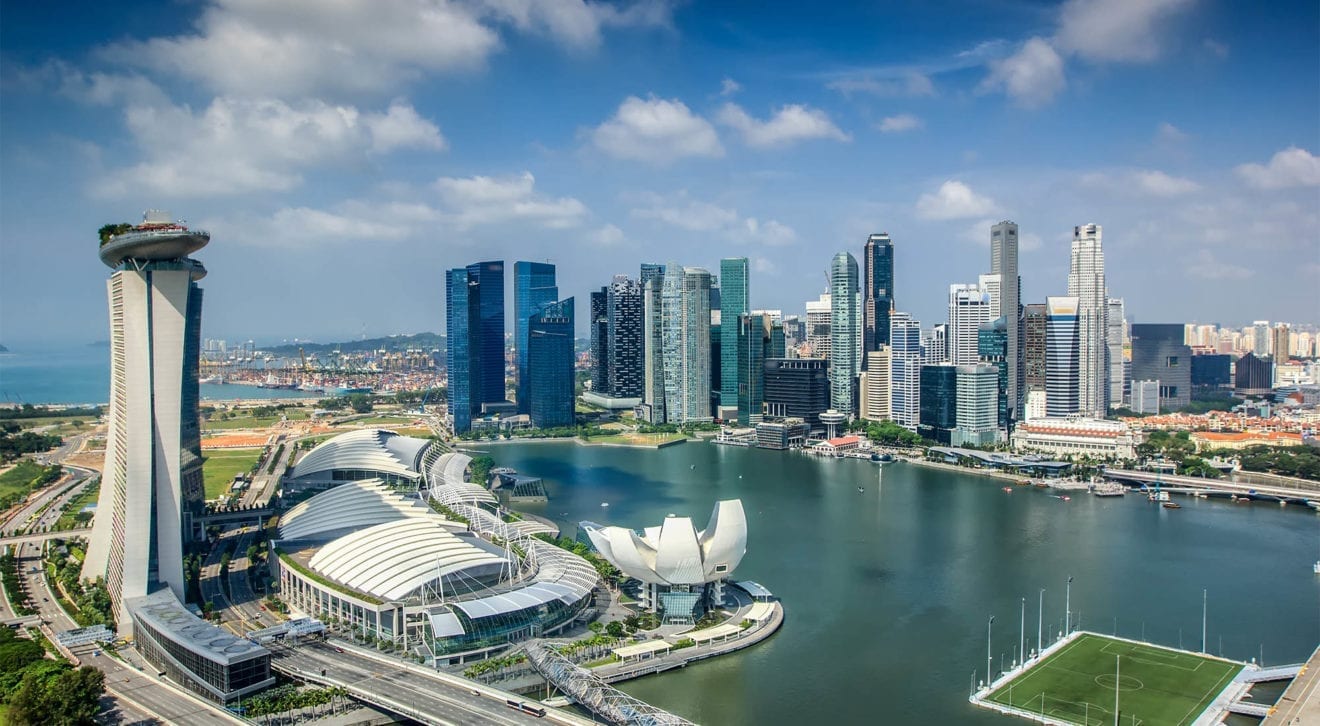
    Following consecutive quarters of recovery, the latest setback means that Singapore’s full-year target of 6 percent GDP growth is unlikely. Hopes for a second-quarter expansion in Singapore’s economy have been dashed by a resurgence in the Covid-19 virus that has taken the city-state by surprise. The republic introduced tighter measures on Sunday to stem the spread of Covid-19, following a spike in the number of imported and community cases linked to the B1617 variant from India in recent weeks.

    The new wave of Covid-19 restrictions, which will last until June 13, includes a ban on dining-in and a reduction of social gatherings from five people to two, as well as home-based learning at schools and default working from home.

    The overall number of new cases in the community grew from 32 cases in the week before to 149 cases in the past week, while the number of unlinked cases in the community grew from seven cases in the week before to 42 cases in the past week, according to the Ministry of Health

    The spike in community cases has also led to the second deferment of the Singapore-Hong Kong air travel bubble, planned for 26 May. Singapore Transport Minister S. Iswaran and Hong Kong Secretary for Commerce and Economic Development Edward Yau agreed at a meeting on Monday to review the situation and plan a new launch date.

    According to the terms of the agreement between the two cities, the travel bubble will be closed for two weeks if the seven-day moving average of the daily number of unlinked local cases is more than five in either Singapore or Hong Kong.

    The World Economic Forum’s special annual meeting, which was temporarily relocated from Davos, Switzerland to the city-state, will also be scrapped, organizers said in a statement on Monday.

    Regretfully, the tragic circumstances unfolding across geographies, an uncertain travel outlook, differing speeds of vaccination rollout and the uncertainty around new variants combine to make it impossible to realize a global meeting with business, government, and civil society leaders from all over the world at the scale which was planned said the WEF.

    The meeting, which was already pushed back from May, was scheduled for August 17 to 20 at Marina Bay Sands, with over 1,000 delegates expected to attend.

  • Citi Names Head of Private Bank for South Asia

    Citi Names Head of Private Bank for South Asia

    The Singapore-based Citi veteran will oversee the bank’s global market managers in South Asia and will have direct responsibility for the Singapore and Malaysia markets.

    Citi has named Lee Lung Nien as head of its private banking business in South Asia, in addition to his existing role as chairman of Citi Private Bank for South Asia, according to an announcement on Monday.

    Lee joined Citi 30 years ago and was CEO of Citi Malaysia from 2014 to 2020. He previously held various other senior roles including co-head of corporate sales and structuring for markets and securities services, chief operating officer for Singapore, and AML (anti-money laundering) business head of Asia Pacific. In his new role, he will report to Steven Lo, Asia Pacific head of Citi Private Bank and Amol Gupte, Asean head and Citi country officer for Singapore.

    According to the bank, the South Asia region, which includes Singapore and Malaysia, is a «key growth area» for its private banking business and is critical to the success of the Citi Global Wealth initiative.

    The South Asia region possesses outstanding potential due to a fresh wave of entrepreneurship, developing capital markets and an increasingly welcoming environment for family offices, Gupte said.

    The South Asia head role was previously held by Jyrki Rauhio, who left in 2020 after 20 years at the bank and later joined HSBC Private Banking as its regional head of credit advisory.

  • Indonesia Tech Giants Complete Merger

    Indonesia Tech Giants Complete Merger

    Indonesia headquartered on-demand multi-service platform and digital payment technology group Gojek and e-commerce platform Tokopedia have completed Indonesia’s largest-ever deal to create GoTo, Southeast Asia’s largest privately held technology firm.

    Amid growing competition among e-commerce platforms and super-apps, Gojek and Tokopedia giants have merged to form a multi-billion dollar company that will span e-commerce, e-payments, courier services, ride-hailing, food delivery, and other services.

    The merger will increase financial inclusion in an emerging region with untapped growth potential, Gojek co-CEO Andre Soelistyo, who will become CEO of GoTo, said in an announcement on Monday.

    The deal was backed by investors including Alibaba, SoftBank, Singapore sovereign wealth fund GIC, Alphabet’s Google, and Tencent. Gojek’s shareholders will own 58 percent of the holding company with the balance held by Tokopedia’s investors, Reuters reported, citing sources.

    Gojek and Tokopedia plan to remain separate but work together on payments, logistics, and food deliveries, they said in the announcement. Tokopedia president Patrick Cao will become GoTo’s president, while Kevin Aluwi will continue as CEO of Gojek, and William Tanuwijaya will remain CEO of Tokopedia.

    The two sides have considered a potential merger since 2018, but talks accelerated after plans for Gojek to merge with regional rival Grab fell through. The group, which is estimated to have a combined worth of $40 billion, plans to list in Indonesia and the United States later this year.

    The group’s payments arm currently owns 22 percent of Indonesia’s Bank Jago, and acquired mobile payments startup Moka in 2020. The group also has partnership deals with more than 20 banks and financial institutions.

    Indonesia’s digital economy expected to grow to $124 billion by 2025, according to a study by Google, Bain, and Temasek. About half its population of 270 million are currently unbanked.

    However, competition remains the form of Grab, which has also set its sights on the digital economy of the world’s fourth most populous nation.

  • DBS’ Ajay Mathur A Phygital Strategy Is Our Key Differentiator

    DBS’ Ajay Mathur A Phygital Strategy Is Our Key Differentiator

    The lack of a physical presence, short track records, limited offerings, and other factors will act as hurdles for digital-only banks to overcome, according to DBS’ Hong Kong head of consumer banking group and wealth management Ajay Mathur.

    Banks and other financial service providers used to compete along with price, product, and convenience but increasingly so, the competition has moved away from these elements towards digital speed, simplicity, and contextuality,» Mathur said. Although many banks are trimming property, including DBS which has offloaded office space in both Hong Kong and Singapore, Mathur underlines that retaining a client-facing real estate remains critical alongside digital presence – a phygital presence.

    This is not merely for optics or unwilling adopters of technology but to capture opportunities from both simple financial needs that can be executed online, such as a simple single stock trade, as well as more complex ones offline, such as succession or legacy planning.

    If we are able to smoothly deliver business online and offline, we can create a customer experience that can truly differentiate us, Mathur says. A ‘phygital’ strategy is our key differentiator.

    Even in the field of technology, Mathur said there is more to be desired from neobanks.

    Although some virtual banks are challenging traditional lenders in portfolio management capabilities – Stashaway, for example, claims to have superior discretionary mandate performance at much lower fees – Mathur underlined that many of such offerings are static in nature which, alone, is insufficient to meet client needs, especially in Asia’s market of hands-on investors.

    It’s very easy to create a so-called robo advisor. Many fintech already have offerings where they match clients with investment strategies based on a survey that assesses risk profile,» he explains. What is harder to create is robo-analysts. Robo-analysts can map your actual holdings against your profile and risk appetite to provide advice for clients to make actual transactions.

    And should virtual banks achieve a sufficient threshold in their capabilities, years of track record will still be required before broad confidence from the market can be achieved.

    We have spent many years and resources to develop brand and trust,» Mathur said. «Money is a very complex and emotional issue. It’s not something you can easily hand over to a company with no vintage.

    Nonetheless, Mathur acknowledges that it is still early days and, in fact, attributes some of the industry’s digital enhancements to the emergence of virtual banks.

    We welcome competition from fintechs, he said, adding that newly licensed digital lenders in Hong Kong have achieved a «credible start» in acquiring new clients and assets.

    They’ve kept peer banks on their toes and brought about nice improvements in customer experience.

    Within DBS, tech investments are now strategically focused on three areas: data, artificial intelligence and ecosystems.

    In addition to transforming its capabilities – seeking data to better understand clients and applying this via artificial intelligence to enhance user experience, for example – the bank is also transforming its role.

    Our traditional role is to act as a pipeline connecting financial services between the bank and a customer,» Mathur said. «But as we increasingly view ourselves less as a bank and more as a tech firm, we’ve been focused more on developing ecosystems. Rather than acting as a pipeline, we want to be a platform not only to deal with our customers but to deal with customers of our partners. This can effectively increase our ring of influence.

  • Backbase Grows Asia Leadership Team

    Backbase Grows Asia Leadership Team

    The engagement banking platform provider has appointed a digitalization specialist to support banks and financial institutions in the region with their digital transformation efforts.

    Backbase has appointed Abhijit Chavan as regional vice president of customer success for Asia, part of the company’s Asia leadership team, according to an announcement on Tuesday.

    Chavan brings more than 15 years of strategic experience at the top levels of management consulting, including at Accenture Strategy and PwC Consulting.

    In his new role, Chavan will look after customer success, ROI delivery, and prescriptive digital banking transformation for Backbase clients in the region and support customers in strengthening their market positions through Backbase’s Engagement Banking Platform.

    Backbase opened its regional headquarters in Singapore in January 2020. It subsequently partnered with Vietnam’s TPBank to accelerate digital transformation and transform the bank’s traditional products, services, and core banking system, and with the Philippines’ Uno digital bank to automate customer onboarding, account opening, origination, and self-service processes.

    The Netherlands-based company also opened a new office in Japan to help banks and financial institutions accelerate their digital transformation, improve customer engagements and optimize data insights as to the Japanese market transitions to digital banking.

  • Could stockless stores be the future of retail?

    Could stockless stores be the future of retail?

    We have all seen the headlines and excess of statistics about the uptick in online shopping over the past year. The global boom in eCommerce is obvious, but what is less clear is the vast impacts the last year will have on traditional retailers in the longer-term as ‘new’ consumer behaviour now becomes the ‘norm’.

    Along with the continuing popularity and convenience of eCommerce – health, hygiene, and social distancing will continue to be matters that consumers tackle with wariness, at least for the medium-term. However, in-between the various lockdowns witnessed in Southeast Asia, retailers were learning to adapt to the nuances of their new operating backdrops: virtual queueing, curb-side pickup, contactless payment options and even using physical stores as mini-fulfilment centres.

    One of the biggest challenges at the start of the pandemic when stores closed their doors was the issue of in-store goods. Lockdown saw large volumes of stock trapped in closed store locations that couldn’t be sold, or even reintroduced to the supply chain for eCommerce purposes. Further down the line, this stock was then forced to be sold at huge discounts once stores could reopen, or in some cases inventory was arduously and eventually made available for eCommerce fulfilment – which was great for consumer’s pockets, but bad for retailer’s balance sheets.

    Is there really any need to have stock in stores at all?

    Looking ahead, having a smaller volume of inventory within stores will ensure retailers avoid this position again. However, if customers can’t, or are unwilling to try on the items they’re looking to buy, is there really any need to have stock in stores at all? Realistically, aside from the safety implications of having multiple customers handle the same item of clothing, the more stock held in a store, the less accessible and less profitable it is.

    Back in the late 90s, leading UK retailer Argos’ model was regarded as unusual for its approach, using its stores as mini-distribution centres, only having the goods on display with a ticketing system for purchase. Now however, this approach could actually become the default for many retailers in the future, using things such as virtual queuing systems, increased use of mobile tills to ensure social distancing, and stock used for display purposes only.

    The disruption of 2020 has made retailers realise that stock located in the ‘wrong’ place greatly impacts sales, profitability, and the customer experience. So, why not also use the learnings of the past 12 months as a catalyst to change the whole philosophical approach to the physical store?

    Change makes for better innovation

    Much of the brick-and-mortar retail industry has been changing for many years now, but the pandemic may well represent the short-term, significant shock needed to kick-start a retail renaissance, with brands rethinking the best use of their most valuable assets – the bricks and square footage of their flagship stores.

    The next decade will likely see brands looking to reinvent their in-store presences in a move towards more experiential brand experiences, rather than effectively super-sized showrooms full of products across all sizes and colours, as in the not-so-distant future, the traditional shopping trip we once knew may well be completely transformed.

    Instead of the multi-coloured array of bags associated with leading fashion brands, tomorrow’s Southeast Asian shopper may well be bag-less.

    Racks of clothes could be replaced by mannequins displaying fashion combinations as shops reduce the levels of goods they hold, with smart mirrors allowing shoppers to use virtual or augmented reality to try on clothes in a completely contactless environment.

    Likewise, shoppers will be able to avoid queueing, instead using app-based queuing and mobile point of sale technology through iPads and contactless payments – and while some stock may be available to take home there and then, more likely than not, it will be delivered on the same or next day to the customer’s home – in effect, a reverse click & collect.

    Retailers must adapt with consumer behaviour change

    Consumer behaviour has changed drastically over the past year, so in order for retailers to align with their consumers, approaches to retail and how the in-store experience actually operates must adapt too. In the past, out of stock would have meant out of business, however, that may not be the case today.

    As speculative as it might sound, the environment that the retail industry is operating against today means that the less stock a store physically holds, the better off it might actually be. If retail is to recover and grow again over the coming years, the way in which physical stores are operated and used has to change.

    What is clear is that the off the street shopping experience we once knew isn’t going to return, however, the important thing is to recognise that this is okay, and if anything, it is paving the way for a better, more innovative era of retail. With an increased awareness of shifting consumer behaviour, an understanding of the latest applications possible for supply chain and retail technology, and a willingness to think more creatively and innovatively about how best to use valuable floor space, retailers will be able to reinvent the brand experience on offer in their flagship stores, welcoming in a brick-and-mortar renaissance of epic potential.

    For more information on how you retail business can best adapt with consumer behaviour change, please visit: https://www.manh.com/en-au

    By, Richard Wright, Managing Director, SEA, Manhattan Associates

     

  • DBS Launches Crypto Trust Offering

    DBS Launches Crypto Trust Offering

    DBS enlarges its cryptocurrency offering with a trust solution from its private banking arm amid growing demand for the asset class even within wealth succession plans. DBS Private Bank launches its cryptocurrency trust solution via wholly-owned DBS Trustee, according to a statement.

    The new trust offering is limited to cryptocurrencies currently supported by the bank’s digital asset exchange – DBS Digital Exchange (DDEX) – which includes Bitcoin, Ether, Bitcoin Cash, and XRP.

    According to the bank, the solution will ensure that critical information like access instructions or wallet backups will be kept confidential when passing on wealth in succession plans due to the additional protection afforded to trusts and their exclusion from the probate process.

    Confidentiality, peace of mind and taxation often emerge as top-of-mind concerns in our conversations with clients, and we would advise them to set up trust structures rather than wills, which are subject to the probate process, said DBS Private Bank’s regional head of family office, wealth planning and insurance solutions Lee Woon Shiu.

    This is especially so considering that international regulations and protocols are still nascent in the digital asset space, which could give rise to complications or unnecessary confusion if proper measures are not in place to prevent them.

    DBS expands its crypto offering amid growing demand for the digital asset class with DDEX registering S$80 million ($59.9 million) in assets under custody and a 10-fold increase of trading volumes since launch to S$30-40 million.

    The exchange currently has 120 clients with more awaiting onboarding.

    In recent years, more clients have expressed interest or are already invested in digital assets, and we expect this trend to accelerate as cryptocurrencies turn more mainstream, said group head of DBS Private Bank Joseph Poon. «Our trust structure allows clients to conveniently hold these assets, with a peace of mind that they will be safely managed and passed on to their intended beneficiaries.»

  • Tesla Crash Victim Lauded ‘Full Self-Driving’ In Videos On Tiktok

    Tesla Crash Victim Lauded ‘Full Self-Driving’ In Videos On Tiktok

    A Tesla car driver killed in a recent accident in California praised the automaker’s “full self-driving” features, and posted videos on his apparent Tiktok account, in which he appeared to drive with his hands off the wheel. On May 5, a Tesla Model 3 crashed into an overturned truck on a highway in Fontana, killing the Tesla driver and injuring the truck driver and a motorist who had stopped to help him.

    The Associated Press news agency cited police as saying a preliminary investigation had determined the Tesla’s driver assistant system Autopilot was engaged prior to the crash.

    But in a correction issued late on Friday, police said, “There has not been a final determination made as to what driving mode the Tesla was in.”

    Since 2016 at least three Tesla vehicles operating on Autopilot have been in fatal crashes, two involving a Tesla car driving beneath a semi-truck in Florida.

    Two videos of a man driving with his hands off the wheel were posted on the alleged Tiktok account of the victim, 35-year-old Steven Hendrickson of Running Springs in California.

    “What would do I do without my full self-driving Tesla after a long day at work,” said a message on one. “Coming home from LA after work, thank god, self-drive,” said a comment on another video, adding, “Best car ever!”

    Tesla dubbed its driver assistant features “Autopilot” or “Full Self-driving,” which experts say could mislead consumers into believing the car can drive by itself.

    On its website, Tesla said its Autopilot feature does not make the vehicle autonomous, however.

    On his Facebook account, Hendrickson was shooting a video while driving on autopilot, saying, “Don’t worry. I am on autopilot.”

    Family members were not available for comment and Tesla, which has disbanded its public relations teams, was not immediately available for comment.

    Tesla Club-SoCal, a group of Tesla owners in Southern California, said on social media that he was an active member who “loved his Tesla.” He is survived by his wife and two children, it added.

    The National Highway Traffic Safety Administration has been investigating more than two dozen crashes of Tesla vehicles, including the Fontana crash and a high-profile one in Texas last month that killed two men.

    Since 2016 at least three Tesla vehicles operating on Autopilot have been in fatal crashes, two involving a Tesla car driving beneath a semi-truck in Florida.

    The U.S. transport safety board said Tesla’s autopilot system failed to properly detect a truck as it crossed the car’s path, contributing to the accidents also caused

  • Mahindra Rolls Out M-Protect COVID Plan For Farmers

    Mahindra Rolls Out M-Protect COVID Plan For Farmers

    Mahindra & Mahindra’s Farm Equipment Sector on Sunday officially announced the rollout of the ‘M-Protect Covid Plan’ for the Indian farmers. With this new customer-centric initiative, the company intends to support Indian farmers in these testing times as the entire nation battles with the second wave of the coronavirus pandemic. The plan aims to safeguard new Mahindra tractor customers and their families against the possibility of contracting COVID-19. This plan will be available on Mahindra’s entire range of tractors purchased in May 2021.

    Under the M-Protect covid plan, Mahindra will provide its customers with a health cover of ₹ 1 lakh through a unique COVID Mediclaim policy covering the customer in case they contract COVID-19 with home quarantine benefits. It will also offer financial support by providing pre-approved loans to support medical expenses incurred during COVID-19 treatment. Moreover, customers’ loan with insured under ‘Mahindra Loan Suraksha’ in case of loss of life.

    Commenting on the development, Hemant Sikka, President, Farm Equipment Sector, M&M Ltd., “At Mahindra, we care about our customers and the community at large and have taken a series of initiatives to help those most in need to overcome the challenges related to COVID. Our new ‘M–Protect Covid Plan’ is a new initiative in that direction targeted at farmers, as we stand by them to drive positive change even in these tough times. With M-Protect we are privileged to serve and support them to reduce the impact of a COVID-related eventuality. With M-Protect we hope our farmers continue to have a healthy life.”

    Shubhabrata Saha, Chief Executive Officer, Farm Division, M&M Ltd. said, “May and June are important months for the livelihood of the farming community and COVID-19 has brought in several challenges. Our new M-Protect Covid Plan is intended to ease farmers’ worries as we support them in these crucial farming-related months. Through M-Protect we will offer health, financial and insurance-related protection to bring relief to the farmer during these challenging times, safeguarding them and more so their families. I would like to thank our channel partners for the immense support they’ve extended to our farmer customers.”