Tag: asia

  • DBS Launches Crypto Trust Offering

    DBS Launches Crypto Trust Offering

    DBS enlarges its cryptocurrency offering with a trust solution from its private banking arm amid growing demand for the asset class even within wealth succession plans.

    DBS Private Bank launches its cryptocurrency trust solution via wholly-owned DBS Trustee, according to a statement.

    The new trust offering is limited to cryptocurrencies currently supported by the bank’s digital asset exchange – DBS Digital Exchange (DDEX) – which includes Bitcoin, Ether, Bitcoin Cash and XRP.

    According to the bank, the solution will ensure that critical information like access instructions or wallet backups will be kept confidential when passing on wealth in succession plans due to the additional protection afforded to trusts and their exclusion from the probate process.

    Confidentiality, peace of mind and taxation often emerge as top-of-mind concerns in our conversations with clients, and we would advise them to set up trust structures rather than wills, which are subject to the probate process, said DBS Private Bank’s regional head of family office, wealth planning and insurance solutions Lee Woon Shiu.

    This is especially so considering that international regulations and protocols are still nascent in the digital asset space, which could give rise to complications or unnecessary confusion if proper measures are not in place to prevent them.

    DBS expands its crypto offering amid growing demand for the digital asset class with DDEX registering S$80 million ($59.9 million) in assets under custody and a 10-fold increase of trading volumes since launch to S$30-40 million.

    The exchange currently has 120 clients with more awaiting onboarding.

    In recent years, more clients have expressed interest or are already invested in digital assets, and we expect this trend to accelerate as cryptocurrencies turn more mainstream, said group head of DBS Private Bank Joseph Poon. Our trust structure allows clients to conveniently hold these assets, with a peace of mind that they will be safely managed and passed on to their intended beneficiaries.

  • Hong Kong Hub Status Under Fire

    Hong Kong Hub Status Under Fire

    Doubts about Hong Kong’s ability to retain its status as a global hub have been spotlighted in the past weeks by multiple entities – including the local government – citing various issues ranging from politics to the pandemic.

    Doubts about staying are increasing for numerous international companies and expatriates residing in Hong Kong, according to various sources including a Canadian envoy, a survey from an American business group and even the head of the Hong Kong Monetary Authority.

    Various issues were cited as drivers including Beijing’s national security law (NSL) as well as the local government’s management of the coronavirus pandemic.

    Earlier this week, Canada’s consul general in Hong Kong and Macau Jeff Nankivell said that the effects of the NSL led some Canadian firms to review contingency plans and study options for data transfer in the event of a Hong Kong withdrawal.

    He cited issues such as the revamp of the city’s electoral system and reduced post-NSL communication with a noticeable number of political parties and non-governmental organizations.

    Several days later, the American Chamber of Commerce in Hong Kong (AmCham) released a survey that said 42 percent of expats were considering an exit with NSL named as the top driver as cited by 62 percent of respondents.

    Other reasons cited include the effects of travel from Hong Kong’s quarantine policies (49 percent) and the impact of Beijing’s legislation on education (36 percent).

    «Based on the survey results, AmCham strongly suggests that the government pay close heed to the sentiment of expatriates in Hong Kong and work towards allaying major concerns through stronger understanding of Hong Kong’s international talent, lest the city lose competitiveness versus other business hubs,» the U.S. business group said.

    In a rare showing of doubt, even local government officials expressed worries about business plans to relocate to another hub, albeit for non-political reasons.

    In early May, HKMA chief executive Eddie Yue said Hong Kong risked diminishing attractiveness as a financial center due to potential exclusion from travel bubbles over its relatively low vaccination rate – around 14.8 percent of the city’s population of 7.5 million have received their first dose, according to data compiled by Oxford University.

    If you were a regional executive sitting in Hong Kong running the regional business in Hong Kong, without being able to fly around in Asia or fly back to your headquarters for reporting, will you think I should remain in Hong Kong, or should I move to another center? Yue said.

    Separately, government officials elsewhere expressed contrasted confidence in Hong Kong’s retention of international companies.

    In response to the AmCham survey, Commerce Secretary Edward Yau refuted concerns about Hong Kong’s attractiveness for foreign firms to do business, highlighting opportunities linked to the Greater Bay Area and the Belt and Road intuitive.

    Different business entities would have different reasons to stay or otherwise, but I think figures also speak for themselves, Yau said in a published transcript, citing a government survey that said the number of foreign firms remained steady at around 9,000. «Of course, there is no ground for complacency. We believe that business decisions would best be made by people who actually stay and operate in Hong Kong.»

  • Buying property in Europe offers more than an investment: Golden Visa programs

    Buying property in Europe offers more than an investment: Golden Visa programs

    If you ever plan to buy a property in a European country, a Golden Visa program in Europe can provide more than an investment. For example, Portugal Golden Visa provided 8,881 non-EU investors residency in Portugal. This number belongs to the years between 2012 and January 2021.

    What is more interesting is that more than 90% of those investors obtained Portuguese residency through buying real estate in Portugal.

    The same interest in this type of investment is also notable in Greece Golden Visa. More than 8,000 investors got their residency in Greece between 2013 and January 2021.

    Golden Visa investments can be more attractive than a property investment in any EU country. Let’s discover the reasons why.

    EU citizenship is possible after a certain period

    Golden Visa programs are for non-EU investors. The programs aim to attract the foreign investment into the country. As a result of this, they provide some benefits to investors as well. Two of the most useful benefits are EU residency and EU citizenship.

    It takes only a few months to get EU residency through Golden Visa programs. It is only possible after your investment and application are approved.

    The duration to get EU citizenship, on the other hand, differs from country to country. For Portugal Golden Visa, the regular duration for this is five years. During this time, you need to stay for at least seven days each year in Portugal. The permanent residency will also become available to apply after this period.

    Spain’s Golden Visa, however, requires more time to apply for citizenship. You first need to obey the five-year-period stay requirement. This means you need to enter the country at least once, per year. Then, you can apply for permanent residency. This will lead to a 10-year-period of permanent residency. When this time is over, you can then apply for citizenship by naturalization.

    Regarding Greece’s Golden Visa, however, no clear data is available yet. The reason is that it requires seven years to apply for citizenship. However, it is comparatively a new program. So, no such record is available yet.

    A complete remote process is available now in Greece

    The process for Greece Golden Visa has slightly changed due to the pandemic. Starting from 2021, you can remotely apply for it with your family. The process goes like this: at a local Greek consulate, you need to sign a power of attorney. After that, your local firm sends the application on your behalf. Furthermore, the firm will complete the investment as well. In this case, it can buy a property at a minimum amount of €250,000.

    There is only one exception to this.  Only one entrance to Greece is necessary for the proof of biometrics.

    So, it is still possible to apply for the program even under such mobility restrictions the world undergoes now.

    Property purchase is affordable to get a Golden Visa

    Buying a house in Greece or Portugal is quite affordable compared to most Western European countries. For Greece Golden Visa, the minimum amount starts from €250,000. This amount is also the lowest to get an EU residency.

    Similarly, for Portugal Golden Visa, the amount starts from as low as €280,000. The investment amount can increase depending on the property’s condition. For a property worth at least €280,000, it must be at least 30 years or be located in an urban rehabilitation area. Plus, it must be also in a low-density area as well.

    Another option is to buy a property in Portugal worth at least €350,000. In this case, the property must be at least 30 years or be located in an urban rehabilitation area.

    The rest of the two options include an investment of €500,000 and €400,000. For the first one, there is no further requirement. However, the recent amendment in the law states that you cannot buy such property in Lisbon and Porto as of 2021. However, if such property is located in a low-density area, you can buy it for a minimum amount of €400,000.

    For Spain Golden Visa, you need to buy real estate at a minimum amount of €500,000.

    A Golden Visa requires almost no stay requirement at all

    Another attraction of these programs is that even if you get residency, you don’t need to move your domicile to these countries. In exchange for an investment, Golden Visa programs provide you the convenience to spend your time in whichever country you want to. Still, you are regarded as a resident and benefit from visa-free travel opportunities.



  • Softbank’s Masayoshi Son Undecided About Bitcoin

    Softbank’s Masayoshi Son Undecided About Bitcoin

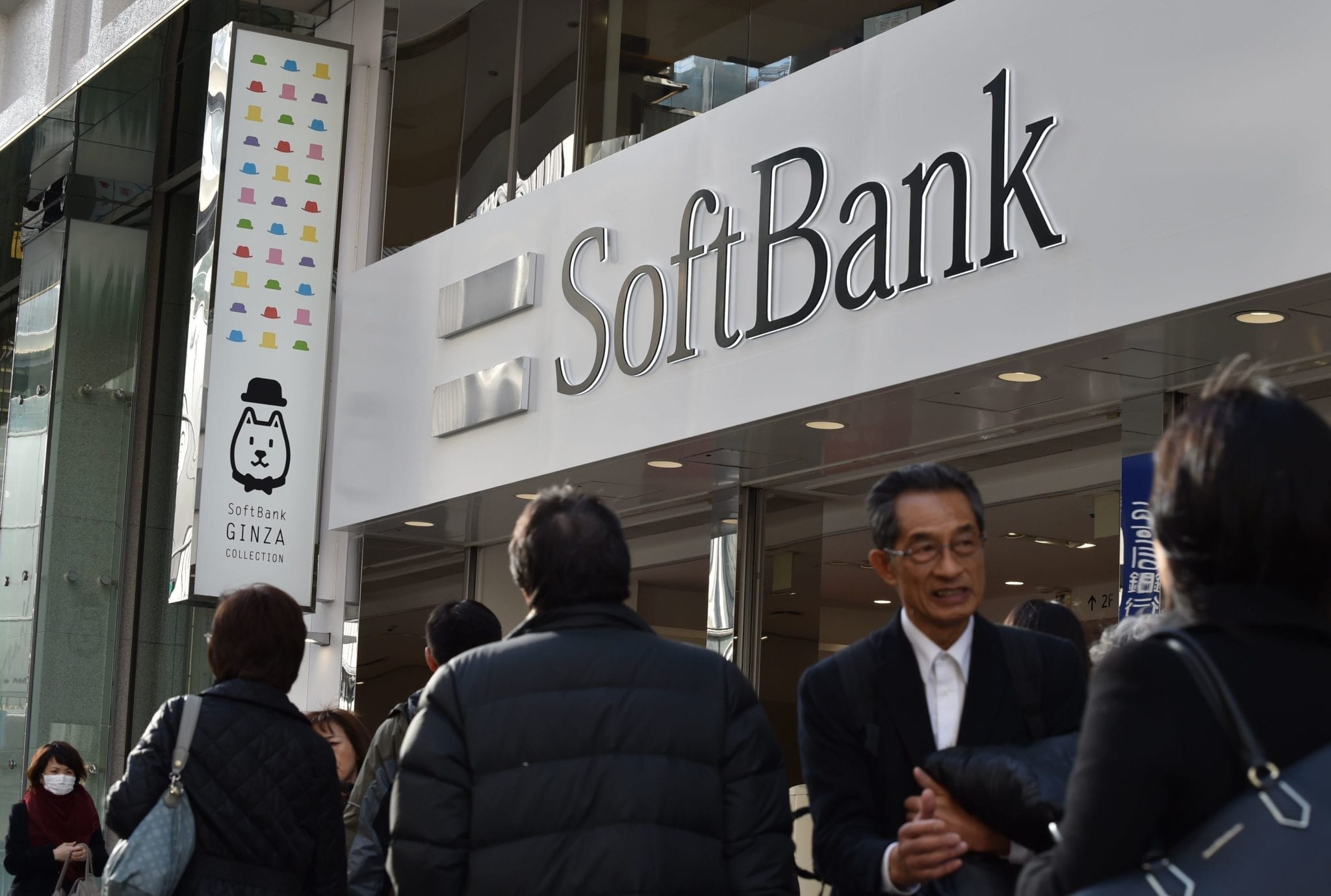
    Softbank founder Masayoshi Son spoke out about the adoption of Bitcoin, underlining that uncertainty remained for the top cryptocurrency.

    Softbank was the latest global firm to share its views on the popularity of Bitcoin and the potential adoption of the cryptocurrency.

    There’s a lot of discussion over if it’s a good thing or a bad thing, what’s the true value or is it in a bubble, said Masayoshi Son during Softbank’s recent earnings conference.

    Honestly speaking, I don’t know.

    Despite the uncertainty, Son noted that Bitcoin’s popularity has transformed it into a platform that can’t be ignored like diamonds or bonds.

    There’s no need to reject the cryptocurrency either, said. We are always having such internal discussions.

    Financial firms aside, numerous global tech firms are also increasingly exploring Bitcoin opportunities – particularly as a payment method – such as gaming console Xbox and electric vehicle company Tesla, though the latter recently suspended car purchases using the cryptocurrency.

  • Industry groups warn watchdog of “anti-competitive” Woolies in PFD probe

    Industry groups warn watchdog of “anti-competitive” Woolies in PFD probe

    Five peak industry bodies that banded together to oppose Woolworths’ potential acquisition of PFD Food Services have warned the ACCC to maintain a focus on the grocery group’s “track record of anti-competitive behavior”.

    The group partnered in February to block the acquisition, stating it would grant the company inordinate influence over the food sector in Australia.

    The anti-competitive behavior, such as pricing out competitors and utilizing private-label goods to undercut brands Woolies itself stocks, has been seen across a number of industries including hardware, petrol, and liquor, and has been indulged in by other retail giants beyond Woolworths, according to Richard Hinson, chairman of Independent Food Distributors Australia.

    “If the consequences of this transaction weren’t so series, it would be laughable that Woolworths has proposed undertaking it says will preserve competition while in the next breath admitting they could be rolled back within three years subject to the fine print,” Hinson said.

    “ACCC chair Rod Sims has already admitted that behavioral undertakings can’t be policed on a daily basis. The reality of this has been demonstrated over and over again.”

    And, according to the combined group, the proposed undertakings put forward by Woolworths earlier this week did nothing to address the concerns they had already put forward: That the acquisition will reduce choice and increase costs for foodservice operators; reduce distribution choice for suppliers; increase costs for suppliers; erode the value chain for suppliers; and, it will significantly reduce innovation in the space.

    “Both sets of Woolworths’ undertakings do absolutely nothing to reduce their significant market power in Australia and should be viewed for what exactly they are: a smokescreen to try and divert attention away from the five key concerns we have raised which remain unaddressed,” said Australasian Association of Convenience Stores chief executive Theo Foukkare.

    COSBOA chief executive Peter Strong said it is increasingly important that the ACCC understands the consequences of getting this decision wrong.

    “Our members, particularly those in regional Australia, have already been hard hit by the Covid-19 pandemic and, if allowed, this transaction will destroy many small businesses and cost thousands of jobs within our $11 billion industry.”

    MGA chief executive Jos de Bruin said this was an example Woolworths using its “deep pockets” on a “creeping acquisition” which it will use to further dominate the food and grocery market and lessen competition.

    “MGA’s members have long advocated that Woolworths domination of Australia’s grocery, food distribution and liquor markets is already so strong that the Woolworths Group ought to be considered for divesture to rekindle consumer choice,” de Bruin said.

    Woolworths has previously said it is confident it can address the concerns of industry parties and will ultimately receive a green light from the ACCC.

    “Critical to the success of our proposed partnership with PFD is maintaining long-term, collaborative and sustainable supplier and customer relationships. The undertaking provides further assurance to our previous public commitments to keeping supplier and customer information confidential,” a Woolworths spokesperson said.

    “We continue to submit to the ACCC that the proposed partnership will give rise to no substantive competition concerns irrespective of the undertaking we have offered.”

  • Apple tries to dismiss $800 million lawsuit over coronavirus app

    Apple tries to dismiss $800 million lawsuit over coronavirus app

    Although Apple continues to enjoy booming business worldwide, it doesn’t seem very fortunate when it comes to the number of lawsuits filed against it this year. We’ve already lost count of all the anti-trust violation lawsuits that have bombarded the company, including its “battle royale” with Epic Games, and others.

    This time, the tech giant is dealing with a pretty serious lawsuit coming from the developers of an app called “Coronavirus Reporter.”

    Earlier this year, Coronavirus Reporter planned to be the first COVID-related app in the App Store, intending to “capture and obtain critical biostatistical and epidemiological data as it happened” by collecting self-identified COVID symptoms from people, and presenting symptomatic regions on a map.

    After the app was rejected once in January, the developers filed an appeal, and requested that Apple allow the kind of content that Coronavirus Reporter would offer into the App Store.

    After the rejection, the plaintiff asked Apple to “expand the rule to allow corporations other than insurance companies, such as biotechnology or bioinformatics firms. Apple agreed, and added health care corporations to the list of permissible entities.”

    After Apple acquiesced, the app applied a second time to be offered in the App Store, even after providing additional documentation—but was promptly dismissed “for no good reason,” its developers claim.

    Following the second rejection, the app’s developers sued Apple again on the grounds that it rejected what could have been an important contribution to society, in order to maintain its monopoly on COVID exposure notifications (which Apple already channels).

    Apple responded that monopoly had nothing to do with it, but that Apple’s policy forbids applications from companies that are not part of approved healthcare organizations.

    The developers countered that their company “includes the ex-NASA cardiologist responsible for creating the ‘gold standard test’ for detecting heart attacks.” They issued a second, amended complaint, where they emphasized anti-trust accusations against Apple.

    In the latest development of the case, Apple has fired back once again, claiming that the developers of Coronavirus Reporter are blindly drawing on irrelevant antitrust cases in an attempt to play the white knight, in a case that is an isolated scenario.

    Apple argued that Coronavirus Reporter’s revised $800 million lawsuit [simply repeated its original allegations, that the developer erroneously added five unnamed apps purporting to be plaintiffs, and copied and pasted claims from at least three other pending antitrust cases against the company in the Northern District of California.

    Apple’s new filing, calling for the case to be dismissed, is constituted by a public 26-page long document—apart from that, Apple has issued no comment on the matter.

  • WhatsApp beta: encrypted backup feature will reportedly become available in the future

    WhatsApp beta: encrypted backup feature will reportedly become available in the future

    A recent policy change of WhatsApp’s privacy settings had the world start to turn its back on the popular messaging app. Now, however, WhatsApp has reversed its decision about that and seems to be working on bringing even more privacy-related features to its users.

    A WhatsApp beta version gives us a sneak peek of a privacy feature that will allow encryption of backups that are stored in Google Drive. You will be able to protect your backups, even the images, with a password, and reportedly the feature is in the works to become available for all WhatsApp users on Android.

    As we already stated, the feature is under development, so it’s not available to the public, but WABetaInfo states it will come in a future update. The password will protect your backup while it’s in Google Drive from unauthorized access, so you can be calm that your sensitive data, messages, and images are tightly encrypted and hidden from malicious users.

    We don’t have any information about when this feature will be made available. If you want to test new features, you can sign up for WhatsApp’s beta program from here.

  • Google Pay gains international money transfer support at last

    Google Pay gains international money transfer support at last

    Launched all the way back in 2015 as Android Pay on the underlying technology of Google Wallet and rebranded as Google Pay a little over three years ago, the search giant’s Apple Pay-rivaling digital wallet platform has been slowly but steadily expanding to more and more places around the world and more and more US banks in the last 12 months or so.

    At the same time, the official Google Pay app has received a major redesign that the company really wants its users to embrace as soon as possible, and on top of it all, the mobile payment service is now getting a huge new feature everyone with family abroad will undoubtedly appreciate.

    Yes, ladies and gents, international money transfers are a thing starting today, at least for folks in the US looking to send funds to fellow Google Pay users in India and Singapore. Those are the only countries supported right off the bat, which is far from impressive, but Big G aims to expand the functionality to “more than 200 countries and territories” with Western Union’s help and “more than 80 countries” through Wise (all for US users only) by the end of 2021 alone.

    Both Western Union and Wise (formerly known as TransferWise) are integrated for sending money from the US to India and Singapore, and the involvement of the two financial services giants suggests Google might in fact be serious about those aforementioned global launch plans.

    Of course, international money transfers are not exactly a groundbreaking feature for a digital wallet platform, having been supported on Samsung Pay since 2019. Samsung’s Google Pay alternative made it possible to send funds from the US to nearly 50 countries right from the start, which means Google still has plenty of catching up to do.

    On the bright side, Western Union is offering unlimited free transfers through Google Pay until June 16, with Wise waiving its own standard fee for a single transfer of no more than $500 per “new” customer. That being said, it’s unclear if the fees and things like exchange rates will make this service competitive against other such products developed by individual banks and financial companies.

  • Facebook tests new plan to reduce the spread of conspiracy theories

    Facebook tests new plan to reduce the spread of conspiracy theories

    Facebook is often a lightning rod for criticism and to be honest, there are many things that the social media network does that look bad when it comes to protecting one’s privacy, or in the dissemination of conspiracy theories. In an attempt to deal with the latter, Facebook announced on Monday that it is testing something new. Before an article can be shared on the platform, Facebook will suggest that it be read first.

    This new feature will be tested on 6% of Facebook users globally who use the Android platform. By suggesting to users that they completely read a story before sharing it, Facebook hopes to cut back on the number of misleading articles being passed along by subscribers because of an inflammatory headline that riles users’ passions before the whole story is read and digested.

    Facebook announced the test on Twitter, showing an image of what prompt users will see when they try to share a story without reading it. It says, “You’re about to share this article without opening it. Sharing articles without reading them may mean missing key facts.” The prompt offers two options allowing the user to open the article or continue sharing the content without reading it.

    Keep in mind that Facebook isn’t forcing a user to read a story without sharing it. Users can select the option to open the story and never read it before sharing the content. Or, they can skip the subterfuge and tap to continue sharing the story without reading it. While it isn’t clear whether this new feature can slow down the spread of baseless conspiracies on Facebook, a similar plan used by Twitter appeared to show some positive results.

    Twitter tested a similar feature last June and expanded the test to cover more of its users in September. The test revealed that the prompts led users to open articles 40% more often. Ultimately, if the tests prove successful, Twitter and Facebook could expand the feature to cover all of their subscribers.

  • Indonesia retail sales down 14.6 percent in March

    Indonesia retail sales down 14.6 percent in March

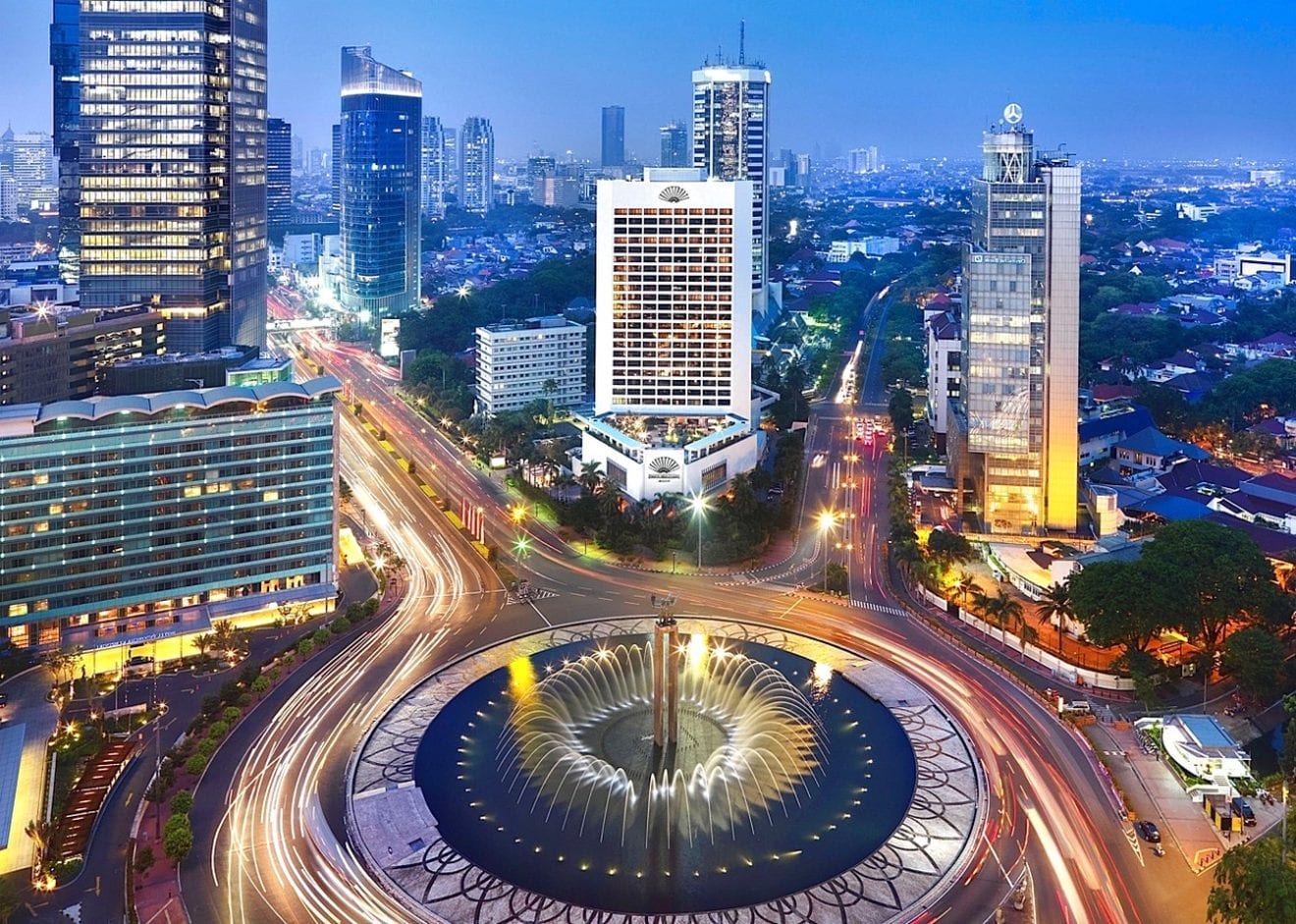
    Retail sales in Indonesia fell at a slower pace of 14.6per cent on annual basis in March, compared with an 18.1per cent fall in February, a central bank survey showed on Tuesday.

    Stronger fuel sales were supportive, although sales of clothes and recreational amenities continued to show drops during the month, the survey showed.

    Bank Indonesia, which had forecast a 17.1per cent drop in sales in March, is predicting a 9.8per cent increase in April.

  • Growth plateaued for global telecommunications market in 2020

    Growth plateaued for global telecommunications market in 2020

    Worldwide Telecommunications Services and Pay TV Services revenues totaled $1.53 trillion in 2020, representing flat year-over-year growth, according to the International Data Corporation (IDC) Worldwide Semiannual Telecom Services Tracker.

    Services revenue for the Asia-Pacific region totaled at $482 billion in 2020, equalling the amount in 2019. IDC expects worldwide spending to increase by 0.7% in 2021 reaching a total of $1.54 trillion.

    The COVID-19 pandemic was unquestionably the most important factor influencing the telco market in 2020. In the first six months of the year, the pandemic brought a notable decline to the market in the form of decreased subscriber numbers and lower services spending. This was caused by the strict lockdowns imposed by governments as well as the widespread pessimism and anxiety that forced people to cut spending on nonessential products and services. In the second half of the year, the demand recovered, fueled by economic stimulus measures and the progress in vaccine development. The renewed optimism helped the global and regional markets to cover the losses recorded in the first half of the year and come close to equaling the prior year’s results.

    Although the revenue outcome in 2020 was neutral, the pandemic drastically changed the trends that have shaped the global telco market for a long time. Consumer fixed data services have suddenly become the most important type of connectivity, enabling home-bound people to work and entertain. Business fixed data services have temporarily lost momentum due to the migration of traffic to the consumer segment, but most of these connections were preserved as they were protected by long-term contracts. Fixed voice services saw a slight increase in dropout rates because some companies within the small business segments went bankrupt and more residential clients gave up their connections for cost-cutting purposes. Mobile services spending also declined slightly due to slower renewal of contract agreements, reduction of out-of-bundle spending, and a sharp decrease in roaming revenues due to travel restrictions. In the Pay TV segment, the migration from traditional Pay TV to Over the Top (OTT) services accelerated during the COVID-19 crisis, driven by increased consumption of video content and new OTT service launches.

    IDC believes that connectivity will become an even more critical asset for households and businesses after the pandemic, as some of the habits adopted during the crisis (remote working, collaboration, online media consumption) are expected to become part of everyday life. The migration toward FttP access is expected to accelerate in most of the country markets, while the business fixed data market will recover in the longer term as the economic recovery drives increased investments in the cloudification of enterprise business activities. Revenue growth in the mobile services space will be buoyed to a degree by 5G adoption, which will invite users to deploy more advanced data capabilities and uptake the content and services dependent on high-speed data connectivity.

    The global telco market was put to a serious test in 2020 and it successfully passed. IDC believes that the lessons learned last year will help the industry to secure stable growth in the coming period. “The COVID-19 pandemic demonstrates the resilience and value of the telecoms industry,” said Chris Barnard, vice president, European Infrastructure and Telecoms. “New ways of working will persist beyond the pandemic, shaping future revenue opportunities, while the network-centricity of consumers will drive bandwidth requirements in that segment as well.”

  • Tesla Puts Brake On Shanghai Land Buy As U.S.-China Tensions Weigh

    Tesla Puts Brake On Shanghai Land Buy As U.S.-China Tensions Weigh

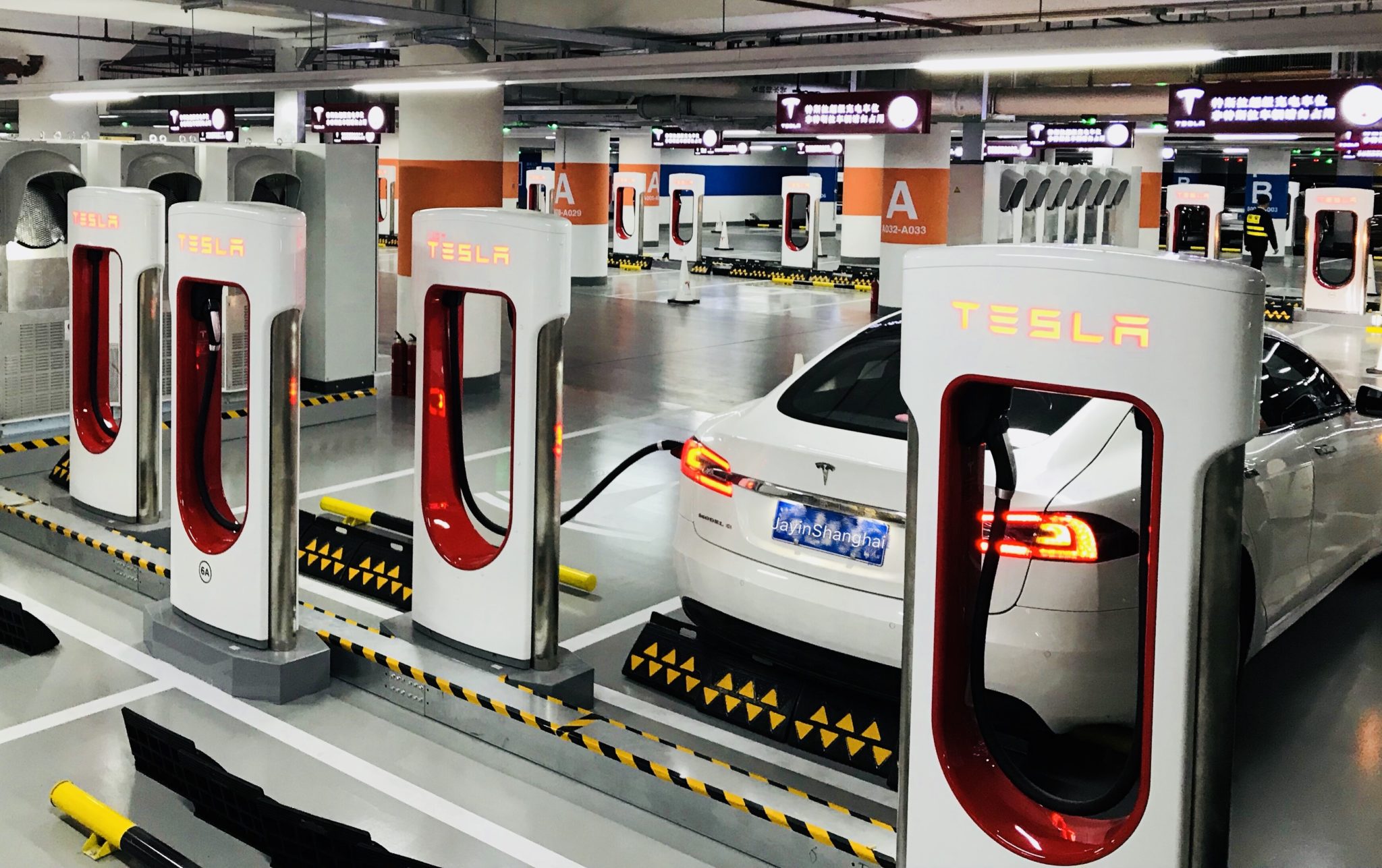
    U.S. electric car maker Tesla Inc has halted plans to buy land to expand its Shanghai plant and make it a global export hub, people familiar with the matter said, due to uncertainty created by U.S.-China tensions. With 25% tariffs on imported Chinese electric vehicles imposed on top of existing levies under former U.S. President Donald Trump still in place, Tesla now intends to limit the proportion of China output in its global production, two of the four people said.

    Tesla had earlier considered expanding exports of its China-made entry-level Model 3 to more markets, including the United States, sources told Reuters, a plan that had not previously been reported.

    Tesla currently ships China-made Model 3s to Europe, where it is building a factory in Germany.

    Shares of Tesla fell as much as 5.3% early on Thursday.

    Tesla sold 25,845 China-made vehicles in China and overseas in April, down from 35,478 in March, according to data from China Passenger Car Association.

    Tesla’s Shanghai factory is designed to make up to 500,000 cars per year and has the capacity to produce Model 3 and Model Y vehicles at a rate of 450,000 total units per year.

    In March, Tesla refrained from bidding on a plot of land across the road from the plant as it no longer aimed to boost China production capacity significantly, at least for now, three of the people said, declining to be named as the discussions were private.

    In a statement to Reuters, Tesla said it’s Shanghai factory was “developing as planned.”

    The Shanghai city government, a key supporter in Tesla’s establishment of a wholly-owned factory in China – the first and only foreign passenger car plant not required to form a joint venture – did not respond to a request for comment.

    Tesla had never declared an intention to acquire the land, which is about half the size of the 200-acre (80 hectares) plot housing Tesla’s current facility and would enable the company to lift capacity by another 200,000 to 300,000 cars, said two of the people.

    Tesla’s China sales are surging despite mounting regulatory pressure in the country after consumer disputes over product safety and scrutiny over how it handles data.

    It generated $3 billion in revenue in China in the first three months of this year, more than tripling year-earlier sales and accounting for 30% of total revenue.

  • Royal Enfield Begins Operations In Singapore With New Store

    Royal Enfield Begins Operations In Singapore With New Store

    Royal Enfield has started operations in Singapore by setting up a new flagship store in the city’s Ubi Road. The new Royal Enfield Singapore store showcases the entire range of Royal Enfield motorcycles, including the RE Interceptor 650, Continental GT 650, Himalayan, and the Classic. The Royal Enfield Singapore store also has a complete range of Royal Enfield’s genuine accessories for its motorcycles, as well as apparel and riding gear range. While the 650 Twins spearheaded the brand’s global aspirations, the updated Himalayan and the new Meteor 350 have also been positioned as global products, and will likely suit the requirements of Asian motorcyclists.

    The Royal Enfield Singapore store expands the Indian motorcycle brand’s footprint across South East Asia

    Royal Enfield has ambitious plans to establish itself as a global leader in the mid-size motorcycle segment and is expanding aggressively across Asia, as it aims to tap into the world’s biggest motorcycle market, after India. With a focus on increasing sales across India, Royal Enfield now has operations across Japan, Indonesia, the Philippines and Thailand, with plans to open a new factory in Thailand, which will be a hub for exports to other countries in the region, including the motorcycle-intensive markets of Vietnam and Indonesia. The Thailand factory is the second overseas plant for Royal Enfield, after its factory in Argentina.

    Royal Enfield has 36 showrooms in Thailand and has started operations in other ASEAN (Association of southeast Asian Nations) countries including Vietnam, the Philippines, Malaysia and Indonesia over the last few years. With the brand’s lion’s share of sales coming from the domestic market, which is the world’s biggest market for motorcycles sales, Royal Enfield will be increasingly looking to expand its presence in other strong motorcycle markets in the region.

  • Vietnam seeks to stabilize steel prices

    Vietnam seeks to stabilize steel prices

    The government has asked steelmakers to implement several steps to control rising steel prices that are hurting construction contractors.

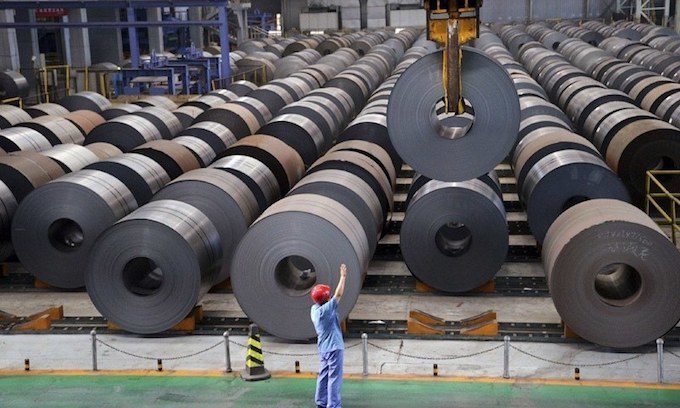
    Deputy Prime Minister Le Minh Khai has asked the Ministry of Industry and Trade to push for increased domestic steel production towards stabilizing prices. Steel production in Q1 reached 7.6 million tons, a year-on-year increase of 34 percent, according to the Vietnam Steel Association (VSA)

    He also said the export of steel should be lowered to ensure that local demand is met. Steel exports in Q1 rose 59.5 percent year-on-year to 1.6 million tons, according to the VSA.

    Meanwhile, VSA has asked its members to prioritize using raw materials for steel production from local producers instead of imported them at high prices so that their operating expenses and selling prices are lowered.

    Steel prices in Vietnam have experienced a 40-50 percent surge since the beginning of the year, according to the VSA, forcing construction contractors to suffer losses and turn down contracts.

  • Ministry says no to cuts in auto registration fees

    Ministry says no to cuts in auto registration fees

    The Ministry of Finance has rejected a proposal to reduce auto registration fees by half, saying it is not necessary for the current setting.

    The proposal was made by the Vietnam Automobile Manufacturers Association (VAMA), seeking support for manufacturers amid the Covid-19 pandemic.

    However, the Ministry of Finance said that the government had already implemented different measures to support businesses and citizens last year, including extending the deadline for payment of taxes and land use fees and incentives on special consumption tax for cars manufactured or assembled locally.

    “After reviewing the proposal, the Ministry of Finance sees that lowering registration fee is not suitable with the current setting,” it said.

    Last year, the government had provided a 50 percent discount on the registration fees for cars produced domestically.

    The move lowered the government’s revenues by VND6 trillion ($260 million).

    The Ministry of Finance also denied VAMA’s request to lower the production of cars under an import tax incentive program.