Tag: asia

  • Russian court imposes a record fine on Google that equals more money than there is on earth

    Russian court imposes a record fine on Google that equals more money than there is on earth

    Google has been fined a record $2.5 decillion by a Russian court. This works out to $2.5 trillion trillion trillion which equals 23,809,523 times all of the money on Earth. The court had hit the Search giant with a 100,000 ruble ($1,032.20) fine back in 2020 after a pair of Russian media outlets with links to the Kremlin, Tsargrad, and RIA FAN, were the recipient of restrictions placed on them by YouTube. Google called out the media outlets for trying to spread pro-Kremlin propaganda.

    The court tacked on additional fines after Google also banned on YouTube other Russian outlets (Channel One, Moscow Media, and Public Television of Russia) that supported the country’s actions during the war in Ukraine. But what really pumped up the fine was Google’s refusal to pay it. This led the court to double the fine each week which has been the case for the last four years. Last month, Google restricted the creation of new accounts for Russian users and in August it deactivated AdSense accounts in the country. This prevents Russian website publishers from generating revenue from ads supplied by Google.

    Google has commented on the fine saying, “We have ongoing legal matters relating to Russia. For example, civil judgments that include compounding penalties have been imposed upon us in connection with disputes regarding the termination of accounts, including those of sanctioned parties. We do not believe these ongoing legal matters will have a material adverse effect.” In other words, Google is taking the fine as seriously as it would if it had been fined in Monopoly dollars.

    Google and Russia have had some other legal battles. Back in 2022, Google’s Russian subsidiary was forced to file for bankruptcy after the firm’s bank account was seized by Russia. At the time, a Google spokesperson said, “The Russian authorities’ seizure of Google Russia’s bank account has made it untenable for our Russia office to function, including employing and paying Russia-based employees, paying suppliers and vendors, and meeting other financial obligations.”

    As part of other sanctions placed against Russia, online ads have not been served to Russian Google users since 2022. Yes, some of you might be wondering why Russians get to miss out on seeing ads on Google sites if they’re the country being sanctioned.

  • WhatsApp Beta is testing search functionality for Channel updates

    WhatsApp Beta is testing search functionality for Channel updates

    WhatsApp is testing a new feature that will allow users to search for updates within channels. This feature is currently under development and will be available in a future update. The search option will be accessible through the overflow menu and the channel info screen.

    WhatsApp has been working on a number of new features for channels, including the ability to view detailed insights for their channels. This feature allows beta testers to view detailed insights for their channels, including the number of unique accounts reached, follower growth statistics, and a geographical breakdown of top regions. These metrics help channel admins understand their audience, optimize content for increased exposure, and make data-driven decisions.

    The search for updates within channels feature is another example of WhatsApp’s commitment to improving channel functionality and user engagement. This feature will be particularly beneficial for channels that regularly share multiple updates. Users will be able to simply enter keywords or phrases related to the update they seek, as this can let them quickly pinpoint the specific information they need.

    This feature is still under development, so it is unclear when it will be available to all users. However, it is likely that it will be rolled out in a future update.

    In the meantime, users can continue to use the existing methods for finding updates within channels. These methods include scrolling through the channel’s history or using the search function within the WhatsApp app.

    I believe that this new feature will be a valuable addition to WhatsApp. It will make it easier for users to find the information they require and stay up-to-date on the latest news and updates from their favorite channels. I encourage all WhatsApp users to try out this new feature when it becomes available.

    As an avid WhatsApp user, I am excited about this new feature. I think it will be very useful for finding specific updates within the channels that I am subscribed to. Furthermore, I also appreciate that WhatsApp is constantly working to improve its features and make its app more user-friendly. I look forward to seeing this feature rolled out to all users, myself included, in the near future.
  • Lufthansa Cargo starts transpacific flight from Vietnam to the USA

    Lufthansa Cargo starts transpacific flight from Vietnam to the USA

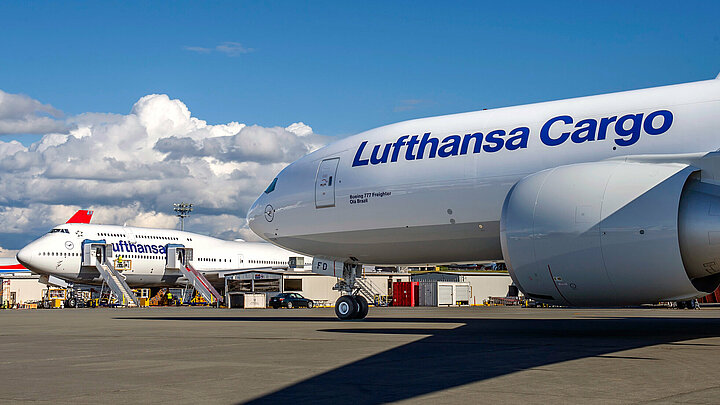
    With the start of the winter flight schedule last weekend, Lufthansa Cargo has inaugurated its first direct transpacific freighter service from Asia to North America. On Sunday, 27 October 2024, flightLH8019 took off from Ho Chi Minh City (SGN) in Vietnam to Los Angeles (LAX) in the United States, operated by its JV subsidiary AeroLogic. The aircraft with the identification D-AALO had previously taken off from Frankfurt (FRA) for Vietnam on Saturday, 26 October 2024. It had then flown back from Los Angeles on Sunday, 27 October 2024, and had arrived at the carrier’s home hub on Monday, 28 October 2024.

    “This new freighter connection highlights our commitment to connecting economies by responding to the demand of the rapidly growing economy in Vietnam, which can now be seamlessly connected to the U.S. even faster. This service reinforces our purpose of enabling global business, which is why we are continuously examining the possibilities of establishing new routes and growing in dynamic market environments,” explains Ashwin Bhat, CEO of Lufthansa Cargo.

    With the new flight schedule, Lufthansa Cargo is now offering its customers 89 weekly B777F freighter connections worldwide. This includes 50 frequencies to 17 destinations in Asia, reflecting the strong demand in the region. The growing e-commerce industry, in particular, is driving this development, to which Lufthansa Cargo is able to respond quickly and flexibly thanks to its early preparations. With its own A321 freighter fleet for short and medium-haul routes, as well as additional cargo capacities marketed on the extensive network of Lufthansa Airlines, Austrian Airlines, Brussels Airlines, Discover Airlines and SunExpress, Lufthansa Cargo is able to offer its customers capacities to over 350 destinations in 100 countries in its winter flight schedule

  • WhatsApp is testing a badge count for chat filters in its beta app

    WhatsApp is testing a badge count for chat filters in its beta app

    WhatsApp is rolling out a new beta update for Android through the Google Play Beta Program. This update includes a badge count feature for chat filters. The badge count will show users how many unread messages are in each filter, which should make it easier for users to prioritize their chats and quickly see which conversations need their attention. The badge count will be displayed as a small number within each custom or default chat filter.

    This upcoming feature can be especially useful for users who manage multiple groups or contacts. It can be difficult to keep track of unread messages across various conversations, thus having a badge count should make it easier for users to stay organized and on top of their messages.

    The badge count feature is still under development and is expected to be available in a future update. WhatsApp is also working on a number of other new feature, such as the ability to filter chats by custom lists. This feature is already available in the latest beta version of WhatsApp for Android.

    In addition to the badge count feature, the latest WhatsApp beta for Android also includes other bug fixes and improvements. If you are interested in trying out the latest beta features, you can sign up for the WhatsApp beta program through the Google Play Store. Although these days it can be very difficult to get a spot as the beta program is almost always full.

    I am always excited to see new features being added to WhatsApp. I think the badge count feature is a great addition, as I can foresee it making it easier for me to stay organized and on top of my messages. Furthermore, I also appreciate that WhatsApp is constantly working to improve the user experience and I am looking forward to seeing what other new features they come up with in the future.

  • Google tests a new look for dynamic color themes in Gboard

    Google tests a new look for dynamic color themes in Gboard

    Google has been found to be experimenting with a new look for the dynamic color themes in Gboard for Android. The change is subtle, but noticeable. Instead of using three different colors for the non-letter keys, Google is testing a single color pulled from the dynamic color palette. This applies to keys like shift, ?123, comma/emoji, period, enter, and backspace, as well as the menu button.

    The idea behind this change seems to be to create a more unified and less visually distracting keyboard experience. By using a single color for these keys, Google is hoping to make the keyboard feel more cohesive and less cluttered.This updated dynamic color theme is currently only available on the latest Gboard beta (version 14.7.10.x). Even then, it’s not widespread. Across several Pixel phones used for testing, the new theme only appeared on one device. This suggests that Google is still in the early stages of testing this new design and it may be a while before it rolls out to all users.

    It’s worth noting that this change only affects the dynamic color themes. The “Default” themes, which only accent the enter key, remain unchanged. This gives users the option to stick with the old look if they prefer.

    This is just one of many updates that Google has been making to Gboard in recent months. The company has also been working on improving the keyboard’s performance, adding new features, and expanding support for more languages.

    The change seems so subtle that I’m not sure why it’s being done. However, I appreciate Google’s efforts in making the UI more appealing. I’m interested to see if this update will make a noticeable difference in my daily use of Gboard. It’s possible that this more unified color scheme could be less distracting while typing, but I’ll need to use it for a while to see if it makes a real difference. I’m always happy to see companies like Google experimenting with new design ideas and trying to improve the user experience.

  • Amazon Kindle Vella to be discontinued in February 2025

    Amazon Kindle Vella to be discontinued in February 2025

    Amazon has made the decision to shut down its Kindle Vella serialized story platform in February 2025. The platform, launched in 2021, was intended to be a way for readers to discover new fictional stories and for authors to earn money from the Kindle Direct Publishing service. However, the platform has not gained the traction Amazon had hoped for, leading to its discontinuation.

    Authors can continue to publish stories on Vella until December 4th, which is also the last day readers can purchase tokens. After this date, readers can still use their tokens to unlock episodes until the program closes in February. Readers who have already unlocked episodes will not lose access to them and can read them in their library on the Kindle app. Any unused tokens will be refunded by Amazon.

    Vella has received mixed responses since its launch. Some authors appreciated the ability to earn money from unfinished stories, while some readers expressed a preference for purchasing complete books rather than installments. The mixed reception highlights the challenges of introducing new reading formats and subscription models in a market accustomed to traditional publishing models.

    Despite efforts to increase interest, such as offering free episodes and bonuses to authors, Amazon has decided to discontinue the platform. The closure of Kindle Vella marks the end of an experiment in serialized storytelling. While it did not achieve the success Amazon had hoped for, it provided a platform for authors to connect with readers in a new way. It also offered a unique opportunity for readers to discover and engage with stories as they were being written.

    The decision to shut down Vella reflects the dynamic nature of the digital publishing landscape. As technology and reader preferences evolve, platforms and services must adapt to remain relevant. While Vella may not have found its niche, it contributed to the ongoing exploration of new ways to create, share, and experience stories.

    While it is always disappointing to see a service end, it also opens up opportunities for new and innovative platforms to emerge. I am interested in seeing how this will affect the landscape of serialized fiction and what new developments may arise in the future.

  • Microsoft Teams announces new chat and channels experience for all platforms

    Microsoft Teams announces new chat and channels experience for all platforms

    In a rare moment of sincerity, Microsoft admitted that Teams offers a sub-par experience in comparison with the competition, and decided to remove some key features, which were obsolete and no longer helped users in any way.

    Decluttering the app of unnecessary features is an important step toward making Teams a contender in the communication app space.

    The next step would be to continue to iterate on already existing features and make them as easy to use as possible. In a recent blog post, Microsoft announced a new chat experience is coming to all platforms Teams is now available on, including desktop, mobile, iOS, and Android.

    The new chat experience features mobile-specific settings, such as the option to choose between viewing messages organized by sections or by most recent. Since the new experience has been specifically designed for different screen sizes, it will make it easier for mobile users to read and respond to messages while on the go.More importantly, Microsoft has decided to bring chats, teams, and channels into one place under Chat. This will allow users to navigate and prioritize all their conversations without having to switch contexts.

    Those who preferred the previous layout can keep chat and channels separate during the onboarding process that pops up when Teams is launched for the first time after the update. This can also be done at any time later.

    Another useful feature added to Teams is the addition of new filters like “Unread,” “Chat,” “Channels,” “Meetings,” and “Muted.” Now, whenever you’re looking for a specific type of conversation, like channels, you’ll be able to select the relevant filter to further narrow your search and locate the most relevant results.

    Also, the new chat and channels experience includes a new favorites section, which is available for everyone by default. You’ll find all your pinned chats and channels from previous experience in this section.

    Besides that, Teams takes advantage of new custom sections where users can group together all their relevant conversations on a certain topic, be it in chats, channels, meetings, Teams bots or AI agents. You can have up to 50 sections and 50 items per section in Teams.

    According to Microsoft, the new chat and channels experience is coming to public preview in November to desktop, mobile, iOS, and Android, so keep an eye out for a consistent update next month.

  • Google Play Store may soon use AI to answer your app questions

    Google Play Store may soon use AI to answer your app questions

    Google has been pouring resources into artificial intelligence lately, so it’s no shocker that it wants to weave AI into more of its products. The latest target? The Play Store – the go-to spot for most Android users looking to download apps and games for Android phones.

    A recent report reveals that the latest version of the Google Play Store, 43.3.32-31, has hints of a new AI-powered feature called “Ask a question.” This nifty addition will likely allow users to pose questions about the app or game they’re checking out.

    From the clues found in the app, it seems this feature will appear on individual app listings and search results. Users can expect to see a button or text prompting them to “Ask a question,” leading to an input field where they can type their queries and receive AI-generated responses.

    The AI-generated Q&A feature isn’t available just yet in the Google Play Store, and Google hasn’t officially commented on it. So, there’s no word on when it might roll out to users. However, this kind of functionality makes perfect sense for practical AI applications and could benefit both users and app developers. Fingers crossed, we will see this feature roll out soon.

    I think this feature would indeed be helpful when you’re trying to figure out if an app is right for you. After all, sometimes, you just don’t have the time or patience to sift through long descriptions to find the info you need. With this, you could get straight answers without the hassle.

    Last year, Google rolled out AI-generated review summaries in the Play Store to help users quickly assess whether an app or game suits their needs. Then came AI-powered FAQs, and now this upcoming feature will tie everything together, making AI an even bigger part of the Play Store experience.

  • UBS Sees Uninterrupted Client Momentum

    UBS Sees Uninterrupted Client Momentum

    Switzerland’s largest bank reports strong transactional activity in its core business and expects to achieve its objective of $100 billion in net new assets by the end of the year.

    UBS is turning the upheavals and drama of 2023, and its fraught government-prompted takeover of Credit Suisse, into a dim national memory receding in the rearview mirror of Swiss business history.

    In its third-quarter ad hoc announcement released on Wednesday, the bank reported an underlying pre-tax profit of $2.4 billion, which it said was an ample indication of the strength of its client franchises.

    Overall, group revenues were up 5 percent year-on-year but gained 9 percent on an underlying basis, with the aforementioned transactional activity recurring fee income more than offsetting the expected headwinds impacting net interest income after key central banks started cutting interest rates in the quarter.

    Invested assets were up 15 percent at $6.2 trillion as it experienced «continued client momentum» with $25 billion in net new assets in its core global wealth management business, putting it on «on track» to deliver its ambition of bringing in $100 billion in net new assets for the whole of 2024.

    Overall, the market environment remained constructive in the third quarter but also showed «signs of dislocation and volatility».

    UBS generated $15 billion in net new fee-generating assets and saw strong discretionary mandate sales in all regions despite continued pricing discipline.

    It also recorded strong transactional activity in global wealth management and the investment bank, with the former’s revenues up almost a fifth (19 percent) with the latter gaining by practically a third (31 percent).

    The high levels of transactional activity came from both private and institutional clients, with global wealth management seeing strong momentum in all regions led by the Americans and the Asia Pacific (APAC).

    In its investment bank, the global markets business saw gains also coming from all regions, but «particularly» in the Americas. The global banking business experienced strong M&A performances in Asia and the US. In UBS’s Swiss home market, it granted or renewed around 35 billion francs in loans.

    Beyond that, it indicated that many facets of its integration with Credit Suisse, the country’s erstwhile second-largest bank, remained on track. It completed the first wave of client migrations in Luxembourg and Hong Kong this month. Singapore and Japan are expected to be finalized by the end of the year, with Switzerland up in 2025.

    It is on target to reach the expected $7.5 billion in cost cuts this year after it managed to realize an additional $800 million in savings in the third quarter, with a further $5 billion in risk-weighted asset reductions in non-core and legacy ahead of plans.

    As a result, it expects to be in a position to save about $13 billion (gross) by the end of 2026.

    It also maintained that it would complete $1 billion in share repurchases in the fourth quarter and it intends to keep making them in 2025 although that will depend on the country’s review of its capital regime requirements.

    It also announced several AI initiatives to benefit clients and employees, including a new proprietary AI assistant for 20,000 employees in Switzerland, Hong Kong, and Singapore with «easy» access to product information and investment research.

    In the investment bank, it is piloting a proprietary AI algorithm that researches and compiles M&A buy-side targets.

    UBS indicated that it expects a continuation of the current market trends in the fourth quarter given expectations for a soft landing in the US economy despite macroeconomic conditions remaining clouded elsewhere in the world.

    In the fourth quarter, we anticipate a mid-single digit decline in net interest income in Global Wealth Management and a low single-digit decline in Personal & Corporate Banking. Non-core and legacy is expected to generate a quarterly pre-tax loss in line with our earlier guidance, the bank indicated.

  • Indonesia blocks Apple from selling iPhone 16

    Indonesia blocks Apple from selling iPhone 16

    Indonesia has blocked Apple from selling the iPhone 16 in the country but still allows travelers to bring it in for personal use.

    The iPhone 16, released in September, is not permitted for domestic sale because PT Apple Indonesia has yet to meet the country’s requirement of 40% local content for smartphones and tablets, the Ministry of Industry said in a statement on Oct. 25 as reported by Bloomberg.

    Each traveler can bring up to two iPhone 16s into Indonesia, according to the Jakarta Globe.

    Between August and October, around 9,000 iPhone 16 units were brought into Indonesia as personal belongings with taxes paid, data from the ministry shows.

    Industry Minister Agus Gumiwang Kartasasmita mentioned on Oct, 22 that Apple has yet to fulfill its commitment to investing 1.7 trillion rupiah (US$108 million) in Indonesia to secure a license for local sales. So far, Apple has invested 1.5 trillion rupiah.

    Apple’s older products can still be sold in Indonesia.

    Samsung Electronics and Xiaomi have set up factories in Indonesia to comply with the domestic content regulations introduced in 2017. Other ways to boost local content include sourcing materials or hiring workers in the country, according to Bloomberg.

    Apple on Oct 11 said that it was “deeply committed to Indonesia and excited to bring all of our latest products, including the iPhone 16 line-up, to our customers as soon as possible.”

  • FedEx appoints new Vice President for Southeast Asia

    FedEx appoints new Vice President for Southeast Asia

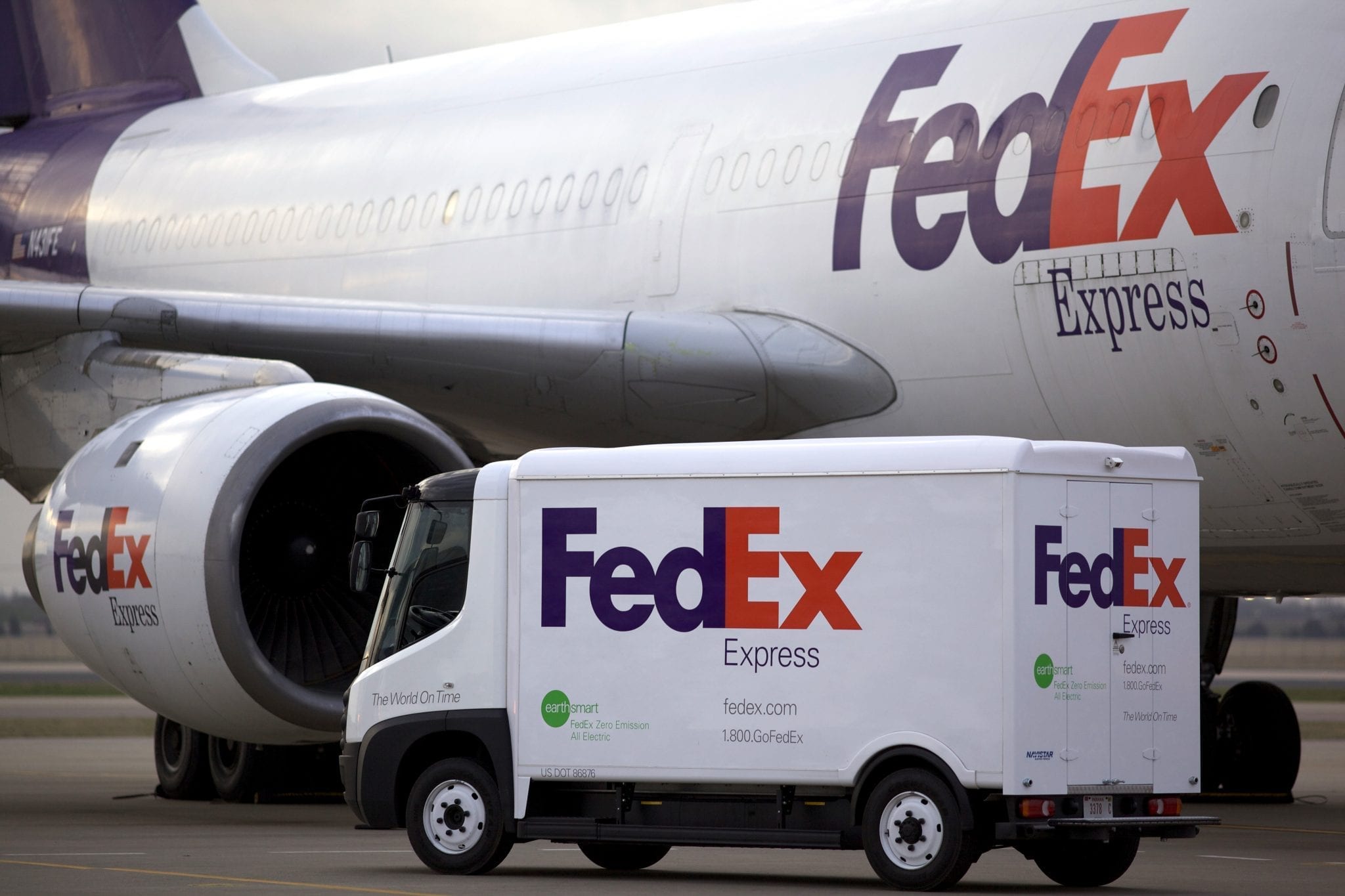
    Federal Express Corporation, one of the world’s largest express transportation companies, has appointed Bianca Wong as the new Regional Vice President for Southeast Asia. Bianca, previously Vice President of Human Resources for Asia Pacific, will now helm the operational strategies in one of the company’s fastest-growing markets. She succeeds Audrey Cheong, who assumed the role of Vice President for FedEx China in September 2024.

    With over 22 years of extensive experience in human resources and business partnership roles across different industries, Bianca has demonstrated a strong track record of strategic leadership and operational excellence. In her new role, Bianca will lead the overall planning and implementation of corporate strategies and operations to drive business transformation and will manage a team of more than 4,000 team members across markets and territories in the region.

    “I am honoured to take on this new challenge and to continue transforming FedEx for what’s next by driving our growth and commercial success,” said Bianca Wong, Vice President, Southeast Asia Operations.

    “Southeast Asia is a vibrant region with immense growth potential. Together with our strong and talented team, we will continue to deliver service excellence to meet the evolving needs of our customers while continuing our mission of connecting people and possibilities in this dynamic business environment.”

    Bianca’s appointment is a reflection of the company’s commitment to its People-First philosophy by nurturing leadership from within, and ensuring the talent is capable of steering the company through the evolving logistics landscape as FedEx strives to create smarter supply chains for all.

  • Laos’ sprouting durian industry strives for exports to China

    Laos’ sprouting durian industry strives for exports to China

    Durian production in Laos has come to fruition and the industry is seeking opportunities to export to China – the world’s largest consumer of the stinky fruit. Tao Jian, a 54-year-old Chinese entrepreneur and the owner of Jinguo, a company with 50,000 durian trees planted on the Bolaven Plateau in southern Laos, recently celebrated the first harvest from his.

    Though the region is primarily known as Laos’ coffee hub, it could soon gain recognition for durians.

    Tao said the country’s fertile soil is ideal for farming the fruit and a hybrid durian variety, a mix between Malaysian and local cultivars, has been successfully developed there, leading to high-quality produce.

    “I believe Laos will soon become the world’s fourth-largest durian producer, after Thailand, Vietnam and Malaysia,” he told Nikkei Asia.

    While the durian industry has been expanding rapidly in several Southeast Asian countries, large-scale durian farming has only been sprouting recently in Laos, where the fruit used to be grown mostly in the backyards of local families.

    At a meeting between the Lao Agricultural Business Association, representatives of Lao durian growers, and Chinese agricultural importers in August, Bounthieng Latthanavong, president of the association, stated that durian production methods in Laos have become more professional and robust, positioning the industry for success in global markets, as reported by the official Lao News Agency.

    Elavanh Latpakdee, a representative of durian farmers in Laos, said the association has 170 farms spanning 20,000 hectares and many trees have started producing fruits, yielding around 900 tons of durian per year. It expects production to rise to 24,300 tons worth more than US$155.5 million.

    Durian farming in Laos has come a long way, but the country has not yet been allowed to export the fruit to China.

    However, that goal might not be too far off. Bounchanh Kombounyasith, Laos’ director general of the Department of Agriculture, said market access documents were being prepared and Lao durians will soon be exported to China, a state-owned Chinese newspaper reported late last month.

    As the top importer of the fruit, China procured 1.4 million tons of durians worth $6.7 billion in 2023, with Thailand and Vietnam being the top suppliers.

    In the second quarter of this year, Thailand shipped about $2.67 billion worth of durian to China, accounting for 75% of imports. Vietnam supplied most of the remaining shipments during the period, the South China Morning Post reported, citing Chinese customs data.

    China’s burgeoning demand has been transforming the durian industry in Southeast Asia.

    Many farmers in Thailand and Vietnam have become wealthy from the fruit.

    And it might also turn the sprouting durian industry in Laos into an economic boon for the country.

    China is Laos’ second largest trading partner and its top investor, China Daily reported, citing Chinese customs data.

    Bilateral trade between the two nations hit a record $7.1 billion in 2023. It amounted to $4.9 billion in the first seven months of this year, a 30.3% increase from a year ago.

    Besides the natural advantages noted by Tao, Laos’ durian industry has been attracting investment from Chinese businessmen who possess the resources to develop the sector. Many of these investors are turning to Laos to establish durian farms with the aim of shipping the fruit back to China.

    The Laos-China railway, launched in December 2021, might add to this momentum by reducing the travel time from Vientiane, the capital of Laos, to Kunming, a key trade center in southwestern China, to under 10 hours.

    The industry also receives the support of foreign professionals like Duangdavone Sulayavongsa, a durian cultivation expert with nearly 20 years of experience in Thailand.

    He believes that Lao durians hold the potential to become a major export commodity, greatly benefiting the country’s economy.

  • China Launches Pilot for Foreign-Owned Data Centers

    China Launches Pilot for Foreign-Owned Data Centers

    The Ministry of Industry and Information Technology’s initiative will establish specific zones where foreign-owned facilities can offer digital infrastructure services to local companies.

    Jin Zhuanglong, the Minister of Industry and Information Technology, noted that the pilot program represents a new phase in China’s efforts to open up the telecommunications sector.

    Previously, foreign investors faced restrictions on owning and operating data centers in China, with local regulations limiting ownership to domestic companies. Foreign firms were only allowed to participate through joint ventures with local partners, with ownership capped at 50% in any consortium.

    The project will permit foreign investors to invest in value-added telecom services within four specified regions: Beijing, Shanghai, Hainan, and Shenzhen. Businesses in these designated areas can operate as wholly-owned ventures, providing data and transaction processing services.

    Wang Zhiqin, Deputy Director of the China Academy of Information and Communications Technology, stated that the pilot program aims to enhance the integration of digital technologies across various sectors nationwide.

    The project is part of China’s broader efforts to open up its services sector, including establishing free trade zones like the 120-square-kilometer Lin-gang Special Area.

    Chinese state media reported that 2,220 foreign-invested firms are licensed to operate telecom services within the country, as new pilot programs seek to boost foreign investment opportunities.

    The Ministry of Industry and Information Technology announced plans to closely monitor the pilot initiatives and may widen their scope when the time is right.

    HSBC’s Chinese fintech subsidiary is already aiming to capitalize on the program, having reportedly applied for an internet content provider license.

  • How India’s Telecommunications Sector is Driving Digital Literacy

    How India’s Telecommunications Sector is Driving Digital Literacy

    Digital literacy goes beyond basic computer skills; it involves the ability to access, evaluate, and use digital platforms effectively. With the rapid digitization of essential services like education, healthcare, and financial systems, digital literacy has become indispensable. However, for a vast and diverse country like India, the digital divide remains a significant challenge, especially in rural areas where access to technology is limited.

    According to the Oxfam India Inequality Report 2022, the digital divide in India remains a significant issue, with large portions of the population facing poor or no access to digital services. Approximately 50% of the population lacks access to devices, internet services, or the digital literacy necessary to navigate a digital environment. This divide exacerbates inequalities, as only 32% of households in India are considered digitally literate.

    The Digital Divide: A Problematic Element in Achieving Digital Literacy

    The first point of call for addressing digital literacy, is ensuring that users are adequality equipped with access to digital technologies. Bharti Airtel, Reliance Jio, and Vodafone Idea are leading this effort through strategic campaigns and collaborations.

    Bharti Airtel has undertaken several initiatives to reduce the digital divide, particularly in rural and underserved areas of India. Through its ‘Project Leap,’ the company has committed significant investments to expand network infrastructure, improving 4G and 5G access in remote regions. Airtel’s ‘Airtel Payments Bank’ also plays a key role in financial inclusion by providing digital banking services to people in rural areas, helping to bring them into the formal financial system. Additionally, its ‘Mera Pehla Smartphone’ initiative offers affordable smartphones and data plans, making digital services more accessible to first-time internet users. These efforts reflect Bharti Airtel’s commitment to bridging the digital divide.

    Reliance Jio’s ‘Jio Digital Life’ program has focused on providing affordable 4G data and voice services, significantly increasing internet penetration and enabling access to education, telemedicine, and government services. Reliance Jio’s introduction of low-cost data plans has been transformative in making mobile internet accessible across India, especially for educational purposes. Since its launch, Jio’s aggressive pricing strategies have made high-speed internet affordable, dramatically increasing internet penetration. Furthermore, the company’s ‘JioGigaFiber’ initiative aims to bring high-speed broadband to homes in smaller towns and rural communities, enhancing digital connectivity in previously underserved regions. These efforts are part of Reliance Jio’s mission to ensure widespread digital inclusion.

    Vodafone Idea has launched several initiatives aimed at reducing the digital divide across India, especially in rural and underserved regions. Its ‘GIGAnet’ initiative focuses on expanding 4G network coverage and enhancing data speed, ensuring that more people in remote areas have access to reliable internet.

    Telcos Addressing Digital Literacy

    Telecom companies in India are making significant strides in promoting digital literacy, especially in rural and underserved areas, through various targeted initiatives. Bharti Airtel’s ‘Mera Pehla Smartphone’ offers low-cost smartphones bundled with affordable data plans, helping first-time internet users get online. Reliance Jio’s ‘JioPhone’ initiative delivers affordable, 4G-enabled phones to first-time internet users, and its ‘Jio Digital Life’ program makes digital content and educational resources accessible, helping millions gain essential digital skills. Vodafone Idea’s ‘Jaadu Ginni Ka’ promotes digital financial literacy, and ‘Vodafone Idea Learning,’ alongside Vodafone, supports digital learning for school children in rural regions.

    Other telecom players like BSNL and MTNL are contributing through collaborations with government initiatives like Digital India and the National Digital Literacy Mission (NDLM), providing affordable internet and training in rural areas. BSNL’s digital literacy centers and MTNL’s outreach programs aim to train low-income communities in accessing digital services and e-governance. Collectively, these efforts are driving digital inclusion and fostering a more digitally literate society across India.

    India has made significant progress in digital literacy through a variety of government and private sector initiatives. The Pradhan Mantri Gramin Digital Saksharta Abhiyan (PMGDISHA) and the National Digital Literacy Mission (NDLM) are key government programs aiming to train millions in rural areas with essential digital skills, including internet use, e-governance services, and digital payments. Similarly, corporate initiatives like Intel’s ‘Unnati Program,’ Microsoft’s ‘Project Sangam,’ and Dell’s ‘Aarambh’ are expanding digital literacy in rural and educational sectors, offering training and access to technology that fosters digital inclusion.

    Private sector efforts have also been instrumental in targeting specific communities. Google’s ‘Internet Saathi’ focuses on empowering rural women with internet skills, while the Common Service Centers (CSCs) under the Digital India campaign serve as rural digital hubs, offering training and access to online services. The Infosys Foundation and NABARD’s ‘eShakti’ initiative are also working to increase digital literacy and financial inclusion in economically weaker sections of society.

    The Digital India initiative, launched by the Indian government, aims to transform the country into a digitally empowered society and knowledge economy. One of its key components is BharatNet, which is among the largest rural telecom infrastructure projects globally. BharatNet’s objective is to provide high-speed broadband connectivity to around 2.5 lakh Gram Panchayats (village councils), enabling the delivery of services like e-health, e-education, and e-governance to remote and rural areas.

    BharatNet is being implemented in multiple phases, with Phase I completed in December 2017, connecting over 1 lakh Gram Panchayats. Phase II, which began in 2017, employs a variety of models, including state-led, private sector, and CPSU models, to extend connectivity further into rural India. As of October 2024, BharatNet has connected 2,14,065 Gram Panchayats, laid over 6.9 lakh kilometers of optical fiber, and installed over 1 lakh Wi-Fi hotspots to ensure last-mile connectivity. This ambitious project, alongside Digital India’s broader goals, is helping to empower rural communities with access to information and services.

    Alongside this, Bharti Airtel has been awarded the cloud and content delivery network (CDN) mandate for the DIKSHA (Digital Infrastructure for Knowledge Sharing) initiative, which is part of the Digital India Corporation’s efforts to promote open education. The DIKSHA platform offers digital educational content to students and teachers across India, supporting school curricula with high-quality resources available online. Airtel’s robust cloud infrastructure and CDN services will ensure efficient and seamless delivery of educational content, enhancing the accessibility and reach of e-learning to rural and urban areas alike.

    According to the India Internet Report 2023 by Nielsen, rural India has surpassed urban regions in internet usage, boasting over 425 million internet users—44% more than urban India, which had approximately 295 million regular internet users. This striking contrast highlights the growing digital penetration in less populated areas, driven by advancements in infrastructure and government initiatives aimed at bridging the digital divide. Rural India, traditionally characterized by limited access to technology, has seen a rapid 30% growth in internet adoption, with nearly half of its population now online. This upward trajectory suggests that there is still substantial potential for further expansion in rural internet usage, as large portions of the population remain untapped.

    In comparison, urban India, while having a smaller user base in absolute numbers, continues to maintain robust internet activity with a more saturated market. The government’s definition of rural areas—regions with a population of fewer than 5,000 people and a population density of under 400 per square kilometer—underlines the challenge of expanding internet services in these sparsely populated areas. Yet, as of December 2022, India as a whole had reached 720 million internet users, showcasing the nation’s significant progress toward digital connectivity.

    However, despite the growing internet penetration, infrastructure limitations remain a key issue. Poor network coverage, inconsistent electricity supply, and lack of digital literacy hinder widespread internet adoption. The sparse population in rural areas, coupled with economic constraints, also makes it less commercially viable for telecom companies to invest in robust infrastructure. Many rural users still rely on basic mobile phones with limited data access, which restricts their ability to fully benefit from digital services.

    Urban India, on the other hand, faces the issue of digital saturation. While a significant portion of the urban population is online, access remains uneven, with disparities based on socioeconomic status. Although internet infrastructure in cities is generally more developed, issues such as affordability, data privacy concerns, and cybercrime are growing challenges. Moreover, urban areas are grappling with the digital divide within communities, where lower-income households may have limited access to high-speed internet and digital tools, further widening the gap in digital literacy and opportunities.

    In both regions, despite the overall growth in internet users, the challenge remains in ensuring that everyone has equal access to reliable, affordable, and secure internet services. Addressing these issues will be crucial to leverage the full potential of India’s growing digital ecosystem.


  • Chinese online seller Temu not registered in Vietnam as required by law

    Chinese online seller Temu not registered in Vietnam as required by law

    Chinese e-commerce platform Temu is not registered in Vietnam but still allows local consumers to shop on it.

    We have asked the Vietnam e-Commerce and Digital Economy Agency about it and the latter confirmed the news Wednesday.

    The law requires cross-border e-commerce platforms to register in the country if it has a Vietnamese domain, uses Vietnamese as a display language or has over 100,000 transactions a year in Vietnam.

    Temu started allowing users in Vietnam to shop last month, and Vietnamese is among the four languages it offers them.

    The agency is studying the impact of Temu on the local market, especially its discount policy, to prevent sale of counterfeits, Deputy Minister of Industry and Trade Nguyen Sinh Nhat Tan told reporters recently.

    Temu, owned by Chinese e-commerce giant PDD Holdings, launched the U.S. in September 2022 and is now present in 82 countries and territories, according to Singapore-based consultancy Momentum Works.

    It recorded gross merchandise value of US$20 billion in the first half of this year, up from $18 billion of last year’s total, it added.

    Indonesia earlier this month banned the platform to prevent an influx of cheap Chinese goods.

    Other countries have made moves to limit the platform to protect their small and medium-sized businesses.