Tag: asia

  • Apple Music will let you relive a concert you have been to

    Apple Music will let you relive a concert you have been to

    I don’t know about you, but one of my favorite things about attending live music performances is the element of surprise. Besides the music itself, there’s an art to how artists choose the order of their songs. Now, Apple Music is recognizing that.

    A new feature allows artists to create playlists featuring the songs they performed at their recent shows. This should make it a breeze for you to relive the concert you just attended and jog your memory with some good (fingers crossed) vibes. Plus, you can check out all the tracks an artist plans to perform before catching them on tour.

    Now, while this feature is aimed at artists, I think it also brings some perks for us regular users. For example, when artists put together a setlist and share it on social media to announce their upcoming tours or concerts, it makes staying in the loop a whole lot easier. Plus, it’s a great way to reconnect with someone you experienced the live show with.
    If you’re an artist eager to try out this new feature on Apple Music and create a Set List on your artist page, head over to Artist Content and scroll down to Artist Playlists. Here’s how to kick things off:

    1. Click the (+) button next to Artist Playlists or the Create a Set List button if you haven’t made one yet.
    2. Choose the type of show (concert, tour, or residency) and enter an event name.
    3. Add an event: If you’ve linked your Bandsintown account with Shazam, you can select from upcoming events. If not, connect your Apple Music artist page to Bandsintown or manually enter your event details, including location and date.
    4. Set a publish date for the playlist, ensuring it’s at least one day in the future. The playlist will be published based on your local time. Click Continue when ready.
    5. Use the search function to add tracks to your Set List, either by song name or by pasting an Apple Music link. Include the songs performed during the show, and adjust the order as needed. Click Publish when done.

    You can create multiple Set Lists for different shows, which will display by popularity on your Apple Music artist page and Shazam pages. However, keep in mind that any playlists managed by Apple are not editable.

    In other Apple Music news, Apple recently gave Apple Music Classical a classic twist by introducing new album booklets. Before that, with the rollout of iOS 18, Apple Music launched a personalized New tab to help with music discovery.

  • Amazon confirms the Kindle Oasis will be discontinued

    Amazon confirms the Kindle Oasis will be discontinued

    Fresh on the heels of the Kindle Colorsoft Signature Edition announcement, Amazon confirmed that it’s retiring its last Kindle e-reader to feature physical buttons, the Kindle Oasis.

    The information doesn’t really come as a surprise considering the e-reader made its debut on the market more than eight years ago. What’s surprising is that many of those who bought the e-reader when it was launched are still using it. There’s an entire thread on reddit where Kindle Oasis users express their love for Amazon’s e-reader.

    Unfortunately, Amazon’s rep Devon Corvasce told The Verge that “once current inventory of Kindle Oasis sells out online and in stores, we will not restock the device. Today, all of our devices are touch-forward which is what our customers are comfortable with.”

    The Kindle Oasis can no longer be bought from Amazon, as the e-reader’s page mentions the product is “currently unavailable,” and that’s probably how it will stay until all stock is depleted. The Oasis will probably be completely removed from Amazon’s website in just a couple of months.

    After its original launch back in 2016, the Kindle Oasis received some updates in the form of two new versions, which landed in 2017 and 2019, respectively. Since then, Amazon focused completely on releasing touch-only Kindle models, which made the Oasis rather obsolete.

    Still, it would have been nice for Amazon to have at least one Kindle model that features physical buttons in its portfolio, as many customers prefer the Oasis over the newer models.

    Thankfully, if you’re more of a traditional person who prefers their e-readers have physical buttons, there are plenty of alternatives from the competition like the Kobo Libra, Kobo Sage, Pocketbook Verse Pro, Onyx Boox Page or the Hi Reader Pro.

    Some of these are better than others, but what’s important is that e-readers with physical buttons are still a thing, despite Amazon’s decision to discontinue its only model with this specific perk.

  • PLDT’s VITRO, HGC Partner to Strengthen Philippine Data Center Connectivity

    The partnership includes HGC’s integration into the VITRO Partner Network (VPN), a collaboration led by PLDT Enterprise that brings together carriers, system integrators, and technology firms. This network allows partners to integrate VITRO’s infrastructure into their services seamlessly.

    Gary F. Ignacio, VITRO’s Chief Commercial Officer, expressed that the collaboration will open up new opportunities for VITRO and extend its reach by leveraging HGC’s global network.

    This enables HGC to extend its presence to the new VITRO Sta. Rosa Data Center, which PLDT describes as the Philippines’ first and largest hyperscale-grade facility. HGC will deliver connectivity and telecom services to hyperscalers and enterprises co-located at VITRO Sta. Rosa, offering expanded reach and more connectivity choices.

    HGC also stated that the agreement strengthens its Point of Presence (PoP) in the Philippines and fosters an ecosystem that supports further expansion of its data center connectivity. This move reinforces HGC’s position within the country’s rapidly evolving technology and digital infrastructure landscape.

    Michael De Castro, HGC’s first Vice President for In-Country Project Investment and President of HGC’s Digital Well Infrastructure Corp (DWIC), noted that the partnership aims to achieve HGC’s goal of delivering its globally recognized quality of service.

    He explained that this will be accomplished by combining VITRO’s advanced infrastructure with HGC’s extensive premium fiber-optic network in Luzon, including Metro Manila and key areas of Mindanao, along with th

  • Google Flights introduces a new “Cheapest” tab for budget-conscious travelers

    Google Flights has launched a new “Cheapest” tab to help travelers find the most affordable flights, even if it means sacrificing some convenience. The new feature comes as October is considered the ideal time to book holiday flights for Thanksgiving and Christmas.

    Google Flights already offers various ways to save on travel, but this new feature aims to make finding the lowest prices even easier. The “Cheapest” tab will display options with the lowest fares, which may include longer layovers, self-transfers, or booking different legs of the trip through multiple airlines or booking sites.

    The new “Cheapest” tab complements the existing “Best” tab, which prioritizes a balance of price and convenience. While the “Best” tab shows the most convenient flights based on factors like travel time and number of stops, the “Cheapest” tab focuses solely on finding the absolute lowest fares, regardless of the potential inconveniences.

    This new feature is beneficial for travelers who are flexible with their travel plans and prioritize cost savings over convenience. By using the “Cheapest” tab, travelers can explore a wider range of options and potentially find significant discounts on their airfare.

    Google’s latest insights indicate that the cheapest fares for U.S. domestic trips around Thanksgiving and Christmas are usually available in October, which makes this the perfect time to roll out this tool. The new addition will effectively enable travelers to easily compare prices and find the best deals for their holiday travel plans. Rollout should begin globally over the next two weeks, wherever Google Flights is available —  this means both on mobile and the web.
    This update will provide travelers with an additional tool to make informed decisions and find the most affordable flights for their next trip, and it could be a game-changer for budget-conscious travelers like myself. The ability to prioritize price over convenience opens up a whole new world of possibilities for finding affordable flights. I’m eager to try out the “Cheapest” tab and see how much I can save on my future travels.
  • Changi Airport Group opens refurbished air logistics facility Changi Nexus One in Changi Airfreight Centre

    Changi Airport Group opens refurbished air logistics facility Changi Nexus One in Changi Airfreight Centre

    Changi Airport Group (CAG) announced the opening of Changi Nexus One, a refurbished air logistics facility within Changi Airfreight Centre (CAC) spanning close to 8,000 sqm of warehousing space. Strategically located with direct apron connectivity, Changi Nexus One is designed as a facility for two tenants, capable of expeditious cargo handling and will serve the special needs of air logistics players looking to expand their global airfreight operations through Singapore.

    This new facility will increase Changi Airport’s logistics warehouse capacity, ensuring that Singapore’s Changi air cargo hub can meet the growing demand for air cargo services, prior to the completion of the Changi East Industrial Zone (CEIZ) in the mid-2030s. CAG’s investment in Changi Nexus One demonstrates its commitment to providing world-class facilities for air logistics players, augmenting Changi’s role as a leading regional air cargo transshipment hub. The new tenants at Changi Nexus One are expected to bring new air logistics handling capabilities, as well as adopt automation and smart technology in their operations, further enhancing Changi Airport’s air cargo management capabilities.

    A key partner taking up space in this facility is Expeditors, the world’s seventh largest air freight forwarding company, which is looking to expand its air logistics activities in Singapore.

    Mr Barthul Hoefnagels, Regional Vice President – Malaysia, Singapore & Indonesia said, “The new facility in Changi Airfreight Centre will enhance our end-to-end efficiency and reliability through fewer touch points, allowing Expeditors to further enhance our specialised cargo handling capabilities for pharmaceutical, aviation, semiconductor and other industries, and better serve the in-transit needs of our global customers. We are excited to expand our collaboration with Changi Airport Group to drive further value to our customers.”

    New benchmark for green building practices

    In line with Changi Airport’s commitment to sustainability, Changi Nexus One is a pioneer in several areas. It is the first building within CAC, and the first-of-its-kind in Changi, to achieve both Green Mark Platinum and the Green Mark Platinum Positive Energy Building (PEB) certifications by the Building and Construction Authority (BCA).

    The Green Mark Platinum PEB certification is issued to buildings with the highest environmental performance. To achieve this, Changi Nexus One has demonstrated that it is a BCA super-low energy building that achieves more than 60% energy savings and generates more renewable energy than it consumes. Besides the ongoing installation of solar photovoltaic (PV) system airport wide including at the Cargo Agent Buildings, solar PV panels will also be installed at Changi Nexus One by the first quarter of 2025 to provide on-site renewable energy. By 2028, Changi Nexus One will generate enough on-site solar power to offset the total building energy consumption by over 140%. This surplus of renewable energy will be channelled to other airport facilities to sustain Changi Airport’s other operations.

    Additionally, this project is the first in Singapore’s private sector to adopt the collaborative contracting method. This new contracting method recommended by BCA is an innovative approach which fosters greater collaboration between project stakeholders, leading to improved efficiency. It focuses on risk management, which involves all parties assessing and evaluating potential project threats in advance, resulting in completion of works ahead of schedule, risk sharing and cost savings.

    Mr. Lim Ching Kiat, CAG’s Executive Vice President for Air Hub and Cargo Development said, “The opening of Changi Nexus One marks a significant milestone in our efforts to strengthen Changi Airport’s position as a global air cargo hub. Through enhancing our cargo handling capacity and capabilities, we aim to stay at the forefront of the air cargo industry, putting Changi in a good position to capture growth from key cargo players, as well as growth in the region. Working closely with our tenants, we aim to bring in new cargo opportunities and expand into new markets.

    “As we strive to maintain Changi’s continued success as a thriving air cargo hub, we also constantly challenge ourselves to carry out our development works and operations according to our sustainability goals.”

  • Grab Vietnam chief says company ‘stronger than ever’

    Grab Vietnam chief says company ‘stronger than ever’

    Grab is now “stronger than ever” after 10 years of operations in Vietnam, its country chief said in the wake of competitor Gojek’s exit from the market.

    It now has more users and partners than ever, Alejandro Osorio, managing director of Grab Vietnam, said at the company’s recent 10th year celebration.

    They number in the millions, and tens of millions of transactions are conducted each month, he said. The Singaporean company entered Vietnam in 2014 as GrabTaxi, and has since grown to offer 15 services in 50 localities.

    The ride-hailing market has also seen many other competitors like Uber, Tada and Baemin come and go and now only Be and Xanh SM remain.

    Grab remains the predominant player with a two-third market share, according to research firm Q&Me. In the food delivery business, Grab faces competition from Be and ShopeeFood.

    Many competitors entered the market and spent a great deal of resources on discounts, but did not achieve sustainability, Osorio said referring to their exit.

    Grab on the other hand focused on giving users a number of reasons to open its app, not just for booking a ride, he said.

    Food, delivery, shopping, and other services help maintain a loyal group of customers and reduce the cost of acquiring new ones, he said.

    This complicated network of services helps create success and is difficult to duplicate, he said.

    Grab has also changed its discount strategy, and only has promotions when necessary instead of offering many, he said.

    It also works with partners such as restaurants and payment companies, and so the discounts come from them and not its pockets, allowing it to maintain a price advantage, he explained.

    However, it continues to pour “large investments and efforts” into improving tech solutions, he said, pointing to the new features it has been offering such as personalizing users’ experience and allowing them to order as a group as examples of this.

    But what competitors remain are not making things easy.

    ShopeeFood is backed by e-commerce giant Shopee, while Be and Xanh SM are widely supported since they are Vietnamese businesses.

    Xanh SM’s all-electric fleet also aligns with the government’s plans for future development.

    Le Hong Hiep, a fellow at the ISEAS – Yusof Ishak Institute in Singapore, told the Vietnamese media in June that Xanh SM has the potential to threaten the dominance of Grab if it maintains current growth rates.

    But Osorio said Grab believes competition is positive and fosters development.

    The company is considering helping drivers switch to environment-friendly vehicles, and combining food delivery orders to reduce travel for drivers, he added.

    Vietnam’s ride-hailing and food delivery market was estimated at US$3 billion last year and is expected to reach $10 billion by 2030, according to a 2023 report by Google, Temasek and Bain & Co.

  • Vietnam launches commercial 5G services

    Vietnam launches commercial 5G services

    Vietnam’s first commercial 5G services were launched in all localities Tuesday morning by military-owned telecom giant Viettel, with subscription starting at VND135,000 (US$5.4) a month.

    The company announced at the launching event that it has installed 6,500 base transceiver stations in all 63 provinces and cities, with speeds of up to 1 gigabyte per second, or 10 times that of current 4G services.

    Vietnam lagged behind the world in launching 2G, 3G and 4G services, but now it has matched other countries in offering commercial 5G, and is among five countries that can produce 5G equipment, said Tao Duc Thang, Viettel chairman and CEO.

    “A new future of mobile services begins today.”

    Viettel offers 11 prepaid plans starting from VND135,000 a month and 8 postpaid plans from VND200,000 for individual customers.

    Users with 5G-enabled devices can subscribe to the service without changing their SIM cards.

    Viettel has also developed 130 different usage scenarios suited to the need of corporates and organizations in all industries, with cloud, artificial intelligence, and internet of things features available.

    Viettel began 5G trials in 2019 on the 4G platform and earlier this year tested services on a standalone 5G network.

    5G, with ultra-low latency, is expected to support services that demand immediate responses, such as self-driving cars, remote surgeries, smart factory controls, and virtual reality classrooms.

  • You will soon be able to easily move your passkeys between password managers

    You will soon be able to easily move your passkeys between password managers

    The FIDO Alliance, a consortium dedicated to creating open standards for authentication, has announced a significant step towards a passwordless future. In a recent press release, the organization unveiled draft specifications that aim to standardize the secure exchange of passkeys and other credentials across different providers. This means you’ll be able to easily move your passkeys between different services, like password managers or online accounts, without compromising security.

    Big names like Apple, Google, Microsoft, and Samsung are all on board with this new system, and they’re working together to make sure it’s easy for everyone to use seamlessly across different devices and platforms. Why is this a big deal? Well, passkeys are already more secure than passwords. They protect users from phishing scams and make logging in much easier. With more than 12 billion online accounts already using passkeys, this new development is set to make the internet a safer and more convenient place.

    Recognizing their importance, the FIDO Alliance is working to give users more control and making online security less of a headache. To start, they want to make sure you can easily switch between different services without having to worry about your passwords falling into the wrong hands.

    p until now, there wasn’t a universal way to share passkeys securely. That’s where the FIDO Alliance comes in, as they have introduced two draft specifications to address this challenge: the Credential Exchange Protocol (CXP) and the Credential Exchange Format (CXF). These establish a standardized framework for securely transferring credentials, including passwords, passkeys, and more, between credential managers. The transfer process is designed to ensure that sensitive information is not exposed and remains protected by default.

    Once these specifications are finalized and standardized, they will be made openly accessible for credential providers to implement. This will empower users with a secure and effortless experience when switching between providers, should they choose to do so.

    The FIDO Alliance is actively encouraging community review and feedback on the working draft specifications, emphasizing that they are not yet intended for implementation, as they may undergo further revisions. However, they encourage those that choose to be involved, to take a gander at the published drafts and provide feedback through their GitHub repository.

    As someone who juggles a lot of online accounts, the idea of easily and securely moving my passkeys between services sounds like a step forward. I’m really looking forward to seeing how, once implemented, this new system simplifies my digital life and makes online security less of a chore. It’s great to see these major tech companies working together to make the internet a safer and more user-friendly place.

  • Google Messages working on fixing a privacy concern with its Profile discovery feature

    Google Messages working on fixing a privacy concern with its Profile discovery feature

    Google Messages is now working to fix a Profile discovery privacy risk that has been around since Google introduced the feature last year. The popular RCS messaging app for Android has been gaining popularity recently and more and more companies are choosing it over other messenger apps.

    With the rise in popularity, Google Messages is evolving to fulfill the needs and expectations of users better. Back in November 2023, Google announced Profiles, which allowed people to find other profiles.

    The feature itself isn’t available to everybody yet (it’s been rolling out to users somewhat sporadically), and now, the folks at Android Authority have discovered that Google is working on fixing privacy concerns around profile discovery.

    Digging into the code of Google Messages v20241010 beta, Android Authority found changes that would give users more control over who can see their name and profile picture. Right now, as part of the Profile Discovery feature, you can choose to use the name from your profile or a short name and show or hide your profile picture.

    But when this update becomes official, you will have new options inside Google Messages for profile privacy and visibility. Here are the sharing options you will likely get for your profile photo and your name:

    • People you message: Most likely, this option will show your name and profile photo to people you have messaged, whether or not they’re in your contact list. This most likely would be what a “Public” profile on social media is. This is the feature you’d use if you want to be found by people when they look up your number through Profile Discovery.
    • Only your contacts: Straightforwardly, this means your name and profile photo will be shown only to people in your contacts.
    • No one: Likely, your name and photo will be hidden from anyone.

    Reportedly, these new options will be shown to you when you log into Google Messages for the first time once the update has been rolled out. You will be able to change this setting through the “Your profile” option in the account switcher after that as well.

    For now, it’s not clear whether choosing the “No one” option means you turn off profile discovery features. However, offering these options is a great way to ensure that privacy-focused individuals will not be concerned with Profile Discovery features.

    For the moment, keep in mind that you still cannot set a different profile picture or name for Google Messages, and the app takes the picture and name from your Google account. Hopefully, Google will work on that feature too.

    After almost a full year after the Profiles announcement though, the feature isn’t rolled out to everyone just yet. It’s great though that Google is fixing privacy concerns ahead of a wider rollout.

  • Budget e-commerce platform Temu enters Vietnam, Brunei after Indonesia ban

    Budget e-commerce platform Temu enters Vietnam, Brunei after Indonesia ban

    Chinese discount shopping site Temu has entered Vietnam and Brunei after facing a ban in Indonesia.

    But its entry into Vietnam was rushed, seeing as the Temu website in the country was initially only available in English.

    It also only accepts payments through credit cards and Google Pay, and no local digital wallets.

    The platform said shipping to Vietnam takes four to seven days, much faster than the five to 20 days for Malaysia or the Philippines, according to Singapore-based research firm Momentum Works.

    Meanwhile, Temu’s Brunei site is available in both English and that country’s official Malay language.

    Vietnam was the fastest-growing e-commerce market in Southeast Asia with a 53% year-on-year growth in gross merchandise value last year while Brunei has one of the world’s highest standards of living.

    The move to expand into these two Southeast Asian countries came after the site was banned from operating in Indonesia earlier this month.

    Budi Arie Setiadi, the country’s Minister of Communications and Informatics, said on Oct. 1 that the ban is in place to protect local micro, small and medium enterprises from being disrupted, as quoted by CNA.

    Indonesia has also requested Google and Apple to block Temu from their Indonesia app stores to prevent it from being downloaded, Reuters reported.

    The country’s e-commerce industry is projected to grow from US$62 billion in 2023 to approximately US$160 billion by 2030, according to a report by Google, Singapore state investor Temasek Holdings and consultancy Bain & Co.

    Based in Boston, Massachusetts, Temu is an online marketplace offering a variety of products at heavily discounted prices. It is owned by Chinese e-commerce giant PDD Holdings and currently operates in over 80 countries and territories.

  • Reliance Jio Pushes for Satellite Spectrum Auction

    Reliance Jio Pushes for Satellite Spectrum Auction

    In a letter to Minister Scindia, Reliance Jio highlighted the Supreme Court’s ruling in the 2G case, warning that the TRAI’s omission of questions regarding a level playing field could result in potential legal disputes.

    The letter from Reliance Jio was prompted by the TRAI’s rejection of its request to include questions about the level playing field between terrestrial network providers, which use ground-based towers for mobile services and satellite communication service providers.

    The TRAI previously reported to have initiated a consultation process that aimed to determine the methodology and pricing for assigning spectrum to satellite companies, enabling them to offer calling, messaging, broadband, and other services in India.

    In its letter, Reliance Jio pointed out that several satellite communication companies, including Elon Musk’s Starlink, Amazon’s Kuiper, Bharti Group-backed OneWeb, Eutelsat, and the SES-Jio joint venture, have shown interest in offering their services in India. This development poses a direct challenge to land-based mobile networks. Consequently, Reliance Jio asserted that a fair and transparent auction system for satellite services is crucial to ensure equitable competition in the market.

    Reliance Jio noted that while the Department of Telecommunications (DoT) acknowledged the necessity for a level playing field in its reference to the TRAI, the consultation paper released by the TRAI seemed to neglect this important concern. Reliance Jio expressed that it believes the TRAI has prematurely closed the discussion without seeking input from stakeholders.

    The telecom operator further stated that the consultation paper did not pose relevant questions regarding the level playing field, preventing stakeholders from expressing their views.

    “Such a consultation exercise could result in recommendations that disregard this vital issue of level playing field. Although we have raised this issue with TRAI and asked that the consultation paper be revised to address the level playing field issues between satellite and terrestrial networks, our request has not been considered favorably,” Reliance Jio said.

    The government, under the Telecommunications Act 2023, has chosen to allocate spectrum for specific satellite services through an administrative process instead of using an auction.

    Reliance Jio emphasized that a comprehensive analysis of technological advancements, market demand and supply, and the economic feasibility of conducting spectrum auctions was not carried out by the DoT or the TRAI prior to the decision to allow administrative allocation for satellite phone services.

    Reliance Jio further stated that, in accordance with the clear legislative intent and the DoT’s acknowledgment of the need for a level playing field between satellite and terrestrial services, the TRAI should conduct a thorough assessment of technological advancements, market demand and supply, as well as the technical and economic feasibility of auctions for satellite services.

    Reliance Jio warned that failing to do so could render the TRAI’s consultation process and subsequent recommendations subject to legal scrutiny. The company highlighted that the Honorable Supreme Court of India, in various judgments, has underscored the importance of a transparent and fair mechanism for spectrum assignment, rejecting the ‘first-come-first-served’ method.

    “Any preferential treatment of satellite-based services, whether under the guise of emerging technologies or global precedents, should be firmly rejected. Spectrum assignment policies must align with established legal mandates, including the Supreme Court’s directive on adopting a fair, transparent and non-discriminatory approach,” Reliance Jio added.

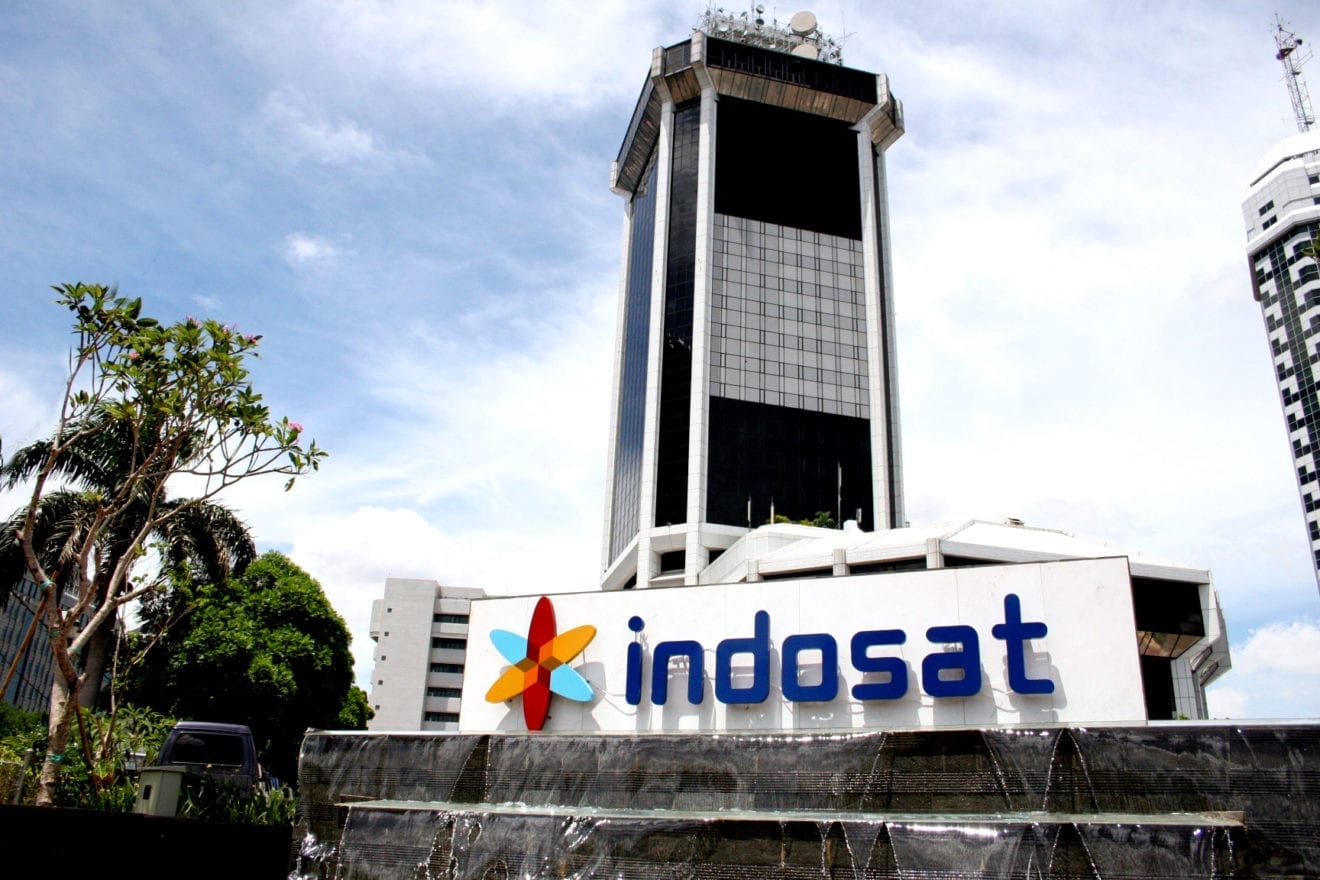
  • UiPath and Indosat Partner to Train Indonesians in Enterprise Automation

    UiPath and Indosat Partner to Train Indonesians in Enterprise Automation

    The goal of this initiative is to prepare Indonesia’s digital talents to support the country’s transformation into a global hub for AI and automation talent. As part of this collaboration, UiPath will enhance Indosat’s IDCamp curriculum by incorporating enterprise automation training. The program will offer courses on enterprise automation, allowing participants to earn UiPath Certified Professional credentials.

    Daniel Dines, the Founder and CEO of UiPath, stated, “As Indonesia aims to become a global economic powerhouse, it is crucial to strengthen workforce resilience and develop digital skills. UiPath is thrilled to partner with Indosat to promote innovation and make learning in enterprise automation more accessible. Together, we are facilitating the sustainable adoption of these technologies and preparing Indonesia’s workforce to excel in the digital economy.”

    Vikram Sinha, the President Director and CEO of Indosat Ooredoo Hutchison, added, “Indosat’s main goal is to empower Indonesia through advanced technology. Recognizing the potential of UiPath’s technology in driving growth across various sectors in Indonesia, we decided to form this partnership. This collaboration aims to enhance national competitiveness and create opportunities for society to thrive in the digital era. We believe that this initiative will significantly contribute to Indonesia’s future as a global hub for digital talent.”

    UiPath is expanding its collaboration with Indosat to offer two specialized web-based courses on enterprise automation development and citizen development as part of Indosat’s online coding camp IDCamp. These courses—UiPath Automation Explorer and UiPath Citizen Developer—are designed to equip learners with automation skills. Participants in IDCamp will have access to various free resources, including comprehensive courses on enterprise automation technologies, UiPath Academic Alliance software editions, and UiPath Certified Professional certifications to prepare them for success in the digital workforce.

    Learners will also have the opportunity to connect with a global community of automation professionals and users. Since its launch, IDCamp has provided over 273,000 individuals with online coding scholarships. The program incorporates real-world case studies, with high-achieving graduates receiving support for global certifications and career opportunities. The partnership will also expand the UiPath Academic Alliance in Indonesia, involving more than 18 academic institutions and impacting over 8,000 students.

    Indosat will support these institutions through collaborative projects like workshops and hackathons, applying AI and enterprise automation to solve real-world challenges. Addressing the digital skills gap is essential to achieving Indonesia’s goal of becoming the fourth-largest economy by 2045. UiPath will provide more information about the UiPath Automation Explorer and UiPath Citizen Developer courses offered through Indosat IDCamp in two webinars scheduled for October 17, 2024, and November 7, 2024.

  • Google Play Store to make app installs easier with an always visible Install button

    Google Play Store to make app installs easier with an always visible Install button

    If you own an Android phone, you probably spend a lot of time in the Google Play Store, where countless apps and games are available to choose from. However, sometimes app listings can get so lengthy that the Install button can disappear, forcing you to scroll back to the top, which, to be honest, can be annoying. Well, an upcoming change to the Google Play Store aims to address this by making the Install button a permanent fixture on app listings.

    A recent report suggests that Google Play Store version 43.1.19 contains code hinting at a feature that will keep the header fixed in place on app listings. This means the Install button will remain visible as you scroll through the app details.

    The header is packed with essential info about the app, including its icon, name, developer, average rating from the Play Store, and whether it has ads. You’ll also spot the handy Install button for quick downloads right to your device, plus a dropdown that lets you install the app on your other gadgets. And the best part? This header sticks around, so you can always access it easily.

    The header with the Install button sticks at top while you scroll through the app listing. | Image credit – Android Authority/AssembleDebug

    It may seem like a minor tweak, but I think this change could really benefit app developers. Why? Well, while a lengthy app store listing does a great job of informing users, it unintentionally punishes developers for being thorough. When the Install button is stuck at the top, the more you scroll down, the more likely you will bounce instead of scrolling back up to hit that button.

    If the Install button had a fixed position, users could easily download the app after checking out the details, ultimately boosting conversions for developers who invest time in creating rich, informative listings.

    In other news from the Google Play Store, there’s chatter that it might soon spotlight tablet-optimized apps that are also compatible with cars. On top of that, the search feature is getting a new spot on Android tablets and foldable devices.

  • OpenAI begins recruiting in Singapore

    OpenAI begins recruiting in Singapore

    OpenAI is hiring a team in Singapore for its second office in Asia following the launch of its Japan outpost four months ago.

    The new office is planned to be launched by the end of the year and will serve as a hub for the company to work with partners and customers across the region, Bloomberg reported.

    “Singapore, with its rich history of technology leadership, has emerged as a leader in artificial intelligence,” Sam Altman, chief executive officer of OpenAI, said in a statement.

    “We’re excited to partner with the government and the country’s thriving AI ecosystem as we expand into the Asia Pacific region.

    Open positions in Singapore include sales director, customer manager, architect and engineer.

    OpenAI is also partnering with local company AI Singapore, a state initiative which connects local research groups.

    The San Francisco-based startup is accelerating its expansion following recent funding and credit deals which helped it reach a valuation of $157 billion.

    Among its backers is SoftBank Group Corp., a major AI-focused investor.

    In April it launched its first office in Asia, located in Tokyo, and introduced a specialized GPT-4 model tailored for Japanese-language users.

  • Gasoline prices surge

    Gasoline prices surge

    Gasoline prices increased sharply Thursday afternoon after inching down last week.

    The popular fuel RON95 rose 6.36% to VND21,060 (US$0.85) per liter.

    Biofuel E5 RON92 increased by 5.25% to VND19,840.

    Regulators said that prices in the last seven days rose as a hurricane made landfall in the U.S., resulting in a spike in demand in that country, and concerns over the military conflict in the Middle East.

    In the last seven days, fuel prices have increased by 7-7.9% and oils have gained 5.2-7.4%. RON95 is now at $88.2 per barrel and diesel at $90.