Tag: asia

  • DBS Brings Automated Supplier Financing to Construction Sector

    DBS Brings Automated Supplier Financing to Construction Sector

    The solution aims to improve productivity and remove inefficiencies in the sector’s procurement and payment processes.DBS Bank has partnered with Singapore fintech Doxa to pioneer a procure-to-pay solution for Singapore’s construction sector, according to an announcement on Thursday.

    DBS worked with the main contractor Tiong Seng Group and its supplier network to validate the construction industry’s process flows and develop a solution to eliminate manual administrative processes that plague the industry. The solution, Doxa Connex, digitalizes and automates the majority of the manual procurement and payment processes and documentation, which could lead to a reduction in administrative fees and processing costs of at least 50 percent, the statement said.

    «Covid-19 has accelerated the need for many industries to turn to digital solutions to continue operating safely even amid manpower constraints, and the construction sector is no exception. Proactive and timely digital transformation will put construction companies in good stead for recovery and growth when economic activity picks up and demand for construction services resumes,» Chew Chong Lim, DBS managing director, and global head of real estate, institutional banking, said.

    The construction sector accounts for more than 4 percent of Singapore’s gross domestic product but has been slow to embrace technology along the construction value chain. The announcement cited a recent study by Autodesk and IDC that said only 2 percent of construction firms have automated most of their manual processes.

    Tiong Seng is keenly aware of the need to embrace Integrated Digital Delivery (IDD) in the entire value chain of the built environment sector. We have thus made digitalization one of our core drivers for industry transformation, John Keung, Chairman of Tiong Seng Contractors, said about the launch of Doxa Connex.

  • Vietnamese rice now more pricey than Thailand’s

    Vietnamese rice now more pricey than Thailand’s

    With the Thai baht weakening, Vietnamese rice is fetching 3 percent higher prices in global markets than varieties from Thailand.

    Vietnam’s 5-percent broken rice has been priced at $468-472 per ton since August 8, $15 more than its Thai rivals. The prices have risen by 6.8 percent since the beginning of this month.

    Vietnam was the third-largest rice exporter last year behind India and Thailand. In the first seven months of this year, it exported $1.9 billion worth of grains, up 10.9 percent year-on-year, with the Philippines being the top buyer, according to the Ministry of Agriculture and Rural Development.

  • ABN Amro Overhauls Corporate Bank

    ABN Amro Overhauls Corporate Bank

    Following a review by its new CEO, the bank will wind down all of its non-European corporate banking operations and stop providing trade and commodity finance.

    «We will serve clients in segments where we can achieve scale, so we will focus on the Netherlands and Northwest Europe, where we will invest and grow,» CEO Robert Swaak, who was appointed in January, said in comments with the bank’s second-quarter results, published Thursday.

    Going forward, the bank’s Corporate & Institutional Banking (CIB) will focus on clients in Northwest Europe and Clearing and will exit all non-European corporate banking activities. Trade & Commodity Finance activities will be discontinued completely, and Natural Resources and Transportation & Logistics will be limited to Europe, while it will impose stricter lending criteria and credit limits, the bank said on Tuesday.

    Non-core activities, which comprise around 45 percent of CIB’s client loans, representing approximately 35 percent of CIB’s RWA and over 10 percent of total RWA, are expected to be wound down in the next three to four years and will affect around 800 full-time employees, of which 150 are in the Netherlands.

    A Netherlands-based spokesperson for ABN Amro said that the schedule of winding down for non-core activities has not been set and that it will differ based on business line and region. In Singapore, only its Clearing desk will remain.

    We can not yet say exactly how many jobs in Singapore are impacted. This will also be worked out in the coming period, the spokesperson said.

    The bank had one of the largest exposures of any bank to the collapse of Singapore oil trading company Hin Leong, at around $300 million. It also had a smaller exposure to Zenrock Commodities Trading, another scandal-hit Singapore oil trading firm.

  • Alibaba-backed Best to list delivery business in Hong Kong

    Alibaba-backed Best to list delivery business in Hong Kong

    Alibaba-backed Best Inc is seeking a Hong Kong listing for its express delivery and freight delivery businesses, keen to boost its valuation and establish an investor base closer to China, said three sources with knowledge of the matter.

    The plans by Best, which went public in New York in 2017 and has a market value of US$1.8 billion, are preliminary and the offering size and target valuation have yet to be determined, said the sources, speaking on condition of anonymity as the information was private.

    The Hangzhou-based company, which has been unhappy with its New York valuation, decided not to include smaller units such as its supply chain management and cloud businesses in the Hong Kong listing as seeking a valuation for just the two delivery units would be more straightforward, one of the sources said

    The two units brought in nearly $4 billion in revenue last year, around 80 percent of the company’s overall revenue.

    The move also comes amid escalating geopolitical tensions between the US and China and tightening scrutiny of US-listed Chinese firms. Those uncertainties have prompted a number of Chinese companies to seek a second listing in Hong Kong.

    Best has tapped Credit Suisse and JPMorgan to lead the listing process said the sources. One source said the float could take place as soon as this year.

    Best and the banks declined to comment.

    Alibaba Group Holding, Best’s biggest shareholder, has endorsed the listing plan and would also consider investing in the float, said one of the people.

    The e-commerce giant, which in June increased its stake in Best to 33 percent via a $150 million convertible bond, also declined to comment.

    Alibaba’s interest in the float would mark another effort to gain more say in the world’s biggest logistics market which is rapidly growing but remains highly fragmented.

    Alibaba also has stakes in four other Chinese couriers – STO Express Co, YTO Express Group Co, ZTO Express (Cayman) Inc and Yunda Holding Co

    Best, led by founder and CEO Johnny Chou, a former Google executive, posted a 20.5-per-cent drop in first-quarter revenue from a year earlier and a net loss of $108 million, hit hard by the fallout from the Covid-19 pandemic.

    Goldman Sachs is also an investor in Best, according to the Chinese company’s 2019 annual report.

    Best’s shares have fallen 18 percent so far this year. In contrast, the S&P/BNY Mellon China Select ADR Index, which tracks Chinese firms listed in New York, has gained 16 percent over the same period.

  • Tencent profit beats expectations after strong demand for games

    Tencent profit beats expectations after strong demand for games

    Chinese gaming and social media giant Tencent Holdings said second-quarter net profit rose 37 percent, beating market estimates, on higher demand for its video games as coronavirus put a dent in other entertainment options.

    Revenue from online games, which accounts for one-third of total sales, jumped 40 percent in the quarter, primarily driven by smartphone games including Peacekeeper Elite and Honour of Kings. That offset a continued decline in desktop games.

    Social networks, fintech and business services, and social advertising revenues all grew by nearly 30 percent.

    Media advertising revenues fell by 25 percent however, “as a result of weak brand advertising demand amid the challenging macro environment”, and delayed content production and releases.

    The world’s largest gaming firm by revenue booked a US$4.8 billion profit for the three months through June. Revenue rose 29 percent to $16.5 billion.

    The results come a few days after the US said it would ban WeChat-related transactions in the country.

    Tencent, which owns the Chinese messaging app, is under pressure to address concerns about the impact of the ban and outline its plans to mitigate any fallout.

    The company has also postponed a blockbuster release of “Dungeon and Fighter Mobile” game planned for August 12, citing upgrades needed to the game’s addiction prevention system.

  • Sony Marching Ahead With The Development Of The Vision-S Concept Electric Car

    Sony Marching Ahead With The Development Of The Vision-S Concept Electric Car

    Sony stole the show at CES 2020, alas the last major trade show, before the world was crippled by the pandemic. And the company introduced its show-stopper which was something it is not known for. Cars, an electric one to be precise. Sony’s Vision-S concept stole the show at CES, but at the time, the Japanese company insisted that this wasn’t an overture for a product, but instead just a concept and more about the technology.

    It turns out Sony has more plans for the electric car and now is marching ahead with its development. Magna, the company behind the electric car platform, has now started involving the car in road testing trials in Tokyo, Japan which is also Sony’s home turf. Previously, the car was parked in the Magna Steyr factory in Graz, Austria.

    Just to recap, the Vision-S concept has 33 sensors feeding the driver assistance system coupled with an all-new electric powertrain. The 33 sensors leverage Sony’s leadership in imaging technology with a slew of CMOS and time of flight (ToF) sensors embedded in the system that kind of replicates the job of a LiDAR for autonomous capabilities.

    The car also gets some goodies from Sony’s iconic audio group with technologies like a 360-degree reality audio system that has speakers built-in the seat. Like Tesla, this car even had a panoramic screen for the core user interface of the car. It even features technologies from Bosch and Blackberry which has the QNX automobility platform.

    While Sony hasn’t communicated anything officially that it will be pursuing this venture more seriously, the fact that the car is being tested on roads in Sony’s home, indicates something bigger. It also comes at a time when many big tech companies have started struggling or failing with electric car ventures. Notable examples are Apple and Dyson. While Dyson has pulled the plug on the project, Apple has pivoted towards the development of autonomous car technology which can be integrated with third-party manufacturers rather than making the so-called prophetic “Apple Car”.

  • South Korean KOLs banned from promoting products without full information

    South Korean KOLs banned from promoting products without full information

    South Korea will ban social-media influencers – KOLs – from pitching a new product or service on their online platforms without disclosing their business ties with corporate sponsors, government officials have announced.

    The move comes amid controversy over some famous social-media influencers’ involvement in the shady practice called “backdoor online advertising.”

    The Fair Trade Commission (FTC), South Korea’s antitrust watchdog, said its revised advertising guidelines for social-media platforms will become effective from September.

    The new rules require KOLs on social media platforms, such as YouTube or Instagram, to state clearly whether their product endorsements are “financially rewarded or intended for promotion”.

    Vague wording like “thanks to” or “reviewer group” will be prohibited on their videos as well.

    The corporate watchdog said it will start to crack down on and punish violators after a certain guidance and grace period.

    Violators — both influencers and corporate sponsors — will be slapped with a fine of up to 2 percent of related sales and revenue or US$422,000.

    Some social media influencers have drawn flak for their backdoor advertising. A popular ‘mukbang influencer’ with 4.7 million viewers recently apologized for being involved in the unfair advertising practice.

    In addition, a renowned YouTuber with an audience of 2.68 million has announced her retirement from mukbang, a portmanteau in Korean of “eating” and “broadcast.”

    Last year, the antitrust watchdog clamped down on companies’ backdoor advertising through influencer reviews for the first time.

  • Standard Chartered Partners with Juwai IQI to Redefine the Client Experience

    Standard Chartered Partners with Juwai IQI to Redefine the Client Experience

    Standard Chartered and Juwai IQI have announced a partnership across their networks to redefine the client experience of banking and property investment. Juwai IQI’s real estate agent network IQI Global has 10,000 agents across offices in 15 countries, while Standard Chartered has a presence in 59 countries.
    Abrar A. Anwar, Managing Director and CEO of Standard Chartered Malaysia said: “Real estate is a vital asset class for our clients as a means to diversify their investments. This collaboration offers Juwai IQI’s clients access to Standard Chartered’s comprehensive range of property loans and mortgage solutions to help them achieve their property ownership dreams.”
    Juwai IQI Executive Director Kashif Ansari said: “The majority of property investors use finance to leverage their returns. Investors also have many other financial needs, from private banking to personal loans and credit cards. Standard Chartered is one of the world’s leading banking groups. Together, we can improve both the banking and property investment experience for our mutual clients, and even save them money.
    “Both Standard Chartered and Juwai IQI are leaders in the application of data for business growth. By combining our knowledge, we expect to be able to improve existing services and offer new opportunities to our clients.
    “The partnership between Standard Chartered Malaysia and Juwai IQI will help to provide our mutual clients with the resources and opportunities they need to be successful.”
  • Flight restart in June offers little reprieve to Cebu Pacific

    Flight restart in June offers little reprieve to Cebu Pacific

    Gokongwei-led Cebu Air Inc. took a turn for the worse on the first half of the year as losses mounted due to the coronavirus pandemic that kept most of its fleet grounded. A gradual recovery is seen from reopening routes.

    In a disclosure on Wednesday, the budget carrier reported net losses amounting to P9.14 billion from January to June this year, a massive reversal of the P7.15 billion profits the same period a year ago. Losses worsened from the first three months of the year, when during the latter part of the period, the government declared a sweeping community quarantine that closed down airports and enforced travel barriers to contain the virus spread. The shutdown’s impact was so severe, Cebu Pacific slashed its workforce by a quarter.

    “While some sporadic arrangements for sweeper flights to assist with stranded tourists did occur, for the most part, the Group’s operations were virtually nil until April when some cargo flights within the Philippines and eventually to countries like Japan, Thailand, China, Hong Kong recommenced,” the company said.

    As the Philippines began to ease quarantine controls last June, Cebu Pacific returned flights to 25 of its 78 domestic routes in seven hubs located in areas under general community quarantine, providing relief to the bleeding. “The Group will continue to expand its operations as more local governments welcome flights into their cities,” the airline said.

    Broken down, revenues for the first six months plummeted 61.2% annually to P17.33 billion. Of that amount, P11.51 billion was generated from passenger flights, down a bigger 65.5% on-year as passenger traffic more than halved to 4.5 million from last year.

    Earnings from revenue operations, meanwhile, slipped 21.7% year-on-year to P2.22 billion in the same six-month period, incurred as a result of a 52.4% drop in cargo volumes. Ancillary revenues decreased by 57.7% annually to P4.9 billion.

    On the flip side, earnings also sank 32.2% from year-ago levels to P35.89 billion “mostly driven by the suspension of the Group’s operations due to the COVID-19 global pandemic,” Cebu Pacific said. The peso appreciation, as well as a decline in global oil prices, also helped temper disbursements by lowering imported fuel costs.

    Broken down, January-June expenditures from flying dropped 53.6% on-year to P8.15 billion, that from aircraft servicing shrank 48.8% annually to P2.17 billion, maintenance costs by 13.9% to P561.08 million, and costs from foreign exchange swings by 11.5% year-on-year to P8.17 billion.

    “The Group’s cash requirements have been mainly sourced through cash flow from operations which was significantly reduced due to the current COVID-19 situation,” Cebu Pacific said, even as the airline assured investors of its “strong” financial position.

    The budget carrier, as well as other local airlines, have pleaded to the government for a direct financial rescue to prevent collapse and layoffs. The Duterte administration, however, has rejected cash intervention to salvage firms, opting to let banks lend them money instead.

  • Standard Chartered Taps Microsoft for Digital-First Strategy

    Standard Chartered Taps Microsoft for Digital-First Strategy

    As its preferred cloud platform provider, Microsoft will help the bank make its vision for virtual banking, next-generation payments, open banking and banking-as-a-service a reality.

    Standard Chartered has established a three-year strategic partnership with Microsoft to accelerate its digital transformation through a cloud-first strategy, according to an announcement on Tuesday.

    As part of the partnership, Standard Chartered will adopt Microsoft Azure as its preferred cloud platform to meet its need for resilient data centers and cloud services with the highest security and regulatory standards. The bank will also leverage Microsoft’s artificial intelligence (AI) and analytics capabilities to automate banking processes and deliver hyper-personalization of its products and experiences for customers, and its employees globally will also adopt Microsoft’s collaboration, office productivity and document management tools to advance digital workplace transformation.

    «he pandemic has shone a spotlight on the need for businesses and banks to be resilient from a risk mitigation, cost, and security perspective. With the increasing trend of an always-on digital economy, commercial and consumer clients are looking for applications and services that empower them to do online banking from anywhere, flexibly and efficiently,» Bhupendra Warathe, chief technology officer, cloud transformation at Standard Chartered, said about the bank’s digital-first strategy.

    The bank’s core banking and trading systems and new digital ventures such as virtual banking and banking as-a-service will be cloud-based by 2025, and it will also adopt a cloud-first principle for all new software developments and major enhancements, the announcement said.

    The first set of capabilities to move to Azure will be Standard Chartered’s trade finance systems, which will facilitate seamless cross-border trade for the bank’s corporate and institutional clients.

    Covid-19 has further accelerated drive to digitize banking services, and we are determined to be at the forefront,» Standard Chartered group CEO Bill Winters said in a LinkedIn post about the announcement.

  • H&M has created a jacket that gives the wearer a hug

    H&M has created a jacket that gives the wearer a hug

    Much has been made of the way technology has helped people stay connected since the introduction of social distancing measures and travel bans due to the global coronavirus pandemic.

    But anyone who has been separated from a loved one knows that even a video call falls short of the feeling of being together in real life. Many people have spoken about just wanting to give their friends or family members a hug.

    With a new jacket created by H&M Lab, the fast-fashion giant’s innovation hub in Berlin, they just might be able to.

    Earlier this month, the lab unveiled a new denim jacket with flexible sensors built into the shoulder areas, which gives the wearer the feeling of being hugged when the sensors are activated.

    Every jacket comes with a registration code that the user can share with their loved ones via an accompanying app. Only those with the registration code will be able to activate the sensors to let the jacket-wearer know they are thinking of them. Contacts can also create an individual touch pattern, so it’s clear who the hug has come from. The sensors are activated via the app by Bluetooth.

    The lab is calling the concept “Wearable Love”. It released a video about the invention earlier this month, but it is not yet clear when or where the jacket will be available for purchase, or how much it will cost.

    H&M is not the first apparel brand to explore the possibilities of wearable technology. Levi’s has also put sensors in a denim jacket, but they were geared towards more functional tasks, such as answering a phone call without having to take your mobile device out of your pocket. The context of the coronavirus has created an opportunity to explore new use cases for wearable tech.

    “Whether long-distance relationship or social distancing – no matter why you can’t have your loved ones around you: wearable love helps you to overcome boundaries and brings together what belongs together,” H&M Lab said on its website.

    H&M Lab created the Wearable Love jacket together with Boltware, a Berlin startup whose mission it is to turn analog garments into modern tech devices.

  • Hong Kong leads ‘drastic’ drop in sales for Giordano

    Hong Kong leads ‘drastic’ drop in sales for Giordano

    A “drastic” drop in sales has led apparel retailer Giordano International to record a US$22.6 million loss in the six months to June, of which $13.2 million alone was attributable to its Hong Kong operations.

    The company said in a stock-exchange filing that post-June 30, sales have begun to recover, but while it continues to assess the impact of the Covid-19 crisis on its operations it is too soon to project its full-year performance.

    Last year’s first half saw the company report a net profit of $20.8 million.

    Group-wide sales fell by 44.4 percent for the half-year to $182 million, with the impact of Covid-19 beginning in January in Mainland China, leading to a ban on cross-border travel from Mainland China into Hong Kong and Macau.

    Non-cash provisions relating to Hong Kong accounting laws also contributed to the loss.

    Online sales surged 93.8 percent during the six months to $17.9 million, accounting for 9.8 percent of total group turnover, nearly double the share of the same period last year.

    Giordano’s chairman and CEO Peter Lau said the group will continue to focus on third-party online platforms for future growth.

    Giordano operated 2187 stores at the end of June.

  • Amazon expands anti-counterfeit project to Singapore

    Amazon expands anti-counterfeit project to Singapore

    Amazon has expanded its anti-counterfeit program Project Zero to seven new countries, including Singapore and Australia, taking the number of operational territories to 17.

    The project combines Amazon’s technologies with brands’ knowledge of their own intellectual property to counter the trade in forged products. The system works by scanning the more than 5 billion attempted daily product listings on Amazon for suspicious products, using a machine-learning algorithm that is constantly improving.

    Project Zero also provides a self-service tool allowing brands to directly remove counterfeit goods listings from Amazon stores.

    More than 10,000 brands have already enrolled in the initiative.

    “Amazon is committed to protecting our customers and the brands we collaborate with worldwide,” said the firm’s VP of worldwide customer trust and partner support Dharmesh Mehta.

    “Project Zero has been a leap forward in protecting brands, especially for those that use all three of its components.”

    Brands currently using Project Zero that already have a trademark enrolled in one of the newly added countries can use it automatically in their additional stores.

  • China sets dates for reinstatement of tourist visas to Macau

    China sets dates for reinstatement of tourist visas to Macau

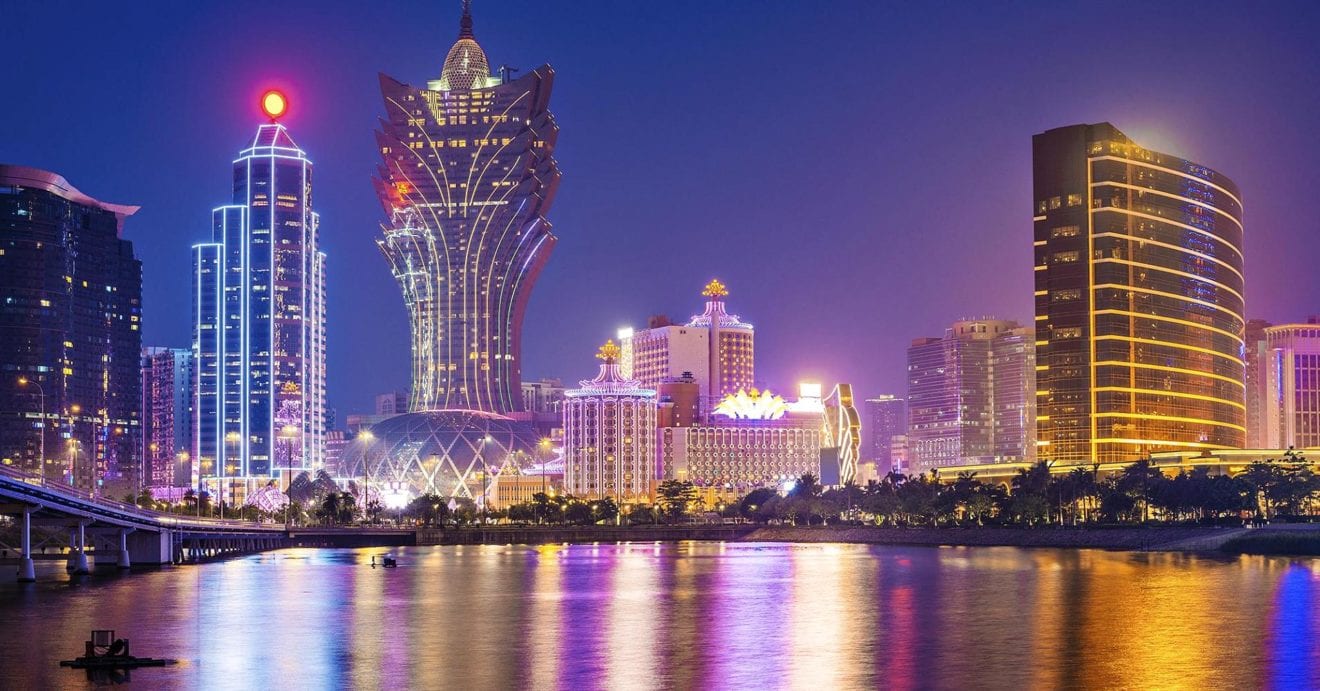
    @Macau, the world’s biggest casino hub, is set to welcome an influx of gamblers after China announced that tourist visas would be reinstated for all provinces.

    Residents from Zhuhai city across the border from Macau are permitted from tomorrow, August 12.

    Residents from the neighboring coastal province of Guangdong on the mainland will be able to apply from August 26, the National Immigration Administration said.

    Residents of other provinces will be allowed to apply for visas from September 23.

    Casino executives and investors have been eagerly awaiting the announcement as a catalyst to reviving gaming revenue, which has slumped since February due to coronavirus travel restrictions.

    China’s National Immigration Administration said, provided the domestic coronavirus situation continued to improve, residents would be able to apply for individual and group travel visas to enter the special administrative region located on the country’s southern coast.

    Visitors from greater China make up over 90 percent of tourists to the former Portuguese colony of Macau.

    Shares of Hong Kong listed casino stocks soared on Tuesday following the announcement. The announcement comes nearly a month after China loosened coronavirus-related border restrictions between Macau and Guangdong.