Tag: asia

  • Smart clothing set to become a US$11bn market

    Smart clothing set to become a US$11bn market

    Annual sales of integrated fitness apparel – smart clothing – is set to multiply from around US$1 billion this year to $11 billion in 2025.

    Analysis by Juniper Research revealed that explosive growth is likely to see smart clothing become the largest fitness wearable sector in terms of revenue, as traditional consumer wearables are overtaken.

    The firm’s report finds that wearables have been diversifying for several years, developing to analyze cadence, exercise form and precise positioning during exercise.

    Recent technological innovations delivering personalized health-and-fitness insights have threatened the established position of leading manufacturers such as Fitbit, which continue to emphasize the breadth of features over personalized offerings, to their detriment

    Traditionally, subscription models have not been an effective approach to the health and fitness wearables industry, but devices providing coaching and feedback are likely to change this. As the market changes, such additional opportunities in terms of business approach will become more available to vendors, according to Juniper.

  • Ecoalf opens first Japanese flagship

    Ecoalf opens first Japanese flagship

    Spanish fashion brand Ecoalf has opened its first Japanese flagship store, in Tokyo.

    Located in Shibuya district, the Ecoalf store spans two floors and offers a wide selection of products including the label’s latest collection.

    Designed by Japanese architect Yohei Sakamaki, the store features a sustainability concept ‘Sharing Ecology’, using natural materials such as Japanese bamboo, stone and sand. Interior features include a giant rock named “Date-Kanmuri-Ishi” and wooden panels to create a warm yet modern ambiance.

    A black staircase leads customers to the upper floor which is dedicated to #Actnows, a monthly event held by the brand to raise awareness of sustainability issues.

    “Our aim is to raise awareness of the need to protect the planet and we will continue to accelerate this message,” said Javier Goyenechem, president and founder of Ecoalf.

  • EU wants to have Google, Facebook and Twitter report monthly on their actions against fake news

    EU wants to have Google, Facebook and Twitter report monthly on their actions against fake news

    As the fight with the coronavirus pandemic continues, so does the fight against misinformation on social media. The European Union wants to now have tech giants like Facebook, Twitter, and Google report monthly on their efforts against misinformation, regarding COVID-19.

    EU foreign policy head Josep Borrell and Vera Jourova, the European Commission’s Vice President for values and transparency, reportedly stated that the tech giants should provide information on their fight against fake news. Jourova additionally stated that the spread of fake news and false information on social media is harming not only democracy but also the health of the people. She added that it also can undermine the economy.

    The monthly reports should include actions that were done to promote legitimate content and to restrict coronavirus-related misinformation, along with false ads on the matter.

    Josep Borrell stated that along with the aforementioned measures, more support for free and independent media should be provided, as well as support for fact-checkers and researchers.

  • Simon pulls out of merger deal with Taubman

    Simon pulls out of merger deal with Taubman

    US mall operators Simon Property Group and Taubman Centers have called off their planned merger, citing the impact of Covid-19 on the retail industry.

    Simon was to buy an 80-per-cent interest in Taubman, with the Taubman family retaining a 20 percent stake in a US$3.6 billion deal. Taubman owns, manages and/or leases 23 super-regional shopping centres in the US and three in Asia via its Hong Kong-headquartered Taubman Asia business.

    Simon says it was pulling out of the deal because it believed Taubman’s properties were “disproportionately hurt” by the pandemic due to their location in densely populated cities and tourist locations and had high-end tenants whose sales had been hit particularly hard this year.

    However, Taubman has indicated it will fight to protect the deal, arguing the decision was without merit and plans seek damages from Simon.

    The Asian properties which would have been part of the merger are the Starfield Hanam in South Korea, ​and the Chinese properties CityOn Xi’an and ​CityOn Zhengzhou.

  • UBS Adds 300 Jobs in Singapore

    UBS Adds 300 Jobs in Singapore

    UBS continues to accelerate growth in Asia, despite an economically troubling coronavirus pandemic, with plans to add 300 new jobs in Singapore.

    Asia’s largest wealth manager will boost its existing 3,000-strong headcount in the city-state by 10 percent over the next 18 months, according to a report.

    The bank is also reportedly tapping into Singapore’s Job Support Scheme – a government-backed program that provides wage subsidies to retain employees in light of the ongoing pandemic.

    UBS’s new hiring drive will target both local graduates as well as mid-career individuals to develop sustainable skills through a program called Singapore UBS Program for Employability and Resilience (SUPER). The program aims both to create a pipeline of financial talent for Singapore and also support prospective workers in a difficult job market.

    The program is a promise to upskill our own people to give them the capabilities they will need in the future», said August Hatecke, UBS Singapore country head and APAC co-head of wealth management.

    The vision is to create the financial workforce of the future, added Edmund Koh, president of UBS Asia Pacific. UBS has the knowledge and experience to make this happen and in partnership with the Job Support Scheme, we are confident we can make a difference.

  • Some of Apple’s staff is returning to work at its offices

    Some of Apple’s staff is returning to work at its offices

    With the beginning of next week, June 15, Apple will have some of its employees return to work at its headquarters in Cupertino. According to sources, the company has informed its staff that this will only apply for a small number of employees, while most won’t have to return to their offices for at least a few more months.

    The very limited “phase 1” of bringing Apple employees back to HQ will only allow them in the offices on certain days, depending on the nature of their jobs, as the company wrote in a recent internal memo to its staff, promising more details later through the month.

    In the memo, the company has stated that only a limited number of people will be allowed in buildings and other work areas at the same time. Social distancing and mandatory temperature checks will be required every day. Sources also note that Apple strongly encouraged its staff to take Covid-19 tests provided by it, either at home or on-site, before visiting its headquarters. In addition, face masks will be required at all times, in all of Apple’s offices and campus locations.

    As the coronavirus pandemic took over the world, Apple, like many businesses, had to close its retail stores and offices, with some employees continuing to work from home, as long as their position allowed for it. Last month the company began gradually opening its retail stores again, and alternatively introduced Apple Store Online.

    Likely thanks to the lockdown, April showed Apple’s strongest growth for its App Store since late 2017, and was the fourth consecutive month of increasing App Store downloads for the Cupertino giant. App Store purchases for the iPad, in particular, hit a record $2.1 billion in the first quarter of 2020, as people were staying at home, with many relying on apps for work, entertainment and education.

  • Malaysian bookstore MPH shifting focus to online

    Malaysian bookstore MPH shifting focus to online

    Malaysian bookstore chain MPH is closing multiple stores as it moves to a digitally-driven omnichannel business model.

    The company is not closing down, despite much speculation on social media concerning the impending closure of multiple stores.

    A recent Facebook post revealing nine MPH stores in the process of shutting shop went viral, with many users expressing sadness at the presumably imminent disappearance of the brand.

    In a statement answering customer concerns, MPH Group clarified its strategy as a transition into a more e-commerce-focused retail format, consolidating non-performing stores and pooling resources for a digital-business push.

    The company’s new strategy also involves the deployment of high-tech vending machines placed in strategic locations, as well as a social interactive e-learning platform.

    The 114-year-old firm will maintain its key physical locations as it undergoes the transition, in a process that has been largely accelerated following the coronavirus outbreak with a concomitant sharp uptick in online sales.

    The store’s e-commerce platform is due to launch in its revitalized form later in the year.

    “We want to be able to connect with our customers through multiple touchpoints, be it online or offline by adopting an omnichannel approach,” said MPH Group CEO Donald Kee.

  • Harvey Norman Asia sales suffer during Corona outbreak

    Harvey Norman Asia sales suffer during Corona outbreak

    Australian electronics and furniture retailer Harvey Norman suffered an 18-per-cent decline in sales in its Singapore store network last year.

    While sales dropped 26.1 percent in local currency during the second half-year due to the Covid-19-related lockdown, first-half sales – described by the company as “poor” – were down as well, by 11.9 percent. In Australian dollars, sales benefited from a 5.8 percent appreciation in the Singaporean dollar in the period.

    Harvey Norman’s 12 company-operated stores in Singapore closed on April 7 and still remain closed by government decree. The retailer has continued to trade online during the store closures, and anticipates being able to reopen offline later this month.

    Meanwhile, in Malaysia the company closed its 23 stores from March 18 to April 17, in line with government requirements, and gradually reopened individual stores, starting with just the electrical and computer categories, and eventually furniture and bedding, between April 18 and May 12. Online trade resumed from April 18 for the electrical and computer categories only.

    Sales were down 4.2 percent year on year in constant local currencies for the six months to May 31, and up 6.5 percent for the full year, thanks to a strong 15-per-cent uptick during the first half.

    In Australian dollars, sales were positively affected by a 5.2-per-cent appreciation in the Malaysian Ringgit during the year.

    In New Zealand, Northern Ireland, Slovenia and Croatia, where the retailer operates wholly-owned company stores, sales were down across the board.

    The only outlier was Ireland, where Harvey Norman operates wholly-owned company stores and saw a significant sales increase in the second half, despite only being allowed to fully reopen stores on June 8.

    Throughout the Covid-19 crisis, Harvey Norman’s Australian franchisees were allowed to keep stores open as long as they complied with social-distancing requirements. Sales were up 17.5 per cent in the second half.

  • Inditex eyes online presense and about to close 1200 smaller stores

    Inditex eyes online presense and about to close 1200 smaller stores

    Inditex plans to close up to 1200 smaller stores globally as it invests more than €2.7 billion in expanding its online capacity and focusing on an integrated network of large-format stores.

    Unveiling a strategic plan for the next two years, Inditex executive chairman Pablo Isla said the company expects online sales to account for 25 percent of total revenue by 2022, compared with just 14 percent last year.

    Most of the stores set for closure are older shops carrying banners other than Zara. They collectively account for 5 to 6 percent of total sales.

    Ultimately, Inditex will have a network of between 6700 and 6900 stores, down from the 7412 it operates today. About 450 new stores will be opened fitted with “all the latest sales integration technology” and effectively replacing the smaller-sized stores, which Isla says are less well-positioned to offer new-generation customer experiences.

    “This strategy is a culmination of the project the company has been investing in steadily and significantly since 2012, a project that will transform its profile notably,” said Isla. “The overriding goal between now and 2022 is to speed up full implementation of our integrated-store concept, driven by the notion of being able to offer our customers uninterrupted service no matter where they find themselves, on any device and at any time of the day.”

    The company believes that boosting online sales, underpinned by an integrated online-store network, with larger, higher-quality stores, will help generate 4 to 6 percent like-for-like sales growth annually.

    Part of the plan will see a boost to Inditex’s Bershka, Pull&Bear and Stradivarius brands in China and Japan.

    Inditex’s two-year strategy was revealed alongside the company’s first-quarter results announcement where it said it had limited the overall decline in sales to 44 percent in the wake of the Covid-19 crisis, despite 88 percent of its store network being shuttered at some point. Online sales surged 50 percent during the quarter and by 95 percent year on year in April.

    Global sales totaled €3.3 billion in the three months to April 30, gross margin remained at 58.4 percent of sales and inventories reduced by 10 percent during the past year.

    A net loss of €175 million was recorded and the company has made a provision of €308 million related to its restructuring plan.

    Inditex closed the year with a cash position of €5.8 billion, compared to €6.7 billion a year earlier.

  • Developing Asia economies to face the threat of recession amid the global pandemic

    Developing Asia economies to face the threat of recession amid the global pandemic

    The COVID-19 pandemic would have a major effect on developing economies in Asia and may even drive several countries into recession, according to the World Bank. The novel coronavirus presents a massive danger to one of the leading economic development drivers in the world, driving it into recession and throwing 11 million citizens into poverty, the Washington-based institution reported. Most of the economies in the region haven’t faced a recession since the 1998 crisis.

    Before the pandemic crippled the world economy, things were looking up for the East Asia and the Pacific (EAP) region. Prior to the global pandemic, projections estimated that nearly 35 million people would escape poverty in 2020, with over 25 million in China alone. Now with the real possibility of a recession looming over the EAP, there will be no getting out of poverty anytime soon.

    Asia’s economies will contract 0.5 percent in the worst-case scenario, which predicts a protracted pandemic with more serious consequences, the study forecasts.

    As the Vice President for East Asia and the Pacific at the World Bank Victoria Kwakwa noted, the countries were already coping with trade tensions on the global market and the consequences of the spread of coronavirus in China, and now they’re faced with a global shock.

    Despite the pandemic endangering many industries on the market, there was a positive market sentiment recently, with US equities surging further. The things aren’t looking good for China however, as retail sales fell, along with the GDP.

    The growth in the developing EAP region was projected to be 5.8 percent in 2019. Now the numbers have fallen significantly indicating them to slow to 2.1 percent in the baseline and to negative 0.5 in the lower case scenario in 2020.

    How to minimize the damage

    The World Bank advises that countries need to take steps immediately to alleviate some of the imminent impacts of the virus – including accelerated improvements in healthcare infrastructure and targeted fiscal measures.

    Along with doubling down on supporting the national healthcare capacity for long-term preparedness, the report also suggests that the countries should take an integrated approach of containment and macroeconomic policies.

    “Targeted fiscal measures – such as subsidies for sick pay and healthcare – would help with containment and ensure that temporary deprivation does not translate into long-term losses of human capital,” reads the World Bank report.

    The Chief Economist for the region at the World Bank has also suggested that in addition to the national actions, the most effective vaccine against this virus would be accelerated international cooperation. “Countries in East Asia and the Pacific and elsewhere must fight this disease together, keep trade open and coordinate macroeconomic policy,” said Aaditya Mattoo.

    The study calls for international collaboration and new cross-border public-private alliances in order to improve the development and delivery of essential medical products and services in the face of the pandemic and retaining financial stability in the aftermath. In order to ensure the gradual economic growth in the region, the World Bank stresses that the trade policy should remain open so that all countries have access to medical and other resources.

    Another World Bank policy advice is easing credit to support households to smooth their expenditure and helping businesses withstand the immediate shock. Nonetheless, given the possibility of a prolonged crisis, the study emphasizes the need to pair these efforts with regulatory supervision, particularly when many EAP countries already bear heavy corporate and household debt burdens. “For poorer countries, debt relief will be essential, so that critical resources can be focused on managing the economic and health impacts of the pandemic,” the study notes.

    The World Bank report also takes into account some characteristics of the countries in the region and the implications of COVID-19 on specific sectors that are of vital importance for them. Highlighting that households that are dependent on sectors that have been hit the hardest by the pandemic will be at the highest risk of falling into poverty. Such vulnerable economic activities include tourism in Thailand and the Pacific Islands, manufacturing in Cambodia and Vietnam, and households dependent on informal labor in all countries.

    Many of the countries in the region have already been facing significant challenges and the global pandemic just adds up to those, such as droughts in Thailand or commodity shocks in Mongolia. The outlook for 2020 in the Pacific Island countries is subject to particularly significant risks owing to the dependence of their economies on grants, tourism, and imports.

    To combat the detrimental effects of the global pandemic, the World Bank, along with the other international organizations, has already taken significant steps in aiding the developing countries in efforts to minimize the damage.

  • AirAsia launches three-day sale for domestic flights

    AirAsia launches three-day sale for domestic flights

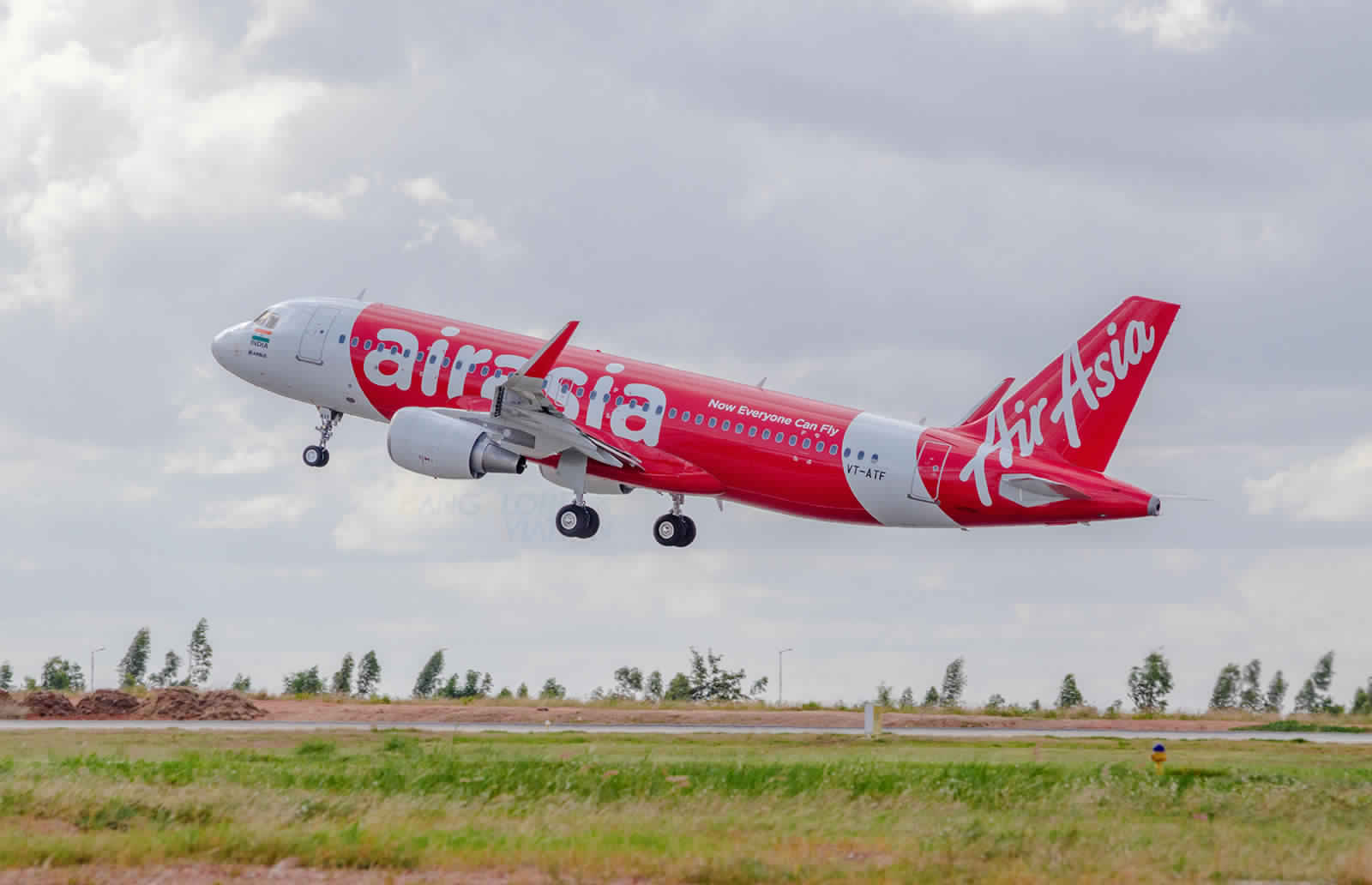
    AirAsia Group Bhd, which resumed its domestic flights on April 29, has launched a three-day sale for domestic flights booked through airasia.com and its mobile app from today to Sunday.

    During the sale, AirAsia BIG members can enjoy all-in one-way fares from as low as RM129 for domestic travels between July 1 and Nov 19, while non-members’ fares start from RM134.

    In a statement, Amanda Woo, head of the commercial for AirAsia, said passengers can now perform an unlimited number of date changes to their flights with the recent announcement of flight change fee waiver for all new bookings with travels up to Dec 31.

    She added that since the resumption of its domestic services, AirAsia has enhanced its safety measures throughout the entire flying journey, including pre-flight, in-flight, and arrival processes.

    Several contactless procedures including contactless payments at the airport, contactless kiosks, passenger reconciliation system, as well as enhanced features on AirAsia mobile app are also in place to ensure a smooth and safe travel experience for all AirAsia’s guests.

  • Saucony opens first store in Shanghai

    Saucony opens first store in Shanghai

    Heritage running shoe brand Saucony has opened its first store in Shanghai at Super Brand Mall.

    The company says the opening represents an important milestone in the brand’s development in China.

    The 122-year-old brand is actively expanding its Chinese retail network by entering major cities in order to cater to burgeoning demand from the country’s growing elite class.

    The start of business also marks a transition in Saucony’s marketing strategy from online stores to physical stores in the market, while raising awareness of the brand’s shoes and apparel in China. The company intends to follow through with more brick-and-mortar stores in other Chinese cities.

    The store was launched by management from Saucony and its local partner Xtep.

  • AirAsia to shed 30% of workforce

    AirAsia to shed 30% of workforce

    AirAsia India is expected to let go of several of its employees as its part-owner, AirAsiaBerhad struggles to maintain its group operations across regions following the outbreak of coronavirus.

    AirAsia Berhad is set to reduce up to 30 percent of its workforce across regions including its Indian operations which it part-owns with Tata Sons as the group struggles to maintain its operations following the Covid-19 outbreak.

    Sources in the airline said that apart from salary reduction up to 75 percent, the group is seriously considering plans to let go between 25 percent and 30 percent of its entire workforce of about 20,000 across regions.

    An AirAsia India spokesperson, however, declined to comment on the possible measures being taken to retrench employees. As of December 2019, AirAsia India had a market share of 7 percent. It has a total fleet size of 30 aircraft and flies to 21 destinations across India.

    The airline sector is one of the most-affected industries since the outbreak of coronavirus across the countries. According to airline consultancy firm CAPA, most airlines in the world could file for bankruptcy soon. “As the impact of the coronavirus and multiple government travel reactions sweep through our world, many airlines have probably already been driven into technical bankruptcy, or are at least substantially in breach of debt covenants.”

    As far as the airlines operating in India are concerned, CAPA said they are expected to incur a total loss of $3.6 billion during the first quarter of the current financial year. Cash reserves are running down quickly as fleets are grounded and what flights there are operate much less than half full, it said.

    Surprisingly, AirAsia India recently received its board’s clearance for increasing its borrowing limit by 1,000 crore to ensure it continues to pay leasing and parking charges for its grounded aircraft. AirAsia India is learned to be the first domestic airline to formally increase the borrowing limit. The decision to increase the limit from 500 crore to 1,500 crore was taken at a meeting of the shareholders in April.

    AirAsia India is a joint venture between Tata Sons, which owns 51 percent in the airline, and AirAsia Berhad. The special resolution was approved to carry out “existing and future financial requirements to support its business operations”

    AirAsia India, which has been struggling since it began its operations in June 2014, recorded a fourth-quarter net loss of 123.3 crore in FY19, which was 26 percent lesser than the same quarter in the previous year. It recorded revenues of 1,057.6 crore, a 65 percent increase from Q4 of FY18 on the back of a 38 percent increase in capacity, and a 19 percent increase in average fare.

  • Lotte takes over concessions at Singapore’s Changi airport

    Lotte takes over concessions at Singapore’s Changi airport

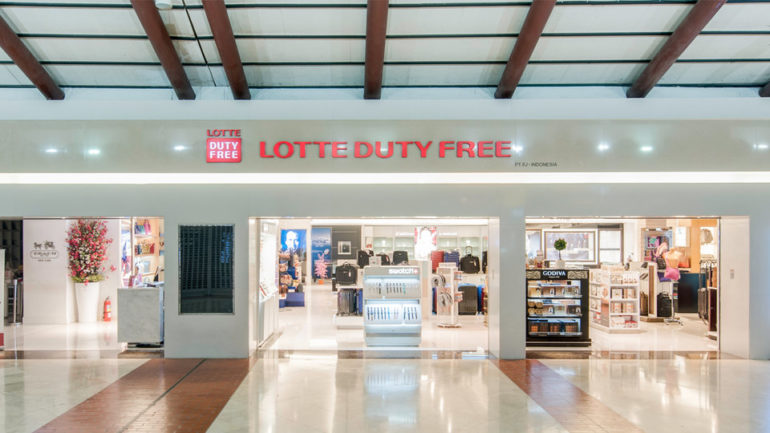
    South Korean duty-free retailer Lotte has formally taken over the liquor and tobacco concessions at Singapore’s Changi Airport from DFS Group.

    Construction of the new stores are likely to begin once the island’s current “circuit-breaker” restrictions are relaxed in the wake of the continuing coronavirus outbreak. Before this period the firm will trade via the online platform iShopChangi.com.

    Lotte won the concessions last year in a tender process following the withdrawal of LVMH-owned DFS Group after 40 years at the airport. DFS said continuing to sell alcohol and tobacco at Changi Airport was not commercially viable, but it will continue to operate fashion stores there.

    The new Lotte outlets will be operator’s largest duty-free business in Asia Pacific, offering more than 3000 choices of wines and spirits, including exclusive limited-edition whiskeys and cognacs.

    A high-tech tasting bar and immersive experience zones are likely to be features of the new stores.

    “Apart from a complete revamp of store designs, passengers can also look forward to an omnichannel experience as we integrate a seamless brick-and-mortar shopping experience with e-commerce,” said Changi Airport Group executive VP Lim Peck Hoon.

    Lotte has been awarded the concession for roughly 8000sqm of retail space at the airport for six years, ending June 8, 2026.

  • OCBC Brings Wealth Advisory Online

    OCBC Brings Wealth Advisory Online

    The bank launched its virtual wealth advisory service in April, at the height of Singapore’s partial lockdown, and saw a 45-percent increase in the sale of wealth products in the first 10 days, compared with the 10 days.

    OCBC Bank has seen a positive response from its customers to non-face-to-face wealth conversations, as sales of wealth products, including unit trusts to bancassurance products, and from structured investments and bonds to foreign exchange products, grew when it moved the wealth advisory process online as a result of the Covid-19 outbreak.

    This has allowed customers to review their investment portfolios during a time of market volatility and seize investment opportunities, OCBC said in a press release on Tuesday.

    The highly regulated wealth advisory process was previously a complex face-to-face process involving over 50 pages of documents and a comprehensive Financial Needs Analysis. But since April 18, the bank’s financial and wealth advisors have been conducting meetings and sales advisory via video and screen-sharing facilities in place of physical face-to-face interactions, using e-signatures and pdf documents sent via encrypted email instead of paper.

    The bank highlighted growing digital adoption for both banking and wealth solutions in the first quarter of the year, including investments made on its RoboInvest platform, as well as online time deposit placements and unit trust purchases.

    While many customers are still accustomed to face-to-face interactions with our bankers, even after the Covid-19 outbreak, this virtual process will become a new normal, Sunny Quek, OCBC Bank’s head of consumer financial services, Singapore, said.

    OCBC previously said it is rethinking its branch network strategy Covid-19 circuit breaker has diverted traffic from physical branches and prompted a surge in the adoption of digital baking services.