Tag: asia

  • BMW Begins Online Sales For New & Used Cars Amidst Lockdown In India

    BMW Begins Online Sales For New & Used Cars Amidst Lockdown In India

    Joining the likes of Mercedes-Benz, Honda, and Volkswagen, BMW India has announced its new online platform for the sale of new and used cars. The new BMW Contactless Experience takes the car buying process virtual and enables customers to explore and buy not just new vehicles but pre-owned cars as well. In addition, the Contactless Experience allows customers to book vehicle service and make payments online, all from the safety of their homes. The BMW Contactless Experience was introduced on April 2, 2020, in the country. The new initiative is a part of several measures taken by the automaker for customers during the lockdown.

    Speaking on the new initiative, Arlindo Teixeira, Acting President, BMW Group India said, “At BMW, customers are at the core of everything we do. Amidst the current pandemic situation, we have successfully transformed our business processes and put in place various measures to effectively and efficiently serve our existing customers and prospects by leveraging new-age digital technologies. An industry-first comprehensive initiative, the BMW Contactless Experience offers consumers an all-new way to explore and experience the world of BMW while being in the comfort of their homes. Since its launch in April 2020, we have seen a tremendous increase in customer engagement, configuration requests, and virtual product presentations on this platform. As business dynamics evolve post the current COVID -19 pandemic, the BMW Contactless Experience will play a crucial role in offering seamless sales and aftersales services to our existing and new customers. We will bring joy to our customers no matter where they are.”

    The BMW Contactless Experience not only allows customers to learn about their vehicle online but also personalize their preferred car, finance options, and service packages. A dealer representative online will be interacting with the customer online in real-time to guide the same. Customers can also have a 360-degree view of the vehicle on their phones, tablets of personal devices, and interact with the sales consultant. BMW Financial Services will also help procure finance for the vehicles with customized financial solutions, depending on the customer.

    For existing BMW customers, the Contactless Experience extends to booking a service appointment online, type of service required, and the pick-up and drop details. The service cost estimates and details of the service are sent for customer approval using BMW Smart Video. The serviced vehicles are also fully sanitized before being delivered to customers. The deliveries and servicing, however, will be done adhering to the local government directives post the lockdown. Ensuring the safety of the customers, BMW will sanitize the cars before delivering it to the customer with all the physical documents in a sanitized envelope.

  • Apple & Samsung face tough times as global smartphone shipments set to drop 15%

    Apple & Samsung face tough times as global smartphone shipments set to drop 15%

    The smartphone market has been struggling for the past couple of months due to the COVID-19 pandemic and, although the situation is expected to improve in the second half of the year, a huge decline is still predicted. The latest report by DigiTimes Research claims smartphone shipments are now expected to decrease by a whopping 15% this year to 1.15 billion units. That is slightly more pessimistic than earlier forecasts and can be attributed to the worsening situation. Smartphone brands with large presences in the United States and Europe, which have implemented strict lockdown measures and are likely to experience an economic recession, are expected to feel the biggest impact this year.

    Those competing in the premium segment will face extra pressure too. After all, customers are starting to live on tighter budgets, and smartphones aren’t typically high on the list of priorities, especially not high-end ones. DigiTimes believes Apple has already lowered orders for the iPhone 11, which is the best-selling iPhone device globally, for the second and third quarters. The newly released iPhone SE should help soften the near-term impact, but Apple itself is still expecting a noticeable decline.

    So much so that it has reportedly decided to cut its internal iPhone shipment target for the entire year. There has yet to be an official comment on the matter, but the first indications of this should arrive later this week. Apple is scheduled to announce its results for the January-March quarter on Thursday, April 30. These should be accompanied by an official revenue guidance for the current quarter, which will provide a clearer indication of how Apple is battling shrinking global demand.

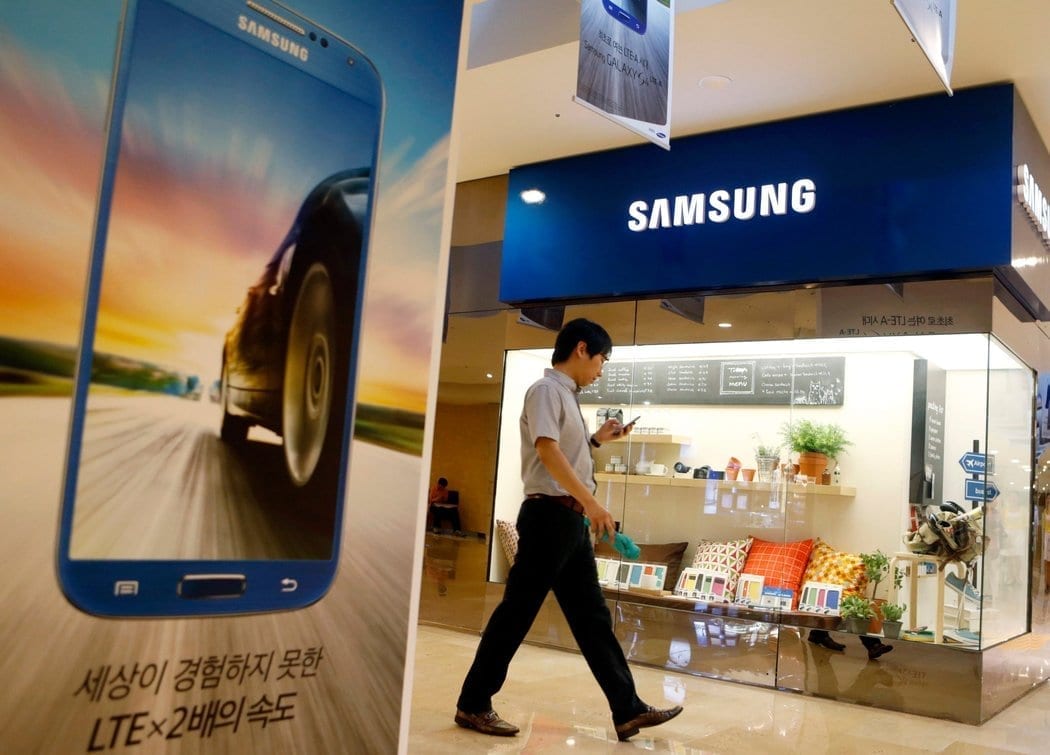
    The final quarter of the year should be more positive for the Tim Cook-led company, but it will be far from plain sailing. Apple is reportedly facing severe iPhone 12 delays and recent reports suggest the company has cut its orders for the second half of 2020 by 20%. Samsung is another company that has reportedly lowered its internal smartphone shipment forecasts for the year. The poor reception of the Galaxy S20 series is one of the main reasons for this outcome.

    The COVID-19 pandemic combined with significantly higher prices has led to significantly lower demand than predicted. The Galaxy S20 Ultra is understood to be performing slightly better than expected, but the smaller and cheaper Galaxy S20 & S20+ have missed sales targets.

    If the situation fails to improve, the Galaxy S20 series could become the worst-selling Galaxy S lineup in years or perhaps ever. That would massively impact revenue, profit, and valuable market share on a global scale. To make matters worse, the next-gen Galaxy Note 20 series will apparently resemble the Galaxy S20 lineup very closely. If true, Samsung may struggle to sell those flagships too.

    More worrying for Samsung is the fact that it is also losing market share in the crucial Indian market. The company was number one only a few years ago but dropped down into third place during the first quarter. That was before COVID-19 had heavily impacted the market, which means the second quarter could be particularly bad for the company.

  • Google launches app for the Pixel Buds

    Google launches app for the Pixel Buds

    Google announced that the long-awaited Google Pixel Buds are now available today from the Google Play Store. Unlike the first-generation version of the accessory, which was wireless but featured a cable connecting the left and right earbuds, the second-generation version has individual left and right earbuds. That makes the new Pixel Buds more in line with the Apple AirPods and the Samsung Galaxy Buds.

    One feature, Adaptive Sound, adjusts the volume of the Pixel Buds to compensate for new and louder sounds in the background and returns the volume to normal once that sound has ended. UX engineer Frank Li says that “It works kind of like auto-brightness on your phone screen: It momentarily adjusts to the world around you to make the experience of using your device a little simpler.” Basheer Tome, Senior Hardware Interface Designer says that “Adaptive Sound is perfect for those moments like when you’re steaming milk for a latte, or when you’re washing your hands or the dishes. Those noises can eclipse your audio experience for a bit, until the laundry or your dishes are done.”

    To improve the user experience, sensors inside Pixel Buds can detect when your jaw is moving which means that you are on a phone call (or chewing bubble gum). This helps the device know when you’re talking, and when combined with beamforming mics, it allows those using the Pixel Buds to hear the person on the other end of a phone call even when it is windy and noisy outside. And with so many people working from home, this is an important feature to have these days.

    Google Assistant can be activated on the new Pixel Buds by saying the “Hey Google” or “OK Google” hot word. The Assistant will control music streaming on the Pixel Buds and can also read your notifications. If you need to reply to a text, Google Assistant will do it for you; all you need to do is ask. And if you’re in a situation where a translator would be of some assistance, conversation mode provides translations in real-time. This is a big help when you’re on vacation or a business trip overseas.

    If you’re concerned about losing one or more of your Pixel Buds, Google has a way to find them as long as they are nearby and still paired to your phone. On the Pixel Buds app, you can elect to have the Pixel Buds ring. You can choose to ring one earbud at a time to help you find the missing one. The noise must be pretty loud because Google warns that if you have one or both Pixel Buds in your ear and choose to have the ring, it could lead to hearing damage. The ringing won’t stop until you touch the missing earbud.
    The Pixel Buds are now available today from the Google Store in Clearly White for $179 and will run for five hours on a single charge; with the carrying case, you can use them for up to 24 hours without running out of battery life. With an IPX4 rating, the accessory is protected from sweat and splashes.

    Google today launched a dedicated app in the Google Play Store for the Pixel Buds. The app allows users to toggle on or off certain settings including in-ear detection. The latter, when toggled on, will automatically play audio when the Pixel Buds are in the ear and pause it when the Pixel Buds are out of the ear. Other settings that can be customized in the app include controls for Google Assistant, Touch controls, and Adaptive Sound. The app also lists the battery level on each of the earbuds and the carrying case.

    The app can be installed on any device that is running Android 6.0 or higher and can be found in the Google Play Store.

  • Hong Kong govt hands out HK$1.5 billion support to retailers

    Hong Kong govt hands out HK$1.5 billion support to retailers

    More than HK$1.5 billion (US$193.5 million) in subsidies have been approved so far for eligible retailers under the Hong Kong government’s Retail Sector Subsidy Scheme.

    The scheme is the first round of the administration’s Anti-epidemic Fund, involving more than 19,000 applications. Roughly 93,000 applications were received within the three-week application period, and disbursement of subsidies to approved applicants commenced on April 9.

    “The government has been striving to speed up the implementation of the measures under the fund,” said chief secretary for administration and chairman of the Anti-epidemic Fund Steering Committee Matthew Cheung Kin-chung.

    “We were able to launch the RSSS within one month after the Legislative Council approved the setting up of the fund, providing timely relief to retailers hit by the epidemic.”

    The government’s Subsidy Scheme for Beauty Parlours, Massage Establishments, and Party Rooms are expected to be open for application early next month.

  • OCBC Fixes Date for Virtual AGM

    OCBC Fixes Date for Virtual AGM

    The bank will pay its final dividend of S$0.28 per share on June 5, after approval at the AGM. OCBC Bank will hold its annual general meeting on May 18 at 2 p.m. as a webcast or audio-only live stream, the bank said in a letter to shareholders.

    Shareholders attending the virtual AGM will not be able to vote online and can do so only by proxy, with the bank encouraging the submission of proxy forms by email, given delays with the postal service.

    The meeting was originally scheduled for 30 April, but had to be postponed following government measures that imposed stricter measures about gathering in public, given the Covid-19 virus outbreak.

    Singapore is currently under a partial lockdown until June 1, with members of the public only allowed to leave their homes to conduct essential activities.

    Singapore Exchange Regulation previously announced an automatic 60-day extension of the deadline for all issuers with financial year-end on or before 31 March 2020 to hold their AGMs, in light of government advisories amid the Covid-19 situation.

    OCBC is the second local bank to announce a virtual AGM after DBS, which rescheduled its meeting from March 31 to April 30.

  • Qualcomm reveals faster, more efficient Quick Charge 3+ technology for the masses

    Qualcomm reveals faster, more efficient Quick Charge 3+ technology for the masses

    Qualcomm has just announced a new version of its quick charging technology for smartphones. It’s called Qualcomm Quick Charge 3+ because it’s better than Quick Charge 3 technology but less advanced than Quick Charge 4+.

    While there haven’t any breakthroughs in the smartphone battery field, quick charging seems to thrive. As one would expect from such a technology, Quick Charge 3+ will be faster and more efficient than Quick Charge 3.0.

    According to Qualcomm, Quick Charge 3+ can bring a smartphone’s battery from 0% to 50% in just 15 minutes, 35% faster compared to the previous generation. More importantly, the new technology is backward compatible with older Quick Charge devices, while newer devices can work with Quick Charge 3+ accessories.

    Basically, Qualcomm is bringing the speed and efficiency of Quick Charge 4+ to cheaper smartphones. Some of you might already know that with Quick Charge 4+ technology, a compatible device can get up to 50% charge in 15 minutes, just like the new Quick Charge 3+.

    The catch is Quick Charge 3+ will be available on Qualcomm Snapdragon 765 and 765G chipsets, followed by other Snapdragon SoCs later this year. These processors are part of Qualcomm’s new mid-range tier, whereas Quick Charge 4+ is meant for flagships equipped high-end chipsets like the Snapdragon 845.

    For early adopters, the world’s first smartphone with both Quick Charge 4+ and Quick Charge 3+ charging technology is Xiaomi’s Mi 10 Lite Zoom.

  • Mitsukoshi eyes first quarterly loss in eight years

    Mitsukoshi eyes first quarterly loss in eight years

    Japanese department-store chain Isetan Mitsukoshi is likely to report its first loss over a single financial quarter in eight years, according to Asia Nikkei.

    Losses of ¥5–10 billion (US$46.6–93.2 million) are expected to reflect the impact of the coronavirus pandemic that has seen most Japanese consumers remaining at home during mall operating hours.

    The loss is a steep decline from the firm’s profits of ¥3.7 billion ($34.5 million) recorded during the same period last year.

    Isetan’s department stores were hit with a 7-per-cent drop in sales during January that ballooned to 16 percent in February, and 40 percent in March as Japan’s Covid-19 lockdown intensified.

    Prospects for the retailer remain unclear, as it is yet to be seen if and how rapidly customer behavior will return to normal following the pandemic. In preparation for an uncertain period, the firm has been stocking up on cash and is currently negotiating with banks for further financing.

    Isetan rival Seiyu has reported strong retail activity following the Japanese administration’s stay-at-home request as consumers sought to stock up on food and other daily necessities. The firm has offered a special bonus of up to ¥15,000 ($140) to store workers as it now faces a staffing shortage, and is seeking 3000 new hires.

  • Esprit closing all of its Asian stores before June 30

    Esprit closing all of its Asian stores before June 30

    Crippled apparel group Esprit is to close all its stores in Asia, except those in Mainland China, by the end of June.

    The decision follows an appalling slump in sales during the last nine months, which worsened during the March quarter when the Covid-19 crisis hit, forcing retail stores to close or reduce trading across many markets.

    All 56 company-run stores located in Singapore, Malaysia, Taiwan, Hong Kong and Macau will close, but the company says the sales through those shops represented less than 4 percent of group turnover during the nine months to March.

    However, the company will continue to operate wholesale and licensing businesses in those markets, suggesting the brand will endure, most likely through department stores and multi-brand stores.

    In the March quarter, Esprit sales in Asia were down by 52.2 percent – 61.3 percent in its stores and 54.9 percent at the wholesale level. Online sales, however, rose by 13.9 per cent. In contrast, sales across Europe fell by 22.2 percent, 36.2 per cent at retail level and 22.5 percent at wholesale. Online sales fell 7.1 percent while licensing and ‘other’ sales were down 16.7 percent.

    Globally, revenue fell 25 percent for the quarter and by 18.1 percent for the nine months to March.

    In the nine months to March, retail sales in Asia fell 44.2 percent, by 48.7 percent at the store level, 45.3 percent wholesale and 8.1 percent online.

    The company estimates closing its Asian stores will result in one-off costs for severance pay and to exit leases of between HK$150 million and $200 million (US$19 million to $26 million) which will be incurred in the current June quarter.

    On the mainland, Esprit reduced its China investment last December. Through a subsidiary called Million Success, it retained a 40-per-cent stake in the Esprit China business, with Hong Kong-based Mulsanne Group holding the balance.

    The Asia store decision comes just a month after Esprit placed its six German companies into a form of protective administration to allow restructuring and cull staff numbers under protection from creditors. Once it emerges from that process, and with its Asian business essentially all but gone, the company will focus on Europe with less staff and fewer stores, although whether the crippled, lackluster brand can survive at all up against the regional powerhouses of H&M and Zara parent Inditex is debatable.

    In a stock-exchange filing overnight, Esprit described the Asian store closures as part of a restructuring initiative “to focus resources and recalibrate operations in order to cope with the challenges posed by the pandemic most effectively and efficiently”. However, as the nine-month figures above clearly show, Esprit’s sales were in freefall in the region long before Covid-19 made its appearance.

    A key indicator of how dire the company’s position came in January when its most high-profile recent hire, chief product and brand officer Mia Ouakim, quit after just a year in the role. Ouakim, who had previously worked with high-end brands Burberry and Tommy Hilfiger, left to take up an opportunity outside the company.

  • StanChart Bad Loan Momentum Continues

    StanChart Bad Loan Momentum Continues

    Standard Chartered could face up to $600 million in bad loans after major borrowers faced a series of reported predicaments.

    Exposure to UAE healthcare chain NMC Health – currently restructuring $6.6 billion of debt – has further hit Standard Chartered’s balance sheet, according to public filings. The bank also faces defaults from state-owned Land and Agricultural Development Bank of South Africa.

    When combined with the $240 million lent to disgraced oil trader Hin Leong, the troubled loans total more than $500 million for Standard Chartered.

    Loan loss provisions will continue dominating headlines for bank earnings in the first quarter and Standard Chartered is not alone in facing balance sheet headwinds.

    The Hin Leong debacle features some 23 banks that have lent a total of nearly $4 billion including $600 million from HSBC, the largest creditor. According to an affidavit, the group of lenders may only get back 18 cents on the dollar. Bad loans at Abu Dhabi-based NMC Health will also hit HSBC and Barclays.

  • Vietnam Airlines to operate two direct flights to US amid pandemic chaos

    Vietnam Airlines to operate two direct flights to US amid pandemic chaos

    Vietnam Airlines will operate two commercial flights from Hanoi to the U.S. in May, exclusively for U.S. nationals.

    One would leave at 9:45 a.m. on May 2 and arrive in San Francisco at 10:00 a.m. local time, and the other will depart from Hanoi at 6:20 a.m. on May 10 and land in Washington, D.C., at 1:00 p.m. local time, the U.S. embassy announced.

    The fare would depend on the number of passengers and could be higher than a normal one-way ticket, it said, calling for citizens who need departure assistance to register with the embassy by Tuesday afternoon.

    Vietnam has suspended all international flights as a containment measure against Covid-19 and thousands of foreigners are stuck in the country.

    Some special flights have been operated in recent weeks to repatriate Europeans and citizens of several Southeast Asian countries.

    The U.S. Federal Aviation Administration issued a Category 1 rating to the Civil Aviation Authority of Vietnam under its International Aviation Safety Assessment program in 2019, meaning it met safety standards to operate flights to the U.S.

    Vietnam has emerged as a favorite travel destination for Americans.

    The United States Tour Operators Association had said Vietnam was one of the hottest destinations for U.S. travelers in 2019, with 746,171 of them visiting, an increase of 10.8 percent from 2018.

  • Honda and Yamaha Prepare To Resume Operations In India

    Honda and Yamaha Prepare To Resume Operations In India

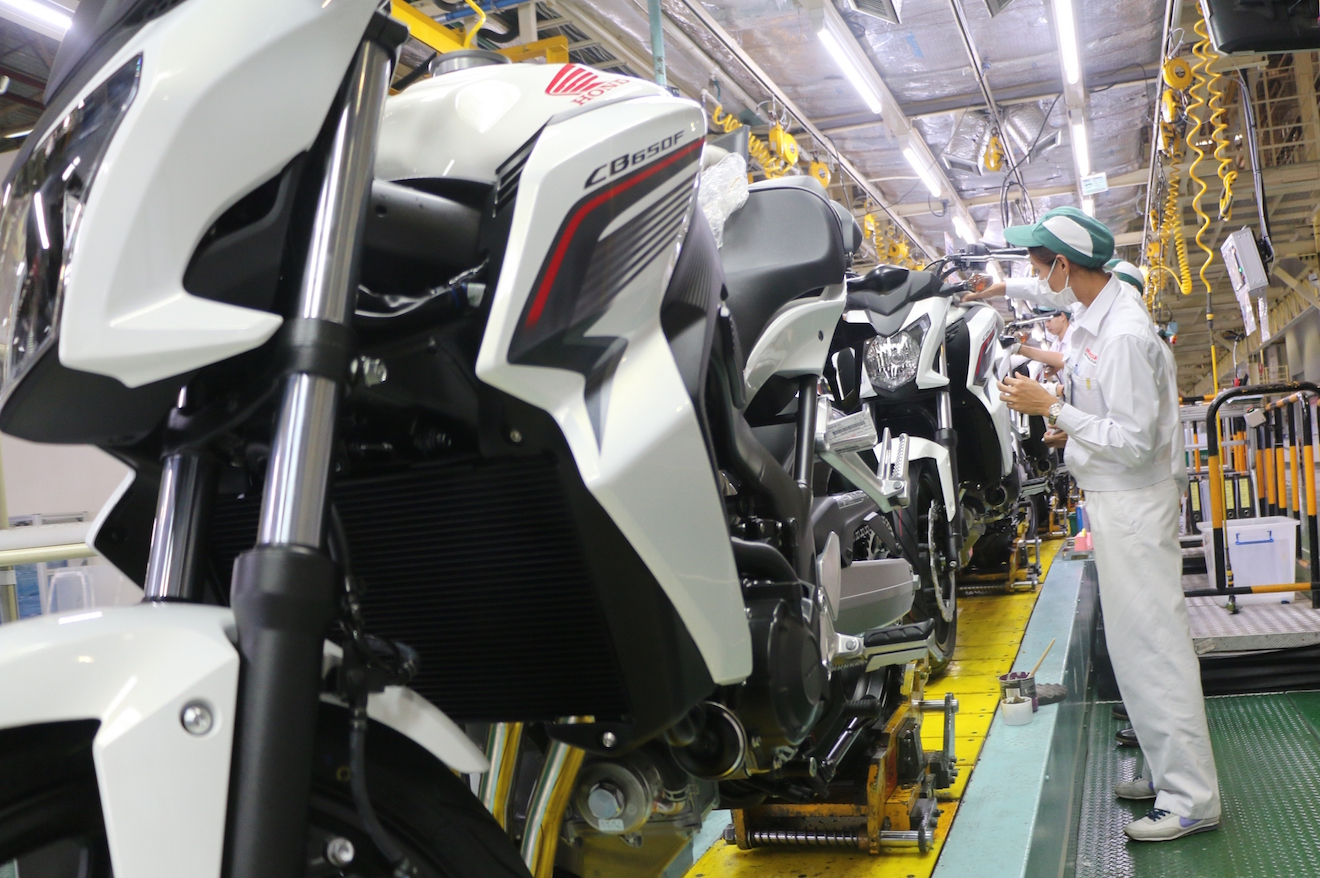
    Honda Motorcycle and Scooter India (HMSI) and India Yamaha Motor are keen to resume manufacturing operations at their respective plants after the lockdown is lifted. India has been under a complete lockdown since March 24, 2020 due to the coronavirus outbreak which has crippled industry around the world. India’s automakers, including two-wheeler manufacturers in the world’s largest two-wheeler market, have been suffering heavy losses during this time, with plants and dealerships shut down across the country as India tries to prevent the highly contagious COVID-19 virus from spreading further.

    According to reports, HMSI has already sought permission to open its plants, and Yamaha is keen to start production in compliance with new protocols laid down by the government. However, both India Yamaha and HMSI will likely take some time to kickstart operations with many component suppliers also shut in the current lockdown. At the same time, it may take some time for workers to return from their native places, without public transport, including railways, in-land and air travel being resumed. While May 3, 2020 is till when the lockdown will be in force, it is generally expected that the countrywide lockdown will be extended, with some specific relaxations with guidelines announced in the next few weeks for a few sectors, including manufacturing.

    HMSI has four manufacturing plants at Manesar in Haryana, Tapukara in Rajasthan, Narsapura in Karnataka, and Vithalapur in Gujarat, with a total installed production capacity of 64 lakh units per annum. India Yamaha has three manufacturing plants at Faridabad in Haryana, Surajpur, in Uttar Pradesh, and Kanchipuram in Tamil Nadu.

  • Yue Yuen predicts $70 million loss for March quarter

    Yue Yuen predicts $70 million loss for March quarter

    Chinese sports-shoe manufacturer and retail conglomerate Yue Yuen Industrial is predicting a loss of up to US$70 million in the March quarter as a result of the Covid-19 crisis – a big turnaround from a $75 million profit in the same quarter a year earlier.

    In a profit warning filed with the Hong Kong Stock Exchange, chairman Lu Chin Chu said the pandemic significantly impacted the operations of various business segments of the company.

    Yue Yuen makes shoes for a raft of brands, including Geox, Levi’s, Rockport, Carters and Pony. Its subsidiary Pou Sheng operates a network of some 5500 directly operated stores and 3000+ sub-distributor stores, predominantly in Mainland China.

    The company was hit on both fronts: shipment delays of shoes led to manufacturing revenue falling by 9.6 percent year on year to US$1.26 billion and the closure of Pou Sheng’s stores across Mainland China meant retail revenues plunged as well. Pou Sheng recorded a net loss of about RMB167 million (US$23.6 million) for the quarter.

    At Yue Yuen, the decrease in revenue was “mostly due to shipment delays amid lower operating efficiency at some of the group’s manufacturing facilities in China and other countries resulting from the Covid-19 pandemic,” Chu said in a stock-exchange filing.

    “The pandemic delayed work resumption at the group’s factories in China after the Lunar New Year; it also adversely impacted its supply chain, resulting in a shortage of certain raw materials. This also led to additional production capacity adjustments in China and other countries.”

    As of this week, however, almost all of the group’s factories in China and more than 98 percent of stores run by Pou Sheng had resumed operations.

    “However, the spread of Covid-19 to US and Europe had severely dampened global consumer demand for athletic footwear, the chain effect of which is negatively affecting both footwear manufacturers and sports retailers,” said Chu.

    “In addition, government lockdowns and other social-distancing measures being imposed in various Southeast Asian countries to contain the Covid-19 pandemic is expected to further hinder the operating efficiency of the group’s manufacturing facilities in this region. This, together with uncertainty about demand, may result in temporary factory closures and further adjustments to the group’s production capacity.”

    Yue Yuen says the figures it has released are based on a preliminary assessment of accounts, with finalized figures for the quarter will be released on May 14.

  • China retail ‘after Covit-19’ in store innovation says 7Fresh head

    China retail ‘after Covit-19’ in store innovation says 7Fresh head

    China’s retail industry remains behind the curve in-store innovation, which stands as a hurdle to the Chinese market’s inevitable dominance in global retail.

    The observation was among several key insights shared by 7Fresh head Jonathan Wang in a recent interview circulated by JD, which owns the 7Fresh omnichannel fresh-food supermarket business.

    “The key factors driving global retail transformation are quite simple: channel reformation, store format innovation and supply chain management,” said Wang. “China is already leading the global retail industry in channel reformation and digitizing the supply chain, but is still lagging behind the leading players, such as the US and Japan in terms of store innovation.”

    Wang noted that the scale of China’s e-commerce sector currently exceeds that of the US, UK and Japan combined. Despite this lead, China’s traditional offline retailers receive less than 5 percent of their revenues from online channels.

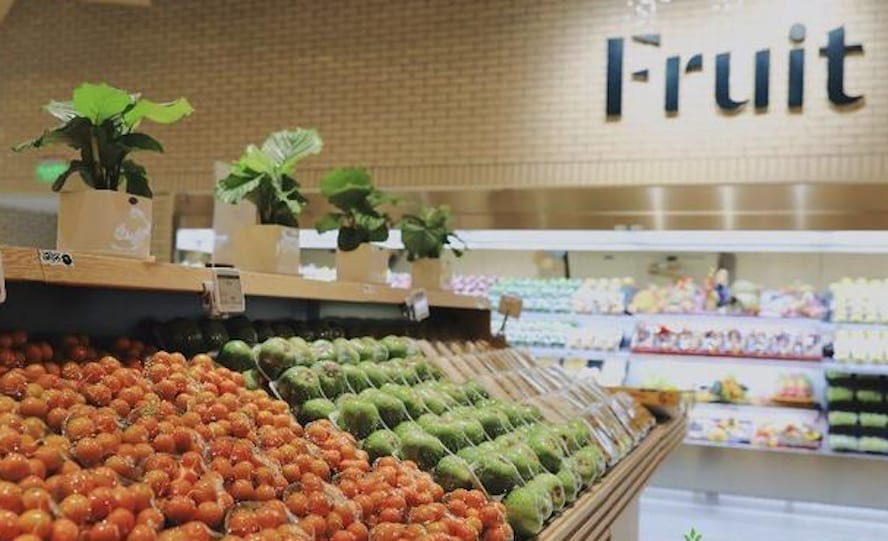
    “In China, some omnichannel supermarkets are far more advanced than those of leading Western supermarkets,” said Wang. “Many Chinese shoppers today are accustomed to ordering online and getting live and fresh seafood, fruits and vegetables, and other produce delivered to their doorsteps within 30 minutes. This is still far from the norm in most major US cities.

    “At 7Fresh supermarkets, online orders typically account for 40 percent to 45 percent while the proportion reached nearly 70 percent in February when Covid-19 was peaking in China. The company’s advanced supply chain technology was clearly the lynchpin to provide the superior omnichannel retail experience.”

    While China’s online business has proven its strength in navigating emerging opportunities, offline retail remains rooted in its store formats. At the same time, the Chinese middle class is growing, along with its desire to spend an increasing disposable income on quality items – exhibiting what is perhaps China’s most rapidly evolving set of consumer habits, tastes, expectations, and buying patterns in recent history.

    “It may be that the retail industry used to be relatively low-key, but since the industry has drawn much greater attention nowadays, people started to become aware of the ‘sexy’ aspect of retail,” said Wang.

    “Most of 7Fresh’s systems are designed as SaaS systems so that they can be adapted easily and quickly. Thanks to digitization, JD’s 7Fresh supermarket was able to break even within one year and a half. Its sales efficiency is three times that of a regular supermarket. Establishing 7Fresh is about exploring retail’s best practices, and we wish to share this excellence with the industry to make a positive impact and improve its capacity overall.”

  • AirAsia won’t be missed, says ex-aviation chief

    AirAsia won’t be missed, says ex-aviation chief

    Low-cost air travel will remain largely unaffected if AirAsia were to cease operations because of lost revenue caused by the Covid-19 pandemic, says an aviation expert.

    Malaysia’s former head of civil aviation, Azharuddin Abdul Rahman, said the impact on air travel and tourism would only be felt initially. Low-cost air travel would soar again after other airlines take up AirAsia’s flight slots. Aviation specialist and researcher Roger Teoh agrees, saying new airlines would be created to take the place of insolvent airlines in a survival of the fittest. Azaruddin said AirAsia’s flight slots would be a precious aviation commodity. The carrier had hundreds of slots every day.

    He could not imagine AirAsia closing shop after the airline had “changed the landscape of air travel, not only in this region but in Asia Pacific as well”. Azharuddin said there was a place for both low-cost carriers like AirAsia and legacy full-service carriers such as Malaysia Airlines.

    The two airlines have been at the center of recent speculation about a merger, with Malaysia Airlines suffering the impact of its long-standing financial problems.

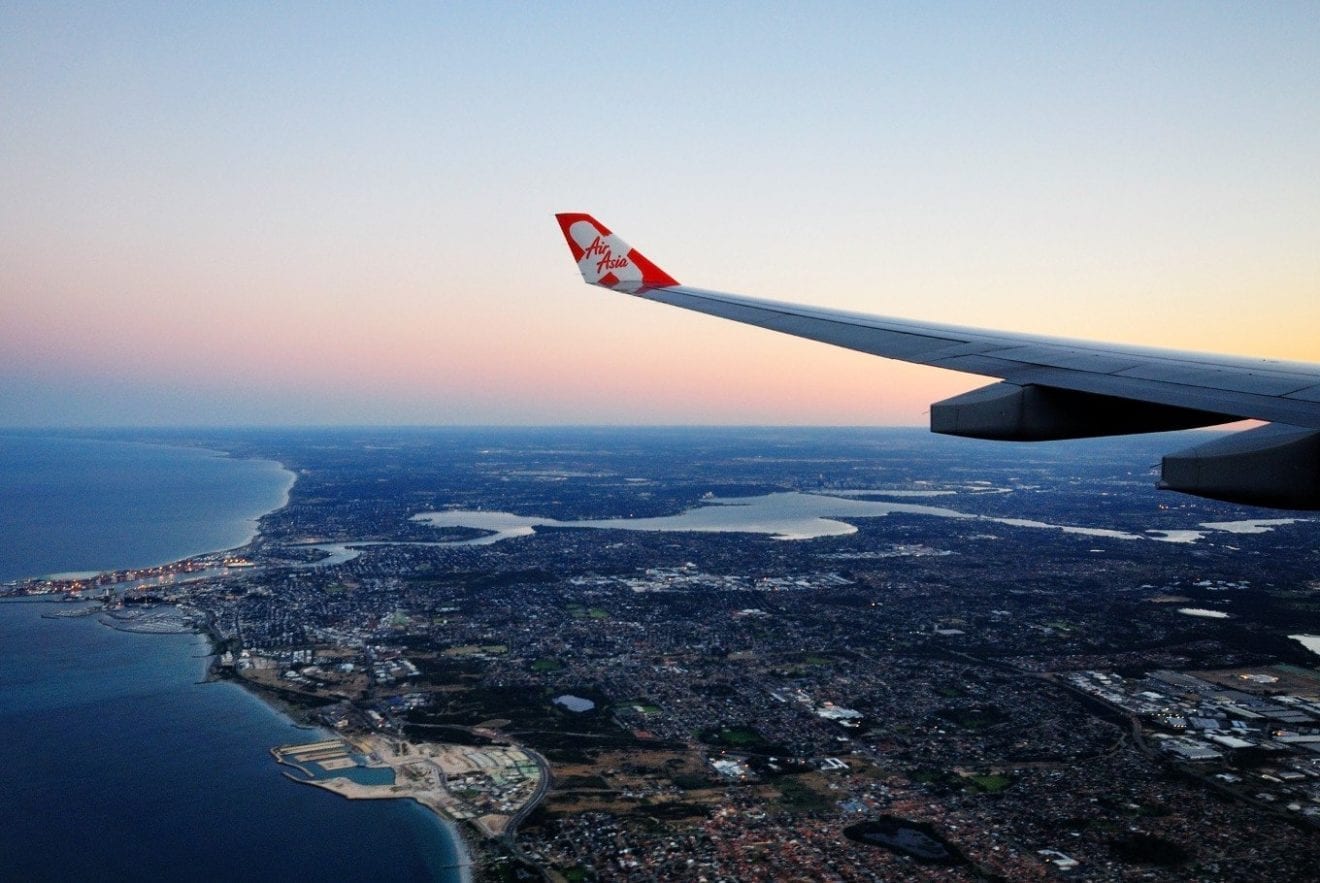
    AirAsia recently announced that 96% of its 255-strong fleet had been grounded because of the Covid-19 pandemic. Its staff has been required to take pay cuts of between 15% and 75%, and aircraft manufacturer Airbus recently announced it would sell six aircraft on order by AirAsia.

    Azharuddin said the two airlines should form a partnership but remain as separate entities in order to stay competitive.

    The partnership could capitalize on the large 600 million population of Southeast Asia, with the Asia Pacific area as another catchment area, he said.

    Azharuddin said a MAS-AirAsia partnership could compete with Singapore Airlines (SIA).

    SIA recently merged with its low-cost spinoff airline SilkAir in February, before the height of the pandemic.

    ‘Root of AirAsia’s problems’

    Teoh, a researcher with Imperial College London specializing in aviation, said a merger between AirAsia and MAS would raise airfares over the long term from lack of competition.

    He said while it was not certain if AirAsia would cease operations, any potential exit of low-cost carriers would only affect the tourism industry temporarily.

    New airlines would be created to take the place of insolvent airlines, in a “survival of the fittest” with potential consolidation among existing airlines.

    Teoh said AirAsia management decisions were partly to blame for the airline’s problems. A sale and leaseback policy (in which aircraft was sold and leased back from the buyer) had resulted in higher operating expenses.

    He claimed that since this model was adopted in 2019, “AirAsia has not made an annualized profit”.

    RM5 billion raised from the sale of aircraft was then redistributed to shareholders as special dividends from December 2018 to August 2019, a move which cost AirAsia’s long-term financial health and resilience.

    Hedging on fuel prices at the end of 2019 had caused the airline to lock in its fuel costs, Teoh added.

    “They are not able to benefit from the cheap oil prices that we see today,” he said.

    “This is expected to result in a very large derivative loss in their coming financial statement.”

  • Apple Music app arrives on Samsung Smart TVs, owners get free subscriptions

    Apple Music app arrives on Samsung Smart TVs, owners get free subscriptions

    Samsung has just announced that its Smart TVs are now compatible with Apple’s Music app. If you own a Samsung Smart TV launched in the last two years, you’ll be able to download and install the new Apple Music app, but you’ll need a subscription to use it.

    The Apple Music app can be found in the Samsung Smart TV App Store and requires users to sign in to an existing account with their Apple ID. Those who don’t have an Apple Music subscription can apply for one directly from their TV. More importantly, all Samsung Smart TV owners can try Apple Music for free for 3 months. The deal applies to individual, family and student subscriptions.

    Apple Music subscribers will get access to Beats 1 radio station, a global live stream with exclusive shows by popular artists like Nicki Minaj, The Weeknd, DJ Khaled, and Elton John, as well as “At Home With Apple Music” content that offers editorial playlists, group FaceTime chats with artists and more.

    Keep in mind that besides the option to stream over 60 million songs ad-free, Apple Music subscribers can also watch original shows, trending concerts, as well as other exclusive content directly on their Samsung Smart TVs.