Tag: asia

  • Luxury CBD store opens in Manhattan

    Luxury CBD store opens in Manhattan

    A new luxury CBD store in the heart of New York City speaks volumes about where the fast-growing industry is headed as regulations are relaxed around the world.

    The 420: An Entertainment Hospitality Company has launched its first CBD-focused retail concept in Manhattan’s luxury shopping district, Soho.

    The 420: A CBD Store features a collection of premium, hand-selected products from top CBD and emerging luxury brands against a backdrop of bespoke art installations.

    “Over the next several years, our company will be taking a big stake in large-scale, cannabis-related hospitality entertainment across marquee locations throughout the world,” said The 420: An Entertainment Hospitality Company founder and CEO Robert Frey.

    “We believe CBD retail is the best place to begin to elevate the consumer experience. The space is ready for a new dimension of immersive luxury retail. We aim to provide the consumer with both established and undiscovered brands plus education through high quality seminars.”

    According to cofounder Eddie Miller, plans are already underway for six additional New York locations.

    The interior of the luxury CBD store features mid-century modern furniture, antiques and modern custom designed fixtures as well as a collection of finds acquired throughout New York City.

  • Xiaomi wants to dominate the smartphone market

    Xiaomi wants to dominate the smartphone market

    International markets are becoming increasingly more important to Xiaomi. And in an interview with Sina Tech, the CEO of Xiaomi’s sub-brand Redmi, Lu Weibing, did nothing to hide this fact and openly detailed the company’s plans for global domination.

    Over in India, as Weibing pointed out, Xiaomi and Redmi combined have led the smartphone market for the past seven quarters. They now apparently hold a 10% lead over second place Samsung, but through further investments, Xiaomi wants to take things to a whole new level by achieving a 50% market share.

    The Chinese company and its sub-brand currently account for 29% of Indian shipments, so the goal is certainly an optimistic one. It isn’t impossible, though. After all, seven of the top 10 best-selling smartphones in India recently were made by Xiaomi. Also, just a few weeks ago it was announced that over 2 million Redmi Note 7 units had been shipped in just two months.

    Outside of Asia, Xiaomi and Redmi are also hoping to continue their expansion this year. In Europe, the company is a distant fourth behind Samsung, Apple, and Huawei, but through further Redmi investments it hopes to gradually close the gap. Also, in the hope of increasing shipments globally, 2019 will see Redmi launch in Latin America alongside East African, Central African, and West African markets. The company plans to continue its focus on e-commerce and value for money, meaning there will be no push for large profit margins.

  • Gmail Smart Compose feature rolling out to G Suite users

    Gmail Smart Compose feature rolling out to G Suite users

    One year after it revealed the Smart Compose feature for Gmail, Google is finally making it available to G Suite users. Since most of you have been probably using the feature for a few months now, you already know that it’s been pushed out to consumer accounts first.

    If you haven’t yet used Smart Compose, then you’ll want to know that the new feature is meant to intelligently autocomplete emails that you write, on both Android and iOS devices. According to Google, Smart Compose is being deployed to iOS users over the next two weeks, while Android users will be getting the new feature immediately.

    It’s also worth mentioning that Smart Compose will be enabled by default for all G Suite users, but you will be able to turn it off if you don’t like it by heading to Gmail’s general settings and disabling the Writing suggestions option from Smart Compose.

    If you didn’t know, Smart Compose supports a handful of languages, such as English, Spanish, French, Italian, and Portuguese, so there’s really a large pool of Gmail users that will benefit from the new feature.

  • Singapore’s Funan mall Opening Date Revealed

    Singapore’s Funan mall Opening Date Revealed

    Funan mall is set to open its doors on June 28 – ahead of schedule after a three-year redevelopment.

    Located in the heart of Singapore’s Civic District, the mall will host more than 180 brands under six themes: tech, craft, play, fit, chic and taste. One in three of the stores will be new-to-market brands, new concept stores or flagships.

    “Shaped by its unique location in a new-gen live-work-play hub, Funan brings together experiential and activity-based retail at a scale not seen before in Singapore’s Civic District, while providing a collaborative platform for retailers to share their brand stories,” said Chris Chong, MD, retail, at CapitaLand Singapore.

    “With a dedicated community manager, Funan goes beyond a singular focus on achieving a certain retail mix to curate community experiences that consumers are passionate about, as it seeks to build social connections and networks beyond the transactional.”

    Experiential and activity-based retail takes centrestage at Funan – Climb Central will operate the highest climbing facility in the Civic District, extending from the base of the Tree of Life at Basement 2 to Level 1.

    “To date, Funan has achieved about 92 per cent in commitment for its retail leasing and we expect more leases to be signed in the coming months,” said Tony Tan, CEO of CapitaLand Mall Trust Management Limited.

    “The robust demand for Funan’s retail space comes on the back of a strong pre-leasing commitment of 98 per cent for its twin office blocks. With a clear focus on offering differentiated experiences and connections that are not replicable online, Funan aims to anchor and grow its own community of followers who will keep returning. This innovative approach in curating a mall will augur well in creating sustained value for our unitholders over the long term,” said Tan.

    New-to-market brands

    Tech company Dyson will unveil its first standalone store in Singapore at Funan. The beauty-only concept store will be dedicated to its Dyson Supersonic hair dryer and recently-launched Dyson Airwrap styler.

    British folding-bikes maker Brompton Junction will open its first Southeast Asian flagship store, and launch a Lion City special edition bike.

    Golden Village’s seven-screen multiplex in Funan will feature two new seating concepts – Deluxe Plus and Gold Class Express – along with virtual reality pods in its foyer, showcasing popular games and cinematic content for customers.

    FairPrice Finest will introduce a digital shopping experience at Funan, allowing customers to shop and pay through their phones.

    Kopitiam will launch its latest concept KopItech, where patrons can place their orders via one of 17 self-service kiosks or through Facebook’s messaging app.

    Singapore’s True Group will open a flagship TFX fitness centre in Funan, True’s first fitness centre in Singapore with a swimming pool and outdoor deck.

    Other retailers will make their return to Funan, including tech retailer AddOn Systems which will operate Singapore’s Lenovo Flagship Store, and GamePro Shop, which will organise esports tournaments.

    Courts is opening its first uniquely IoT store, featuring simulated smart home concepts where consumers can visualise their dream home fully connected.

    Local eateries Ya Kun Kaya Toast, Qi Ji and Old Chang Kee will also return, with Qi Ji marking its 16th outlet islandwide since its first stall in Funan Centre back in the 1990s.

    Local labels

    More than half of Funan’s tenants are homegrown brands, both established and emerging.  These include artisan jeweller Carrie K’s first standalone boutique and fashion label Love, Bonito’s largest outlet in Singapore. Footwear brand Another Sole will also launch its first menswear collection there.

    Native online brands opening their first brick-and-mortar outlets include fashion retailer All Would Envy and creative confectionery brand Nasty Cookie.

    Specialty coffee roaster Papa Palheta, the group behind Chye Seng Huat Hardware, will be launching Singapore’s first employee-owned cafe, PPP Coffee and Sinpopo will open its first coffee concept in Funan. Designer store Grafunkt will include an in-store bistro.

    At an urban farm on Level 7 operated by Edible Garden City, farmers will work with chefs to curate, grow and harvest pesticide-free produce, supplying the produce straight to restaurants in the building.

    Located in the heart of Singapore’s Civic District, the mall will host more than 180 brands under six themes: tech, craft, play, fit, chic and taste. One in three of the stores will be new-to-market brands, new concept stores or flagships.

    “Shaped by its unique location in a new-gen live-work-play hub, Funan brings together experiential and activity-based retail at a scale not seen before in Singapore’s Civic District, while providing a collaborative platform for retailers to share their brand stories,” said Chris Chong, MD, retail, at CapitaLand Singapore.

    “With a dedicated community manager, Funan goes beyond a singular focus on achieving a certain retail mix to curate community experiences that consumers are passionate about, as it seeks to build social connections and networks beyond the transactional.”

    Experiential and activity-based retail takes centrestage at Funan – Climb Central will operate the highest climbing facility in the Civic District, extending from the base of the Tree of Life at Basement 2 to Level 1.

    “To date, Funan has achieved about 92 per cent in commitment for its retail leasing and we expect more leases to be signed in the coming months,” said Tony Tan, CEO of CapitaLand Mall Trust Management Limited.

    “The robust demand for Funan’s retail space comes on the back of a strong pre-leasing commitment of 98 per cent for its twin office blocks. With a clear focus on offering differentiated experiences and connections that are not replicable online, Funan aims to anchor and grow its own community of followers who will keep returning. This innovative approach in curating a mall will augur well in creating sustained value for our unitholders over the long term,” said Tan.

  • BSH opens Asia’s first UnserHaus

    BSH opens Asia’s first UnserHaus

    BSH Home Appliances has opened Singapore’s first UnserHaus Customer Care Centre and a UnserHaus Experience Centre.

    Meaning “our house” in German, the UnserHaus centre is a lifestyle concept featuring Bosch and Gaggenau appliances in a home-like environment.

    “UnserHaus is an exciting new proposition that gives BSH’s home appliance brands, business partners and collaborators a chance to flourish,” said Hendrik Kretzer, CEO and head of BSH Home Appliances Asia Pacific Region.

    “Our philosophy and core ethos are focused on building long lasting trust with all of our customers and partners. We provide a platform to learn and experience unique ideas, future thinking, and real passion and understanding of the products that could benefit the way we live.”

    Located next to the Bosch building, the 1350sqft UnserHaus Customer Care Centre resembles a modern-day home, with a repair room that allows customers to watch technicians through a glass divide.

    While waiting for their appliances to be repaired, customers can visit either the dining room, which provides a hands-on experience with built-in appliances like dishwashers, coffee machines and ovens; or the living room, where they can sit down, unwind and relax with music or a wide-screen television. There is a children’s playing space as well.

    All products at UnserHaus come tagged with a QR code that allows visitors to purchase and pay for them online.

    UnserHaus Experience Centre

    Previously known as the Bosch Experience Centre, the UnserHaus Experience Centre is a functional open-concept home that allows customers to experience the latest Bosch and Gaggenau appliances.

    Located in the Bosch Building, the centre is divided into adjacent Bosch and Gaggenau brand zones. Visitors can try and choose Bosch- or Gaggenau-themed kitchens for their own kitchen planning. Hands-on experiences are available for appliances from six product categories: laundry, dishcare, cooking and baking, refrigeration, food preparation and indoor cleaning.

    Customers can also join cooking classes, held with partner chefs in live kitchens.

  • Grocery e-commerce startup Kurly raises Millions

    Grocery e-commerce startup Kurly raises Millions

    Korean grocery delivery service Kurly has closed an upsized Series D round that hit US$113 million.

    The round was announced last April at $88 million, but has since attracted an additional $25 million funding from China’s Hillhouse Capital.

    Kurly delivers all orders placed by 11 pm before 7 am the following morning, prioritising convenience over cost savings and focusing closely on self-branded produce and groceries. This distinguishes its service from competing retail giant Coupang’s moves in the sector, which uses a marketplace platform to connect retailers and consumers.

    “The latest round of investment is a major endorsement of the progress we’ve made differentiating ourselves in the market through our cold-chain fulfillment infrastructure and unique offering of premium, curated products,” said company founder Sophie Kim. “Our focus is on further strengthening our relationships with our suppliers, developing our fulfillment infrastructure and continually improving our customer experience.”

    Kurly’s revenue tripled year-on-year to hit $131 million last year, although the firm did not release its profit-and-loss figures.

    Hillhouse Capital has offices in Hong Kong, Beijing, Singapore and New York. It focuses on investments in Asia.

  • Thailand’s Siam Piwat scoops honours at the World Retail Congress

    Thailand’s Siam Piwat scoops honours at the World Retail Congress

    Thai shopping centre operator receives accolades at World Retail Congress.

    Thai retail developer Siam Piwat has scooped two retail industry awards at the World Retail Congress recently held in Amsterdam, The Netherlands.

    Siam Piwat is the owner and operator of several successful Thai retail developments, including Siam Paragon, Siam Center, and Siam Discovery, as well as the joint venture partner of IconSiam – the US$1.7 billion riverside landmark destination that opened in Bangkok last November.

    Siam Piwat Group CEO Chadatip Chutrakul was inducted into the World Retail Hall of Fame by the World Retail Congress as one of the four new members selected in 2019.

    The inductees were selected because their “ideas have shaped retailing through the businesses and brands they have created, or by their skills in running the retail industry’s giants, demonstrated clear vision, courage and determination to make their dreams a reality”.

    The World Retail Hall of Fame was established in 2007 to honour the retail industry’s most innovative and influential representatives.

    The World Retail Congress also awarded IconSiam, in which Siam Piwat Group is a joint venture partner, the top prize of Store Design of the Year 2019 as part of the annual World Retail Awards.

    The Grand Jury of the World Retail Awards said IconSiam is “breathtaking in its scope and scale and takes retail design into the future”.

    “Throughout 60 years, Siam Piwat has been a thought leader creating new prototypes and bringing new formats that have advanced the retail development sector in Thailand,” said Chutrakul. IconSiam shows that bricks and mortar still have a crucial part to play in successful retailing, and they are assets only waiting to be differently leveraged within a new paradigm. That new paradigm involves leveraging a very wide group of stakeholders by creating shared value for them all.”

    According to Chutrakul, IconSiam, with a gross floor area of 750,000sqm made the creation of shared value into a “business sustainability” strategy to help the success of such a large-scale initiative that requires the collaboration of many different groups.

    “Our achievements were made possible because of the collaboration and co-creation of our tenants and retailers,” she said. “The benefits created by IconSiam also go beyond our tenant partners to many different stakeholders at many different levels of society including artists, craftsmen, performers, small enterprises, the surrounding communities and even the city of Bangkok, too.

    “For small businesses and artisans, we help them flourish and prosper by creating for them opportunities for new linkages, locally and globally; we help artisans, craftsmen or performers have a place on a globally visible stage to enhance the sustainability of their livelihoods, and we act as a platform that makes Thai values and all that is great about Thailand visible to the world.

    “Also, in the SookSiam zone at IconSiam, you can see how it brings together hundreds of small, mom-and-pop operations from Thailand’s 77 provinces – people who have mostly never operated out of their hometowns but are now selling on a global platform.”

    Chutrakul noted that “IconSiam has also had a transformative effect on the Chao Phraya River. We acted as a catalyst for a multi-stakeholder collaboration that embraced riverside communities, hoteliers, river-transport operators, sites of historical and cultural importance, and government agencies, which is already helping to revitalise many districts around IconSiam.”

  • Foodstuffs to open self-checkout-only store

    Foodstuffs to open self-checkout-only store

    Foodstuffs is opening a self-checkout-only grocery store called Pams Pantry – an extension of its Pams private label range.

    The store, which will open in Amberley, North Canterbury, in July will primarily stock Foodstuffs’ Pams, Pams Finest and Value private labels.

    According to Foodstuffs South Island general manager of retail Tim Donaldson, the store will offer ease, convenience and great value to customers.

    “There’s something else new. The store will be 100 per cent self-checkout, freeing up our team members to help customers get what they want, how they want it,” Donaldson said in a statement.

    “There will still be an opportunity to catch up on local gossip and news with our people, but these customers who love the ability to get in and out quickly with no fuss will enjoy the ease of self-checkout.”

    The concept store is serving as a trial, and if things go well, it will lead to a broader rollout into other parts of New Zealand.

    Donaldson said he has long had this project in mind, and is looking forward to seeing how customers respond to the self-service experience.

    “When the opportunity came up to revisit one of our Four Square stores, we wanted to do something very different for customers,” Donaldson said.

    “Aside from the fact we get to celebrate one of New Zealand’s most iconic grocery brands, Pams, we also have the chance to create a new, one-of-a-kind shopping experience for our customers in Amberley.”

  • Qualcomm might be able to continue its anticompetitive chip selling policies

    Qualcomm might be able to continue its anticompetitive chip selling policies

    Last month, Judge Lucy Koh finally issued a ruling in a case that could force Qualcomm to change the way it does business. The case, known as the FTC (Federal Trade Commission) v. Qualcomm was originally heard during a ten-day period at the beginning of this year. With no jury seated, the FTC essentially put Qualcomm’s business practices on trial in front of the judge. Qualcomm’s “no license, no chips” policy, the collection of royalties based on the retail price of a phone, and its refusal to license its standard-essential patents were some of the company’s anticompetitive behaviors that were brought up by the FTC.

    Qualcomm has asked for a stay of the ruling so that it can appeal it, although Judge Koh has yet to make a decision on the request. The chip maker points out that if it starts renegotiating contracts as ordered by Judge Koh and then wins on appeal, it might not be able to reverse these deals once again. And Reuters reports that an FTC official thinks that Qualcomm has a good chance at overturning the ruling. FTC Commissioner Christine Wilson, appointed by President Donald Trump, wrote in the Wall Street Journal last week that the ruling against Qualcomm “radically expanded a company’s legal obligation to help its competitors,” and was based on a flawed 1985 Supreme Court decision (more on that later).

    Wilson’s op-ed might give Qualcomm an idea on how to win an appeal of Koh’s decision, according to several antitrust attorneys. Others believe that the appeals courts will find it hard to overturn Koh’s ruling, which some say was based on the judge’s strong fact-finding abilities and her determination about the credibility of those who testified before her.

    The aforementioned 1985 Supreme Court decision ruled that a company that drops a business arrangement that has proven profitable over time could be guilty of violating competition law. How does this relate to Qualcomm? The company once licensed its standard-essential patents to rival chip firms. These are patents that manufacturers need to license to make sure that their products are in compliance with technical standards. As a result, they must be offered to rivals on a fair, reasonable and non-discriminatory (FRAND) basis. In the early 2000s, Qualcomm stopped offering these patents to other chip makers and only licensed them to smartphone manufacturers.

    During the trial, the company denied that it had ever offered full licenses to other chip makers and says that if forced into doing so by Koh’s decision, it would be a new business arrangement, not the resumption of an old one. And that dovetails with Wilson’s op-ed in the Journal in which she wrote that Koh’s decision means that if a company sells a product to a competitor, it would have to sell every product it makes to every competitor or else be charged with violating antitrust law. The FTC commissioner also said that Judge Koh misapplied the 1985 Supreme Court decision.  University of Southern California law professor Jonathan Barnett agrees with Wilson and says that the Supreme Court ruling was supposed to be “very narrow.” He says that there is a good chance that Qualcomm will be able to reverse Judge Koh’s ruling.

    Many investors are hoping the same thing. On April 15th, the day before Qualcomm and Apple reached a settlement on their legal issues, Qualcomm’s shares closed at $57.18. Following news of the settlement, the stock soared peaking on May 1st at $89.29. The day before Judge Koh released her decision, Qualcomm’s shares had already declined to $77.75. Following the ruling, the stock dropped to $65.37. The company’s shares closed last week at $66.82.

  • AirAsia Philippines adds flights to Taiwan in August

    AirAsia Philippines adds flights to Taiwan in August

    Air Asia Philippines will start adding new routes to link the Philippines with southern Taiwan by August. The low-cost carrier said in a statement it will open flights from Clark and Cebu to Kaohsiung, Taiwan by Aug. 1, making it the first local airline to offer direct flights between the cities.

    “The Philippines continues to be one of the top holiday destinations for Taiwanese. As the only Philippine airline to connect Cebu and Clark directly to Kaohsiung, we are pleased to be able to contribute to Philippine tourism and bring Cebuanos and Kapampangans closer to southern Taiwan as well,” AirAsia Philippines President and Chief Executive Officer Dexter M. Comendador was quoted as saying.

    AirAsia will have thrice weekly flights for both the Clark-Kaohsiung route and the Cebu-Kaohsiung, and thrice weekly returning flights to the same local hubs, all available every Tuesday, Thursday and Saturday.

    The carrier said Kaohsiung will be the 10th international destination it is opening in 2019, boosting its growing flight network from Cebu and Clark.

    Excluding Kaohsiung, AirAsia flies from Cebu to 12 domestic and international destinations, namely: Manila, Clark, Davao, Cagayan De Oro, Puerto Princesa, Caticlan, Kuala Lumpur, Singapore, Seoul, Shenzhen, Macau and Taipei.

    From Clark, it also flies to nine domestic and international destinations, namely: Cagayan de Oro, Tacloban, Puerto Princesa, Cebu, Davao, Iloilo, Caticlan, Seoul and Taipei.

    Its operator Philippines AirAsia, Inc. reported a 12% growth in profit after tax to P424.5 million during the first quarter, driven by a 27% increase in revenues at P6.68 billion.

    The carrier saw a 23% jump in passengers during the January to March period at 1.97 million, and its load factor inch up to 91% from 87% last year.

    Philippines AirAsia will be adding three new aircraft this year as part of a group-wide fleet expansion program that aims to grow its fleet to 535 aircraft by 2028 across the six countries where AirAsia Group Berhad operates.

  • Online retail sales slows down last Month

    Online retail sales slows down last Month

    Online retail sales fell 3.8 per cent month on month in April, after a less than stellar March, according to the National Australia Bank’s monthly Online Retail Sales Index.

    The result is consistent with a general slowdown in retail observed by NAB, while the result itself is up 1.7 per cent on a year on year basis.

    “This month, both online retail and broader cashless retail series indicated very weak retail conditions,” NAB chief economist Alan Oster said.

    “While year-on-year growth in online sales has also slowed considerably in recent months, these comparisons are made to a period of elevated sales in 2018, with major new merchants to Australia, and also pre-GST exemption effects.”

    While all categories suffered a contraction in sales during April, games and toys suffered least with only a 0.2 per cent reduction in sales, while takeaway food fell 8.6 per cent – the steepest drop.

    International retailers outperformed domestic retailers on a monthly basis, with international retail enjoying a 0.7 per cent increase in sales, compared to the 4.4 per cent fall in domestic trading.

    However, NAB identifies a considerable weakness in international online sales on a year-on-year basis, most likely owing to the change in how GST is calculated and charged.

    “Tasmania, with about 2 per cent of online sales, was weakest in April after leading growth in March,” Oster said.

    “New South Wales, Victoria and Queensland represent over three quarters of the online market in Australia by sales value. Of these larger sales states, Queensland was strongest over the year.”

  • Apple’s new Reminders app dark theme leaks out

    Apple’s new Reminders app dark theme leaks out

    Google slowly introduced us to the systemwide dark mode in Android Q by painting its own apps in morbid colors on a piecemeal basis. It brushed over the Phone app, Contacts, Calendar, Keep notes, you name it.

    Apple, however, will be going all out with the iOS 13 dark mode, it seems, theming the launcher, toggles and system settings, as well as its stock apps. While we already rendered what dark mode would look like on iOS, based on some leaked info, we now have a real preview of one Apple default app’s dark theme.

    The difference with the current rendering of the Reminder app is pretty striking, yet in sync with the dark theming that has been sweeping the industry lately, and now Apple is following suit with its own take on the matter. Gawk at what’s about to be unveiled just a few short hours from now.

    Apple’s Worldwide Developers Conference (WWDC) 2019 takes place June 3-7 in San Jose, and starts with a keynote later this morning at 10 AM Pacific Time where a bunch of new software updates – iOS 13, watchOS 6 and tvOS 13 – are to be introduced.

  • Huawei reassesses goal of overtaking Samsung

    Huawei reassesses goal of overtaking Samsung

    Huawei has made no secret of its plans to overtake Samsung as the world’s largest smartphone manufacturer by the first quarter of 2020. But in light of its recent US trade ban, the company is reassessing its goal.

    According to Honor President Zhao Ming, Huawei is currently looking into the possibility of adjusting its internal goals. He says it’s still “too early” to say whether or not the Chinese company is capable of achieving the goals it currently has set, although things aren’t looking too good.

    Per sources familiar with the matter, Taiwanese manufacturer Foxconn that also assembles iPhones and Xiaomi devices recently shut down Huawei production lines. This happened because the company suddenly reduced its orders for new phones in light of weakened demand due to the US ban.

    It’s unclear at this point if Huawei’s production cut is temporary or long-term, but the request could negatively impact Foxconn. After all, the latter reportedly hired lots of new workers earlier this year in order to cope with the growing demand for Huawei’s smartphones.

    On a related note, analyst Ming-Chi Kuo recently forecast a significant drop in sales for Huawei this year. The best-case scenario, which involves launching an Android replacement at some point in the near future, would see Huawei ship between 240 and 250 million smartphones by the end of the year, down from the previous estimates of 270 million devices. However, if the company fails to release an in-house OS by the end of the year, Huawei’s shipments could fall to just 180 million devices.

  • Huawei to sell subsea cable business

    Huawei to sell subsea cable business

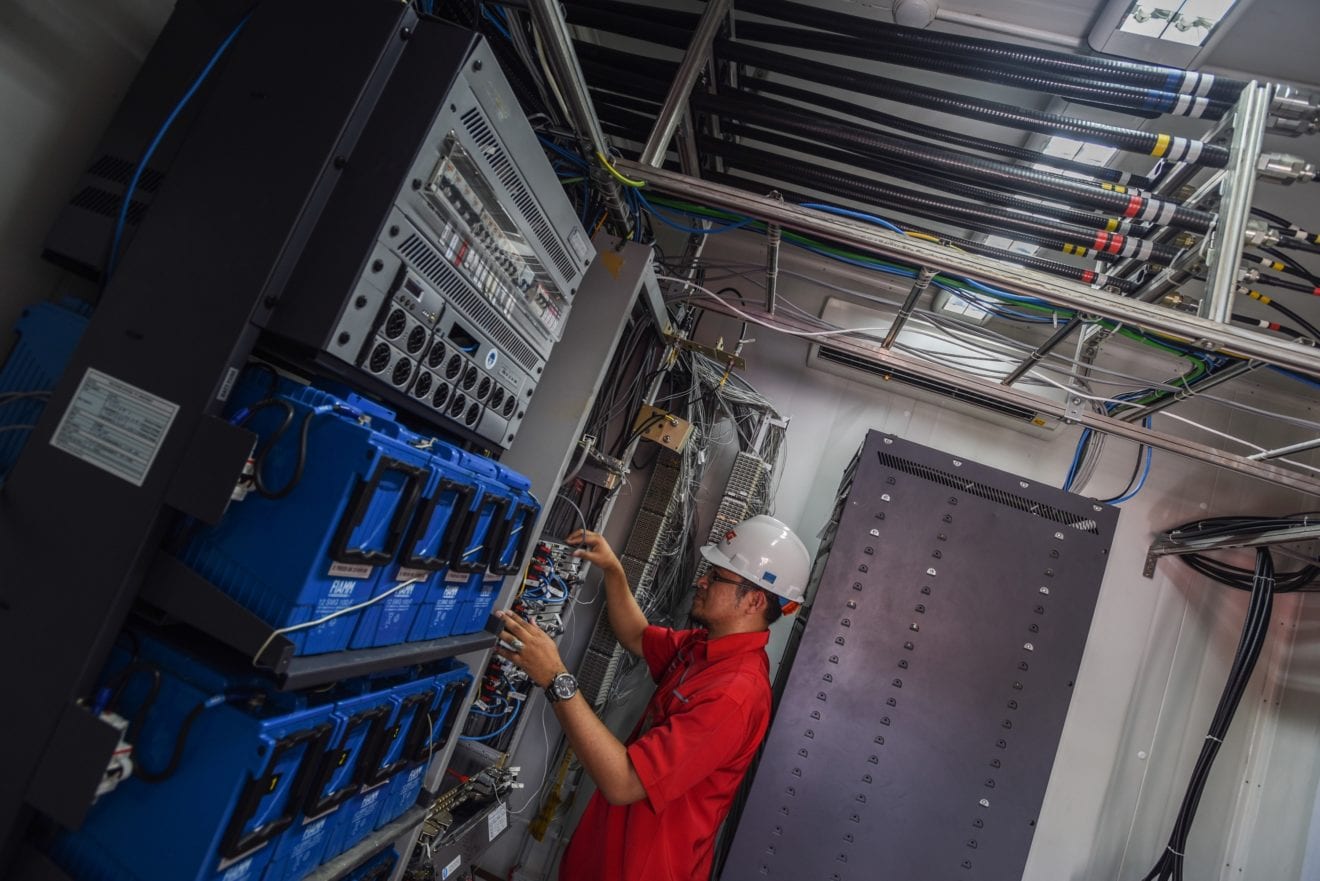
    Huawei is reportedly planning to sell its subsea cable business according to a buyer’s filing.

    Made on 31 May 2019 to the Shanghai Stock Exchange, the filing showed that Hengtong Optic-Electric Co, an optical telecoms network vendor, had signed a letter of intent with Huawei Technologies to buy its 51% stake in Huawei Marine Systems.

    Through no price was given, the deal is set to be financed through a combination of cash and shares.

    The news comes weeks after President Trump issued an executive order on “information and communications technology and services supply chain” which gives him and the rest of the US government unprecedented power to ban any business dealing. The order bans Huawei from buying technology from any US company without a license from the US government.

    A few days after the order was issued, the US government then relaxed its embargo on Huawei until 18 August. The Department of Commerce (DoC) issued a temporary general license which sets out limited exclusions to the order giving operators time to get their plans in order.

    “The temporary general license grants operators time to make other arrangements and the Department space to determine the appropriate long term measures for Americans and foreign telecommunications providers that currently rely on Huawei equipment for critical services,” said Secretary of Commerce Wilbur Ross. “In short, this license will allow operations to continue for existing Huawei mobile phone users and rural broadband networks.”

    It has been rumored that the sale of Huawei Marine is happening because the company is now facing stronger scrutiny, which may affect its ability to win new business.

    Speaking to the FT, Fergus Hanson, head of the International Cyber Policy Centre at the Australian Strategic Policy Institute, said, “It’s becoming a more difficult environment when trying to negotiate deals to build cables because [Huawei] is so much in the spotlight.”

  • BT chooses Juniper Networks to unify services for cloud initiative and 5G future

    BT chooses Juniper Networks to unify services for cloud initiative and 5G future

    BT will develop its 5G capabilities further after striking an agreement with Juniper Networks. The network developer will support BT in the delivery of its Network Cloud infrastructure initiative, which will allow various lines of its business on a single platform.

    A more flexible, virtualised network infrastructure will allow the biggest British telco to create new converged services for mobile, Wi-Fi, and fixed networks.

    It will also bring about a range of new applications that evolve services such as internet access, TV and business network functions.

    After EE, BT’s subsidiary, launched 5G in the UK on May 22, Guillaume Sampic, enterprise strategy director at BT, said that the benefits of 5G to businesses in terms of latency, speed, reliability and volume will “be a step change” from 4G.

    Commenting on the Juniper Networks agreement, Neil McRae, chief architect at BT, said: “BT is a global leader in ultrafast services, with growing demand from our ultrafast broadband services and ultrafast 5G services and has the perfect opportunity to combine several discrete networks into a unified, automated infrastructure.

    “This move to a single cloud-driven network infrastructure will enable BT to offer a wider range of services, faster and more efficiently to customers in the UK and around the world.”

    The Network Cloud infrastructure initiative will integrate seamlessly with BT’s other partners and solutions to move it closer to an automated and programmable network, which will benefit services such as ISP, TV, IT and its voice, mobile core, radio access and internal applications.

    BT is investing in a range of Juniper solutions across various tenants within the BT network, including a dynamic end-to-end networking policy and control for telco cloud workloads using Contrail Networking, cloud operations management using AppFormix and a scalable and flexible spine and leaf underlay fabric using the QFX Series.

    “As a renowned global service provider, BT is a shining example of how to evolve networks to become more agile,” said Bikash Koley, CTO, Juniper Networks. “By leveraging the ‘beach-front property’ it has in central offices around the globe, BT can optimise the business value that 5G’s bandwidth and connectivity brings.

    “The move to an integrated telco cloud platform brings always-on reliability, along with enhanced automation capabilities, to help improve business continuity and increase time-to-market while doing so in a cost-effective manner.”

    Capacity recently spoke with Juniper Networks to learn more about its cloud-based SD-WAN solution and how differs from the competition.