Tag: asia

  • Walmart hires former Amazon executive on new role

    Walmart hires former Amazon executive on new role

    Retail giant Walmart has hired former Amazon exec Suresh Kumar as its new chief technology officer and chief development officer as it aims to compete more with other tech savvy retailers.

    Kumar, who will take on the newly expanded role on July 8, has held senior positions in Google, Microsoft and Amazon. He has recently been working at Google where he serves as vice president and general manager of display, video, app ads and analytics and before that, he was corporate vice president of Microsoft’s cloud infrastructure operations.

    Before he joined Microsoft, Kumar was with Amazon for 15 years, holding several roles including vice president of technology for retail systems and operations and head of Amazon’s retail supply chain and inventory management systems.

    He will report to company CEO Doug McMillion and will be based at the company’s Sunnyvale, California office.

    According to Walmart, Kumar is joining the company at a time when it is rapidly transforming its customer and associate experiences.

    “The technology of today and tomorrow enables us to serve our customers and associates in ways that weren’t previously possible. We want to take full advantage of those opportunities,” McMillon said.

    “Suresh has a unique understanding of the intersection of technology and retail, including supply chain, and has deep experience in advertising, cloud and machine learning,” he said. “And, he has a track record of working in partnership with business teams to drive results.”

  • AirAsia to Expand E-Commerce Beyond Selling Plane Tickets

    AirAsia to Expand E-Commerce Beyond Selling Plane Tickets

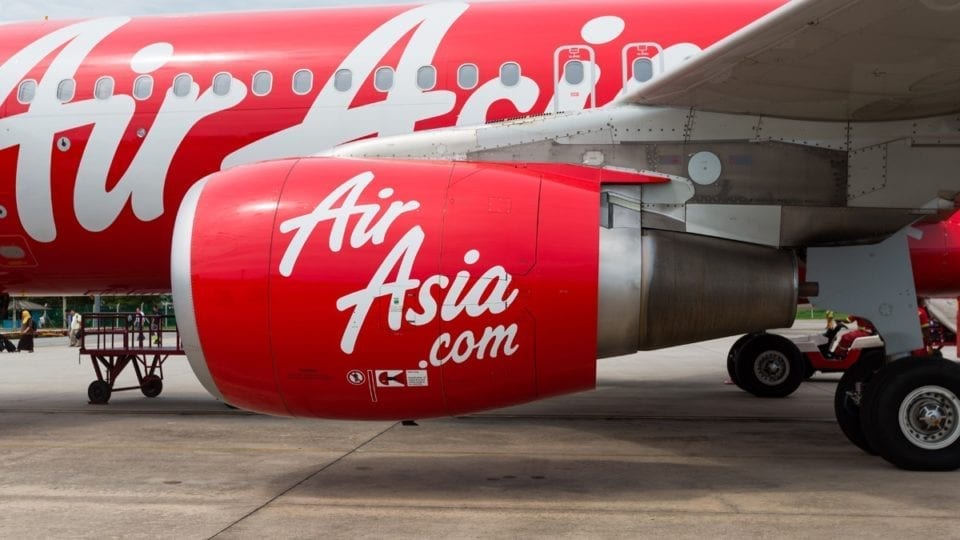
    AirAsia Group, Southeast Asia’s largest budget carrier, wants to sell more than cheap flight tickets. AirAsia is talking to potential partners to build an e-commerce app that it wants to see overtake the size of its airline business, Group Deputy Chief Executive Aireen Omar said in an interview. The carrier, which is seen getting about 1 billion ringgit ($240 million) revenue a year from its AirAsia.com website, expects to earn 20 times more as it expands into an app that will offer lifestyle goods and services.

    “This will be bigger than the airline itself,” Aireen said at her office at the Kuala Lumpur International Airport. “There’s a lot you can do in just one app and that’s what we are trying to do with our travel and lifestyle app.”

    The budget airline, which carries 100 million passengers annually, is bolstering its digital capability to tap a regional e-commerce market that’s set to increase threefold to $240 billion by 2025, CEO and Founder Tony Fernandes said last month. Premium carriers Singapore Airlines Ltd. and Cathay Pacific Airways Ltd. are already turning to onboard duty-free sales to boost revenue, while AirAsia’s app will also offer everything from hotel bookings to beauty products and dinner vouchers.

    AirAsia, which announced a special dividend of 90 sen a share Wednesday, climbed 8% as of 4:14 p.m. in Kuala Lumpur. The shares rose as much as 16% earlier, the steepest gain since 2004.

    The digital business is likely to be spun off in the near future, Aireen said, without giving details.

    Fernandes has slowly but surely prepared the company to focus on this digital drive. AirAsia has sold aircraft parked in leasing companies and disposed a stake in its ground-handling operations. He also restructured the company to have an investment holding group as its publicly listed entity and separated the Malaysian airline business.

    The moves come as the budget carrier grapples with rising risks to its airline business, from the closing of holiday destination Boracay island and natural disasters in Indonesia last year, as well as Malaysia’s clampdown on price surges during high season.

    Meanwhile, Brent has gained almost 30% this year, increasing costs for airlines from Singapore Air to Deutsche Lufthansa AG, which posted lower first-quarter profit partly due to higher oil prices. AirAsia’s net income slipped 92% in the three months through March from a year earlier, it said in a filing on Wednesday.

    The company realized about three years ago that it’s rich with consumer data that a lot of people would want access to, Aireen said. It plans to use the data to market goods and services in a targeted way and provide Internet connection on all its planes to sell products to passengers during the flight.

    The new app will eventually consolidate its current AirAsia BIG Loyalty program, which already partners with vendors from Nike Inc. to Sephora to give special offers and discounts.

  • GMS selected as an international A2P SMS partner

    GMS selected as an international A2P SMS partner

    Global Message Services (GMS) has been chosen as an international application-to-person (A2P) messaging hub and managed services partner with the UAE’s du.

    The partnership will see the global messaging provider, which since 2006 has expanded globally with a current reach of 900 mobile operators, secure du’s network and manage its inbound international A2P SMS traffic.

    “Connectivity and communication are core pillars of our operations and we are always in a constant drive to explore ways to improve the quality of service delivery for our end customers,” said Hany Aly, executive vice president of enterprise business at du.

    “We are happy to partner with GMS in effective monetisation of international A2P traffic. Ultimately, the benefits will be plentiful for both du and GMS with the monetisation of our SMS channels and we look forward to building our expertise and trusted solutions in this field as our partnership ensues.”

    du’s intention to improve service quality and unlock new revenue streams was perfectly in line with GMS’s ambition to extend its global monetisation footprint.

    Successful achievement is preceded by conducting a deep analysis of the legal, technical and commercial environments, identifying weak spots which need to be eliminated and implementing the necessary steps to secure the network. In line with this, du and GMS have established direct connectivity over Signalling System No.7 (SS7).

    SS7 connectivity offers an edge over other technologies in that it is of very high quality, speedy and most importantly, offers complete transparency, providing correct delivery reports to the traffic generator (enterprise) for all messages and thereby giving the full picture to both the enterprise and the MNO.

    “du stands out for its approach and attention to detail, and GMS has the exact same vision on doing business. We believe that GMS’ expertise will enable du to maximise its messaging business and achieve steady revenue growth,” added Iurii Makarenko, managing director of GMS (pictured).

    GMS multi-channel messaging platform, Hyber, allows enterprises to deliver messages across different channels worldwide: SMS, Push, OTT messengers, email, etc. GMS is Viber’s official partner.

  • Alibaba’s 618 Mid-year Shopping Festival targets Specific China Regions

    Alibaba’s 618 Mid-year Shopping Festival targets Specific China Regions

    Alibaba Group has launched this year’s 618 Mid-year Shopping Festival from Taobao and Tmall, allowing brands and merchants to tap into China’s less-developed regions with 1.5 million new products and multiple promotions.

    This year’s festival aims to engage customers in emerging cities, counties and villages across China. To do so, Taobao and Tmall are boosting promotional resources to elevate excitement and help brands reach this rapidly growing market. Altogether, more than 200,000 brands and retailers will participate in the shopping event.

    The shopping event officially started on June 1 and will continue though June 18. Within the first hour, from midnight to 1am, gross merchandise volume (GMV) exceeded that of the first 10 hours last year. And at 11.23am, less than 12 hours after the start, total GMV surpassed last year’s full-day figure.

    Branded products are so far proving extremely popular. Top brands like Apple, Xiaomi, Haier, Aux, Midea, L ‘Oreal, Lancome, Nike and Adidas each notched more than RMB100 million in sales in the first hour. Among them, Apple sold over RMB100 million worth of products in two minutes and 45 seconds, while Midea and Nike both hit that mark in four minutes.

    “In addition to rising discretionary spending, consumers in China’s less-developed regions are becoming more-sophisticated shoppers who are looking for lifestyle upgrades,” said president of Taobao and Tmall Jiang Fan. “This increased consumption potential could mean bright prospects for our merchants. People in these areas might have less access to physical shopping facilities than those in big cities, and this year we are working closely with our partners to address their needs and offer them the same good quality products on our platforms with innovative and fun programs.”

    The number of people living in smaller cities and rural areas accounts for nearly 70 per cent of China’s total population, according to Chinese market-research firm Analysys. These consumers are catching up with first- and second-tier markets in valuing quality over price. Tmall’s figures also show that more than half of the sales generated on its Luxury Pavilion comes from customers outside China’s first- and second-tier cities.

    In view of this trend, Taobao and Tmall are leveraging Alibaba Group’s ecosystem and technology and an array of marketing channels and tools to build momentum from early June. Key initiatives to offer opportunities in fast-growing markets and enhance customer engagement include:

    Tmall product debuts – About 1.5 million products will debut on Tmall during the festival with customers enjoying heavyweight promotional offers on these items. Many were developed by brands on an accelerated cycle, thanks to consumer insights provided by Tmall. In addition to deals on the 1.5 million new products, brands are offering millions of other products at a discount. All products are available to consumers nationwide, but brands are paying special attention to the needs and desires of customers in lower-tier Chinese cities.

    Flash Sales – Alibaba’s flash sales channel, Juhuasuan, allows brands to offer deep discounts to reach new customers in fast-growing markets. Juhuasuan will organise dozens of 618-themed group-selling campaigns featuring must-buy items recommended by brands. Statistics show that Juhuasuan is a tried-and-true channel for brands to attract first-time buyers. Since last year, 80 per cent of the transactions for branded goods through Juhuasuan were from new customers, and nearly half were from lower-tier cities.

    Taobao Livestreaming – Few marketing tools have proved more effective than livestreaming for brands to introduce and recommend 618 products to potential consumers in less-developed regions. Last year, sales generated by Taobao Livestreaming exceeded RMB100 billion. This year, US brands, including Stadium Goods, the streetwear and sneaker resale store backed by LVMH Luxury Ventures; Korean beauty brands, like Laneige and Innisfree; and Japanese cosmetics brands Shiseido will host livestreams for 618.

    Daily Deals – This channel on the Taobao app provides special offerings directly from manufacturers and is highly popular among consumers from less-developed areas in China. Equipped with insights from consumer preferences and behaviors, manufacturers are able to adjust their production processes on a real time basis to meet consumer demands. These manufacturers will introduce 100,000 promotional items for the 618 celebration.

    With a reach of 654 million annual active consumers in China, strong technical support and in-depth market knowledge, Alibaba’s ecosystem is offering a strong growth potential for brands.

    Alibaba Group’s annual results this year reflect that growth potential, with more than 70 per cent of the more than 100 million new active users added during the year ended March 31, 2019 coming from less-developed cities.


  • Prada reveals ‘Code Human’

    Prada reveals ‘Code Human’

    Chinese artist Cao Fei has entered into a collaboration with Prada on a special project, “Code Human”, starring Chinese idol Cai Xu Kun to showcase the Prada Fall/Winter 2019 menswear collection.

    The project, which explores “the meaning of iconography, idolatry, fandom and adoration in our super-media age”, is part of a long-standing program of cross-media Prada campaigns and projects spanning the fields of design, architecture, cinema, and art. Prada continues in this campaign to collaborate with leading creative practitioners to explore the intersection of different cultural disciplines and experiences.

    “Upon reflection, nobody is as crazy as Miuccia Prada to think of this pairing, asking a Chinese artist to photograph a Chinese ‘idol’,” said Cao Fei. “I was excited for many days afterward I received the proposal, not only because of Cai Xu Kun, but about the project itself, to have this opportunity to plumb these cultural depths, using a real-life ‘idol’ to communicate with the tens of millions of followers behind him. As an artist, you cannot ignore those who stand behind him. How should I represent somebody else’s idol?”

    “Code Human” debuted on June 1 to coincide with Prada’s Spring/Summer 2020 fashion show in Shanghai.

  • Pic’s Peanut Butter lands in Amazon stores

    Pic’s Peanut Butter lands in Amazon stores

    New Zealand food brand Pic’s Peanut Butter is one of the brands involved in Amazon’s ‘Clicks & Mortar’ initiative, which launched this week in the UK.

    The e-commerce giant is rolling out pop-up shops across the UK, giving small online business brands the opportunity to reach the high street market.

    More than 100 small online brands will be sold across the UK with pop-up shops set to open in Wales, Scotland, the Midlands, Yorkshire and the Southeast.

    The first pop-up store has opened in St. Mary’s Gate, Manchester, selling the wares of 12 businesses, including Pic’s Peanut Butter.

    According to Amazon, the year-long pilot programme will explore a new model to help up-and-coming online brands grow their high street presence. Independent research on the success of the pilot will be submitted to the British government, following the call for new ideas to develop the Future High Streets strategy.

    “Small businesses are one of our most important customer groups, and we’re thrilled to work with Enterprise Nation to design a comprehensive package to help entrepreneurs across the UK grow their businesses, both in-store and online,” said Doug Gurr, UK Amazon country manager.

    “From giving up-and-coming online British brands the chance to experience physical retail, to funding the training of full-time apprenticeships and helping to increase SME exports, Amazon is committed to supporting the growth of small businesses – helping them boost the economy and create jobs across the UK.”

    The project, in partnership with small business support group Enterprise Nation, Amazon, Direct Line for Business and Square Amazon will help create over 150 full-time apprenticeships at small online businesses through a new £1 million SME Apprenticeship Fund, while the Amazon Academy training programme will provide free digital training to help grow their sales and boost exports.

  • Google just says no to marijuana apps

    Google just says no to marijuana apps

    While more states are passing laws legalizing marijuana, Google is trying to make it harder for smokers to connect with sellers. Earlier this week, the company announced that it will no longer allow apps in the Google Play Store that “facilitate the sale of marijuana or marijuana products regardless of legality.” In other words, even in states where weed is legal, Google will ban these apps.

    This new policy is now listed in the Google Play Store Developer Center website and gives three examples of violations. These include allowing users to order marijuana through an in-app shopping cart feature; assisting users in arranging the delivery or pick up of marijuana; and facilitating the sale of products containing THC. Before Google updated the page, there was no policy specifically related to marijuana apps.

    “These apps simply need to move the shopping cart flow outside of the app itself to be compliant with this new policy. We’ve been in contact with many of the developers and are working with them to answer any technical questions and help them implement the changes without customer disruption.”-Google

    At the same time, Google promised to make the Google Play Store safer for children and families. In a blog post made Wednesday, the company wrote “At Google Play, we’re committed to providing a positive, safe environment for children and families. Over the last few years, we’ve helped parents find family-friendly content through the Designed for Families program and empowered them to set digital ground rules for their families with Family Link parental controls.” And that apparently means making the Play Store weed-free.

    Back in 2015, we told you the names of some of the apps that smartphone owners could use to find the nearest dispensary. But thanks to Google’s new policy, that has all gone up in smoke.

  • Singapore launches the Smart Nation Innovations Week

    Singapore launches the Smart Nation Innovations Week

    The Smart Nation Innovations Week 2019 kicks off today in Singapore, where local and international attendees will share and learn about the impact of technology and innovation on business, economy, government and society.

    The Ministry of Communications and Information (MCI) and Infocomm Media Development Authority (IMDA), together with Smart Nation and Digital Government Office (SNDGO), GovTech and in partnership with Unbound, will host the Smart Nation Innovations Week (SNI Week) from 24-28 June 2019. The event will see more than 15,000 global government and industry leaders convene in Singapore to discuss challenges and opportunities in a digital age.

    Singapore’s Prime Minister Lee Hsien Loong is the Guest of Honour at The Smart Nation Summit, an annual by-invitation only forum aimed at facilitating impactful conversations among senior leaders and stakeholders from governments and businesses on the policies, strategies, technologies and mindsets needed as the global digital economy accelerates its growth. PM Lee will participate at the closing dialogue of the Summit and Minister for Communications and Information, Mr S Iswaran will speak at the opening of the Summit.

    Themed “Digital as Usual”, the Smart Nation Summit is a constituent event of SNI Week and will bring together a thousand delegates from around the world, including industry leaders and ministers, to discuss thought-provoking topics that interrogate the intersections across sectors (economy-government-society), geographies (East-West though Southeast Asia) and time (future-present) in this digital age. The Summit will shine the spotlight on Asia’s transformation, tensions between technology, security and trust – how they all come to bear in the services sector, and call for new leadership in a digital-as-usual age. SNI Week also includes events such as the Straits Digital Exchange (SDE) and the Digital Government Exchange (DGX).

    Following the Smart Nation Summit on 26 June, the Innovfest Unbound festival returns to Singapore for its fifth and largest-ever edition as the anchor event of SNI Week on 27-28 June 2019. As one of Singapore’s key event platforms connecting technology entrepreneurs, brands, investors, businesses and thought leaders for growth and partnership opportunities, this year’s conference will attract more than 15,000 participants, feature over 350 exhibitors, and more than 400 speakers. Minister for Communications and Information Mr S Iswaran will be the Guest of Honour at Innovfest Unbound and deliver the opening speech.

    IMDA will also be presenting two new panel discussions – Services 4.0 and Trusted AI. A high level panel will convene on 28 June 2019 to discuss topics on building trusted AI ecosystems, with Senior Minister of State Mr Janil Puthucheary delivering the welcome address for the day. A select list of promising local digital companies will be featured at IMDA’s Tech Alley and booths as well.

  • Philippines, Vietnam lead FMCG sales growth in Asia

    Philippines, Vietnam lead FMCG sales growth in Asia

    The Philippines and Vietnam led Southeast Asian FMCG sales growth last year, according to a report by market research company Nielsen.

    In What’s Next for Southeast Asia, Nielsen reported that Vietnam’s FMCG sales growth reached 5.2 per cent, second in Southeast Asia behind the Philippines’ 8.7 per cent.

    Global FMCG sales growth was only 3.4 per cent, but Asian markets benefited from buoyant economic factors and strong consumer confidence.

    In Vietnam, consumers are making more frequent shopping trips for everyday needs, with Nielsen’s data showing the average shopper visited a convenience store 4.5 times per month last year – that’s three times the frequency of 2010.

    “We’ve been seeing solid growth in the convenience and mini-market channels across Southeast Asia for some time now, but over the past year or so that growth has really hit fever pitch,” said Vaughan Ryan, Nielsen’s MD Southeast Asia.

    “Consumers throughout the region are living increasingly fast-paced lives, and this lifestyle shift is driving increasing demand for on-the-go offerings.”

    Vietnam’s local retailers are taking advantage of the trend. Vingroup has launched the first virtual store chain in the country, which allows users to shop by scanning QR codes on large banners in public areas as well as printed catalogues.

    Subsidiary VinCommerce, which owns the VinMart+ convenience store chain, recently acquired a rival c-store chain Shop&Go,which it plans to convert to its own banner. Vietnam retail is forecast to record double-digit growth from this year to 2024.

  • Apple purges iTunes pages on the eve of its demise

    Apple purges iTunes pages on the eve of its demise

    Apple’s arguably most hated piece of legacy software – iTunes – may be killed today at the WWDC keynote, reported Bloomberg over the weekend, and the interesting part is that it won’t be renamed to something else, but different modules will be taking its place instead.

    The iTunes syncing and download service is a relic of the past anyway, and will be phased out as Apple’s CEO Tim Cook will be announcing a move away from the iPhone as the centerpiece of the company’s strategy.

    The Apple Watch will reportedly gain more independence from the iPhone, the iPad will be getting new software that will aim to close the gap with laptops, and Apple will be pushing its new healthcare solutions, according to the report. Anything but the iPhone.

    The transition might not be finished for a couple of years, but this is the strongest push Apple has made toward the unification of its two platforms. Apple and developers can put more effort into one version of things instead of having to build everything twice.

    With Watch OS 6, the company is eventually going to introduce a dedicated App Store, compartmentalize messaging, and add stock utility apps of the everyday type like a calculator or a voice recorder that will make you keep the iPhone in your pocket for longer while using the Watch.

    One of the slower and more cumbersome to use of Apple’s legacy software, the jack-of-all-trades-master-of-none iTunes will be replaced with apps that now duplicate its functionality. Instead of using it for watching videos, or listening to music and podcasts, Apple’s new Music, TV, and Podcasts apps for the Mac will be taking over. What about shuttling files to and from and managing the phone, though, what iTunes used to do?

    Well, those functions will reportedly be taken over by the new Music app, of all things. Apple even started purging the iTunes accounts on Instagram, Facebook and the like, indicating the ancient software’s imminent demise. Good riddance?

  • Museum of Modern Art Hong Kong store planned to Open

    Museum of Modern Art Hong Kong store planned to Open

    New York’s Museum of Modern Art will open a Design Store in Hong Kong.

    The Museum of Modern Art Hong Kong store will open in the new K11 Musea art mall. It will be the largest in Asia following two locations in Japan.

    The 6000sqft retail store, which celebrates innovative design in products from around the world and serves as a platform for emerging artists and designers, will showcase works from leading Hong Kong artists such as Kaws and Yayoi Kusama. Every product at the store is exclusive and undergoes a series of eight criteria filters to ensure a strong fit with Moma’s vision of good design.

    K11 Group founder Adrian Cheng, who was recently named the first Council of Fashion Designers of America global ambassador, is a board member of Moma and led the introduction of the store in Hong Kong.

    The Museum of Modern Art Hong Kong store will open in August.

  • HMV stock to be Sold

    HMV stock to be Sold

    The liquidator of collapsed music chain HMV has backed away from a retail sale of the company’s inventory. Liquidator Wong Sun-keung, a partner at accounting firm Vision AS, said the administrative costs of launching such a sale – especially the rent – would take too large a chunk out of the takings.

    While the inventory of the collapsed chain has a ticket value of HK$9 million, a ‘fire sale’ of stock would realise as little as $1 million – before rent and staff costs were taken into account.

    A creditors committee decided at a meeting last week to call tenders for the complete sale of the stock – an estimated 100,000 CDs, DVDs and vinyl records retrieved from stores shut last December and currently stored in shipping containers.

    “We will sell all the remaining stocks in one go,” Wong said.

    “Only if the tender offers were too low would we consider a liquidation sale. But now we prefer to use a tender to sell the remaining stock, because it’s simpler and we believe we can get a better price,” Wong said.

    A liquidation sale of stock became inevitable after two white knight investors walked away last month due to legal issues relating to the continued use of the HMV brand in any new entity.

  • CAE signs new deal with AirAsia in the Philippines

    CAE signs new deal with AirAsia in the Philippines

    CAE has signed a new five-year training agreement for AirAsia’s A320 pilots in the Philippines, extending the use of the CAE Rise training system to a third AirAsia affiliate.

    Through the new agreement, announced at the International Air Transport Association (IATA) Annual General Meeting (AGM), CAE will continue to provide initial training for the airline’s pilots and will soon undertake recurrent training at CAE Clark – Philippine Academy for Aviation Training (PAAT) in the Philippines, starting in July 2019.

    “AirAsia has embarked on a mission to digitise every aspect of their business and by implementing the CAE Rise™ training system they are better able to train and develop their pilots using real-time insights alongside a new level of training data analytics,” said Nick Leontidis, CAE’s Group president, Civil Aviation Training Solutions. “Just recently AirAsia extended the use of the CAE Rise™ training system on the Airbus A330 platform and it’s an honor to see them extend this training system on the Airbus A320 platform with a third airline affiliate.”

    Earlier this year CAE announced the signing of a five-year training agreement for AirAsia’s long-haul pilots, extending the use of the CAE Rise training system to AirAsia’s long-haul affiliate, AirAsia X on the Airbus A330 platform.

  • King Power Bangkok airport retail monopoly to stretch longer

    King Power Bangkok airport retail monopoly to stretch longer

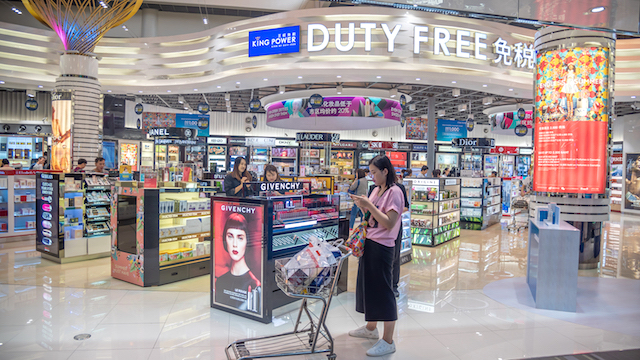
    Hopes of opening up the duty-free and retail monopoly at Bangkok Suvarnabhumi airport have been dashed after Airports of Thailand (AOT) announced the incumbent operator had lodged the highest bid to retain the business.

    While still subject to final ratification by the AOT board, King Power has effectively bought a monopoly on duty-free business at the airport for another decade.

    King Power Duty Free has held the rights since the airport opened in 2006, and was competing to continue when the current contract expires next year through until 2031.

    “The company that scored the highest is King Power Duty Free Company and the winner offered the highest return than what AOT has received before and higher than AOT estimate (sic),” said Wichai Bunyu, senior executive VP at AOT, in a statement.

    Two rival bidders were hoping for a share of the action in what is a lucrative monopoly with prices unmonitored or regulated. The losing bidders were a joint venture between Bangkok Airways and South Korea’s Lotte, and another involving Royal Orchid Hotel Thailand, Empire Asia Group and a subsidiary of World Duty Free Group.

    Leading Thai retail business Central Group and Minor International did not submit bids before the deadline.

    Having selected the winning bidder, the appointment process is a mere formality, subject to ratification of AOT’s remuneration committee next week. According to Reuters, that will decide the technical score and revenue King Power would share with AOT before the board of directors officially approves the winner on June 19.

    The Thai government had ordered a review of duty-free auction period amid monopoly concerns after more than a decade of dominance by King Power. But that apparently had no effect.

    The winning bidders to operate duty-free shops at Chang Mai, Hat Yai and Phuket airports were expected to be released today (June 3) with King Power almost certain to win those contracts as well.

  • A&W Singapore opening second outlet

    A&W Singapore opening second outlet

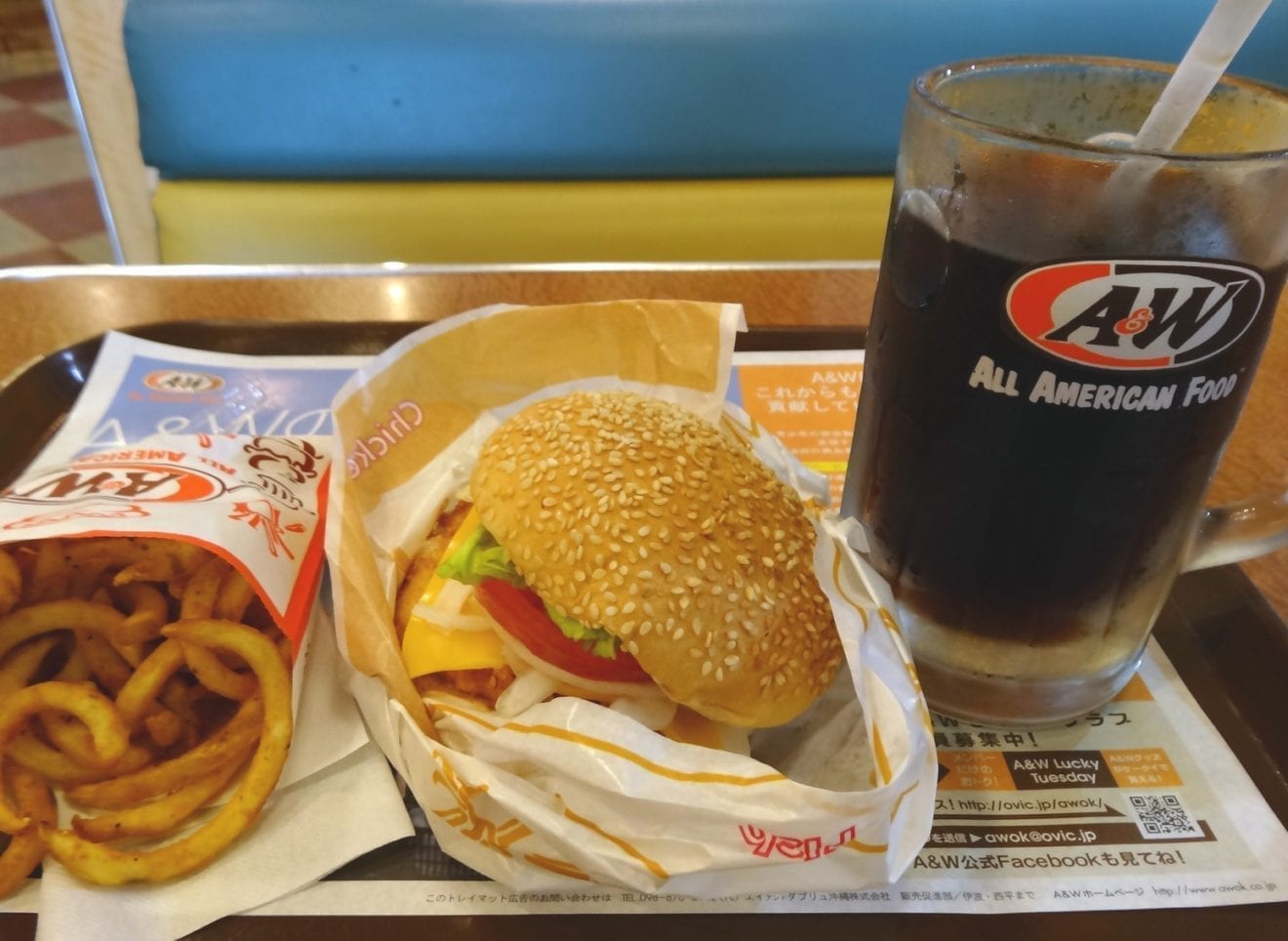
    American fast-food chain A&W Singapore will open second outlet in Ang Mo Kio Hub in July.

    The outlet at AMK Hub’s basement will span 2812sqft and seat up to 142 diners.

    Unlike the Jewel Changi outlet, the AMK one will be ‘family-oriented’ and more flexible to accommodate larger groups of diners.

    There will also be a counter for customers to watch waffles being made, and a selfie corner to satisfy millennials.

    A retail section will sell merchandise such as t-shirts, caps and pins will be set up.

    “The A&W brand is something people remember from childhood,” A&W international manager for business development Sally See said.

    “We see baby boomers taking their children to the Jewel outlet. With the AMK Hub outlet, we hope they can relive those memories of the time when A&W used to be in Ang Mo Kio.”

    Initially, the new store will trade during normal mall hours but it will eventually be open 24-seven.

    The menu will feature A&W signature items, and will expand to include breakfasts as well.

    More A&W Singapore stores are scheduled to open from the second quarter of next year with the Tampines and Jurong areas targeted.