Tag: asia

  • Shared services models fuel demand for mobility-as-a-service

    Shared services models fuel demand for mobility-as-a-service

    Shared mobility business models that focus on integrated and digitally connected ecosystems that offer unified multi-modal mobility services and personalized user experiences will find high adoption all over the world.

    “Globally, companies are planning to commercialize autonomous shuttles between 2020 and 2022, backed by favorable government initiatives in North America, the UK, China, Japan, and Dubai,” said Abhishek Iyer, research analyst, Mobility at Frost & Sullivan.

    “There will be an increase in the number of partnerships and rollouts of new technologies such as autonomous shuttles, blockchain, and Artificial Intelligence (AI), which will enhance user experience and operation.”

    Iyer noted that governments across developed cities are building testing infrastructure and piloting autonomous shuttles to evaluate viability and user experience. “Approximately 10 to 15 cities can be expected to conduct autonomous shuttle trials on public roads in 2019. Cross-industry collaborations for connected technologies, integrated payment capabilities, shared mobility insurance and financial services will also prove to be critical for future success,” he commented.

    The researcher suggested that further growth opportunities will come with industry participants partnering with stakeholders from other industries such as banking and financial services (BFS) and insurance to lower costs and generate fresh revenue streams.

    Other opportunities include adopting business models such as vehicle subscription services, demand responsive transit (DRT), ride-hailing and carsharing to create opportunities for data monetization. This will also allow them to leverage their investments and partnerships to develop autonomous and emission-free vehicle technologies.
  • Cebu Pacific sale offers P299 domestic, P699 international fares

    Cebu Pacific sale offers P299 domestic, P699 international fares

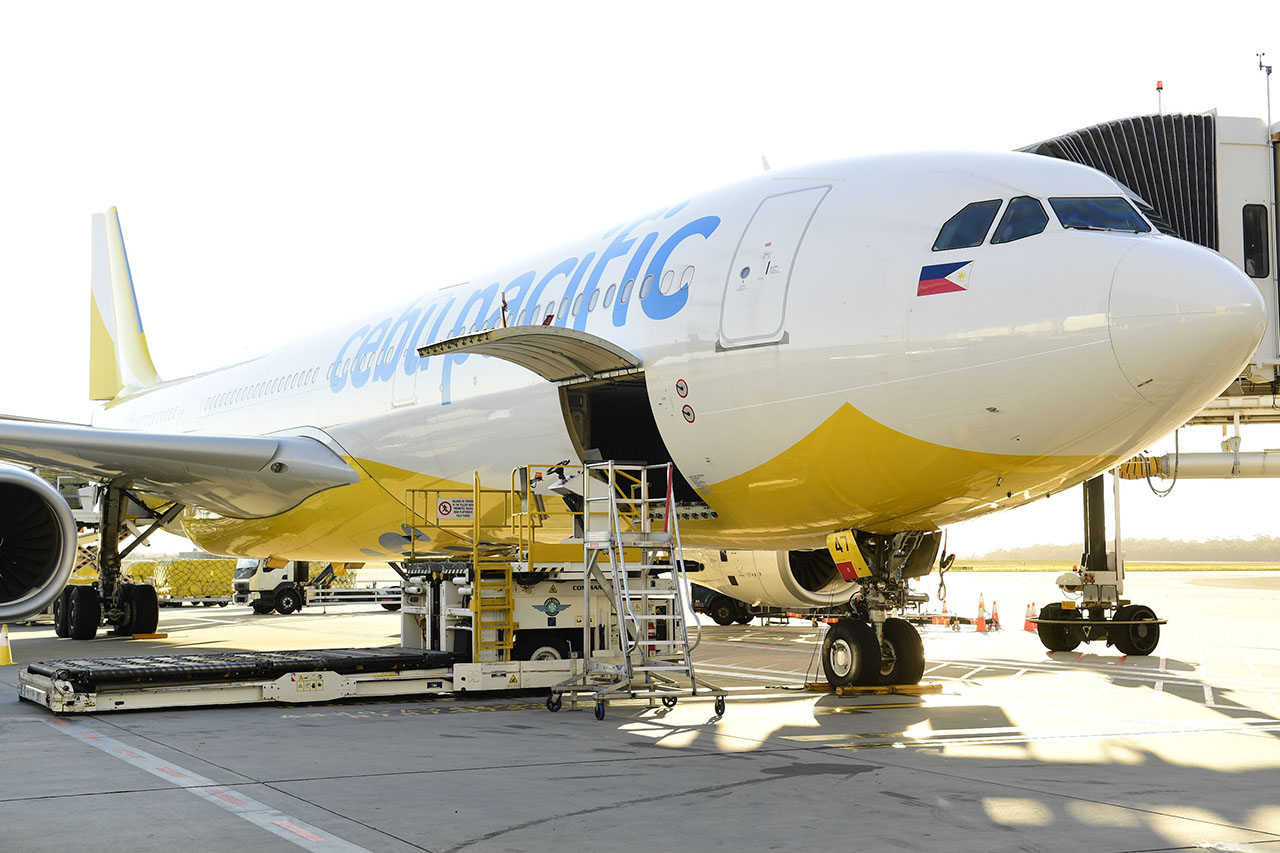
    Cebu Pacific said it was offering domestic and international seats on sale starting Thursday.

    The Philippines’ largest airline said the sale would run until Friday for travel from Nov. 1 to March 31 next year.

    Among the destinations on offer are Boracay, Coron, Puerto Princesa and Siargao at P299 for one-way base fare, Cebu Pacific said.

    Flights to international destinations like Bali, Hong Kong, Bangkok, Beijing, Taipei and Tokyo are also on offer for as low as P699 one-way base fare, the airline said on its website.

    Other destinations like Dubai are also on offer for as low as P1,599; Melbourne for as low as P4,599 all in; and Sydney at P5,599 all in.

    The quoted domestic one-way base fares are inclusive of 7 kg hand carry baggage allowance, but exclusive of web admin fee, 12 percent VAT, terminal fees and fuel surcharge, it said.

    Quoted international one-way fares are inclusive of 7 kg hand-carry baggage allowance, but exclusive of web admin fees for short haul and long haul flights, respectively and P550 international terminal fee and fuel surcharge.

  • Starbucks China Reshuffles Management

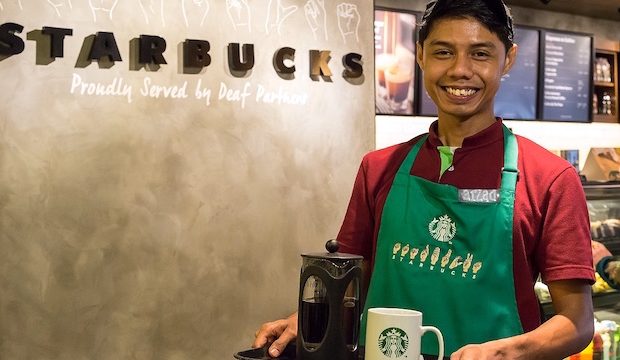
    Starbucks China Reshuffles Management

    Starbucks China management has been restructured as the company gears up for a more intense focus on its digital business. From June 1, CEO Belinda Wong, becomes chairman and CEO of Starbucks China.

    Two distinct business units will be created – Starbucks Retail and Digital Ventures – the heads of which will report directly to the newly created office of the chairman and CEO, Starbucks China.

    Leo Tsoi has been appointed SVP, COO & president of Starbucks Retail and Molly Liu has been appointed VP & GM of Digital Ventures.

    Wong will oversee new business development in China and focus on long-term sustainable growth.

    “The new team structure is for the next phase of growth and managing resources to balance the short-term needs of the business and the long-term strategic priorities in China,” said Starbucks group president, international, channel development and global coffee and tea, John Culver.

    “While paying more attention to customers and partners, we will accelerate the pace of innovation to capture the new opportunities in the third-place experience and digital innovation,” he said.

    Wong has headed the China business since 2011 and under her leadership, the company has grown at a rate faster than any other of the brand’s global markets. Among her achievements were setting up the New Retail partnership with Alibaba, integrating the East China business in 2017 and creating the “Coffee Wonderland” experience with the Starbucks Reserve Roastery in Shanghai.

    After 20 years in China, the company has grown to 3800 stores in 165 cities, serving 9 million customers every week.

    “For 20 years, we have worked steadily to achieve a long-term and healthy development in China,” said Wong. “For the next chapter of growth, we will stay true to our mission, values and guiding principles. About 53,000 Starbucks partners in China will work together to continue our innovation ventures and bring our passion of coffee to our customers to enhance the third-place experience.

    “We will also support our partners in their professional development to realise their full potential and give back to the community where we live in. ‘In China, for China’, we will continue to fulfill our commitment in developing a long-term and healthy development in China, making Starbucks as a faster, stronger and more loving company,” she said.

  • Online Spending on local sites strengthens

    Online Spending on local sites strengthens

    Spending on local online sites has strengthened, helping boost the country’s total online retail sales over the three months to April by 7 percent over the previous corresponding period.

    Spending on New Zealand sites is continuing a recent strong run, seeing an 11 percent increase over the three months to April 30 compared to the previous corresponding period.

    Continued strong growth in the food, clothing, electronics and department store categories was seen as the driving force.

    “Growth in online spending on food is particularly strong and is emerging as a key reason for stronger growth rates at domestic sites versus international,” said Gary Baker, director of institutional research at Bank of New Zealand.

    Baker said the country is continuing to see softer growth rates for purchases from offshore sites, which over the last three months were only 2 percent higher than in the same period the previous year.

    “One influence is the NZ dollar, which is tracking around 7 percent lower versus the USD than it was a year ago, making offshore purchases more expensive for Kiwis,” Baker said.

    “This will reduce spending if a fall in purchase volumes more than offsets the effect of paying higher prices.”

    According to Baker, another influence on the softening growth rates from spending in offshore sites is the ongoing maturation of the online channel.

    “In recent years we have seen online growth rates ease from double-digit levels and slowly trend down,” he said. “Online growth rates still exceed those of physical stores, but the gap is reducing.”

    In some categories, however, purchases from offshore sites are continuing to grow very strongly, such as in computers and entertainment media.

    Total online retail spending over the three months to April 30 was 7 percent higher than the previous corresponding period.

    Annual online spending across the retail categories covered is running close to $4.6 billion, excluding GST.

  • Little Yellow Bird Raised Half Million Dollar in Crowdfunding Campaign

    Little Yellow Bird Raised Half Million Dollar in Crowdfunding Campaign

    Little Yellow Bird has raised over $440,000 in an equity fundraising campaign – having passed its minimum funding figure of $300,000, and becoming New Zealand’s self-professed ‘first community-owned ethical fashion brand’.

    The campaign has only hours left, has attracted over 220 backers, and will see Little Yellow Bird scale itself up with the aim of increasing market reach, growing sales and its leadership team, and expanding into new markets.

    Expansion plans also include a clothes recycling program, which the company calls a “crucial next step for sustainable change” in its industry.

    “We’re more than just a clothing brand,” Little Yellow Bird founder Samantha Jones said.

    “We’re telling the story about where and how our products are made and are working tirelessly to provide employment opportunities in the communities where our clothes come from.”

    At the end of the funding period, the ownership of the business’ shares will be split between campaign investors, Jones, and female-founder focused Lightning Lab XX at $1 a share.

    The brand uses rain-fed, organic cotton grown without the use of pesticides or chemicals, while its factories use zero-waste initiatives. The business is working to minimize waste and utilizes closed loop systems to do this.

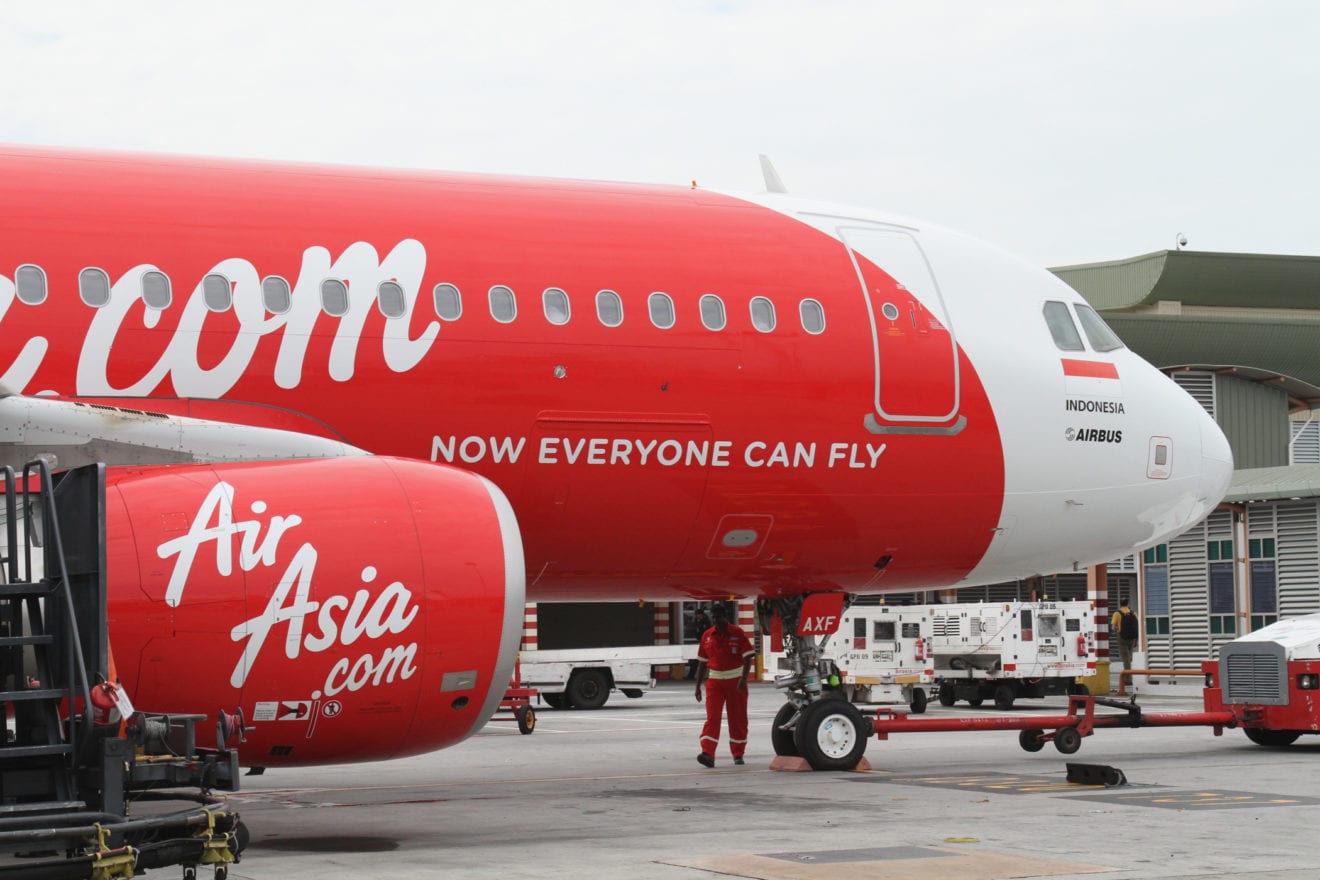
  • AirAsia Deputy CEO Confident That they Will Become the Amazon of Travel

    AirAsia Deputy CEO Confident That they Will Become the Amazon of Travel

    There was no backtracking from AirAsia in its plan to branch out into selling other airlines on its platform, financial services, and more experiences.

    Asked in Singapore  if becoming the Amazon of travel is overly ambitious, Aireen Omar, AirAsia’s deputy CEO, technology and digital said it’s “ambitious, but I think it’s very doable.”

    Another AirAsia executive recently made the declaration that the airline could become the “Amazon of travel.”

    Omar argued that AirAsia’s wealth of data from such things as its bookings systems and passenger management equip it to improve revenue management and personalization and to make its operation more efficient.

    The idea is to provide a seamless journey for passengers and to build new business areas for the airline beyond its core flying.

    Omar said AirAsia has been approaching other airlines about selling tickets, and that most are not afraid of doing that because they can take advantage of AirAsia’s network and data.

    Although AirAsia is interested in offering innovative payment systems, Omar said the airline would not use cryptocurrencies because their value fluctuates greatly, and AirAsia is interested in engendering consumer trust.

    Omar made a pitch for the greater inclusion of women in the airline industry. She said around 6 percent of AirAsia’s engineers are women, and so are about 10 percent of its pilots.

    Schools new to open up their curriculum to encourage women to become data scientists, for example, and to work for airlines.

    Omar is responsible for AirAsia’s digital strategy, promoting innovation throughout the group and encouraging collaboration across AirAsia’s businesses and markets. She oversees large, strategic group-wide initiatives to help transform AirAsia into a global, cloud-driven product and platform company.

  • Kidsland launches FAO Schwarz store in Beijing

    Kidsland launches FAO Schwarz store in Beijing

    China’s largest toy retailer and distributor Kidsland has introduced FAO Schwarz, an international toy brand store with 157 years of history, in its first Asian flagship store.

    The FAO Shwarz Beijing flagship is located inside the Kidsland flagship store at China World Mall in a prime shopping and lifestyle district.

    Staff wearing soldiers’ uniforms from Grimm’s Fairy Tales are positioned at the entrance to greet and escort customers into the 30,000sqft store, interacting with customers throughout the shopping experience. The store also features “toy demonstrators” who invite customers to play with the toys. The “Toy Soldiers” and demonstrators are overseas-trained and make up 20 per cent of the staff.

    Founded in 1862, FAO Schwarz is one of the oldest toy stores in the world. The brand returned to New York last November with a new 20,000sqft flagship at Rockefeller Center in Manhattan.

    Kidsland has a comprehensive online and offline integrated sales network within China. In December it counted 257 independent stores in 44 cities within the region, along with 519 self-operated consignment counters and 931 distributors covering more than 3000 additional points of sale. Kidsland also represents multiple brands in operating 18 online stores in China.

    “The introduction of FAO into China reflects our confidence in the potential of the Chinese economy and market development,” said chairman and CEO of Kidsland Lee Ching Yiu. “We believe there is strong demand for quality toys among families and young people, so this is an important advantage for Kidsland to provide quality experiential retailing there. In this way, we hope to serve as a bridge, enabling Chinese consumers to experience the latest and best toys in the world.

    “FAO Schwarz plans to open a large flagship and several medium-sized stores in China in the next two years. We will also establish a kidsland experiential retail flagship store, and in the coming one to two years, we will open a mid-sized kidsland retail store to bring an enriched retail experience to wider spectrum of the public.”

  • Android Q will improve your phone’s battery life

    Android Q will improve your phone’s battery life

    Nah, we aren’t talking about Google introducing a systemwide Dark Mode in Android Q. No amount of LTE tower pinging, talking on the phone, or any other usual suspect when it comes to wireless radio battery drain can affect your mileage as much as constant Wi-Fi scanning for non-existent networks.

    This thing is a giant power hog, and you should kill it with fire if you have exhausted all the usual culprits for your battery drain. Bonus points: by default, Google tracks you even when Bluetooth and Wi-Fi are off, so if you ditch scanning, you’ll make it harder.

    Type “Improve accuracy” in the settings’ search box, then turn Wi-Fi and Bluetooth scanning off. Type “Locating method” and switch it to “Phone only,” if you need to keep GPS on at all times.

    When playing Pokemon Go, navigating, or any other scenario you need high accuracy for, turn it back on for the sesh if you are adamant to eke out every last drop of your battery juice, yet now Android manages the scanning permissions pretty well itself.

    With Android Pie, Google drastically reduced the number of scan attempts to one every 30 seconds for front apps, and one in 30 minutes for apps that are just sitting in the background. Despite the outcry from developers of indoor location or signal strength measurement apps, Google has decided that the scanning restrictions will remain an integral part of Android Q:

    Once again, thank you for submitting a request. After following up with our product and engineering teams, the request will not be considered at this time. In Q, there is a new developer option to toggle the throttling off for local testing (Needs a rooted device).

    While we feel sorry for devs of apps that can be affected, we can’t wrong Google for deciding to put an end to rogue Wi-fi scanning that drains battery like crazy and was one of the chief culprits behind standby power drains in previous Android versions. Whew.

  • Online retail grew 24 percent in 2018 for AusPost

    Online retail grew 24 percent in 2018 for AusPost

    Australians spent $27.5 billion online in 2018, 24 per cent more than they spent in 2017, according to Australia Post’s annual Inside Australian Online Shopping Report.

    Australia Post general manager for parcels and express services Ben Franzi said the report showed that 7.6 million Australian households (or 73 per cent of all households) shopped online last year.

    “Australians are getting online more and more, and changing the face of shopping,” Franzi said.

    “With it, they are also expecting faster service and delivery – with next day deliveries growing by 31.7 per cent, [and] more than 62 per cent of these fashion related purchases.”

    Smartphones are fast becoming the device of choice for online purchasing according to the report, which grew 28 per cent over the course of 2018, and sits alongside desktop and laptop browsing – with mobile making up 26 per cent of all shopping, while laptop (32.8 per cent) and desktop (27.3 per cent) fell.

    Additionally, the data gathered by AusPost found that peak shopping time occurs between 7pm and 9.59pm – when customers have finished work, arrived home and finally have a chance to relax and browse their favourite online marketplace.

    And, the research shows, marketplaces continue to dominate the online space – with the number of purchases through marketplaces growing 31.2 per cent year over year.

    “Australians appreciate the convenience that comes with being able to access goods from a variety of sellers in one place – it is quite literally a market, replicated online and providing an abundance of choice for consumers,” Franzi said.

    Unsurprisingly, the end of year period was the busiest time for e-commerce, with the five weeks between November 11 and December 15 accounting for almost 15 per cent of all online purchases.

    “The peak for this period was the Black Friday [and] Cyber Monday sales, which accounted for the biggest online shopping week in Australia’s history, recording growth of 28 per cent year on year,” Franzi said.

    According to a report by Fairfax, Australia Post will spend almost $1 billion in the coming three years to keep up with the growing demand for e-commerce in Australia.

  • Coco Republic Finally enters the US

    Coco Republic Finally enters the US

    Australian furniture retailer Coco Republic has launched its outdoor collection at HD Buttercup, a showroom in Los Angeles. The move last week represents Coco Republic’s first foray into the US market.

    “This line is one that I’m incredibly proud of, having designed the majority of the collection in-house,” Anthony Spon-Smith, Coco Republic’s creative director, said in a statement about the launch.

    “It is even more exciting to start seeing my designs in Californian homes for the first time.”

    The collection, which was inspired by coastal Californian living and its alfresco lifestyle, includes 40 items selected exclusively for the US market.

    Pieces include teak dining tables and contemporary chairs for entertaining, modular lounges and sofas and a mix of occasional pieces, including accent stools and planters. They are made from a mix of natural and manmade materials and textures, including teak, concrete and outdoor rope.

    The 40-year-old furniture retailer recently announced plans to enter the New Zealand market, with its first international store set to open in Westfield Newmarket in Auckland mid-year.

    “We’ve been on an exciting growth strategy over the last few years,” Coco Republic CEO Nicholas Foster said in a previous interview.

    “We’re a premium aspirational design services brand but we’ve consciously focused on ensuring that we remain accessible from a customer’s perspective,” he said.

  • A TikTok smartphone is reportedly being developed

    A TikTok smartphone is reportedly being developed

    Amazon created the Fire Phone to promote its services and Facebook partnered with HTC on a dedicated smartphone. Both products turned out to be complete failures, but that isn’t stopping the developers of viral app TikTok from creating their own device.

    Industry sources have claimed TikTok’s owner, ByteDance, is currently developing its own smartphone that’ll arrive pre-installed with the company’s range of apps which also include content aggregation platform TopBuzz and news platform News Republic.

    The smartphone will apparently be created by talent ByteDance acquired earlier this year from Chinese smartphone brand Smartisan. Details about the design and specs haven’t yet been revealed, but the device will most likely focus on the budget segment and teenage users. After all, TikTok is most popular in markets such as India and China, where cheaper devices are the best-sellers.

    It’s unclear at this stage if ByteDance will try to tackle the European and US markets, but if it does so the device could be met with a lukewarm reception just like Amazon and Facebook’s offerings from years ago. After all, why bother buying a TikTok smartphone when you can simply download the app on any other phone?

  • Fave buys startups CutQ and FoodTime at once

    Fave buys startups CutQ and FoodTime at once

    Southeast Asian mobile payment and reward platform Fave has acquired CutQ and FoodTime, two startups specializing in F&B table ordering and takeaway pre-ordering for an undisclosed figure.

    The acquisition and integration of both firms present Fave with an opportunity to significantly accelerate its growth in the region.

    “I’m very pleased to welcome both CutQ and FoodTime into the Fave family,” said founder of Fave Group Joel Neoh. “As the cost to operate restaurants increases and business owners face challenges to hire staff and increase productivity, we wanted to provide table ordering and takeaway pre-ordering solutions which will reduce these hurdles.

    “We saw an opportunity to leverage on the knowledge and technology that CutQ in Singapore and FoodTime in Malaysia have developed and are delighted to officially introduce their services as our next value-added service for our merchants and users. At Fave, we believe every business should be able to partake in the digital economy, and no one should be left behind because the cost is too high or the technology is too complex.”

    “One of the biggest problems facing Singapore’s and Malaysia’s F&B and retail industry is an acute labour shortage,” said Fave Singapore MD Ng Aik Phong. “The lack of skilled labour, coupled with new government restrictions on foreign workers, poses one of the biggest growth challenges for both countries. With Fave, merchants have experienced an impressive 70-per-cent increase in loyalty-return rates from their customers as compared to the industry average of around 20 per cent. Adding table ordering solutions is a step towards addressing what merchants in F&B need.”

  • Big Expectations for Alibaba’s IPO in Hong Kong

    Big Expectations for Alibaba’s IPO in Hong Kong

    There is growing expectation of an Alibaba IPO in Hong Kong which could raise as much as US$20 billion.

    The plan, if it proceeds, would be the sixth-biggest follow-on share sale in history and succeed the firm’s $25 billion New York float of 2014. It is likely to fuel a renewed surge in technology investment for the firm at a time of escalating trade war between China and the US.

    Spokespeople for the company have refused to provide further information on the tentative deal, which would allow investors in Hong Kong direct access to the Chinese e-commerce behemoth for the first time.

    However, there have been widespread media reports of an Alibaba IPO in Hong Kong from reputable media, with the story originally broken by Reuters.

    Alibaba was previously precluded from a Hong Kong listing due to its rules governing board appointments, however, the Hong Kong exchange has since relaxed its regulations.

    The firm’s direct competitor Tencent Holdings currently trades at 26 times expected earnings in Hong Kong, compared to Alibaba’s New York trading at 22 times expected levels.

    Some onlookers have speculated that Alibaba is looking overseas in response to a perceived maxing out of its potential user base within the mainland.

    Alibaba is expected to apply for a listing confidentially.

  • Google Chrome on Android is getting a seriously useful new feature

    Google Chrome on Android is getting a seriously useful new feature

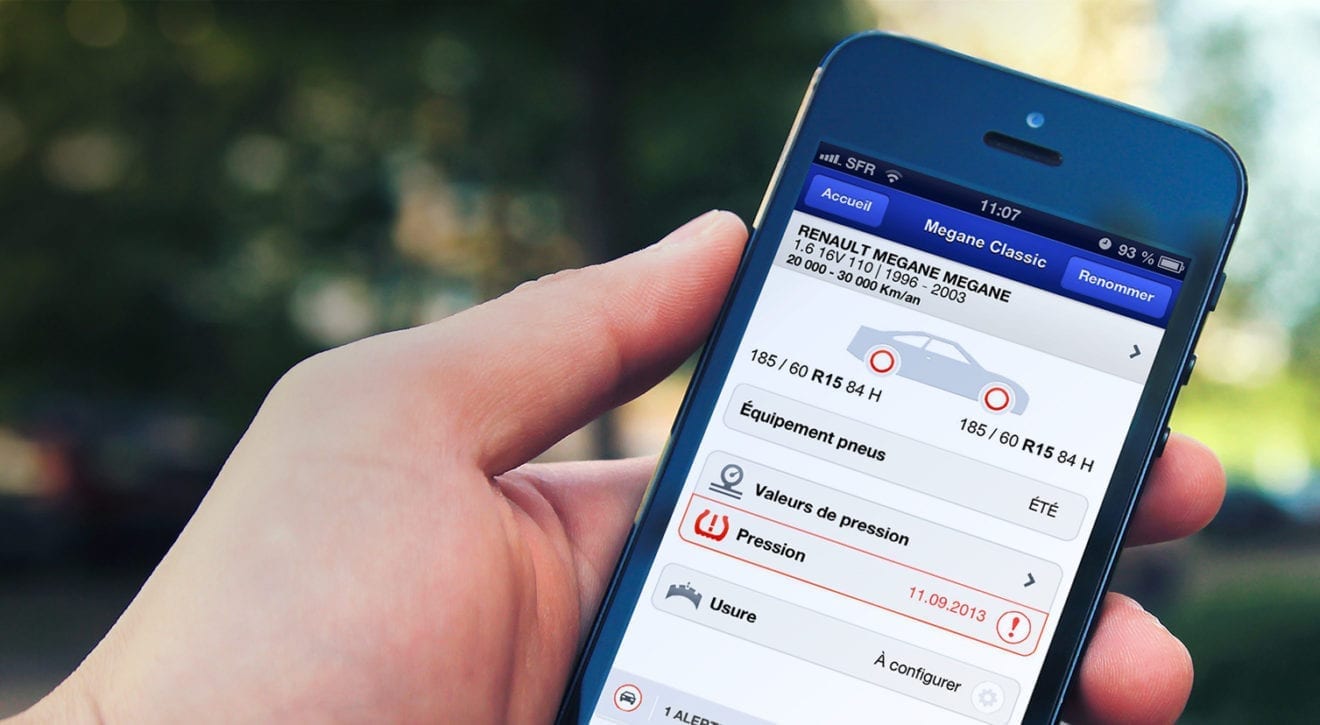
    Opening a ton of tabs in Chrome, even the mobile version, is something that many of us are all too familiar with. The current card-style interface of the Chrome app is alright when you have only a few opened tabs, but going over 10 often leads to confusion and excessive scrolling to find what you’re looking for. A new feature headed to Google Chrome on Android aims to resolve this issue by introducing tab grouping and a redesigned tabs screen.

    The long-press menu will offer a new option, “Open in new tab group,” that allows you to bunch sites together in groups. Starting a group makes a bottom navigation bar appear where the various tabs in the group are displayed as favicons for easy switching between them. Tapping the “Tab” icon next to the search bar brings you to the new tabs screen. The card stack interface is gone, and in its place is a thumbnail view that shows snapshots of where you left of on different pages in a vertical gallery style.

    Tab groups are displayed like folders, each showing the total number of tabs inside the group, alongside thumbnail previews and favicons for the first four pages. Taping on a group opens an expanded view, which is very similar to the tabs screen. This really helps when you have quite a few tabs opened in Chrome, and you want to group some of them based on topic.

    The new interface is currently a work in progress, so it’s lacking some polish, but should be ironed out in the near future. Like most other features added to Google Chrome, this one is already accessible in the Canary version on Android. As such, it is still in the testing stages and may not perform as it will in the final release. Still, if you’re eager to try it out, you can do so by typing “chrome://flags” in the URL bar in Chrome Canary, and searching for “enable-tab-groups-ui-improvements.” Enable the option, restart the browser twice, and you should be ready to go.

  • India plans to implement fixed number portability

    India plans to implement fixed number portability

    India’s Department of Telecom has asked telecoms regulator Trai to draw up recommendations for the planned implementation of nationwide fixed number portability.

    The department has sent a reference to the regulator on fixed line portability in line with the government’s planned ‘one nation, one number’ policy.

    As part of the proposal, India would transition to 10-digit fixed line numbers, by merging current STD codes with the seven to eight digit landline numbers.

    India started implementing mobile number portability since 2010, starting with specific telecoms circles or service areas. The ability to port numbers between service areas was introduced in July 2015.

    Since 2010 India’s mobile operators have fielded more than 428.4 million porting requests.

    But according to the report, the Department of Telecom expects the implementation of fixed number portability to be significantly more complicated, due to issues including copper last mile connectivity and the presence of competing fixed line service providers.

    As a result, the department expects the consultation and recommendation drafting process to be a protracted one.

    Porting landline numbers could also take more time than porting mobile numbers – which can currently be completed in between two to four days.