Tag: asia

  • BMW 8 Series Gran Coupe Teased Getting Ready for June

    BMW 8 Series Gran Coupe Teased Getting Ready for June

    We’ve gone gaga over the 8 Series Coupe when BMW first teased it. It looks jaw-dropping gorgeous but it left us wondering if the new flagship will be limited to two-doors. Sooner rather than later, the spy pictures of the four-door Gran Coupe surfaced online and we just couldn’t wait to see the car. Finally, the Bavarian carmaker has teased the 8 Series Gran Coupe and has confirmed that the wraps will be pulled off this year in June in Munich.

    BMW came up with a rather interesting strategy to reveal the 8 Series range. Two of the best looking models of the line-up- the two-door coupe and convertible were shown first and they just blew our mind. And finally the four-door Gran Coupe has followed. Though the teaser image reveals the side of the Gran Coupe which looks gracious and sumptuous, the front and rear are expected to be identical to its two-door counterpart. However, the wheelbase will be larger than the Coupe version, given that it will seat four. The sharp flowing character lines build upon the aesthetics and the rising shoulder line looks strong throughout its length. The low slung stance further keeps the sporty quotient intact.

    BMW will launch the 8 Series Gran Coupe in September this year which is when we would get to know more about it including the engine line up. We expect it to share engines with the latest-generation 7 Series sedan. So the 3.0-liter, inline six-cylinder petrol, and diesel engines are expected under the hood.

  • UOB Launches Comparison Website for Utilities

    UOB Launches Comparison Website for Utilities

    United Overseas Bank on Monday launched Singapore’s first online utility marketplace by a bank, as part of the Open Electricity Market initiative. United Overseas Bank (UOB)’s utility marketplace will add to an existing array of comparison websites under Singapore’s Open Electricity Market initiative by the Energy Market Authority. Featuring 10 utility providers on a single website, customers can now search and sign up for the best deals for electricity, gas, water, broadband and TV services.

    With utility bills making up an average of about 10 percent of monthly household expenses, we want to help people stretch their household budget, said Jacquelyn Tan, UOB’s head of personal financial services Singapore in a media statement.

    With more than 50 different plans offered by electricity retailers under the Open Electricity Market rollout, Singapore consumers could find it time-consuming to find the right electricity plan.

    The UOB Utility Marketplace aims to make it easy for consumers to compare providers and plans through its Electricity Price Plan Recommender. Users simply need to indicate if they prefer a fixed price or discounted price plan, their preferred subscription tenure, and their monthly electricity bill budget.

    A list of suitable electricity plans and potential savings will then be generated based on their selection. Consumers are then directed to the electricity partner’s website to sign up for their plan of choice. In all, the process takes less than 10 minutes to complete, the bank said.

  • HTC’s April Revenue Figures Still Low Despite Efforts

    HTC’s April Revenue Figures Still Low Despite Efforts

    HTC had a pretty rough start to 2019 with record-low revenue numbers in both January and February. Nevertheless, things then started to look more positive in March as HTC’s sales increased dramatically thanks to the popularity of its VR headsets. But as revealed by the company’s latest figures, this resurgence was short-lived.

    Between April 1st and April 30th, HTC generated a total of NT$0.59 billion ($19.07 billion) in revenue. It’s unclear how this figure is split between smartphone and VR sales, but it, unfortunately, represents yet another record-low for the HTC One creators. Comparing the results to previous ones, April’s numbers translate into a big 54.85% month-on-month drop from the NT$1.31 billion ($42.46 billion) it generated in March and also amount to an even bigger 71.77% year-on-year decline.

    Way back in December, HTC stated that its focus for 2019 would be turning a profit and regaining its market share in the smartphone segment. So far, though, the Taiwan-based company has done little to achieve this with zero launches since December and no devices on the horizon. HTC has, however, released the Vive Focus Plus VR headset and launched its Viveport Infinity subscription service.

    Looking to the second half of 2019, HTC is largely expected to announce its first 5G flagship smartphone. Presumably, this will be available to purchase through multiple carriers and will provide a decent boost to the company’s finances. Additionally, rumor has it HTC is negotiating a brand licensing deal in India which could prove beneficial too.

  • Singapore May Allow Virtual Banks

    Singapore May Allow Virtual Banks

    Singapore may permit virtual banks to operate in the city-state, following in the footsteps of Hong Kong, said DBS chief executive.

    If virtual banking licenses were handed out in Singapore, it would step up the competitive pressures faced by incumbent lenders. However, those who have upgraded their digital capabilities should not fear this new form of competition, said DBS chief executive Piyush Gupta.

    To my mind, that’s just basically giving a few more banking licenses, said Gupta, who was speaking in an interview with Bloomberg. Virtual banks could typically generate $100 income at 25 to 30 percent of operating costs, according to experts. In comparison, DBS’s cost-to-income ratio stood at 44 percent last year.

    In the interview, Gupta does not see a problem with having virtual banking licenses in Singapore unless these virtual banks are allowed to operate on more lenient terms than incumbents, such as lower capital requirements held.

    The real challenge is if the regulators create an unlevel playing field, and let the new bank licensees come in and do banking on different terms, he said. However, he felt that most regulators don’t seem to be inclined to do that.

  • Paperless Trade Financing an Inevitability

    Paperless Trade Financing an Inevitability

    The paper-filled world of trade financing is ripe for reform as the expertise of forgers in faking documents used by banks is forcing the industry to digitalize.

    Trade financing is being forced into the digital age because of the scale and expertise of forgery, said Ng Chuey Peng, Oversea-Chinese Banking Corp’s (OCBC) managing director, and head of global commodities finance, in an interview with Bloomberg.

    The widespread use of paper in trade financing – to establish the existence, ownership, and provenance of goods – stands in contrast to the high-tech world of finance, but is critical for banks to issue loans for trades. Digitalization and high levels of security can improve efficiency and help reduce fraud in trade finance by removing paper documents that are often manipulated.

    Ng said that OCBC is currently working on projects «that leverage technology in order to reduce the use of paper in commodities trade finance,» without providing further details.

    OCBC started its trade finance unit in 2014. Since then, it has tripled its number of trade financing customers, Ng said, Bloomberg reported. She added that the bank will soon add a Hong Kong and U.S.-based team for this business.

  • Indian startup RealTell launches gamification for Retailers

    Indian startup RealTell launches gamification for Retailers

    Offline retail is here to stay,” says founder of in-store experiential service.

    Retail tech startup RealTell is launching its flagship product “Realtell Retail” for fashion and lifestyle brands.

    “Offline retail is here to stay,” said Ashish Mittal, chief mentor at Turning Ideas Ventures (which incubated RealTell) “and this startup helps retailers, primarily the fashion and apparel brands, to drive footfall and increase basket size by gamifying the offline shopping experience.”

    The company was started by two young college entrepreneurs from Shri Ram College of Commerce (SRCC) Delhi University, Sanyam Gupta and Shivendra Misra.

    In a statement, the company said its kiosk solutions will help shoppers to discover new combo prices for the fashion and other retails products every day, based on artificial intelligence and machine learning, driving footfall to stores and turning the buying experience into a game.

    Press materials released by the brand observed that while online retailers have detailed information about shoppers – because every click can be tracked – offline retail stores lose out on valuable shopper insights due to the lack of proper infrastructure and technology.

    With its patented technology, RealTell Retail gamifies the shopping experience by letting shoppers discover a dynamic price for products of their choice.

    “Imagine walking into a store, scanning your items at a kiosk and saving money at each visit,” said Misra.

    “What’s exciting is that the prices and the offers change every day. That’s what no one has been able to do. The industry has relied for long on the rule of thumb and guesswork but never before has it been able to make data-driven decisions at scale to make the experience of the end-customer so good that they want to come back again.”

    Cofounder Sanyam Gupta added: “It is about making the customer the king and having a compelling value proposition to drive footfall that offline retailers will not experience with the traditional systems that they use.”

    The startup has deployed its solution in more than 900 stores under lifestyle manufacturer Crimsoune Club pan India.

    “Mobility is clearly the future of retail and lifestyle brands will have to stay on top of the wave to continue to grow and innovate,” said Crimsoune Club director Piyush Mangla.

    “RealTell has already helped Crimsoune Club manage the business at the click of a button and now, drive more footfall to stores, something which offline retail stores have struggled for long.”

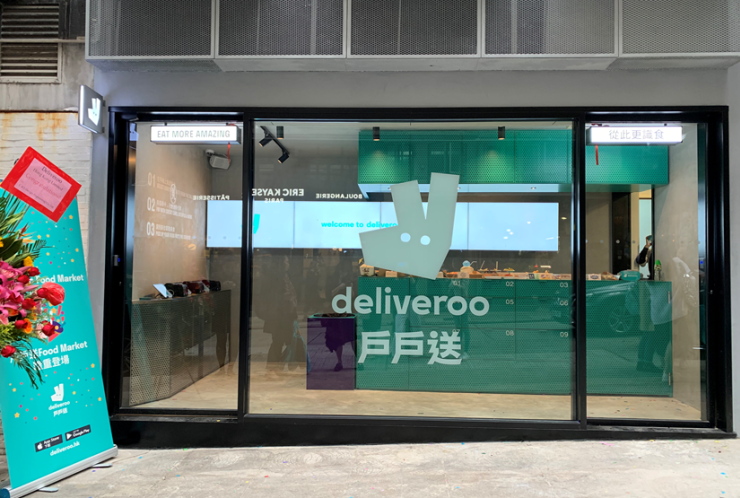
  • Deliveroo appoints Susana Voces as new Vice President for Restaurants

    Deliveroo appoints Susana Voces as new Vice President for Restaurants

    Deliveroo has appointed Susana Voces to be the company’s new Global Vice President for Restaurants. This comes as Deliveroo has expanded rapidly across the world, now in 14 markets and working with 80,000 restaurants.

    Mrs Voces will be working in Deliveroo’s London HQ and brings a huge amount of experience to this vital role. Mrs Voces was previously the General Manager for Ebay Italy and Spain. In these roles she reinforced the company’s position in both countries, achieving a high level of notoriety for the marketplace platform and consolidating a business of 7.5 million active users and 40,000 professional sellers.

    Before then Mrs Voces was Country Manager for Ebay Marketplaces in Spain and Head of Merchant Services for PayPal in Spain and Portugal. Experience in these roles, as well as having worked at Ericsson for seven years and has a Masters in Business from Harvard, mean Mrs Voces will help Deliveroo continue to improve its offer to restaurants.

    Restaurants that work with Deliveroo are able to reach customers they otherwise would be unable to and see their revenues increase by up to 30%. In 2019 Deliveroo is committed to being the partner of choice for restaurants in all markets. The company and Mrs Voces’ priorities for restaurants will be:

    • Innovation. Deliveroo helps restaurants create Virtual Brands – completely new brands run out of restaurants’ kitchens, increasing choice for consumers and sales for restaurants. Deliveroo’s Editions delivery-only kitchens enable restaurants to expand to places they otherwise wouldn’t be able to as they reduce the cost and the risk for partners. Deliveroo will continue to roll out innovations that help restaurants extend their menus and reach a wider customer base.
    • Data insights. Deliveroo has unique insights on how restaurants’ delivery services perform. Restaurants can use this via Deliveroo’s ‘Restaurant Home’, which provides data on performance, to learn how to improve their service and understand where their competitors have an advantage.
    • More freedom on the platform. Deliveroo’s ‘Marketer’ gives restaurants greater freedom to launch their own discounts and promotions on the platform. Restaurants get 30% more orders when they run an offer with Marketer, on average.
    • Marketplace+. Deliveroo is uniquely enabling restaurants to fulfill orders either with their own rider fleets or though Deliveroo riders. This service, ‘Marketplace+’, dramatically extends the delivery service restaurants are able to offer while improving delivery times.
    • Increased selection for consumers. Deliveroo has enabled consumers to be able to order from further afield; at the end of last year, customers could on average see double the number of restaurants they could see at the beginning of the year. This increases overall order volumes on the platform, benefiting all partners.

    Susana Voces said, “This role is hugely exciting. Deliveroo is a company with huge potential. There are so many amazing restaurants out there, from household name chains to innovative street stalls, and we want everyone to be able to order whatever they want whenever they want it, catering for every occasion. This is a great, ambitious company and I can’t wait to get stuck in. Everything we do will be about supporting restaurants and helping them to grow, making their food available to as wide an audience as possible.”

    Brian Lo, General Manager of Deliveroo Hong Kong, said, “Deliveroo has always led the way in bringing new innovations to local food sectors and it is great that Susana is joining to help us continue to improve the support we offer to restaurants. She has huge experience and talent and will help the team ensure we are offering customers and restaurants the best possible food experience.”

  • DHL eCommerce Solutions names Samuel Conroy as MD in Vietnam

    DHL eCommerce Solutions names Samuel Conroy as MD in Vietnam

    DHL eCommerce Solutions, a division of Deutsche Post DHL Group, has named Samuel Conroy as managing director for Vietnam. Prior to joining DHL, Conroy held senior general management roles in various Southeast Asian countries and was most recently the CEO of the Middle East Cluster for Damco Logistics.

    “Samuel brings with him a wealth of knowledge in the logistics business as well as general management experience gained from working across different markets in both country and regional capacities,” said Kiattichai Pitpreecha, CEO, DHL eCommerce Solutions Southeast Asia. “His enthusiasm and strategic hands-on leadership approach will be crucial to exceeding customer expectations and delivering profitable growth.”

    Conroy’s extensive general management experience has been supplemented with previous project management and functional implementation successes across a broad logistics environment. He previously also served as the director of the Australian Chamber of Commerce in Vietnam.

    “Vietnam currently has one of the fastest growing e-commerce markets in the world,” said Conroy. “With more than half of Vietnam’s population already using the internet and more than 50 million smartphone subscribers, we must fully utilize our e-commerce capabilities across the DHL divisions to help our customers create a strong base of operations and overcome infrastructure challenges to capitalize on that speed of growth.”

  • Google Maps is Adding Yelp Features

    Google Maps is Adding Yelp Features

    Over the past couple of years, Google Maps has transformed from a simple navigation app to one of the most powerful information databases for travelers and commuters around the world. Booking a hotel room, reserving a table at a restaurant, or simply checking working hours are all things made increasingly easy through Google Maps with its community-driven spirit. Soon, a new feature will be added to that ever-expanding list that will challenge Yelp.

    Crowd-sourced reviews are nothing new on Maps. As is, the app sends notifications to users, prompting them to rate places they’ve visited, and encourages them to share pictures. However, Google is looking to implement a new, dedicated food review system into the app, thus allowing users to rate individual dishes when visiting restaurants. The system will take a few factors into consideration, such as pricing, quantity, and quality, and will ask users whether they’d recommend the dish or not. And, of course, everyone will be encouraged to snap some photos of the impressive (or otherwise) dishes that they got served.

    Select venues on Google Maps already offer a “Menu” tab that can give you a rough idea of what to expect and how much it will cost, but the update aims to expand this functionality and put crowd-sourced reviews at the forefront. Ultimately, the goal is to have detailed menus for each venue, divided into sub-tabs based on popularity and the type of dish.

    Currently, dishes in the “Menu” tab are presented in a simple list form, but in the future, they will appear in card form alongside user-made photos. You will be able to tap on them to see others’ reviews, leave your own, suggest edits, and so on. Google has already started an initial testing phase of the feature. A wider roll-out can probably be expected in the coming months.

    With the implementation of food reviews in Maps, Google has Yelp in its sights. Both apps have long offered similar features, including restaurant reservations and user reviews, but Yelp had the edge when it came to detailed, crowd-sourced food reviews. With Maps adding this feature to its roster, it has the potential of becoming a viable Yelp competitor on all fronts.

  • Two thirds of large companies plan to invest in UC

    Two thirds of large companies plan to invest in UC

    When car rental company Hertz needed to take its unified communications (UC) to a new level, it teamed up with IBM and Ribbon Communications to make it happen.

    According to Monica Gionet, director of UC at Hertz, the company has, for the last 3 years, outsourced its IT transformation to IBM, from helpdesk to UC infrastructure.

    Working closely with the IBM and Ribbon teams, Hertz now enjoys simplicity with its UC solution on the cloud serving multiple locations globally, especially in the ease of scaling up and down according to needs and demands, and ease of use for its end-users taking calls and orders for car rentals.

    Many other businesses, large and small, are experiencing – or looking to experience – similar transformations, seeing the need to improve customer and employee experiences, enhancing workflows and productivity, and to enhance security.

    Over the past year, on the Asia Pacific service provider front, Hong Kong Broadband and Optus have launched Communications-Services-as-a-Service (CPaaS)-powered offerings. This represents a growing trend in which large service providers are turning to CPaaS solutions to quickly deliver their enterprise and developer customers carrier-grade, no-code to low-code, real-time communications (RTC) capabilities.

    Ribbon Communications, a global software leader in secure and intelligent cloud communications, recently completed a comprehensive research study it undertook to understand the purchase drivers and buying behaviors of SMEs and enterprises around the world.

    The results were first unveiled by Patrick Joggerst, CMO and EVP Business Development, in his keynote speech at Perspectives19 held in Washington DC this week.

    Ribbon’s global survey reached 4,800 decision makers in 23 countries at businesses ranging in size from 5 to many thousands of employees, asking questions aimed at understanding who these companies are buying services from today, how they use collaboration tools and video conferencing, how they are managing their IT and their adoption of Unified Communications. The companies represented a wide range of industries.

    Respondents were from Australia, Austria, Belgium, Canada, China, France, Germany, Hong Kong, India, Italy, Japan, Malaysia, the Netherlands, New Zealand, Portugal, Singapore, South Africa, Spain, Switzerland, Thailand, the UAE, the UK and the US.

    The survey found that, of the organizations who have not yet invested UC technology, 68% of large (more than 1,000 employees) companies and 46% of small (1-20 employees) planned to adopt some form of UC in the next two years.

    The numbers were even more striking for mid-sized companies, with 67% of those with 21 to 100 employees and 71% of those with 101 to 1000 employees predicting the same timeframe.

    “Clearly, the UC value proposition resonates across cross-market and cross-industry no matter the size of the company,” said Patrick Joggerst, CMO & EVP of Business Development, Ribbon. “Our findings highlight the significant market opportunity to serve these organizations, and results also provided us with some unexpected findings….”

    For instance, UC adoption is more advanced (41%) in large companies than in small ones (10%), contrary to the view that smaller companies are usually the first to leverage new technologies.

    The research also highlights security’s key role in a comprehensive UC solution, with a staggering 56% of respondents admitting they have been victimized by attacks running the gamut from DDoS to robocalls, and 83% of respondents wanting their UC providers to be responsible for providing protection.

    Meanwhile, 28% of respondents have deployed or are already deploying SD-WAN. About three-quarters are familiar with the concept, and 17% are planning to deploy SD-WAN in the near future. Deploying SD-WAN with session border controllers (SBC) makes sense especially for securing and ensuring mission-critical communications.

    Additional findings include:

    • The UC market still offers a number of growth prospects — Ribbon estimates that the available US market comprises 85 million seats.
    • A significant number (39%) of UC adopters purchased their service from “traditional” providers (LECs in the US and national carriers in the rest of the world), with the next 30% of buyers evenly split between competitive carriers and IT services companies. Mobile carriers, on the other hand, only accounted for 4% of purchases.
    • The numbers change significantly for those who have not yet purchased UC services. Their stated preferences run to traditional providers (21%) and mobile carriers (16%), followed by cablecos, competitive carriers, equipment providers and IT services companies each accounting for 11% of stated intention.
    • Of the 83% of respondents who felt that UC providers should be responsible for the security of IP communications, 18% were willing to pay extra for this capability.

  • Airtel granted partial stay on $1.2b spectrum charge demand

    Airtel granted partial stay on $1.2b spectrum charge demand

    India’s Telecom Disputes Settlement and Appellate Tribunal (TDSAT) has granted Bharti Airtel and Tata Teleservices on the 83 billion rupees ($1.19 billion) demand from the Department of Telecom as a condition of approving the merger between the two companies.

    The tribunal has directed Indian authorities to clear the merger subject to a stay on around 70 billion rupees in one-time spectrum charges.

    But Bharti Airtel has been asked to submit 50% of around 12.87 billion rupees in one-time spectrum charges related to a license in Chennai.

    The tribunal case is still ongoing, with the next hearing scheduled for July.

    Bharti Airtel arranged to acquire Tata Teleservices’ consumer mobile business in 20 as part of the wave of consolidation that swept the sector after the entry into the market of Reliance Jio Infocomm with an aggressive price promotion.

    The Department of Telecom approved the merger last month, but only on the condition that Airtel submits a bank guarantee covering the department’s spectrum charge demands. Airtel subsequently appealed the demand for this guarantee with the tribunal.

  • Vodafone Idea taps Ericsson for cloud packet core

    Vodafone Idea taps Ericsson for cloud packet core

    India’s Vodafone Idea has contracted Ericsson to deploy a cloud packet core to enhance its existing core network.

    The deployment forms part of the operator’s ongoing network modernization program. It is aimed at enabling speedier introduction of new services and providing full-service continuity over the operator’s network.

    Under the agreement, Vodafone Idea will deploy Ericsson core network applications and network functions including the Ericsson virtual Evolved Packet Gateway (vEPG), Service Aware Policy Controller (vSAPC) and Virtualization Infrastructure (NFVi) solutions.

    The NFVi solution is designed to enable operators to deploy virtual telecom, OSS, BSS, IT and media applications at a low total cost of ownership.

    “Data consumption in India is growing rapidly and users are looking for new, richer experiences every day,” Vodafone Idea CTO Vishant Vara said.

    “At Vodafone Idea, we endeavor to stay ahead of the curve by investing in technologies and solutions to address the evolving demands of millions of our customers in India. We are confident that Ericsson’s vEPC solution will enable us to meet our strategic goals.”

    Ericsson head of digital services for SEA, Oceania and India Alvise Carlton added that the project is one of the vendor’s largest virtual evolved packet core deployments globally to date.

    “This will not only provide VIL the scale and reach to address the growing data traffic levels in India, but the advanced cloud infrastructure will also enable VIL to tap new revenue streams in SMEs and IoT.”

  • Apps that have Revitalised Dated Concepts

    Apps that have Revitalised Dated Concepts

    In the past few years, we’ve increasingly seen businesses use apps to drive revenue either through ad space, paid access to premium features, or even a small download cost.

    The latest information from Statista reveals the scale of the market, with data showing that Android users are currently able to download 2.1 million apps, closely followed by Apple users who can download 1.8 million apps from the App Store.

    Data released by Apple and Mashable has revealed that YouTube was the most downloaded app of 2018, closely followed by Instagram and Snapchat. Meanwhile, in the gaming chart, Fortnite edged out Helix Jump and Rise Up. However, although many people first think of gaming and social media, there are many other successful apps that have revitalised dated concepts in order to gain success. Here, we review three of these.

    Bingo Apps: Bringing Dated Games to the 21st Century

    Online bingo apps have helped to revive what many people considered to be a ‘care home hobby’ to a mainstream form of entertainment. Lessening reliance on bingo halls, apps and websites have allowed people to play from the comfort of their own home (or anywhere in the world) at a time that suits them.

    As well as expanding the target market for bingo users, online bingo has allowed providers to specifically target new users and customers. As part of this, we’ve seen companies such as Buzz Bingo provide a new level of accessibility to draw people into a new experience using their app, which gives players access to over a dozen game variants.

    Transport Apps: Travel at Your Fingertips

    The travel industry has been revitalised by apps and technology. Whereas customers used to be reliant on queuing in taxi ranks or calling operators to try and find an available taxi, apps like Uber have allowed customers to receive all this information in the palm of their hand. From the app, which is now used by 95 million people monthly, customers can find their nearest taxi and assess the cost of their ride before booking directly via the app. Plus, much like with bingo apps, providers such as Uber also offer incentives such as ‘£10 off your first ride’ to help entice customers to the platform.

    To compete with Uber, we’ve also seen public transport catch up with the trend, with numerous rail and bus providers now offering their own apps for direct booking, which has lessened the need for customers to carry cash for journeys.

    Loyalty Cards: Lessening Paper Demand and Offering Targeted Benefits

    Remember the days when your wallet or purse was packed with loyalty cards? Well, thanks to apps, these slips of paper are largely a thing of the past, offering benefits for customers and businesses alike.

    As well as helping customers to keep track of their benefits, these apps allow businesses to generate sales data and audience profiles, helping them know how regularly customers visit, what their favourite orders are and where they usually buy from. This means that they can offer targeted advertisements and promotions aimed at increasing customer loyalty.

    The Starbucks app, for example, allows customers to pay for their purchases, find stores, redeem rewards and even order and pay in advance, allowing app holders to skip the queue.

    Looking to the future, it appears likely that we will become increasingly reliant on apps such as these, and it may only be a matter of time until all aspects of our lives are governed via smartphones. We could, for example, even see electronic voting, which has already been trialled in Australia and Belgium. With additional security measures required, many people see this as the final frontier due to cyber-security concerns, but it appears as though the sky is the limit for what we can do with apps.

  • Procter & Gamble Starts S$12m Innovation Hub in Singapore

    Procter & Gamble Starts S$12m Innovation Hub in Singapore

    Procter & Gamble Singapore has announced a S$12 million innovation investment to create the next billion-dollar corporate concept for Singapore. GrowthWorks was announced on the 5th anniversary of P&G’s Singapore Innovation Center (SgIC). The intrapreneurship hub will focus on new brands, new technologies and new business models. Working in cooperation with P&G Singapore’s $250 million R&D division, P&G hopes that the next big idea in international business will crop up in Singapore.

    Procter & Gamble is a consumer goods company. Their famous brands like Max Factor, Old Spice and Gillette make them sought after by investors, as these brands have reach well outside the US market. Investing in Procter & Gamble takes investors into multi-national economies: the P&G stock was trading at US$108 on the eToro site on May 17, and their expansion into international markets like Singapore has much to do with this. Do we anticipate this news to precipitate further P&G stock price growth?

    Why Singapore?

    So why is American company Procter & Gamble putting so much emphasis on geographically tiny Singapore? For more than a decade, Singapore has topped the World Bank’s list of easiest countries in which to do business. Whether it is starting a business, paying taxes, receiving construction permits, or enforcing contracts, Singapore is generally faster, cheaper, and more efficient than anywhere else.

    According to the World Bank, it takes only 150 days, on average, to resolve a commercial dispute in Singapore. In the United States (7th place on the World Bank’s list), this would take 420 days. In Myanmar (167th place), a similar conflict would drag on for at least three years.

    P&G correctly identifies Singapore as the most fertile ground for new businesses to flourish. If P&G can convince their “intrapreneurs” to innovate on the scale they desire, GrowthWorks really could bring the next international billion-dollar business idea into fruition via Singapore.

    What Will the New GrowthWorks Innovation Center Bring to the Table?

    GrowthWorks won’t be concerned with the full product pipeline like the SgIC. Instead, GrowthWorks is focusing on “home run” ideas, concepts that can be developed elsewhere into innovative products or businesses, without burdening the GrowthWorks team with the difficulties of taking the concepts all the way through the multi-year development cycle.

    GrowthWorks puts an emphasis on “intrapreneurship” – a word referring to employees who act with all the inspiration and drive of entrepreneurs, but for Procter & Gamble, not their own private interests. S$8 million of the initial S$12 million P&G investment will go directly to the intrapreneurs, who will use their funding to conduct lean experiments for early concept development. They will work with relevant Singaporean companies and agencies to establish feasibility and other early conceptual design, with the aim of creating business ideas that are tailor made for the Singaporean marketplace. P&G hopes to see a minimum of S$3 billion-dollar ideas grow out of GrowthWorks.

    GrowthWorks represents one of the first dedicated corporate attempts to incubate new major businesses specifically for the Singaporean market, and it’s P&G’s most significant R&D investment outside of the United States.

    In the big scheme of things, S$12 million isn’t very much money for a multinational to invest in innovation. From our perspective, P&G is simply testing the waters in Singapore, seeing if the small nation can serve as a meaningful strategic outpost for expansion in the wider region.

    If the investment brings returns, P&G will have greater expansion opportunities in Asia than in the US, where it faces relative market saturation. Asia numbers its consumers in the billions, while America numbers them in the tens of millions. America may be the larger and more stable economy, but we can see the value of this strategic play in Singapore.


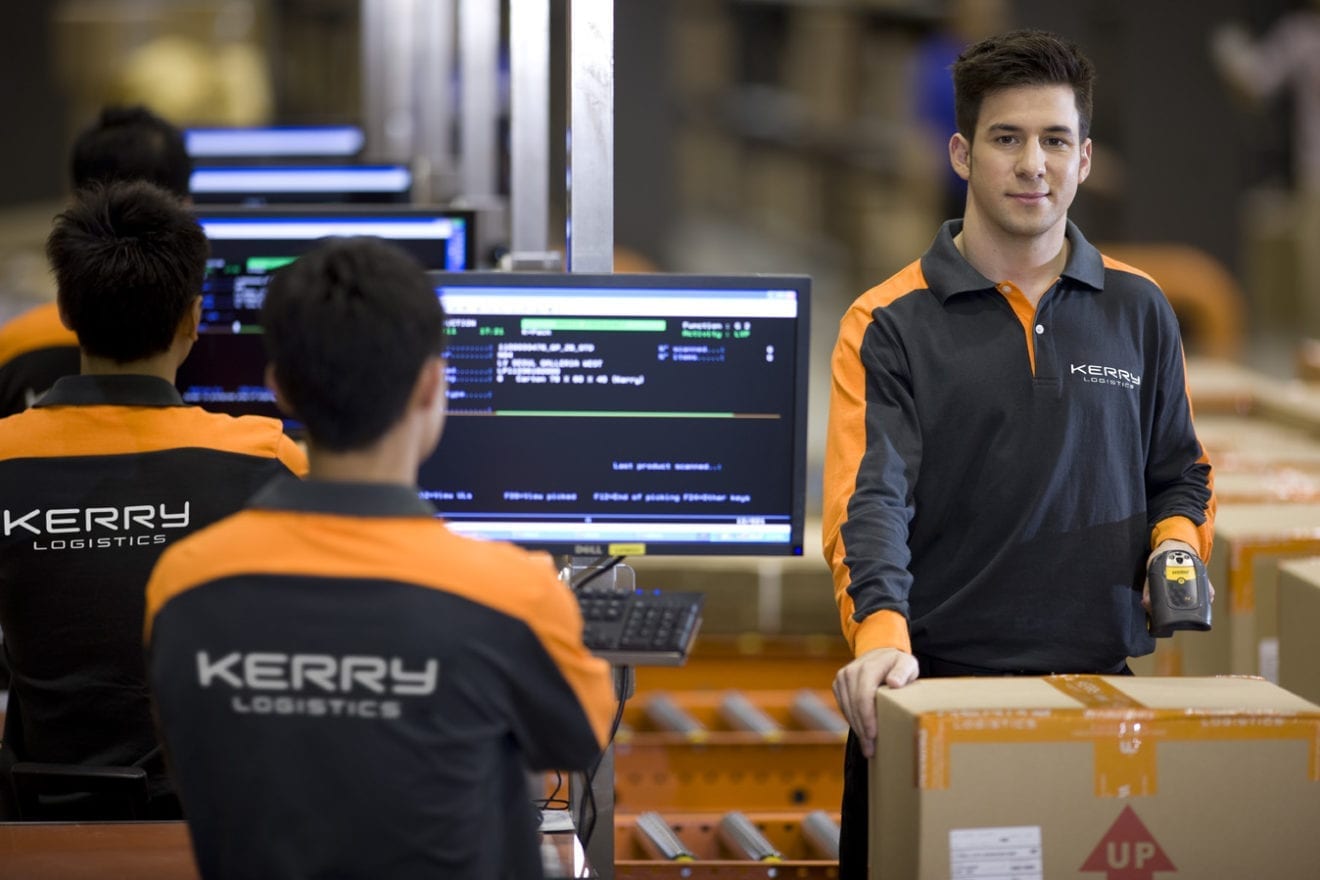
  • Kerry Logistics Appoints Martin Stoekenbroek as MD for EMEA

    Kerry Logistics Appoints Martin Stoekenbroek as MD for EMEA

    Kerry Logistics Network Limited (‘Kerry Logistics’; Stock Code 0636.HK) has appointed Martin Stoekenbroek as its new Managing Director – Europe, Middle East, and Africa (EMEA) with effect immediately.

    Based in Amsterdam, The Netherlands, Stoekenbroek will lead Kerry Logistics’ international freight forwarding business in the EMEA region and be in charge of its strategic development, focusing particularly on strengthening Kerry Logistics’ foothold and business portfolio.

    With over 30 years of extensive experience in the industry specialising in EMEA and global roles, Stoekenbroek brings a wealth of supply chain knowledge, insights, and expertise to Kerry Logistics.

    He was the Senior Vice President Global Air Freight of Geodis prior to this appointment, and has previously worked for top industry players including Wilson Logistics and TNT Freight Management.

    Mathieu Biron, Managing Director – Global Freight Forwarding of Kerry Logistics, said: “We warmly welcome Martin to our team.

    “Having built his career in logistics within the EMEA region for decades, Martin possesses an in-depth knowledge of our business in the region and a thorough understanding of the changing conditions of our industry.

    “He will be a vital part of our ongoing global expansion, providing visionary guidance as we realise our long-term strategy.”

    Commenting on his new appointment, Stoekenbroek said: “Kerry Logistics has been going from strength to strength through its worldwide expansion.

    “I am honoured to have the opportunity to apply my knowledge and experience to lead a strong team and help to propel the Group’s further development in the EMEA region.

    “At a time when the global supply chain is in flux, I look forward to contributing to Kerry Logistics’ progress and overcoming challenges to reinforce its position as a leading logistics partner connecting EMEA to the rest of the world.”