Tag: asia

  • Malaysia projected 4.9% retail sales growth for 2018

    Malaysia projected 4.9% retail sales growth for 2018

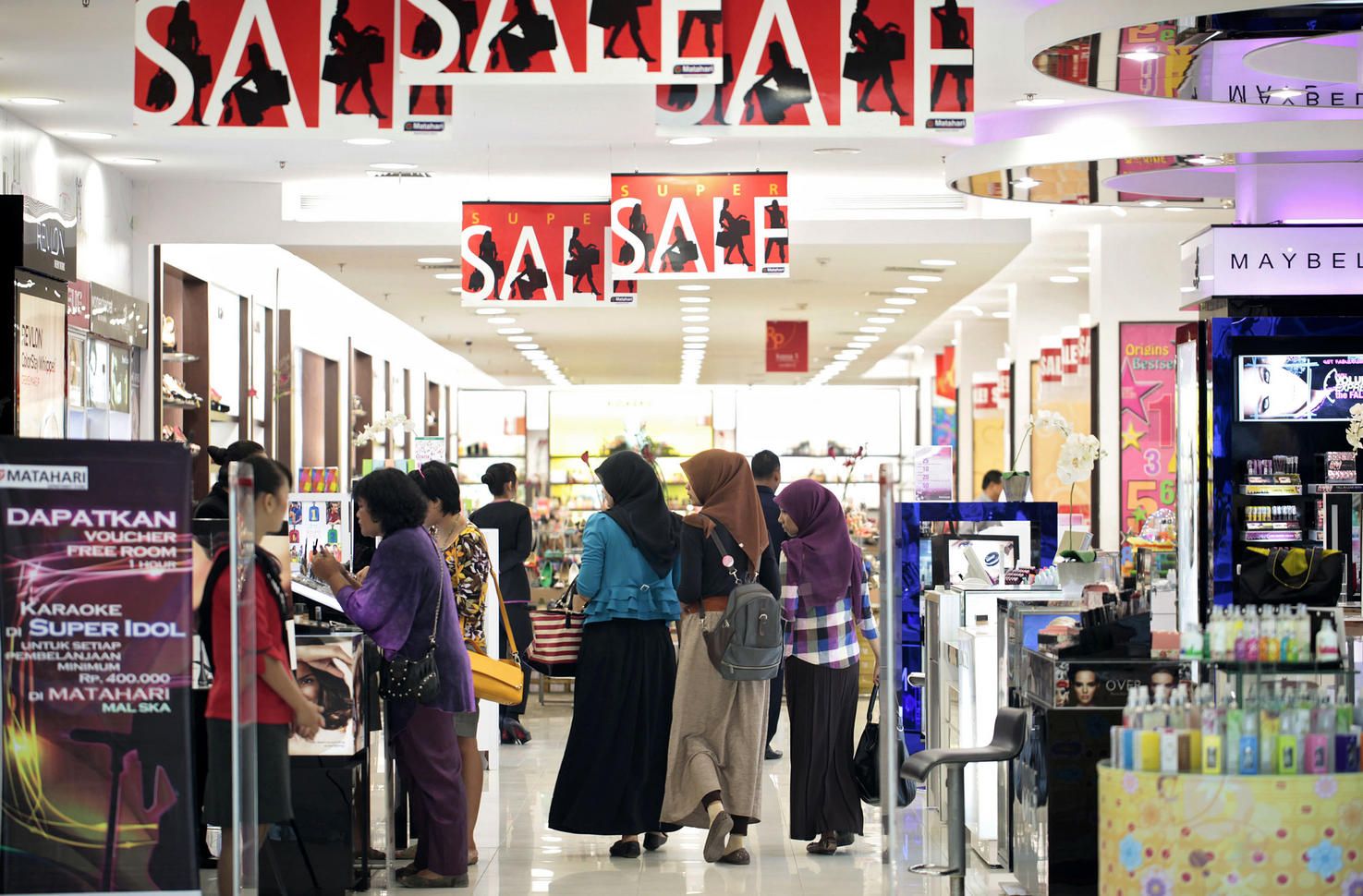
    The Malaysia Retail Chain Association (MRCA), which expects retail sales growth to come in at 4.9% for 2018 in line with the country’s gross domestic product growth, has pointed out that some of its members face difficulties in retailing online amid the push for e-commerce.

    MRCA, in releasing its first quarterly retail sales survey for the third quarter (Q3) today, highlighted that online sales make up only 3.9% of its retail revenue.

    The sample of respondents for the survey include 10% of MRCA’s members, representing 59 brands and 2,266 stores across a variety of trade categories, including food & beverage (F&B), fashion, health & beauty, supermarket & department stores, entertainment, optical, education, home improvement and more.

    MRCA president Datuk Seri Garry Chua said the association constantly reminds members to bring their businesses online and be part of the digital ecosystem, adding that MRCA also has digital membership for players like Lazada, Lelong and 11street, which are all its members.

    “We can also work closely with them (digital players) to reinforce and increase the market share for online. We’re confident the (industry) sales from online retail is going to be double-digit growth every year as more brick and mortar retailers go online, as with many start-ups,” Chua said.

    MRCA vice-president Datuk Liew Bin said although all members have an online presence, most of its members rely on the brick and mortar model and “survive happily on brick and mortar”, whereby online sales is regarded as a bonus to them.

    “With so many years in brick and mortar, it’s difficult for our members to turn to online. This is one of the challenges that our retailers face because (the) online (wave) is coming on strongly. This should be an alert to our members, as 3.9% is still a small figure,” Liew said, adding that MRCA expects online sales to grow 5% next year.

    Individually, he said some retailers have seen a 20% growth in their online retail sales.

    MRCA projected retail sales growth to grow 6.1% year-on-year in Q4 this year as year-end school holidays and the festive season are expected to bolster consumer spending; while an increase in the number of outlets is also expected to boost sales growth.

    It said retail sales grew 5.7% year-on-year in Q3 with the tax holiday between June and August that had encouraged consumers to spend.

    In Q2, retail sales grew at a slower rate of 2.1% year-on-year, affected mainly by the general election in May, where consumers held back on spending due to economic uncertainty.

    Retail sales grew 5.7% year-on-year in Q1 due to Chinese New Year sales and promotions.

    F&B, health & beauty and other retailers reported encouraging growth rate of 5.4%, 3.1% and 21.3% year-on-year respectively. However, fashion retailers suffered a negative growth in Q2 and Q3 at -2.2% and -2.8% year-on-year respectively.
  • DFS Group Kicks Off Its Seasonal Gifting Campaign

    DFS Group Kicks Off Its Seasonal Gifting Campaign

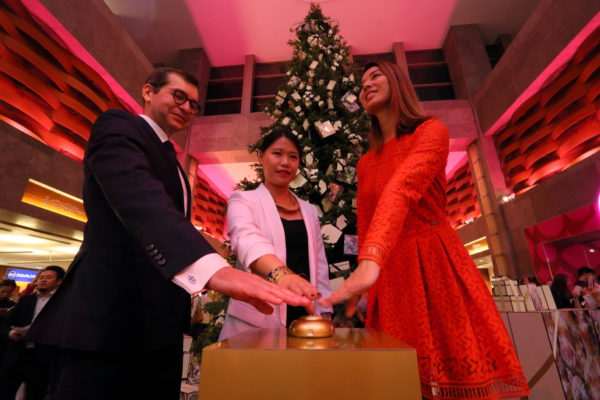
    DFS Group has kicked off its annual gifting campaign at T Galleria by DFS in Okinawa. The “Give Joy”-themed campaign opened on November 24, showcasing DFS’s first ever “Personalisation Gift Shop” concept, where an assortment of specially curated luxury gifts can be personalised, along with services. The concept will now be rolled out in T Galleria by DFS stores in Hong Kong’s Canton Road and Macau’s City of Dreams, along with stores in Singapore, Angkor (Cambodia), Saipan, Bali, Guam, Okinawa, Hawaii and Sydney.

    The store was transformed into a “gifting wonderland” at the launch as guests were invited to try the personalisation services – monogramming leather goods, and adorning t-shirts and tote bags with Foxy’s six DFS exclusive emoji iron-on patches.

    DFS Group executive VP merchandising Ariel Gentzbourger said: “Thanks to our unique approach to gifting, and our understanding of what our customers are seeking, we have created a shopping experience that is a joy in itself.”

    Gifting-themed entertainment at the event included a life-size advent calendar overflowing with holiday treasures, a special visit from Santa Claus and a “candygram” corner for guests to pick and mix sweet treats.

    View the gallery below for the report of the event (11 images) :

  • China could use Vietnam to avoid US tariffs: experts

    China could use Vietnam to avoid US tariffs: experts

    Experts said the U.S.-China trade war puts Vietnam at risk of fraud as capital moves into the country to avoid U.S. sanctions. Vietnamese products would face tough competition from China in both the domestic and overseas markets, Nguyen Thi Thu Trang, director of the Vietnam Chamber of Commerce and Industry’s (VCCI) WTO Center, said at a recent conference on the impact of the Sino-American trade spat.

    In the domestic market, China might seek to dump its goods on Vietnam to avoid Donald Trump’s tariffs. Cheaper Chinese goods competing with Vietnamese goods will not benefit Vietnam’s economy.

    In overseas market, China might borrow the “made in Vietnam” label to dodge U.S. tariffs.

    If this cannot be controlled, there could be grave consequences for Vietnamese firms since the U.S. might apply the same tariffs as they have done on China, according to industry insiders.

    Ho Duc Lam, chairman of the Vietnam Plastics Association, said his industry has been impacted by having to compete directly with Chinese companies as China might borrow the “made in Vietnam” label to dodge U.S. tariffs.

    Tran Dinh Thien, an economist and member of the Prime Minister’s Economic Advisory Group, noted that the trade war brings both opportunities and challenges for Vietnam, but it is up to local companies to identify the opportunities.

    He said the trade war has hit investors’ confidence causing them to pull out of emerging markets including Vietnam. The global supply chain is badly disrupted as a result, and the investment environment has become uncertain, he said.

    Lam argued that to protect domestic companies the government should consider import taxes if there are signs of a safeguard action.

    It should not issue licenses if there is no guarantee that more than two thirds of the production chain would be in Vietnam, and should promote free trade agreements with Europe and others to reduce Vietnam’s dependence on the U.S. and China, he added.

    Trang of the VCCI said since the trade war shows no signs of ending soon production enterprises should monitor the situation to respond nimbly to changes and should know where and how to take advantage of potential opportunities.

    It is known which goods face sanctions, so businesses should research about customers for those goods and offer them a better deal, she said.

    The U.S.-China trade war escalated in September with the U.S. levying an additional 10 percent tariff on about $200 billion worth of Chinese products. Washington is set to raise the tariffs to 25 percent in January if there is no agreement between the both sides.

    China retaliated with 5 and 10 percent tariffs on $60 billion worth of U.S. products.

  • Uniqlo online Hong Kong launches soon

    Uniqlo online Hong Kong launches soon

    Uniqlo Hong Kong will launch its online store on December 4. A spokesperson for the company said the online platform for Hong Kong and Macau is a fitting solution considering rising rentals and limited space for retailers in Hong Kong, along with the strengthening popularity of e-commerce in the region.

    The brand has operated an online flagship on Alibaba’s Tmall for nine years and has had its own online shop since October.

    According to Uniqlo’s CEO for Greater China Ning Pan, the two existing e-commerce platforms take 15 per cent of sales in China, the majority of that figure from Tmall.

    He explained that while TMall remains an important strategic partner, the new platform will allow the firm to leverage analytics and AI to evaluate buyer preferences.

    The Hong Kong site is now under testing, and will be fully operational come launch day in December.

  • Genting sues The Walt Disney Co for cancelled theme park contract

    Genting sues The Walt Disney Co for cancelled theme park contract

    Genting Malaysia Bhd’s share price fell as much as 18.6% today on news that it is suing Twenty-First Century Fox Inc and The Walt Disney Co for more than US$1 billion (RM4.19 billion) for terminating their contract to develop a Fox-branded theme park at Resorts World Genting in Malaysia. The Fox theme park is a key selling point of the Malaysian casino resort group’s multi-billion ringgit Genting Integrated Tourism Plan.

    Genting Malaysia told Bursa Malaysia today it is suing Fox Entertainment Group, LLC, Twentieth-Century Fox Film Corp, FoxNext, LLC (collectively known as FOX), Twenty-First Century Fox, Inc (21CF) and The Walt Disney Co for the termination of a memorandum of agreement (MoA) relating to the theme park project.

    The Walt Disney Co is in the process of acquring Twenty-First Century Fox.

    Genting Malaysia was the most actively traded counter on the local stock market today, closing 16.7% lower at RM3.00 with some 276.3 million shares traded. It opened lower at RM3 and fell as much as 67 sen from its last adjusted closing price of RM3.60, to trade at a low of RM2.93.

    In a filing with Bursa Malaysia, Genting Malaysia said it has filed legal proceedings in the US against FOX, 21CF and Walt Disney, in response to a notice issued by FOX in which it terminated the MoA and claimed about US$46.2 million (about RM193.6 million) in accelerated payments.

    “Genting Malaysia denies that FOX had grounds to terminate the MoA, denies any liability resulting therefrom, and has pursued cause of action against FOX for breach of contract, and breach of the implied covenant of good faith and fair dealing, among others,” it said.

    The group has also pursued cause of action against Disney and 21CF for inducing breach of contract and for interference with contract.

    The group said it intends to fully enforce its rights under the MoA, claim for the cost of its investments and consequential and punitive damages that in total will exceed US$1 billion, and such other reliefs to be determined by the court.

    Genting Malaysia said the litigation is not expected to impact its current business operations. It said the validity of the causes of action as well as the availability and extent of Genting Malaysia’s damages cannot be ascertained at this juncture.

    To recap, Genting Malaysia entered into the MoA dated June 1, 2013 with Twentieth-Century Fox Licensing & Merchandising, a division of Fox Entertainment Group, Inc. Genting Malaysia was granted a licence to use certain intellectual property rights associated with Fox theatrical motion pictures in connection with the design, development, construction and operation of what was to be called the Twentieth-Century Fox World Theme Park. The MoA was subsequently amended on June 10, 2014 and June 9, 2017.

  • Nike appointed two new leaders

    Nike appointed two new leaders

    Nike Inc is bolstering its executive management with its two latest hires. The U.S. sports giant has announced earlier in the month that Carl Grebert, currently the Vice-President, General Manager of the Global Jordan Brand, will become the company’s new Vice-President, General Manager of its Asia Pacific and Latin America (APLA) geography, effective December 1.

    In his prior role at Jordan, Grebert worked for 18 months and drove the basketball brand’s global product engines and marketing, merchandising, and oversaw Jordan category management teams for the brand, pushing the business into a position for the next phase of growth.

    Before Jordan, Grebert headed up the Japan geography team as Vice-President, General Manager of Nike Japan.

    He has also held senior roles in marketing and ran territory business units in Europe.

    Grebert replaces Ann Hebert, who will become the new Vice-President, Global Sales, after working as APLA head for two and a half years.

    Hebert will be responsible for driving Nike’s global sales teams and partnering with Nike Direct “to build a seamless Nike network that will continue to elevate service to consumers around the world,” said Nike in a statement.

    She replaces Mike Best, who has decided to retire after a nearly 30-year career stint at Nike.

    Likewise, Hebert has been at Nike for 23 years and served in various leadership roles.

    Prior to her APLA role, the Nike veteran was VP of the Global Nike Direct Partner business and led the North America sales team as the VP, North America Sales.

    Both new management roles will report to Elliott Hill, Nike’s President of Consumer and Marketplace.


  • Malaysia is Airbnb’s fastest growing market in Southeast Asia

    Malaysia is Airbnb’s fastest growing market in Southeast Asia

    Malaysia, one market in the region which has not stifled the growth of short-term accommodation, is Airbnb’s fastest growing market in Southeast Asia, welcoming over two million guests in the past 12 months as of July 1, marking a 99% growth year on year. Airbnb head of public policy for Southeast Asia Mich Goh said that Airbnb, as a platform, is not illegal in Malaysia and there is no clear consensus on what the policy is for short-term rental here as it is a new phenomenon.

    There are now 44,000 listings in Malaysia on Airbnb, which is almost a 60% year-on-year increase.

    Goh said the Malaysian government has been consultative and open to dialogue with the home-sharing platform, where there has been willingness to listen to insights and to hear about how it could help Malaysia to evolve its tourism industry.

    “We treat every country differently. We’ve seen countries all around the world where they reach a moment when they decide whether or not they need to regulate short-term rental. Where we see these discussions go well is where governments are open to discussing this with multiple stakeholders, not just us but open to speaking with hosts, guests, hotel group, local communities and neighbourhoods.

    “Where these discussions have been holistic and involve multiple stakeholders, we’ve seen it reach a stage where smart and innovative policies are implemented that allow the short term rental activity to continue and to thrive to the benefit of the community while making sure any concerns that groups may have are addressed through the regulatory framework,” said Goh.

    Airbnb has signed a memorandum of collaboration (MoC) with the Malaysian Productivity Council (MPC) and a memorandum of understanding (MoU) with Malaysia Digital Economy Corp (MDEC) to drive inclusive, sustainable development of tourism in Malaysia.

    As part of the MoC with MPC, Airbnb will share relevant data and best practices to inform recommendations on short-term accommodation policy in Malaysia, and will assist MPC in shaping national policy plans related to the development of Malaysia’s tourism industry and infrastructure, as well as local communities.

    Airbnb’s MoU with MDEC is focused on promoting digital inclusion and empowering local hospitality entrepreneurs in Malaysia, while building capacity in both homes and experiences throughout the country.

    In Malaysia, Airbnb is having discussions with authorities including the Ministry of Finance, the Royal Malaysian Customs and the Ministry of Tourism and Culture to discuss the implementation of Voluntary Collection Agreements (VCAs) to collect and remit tourist tax.

    The VCA is a tool designed by Airbnb to collect taxes from its host and guest community and remit them on their behalf. This helps to facilitate a streamlined process and lighten the administrative burden for local and state governments, as well as Airbnb hosts.

    Asked on plans by the government to tax e-commerce, Goh said Airbnb will comply once it is implemented. “We’re waiting to see how it would apply in Malaysia and how we would comply when the time comes.”

    In 2017, the Airbnb community contributed RM200.4 million to the local economy. Its typical host earned US$1,200 (RM5,200) renting out their space 19 nights a year. The top five inbound markets for Airbnb in Malaysia are Singapore, China, the US, Indonesia and Australia. Seniors (aged 60 and above) make up Airbnb’s fastest growing age group of guests in Malaysia.

  • Online Black Friday runs lackluster campaign in Vietnam

    Online Black Friday runs lackluster campaign in Vietnam

    Online Black Friday retailers failed to enthuse customers with usual discounts, while brick and mortar stores saw heavy traffic. E-commerce giant Lazada combined its Black Friday and Cyber Monday into a four-day promotional event, offering discounts of up to 70 percent, mostly on cosmetics and fashion items.

    New items were discounted by 15 percent, and the strongest price reductions were offered on low-value items of unpopular brands.

    Other e-commerce services claimed to offer bigger discounts, of up to 91 percent on Tiki and 99 percent on Shopee, but these were restricted to a particular time frame after which the discounts passed on to other items.

    However, such “flash sales” are familiar to online shoppers as daily offerings made by most e-commerce services.

    Thus, retailers failed to enthuse customers with the discounts.

    Minh Tien, an office worker in Ho Chi Minh City’s District 1, said that he regularly checks flash sale items on these websites. “It’s the same method this time, and I’m in no rush as the event will last three to seven days.”

    Market observers said another reason that Black Friday online sales in Vietnam failed to catch fire was the Chinese Singles’ Day promotional event held earlier this month and the upcoming Online Friday hosted by the Vietnam E-commerce and Digital Economy Agency (iDEA), under the Ministry of Industry and Trade, on December 7.

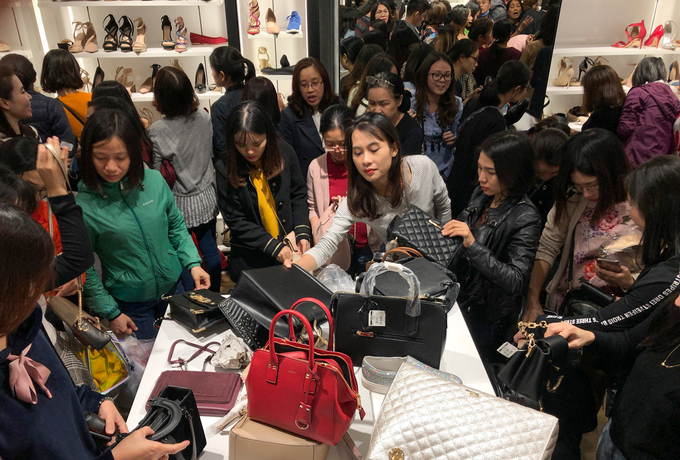
    But in contrast to the online market, the shopping atmosphere was vibrant at brick-and-mortar stores. People started to queue up at large shopping centers in Hanoi and HCMC early Friday.

    A large fashion store on Ba Trieu street in Hanoi offered a discount on all items for five hours, attracting a large number of customers.

    In other stores, customers had to wait for up to two hours to buy household items. Office workers joined the shopping frenzy at lunch time, only to find out they were late because shops stopped letting new customers after 11 a.m.

    As of 10 p.m. Friday night, customers were still queuing up at major shopping malls in Hanoi.

  • TM posts RM175m net loss in Q3

    TM posts RM175m net loss in Q3

    Telekom Malaysia Bhd (TM) suffered a net loss of RM175.59 million during the third quarter ended Sept 30 compared with a net profit of RM211.82 million a year ago, due to an impairment loss on network assets recognised during the quarter.

    In a filing with Bursa Malaysia, TM said it recognised a provision of RM934.8 million during the quarter for the impairment of fixed and wireless network assets following the continued pressure from challenging business, industry and economic conditions.

    It said that the impairment losses were projected based on an assessment of the recoverable value in use of the affected network assets at respective entity levels and it will continue reviewing the economic circumstances revolving around these assets in coming periods to reflect any potential impairment or recoverable value.

    Its core net profit, excluding non-operational items, stood at RM266.4 million, a 71% improvement sequentially while revenue for the quarter rose marginally to RM2.95 billion from RM2.94 billion a year ago on the back of higher data as well as other telecommunication related services revenue.

    During the quarter, UniFi recorded a loss of RM808.3 million compared with a profit of RM56.7 million a year ago, due to the impairment loss on network assets while revenue fell 2% to RM1.33 billion from RM1.36 billion a year ago due to lower revenue from voice services in line with a decrease in customer base and usage.

    This was partially offset by higher UniFi revenue in line with increase in customer base at 1.24 million as at end-September compared with 1.04 million a year ago.

    TM ONE recorded a 13.2% drop in profit to RM147.5 million during the quarter from RM170 million a year ago due to high operating costs, including the allocated impairment loss of network assets.

    Revenue for the segment rose 1.9% to RM1.12 billion from RM1.10 billion a year ago due to higher revenue from customer projects.

    As for TM Global, profit rose 9.1% to RM103.3 million from RM94.7 million a year ago due to lower operating costs while revenue rose 2.6% to RM562.8 million from RM548.4 million a year ago due to higher revenue from voice services.

    For the nine months ended Sept 30, net profit plunged 87.21% to RM83.5 million from RM652.74 million a year ago while revenue fell 1.74% to RM8.73 billion from RM8.89 billion a year ago.

    “The recent industry and market challenges have had major impact to the overall revenue estimates and earnings of TM Group in the financial year. TM anticipates that the challenging environment will persist for both our retail and wholesale segments,” the group said.

    In the midst of these challenges, TM said it will continue to focus on strengthening the performance of its core business and operations.

    In a separate filing, TM announced a revised dividend policy of distributing yearly dividends of 40-60% from its net profit, effective from the next dividend declaration.

    The group said that dividends will be paid depending on overall business and earnings performance, capital commitments, financial conditions, distributable reserves and other relevant factors.

  • Casa Perú Opens Its Doors In Beijing Mall

    Casa Perú Opens Its Doors In Beijing Mall

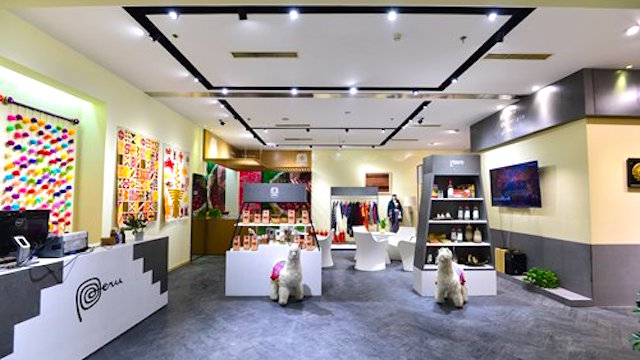
    The Peruvian Ministry of Foreign Commerce venture House of Peru has opened a store in Beijing. The outlet, which opened in Shimao Gongsan Plaza, Sanlitun, serves as a promotional platform for products from the South American nation as well as to popularise tourism in the region among consumers in China.

    Local store representative Huang Zhaohui commented that Peru is well-known for its alpaca wool clothing. The warm, light material has been promoted globally by Peru since establishing the Alpaca label in 2014.

    At the opening ceremony, Huang Zhaohui was awarded the title of “Peru-china Friendship Envoy” by the foreign trade and tourism minister of Peru to honour her contribution to the trade and exchanges between both countries.

    The store also retails food, coffee and Pisco wine.

  • Samsung Galaxy A9 to debut in Indian market

    Samsung Galaxy A9 to debut in Indian market

    Samsung Electronics has chosen India as the first country in which to release its Galaxy A9 mid-range smartphone. The company is set to begin sales of the model on Nov. 28.  The A9, introduced on Oct. 11 in Kuala Lumpur, in the presence of some 1,000 journalists and businessmen, is the first Samsung smartphone with four cameras on the back.

    “We are beefing up the smartphone lineup and marketing activities in India,” a Samsung spokesman said. “We plan to churn out smartphones best optimized for the Indian market at the newly established factory in India and supply directly to the local market.”

    In July, Samsung completed the expansion of its smartphone factory in Noida, south of the Indian capital of New Delhi. Work began on the 800-billion-won ($707,780) project in June 2017.

    Once the No. 1 smartphone vendor in India, Samsung has been overtaken by Chinese rookie Xiaomi, the world’s fourth-largest smartphone vendor. India is the world’s third-largest smartphone market.

    According to Counterpoint Research in October, Xiaomi accounted for 27 percent of the India smartphone market, up 5 points year on year, whereas Samsung captured 23 percent, the same share as a year earlier.

    India is a crucial market for Samsung, given that the company lost China to Chinese players. According to Strategy Analytics, Samsung’s market share in China slumped to a mere 0.8 percent in the second quarter, with Huawei taking 27 percent.

    Samsung launched eight models in its low-end Galaxy J series alongside premium models, such as Galaxy S9 and Note9, in India this year. The J series is the company’s the most popular lineup in India

    The A9 is a part of the trend of adding as many cameras as possible to smartphones. Its four cameras on the rear boast four different resolutions – 24, 10, eight and five megapixels. The first one is regular, the second has a telephoto lens and the third is for ultra-wide angle shots. The fourth, with the lowest resolution, serves as a depth camera that gives users the ability to manually adjust the depth of field of their images. That helps create so-called bokeh-effect photos, whereby the subject is in focus but the background is blurred.

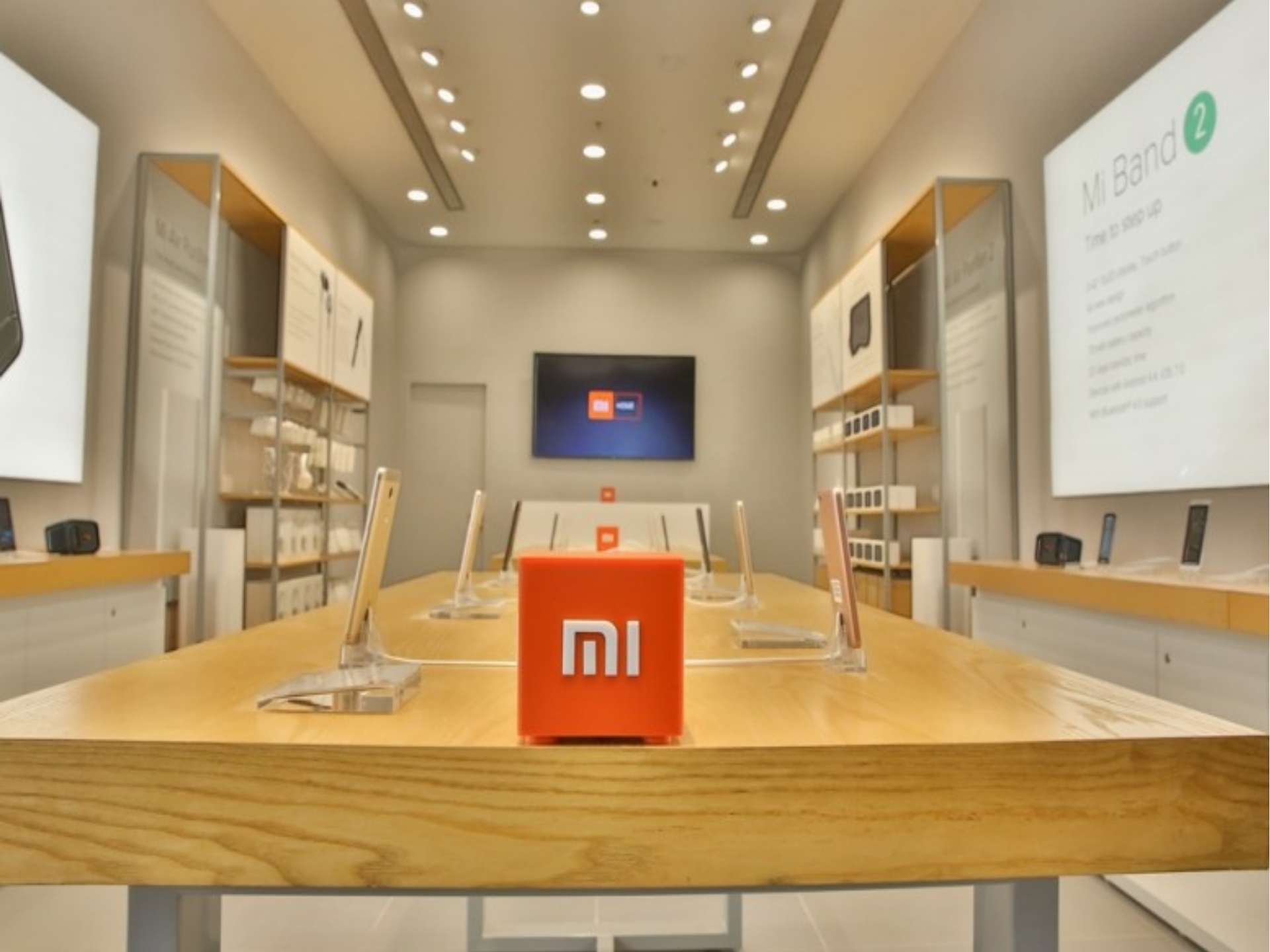
    Xiaomi is betting aggressively on India. Its Indian unit promised to open 500 offline stores under the Mi brand and hire more than 15,000 staff by the end of 2019. Huawei followed suit, vowing to expand production facilities and open over 1,000 stores.

  • Xiaomi aims at 5,000 stores in India by the end of 2019

    Xiaomi aims at 5,000 stores in India by the end of 2019

    Chinese tech giant Xiaomi is looking to cement its status as India’s leading smartphone provider by opening thousands of stores before the end of 2019. The company announced it would increase its presence in India from 500 retail stores to 5,000 by 2020. “It’s been over a year since we started offering our products through offline retail and we have seen strong growth there,” said Manu Jain, Xiaomi vice president and managing director for India.

    “Offline retail is a huge segment in our country with nearly 40 percent of the offline market focused in rural regions, and all of this should increase our offline sales and account for 50 percent of the company’s revenue by the end of next year.”

    In a Twitter post, the smartphone maker invited people to apply to run one of the franchised stores, which will be based on its Mi retail model.

    “It’s been over a year since we started offering our products through offline retail and we have seen strong growth there,” – Manu Jain

    “Mi store is the ‘new retail’ model for rural India that gives flagship store experience to our rural customers,” Xiaomi said on Twitter, adding that the new stores would generate more than 15,000 jobs.

    India is one of Xiaomi’s fastest-growing markets, according to Reuters, where it has had success with its budget Redmi phone series.

    The firm is the country’s leading smartphone provider, with 30 percent of market share. It entered the market in 2014 as an online-only retailer, before opening physical stores across India. Samsung and Vivo are its closest competitors there.

    Xiaomi was awarded a Guinness World Record on Tuesday for opening the largest number of retail stores in India simultaneously. The company also operates in Asia, Europe, the Middle East, Africa, and Mexico.

  • Uber Eats appoints Alia Bhatt as India brand ambassador

    Uber Eats appoints Alia Bhatt as India brand ambassador

    Uber Eats, the food delivery arm of ride-hailing major Uber, Thursday said it has appointed actor Alia Bhatt as its brand ambassador in India. India is the first country for Uber Eats globally where the company has appointed a brand ambassador, Uber Eats said in a statement.

    “Alia is an inspiration to Indian millennials and we are thrilled to have her on board. The youth today relates to her easy-going, carefree and energetic personality. “She is known for her unique style and agility as an actor – the same qualities are an integral part of the Uber Eats DNA; thus making her the perfect fit to represent our brand in India,” Bhavik Rathod, India and South Asia Head, Uber Eats said.

    Uber Eats was launched in India in May 2017. The food delivery service is available across 37 cities compared to 31 cities where the American company operates its rides business. Uber Eats started in 2014 as a small delivery pilot in Los Angeles and was launched as a separate application in Toronto in December 2015. It is now available as a stand-alone app in over 350 cities globally.

    The US-based company has been aggressively investing in its Uber Eats business globally. Earlier this month, Uber said gross bookings from Uber Eats grew more than 150 percent in September quarter to US$ 2.1 billion (excluding Southeast Asia and Russia) over the year-ago period.

  • Tealive makes debut with opening first store in China

    Tealive makes debut with opening first store in China

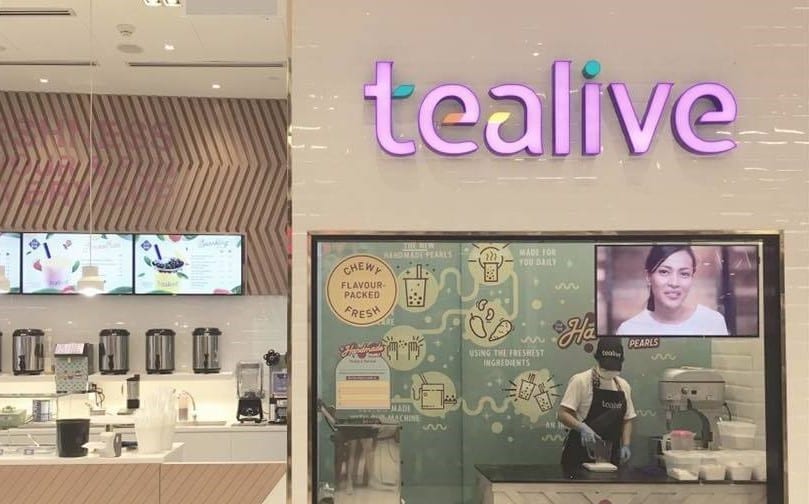
    Malaysian bubble-tea brand Tealive has launched the first of 500 stores planned for China. Located inside SML Center in Shanghai’s Huangpu district, the store attracted long queues on the opening day. “With China being the world’s largest tea market and the fourth overseas market for Tealive, we decided to create a specific menu for China to showcase Southeast Asian ingredients including durian, cempedak, gula melaka, Bentong ginger and Sabah-origin tea,” said Tealive’s parent company Loob CEO Bryan Loo.

    “More outlets will be opened in Shanghai and we plan to have 20 outlets in China by June next year,” he added.

    Loob had entered into a joint venture with two Chinese companies, Zhejiang Boduo International Trade and Shanghai Panfei International Trade to open 500 stores in China within three years.

    After the dispute with Chatime, Tealive has expanded to overseas markets. It entered Vietnam last October, and now has six stores in the country, with two more planned by the end of this year.

    The brand also expanded into Australia in July, with its first store opening in Melbourne.

    In India, Loob has appointed a master franchisee with the target of opening 200 outlets within five years.

  • All Starbucks in Korea to get paper straws from yesterday

    All Starbucks in Korea to get paper straws from yesterday

    Starbucks Korea is stocking all 1,225 of its stores nationwide with paper straws in a bid to cut down on its plastic usage. Starting last Monday, Starbucks began stocking all of its stores with white paper straws, which it found during trials to be more popular than green ones. The paper straws will also be coated with soy oil both inside and outside in response to customer complaints that its original trial straws were too flimsy.

    Starbucks trialed paper straws at 100 stores in Seoul, Busan and Jeju Island over the last two months.

    Though all stores now have paper straws, some branches will continue to offer customers plastic ones until they deplete existing stocks.

    Additionally, on Monday Starbucks began stocking all of its stores with plastic cup lids that don’t require straws. These special lids, which resemble those used with hot drinks that come in paper cups, will be provided for take-out orders of regular cold drinks. Paper straws and regular lids will be provided for specialty cold drinks like Frappuccinos and drinks topped with whipped cream that are difficult to drink without straws.

    “We developed the plastic cup lids to minimize disposable waste consumption and also offer an alternative to customers who prefer drinking without straws,” said a Starbucks spokesman.

    Starbucks will also remove the straws and stirring sticks it previously left out for customers and instead place them behind counters and only provide them on request. It will replace all plastic stirring sticks with wooden ones as well.

    Last year, Starbucks Korea used 180 million plastic straws, nearly enough to circumnavigate the earth if laid end-to-end.

    “With the adoption of paper straws we will be able to prevent consumption of at least 180 million plastic straws from next year,” said a Starbucks spokesperson.