Retail News CRM

Tag: Banking

  • Asian banks fear impact of negative interest rates

    Asian banks fear impact of negative interest rates

    Central banks in emerging Asia that are struggling to revive growth and keep their financial systems stable are facing new risks as their counterparts in Europe and Japan plunge deeper into uncharted policy territory.

    The Bank of Japan in February joined several European central banks in turning policy on its head with a radical prescription of negative interest rates to revive flagging economies, prompting calls from emerging markets for some form of global coordination to avoid a race to the bottom for rates and currencies.

    Concerns about potentially destabilising spillovers into the rest of the world are likely to be a key talking point over the coming week as central banks in Indonesia, Thailand, the Philippines and Taiwan hold policy reviews.

    All four central banks have seen volatile swings in their currencies and stock markets over the past year as the world’s major central banks have taken markedly divergent policy paths.

    Yesterday, Bank Indonesia cut its benchmark interest rate by 25 basis points to 6.75 per cent, its third straight reduction of that size this year as it tries to lift sluggish economic growth.

    While many Asian economies have strengthened their defences since the 1997/98 regional financial crisis, they remain vulnerable to sudden capital outflows.

    Reserve Bank of India governor Raghuram Rajan, a critic of the massive stimulus rolled out in developed economies, has called on global central banks to adopt a system for assessing the wider impact of unconventional monetary policies.

    “It seems fair to say that the benefits seem to be diminishing after years of effort, and the costs increasing,” Mr Rajan said at a three-day International Monetary Fund (IMF) event in New Delhi.

    Low rates have created problems for savers around the world, and debt levels are continuing to rise to unsustainable levels from China and Japan to Europe – feeding fears of a fresh blow to the global economy from financial market dislocation.

    Mr Rajan’s concerns were echoed by his peers in emerging markets such as Indonesia and Malaysia, but few if any in the region expect the likes of the European Central Bank (ECB) to give priority to any nasty side effects for other economies when setting policy.

    “The potential for this (to manage economic crises) is becoming more and more limited as monetary policy rates have already trended closer to zero and quantitative easing is becoming more significant,” Bank Negara Malaysia governor Zeti Akhtar Aziz said.

    She said there is a need for greater policy coordination among countries to prevent over-reliance on monetary policy.

    Mr Juda Agung, Bank Indonesia’s executive director for monetary and economic policy, agreed. “A low-yield environment encourages excessive risk-taking behaviour. At the end, the credibility of the central bank is at stake,” he said.

    Mr Frederic Neumann, co-head of Asian economic research at HSBC, said that emerging economies are right to raise a voice of caution over unconventional policies.

    “Policymakers are backpedalling because it’s not entirely clear what the benefits of negative rates would be,” he said, referring to ECB president Mario Draghi’s suggestion last week that further rate cuts were probably off the table.

    Indeed, a recovery in the euro zone has flagged over the past year and deflation looms large, while Japan’s economy is teetering on the brink of its fourth recession in five years. The IMF has cut its global growth projections for 2016 and 2017, with a slowdown in China rippling across producers of oil, cars and a range of consumer products.
  • Maybank widens presence in Laos with second Vientiane branch

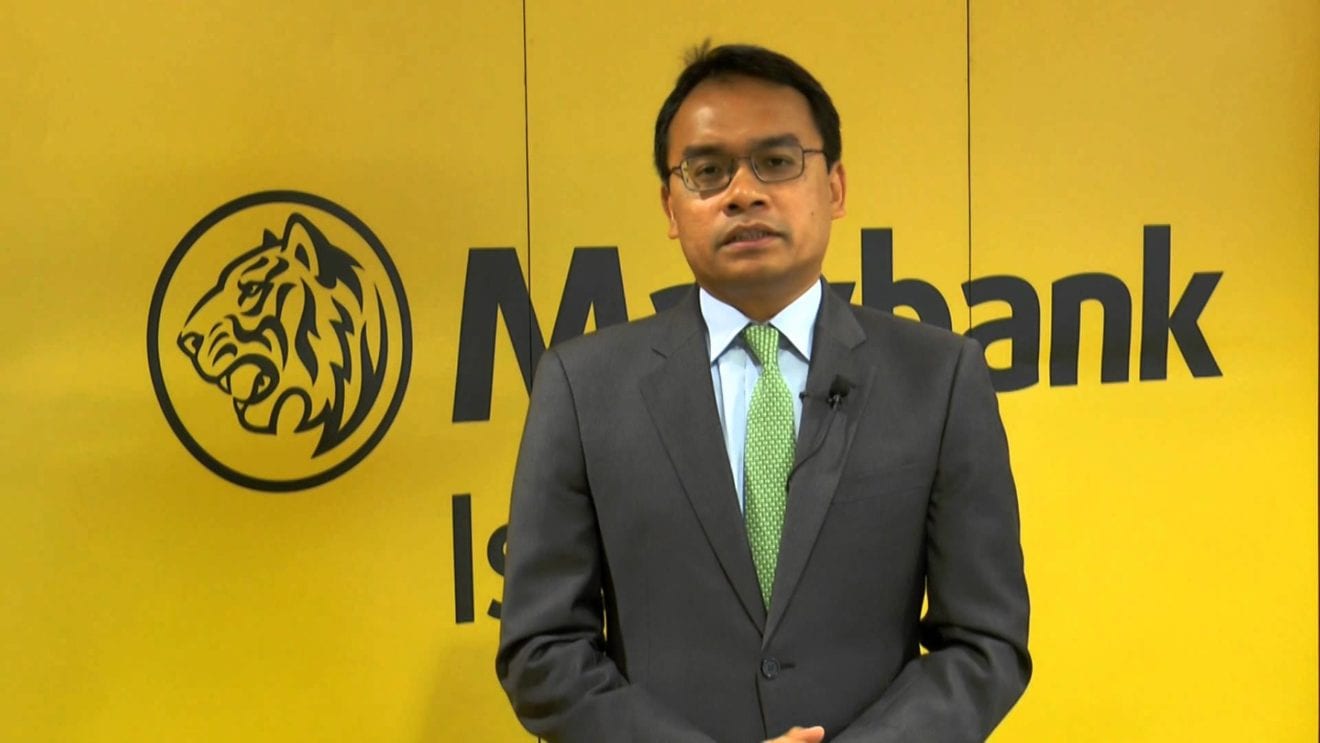
    Maybank widens presence in Laos with second Vientiane branch

    Malayan Banking Bhd (Maybank) has expanded its network in Laos with a second branch in the capital Vientiane, thus establishing a greater presence in one of the fastest expanding economies in Asean.

    The branch, located in the commercial district of Nongduang, offers a full spectrum of banking services, and aims to serve the needs of the local community as well as customers from across the region having trade and investment links in the country.

    The new branch was officially launched by Bank of the Lao PDR (central bank) deputy governor Vathana Dalaloy at an event hosted by Maybank chairman Tan Sri Megat Zaharuddin Megat Mohd Nor.

    Maybank international CEO Pollie Sim said the opening of the Nongduang branch will strengthen Maybank’s presence in Indochina and enhance its ability to meet the banking needs of customers, particularly the growing investor base into the country.

    “Laos is among the strongest performing economies in the region, with steady economic growth of around 8.5% for the past four years and is anticipated to achieve 7.5% real gross domestic product growth on average from 2016 to 2020, according to the government’s eighth development plan.”

    Sim said the first Maybank branch in Vientiane, which was opened in 2012, has experienced encouraging growth with loans and deposits rising at an annual average of 46% and 78% respectively over the last two years.

    “We anticipate that the opening of this second branch will further boost our franchise in the country and lift our loans and deposits growth to over 70% and 100% respectively by end of 2016,” she added.

    Services offered by the two Maybank branches in Laos include retail and business banking, foreign exchange, remittances, treasury as well as ATMs. The retail offerings include mortgages and personal loans while business banking services include term financing and trade financing.

    The two branches have a paid-up capital of LAK200 billion (about RM100 million) a staff strength of 30 in total.

  • Indonesia to reopen banking transactions with Iran

    Indonesia to reopen banking transactions with Iran

    Indonesia said it is open to resume banking transactions with Iran following the lifting of economic sanctions against Iran.

    “Banking relations, an obstacle we are facing, will soon be resumed,” President Joko Widodo said after receiving Irans Foreign Minister Mohammad Javad Zarif on the sidelines of the 5th Organization of Islamic Cooperation Extraordinary Summit on Palestine and Al Quds here on Monday.

    The President said economic and investment cooperation between the two countries had been hindered because banking transactions were closed due to the imposition of economic sanctions against Iran.

    He said Indonesian banking authorities had agreed to follow up on the cooperation plan.

    “The chairman of the Financial Service Authority (OJK) said just now that the banking transactions would soon be resumed to develop and strengthen economic relations between the two countries,” he said.

    Bank Indonesia (the Central Bank) and OJK would discuss the mechanism for cooperation with Iranian banking officials.

    Due to the imposition of economic sanctions several years ago, Iranian banks were unable to conduct transactions with overseas banks.

    Since Irans nuclear program came to be known in 2002, the United Nations, the European Union, the US and several other countries had imposed economic sanctions on Iran.

    After these sanctions were revoked, the flow of trade to and from Iran is expected to become easier.

  • HSBC, Standard Chartered Caught Between ‘Brexit’ and China

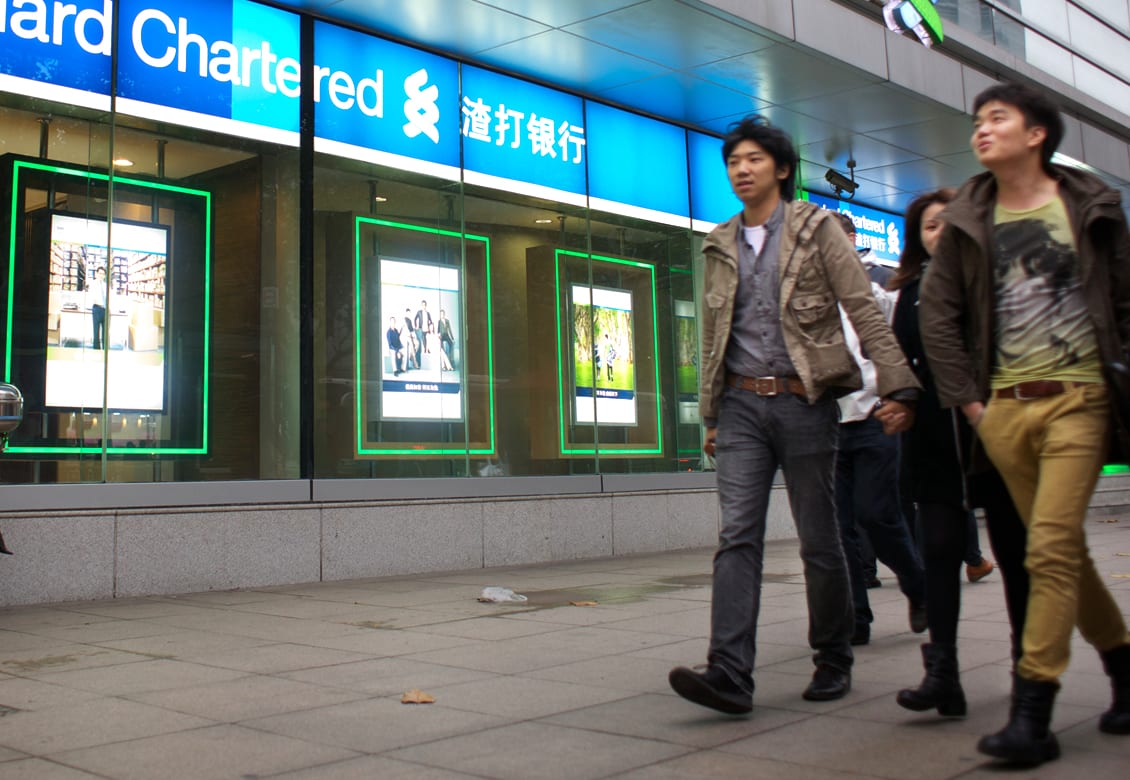
    HSBC, Standard Chartered Caught Between ‘Brexit’ and China

    Two big U.K. banks’ shares tanked over the past couple of days, and unlike the British pound, they’re not weakening because of the so-called “Brexit” referendum — although that certainly doesn’t help.

    Instead, their fall may have a lot to do with the market and economic turmoil that has been taking place in China.

    The London-listed shares of emerging markets-focused bank Standard Chartered (SCBFF) fell by 10% at one point on Tuesday morning after it reported its first annual loss in more than 25 years.

    The bank reported a loss before tax of $1.5 billion last year, in sharp contrast to 2014’s profit of $4.2 billion.

    On Monday, HSBC’s (HSBC) shares fell in an otherwise rising market after the bank, which is the biggest in Europe and one of the biggest in the world by assets, reported a loss of $858 million before tax in the fourth quarter of last year, vs. a profit of $1.7 billion in the fourth quarter of 2014.

    HSBC, which is doing a lot of business in Asia and was even thinking of moving its headquarters there before deciding earlier this year to remain in London, eked out a 1% increase in pretax profit for full 2015 to $18.87 billion, but its adjusted loan impairment charges were up 17% at $3.7 billion over the period.

    The weak results of the two banks chime with rising investor worries about the exposure of U.K. banks to Asia, and particularly China, at a time when European banks have been making investors nervous again.

    Richard Barnes, senior director at Standard and Poor’s credit rating agency, received many questions about the risk of European banks’ exposure to Asia last week during an analyst call, and said the region was important particularly for HSBC and Standard Chartered.

    However, “we’ve seen European banks generally retrenching from a number of regions in the world including Asia … banks are trying to reduce exposure,” Barnes said, adding that, in China, “banks look again at their exposure to state-owned enterprises and are focusing on the ones that are likely to be supported by the government in a downturn.”

    HSBC has been deeply involved in the liberalization and deepening of China’s capital markets, having successfully negotiated a majority stake in a new, nationally licensed securities joint-venture in the mainland. HSBC Group Chairman Douglas Flint acknowledged in a statement on Monday that “China’s slower economic growth will undoubtedly contribute to a bumpier financial environment,” but he added that the country “is still expected to be the largest contributor to global growth as its economy transitions to higher added value manufacturing and services and becomes more consumer-driven.”

    He said this transition is driving the bank’s focus on the Pearl River Delta as a priority growth opportunity, as the area is a concentration of high-tech, research-focused and digital businesses.

    HSBC’s exposure to mainland China is around $143 billion, according to its annual report; of these, $135 billion are loans to other banks or non-bank financial institutions, sovereign and corporate loans, while $8 billion are loans to retail clients.

    China is perhaps even more important for Standard Chartered and has helped reduce the bank’s loss over the past year. Its Greater China business showed a pre-tax profit of $1.37 billion last year, compared to a loss of $1.33 billion in its European operations. In terms of exposure to China, Standard Chartered listed $77.67 billion in loans to customers in the country.

    The two banks would normally be sheltered from fears over their exposure to China by their presence in one of the strongest financial centers in the world, London. But with uncertainty in the U.K. rising because of the referendum on EU membership, expect a few particularly volatile months ahead for HSBC and Standard Chartered.

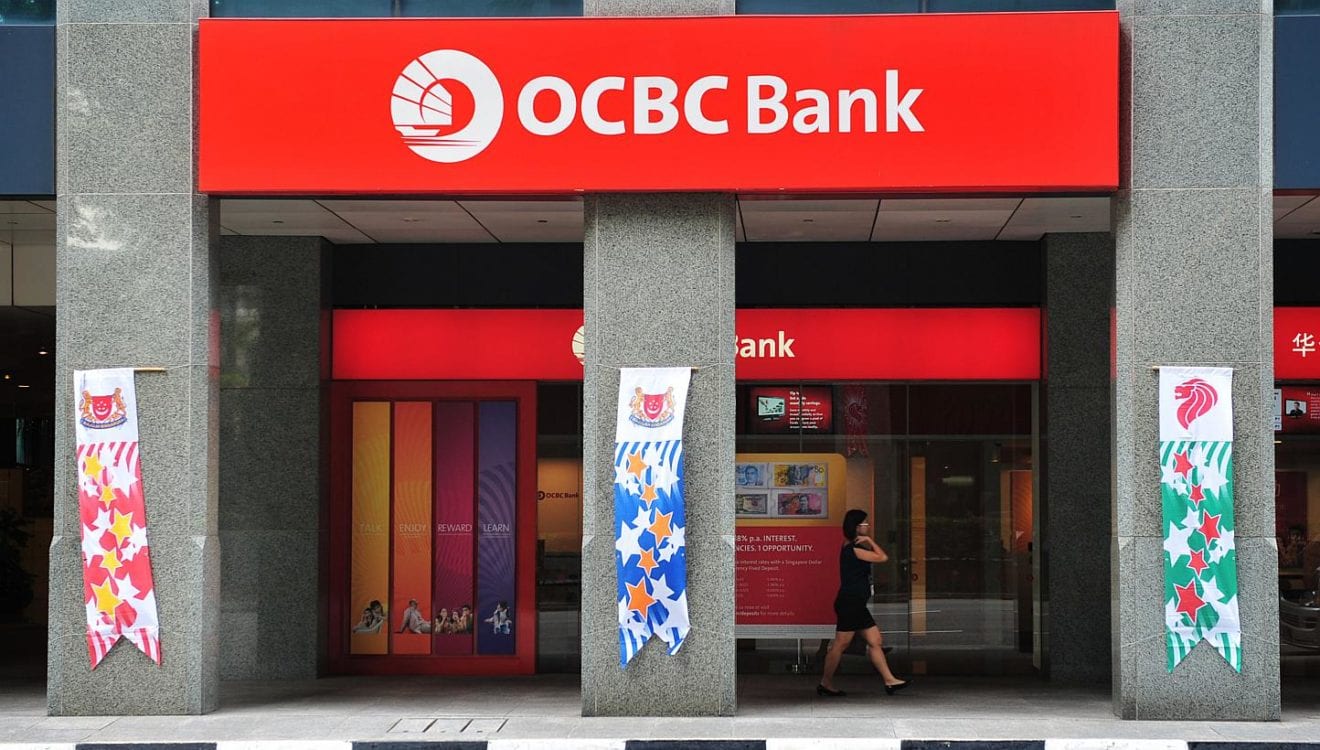
  • OCBC rallies on earnings surprise as Singapore bank rivals fall

    OCBC rallies on earnings surprise as Singapore bank rivals fall

    Oversea-Chinese Banking Corp.rallied after fourth-quarter profit rose more than analysts anticipated. Shares of its two large Singapore rivals fell.

    The bank’s stock surged Wednesday by the most in almost six months following the release of an exchange statement showing net income climbed 21% on higher interest and trading income as well as gains from life insurance.

    Chief Executive Officer Samuel Tsien signalled confidence in the bank’s ability to continue growing as Singapore’s lenders face pressure from their exposure to a commodity price slump and an economic slowdown in China and Southeast Asia. OCBC doesn’t face issues with its Greater China loan portfolio, he said in a briefing. Smaller competitor United Overseas Bank Ltd.reported barely improved quarterly net income Tuesday as rising expenses and provisions for bad loans restrained earnings growth.

    “Against the massively negative sentiments against banks in general and fears of oil and gas impact, OCBC indeed saw higher provisions but nowhere near levels justifying” downgrades for the stock, Kevin Kwek, an analyst at Sanford C. Bernstein & Co. in Singapore, said in an e-mail. “The positives of gains in net interest and fee income in this environment should also reassure investors.”

    Analysts had cut their consensus 12-month target price for OCBC’s shares to $9.67 from a peak of $11.76 last August, according to estimates compiled by Bloomberg.

    The lender’s stock jumped as much as 4%, the largest intraday gain since Aug. 25. The shares were up 1.8% at $7.91 as of 1:33 p.m. in Singapore. United Overseas Bank fell 3.2% and DBS Group Holdings Ltd. declined 0.2%. The benchmark Straits Times Index dropped 0.9%. The rally in OCBC stock pared its loss this year to 10%, exceeding a 9% decline in the Straits Times Index.

    OCBC, Singapore’s second-biggest bank by assets, said net income climbed to $960 million in the three months ended Dec. 31 from $791 million a year earlier. That exceeded the $877 million average of seven analysts’ estimates compiled by Bloomberg.

    OCBC’s net interest margin, a measure of lending profitability, rose to 1.74% in the fourth quarter, a seven basis-point increase from a year earlier. That helped net interest income climb 5% to S$1.34 billion, the statement showed. Non-interest income advanced 26% to $960 million as the life-insurance unit’s profit jumped 24%. Net trading income soared nine times to $163 million from $18 million a year earlier.

    Bad loans

    Non-performing loans rose 54% to $1.97 billion in 2015, mostly because of “a few large corporate accounts associated with the oil and gas services sector,” the bank said. Its bad-loan ratio climbed to 0.9% as of Dec. 31 from 0.6% a year earlier. The loan portfolio remained “sound” with a “comfortable” allowance coverage, the bank said.

    At a briefing for media and analysts Wednesday, CEO Tsien said that while he expects an increase in non-performing loans, it’s unlikely the bank’s NPL ratio will exceed levels during the global financial crisis that started in 2008. In that period, OCBC’s soured credit ratio reached 1.7% of total loans. NPLs tied to the oil and gas industry represented 0.39% of the bank’s loan book of $211 billion, he said.

    Tsien said pillars of Singapore’s economy — such as real estate, retail and oil and gas — have weakened, and that a “challenging operating environment” will continue this year.

    “The past year has been a challenging one for most industries,” he said in the statement, citing the economic downturn, volatility in financial markets and higher regulatory requirements for capital.

    OCBC spent US$5 billion buying Hong Kong-based Wing Hang Bank in 2014. The acquisition helped the bank rely less on revenue from Southeast Asia as China including Hong Kong became its largest source of income after Singapore. Greater China accounted for 20% of pretax profit in 2015, up from 12% in 2014, it said.

  • Game changer for Maybank Islamic

    Game changer for Maybank Islamic

    Malaysia’s biggest Islamic lender, Maybank Islamic Bhd, says the investment account (IA) business is set to be a game changer for the group in its effort to boost earnings growth amid the subdued banking landscape.

    The Islamic lender, which has total assets worth close to RM147bil, will focus on its new mudarabah (profit-sharing) investment fund launched in July last year in view of the Islamic Financial Services Act (IFSA) 2013.

    Describing the IA business as “the evolution of the next phase of growth”, Maybank Islamic chief executive officer Datuk Muzaffar Hisham told StarBiz that demand for the IA business has shot up significantly, as the value of its mudarabah fund rose to RM18bil in the last six months of 2015.

    “Judging from this figure, we are confident that the fund will continue to grow, underpinned by strong demand from the Muslim and non-Muslim population as well as the benefits it offers.

    “We have a customer base of about 4.5 million, of which 50% comprises non-Muslims,” explained Muzaffar.

    The value proposition offered by the mudarabah IA is that MayBank Islamic could provide steady returns of between 4% and 5% per year to its customers.

    “We are confident that this fund will be a growth driver for us, moving forward,” he added.

    He pointed out that “the bank has put in place an effective and robust risk management framework for all of its products, including the new IA, which aims to provide capital preservation, financial security and steady returns through low risk and low to medium-risk investments.”

    Under the IFSA 2013, all banks are required to distinguish IA and Islamic deposit. This means that products with mudarabah (profit sharing) or wakalah (agency) features are considered IAs and are not-principal guaranteed and hence not protected by the Malaysia Deposit Insurance Corp.

    The classification aims to provide greater legal clarity on the types of syariah financial contracts. Customers will have a choice and will be able to differentiate between products that are principal guaranteed and those which are not that provide potentially higher risk returns like mudarabah.

    Besides garnering a pole position in terms of asset size, Maybank Islamic’s market share in the country is also the biggest in terms of financing at 33.6% and deposit at 27.9%.

    At group level, Maybank Islamic’s contribution to the Maybank Group is also significant, accounting for close to 30% in revenue and 48.7% in total loans and financing.

    All these figures were for the third quarter ended Sept 30, 2015 (Q3’15).

    Muzaffar said the bank is also looking to grow its Islamic banking business in the region, adding that the business in Singapore and Indonesia each accounted for about 5% of Maybank Islamic’s revenue.

    Although Indonesia has the highest Muslim population in the world, he noted that syariah banking was relatively still at its infancy stage unlike commercial banking.

    “The Islamic banking business in Indonesia accounts for close to 9% of the total banking business there.

    “In Malaysia, it is 25%. Hence, there is plenty of room for growth and we intend to grow and take advantage of this situation,” he added.

    According to Muzaffar, the challenge for the bank in venturing overseas will be the regulatory framework, in which Maybank Islamic has to operate in, as well as the uncertainties in the Basel III rules pertaining to its implementation in Islamic finance.

    On the corporate investment business, he said it would be dependent on the country’s economic growth, adding that the bank would continue to look at opportunities in the debt and initial public offering markets.

    As for its fourth-quarter results, he said Maybank Islamic hopes to maintain its performance in the preceding quarter, although much will be dictated by the external economic environment and market conditions.

    For Q3’15, the bank recorded a 13.2% year-on-year growth in pre-tax profit to RM1.23bil from RM1.09bil. The growth in earnings was on the back of strong financing growth, which grew by 23% to RM127bil.

    Total income for the period stood at RM2.98bil as opposed to RM2.46bil. Total capital ratio and return on equity for the period stood at 15.18% and 16.14%, respectively.

  • HSBC to stop retail banking in Maldives

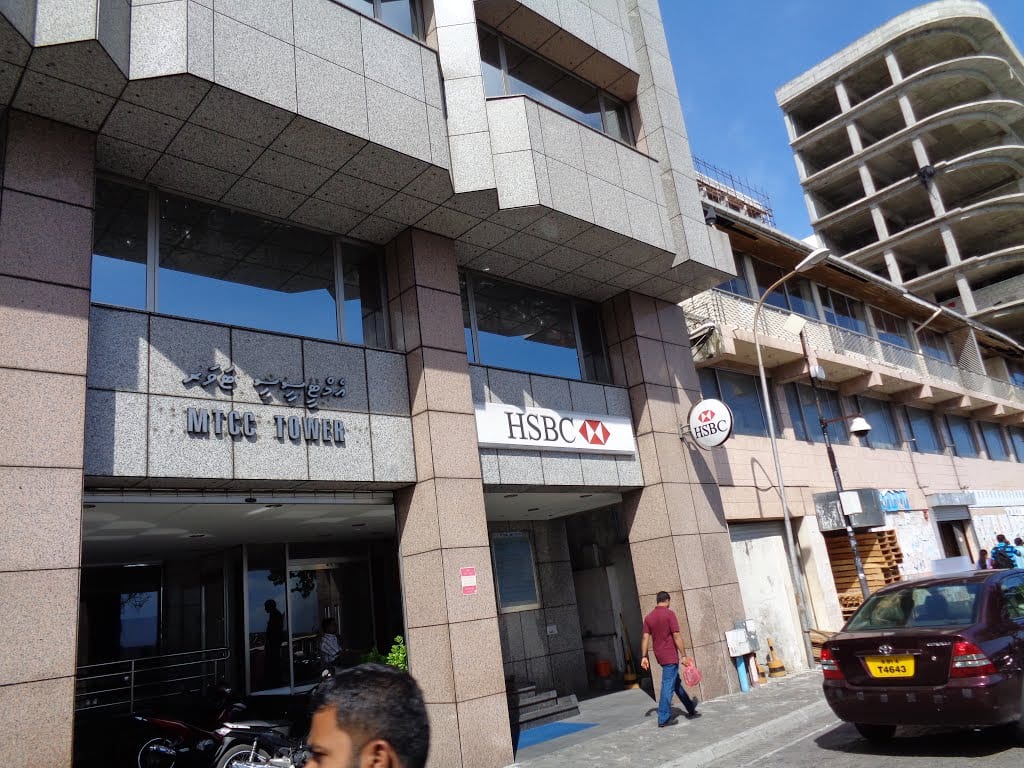
    HSBC to stop retail banking in Maldives

    Banking giant Hong Kong and Shanghai Banking Corporation (HSBC) is to cease retail banking services in Maldives from April. We understand that the Male branch of HSBC had decided to cease retail banking operations from April 28 and is now informing its customers.

    An official from the Maldives Monetary Authority (MMA) also confirmed the plans by HSBC’s Male branch to shift to corporate-only operations. The official, however, did not give details.

    HSBC was not available for comment.

    HSBC operates in Maldives as a trading desk of the HSBC branch in Sri Lanka.

    An account in HSBC has to be opened with an initial deposit of MVR 50,000; the highest initial deposit required of any bank that operates in Maldives. The bank also pays the lowest deposit interest rate at 1 – 1.75 percent. Deposit interest rate on US Dollar accounts is 0.10 percent.

    As the bank charges a high amount in fees, the bank mainly hosts Maldivian businesses.

    In May 2014, complaints mounted over the bank’s decision to close down accounts held by many small and medium businesses citing administrative reasons. The businesses had complained that the move was made without prior notice.

    The decision by one of the biggest banks in the world comes a week after it was revealed that the Maldives had lost a major international banker.

    President Abdulla Yameen Abdul Gayoom told residents of Gaafu Dhaal atoll Gadhdhoo on February 15 that one of the major correspondent banks had dropped Maldives from its client list, while another one is considering a similar move. The reason, according to the president, is false claims made about Maldives, including threats posed by home-grown jihadists.

    “When we make such claims without considering the repercussions, it’s the people of Maldives that has to suffer,” he said, after inaugurating a project to establish a clean water system in the island.

    The president did not identify the bank that had dropped the Maldives. Haveeru, however, understands that US-based JPMorgan Chase had terminated its dealings with Maldivian banks in 2013.

    A correspondent bank is a financial institution that provides services on behalf of another, equal or unequal, financial institution. It can conduct business transactions, accept deposits and gather documents on behalf of the other financial institution.

  • Standard Chartered names James Dolphin as its CIO for retail banking

    Standard Chartered names James Dolphin as its CIO for retail banking

    Standard Chartered Bank has appointed James Dolphin as its Chief Information Officer (CIO) for retail banking. From March 2016, Dolphin will report directly to the bank’s Group CIO, Dr Michael Gorriz, and be based in Singapore.

    Prior to this role, Dolphin was Capital One’s CIO for retail and direct banking for since 2012. In that role, he led Capital One’s digital transformation strategy for the retail business by building strong engineering teams, and instilling a software development culture. He also redesigned and rewired Capital One’s retail channels to deliver market-leading digital experiences during his time there.

    Besides Capital One, Dolphin has held senior technology leadership roles at Bank of America too.

    “James brings with him a strong reputation as a technology leader and innovator. He is highly experienced in leading large teams and driving an agile culture that is innovative and customer-centric. I am confident that he will be a valuable addition to Standard Chartered,” said Dr Gorriz.

    1

  • Indonesian bank opens branch in Seoul

    Indonesian bank opens branch in Seoul

    An Indonesian bank, Bank Negara Indonesia (BNI) 46, opened a branch office in Seoul, South Korea, in Wise Tower, on Monday. It was inaugurated by the Ambassador of Indonesia to South Korea, John A Prasetio and Manager of BNI46 Seoul, Wan Andi Aryati. “The banking industry in South Korea is already shaken, but BNI46 still sees market potential,” Wan Andi said in a statement received by ANTARA here Monday. The BNI46 targets the domestic trade market according to her. “BNI Seoul wants to be a bridge to establish cooperation between Indonesia and South Korea by providing loans and other related banking services,” Wan Andi said.

    The BNI46 also provides services for South Korean businessmen who want to invest in Indonesia, she added.
    “We are also targeting the Indonesian labor market in South Korea, which now reaches 40 thousand people. We are committed to providing the best service for the Indonesias foreign exchange heroes,” she said.

    Meanwhile, Ambassador Prasetio stated that the world economy is still in a state of collapse. The stock market and the value of currency in some countries against the US dollar continues to decline.

    “This shows that the global sentiment has not been encouraging. Uniquely, the Indonesian economy is relatively solid in the middle of the uncertainty shocks,” the ambassador said.

    Cooperation in trade and investment between Indonesia and South Korea are still positive. The demand for Indonesian products and South Koreas investment in the country are progressive, according to him.

    “They respond positively on the economic policies of President Jokowi (Joko Widodo). I believe that the presence of BNI46 in Korea is very important to bridge cooperation between the two countries,” the ambassador said.

    Data from the Investment Coordinating Board (BKPM) shows that South Koreas direct investment in the country in the last five years is ranked fourth with a value of more than US$7 billion. Currently, there are 2,700 South Korean companies in Indonesia.

  • HSBC Singapore plans to transfer retail, wealth business to local subsidiary

    HSBC Singapore plans to transfer retail, wealth business to local subsidiary

    The Hongkong and Shanghai Banking Corporation (HSBC) Singapore is planning to transfer its retail banking and wealth management (RBWM) division to a locally incorporated subsidiary named HSBC Bank (Singapore).

    Expected to become operational from 9 May this year, the subsidiary will be responsible for managing all the accounts, assets and security arrangements associated with the RBWM unit.

    The transfer of operations is subject to regulatory and court approvals.

    HSBC Bank (Singapore) will possess a full bank license with qualifying full bank privileges, which will allow the subsidiary to open more branches than other foreign banks, straitstimes reported.

    The move follows an announcement by the Monetary Authority of Singapore (MAS) in April last year that HSBC is considered one of seven domestic systemically important banks in Singapore, according to media sources.

    According to MAS, banks with a significant retail presence must locally incorporate their retail operations, a move that could help the Singapore financial system to function properly.

    HSBC Singapore CEO Guy Harvey-Samuel was quoted by Channel NewsAsia as saying: “The transfer of our retail banking and wealth management business in Singapore to a locally incorporated subsidiary reflects the success, scale of growth and significance of our retail business in this market.”

    HSBC’s other activities including commercial banking, private banking and global banking will continue to operate under the existing Singapore branch.

    “Singapore is a top-seven priority country for the HSBC Group globally and we will continue to invest in our business here. We are excited about new opportunities to further expand our presence,” Harvey-Samuel was quoted by straitstimes.

  • Moody’s continues to review for downgrade ratings of Standard Chartered Bank Korea

    Moody’s continues to review for downgrade ratings of Standard Chartered Bank Korea

    Moody’s expects to conclude the review in March 2016, after incorporating SCB’s efforts to turn around SCBK’s performance, as well as the detailed results of SCBK’s parent, Standard Chartered Bank’s (SCB, FC deposits Aa2 rating under review for downgrade, BCA a2 rating under review for downgrade) performance for 2015.

    These results will be available in late February.

    Moody’s had originally placed the long-term ratings of SCBK on review on 9 November 2015. Please refer to “Moody’s reviews for downgrade Standard Chartered Bank Korea’s ratings” published on 9 November 2015.

    Moody’s notes that SCB is restructuring its poorly performing Korean retail and commercial banking businesses, introducing some uncertainty as to the future of SCBK’s operations.

    The ratings review of SCBK will consider whether: (1) these initiatives have the potential to change SCBK’s stand-alone credit profile, as expressed by its BCA; and/or (2) to change the strategic importance of SCBK to SCB and therefore potentially to affect the strength of support from SCB.

    The following ratings are on review for downgrade:

    – Local- and foreign-currency long-term deposit ratings of A1

    – Foreign currency senior unsecured MTN rating of (P)A1

    – Local- and foreign-currency short-term deposit ratings of P-1

    – Foreign currency commercial paper and other short-term ratings of P-1/(P)P-1

    – Long-term and short-term counterparty risk assessment of A1(cr) and P-1(cr)

    – BCA of baa2, and adjusted BCA of a3

    The principal methodology used in these ratings/analysis was Banks published in January 2016. Please see the Ratings Methodologies page on www.moodys.com for a copy of this methodology.

    SCBK is headquartered in Seoul, with total assets of KRW61.7 trillion or USD54 billion as of June 2015.

  • Jakarta index closes higher on Friday

    Jakarta index closes higher on Friday

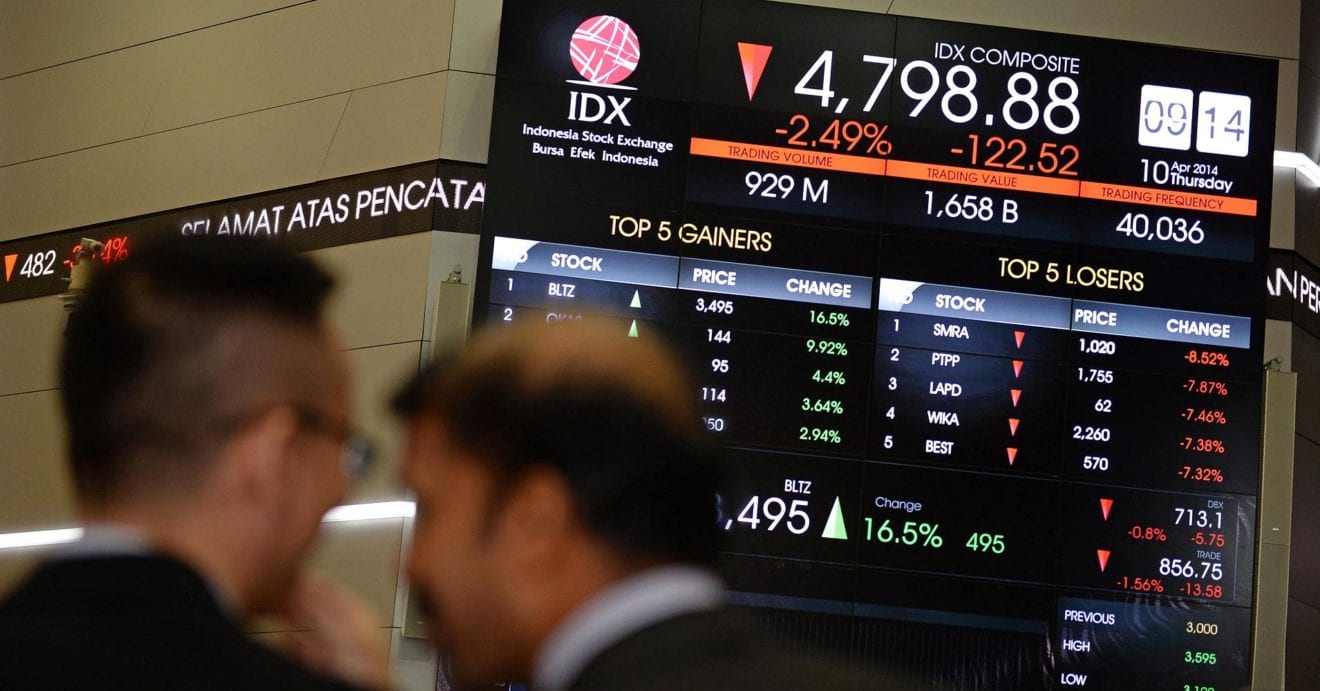
    The Jakarta composite index (JCI) closed 42.61 points higher on Friday on selective buying by market players.

    The index of the Indonesian Stock Exchange rose 0.96 percent to 4,456.74 points with index of 45 blue chips up 1.48 percent to 779.31 points.

    Selective buying of big capitalization shares pushed up the JCI slightly, HD Capital analyst Yuganur Wijanarko said.

    “In addition, share prices in foreign markets generally rose on oil prices being on the increase lately , prompting market players on the domestic market to buy shares< he said.

    The price of WTI on Friday afternoon rose 4.3 percent to S$30.80 per barrel and Brent pri9ce was up 5.09 percent to US$30.74 dollar.

    Satisfaction expressed by the Capital Investment Coordinating Board (BKPM) with the achievement in direct investment to Rp545.4 trillion in 2015 gave positive sentiment to the market.

    In 2016, BKPM set growth target at 9.3 percent for direct investment to Rp594.8 trillion .

    There were 213,493 transactions in the market on Friday with 4.07 billion shares valued at Rp5.25 trillion changing hands .

    Regional markets such as Hang Seng, Nikkei and Straits Times recorded gain in index.

    Meanwhile the national currency rupiah closed stronger trading at 13,834 per U.S. dollar gaining from the previous level of 13,906 per dollar.

    “Rising trend of oil prices propped up the currencies of emerging countries ,” financial market observer from Bank Himpunan Saudara, Rully Nova, said.

  • Barclays to pull out of Korean market

    Barclays to pull out of Korean market

    British banking group Barclays will close its Seoul office as part of its global slimming down strategy, an official from the financial regulator said Wednesday.

    A director at the Financial Supervisory Service (FSS) said Barclays told the authorities of its plan to close its banking and securities business in Korea.

    “Barclays plans to pull out of the Korean market,” said the director, asking not to be named.

    Foreign banks have been withdrawing from the local market, or downsizing, as part of their global strategy to exit non-core businesses. Last month, U.S. banking giant Citigroup signed an agreement with Apro Service Group to sell its consumer finance subsidiary in the country, Citigroup Capital Korea.

    Barclays confirmed that it is looking for business chances in other countries, but said no firm decisions have been made.

    “We are constantly monitoring our opportunities in different geographies and businesses over the cycle,” Barclays said. “If any firm decisions are made, we will provide an update.”

    In December, Barclays said it had agreed to sell its Italian retail banking network of 89 branches, including a broadly balanced portfolio of assets and liabilities, to CheBanca!, a member of the Mediobanca Group.

    “This transaction is further evidence of the reshaping of Barclays Group to focus on our core businesses,” said Barclays Group CEO Jes Staley. “We continue to make progress in the reduction of Barclays non-core assets as we target risk-weighted assets of around 20 billion pounds at the end of 2017.”

    According to Barclays, its rundown of non-core businesses continued last year, with risk-weighted assets (RWAs) decreasing to 55 billion pounds in September from 57 billion pounds in June.

    The U.K. banking group said its announced sale of the Portuguese retail business in the third quarter last year, which will be completed in the first quarter this year, is expected to result in a further 1.7 billion pounds reduction in non-core RWAs.

    Barclays reported 4 percent growth in the group’s adjusted profit before tax to 5.2 billion pounds for the first three quarters of 2015 from the previous year, reflecting improvements in all core operating businesses. Its adjusted return on average shareholder equity also increased to 7.1 percent during the period.

  • Maybank Launches Market Outlook Roadshow Across Malaysia

    Maybank Launches Market Outlook Roadshow Across Malaysia

    Maybank Investment Bank has just kicked off their annual Market Outlook 1H 2016 investors’ roadshow across Malaysia for this year’s investment strategies.

    The Market Outlook is aimed to share stock market views and investment strategies on the Malaysian, Hong Kong, and US markets with their retail equities clients, with the roadshows behind held in the multiple states Johor, Penang, Ipoh, Kota Kinabalu, Kuching, Sibu, Seremban, and Kota Bahru and Kuala Lumpur from 9 to 30 January 2016.

    Present during the launch was Head of Retail Equities (Malaysia) CK Lim, Head of Regional Retail Research Ong Seng Yeow, Regional Chartist Lee Cheng Hooi, Head of Retail Research (Hong Kong) Benny Wong and CEO of i-VCAP Mahdzir Othman.


  • DBS Indonesia upbeat, eyes higher loan growth in 2016

    DBS Indonesia upbeat, eyes higher loan growth in 2016

    Private lender Bank DBS Indonesia, part of Singapore’s DBS Group Holdings, expects higher loan growth this year compared to 2015 as it predicts an improvement in the country’s economy.

    DBS Indonesia president director Paulus Sutisna said the bank projected that its loans would grow by 12 percent in 2016, higher than the 10 percent booked as of last year.

    According to its financial report, the bank booked loans of Rp 43.4 trillion (US$3.11 billion) as of September, an increase of 9.87 percent year-on-year (yoy) from Rp 39.5 trillion in the same period of 2015.

    “We are more optimistic about this year because the government is holding early auctions and procurements for its spending on infrastructure projects. Such acceleration will help the country’s economic growth,” Paulus said after an event on Wednesday.

    Paulus said acceleration in government spending would boost the real sector, which in turn would increase demand for bank loans, adding that “our growth will depend on the performance of our clients”.

    Given Indonesia’s large population the bank will focus on sectors related to the mass segment such as retail and consumer goods and some types of manufacturing and infrastructure-supporting industries.

    “We’ll still focus on some commodities, such as palm oil, as well as automotive, chemical and pharmaceutical industries,” he said.

    Paulus said the bank was also planning to enlarge its consumer and retail banking as well as small and medium enterprise (SME) portfolios as it still depended mainly on the corporate segment.

    “Corporate banking is dominant now as our retail business is still under 20 percent of our total lending. We hope to divide evenly our consumer and retail banking, SME and corporate portfolios by one-third each, perhaps in the next five to seven years,” he said.

    The government has forecast that Indonesia’s economic growth will reach 5.3 percent in 2016. The country’s GDP growth stood at 4.73 percent for July to September, a slight increase from the 4.67 percent growth posted in the second quarter and 4.72 percent in the first three months of the year.

    Despite the optimism, Paulus said the bank would remain cautious about various challenges in the global economy that still lingered, such as falls in commodity prices and currency volatility, as they would have an impact on Indonesia.

    Challenges in the global and domestic economy also affected DBS Indonesia’s income as it saw losses of Rp 178.9 billion as of September 2015, compared to net profits of Rp 366 billion in the same period last year. However, the bank’s unaudited financial report in November shows that it already started to post net profits of Rp 23.79 billion.

    Paulus said the bank would also invest in internet banking, which was essential to support a bigger consumer portfolio in the future, especially in fee-based income.

    As part of its efforts to grow fee-based income, the bank has enhanced its existing partnership with life insurer Asuransi Jiwa Manulife Indonesia, part of Canada’s Manulife Financial, through the launch of a new single-premium, unit-linked product MiWealth Protection.

    The new product is designed for DBS customers who wish to grow their wealth in order to be financially secure and enjoy their life in retirement. DBS Indonesia consumer banking group director Wawan Salum said the bank expected 20 percent growth in the number of wealth-management customers this year.