Retail News CRM

Tag: Banking

  • ING researches online banking venture in China

    ING researches online banking venture in China

    ING reported third-quarter underlying pretax profit of 1.50 billion euros ($1.64 billion), compared with 1.49 billion euros in the same period last year, beating analysts’ mean forecast.

    The figures, and an upbeat outlook, came as many leading European-based banks, including Deutsche Bank, Credit Suisse and Standard Chartered are shedding thousands of jobs and reorienting their businesses to meet stricter capital requirements.

    Morgan Stanley analysts, who have an “overweight” rating on ING shares, said the numbers were better than expected thanks to falling provisions on bad loans. They dipped to 261 million euros from 322 million euros.

    ING stock was the best performer on the Amsterdam stock exchange, rising more than 4 percent. They are up 26 percent year to date.

    CEO Ralph Hamers said the bank was considering entering the Chinese online banking market with local partner Bank of Beijing, and was in the preliminary stages of researching the option.

    Hamers said he believed the Chinese stock market had stabilized and measures taken by the government would “help economic recovery by the end of this year.”

    Chief risk officer Wilfred Nagel said Chinese loan default rates, though they had risen, were still lower than in Europe. He said the Chinese retail banking sector was an attractive opportunity.

    “China adds the size of the GDP of the Netherlands to its economy every year. This is still in absolute terms an economy that grows quite strongly,” he said.

    ING’s online banking platform is helping it add 1,000 retail customers per week in Germany.

    Nagel said the Chinese discussions were at an early stage and no decisions had yet been taken on timing or ownership.

    In the earnings report, ING said it grew its lending portfolio by 1.6 billion euros.

    Net interest margin improved slightly quarter-on-quarter to 1.46 percent from 1.45 percent.

    “In Europe, sentiment is holding up,” Hamers said. “We see a recovery in bank lending in countries like Belgium and Germany.”

  • Bank of Tokyo Mitsubishi UFJ gets ready for Myanmar’s new RTGS system

    Bank of Tokyo Mitsubishi UFJ gets ready for Myanmar’s new RTGS system

    Bank of Tokyo Mitsubishi UFJ (BTMU) is preparing its systems in Myanmar for the launch of Central Bank’s (CBM) real-time gross settlement (RTGS) system.

    Launch is set for the end of 2015 and the development forms part of Myanmar’s move to modernisation. CBM also has the backing of the Japan International Cooperation Agency and the World Bank.

    CBM is assisting local banks and foreign banks’ branch offices in preparation of the new system, which will allow the immediate settlement of large domestic interbank payments.

    In an interview with The Myanmar Times, Go Watanabe, CEO of Asian and Oceania region, BTMU, says it has seconded staff to the project development team; and it is ‘now able to provide basic financial services including foreign exchange and derivatives trading, and is preparing to launch a more comprehensive suite of trade finance solutions’.

    Watanabe says he expects CBM to ‘review regulations governing foreign exchange, which will lead to greater efficiency for cross-border transactions and international settlement’.

    The Japanese bank was the first of nine foreign banks to open its branch office in the capital Yangon in April this year, becoming the first international lender to begin operations in the country for more than 50 years.

    There will be the inevitable competition, but Watanabe expresses a desire for collaboration.

    ‘Given Myanmar’s banking industry is still in its infancy, it would make sense for the foreign banks to pull our knowledge and expertise together to develop the necessary banking and finance related infrastructure to help move it to the next level,’ he says.

    The Myanmar Times says: ‘BTMU is one of three Japanese banks permitted to offer banking services in Myanmar, and opened its Yangon branch with initial capital of $100 million. BTMU provides services including deposits, loans and foreign exchange to foreign companies and domestic banks.

    ‘Under existing regulations, foreign banks in Myanmar can only deal directly with foreign companies, local-foreign joint ventures, and Myanmar’s domestic banks. They do not yet have access to local retail or corporate clients.’

    Watanabe says, in addition to working with global corporates, BTMU plans to use its majority stake in Thailand’s Bank of Ayudhya PCL – known in Thailand as Krungsri – by ‘tapping its Thai SME segment to further attract investors into Myanmar’.

    In both Thailand and Japan, he says, many companies are looking to diversify their investments, and could potentially begin investing in Myanmar.

    The bank will also use its partnership with Co-operative Bank (CB Bank), based in Myanmar, especially in the area of transaction banking, he says. BTMU signed an agreement with CB Bank back in 2013, to act as a technical adviser.

    Watanabe says the two banks have a joint committee of senior management executives, which aims to encourage knowledge and relationship sharing.

  • ANZ grows retail footprint in Asia

    ANZ grows retail footprint in Asia

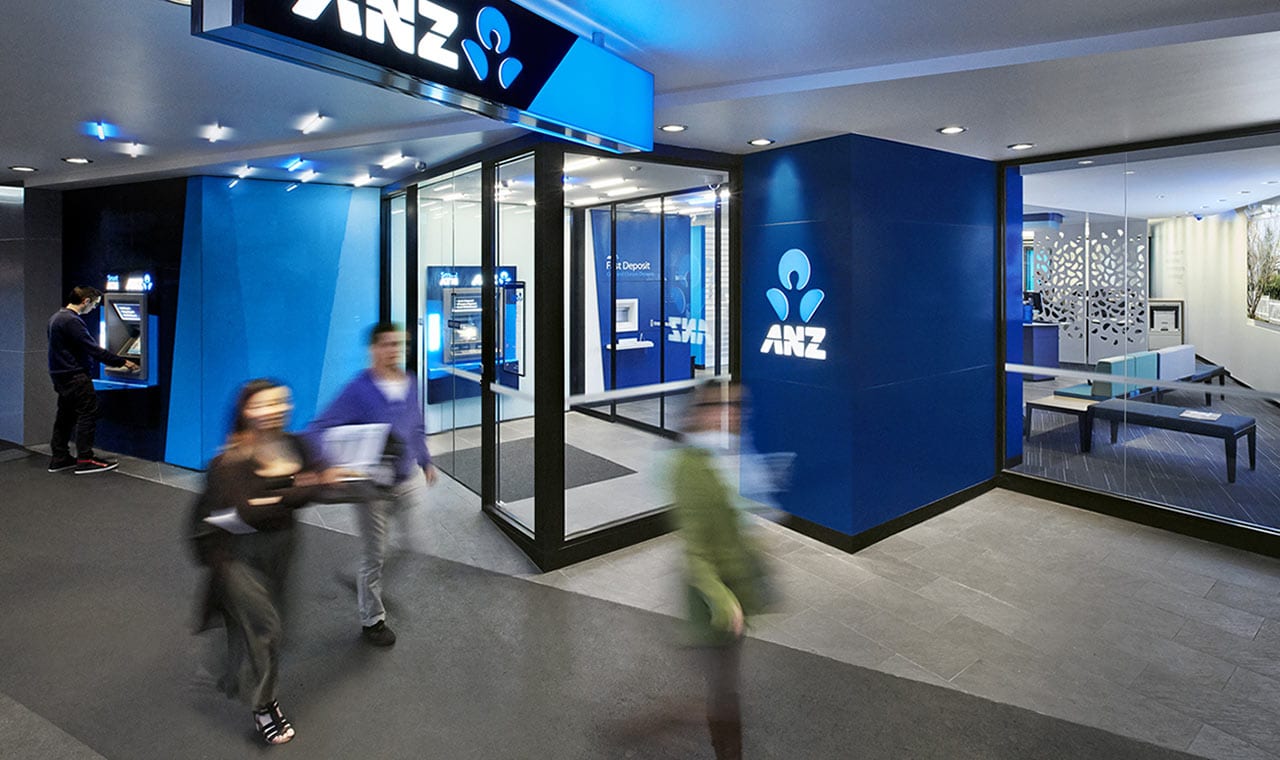
    The branch has been established to service multinational and joint venture companies with a presence in Myanmar, as well as international companies looking to enter the country from ANZ’s network countries.

    ANZ said the Myanmar branch provides comprehensive solutions covering a full range of banking products including payments and cash management, electronic banking, lending, foreign exchange, and fund-based and non-fund-based trade finance.

    The branch also offers specialist banking services for natural resources, utilities and infrastructure, telecommunication, consumer goods and other global diversified sectors that are expanding in Myanmar.

    Andrew Géczy, ANZ’s chief executive for international and institutional banking, said the licence approval is the final step in the bank’s plans to deepen its presence in the Greater Mekong, following its recent branch opening in Thailand.

    “As one of the only international banks with a presence in all five Greater Mekong countries, ANZ is uniquely placed to play a leading role for customers wanting to enter Myanmar,” he said.

  • Philippine banks lead in retail financial services

    Philippine banks lead in retail financial services

    Singapore-based publication The Asian Banker sees the Philippines leading the strong  growth in the retail financial services market in Asia Pacific on the back of increasing consumption and improved access.

    A study conducted by Asian Banker Research showed the income of commercial banks from retail financial services in Asia Pacific growing 77.5 percent to $824 billion by 2020 from the projected $464 billion this year.

    “Asia Pacific’s retail financial services market will be worth $824 billion by 2020. Increasing consumption and improved access to financial services in combination with mobile banking technologies, will be key catalysts in driving retail banking income between 2015 and 2020,” The Asian Banker said.

    Retail banking income was defined as business from retail deposits, mortgages, credit cards/unsecured lending, wealth management and, wherever possible, small and medium enterprises banking.

    “The ability to generate gross income in any given market is regarded as a key indicator of wallet share and a determinant of a bank’s bench strength in retail financial services,” said Mobasher Zein Kazmi, head of research at The Asian Banker.

    The study showed the Philippines is expected to book the highest compound annual growth rate and total income generated among emerging markets between 2015 and 2020 with 18 percent followed by Indonesia with a little over 15 percent, and Thailand with 15 percent.

    Malaysia is seen to post the slowest income growth with a growth rate of six percent for the five-year period.

    “Since 2014, the Philippines has outpaced China and Thailand and is becoming one of the key growth engines in the Asia Pacific,” The Asian Banker said.

    However, China would continue to generate higher earnings by 2020.

    “Currently, China’s retail financial services industry alone generates 48 percent to total regional income, followed by India with 12 percent and Australia with nine percent,” it added.

    The Asian Banker sees income from retail financial services of commercial banks in Asia posting a CAGR of 12 percent from 2015 to 2020.

    “There are, however, stark variances in growth rates between the mature markets of Korea, Hong Kong, Australia, Japan, Taiwan and Singapore and developing markets,” it said.

    On the other hand, income growth in mature markets is lower and expected to grow by an average of five percent this year and by the same amount in subsequent years until 2020.

    Developing markets have grown on average by 13 percent annually to 2015. However there have been dramatic changes since 2014.

    The fastest growing markets up to 2013 were Thailand and China after having grown by more than 20 percent annually.  Both markets, however, have been slowing down due to economic woes.

    The Asian Banker noted that retail banking income is shifting focus on high yield businesses but sees tightening of consumer banking regulations as a key threat.

    The greatest change in regulations is a shift away from a principle-based regulatory framework to a rule-based framework. As a result regulators have much more power to intervene.

    In particular, in emerging markets, financial authorities often want to control everything down to the product level, including loan pricing and fee income.

    Commercial banks have managed the impact of new regulations imposed on banks’ wealth management businesses in the aftermath of the global financial crisis, but a second wave of regulatory scrutiny, initiated in 2012, into interest rates and fee structures, compounded by recent macro-economic weaknesses, continues to pose ongoing threats to income expansion.

    “Regulators are increasingly worried about rising consumer debt so they have resorted to tightening unsecured lending, credit cards and home loans. In addition, consumer protection and optionality, which requires banks to seek a customer’s consent to opt in or out of services, are becoming key agenda items for financial regulators in this region,” Kazmi said.

    According to The Asian Banker, the most profitable banks in Asia include Bank of Mandiri in Indonesia, Union Bank of the Philippines, and Siam Commercial Bank in Thailand.

  • Krung Thai Bank makes profit

    Krung Thai Bank makes profit

    KTB posted 3Q15 earnings of Bt5.3bn, plunging 42% YoY and 37% QoQ. The result was 11% below our forecast but 4% below the Bloomberg consensus. This was attributable to bigger loan-loss provisioning (LLP) than was modeled. KTB set its 3Q15 LLP of Bt10.5bn against our numbers of Bt8.5bn. Pre-provision operating profit was Bt17bn, up 21% YoY but down 1% QoQ. The 9M15 earnings represent 90% of our FY15 earnings projection.

    Results highlights

    Lending was up 0.2% QoQ and 1.6% YTD—in line with our forecast. NIM for the quarter came in at 3.04%, up 3bps QoQ and 19bps, boosted by greater emphasis on the corporate and retail sectors and well managed funding cost from the previous quarter. LLP soared 270% YoY and 39% QoQ to Bt10.5bn (equaling credit cost of 2.1%). Note that the bank received a tax benefit of about Bt300m from troubled debt restructuring and extra LLP for Sahaviriya Steel Industry (SSI) in the quarter. Therefore, its corporate tax rate was down to 15% in 3Q15 from 18% in the same period last year.

    KTB’s NPL/loan ratio rose to 4.03% at end-September from 2.96% three months earlier (from SSI, and the small SME and retail sectors). Likewise, its loan-loss-coverage ratio dipped to 103% in 3Q15 from 125% last quarter. Fee income inched up 41% YoY and 12% QoQ to Bt7.3bn in 3Q15. OPEX was Bt12.2bn, an increase of 19% YoY but down 1% QoQ. KTB’s 3Q15 cost/income ratio was 44.2%, close to last quarter and down from the 45.6% reached in the same period last year.

  • ANZ expands retail footprint in China

    ANZ expands retail footprint in China

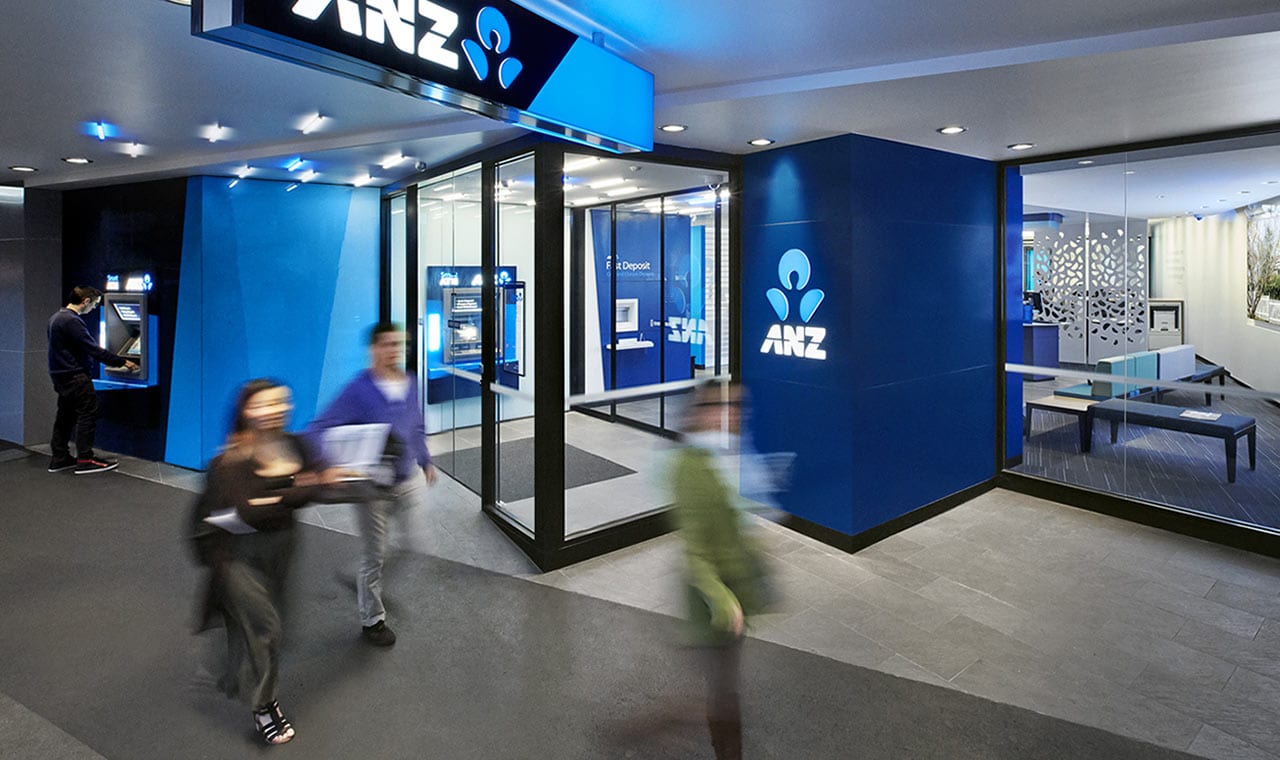
    The Qingdao branch will cover the entire Shandong Province and will offer products and services for ANZ’s corporate customers.

    Mike Smith, chief executive of ANZ, said that with a significant and growing presence in China and a network across 34 markets in the Asia Pacific, Europe, the Middle East and America, the bank is uniquely placed to support its clients looking to grow in Qingdao and the Shandong Province.

    Mr Smith said Qingdao and Shandong Province have established long-term relationships with Australia, and highlighted “major potential” for further growth in bilateral trade and investment.

    “This includes opportunities in industries such as natural resources and agriculture, and the opportunities created through the China-Australia Free Trade Agreement,” he said.

    “With our new branch, we look forward to enhancing cooperation in the Qingdao and Shandong government, and to continuing to support the development of the local financial industry.”

    Huang Xiaoguang, chief executive of ANZ China and head of greater China, said opening the new branch in Qingdao is another step in continuing to grow the bank’s Chinese footprint.

    “As the only locally incorporated Australian bank in China, we will further enhance our capability to provide comprehensive solutions and services to support local enterprises to go abroad,” he said.

    ANZ announced in July the opening of a new branch in Gurgaon, India, to better service its business customers in the country’s north.

  • Silverlake Axis buys retail banking software firm SunGard Ambit for $12m

    Silverlake Axis buys retail banking software firm SunGard Ambit for $12m

    Singapore-listed Silverlake Axis has reached a deal to buy local firm SunGard Ambit (Singapore) Pte. Ltd. (previously known as System Access Limited) for $12 million.

    Silverlake, that provides digital economy solutions and services, told the Singapore exchange that the deal will enable it to expand its suite of software and services as well as deepen and broaden its customer relationships and geographical presence.

    On an immediate basis, the deal is expected to contribute about 15 per cent to the revenue of the enlarged Silverlake Axis Group, the company said.

    The acquisition will also enable it to add over 50 new customers to its current base of over 150 customers, extending its geographical reach to Eastern Europe, Middle East, South Asia while at the same time creating a stronger market leadership in South East Asia, it added.

    The deal will see Silverlake Axis acquire 100 percent of SAS from SunGard Asia Pacific Inc.

    “SAS brings a complementary retail banking portfolio of software and service solutions to the group’s strengths in delivering financial technology innovation to our customers. In particular, the SAS Retail Banking Product Portfolio positions Silverlake Axis for mid-tier customers while offering a broader variety of tiered deployment options from a technology and a pricing perspective. These products can be deployed on open digital platforms thereby making it possible for Silverlake Axis to address the needs of customers from mid-tier to large enterprises,” its regulatory filing said.

    Dr Raymond Kwong, Silverlake Axis chief executive and group managing director, said : “The group is constantly on the lookout for complementary software businesses to expand our suite of business enterprise software solutions. Through this acquisition, the combined and complementary multi-platform core, channels, card and payment solutions will enable us to deepen our customer solution implementation and support capabilities.”


  • Floating bank brings services to remote islands

    Floating bank brings services to remote islands

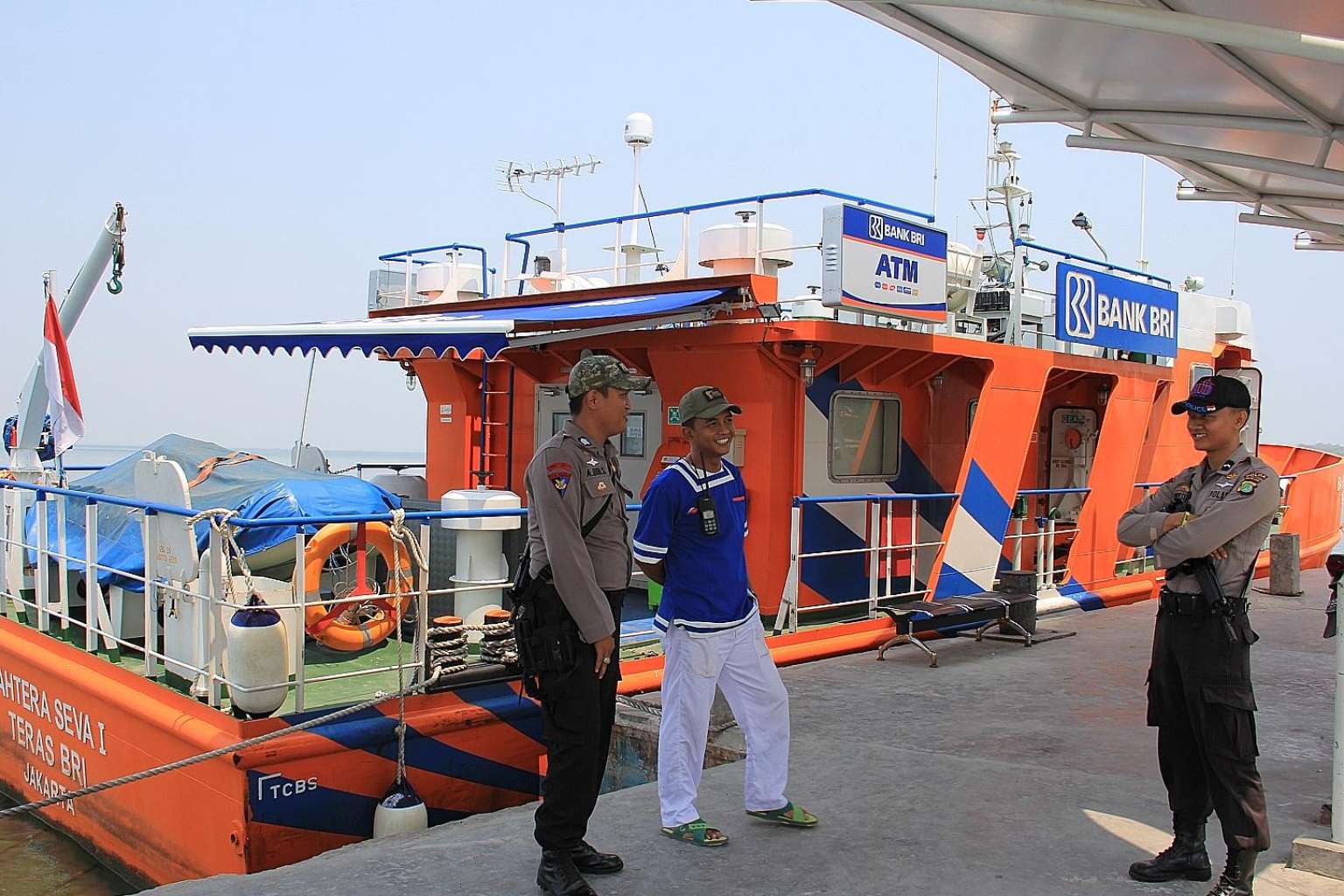
    An Indonesian bank has transformed a boat into a mobile bank outlet, providing services to residents living on remote islands of the sprawling archipelago. Officially launched in August by President Joko Widodo, the service is the first of its kind in the south east Asia nation, and is hoping to make banking services more accessible to people living on the country’s many sparsely populated islands.

    The service offered by Bank Rakyat Indonesia (BRI) is in a trial period and currently serving five islands in the Thousand Islands regency, a chain of islands off the coast of the capital Jakarta. The boat takes off every Monday from Jakarta to visit five islands, one each day, and returns on Friday.

    Equipped with three service desks and an ATM, the boat allows islanders, who used to have to travel to Jakarta, a one-stop shop for services such as personal banking and loans. One resident on Pramuka Island, which is about a two-hour boat ride from Jakarta, said it used to take days to complete her business transactions.

    “It takes one day go to the [main]land, and another day to return, and it takes about two to three days if we need to go to the bank. Although this service is provided once in a week, it helps a lot,” said Hudreya.

    Since the arrival of the boat bank, more local businesses have been given small loans to expand – an important change on the islands that mainly rely on the tourism industry. Ferdinand Tahamata, an assistant manager for the bank who has overlooked the operation, said the ultimate goal of the programme is to provide all residents with a bank account and the funds they need.

    Tahamata, the assistant manager of the Micro-business Department at the BRI Jelamber branch in Jakarta, said: “We’ll continue the operation until we think we’ve garnered enough support from the people, which means everyone on the island has a bank account and can gain access to the capital they need, then we’ll establish a branch on the thousand island regency to serve the people here. Then our boat can move on to other parts, like eastern Indonesia, or the other islands.”

  • HSBC to rebrand Britsh retail operation as HSBC UK..

    HSBC to rebrand Britsh retail operation as HSBC UK..

    The bank, which is based in Britain and has operations in 73 countries, announced in June that it would rebrand its UK business – and fuelled speculation it could potentially sell them off – as a result of the rules that require high street banking to be ringfenced from investment banking.

    HSBC announces today that the name of its UK ring-fenced bank will be HSBC UK.

    It was not immediately clear whether the red and white logo that HSBC uses across its global operations, and which features on airbridges at Heathrow airport, will remain part of its UK facias.

    “Adding “UK” [will] distinguish the ring-fenced bank from the non-ring-fenced bank”, it helpfully pointed out.

    The famous old Midland Bank name will NOT be revived on the high street after finance giant HSBC decided against restoring the brand.

    Feedback indicated that the HSBC brand represents strength and connectivity, supporting the domestic and global ambitions of our customers.

    The news comes just days after HSBC became the latest UK bank to be affected by a processing error which temporarily affected payments to customers.

    However, a person close to the bank said the decision about the branding of its ring-fenced operation should not lead investors to draw conclusions about the outcome of the domicile review.

    But in a statement this morning, HSBC said that after a “consultation process with retail, private and commercial banking customers, as well as customer-facing staff” (we wonder how much that cost), it had chose to opt for HSBC UK.

    But the business was bought by HSBC in 1992 and branches were re-named in 1999.

    It has been hit by the banking levy introduced since the financial crisis – seen as a key reason why HSBC is considering relocating away from London and possibly back to Hong Kong where it originated.

    While HSBC’s bill from the Bank Levy will reduce over time, the impact on its overall tax burden remains unclear because of a new Corporation Tax surcharge that the Chancellor has also chose to implement on banks which make profits of more than £25m.

  • Banks, insurers to face new rules when selling at malls, public places

    Banks, insurers to face new rules when selling at malls, public places

    As financial institutions (FI) jostle to get a bigger share of the consumer dollar by sending their salespeople to hawk everything from credit cards to insurance and investment products at shopping malls, MRT stations and other public places, the Monetary Authority of Singapore (MAS) has stepped in to minimise the risks to consumers from such aggressive marketing tactics.

    In a consultation paper released today (July 23), the financial regulator proposes `Market Conduct Guidelines’ setting out safeguards that FIs — including banks, non-bank credit card and charge card licensees, insurance companies, capital markets and financial advisers — are required to implement while marketing their products and services at retail outlets and public places.

    “These proposals seek to strike a balance between allowing FIs flexibility with their marketing and distribution activities, while safeguarding consumers’ interests when they purchase financial products at retailers and public places,” said Mr Lee Boon Ngiap, assistant managing director of capital markets at the MAS.

    He emphasised that the regulator does recognise the importance of such marketing initiatives as a part of the FIs’ business models. The proliferation of such practises could lead to problems including harassment of consumers, confusion over the roles of the FI and the retailer, enticing consumers to purchase unsuitable products, buying financial products in an unconducive environment and mishandling of monies collected, the MAS said.

    Under the proposals, FIs will have to notify the MAS of their marketing and distribution activities at retailers and public places on a quarterly basis so that the regulator is able to monitor the situation more closely and tailor its supervisory approach accordingly.

    The MAS also proposed that the board and senior management of FIs be accountable for ensuring proper controls over their marketing campaigns at such places. FIs are also expected to call back customers roped in at public places before or within the free-look or cooling-off period to ensure they have understood the insurance and investment schemes they purchased. FIs must regularly conduct mystery shopping and site visits to ensure that their representatives adhere to the required standards and guidelines.

    The proposals complement existing rules and practises, and ensure consistency and alignment of standards across the financial industry, the MAS said, referring to existing guidelines that most FIs already have in place.

    Mr Antony Eldridge, financial services leader at business consultancy PwC Singapore said: “Given innovations in marketing and distribution techniques used by FIs, these proposals should not be unexpected. In fact, the proposals should also help to protect FIs in Singapore from getting caught in the kind of hugely costly scandals that have hit a number of overseas institutions.”

    Mr Rajan Raju, head of retail clients at Standard Chartered Bank Singa­pore, said: “The initiative is about responsible selling, treating customers fairly, and ensuring a robust process for the marketing of financial products and services. Treating customers fairly remains a key priority for us at Standard Chartered.”

    The Life Insurance Association of Singapore said its members are aligned with the MAS in safeguarding consumers’ interests. The implementation of numerous initiatives such as compareFIRST, balanced scorecard and Direct Purchase Insurance products are some examples of the industry’s efforts to ensure that consumers are well-informed and given flexibility in managing their portfolios to meet their protection, savings and investment needs, LIA added.

    The public consultation will close on Aug 24.

  • Indonesia’s Bank Mandiri partners ASCO, Tunas for multifinance biz JV

    Indonesia’s Bank Mandiri partners ASCO, Tunas for multifinance biz JV

    PT Bank Mandiri Tbk (BMRI), the largest bank by assets in Indonesia, is planning to tap the growing automotive credit market through a joint venture (JV) with a multifinance firm PT Mandiri Utama Finance (MUF).

    The bank plans to collaborate with automotive distribution company ASCO Automotive and Tunas Group for establishing the JV company. In the new JV, Bank Mandiri will hold 51 per cent, while US ASCO will hold 37 per cent stake and Tunas Group 12 per cent.

    MUF expects the new JV firm to begin operations in September.

    MUF was established in January 2015 as a leasing sub unit of Bank Mandiri, which has 10 subsidiaries, including Syariah lender PT Bank Syariah Mandiri (BSM), securities firm PT Mandiri Sekuritas and life insurer firm PT AXA Mandiri Financial Services.

    Hery Gunadi, Consumer Banking Director for the bank told that Bank Mandiri intends to capture market share of 30 per cent by 2018. Currently, the bank has around 10 per cent market share in the multi finance sector.

    MUF plans to open between five and eight branches (Jakarta, Bandung and Surabaya) in the second half of this year.

    Meanwhile, Mandiri Tunas Finance will provide financing for car, heavy equipment and motorcycles, while Mandiri Utama Finance will focus on new and used car and motorcycle financing, said Gunadi.

    President Director and CEO Group of Bank Mandiri, Budi Gunadi Sadikin added that the potential market for automotive credit could reach Rp200 trillion ($14.93 billion) this year with estimated car sales around 1 million units and motorcycle 8 million units.

    “There are a lot of multifinance firms that are encountering funding difficulties. This creates opportunities for us to enter (the financing) business. At present, income contribution from multifinance business, on average grows, by around 31 per cent per annum; and it is the third largest income contribution from subsidiaries after AXA Mandiri and Bank Syariah Mandiri,” he said.

    ASCO Automotive and Tunas Group are among largest automotive distributors in the country. ASCO Automotive, previously called Adira Mobil, was jointly established by former CEO of PT Astra International Tbk (ASII) Teddy P Rahmat and former CEO of financing firm PT Adira Finance TbkStanley Setia Atmadja in 1989.

    Tunas Group was established by businessman Anton Setiawan in early 1970s. In 1980, he establishedPT Tunas Ridean Tbk (TURI) as holding company of Tunas Group and listed the firm in 1995. In 2009, Bank Mandiri acquired 51 per cent shares of PT Tunas Financindo Sarana, a subsidiary of Tunas Group and later changed the company’s name to PT Mandiri Tunas Finance (MTF).

  • Identifying Asia’s regional bank champions

    Identifying Asia’s regional bank champions

    Bank of China is seen as the strongest challenger for Asian leadership

    A swelling population, exponential economic growth and broad financial development are transforming Asia ex-Japan into a global finance hub.

    It is the opportunity to service retail and wealthy clients in Asia that has fired banks’ ambitions to extend their regional networks and boost their distribution power.

    But the odds are stacked against them. They have nowhere near the scale of the international players Citi, HSBC and Standard Chartered. This trio has resources, customer networks and relationships acquired from a century of operations in Asia.

    Asian banks, on the other hand, face constraints in their ability to expand cross-border, including fierce domestic competition and national protectionism.

    Nevertheless, they have become increasingly vocal about their regional ambitions, centred around expanding their wealth management businesses.

    Our leading contenders come from China, Malaysia and Singapore. Hong Kong banks appear content to focus on Greater China, where they will seek to be facilitators of trade flows rather than competitors in regional distribution.

    “From a geographical standpoint, the footprint of the Singaporean banks is wider,” said Michael Wu, senior equity analyst at Morningstar. “They might be in a better position to access Asia.”

    Bank of China is seen as the strongest challenger for Asian leadership. It has the balance sheet and is willing to suffer in the short term to expand, notes CLSA.

    BOC has a network of 11,514 offices, although 10,693 are onshore. Overseas, it has 628 offices in Hong Kong, Macau, Taiwan and in 37 other countries.

    It was first to offer private banking onshore in 2007 and now manages Rmb720 billion ($116 billion) for 74,000 private banking customers, with more than 7,000 wealth management centres and 34 private banking hubs. It has private banking operations in Singapore and Hong Kong and has ambitions to grow in Asia, including Australia, where it opened a branch in 2010.

    Singapore’s largest lender, DBS, has 280 branches across 15 markets in Asia. But Singapore and Hong Kong remain its major markets, despite its attempts for regional leadership. As CLSA points out, its operations in the growth markets of China, India and Indonesia have remained sub-scale.

    DBS is building wealth management/private banking operations. Its private banking business was bolstered by its $220 billion acquisition of Société Générale’s private banking business in Asia last October, boosting its AUM 22% to S$133 billion ($97.4 billion) as of December 2014. DBS’s total wealth management AUM stood at S$141 billion and its private bank AUM at S$95 billion.

    Maybank was a late-comer to private banking, but has been building a solid Asean network. Its regional operation only started 18 months ago, with Singapore as its hub. But it has been hiring aggressively and expanding its proposition, including launching a discretionary portfolio management service.

    Steven Seow, Asia head of wealth management at Mercer, pointed out that Maybank has succeeded in converting long-time Asian corporate banking entrepreneurs to its wealth management business. In terms of private banking assets, Maybank has S$6 billion in overall AUM, having added S$2 billion in new assets over the past year.

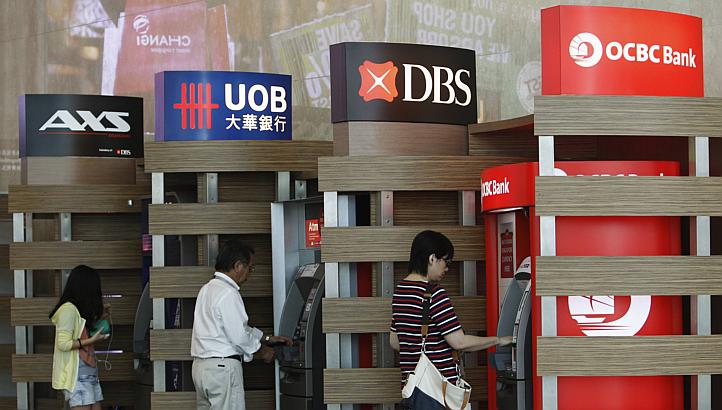
    Historically OCBC has focused on Southeast Asia. It has a strong position in Singapore and is one of the largest foreign banks in Malaysia, providing conventional and Islamic finance. Last year it acquired Wing Hang Bank in Hong Kong for $5 billion.

    That increased OCBC’s branches in Greater China from 25 to 120 and deepened its operations in the Pearl River Delta, although it paid a high premium given Wing Hang’s operations in Hong Kong and China were marginal.

    In private banking and wealth management, OCBC’s 2009 acquisition of ING Private Banking (renamed Bank of Singapore) for $1.46 billion has given it the scale to compete with DBS and global banks. The acquisition trebled its private banking AUM to $23 billion.

    As of March this year that AUM had since doubled to $51 billion. It enjoyed 15% year-on-year growth in wealth management income in 2014.

    Among Singaporean banks, UOB’s focus is on Southeast Asia, with universal banking operations in Malaysia, Thailand and Indonesia. But outside of Singapore its strength in Malaysia – it has the largest foreign bank network in the country with 45 branches – is not replicated in Thailand and Indonesia.

    Without the help of an international acquisition, UOB has invested in building its wealth management and private banking capabilities out of Singapore.

    It saw the combined AUM of wealth management and private banking grow 67% to S$80 billion in the four years to 2014, during which time the profit contribution of wealth management doubled to 47%.

    But while it has plans to offer private banking outside of Singapore, its current proposition is acknowledged as behind city-state peers DBS and OCBC.

    The full article appears in the July 2015 edition of AsianInvestor magazine

  • ICBC Singapore launches USD/SGD dual currency card

    ICBC Singapore launches USD/SGD dual currency card

    Industrial and Commercial Bank of China (ICBC) Singapore has launched a US dollar and Singapore dollar dual currency credit card as it seeks to expand its retail banking presence here.

    The ICBC Visa USD/SGD dual currency credit card will have zero administrative fees for all US dollar transactions, the bank said in a press release on Monday. This would ease “additional costs that customers tend to bear, which can be as high as 2.5 per cent”, ICBC Singapore’s general manager Zhang Weiwu added in the statement.

    It is “the first dual currency card in Singapore to combine both USD and SGD customer accounts in one credit card”.

    Credit card providers typically charge an administrative fee for currency conversions on credit card purchases made in foreign currencies. This fee is usually a percentage of the transaction cost, and depends on the rate set by the bank and by the credit card network, such as Visa or MasterCard. This fee is usually not explicitly given in the cardholder’s monthly statement.

    Banks in Singapore have rolled out a few new credit cards since the start of the year in a bid to grow their slice of the market, where growth momentum is slowing. OCBC, which has set its sights on 30 per cent growth in card spending this year, launched its Voyage air miles card in March targeted at high net worth and affluent customers. ANZ also launched in March a credit card that lets cardholders choose what rebates they get.

    ICBC Singapore, designated as the yuan clearing bank here, also came up with Singapore’s first yuan and Sing dollar dual currency credit card in 2011 – the RMB(renminbi)/SGD UnionPay dual currency credit card.

    On the launch of its latest credit card, the bank said that its promotion incentives include “cashbacks on every new application and activation, and additional rewards for online applicants”. It has retail branches in Raffles Place, Orchard, Chinatown, Paya Lebar and Jurong East.

  • HSBC aims to be the leading international bank in Singapore

    HSBC aims to be the leading international bank in Singapore

    As HSBC moves to reduce costs and reverse declining profits, it says Singapore will remain one of the group’s priority markets in its pivot to Asia.

    The banking giant says it plans to cut about 50,000 jobs, sell its operations in Brazil and Turkey, and have a return on equity of more than 10 per cent by 2017.

    In its Tuesday investor update for 2015, HSBC also outlines a strategy to increase its presence in South-east Asia and China’s Pearl River Delta within the next 10 years.

    The bank notes that Singapore is a leading financial centre in Asia. HSBC aims to “become the leading international financial services provider in Singapore” in the long term, with emphasis on Financial Institutions Group (FIG) clients and large regional and global corporates. It will locally incorporate the retail business here, focus on the affluent segment and expand its private banking business to capture cross-border wealth flows.

    HSBC was one of the seven banks named by the Monetary Authority of Singapore last month as being “systemically important”, but has yet to locally incorporate its retail operations as required under the additional supervisory measures.

    The bank’s Asean strategy recognises the significant growth in loans and advances in the region between 2009 and 2014. HSBC saw this rise by 15 per cent in Singapore, reaching US$32 billion last year. This is more than twice the amount in Malaysia, and compares relatively well with mainland China, which had US$38 billion.

    Hong Kong loans and advances grew 17 per cent to reach US$214 billion.

    HSBC is among the top five banks in Singapore, based on market share in deposits and loans and advances to customers, with a loan market share of 3.6 per cent. In the past year, it opened two local branches in a bid to boost its retail business, bringing the total count to 11.

    HSBC would have to compete with other banking leaders, including DBS and Standard Chartered, as it also aspires to be one of the top five banks in South-east Asia.

    The bank highlighted its “unique position” in Asean, noting that it is the world’s third fastest-growing trade zone, and home to a large emerging middle class and some of the fastest-growing cities. HSBC has more than 180 branches in Singapore, Malaysia and Indonesia combined, and sees itself as one of the “leading foreign banks” in these priority markets.

    The bank expects “significant growth opportunity” in South-east Asia, with wealth creation to grow 3.6 times by 2030.

  • Zooming in on market niches lets Maybank flourish

    Zooming in on market niches lets Maybank flourish

    Navigating Singapore’s crowded banking landscape is not easy, and Maybank’s retail banking unit says it needs to be nimble by zooming in on market niches.

    The bank last month launched a Maybank Save Up programme tailored for young workers in Singapore after noticing that many are increasingly keen on financial planning.

    And, noting that young children are often neglected by lenders, it launched last September the Maybank Family Plus programme to encourage parents to help kids save.

    Maybank is also focusing on long-term relationships and on catering to customers’ needs at every stage of their lives.

    “I think (Singapore) is probably one of the most highly- banked markets, even for retail,” said Mr Choong Wai Hong, the bank’s head of community financial services. “But that said, I find the Singaporean consumers, the account holders, they are quite savvy.”

    In an interview with The Straits Times on Thursday, he said consumers are often willing to snap up new products and services. “Their sensitivity to change, to go for a product, is quite high. So if you can find the right market niche for them, the willingness to move is quite high”.

    What Maybank does in Singapore is closely-watched by rival lenders as it is one of the very few foreign banks with a large retail presence here.

    Its three entities in Singapore – Maybank, Maybank Kim Eng brokerage and Etiqa Insurance – employ 2,400 staff.

    Singapore’s central bank last month named Maybank one of the inaugural seven “domestic systemically important banks” in the Republic.

    The seven each has a significant impact on the financial system’s stability and proper functioning of the broader economy, the Monetary Authority of Singapore said.

    The three domestic lenders in the list are DBS Bank, OCBC Bank and United Overseas Bank. And apart from Maybank, the other foreign banks are Citibank, Standard Chartered and HSBC.

    Maybank has 22 full-service branches in Singapore – the largest for a foreign bank here, but nowhere near the hundreds of branches operated by the three local lenders.

    It is sometimes known as the “time deposit bank”, owing to its competitive retail deposit rates. Mr Choong said Maybank has 10 per cent to 11 per cent share of the time deposit market in Singapore.

    Its other strength is in the vehicle loan market where it has a 22 per cent market share.

    The Maybank group in Singapore last week reported profit before tax for the first quarter of $93.75 million, down from $110.9 million a year earlier.

    Asked about its retail lending profile, Mr Choong said the major segments are about 45 per cent in mortgages, 18 per cent in auto loans, 22 per cent in retail small and medium enterprises and commercial loans. Other consumer loans make up the other 15 per cent.

    Maybank, he said, has an advantage that other foreign banks here might not have – the group offers the full spectrum of services including retail banking, Maybank Kim Eng brokerage, Etiqa Insurance and Maybank Private Wealth.