Tag: Business

  • AuMake enters into agreement with JD Worldwide

    AuMake enters into agreement with JD Worldwide

    AuMake International Limited has joined forces with JD Worldwide, a division of Chinese e-commerce giant JD.com, to create a new omnichannel platform for Australian and New Zealand brands to reach Chinese customers. The strategic agreement, which was signed in Sydney on Tuesday, will see JD combine its online and logistics capability in China with AuMake’s retail store and brand building capabilities in Australia.

    The partnership mirrors a similar agreement between Alibaba’s Tmall and Chemist Warehouse, the companies noted in a statement.

    The agreement builds on the booming daigou industry in Australia and New Zealand, where personal shoppers, often Chinese students or tourists, buy and ship products on behalf of family, friends and other clients in China.

    AuMake over the past two years has expanded its chain of retail stores catering to daigou shoppers with relevant products and services.

    Under the agreement, AuMake will become JD’s exclusive retail store partner in Australia and New Zealand and connect existing and future store customers to its online flagship on JD’s cross-border platform, JD Worldwide.

    JD, under the agreement, will fully support AuMake’s online flagship, with an initial sales target of 10 million RMB ($2 million) per month, and provide access to its warehouse and dispatch logistics network in China.

    The companies will also work together to incubate and develop new brands to be exclusively sold on the JD Worldwide platform and in AuMake retail stores.

    AuMake executive chairman Keong Chan called the agreement a “company-changing event”.

    “This is a company changing event for AuMake and confirms the value that we have created so far via our retail store distribution network in Sydney,” he said.

    “Under this collaboration with JD Worldwide, AuMake will now be able to reach hundreds of millions of customers in China with new brands and products, including brands and products owned by AuMake.”

    Keong added that he believes AuMake and JD together can fundamentally change the way in which Australian and New Zealand products reach the Chinese market.
  • AirAsia’s Vietnam venture set to fly in August

    AirAsia’s Vietnam venture set to fly in August

    A new Vietnam-based airline set up by Malaysian budget carrier AirAsia and a local company is expected to fly by next August. Tran Trong Kien, CEO of Hanoi-based resort ooperator Thien Minh Group, AirAsia’s partner, said that applications for aviation licenses would be made next February and likely obtained in six months.

    Vietnam will become the newest market for AirAsia, the largest low-cost carrier in Southeast Asia, which has affiliates in India, Indonesia, Malaysia, the Philippines, and Thailand.

    Kien said Prime Minister Nguyen Xuan Phuc had expressed support for the airline, which has yet to be named.

    The airline plans to deploy five or six Airbus SE A320 and A321 aircraft on domestic and regional routes, and expand the fleet to 30 within three years, he added.

    Last week Thien Minh Group signed a memorandum of understanding with AirAsia for setting up the new airline with a capital of VND1 trillion ($44 million).

    AirAsia will hold a 30 percent stake in it, and Thien Minh, 70 percent.

    The new airline would be a direct competitor to Vietnam’s budget carriers Vietjet Aviation and Jetstar Pacific, according to industry insiders.

    Vietnam Airlines is currently the biggest airline in terms of passengers carried.

    Bamboo Airways, owned by private corporation FLC, last month received a license and expects to make its maiden flight on December 29. It is allowed to operate 10 aircraft on domestic and international routes.

    There are five carriers in Vietnam: Vietnam Airlines, Vietjet Air, Bamboo Airways, Jetstar Pacific and VASCO. Vietnam Airlines owns VASCO and has a 70 percent stake in Jetstar Pacific.

    Vietnam received 14.12 million foreigners in the first 11 months of the year, up 21.3 per cent year-on-year, according to the General Statistics Office. Eighty percent of foreign tourists arrive by air.

    Vietnam’s aviation market has averaged 17.4 percentage growth in the past decade, far higher than the 7.9 percent rate for the Asia-Pacific, according to the International Air Transport Association.

    AirAsia almost struck a deal with Vietjet, but in 2010 the deal collapsed.

  • BreadTalk to open 1st Din Tai Fung restaurant in London by end-2018

    BreadTalk to open 1st Din Tai Fung restaurant in London by end-2018

    Taiwanese dumpling chain Din Tai Fung has opened in Covent Garden, London. The new 8000sqft Din Tai Fung London eatery is the franchise’s 153rd globally, and is the first of at least two outlets planned for the city. A second store is planned for Centre Point next year.

    The Din Tai Fung London store has been launched by Taster Food UK in partnership with Singapore-based BreadTalk Group.

    BreadTalk Group CEO Henry Chu said: “The group will leverage on our experience of operating Din Tai Fung in Singapore and Thailand, and the strength of our overseas partners to continue the tradition of delivering an authentic Taiwanese dining experience to Londoners.”

    Brand founder and chairman George Quek commented that there is potential to open 20 Din Tai Fung outlets in Britain, serving as a starting point for further expansion into Europe.

    Din Tai Fung has already opened in Australia, China, Hong Kong, Indonesia, Japan, Malaysia, Philippines, South Korea, the US and the UAE. It was recognised by the New York Times in 1993 as one of the world’s top 10 restaurants.

  • HCMC a top 20 Asia Pacific office rental market

    HCMC a top 20 Asia Pacific office rental market

    With office rents rising constantly for several years, HCMC has moved into the top 20 Asia-Pacific office rent markets. Grade-A office rents in Ho Chi Minh City have reached a five-year peak of $936 per square meter a year, according to property service firm JLL. The HCMC market has come under the spotlight in a premium office rent report for the Asia-Pacific region just released by the US-based global company.

    The report said that HCMC, an emerging market, saw annual gross premium office rents rising to $635 per square meter, a year-on-year increase of nearly seven percent, placing the city in the list of top 20 office rent markets in the Asia-Pacific region.

    It highlighted the case one unnamed building in the inner city, where a record rent level of $936 per square meter a year was registered, a peak unseen for many years.

    JLL assumes that the HCMC office market is heating up with increasing investment inflow from many multinational firms.

    The US firm added that the total supply of office space in HCMC has increased to two million square meters, a five-fold hike compared to Bangkok. The scarcity of premium office space in HCMC has constantly pushed up rents.

    Financial corporations are willing to pay for high-end office space in HCMC, while banking and financial firms were keen on premium office space, topping the list of 72 key tenant categories.

    Meanwhile, JLL said in the Global Premium Office Rent Tracker Q4 2018 that Ho Chi Minh City and Manila, the two more affordable cities in Southeast Asia, are attracting significant corporate interest, along with European cities like Amsterdam, Berlin and Warsaw.

    The firm said that growth in occupation costs is likely to slow down in 2019 as new supply comes through; however, while rental growth is expected to decelerate, there are very few major markets where a downward correction is projected for 2019. In fact, the delivery of new premium buildings will set fresh rental benchmarks in several markets, it predicts.

    Total occupancy costs are calculated by combining the net effective rent with additional costs, including service charges and taxes.

    JLL’s Global Premium Office Rent Tracker 2018 compares occupancy costs for premium office buildings across the world’s leading real estate markets. This fourth edition includes 72 office submarkets across 61 cities.

    The report includes the key elements of occupancy costs – net effective rent, service charges and government tax on rent – all standardized to enable true international comparisons.

  • ShoppRe online portal targets Indians living abroad

    ShoppRe online portal targets Indians living abroad

    International shipping and consolidation company ShoppRe.com is setting up in Dubai with a series of marketing campaigns. The shopping portal optimises cross-border e-commerce from India, acting as a bridge between people living abroad and Indian shopping sites such as Flipkart and Myntra.

    According to the site’s founders, most Indian sellers do not offer international shipping and several Indian websites do not accept international card payments.

    ShoppRe’s brand ambassadors, actress Priyamani and her husband Mustufa Raj, kick-started the official launch in Dubai by releasing the new ad campaign.

    “I can totally relate to people who have just shifted abroad and badly miss shopping from India. ShoppRe makes it possible to have your favorite Indian goods delivered right to your doorsteps,” said Priyamani.

    The firm’s major investor V A Hassan said: “I have been in Dubai for more than four decades. I have seen the huge demand for Indian products like fashion, food, etc, which are popular everywhere, but not easily accessible or are extremely overpriced”.

    ShoppRe was founded in October 2016 and has fulfilled orders worth INR 40 million (US$565,200) for more than 15,000 customers, including both Indian and non-Indian consumers. It has shipped products to more than 80 countries.

  • Alibaba to open e-commerce hub in Belgium

    Alibaba to open e-commerce hub in Belgium

    Alibaba Group Holding Ltd has signed an agreement with the Belgium government to launch an e-commerce trade hub, which will include investments in logistics infrastructure. The project is part of Alibaba’s Electronic World Trade Platform (eWTP), and Belgium is the first European country to join the project following similar agreements in Malaysia and Rwanda.

    Alibaba’s logistics arm, Cainiao, will lease a 220,000 square meter logistics port at Belgium’s Liege airport as part of the deal and invest an initial 75 million euros ($85 million) in the project set to begin operations in 2021, it said.

    “We strongly believe that under the eWTP, we will open up the huge potential for European businesses to reap the benefits of global cross-border trade, especially into the China market,” Alibaba CEO Daniel Zhang said in a statement.

    Alibaba’s eWTP is designed to help countries reduce trade barriers for e-commerce trade, including lowering or eliminating tariffs and speeding up customs clearance.

    The company has previously said the project is designed to “compliment” the World Trade Organization (WTO).

    Alibaba is expanding the project to Europe amid wider trade tensions, which have forced the firm to back down from efforts to tap U.S. sellers.

    Recently, Alibaba Chairman Jack Ma said previous plans to create a million jobs in the United States had been put on ice due to trade tensions, according to Chinese state media.

  • Indonesia’s Traveloka Co-Founder Resigns

    Indonesia’s Traveloka Co-Founder Resigns

    Indonesian unicorn startup Traveloka announced the resignation of its co-founder, Derianto Kusuma, from his position as chief technology officer on Tuesday. Derianto was one of three persons involved in the establishment in February 2012 of the online ticketing and hotel booking service, which has since become one of the leading tech companies in Southeast Asia.

    “Deri has played an unparalleled role in Traveloka’s development and success by building, scaling, and making not only sustainable technology capability and systems but also a sustainable organization,” said Ferry Unardi, chief executive and co-founder of Traveloka.

    Following his exit from the company, Derianto took to online publishing platform Medium to write about his journey. In his post, he wrote about what drove him to start the company and the actual implementation of different business models throughout the nearly seven years since Traveloka was founded.

    He also touched on why he decided it was best for him to leave.

    “A few years ago, the battle started to show trends towards being more commercially than innovation-driven, predatory than productive, perception-oriented than fundamentals-oriented,” Derianto wrote.

    With these new trends, Derianto felt that his duty – building the technological foundation – had been fulfilled.

    “Two years ago, I ensured Traveloka had strong technological, organizational foundations built for scale and sustainability, and put in place a solid senior team that can take them forward,” Derianto wrote.

    Though Derianto wrote that he would be spending more time with family and friends after resigning, he said he “yearns” to develop a new venture in a noncompeting category, a technology that would “fundamentally transform society.”

    “I’m glad that we have finally reached this milestone where I believe it’s a win-win for everyone involved,” Derianto wrote.

  • Indonesia’s November Inflation Rate Surprisingly Picks Up

    Indonesia’s November Inflation Rate Surprisingly Picks Up

    Indonesia’s annual inflation rate accelerated for a second straight month in November, the statistics office said on Monday, against an expectation for price pressures to ease. The consumer price index rose 3.23 percent in November from a year earlier, Central Statistics Agency (BPS) chief Suhariyanto said, attributing the increase to rising prices of some food products and airfares. On a monthly basis, it rose 0.27 percent.

    October’s rate was 3.16 percent, while a Reuters poll had expected a November annual inflation rate of 3.15 percent.

    The November rate was still well within the central bank’s target range of 2.5 percent to 4.5 percent for 2018.

    The annual core inflation rate, which excludes government-controlled and volatile prices, also picked up more than expected in November to 3.03 percent, from 2.94 percent in October. The poll had expected a core inflation rate of 2.97 percent.

    Bank Indonesia has hiked interest rates six times this year by a total of 175 basis points since May to support the rupiah, despite benign inflation. The currency plumbed levels not seen since 1998 earlier this year but has sharply strengthened last month due to improving global investor sentiment.

  • E-mart US buys supermarket operator

    E-mart US buys supermarket operator

    South Korean discount retail chain E-mart is acquiring US food retailer Good Food Holdings for US$270 million. A subsidiary of retail conglomerate Shinsegae, the E-mart US acquisition intends to stabilise and expand its operations in North America. It is the company’s first acquisition of an overseas firm.

    Good Food operates 24 stores across the American West under three brands: Bristol Farms, Lazy Acres and Metropolitan Market. Its original executive board will be retained by E-mart.

    Good Food Holdings employs 3100 people and brings in average sales of KRW 670 billion ($596.75 million) per annum. E-mart plans to open a premium store-restaurant in Los Angeles next year called PK Market.

  • Ted Baker CEO and founder Ray Kelvin to take leave of absence

    Ted Baker CEO and founder Ray Kelvin to take leave of absence

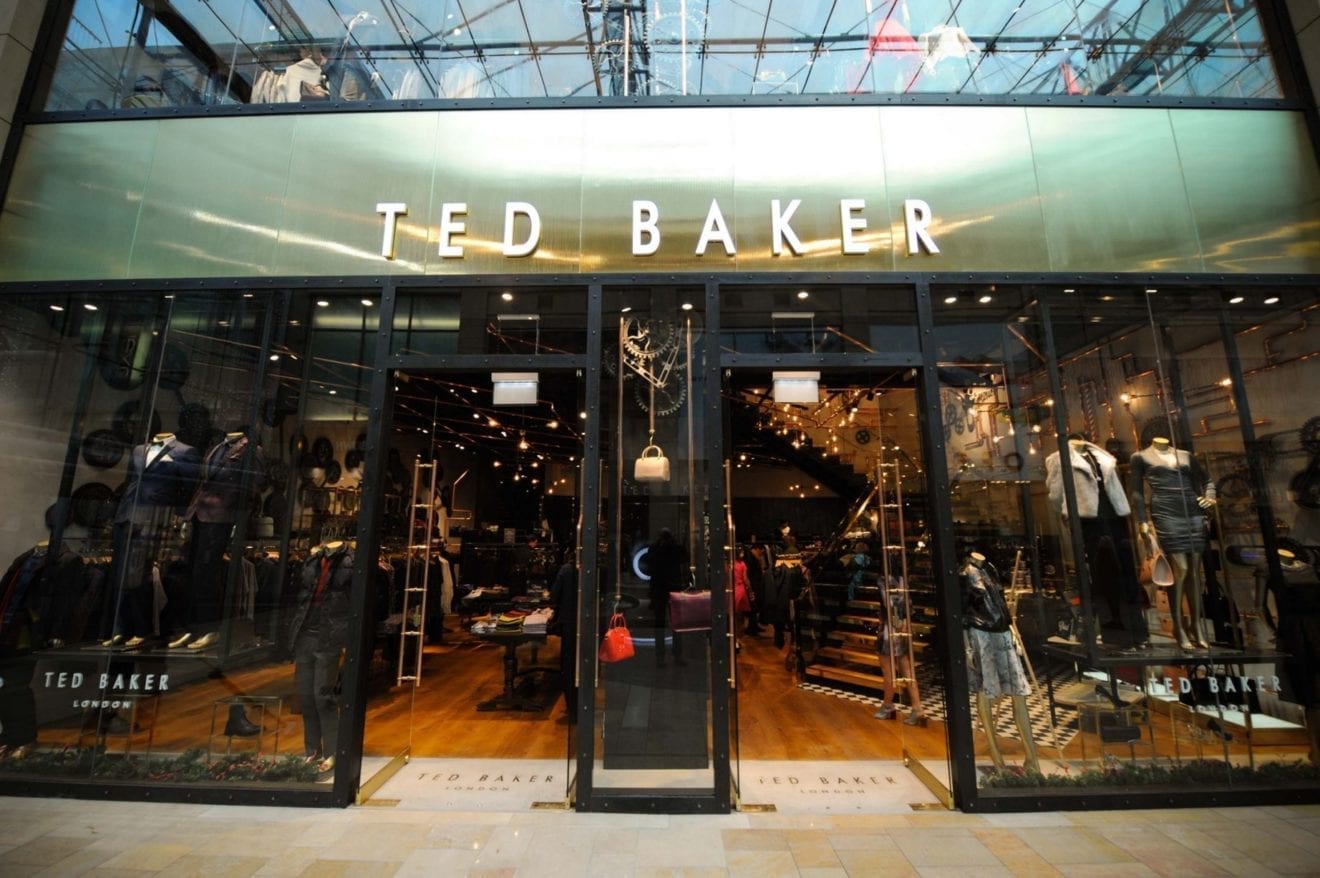
    Ted Baker chief executive and founder Ray Kelvin has taken a voluntary leave of absence after “further serious allegations” around his conduct were brought to light. These allegations were brought to the attention of an independent committee of non-executive directors created to investigate harassment claims made by multiple anonymous staff members that Kelvin had expected them to hug him and sit on his lap when he would visit stores.

    The committee appointed Herbert Smith Freehills LLP to conduct an independent external investigation into the claims.

    Kelvin agreed it would be best for the business, and the people who work in it, if he were to take a voluntary leave of absence for the duration of the investigation.

    Chief operating officer Lindsay Page has been appointed acting chief executive with immediate effect.

    Ted Baker non-executive chairman David Bernstein noted the business remains in a strong position to deliver on its strategy, despite the negative media reports.

    The investigation stems from a petition created on website Organise, through which multiple Ted Baker employees made workplace harassment claims about the founder.

    “Together our pressure exposed what was happening at the highest level. Now, over 100 anonymised reports of harassment are sat with Ted Baker’s board,” Organise said in a blog post about the matter.

    Kelvin said that he grew up with such practices, and that it was “good old-fashioned stuff”.

  • The Body Shop Malaysia franchisee plans IPO

    The Body Shop Malaysia franchisee plans IPO

    Rampai-Niaga, The Body Shop Malaysia franchisee, is planning an IPO that could raise RM200 million (US$48 million). The company is considering submitting a listing application to the local securities regulator shortly, targeting a presence on Bursa Malaysia by the second quarter of next year at the earliest, according to a source close to the firm. As yet, the company has refrained from commenting on the proposal.

    The company’s website says Rampai-Niaga is the sole franchisee for The Body Shop Malaysia. It opened the beauty products brand’s first outlet in the country in 1984.

  • Heron Preston makes debut in Hong Kong

    Heron Preston makes debut in Hong Kong

    U.S. brand Heron Preston which, as Vogue defines it, finds the interface of luxury and streetwear has arrived in Hong Kong. The New York-based designer announced on Instagram that his Hong Kong debut also served as Heron Preston’s first-ever storefront anywhere.

    “I can’t believe I started hand printing t-shirts in San Francisco and now I’m here. I want to thank my amazing team for the love and support!” he said.

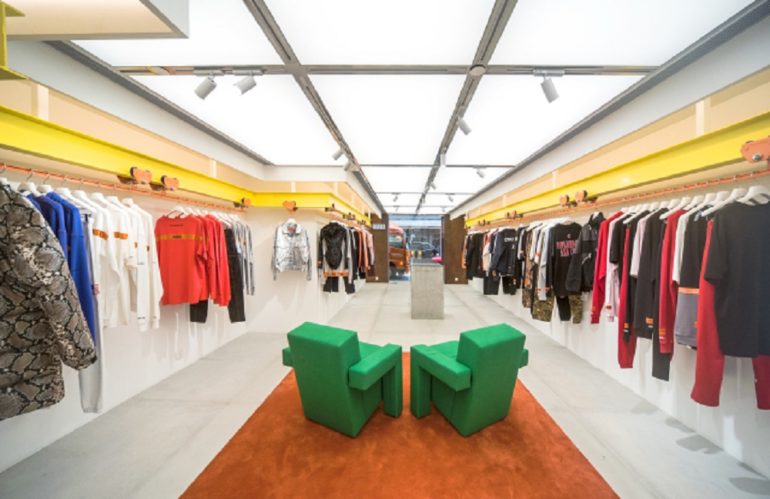
    Located on Paterson Street, Fashion Walk, in the city’s Causeway Bay area, the new Heron Preston store was designed by the contemporary designer too.

    Inside, Hong Kong shoppers are greeted by industrial interior fixtures such as steel shelving, painted wooden crates and licks of safety orange throughout.

    An emerald green chair is set up in the centre of the shop next to the concrete sales counter. The light is bright and remainder of the store minimal in design, allowing the Heron Preston collections to speak.

    Offering a full selection of the designer’s wares, clothes are displayed hanging from the racks, with accessories kept under the glass shelf of a table and hosted on shelves.

    Marking the store opening, Heron Preston has teamed up with fellow American and sportswear heavyweight Nike for a limited edition eyewear collection.

    Dubbed “Nike Tailwind HP Sunglasses”, the glasses are lightweight and wrap-around style, the frames mimicking the brand’s innovative rubber ventilation. The collection comes with interchangeable lenses too.

    A standout piece is the Nike MAX Optics glass, which comes with an anti-fog Flying Lens setting.

    The collection dropped worldwide November 29 and is available at Nike store and Heron Preston sales points.

  • Samsung Electronics gives stability a try

    Samsung Electronics gives stability a try

    The CEOs of Samsung Electronics semiconductors, smartphones and consumer electronics divisions all kept their jobs in the company’s annual corporate reshuffle announced Thursday. Kim Ki-nam, head of Samsung’s device solutions division, which includes semiconductors, retained his position but has been promoted from president to vice chairman. Samsung’s semiconductor business has seen operating profit grow for the past 11 quarters as of September.

    The other two division heads – Koh Dong-jin of IT and mobile communications and Kim Hyun-suk of consumer electronics – were reappointed as CEOs and will retain their current president job titles.

    Roh Tae-moon of the IT & mobile communications division was promoted from vice president to president and will continue to head the smartphone development team. Roh has been at the core of technology development for Samsung’s Galaxy smartphone brand since the range was first introduced.

    For a company well known for rapidly exchanging executives based on performance, the minor superficial changes at the top made this year suggest that Samsung is shifting instead to put more weight on stability rather than expansion next year.

    The company already went through a major generation change last year when it laid off older executives to replace them with younger ones. A total of 14 top executives were reshuffled at the time. Samsung said in a statement on Thursday that it “re-appointed business executives from last year to realize ‘innovation within stability.’”

    The drive for stability also comes at a time when Samsung faces several uncertain factors that analysts say will halt this year’s rally of record profits. The global chip market, which has been on an unusually long supercycle over the last few years, is anticipated to slow down in 2019.

    Outlooks on the global economy are also grim due to the remaining risk of the United States and China continuing their trade war.

    Samsung also stuck to its performance-based HR strategy by heavily compensating executives and managers in the device solutions division, including CEO Kim Ki-nam.

    Kim has been heading the semiconductor business at Samsung since December 2014. Under his lead, the company celebrated the last two years as the No. 1 chip manufacturer in the world. Chips were also a major contributor to Samsung’s record-high quarterly profits this year.

    Kim wasn’t the only one to be rewarded. Among a total of 158 senior executives promoted at Samsung, including those below president, 80 were from his division.

    Samsung employees in the device solutions division will receive bonuses between 300 to 500 percent of annual wages. Even external partners and suppliers for the division will reap incentives this year of up to 89.7 billion won ($79.8 million) in total.

    Meanwhile, this was the first time in three years that Samsung Electronics has released annual reshuffle results at the year’s end – a sign that Samsung is getting back on its feet after Vice President Lee Jae-yong’s return from prison in February.

    There were no annual reshuffles at all in 2016 when Lee was investigated for bribery charges regarding former President Park Geun-hye. It was only in October last year that the company announced a reshuffle plan among top executives.

    Other Samsung affiliates announced annual reshuffle results on Thursday. Samsung C&T Vice President Kim Myeong-soo was promoted to president. He was in charge of the task force in charge of improving competitiveness in engineering, procurement and construction.

    Vice Chairman Lee’s sister Lee Seo-hyun was appointed as chairman of the Samsung Foundation, which conducts social welfare projects. She was formerly president of the fashion division at Samsung C&T.

  • JD to grow its own vegetables for sale on and offline

    JD to grow its own vegetables for sale on and offline

    JD has partnered with Japanese chemical manufacturing giant Mitsubishi Chemical to open the largest hydroponic “plant factory” in China. The omnichannel retailer says the premium-quality, fresh produce produced at the new facility will provide its customers with new options for safe, nutritious and environmentally friendly food, online as well as offline at its 7Fresh supermarkets.

    The factory spans 11,040sqm and incorporates a hydroponic culturing system with solar light and a closed seedling production environment using artificial light. Currently it can produce spinach, cabbage, red and green lettuce, coriander, among others.

    All crops produced at the site are tracked from the time they are planted to when they are delivered, a step toward the future of food production and retail as consumers worldwide increasingly demand transparency. In China, in particular, consumers place high importance on food safety while the overuse of fertiliser, environmental deterioration, and rapid population increase have caused soil problems.

    In the new facility, temperature, humidity, light, and liquid fertiliser are automatically controlled by the factory’s management system, enabling more standardised production of high-quality vegetables without the challenge of seasonal changes. For example, spinach produced in the facility contains 80 per cent more folate, 32 per cent more vitamin C, 25 per cent more potassium and 37 per cent more phosphorus than if grown in the field. Meanwhile, the technology makes pesticides and agrochemicals unnecessary, reducing the need for washing.

    The factory can produce a higher output of vegetables than traditional agriculture systems; it can grow 19 batches of spinach in a year, compared to just four batches per year in a field or six per year in a greenhouse. It only requires half a litre of water to grow any of the factory’s vegetables. The factory is integrated with JD’s cold-chain logistics network, so vegetables can be delivered to consumers’ tables as soon as the same day they are harvested.

    “The JD Plant Factory in Tongzhou marks JD’s entry into the very beginning of the fresh-food production chain, allowing us to guarantee that the fresh goods we sell have been treated with the care JD applies to everything we do,” said Xiaosong Wang, president of JD FMCG and food businesses.

    “JD’s supply chain technology, logistics network and e-commerce expertise combined with Mitsubishi Chemical’s sophisticated growing technology puts us in an ideal position to create an entirely new model for agriculture, and cultivates a fresh and healthy lifestyle in China.”

    Fresh vegetables from the plant factory will be available on JD.com and at 7Fresh stores from this month. JD and Mitsubishi Chemical will cooperate to introduce more fruits and vegetables in the future.

  • Thai Airways taps Worldpay for payments innovation

    Thai Airways taps Worldpay for payments innovation

    Thai Airways International (THAI), the flagship carrier airline of Thailand, has selected Worldpay, Inc. (NYSE: WP; LSE: WPY) as its international payments partner, as it targets overseas growth. To support its sustainable growth strategy, THAI needed an experienced partner to help it manage the complexities of cross-border payments and optimise the online booking journey across both mobile and desktop.

    Worldpay, a leader in card and alternative payments with global coverage, was selected for its international reach and unrivalled experience in the airline industry. Worldpay works with 88 of the world’s biggest airlines and has more than 25 years of experience in the sector. Consumer preferences are changing: while flights have traditionally been booked using credit cards, alternative payment methods (APMs) are growing in popularity. With 28 percent of Thai consumers using bank transfers as their preferred method for shopping online, the ability to offer local payment options will allow companies to make the most of Southeast Asia’s second largest economy.

    Additionally, global mCommerce penetration is set to rise from 38 percent in 2018 to 49 percent in 2022, which suggests that mCommerce is on track to overtake desktop sales by 2023. To adapt to this shift, Worldpay will support THAI in widening its breadth of payment methods and transaction currencies to appeal to the changing purchasing patterns of customers. THAI will initially focus its payment optimisation efforts on Australia and Europe – two key markets for the company. In Australia, the carrier’s passenger traffic is growing by two percent year-over-year, while in Europe passenger traffic is growing at a rate of 2.5 percent each year.

    A range of APMs such as iDEAL, Trustly, SOFORT, and Giropay will be rolled out over the coming months to make it easier for European travellers to book online. The THAI payment team will then expand their initiatives to India, China, and the rest of Asia Pacific. Worldpay will also help THAI execute their commercial strategy through advanced data analytics capabilities, which provide rich insight into transaction approval rates and payment costs. This data will enable the airline to expedite new sales strategies and optimise their payments infrastructure with cross-border operations.

    Wiwat Piyawiroj, THAI Executive Vice President, Commercial comments: “Tourism is booming in Thailand, with a 7.7% increase in domestic flights year-over-year for our service. Yet the market is also incredibly competitive, so it is vital to ensure we can best service our customers and their needs. Thanks to Worldpay, we will be able to offer a variety of payment methods that caters to the tastes of travellers all over the world, making it easier for them to book the holidays they want. As we grow, Worldpay will be a vital strategic payments partner and key to our continued success.”

    Phil Pomford, general manager for Asia Pacific, Global Enterprise eCommerce at Worldpay, said: “With global passenger numbers on track to double over the next 20 years, and Thailand forecast to enter the top 10 aviation markets by 2030, it is a hugely exciting time for THAI. We are delighted to support our partner as they continue to grow. Travellers are continuously evolving the ways in which they buy flights, and airlines must keep pace to match these shifting patterns. The airline industry has never been more competitive, and we look forward to helping THAI capitalise upon the opportunities ahead.”