Tag: China

  • Sarah Zhaung Jewellery opens UK doors

    Sarah Zhaung Jewellery opens UK doors

    Named after the eponymous jewellery designer, Sarah Zhuang Jewellery decided to expand from its home market after a successful showcase at Couture London.

    Sarah Zhuang Jewellery wowed press and retailers at the show with its selection of versatile fine jewellery designs.

    Recognising the brand had something different to offer consumers in the UK, leading London independent jewellery retailers Kabiri and Talisman Gallery in Harvey Nichols have secured Sarah Zhuang Jewellery for its stores.

    All of Sarah Zhuang Jewellery collections are hand-crafted and designed to personify a unique trait of contemporary women. Pieces are crafted in 18ct gold and adorned with diamonds and precious gemstones, with each piece designed to be worn in multiple ways.

    Founder and designer of the namesake brand, Sarah Zhuang, shares on the move into the UK: “London is a very important market for us. It is the first time that we have expanded outside of Asia. We are extremely thrilled to have received such positive feedback from Couture London, and to have connected with Harvey Nichols and Kabiri through this wonderful event.”

    Born into a family that has worked within the jewellery trade for more than 20 years, Zhuang has lived and breathed design from a young age. Fuelled by her passion for jewellery craftsmanship, she received her design certificate from the GIA and a professional diploma from Hong Kong Design Institute, before studying in Florence, Italy, to further hone her skills in jewellery design and making.

    In 2017, she launched her own eponymous brand, which she describes as ‘as versatile as women;.

    Already stocked in retailers in Hong Kong, China and Japan, Sarah Zhuang Jewellery is looking for other retail partners to expand her presence in the UK and internationally.

  • Eclipse China to execute big expansion

    Eclipse China to execute big expansion

    Mattress manufacturer Eclipse International is joining with its Chinese licensee Shenzhen Meiting Creation Furnishing to open more than 100 mattress specialty stores nationwide.

    The Eclipse China rollout, which will proceed over the next three years, is anticipated to expand Eclipse’s market share in the country.

    Shenzhen Meiting has been a licensing partner of Eclipse since 2003.

    Eclipse CEO Stuart Carlitz said: “There is a huge appetite in China for US-branded luxury goods, and our portfolio of brands has been so well received by consumers there. These retail stores will take our 15-year partnership with Shenzhen Meiting to the next level.”

    The Eclipse China stores are expected to predominantly appear in major cities in each Chinese province.

  • Zara China to start recycled garments program

    Zara China to start recycled garments program

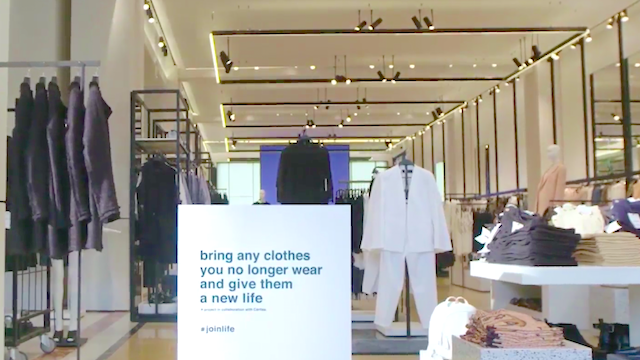
    Spanish garments retailer Inditex, owner of international fashion brand Zara, is set to pilot test its at-home pick up service for recycled garments in China this September.

    The initiative, which currently operates nationwide in Spain, is a central part of the group’s strategic commitment to the so-called ‘circular economy’. It has enabled the collection of more than 25,000 tonnes of garments in 21 markets since launching in 2016.

    The plan was released as part of a report on Inditex’s performance last year, announced at its recent annual meeting. The report highlighted how the company’s integrated store and online model has boosted Inditex’s sustained growth.

    “All of Inditex’s brands benefit from a robust integrated store and online platform,” said Inditex chairman and CEO Pablo Isla. “Last year, online sales already accounted for 12 per cent of the total in the 47 markets in which e-commerce platforms are available, representing annual growth of 41 per cent.”

    He added that the model had enabled sustained growth over the years, coupled with the consistent creation of economic, social and environmental value.

    Inditex has also recently embarked on a refurbishment drive for its entire global network of more than 7400 stores, accompanied by considerable growth in the Zara online platform.

    The group’s earnings performance has enabled its dividend per share to increase by 70 per cent during the last five years.

  • Lotte Mart makes debut in Mongolia

    Lotte Mart makes debut in Mongolia

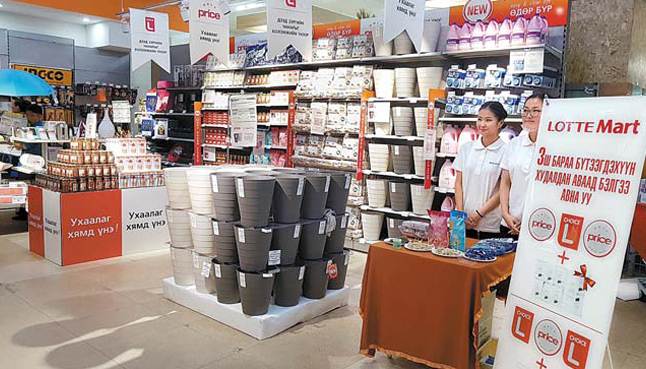
    Lotte Mart Mongolia is opening its first store, in Ulaanbaatar, in the first half of next year.

    The South Korean retailer has set up a joint venture with local retailer Nomin Holdings, which will sell Lotte’s private label products for the next 10 years. It is initially targeting sales of US$3 million annually.

    To prepare for this expansion, Lotte Mart has already sold its food products of its private labels – Only Price, Yorihada, and Choice L – last year at four stores including a state-run department store and two supermarkets owned by Nomin in Ulaanbaatar.

    Nomin Holdings is one of Mongolia’s three largest enterprises and has also worked with other global names including L’Oreal, Mango, and Century 21 in the country.

    Mongolia is one of Lotte’s latest foreign markets after it pulled out from China. Parent Lotte Group operates 46 Lotte Mart stores in Indonesia and 13 in Vietnam. It launched its fast-food brand Lotteria in Ulaanbaatar last month.

  • Louis Vuitton China expands cover to all major cities

    Louis Vuitton China expands cover to all major cities

    Luxury brand Louis Vuitton China is rolling out services to all major cities across the country.

    The expanded reach, which marks the first anniversary of its e-commerce launch in China, will allow metropolitan consumers throughout the country access to Louis Vuitton’s delivery service and seven-day return policy, which it has been testing in 12 of China’s largest cities over the past 12 months.

    The news follows the announcement that Louis Vuitton China, and other luxury brands, will lower prices there in response to the administration’s recent tax cuts.

    The anniversary of the Louis Vuitton China business will also be marked by the release of several new exclusive products, including new bag designs and the brand’s latest fragrance.

    Louis Vuitton’s e-commerce platform is supported by domestic delivery service SF Express, which serves a number of international luxury brands.

  • Vietnam in danger of becoming a dump as China says no to trash

    Vietnam in danger of becoming a dump as China says no to trash

    It’s another waste-full day in Minh Khai, Hung Yen Province.

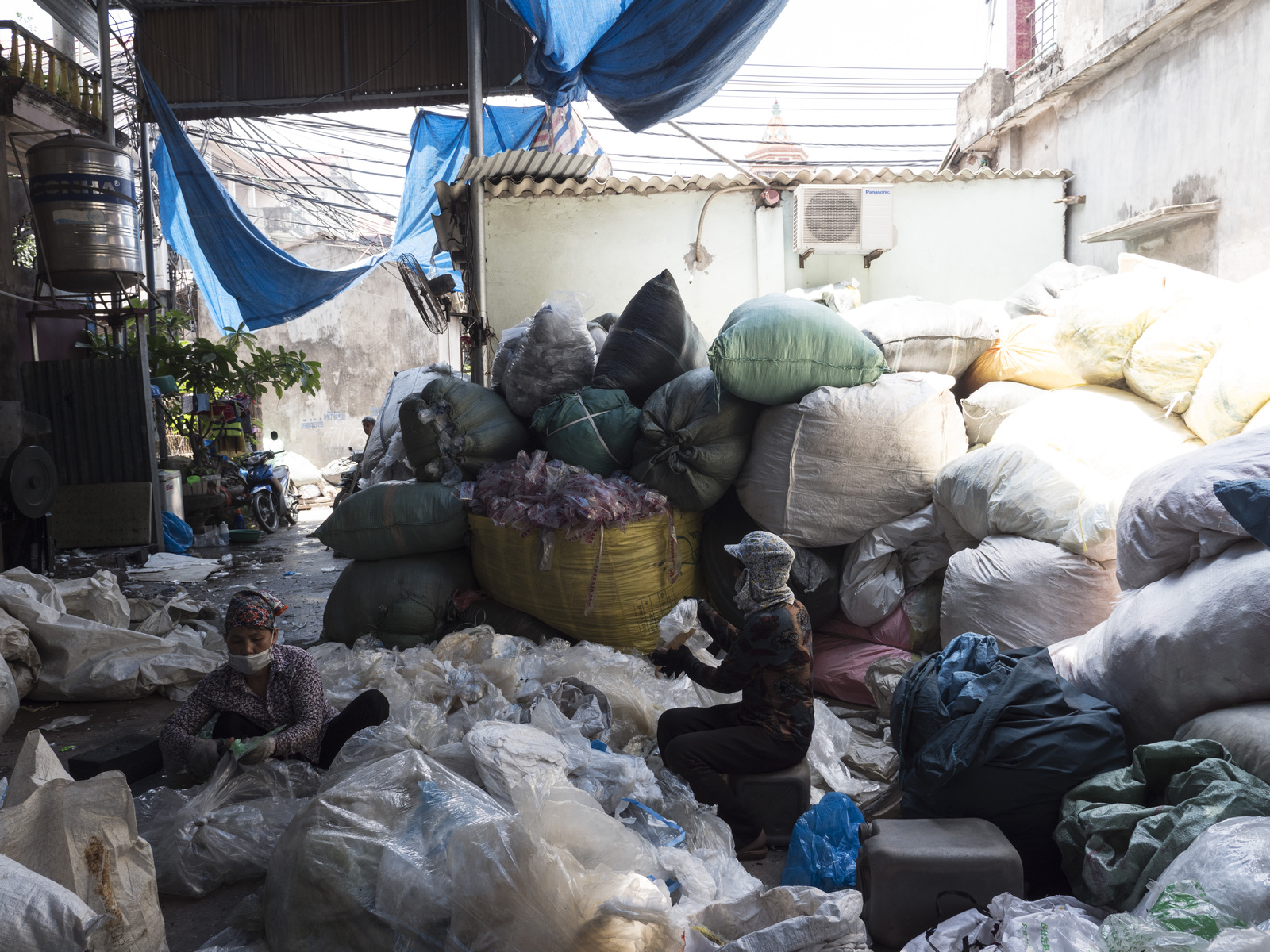
    Blocks of plastic bags sprawl on the ground, fill up alleys, besiege houses; machines groan and toss shredded plastic pieces into the air; sewage carrying debris leaks onto the streets; and kids splash themselves in a dark, murky pond.

    It is a scene similar to the recycling dead zones in China –exhaustively detailed in documentaries such as Plastic China and books like Adam Minter’s Junkyard Planet.

    There’s a big difference, though.

    China’s recycling villages are cleaning up their act in haste.

    Since January 1, the world’s biggest waste importer and recycler has said no to old mobile phones, paper, textiles and plastics it had always imported from the world for decades. It wants to take back its blue sky.

    While a blue sky has not been a frequent sight in industrial Hung Yen or polluted Hanoi, it has been definitively gray in Minh Khai, one of Vietnam’s largest plastic recycling villages.

    It’s noon, traditional Vietnamese nap time, but in Nguyen’s 100-square-meter workshop, the machines are still roaring.

    The 31-year-old recycler is overseeing five employees as they cut, melt and mold plastic, even as she darts between heaps of translucent bags and her kitchen to cook her family of six a quick lunch.

    These days, Nguyen, who declined to give her full name, can’t afford to take a long break. Her pellet-making machine handles about 1.5-2.5 tons of plastic per day, about 50-75 tons a month. Trash is pouring in from all over the world, Nguyen said, but mostly from Germany, Japan and the U.S.

    Nguyen has been a recycler for about two decades but only in the past year has she seen such a surge in the volume of foreign waste.

    She cannot cite figures; all Nguyen knows is that Chinese brokers hand her cash and tell her they need no contract. “I don’t even know who they are but every month, I buy about three containers from them,” Nguyen said.

    Like many recycling households in Minh Khai, Nguyen will sell her pellets back to China, where they are made into cheap plastic tables, stools, containers that find their way back to compete in Vietnamese market.

    Minh Khai has 1,000 households, of which more than 90 percent recycle plastic at home. Hanoi lacks an effective official recycling scheme, so for more than three decades, Minh Khai has been one of the major informal recycling hubs that handle plastic for the capital and the Red River Delta.

    Until 2017, only 143 households were registered businesses.

    “It’s only in the past two years that our village started buying more from Chinese brokers,” a 64-year-old recycler named Hoang remarked. “Truck after truck brings up to a thousand tons of plastic a day.”

    “My neighbors are not only working by day but they have started to run the machines at night as well to handle the new waste. I can’t get enough sleep,” Hoang complained.

    In May, a national TV channel estimated that around 1,000 tons of plastic waste was arriving in Minh Khai every day, a ten-fold surge since mid-2017.

    Hung Yen authorities acknowledge the surge in waste, but are not able to locate its origins. And until they find a way to sort this problem, informal recycling hubs like Minh Khai are not the only destinations that will see foreign waste pile up.

    From January to November 2017, Vietnam increased its imports of PE and PET plastic by more than 166 percent and 137 percent year-on-year, respectively. In November 2017, it was also the biggest importer of scrap plastics marked “mixed/other.”

    In the first quarter of 2018, Vietnam imported nearly 79 million pounds of recovered plastics, up from 40 million pounds over the same period in 2017. It became one of the U.S.’s largest scrap plastic buyers, Resource Recycling Inc. quoted the U.S. Census Bureau as saying.

    International dumping ground

    In 2011, China introduced its Green Fence program, an attempt to slowly close its doors to contaminated materials.

    China had been importing 45 percent of world’s plastic waste since 1992, and according to a research article published on Science Advances this June, the Chinese ban will displace an estimated 111 million metric tons of plastic waste by 2030.

    While major exporters like Europe and the United States are diverting their trash to Southeast Asia, industry insiders say that China’s recycling industry itself could shift to other destinations in the region, such as Vietnam.

    According to a report, Chinese recyclers are already moving much of their capacity abroad, as the curbs on imported trash have deprived them about half the materials they normally need to produce plastic pellets.

    The report says over 1,000 Chinese recyclers already investing in Southeast Asia, particularly Malaysia and Thailand, hoping to indirectly move processed foreign scrap in higher-grade form to meet their country’s new standard.

    However, the new routes have not been smooth since shipments have faced delays, while Thailand and Malaysia were also tightening regulations. One China-invested importer was already forced to close in Thailand, while Malaysia has not been accepting import permit applications since mid-May.

    In Vietnam, fears of the country turning into “an international dumping ground” are growing.

    Despite a halt in issuing scrap import permits since 2017, Vietnamese seaports have been clogged with thousands of containers of foreign scrap.

    As of May 2018, nearly 28,000 containers were stuck in seaports across Vietnam, according to the Vietnam Maritime Administration. The goods range from electric cords, outdated household appliances, secondhand fabric and used cars to plastic and paper scrap, which makes up the majority.

    Tan Cang Cat Lai, one of Vietnam’s largest shipping terminals, had more than 8,000 TEUs (1 TEU equals a 39-cubic-meter container) of plastic waste and paper as of May 21.

    The Tan Cang Cai Mep International Terminal also said that the large volume of plastic waste containers the port has received has caused troublesome backups and delays. Both terminals, which are operated by the Saigon Newport Corporation, say they are not accepting plastic scrap until October 15.

    Customs officials are ramping up inspections after a recent report of the  Vietnam Customs described numerous violations in scrap paper and plastic waste imports – including materials not meeting quality standards, mislabeling, forged import permits and even lack of permits.

    In a recent National Assembly session in Hanoi, Tran Hong Ha, Minister of Natural Resources and Environment, responding to concerns that the country can become a landfill of industrial and radioactive waste, said Vietnam has to start saying no to scrap import because the country is not able to deal properly with solid waste.

    “Waste in Vietnam is different from the world and even the advanced technologies that other developed countries use to treat their waste have turned out to be inappropriate in Vietnam,” he said.

    Many domestic waste treatment plants do not operate effectively and if those plants cannot meet technical and environment criteria, they should be shut down, the minister added.

    Until developed nations find a concrete solution for the new-found crisis, it appears that the burden will be borne by Vietnam’s seaports and its limited recycling infrastructure.

    For informal recyclers like Hoang and Nguyen of Minh Khai, business will remain hectic, but they are not complaining.


  • Chinese retail landlords rise to the challenge of e-commerce

    Chinese retail landlords rise to the challenge of e-commerce

    China’s retail real estate arena is the fastest-developing market in the world – forcing landlords to change their strategies to meet the challenge of e-commerce.

    When it comes to mobile shopping, 30-minute delivery and customer apps, China leads the world. Around 20 percent of China’s retail sales are online, placing it ahead of the UK, U.S. and South Korea, the other nations where e-commerce is most entrenched.

    And landlords are having to move fast to adapt to the new online/offline norm.

    “China is leading the world when it comes to blending online and offline retail, to the extent that in a few years’ time, those terms will leave our vocabulary,” says James Hawkey, head of retail for China at JLL. “We are moving to a world where all retail transactions will be internet-influenced.”

    Hawkey notes the historical definition of “online” and “offline” revolves around the place of transaction, something that is becoming increasingly unimportant. “People may go to a store to try something on and then buy it online for home delivery,” he says

    Chinese companies have been ahead of the curve when it comes to successfully blending online and offline retailing. In May, Dalian Wanda Group teamed up with tech firms Tencent Holdings and Gaopeng for a new online/offline retail joint venture.

    The new partnership aims to give Wanda’s shopping malls a “comprehensive digital upgrade”, improving connectivity between stores, malls and customers. Wanda hopes the initiative will bring “enormous online traffic through WeChat and other platforms”, which in turn will bring more physical traffic to its 236 Wanda Plaza shopping centres.

    Developer Chongbang has taken a lead on linking online and offline businesses. Its latest LifeHub malls in China have online fulfilment centres, where customers can pick up, try on and return goods they have ordered online. Chongbang has been bringing previously online-only brands into its malls, with what it calls its O+O (online plus offline) programme.

    Hawkey also cites Alibaba, the online retail giant, which is moving in a significant way into physical retail, with initiatives such as its Hema supermarkets. Alibaba came up with the phrase “New Retail” to describe the step beyond an either/or approach to online and offline retail. Hawkey says the key is the interaction of “people, product and place”, whether that place is physical or virtual.

    He also believes that retailing will become more ‘event-based’ with brands tailoring events and promotions to their community, which will be developed online and offline.

    The landlord challenge

    In response, shopping centre owners need to “create an amazing environment where people want to spend their time,” says Hawkey. This means focusing on design, landscaping and air quality (the latter being crucial in China). A mall’s interior space needs to have a level of flexibility, which can serve brands looking to run special events, or for the centre’s management to organise their own.

    For the China retail owner, tenant mix will become increasingly important, says Hawkey, in order to provide an offering which truly serves the need of its demographic; just leasing up the space as quickly as possible is no longer enough to be sustainable long term.

    China shopping centres also need to integrate their online and offline presence and use customer data intelligently in order to bring people to malls for targeted events and offers. “You can’t just say roll up, roll up, one and all!” says Hawkey.

    However, real estate fundamentals such as location and design cannot be overlooked. “Most of China’s large cities have districts with some oversupply,” says Hawkey. “Prospective new owners of a shopping centre might see problems with management and leasing, which can be rectified, but it is far harder to improve a mall which is poorly located or designed.”

  • Future is for e-commerce, JD.com says

    Future is for e-commerce, JD.com says

    E-commerce has changed the face of retail. A drone can handle delivery, and payments and orders are all done with a smartphone.

    These changes are now coming to South East Asia, said an executive of a prominent Chinese retailer.

    Gloria Li, Corporate Vice President of JD.com, which is described as the largest retailer in the online and offline space, believes “after several years [from now], the penetration of e-commerce in South East Asia market will increase.”

    The expected increase is due to two facts — customer behaviour and the efficiency of the e-commerce, she said during a meeting with a group of visiting media representative recently to Beijing.

    First, the young generation is “gradually getting everything from the internet … Secondly, we are seeing more efficiency in e-commerce versus traditional retail because e-commerce has no boundary. You can access products from either phone or iPad, or PC or, sometimes, smart hardware like a smart refrigerator,” she said.

    JD.com in China is an example of the “amazing speed” of the growth of e-commerce.

    Its 2017 revenues were estimated at $55.7 billion (Dh. 205 billion), recording a 40 per cent increase from the previous year, Li said.

    The company, which started 15 years ago, has today 500 warehouses across China, 301.8 million customers, and 82 per cent of them are ordering via mobile.

    Two years ago, the company started delivering products through drones, particularly in rural areas. It has other methods such as robots too.

    Today, it is the third largest internet company globally after Amazon and Alphabet, according to the company.

    JD.Com, which was listed on Nasdaq in 2014, started expanding beyond China two years ago. It first reached Indonesia, which was quite similar to what the Chinese market looked like a few years ago, Li said. The Chinese retail company then began doing business in Thailand and in Vietnam, she said.

    Delivery using drones does not only depends on technology, but also on laws and policies in other countries, said Li. “We have not entered the ME market yet. It is a very young company,” she said of JD.com.

    “At the same time, we are also seeking opportunities to outreach other markets in the world in the future, like Europe, US, and maybe Africa,” said Li in the interview conducted in the company’s headquarters in the Chinese capital.

    In the company headquarters, JD.com offers customers the opportunity to buy by themselves from stores and display areas. There is a store for different products, including electronics, cosmetics, and accessories.

    There is also a mini supermarket, where entry is allowed using the mobile phone. Cameras located on the ceiling of the small grocery follows the customer and registers the picked up items. At the exit, the money charged using the personal information used for the phone number, and no cash or credit cards are used.

    Commenting on the security procedures against any hacking or piracy, Li said “we have a dedicated team focusing on security and data privacy. This is the most important thing for the customer”.

    During the purchase process, the cameras follows a certain feature of the buyer, such as the colour of the cap or jacket, while the personal information kept private in the system, she explained.

    The JD.com executive refuted the claim that technology is eliminating humans’ opportunities for work.

    “When the company started 15 years ago, it had 38 people. Now, it has 170,000 people. This shows that we recruit on an average 10,000 a year.”

    Human workforce is needed for many tasks such as delivery, monitoring and tracking orders at the warehouses. Humans direct robots, she said.

  • Vini Vici beauty enters China

    Vini Vici beauty enters China

    Shinsegae International Co., the fashion arm of South Korea’s retail giant Shinsegae Group, aims to open a flagship store of its cosmetics brand VIDI VICI in China late next year to tap deeper into the world’s largest market.

    Prior to the opening, it will launch a premium skin care line with a concept of lotus in November, the company said.

    Shinsegae International recently established a local office in China to prepare for the opening of a VIDI VICI flagship store, according to a company official. It could open the store by the end of next year after getting necessary licenses from Chinese authorities.

    “VIDI VICI is famous for its skin care goods in China, so we are planning to add a premium skin care line consisting of six products for women in their 30s and 40s with a price tag of below 200,000 won (US$178.08),” said an official at Shinsegae International.

    VIDI VICI has successfully earned more than 10 billion won in sales every month since March thanks to the brand’s popularity among Chinese consumers.

    It swung to profit of 570 million won for the first time last year since it was taken over by Shinsegae International in 2012. Its revenue is expected to reach 130 billion won this year, according to analysts.

    Shinsegae International’s cosmetics business also reversed to profit of 5.7 billion won last year on sales of 62.7 billion won, and sales are forecast to more than triple to 200 billion won this year.

    Meanwhile, Shinsegae International recently has won the exclusive right to sell the lineup of U.S. top makeup brand Hourglass Cosmetics in Korea and opened a store in a department store in Seoul.

  • Alipay and Singapore Tourism Board join hands to boost Chinese tourist spending

    Alipay and Singapore Tourism Board join hands to boost Chinese tourist spending

    Alipay, the world’s leading mobile and online payment and lifestyle platform operated by Ant Financial Services Group, together with the Singapore Tourism Board (STB), have launched a series of joint marketing initiatives aimed at raising destination awareness of Singapore and driving tourist spending among Chinese visitors.

    Alipay and STB signed a Memorandum of Understanding (MOU) in September 2017 to enhance Chinese tourists’ overall experience in Singapore. Under the MOU, both parties agreed, among other things, to explore co-investing in joint-marketing initiatives to encourage Chinese tourists to spend with Alipay while in Singapore.

    Since signing the MOU, Alipay has experienced double-digit growth in user spending. China has also become Singapore’s top market in 2017 for both tourism receipts and visitor arrivals, contributing S$4.2 billion in tourism receipts and 3.2 million visitor arrivals.

    The marketing activities are designed to incentivize Alipay users, through rewards and discounts, to spend across different types of tourism businesses such as retail, F&B and attractions, further boosting their spending in Singapore. Alipay and STB will also create tailored itineraries that are aligned with STB’s new Passion Made Possible brand. These itineraries will encourage Alipay users to pursue their passions by exploring and discovering new attractions, dining and shopping experiences. It will also give them more reasons to visit and spend more in Singapore.

    Additionally, the partnership will deepen STB’s understanding of Chinese visitors’ consumer behavior and spending patterns, leveraging Alipay’s insights.

    “With China being Singapore’s top source market for both visitor arrivals and tourist spending last year, we are pleased to partner with Alipay as their keen insights and deep understanding of Chinese consumers will help us to continue to grow in this critical market.

    We hope to continue to broaden over time our partnership with Alipay to explore more innovative marketing initiatives in the areas of content, digital and technology to further enhance the Chinese visitor experience,” said Ms Jacqueline Ng, Director, Marketing Partnerships & Planning, STB.

    “Singapore is a favorite destination for Chinese travelers. According to research released by Nielsen last year, it is one of Chinese tourists’ top ten preferred travel destinations in the world. Alipay is very pleased to be working together with the Singapore Tourism Board to ensure the consistent smart lifestyle for Chinese travelers in Singapore that they experience at home. At the same time, we are excited to connect more merchants in Singapore with Chinese tourists and be discovered by them through the app.” Said Cherry Huang, General Manager, Cross-border Business for South and Southeast Asia, Alipay.

    Alipay is committed to helping more local merchants be discovered by Chinese tourists and better supporting the needs of the Chinese travelers by providing a more efficient and convenient payment method via its platform.

    Mobile payment is gaining momentum among Chinese travelers overseas. According to the recent Nielsen reporti, 65% of Chinese tourists used mobile payment platforms during their overseas travels, more than six times in comparison to non-Chinese tourists (11%). Over 90% of Chinese tourists would consider using mobile payments when traveling overseas if more overseas merchants accepted them.

  • China’s e-commerce explosion is creating massive cultural change in its rural areas

    China’s e-commerce explosion is creating massive cultural change in its rural areas

    The good leap ahead: China’s lack of big-box shops has allowed the nation to leapfrog the age of brick-and-mortar retail and head straight to on-line ordering. In america, “e-commerce is a desert,” says Jack Ma, cofounder of Alibaba. “In China, it’s turn into the primary course.”

    Reaching all of China: The Chinese language authorities and e-commerce giants like JD.com are investing closely in creating infrastructure to ship to rural areas of the nation. By drawing on locals to supervise deliveries and function model ambassadors, corporations can encourage potential clients to embrace the brand new applied sciences.

    The air supply community: Drones have been key in serving to JD.com get its merchandise to rural clients. Based on the New Yorker, small cities like Zhangwei now get about 4 drone deliveries a day. Demand for drone piloting courses is hovering, too, as folks look to capitalize on the pattern.

    By the numbers: China might need the most important e-commerce market on this planet—twice the dimensions of the US—however lots of of hundreds of thousands of individuals in rural areas aren’t but procuring on-line. As giants like JD.com attain into far-flung areas, that’s altering quick: China’s e-commerce market is predicted to double within the subsequent two years.

  • China’s E-Commerce Giants Aren’t Worried About Trade War

    China’s E-Commerce Giants Aren’t Worried About Trade War

    How does the CEO of China’s second largest e-commerce company feel about the escalating U.S.-China trade war?

    Richard Liu, founder and CEO of JD.com–an online retailer with 300 million annual active customers, $56 billion in revenues in 2017, and investors including Tencent, , and –doesn’t like it. But he’s not worried either.

    “I can tell you it’s okay, ” Liu said on Monday. If his customers think the price of American goods has become too high, JD.com can find products, whether it be meat, apparel, or some other item, from Europe or Japan or Korea (among other places) to sell to them instead. “We can find another choice,” he said, adding that he didn’t think the trade war would benefit either party.

    Whatever the case, Liu noted that consumer experience–which comes down to quality, price, and service–remains JD.com’s top priority. It’s that focus that motivated his company’s early and significant investment in drone delivery; it currently uses a daily fleet of 500 drones that has over 100,00 hours of flying time.

    Whatever the product (so long as it costs at least roughly $10) and wherever the customer, JD.com delivers it for free and in less than 24 hours. Competing in Chinese retail–and against its chief rival Alibaba–without that sort of service, said Liu, would be a “disaster.” Liu hinted that may be struggling to achieve that speed in China.

    JD.com, which thrives partly because of “shopping circles”–social media-enhanced shopping–on China’s leading social platform WeChat, plans to enter the American retail market soon.

  • China leads the world in mobile payments

    China leads the world in mobile payments

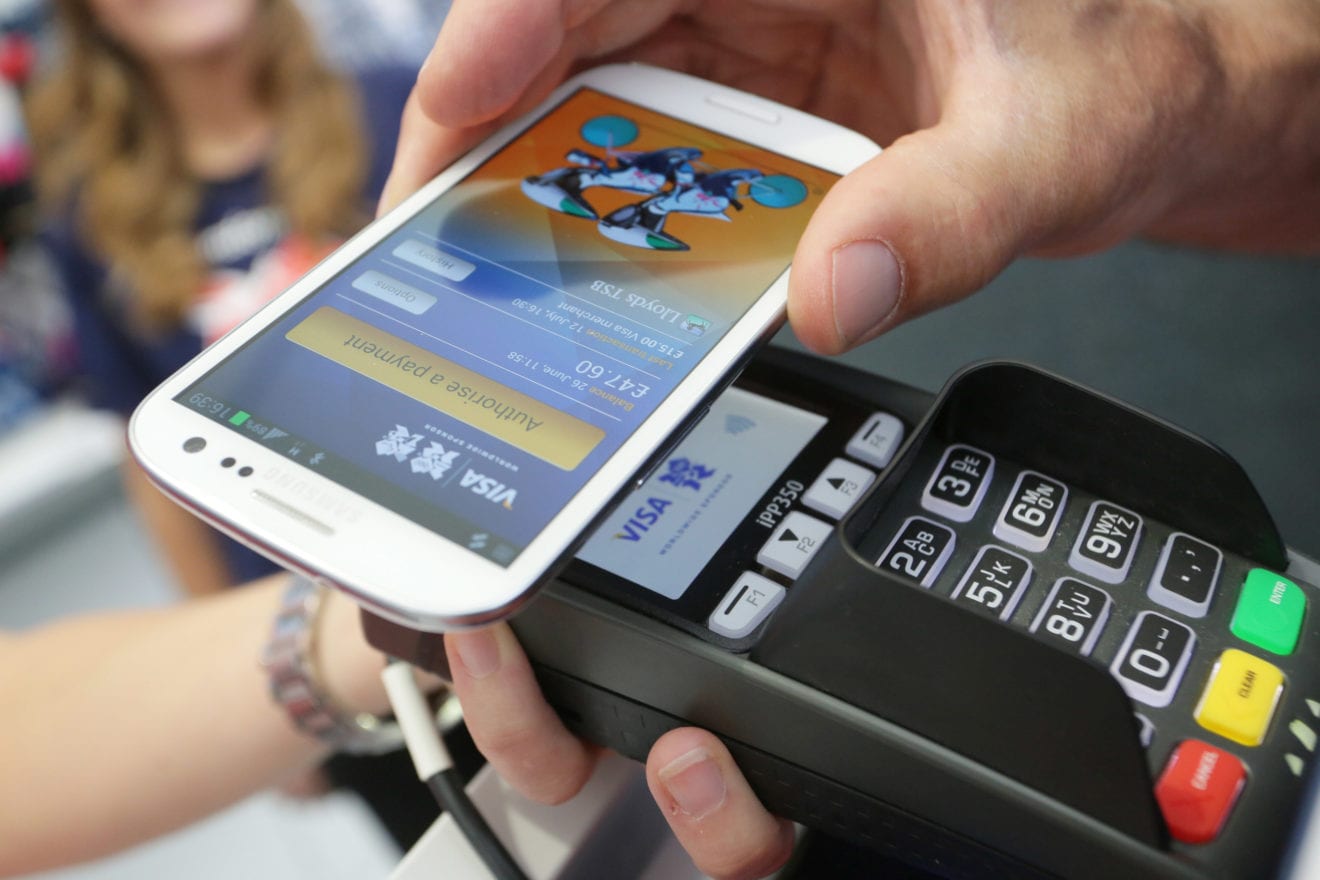
    In China, with just a mobile phone in your hand, you can hop on the subway or bus, shop in a supermarket or convenience store, pay for needed supplies while on campus or settle a traffic fine via the mobile Quick Pass function.

    This is now part and parcel of the daily routine for many people in China.

    Today, mobile payments have seamlessly penetrated into every person’s daily activities and has had a profound effect on their lives. All eyes are on China, as the world’s most populous country has rapidly taken the lead into the era of mobile payment.

    Ahead of the rest of the world

    A survey of 18,000 consumers across 23 countries and regions by Ipsos, an international market research firm, shows that 77% of all Chinese use mobile payment services, ranking the country first in the world. The penetration rate of mobile payment in the US and Japan has so far only reached 48% and 27% respectively.

    Given the size of the Chinese population, the difference is remarkable.

    Taking the daily movement of its population as an example, dramatic changes have been observed in the way Chinese commuters and travelers pay when they board a bus or subway or drive a car to get where they are going, all of which has been made possible by the popularity of mobile payments.

    Using UnionPay mobile payment to settle all fees that occur while in transit is now the commonly accepted way to get from point A to point B in more than 400 counties and cities across China, with the highest percentages of the population already doing so located in Shanghai, Guangzhou, Tianjin, Hangzhou, Fuzhou and Jinan.

    To cite Hubei province as just one example, car owners who have added their vehicle information to the UnionPay app and set up their UnionPay payment function as the default payment option can drive through any toll plaza along the highway without stopping, and the system will automatically recognize the license plate and submit the highway toll.

    Convenient mobile payment service for all payment scenarios

    With the goal of improving the quality of life through service enhancements that benefit every person resident in China, a project to evidence the convenience of mobile payments under the aegis of China’s central bank named the “mobile payment convenience demonstration project” targets areas that are most likely to touch on every person’s life, including what are referred to as the 10 major payment scenarios:

    • Travel by bus or subway
    • Food market and other local convenience shopping
    • Restaurant dining
    • Supermarket shopping
    • Use of public services
    • Self-service vending machines
    • On-campus activities
    • College or university cafeteria
    • Healthcare
    • Settlement of traffic fines
  • Xiaomi phone comes to Korea

    Xiaomi phone comes to Korea

    Xiaomi’s Redmi Note 5 became the Chinese electronics giant’s first mobile phone to officially sell through Korean mobile carriers on Monday.

    The cost-effective phone, priced at 299,000 won ($265), is the first Xiaomi device launched nationwide through Korean mobile carriers SK Telecom and KT. Unlocked Xiaomi phones have previously been available through other retail channels in Korea.

    Redmi Note 5’s greatest selling point is its cheap price tag. While the phone already costs about a third of the price of Samsung’s Galaxy S or Note series phones or Apple’s iPhones, SK Telecom and KT are offering discounts of up to 200,000 won depending on the phone plans users subscribe to.

    That means that some customers will be able to pick up the phone for as little as 100,000 won.

    But the Redmi Note 5’s cheap price tag doesn’t mean Xiaomi has cut back on the features.

    The 5.99-inch screen phablet comes with a large 4,000mAh battery – larger than both the 3,300mAh battery in the Galaxy Note 8 released last year and the 3,000mAh battery in the Galaxy S9 released in March – and dual rear cameras with a 12-megapixel main lens.

    For enhanced selfie mode, the phone has a 13-megapixel front-facing camera. G-mobi, the Korean distributor of Xiaomi products, said that artificial intelligence has been applied to the camera so it can blur the background to focus on people during a launch event held Monday in Seoul.

    G-mobi also emphasized the beautify 4.0 feature of the camera, which can add effects to peoples’ faces by recognizing each part of the face such as dark circles, nose, eyes and even freckles. The feature enables users to easily fix their looks without editing the photo through special apps or programs.

    Jung Seung-hee, CEO of G-mobi Korea, said the Redmi Note 5 has been gaining better-than-expected feedback during the presales period that began from July 12. The phone is also sold online by CJ and Hi-Mart. Jung did not disclose exact sales data.

    She also declined to comment on an exact sales target for the phone, only saying that the goal for now is to safely land Xiaomi as a smartphone brand in Korea.

    When asked whether Xiaomi plans to establish its own retail shop in Korea, Jung said that is highly desired and a plan is being considered, but the low margin on Xiaomi products makes it a difficult decision.

    With the launch, eyes are now on how much market share the phone can take in Korea, the home turf of smartphone giants Samsung Electronics and LG Electronics where non-Korean branded phones have rarely survived, with the exception of Apple’s iPhone.

    According to market tracker Strategy Analytics, Samsung phones have accounted for 65.3 percent of the local smartphone market in the first quarter, followed by Apple with 16.7 percent and LG at 12.2 percent. Other foreign brands are struggling to even achieve a five percent market share.

  • US formally overturns import ban on ZTE

    US formally overturns import ban on ZTE

    The US government has lifted its denial order against ZTE, finally clearing the way for the vendor to resume major operations.

    ZTE suspended major operations after the US Commerce Department banned ZTE from importing components from US companies in April as part of its investigation into ZTE’s alleged violation of US sanctions prohibiting companies from selling equipment with US components to Iran and North Korea.

    But after US president Donald Trump signified in May that he would intervene to allow ZTE to get back in business, the department struck a deal in June for ZTE to pay a further $1 billion penalty and hire a compliance team chosen by the US.

    ZTE has also been instructed to deposit $400 million into an escrow account that will be forfeit in case of future violations.

    Now the ban has formally been lifted after ZTE complied with all the requirements of the deal, as reported.

    But some US lawmakers, including junior senator for Florida Marco Rubio, are seeking to introduce legislation to reinstate the ban due to national security and other concerns.

    ZTE had already agreed to pay an $892 million penalty imposed by the Commerce Department during the initial investigation into the alleged sanction violations, but the department imposed the ban after accusing the vendor of failing to comply with the terms of the initial settlement.

    The development comes in the midst of the escalating tariff war between the US and China.