Tag: China

  • China’s central bank regulates forced cashless payment

    China’s central bank regulates forced cashless payment

    China’s central bank is taking measures to ban business practices of refusing or discriminating against cash payments to deal with over-hype of a cashless society.

    Some consumers have complained about being denied the ability to use cash in places like tourist areas, restaurants, and retail stores, which harms the legal status of the Chinese yuan as well as consumers’ rights to choose means of payment, according to a statement released Friday by the People’s Bank of China.

    Banking institutions and non-banking payment platforms should not require or induce business entities or individuals to refuse or take discriminatory measures against cash payments, and these practices should be rectified within one month, the statement pointed out.

    Mobile payments are popular across the country with a growing community of consumers using WeChat Pay, Alipay, and other mobile payment tools to pay for a wide range of products and services.

    A report from global market research firm Ipsos showed that China reached about 890 million mobile payment users in the first half of this year.

    For product sales or services from online or unstaffed stores, cashless payment only is allowed if cash payments are impossible.

    However, businesses and individuals should not hype up the “cashless” idea when promoting non-cash payment, the central bank said.

  • J-beauty brands to broaden their market

    J-beauty brands to broaden their market

    The flood of Chinese tourists to Japan has given a fresh uplift to the high-end beauty products market. Buoyed with success, some niche brands are now venturing beyond China.

    Nagoya-based MTG, which sells health and cosmetic tools that cost hundreds of dollars, is gearing up for further expansion abroad. The company made its stock market debut in Tokyo on Tuesday, raising 34.2 billion yen ($309 million).

    Excitement around the listing — the second largest initial public offering in Japan this year after e-commerce unicorn Mercari in June — was reflected in its share price, which ended 27% higher than the offer price of 5,800 yen, giving it a market capitalization of $2.56 billion.

    This is partly due to the stellar growth of its overseas business; revenue for its global segment more than doubled to 11.2 billion yen in the year ended September. This was driven by sales in China, mostly through Alibaba Group Holding’s Tmall shopping platform.

    “Over the next three to five years, we want to grow in Asia, centered around China,” MTG President Tsuyoshi Matsushita said at a press conference on Tuesday. The company is exploring options to enter Russia, Dubai and the Philippines, he added.

    Established in 1996, MTG designs and sells beauty and health products in collaboration with universities, medical institutions and celebrities. To stimulate interest among Chinese consumers, the company recently appointed Chinese actress Fan Bingbing as “global ambassador” for ReFa, its best-selling facial and body massage tool.

    “I have seen many Japanese brands that have great quality but lose because of branding and marketing,” said Matsushita. “Overseas sales now account for 35% of the total. We want to show that upstarts from Japan can compete globally.”

    Japan’s beauty market has benefited from a rise in foreign tourists, especially from China — with annual visitor numbers from that country tripling between 2014 and 2017. Popular products are exposed through social media to mainland Chinese consumers, who buy the products through e-commerce platforms like Tmall. This virtuous cycle enables relatively new players like MTG to succeed without having a large physical presence in a foreign country. Matsushita said that five years ago the company did not have any overseas talent.

    The eagerness to go global highlights the opportunity that MTG and its rivals see ahead: millennials willing to spend lavishly on new ideas to improve their looks. Such behavior is rare in Japan, where spending on skincare and cosmetics is already the highest in the world and led by older women.

    “The main difference [with] Japan is that users in China are very young,” said Kimiyo Yamazaki, president of high-end beauty device maker Ya-man. “In Japan our products… target seniors who want to go beyond cosmetics, but in China they are college students, or people in their 20s and 30s.”

    Ya-man makes high-end facial care devices that can cost upwards of 40,000 yen. It logged a 50% increase in net profit for the year ended March to 3.3 billion yen, driven by sales in China. The company launched its products in South Korea and Singapore last year, and recently expanded to Indonesia. It is looking to enter Vietnam before the end of this year.

    Ya-man targets 30 billion yen in annual revenue over the long term, 30% higher than its latest fiscal year. Jiro Kojima, an analyst at Daiwa Securities, estimates that half of that growth will come from East Asia and other overseas markets. “The market for products like facial rollers is continuing to expand in Asia,” he wrote in a research note to clients in June.

    Other companies are also expanding their product lines. Fancl, a smaller cosmetics rival to Shiseido and Kose, has seen overseas sales for its supplements grow faster than its core cosmetics business. The company recently unveiled plans to sell supplements in China as early as 2020, pending approval from local regulators.

    Some observers warn that the current boom in Japanese brands might cool. The growth in exports of South Korean cosmetics products to China is said to have slowed last year amid tensions over the deployment of the U.S. THAAD anti-missile system in South Korea, to which Beijing has strongly objected. Another challenge is preventing copycat products — MTG has partnered with Alibaba to protect its intellectual property.

    “We need to create a system that doesn’t rely on a single brand or product,” said MTG’s Matsushita. “We made some progress. Now we need to prove the high expectations by shareholders with numbers.”

  • Alibaba’s Ele.me to further expand into the food delivery business

    Alibaba’s Ele.me to further expand into the food delivery business

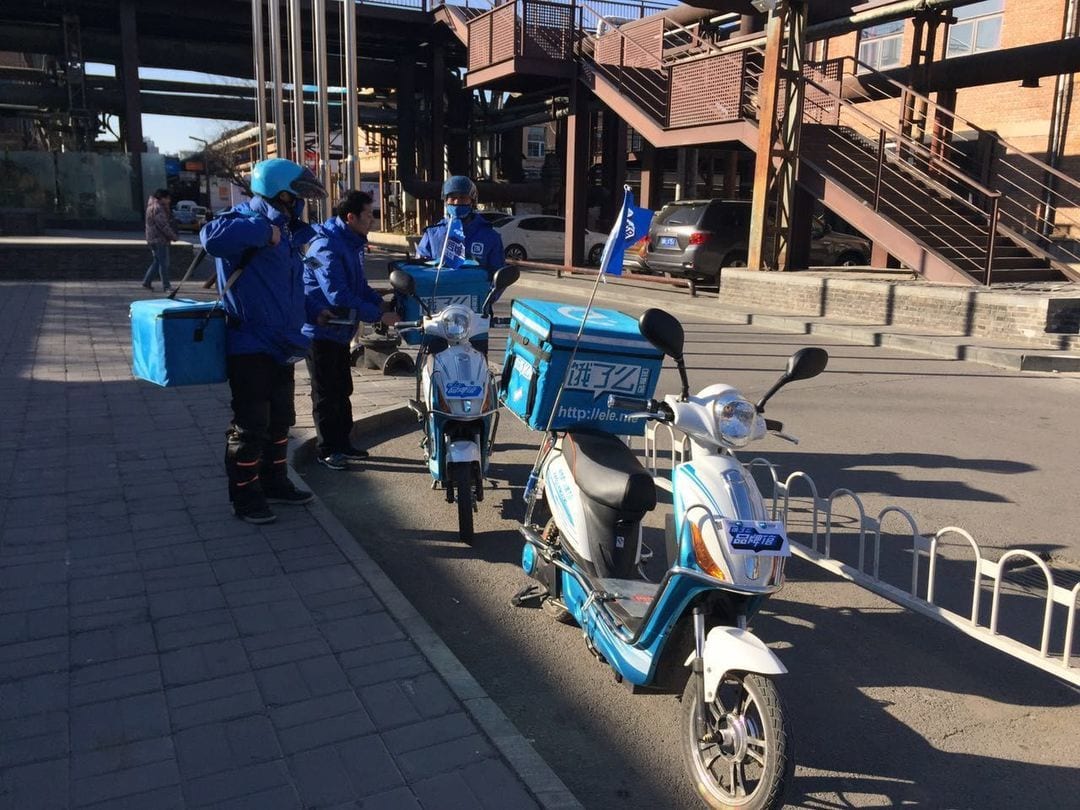
    Ele.me’s announcement comes three months after Alibaba acquired full control of the food delivery app, for an undisclosed price, valuing the business at US$9.5 billion.

    “The determination of Alibaba gives Ele.me confidence,” Alibaba vice-president Wang Lei, who is also Ele.me’s CEO, said in the statement. “Ele.me is not only going to win this summer’s battle [in food delivery], it will also take the crown in the local services and new retail sector. We have sufficient capital and traffic,” he added.

    Alibaba is not the only player eyeing the food delivery business. Meituan-Dianping, China’s on-demand service giant that filed for a Hong-Kong IPO two weeks ago, controls 59.1 per cent of the market, according to the China-based market research firm iResearch.

    Didi Chuxing, China’s ride hailing giant, is the latest entrant in the already competitive food delivery business with a stand-alone platform called “Didi Foodie” launched in April. Didi Foodie currently operates in four mainland Chinese cities, including Nanjing, Taizhou and Chengdu, using heavy subsidies to reduce the cost of a customer order of rice to as low as two yuan (US$0.3), including delivery.

    Ele.me’s pledge to invest billions of yuan also demonstrates Alibaba’s ambition to amass more bricks-and-mortar assets and further develop its short-distance logistics system. Fengniao, Ele.me’s logistics system, has established around 3,000 distribution stations across the country. Ele.me’s supply chain will also be connected with Tmall, one of the two Alibaba’s e-commerce sites, according to the company statement.

    The cash injection would provide every delivery employee with a monthly salary increase of about 1,000 yuan (US$149), the company said. The average monthly salary for food delivery workers in China’s first-tier cities was 6,829 yuan in 2016, according to a report by 58.com, a local job listing website.

  • E. & J. Gallo Winery to Launch Tmall Flagship Store

    E. & J. Gallo Winery to Launch Tmall Flagship Store

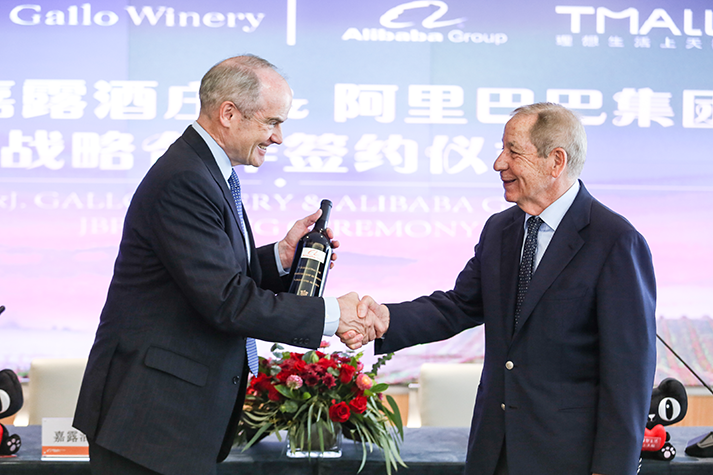
    E. & J. Gallo Winery, the world’s largest family-owned winery has signed a three-year strategic partnership with Alibaba Group.

    As part of the partnership, Gallo will open a flagship store this September on Alibaba’s Tmall, China’s largest B2C platform for both international and Chinese brands and retailers. Gallo and Tmall have partnered together in the past for some of Gallo’s entry-level wine brands, but the new flagship store will feature more than 20 of Gallo’s premium wine brands in order to meet the growing demand from China’s increasingly sophisticated consumers for high-quality wine.

    According to a new report from Vinexpo, China was the world’s third largest importer by value at $16.41 billion in 2017. By 2021, the wine market in China is expected to grow 40% to $22.97 billion which would make it the second most valuable wine market in the world.

  • Centara Makes Life Easier for Chinese Travelers by Accepting WeChat Pay for Online Bookings

    Centara Makes Life Easier for Chinese Travelers by Accepting WeChat Pay for Online Bookings

    Centara Hotels & Resorts, Thailand’s leading hotel operator, has announced that it is now accepting WeChat Pay transactions on its websites for online room reservations. This is in addition to the 15 hotels that already deploy nearly 100 EDC devices for QR code scanning on WeChat Pay, making it the largest hotel group in Thailand offering Chinese tourists omni-channel payment solutions. Bills for accommodation, restaurants and spa treatments can be paid directly from smartphones. The company expects to have WeChat Pay at all Centara Hotels & Resorts globally by the end of 2018, thus providing convenience to customers, especially Chinese guests.

    Thirayuth Chirathivat, Centara Chief Executive Officer, said: “A seamless payment experience for consumers using any channel is an element of our platform for expansion, which should see us double both revenue and the number of our properties over the next five years. As consumer behavior evolves, Centara has adopted an omni-channel strategy to stay relevant and to provide a great customer experience. We embrace these types of disruptive opportunities to better serve our guests and stay on top of the industry.”

    Chinese tourists account for almost one third of all foreign travellers to this country. Thailand is welcoming an ever-increasing number of Chinese visitors, for whom the kingdom remains the top travel destination. This year, the Ministry of Tourism and Sports expects more than 10 million Chinese tourists to travel to Thailand.

    WeChat Pay is the payment solution of WeChat, one of the largest social networks in China. WeChat Pay has become the main cashless payment method for daily small transactions in China and has more than 800 million active users in its database.

    “The number of Chinese tourists booking with Centara keeps growing. They are a significant customer base for all businesses in Thailand. Centara’s Chinese website receive hundreds of thousands of visits from Chinese users. Almost half the visits come from a mobile device. Earlier this year we signed an agreement with TreePayCo.,Ltd., a payment platform facilitator to develop a system that allows Chinese customers to use their mobile phones to make e-payments outside of China for accommodation and services at Centara properties. WeChat Pay users and Chinese travellers can stay and enjoy the whole trip with Centara with only a few quick taps on their smartphone. Today’s consumers are connecting their omni-channel experiences with the likeability of the brands. In order to maintain our brand leadership, we are committed to providing seamless guest satisfaction across touchpoints.”Thirayuth added.

    Other than the 2 main websites, Centara’s 15 hotels also welcome WeChat QR code payment. These are: Centara Grand and Bangkok Convention Center at Central World, Centara Grand at Central Plaza Ladprao, Centara Grand Mirage Beach Resort Pattaya, Centara Grand Beach Resort Samui, Centara Grand Beach Resort & Villas Hua Hin, Centara Grand Beach Resort & Villas Krabi, Centara Grand Beach Resort Phuket, Centara Villas Samui, Centara Villas Phuket, Centara Kata Resort Phuket, Centara Karon Resort Phuket, Centara Mae Sot Hill Resort, Centara Hotel Hat Yai, Centra by Centara Government Complex Hotel & Convention Centre Chaeng Watthana and COSI Samui Chaweng.

  • Older consumers do their shopping online

    Older consumers do their shopping online

    Consumers in their 50s and 60s are an emerging force in e-commerce as older customers with plenty of money to spend. Data confirm they are increasingly shopping online and via mobile apps.

    Data from e-commerce website Auction released showed that online purchases by consumers in their 50s and 60s have more than doubled compared to five years ago.

    Comparing the sales record from the year’s first half, consumers in their 50s spent 130 percent more than they did in 2014. Shoppers in their 60s increased their online spending by 171 percent.

    Combined, shoppers in their 50s and 60s accounted for 27 percent of all Auction customers in the first half of this year. In 2014 their share was just 17 percent.

    “We see more proactive PC and smartphone users among people in their 50s and 60s and their increase is wielding influence over the e-commerce market, which in the past was mainly about consumers in the 20s and 30s,” said Seo Eun-hee, who is in charge of Auction’s marketing team.

    Seo added that the growing purchasing power of older customers is a sign that e-commerce is no longer a channel confined to specific generations.

    Auction’s report also analyzed which products were popular with older consumers.

    Although it is generally thought that younger shoppers are more willing to spend money on themselves – the “you-only-live-once (YOLO)” lifestyle – Auction’s data suggested that is no longer the case.

    Belying the traditional Korean image of the prudent, family-centered older generation, shoppers in their 50s and 60s are apparently splashing out on clothes, luxury goods and travel. Sales of tickets for flights, cruises, golf vacations and tour packages rose more than 114 times. Fashion items sold almost eight times more this year compared to 2014 while sales for luxury-branded goods nearly tripled.

    More seniors were also looking for simpler alternatives to home-cooked meals as purchases of instant food and home-meal replacements also tripled during the same period.

    Smartphones are one factor that has boosted the number of older consumers shopping online. Mobile versions of e-commerce sites are generally simpler and intuitively easier to understand than those of PCs.

    In late June, e-commerce website WeMakePrice announced that “senior” is one of the four keywords that define the e-commerce trend in this year’s first half.

    Purchases by consumers above 50 rose 36 percent year-on-year during this period. The number of members of the website in this age group also increased 2.6 percent year-on-year.

    Like Auction, the list of products most purchased by senior consumers had high price tags: bars of gold, laundry machines and refrigerators. In fact, seven among last year’s 10 bestselling products of consumers aged above 50 were home electronics, whereas in 2016 there were two and in 2015, zero.

    This increase is notable in that it signals senior consumers now have more trust in the products they buy online.

  • JD changing model to tech company

    JD changing model to tech company

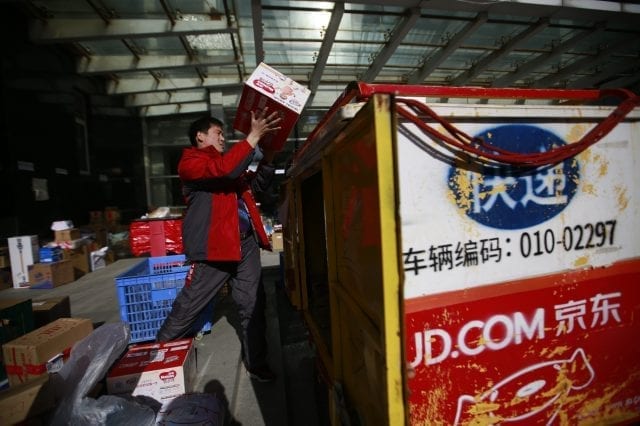
    For the first 12 years of its existence, JD’s business model has largely been based on retailing.

    But now the company is morphing into something quite different, explains Winston Cheng, president international, at JD.

    “For the next 12 years where we want to be is a technology company or technology focused. So the first 12 years as a retailer we were Gross Merchandise Volume-focused. The second 12 years is going to be about helping brands and retailers and others build their online presence, build their brands and have more efficient marketing,” Cheng said.

    “Then we will help them on the supply chain, because there’s increasing pressure on their business – not only are same-store sales under pressure, but also pricing. So they need to make sure they’re producing the right things.”

    Data is driving the new JD approach. Already, JD serves more than 300 million customers per year (82 per cent of them via mobile). For each of those customers, the company has more than 10,000 tags representing online shopping behaviour, browsing habits and history of when, where and how they shop. Now the company’s challenge is expanding that knowledge into consumers’ offline shopping behaviour.

    Shop with JD and the company knows things like how much you are spending in the store. What you are putting into the basket, what you’re taking out. They can see your decision making as you proceed to shop, even if you’re saving an item for the future when it may be on special or a sale is coming.

    “So we want to be able to match that with offline data,” explains Cheng. “We want to help offline retailers collect that data.” And then, seamlessly merge it with online data for a full picture of a customer.

    “So with so much data, how do we integrate the social data, the transaction data and the offline data? And how do we get the offline data? [A retailer’s] offline data is sometimes limited: they may or may not know only when a customer makes a transaction. But we want to help the customer as they enter the store, as they’re browsing and as they are making decisions, spending how much time in front of a certain SKU and touching and feeling. We want to be able to get all of that data for offline stores as well.”

    Mix all that data together and you can build an invaluable picture of demand and transaction history that can be used by supply chain managers.

    JD wants to tell participants along the supply chain what products they should make, where they need to be – and when.

    “Then we can help them connect with the customer and we help them deliver to the customer. We share that data to help them with their total supply chain solution.”

    Local knowhow

    Cheng, who is responsible for global business initiatives as well as international investments and mergers and acquisitions for JD said that one of the company’s strengths, despite its size, is understanding local culture and “local knowhow” when it enters new markets, both in Asia and abroad (where it has recently entered Spain).

    “That’s why we tend to partner with local [companies]. You need to be local – your traffic is local, the language is local, so everything becomes localised.”

    And the range must be tailored market by market. The range of SKUs offered in Indonesia, for example, has to be different to Mainland China and other Asian markets.

    “Retail is local, whether it’s online or offline. So you could do cross border to go into a market [but] will that reach a certain scale? Also, today people have higher and higher expectations. They want anything, anytime, anywhere, right away.” Thus cross-border solutions won’t work in many markets because customers don’t want to wait long enough for delivery.

    Asean is home to 600 million people, which makes it the third or fourth largest market in the world. “But so many countries make up Asean – they have different cultures, different tastes, different languages. Even Indonesia with 280 million people – there are so many islands in Indonesia to satisfy. So from a logistics standpoint, it’s very difficult.”

    Hong Kong misunderstood

    Meanwhile, JD is planning to ramp up its focus on Hong Kong’s online retail market, hinting the scale of e-commerce there is more significant than people believe.

    The Mainland China-headquartered online retailer plans more emphasis on cross-border e-commerce in Hong Kong.

    “We believe it’s a very natural extension in terms of consumer tastes,” he said.

    Given JD’s expertise in logistics, the company stands to deliver products and services in the territory “very easily”.

    Furthermore, while there has been widespread discussion about why e-commerce accounts for less than 5 per cent of the city’s total domestic retail spending, Cheng argues people are missing the point.

    “First of all, the absolute number is actually quite imperative. The absolute dollar number is actually not a small market, it’s quite big. The [market] penetration is low, but that’s an opportunity. I think it’s just that people have been so used to the old way of doing things, they continue to do it that way.”

    Cheng believes younger Hongkongers are ready to embrace e-commerce, especially when it comes to shopping for items that are really “a chore” to buy like dry groceries.

    “They … want to finish these chores easier, right. It’s not exciting to have to go and buy your toilet paper or your bottled water, for example. You should be able to just tap those things and order them.

    “But I think certain things like, you know, making sure that this fruit looks exactly like the picture, is very hard to satisfy.”

    So Cheng believes while consumers want to continue to ‘touch and feel’ goods like fresh produce, when it comes to ordering cups or a mobile phone, that is no longer so important.

    “You know the specs and features.”

  • Chinese tourists help boost Burberry sales

    Chinese tourists help boost Burberry sales

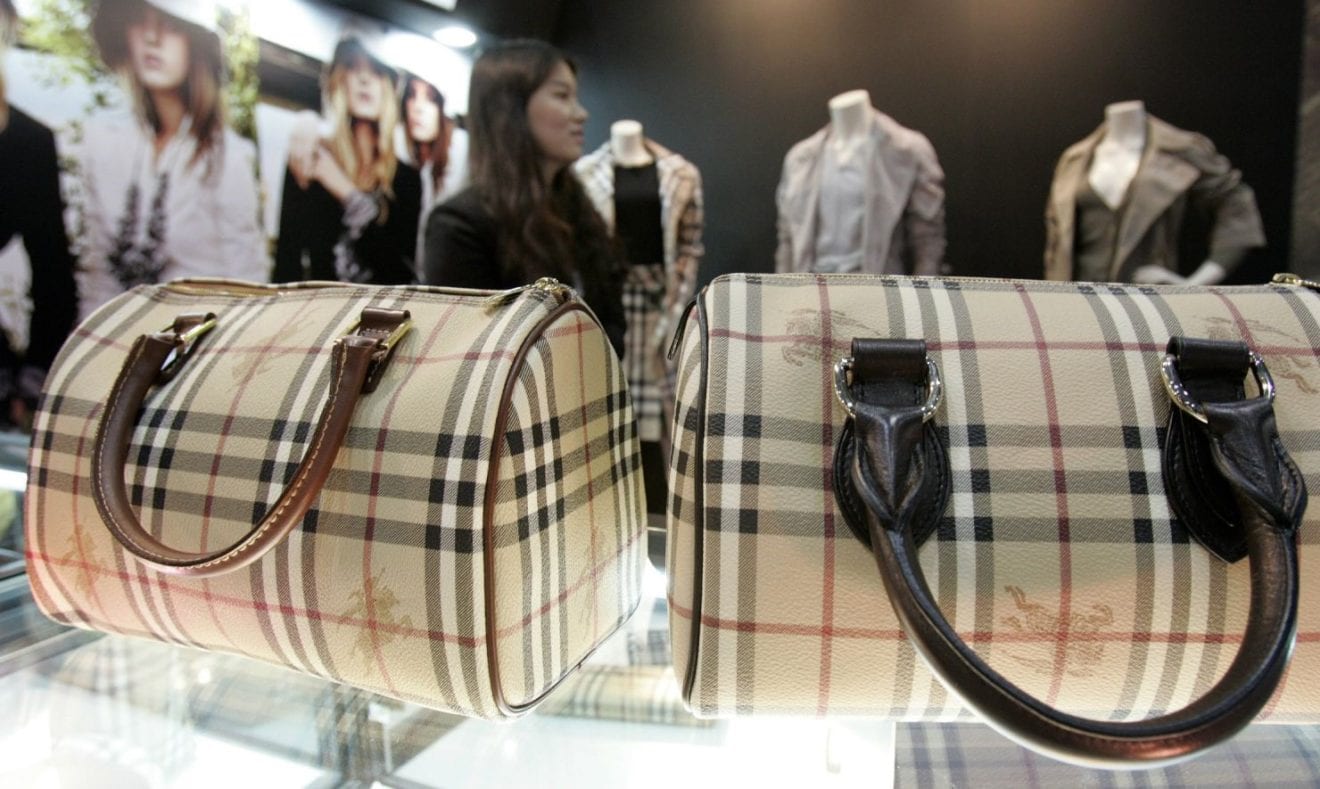
    Rising ranks of Chinese tourists helped luxury brand Burberry achieve modest first-quarter sales growth despite soft demand in other regions.

    Burberry sales in Mainland China grew “and Hong Kong, Korea and Japan all benefited from Chinese spend shifting more to Asian tourist destinations within the region”. Precise sales data was not released by region, but globally, Burberry sales rose 3 per cent on a comparable basis. The company said only that Asian sales rose “in the mid-single digits”.

    While Asia and the US performed strongly, Burberry said sales in Europe, Middle East and Africa declined by a low single-digit percentage due to softer tourist demand in the UK, Continental Europe and Middle East. Total retail revenue was flat at £479 million.

    “We are pleased with our progress in the quarter,” said CEO Marco Gobbetti. “The team has embraced (incoming creative head) Riccardo Tisci’s vision and is working well together as we prepare for his debut collection in September, the next step in our journey.  While we know it will take time to achieve our ambitions, our progress to-date and the energy in and around the company give me confidence for the future.”

    Highlights for the quarter included opening pop-up stores showcasing new handbags in Beijing, Seoul, Dubai and New York, and a collaboration with Farfetch which is outperforming expectations.

  • Suning, SAP partner over smart retail

    Suning, SAP partner over smart retail

    Chinese e-commerce giant Suning has signed a memorandum of strategic cooperation with German software company SAP to conduct technology cooperation in retail, logistics and sports sectors.

    The two parties will conduct joint research in artificial intelligence, Internet of Things, big data, cloud computing and other frontier technologies to promote the development of the digital economy, according to a statement released by Suning.

    They plan to build a smart retail service platform to empower China’s retail sector as well as a logistics platform to improve operational efficiency and user experience.

    The two companies also aim to establish a digitalized platform for Chinese football clubs and youth training systems to support the development of the sport in China.

    The Chinese e-commerce platform saw sales of German brands reach 1.5 billion euros last year. It now has about 1,000 types of German products on its overseas shopping platform.

  • A startup challenging Starbucks in China is now worth $1 billion

    A startup challenging Starbucks in China is now worth $1 billion

    Starbucks’ second-largest market after the US is China, where it has over 3,300 stores and operates with virtually no serious competition.

    A Beijing-based startup could change that. Luckin Coffee has opened 525 outlets across China’s major cities less than nine months after its launch (link in Chinese). Today the fast-growing company confirmed it’s closed a $200 million funding round giving it a $1 billion valuation. Investors include Centurium Capital, a private equity fund founded by the former China head of Warburg Pincus, and GIC, Singapore’s sovereign wealth fund.

    In domestic Chinese media, Luckin has aggressively courted comparisons to the world’s best-known coffee chain. In May, it even wrote an open letter accusing Starbucks of “monopolistic behavior” (Starbucks called the move a “publicity stunt”). But Luckin isn’t a Starbucks copycat—rather, it meshes trends in China’s tech industry with the coffee-shop model mastered by its rival.

    First, Luckin Coffee revolves around the smartphone. When customers walk into one of its blue-and-white shops, they’re immediately asked to download the Luckin app to order coffee (assuming they haven’t done so already). They can pay using WeChat payments or Luckin’s own “coffee wallet”—but not cash. This fits into China’s so-called “new retail” trend, in which tech giants like Alibaba and Tencent partner with supermarkets and convenience stores on mobile payments, analytics, and inventory management.

    Luckin has also aggressively promoted its delivery services—of its 525 outlets, 231 are kitchens dedicated exclusively to filling orders placed in offices, homes, or elsewhere. This mimics China’s boom in e-commerce and food delivery, which has thrived on the back of low-wage couriers.

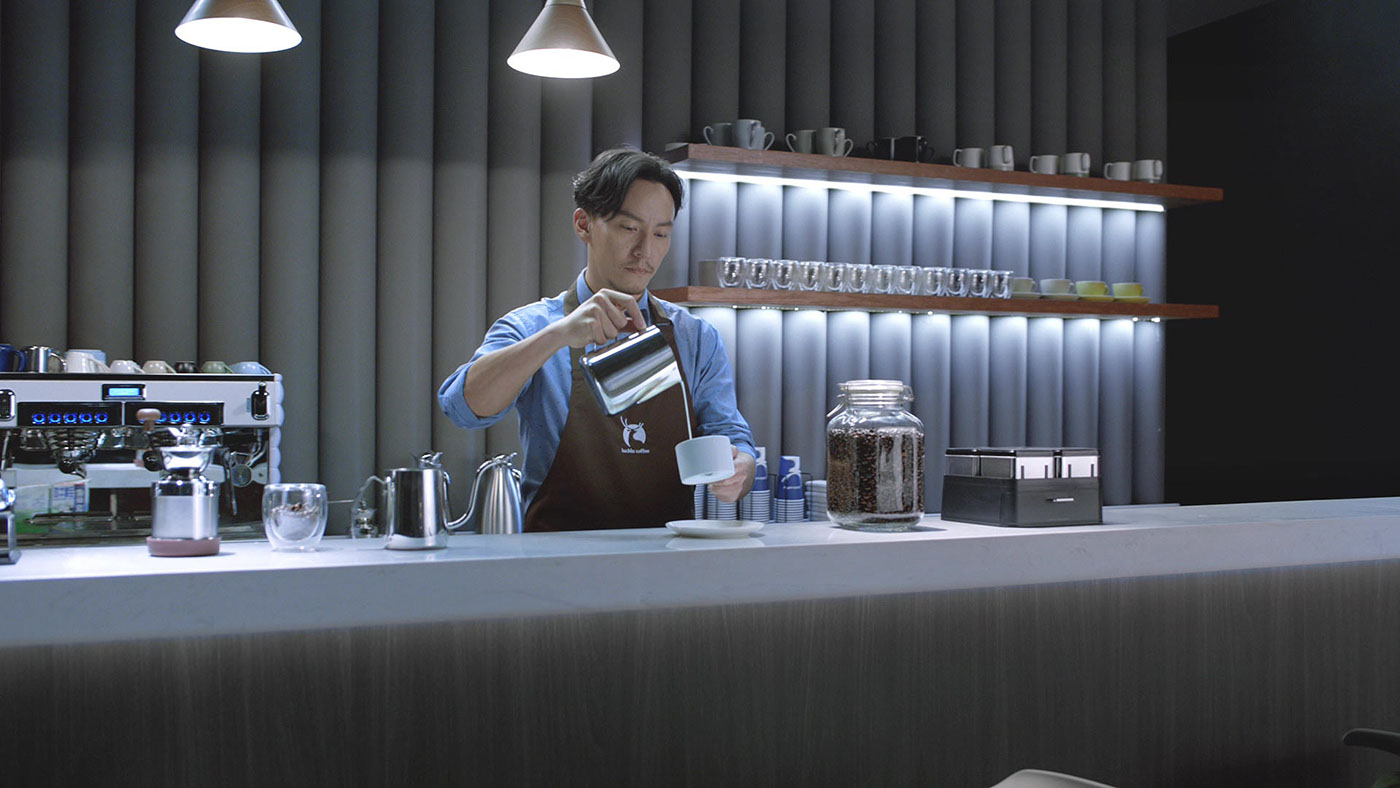
    When it comes to marketing, Luckin has more in common with a Chinese gadget company than with its Seattle-based coffee rival. Whereas Starbucks typically shuns traditional advertisements, Luckin has plastered China’s cities with billboards featuring popular actors Chang Chen and Tang Wei holding blue-and-white coffee cups. Chinese smartphone makers Oppo, Vivo, and Xiaomi employ similar tactics, using celebrities to pose with products.

    Finally, Luckin’s beverages are relatively cheap. In Beijing, a large Americano costs 21 yuan ($3.15), a matcha latte 21 yuan, and a Hawaiian pineapple wrap 9 yuan. That’s roughly 20%-30% lower than comparable items from Starbucks in China (which is more expensivethan Starbucks in the US).

    Despite the company’s early emphasis on delivery, it insists that bricks-and-mortar retail is the future—a spokesperson said that the company expects delivery kitchens will make up just 15% of its locations in the future.

    But with such low prices and rising expansion costs, can the company justify its valuation and take on the world’s coffee retail giant?

    Jeff Towson, who teaches investment at Peking University in Beijing, says that Luckin Coffee is “easily worth $1 billion if it can execute on the business—but that’s a big if.” A large part of Starbucks’ success globally has to do with real estate—many of its stores are placed in expensive, high-traffic locations that rivals can’t afford. Most Luckin outlets are not in such spots, Towson notes. The company uses the app to draw people to less-bustling locations that are cheaper to rent. “It may be that that real estate power can be overcome if you’ve got a really sticky hold on people’s smartphones,” he adds.

  • Tim Hortons plans 1500-store China expansion

    Tim Hortons plans 1500-store China expansion

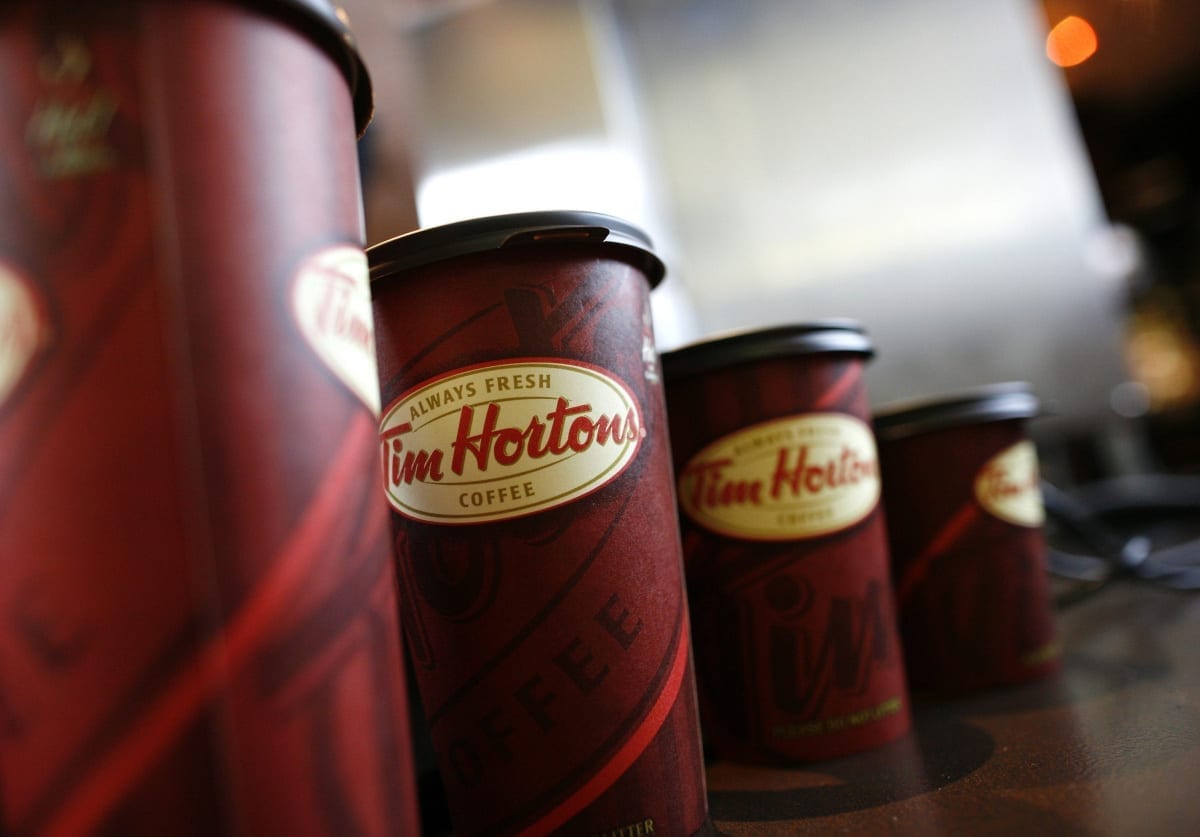
    Tim Hortons plans to open more than 1,500 of its coffee-and-doughnut shops in China over the next decade.

    The expansion seeks to capitalize on the country’s burgeoning coffee culture and is the latest international location for the coffee chain aiming to become a global brand.

    “China’s population and vibrant economy represent an excellent growth opportunity for Tim Hortons in the coming years,” the brand’s president, Alex Macedo, said in a statement.

    The chain signed a master franchise joint venture agreement with private equity firm Cartesian Capital Group for it to develop and open the restaurants. Financial terms were not immediately available.

    In 2012, Cartesian Capital partnered with Tim Hortons parent company Restaurant Brands International, which also owns Burger King and the Popeyes brand, and the Kurdoglu family to develop the burger chain in China. There are now more an 900 Burger King restaurants in China.

    City dwellers, especially young people and white-collar employees, in China increasingly drink coffee and have helped the café industry see strong growth, according to market-research firms.

    The turn to caffeine partly comes from lifestyle changes, people earning more money and more people living in cities, according to the firms.

    Consumers choosing coffee have helped fuel coffee chains’ expansion into China.

    Starbucks had 3,300 stores in 141 cities in China as of May and plans to total 5,000 by 2021.

    China is its fastest growing market and it opens a new store in the country every 15 hours.

    Whitbread, which operates Costa Coffee, has 449 of the coffee chain’s shops in China and plans to have 1,200 by 2022, according to its most recent annual report.

    While Tim Hortons is confident it can appeal to the Chinese, it’s latest international expansion plans haven’t convinced everyone.

    BMO Capital Markets analyst Peter Sklar said the expansion presents a growth opportunity for the company.

    “However, we believe there is significant uncertainty about whether the international rollout of the Tim Horton’s brand will ultimately be successful,” he wrote in a report.

    Tim Hortons has previously announced plans to expand to Spain, Mexico, Britain and the Philippines.

    “We remain concerned about its potential for success given RBI’s challenged expansion into the U.S. in the past,” Sklar wrote.

    The coffee chain is not as well known outside Canada than RBI’s fast-food brand Burger King, he said, adding to the uncertainty.

    Tim Hortons has more than 4,700 restaurants in Canada, the United States and around the world.

  • Parfois to expand in Asia and other country

    Parfois to expand in Asia and other country

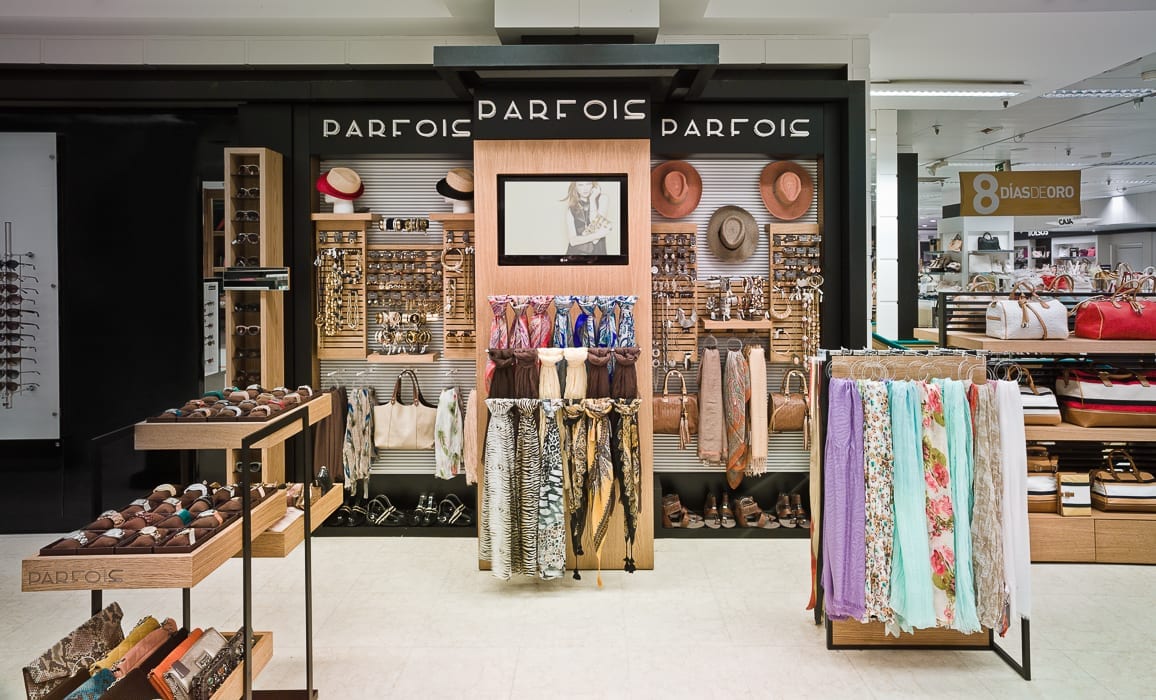
    Portuguese accessories brand Parfois is planning an expansion into Asia and Eastern Europe.

    Parfois, founded in 1994, currently operates 900 stores in 65 countries and is seeking to reach its 1000th by the end of this year. The brand opened in around 10 new markets this year – including joining Alibaba’s Tmall Global platform – and while immediate plans are focusing on building its presence in Latin America, it has already begun to explore options in Asian and Eastern European countries.

    Parfois’ director of marketing and communications Susana Coerver said sales in Portugal and Spain represent more than half of the firm’s revenue, with Spain by far the biggest market, prompting expansion into smaller municipalities within the country. The company also aims to expand its product range with a venture into apparel.

    The brand closed the 2017 financial year with €306 million in sales, with growth expectations for the current year aiming at 20 per cent.

  • Vietnam to suffer collateral damage in China-US trade war

    Vietnam to suffer collateral damage in China-US trade war

    The first salvo in the latest trade war between the U.S. and China was fired by the former last Friday, when it slapped a 25 percent duty on about $34 billion worth of Chinese goods.

    China retaliated “immediately” with a similar action, the country’s foreign ministry said.

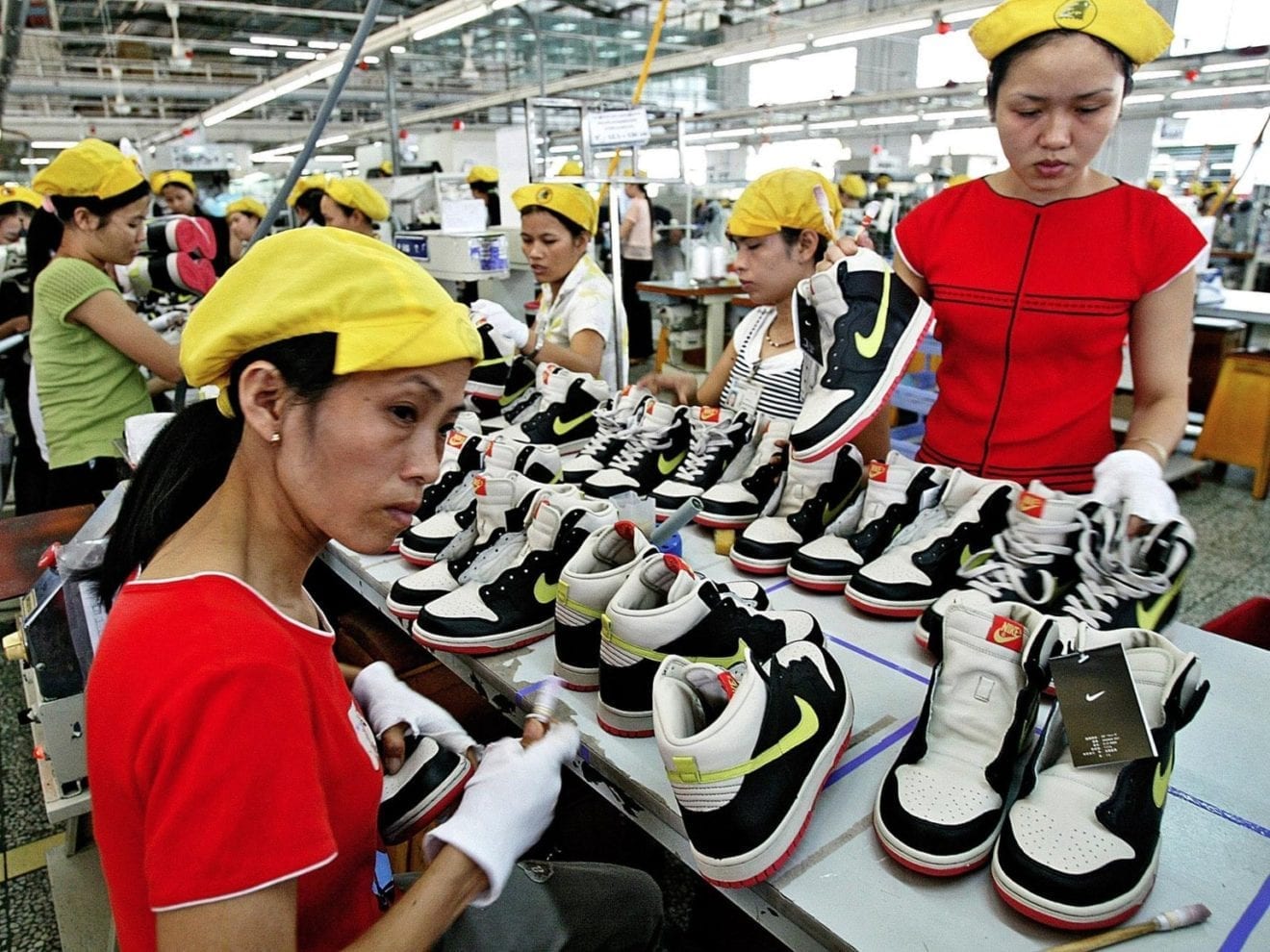
    However, the tariffs that the U.S. has slapped on China will likely see Chinese products “flood into Vietnam,” including textiles, garments and wood products, said Tran Tuan Anh, Minister of Industry and Trade.

    This is not only a trade war but also “a war on power, technology and currency policy between the world’s two largest economies,” Anh said at a recent government meeting.

    Cheaper yuan

    The trade war will have negative impacts on Vietnam’s economy as China will take the opportunity to export in large quantities to Vietnam, according to local economists.

    The Chinese yuan has lost 4.18 percent against the U.S. dollar over the last two weeks, while the Vietnamese dong has only lost a little above one percent, so Chinese goods will be 3 percent cheaper than before when exported to Vietnam. This will increase Chinese exports and gradually take away jobs and manufacturing facilities in Vietnam, they said.

    Another worrying aspect of the situation is that low quality products from China, which are labeled as residual inventory of exports to the U.S., will rush into Vietnam and be bought by Vietnamese consumers, said Robert Tran, CEO of global business advisory firm RBNC.

    Some experts also fear that Vietnam might be one of the next targets of the U.S.

    When the world’s two largest economies slap tariffs on each other, other countries will be affected in trade, said Dr. Pham Sy Thanh of the Chinese Economic Studies department under the Vietnam Institute for Economic and Policy Research.

    “When Vietnamese exports to the U.S. originate from China, the U.S. can also impose the same tariffs on Vietnam,” Thanh said.

    This will be a big challenge for Vietnam as the U.S. is one of Vietnam’s top export markets, he added.

    Industry leaders in Vietnam have also expressed similar concerns. Many Chinese clothes, shoes or bags are entering Vietnam illegally to be exported to the U.S., said Pham Xuan Hong, chairman of HCMC Association of Garment, Textile, Embroidery and Knitting (AGTEK).

    “Local firms should not buy these items for short-term benefits as the reputation of Vietnam’s textile industry will be affected,” Hong said.

    The Vietnamese government should get involved in preventing local firms from importing Chinese products to export to the U.S., he added.

    The bright side

    Beyond the potential threats, Vietnamese business leaders also see great opportunities in the trade war.

    AGTEK chairman Hong noted that Chinese textile is one of the items affected by the U.S. tariffs, so there are chances that foreign investors will transfer orders to Vietnamese firms.

    The animal husbandry sector is also looking at the bright side of the trade war.

    With China saying it will impose an additional 25 percent tariff, on U.S. pork, the total tariff will rise to 71 percent, exclusive of VAT, said Doan Xuan Truc, vice chairman of the Animal Husbandry Association of Vietnam (AHAV).

    “This will definitely be a great opportunity for Vietnam, as China has huge demand for pork,” Truc said, adding that it imports over 2 million tons of pork each year.

    Exports to the U.S. reached $41.6 billion last year, accounting for 20 percent of Vietnam’s total exports, according to Vietnam Customs.

    Meanwhile, it exported $35.4 billion worth of goods to China, a growth of 61.5 percent from 2016.

  • L Catterton Asia, JD.com Invest In Secoo

    L Catterton Asia, JD.com Invest In Secoo

    LVMH-linked L Catterton Asia and JD have jointly invested US$175 million into Asian luxury fashion platform Secoo, via convertible notes.

    L Catterton and JD together will have the right to appoint a director and an observer to Secoo’s board of directors. But in a broader tie-up, Secoo will have access to L Catterton’s network of luxury leaders and strengthen relationships with leading luxury brands in the L Catterton stable, including Pepe Jeans and eyewear brand Gentle Monster.

    “We are excited about this strategic partnership with L Catterton Asia and JD,” said Richard Li, Secoo’s chairman and CEO. “L Catterton is the leading consumer-focused investment firm in the world, and JD is China’s largest retailer and the leading e-commerce giant in China. By establishing relationships with leading partners in the consumer, luxury goods and e-commerce spaces, Secoo is poised to gain invaluable name recognition and further boost the company’s reputation in the international luxury consumer space.

    Through this partnership, Secoo will be able to leverage L Catterton and JD’s operational expertise and vast resources to expand and deepen our market presence not only in China, but across the globe.”

    Shengli Hu, president of JD fashion & lifestyle, said the partnership will help JD enhance its luxury capabilities and provide the best possible luxury shopping experience to consumers in China.

    “Chinese consumers are increasingly discerning about their luxury purchases, demanding more variety and choice than ever. As we look to continue to meet this demand, we see many potential areas for future collaboration with Secoo.”

    Secoo sells a wide collection of authentic, upscale products and lifestyle services on Secoo.com, mobile applications and offline experience centers, offering more than 300,000 SKUs, covering over 3000 global and domestic brands.

  • Tmall Fashion, Eurovet to Support Global Lingerie Makers

    Tmall Fashion, Eurovet to Support Global Lingerie Makers

    The fashion unit of Alibaba Group-owned B2C marketplace Tmall and Eurovet, the world’s leading organiser of trade shows for lingerie, swimwear and active brands, are teaming up to help industry players sell into China.

    Tmall and Eurovet signed a memorandum of understanding in Paris on Saturday, pledging to “leverage the respective expertise and international reach to explore innovative ways to collaborate”. The partnership will also work to educate trade-show participants to better understand the unique characteristics and preferences of shoppers in the world’s second-largest consumer market.

    Headquartered in Paris, Eurovet is the largest trade show company in the global undergarment and swimwear industry, with shows in its home city, New York and Las Vegas. It has had a presence in China for 15 years, and two shows are planned, in Shanghai in late September and Hong Kong in March next year.

    “Together, our two companies will explore joint initiatives to accelerate the local and international underwear business and ultimately support companies and brands accessing and thriving in the Chinese market,” said Anita Lu, VP of Tmall Fashion.

    With the expansion of China’s middle class and its growth in purchasing power, analysts say many of the country’s consumers, especially women, are getting choosier about their undergarments. Instead of seeing bras and underwear as just functional pieces, women are buying them to feel both comfortable and sexy. According to Euromonitor, China’s retail undergarment market is likely to reach $33 billion by 2020, an estimated 32 per cent jump from 2017.

    Chinese consumers’ growing love affairs with high-end bras and panties have also stoked global brands such as Victoria’s Secret, La Perla, Maidenform, Wolford, Aubade and Zimmerli to open their own Tmall flagship stores in recent years.

    “At the end of the day, lingerie is more than an outfit. It’s a way to express inner desire,” Lu said. “The younger generations of Chinese women, in particular, are looking to be more independent and free in their choices and lingerie is a good way for them to express themselves but also to take care of their body.”

    The Tmall and Eurovet partnership will also allow trade-show participants to harness Tmall’s insights to better engage with Chinese consumers, streamline the shipping and logistic process, improve supply-chain management and communicate with their local partners, said both companies. This know-how will better empower foreign brands to run a smoother and more efficient operation in China, they said.