Tag: China

  • These 6 Countries Are Booming in E-commerce

    These 6 Countries Are Booming in E-commerce

    Among the 28 largest internet companies in the world, 11 are e-commerce businesses. Per Statista, Global retail e-commerce sales are forecasted to reach $2.77 trillion this year. Consider that 62 percent of the world’s 7.2 billion population already owns a mobile phone, and by 2019, over 5 billion people will have access to the internet through their smartphones.

    Yet while global e-commerce is undoubtedly thriving, it’s true potential remains untapped, especially when looking at the growth potential for these six booming e-commerce markets.

    China

    China’s 2017 retail e-commerce sales reached $1.2 trillion. From the rise of two of the top 10 internet companies in the world in JD.com and Alibaba, to socially adopted mega-shopping holidays like “Singles’ Day”—China’s large economy is turning more digital by the day. This is underscored by its high consumer confidence index (CCI), currently sitting at 122 as of January 2018. E-commerce accounts for 23 percent of China’s overall retail sales, and there’s a lot of room for growth. China boasts a forecasted compound annual growth rate (CAGR) over 17 percent. This is on par with many underdeveloped markets expecting to see major e-commerce strides in the near future.

    United States

    While e-commerce only makes up 10 percent of the overall U.S. retail economy, that market is expected to reach $5.3 trillion in 2018. U.S. e-commerce sales generated over $431 million in revenue in 2017. With a healthy 96 percent of Americans shopping online, it’s projected to be a $535 billion market by 2019.

    United Kingdom

    Over 19 percent of retail sales come from online purchase in the U.K. With an annual e-commerce revenue exceeding $121 billion, it’s the third biggest market in the world behind China and the U.S. As of March 2017, 87 percent of U.K. consumers had made an online purchase in the last year.

     Japan

    Japan was projected to generate over $111 billion dollars in retail e-commerce sales in 2017. Japan’s relatively small country size, single language, urban population and widespread tech adoption (91 percent) all contribute to its ideal e-commerce environment. E-commerce sales in Japan make up less than eight percent of all retail sales, leaving plenty of room for future growth.

     Germany

    Ninety-three percent of German consumers shopped online in 2016, according to research from Mintel. German e-commerce revenue accounted for nearly eight percent of overall retail sales in 2017 at roughly $77 billion. Growth ahead looks steady with 2018 and 2019 projected to haul in $82.5 and $87.5 billion, respectively. These numbers look even more encouraging when you consider under half of German retailers offer their goods online, leaving inevitable room for growth in the coming decade.

    South Korea

    South Korea’s e-commerce boom has largely resulted from widespread mobile phone adoption and an overall tech-savvy culture. Having the fastest Wi-Fi in the world probably helps too. Their e-commerce sales accounted for 9.8 percent of its total retail sales in 2017 at $46.6 billion annual revenue. E-commerce revenues project to hit $50.5 billion in 2018.

    Countries to Watch

    These six countries may be the powerhouses, but e-commerce is growing globally. In India, where just 2.2 of total retail sales comes from e-commerce, a massive population and widespread mobile phone adoption make it a sleeping giant. In fact, India ranks just behind Malaysia for CAGR from 2016-2021, at 23 percent. Other Southeast Asian island countries like Indonesia, the Philippines, and Vietnam forecast for 20.7, 18.3, 17.2 percent, respectively. And don’t count out large countries like Brazil and Russia, the latter of which boasts the largest number of internet users in Europe.

    Why Borders Don’t Matter

    Aside from country-specific trends, the main thing to take away is that the world is going online to shop for the things they need. According to a Nielsen report, 57 percent of online shoppers purchased from an overseas retailer in the last six months. Only one continent—North America—saw less than a majority (45 percent) of shoppers making an overseas purchase.

    Global e-commerce is on pace to truly be global, as consumers become more comfortable looking to e-stores abroad for more product selection, better prices, or more availability. This borderless e-commerce system will handsomely reward the companies that learn how to build an ecommerce website with appeal to a global audience and personalized experiences.
  • Alibaba, JD.com race toward faster delivery

    Alibaba, JD.com race toward faster delivery

    Alibaba holds a controlling stake in smart logistics company Cainiao, a relationship that has drawn much scrutiny from the SEC, so it has been moving toward this concept of a vast smart logistics network for a while now. Its efforts to ramp up faster delivery are not only about making that happen throughout China, but internationally as well.

    Alibaba has also been facing growing competition from JD.com, its biggest e-commerce rival in China, and in recent years the companies seem to have been pursuing similar growth strategies, with frequent investments in brick-and-mortar retail. Alibaba, for its part, invested more than $1 billion in two different firms to feed it brick-and-mortar expansion, while JD.com has deepened a partnership with Walmart, and committed to building hundreds of unmanned convenience stores.

    Now, the rivals are shifting their attention to logistics, perhaps taking a page from Amazon’s book of how to expand retail dominance by building a network capable of reliable express delivery. That being said, Alibaba  and JD.com have much more vast canvases to work with, though they could face similar regulatory scrutiny being placed on technologies like drone delivery in the U.S.

    The big question is just how far both Chinese companies will look to extend their logistics reach. JD.com has already reportedly been considering a fulfillment center in Los Angeles as an outpost for a U.S. logistics expansion. Meanwhile, Alibaba has dabbled in the U.S. market, mostly focusing on Chinese tourists and immigrants through Alipay, although at one point it was rumored to be in talks with Kroger about a partnership.

  • Dippin’ Dots and Doc Popcorn to Debut in China

    Dippin’ Dots and Doc Popcorn to Debut in China

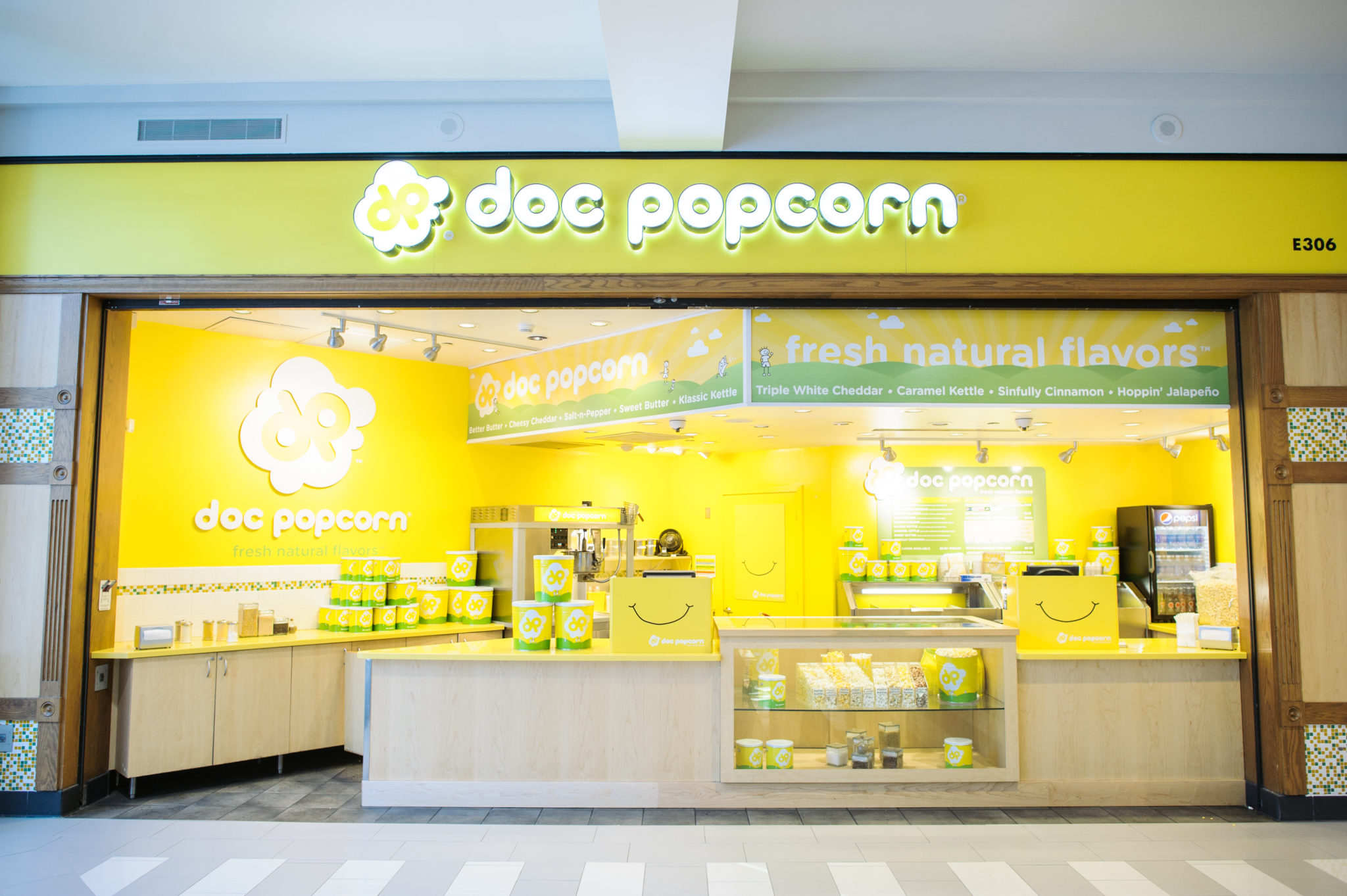
    Two US fast-food chains, Dippin’ Dots and Doc Popcorn, have made their debut in China.

    It is opening its first two locations, in Pudong and Yangpu in Shanghai, with a third location scheduled to open at the Shanghai South Railway Station in August. A flagship store is planned for the Shanghai Shimao Plaza Store on Nanjing Road.

    “We look forward to serving our products at venues where families gather to have fun, and with more than 26 regional amusement parks in development, we are confident in the growth opportunity,” says Dippin’ Dots chief development officer Stan Jones.

    Dippin’ Dots and Doc Popcorn plan to open corporate sites as well, targeting high-traffic areas like entertainment venues.

    While the company says it plans to open outlets throughout China, it has not said if that includes Hong Kong or Macau.

    “We’ve streamlined the supply-chain process to ensure fully stocked product,” says Jones.

    Warehouses and cold storage have been set up in China as product will be shipped from the US. The sister brands’ franchising group established a business entity in Asia three years ago and signed its first licensing agreement with Shanghai Desire Food.

    Dippin’ Dots has produced and distributed its flash-frozen beads of ice cream, yogurt, sherbet and flavoured ice products since 1988. Made in Paducah, Kentucky, the products are distributed throughout the US and in 11 countries.

    Using whole-grain kernels and proprietary flavours, Doc Popcorn handcrafts popcorn free of trans fat, MSG, and artificial colours and preservatives. Founded in Boulder, Colorado, Doc Popcorn started franchising in 2009.

  • Suitsupply still has plans for Asia after its 100th store

    Suitsupply still has plans for Asia after its 100th store

    European men’s fashion brand Suitsupply has opened its 100th international store, in Boston, and plans to expand in Asia.

    Founded in 2000 as a vertically integrated, direct-to-consumer brand that offers customers high-quality menswear at attainable prices, Suitsupply already has stores in Hong Kong and Singapore.

    While the brand started as a webstore, it soon after expanded into brick-and-mortar. It created spaces where customers could feel the brand’s products and have alterations made while they waited.

    “People are drawn to Suitsupply because of the energy and flair we bring to tailoring,” says Suitsupply founder/CEO Fokke de Jong. “They want to experience our brand and product both in person and online.”

    While no specific details were revealed about which Asian markets are a priority for the company, it is thought to favour a push in greater China.

  • China, Hong Kong boost up L’Occitane sales

    China, Hong Kong boost up L’Occitane sales

    China and Hong Kong were among the key contributing markets to overall growth in L’Occitane sales for its year to the end of March.

    The Hong Kong-listed, French fragrance group’s net sales were €1.31 billion, up 4.6 per cent at constant exchange rates and a slight decrease of 0.3 per cent at reported rates. Gross margin remained high at 83.3 per cent.

    Operating profit and net profit were €141 million and €96.5 million respectively, both down on last year thanks to unfavourable foreign-currency translation rates and tax reform in the US. However, the operating margin was strong at 10.7 per cent.

    Net sales in sell-out and sell-in segments (representing 74.9 and 25.1 per cent of total net sales respectively) increased by 4.8 and 4 per cent.

    The company increased the total number of retail locations by 8.2 per cent to 3285 as at March 31. It grew its own retail stores to 1555, up 2.7 per cent.

    During the year, the company added 41 own stores, including 10 in Japan (seven of them Melvita stores). China had five closings (including three Melvita stores) because of lease end and underperformance. There were four net closings in Taiwan.

    Marketplace driver

    The sell-out segment contributed 78.4 per cent to overall growth, mainly driven by the marketplace platforms in China and Korea. Web channels (including own e-commerce and marketplaces) grew 19.2 per cent at constant exchange rates.

    The group’s same-store sales growth was mainly driven by the strong market in China together with stabilisation of same-store sales in Hong Kong.

    The sell-in business segment, at €331.6 million, was primarily driven by dynamic growth in travel retail, B2B, web-partner and distributor channels.

    Japan’s net sales, at €218.9 million, were down 8.3 per cent, impacted by a sluggish retail market in the second half of the financial year, plus the closing of two large underperforming stores.

    Japan also closed its mail-order business, which was more than offset by double-digit growth in web sell-out channels.

    Hong Kong’s net sales were up 8.3 per cent at constant exchange rates, reaching €124.6 million and contributing 17 per cent to overall growth. Sell-in sales grew by 15.6 per cent at constant exchange rates, driven by the region’s dynamic travel retail business.

    China’s net sales at €159.1 million grew 14.5 per cent, or 20.5 per cent at constant exchange rates, contributing 46.6 per cent to overall growth. Sell-out sales growth was 21.6 per cent at constant exchange rates, with same-store sales growth at 15.1 per cent and marketplace growth at 75 per cent.

    At the end of the period there were 197 stores, five fewer than 12 months earlier.

    Taiwan’s net sales fell 5.1 per cent to €39.4 million against the backdrop of a challenging and competitive retail market. Four stores were closed during the year.

    However, says the company, Taiwan is one of the markets with highest repurchase rates in the group.

  • Loob to bring Tealive to China, eyes 500 outlets within 3 years

    Loob to bring Tealive to China, eyes 500 outlets within 3 years

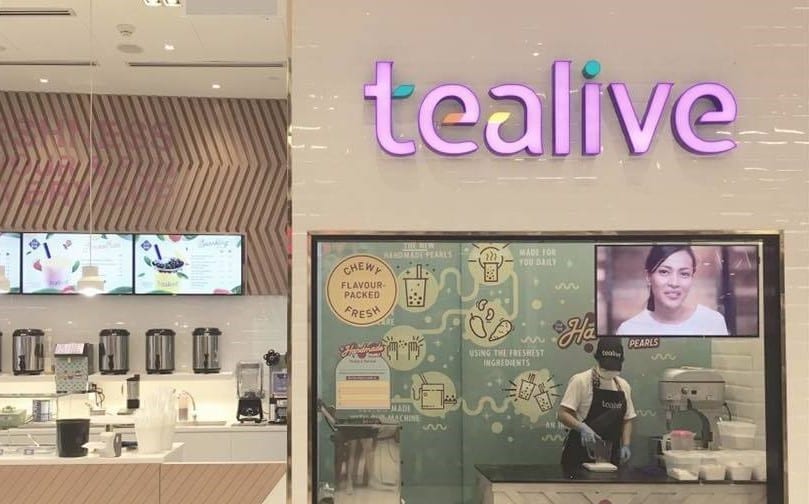
    Loob Holding Sdn Bhd, the creator of Malaysia’s Tealive bubble tea brand, today announced a joint venture with two China companies to bring 500 Tealive stores to China within three years.

    The Malaysian company inked the deal with Zhejiang Boduo International Trade Co Ltd and Shanghai Panfei International Trade Co Ltd at a ceremony attended by retail and franchise industry officials as well as government representatives from Malaysia and China.

    CEO Bryan Loo signed for Loob Holding, which will take a 51% majority stake in the joint venture known as Shanghai Loob Boduo Food and Beverage Co Ltd, subject to company registration approval by the relevant authorities in China.

    Loo said the joint venture would see the first Tealive outlet opening in Shanghai this September before more stores being opened in other selected cities. He expressed confidence that the joint-venture would be able to achieve the targeted 500 stores in three years.

    “Barely six months after the birth of Tealive, we took the brand to Vietnam and we now have five outlets. We have penetrated the Australian market with our first store there next month. Just last month, we appointed our master franchisee in India and we are targeting 140 outlets within five years,” Loo said.

    China, the world’s largest tea market, will be the fourth overseas market for Tealive.

    Loo said Tealive served 2.5 million consumers each month in its 175 outlets and the brand was still expanding every week.

    On prospects in China, Loo said latest indicators were that the market for tea in China had now exceeded US$21 billion per year.

  • Alibaba Digitizes 100 RT-Mart Stores with New Retail Solutions

    Alibaba Digitizes 100 RT-Mart Stores with New Retail Solutions

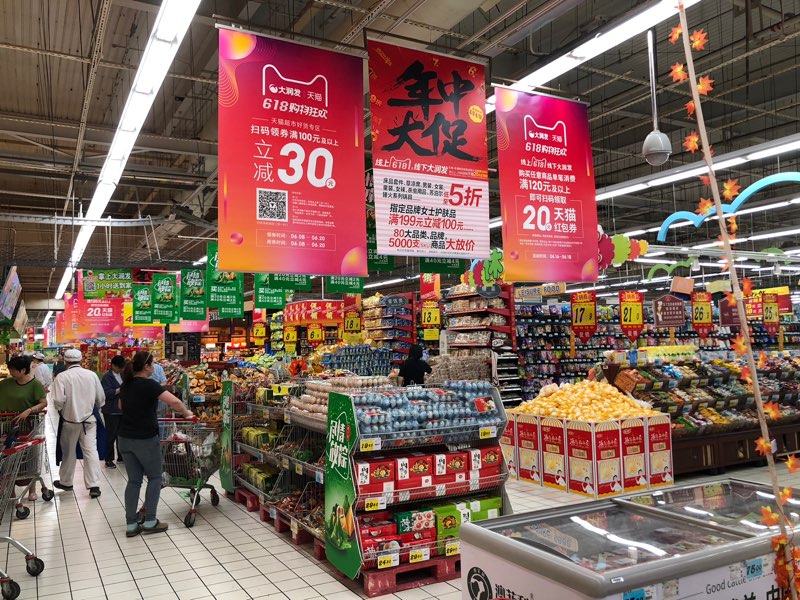
    Alibaba Group Holding Ltd. today announced a New Retail makeover for 100 RT-Mart stores, offering Chinese customers a seamless experience, whether they’re shopping online or offline.

    The hypermarkets, operated by Sun Art Retail Group, include 41 stores in eastern China and others in small cities across the country. The digital makeover underscores Alibaba’s commitment to empowering its partners to move up the value chain.

    The digitized RT-Mart stores will leverage Alibaba’s New Retail infrastructure, offering store operators customer insights, supply chain management, retail technologies, smart logistics and electronic payment.

    Customers will benefit from wider variety of products and better services. They’ll enjoy a frictionless shopping experience, whether buying through the Taobao app, which offers most of what’s on the RT-Mart shelves, or at a brick-and-mortar store.

    The upgraded RT-Mart stores will offer one-hour delivery for customers living within a three-kilometer radius. Delivery is powered by Hema supermarkets’ cutting-edge logistics and resources.

    Hema’s innovative fresh food supermarket and local delivery concept – introduced by Alibaba in 2015 – is the inspiration for the RT-Mart makeover. Hema has also partnered with RT-Mart on its supply chain, helping it source high-quality fresh produce directly from suppliers. This ensures RT-Mart shoppers find a host of Hema’s “Daily Fresh”-labeled products, including fruits and vegetables, meats and dairy products refreshed every morning.

    The new RT-Mart stores also join Tmall’s 6.18 Mid-year Shopping Festival, offering coupons for either online or offline shopping.

    The upgrade of the 100 RT-Mart stores kicked off in March and is fully underway. By year-end, Alibaba intends to introduce its New Retail solution to an additional 300 RT-Mart stores. And there may be more to come.

    “RT-Mart is using the Hema business model to explore this new path of New Retail. If this proves to be successful, we will share our experience with our peers,” said Peter Huang, the chief executive of RT-Mart.

    In its ongoing push into the retail space, Alibaba late in 2017 invested US$2.88 billion to acquire a 36% stake of Sun Art Retail Group, which operates over 400 hypermarkets under the Auchan and RT-Mart banners.

  • Youku Provides “Around-the-clock” Experience for 2018 FIFA World Cup

    Youku Provides “Around-the-clock” Experience for 2018 FIFA World Cup

    Youku, the Alibaba Group-owned online video hub, is set to provide China’s most-comprehensive coverage of the FIFA 2018 World Cup with live streaming of all 64 games together with a number of programs produced exclusively to celebrate one the world’s most-watched sporting events. In addition, Youku will join hands with leading brands and business units from the Alibaba ecosystem including Taobao, Alipay, Hema, UC Web, Tudou, Xiami Music and Damai, to provide viewers an “around-the-clock” integrated experience that will bring the enjoyment of the famous sports spectacle to the next level.

    “Given its level of popularity, sports content in China is an effective tool in implementing Alibaba Group’s ‘Double H’ strategy, which aims to promote ‘Health’ and ‘Happiness’,” said Weidong Yang, CEO of AliMusic and President of Alibaba Digital Media & Entertainment Group and Youku. “Not only are we streaming soccer matches, but we’re also leveraging this leading sports event to showcase the power of the Alibaba ecosystem and how Youku can lead the industry and capture opportunities in the China sports market by building relevant content and excitement.”

    Tailored Programs and Contents to Celebrate the Soccer Spectacle

    Youku is partnering with China Central Television (CCTV) to stream all 64 games, along with on-demand videos and post-game highlights*, marking the first time that the Chinese audience will be able to enjoy live broadcasts of the entire World Cup tournament on their mobile phones. As the official new media partner of CCTV in this event, Youku and CCTV will co-produce a talk show called “Qi Tan Shi Yi Ren” 《奇谭十一人》, featuring celebrity guests and soccer fans. “This is World Ball” 《这就是世界波》, a sports program under Youku’s successful “This is” 《这就是》 franchise and hosted by well-known commentators in China, will go live from June 14. Tailoring to the needs of younger audiences, Youku will produce a specialized soccer education program “Play football with Peppa Pig” 《佩奇给你讲足球》. In addition, Youku has acquired distribution rights for more than 20 online World Cup programs to enrich its lineup this summer.

    Apart from Youku, UC Web, Tudou, Xiami Music and Damai, the business units from Alibaba’s Digital Media and Entertainment Group, will work together to create an omni-media matrix covering various types of content, including short videos, music, as well as text and graphics.

    Synergy with the Alibaba Ecosystem

    Following the success of “Street Dance of China”《这就是街舞》and “This is Fighting Robots” 《这就是铁甲》, Youku and a number of leading brands and businesses from the Alibaba ecosystem are joining hands to provide a wide range of promotions and specials that cover ecommerce, restaurant and takeaway food orders, travel and entertainment content consumption.

    On Youku, audiences in China can not only watch the exciting soccer matches, but also enjoy innovative interactions and games. Red envelopes of coupons worth over RMB200 million will be set aside as prizes for an online campaign, where customers collect the cards of soccer stars. Youku, Taobao, Alipay and UC Web are sponsoring the campaign. Red envelops will also appear during the live streaming of every match. They can be redeemed for purchases on Taobao.

    Also, Tmall Genie, the AI-powered smart speaker will continue the prediction game that was traditionally started by Paul the Octopus, but this time, it will compete with a Boston lobster from Hema. All predictions and results will be announced in the “This is World Ball” 《这就是 世界波》program.

    “The extensive offerings from Youku around the 2018 FIFA World Cup reaffirm our commitment to bring the world’s best sports events to Chinese audiences. The widespread support from the Alibaba ecosystem also empowers Youku to deliver a superb experience for users to enjoy the popular month-long tournament in many new and innovative ways,” added Yang.

    *CCTV has exclusive streaming rights in China.

  • JD sets to launch JDesigner Boutique, offers designer items

    JD sets to launch JDesigner Boutique, offers designer items

    JD is ramping up its experiential retail services with the introduction of a direct-to-consumer online fashion store, JDesigner Boutique.

    This follows a series of launches from the e-commerce giant including self-driving trucks, car trunk delivery and the introduction of Muji’s online flagship store.

    JDesigner Boutique will stock a range of designers and brands by JD’s own team of retailers. To coincide with the launch, designers Haizhen Wang, Simon Gao and Wanning will provide the boutique with more than 200 sku’s. Wang and Gao will continue their partnership and collaborative effort with JD.com’s JDX platform, the company’s in-house innovation lab.

    The online boutique said it is planning to stock “trending fashion apparel directly from designers and brands to sell to the country’s growing number of fashion-savvy consumers”.

    “Today it’s hard to believe there was ever an image of an unstylish Chinese consumer,” says JD.com VP of corporate affairs John Gartner. “Now the country boasts millions of fashionistas who present their own unique styles—and that’s the market we are serving with this.”

    A pop-up store will open in Beijing’s Sanlitun area next week to support the launch.

    Mintel says China’s online market is expected to reach a value of RMB1.3 trillion (US$16 billion), with 73 per cent of Chinese consumers shopping from local e-commerce sites.

  • HK’s Chow Tai Fook FY profit soars 34 pct, in line with forecast

    HK’s Chow Tai Fook FY profit soars 34 pct, in line with forecast

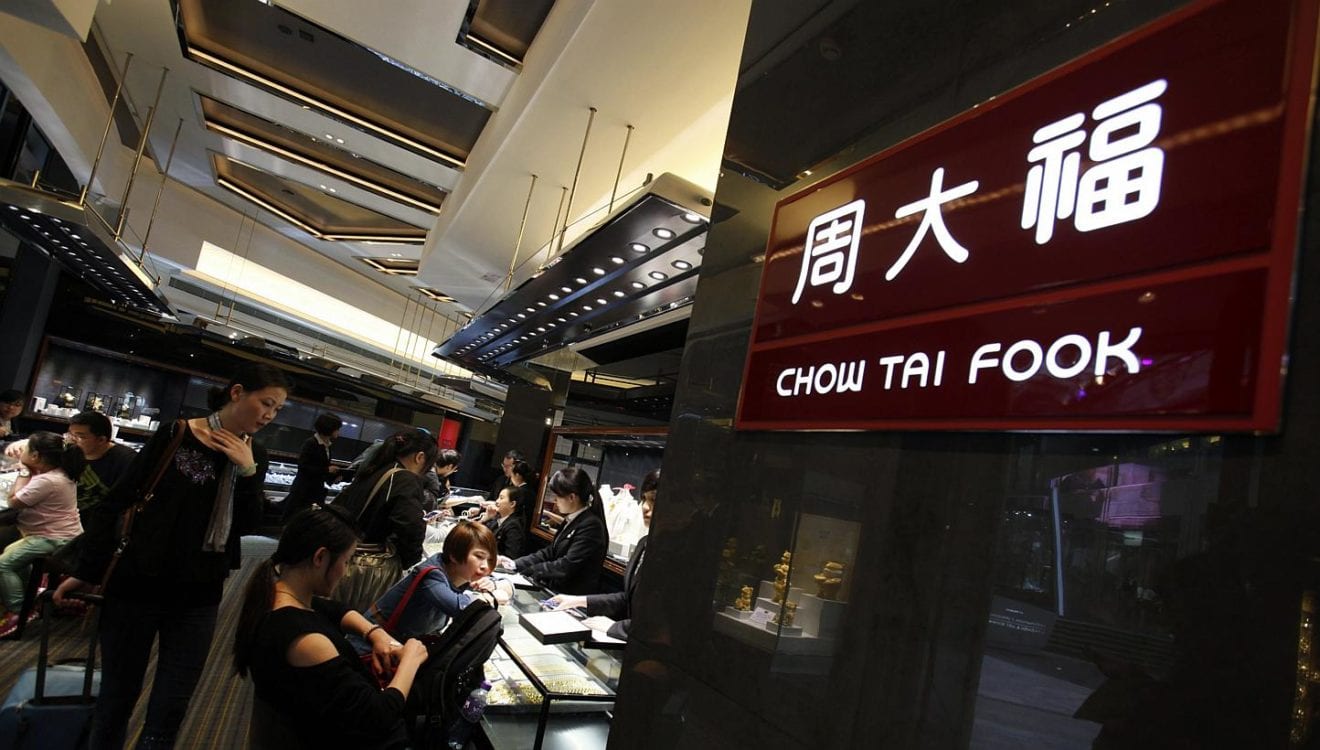
    Chow Tai Fook Jewellery Group Ltd, China’s largest jeweller by market value, on Thursday reported a 34 percent rise in full-year net profit, buoyed by improving consumer sentiment and an uptick in mainland tourists arrivals.

    Net profit rose to HK$4.10 billion ($521.98 million) for the year ended in March from HK$3.06 billion a year earlier. It was its highest yearly profit in three years. That compared with a HK$4.25 billion forecast by SmartEstimate.

    Revenue for the 12-month period rose 15.4 percent to HK$59.16 billion from HK$51.25 billion in the same period a year earlier.

    Same-store sales of its jewellery business in mainland China rose 8 percent for the year, while that in Hong Kong and Macau climbed 10.2 percent.

  • Chinese Used Car Auction Platform Tiantianpaiche Receives $100M Investment From Autohome

    Chinese Used Car Auction Platform Tiantianpaiche Receives $100M Investment From Autohome

    Chinese used car auction platform Tiantianpaiche has received US$100 million strategic investment Autohome, a Chinese automobile online platform, according to Tiantianpaiche’s announcement on its official WeChat account.

    Autohome also obtained the right to invest as much as US$65 million in the form of convertible notes in Tiantianpaiche in the three years after the completion of this investment. The two companies will deepen their strategic partnership going forward, with more operational cooperation and integration.

    The announcement came a day after Tiantianpaiche’s peer Chezhibao, Nanjing-based customer-to-business used car auction platform, raised a RMB800 million (US$125 million) series D round led by Chinese private equity fund Green Harbor Investment.

    Used car online auction platforms have been raising billions of U.S. dollars in China, trying to compete to become the market leader. But at least a handful of companies are still vying for the number one position, and no clear winner has emerged. For Tiantianpaiche, taking Autohome as a strategic investor could anchor its future and help it better compete in the market place.

    Founded in 2015, Tiantianpaiche focuses on a customer-to-business model connecting sellers of used cars to used car dealerships. After this round, the firm has raised a total of US$353 million in total fundraising. It has more than 40 offline shops in Shanghai, Beijing and Guangzhou. It expects transaction volume on its platform will reach one million vehicles annually in 2020, said the company.

    The proceeds of this round will be used for business expansion to more cities in China and develop new businesses including used car retail and used car financing services.

    Tiantianpaiche raised a total of US$180 million C round last year. Its investors include Tencent, SIG, SB China Venture Capital (SBCVC), Yiche.com and others.

  • Prada Group opens seven stores in Xi’An China

    Prada Group opens seven stores in Xi’An China

    Prada China is boosting its retail presence by opening seven stores in the city of Xi’an.

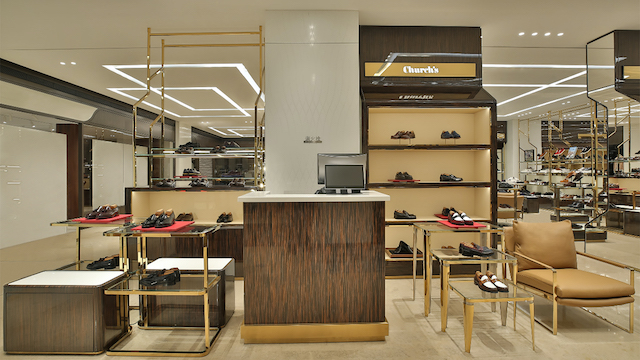
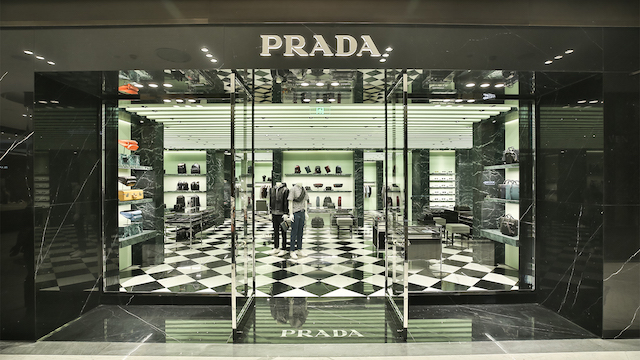
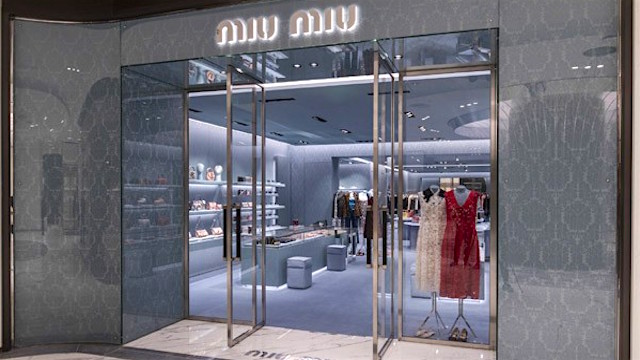
    The Italian luxury fashion group plans three Prada stores for the SKP Mall, plus two Miu Miu boutiques and two outlets for its Church’s brand.

    Xi’an is an expanding city, with its luxury shopping scene including boutiques for brands including Chanel, Dior and Gucci as reported.

    SKP Mall is seeking to replicate its successful model in Beijing with its new location in Xi’an, which has just opened. Designed by London architecture firm Sybarite, SKP Xi’an is a 19-storey structure.

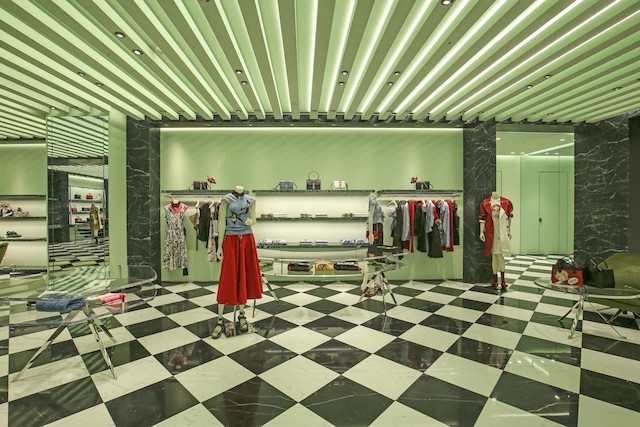
    For SKP, Prada is opening spaces for its menswear, womenswear and women’s footwear. The apparel boutiques are on the ground floor, while the shoes boutique is on the fourth floor. The stores are representative of Prada’s codes, with architectural details such as green marble, black-and-white checkered floors and mid-century Italian furniture.

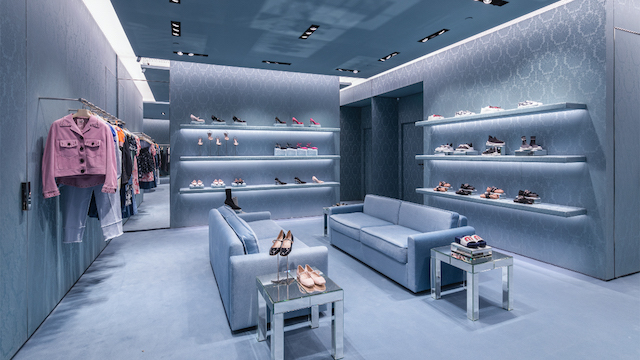
    Miu Miu is also setting up on SKP’s ground level with a store for its apparel, accessories, handbags and shoes. The second Miu Miu store in SKP is a footwear-focused boutique on the fifth floor. Both spaces feature elements such as blue damask fabric and velvet sofas.

    Church’s, meanwhile, will retail men’s and women’s footwear on the second and fifth floors, respectively.

    To mark the openings, Prada is taking its Silver Line pop-up to SKP – the installation is inspired by train travel and offers shoppers products that serve purposes for different parts of the journey.

  • China’s import tariffs cut and how it affects Hong Kong retail

    China’s import tariffs cut and how it affects Hong Kong retail

    China will cut import tariffs on nearly 1500 consumer products from July 1 – a move likely to have a modest impact Hong Kong retail sales.

    According to Reuters, China’s import tariffs for apparel, footwear and headgear, kitchen supplies and fitness products will be more than halved to 7.1 per cent from 15.9 percent.

    Cosmetics, such as skin and hair products, and some undefined “medical and health products”, will also benefit from a tariff cut to 2.9 per cent from 8.4 per cent.

    Some tariffs on luxury goods have been trimmed as well, although the effect of that on retail prices appears to be marginal. Other goods which Chinese consumers would not source from Hong Kong, including household appliances and packaged foods, will also become cheaper.

    Pascal Martin, partner at OC&C Strategy Consultants, says that by definition, whenever price differences between Hong Kong and China shrink, Hong Kong retail faces a negative impact.

    “However, given the relatively small scale of the drop relative to the goods retail price (a 7 per cent average drop in duty on imported wholesale price may only enable a 2-3 per cent drop in retail price), Hong Kong retailers may not find it that difficult to reduce their operating costs to maintain their comparative price attractiveness versus China – for now. Therefore, we believe the impact will be more psychological than tangible.”

    Encouraging domestic consumption

    Martin says the reduction of import tariffs is an indication of the Chinese government’s effort to attract and retain more domestic consumption.

    “It may displace some sales from domestic brands to international brands, and secondly it may shift sales from cross-border purchases (online or during travel, such as in Hong Kong) to domestic purchases of international brands. Some global players have launched global price harmonisation already, even before the tariff change, so the trend should point to more domestic consumption.

    “However, lower prices may also grow the total pie by making these brands somewhat more accessible to a broader population of shoppers.”

    Martin describes the reduction of import tariffs as “helpful” but cautions that the total price from landing goods in China to their retail price includes both VAT and consumption taxes.

    “Based on OC&C consumer research, consumers start hesitating to buy international brands in China when the difference between these brands’ China price and their home market price is more than 15 per cent of the home price. This means that the impact of the cut in import tariffs will be highest for brands that were just above this 15 per cent price difference threshold and they will likely see their China price get into the “non-hesitation” zone below 15 per cent.

    “The impact of a lower tariff will vary by categories. For some categories like high-end watches where the import tariff is 50 per cent of additional tax and tariffs, the impact will be high. On the other hand, for jewellery, 7-15 per cent out of 50-60 per cent tax and tariffs is not a lot.”

  • Geely Holding Announces Management Change at Group Lotus

    Geely Holding Announces Management Change at Group Lotus

    Zhejiang Geely Holding Group (Geely Holding), China’s leading privately-owned automotive group, announced today that Mr. Feng Qingfeng, vice president and chief technical officer of Geely Auto Group, has been appointed to succeed Jean-Marc Gales as chief executive officer of Group Lotus effective immediately. Mr. Jean-Marc Gales has chosen to leave for personal reasons and will become Chief Strategic Advisor to Lotus Chairman, Daniel Donghui Li.

    Geely Holding, which acquired a controlling stake in Group Lotus in 2017, thanked Mr Gales for his contribution to the company over the past four years.

    Daniel Donghui Li, chief financial officer of Geely Holding and Lotus Cars Chairman, said: “Jean-Marc has stabilised and turned Lotus to profitability for the first time in the iconic brands history with new industry leading products and unique business models since joining the company in 2014. Lotus is poised for the next phase of growth under Feng Qingfeng’s leadership, where its expertise in lightweight materials and sport cars-engineering will form part of the wider expansion of Geely ‘s automotive portfolio. At the same time I will welcome Jean-Marc‘s Council as Chief Strategic Advisor to myself and the Board of Directors.”

    Geely acquired a majority holding in UK-based Lotus – a world leader in high-performance lightweight sports cars – as part of its agreement last year to acquire 49.9 percent of the shares of PROTON from HICOM Bhd (DRB) of Malaysia, Lotus’s former parent.

    Feng Qingfeng (Mr. Feng) said: “I am honoured to have been appointed to lead this iconic British sports car group. With Geely’s global synergies and total support I am confident that Lotus has an exciting opportunity to achieve its full potential as a luxury sports brand, based around its engineering legacy and its future product pipeline.”

    In 2017 Group Lotus sold 1600 sports vehicles, an increase of 10% versus 2016, produced at its plant in Norfolk, England. In 2017 the company showed a profit for the first time in history.

  • Jatenergy announces flagship retail store in China

    Jatenergy announces flagship retail store in China

    Monetising Chinese retail shoppers is turning from a distribution to direct shopper experience for cross-border goods company Jatenergy (ASX: JAT).

    Jatenergy has signed a binding agreement to open a retail outlet, which it intends to call ‘JAT Maternity and Children’ within the 80,000-square metre Hui Yue Shopping Mall, to open “in the next few months.”

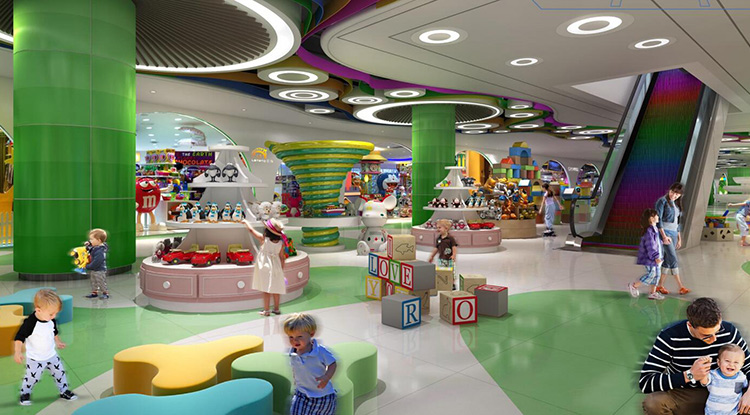
    Jatenergy says the kid’s section of the shopping complex will be the largest indoor children’s themed shopping centre in Zhengzhou spanning 18,000 square meters over three levels, called “Kid’s City”.

    The expansive Chinese-based company has said it intends to open a “cornerstone retail outlet” within the shopping complex, that caters for mums and children within ‘Hui Yue Kid’s City’, a dedicated “one-stop shopping destination” in Zhengzhou, the capital city of Henan province which is home to around 100 million people.

    The Hui Yue shopping complex is owned by the Henan Sheng Rung Holding Group, a Chinese company owned by current Jatenergy Director Mr Xipeng Li. As part of the close ties with Sheng Rung, Jatenergy will obtain a “three-year rent-free period” with a negotiated term expected to be agreed thereafter, sometime in 2021.

    Jatenergy will still need to spend an uncertain amount to set up and equip the store but says there are “no conditions precedent contained in the agreement with no other payments to be made”.

    “This is an unsurpassed opportunity for JAT to build its China presence and generate revenue,” said Mr Wilton Yao, Director of Jatenergy.

    In 2021, Jatenergy expects to establish a “flagship store agreement” with sales volumes being measured and used to gauge whether further stores will be opened in other parts of China at other Henan Xipu shopping centres. If the upcoming retail store is successful, Jatenergy is likely to expand its retail store footprint in China by opening stores in other cities.

    Just last week, Jatenergy revealed its intention to acquire a controlling interest in Green Forest International, a Sydney-based wholesaler, distributor and exporter to Hong Kong and mainland China. Today’s announcement of a retail store in China is likely to supplement the deal and is likely to stock many of the brand names marketed and sold by Green Forest.