Tag: China

  • US says trade war with China ‘on hold’

    US says trade war with China ‘on hold’

    The US trade war with China is “on hold” after the world’s largest economies agreed to drop their tariff threats while they work on a wider trade agreement, US Treasury Secretary Steven Mnuchin said today.

    Mnuchin and US President Donald Trump’s top economic adviser, Larry Kudlow, said the agreement reached by Chinese and American negotiators on Saturday set up a framework for addressing trade imbalances in the future.

    “We are putting the trade war on hold. Right now, we have agreed to put the tariffs on hold while we try to execute the framework,” Mnuchin said in a television interview.

    On Saturday, Beijing and Washington said they would keep talking about measures under which China would import more energy and agricultural commodities from the US to close the US$335 billion (RM1.33 trillion) annual US goods and services trade deficit with China.

    During an initial round of talks earlier this month in Beijing, Washington demanded that China reduce its trade surplus by US$200 billion. No dollar figure was cited in the countries’ joint statement on Saturday.

    Commerce Secretary Wilbur Ross planned to go to China, Mnuchin and Kudlow said.

    “He’s going to be looking into a number of areas where we’re going to have greatly significant increases,” including energy, liquefied natural gas, agriculture and manufacturing, Kudlow said in an interview with ABC’s “This Week.”

    Mnuchin said the US expects to see a big increase of between 35% and 40% in agricultural exports to China and a doubling of energy purchases over the next three to five years. “We have specific targets. I am not going to publicly disclose what they are. They go industry by industry.”

  • Alibaba supports Thailand’s TrueMoney

    Alibaba supports Thailand’s TrueMoney

    Chinese e-commerce giant Alibaba Group Holding is backing Thai conglomerate Charoen Pokphand’s TrueMoney payment service, which will expand to Bangkok’s train services as early as September.

    Passengers will be able to pay fares and shop at station kiosks by scanning a QR code on their smartphone screen.

    Alibaba’s Ant Financial owns about 20 per cent of TrueMoney, which aims to expand its network 10-fold to 100,000 locations by the end of this year. Users can charge their accounts at Thailand’s more than 10,000 7-Eleven convenience stores, which are run by the Charoen Pokphand group in Thailand, or link them to a credit card or bank account. The group also has 27 million subscribers of its telecom company True.

    Next, say industry observers, cafes and fast-food chains, including KFC, are on the radar for TrueMoney, which aims to overtake Rabbit Line Pay, the market-leading service from Japanese messaging app provider Line and elevated train service BTS Group Holdings. About 60 per cent of Thailand’s population uses the Line chat app, with users of the mobile pay service now numbering about 3 million.

    Alibaba partnered with Philippine conglomerate Ayala last year and launched mobile payments mainly at shopping malls and supermarkets.

  • China Tech Giants Bet on Untangling Logistics of Indonesian E-Commerce

    China Tech Giants Bet on Untangling Logistics of Indonesian E-Commerce

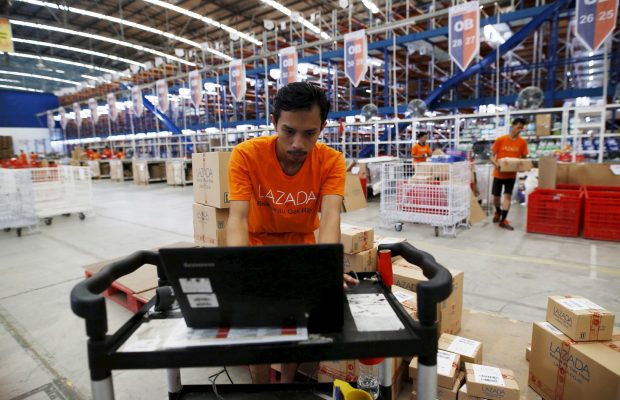
    In a warehouse on the outskirts of Indonesia’s capital, supervisors at e-commerce company Lazada use bikes or electric scooters to zip around a floor the size of four soccer fields, where up to 3,000 staff pack and dispatch goods around the clock.

    The warehouse is one of five that Lazada has opened across Indonesia to cut costs and expand its reach in an archipelago whose 17,000 islands are sprinkled across an area bigger than the European Union.

    Chinese tech firms, including Lazada’s top investor, Alibaba Group Holding, have poured at least $6 billion into nearly every aspect of Indonesian e-commerce.

    Lazada uses Alibaba’s inventory management systems and has tied up with ride-hailing companies, often using their motorbikes to deliver goods in a country with creaking infrastructure and traffic-clogged cities.

    The payoff could be huge. It is a market forecast to grow from about $7 billion last year to $63 billion by 2027, according to Morgan Stanley.

    “Indonesia, both in terms of the customers and behaviour, is a very unique challenge and we need to adapt,” Florian Holm, co-chief executive at Lazada Indonesia said.

    Lazada and Tokopedia, in which Alibaba is also an investor, dominate Indonesia in customer traffic, with more than 117 million monthly website visits each, according to data from e-commerce aggregator iPrice.

    Alibaba doubled its investment in loss-making Lazada to $4 billion in April, underscoring its global ambition to secure a bigger share of the e-commerce market.

    Between the investment and the rewards, however, lie enormous complexities.

    The World Bank has said logistical costs swallow up around a quarter of Indonesia’s gross domestic product, citing bottlenecks in supply chains, long dwelling times in ports and lengthy trade clearances.

    Lazada has opened warehouses in places like Balikpapan, on the coast of Borneo, to avoid hauling everything from Jakarta. Holm said that had in some cases reduced shipping costs by 90 percent. Competitive pressure is growing. Another Chinese heavyweight, JD.com, arrived in Indonesia in 2016. And the US giant Amazon, which opened a warehouse in Singapore last year, may be prepared to dip a toe into the Indonesian market soon.

    Chinese Influence

    Indonesia’s e-commerce sales are set to rise from 3 percent of retail activity now to 19 percent by 2027, Morgan Stanley estimates. The same report said there were 159 million smartphones in Indonesia at the end of 2016, a number that could rise to 275 million by 2021.

    Indonesia’s young population and room for improvement in transportation and communications add to the prospects for growth, the bank said.

    That has attracted other Chinese companies. Tencent Holdings, which owns regional e-commerce player SEA, has entered the fray.

    Tencent and JD.com have stakes in Indonesia’s ride-hailing firm Go-Jek, while JD.com has invested in online travel company Traveloka.

    But Usman Akhtar, a partner at Bain & Co in Jakarta, said Indonesian companies such as Blibli, backed by a unit of the Djarum group, remain a force.

    “I would not characterize Indonesia as turning into a replica of China’s e-commerce market, at least not yet,” said Usman, referring to how JD.com and Alibaba dominate in China. Kusumo Martanto, who heads Blibli, said that the company had seven warehouses in Indonesia with seven more planned, and said it was important for local e-commerce companies to compete against Chinese players.

    Alibaba founder Jack Ma is on an Indonesian government steering committee for e-commerce, advising on areas such as tax, cyber security and human resources.

    Indonesia’s communications minister, Rudiantara, said there was no conflict of interest in Ma’s role, describing him as a “guru” who could help sell the country’s potential.

    But some policies seem to be turning toward Ma’s home turf.

    Indonesia, which is trying to tackle a shortage of talent in the digital sector, dropped sponsorships for 20 students to study in places like Australia and the United States.

    Instead, 10 students will go to India and 10 to China to study this year “because the future of the digital economy is in China and India,” said the minister, who uses one name.

    Eying Amazon

    Caterine, a 30-year-old housewife who lives west of Jakarta, used to shop in conventional stores once a week, but after her baby was born six months ago, she has been shopping online two to three times a week for convenience.

    “I prefer online shopping because it is quick. I can just click and click and the goods will arrive,” she said, adding she mostly used Shopee and Tokopedia for goods such as diapers and clothing.

    Morgan Stanley said delivery times of all types across Indonesia are down to about 3 days from 10 days, while deliveries in big cities can take 24 hours or less.

    While in urban areas delivery times have greatly improved, other parts of Indonesia’s e-commerce supply chain are still inefficient, said Willson Cuaca, co-founder of East Ventures, a tech investment fund.

    “To send goods from point A to B, the logistics company needs at least two modes of transport,” he said, referring to the complications of operating across so many islands.

    Amazon, by contrast, prefers to control its own supply chains from start to finish. But entering a market like Indonesia could require it to revisit that strategy.

    Amazon Singapore did not respond to a request for comment on whether it had plans for Indonesia.

    Much of the U.S. giant’s international focus has been on developing its business in India, even though some view its entry into Singapore last year as a stepping stone for expansion in the region.

    “At this moment, I believe it is trying to test the market, by selling products through third-party sellers,” said Daniel Tumiwa of the Indonesian e-commerce Association.

    Zhang Li, who heads JD.com’s Indonesian joint venture with Provident Capital JD.ID, was not overly concerned about competition from the likes of Amazon.

    “E-commerce is a global and borderless business, so we have to prepare and do continuous improvement to make our customers happy,” Zhang said.

  • China agrees to import more from US, no sign of $200 billion figure

    China agrees to import more from US, no sign of $200 billion figure

    China has agreed to significantly increase its purchases of U.S. goods and services, the two countries said on Saturday, but made no mention of a $200 billion target the White House had touted earlier.

    Beijing and Washington agreed they would keep talking about measures under which China would import more energy and agricultural commodities from the United States to close the $335 billion annual U.S. goods and services trade deficit with China.

    A joint statement issued at the conclusion of intensive trade talks in Washington did not indicate whether the two countries would delay or drop their tariff threats on billions of dollars worth of each country’s goods, which has sparked fears of a wider trade war and roiled financial markets.

    “There was a consensus on taking effective measures to substantially reduce the United States’ trade deficit in goods with China,” the joint statement said.

    “To meet the growing consumption needs of the Chinese people and the need for high-quality economic development, China will significantly increase purchases of United States goods and services.”

    U.S. President Donald Trump has threatened to impose tariffs on up to $150 billion on Chinese goods to combat what his administration says is Beijing’s misappropriation of U.S. intellectual property through joint venture requirements and other policies that force technology transfers.

    Beijing denies such coercion and has threatened equal retaliation, including tariffs on some of its largest U.S. imports – among them aircraft, soybeans and autos.

    A report described the statement from the two governments as “vowing not to launch a trade war against each other.”

    While the statement said the two sides would engage at high levels and “seek to resolve their economic and trade concerns in a proactive manner,” it made no mention of tariffs.

    It said there was consensus between Washington and Beijing on the need to create “favorable conditions to increase trade” in manufactured goods and services. This could be a reference to China’s previous pledges to open up more economic sectors to services.

    U.S. LNG EXPORTS

    The United States will also send a team to China to work out the details of increased agricultural and energy exports, the countries said, without specifying timing.

    A senior U.S. official said that during discussions with a member of President Xi Jinping’s office, China was considering a package that relied on major purchases of U.S. liquefied natural gas, including a contract for a U.S. firm to build LNG receiving and processing facilities in China.

    The package, which also would include new commitments on intellectual property protections, could be agreed by a potential mid-year visit to Washington by China’s Vice President Wang Qishan, the official said.

    Trump made cutting the U.S. trade deficit with China a promise in his presidential campaign.

    During an initial round of talks earlier this month in Beijing, Washington demanded that China reduce its trade surplus by $200 billion – a figure most economists say is impossible to achieve because it would require a massive change in the composition of commerce between the two countries.

    IP VAGUENESS

    The statement was vague on the Trump administration’s core intellectual property complaints, saying that both countries “attach paramount importance to intellectual property protections … China will advance relevant amendments to its laws and regulations, including the Patent Law.”

    There are concerns among some legislators and trade experts that Trump could give priority to a narrower trade deficit over tackling what they say is China’s abuse of intellectual property rights. Any deal under which China would import more goods could easily be reversed, economists say.

    The statement made no mention of whether there would be a relaxation of paralyzing restrictions on Chinese telecommunications equipment maker ZTE Corp (000063.SZ) (0763.HK) imposed last month by the U.S. Commerce Department.

    The action, related to violation of U.S. sanctions on Iran, banned American companies from selling semiconductors and other components to ZTE, causing the Shenzhen-based company to cease operations.

    Earlier this week, Trump tweeted that he directed the Commerce Department to put ZTE back in business and said the company’s situation was part of an overall trade deal with China.

  • Young Consumers, Bridal, and Self-Purchasing Expected to Drive 2018 Platinum Jewellery Market

    Young Consumers, Bridal, and Self-Purchasing Expected to Drive 2018 Platinum Jewellery Market

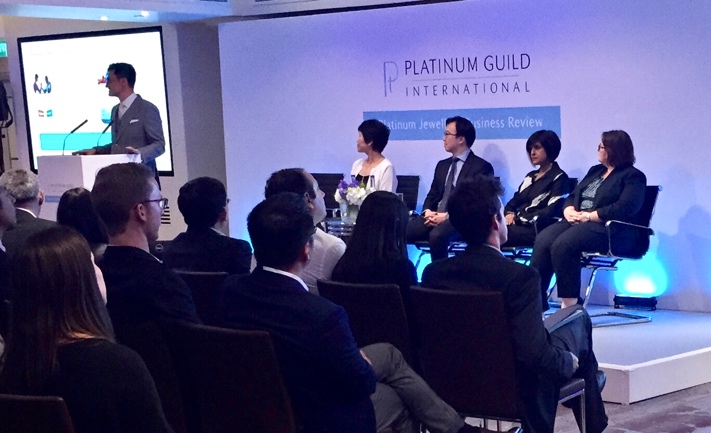
    Platinum Guild International (PGI) yesterday published the findings of its 2017 Platinum Jewellery Business Review revealing that three key trends – young consumers, bridal and self-purchasing – are emerging to contribute to platinum demand growth in 2018. Compiled by independent platinum market experts and industry analysts, the survey reports strong consumer retail sales growth in the U.S., Japan and India for 2017, even outperforming gold in some areas.

    “We saw above-market growth for platinum jewellery in three out of four key markets in 2017. This trend is tied to a robust global economy and historically low platinum prices, which together with an increasing preference for platinum among younger consumers, indicates growth potential in the platinum jewellery sector in 2018,” says CEO Huw Daniel of Platinum Guild International.

    Young Consumers

    India has become the engine of platinum jewellery growth globally. Despite continued challenges from new legislations, the industry has seen retail sales reported in platinum ounces up 21% year-on-year for the Platinum Guild International program and fabrication ounce demand growing at 34% year-on-year compared to 14% year-on-year demand growth for gold jewellery (according to World Gold Council). A strong preference for platinum among young consumers is one of the strongest contributors to the growth of platinum jewellery demand in India. For young India, PGI has created a distinct positioning for platinum versus gold, tapping into modern couples’ desire for jewellery that better represents the bonds of love in a modern relationship between equals. Through the Platinum Days of Love Campaign, platinum has become the metal of choice among today’s young Indian consumers shaping the country’s culture and fashion.

    Bridal Market

    Bridal markets around the world have become strongholds for platinum jewellery across China, Japan, the U.S. and newly emerging in India.

    In China, despite continuing market challenges at the total market level, PGI has seen strong growth in platinum acquisition in the core bridal category. According to a consumer study covering 55 cities in Tier 1 to 3, platinum bridal acquisition volume has increased by 22% compared to 2014. Platinum has become the dominant precious metal for wedding rings. However, with the industry facing continuous structural transitions and declines in marketing investment, China’s demand for platinum jewellery is likely to have another year of decline in 2018. China annual brand tracking survey shows that consumers strongly associating love with platinum and far ahead of other metals. Bridal jewellery is a gateway purchase leading to subsequent platinum jewellery purchases for anniversaries, birthdays and milestone occasions, which provide opportunities for growth to be further explored in 2018. China’s strongest growth is fueled by the rising consumer affluence of Tier 2,3 and 4 cities where a new generation of middle class consumers is acquiring taste for Platinum Pair Rings exchanged during wedding ceremonies.

    In India, the market is led by love-gifting with local organised retailers finding footholds for platinum within the gold-dominated wedding category. The introduction of a new branded segment, Platinum Evara, a modern platinum jewellery collection gifted to the bride and groom before the wedding day has carved out a distinctive niche for platinum and created a new jewellery segment for the industry.

    In the mature platinum jewellery market of Japan, platinum holds an astonishing 92% share of the engagement ring market and 82% share of wedding rings.

    Strong results for platinum in bridal are also mirrored in the West. In the U.S., the economic recovery and a bullish consumer sentiment has benefited the total jewellery industry, leading to the 5th consecutive year of growth for platinum jewellery consumption at 11%. The growth mainly comes from strong sales in bridal jewellery including engagement rings and wedding bands. In 2018, additional growth is expected to derive from initiatives promoting the use of platinum crowns that hold diamonds more securely, regardless of the choice of metal for the rest of the ring, along with increasing demand from the self-purchase category, which is likely to generate 8-11% of total growth in the U.S.

    Self-purchasing

    Although the majority of the platinum jewellery sold is bridal, PGI USA has also introduced a new platinum collection of platinum-only, chain-based necklaces as part of the Platinum Born collection, to target women buying jewellery for themselves, in order to continue to optimise local market growth opportunity.

    With the highest per capita consumption of platinum jewellery globally, in Japan platinum accounts for over 50% of total jewellery sales value. Growth is driven by a strong self-purchasing market led by females that have a strong affinity for platinum. Women generally control household finances and are increasingly staying in work after marriage and child birth. The resulting higher disposable incomes combined with historically lower metal prices, have led Japanese retailers to continue substituting white gold stocks for platinum, leading to an overall increase of 2% in retail ounce consumption. Retail demand growth is forecasted to continue at 1-2% in 2018 driven by moderate growth in self-purchasing category, especially for heavier products such as Kihei chains and religious objects.

  • Asia helps boost Richemont sales

    Asia helps boost Richemont sales

    Double-digit growth in Mainland China, Hong Kong, Korea and Macau have helped boost sales for Swiss luxury goods group Richemont.

    Results for the year to the end of March show Richmont sales grew by 3 per cent at actual rates and by 8 per cent at constant rates to €10.9 billion (US$12.8 billion).

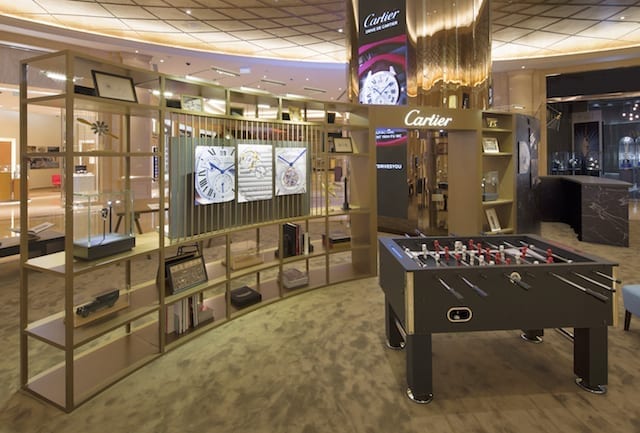
    Richemont’s brands include A. Lange & Sohne, Baume & Mercier, Cartier, Chloe, Dunhill, IWC Schaffhausen, Lancel, Jaeger-LeCoultre, Montblanc, Officine Panerai, Piaget, Purdey, Roger Dubuis and Vacheron Constantin.

    Excluding the impact of exceptional inventory buy-backs, sales grew by 7 per cent at constant rates, with a strong retail performance reflecting solid jewellery and watch sales.

    An improved macroeconomic environment, steady progress on Richemont’s transformation agenda and a mixed currency environment marked the year, says the company.

    Sales were driven by high single-digit growth in retail and double-digit growth in Asia Pacific, with particular strength in the main markets of China, Hong Kong, Korea and Macau.

    Strong overall retail performance reflected solid jewellery and watch sales, says chairman Johann Rupert.

    Asia Pacific sales were strong, with the region accounting for 40 per cent of group sales.

    Japan had a 6 per cent rise in sales, thanks to more tourism purchases.

    Also beneficial were softer comparative figures and the full-year contribution from the reopened Cartier and the new Piaget and Van Cleef & Arpels flagship stores, all in Ginza.

  • US slaps heavy duties on Chinese steel shipped from Vietnam

    US slaps heavy duties on Chinese steel shipped from Vietnam

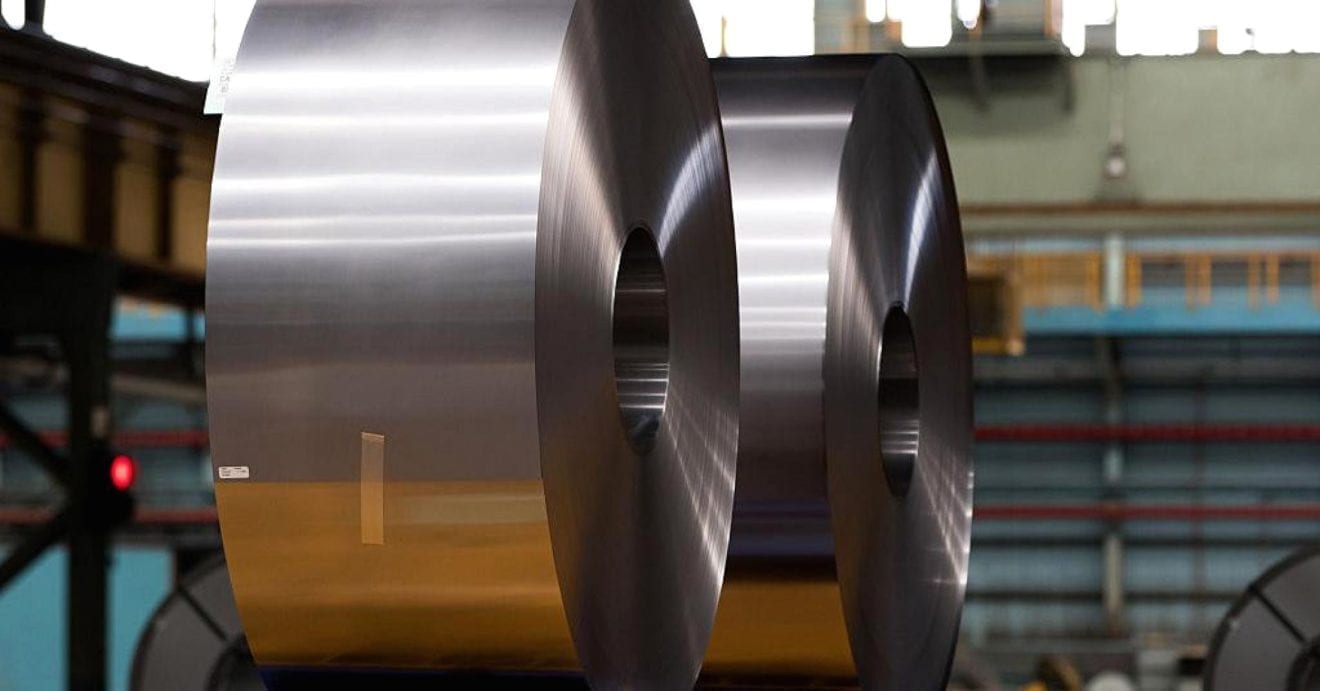
    The U.S. Commerce Department on Monday slapped steep import duties on steel products from Vietnam that originated in China after a final finding they evaded U.S. anti-dumping and anti-subsidy orders.

    The decision marked a victory for U.S. steelmakers, who won anti-dumping and anti-subsidy duties against Chinese steel in 2015 and 2016 only to see shipments flood in from elsewhere. The industry has argued that Chinese products are being diverted to other countries to circumvent the duties.

    U.S. customs authorities will collect anti-dumping duties of 199.76 percent and countervailing duties of 256.44 percent on imports of cold-rolled steel produced in Vietnam using Chinese-origin substrate, the Commerce Department said in a statement.

    Corrosion-resistant steel from Vietnam faces anti-dumping duties of 199.43 percent and anti-subsidy duties of 39.05 percent, it said.

    The department has said it would apply the same Chinese anti-dumping and anti-subsidy rates on corrosion-resistant and cold-rolled steel from Vietnam that starts out as Chinese-made hot-rolled steel.

    The duties will come in addition to a 25 percent tariff on most steel imported into the United States that resulted from the Trump administration’s “Section 232” national security investigation into steel and aluminum imports.

    Although the steel subject to the latest anti-dumping and anti-subsidy duties was processed in Vietnam to be made corrosion resistant or cold-rolled for use in autos or appliances, the Commerce Department agreed with the claims of American producers that as much as 90 percent of the product’s value originated from China.

    The global steel industry is struggling with a glut of excess production capacity, much of it located in China, that has pushed down prices.

    The decision followed a European Union finding in November that steel shipments from Vietnam into the EU also circumvented tariffs.

    The Commerce Department said that after anti-dumping duties were imposed on Chinese steel products in 2015, shipments of cold-rolled steel from Vietnam into the United States shot up to $215 million annually from $9 million, while corrosion-resistant steel imports rose to $80 million from $2 million.

    The case stems from a petition filed by U.S. producers ArcelorMittal USA, Nucor Corp, AK Steel Holdings Corp and United States Steel Corp alleging that Chinese producers began diverting their steel shipments to Vietnam “immediately” after the duties were imposed.

  • Etam Sells China Ready-to-Wear Operations to Hong Kong Investor

    Etam Sells China Ready-to-Wear Operations to Hong Kong Investor

    The majority of the crippled Etam China retail business has been transferred to a Hong Kong investor.

    While the terms of the sale agreement have not been disclosed, French media refer to the Chinese business as being “ceded” and financial incentives may have been included to help offload the business.

    The deal includes the local businesses of brands Etam Weekend, ES and E & Joy, as well as a license agreement for the use of trademarks using the name Etam. However, the French textile company will retain its lingerie business, which is trading well, internationally, including in China.

    Etam China’s sales slumped 28.7 per cent in the second quarter of last year, to €48.4 million. Globally, Etam’s turnover for the first half of last year was €600 million, down 5.3 per cent. Since then, the company has delisted from the Paris stock exchange, so the current status of the business is unclear.

    Zhou is the founder and CEO of Jaoboo Fashion Group and is described as “a distribution expert in China,” according to French newspaper Le Figaro. He takes control “with immediate effect”.

    In a statement, Etam Group said the transaction reflects its strategy to focus on its core business internationally, the development of its lingerie brand.

    “Thanks to Mr Zhou’s experience, Etam’s ready-to-wear brands will continue to grow and win new customers throughout China,” said Laurent Milchior, CEO of Etam Group.

    Zhou added: “The Etam RTW brands are well known to consumers across China and I am excited to have reached an agreement with Etam Group to take the brands and business forward. With Etam’s strong customer base, its brand heritage and our expertise in China, I am confident we have a bright future ahead of us.”

    The transfer follows the an “exceptional” action plan implemented in July last year to put Etam China back on track, including closing outlets, reorganising logistics to a single warehouse, cutting costs and accelerating the sale of off-season products.

    Etam China closed 154 shops in the first six months of last year, leaving it with 2442 points of sale.

  • Metro Holdings buys 35% of JV that’s acquiring Shanghai mixed-use building

    Metro Holdings buys 35% of JV that’s acquiring Shanghai mixed-use building

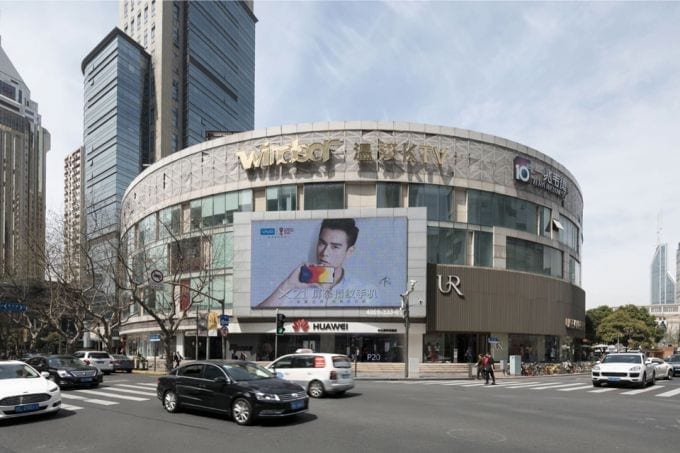
    Metro Holdings, together with other JV partners, is acquiring a 90 per cent stake in Shanghai Plaza for RMB2.9 billion (US$613 million).

    The mixed-used commercial building, with a gross floor area of 40,693sqm spans seven floors in Huai Hai Zhong Road, Huang Pu district, one of the most densely populated urban districts in China. It is also near the shopping district of Xintiandi, People’s Square and the Lujiazui CBD.

    Under the JV agreement signed by the investor, Shanghai Xing Chu Business Consulting, a wholly owned subsidiary of Metro China Holdings, will contribute $56 million for a 35 per cent stake in Shanghai Yi Zhou Property Management, which will be used to acquire and run Shanghai Plaza.

  • China’s Q2 GDP growth seen easing to around 6.7 percent

    China’s Q2 GDP growth seen easing to around 6.7 percent

    China’s economy will likely expand around 6.7 per cent in the second quarter this year, the State Information Center (SIC) said in an article in the state-owned China Securities Journal on Saturday.

    The forecast was slightly slower than the 6.8 per cent expansion posted in the first quarter. The SIC is an official think tank affiliated with the National Development and Reform Commission, the country’s top economic planning agency.

    April activity data released earlier this week suggested that the world’s second-largest economy is starting to lose some momentum, as analysts have long predicted, as the government continues a crackdown on riskier types of financing.

    While still expanding at a good clip, retail sales and fixed asset investment grew more modestly than expected while property sales fell for the first time in six months in the face of continued government curbs on speculation and rising mortgage rates.

    The lone bright spot was a rebound in industrial output, though the outlook for exporters is being clouded by trade frictions with the United States.

    The official think tank expects dollar-denominated exports to grow around 8 per cent in the second quarter versus a year earlier and imports to rise about 10 per cent.

    It forecast consumer inflation of around 2 per cent and expected producer price inflation would pick-up to about 3.8 per cent in the second quarter from a year earlier.

    The think tank suggested the government “maintain flexibility in macro economic policy and actively deal with trade frictions between the United States and China … to ensure a steady and healthy development of the country’s broader economy.”

    In the same article, the SIC said it expects China’s industrial output to grow about 6.6 per cent in April-June from a year earlier, with fixed-asset investment growth of around 7.2 per cent and retail sales seen rising about 10 per cent.

    China’s statistics bureau said this week that steady economic growth in April made a good foundation for achieving the full-year growth target.

  • Tencent Beats Forecasts as Revenue Surges 48% in First Quarter

    Tencent Beats Forecasts as Revenue Surges 48% in First Quarter

    WeChat parent Tencent Holdings has achieved a 48 per cent increase in revenue during the first quarter of this year.

    Revenue from Smartphone games, payment-related services, digital-content subscriptions and sales, and social advertising were key contributors overall growth in the three months to March 31.

    Operating profit grew by 59 per cent and operating margin was 42 per cent, up three percentage points year-on-year, while profit attributable to shareholders increased by 61 per cent.

    Tencent says the number of monthly active users (MAU) on smart devices was up by 2.4 per cent year-on-year to 694.1 million and smart-device MAU for users aged 21 years or below also increased year-on-year as it enriched chat features and entertainment-driven content appealing to young consumers.

    Tencent’s online advertising business achieved 55 per cent revenue growth.

    “For media advertising, revenues grew by 31 per cent year on year. Within that, video ad revenues increased 64 per cent due to more pre-roll ads benefiting from the growth in video views, and our enhanced capability to develop creative ad formats within original productions.”

    Other businesses grew revenues by 111 per cent, driven by its payment-solutions business and related financial services, as well as cloud services.

    “The growth in our payment solution business was mainly contributed by the rapidly increasing offline commercial transaction volumes and consumer cash withdrawal fees.”

    Digital content viewers grow

    Total fee-based value-added services subscriptions grew by 24 per cent to 147 million, primarily driven by video- and music-streaming services.

    “We strengthened user engagement of our video platform, where the number of daily active users and per-user time spent on mobile grew rapidly. Mobile daily video views increased by more than 60 per cent, driven by the premium-quality content from our self-commissioned and licensed productions. Total video revenues were up 75 per cent year on year.”

    Tencent said its investment in self-commissioned content enhanced Tencent Video’s user engagement, helping increase conversion-to-subscription rates and subscriber-retention rates. Video subscription revenues grew by 85 per cent year on year.

  • Bolloré Logistics Awarded by IATA as CEIV Pharma in China

    Bolloré Logistics Awarded by IATA as CEIV Pharma in China

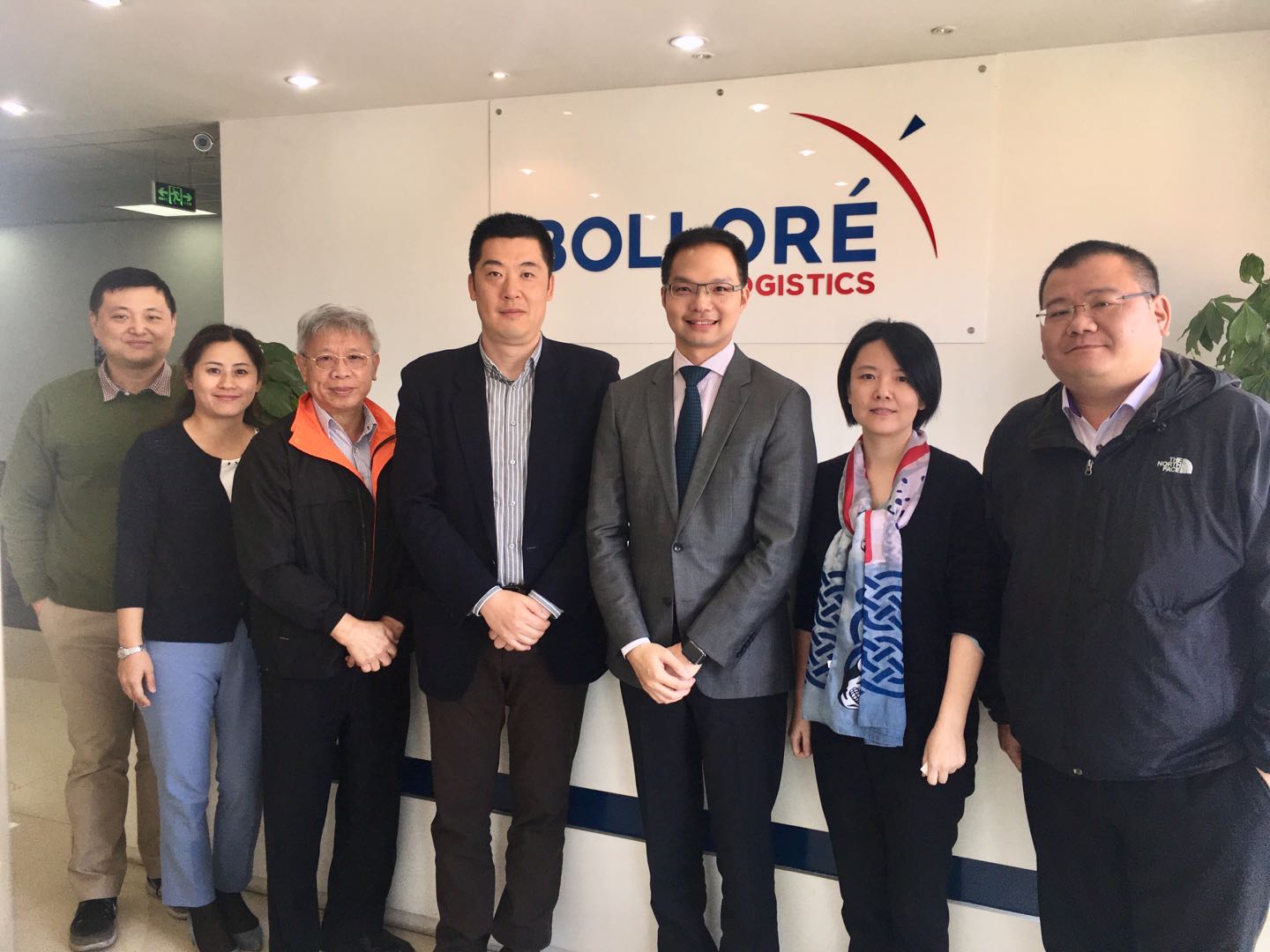
    Bolloré Logistics China was successfully awarded by the International Air Transport Association (IATA) as Center of Excellence for Independent Validators in Pharmaceutical Logistics (CEIV Pharma) at its platform located in the Pudong International Airport Logistics Park, in Shanghai, and became one of the first transport and logistics companies in China to receive this certification.

    Being certified CEIV Pharma by IATA, Bolloré Logistics China fully conforms to all applicable pharmaceutical standards expected from pharmaceutical manufacturers in terms of facilities, equipment, operations and staff and being capable to provide seamless cool chain transportation all along the supply chain.

    “This certification demonstrates our commitment on full compliance in handling pharmaceutical products and other temperature-sensitive commodities. Meanwhile, it will greatly reinforce our capability to further develop our core competency in transportation and logistics service for the healthcare industry,” said Jessie ZHOU, General Manager of Operations at Bolloré Logistics Shanghai.

    The CEIV certification will allow Bolloré Logistics China to have a strategic advantage in the China healthcare logistics market with a stronger, more competitive and enhanced air cargo service.

    This is new success shows Bolloré Logistics’ commitment to achieve the highest international quality standard in the global pharmaceutical supply chain for its customers, by continually improving its processes and infrastructures to be compliant with IATA CEIV Pharma standards. With Singapore, Australia, South Korea and now China certified, the aim of Bolloré Logistics is to deploy this action throughout its global network with on-going certifications on other sites in the Asia-Pacific region such as China Hong Kong and Japan.

    In Europe, Bolloré Logistics has already received the IATA CEIV Pharma certification for its Paris Roissy CDG platform (France) as well as its sites in Brussels (Belgium), Frankfurt (Germany) and Lisbon (Portugal).

    With its modern and innovative facilities, the excellence of its quality management system, the expertise of its teams and its multiple certifications, Bolloré Logistics is a major global player in the supply chain of pharmaceutical products.

  • Giordano International sales boost by online sales

    Giordano International sales boost by online sales

    E-commerce has helped boost the first-quarter bottom line for Hong Kong-based clothing retailer Giordano International, particularly in China.

    Unaudited figures for the three months to the end of March show Giordano’s overall e-business generated HK$81 million (US$10.3 million) in revenue, representing a year-on-year increase of 44.6 per cent. Of this, Mainland China accounted for 87.9 per cent, with sales growth of 28.9 per cent.

    Giordano says growth momentum continued for the mainland. “The development of the two strategic channels of e-commerce and franchising were on track and will continue to be our growth drivers in the medium term.”

    Same-store sales (CSS) rose by 16.7 per cent despite 30 non-performing stores being closed in the past 12 months.

    A decline in gross margin by 1.3 points can be attributed to greater sales contribution from e-business, says the company.

    In Hong Kong and Macau, sales for the first quarter increased by 3.8 per cent, resulting from same-store sales growth of 9 per cent partly offset by the closure of a major non-performing store. Gross margin was down by 0.9 points as a result of a longer promotion period for the late Chinese New Year.

    In a rebound since last year’s second quarter, Taiwan grew same-store sales by 19.6 per cent and comparable store gross profit (CSGP) by 25.1 per cent.

    In the rest of Asia Pacific, sales increases mainly came from store expansion in Indonesia and the acquisition of its Vietnam business since July, which contributed to 5.9 per cent of the region’s sales.

    Despite a tough macro environment, other Southeast Asia markets delivered stable sales growth. Excluding the Vietnam acquisition, gross margin would have dropped by one point.

    South Korea – a 48.5 per cent JV under an independent management team – continued to deliver positive CSGP growth.

    “Inventory rationalisation and lower product costs through shared sourcing have contributed to a substantial gross margin improvement.”

    Overall, group sales for the quarter rose by 13.4 per cent to $1.4 billion while group gross profit grew by 12.5 per cent. Same-store sales and CSGP for the quarter grew by 9.5 and 8.7 per cent respectively.

    As at the end of March, the group had a network of 2414 outlets, of which 1271 were standalone stores – an increase of 40.

  • A2P SMS to bring new life to aging messaging market

    A2P SMS to bring new life to aging messaging market

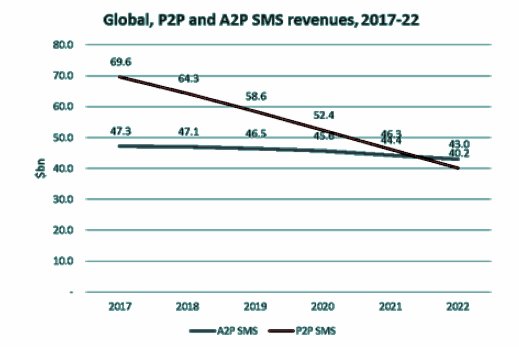
    SMS is not dead – not yet anyway. Ovum’s Mobile Messaging Traffic and Revenue Forecast: 2017-22 forecasts global revenues from application-to-person (A2P) SMS will finally exceed revenues from person-to-person (P2P) SMS by 2022, totalling $43 billion, even though A2P SMS traffic will be less than half of P2P SMS traffic by that time.

    P2P SMS revenues will generate just $40.2 billion in revenues by the end of the forecast period, but P2P SMS traffic will total 3.4 trillion messages in 2022, by comparison to 1.5 trillion A2P SMS.

    Figure 1: Global P2P and A2P SMS revenue, 2017-2022

    Figure 1: Global P2P and A2P sms revenue, 2017-2022Source: Ovum 2018

    The bulk of P2P and A2P SMS traffic and revenues will come mainly from the mobile-first, powerhouse markets of China, India and Indonesia.

    “Unfortunately for most telcos, P2P SMS has become essentially value-less, since they have had to bundle unlimited SMS into mobile tariffs to remain relevant to their customers, an increasing number of whom use chat apps such as WhatsApp, WeChat and Facebook Messenger. However, telcos can still charge a per-message termination rate for A2P SMS, which means it remains a more valuable source of revenues, since enterprises still value SMS for its global reach, affordability and mature ecosystem,” said Pamela Clark-Dickson, practice leader of Ovum’s communications and social team.

    Ovum forecasts chat apps will have 3.2 billion unique monthly active users (MAUs) by 2020, connecting enterprises with consumers via their platforms. Telcos and the wider ecosystem are therefore under pressure to protect their A2P revenues, driving them to upgrade from SMS to Rich Communication Services (RCS).

  • Luneng CC Plaza to use City park theme for the shopping mall

    Luneng CC Plaza to use City park theme for the shopping mall

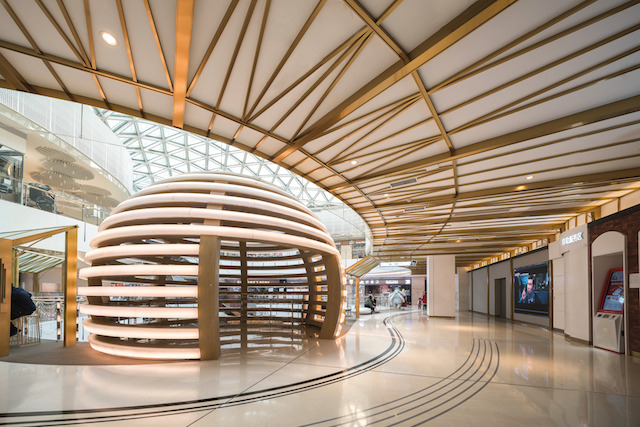
    International architectural firm Benoy’s latest project in China has been unveiled in Tianjin – the Luneng CC Plaza Shopping Mall.

    Benoy was responsible for the interior design for the 120,000sqm retail offering, which is part of the 550,000sqm Luneng CC Plaza mixed-use development within the Nankai district. The scheme embraces a high-end hotel, boutique shopping street, five residential towers and a grade-A office tower as well as two underground metro stations.

    With the site’s prominence in central Tianjin and proximity to the Tianjin Water Park and Tian Ta Lake, Benoy developed the concept of a “city park” for its design of the six-storey mall.

    “We wanted it to be a place of recreation for the community, a space where visitors can enjoy entertainment, retail, art, activities and great food with their friends – all under one roof,” says Benoy director Simon Wong.

    This approach is brought to life through two thematic areas – the Spring Park and the Winter Park. The Spring Park defines the main six-storey atrium and brings Tianjin’s outdoors into the development with neutral wood detailing and bursts of decorative planting.

    With a cooler colour palette, the Winter Garden defines the secondary atrium. This design approach is carried through to the mall arcades, with interactive artistic displays and thematic rest areas.

    More than 30 new-to-market brands have been attracted to Tianjin among more than 200 stores covering entertainment, retail, dining, cinema, lifestyle and fitness.

    Benoy’s portfolio in Tianjin also includes the award-winning Riverside66.