Tag: China

  • Sportswear sales growth goes up

    Sportswear sales growth goes up

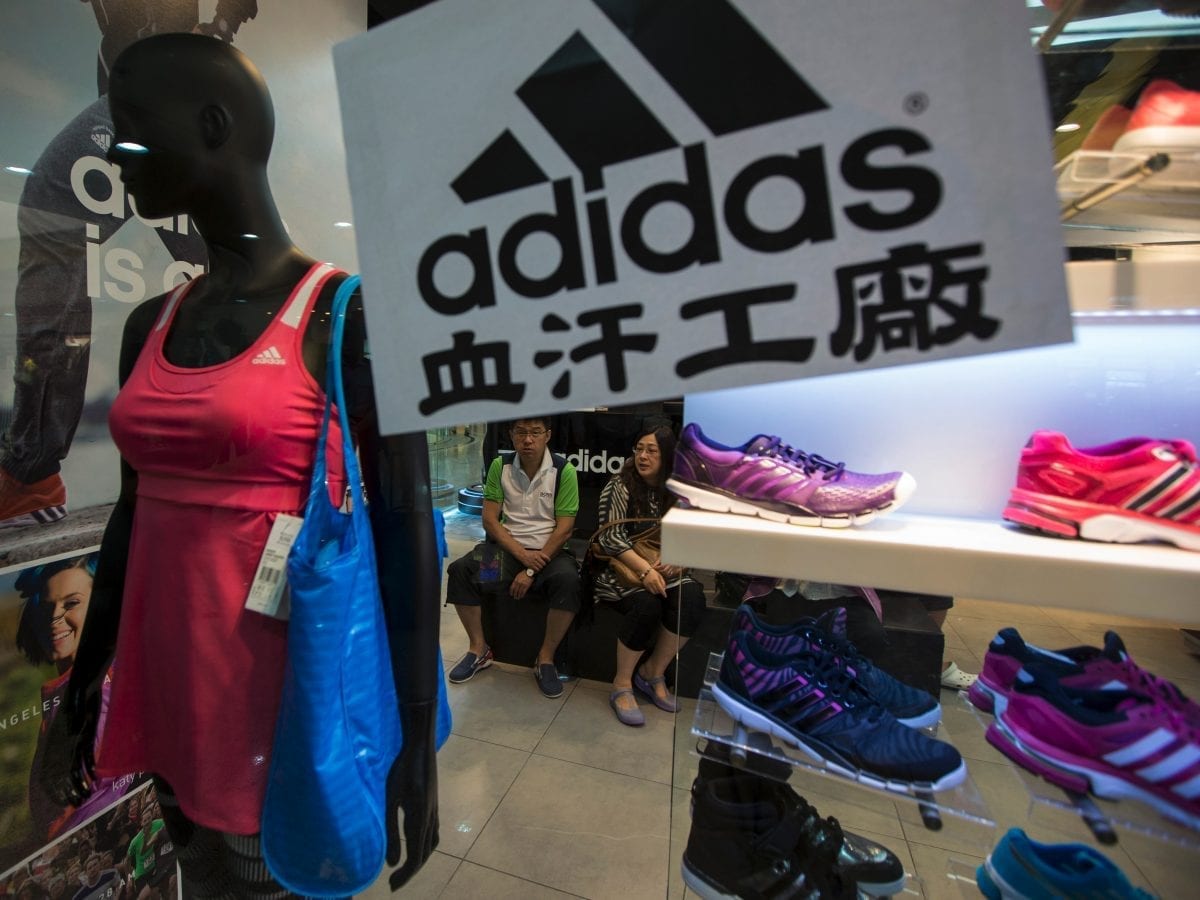
    Sportswear sales grew faster than those of luxury goods in China between 2012 and last year, says research group Euromonitor International.

    Market leaders Adidas and Nike have both had double-digit sales growth, while Lululemon and Under Armour are also dominant.

    Meanwhile, local brand Particle Fever is attracting attention with its designer sportswear.

    “People in China, especially Beijing, want to be seen differently,” says co-founder Zoe Liu, who says it is the only local activewear brand that takes a creative approach to marketing and branding. It makes sports bras, leggings and running shorts designed to be trendy and fashionable as well as comfortable for activities.

    Liu’s line, which is sold on Tmall as well as by Lane Crawford, sits alongside the sportswear collections of New Balance and Reebok in retail outlets like Runner Camp, a concept fitness store that opened in Shanghai six months ago and includes an experience centre and running track as well as a gym.

    Less than 10 years ago, most young Chinese female tourists in the country’s mountains wore a dress and heels. Booming interest in health and fitness has generated demand for more practical and fashionable fitness gear.

    Liu is now making final preparations for opening her second showroom in China, in WF Central, a new high-end shopping mall on Beijing’s oldest shopping street, Wangfujing. It will look more like an art gallery or a designer concept store as Liu and her team collaborate with artists to create visual displays.

    They also plan to invite emerging sports groups, such as modern dance troupes, for in-store performances.

    WF Central, developed by Hongkong Land, prioritises wellness, with its tenants including Under Armour with its largest showroom internationally, Superdry with a flagship store and Hong Kong’s Pure Yoga with its first studio for China.
  • China performs best for L’Occitane International

    China performs best for L’Occitane International

    China continued to outperform for fragrance group L’Occitane International during the year ended 31 March, its unaudited trading figures show.

    Along with Brazil, Hong Kong and the US it showed the highest sales growth in local currencies.

    China’s sales growth was 20.5 per cent in local currency with same-store sales growth of 15.1 per cent as it maintained strong momentum online and offline.

    The group’s net sales reached €1.3 billion (US$1.5 billion), growing 4.6 per cent at constant rates. Unfavourable foreign-exchange rates saw net sales at reported rates ease by 0.3 per cent over last year.

    During the 12 months, the company disposed of Le Couvent des Minimes while LimeLife became a subsidiary in January. Excluding Le Couvent des Minimes, LimeLife and a one-off deal for L’Occitane au Bresil in September 2016, the group’s sales growth at reported rates and constant rates were -1 and 3.7 per cent respectively.

    Emerging brands Melvita, Erborian and L’Occitane au Bresil (excluding the one-off deal) continued double-digit growth.

    The group opened 41 stores and renovated 153 during the year, compared with 51 openings and 104 renovations the previous year.

  • ZTE calls US export ban “unacceptable”

    ZTE calls US export ban “unacceptable”

    ZTE has objected to the imposition of a seven-year ban on importing any US components as part of the ongoing fallout over allegations that the company violated US sanctions by selling equipment with US components to Iran and North Korea.

    In a statement, ZTE said it is “unacceptable” that the US Department of Commerce’s Bureau of Industry and Security has imposed the most severe penalty on the company even before the completion of the investigation of facts.

    The Department of Commerce last week activated a seven year prohibition on US companies exporting products to ZTE.

    The prohibition had been imposed in March last year, when ZTE agreed to pay $892.3 million to settle the US investigation into the sanctions case. The ban, as well as a $300 million additional penalty, were suspended for a seven-year period as long as ZTE complied with the requirements of the settlement agreement.

    But the Department of Commerce has now imposed this ban after accusing ZTE of making false statements during settlement negotiations and the probationary period relating to disciplinary actions the vendor claimed it was taking on senior employees embroiled in the sanctions case.

    The action has been taken on the grounds that ZTE did not reduce bonuses offered to the employees or issue them letters of reprimand in a timely manner.

    But the company said this ignores the disciplinary action that has been taken and the fact that the company has engaged a prestigious US law firm to conduct an independent investigations.

    “The Denial Order will not only severely impact the survival and development of ZTE, but will also cause damages to all partners of ZTE including a large number of US companies,” ZTE said.

    “In any case, ZTE will not give up its efforts to resolve the issue through communication, and we are also determined, if necessary, to take judicial measures to protect the legal rights and interests of our company, our employees and our shareholders, and to fulfill obligations and take responsibilities to our global customers, end-users, partners and suppliers.”

    The department’s decision comes in the wake of the recent ban on US government departments buying devices and equipment from fellow Chinese vendor Huawei.

    At the Huawei Analysts Summit in Shenzhen last week, Huawei rotating chariman Eric Xu appeared to acknowledge that the company has been largely locked out of the US market.

    ”For Huawei, we still focus on doing our own things well. No matter what difficulties we encounter, we can only survive and thrive by doing our own business well and serving our customers better,” he said.

    “There are things we cannot change its course, and it’s better not to put it on top of your mind. In this way, we have more energy and time to serve our customers, and to build better products to meet the needs of our customers. In some cases, just let it go and we’ll feel at ease.”

    The timing of the two decisions have spurred speculation that Huawei and ZTE may have been casualties in the ongoing trade war between the US and China, which has also led to the imposition of tariffs on the importation of multiple categories of products.

    There has also been speculation that China may be retaliating by holding out on providing US chipmaker Qualcomm with regulatory approval to acquire NXP Semiconductors.

  • Iceland Foods partners up with JD.com

    Iceland Foods partners up with JD.com

    Welsh supermarket giant Iceland Foods will partner with e-commerce platform JD.com to sell its products to China.

    These will include its own-brand products such as biscuits, cereals and sauces, as well as cosmetics brands Pulsin, Re-gen, and Soft and Gentle.

    “With the rapid growth and significant opportunities the market in China offers we decided it was time to act,” says Iceland founder Sir Malcolm Walker.

    “Iceland adds to the growing number of British brands on our platforms as we continue our push to bring the best of Britain to Chinese consumers,” says JD Worldwide GM Yang Ye. The number of UK brands on JD.com has doubled in the past few years, and this week it held a 24-hour “Celebrate Britain” promotion.

  • Sequential Brands signs deal for Chinese market

    Sequential Brands signs deal for Chinese market

    Sequential Brands Group has signed a multi-year deal that will take its Avia sports shoes to Greater China.

    Its agreement with Beiying Sports Technology, a manufacturer and distributor, involves the companies developing and distributing men’s, women’s and children’s footwear, apparel and accessories. The new collection will launch this year across all retail channels.

    Beiying also plans to open Avia stores, including flagship outlets in key metropolitan Chinese cities, over the next few years.

    China is an important market with its growing sports industry, says Sequential’s active division president Eddie Esses.

    “With a rich heritage since 1979, the brand resonates extremely well with the Chinese consumer,” says Beiying MD Jinzhang Lin.

    Advisory group Symphony Investment Partners, helped the US group with the transaction.
    Based in Fujian Province, Beiying is a subsidiary of the industrial group Hengchong.

  • Luxba Group selected as the new partner for Sergio Rossi

    Luxba Group selected as the new partner for Sergio Rossi

    A new strategic partnership with brand management company Luxba Group will help Sergio Rossi open franchise stores across China.

    Following a full relaunch, the Italian women’s luxury shoe company has also signed an agreement with Hong Kong billionaire entrepreneur Adrian Chen to help achieve growth in China.

    Sergio Rossi last year closed its 10 franchise stores in China it had opened with another distributor. In changing partners, it hopes to make a “solid relaunch” in the country.

    “We chose a partner with the resources, experience and a vision in line with ours to help us go further,” says Sergio Rossi CEO Riccardo Sciutto. “The Luxba Group, with Adrian’s network, makes for such a partnership.”

    Details of the agreement have not been disclosed.

    Cheng, who is also executive director of jewellery manufacturer/retailer Chow Tai Fook Jewellery Group, six months ago launched C Ventures with the aim of creating a stable of brands and digital platforms specifically aimed at millennials and generation Z, a target market for Sergio Rossi. Already the venture has attracted brands like Disquared2 and Moschino.

  • Huawei chief downplays 5G expectations

    Huawei chief downplays 5G expectations

    Eric Xu, rotating chairman of Huawei, has downplayed the expectations on 5G, warning that consumers will not likely see a fundamental difference between 5G and 4G.

    “Over the last couple years the entire industry, especially governments around the world, regards 5G too high, as if it’s a digital infrastructure for everything, Xu told attendees at Huawei’s Analyst Summit in Shenzhen on Tuesday.

    He said Huawei did have expectations on 5G, but they were not as big as some people might think. “[5G]It’s just a natural evolution of technology, from 2G to 3G to 4G, and now 5G,” he said. “If you look across the entire portfolio of Huawei business, 5G is just one product.”

    “We’re going to have 5G, but you don’t have a fundamental difference between 5G and 4G… you don’t’ have a material difference between 4G and 5G.” he said

    For the average consumer, he noted, they would only perceive a difference in speed.

    He pointed out that the full 3GPP Release 15 – which is expected in June this year – will only address part of future use cases for 5G, which is the enhanced mobile broadband for consumers. Only until 2019 will the industry have full 5G-compliant standards that cover massive connectivity and lower latency.

    Xu said the current 4G infrastructure is “pretty robust” and good enough to support most use cases and he doesn’t see many clear use cases or applications which can only be supported with 5G.

    That said, Xu is not expecting 5G to be used for nationwide coverage, at least to begin with. Instead, he expects 5G to be used for specific, more localized deployments where there is a need for increased speed and bandwidth.

    However, he noted, this doesn’t mean it’s not worth investing in 5G. “If you’re not investing in 5G, your customers won’t invest in your 4G,” Xu said.

    “It’s the same case for telecoms operators. They are driven by competition, if one telco in the market says, ‘I have 5G-enabled services,’ the other service providers will have to launch 5G, for marketing and branding reasons.”

    Xu said Huawei will continue to be committed in 5G investment and the company’s progress in this area is quite “encouraging.”

    “By the second half of this year we will launch end to end 5G solution to cater our operators customers who do have requirements for 5G. And we are going to launch 5G-capable smartphones in the third quarter of next year.”

  • Sales starts to pickup for China Dongxiang

    Sales starts to pickup for China Dongxiang

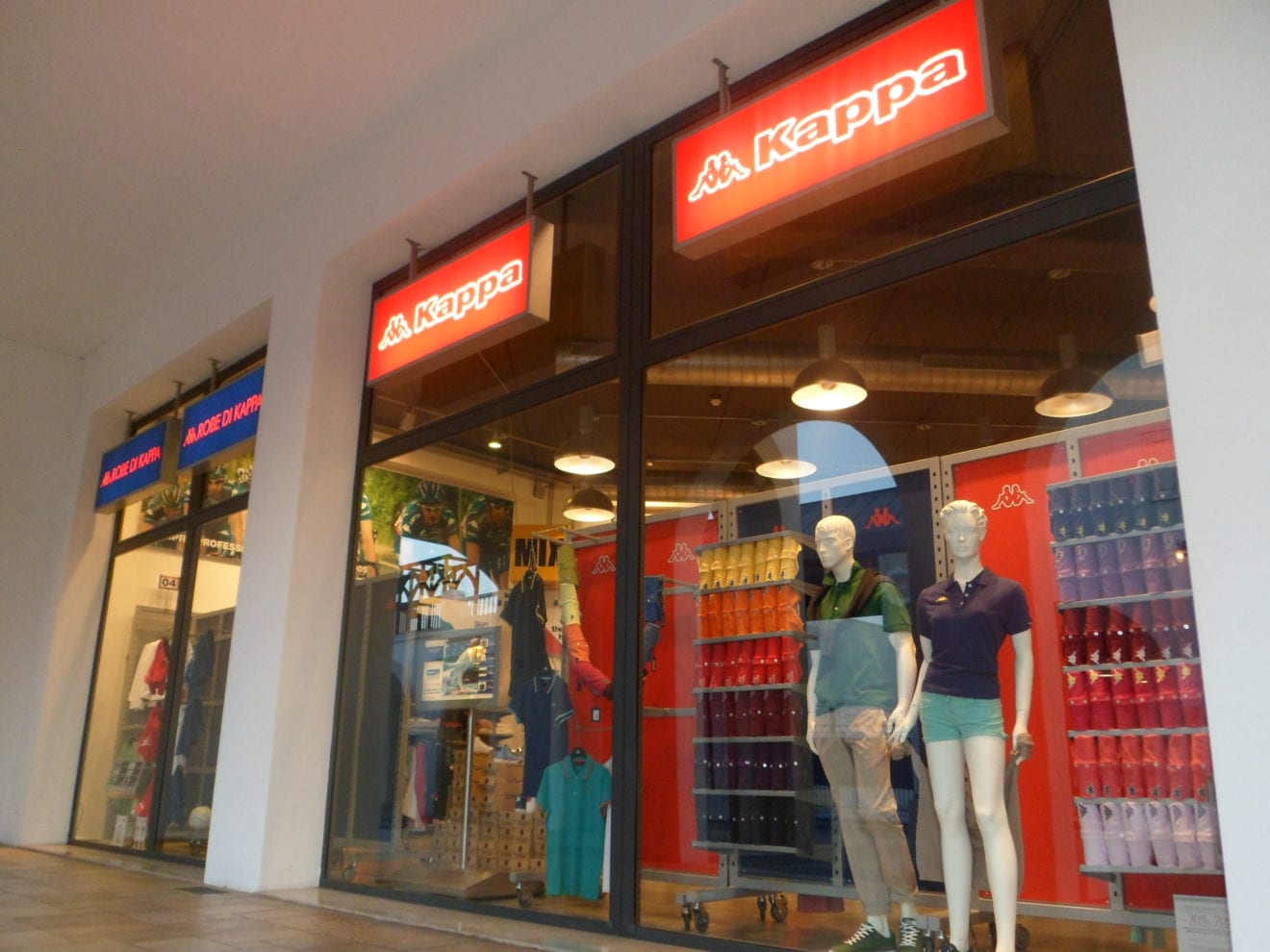
    First-quarter growth has been reported by sportswear company China Dongxiang Group, which owns all rights to the Kappa brand in China, Macau and Japan.

    Same-store sales, excluding the Kappa Kids and Japan businesses, achieved “mid-to-high” single-digit growth year on year, while the retail performance saw high single-digit growth.

    “The retail performance of Kappa stores for the overall offline platform is recovering,” says executive director/CEO/president Zhang Zhiyong.

    The group designs, develops, markets and wholesales branded sportswear in China.

  • JD Sports Australia to expand logistics capabilities

    JD Sports Australia to expand logistics capabilities

    British sports fashion retailer JD Sports has issued a vote of confidence in its fledgling Australian operation, revealing that it is expanding its local logistics capabilities to facilitate “anticipated future growth”.

    Delivering its financial results for the 53 weeks ended 3 February in the UK on Tuesday, JD’s executive chairman Peter Cowgill said work to bolster its fulfilment in Australia was ongoing and that initial trading from its first five stores Down Under was “encouraging”.

    “Our initial performance in these markets [including Malaysia] is encouraging and it has given us the confidence to investigate options in other territories,” Cowgill said.

    “A smaller scale project to expand our logistics capabilities in Australia to facilitate anticipated further growth, both in stores and online, of the JD fascia is also ongoing,” he said.

    The comments come just a week after JD’s local arm, which is being shepherded by Rebel founder Hilton Seskin, announced three new stores (bringing its total to 9), one of which is already open in Macquarie, Sydney.

    JD has worked with the local veteran on slowly laying the bedrock for its Australian expansion over the last few years, launching about a year ago.

    As of 3 February JD had 12 stores in Asia Pacific and 52 stores across other businesses in the region, such as Glue in Australia.

    The listed British business does not separate its sales figures from individual markets outside of the UK, but revenue from operations outside of its home market and Europe increased by 46.6 per cent to £31.5 million (AUD$58.01m) during the year.

    Record profit

    Group-wide JD reported a record increase in its before tax profit for the year, up 24 per cent to £294.5 million (AUD$524.32m).

    Group revenue was up by 33 per cent to £3.16 billion (AUD$5.82bn) on the back of 187 store openings, including a net increase of 70 stores in the UK and Europe alone. The business has 1237 locations globally.

    Cowgill said he had been “very encouraged” by the result, which brings total profit growth since 2015 to more than 200 per cent.

    “The investments we have made over a number of years in developing our multichannel proposition and driving improved buying, merchandising and retail discipline have ultimately led to the creation of a world class sports fashion business which combines the best of physical and digital retail on an increasingly global scale,” he said.

    We are very encouraged by the progress that we are making internationally, and we continue to look for further opportunities to bring our dynamic multichannel proposition to new markets around the world with the support of our key brands”

    JD is currently finalising a yet-to-be-approved deal to purchase American footwear chain The Finish Line for $558 million, a move that will supercharge its expansion into the US.

    JD provided no specific outlook, but said it is satisfied with its progress and remains confident about the prospects for the current financial year.

  • Suning Holdings to open its first office in Milan

    Suning Holdings to open its first office in Milan

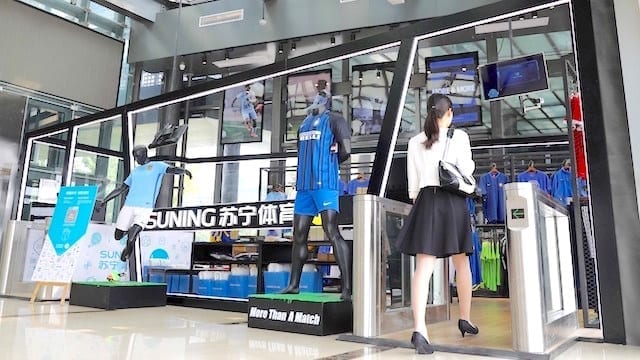
    China’s Suning Holdings will open an office in Milan within the next two months, to be followed by offices in the UK, France and Germany by the end of the year.

    In its latest sourcing plan, the firm has set aside RMB10 billion (US$1.5 billion) to source products on the Continent over the next three years.

    Suning announced the move during Milan Design Week, where it has been exploring deals with overseas designers to help it create products for its new Suning Jiwu (“ultimate creation”) stores. It aims to introduce stylish, high-quality home and fashion products from Europe into China.

    The new format features popular brands, original designs, life essentials and creative interactions. The first store, covering 400sqm, opened in Nanjing last month, with more than 300 set to open throughout China within the next three years, including at least 50 large-scale flagship stores.

    Suning International VP Steven Zhang says Jiwu caters for a “personalised consumption culture”.

    Already the company has partnerships with Italian brands across different industries including Furla, San Benedetto, TechnoGym and Versace Home. Its new sourcing plan in Europe highlights luxury fashion, health, household and FMCG products. Representatives of Chateau D’Ax, Cova, Kartell, Kiko, Versace and YNAP were among the guests at its opening event at Milan Design Week.

    Suning already has an established network covering Hong Kong, Japan and the US. The group expects 30 per cent of its revenue will come from international business by 2020.

  • MSGM China opens a new Beijing boutique

    MSGM China opens a new Beijing boutique

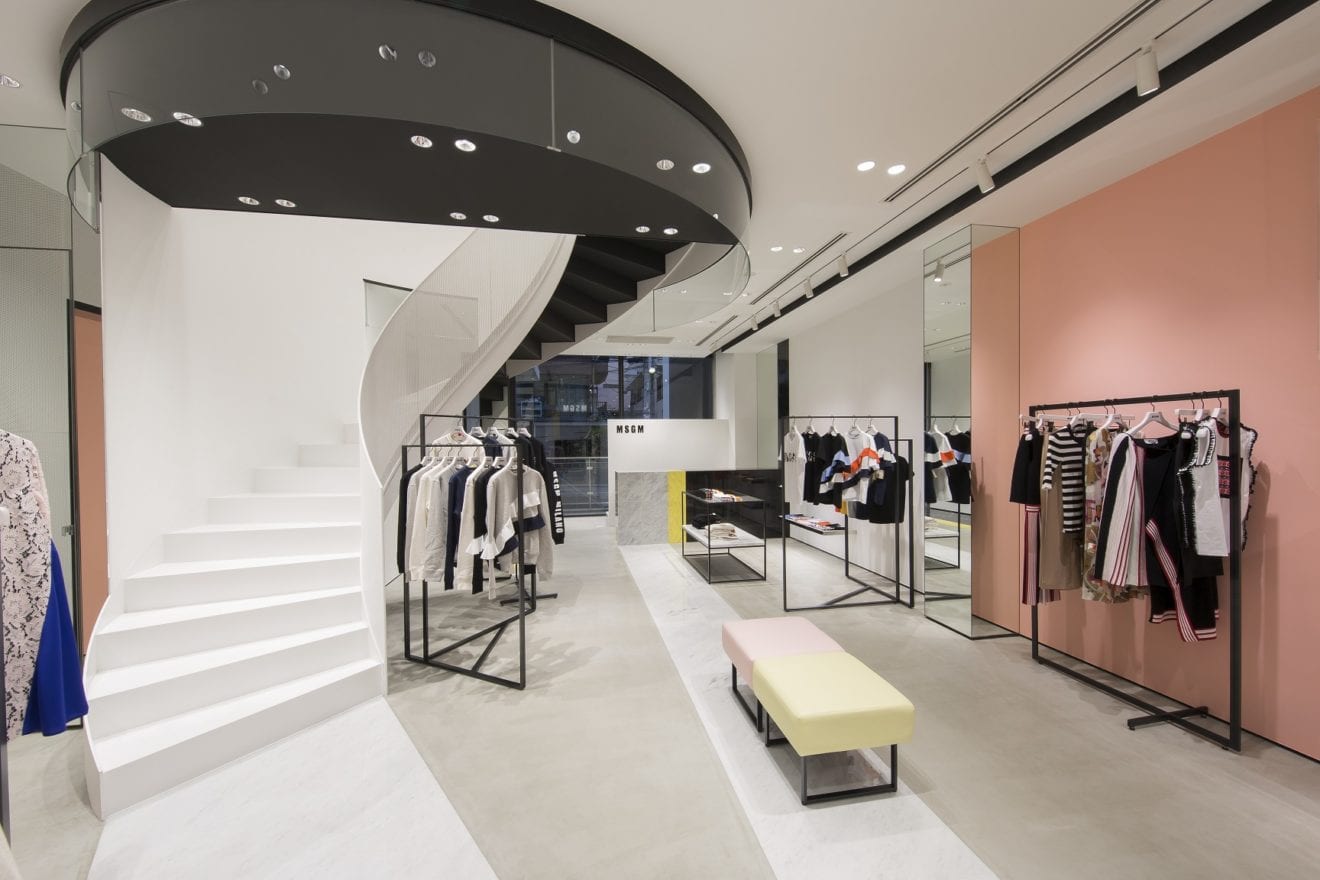
    MSGM China has opened its second store, a boutique in SKP Beijing.

    The Italian fashion label’s 15th store, it offers menswear, womenswear and accessories. The 100sqm space features flexible iron display structures, geometric neon lighting and Carrara and black Marquina marble surfaces interrupted by a fluorescent yellow stripe, a hallmark of the brand.

    MSGM China’s first store opened in Shanghai last year, when the brand also opened a space in Seoul.

  • JD.com promises to add ‘1000 stores a day’

    JD.com promises to add ‘1000 stores a day’

    As 50,000 people apply each day to be franchisees, JD.com promises to open more than 1000 stores a day this year.

    It started the journey last month, with founder/CEO Liu Qiangdong saying almost every store will be a franchise, according to local media reports.

    The ambitious aim is a part of a plan the e-commerce announced 12 months ago, when Liu said it would open a million convenience stores in the next five years, half of them in rural areas. JD.com’s convenience stores are run by independent investors, and the company offers loans for potential franchisees.

    “We receive 50,000 applications every day,” says Liu. “The applicants are mostly migrant workers who have returned to their villages or small towns. Jingdong Finance can provide them with loans to open stores. They can earn more than RMB8000 [US$1275] a month.”

    The first batch of shops, 1111 of them, opened their doors on the same day in November.

    Liu’s latest announcement comes a month after JD.com signed an agreement with convenience store group FamilyMart. This enables JD users to have food delivered to their homes from FamilyMart’s core locations in Beijing, Shanghai, Shenzhen and Chengdu within 30 minutes at any time.

    Smart carts

    And in January, JD.com launched offline fresh-food supermarket 7Fresh, a 4000sqm store in Beijing that features “smart carts” that guide customers to the items they seek to buy.

    JD’s first high-profile deal in the emerging O2O retail sector was its investment of RMB4.3 billion for a 10 per cent stake in Shanghai-listed supermarket chain Yonghui Superstores three years ago.

    Meanwhile, JD.com is partnering with mainland retail conglomerate China Resources Vanguard in a deal to take Vanguard’s shops in Hangzhou and Nanjing to its O2O platform. Customers will be able to buy from Vanguard’s offline stores via JD Daojia, and the partnership will later extend to the brand’s 2000 retail stores in more than 30 major cities in China.

    China Resources Vanguard, formerly China Vanguard Super Department, has more than 3000 retail stores in 200-plus cities and has revenues of RMB103.6 billion last year.

    JD Daojia is a one-hour delivery service that partners with 100,000 local merchants and provides on-demand groceries, fresh produce, snacks, flowers and pharmacy needs in more than 30 cities. It has more than 50 million registered users and 20 million monthly active clients.

  • Online boost for Chow Tai Fook Jewellery

    Online boost for Chow Tai Fook Jewellery

    Chow Tai Fook Jewellery Group’s fourth quarter saw e-commerce business soar in Mainland China.

    Retail sales value grew at the rate of 38 per cent year-on-year accompanied by a volume boost of 34 per cent.

    During the three months to the end of March, the percentage of retail sales value settled by Alipay, China UnionPay, WeChat Pay or RMB in the Hong Kong and Macau market – a proxy for sales contribution from mainland tourists – improved to 51 per cent from 44 per cent for the same period last year.

    Both the value of retail sales and same-store sales continued to improve in both the Mainland China and Hong Kong/Macau markets. Hong Kong/Macau had relatively stronger growth during the quarter thanks to improved consumer sentiment and a revival of visitor numbers from the mainland.

    In Mainland China, same-store sales of gem-set jewellery declined while retail sales value stayed positive. The same-store average selling price improved to HK$7100 (US$905) from $6500 a year earlier.

    In Hong Kong/Macau, both volume and average selling price at same-store level increased during the quarter. There was double-digit growth in same-store volume while the average selling price improved to H$13,000 from $12,400.

    An increase in volume drove same-store sales performance of gold products in both markets. The average selling price improved with an increased gold price (up an average 9 per cent) and higher-value purchases.

    The same-store average selling price was $4400, up from $3900, in China while the figure for Hong Kong/Macau rose to $7900 from $7000.

    Chow Tai Fook ended the quarter with 20 more points of sale. This included 17 outlets opening in China, one in Hong Kong/Macau, one in Taiwan and two in Korea. One point of sale closed in the US, taking to total of outlets to 2585.

  • China edges ahead in 5G race

    China edges ahead in 5G race

    China has edged slightly ahead of both South Korea and the US in the race to deploy 5G, according to a new report by Analysys Mason.

    China leads the world in 5G readiness, followed by South Korea, the US and Japan in that order, according to the report, which was commissioned by US-based trade organization for the wireless industry CTIA .

    The countries were ranked based on nations’ respective 5G spectrum and infrastructure policies as well as commercial plans by their respective wireless sectors.

    The report found that all three major Chinese operators have committed to specific 5G launch dates. The government has also committed to providing at least 100 MHz of mid-band spectrum and 2,000 MHz of high-band spectrum for each operator.

    In South Korea, the government is soon expected to free up a combined 1300 MHz of both mid-band 3.5-GHz and high-band 28-GHz spectrum, with an additional 2 GHz of high-band spectrum capable of being utilized for 5G.

    While all major US wireless providers are trialing 5G technologies and a number have committed to small-scale fixed wireless 5G launches by the end of the year, the country has yet to announce plan to allocate mid-band spectrum exclusively for mobile by the end of 2020.

    “The United States will not get a second chance to win the global 5G race,” CTIA president and CEO Meredith Attwell Baker said.

    “Today’s research highlights the importance of policymaker action in 2018 to reform local zoning rules and unlock access to mid-band spectrum as part of a broader spectrum pipeline plan. I’m optimistic we will leapfrog China because key leaders in the Administration, on Capitol Hill, and at the FCC are focused on the reforms needed to win the race.”

    In Japan, wireless providers are investing in 5G testing and regulators have committed to releasing mid- and high-band spectrum by early 2019.

  • Welden handbags flies high in China

    Welden handbags flies high in China

    Sandy Friesen’s small and young handmade handbag company Welden generated nearly US$300,000 in gross merchandise volume during a two-day live-streaming event in China.

    On Alibaba’s C2C marketplace Taobao, the campaign was the New York brand’s first foray into China. It became an instant hit, attracting 808,000 views and 4.06 million likes on the first day.

    By the end of the two days, Welden had sold nearly 1000 bags priced from $195 to $595, with a combined 1.7 million livestream views.

    Friesen says the success of Welden’s China debut far surpassed her expectations. The Welden co-founder says China had not been on her company’s radar until only few months before the campaign.

    “We were a US brand that had been trying to expand to Canada. We’ve been really just going with what we know. It’s truly amazing this has happened so quickly.”

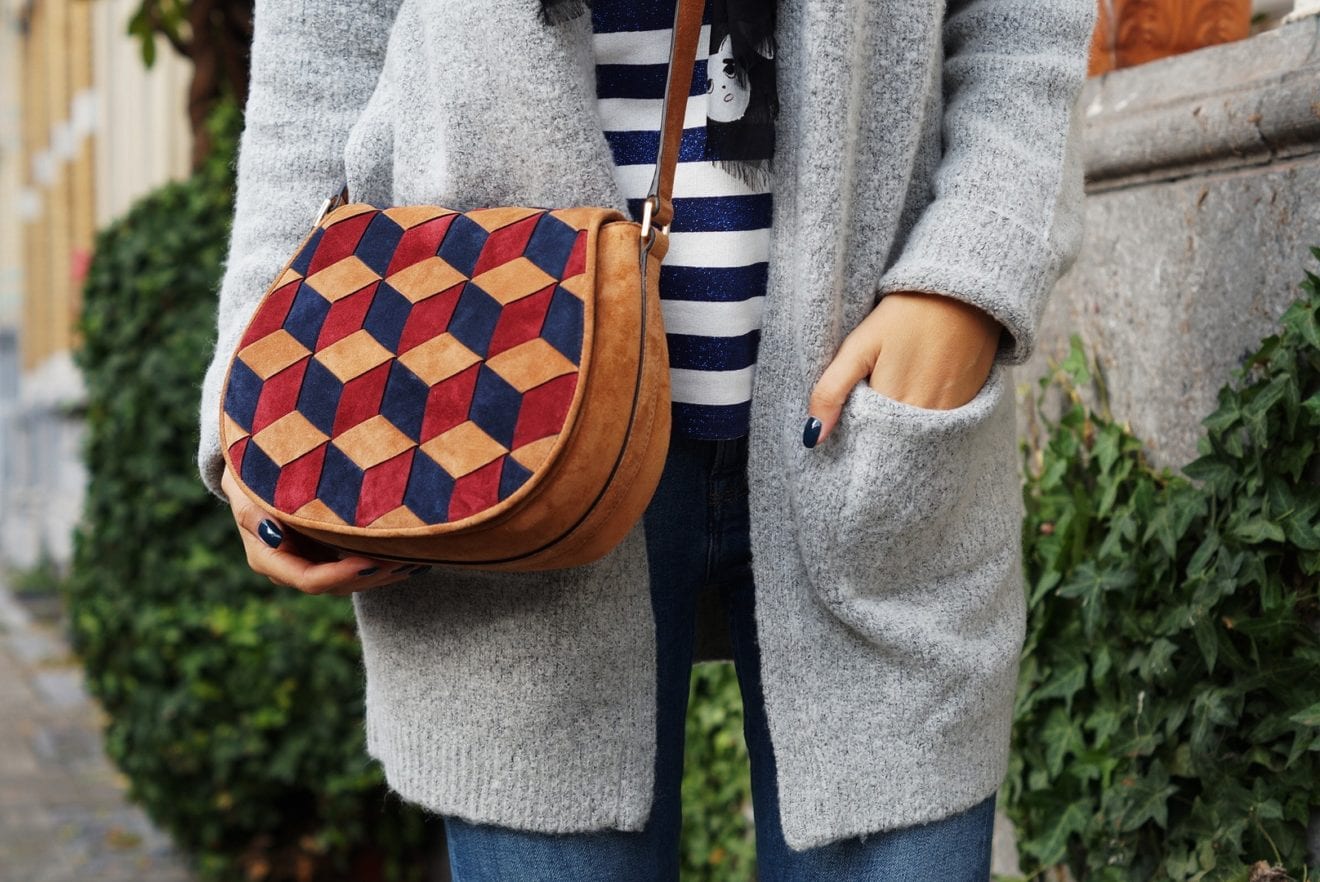
    Friesen started Welden in 2015, its designs being easily recognisable by their signature hexagon weave.