Tag: China

  • Walmart China introduces compact format

    Walmart China introduces compact format

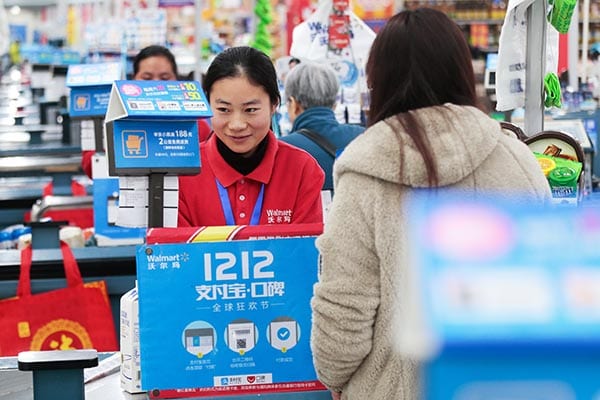
    Walmart China has deepened its omni-channel retail model with the opening of its first small-format Walmart Supermarket.

    In Shenzhen’s Bao’an district, the store delivers an integrated online/offline experience, with an emphasis on fresh foods, fast delivery and convenience.

    “Retail and lifestyle are closely linked,” says Walmart China hypermarket senior VP/COO Elliot Dickson.

    “Walmart is proud to have been a part of the evolution of shopping in China since we opened the first Walmart Hypermarket here in Shenzhen in 1996. We are introducing our Walmart Supermarket to give customers an upgraded omni-channel experience rooted in their own community.”

    The 1200sqm store stocks more than 8000 items, with a localised assortment strategy that includes fresh products, prepared meals, dairy products, beverages and household supplies. The layout also seeks to enhance shopper convenience with chilled vegetables, fresh fruit and frozen foods given prominence, alongside pre-prepared dishes such as fish with preserved vegetables and stir-fried clams.

    Ninety per cent of the supermarket’s inventory, including fresh, frozen, deli and bakery goods, are also available on the Walmart Supermarket at JD.com. The store has a high-tech stocking system so associates can precisely find products on the shelf and fulfil orders by the fastest product-picking route. This enables the store to provide delivery as fast as 29 minutes to homes within 2km of the store.

    Walmart Supermarket’s soft opening day set a record for stores on the JD.com platform, with more than 1000 online orders. The fastest delivery on opening day was less than 10 minutes from online order to the customer’s door.

    Using the scale and merchandising resources of more than 400 Walmart stores across China, the store introduces electronic price tags to help keep prices up to date.

    Services for customers include online options to buy e-gift cards, schedule home-appliance maintenance, arrange flower deliveries, and make travel reservations. In-store services ranging from laundry to key cutting, shoe repair and Shenzhen Tong card top-ups.

    Customers can use a WeChat mini-program to scan barcodes as they shop, and pay via their mobile device and verify payment in store to bypass the checkout counter. In a two-month pilot, more than one in five customers chose to pay through Scan & Go, with about 95 per cent of them planning to use the new way of payment again to save time. Overall, more than half of Walmart Supermarket customers chose online ordering, Scan & Go or self-checkout during the pilot period. There are nine checkouts: three Scan & Go payment-verification stations, three self-service checkouts, and three traditional checkouts with cashiers. The store provides high-speed Wi-Fi.

  • From bikes to drones, how JD Logistics built its delivery network

    From bikes to drones, how JD Logistics built its delivery network

    Amazon has nearly mastered e-commerce deliveries in the U.S. Sure, there are occasional hiccups, particularly due to surges at the holidays, but the company has built a solid network of partners – particularly UPS, FedEx and USPS – that have large logistic networks that have gotten the job done.

    While Amazon was able to lean on established partners in the U.S., JD.com did not have that luxury when building its logistics network in China, a country of some 1.4 billion people covering 3.7 million square miles. Consequently, if JD.com wanted to become a major e-commerce player in Asia, it needed to build its own network.

    “One [factor] is that the 3PLs in China are pretty fractured,” Josh Gartner, vice president of international corporate affairs, explained to FreightWaves. “That is why we decided to build out our own system.”

    JD.com built its logistics operation, JD Logistics, which is now a subsidiary of the e-commerce company. JD Logistics was just infused with $2.5 billion in investment, led by Tencent Holdings and Sequoia Capital China, to help to further develop its logistics operations, which already include everything from warehousing to packaging and last-mile delivery. It is also now offering services to third-party companies as well. There is also rumors that some of that money will be used to develop a U.S. operation to support online sales in this country.

    The funding valued JD Logistics at about $11 billion. JD.com holds 81.4% of that after only starting the logistics business in early 2017.

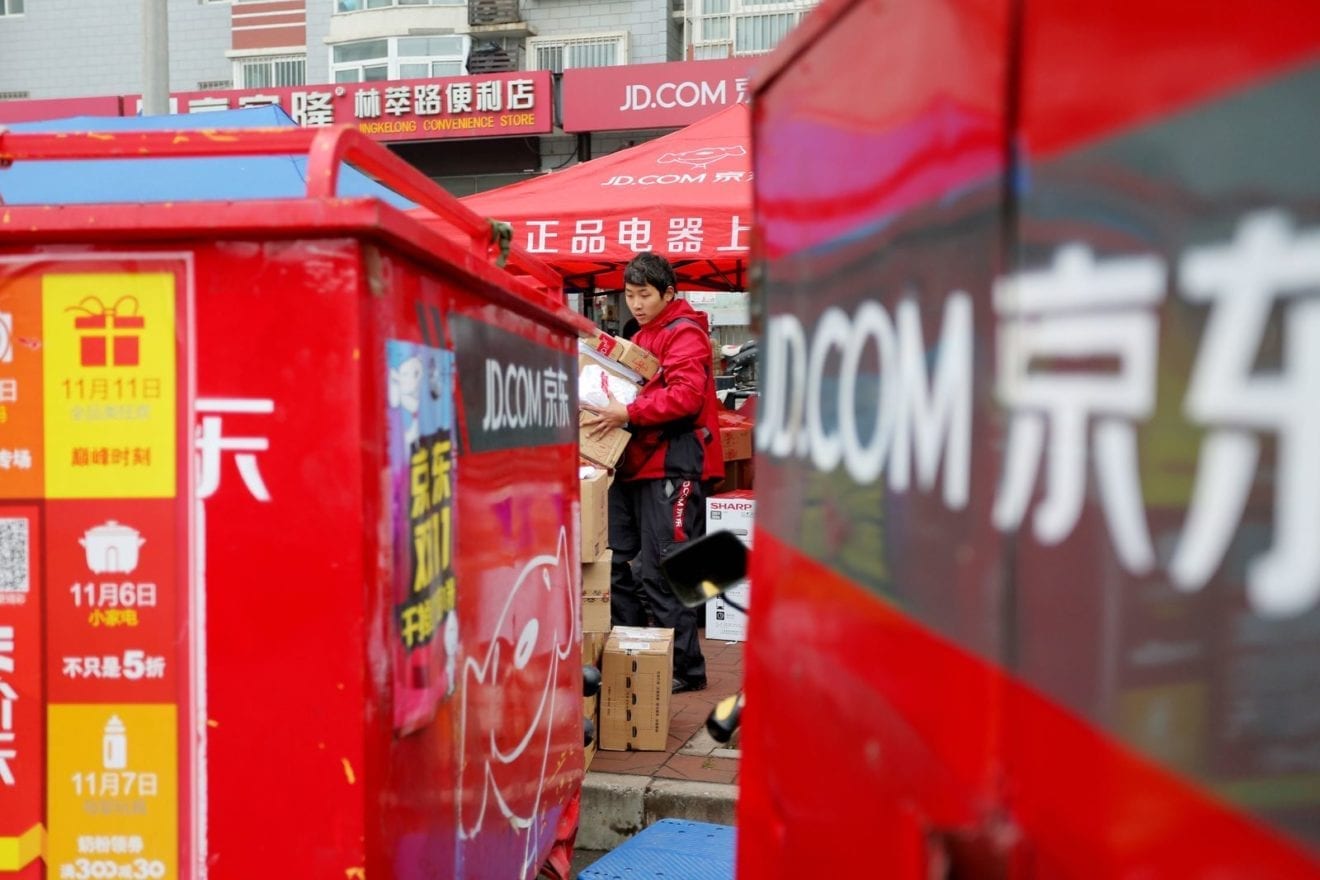
    Gartner walked FreightWaves through the company’s logistics operations, but like Amazon’s, it all starts with providing quality service to the customer, and that means last-mile efficiencies. According to Gartner, the last-mile services cover 99% of China’s population and it is done through a variety of methods, from vehicles, to drones, to electric bikes.

    Gartner says that final mile delivery for much of China is handled by electric, three-wheeled vehicles. These vehicles collect packages from local facilities for home deliveries.

    “We have what we call ‘delivery stations’ and those are in neighborhoods,” Gartner said. “We deliver by truck from warehouses to these smaller stations and they have about 50 to 100 last-mile delivery drivers (based on the size of the city) making the final delivery.”

    To JD Logistics, the value of having its own drivers make those final deliveries is important. “When people look at our logistics, they see our couriers,” Gartner said.

    Like all e-commerce companies, JD.com has learned that to deliver goods quickly requires proper positioning of product. JD Logistics uses technology to help predict where product will be needed.

    “Most of the efficiency and speed is done at the warehouse level and predicting where [product will be needed],” Gartner said. Full truckloads of freight are loaded at the warehouse level and brought to the delivery stations for final delivery. This keeps the larger trucks running set routes back and forth and speeds the delivery process.

    JD Logistics also offers a “white glove” service for shoppers, complete with specially-trained JD employees wearing white gloves. These drivers deliver special luxury brands that qualify for the service in electric vehicles rather than the tricycles and scooters often used.

    Technology plays a big role in JD Logistics’ efficiency, and that includes automation, drones and more, both on vehicles and in warehouses.

    Last year, JD Logistics opened the world’s first fully automated B2C warehouse in Shanghai. The warehouse can reportedly process over 200,000 items a day at full operation. Technology in general helps JD Logistics plan where product should be located and helps ensure that customers are receiving one delivery a day with their complete order, regardless of where any individual product is sourced.

    “A few months ago, we had a logistics expert come through and order a few things and he was really impressed with the operation,” Gartner said, adding that the expert ordered items from several locations and received a single order with all items.

    Gartner credits the network design – larger trucks moving products from warehouse to delivery station – for that delivery success.

    “It’s a much more efficient process, otherwise you would have more vehicles,” he said.

    On the vehicle equipment front, the company has been utilizing electric vehicles and entered into an agreement last year with SAIC Maxus and Dongfeng Motor Corp. to develop autonomous delivery vehicles. JD Logistics has jointly researched two models of autonomous light electric vans with SAIC Maxus and Dongfeng, respectively, for delivery of goods from JD’s distribution centers to delivery stations in the future.

    The company began testing autonomous delivery via robots at Renmin University and Tsinghua University among other schools last June. The autonomous robots deliver goods to a designated location and customers receive a unique passcode to open the robot’s secure locker to retrieve their packages.

    “With technology as the driving force, JD operates the most advanced retail operation in the world,” said Zhenhui Wang, CEO of JD Logistics. “Our extensive in-house logistics network provides the ideal real-world scenario in which to test autonomous vans. Working with our partners, we will continue to enhance our smart logistics and push the bounds of traditional logistics solutions.”

    Like Amazon, JD Logistics is also venturing into drone delivery. Currently, the company is using drones to make deliveries to remote areas of China, bringing online shopping and quick delivery to residents of these areas.

    The program works by dispatching orders from regional delivery stations to JD’s network of dedicated “village promoters” in each village, who then distribute the orders directly to customers, significantly shortening delivery times and reducing logistics costs. JD.com currently has more than 300,000 village promoters across the country.

    “The focus is one rural areas that have lower order densities,” Gartner said.

    On a larger scale, the company has also started testing “heavy-load drones” capable of carrying 1 ton of goods at a time. Gartner noted these drones will move product traditionally carried by truck between warehouses.

    JD signed a strategic cooperation agreement with the municipal government of Hangcheng, in Shaanxi Province, to set up the first urban drone delivery platform in the world. JD will explore the model and plans to test city drone delivery in Hancheng to evaluate its viability. Additionally, the company will also test its automated delivery vehicle and logistics facilities and hopes to build Hancheng City into a model city for smart logistics.

    Having conquered China delivery – more than 92% of products sold by JD.com are delivered within one day, including many that are delivered same day – JD Logistics may be looking abroad, specifically the U.S.

    According to a report in January, the company is planning U.S. operations later this year and will use some of the $2.5 billion in funding to do so. Gartner declined to confirm any U.S. plans, saying only that “we’re still focused on China and Asia.”

    The Bloomberg article quoted founder Richard Liu as saying the company will begin selling online to U.S. customers in the second half of this year.

    “This year, Vietnam, India, Philippines, Malaysia – every Southeast Asian country – we will come by the end of this year,” Liu is quoted as saying. “Our future is we will invest in U.S. and build a warehouse fulfillment center in U.S. so you can get same-day delivery.”

    The story noted that JD.com could leverage its relationship with Walmart Stores, which is an investor in the company, for help in building a U.S. logistics network.

    The approach to last-mile delivery in China is very different than it is in the U.S., so it remains to be seen how JD Logistics would handle that operation in America. If the stories are true, we may find out very soon.

  • Audi aims to double China sales over six years

    Audi aims to double China sales over six years

    Volkswagen’s premium brand Audi aims to double sales in China over the coming six years, sales chief Bram Schot told Automobilwoche.

    “In 2023 we want to sell 1.2 million cars in China,” the German trade magazine quoted him as saying.

    Audi sold 597,000 vehicles in China, its biggest single market, last year.

    The company last year resolved a dispute with dealers in China that could have disrupted the luxury carmaker’s business in the world’s biggest auto market.

    The dispute stemmed from a long-term collaboration between Audi and SAIC Motor Corp that had riled Audi store operators in China, who among others sell Chinese-made vehicles as part of Audi’s existing joint venture with China’s FAW Corp .

    Schot said Audi would continue to work with both SAIC and FAW.

  • China’s online retail market to reach $1.1tn soon

    China’s online retail market to reach $1.1tn soon

    China’s online retail market will hit $1 trillion this year, a year ahead of predictions, according to Forrester.

    The Forrester report revealed the growth in mobile shopping and consumer spending in categories like fashion and grocery would see China’s retail sales reach $1.1tn in 2018.

    Chinese online shoppers will continue to grow by 4.6% annually to reach 631 million by 2022, up from the current 502 million.

    The report, which provides online retail forecasts for Asia Pacific, found China remains the largest market accounting for close to 83% of all retail sales across the region.

    Japan is the second largest with $97bn, followed by South Korea with $69bn, Australia with $31bn and India with $27bn. India continues to be the region’s fastest growing market and is expected overtake Australia in 2019.

    One-fourth of all retail sales in APAC will occur online by 2022, led by China and South Korea.

    Online retail via mobile devices continues to accelerate across the region and is expected to grow 17.64% annually to reach $1.7tn in 2022, up from $735bn in 2017. Mobile sales will account for 80% of online retail sales in 2022.

  • Shoe store chain ABC-Mart seen beating profit forecast

    Shoe store chain ABC-Mart seen beating profit forecast

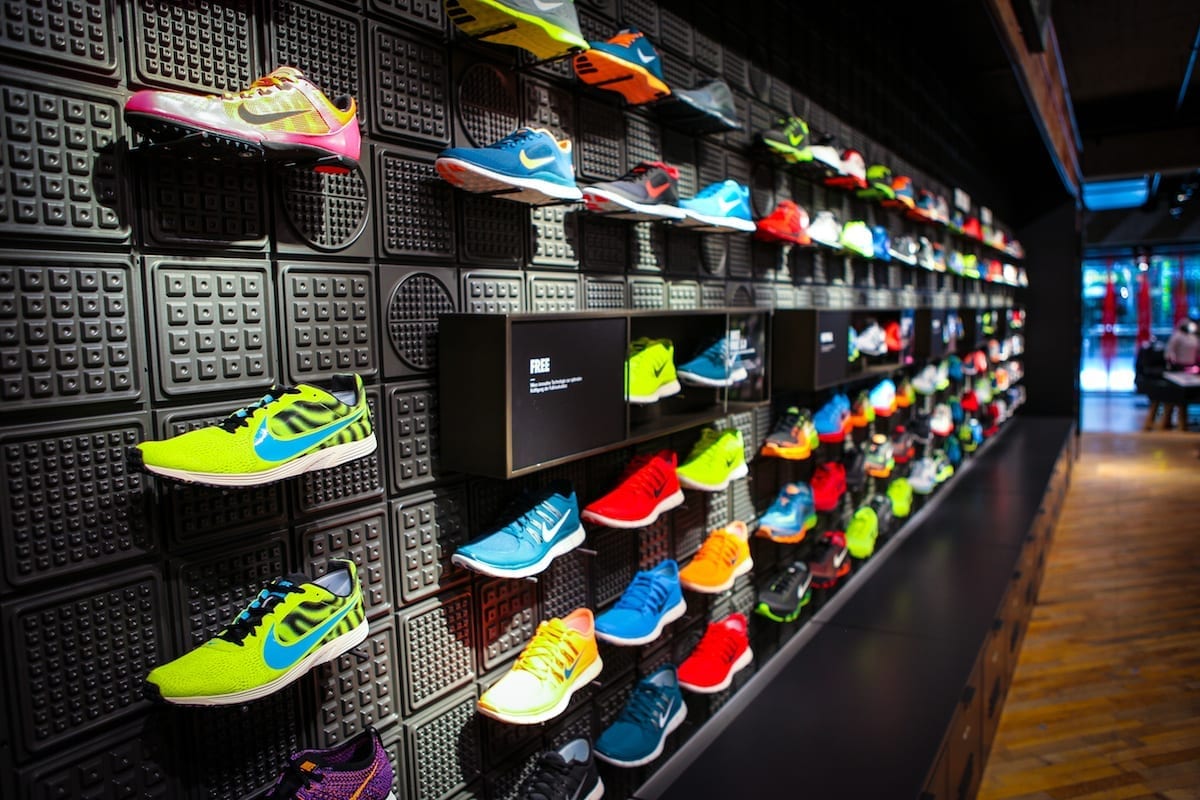
    A larger line-up of foreign brands for the end-of-year holiday season helped Japanese footwear retailer ABC-Mart grow its operating profit by a better-than-expected 3 per cent to about ¥43 billion (US$406 million) for its year to the end of February.

    It is the 15th straight year of growth for the company, which had forecast a 2 per cent lift in profit, as reported

    Sales rose 6 per cent to nearly ¥255 billion, boosted by such brands as Adidas and Nike. An unusually snowy winter created extra demand for boots and other winter footwear.

    Sales of women’s shoes, which were sluggish in fiscal 2016, seem to have bottomed out, thanks partly to television advertisements, says the company.

    ABC-Mart attracted more customers as it opened about 60 stores in downtown areas and in malls, and added locations of chains that cater to women and children. The retailer also refurbished about 30 stores in order to expand floor space and improve the look of its displays.

    In addition, ABC-Mart saw more Chinese and other foreign visitors shopping at its stores. Online sales also grew.

    In South Korea, where ABC-Mart has about 200 locations, sales grew but probably fell short of its forecast. Business appears to have taken a hit from Chinese restrictions on group tours to South Korea following Seoul’s decision to deploy a US missile defense system.

  • 50 more Chow Sang Sang stores to be launched this year

    50 more Chow Sang Sang stores to be launched this year

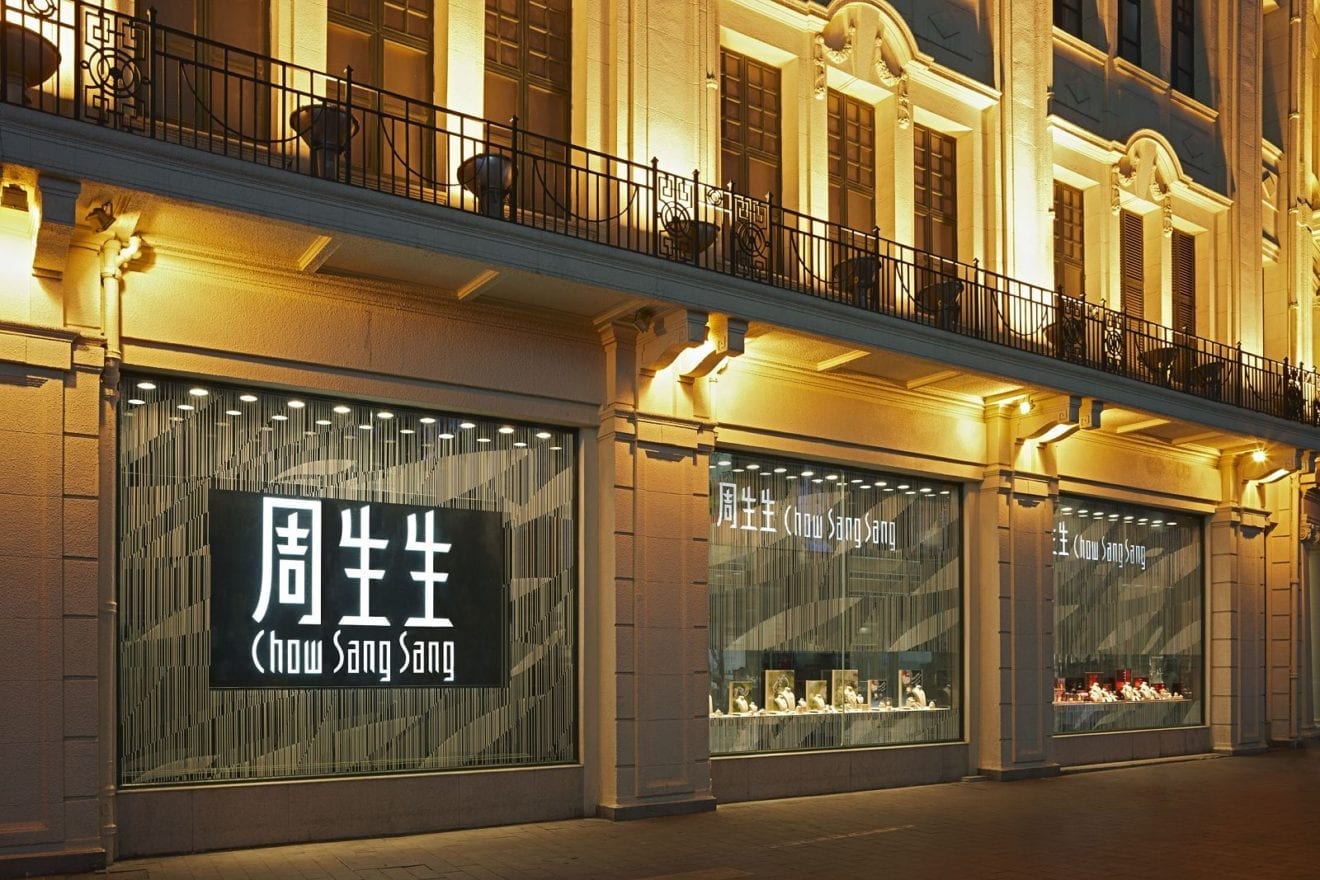
    With a focus on urban markets, Chow Sang Sang Holdings International plans to open around 50 stores this year.

    While consumer sentiment improved in the second half of last year for the jewellery retailer, it says a strong recovery is yet to be seen, especially in Hong Kong. Meanwhile, global markets are already anticipating an interest rate rise, and international trade disputes seem to be looming.

    In Hong Kong, the company will continue with the realignment of its network to match the change in consumer patterns and preferences. Overall, it expects to reduce the amount of floor space with no significant changes in the number of shops.

    “In China, increasing sophistication in consumer behaviour provides opportunity for growth via product and brand differentiation. As our online competition heats up, we are putting more effort into offering a seamless customer experience.”

    Turnover last year grew 3 per cent to HK$16.6 billion (US$2.1 billion). The disposal of a part of a long-term holding of shares in Hong Kong Exchanges and Clearing resulted in a gain of $114 million. Including this amount, the group’s overall profit attributable to equity holders increased by 18 per cent to $876 million.

    After dropping for three consecutive years, jewellery retail turnover returned to positive growth, rising 3 per cent. Jewellery retail accounted for 87 per cent of the group’s turnover.

    Operating profit fell by 5 per cent to $902 million, because of an extra gain of $176 million in 2016 resulting from a movement in the price of gold.

    Sales slipped per cent in Hong Kong and Macau, affected by shop closures. Same-store sales growth was down 2 per cent, mainly because of soft turnover of gold in the fourth quarter.

    Sales of gem-set jewellery improved in the second half, and in the last quarter reversed its downward trend since 2016.

    During the year, four Chow Sang Sang shops and one watch branch in the tourist district were closed. However, three new shops and one new watch branch were established in non-tourist districts.

    Despite Macau’s tourist traffic improving, shops in the shopping arcades performed worse than the main-street shop.

    Total turnover in Mainland China rose 9 per cent year-on-year to $8 billion. In RMB terms, this was 11 per cent growth, and same-store sales rose 5 per cent.

    Online sales continued to grow, accounting for about 14 per cent of China sales. Gold products dominated the sales mix.

    At the end of the year, the group had 422 shops in 119 cities. Of these 63 were new outlets, and there were 15 closings. Of the new stores, 28 were set up in shopping malls.

  • Goodbaby is opening Japan store

    Goodbaby is opening Japan store

    Goodbaby International has established its own direct-distribution platform in Japan as it tries to replicate its success in China in other parts of Asia.

    The parenting-products company, which has seven research and development centres in the US, Europe and Asia, operates 1000 self-managed offline retail stores in China alongside an omnichannel retail platform.

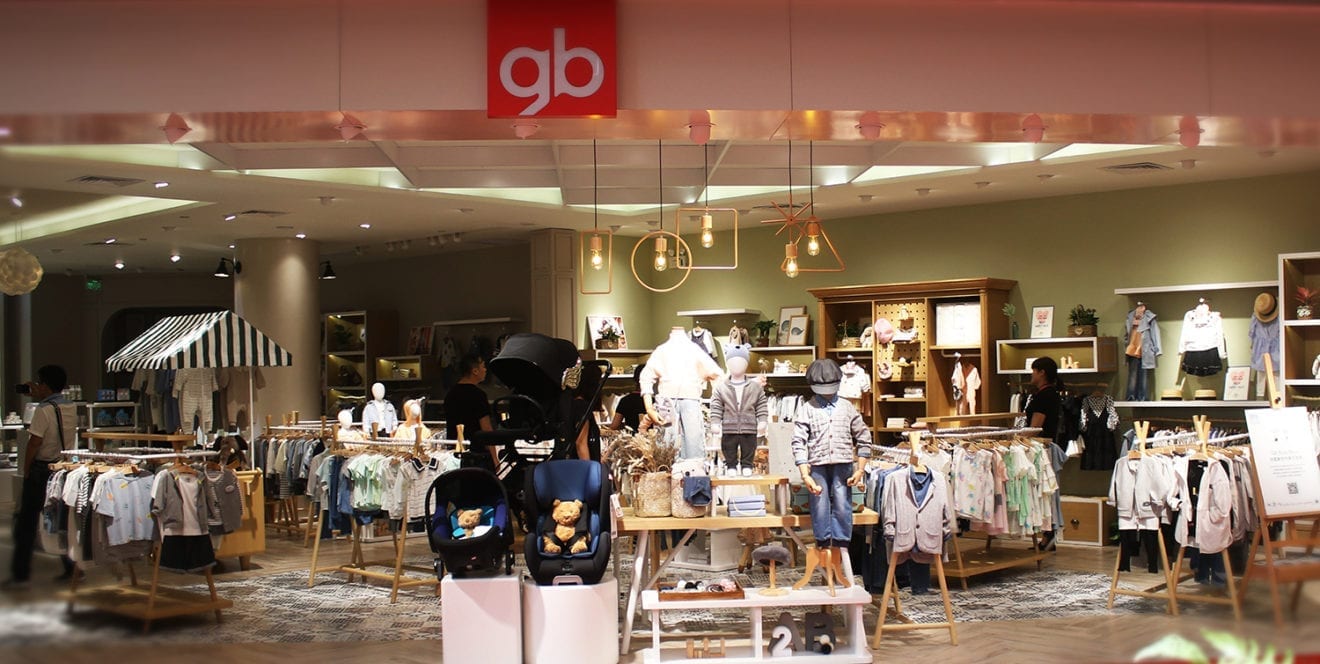
    A new subsidiary company in Japan, in partnership with a minority local investor, will primarily retail its Cybex and GB-branded juvenile products throughout Japan.

    Johannes Schlamminger, CEO of Cybex and GB, said the company has recorded “very good progress” developing a profile in Japan, and now it was time to expand.

    “Our intent is to rapidly expand the Cybex and GB business by designing, developing, marketing and distributing products specifically for Japanese consumers. We will also provide the necessary customer services and consumer engagement activities to firmly establish Cybex and GB as leading juvenile brands in Japan.”

    CEO of Goodbaby International Martin Pos, said Japan is the company’s second largest strategic market in Asia.

    “Formation of our own direct-distribution platform is a strategic step for the group to grow its business in Japan market to capture its great potential.”

    Goodbaby International designs, researches, develops, manufactures and markets products including children’s car safety seats, strollers, apparel, home textile goods, feeding, nursing and personal care products, cribs, bicycles and tricycles.

  • Isetan Mitsukoshi Opens Supermarket in Chengdu, China

    Isetan Mitsukoshi Opens Supermarket in Chengdu, China

    An Isetan Chengdu/Isetan Supermarket will be opened in the In99 shopping complex in Chengdu Financial City, Gaoxin, next month.

    It will be opened by Chengdu Isetan, a retail subsidiary of Japan’s Isetan Mitsukoshi Holdings. In99 is part of the Chengdu Yintai Centre and is about 6.5km south of Isetan Chengdu department store.

    Isetan Chengdu/Isetan Supermarket will occupy the first basement floor of the shopping complex, offering food and daily goods in a 2650sqm space. The lineup will include fresh and chilled grocery foods, household goods and daily necessities. It will also offer specialty shops from Japan, including meat store Sugimoto, greengrocer Korokuya and Tomizawa Shoten (Tomiz), which sells candy – and bread-making ingredients and equipment.

    Slide to view the gallery below :

    A food-court zone will feature eight shops, including the bakery Johan, making its debut in Chengdu, and Tonkatsu Wako, which specialises in pork cutlets.

    The supermarket’s main corridor will be known as “Sunny Alley”, while the store will focus on the brand’s “food safety, security, reliability” credo. Areas will be provided for customers to experience food culture, such as a juice bar, a steak bar and a Chinese tea corner.

    The opening of the Isetan Chengdu/Isetan Supermarket coincides with the first anniversary of the launch of In99.

  • Miranda Kerr launches organic beauty brand KORA on Tmall

    Miranda Kerr launches organic beauty brand KORA on Tmall

    As China’s desire for organic, healthy products gains momentum, international beauty brands are seeking to take advantage of a new approach to well-being.

    Last week, founder and supermodel Miranda Kerr launched Australian luxury skincare brand KORA Organics’ first Tmall store in China via live-stream from her Hollywood home. The event attracted more than 223,000 live viewers, with KORA Organics offering exclusive giveaways for spectators.

    “From my experience over the years, I have come to believe in and appreciate a holistic approach to overall wellness, and the connection of the mind, body and skin,” Kerr says.

    This kind of health-focused lifestyle philosophy is soaring in popularity among Chinese consumers, with last weekend’s Tmall Beauty Summit reporting that premium health and fitness products are more popular than ever with young Chinese women.

    “The appetite for natural and organic products in China continues to grow, and skincare is no exception” says Maggie Zhou, managing director of Alibaba Group Australia and New Zealand.

    With a growing awareness of health and well-being in China, Tmall Global is hoping to capitalise on luxury international brands seeking to enter the market. Tmall Global helps international brands like KORA Organics sell directly to Chinese consumers. For more than 80 per cent of brands on the site, these virtual flagship stores were their first foray into the Chinese market.

    “KORA Organics is a proudly-owned Australian brand whose certified organic and natural products speak directly to the growing demand from many Chinese consumers for clean and green Australian products” Zhou says.

    Korean beauty brand Innisfree has long been popular with Chinese consumers, marketing its innovative all natural, organic products from Jeju island. K-Beauty has struggled in China over the past year, with consumers turning to Japanese beauty when searching for high-quality products. However, according to L2’s Digital IQ Index: Beauty China 2018, Innisfree still ranked seventh among Chinese consumers, in large part due to the social media marketing of the brand’s all natural cosmetics and ‘green philosophy’.

    In line with this trend, KORA Organics is promoting certified organic and natural products, formulated with herbal extracts, essential oils, and vitamins. KORA’s products are certified by the international body COSMOS-standard AISBL/Ecocert, which guarantees the absence of toxins, synthetic pesticides or chemicals. In Australia and the United States, KORA Organics is stocked in more than 200 Sephora stores, and by the end of 2018, the brand hopes to be in place in over 2,500 stores across 25 countries.

    For now, KORA Organics will be entering China exclusively through Tmall, hoping to reach a growing base of Chinese consumers seeking healthy and organic skincare products before everyone else does.

  • Li-Ning showing positive margin number

    Li-Ning showing positive margin number

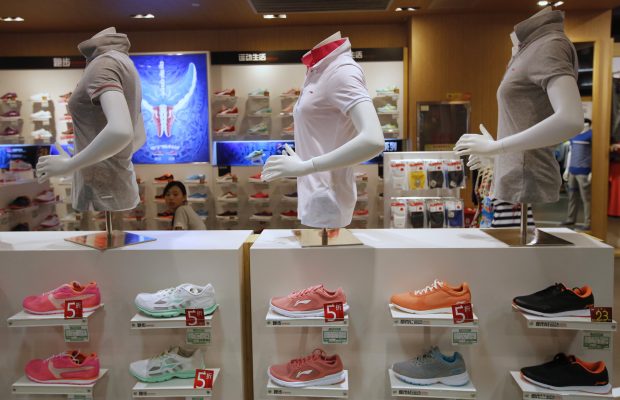
    Stronger margins helped Chinese sportswear brand Li-Ning boost profit attributable to shareholders by 56 per cent last year, to RMB515 million (US$82 million).

    The company says sales rose 11 per cent to RMB4.176 billion and the net profit margin from 4.1 per cent to 5.8 per cent, with both brick-and-mortar sales and online turnover rising. E-commerce now accounts for 19 per cent of total sales of its core brand.

    Li-Ning is coming to the end of a major business restructure and brand repositioning which has resulted in shorter product life cycles, reduced in-store inventories and – after widespread discounting and buy-back programs to reduce the excess stock – stronger margins.

    Last year, the company showed the results of placing more emphasis on sports research and investment in product research and development to design and provide professional products to athletes and sports enthusiasts.

    “Incessant imagination, on the other hand, is driving Li-Ning to be more trend-setting by integrating fashion, entertainment and leisure elements with professional sports, therefore creating more professional and stylish products and sports experience for sports enthusiasts and life enjoyers,” the company said in its earnings statement.

    “To enhance retail capability, we are dedicated to enhancing the precision of our product planning and optimising the supply model, so as to satisfy end-user demands in a ‘swift + precise’ way. As for retail stores, we upheld the consumer-oriented approach by enhancing and re-shaping retail experience at stores constantly.”

    As at the end of last year, Li-Ning had 6262 points of sale in China, a net decrease of 178 during the year, excluding its Li-Ning Young channel, which now has 173 stores across 26 mainland provinces.

    “The group has taken continuous initiatives to refine channel structure and raise channel efficiency by implementing various measures including closing down and renovating inefficient and loss-making stores and opening highly efficient stores and key experience-concept stores,” the company said. “During the year, the overall retail sell-through registered a high-single digit growth, with product discount rate and sell-out rate further improved.”

    Li-Ning says competition in the sports-casual market is still intense.

    Founder and executive chairman, Li Ning himself, said the robust development of the sports industry brings new opportunities as well as challenges to the future.

    “We foresee the consumption structure of consumers to be transformed toward a more refined and mature dimension while the influence of brand power and brand value deepened. Looking forward, we will continue to devote major resources into sports knowledge learning, technological research and development and Li-Ning brand experience development, proactively exploring and broadening room for business development.”

  • China VMF 2018 is closed with big success

    China VMF 2018 is closed with big success

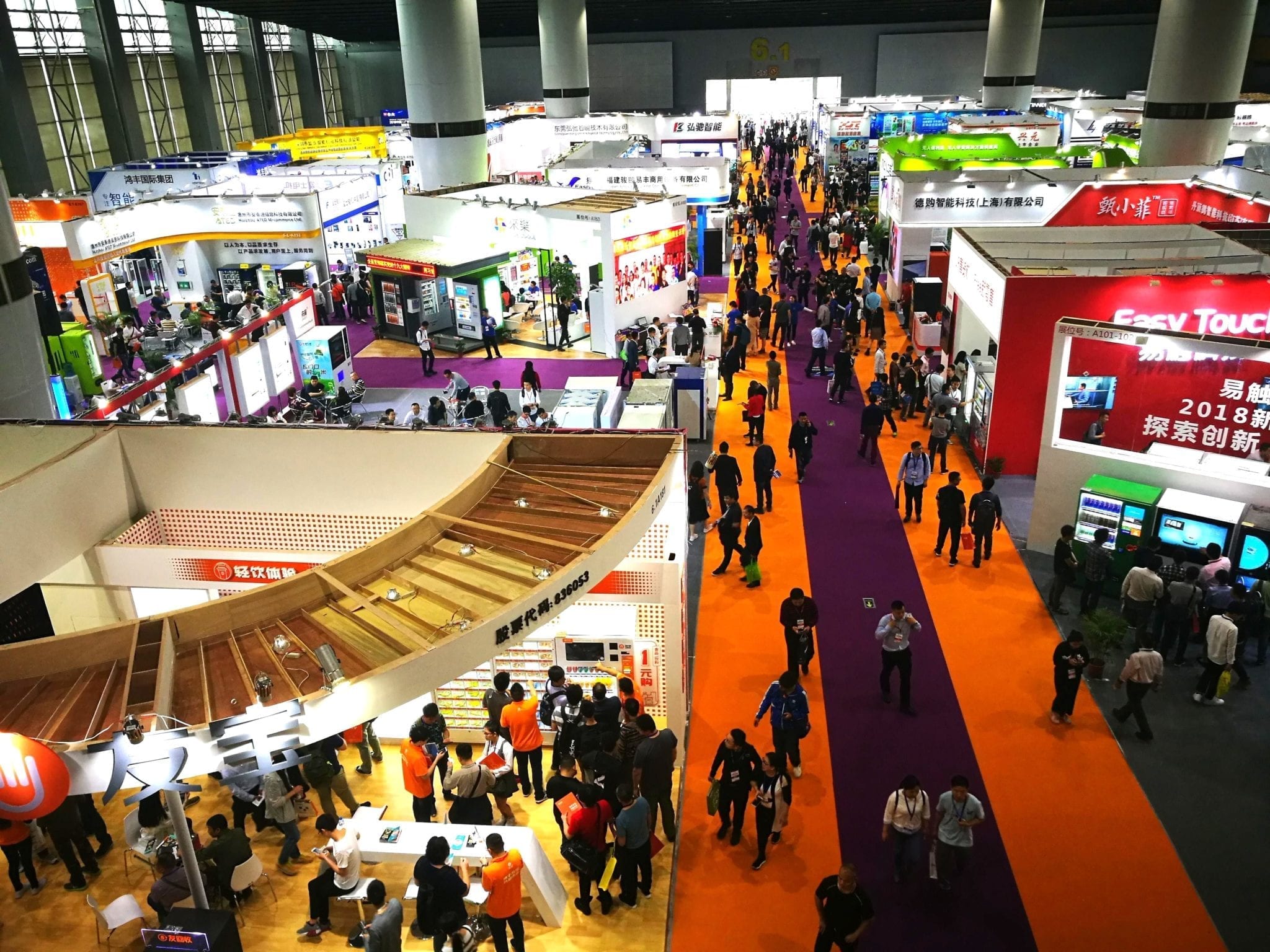
    China International Vending Machines & Self-service Facilities Fair 2018 (China VMF 2018) was successfully held in China Import & Export Fair Complex earlier this March. With a total space of 25,000 Sq.m and Over 300 Exhibitors, China VMF 2018 surpasses former editions in every aspect, attracting more than 30,000 Visitors domestically and globally.

    Three thematic pavilions are set up at China VMF 2018: Self-service Vending Machine, Unattended Retail and Commercial Payment System. Our exhibitors brought not only unique brand products but also products with high quality and great innovation.

    For instance, the most popular exhibits from the self-service vending machine pavilion included smart-opening refrigerator, unattended convenience store system, intelligent cooking food vending machine, commemorative coins vending machines, shared power bank/umbrella, self-service ice cream vending machines, as well as remote control and monitoring system for vending machines, online management system, vending solutions, face recognizing vending machines, etc. Exhibits in the other two pavilions were also very eye-catching.

    Exhibitors were impressed a lot by the large crowd, and the internationality of visitors. Overseas visitors have increased 140% compared with previous year, coming from over 65 Countries and Regions, such as Singapore, Malaysia, Hong Kong, India, Australia, UK, USA, Japan, Italy, Korea, Germany, etc.

    Visitors’ top 3 product interests were innovative vending machines, advanced vending solutions and technology, and payment system.

    China VMF always keeps retailers abreast of the latest industry trends and consumer palates. According to the exhibits on site and our pre-show buyer survey, we have concluded 4 noticeable vending trends!

    • Unattended Stores: A promising sector in the rising New Retail trend.
    • Self-service Parcel Pickup Machines: A new service spawned by the online shopping boom.
    • Mini Vending Machines: Sprouting up in buses, hotel rooms and etc, for more efficient use of space.
    • Hot Meals Vending Machines: Projected to be widely deployed in business parks.


    The 5th Asia-Pacific Vending Industry Summit

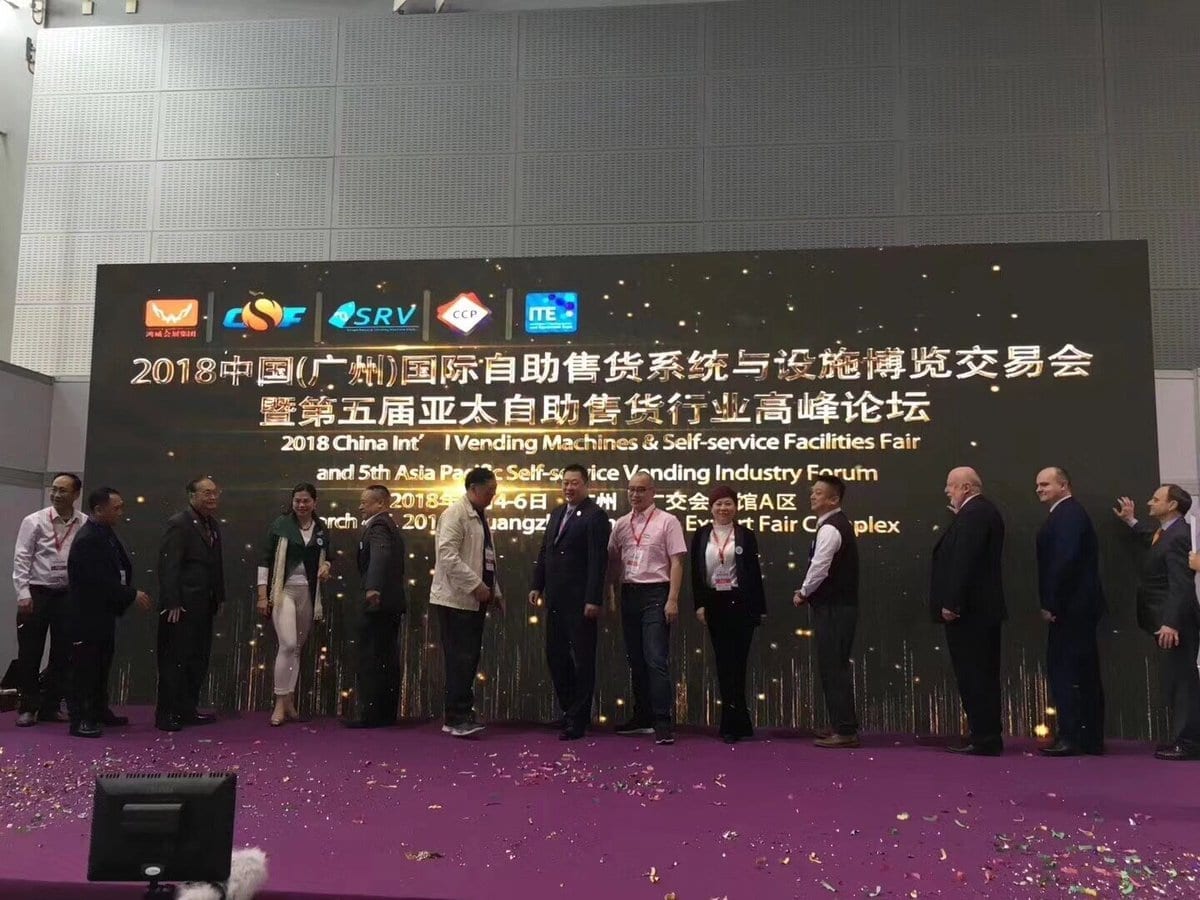
    2018 Asia Pacific Self-service Vending Industry Summit was held on the first day of the show, themed on “New Opportunities, New Retail, and New Future”.

    Featuring 22 Brilliant Speeches, one enlightening Panel Discussion and an eye-opening New Product Launch, this dual-track two-day forum delved into the latest vending trends and the emergence of New Retail.

    President Phillip Barry from Australian Vending Association(AVA), President Aleksander Wasik from Polish Vending Association (PSV) and General Secretary Francesc Güell Isern from Spanish Vending Association (ANEDA) shared their opinion on the development trend of vending industry in their respective country and proposed constructive suggestions for the healthy and orderly development of domestic and overseas market. Representatives from domestic enterprises also made speeches while Fulei, Yo!Point, Benyuan, Kimma, BD Vending, Funsales and Taiwan Vending Machines Council conducted in-depth analysis and discussion on the current status of the industry to seek solutions for its development.

    APVA AWARDS

    Initiated by Asia Pacific Vending Industry Association (APVA), and co-organized by China VMF, the APVA AWARDS is designed to recognize the contribution made to global vending industry by outstanding enterprises. This year, 12 award categories were set up, and 60 enterprises were awarded.

    Partial Award Winners

    1. 2017 Enterprises of Influence Awards

    Yinhai Star; Convenisun; Easy Touch; Easivend; UBOX; KIMMA; JOIE UBIQUE; AUEMA; etc.

    1. 2017 Star Operators Awards

    TS Vending (Malaysia); Vendiman (India); Sun108 (Thailand); Miyuan Beverage; etc.

    1. 2017 Premium Quality Awards

    Fuji Electric; Crane Payment Innovations (CPI);

    1. 2017 Technological Innovation Awards

    Zhouyi; Dongji; Miquan; Yunjuxian; Fulei; Gump Come; etc.


  • Benoy Designs Mixed-Use Precinct for Historic Nanjing Riverfront Site

    Benoy Designs Mixed-Use Precinct for Historic Nanjing Riverfront Site

    An historic ice-storage warehouse in Nanjing will be transformed into a commercial destination by Benoy China working with developer MCC Real Estate Group.

    Part of the development of a mixed-use retail and cultural experience for the community in the Yangtze River Bridge area, the riverfront warehouse was built in 1915. “It will become one of the largest commercial developments in the area,” says Benoy China director Qin Pang.

    Retaining the original form of the historical buildings, Benoy will insert modern blocks that will form a cultural plaza at the heart of the site. A refined architectural expression on the outer streetside elevations will be offset with more playful modern cubes. Through careful placement of the new buildings, Benoy can preserve the views of the historical structures, a crucial element of the design brief.

    Construction is scheduled to start this year.


  • WeChat has now 1 billion monthly active users

    WeChat has now 1 billion monthly active users

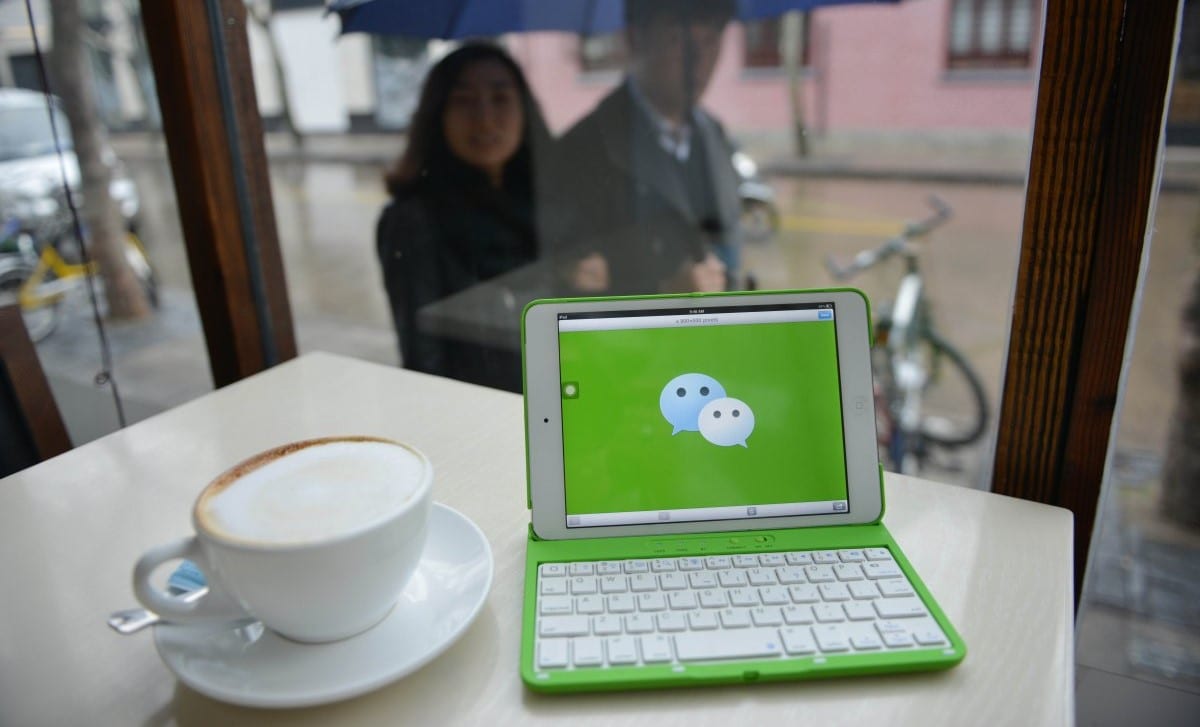
    China’s popular messaging app WeChat now counts 1 billion monthly active users (MAU) worldwide, up 12% from 889 million MAU in Q4 2016, according to Tencent CEO Pony Ma.

    Ma said the platform reached the record figure during last month’s Lunar New Year Festival. However, it’s important to note that Tencent refers to MAU as user accounts, rather than individuals.

    WeChat users can create multiple accounts, and it’s common for a user to create both a personal account and a business account. For WeChat users, the app acts as a central hub of the digital world — consumers use it to perform tasks ranging from texting and calling friends, to paying bills for goods and services, to booking doctor appointments.

    WeChat’s recent user growth is likely driven by international users. Most of the recent user growth likely came from Southeast Asia, Europe, and the US, according to founder of WeChat-focused consultancy ChinaChannel Matthew Brennan.

    With WeChat nearing saturation within its domestic market, the Tencent-owned company is banking on international expansion to drive growth. Roughly 83% of all smartphone users in China use WeChat. WeChat’s penetration of smartphone users jumps up to 93% in China’s Tier 1 cities. As of August 2017, there were around 100 million international WeChat users.

    However, WeChat may hit a speed bump as it looks to expand further internationally. Although chat apps are rapidly spreading globally, many countries and regions already have one app or another that dominates. For example, WhatsApp and Facebook are the preferred chat apps for a majority of smartphone users globally, especially Android users, with a few exceptions including China, Japan, and South Korea. WeChat will face some difficulty swaying users already signed up to these apps.

  • Starbucks China pays tribute to partnerships

    Starbucks China pays tribute to partnerships

    Partners are at the heart of Starbucks’ success in its largest growing market, Starbucks China CEO Belinda Wong told the coffee company’s annual meeting in Seattle.

    “They are our core purpose of being and the reason why we are passionate about what we do,” she said more than 3000 shareholders and special guests. “Since our earliest days, we’ve been bringing to life Starbucks deeply rooted mission and values by investing in our partners.”

    Wong presented a video about the critical illness insurance for parents of Starbucks China partners, announced last year. “I wish you could have seen the reception when we announced the Starbucks critical care insurance,” she said. “There were tears of joy and almost disbelief.”

    Already, 93 percent of eligible partners have signed up and 14,000 parents have joined. “But we have higher ambitions – we want to inspire other companies,” said Wong, who has met with other companies in China to discuss the parental plan, leading to some now planning to launch similar programs.

    Belinda Wong, Starbucks China CEO, speaks at the Starbucks Annual Meeting of Shareholders at McCaw Hall in Seattle on Wednesday, March 21, 2018. (John Edwards, Starbucks)

    “That commitment to family has built a phenomenal sense of pride, enthusiasm and commitment among our 45,000 partners,” said Wong.

    Starbucks now has 3200 stores across 139 cities in China and is serving 6.4 million customers a week. There is now a goal of 5000 stores by 2021.

    “We are opening a new store every 15 hours,” said Wong.

    “It makes me even more excited how we can use the scale from growth to benefit the communities we serve,” she said, citing Starbucks’ $20 million commitment over the next five years to benefit social-impact programs in China.

    “Also, with Yunnan coffee, grown in China and sold at Starbucks, we are bringing China’s coffee to the world stage.”
    Starbucks’ Farmer Support Center has worked with 17,000 farmers in the Yunnan area on sustainable farming practices. “Starbucks has become the fabric of the local community,” she said. “We will continue to work with farmers to help change their lives.”

    Wong also shared a video of the Starbucks Reserve Roastery in Shanghai, which opened in December. Three more are coming online soon, including one in Tokyo.

  • Positive trend for Swiss watch in Hong Kong

    Positive trend for Swiss watch in Hong Kong

    Exports of Swiss watches to Hong Kong rose 35.7 per cent last month, their strongest advance for six years, according to the Federation of the Swiss Watch Industry.

    After 44.3 per cent growth in January, China also exceeded the global average with a 21.7 per cent rise.

    Japan (up 7.1 per cent) and Singapore (up 7 per cent) posted significant growth.

    Following stronger January exports, February was even better, says the federation. The total value of watch exports reached SF1.7 billion francs (US$1.7 billion), up 12.9 per cent.

    Watches made of precious metals and steel set the pace. While overall volumes were less sustained, there was still significant growth, says the federation, driven by timepieces in steel. The result was nevertheless held back by the “other materials” category.

    Growth extended to all price segments, led by watches priced at between SF500 and SF3000 (export price) where the value of exports rose 19.3 per cent.

    Timepieces priced at more than SF3000 francs, up 12.9 per cent, fell within the average range. Products costing less than SF200 achieved 7.8 per cent growth after falling sharply for more than one year, says the federation.