Tag: China

  • Huawei completes 5G NSA core network test

    Huawei completes 5G NSA core network test

    Huawei said it has become the first vendor to pass China’s 5G Non-Standalone (NSA) core network test, which constitutes an important part of the country’s 5G R&D trials for operators that hope to deploy 5G commercial networks early and quickly.

    The test, which covers key core network technologies and service processes, was part of the third phase trial organized by the IMT-2020 Promotion Group and conducted at the Beijing lab of the China Academy of Information and Communications Technology (CAICT).

    The test is based on the commercial 5G core network solution released by Huawei at the Mobile World Congress 2018. Technologies tested include: gateway selection in control and user plane separation (CUPS) architecture, 5G ultra-high bandwidth, dual-connection to LTE and new radio (NR), independent billing for 5G NR, and terminal access management.

    The key service processes include: terminal registration, service requests, mobility management, and session management.

    China’s three major carriers – China Mobile, China Telecom and China Unicom – as well as the network technology workgroup of the CAICT were involved in the network test, Huawei said.

    As of year-end 2017, Huawei had built 15 pre-commercial 5G core sites around the globe.

  • La Chapelle group buys Naf Naf

    La Chapelle group buys Naf Naf

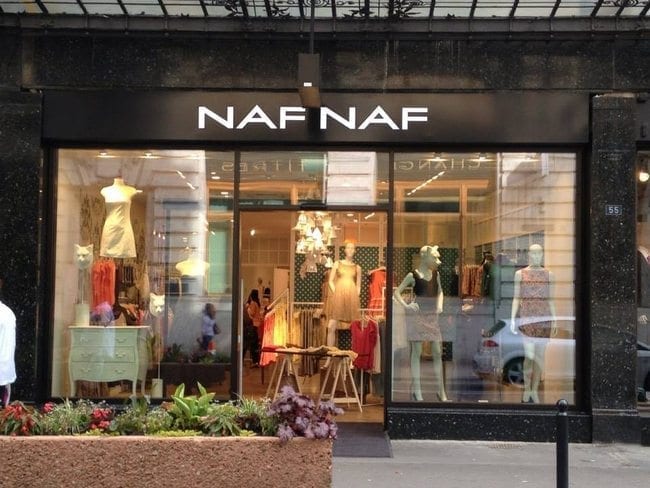
    A Chinese investment group led by Shanghai La Chapelle Fashion has paid €52 million (US$64 million) to acquire French fashion chain Naf Naf, part of the Vivarte group.

    European clothing retailer Vivarte has owned Naf Naf since buying it from Parisian brothers Patrick Patrick and Gérard Pariente, who founded the brand in 1973, for €200 million.

    It is the first foreign investment for La Chapelle, China’s largest cheap women’s apparel retailer, which has 9448 stores, 37,544 employees and a €1.2 billion turnover in China itself.

    Vivarte says La Chapelle will open 500 Naf Naf stores in China over the next five years and another 30 in Europe. Naf Naf now has 474 points of sale and 1200 employees.

    The Naf Naf sale is part of a major restructuring program for Vivarte. The French retail group needs to clear a €600 million debt and already sold shoe chains Andre and Pataugas and women’s clothing brand Kookai. It is also ready to sell Besson (shoes) and Chevignon (men’s fashion).

    CEO Patrick Puy wants to turn Vivarte’s attention to five core brands: Caroll, Cosmoparis, La Halle, Minelli and San Marina. The money from the Naf Naf sale will go toward its most important asset, La Halle, which generates €1 billion in turnover (on overall €1.8 billion group turnover), but faces competition from H&M, Primark and e-commerce outlets.

  • Second flagship store for Lego Group China

    Second flagship store for Lego Group China

    Lego Group China has started building a flagship store at People’s Square, Shanghai.

    “Opening our second flagship store in China reconfirms our long-term commitment to the country,” says Lego China GM Jacob Kragh.

    Covering 585sqm over two floors inside Shanghai ShiMao Festival City, the store will feature the first Lego personalisation experience of its type in China, allowing guests of all ages to be creative and innovative with Lego bricks.

    Lego brand retail senior VP Claus Flyger Pejstrup says the aim is to give families an opportunity for quality time together above and beyond shopping.

    The new store, which follows the introduction of flagships at Shanghai Disneyland and Leicester Square in London is expected to create about 45 jobs. Recruitment start this month.

  • AirAsia opens Cebu-Shenzhen route on May 9

    AirAsia opens Cebu-Shenzhen route on May 9

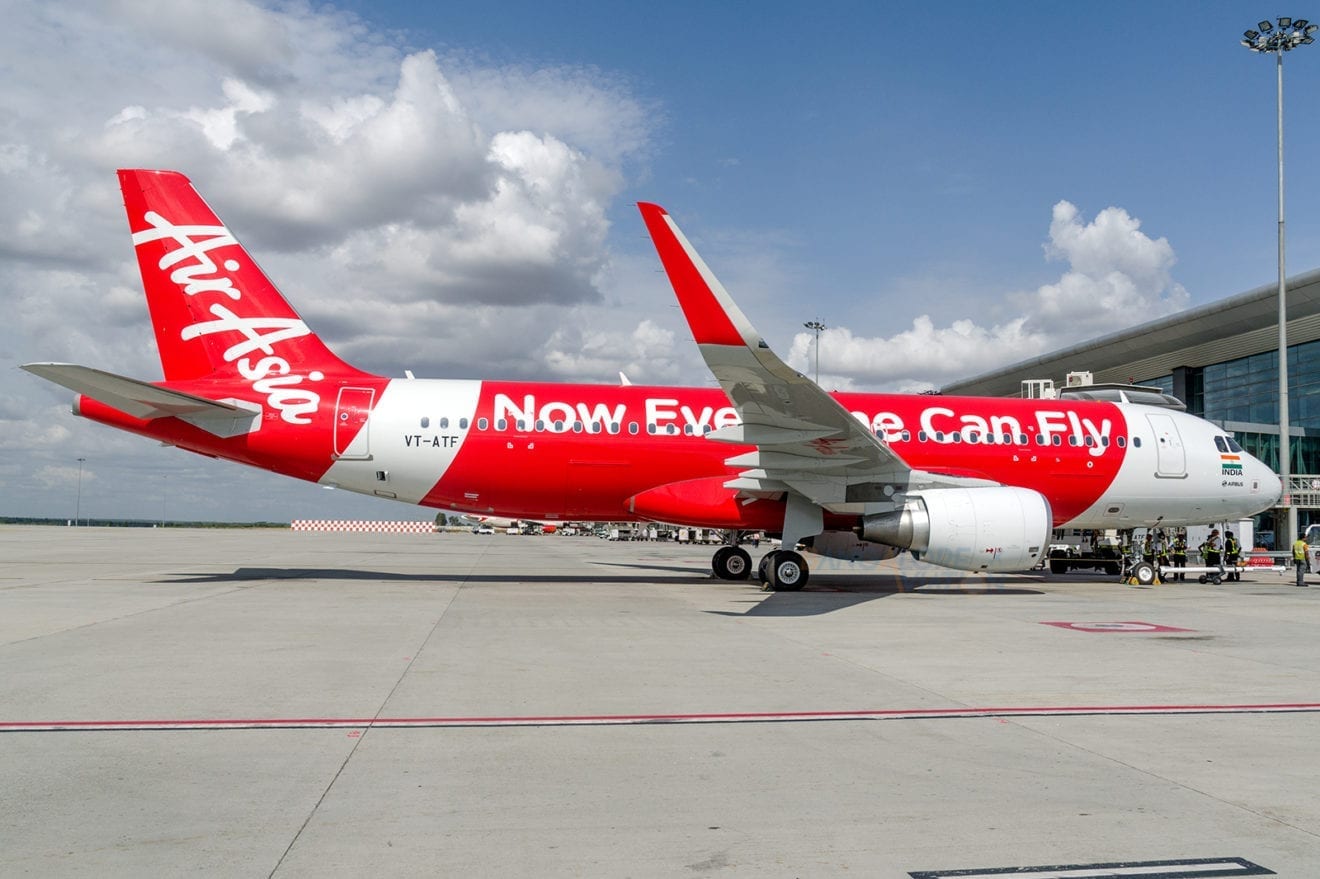
    Budget carrier Philippines AirAsia is enhancing its route with the introduction of a new one from Cebu to Shenzhen, China.

    Starting on May 9, AirAsia will fly daily directly between Cebu and Shenzhen, making that city its first Chinese destination out of the Queen City of the South.

    “The addition of our first China route from the Cebu hub enables us to further strengthen our network outside Metro Manila and open up new and exciting places to visit this summer,” Philippines AirAsia CEO Dexter Comendador said last Sunday.

    Shenzhen is located in the Pearl River Delta metropolitan area and is one of the major economic hubs of China.

    Known as “China’s Silicon Valley,” Shenzhen is home to some of the top start-up and tech businesses in the world, including the headquarters of popular global companies such as Huawei, BYD and ZTE.

    “Cebuano travelers would be delighted to experience Shenzhen’s modern metropolis and marvel at how the southern city that links Hong Kong to mainland China built the world’s largest electric bus fleet, massive malls, contemporary buildings and amusement parks,” Comendador said.

    AirAsia is strengthening its operations outside Metro Manila due to capacity constraints in the Ninoy Aquino International Airport.

    It has a fleet of 17 planes as of end-December. For 2018 it is expected to take delivery of five more jets, bringing its fleet to 22 planes by end-2018.

  • Columbia Sportswear China under bid

    Columbia Sportswear China under bid

    Columbia Sportswear Company is moving to take over Columbia Sportswear China JV partner Swire Resources.

    The US brand holds a 60 per cent shareholding, and the acquisition is subject to conditions, including regulatory approval in China. The transaction is expected to be completed in January.
    Columbia president/CEO Tim Boyle says Swire Resources has been an exceptional partner “and we look forward to continuing our strong relationship in Hong Kong and Macau”.

    He says Columbia was pleased with the performance of the JV, formed in 2014. “We have positioned the Columbia brand for long-term sustained growth in the crucial Chinese market. The acquisition is consistent with our strategy to accelerate investment as a brand-led, consumer-first business in the areas of highest growth potential for our brands”.

    While the JV had an initial term of 20 years, there was a provision for the purchase or sale of the minority interest after the fifth year. Its sales in China last year totalled about US$168 million, generating low-teens operating margin.

    Future plans include continued investments in building the Columbia brand in China, as well as expansion of direct and dealer-run retail locations. “We also intend to maintain the management team, staff, dealers and distribution networks that have helped the Columbia brand flourish in China,” says Boyle.

    Jason Zhu will continue as GM of Columbia Sportswear Commercial (Shanghai) Company.

    At the end of last year, the JV ran 86 retail stores in China, and was selling through brand-specific e-commerce sites in China across multiple platforms. It has distribution relationships with about 50 wholesale dealers running about 750 retail locations.

    Swire Resources will continue as exclusive independent distributor of Columbia Sportswear in Hong Kong and Macau.

    Founded in Portland, Oregon, in 1938, Columbia is selling its brands in about 90 countries.

  • Ediya Coffee drops plan to launch an IPO for China

    Ediya Coffee drops plan to launch an IPO for China

    South Korea’s Ediya Coffee has dropped its plan to go public this year, opting instead to re-enter China through Beijing.

    “In terms of growth and profit margin, we are fully ready for an IPO, but we decided we must tend to our franchisees first,” says CEO Moon Chang-ki.

    In a move that would have led to Korea’s first coffee stock, Ediya Coffee in December appointed Mirae Asset Daewoo as its underwriter for an IPO this year. Ediya had decided to list to help it challenge Starbucks Coffee on Ediya’s home territory.

    Meanwhile, labour costs have shot up in South Korea after the hourly minimum wage was pushed up by 16.4 per cent to KRW7530 (US$7) from January.

    “The subsidy to help franchisees sustain staff increased by 4.5 billion won,” says Moon, partly admitting the spike in labour cost had disrupted the IPO schedule. Instead, the coffee chain will renew its overseas campaign, starting with a shop in Beijing next year. It had pulled out of China in 2008 after three years.

    Moon acquired Ediya Coffee from its founder in 2004. Twelve years later it became the first homegrown coffee brand to run 2000 stores. It is expected to open its 2500th store this month. The company generated KRW700 billion in sales last year and as about 10,000 employees.

  • China hosts 50% of smart cities in Asia

    China hosts 50% of smart cities in Asia

    Smart city projects in China are expected to generate $320 billion for the nation’s economy by 2025, according to Frost & Sullivan.

    China is expected to account for 50% of the smart cities in Asia, the research firm said in a new report. The global smart city market is expected to grow to over $2 trillion by 2025.

    Asia-Pacific is also expected to be the fastest growing region in the smart energy – or distributed energy generation – space over this time.

    Smart energy will be one of a number of key technologies that will be the technological cornerstones of smart cities in the future, with others including AI, robotics, advanced driver assistance systems and personalized healthcare.

    AI will play a key role in smart cities in areas such as smart parking, smart mobility, smart energy grids, adaptive signal control and waste management, Frost & Sullivan said. Major corporations such as Google, IBM and Microsoft remain the primary drivers of AI adoption.

    Smart city projects will meanwhile take on a more urgent imperative due to the projection that by 2050, over 80% of the population in developed countries and 60% in the developing world will live in cities.

    Another key enabling technology for smart cities is the internet of things (IoT).

    “Currently most smart city models provide solutions in silos and are not interconnected. The future is moving toward integrated solutions that connect all verticals within a single platform. IoT is already paving the way to allow for such solutions,” Frost & Sullivan visionary innovation senior research analyst Vijay Narayanan said.

  • Nokia to build new OTN for China Mobile

    Nokia to build new OTN for China Mobile

    Nokia announced that it will be providing China Mobile with an optical transport network that will enable the operator to become 5G-ready.

    China Mobile is currently building a new optical transport network that will support improved data center interconnection, consumer broadband services and 4G backhaul. Looking ahead, the new optical backbone will be a key part of the next-generation mobile services, namely 5G.

    “We are very pleased to work closely with China Mobile to provide the optical technology for its most advanced networks today and in the future. We’ll continue to fulfill our mission by making people’s life easier as we create the technologies that connect the world,” said Yu Xiaohan, head of the China Mobile customer team at Nokia Shanghai Bell, in a press release.

    Nokia described its solution as a dynamic, programmable optical network that can support virtualization and cloud technologies associated with 5G.

    According to Kyle Hollasch, head of marketing for Nokia’s optical business, China is the fastest growing region in the optical market.

    “As the only non-Chinese vendor with significant market share in China, Nokia is thrilled to be part of this strategic build-out for China Mobile,” Hollasch said in a statement.

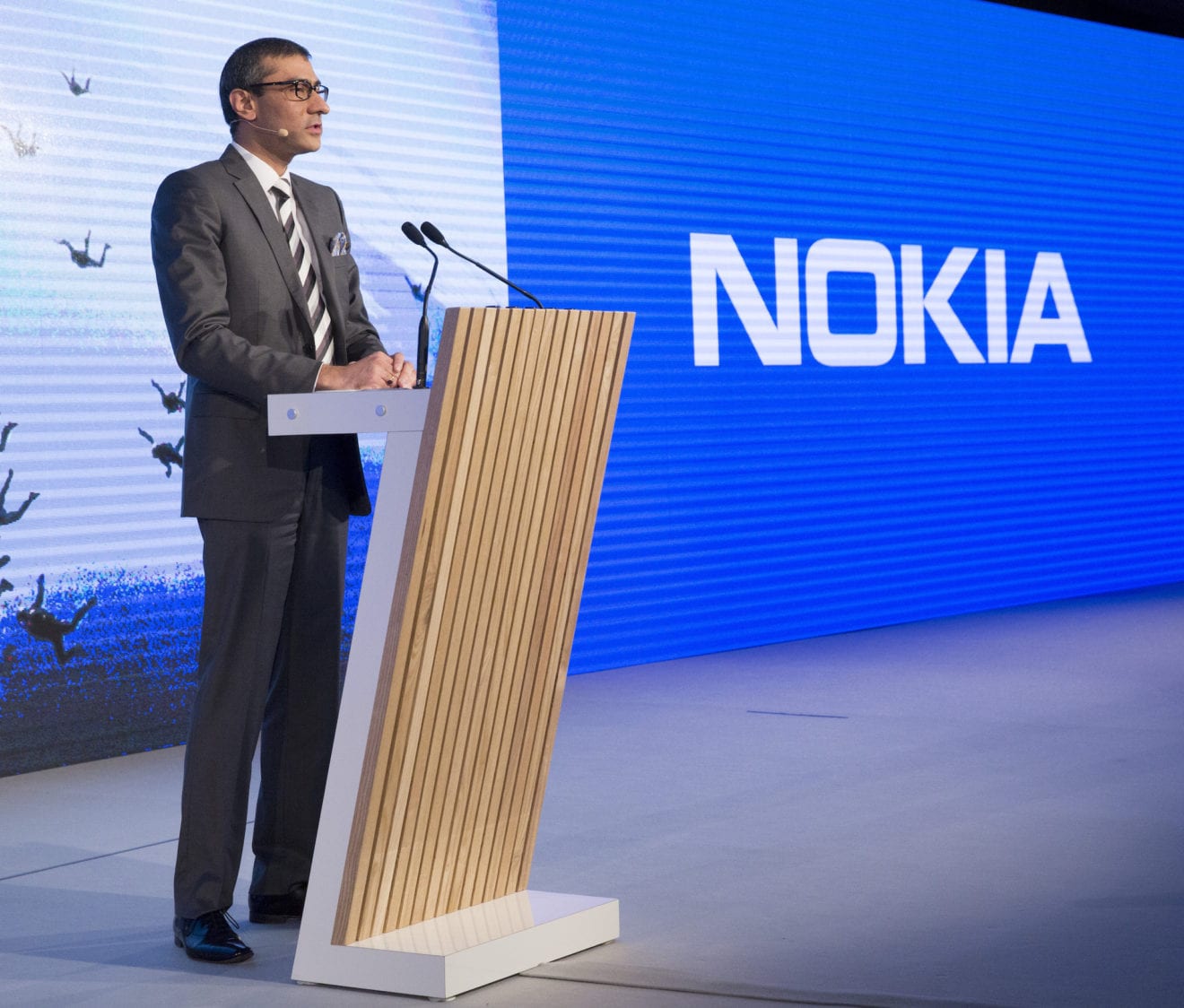
    Nokia’s aspirations in China are well known. At Mobile World Congress (MWC) 2018 in Barcelona, Nokia CEO Rajeev Suri highlighted the race to 5G, saying it’s a battle between the US and China in terms of who gets there first. Both China and the US will move fast and they will be well ahead of pretty much every other part of the world, he said.

    Nokia and China Mobile used the MWC event to announce that they had signed an agreement under which the companies are jointly investigating how China Mobile can extend its service offerings for vertical markets using 5G. Their research is focused on how industries can benefit from the growth of smart cities, smart transportation and intelligent video analytics.

    The companies also are jointly testing use cases using Nokia 5G Future X network architecture as well as NB-IoT and MEC, and they’re expanding an existing Car2X trial ecosystem in Wuzhen to advance the use of automated vehicles, as well as technologies that improve vehicle safety.

    Nokia’s Nuage Networks was chosen by China Mobile (Suzhou) Software Technical Company, a subsidiary of China Mobile, as the SDN platform for China Mobile’s public and private enterprise cloud services offering. The platform is based on the Nuage Networks VSP and includes cloud implementations on virtual machines, Kubernetes (K8S) containers and OpenStack Ironic-based bare metal servers.

    Last year, China Unicom said it would use the Nokia Flexi Zone portfolio to densify its network where it isn’t possible to add a macro base station due to space or cost constraints.
  • REITs China has been moving forward, to seek further opportunity

    REITs China has been moving forward, to seek further opportunity

    Since the origination of REITs in the United States, in the 50 years of its development, REITs in the United States, Singapore, Japan has been running on a rather perfect system, with legal policies and tax system. REITs was able to help the countries in growth, sustainable decisions, and the industry coordination. China had the first REITs in 2005. Since then, REITs in China have been moving forward, to seek further opportunity.

    The new age of investment has come. PE is the most anticipated type of investment that most of the investors that are eyeing for. According to Asset Management Association of China, by the end of Februrary 2018, PE Fund pool have reached monthly growth of 250 billion Yuan, totaling 12 trillion Yuan. It has its competition to Public Placement.

    With the development of Real Estate Equity Fund and REITs, an increase in the amount of firms are interested to be a part of it. As the fundamental, Finfo Global along with CaishiV is going to host the 2nd Real Estate Equity Investment & REITs in Shanghai on May 17. The event have gathered worldwide trust firms, insurance company, law firms, securities, asset managements and banks. The event is excepting more than 300 managerial positioned attendees.

    At the event, Weida Kuang from China Remin University, National Development and Strategy Institution, City and Real Estate Institution with be introducing his ideas over the macro economy and the effect of the industry of real estates. Also, there are newly added topics such as low-cost rental housing, public rental housing, rental housing REITs, investment opportunities in second and third tier cities, offshore real estate PE Fund and its structuring,

  • Qoo10 visitors balloon by 70%

    Qoo10 visitors balloon by 70%

    Visitors to e-commerce site Qoo10 ballooned 70 per cent to hit an average of 14.4 million in last year’s fourth quarter, according to Malaysian online aggregator iPrice.

    Qoo10 has about 3 million registered members and offers products ranging from women’s fashion to groceries, and services that include credit card and insurance policy subscriptions. The site offers daily deals, limited-time sales and coupons.

    Discounts and savings of up to 70 per cent off are offered through promotional deals.

    Qoo10’s Live10 mobile app includes a GPS-enabled interactive game with daily discounts, coupons or Qpoints as prizes.

    Based in Singapore as a JV established between founder Ku Young Bae and eBay, Qoo10 launched online in 2010 and has expanded its marketplaces to Korea, Indonesia, Malaysia, Hong Kong and Mainland China.

  • Online retail sales in China to hit US$1 trillion

    Online retail sales in China to hit US$1 trillion

    Online retail sales in China are rising faster than previously predicted, and likely to surpass US$1 trillion this year according to a new report from Forrester.

    In the broader Asia-Pacific market, one in every four dollars spent on retail will be spent online by 2022, with China and South Korea the principal drivers.

    Forrester says rapid growth in mobile shopping and burgeoning online sales of fashion and food are likely to result on US$1.1 trillion in spending in China this calendar year.

    China already accounts for 83 per cent of online shopping in the region, although a projected annual growth rate of 4.6 per cent in the number of individuals buying stuff online suggests the market is becoming mature in terms of participation. Future growth will be driven by Chinese consumers buying more goods online rather in store.

    By 2022, Forrester estimates 631 million Chinese will shop online, compared with 502 million now.

    Japan is Asia-Pacific’s second largest online market, likely to account for $97 billion in sales this year, followed by South Korea with $69 billion. Australia is next, with $31 billion, followed by India, the region’s fastest-growing market, but currently worth $27 billion. India is expected to overtake Australia next year.

    Finally, Forrester projects mobile devices will account for 80 per cent of online retail sales in the region by 2022.

  • Florentia Village ready to build seventh China site

    Florentia Village ready to build seventh China site

    Luxury outlet group Florentia Village is to invest RMB1 billion (US$159 million) in building an outlet in Chongqing, its seventh China location.

    Anticipated to be ready within 12 months, the new outlet will be in the Shapingba area of Chengdu, southwest China. It follows Florentia Villages in Shanghai, Beijing-Tianjin, Guangzhou-Foshan, Wuhan, Chengdu and Hong Kong.

    “With Florentia Village Chongqing, we will have completed our strategic enterprise growth in China’s main cities,” says MD Maurizio Lupi.

    He says the enterprise, which provides reductions of up to 80 per cent on high-end goods will next target lower-tier cities.

    Florentia Village will be seeking locales within a 60-minute drive from town centres but accessible by highways, public transport and airports.

  • Xiaomi pushes smartphone component suppliers to invest more in India

    Xiaomi pushes smartphone component suppliers to invest more in India

    China’s Xiaomi said it wants its global smartphone component makers to set up base in India, in what is likely to bring as much as US$2.5 billion of investment to the South Asian nation while also creating up to 50,000 jobs.

    Xiaomi’s push could boost Prime Minister’s Narendra Modi’s flagship ‘Make in India’ drive that is aimed at adding tens of millions of new jobs and turning Asia’s No.3 economy into a global manufacturing hub.

    Xiaomi, which looks headed for a big initial public offering later this year, currently has six smartphone manufacturing plants in India. It hosted more than 50 of its global suppliers in New Delhi at an investment summit on Monday that was also attended by key government officials.

    If the suppliers at the summit were to set up shop in India, a top market for Xiaomi, it would bring in US$2.5 billion in investment and create as many as 50,000 jobs, the company said.

    The Chinese firm has unseated Korean rival Samsung Electronics to take the pole position in India’s smartphone market – the world’s second biggest.

    Xiaomi, which began assembling smartphones through Foxconn in southern India in 2015, will now assemble parts like memory and processors on printed circuit boards locally, said Manu Jain, managing director of Xiaomi’s India operations.

    “Today we are deepening this commitment with three more smartphone factories and our first surface-mount technology (SMT) plant dedicated towards local manufacturing,” Jain said in a statement.

    SMT is a method by which components are embedded onto printed circuit boards (PCBs). Once populated with components, PCBs that house memory, chips and other components, typically account for about half the cost of a smartphone.

    This announcement comes a week after New Delhi levied a 10 percent import duty on some key smartphone components, including populated PCBs. The South Asian nation is Xiaomi’s second-largest market after China.

    Xiaomi’s SMT plant will be run by Taiwan’s Foxconn, the world’s largest contract electronics manufacturer and a key Apple supplier.

    However, Xiaomi’s push to get suppliers to India could spark job loss concerns in neighbouring China that is currently among the top electronics manufacturers in the world.

    “India’s cheap labour offers more competitiveness to manufacturers, demand is vast and in India opportunity is also huge because the market is much less saturated compared to China,” said Jaipal Singh, a senior market analyst for client devices at tech research firm International Data Corporation.

  • China to capture 40% of 5G subs by 2025

    China to capture 40% of 5G subs by 2025

    China is expected to dominate the 5G market by 2025, accounting for 40% of all subscriptions, according to CCS Insight.

    South Korea, Japan and the US are expected to be first out of the blocks with 5G, with launches planned on a limited scale as early as late 2018. But China will quickly take over, achieving 100 million connections in 2021 and over 1 billion in 2025, the research firm forecasts.

    Globally, 5G subscriptions are on track to reach 280 million in 2021 and grow to 2.7 billion in 2025, with most markets having deployed 5G by this time.

    CCS Insight has meanwhile raised its estimates for total 5G connections in 2020 by more than 50% from its previous forecast in October to nearly 60 million. Its projection for 2021 has also been increased by 25%.

    “The industry might be struggling to establish the business models for investment in 5G, but this isn’t stopping leading operators battling for bragging rights to launch the first networks,” CCS Insight principal analyst for operators Kester Mann said.

    “Competitive forces and the need for capacity are the leading drivers of early deployment, although we caution this could set unrealistic expectations for initial network capability.”

    Meanwhile the first 5G smartphones are expected to emerge in 2019, but there will be relatively few by this time, the company said. The real ramp up is expected in 2021, by which time over 350 million 5G handsets will be sold worldwide.

  • Delivering your business ideas to China

    Delivering your business ideas to China

    In 2018, the estimated global spend for online shopping will reach almost $2.5 trillion.  That number may seem enormous but it’s actually proportionate to a growing global population which has an increased access to the internet and smartphones. Of the 1.4 billion people living in China, 52.2 per cent of the population have internet access and 83 per cent have smart phones.

    Australia Post recently released our latest e-commerce market update, where we revealed the opportunity value for cross-border trade with China is almost $500 billion USD. From health supplements to formulas, skincare and cosmetics, fashion and wine, there is a significant demand for Australian made products. These categories have seen demand from Chinese consumers skyrocket, because of their premium quality, natural ingredients, safe and strict manufacturing standards, and critically, the ecosystem they are delivered in.

    The success of that ecosystem comes from the major partnerships Australia Post has built with leading Chinese companies and government agencies like China Post, Alibaba and JD to support the growing strength of cross-border trade for Australian businesses.

    Our e-commerce journey with China started many years ago, when Australia Post formed a joint venture with China Post, Sai Cheng Logistics International. Sai Cheng has 13 bonded and non-bonded warehouses spread across China, and offers a range of domestic and cross-border supply chain solutions including third party logistics, warehousing, commercial freight and last mile delivery. Our online and physical footprint is also growing every day, where we deliver thousands of Australian-made products to China and other international markets each year, thanks to our committed team and strong support from our partners and customers.

    Whilst Australia products are trusted and reliable, the challenge for businesses lies in navigating through new markets. Understanding local consumer expectations, finding the right supply chain partners, delivery expectations and knowing the customs and cultural processes, as these often differ from the market in Australia.