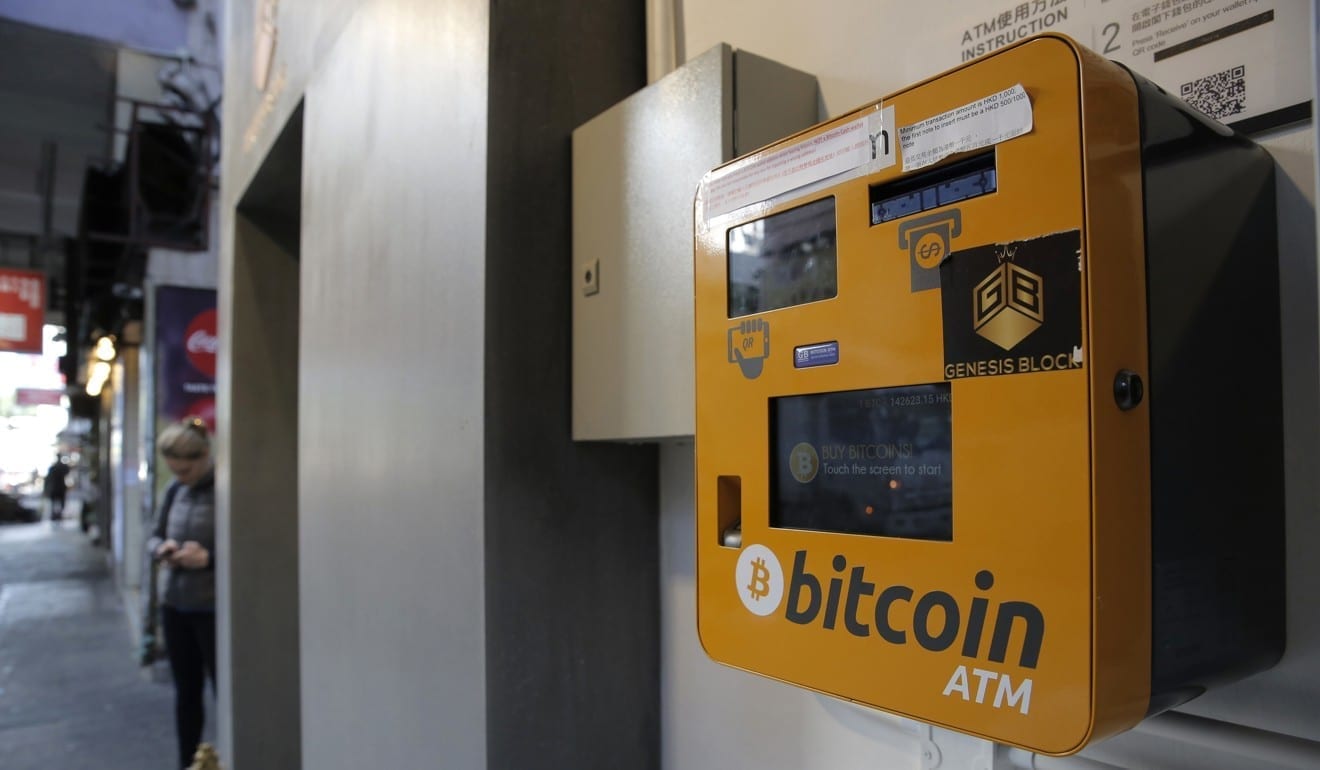
China does not recognize bitcoin and other digital currencies as legitimate forms of payment, the central bank governor, Zhou Xiaochuan, said on Friday.
“We do not currently recognize bitcoin and other digital currencies as a tool like paper money, coins and credit cards for retail payments,” Zhou said on the sidelines of the annual parliament session. “The banking system does not accept it.”
China has taken a string of steps in recent months to clamp down on the cryptocurrency market, including closing exchanges and banning so-called initial coin offerings (ICOs) — digital, token-based fundraising rounds.
Zhou’s remarks added to pressure on bitcoin after the US on Thursday said “potentially unlawful” online trading platforms for cryptocurrencies, may be giving investors an unearned sense of safety and should be registered with the regulator.
Zhou said China paid close attention to the blockchain and distributed ledger technologies that bitcoin is built on, but that some applications of the technology had grown too quickly.
“If they spread too rapidly, it may have a big negative impact on consumers. It could also have some unpredictable effects on financial stability and monetary policy transmission,” said Zhou.
Xiaomi will be launching a new smartphone in India on March 14. Manu Kumar Jain, Xiaomi global vice president, made the announcement on Twitter on Wednesday, hinting at a phone that is “compact” and “powerhouse”. The phone featured in the promo photo resembles Xiaomi Redmi 5, the company’s first full-screen smartphone for the budget segment.
Just like Redmi 5, the cut out of the phone has a tall display with most likely an 18:9 aspect ratio. Redmi 5 launched in China in December last year. The smartphone was accompanied by a Plus variant with a taller display. Xiaomi Redmi 5 and Redmi 5 Plus retail in China at a starting price of 799 Yuan or approximately Rs 7,500.
Xiaomi sells multiple variants of the two phones in China. Xiaomi Redmi 5 is available in two variants – 2GB RAM + 16GB storage and 3GB RAM + 32GB storage – priced at 799 Yuan (approximately Rs 7,500) and 899 Yuan (approximately Rs 8,500) respectively.
The Plus model is also available in two variants – 3GB RAM + 32GB built-in storage and 4GB RAM + 32GB built-in storage which are priced at 999 Yuan (approximately Rs 9,500) and 1299 Yuan (approximately Rs 12,700) respectively.
Xiaomi Redmi 5, Xiaomi Redmi 5 Plus
Xiaomi Redmi 5 comes with a 5.7-inch 18:9 screen with 1440 x 720 pixels resolution. Redmi 5 Plus has a 5.99-inch 18:9 display with 2160 x 1080 pixels resolution. Redmi 5 is powered by Qualcomm’s Snapdragon 450 processor whereas Redmi 5 Plus runs Snapdragon 625 processor. Redmi 5 comes with a 3,200mAh battery while Redmi 5 Plus is powered by a 4,000mAh battery.
Common features of the two phones include 12-megapixel rear camera and 5-megapixel front-facing camera. Connectivity options include 4G, VoLTE, dual-SIM, Bluetooth and Wi-Fi. Both the phones include a fingerprint reader and run on Android 7.1.2 Nougat-based custom MIUI ROM.
Zhou Xiaochuan, the central bank’s governor, made these certain remarks relating to cryptocurrencies at this year’s National People’s Congress During his press conference, he admitted the fast growth of cryptocurrencies and spoke on how it could be better used in the country. Nevertheless, the bank is not comfortable with digital currencies like the Bitcoin and is slowly finding ways in which to regulate them as they believe digital currency is inevitable.
The Governor of the central bank made it clear during the congress that digital currency is inevitable and have a higher likelihood to replace paper money. He further noted that for effective regulations to be availed, new technologies and regional trials have to be conducted.
“The central bank is researching digital currency. Issuing a digital currency does not depend on a technology application but on the ability to reduce costs and improve the convenience of retail payments.” Referring to Bitcoin’s extensive growth, the vice governor advised that “speculative products” should be closely monitored.
Although harsh on the current cryptocurrencies, in mid-2017, the People’s Bank of China established a digital currency research institute which was tasked at developing a state-controlled digital currency to cater for an increased demand of a digital currency.
The governor’s remarks are similar to the ones issued by the same bank in early January 2016. In its earlier remarks, the central bank stated that they were looking into issuing their own digital currency in the soonest time possible.
Although China’s economy is not yet conversant with digital money it’s seeking the help of the industry to carry out research and development of a digital currency. Zhou noted that the latest crackdown on the cryptocurrencies like Bitcoin is meant to strengthen investor and consumer education and protection.
This follows the government’s move to further extend its whip on those dealing with cryptocurrencies. It even forced a popular social media platform, WeChat, to close down and closely monitor all accounts that are dealing with cryptocurrency. Especially those belonging to cryptocurrency exchanges.
This made it hard for mainland residents who traded in cryptocurrencies and used WeChat as a tool of trade. Investors were forced to rely on offshore accounts. Those who didn’t have offshore accounts preferred over-the-counter to continue with the cryptocurrency trading.
Nevertheless, with the government admitting digital currency is inevitable, it is just a matter of time before we start hearing some good news again from a one-time crypto “leading” nation.
Do you think the PBoC and the government will eventually issue their own state-backed digital currency or will they adopt the already available digital currencies?
Aldi South, the German discount supermarket giant, is planning to open up to 50 branches in China, as reported on Thursday.
Aldi South, one of the leading low-budget supermarket chains in Germany, has put together a team for its expansion in China, the Lebensmittel Zeitung, a German weekly newspaper for executives in the food industry and in commerce. It will be one of the biggest expansion plans in the history of the company.
Aldi South has already opened its first online shop in China on the platform of Tmall, which is run by Alibaba group in China.
The company has not commented on the report.
The discounter offers groceries including wine, snack, breakfast and organic food products at its flagship Tmall store through its Australian suppliers.
Listed Australian company AuMake has launched the country’s first purpose-built retail hub for China’s growing army of “daigou” shoppers, using live streaming to reach millions of overseas consumers.
The new 430sqm Daigou Hub retail concept is set in the heart of Sydney’s Chinatown, combines state-of-the-art live streaming technology with face-to-face supplier interaction – aiming to build the profile of Australian suppliers and connect them directly with Chinese consumers via the daigou and Chinese tourist markets.
The hub includes a presentation space for supplier demonstrations, cafeteria, several product display locations and an area specifically designed for daigou to live stream their interaction with Australian suppliers to millions of their customers back in China.
AuMake announced the retail blueprint will be replicated across Australia.
The company reported the launch has drawn more than 70 Australian suppliers, a large number of investors, 150 daigou and a live viewing audience from China of 730,000.
“This leading-edge initiative has been the culmination of 12 months of industry consultation with suppliers and daigou, and closely follows recent developments in the retail market in China, which has seen a move away from a pure online marketing model to an omnichannel model which combines engaging offline experiences for customers, coupled with advanced online functionality,” said Keong Chan, AuMake chairman.
Chan said live streaming is fast becoming a key component of the decision making for consumers in China when they look at the brands and products they are going to purchase.
“Being able to see, in real time, suppliers demonstrating their Australian product and interacting with their trusted daigou is the next evolution of their increasing desire to understand the origins of the product they are purchasing,” he said.
“In just two and a half hours today we had a live stream viewing audience of 730,000 people early in the morning in Mainland China.”
The company has a retail flagship on Sydney’s main CBD street, George St, and plans to roll out another retail hub in the city’s inner-west in April and another in either Brisbane or Melbourne later in the year.
Any trade war with the United States will only bring disaster to the world economy, Chinese Commerce Minister Zhong Shan said today, as Beijing stepped up its criticism on proposed metals tariffs by Washington amid fears it could shatter global growth.
After pressure from allies, the US has opened the way for more exemptions from tariffs of 25% on steel imports and 10% on aluminium that US President Donald Trump set last week.
On Saturday, the European Union and Japan urged the US to grant them exemptions from metal import tariffs, with Tokyo calling for “calm-headed behaviour”.
But the target of Trump’s ire is China, whose capacity expansions have helped add to global surpluses of steel. China has repeatedly vowed to defend its “legitimate rights and interests” if targeted by US trade actions.
Zhong, speaking on the sidelines of China’s annual session of parliament, said China does not want a trade war and will not initiate one.
“There are no winners in a trade war,” Zhong said. “It will only bring disaster to China and the United States and the world.”
China can handle any challenges and will resolutely protect its interests, but the two countries will continue to talk, he said.
“Nobody wants to fight a trade war, and everyone knows fighting one harms others and does not benefit oneself.”
Trump’s announcement on tariffs underlined concerns about rising US protectionism, which has sparked bouts of turmoil in global financial markets over the past year as investors feared
a damaging trade spat will shatter a synchronised uptick in world growth.
China’s metals industry issued the country’s most explicit threat yet in the row, urging on Friday for the government to retaliate by targeting US coal – a sector that is central to Trump’s political base and his election pledge to restore American industries and blue-collar jobs.
The US is the world’s biggest importer of steel, purchasing 35 million tonnes of raw material in 2017. Of those imports, South Korea, Japan, China and India accounted for 6.6 million tonnes.
Trade tensions between China and US have risen since Trump took office. China accounts for only a small fraction of US steel imports, but its massive industrial expansion has helped create a global glut of steel that has driven down prices.
The dispute has fuelled concerns that soybeans, the US’ most valuable export to the world’s second largest economy, might be caught up in the trade actions after Beijing launched a probe into imports of US sorghum, a grain used in animal feed and liquor.
Zhong said US official trade deficit figures had been overestimated by about 20%, and in any case would be a lot lower if the US relaxed export restrictions on some high-tech goods.
He also reiterated a previous pledge that China would lower import tariffs on consumer goods including automobiles, as part of an effort to boost domestic consumption.
Trump believes the tariffs will safeguard American jobs, though many economists say the impact of price increases for users of steel and aluminium, such as the auto and oil industries, will destroy more jobs than curbs on imports create.
Nonetheless, there is growing bipartisan consensus in Washington, and support within some segments of the US business community, for the US government to counter what are
seen as Beijing’s predatory industrial policies and market restrictions on foreign firms.
Trump’s administration has said the United States mistakenly supported China’s membership in the World Trade Organisation in 2001 on terms that have failed to force Beijing to open its economy.
Diplomatic and US business sources say the US has frozen a formal mechanism for talks on commercial disputes with China because it is not satisfied Beijing has met its promises to ease market restrictions.
Poor trading by Dairy Farm International’s Southeast Asian grocery business hit the company’s bottom line last year, with underlying profit falling 13 per cent.
But every other one of the company’s divisions traded strongly throughout the year, according to the results just released.
Full-year profit was US$403 million, after allowing for $64 million of costs relating to business restructuring. Sales by Dairy Farm’s wholly-owned subsidiaries totalled $11.3 billion, largely unchanged from 2016’s $11.2 billion. But total sales, including 100 per cent of associates and joint ventures, at $21.8 billion were up 7 per cent year on year, reflecting strong growth at both supermarket operator Yonghui and cafe-restaurant operator Maxim’s, which owns the Starbucks business in Hong Kong, Vietnam, Cambodia and now Singapore.
“After a disappointing year… for our food businesses in Southeast Asia, actions are being taken to improve their long-term performance,” explained chairman Simon Keswick. “All of the group’s other formats and markets are trading well and growth opportunities are being pursued, in Mainland China and elsewhere.”
In Dairy Farm’s food division, sales were down and profits were “significantly lower” than in 2016, primarily due to poor performances in the supermarket and hypermarket businesses in Malaysia, Singapore and Indonesia.
“A number of underperforming stores are being closed and prices lowered to clear or write off discontinued and slow moving stock.
“In Hong Kong, sales were more resilient, although profits were marginally down due to increasing rents and labour costs. Positive sales growth seen in the Philippines reflected the ongoing investments being made to improve the business,” said Keswick.
Elsewhere in the company there was brighter news.
The convenience store format (including 7-Eleven in Hong Kong and Singapore) produced increased sales and profit. “In part, this reflected a consumer shift to more convenient retail formats, as well as a positive reception to the service and range enhancements introduced for customers,” said Keswick.
The convenience stores division reported $2 billion in sales, an increase of 4 per cent over the previous year – but operating profit surged 16 per cent to $85 million.
In the health and beauty division, (led by Guardian and Mannings), sales and profit were higher, principally due to strong performances in Hong Kong, Macau and Indonesia, together with improvements in Mainland China.
Keswick said this was led by an increasing focus on the beauty category and the continued development of the division’s house brands.
The home furnishings division (Ikea in Hong Kong, Taiwan and Indonesia) recorded higher sales and trading profit, but the reported profit declined, mainly due to costs associated with the opening of the fourth Ikea Hong Kong store in October. Sales and profits increased in Taiwan and Indonesia and there was solid growth in the e-commerce business.
Maxim’s enjoyed good sales growth and profit expansion during the year, in large part due to strong performances from its branded products, particularly mooncakes, and its business in Mainland China. The company also acquired the Starbucks Singapore business last year.
The group’s 19.99 per cent-owned associate in Mainland China, Yonghui Superstores, opened a net 292 new stores last year, which underpinned a 19 per cent growth in revenue. Ongoing supply chain optimisation and shrinkage improvement resulted in improved margins, which together with better capital use, led to a 45 per cent growth in profit.
Convenience focus
Keswick said Dairy Farm International will focus on increasing its convenience store operations in the year ahead through expansion and enhancement of the store network. New smaller-store formats are being piloted in some markets.
The group will also continue to develop its e-commerce presence, focusing on a number of initiatives in its home furnishings, food, and health and beauty operations introduced last year.
Dairy Farm International added a net 633 stores last year. At year end, it had 7181 stores in operation in 11 countries and territories, including its interest in 779 Yonghui stores in mainland China and 1210 Maxim’s stores.
Besides the Starbucks Singapore deal, Maxim’s also acquired the existing businesses and franchises of Genki Sushi in Singapore and Malaysia. It opened its first The Cheesecake Factory in Hong Kong in May, which Keswick said is trading well, and this year will introduce American casual restaurant format Shake Shack in Hong Kong and Macau.
In the Philippines, Rustan became a wholly-owned subsidiary following the acquisition of the remaining 34 per cent interest from the group’s joint venture partner.
Resurrected fashion brand Mexx is considering entering the China and India markets over the next two years.
Meanwhile, the once Turkish-headquartered label has rolled out a mini-collection including fashion for men, women and children, with a comprehensive footwear collection to follow. Its spring collection next year will be a full brand launch integrating accessories and bags, with a clear Mexx signature and brand DNA, says the company.
Mexx will relaunch the brand in retail in Canada, France, Austria and the Netherlands in autumn. Those markets will be followed by Belgium, Germany, the Middle East, Russia and Egypt in Spring 2019. Flagship stores are planned for Paris, Antwerp, Amsterdam, Berlin and Munich starting in Spring 2019. “Possible market entries in India and China during the course of 2019/2020 are being discussed,” the company said.
With the relaunch, Mexx aims to become the leading brand in the upper-low segment, positioned just under Massimo Dutti.
For fragrances, Mexx will continue with its licence partner Coty.
E-commerce is one of the highest priorities in the brand’s distribution strategy. As well as developing its own platform, Mexx will team up with platforms such as Amazon and the Otto Group.
For physical distribution, Mexx is taking a decentralised approach aimed solely at markets where it has been present for more than 25 years. The main channel focus is on controlled distribution through franchise and department store environments, major multi-brand chain stores and a limited number of smaller stand-alone multi-brand stores.
An important element of the relaunch is a fresh and innovative store concept with its format reduced to a 200sqm lifestyle box.
“We see immense potential for Mexx to play a highly relevant role in today’s fashion landscape,” says Mexx International CEO Leo Cantagalli.
Mexx was founded in the 1970s by fashion designer Rattan Chadha and his business partner Adu Advaney who supplied private label clothes to department and wholesale stores in the Netherlands. By 1980, this had resulted in the creation of two well-known Dutch clothing brands – Moustache for men and Emanuelle for women. The two brands merged in 1986 to create Mexx, with the company name coming from M (from Moustache) and E (from Emanuelexx, plus XX (an abbreviation for “Kiss! Kiss!”). The brand achieved revenue of over $1 billion.
However the company collapsed in 2016 and the global IP of Mexx was acquired by a new Dutch entity Mexx International BV in August last year.
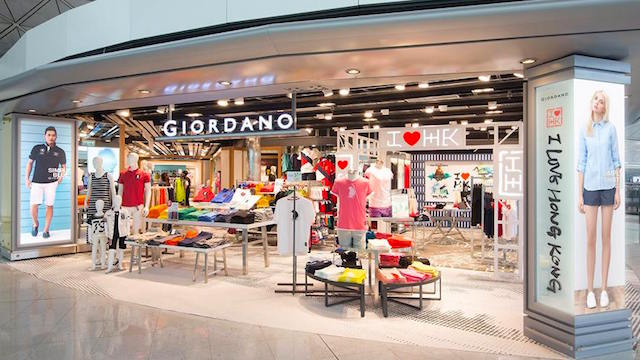
E-business last year was particularly strong for apparel retailer Giordano International.
Overall, consolidated sales reached HK$5.4 billion, up 5.2 per cent. Group comparable-store sales and comparable-store gross profit rose by 5.2 and 5 per cent respectively.
Consolidated gross margin edged up by 0.1 points to 59.5 per cent.
Profit after income taxes attributable to shareholders of the company was $500 million,
an increase of 15.2 per cent over 2016.
Operating profit rose by 21.3 per cent, with most regions having double-digit growth, particularly Southeast Asia, Mainland China and Taiwan. The group’s business in Vietnam was acquired on July 1.
With an improved merchandise assortment, Indonesia and Malaysia delivered good results.
Operating profit increased by 18.6 and 26 per cent for Indonesia and Malaysia respectively. In Singapore, operating profit increased by 31.2 per cent, attributable mainly to the gross margin improving by 1.7 points to 63.7 per cent.
Unusually strong sales from Thailand in 2016 resulted in an unfavourable year-on-year comparison. Operating profit declined by 20.1 per cent in local currency terms.
A surge in net profit for South Korea – a 48.5 per cent JV under an independent management team – resulted from better cost control, closure of non-performing stores and enhancement in gross margin.
Giordano had a network of 2414 stores at the end of December, of which 1268 were standalone outlets. Most stores were in Greater China, South Korea, Southeast Asia and the Middle East.
Meanwhile, the group’s e-business is directly managed and derived mainly from third-party platforms as well as its own proprietary website in Greater China. This channel generated $310 million in revenue at a 31.4 per cent growth rate.
Accounting for 93.2 per cent of the group’s e-business sales, Mainland China continued its momentum and recorded a 28.2 per cent increase in sales on various platforms combined.
Giordano’s e-business in Taiwan was revamped during the year to become its second-largest online presence.
Despite a challenging business environment, Circle K Hong Kong parent Convenience Retail Asia reports comparable-store sales growth last year driven by digital initiatives.
Leading the way were O2O customer-relationship management (CRM) programs, with membership for “OK Stamp It” (Circle K) and “Cake Easy” (Saint Honore) exceeding 1 million and 300,000 respectively.
Group revenue was up 4.6 per cent to HK$5.09 million. The core operating profit rose 7.4 per cent to $182,594 while net profit grew by 7.7 per cent.
During the year, the group’s O2O digital retailing platform FingerShopping.com saw moderate growth in gross merchandising volume (GMV). It also achieved high pick-up and payment rates at Circle K stores in Hong Kong and Macau. Beauty and personal care continued to be the anchor category, representing about 70 per cent of total GMV.
Turnover for the convenience-store business grew 5.4 per cent to $4.05 billion, with comparable store sales up 4.2 per cent. Turnover for the bakery business increased 1.9 per cent to $1.09 billion, with comparable store sales in Hong Kong growing 5.2 per cent.
Gross margin and other income as a percentage of turnover increased 0.3 points to 36.9 per cent despite keen competition in the retail market and high manufacturing costs.
At the end of December the group had 332 Circle K stores, with 10 opening in Hong Kong and nine being closed.
Eighteen months after its launch, “OK Stamp It” has attracted more than 1 million members and won industry awards for excellence.
At the end of December, the group had 102 Saint Honore cake shops in Hong Kong and Macau. Thirteen stores were opened and nine closed during the year. There were also 41 Saint Honore locations in Guangzhou and Shenzhen.
The digital CRM program “Cake Easy” had more than 300,000 members by the end of the year.
During the year the group obtained the franchise for Japan’s fast-fashion eyewear chain Zoff, opening the brand’s first store in Hong Kong.
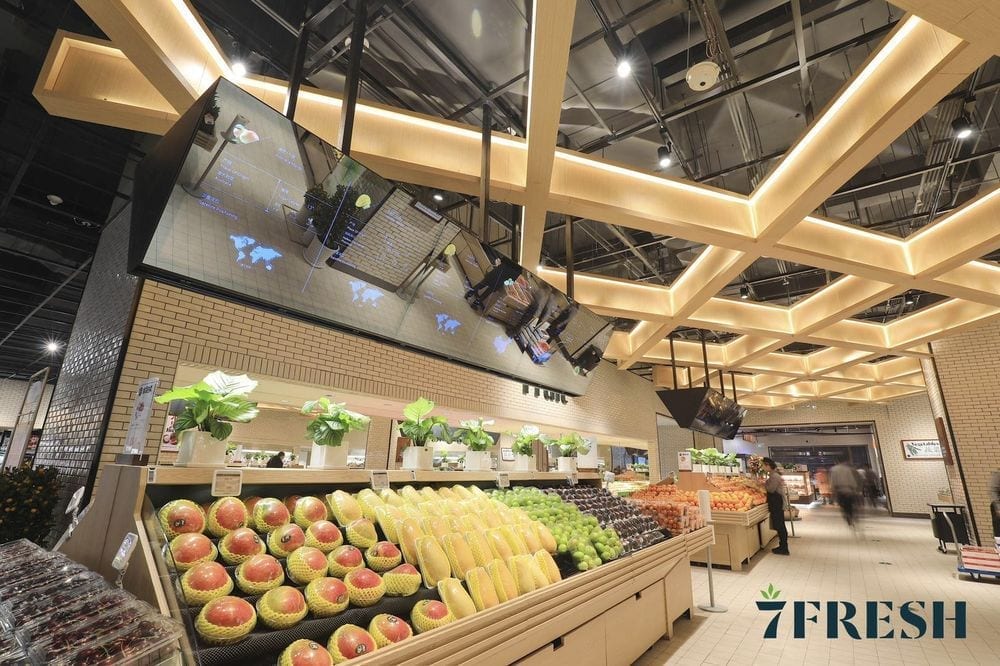
Chinese e-commerce giant JD.com has opened its second 7Fresh supermarket, at the China Resources Dreamport shopping centre in northern Beijing.
This follows the launch late last year of the initial 4000sqm outlet near JD.com’s headquarters in Beijing.
JD.com fresh division president Wang Xiaosong, who is also CEO of 7Fresh, says the supermarket brand is in a “life or death mad rush to cover the entire Beijing market”. Its goal is to open more than 1000 outlets across China during the next three to five years.
Its concept focuses on fresh goods including produce, meat, seafood, bakery goods, ready-to-eat packaged food and cooked-to-order foods. The supermarket also aims to integrate JD’s technical expertise to improve its offering and customer experience, drawing on data analytics to help formulate inventory based on customer behaviour and manage its supply chain.
It also integrates O2O retail into its core business, offering consumers within a several kilometre radius the ability to order groceries online for delivery to their doorsteps within 30 minutes.
The second 7Fresh outlet covers 2600sqm and is similar in layout to the original supermarket, but makes concessions because it is smaller, such as not offering a dining area.
7Fresh is serving as a laboratory for JD.com to further its goal of seamlessly integrating online and offline retail, and redefining retail in China.
JD Fresh was launched in 2016, initially as an online component of the JD.com e-commerce platform.
Tmall will this year work with top beauty brands such as Estee Lauder and Lancome to help them surpass RMB 1 billion (US$157.9 million) in annual sales on the platform.
The increased focus on the beauty sector will also see Tmall deliver an updated suite of New Retail solutions so that all merchants can better serve Chinese consumers, the Alibaba Group-owned B2C shopping site says.
Tmall plans to partner closely with about 10 beauty brands in particular, also including SK-II and Olay, to help them break that sales threshold. New Retail initiatives include a new “try-before-you-buy” feature, where users pay a 10 per cent deposit to test a product with the promise of a simpler and faster refund process.
“Our partnership with brands will cover every corner from online to offline,” Tmall president Jet Jing said. “We will be consistently involved in daily operations ranging from product innovation, brand building, channel management, supply chain to customer operations.”
Tmall Supermarket would also expand its one-hour delivery service to more customers, as faster service is also a part of New Retail, Jing said. However, the biggest changes won’t come until the 11.11 Global Shopping Festival, which is typically when Alibaba rolls out its New Retail initiatives.
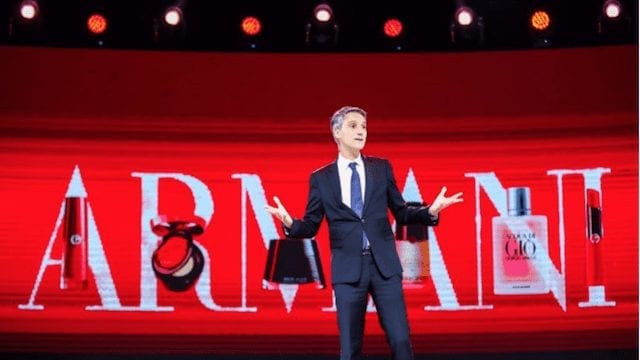
The initiatives were announced during the Tmall Beauty Awards in Shanghai, where more than 1000 beauty professionals, from both international and home-grown brands, gathered for the annual event. This year, Estee Lauder, SK-II, Giorgio Armani Beauty and Givenchy each took away a “Super Brands Award,” for their outstanding performance in brand influence, marketing creativity and consumer engagement. Newcomer Givenchy on March 1 broke the single-day sales record, selling more than 58,000 lipsticks and generating over RMB 16 million – all in the first 12 hours of the day.
Since launching in 2015, the awards largely have spotlighted New Retail-driven innovations. Featured technology at this year’s awards included the “Cloud Shelf” and the latest iteration of the augmented reality-powered “Magic Mirror,” which allows users to virtually try on new hairstyles, lipstick, eyeshadow and blush. Tmall said it would partner with with French cosmetics company L’Oreal to install Magic Mirrors in 50 of the beauty giant’s physical stores in China.
Tmall hosts more than 3000 beauty brands on its platform, according to a report released by Tmall and Chinese research firm CBNData last year. Some of the newest entrants include LVMH-owned Givenchy, L’Oreal’s Giorgio Armani Beauty and Estee Lauder’s Darphin.
“After two years of very successful acceleration in China, we felt this is the right timing to join Tmall to push artistry and premium-ness of the brand,” said Andrea Yann, GM of the China market at Giorgio Armani Beauty. “Our plan is really to understand from [Alibaba’s] database what are the main beauty concerns of Chinese women to solve their beauty issues, be very personalised still being [seen as] very artistry and premium.”
Andrea Yann, GM of the China market at Giorgio Armani Beauty, speaks on stage.
Younger more focused on beauty
According to a report released by Tmall and market research consultancy Kantar, what they want is a more elaborate skincare regimen. Thirty-five per cent of respondents said they have added more steps to their beauty routines, and therefore are spending more on skincare products and cosmetics. Tmall attributed 53 per cent of the sales of beauty products on Tmall to consumers making more purchases per person.
Beauty consumers in China – the world’s largest and fastest-growing beauty market at $22 billion – are also becoming younger than ever, the report noted. In 2017, users born after 1990 made up over 40 per cent of shoppers on Tmall Global, the site’s cross-border e-commerce channel, overtaking those born in the 1980s as the main consumption force on Tmall Global, the site’s cross-border e-commerce channel.
Consumers born after 1990 like to try new products from new brands and less familiar origin countries, the report said.
Embracing the new
“In China, there’s more willingness to try new products at a faster rate than what you would see in different markets,” said Danielle Bailey, head of Asia Pacific research at digital agency L2.
“It’s not that [Chinese beauty consumers] are less loyal, but their desire to explore is much higher,” she said. “This makes it more challenging for brands to sell to the market, but also creates new opportunities.”
Tmall’s latest report also showed momentum for homegrown brands, particularly for skincare, where they accounted for 56 per cent of sales last year – up from 54 per cent in 2016. However, foreign brands still dominate the cosmetics category with 56 per cent of total makeup sales.
Chinese brands are trying to boost their profiles by launching new prestige product lines or creating new products within an existing line, said Bailey. “It will be interesting to see if local brands can successfully transition to that space. It’s still a bit unclear because Western brands tend to be associated with better quality,” she added.
From a product development standpoint, the pace of innovation in Asia has forced brands in the West to shrink development timelines to stay relevant, said Bailey. Where Western companies may take two years to release a product,” he said, “in Korea, some brands are launching new product every three months.”
Time-to-market is indeed very important for beauty brands, said Ye Guohui, GM of Tmall’s new retail division.
“Conducting market research alone can be very time-consuming, taking up to over a year,” he said. “But brands in China can leverage Alibaba’s data capacities to really shorten that timeline, and accelerate product development.”
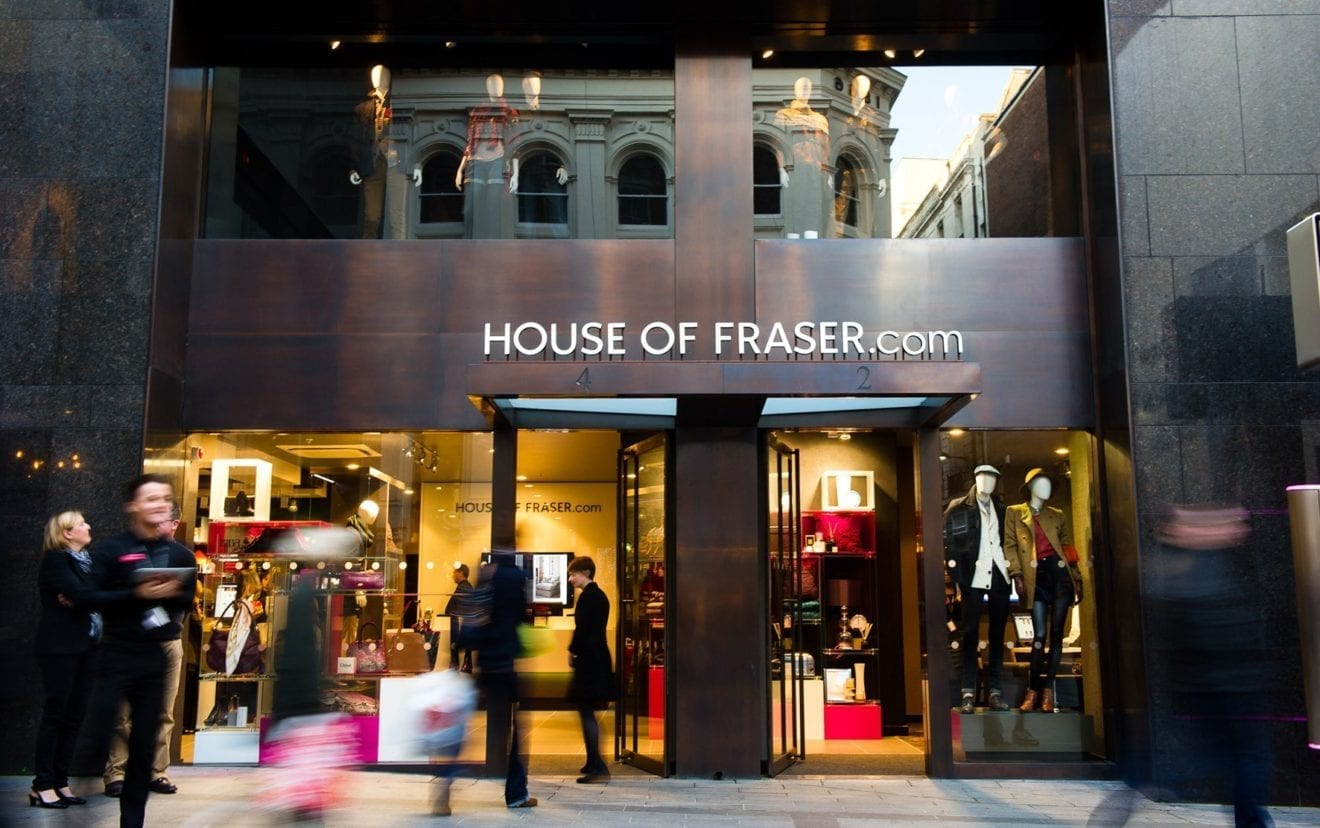
The Chinese firm which has a majority ownership in House of Fraser has confirmed plans to offload most of its stake.
A Chinese stock-exchange filing indicates that Nanjing Xinjiekou Department Store (or Nanjing Cenbest) is poised to sell off most of its holdings to tourism development company Wuji Wenhua.
Nanjing Cenbest has an 89 per cent stake in House of Fraser, and is looking to sell off 51 per cent of it. This would mean retaining a 38 per cent stake in the retailer.
Meanwhile, Nanjing Cenbest has confirmed it is in “advanced discussions” with Wuji Wenhua about it investing in the British department store chain.
Nanjing Cenbest – a subsidiary of Sanpower Group, which acquired House of Fraser in 2014 – also hailed the potential collaboration as a strategy that could “further internationalise” the retailer. “We are very proud of our continued stake in the 169-year-old House of Fraser brand.”
House of Fraser had a slump in Christmas sales, its credit rating has been downgraded, and it has drafted in Rothschild to help refinance its debt package.
Nanjing Cenbest is a department store retailer in China, where it runs both the Xinjiekou fascia and Chinese House of Fraser stores.
Bloomberg data shows Sanpower Group has a 27.32 per cent stake in Nanjing Cenbest. When the firm acquired its 89 per cent ownership of House of Fraser in 2014, it had planned to open 50 outlets in China.
So far it has opened only two. The remaining 11 per cent stake in the retailer is owned by Sports Direct founder Mike Ashley.
The department stores have struggled amid the rise of online shopping and a surge in sourcing costs driven by the pound’s 7 per cent fall against the US dollar and 14 per cent decline against the euro since the Brexit vote.
House of Fraser reported a 2.9 per cent drop in sales over the holiday shopping season and has entered negotiations with landlords to reduce rents on some of its 59 UK stores. In the year ended January last year the company reported net income of £26.8 million (US$37.2 million).
Sanpower Group, which owns a 27.32 per cent stake in Nanjing Xinjiekou, acquired House of Fraser in 2014 in a deal that valued the chain at £450 million.
While Australian retailers fret about the impact of American online retail behemoth Amazon, China’s Alibaba looms as an equal threat, according to Russell Zimmerman, Executive Director at the Australian Retailers’ Association.
Speaking to A’n’Z of Economics on podcast, Zimmerman said the changes underway in retail brought by online retail giants were leading to a complete “revamping and re changing” of the sector – but warned Alibaba’s impact was being underrated.
“I think Australian retailers have been very focused on Amazon and there’s certainly been a lot of hype,” he said. “[But] I think the biggest sleeper in the online space is Alibaba. I think we’ll actually need to move our focus away from Amazon and realiZe Alibaba is out there.”
Zimmerman was a guest on the podcast alongside Richard Li, the Chief Operation Manager for Miniso, a Tokyo-based retailer which has recently opened stores in Australia. You can click below to hear an edited version of the comments – or go to the A’n’Z of Economics Soundcloud page to listen to the full podcast.
Zimmerman said AliBaba is slightly different to Amazon in that it owns a large portion of the value chain, including not just sales but elements like data collection and AI-assisted marketing. On Single’s Day – China’s version of Valentine’s Day – in 2017, the company recorded record sales $US25.3 billion, a 40 per cent jump on the previous year’s figure.
“I think Amazon is a very interesting case study because they really haven’t spent a dollar on advertising but everyone’s talking about it,” he said.
“I know there are some retailers in Australia already dealing with Alibaba and they’re doing very well but I think [more need] to at least look at it. They may or may not wish to go on that platform, but at least look at it.”
Miniso customers are currently unable to shop online in Australia but Li said the company had a strategy in the works.
“We find there are two things stopping us launching our online strategy in Australia,” he said. “The first is there is no landmark website or something [in Australia] like an Amazon or Alibaba.”
“The second thing is the lack of logistics. We find Australia is one of the most-expensive in the world when we’re selling different commodities. We need to find different ways to move product at the most-efficient cost. The good thing is right now things change very fast.”
The conversation also touched on why overseas retailers were moving into Australia and the surprising true size of the Australian online retail market. Listen to the podcast above to find out more.
WeChat Pay and Alipay, China’s two biggest mobile payment platforms, have recently forged partnerships with tax refund companies to enable Chinese tourists to obtain rebates on their purchases via their respective mobile apps.
Within this year, WeChat also plans to offer instant refunds in-store overseas as it competes for a larger share of rising Chinese tourist spending abroad.
Their strategy is driven by how China has embraced mobile payments faster than any other country and is also the biggest source of outbound travellers. In 2016, mobile payment transactions in China reached US$5.5 trillion, making the country the largest mobile payments market in the world, according to iResearch.
Both WeChat Pay and Alipay have been expanding their services as mobile payments are used for everything from food delivery, taxi rides and in-store purchases, both on the mainland and abroad.
WeChat Pay, operated by Tencent Holdings, and Alipay, the payments subsidiary of Ant Financial Services Group, account for a combined 66 per cent of the third-party payments market in China, based on estimates of Analysys International.
Ant Financial is an affiliate of New York-listed Alibaba Group Holding, which owns the South China Morning Post.
WeChat Pay and Alipay, along with its overseas mobile payment partners, have estimated a total of 600 million and 800 million users, respectively.
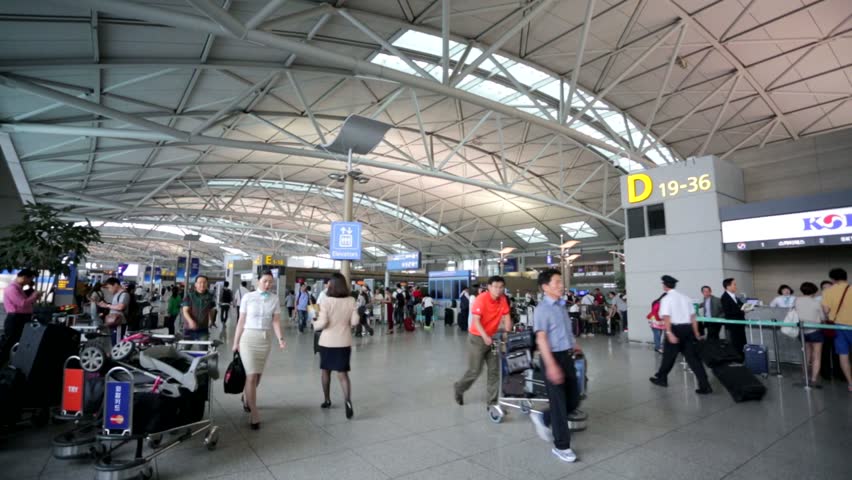
Late last month, WeChat Pay partnered up with Swiss firm Global Blue to offer an instant tax refund service for Chinese tourists leaving from Madrid airport, while Alipay rolled out a similar service for returning Chinese tourists at Singapore’s Changi airport.
With those instant tax refund services, users can get their rebates settled in yuan and sent to their WeChat Wallet or Alipay accounts immediately once their tax refund forms are stamped and approved at the airport counter.
The rising affluence of Chinese consumers and the boom in outbound China tourism also made it attractive for WeChat Pay and Alipay to facilitate tax rebates.
According to a recent report by the China Tourism Academy and online travel agency Ctrip, an estimated 6.5 million outbound Chinese travellers spent this year’s week-long Lunar New Year holiday overseas. Each tourist was expected to spend an average of 9,500 yuan (US$1,500) on their trip.
“Offering instant tax refunds is a smart strategy by both Chinese players to capture further market share beyond what is likely to be a close to saturated market within the mainland,” said Michael Yeo, research manager for financial and retail insights at IDC.
“Many outlets across Asia, Europe and Northern America already accept both WeChat and Alipay payments. Offering instant tax refunds provide convenience and may prove to be an effective tool in luring these tourists to switch from other payment methods, such as cash or credit card, for such trips.”
Similar to other WeChat Wallet and Alipay programmes, the tax rebate service makes use of quick response (QR) codes. The tax refund officer scans the QR code on a user’s smartphone to credit the refund to their account.
While Alipay allows users to access the QR code in the Alipay app, WeChat Pay users will have to search for its WeChat Tax Refund feature to process the refunds.
Global Blue and WeChat Pay are now working to offer in-store refunds, which means that Chinese travellers would no longer need to line up to get their tax refund forms processed at the airport. The service is expected to be rolled out across Europe within this year, according to a joint statement.